Hersh’s New Syria Revelations Buried From View
By Jonathan Cook | CounterPunch | June 27, 2017
Veteran investigative journalist Seymour Hersh, the man who exposed the Mai Lai massacre during the Vietnam War and the US military’s abuses of Iraqi prisoners at Abu Ghraib in 2004, is probably the most influential journalist of the modern era, with the possible exception of Bob Woodward and Carl Bernstein, the pair who exposed Watergate.
For decades, Hersh has drawn on his extensive contacts within the US security establishment to bring us the story behind the official story, to disclose facts that have often proved deeply discomfiting to those in power and exploded the self-serving, fairy-tale narratives the public were expected to passively accept as news. His stature among journalists was such that, in a sea of corporate media misinformation, he enjoyed a small island of freedom at the elite, but influential, outlet of the New Yorker.
Paradoxically, over the past decade, as social media has created a more democratic platform for information dissemination, the corporate media has grown ever more fearful of a truly independent figure like Hersh. The potential reach of his stories could now be enormously magnified by social media. As a result, he has been increasingly marginalised and his work denigrated. By denying him the credibility of a “respectable” mainstream platform, he can be dismissed for the first time in his career as a crank and charlatan. A purveyor of fake news.
Nonetheless, despite struggling to find an outlet for his recent work, he has continued to scrutinise western foreign policy, this time in relation to Syria. The official western narrative has painted a picture of a psychotic Syrian president, Bashar Assad, who is assumed to be so irrational and self-destructive he intermittently uses chemical weapons against his own people. He does so, not only for no obvious purpose but at moments when such attacks are likely to do his regime untold damage. Notably, two sarin gas attacks have supposedly occurred when Assad was making strong diplomatic or military headway, and when the Islamic extremists of Al-Qaeda and ISIS – his chief opponents – were on the back foot and in desperate need of outside intervention.
Dangerous monsters
Hersh’s investigations have not only undermined evidence-free claims being promoted in the west to destabilise Assad’s goverment but threatened a wider US policy seeking to “remake the Middle East”. His work has challenged a political and corporate media consensus that portrays Russia’s Vladimir Putin, Assad’s main ally against the extremist Islamic forces fighting in Syria, as another dangerous monster the West needs to bring into line.
For all these reasons, Hersh has found himself increasingly friendless. The New Yorker refused to publish his Syria investigations. Instead, he had to cross the Atlantic to find a home at the prestigious but far less prominent London Review of Books.
Back in 2013 his contacts within the security and intelligence establishments revealed that the assumption Assad had ordered the use of sarin gas in Ghouta, outside Damascus, failed to stand up to scrutiny. Even Barack Obama’s national intelligence director, James Clapper, was forced to admit privately that Assad’s guilt was “not a slam dunk”, even as the media widely portrayed it as precisely that. Hersh’s work helped stymie efforts at the time to promote a western military attack to bring down the Syrian government.
His latest investigation questions whether Assad was responsible for another alleged gas attack – this one in April, at Khan Sheikhoun. Again a consensual western narrative was quickly constructed after social media showed dozens of Syrians dead, apparently following a bomb dropped by Syrian aircraft. For the first time in his presidency, Donald Trump received wall-to-wall praise for launching a military strike on Syria in response, even though, as Hersh documents, he had no evidence on which to base such an attack, one that gravely violated international law.
Hersh’s new investigation was paid for by the London Review of Books, which declined to publish it. This is almost as disturbing as the events in question.
What is emerging is a media blackout so strong that even the London Review of Books is running scared. Instead, Hersh’s story appeared yesterday in a German publication, Welt am Sonntag. Welt is an award-winning newspaper, no less serious than the New Yorker or the LRB. But significantly Hersh is being forced to publish ever further from the centres of power whose misinformation his investigations are challenging.
Imagine how effective Woodward and Bernstein would have been in bringing down Richard Nixon had they been able to publish their Watergate investigations only in the French media. That is the situation we have reached now with Hersh’s efforts to scrutinise the west’s self-serving claims about Syria.
US-Russian cooperation
As for the substance of Hersh’s investigation, he finds that Trump launched 59 Tomahawk missiles at a Syrian air base in April “despite having been warned by the US intelligence community that it had found no evidence that the Syrians had used a chemical weapon.”
In fact, Hersh reveals that, contrary to the popular narrative, the Syrian strike on a jihadist meeting place in Khan Sheikhoun on April 4 was closely coordinated beforehand between Russian and US intelligence agencies. The US were well apprised of what would happen and tracked the events.
Hersh’s sources in the intelligence establishment point out that these close contacts occurred for two reasons. First, there is a process known as “deconfliction”, designed to avoid collisions or accidental encounters between the US, Syrian and Russian militaries, especially in the case of their supersonic jets. The Russians therefore supplied US intelligence with precise details of that day’s attack beforehand. But in this case, the close ties also occurred because the Russians wanted to warn the US to keep away a CIA asset, who had penetrated the jihadist group, from that day’s meeting.
“This was not a chemical weapons strike,” a senior adviser to the US intelligence community told Hersh. “That’s a fairy tale. If so, everyone involved in transferring, loading and arming the weapon … would be wearing Hazmat protective clothing in case of a leak. There would be very little chance of survival without such gear.”
According to US intelligence, Hersh reports, the Syrian air force was able to target the site using a large, conventional bomb supplied by the Russians. But if Assad did not use a chemical warhead, why did many people apparently die at Khan Sheikhoun from inhalation of toxic gas?
The US intelligence community, says Hersh, believes the bomb triggered secondary explosions in a storage depot in the building’s basement that included propane gas, fertilisers, insecticides as well as “rockets, weapons and ammunition, … [and] chlorine-based decontaminants for cleansing the bodies of the dead before burial”. These explosions created a toxic cloud that was trapped close to the ground by the dense early morning air.
Medecins Sans Frontieres found patients it treated “smelled of bleach, suggesting that they had been exposed to chlorine.” Sarin is odourless.
Hersh concludes that the “evidence suggested that there was more than one chemical responsible for the symptoms observed, which would not have been the case if the Syrian Air Force – as opposition activists insisted – had dropped a sarin bomb, which has no percussive or ignition power to trigger secondary explosions. The range of symptoms is, however, consistent with the release of a mixture of chemicals, including chlorine and the organophosphates used in many fertilizers, which can cause neurotoxic effects similar to those of sarin.”
Political suicide
Hersh’s main intelligence source makes an important contextual point you won’t hear anywhere in the corporate media:
“What doesn’t occur to most Americans is if there had been a Syrian nerve gas attack authorized by Bashar [Assad], the Russians would be 10 times as upset as anyone in the West. Russia’s strategy against ISIS, which involves getting American cooperation, would have been destroyed and Bashar would be responsible for pissing off Russia, with unknown consequences for him. Bashar would do that? When he’s on the verge of winning the war? Are you kidding me?”
When US national security officials planning Trump’s “retaliation” asked the CIA what they knew of events in Khan Sheikhoun, according to Hersh’s source, the CIA told them “there was no residual delivery for sarin at Sheyrat [the airfield from which the Syrian bombers had taken off] and Assad had no motive to commit political suicide.”
The source continues:
“No one knew the provenance of the photographs [of the attack’s victims]. We didn’t know who the children were or how they got hurt. Sarin actually is very easy to detect because it penetrates paint, and all one would have to do is get a paint sample. We knew there was a [toxic] cloud and we knew it hurt people. But you cannot jump from there to certainty that Assad had hidden sarin from the UN because he wanted to use it in Khan Sheikhoun.”
Trump, under political pressure and highly emotional by nature, ignored the evidence. Hersh’s source says:
“The president saw the photographs of poisoned little girls and said it was an Assad atrocity. It’s typical of human nature. You jump to the conclusion you want. Intelligence analysts do not argue with a president. They’re not going to tell the president, ‘if you interpret the data this way, I quit’.”
Although Republicans, Democrats and the entire media rallied to Trump’s side for the first time, those speaking to Hersh have apparently done so out of fear of what may happen next time.
The danger with Trump’s “retaliatory” strike, based on zero evidence of a chemical weapons attack, is that it could have killed Russian soldiers and dragged Putin into a highly dangerous confrontation with the US. Also, the intelligence community fears that the media have promoted a false narrative that suggests not only that a sarin attack took place, but paints Russia as a co-conspirator and implies that a UN team did not in fact oversee the destruction of Syria’s chemical weapons stockpile back in 2013-14. That would allow Assad’s opponents to claim in the future, at a convenient time, yet another unsubstantiated sarin gas attack by the Syrian government.
Hersh concludes with words from his source that should strike fear into us all:
“The issue is, what if there’s another false-flag sarin attack credited to hated Syria? Trump has upped the ante and painted himself into a corner with his decision to bomb. And do not think these guys [Islamist groups] are not planning the next faked attack. Trump will have no choice but to bomb again, and harder. He’s incapable of saying he made a mistake.”
Four questions
Hersh’s investigation contributes to a more complex and confusing picture of events in Khan Sheikhoun. In the absence of an independent investigation, there is still no decisive physical evidence to confirm what happened. That makes context and probability important factors for observers to weigh.
So let us set aside for a moment the specifics of what happened on April 4 and concentrate instead on what Hersh’s critics must concede if they are to argue that Assad used sarin gas against the people of Khan Sheikhoun.
1. That Assad is so crazed and self-destructive – or at the very least so totally incapable of controlling his senior commanders, who must themselves be crazed and self-destructive – that he has on several occasions ordered the use of chemical weapons against civilians. And he has chosen to do it at the worst possible moments for his own and his regime’s survival, and when such attacks were entirely unnecessary.
2. That Putin is equally deranged and so willing to risk an end-of-times conflagration with the US that he has on more than one occasion either sanctioned or turned a blind eye to the use of sarin by Assad’s regime. And he has done nothing to penalise Assad afterwards, when things went wrong.
3. That Hersh has decided to jettison all the investigatory skills he has amassed over many decades as a journalist to accept at face value any unsubstantiated rumours his long-established contacts in the security services have thrown his way. And he has done so without regard to the damage that will do to his reputation and his journalistic legacy.
4. That a significant number of US intelligence officials, those Hersh has known and worked with over a long period of time, have decided recently to spin an elaborate web of lies no one wants to print, either in the hope of damaging Hersh in some collective act of revenge against him, or in the hope of permanently discrediting their own intelligence services.
Hersh’s critics do not simply have to believe one of these four points. They must maintain the absolute veracity of all four of them.
Trump ignored intel, launched Tomahawks in Syria based on media – Pulitzer winner Seymour Hersh
RT | June 25, 2017
US President Donald Trump ignored reports from US intelligence that said they had no evidence Syria had used sarin to attack a rebel-held town, Pulitzer-winning investigative journalist Seymour Hersh says.
Hersh is most famous for exposing the My Lai Massacre and its cover-up during the Vietnam War. He also uncovered the abuse of prisoners by US personnel at the Abu Ghraib prison in Iraq. In a report published by the German newspaper Die Welt on Sunday, he describes how the Trump administration mishandled the media frenzy after the Syrian bombing of the rebel-held town Khan Sheikhoun in April.
Trump chose to ignore reports compiled by American intelligence and the military that contradicted the prevailing media narrative accusing Damascus of using sarin gas to kill civilians, the report says. Instead, he ordered his military to prepare options for a response, which they did.
The subsequent Tomahawk attack on the Syrian Shayrat Air Base did less damage that the White House claimed, as was apparently intended by the military planners of the operation, Hersh said. The US mainstream media failed to question the government’s narrative of the situation, instead giving Trump what appears to be the pinnacle achievement of his presidency so far.
“None of this makes any sense,” one US officer told colleagues upon learning of the White House decision to retaliate against Syria. “We KNOW that there was no chemical attack… the Russians are furious. Claiming we have the real intel and know the truth… I guess it didn’t matter whether we elected Clinton or Trump.”
Special weapon
Hersh’s report is based on interviews with several US advisers and evidence they provided, including transcripts of real-time communications that immediately followed the Syrian attack on April 4. According to the advisers, the Syrian Air Force’s attack on Khan Sheikhoun targeted a meeting of several high-value leaders of jihadist groups, including Ahrar al-Sham and Al-Nusra Front, which has changed its name to Jabhat al-Nusra.
The US was informed of the operation in detail beforehand as part of a conflict prevention arrangement with Russia. The two-way information sharing in place in Syria at the time helped the US-led coalition and Russia-backed Damascus to avoid accidental encounters in the air, protect intelligence assets on the ground, and coordinate with each other when planning missions.
“They were playing the game right,” a senior US adviser is cited by Hersh as saying regarding the pre-mission notice from Russia.
“It was a red-hot change. The mission was out of the ordinary – scrub the sked,” the adviser said. “Every operations officer in the region” – in the Army, Marine Corps, Air Force, CIA, and NSA – “had to know there was something going on. The Russians gave the Syrian Air Force a guided bomb and that was a rarity. They’re skimpy with their guided bombs and rarely share them with the Syrian Air Force. And the Syrians assigned their best pilot to the mission, with the best wingman.”
The special weapon used in the bombing was mentioned in Syrian communications collected before the attack by a US ally. The interception was widely reported in the Western media as an indication that Damascus had used a chemical weapon.
“If you’ve already decided it was a gas attack, you will then inevitably read the talk about a special weapon as involving a sarin bomb,” the adviser told Hersh. “Did the Syrians plan the attack on Khan Sheikhoun? Absolutely. Do we have intercepts to prove it? Absolutely. Did they plan to use sarin? No. But the president did not say: ‘We have a problem and let’s look into it.’ He wanted to bomb the shit out of Syria.”
Fertilizers & decontaminants
The target of the Syrian bombing was described as a two-story cinder-block building. According to Russian intelligence, the jihadists used the second floor as a command and control center. The first floor housed a grocery store and other businesses. The basement was used as a warehouse for weapons, ammunition, and goods, including chlorine-based decontaminants and fertilizers.
“The rebels control the population by controlling the distribution of goods that people need to live – food, water, cooking oil, propane gas, fertilizers for growing their crops, and insecticides to protect the crops,” a senior adviser to the American intelligence community told Hersh.
According to a US assessment of the morning airstrike cited by Hersh, the 500-pound Russian bomb triggered secondary explosions. The heat could have evaporated the chemical products in the basement, producing a toxic cloud that spread over the town, pressed close to the ground by the dense morning air.
The scenario is consistent with the accounts of patients who reported a chlorine odor in interviews with Medecins Sans Frontieres. It could also explain the symptoms of nerve agent poisoning that were attributed to sarin, but may have been caused by organophosphates used in many fertilizers, Hersh said.
Meanwhile, US intelligence had no evidence to indicate the presence of sarin gas at or near the Shayrat Air Base, from which the bombing mission was launched.
“This was not a chemical weapons strike,” the journalist cites a source as saying. “That’s a fairy tale. If so, everyone involved in transferring, loading and arming the weapon – you’ve got to make it appear like a regular 500-pound conventional bomb – would be wearing Hazmat protective clothing in case of a leak. There would be very little chance of survival without such gear.”
“Military grade sarin includes additives designed to increase toxicity and lethality. Every batch that comes out is maximized for death. That is why it is made. It is odorless and invisible and death can come within a minute. No cloud. Why produce a weapon that people can run away from?” the adviser added.
The Trump Show
The Trump administration quickly adopted the rebel narrative, which accused President Bashar Assad’s government of conducting a sarin gas attack on Khan Sheikhoun. Top US officials went on to condemn Damascus and accuse Russia of complicity in the bombing. Trump ordered the national defense apparatus to prepare a response within hours of seeing photos of poisoned children on TV, Hersh’s report cites a senior adviser as saying.
“No one knew the provenance of the photographs. We didn’t know who the children were or how they got hurt,” the adviser said. “Sarin actually is very easy to detect because it penetrates paint, and all one would have to do is get a paint sample. We knew there was a cloud and we knew it hurt people. But you cannot jump from there to certainty that Assad had hidden sarin from the UN because he wanted to use it in Khan Sheikhoun.”
“The president saw the photographs of poisoned little girls and said it was an Assad atrocity,” he added. “It’s typical of human nature. You jump to the conclusion you want. Intelligence analysts do not argue with a president. They’re not going to tell the president, ‘if you interpret the data this way, I quit.’”
At a national security meeting at Mar-a-Lago on April 6, Trump was offered four options for responding to the Syrian incident, ranging from doing nothing and to assassinating President Assad, the report said. Eventually, the US president chose to attack the Syrian air base, which Hersh’s source described as “the ‘gorilla option’: America would glower and beat its chest to provoke fear and demonstrate resolve, but cause little significant damage.”
Of the 59 Tomahawk missiles fired at Shayrat, as many as 24 missed their targets because the initial strikes hit gasoline storage tanks, triggering a huge fire and a lot of smoke that interfered with the guidance systems of the following missiles. Only a few actually penetrated the hangars, and these only destroyed nine aircraft that were apparently not operational and could not be moved during the window of opportunity between the US warning of the looming attack and the strike itself.
“It was a totally Trump show from beginning to end,” the senior adviser told Hersh. “A few of the president’s senior national security advisers viewed the mission as a minimized bad presidential decision, and one that they had an obligation to carry out. But I don’t think our national security people are going to allow themselves to be hustled into a bad decision again. If Trump had gone for option three [a massive attack on Syrian military facilities], there might have been some immediate resignations.”
Trump trapped by own mistake
The reaction to the show of force in the US media was probably everything the Trump administration could have hoped for. MSNBC anchorman Brian Williams described the sight of Tomahawks being launched at the Syrian base as “beautiful.” CNN host Fareed Zakaria reacted by saying that Trump finally “became president of the United States.”
According to Hersh, of the top 100 American newspapers, 39 published editorials supporting the bombing in its aftermath, including the New York Times, Washington Post, and Wall Street Journal.
Five days later, the White House briefed the national media on the operation and the US response to Russia’s assertion that Syria has not used sarin gas. The Trump administration’s insistence that a chemical attack actually did happen was not challenged by any of the reporters present.
The following US coverage of the situation accused Russia of trying to cover up the alleged chemical attack, Hersh says. The New York Times described “declassified information” released during the press briefings as coming from a “declassified intelligence report,” though no formal report from US intelligence stated that Syria had used sarin, Hersh notes.
“The Salafists and jihadists got everything they wanted out of their hyped-up Syrian nerve gas ploy,” the senior adviser told him. “The issue is, what if there’s another false flag sarin attack credited to hated Syria? Trump has upped the ante and painted himself into a corner with his decision to bomb. And do not think these guys are not planning the next faked attack. Trump will have no choice but to bomb again, and harder. He’s incapable of saying he made a mistake.”
Read more:
CNN retracts story on investigation into Trump campaign adviser’s meeting with CEO of Russian fund
RT | June 24, 2017
CNN has retracted a story claiming that an adviser to the Trump campaign is under Senate investigation for meeting with the head of a Russian state-backed investment fund at the Davos economic forum.
The now-deleted report cited an anonymous congressional source as saying that the Senate Intelligence Committee was investigating ties between several figures in the Trump camp, including his son-in-law Jared Kushner and financier Anthony Scaramucci, and the Russian Direct Investment Fund (RDIF), a Russian sovereign fund that manages direct foreign investments into the Russian economy.
Scaramucci, who was part of Trump’s transition team, met with Kirill Dmitriev, the CEO of the RDIF, at the World Economic Forum in Davos last year. According to CNN, congressional investigators wanted to know if they had discussed lifting US sanctions against Russia. A spokesperson for the Russian fund said they hadn’t, while Scaramucci told CNN that there was “nothing there.”
The report implied that RDIF had been flagged by US investigators for its ties to Vnesheconombank, a Russian state-owned bank that ran the fund until June of 2016, when RDIF was restructured as an independent entity by the Russian government.
The news channel redacted the Thursday story on Friday, saying that it “did not meet CNN’s editorial standards” and apologized to Scaramucci.
Breitbart News, a pro-Trump news outlet, claimed credit for making CNN withdraw the story, which it described as a “conspiracy theory hit piece.” Earlier, it had cited its own sources as saying that no investigation into the meeting was underway because it had already been looked at and deemed to be appropriate.
Policing ‘Truth’ to Restore ‘Trust’
By Robert Parry | Consortium News | June 24, 2107
There’s been a lot of self-righteous talk about “truth” recently, especially from the people at The New York Times, The Washington Post and the rest of the mainstream news media. They understandably criticize President Trump for his casual relationship with reality and happily dream about how nice it would be if they could develop algorithms to purge the Internet of what they call “fake news.”
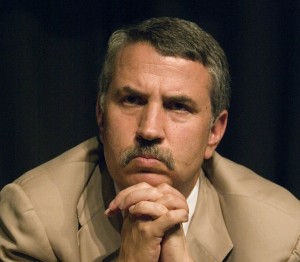
New York Times columnist Thomas L. Friedman
But these “truth-loving” pundits, the likes of star Times columnist Thomas L. Friedman, never seem to reflect on their own responsibility for disseminating devastating “fake news,” such as the falsehoods about Iraq’s WMD, lies that led to the deaths of hundreds of thousands of Iraqis and thousands of American soldiers and spread horrific chaos across the Mideast and into Europe.
Nor does that Iraq experience ever cause Friedman and his fellow pundits to question other Official Narratives, including those relating to the proxy war in Syria or the civil war in Ukraine or the New Cold War with Russia. Meanwhile those of us who ask for substantiating facts or observe that some official claims don’t make sense are subjected to insults as fill-in-the-blank “apologists” or “stooges.”
It seems that any deviation from Officialdom’s pronouncements makes you an enemy of “truth” because “truth” is what the Establishment says is “truth.” And, if you don’t believe me, I refer you to Friedman’s Wednesday’s column.
Friedman leads off the article by quoting himself telling a questioner at a Montreal conference: “I fear we’re seeing the end of ‘truth’.”
But Friedman doesn’t take himself to task by noting how he helped disseminate the Iraq WMD lies and how he flacked for that illegal and disastrous war for years.
If he had ‘fessed up, maybe Friedman could then have explained why he didn’t resign in disgrace and engage in some lifelong penance, preferably including a vow of silence, rather than continuing to spout lots of other nonsense while also continuing to collect a handsome salary and to rack up lucrative speaking fees.
Instead, after wringing his hands over why Americans no longer trust their leaders, Friedman cites another voice of authority, a friend and mentor, Dov Seidman, who complains that “What we’re experiencing is an assault on the very foundations of our society and democracy – the twin pillars of truth and trust. …
“What makes us Americans is that we signed up to have a relationship with ideals that are greater than us and with truths that we agreed were so self-evident they would be the foundation of our shared journey toward a more perfect union – and of respectful disagreement along the way. We also agreed that the source of legitimate authority to govern would come from ‘We the people’.”
Friedman then goes on to share Seidman’s lament that when “we” no longer share basic truths “then there is no legitimate authority and no unifying basis for our continued association.”
The Villains
Friedman identifies the villains in this scenario as “social networks and cyberhacking,” which help “extremists to spread vitriol and fake news at a speed and breadth we have never seen before.” So, it seems those “truth” algorithms can’t arrive soon enough.
However, if you keep reading Friedman’s column, you learn that the real problem is not that “cyberhacking” is generating “fake news,” but rather that it has let Americans see too many ugly truths about their leadership, as happened when WikiLeaks published emails showing how the Democratic National Committee unethically tilted the playing field against Sen. Bernie Sanders; how Hillary Clinton pandered to Goldman Sachs in return for lucrative speaking fees; and how the Clinton Foundation engaged in pay-to-play with rich foreigners.
Friedman’s column acknowledges as much, again citing Seidman: “Social networks and hacking also ‘have enabled us to see, in full color, into the innermost workings of every institution and into the attitudes of those who run them,’ noted Seidman, ‘and that has eroded trust in virtually every institution, and the authority of many leaders, because people don’t like what they see’.”
In other words, the answer to restoring “trust” and to respecting “truth” is to hide ugly realities from the unwashed public. If the people are shielded from the facts, the Establishment will regain its control over “truth” and thus win back the people’s “trust.”
If all this seems upside-down to you – if you think that the real answer is for America’s leaders to behave more responsibly, to let the public in on the real “truth,” and thus to make the people’s “trust” mean something – you must be a “Kremlin stooge.” After all, the current groupthink is that the diabolical Russians slipped WikiLeaks those Democratic emails in a nefarious plot to undermine Americans’ faith in their democracy.
However, if you’re still having trouble with Friedman’s logic, you also must not understand how America’s new media paradigm works. The job of the media is not to provide as much meaningful information as possible to the people so they can exercise their free judgment; it is to package certain information in a way to guide the people to a preferred conclusion.
Pleasant Myths
You see the last thing that Friedman really wants is for the American people to understand their own reality – the good, the bad and the ugly. Instead, we are to have our pretty little heads filled with pleasant myths that make us feel special as we are herded either to the shearing shed or to the slaughterhouse.
For instance, reflect on the history that we hear from Friedman’s friend Seidman about how we “signed up” for those high-minded proclamations in the Declaration of Independence and the U.S. Constitution. The truth is that most of us didn’t “sign up” for anything; we were just born here; and – by the way – the Founders were hypocrites who said and wrote things that they didn’t believe at all.
When slaveholding Thomas Jefferson wrote “We hold these truths to be self-evident, that all men are created equal, that they are endowed by their Creator with certain unalienable Rights, that among these are Life, Liberty and the pursuit of Happiness,” he didn’t believe a word of it. He considered his black slaves inferior beings and thought they deserved none of those “unalienable rights.” He devoted much of his adult life to defending and expanding the institution of slavery, which – by increasing demand for his human chattel – also increased his personal wealth.
When Gouverneur Morris penned the Preamble to the U.S. Constitution, citing “We the People” as the nation’s true sovereigns, he really meant white men of money and means, not poorer white men, nor women, and surely not slaves. His reference to “the People” was another propagandistic affectation.
There may be some irony in the fact that history imparts genuine value to the words of Jefferson and Morris even if they were simply empty propaganda when written. Jefferson’s assertion that “all men are created equal” possessing “unalienable rights” has inspired people around the world – and a literal interpretation of Morris’s florid rhetoric did, in a way, make “We the People” the technical sovereigns of America, as much as today’s ruling elites don’t really believe that either.
Much of what we see from the likes of Friedman is designed to reassert elite control by putting us back in an information-starved dependent state, reliant on the Establishment to parcel out a few morsels of information as it sees fit, the “truth” that the powers-that-be deign to give us. All the better for us to “trust” them.
But the messy behind-the-scenes reality that WikiLeaks and other publishers of “cyberhacked” and leaked material have made available to us – as well as the hypocritical and ambiguous history of the United States – is part of America’s “truth” and thus a reality that should belong to all the people.
Instead, Friedman and other Important People prefer a future in which unpleasant and unpopular truths can be marginalized or erased, all the better to guarantee our “trust” in our leaders.
The Times and the Post, in particular, have consistently conflated any deviation from their preferred groupthinks with “fake news” and “propaganda.” That is why it is particularly troubling when they and other self-proclaimed arbiters of truth, including the pro-NATO propaganda site Bellingcat, sit on Google’s First Draft Coalition and salivate over the prospects of unleashing high-tech algorithms to hunt down and eliminate information that runs counter to what they call the “truth.”
The real truth about truth is that it is almost always complex and often hidden by powerful interests. It requires skepticism, hard work and even courage to reveal it.
Sure, there are occasions when creeps and crazy people purposely make up stuff or ignore reality in pursuit of some nutty conspiracy theory – and that deserves hearty condemnation – but there are many other times when the conventional wisdom is wrong and the people demanding inconvenient facts and asking probing questions turn out to be right.
So, if Friedman and his friends really want to restore trust and truth, they might begin by acknowledging their own flaws and by admitting the times when their groupthinks turned out to be wrong. They also might start respecting the value that dissent has in the difficult pursuit of truth.
Investigative reporter Robert Parry broke many of the Iran-Contra stories for The Associated Press and Newsweek in the 1980s.
Russia-gate Flops as Democrats’ Golden Ticket
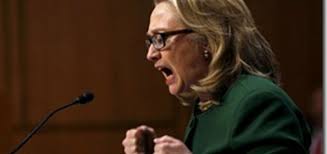
By Robert Parry | Consortium news | June 21, 2017
The national Democratic Party and many liberals have bet heavily on the Russia-gate investigation as a way to oust President Trump from office and to catapult Democrats to victories this year and in 2018, but the gamble appears not to be paying off.
The Democrats’ disappointing loss in a special election to fill a congressional seat in an affluent Atlanta suburb is just the latest indication that the strategy of demonizing Trump and blaming Russia for Hillary Clinton’s 2016 defeat may not be the golden ticket that some Democrats had hoped.
Though it’s still early to draw conclusive lessons from Karen Handel’s victory over Jon Ossoff – despite his raising $25 million – one lesson may be that a Middle America backlash is forming against the over-the-top quality of the Trump-accusations and the Russia-bashing, with Republicans rallying against the image of Official Washington’s “deep state” collaborating with Democrats and the mainstream news media to reverse a presidential election.
Indeed, the Democrats may be digging a deeper hole for themselves in terms of reaching out to white working-class voters who abandoned the party in Pennsylvania, Michigan and Wisconsin to put Trump over the top in the Electoral College even though Clinton’s landslide win in California gave her almost three million more votes nationwide.
Clinton’s popular-vote plurality and the #Resistance, which manifested itself in massive protests against Trump’s presidency, gave hope to the Democrats that they didn’t need to undertake a serious self-examination into why the party is in decline across the nation’s heartland. Instead, they decided to stoke the hysteria over alleged Russian “meddling” in the election as the short-cut to bring down Trump and his populist movement.
A Party of Snobs?
From conversations that I’ve had with some Trump voters in recent weeks, I was struck by how they viewed the Democratic Party as snobbish, elitist and looking down its nose at “average Americans.” And in conversations with some Clinton voters, I found confirmation for that view in the open disdain that the Clinton backers expressed toward the stupidity of anyone who voted for Trump. In other words, the Trump voters were not wrong to feel “dissed.”
It seems the Republicans – and Trump in particular – have done a better job in presenting themselves to these Middle Americans as respecting their opinions and representing their fears, even though the policies being pushed by Trump and the GOP still favor the rich and will do little good – and significant harm – to the middle and working classes.
By contrast, many of Hillary Clinton’s domestic proposals might well have benefited average Americans but she alienated many of them by telling a group of her supporters that half of Trump’s backers belonged in a “basket of deplorables.” Although she later reduced the percentage, she had committed a cardinal political sin: she had put the liberal disdain for millions of Americans into words – and easily remembered words at that.
By insisting that Hillary Clinton be the Democratic nominee – after leftist populist Bernie Sanders was pushed aside – the party also ignored the fact that many Americans, including many Democrats, viewed Clinton as the perfectly imperfect candidate for an anti-Establishment year with many Americans still fuming over the Wall Street bailouts and amid the growing sense that the system was rigged for the well-connected and against the average guy or gal.
In the face of those sentiments, the Democrats nominated a candidate who personified how a relatively small number of lucky Americans can play the system and make tons of money while the masses have seen their dreams crushed and their bank accounts drained. And Clinton apparently still hasn’t learned that lesson.
Citing Women’s Rights
Last month, when asked why she accepted hundreds of thousands of dollars for speaking to Goldman Sachs, Clinton rationalized her greed as a women’s rights issue, saying: “you know, men got paid for the speeches they made. I got paid for the speeches I made.”
Her excuse captured much of what has gone wrong with the Democratic Party as it moved from its working-class roots and New Deal traditions to becoming a party that places “identity politics” ahead of a duty to fight for the common men and women of America.
Demonstrating her political cluelessness, Clinton used the serious issue of women not getting fair treatment in the workplace to justify taking her turn at the Wall Street money trough, gobbling up in one half-hour speech what it would take many American families a decade to earn.
While it’s a bit unfair to personalize the Democratic Party’s problems, Hillary and Bill Clinton have come to represent how the party is viewed by many Americans. Instead of the FDR Democrats, we have the Davos Democrats, the Wall Street Democrats, the Hollywood Democrats, the Silicon Valley Democrats, and now increasingly the Military-Industrial Complex Democrats.
To many Americans struggling to make ends meet, the national Democrats seem committed to the interests of the worldwide elites: global trade, financialization of the economy, robotization of the workplace, and endless war against endless enemies.
Now, the national Democrats are clambering onto the bandwagon for a costly and dangerous New Cold War with nuclear-armed Russia. Indeed, it is hard to distinguish their foreign policy from that of neoconservatives, although these Democrats view themselves as liberal interventionists citing humanitarian impulses to justify the endless slaughter.
Earlier this year, a Washington Post /ABC News poll found only 28 percent of Americans saying that the Democrats were “in touch with the concerns of most people” – an astounding result given the Democrats’ long tradition as the party of the American working class and the party’s post-Vietnam War reputation as favoring butter over guns.
Yet rather than rethink the recent policies, the Democrats prefer to fantasize about impeaching President Trump and continuing a blame-game about who – other than Hillary Clinton, her campaign and the Democratic National Committee – is responsible for Trump’s election. Of course, it’s the Russians, Russians, Russians!
A Problem’s Deep Roots
Without doubt, some of the party’s problems have deep roots that correspond to the shrinking of the labor movement since the 1970s and the growing reliance on big-money donors to finance expensive television-ad-driven campaigns. Over the years, the Democrats also got pounded for being “weak” on national security.
Further, faced with Republican “weaponization” of attack ads in the 1980s, many old-time Democrats lost out to the Reagan Revolution, clearing the way for a new breed of Democrats who realized that they could compete for a slice of the big money by cultivating the emerging coastal elites: Wall Street, Silicon Valley, Hollywood and even elements of the National Security State.
By the 1990s, President Bill Clinton and the Democratic Leadership Council defined this New Democrat, politicians who reflected the interests of well-heeled coastal elites, especially on free trade; streamlined financial regulations; commitment to technology; and an activist foreign policy built around spreading “liberal values” across the globe.
Mixed in was a commitment to the rights of various identity groups, a worthy goal although this tolerance paradoxically contributed to a new form of prejudice among some liberals who came to view many white working-class people as fat, stupid and bigoted, society’s “losers.”
So, while President Clinton hobnobbed with the modern economy’s “winners” – with sleepovers in the Lincoln bedroom and parties in the Hamptons – much of Middle America felt neglected if not disdained. The “losers” were left to rot in “flyover America” with towns and cities that had lost their manufacturing base and, with it, their vitality and even their purpose for existing.
Republican Fraud
It wasn’t as if the Republicans were offering anything better. True, they were more comfortable talking to these “forgotten Americans” – advocating “gun rights” and “traditional values” and playing on white resentments over racial integration and civil rights – but, in office, the Republicans aggressively favored the interests of the rich, cutting their taxes and slashing regulations even more than the Democrats.
The Republicans paid lip service to the struggling blue-collar workers but control of GOP policies was left in the hands of corporations and their lobbyists.
Though the election of Barack Obama, the first African-American president, raised hopes that the nation might finally bind its deep racial wounds, it turned out to have a nearly opposite effect. Tea Party Republicans rallied many white working-class Americans to resist Obama and the hip urban future that he represented. They found an unlikely champion in real-estate mogul and reality TV star Donald Trump, who sensed how to tap into their fears and anger with his demagogic appeals and false populism.
Meanwhile, the national Democrats were falling in love with data predicting that demographics would magically turn Republican red states blue. So the party blithely ignored the warning signs of a cataclysmic break with the Democrats’ old-time base.
Despite all the data on opioid addiction and declining life expectancy among the white working class, Hillary Clinton was politically tone-deaf to the rumbles of discontent echoing across the Rust Belt. She assumed the traditionally Democratic white working-class precincts would stick with her and she tried to appeal to the “security moms” in typically Republican suburbs by touting her neoconservative foreign policy thinking. And she ran a relentlessly negative campaign against Trump while offering voters few positive reasons to vote for her.
Ignoring Reality
When her stunning loss became clear on Election Night – as the crude and unqualified Trump pocketed the electoral votes of Pennsylvania, Michigan and Wisconsin – the Democrats refused to recognize what the elections results were telling them, that they had lost touch with a still important voting bloc, working-class whites.
Rather than face these facts, the national Democrats – led by President Obama and his intelligence chiefs – decided on a different approach, to seek to reverse the election by blaming the result on the Russians. Obama, his intelligence chiefs and a collaborative mainstream media insisted without presenting any real evidence that the Russians had hacked into Democratic emails and released them to the devastating advantage of Trump, as if the minor controversies from leaked emails of the Democratic National Committee and Clinton’s campaign chairman John Podesta explained Trump’s surprising victory.
As part of this strategy, any Trump link to Russia – no matter how inconsequential, whether from his businesses or through his advisers – became the focus of Woodward-and-Bernstein/Watergate-style investigations. The obvious goal was to impeach Trump and ride the wave of Trump-hating enthusiasm to a Democratic political revival.
In other words, there was no reason to look in the mirror and rethink how the Democratic Party might begin rebuilding its relationships with the white working-class, just hold hearings featuring Obama’s intelligence chieftains and leak damaging Russia-gate stuff to the media.
But the result of this strategy has been to deepen the Democratic Party’s reliance on the elites, particularly the self-reverential mavens of the mainstream media and the denizens of the so-called “deep state.” From my conversations with Trump voters, they “get” what’s going on, how the powers-that-be are trying to negate the 63 million Americans who voted for Trump by reversing a presidential election carried out under the U.S. constitutional process.
A Letter from ‘Deplorable’ Land
Some Trump supporters are even making this point publicly. Earlier this month, a “proud deplorable” named Kenton Woodhead from Brunswick, Ohio, wrote to The New York Times informing the “newspaper of record” that he and other “deplorables” were onto the scheme.
“I wanted to provide you with an unsophisticated synopsis of The New York Times and the media’s quest for the implosion of Donald Trump’s presidency from out here in the real world, in ‘deplorable’ country. … Every time you and your brethren at other news organizations dream up a new scheme to get Mr. Trump, we out here in deplorable land increase our support for him. …
“Regardless of what you dream up every day, we refuse to be sucked into your narrative. And even more humorously, there isn’t anything you can do about it! And I love it that you are having the exact opposite effect on those of us you are trying to persuade to think otherwise.
“I mean it is seriously an enjoyable part of my day knowing you are failing. And badly! I haven’t had this much fun watching the media stumble, bumble and fumble in years. I wonder what will happen on the day you wake up and realize how disconnected you’ve become.”
So, despite Trump’s narcissism and incompetence – and despite how his policies will surely hurt many of his working-class supporters – the national Democrats are further driving a wedge between themselves and this crucial voting bloc. By whipping up a New Cold War with Russia and hurling McCarthistic slurs at people who won’t join in the Russia-bashing, the Democratic Party’s tactics also are alienating many peace voters who view both the Republicans and Democrats as warmongers of almost equal measures of guilt.
While it’s certainly not my job to give advice to the Democrats – or any other political group – I can’t help but thinking that this Russia-gate “scandal” is not only lacking in logic and evidence, but it doesn’t even make any long-term political sense.
Investigative reporter Robert Parry broke many of the Iran-Contra stories for The Associated Press and Newsweek in the 1980s.
Qatar hacked by Arab neighbor states, not Russia, as previously reported by CNN
CNN busted by Qatar for spreading more fake news
By Alex Christoforou | The Duran | June 21, 2017
The reason cited by CNN for the ongoing Saudi-Qatari conflict, in which a coalition of Saudi-led states cut off diplomatic and economic ties with Qatar, originates with a CNN report (via its always handy anonymous sources bullwhip), that Russia is believed to have been behind a Qatar news hack.
CNN propaganda word-play is highlighted in bold…
US investigators believe Russian hackers breached Qatar’s state news agency and planted a fake news report that contributed to a crisis among the US’ closest Gulf allies, according to US officials briefed on the investigation.
The FBI recently sent a team of investigators to Doha to help the Qatari government investigate the alleged hacking incident, Qatari and US government officials say.
Intelligence gathered by the US security agencies indicates that Russian hackers were behind the intrusion first reported by the Qatari government two weeks ago, US officials say. Qatar hosts one of the largest US military bases in the region.
The alleged involvement of Russian hackers intensifies concerns by US intelligence and law enforcement agencies that Russia continues to try some of the same cyber-hacking measures on US allies that intelligence agencies believe it used to meddle in the 2016 elections.
The goal of Russian hackers, according to CNN’s unnamed US officials…
US officials say the Russian goal appears to be to cause rifts among the US and its allies. In recent months, suspected Russian cyber activities, including the use of fake news stories, have turned up amid elections in France, Germany and other countries.
It’s not yet clear whether the US has tracked the hackers in the Qatar incident to Russian criminal organizations or to the Russian security services blamed for the US election hacks. One official noted that based on past intelligence, “not much happens in that country without the blessing of the government.”
The FBI and CIA declined to comment. A spokeswoman for the Qatari embassy in Washington said the investigation is ongoing and its results would be released publicly soon.
Russian officials immediately denied the allegations, and they were correct to do so, as moments ago Qatar announced that the news agency cited by CNN as being “hacked by Russian” was in reality hacked by states linked to the boycott and blockade of Qatar.
According to a report cited by Reuters, Qatar’s attorney general has stated that Arab neighbor states (Saudi Arabia, Egypt, Bahrain and the United Arab Emirates) were responsible for the hacking of Qatar’s state news agency…
Qatar’s attorney general said on Tuesday his country has evidence that the hacking of Qatar’s state news agency was linked to countries that have severed ties with Doha.
Saudi Arabia, Egypt, Bahrain and the United Arab Emirates cut their ties with Doha earlier this month over comments alleged to have been made by the Emir Sheikh Tamim bin Hamad al-Thani and posted briefly on the Qatar News Agency’s website on May 23 which Doha said had been hacked.
The comments quoted Sheikh Tamim as cautioning against confrontation with Iran and defending the Palestinian Islamist group Hamas and Hezbollah, a Lebanese Shi’ite movement allied with Tehran.
U.S. and European officials have said that while U.S government agencies and experts were convinced that the news agency and the Qatari government’s Twitter feed were hacked, they have not yet determined who did the hacking.
“Qatar has evidence that certain iPhones originating from countries laying siege to Qatar were used in the hack,” the Qatari Attorney General Ali Bin Fetais al-Marri told reporters in Doha.
Marri said it was too early to explicitly name the countries responsible for the hacking and declined to comment when he was asked if individuals or states were behind it.
Spoiling for a Wider War in Syria
By Robert Parry | Consortium News | June 20, 2017
The U.S. mainstream media’s near universal demonization of Syrian President Bashar al-Assad and Russian President Vladimir Putin – along with similar hatred directed toward Iran and Hezbollah – has put the world on a path toward World War III.
Ironically, the best hope for averting a dangerous escalation into a global conflict is to rely on Assad, Putin, Iran and Hezbollah to show restraint in the face of illegal military attacks by the United States and its Mideast allies inside Syria.
In other words, after the U.S. military has bombed Syrian government forces on their own territory and shot down a Syrian warplane on Sunday – and after Israel has launched its own strikes inside Syria and after Saudi Arabia and its Gulf allies have financed and armed jihadists to overthrow Assad – it is now up to the Syrian government and its allies to turn the other cheek.
Of course, there is also a danger that comes from such self-control, in that it may encourage the aggressors to test the limits even further, seeing restraint as an acceptance of their impunity and a reason to ignore whatever warnings are issued and red lines drawn.
Indeed, if you follow The New York Times, The Washington Post, The Wall Street Journal and other big U.S. news outlets, perhaps the most striking groupthink that they all share is that the U.S. government and its allies have the right to intervene militarily anywhere in the world. Their slogan could be summed up as: “International law – that’s for the other guy!”
In this upside-down world of American hegemony, Assad becomes the “aggressor” when he seeks to regain control of Syrian territory against armed insurgents, dominated by Al Qaeda and Islamic State (ISIS), or when he protests the invasion of Syrian territory by foreign forces.
When Assad legally seeks help from Russia and Iran to defeat these foreign-armed and foreign-backed jihadists, the U.S. mainstream media and politicians treat his alliances as improper and troublemaking. Yet, the uninvited interventions into Syria by the United States and its various allies, including Turkey and Israel, are treated as normal and expected.
Demanding Escalation
The preponderance of U.S. media criticism about U.S. policy in Syria comes from neoconservatives and liberal interventionists who have favored a much more ambitious and vigorous “regime change” war, albeit cloaked in prettier phrases such as “safe zones” and “no-fly zones.”
So, you have Tuesday’s Wall Street Journal editorial, which praises Sunday’s U.S. shoot-down of a Syrian military plane because it allegedly was dropping bombs “near” one of the U.S.-backed rebel groups – though the Syrians say they were targeting an Islamic State position.
Although it was the U.S. that shot down the Syrian plane over Syria, the Journal’s editorial portrays the Russians and Syrians as the hotheads for denouncing the U.S. attack as a provocation and warning that similar air strikes will not be tolerated.
In response, the Journal’s neocon editors called for more U.S. military might hurled against Syria and Russia:
“The risk of escalation is real, but this isn’t a skirmish the U.S. can easily avoid. Mr. Assad and his allies in Moscow and Tehran know that ISIS’s days are numbered. They want to assert control over as much territory as possible in the interim, and that means crushing the SDF [the U.S.-backed Syrian Democratic Forces].
“The Russian threat on Monday to target with anti-aircraft missiles any U.S. aircraft flying west of the Euphrates River in Syria is part of the same intimidation strategy. Russia also suspended a hotline between the two armed forces designed to reduce the risk of a military mistake. Iran, which arms and assists Mr. Assad on the ground, vowed further Syrian regime attacks against SDF, all but daring U.S. planes to respond amid the Russian threat.
“The White House and Pentagon reacted with restraint on Monday, calling for a de-escalation and open lines of communication. But if Syria and its allies are determined to escalate, the U.S. will either have to back down or prepare a more concerted effort to protect its allies and now U.S. aircraft.
“This is a predicament President Obama put the U.S. in when his Syrian abdication created an opening for Vladimir Putin to intervene. Had the U.S. established a no-fly or other safe zone to protect refugees, the Kremlin might have been more cautious.”
As senior U.S. commanders have explained, however, the notion of a sweet-sounding “no-fly or other safe zone” would require a massive U.S. military campaign inside Syria that would devastate government forces and result in thousands of civilian deaths because many air defenses are located in urban areas. It also could lead to a victory for Al Qaeda and/or its spinoff, Islamic State, a grisly fate for most Syrians.
Propaganda Value
But the “safe zone” illusion has great propaganda value, essentially a new packaging for another “regime change” war, which the neocons lusted for in Syria as the follow-on to the Iraq invasion in 2003 but couldn’t achieve immediately because the Iraq War turned into a bloody disaster.
Instead, the neocons had to settle for a proxy war on Syria, funded and armed by the U.S. government and its regional allies, relying on violent jihadists to carry out the brunt of the fighting and killing. When Assad’s government reacted clumsily to this challenge, the U.S. mainstream media depicted Assad as the villain and the “rebels” as the heroes.
In 2012, the Defense Intelligence Agency, then under the direction of Lt. Gen. Michael Flynn, warned that the U.S. strategy would give rise to “a declared or undeclared Salafist principality in eastern Syria.”
Flynn went further in a 2015 interview when he said the intelligence was “very clear” that the Obama administration made a “willful decision” to back these jihadists in league with Middle East allies. (Flynn briefly served as President Trump’s national security adviser but was ousted amid the growing Russia-gate “scandal.”)
Only in 2014, when Islamic State militants began decapitating American hostages and capturing cities in Iraq, did the Obama administration reverse course and begin attacking ISIS while continuing to turn a blind-eye to the havoc caused by other rebel groups allied with Al Qaeda’s Nusra Front, including many outfits deemed “moderate” in the U.S. lexicon.
But the problem is that almost none of this history exists within the U.S. mainstream narrative, which – as the Journal’s neocon editors did on Tuesday – simply depicts Obama as weak and then baits President Trump to show more military muscle.
What U.S. National Interests?
The Journal editorial criticized Trump for having no strategy beyond eradicating ISIS and adding: “Now is the time for thinking through such a strategy because Syria, Russia and Iran know what they want. Mr. Assad wants to reassert control over all of Syria, not a country divided into Alawite, Sunni and Kurdish parts. Iran wants a Shiite arc of influence from Tehran to Beirut. Mr. Putin will settle for a Mediterranean port and a demonstration that Russia can be trusted to stand by its allies, while America is unreliable. None of this is in the U.S. national interests.”
But why isn’t this in U.S. national interests? What’s wrong with a unified secular Syria that can begin to rebuild its shattered infrastructure and repatriate refugees who have fled into Europe, destabilizing the Continent?
What’s the big problem with “a Shiite arc of influence”? The Shiites aren’t a threat to the United States or the West. The principal terror groups – Al Qaeda and ISIS – spring from the extremist Saudi version of Sunni Islam, known as Wahhabism. I realize that Israel and Saudi Arabia took aim at Syria in part to shatter “the Shiite arc,” but we have seen the horrific consequences of that strategy. How has the chaos that the Syrian war has unleashed benefited U.S. national interests?
And so what that Russia has a naval base on the Mediterranean Sea? That is no threat to the United States, either.
But what is the alternative prescription from the Journal’s neocon editors? The editorial concludes: “The alternative would be to demonstrate that Mr. Assad, Iran and Russia will pay a higher price for their ambitions. This means refusing to back down from defending U.S. allies on the ground and responding if Russia aircraft or missiles attempt to take down U.S. planes. Our guess is that Russia doesn’t want a military engagement with the U.S. any more than the U.S. wants one with Russia, but Russia will keep pressing for advantage unless President Trump shows more firmness than his predecessor.”
So, rather than allow the Syrian government to restore some form of order across Syria, the neocons want the Trump administration to continue violating international law, which forbids military invasions of sovereign countries, and keep the bloodshed flowing. Beyond that, the neocons want the U.S. military to play chicken with the other nuclear-armed superpower on the assumption that Russia will back down.
As usual, the neocon armchair warriors don’t reflect much on what could happen if U.S. warplanes attacking inside Syria are shot down. One supposes that would require President Trump to authorize a powerful counterstrike against Russian targets with the possibility of these escalations spinning out of control. But such craziness is where a steady diet of neocon/liberal-hawk propaganda has taken America.
We are ready to risk nuclear war and end all life on the planet, so Israel and Saudi Arabia can shatter a “Shiite arc of influence” and so American politicians don’t have to feel the rhetorical lash of the neocons and their liberal-hawk sidekicks.
Investigative reporter Robert Parry broke many of the Iran-Contra stories for The Associated Press and Newsweek in the 1980s.
Exploitation of children in propaganda war against Syria continues
By Eva Bartlett | RT | June 19, 2017
In December 2016, filmmakers in Egypt were arrested in the process of staging an Aleppo video with two children: the girl was meant to look injured, and the boy was to vilify both Russia and Syria.
Even the corporate media reported on it, including: “The girl’s dress, covered in red paint, was what caught the attention of a police officer driving by, the ministry said.”
The incidences of fakery and hoaxes, however, does not end there.
Also in December, the scene of a ‘Girl running to survive after her family had been killed’ was said to be in Aleppo. In reality, it was a scene from a Lebanese music video, which someone at some point clearly chose to depict as in Aleppo, for the same anti-Russian, anti-Assad vilification purposes.
In November 2014, a clip dubbed ‘Syrian hero boy’ went viral, viewed over 5 million times already by mid-November. The clip showed what appeared to be a little boy saving his sister from sniper gunfire, and was assumed to have been in Syria.
The Telegraph’s Josie Ensor didn’t wait for any sort of verification of the video which she cited as having been uploaded on November 10, the next day writing: “… it is thought the incident took place in Yabroud – a town near the Lebanese border which was the last stronghold of the moderate Free Syrian Army. Experts tell the paper they have no reason to doubt its authenticity. The UN has previously accused the Syrian regime of ‘crimes against humanity’ – including the use of snipers against small children.”
On November 14, the BBC brought on ‘Middle East specialist’ Amira Galal to give her expert opinion on the clip. She asserted: “We can definitely say that it is Syria, and we can definitely say that it’s probably on the regime frontlines. We see in the footage that there is a barrel, it’s painted on it the Syrian army flag.”
Once again, the so-called ‘experts’ got it wrong. The barrel which Galal referred to had a poor imitation of the flag of Syria painted on it, the flag’s color sequence out of order. The clip she was so certain had been filmed in government areas of Syria was actually produced in Malta by Norwegian filmmakers.
From Video to Twitter Hoaxes
In the propaganda war on Syria, there are convincing lies, and then there are the blindingly clear hoaxes. In the latter realm, the Bana al-Abed Twitter persona takes first prize. The child is being abused by her own family who have seemingly forced her to pretend she can speak English (she cannot).
We were meant to believe that sophisticated and nuanced tweets, often calling for Western intervention, are coming from an English-illiterate seven-year-old girl or her mother — whose husband was a militant in Aleppo.
In a detailed article, Barbara McKenzie looks at the campaign which uses the brand Bana for war propaganda. An excerpt includes: “Bana, the little girl supposedly tweeting from Aleppo, but actually the front for an account run from London, was selected to be the empathetic face of the campaign for a no-fly zone in Syria. Her account was tailored to create the impression of perpetual bombing, perpetual war crimes, on the part of Russia and the Syrian government.”
Bana not only tweeted with impossible frequency from eastern Aleppo, defying any internet lapses those of us who have gone to Aleppo have experienced. Whatever the actual explanation for her alleged preciousness and high-tech abilities, the child was clearly exploited, and continues to be.
Her twitter account continues its advocacy for Western intervention in Syria. Not at all suspicious.
Real Poster Children Brutally Beheaded, Sniped, Starved, Maimed
Effective war propaganda tugs at the heart strings, using many tactics, including adorable children in threatening situations, or dead, and comes hand in hand with condemnations for crimes committed, allegedly, by the villain(s) being caricatured. In the following instances, children being injured or murdered did occur, but the condemnations were muted or not at all.
A few weeks prior to the photo of Omran Daqneesh going viral as the poster child for suffering in Syria, terrorists of the Nour al-Din al-Zenki faction beheaded a boy said to be around 12 years old.
Although the decapitators filmed the entire savage act, posing for gleeful selfies as they tortured the boy prior to murdering him, leaders and media in the US took little notice of the horrific slaughter. Ten days after the questionable events which led to the light injury of Omran, two young boys in the Idlib villages of Foua and Kafraya were shot in their head and neck respectively by a sniper from Jaysh al-Fateh terrorists in the village of Binnish close by. The injuries were serious. They were rendered even more serious given that the villages had been completely surrounded and fully under siege by terrorists since March 2015.
In April 2017, a convoy of children, women, elderly and ill being evacuated from Foua were attacked by a terrorist explosion, with reports over 200 murdered, including 116 children. The attack included luring with potato chips and filming children in the convoy before later blowing them up and claiming to be rescuing them. Not only did these terrorists murder civilians and children, but they staged the scene to then look like heroes.
Indeed, in the West this massacre was called a “hiccup” and little denunciation was made about the vast numbers of dead, let alone the injured.
In October, 2016, Press TV was one of the few outlets to report on another adorable Aleppo boy, Mahmoud, “a six-year-old Syrian boy who was born without arms, and recently lost both of his legs after stepping on a mine planted by militants in Syria’s Aleppo.” The report includes scenes of Mahmoud showing his resilience, adjusting to life without any limbs. But for corporate media, Mahmoud’s were the wrong villains.
Terrorist bombings and snipings have killed children in schools and homes throughout Syria over the years, including the October 2014 terrorist car and suicide bombing of the Akrama Al-Makhzoumi School in Homs, killing at least 41 children by conservative estimates, or up to 48 children by other reports, along with women and other civilians, as well as attacks on Aleppo schools, as I detailed earlier.
In Aleppo and in Damascus, I have visited numerous hospitals and seen endless poster children of suffering in Syria. The differences between these children and those which Western and Gulf media present us, is that these children were murdered, rendered critically-injured, or maimed by the bombs, mortars and snipings of terrorists which the West presents as “moderate rebels”, so their stories will never be front page, much less heard.
The Bitter Truth
The Western and Gulf media work in lockstep with the narratives emanating from Washington on Syria. It is not coincidental that certain photos and stories of Syrian children go viral, while other more damning photos and sordid realities get no notice period.
Regarding the Omran case, we now know that he was not gravely hurt as media tried to imply, that his family have gone back to their lives in Aleppo, and the exploitation and lies around Omran cannot continue.
When I met them on June 6th, they showed no signs of the duress which terrorists and their backers—which include Western corporate media—claim. Instead, some neighbors were over, discussing media fabrications around Omran.
However, the children who are believed to have been exploited and used in the 2013 Ghouta chemical weapons fabrications remain missing and have not gone back to their lives, nor have their families in the Latakia countryside.
In March 2017, physicians with Swedish Doctors for Human Rights, after examining a White Helmet’s video, wrote: “… Swedish medical doctors, specialists in various fields, including pediatrics, have revealed that the life-saving procedures seen in the film are incorrect – in fact life-threatening – or seemingly fake, including simulated resuscitation techniques being used on already lifeless children.”
The article noted that Dr Lena Oske, a Swedish medical doctor and general practitioner, said of an adrenaline injection shown in the video, “If not already dead, this injection would have killed the child!”
While in al-Waer, Homs, on June 9, 2017, speaking with a woman who had returned not long after the last terrorist had been bused out in the government’s reconciliation agreement, she told me a story of her friend from the area. Bearing in mind that this is second hand information (and that I didn’t have time to stay another day to meet the friend in question), I’ll leave her words and this 2012 link as food for thought regarding the use of children, alive or day, for war propaganda against Syria: “In 2014, my friend’s son, Louay was leaving his school. A mortar fell on the street nearby and he was hit with shrapnel. The Red Crescent took him in an ambulance to al-Bour, a nearby aid association, which couldn’t treat him, so he was taken to a government hospital in al-Zahra’a. They tried to save him, but he died.
They took him back to al-Bour where they cleaned him for burial. While my friend was waiting, people from al-Bour carried him onto the street yelling the regime killed him, look what the regime does to children.'”
Later, she saw on both al-Jazeera and al-Arabiya footage of her son, with men blaming the “regime” for killing children in Syria.
But she didn’t agree. The government helped her son and tried to save his life. He was 7 years old.
Eva Bartlett is a freelance journalist and rights activist with extensive experience in the Gaza Strip and Syria. Her writings can be found on her blog, In Gaza.
Theresa May’s war on the internet

By Dan Glazebrook | RT | June 17, 2017
Last night, Theresa May was in France for a joint press conference with new French President Emmanuel Macron. As far as I could tell, it was only Al Jazeera that broadcast it live in Britain.
The only time it was mentioned during BBC radio 4’s flagship news show, the Today program, was during the five-minute religious slot Thought for the Day. It was not covered in the news section at all.
But this should be major, major news. This was Theresa May’s first policy announcement since last week’s election. And it wasn’t on Brexit, the reason she supposedly called the election. It wasn’t on austerity, which she apparently told her own MPs was over in a private session two days ago. No, her first major public policy announcement was – the end of internet freedom.
Specifically, what was announced was that both countries would be introducing heavy fines for internet companies that failed to remove what they, very loosely, defined as “extremist content.”
Now, taken at face value, this might seem to be referring to ISIS [Islamic State, formerly ISIL] recruitment videos or online suicide bombing training videos, or whatever. But the direct encouragement of violence is already illegal. So, what exactly is being proposed? Who exactly will be targeted?
It was former PM David Cameron who originally came up with the idea that “nonviolent extremism” should be criminalized alongside violent extremism. Intriguingly, as an example of what he meant, he included the idea that the “West is bad,” as well as elsewhere arguing that the promotion of “wild conspiracy theories” would also qualify.
Well, the collusion between, for example, British intelligence and Al-Qaeda might sound like a wild conspiracy theory. But, in the context of Britain and Al-Qaeda’s shared enemies in the form of Gaddafi and Assad, this collusion actually did take place. MI5 was facilitating the passage of fighters between Britain, Syria, and Libya, the SAS were training them, and MI6 was equipping them. Indeed, this collusion is not even secret: as late as 2016 the British government openly pledged to send more British troops to Syria to train rebel groups that even the BBC admitted were likely to be allied with Al-Qaeda.
So, is the publication of this information going to be barred now as extremist? Will YouTube and Facebook and Google and Twitter pull these revelations in fear of getting fined for promoting the “wild conspiracy theories” that, according to Cameron, qualify as extremism?
It is clear why the British state is so keen to clampdown on the internet once this kind of information starts going viral. But the election just gone has raised the stakes even further, demonstrating that, if the government does not reassert its authority over the internet, it may well have lost control of the political narrative for good. Let’s review what’s just happened:
A month ago, almost everybody was predicting a wipeout for the Labour party, a repeat of the disastrous 1983 election in which Margaret Thatcher really did win the landslide Theresa May had been predicting. Oh, how times have changed.
Back in 1983, pretty much everyone got their political information from either the newspapers or the BBC. In other words, between them, the big press barons – about 4 or 5 of them – and the British state had total monopoly control of political information.
This meant that when they portrayed Labour leader Michael Foot as a bumbling Oaf, that became the abiding image of him. A tiny handful of millionaire Tories effectively had total control over the public image of every politician in the land.
This time around, it’s a different story. The newspapers and the TV threw everything they could at Corbyn – ‘he’s a terror-supporting, magic money tree-mongering, Brexit-frustrating Remainiac’ – but people weren’t buying. And why weren’t they buying? Because they’re not reading the newspapers, and they’re not watching terrestrial TV. This time around, people, young people in particular, were increasingly getting their political information from social media – and on social media, the conservatives did not control the narrative.
For example, an RT interview I did about British collusion with terrorism shortly before the election got over one and half million views on Facebook – higher than the daily readership of the Daily Mail. Jonathan Pie’s fantastic piece tearing apart the Tory’s ‘strong and stable’ nonsense, got 11 million views. That is two and half million more than the combined circulation of the Daily Mail, Daily Express, Guardian, Sun, Daily Star, Times, Telegraph, Evening Standard, and the Mirror and Metro – the country’s ten leading newspapers. And hilariously, when I had just watched one of Theresa May’s speeches on YouTube during the campaign, immediately afterwards, YouTube automatically played Liar Liar, the anti-May anthem that reached number four in the UK pop charts last week. And I suspect YouTube auto played that video after anyone watched anything about Theresa May due to the algorithms that they employ.
So, you can see why the Tories are furious about the internet. They, and the British state more generally, have totally lost control of the narrative. And that’s what cost them this election.
So that’s what this new crackdown on the internet is really about; it’s about regaining control of that narrative. It’s about turning the CEOs of YouTube, Facebook, Twitter, and Google into the Rupert Murdochs of the 21st century – the political allies and mouthpieces of the British state and the capitalist class, and doing this by forging a new relationship that explicitly punishes them if they refuse to play ball.
Even the government’s own ‘reviewer of terrorism laws’, Max Hill, has come out against the move, explaining that “my view is that… we do have the appropriate laws in place, and that essentially the police and security services, and those whose job it is to keep us safe, do have the powers at their disposal.”
He noted that, in his experience, the police unit responsible for identifying online extremist material receive full co-operation from the tech companies already.
Similarly, The Open Rights Group has warned that “to push on with these extreme proposals for internet clampdowns would appear to be a distraction from the current political situation and from effective measures against terror.”
“The government already has extensive surveillance powers. Conservative proposals for automated censorship of the internet would see decisions about what British citizens can see online being placed in the hands of computer algorithms, with judgments ultimately made by private companies rather than courts. Home Office plans to force companies to weaken the security of their communications products could put all of us at a greater risk of crime.”
Those who are worried about extremism should be calling for an end to the British intelligence services’ collaboration and facilitation of terrorism and the extradition of those who have carried out or facilitated attacks abroad, as well as an international investigation and prosecutions of all those involved.
Theresa May’s new proposals do nothing to end the impunity of her own government in the grooming and facilitation of terrorism. Rather, they serve to extend this impunity. They must be resisted.
Dan Glazebrook is a freelance political writer who has written for RT, Counterpunch, Z magazine, the Morning Star, the Guardian, the New Statesman, the Independent and Middle East Eye, amongst others. His first book “Divide and Ruin: The West’s Imperial Strategy in an Age of Crisis” was published by Liberation Media in October 2013. It featured a collection of articles written from 2009 onwards examining the links between economic collapse, the rise of the BRICS, war on Libya and Syria and ‘austerity’. He is currently researching a book on US-British use of sectarian death squads against independent states and movements from Northern Ireland and Central America in the 1970s and 80s to the Middle East and Africa today.
Oliver Stone’s Israel remarks CENSORED by Stephen Colbert’s Late Show
By Adam Garrie | The Duran | June 16, 2017
Reports have surfaced that during his heated exchange with Stephen Colbert, Oliver Stone responded to statements from Colbert repeating the tired narrative about Russia interfering in the US election by bringing up an elephant in the room that many media outlets have totally ignored.
Stone said of alleged and thus far totally unproved Russian interference,
“Israel had far more involvement in the US election than Russia, why don’t you ask me about that?”
Colbert, quick to end that part of the discussion replied,
“I’ll ask you about that when you make a documentary about Israel”
This section of the interview was edited out of the final broadcast, but multiple sources, including many pro-Israel sources testify to the existence of the in-studio exchange.
Few could reasonably deny that the pro-Israel lobby in the US is extremely power, well funded and influential.
Oliver Stone touched on a deeply important issue, one that clearly did not fit the anti-Russia stance of Stephen Colbert and his producers.
Featured Video
US IRAN TALKS: Who Are the Crazy Ones Here? /Lt Col Daniel Davis
or go to
Aletho News Archives – Video-Images
From the Archives
Woolsey Fire started at Santa Susana Field Lab — where “radioactive materials released were never accurately measured”
By John Laforge | CounterPunch | November 30, 2018
In my Nov. 16 column, I reported on potential radiation risks posed by California’s Woolsey wildfire having burned over parts or all of the Santa Susana Field Laboratory—south of Simi Valley, Calif., 30 miles outside Los Angeles—site of at least four partial or total nuclear reactor meltdowns.
The field laboratory operated 10 experimental reactors and conducted rocket engine tests. In his 2014 book Atomic Accidents, researcher James Mahaffey writes, “The cores in four experimental reactors on site … melted.” Reactor core melts always result in the release of large amounts of radioactive gases and particles. Clean up of the deeply contaminated site has not been conducted in spite of a 2010 agreement.
Los Angeles’s KABC-7 TV reported Nov. 13 that the Santa Susana lab site “appears to be the origin of the Woolsey Fire” which has torched over 96,000 acres. Southern Calif. Public Radio said, “According to Cal Fire, the Woolsey Fire started on the afternoon of Thursday, Nov. 8 … on the Santa Susana site.” … continue
Blog Roll
 Aletho News
- US IRAN TALKS: Who Are the Crazy Ones Here? /Lt Col Daniel Davis
- Talks with the US end without a deal over excessive US demands: Iran
- Feeling Better, Getting Worse: How Psychiatric Drugs Create the Illusion They Cure
- ‘Nobody Told Me’: Former Mental Health Patient Calls Out Dangerous Side Effects of Psychiatric Drugs
- Dr. Abu-Sitta: Beirut ‘felt like a day in Shifa Hospital’
- Iran Has Won the War, It Will Be Up to the US to Secure the Peace: Mohammad Marandi
- Iran condemns assassination threats against Iranian negotiators amid US talks
- Brussels cannot say where its own pipeline inspectors are as Hungary’s oil lifeline remains shut
- Israel’s Iran War: Myth and Reality
- Between war and industrial breakdown: The US-Israeli attrition crisis
- If Americans Knew
- Pro-Israel ‘Thinktanks’ and Individuals who Influence U.S. Foreign Policy
- Mearsheimer reveals how Israel dictates US policies on Iran, Gaza – video
- After killing 350+, Israel still has a “score to settle” with Lebanon before ceasefire – Daily Update
- Military aid to Israel emerges as the latest political litmus test for Democrats
- The only Palestinian children’s rights organization closes following years-long Israeli campaign against it
- ‘I Can’t Forget the Smell’: Lebanese Reel After Israel Kills Over 300 in Single Day
- DNC Shoots Down Resolutions Calling Out AIPAC and Limiting Arms to Israel
- TCN: Is Israel Blackmailing President Trump?
- Israel killed at least 303 Lebanese yesterday – who were they? Daily Update
- Amnesty: Urgent – Protect Lebanese civilians from brutal escalation in Israeli attacks
- No Tricks Zone
- German Expert: Heat Dome Led To Record Temps In Western USA…Warmer In 1934, 1936
- New Study: No Linear Warming Or Glacier Retreat Along Northern Antarctic Peninsula Since 1980s
- An Inconvenient Tree: Uncovered In Alps… Europe Much Warmer Than Today 6000 Years Ago
- New Study Reports A 60% Slowdown In Greenland’s Ice Loss Rate In The Last Decade
- Low Intensity Tornado Wrecks Major Solar Farm, Creating A Potential Toxic Dump
- New Study Finds Warming Saves Lives…Cold Temperatures 12 Times More Deadly Than Excess Heat
- German Science Blog Accuses PIK Climate Institute Of Hallucinating Climate Tipping Points
- Devastating Assessment Of Comirnaty Vaccine By Former Senior Pfizer Europe Toxicologist
- New Study: CO2 Is ‘Effectively Negligible’ As An Explanatory Climate Change Factor Since 2000
- Former Pfizer Toxicologist Dr. Helmut Sterz Tells Bundestag Hearing Pfizer Vaccine Should Have Never Been Approved
 Aletho News