Egypt Police Bust Staged Photo Shoot of ‘Wounded Aleppo Children’
Al-Manar – December 20, 2016
 Egypt’s police detained a man for making staged “wounded children” photos, which he was planning to use to misrepresent on social media as photos of destruction and injured people in Syria’s Aleppo, the Egyptian Interior Ministry said on Monday.
“The shooting team, which included photographer’s assistants and parents of the children, was detained in the Egypt’s province of Port Said,” the Ministry said on Facebook.
According to the Ministry, the police witnessed the shooting process, which was taking place near the vestiges of a building destroyed as illegal under the decision of the local authorities.
A girl standing in a white dress covered in “blood” that later proved to be paint drew attention of a police officer driving by. The girl held a teddy bear covered in the same “blood” and had her arm “bandaged”.
The photographer reportedly admitted that he was going to publish these photos on social media as pictures of Aleppo.
© Photo: Facebook / MoiEgy
Russia-Hack Story, Another Media Failure
By Joe Lauria | Consortium News | December 19, 2016
President Obama admitted in his press conference on Friday that his government hasn’t released any evidence yet of Russian interference in the election, but he said some would be coming.
That’s proof that an uncritical press has already printed stories as if true without any evidence just on the say-so of the Central Intelligence Agency, an organization long dedicated to deception, disinformation and meddling in other countries’ elections, not to mention arranging coups to overthrow elected governments.
Forty years ago, the established press would have been skeptical to buy anything the CIA was selling after a series of Congressional committees exposed a raft of criminal acts and abuses of power by the CIA and other intelligence agencies. Today’s journalists work for newspapers that fraudulently still bear the names New York Times and Washington Post, but they are no longer the same papers.
The vast U.S. news media also is not the same. The working journalist today is living off the reputation for skepticism and determination to get beyond government pronouncements that was established by their papers decades ago. Rather than add to that reputation, the credibility of the biggest newspapers continues to erode.
Both the Times and the Post should today be stained by their credulous reporting of official lies about weapons of mass destruction in Iraq. Instead of showing professional skepticism, the big papers became cheerleaders for an illegal invasion that killed hundreds of thousands of people and left behind a disaster that still reverberates today. Neither the Times nor the Post suffered any consequences and have picked up where they left off, still uncritically reporting anonymous U.S. officials without demanding proof.
On the contrary, any reporter who did demand evidence was in danger of career consequences. An editor for a newspaper chain that I was reporting for called me to chew me out because he said my stories were not in support of the Iraq war effort. He told me his son was a Marine. I told him I was sure he was proud but that my job was to report the news based on the evidence. On the very day when the invasion began, I was fired.
Of course, the television networks, including CNN, were most egregious for selling the war. I was shocked when I heard reporter Kyra Philips from aboard a U.S. warship in the Persian Gulf gleefully announce: “Welcome to Shock and Awe!” just after a cruise missile was shown being fired. The people it killed on the receiving end were almost never mentioned.
CNN, which has accepted Russian interference in the U.S. election as a given, is also living off its reputation of a once very serious news organization. On its very first broadcast on June 1, 1980, Cable News Network aired as its second story a lengthy investigative report on faulty fuel gauges in commercial airliners. It broadcast an in-depth live report from the Middle East, and veteran newsman Daniel Schorr interviewed and challenged President Jimmy Carter.
But 1980 was when the period of skeptical, professional journalism that demanded proof from its own government started to decline as Ronald Reagan was elected. He worked to stamp out the skepticism bred from Watergate, Vietnam and the Congressional intelligence hearings. Reagan did this, in part, by resurrecting the most obvious and adolescent myths about America. And he worked with the CIA to manage America’s perceptions away from the critical thinking of the 1970s, as journalist Robert Parry has extensively reported.
There have been a few periods in American journalism when demanding proof from government was expected. The muckraking period led by Lincoln Steffens of the Progressive Era was one. The 1970s was another. But mostly it has been a business filled with careerists who live vicariously through the powerful people they cover, disregarding the even greater power the press has to cut the powerful down to size.
Egregious Case
The reporting on the supposed Russian hack of the elections is one of the most egregious examples of unprofessional journalism since 2003, particularly because of the stakes involved.
There have now been a slew of stories, each of which seems to offer a new promise of evidence, such as one under the ludicrous New York Times headline, “C.I.A. Judgment on Russia Built on Swell of Evidence.” But when you read the piece, its only sources are still unnamed intelligence officials. A later 8,000-word Times article was the same, as though the length by itself was supposed to lend it more credibility.
If there were any doubts, Obama wiped them away with his admission that no evidence had been released. Worse still, perhaps, is that counter-evidence has been suppressed, another consistent feature of today’s journalism.
The former British diplomat Craig Murray, has written and told at least two radio interviewers that the Democratic National Committee and John Podesta emails were not obtained by WikiLeaks through hacks, but instead from leaks by American insiders.
This story was totally ignored by established media until the Daily Mail in London reported it online, but incorrectly said Murray had himself received the leak. In the U.S., only The Washington Times reported the story, quoting the Mail. But that story took a swipe at Murray’s reputation, merely saying he was “removed from his diplomatic post amid allegations of misconduct.” In fact, Murray was let go for blowing the whistle on U.K. use of evidence extracted by torture by the corrupt Karimov administration in Uzbekistan. The rest of the Washington Times story just repeats what every other reporter has written about Russian interference.
Two Obstacles
Even if it were proven that Russian government operatives hacked these emails as part of their intelligence gathering, there remains the additional evidentiary hurdle that they then supplied the data to WikiLeaks, when the recipients, including WikiLeaks founder Julian Assange, say the source or sources weren’t Russians.
It’s also noteworthy that none of the information in the emails has been shown to be false. The leaks provided real insights into how the DNC favored Hillary Clinton over Sen. Bernie Sanders and revealed some shady practices of the Clinton Foundation as well as the contents of Clinton’s speeches to Wall Street bankers that she had tried to hide. In other words, the leaks gave voters more information about Hillary Clinton, confirming what many voters already believed: that she was beholden to the financial sector and benefited from her insider connections. But none of that was particularly news.
It is important to note, too, that Obama himself in his press conference said there is zero evidence Russia tried to hack into the electronic voting systems. In fact it now emerges from dogged reporting by a local Atlanta TV station that the Department of Homeland Security appears to have been behind earlier attempted hacks of voting systems in several states.
So, it would be virtually impossible to prove that the DNC and Podesta emails were the deciding factor in the election. Indeed, before the election, pro-Clinton corporate media downplayed the email-related stories and Podesta said the emails may have been faked (although none of them appears to have been made up).
The emails also revealed numerous instances of reporters colluding with the Clinton campaign before publishing stories, something no hard-boiled editor from an earlier era would have stood for.
Democratic Misdirection
By focusing on the alleged Russian role now, Democrats also have diverted attention from other factors that likely were far more consequential to the outcome, such as Clinton largely ignoring the Rust Belt and not going once to Wisconsin or her calling many Trump supporters “deplorables” and “irredeemable.” Further, Clinton was a quintessential Establishment candidate in an anti-Establishment year.
And, there was the fact that in the campaign’s final week, FBI Director James Comey briefly reopened the investigation into Clinton’s use of a private email server while Secretary of State, a move that reminded many Americans why they distrusted Clinton.
Yet, as the mainstream U.S. media now hypes as flat fact the supposed Russian role, there remains the inconvenient truth that the Obama administration’s intelligence community has presented no verifiable evidence that the Russians were the source of the leaks.
Demanding to see the evidence on Russia, the Republican-led House Intelligence Committee called the CIA, FBI and Office of the Director of National Intelligence to a closed-door briefing. Though these agencies are obligated to show up in response to requests from their Congressional oversight committees, the three agencies flatly refused. Then, DNI James Clapper refused to brief concerned Electoral College voters whose votes for or against Trump may have been influenced by the news media frenzy about alleged Russian interference. Clapper reportedly is preparing a report on Russia’s “hacking” for Congress.
Political Strategy
The Russia fiasco appears to have been part of a political strategy that I first wrote about on Nov. 5 – three days before the election – that a fallback plan, if Trump won a narrow victory, would be to influence the electors to reject Trump when they assemble in state capitals on Dec. 19. Playing the Russian card was designed to appeal to the electors’ patriotism to defend their country against foreign interference.
Assuming that Electoral College long shot failed, there would be one more chance for Clinton to stop Trump: on Jan. 6, when Congress meets to certify the election. The Clinton camp needs one Senator and one Representative to sign an objection to Trump’s certification (no doubt citing Russia) forcing a vote by both chambers.
If Trump loses – and there are a number of anti-Trump Republicans in Congress – the election would be thrown to the House where Clinton or a more conventional Republican could be selected as President.
Given those stakes for the American democracy and the risks inherent in U.S. relations with nuclear-armed Russia, the fact that the most influential establishment media has bought into this extremely flimsy story about Russian hacking should condemn them further in the minds of the public.
Joe Lauria is a veteran foreign-affairs journalist based at the U.N. since 1990. He has written for the Boston Globe, the London Daily Telegraph, the Johannesburg Star, the Montreal Gazette, the Wall Street Journal and other newspapers. He can be reached at joelauria@gmail.com and followed on Twitter at @unjoe.
Facebook’s ‘anti-fake news’ plan looks like effort to curb alternative media
By Bryan MacDonald | RT | December 18, 2016
There are serious concerns over a social media giant’s plans to debunk spurious news stories. And many are puzzled about the real agenda at play.
You don’t need to worship at the altar of George Orwell to see where this is going. Under tremendous assault from the American establishment media over the proliferation of what they define as ’fake news’ on the platform, internet behemoth Facebook has finally caved in and agreed to regulate content. While, in principle, the concept sounds relatively noble, the manner in which it’s proposed to implement it merits many questions.
Among them are the continuing dangers of American domination of the world wide web and the liberal bias of that country’s popular press. But most worrying is the uncharted territory we are entering. Because there has never been a media portal as dominant as Facebook. In the past, big broadcasters or newsagent chains might have enjoyed outsized influence, but Mark Zuckerbeg’s firm is an effective monopoly.
Whereas papers have always been curated by editors, their power was limited by the sheer number of competitors in every national market. And the more different they were, the better for society in general. However, there is only one Facebook, and its power, in this regard, is extraordinary.
Of course, another big problem here is that one person’s “fake news” could be another’s truth. And that’s before we mention how some of the outlets pressuring Facebook are often guilty of making up stories themselves.
Strange Bedfellows
To filter content, Facebook has joined up with Poynter, a self-proclaimed “international fact-checking network,” which presents itself as a neutral body with great integrity. Yet, a cursory glance at its funding sources is enough to set alarm bells ringing. They include Pierre Omidyar, George Soros and Washington’s National Endowment for Democracy, a CIA soft-power cutout. As it happens, regular RT readers will remember these three as the primary foreign backers of Ukraine’s Maidan coup in 2014.
Thus, it’s clear that this project could easily wind up as some sort of “ministry of truth” with only organizations who adhere to liberal Washington’s official line permitted unfettered access to Facebook’s primary news feeds. And this is very dangerous.
Additionally, the fact that Poynter’s sponsors, which also include Bill Gates and Google, almost uniformly supported Hillary Clinton in the recent US election is very troubling. Because it’s another indication of how, having endured a series of electoral setbacks this year, the globalist elite is now effectively trying to block out dissenting voices.
That said, nobody is disputing whether “fake news” is a problem. It’s just hard to find agreement on its definition. For instance, very few in the west would define the Washington Post, Guardian, Daily Telegraph or New York Times as providers of fictional reportage, but viewed from Moscow it’s often a different story.
Mainstream Muck
Only last month, WaPo accused 200 non-mainstream sites of acting on behalf of the Kremlin, in a story which has been definitively debunked by numerous credible sources. And, just last week, the NYT carried a front page story alleging that Vladimir Putin was using “kompromat” to destroy the reputations of his political opponents. For ‘proof’ they used the case of Vladimir Bukovsky, who was being investigated by British police over possession of child pornography.
The paper’s readers were greeted with this soft-soap intro from correspondent Andrew Higgins: “His indomitable will steeled by a dozen years in the Soviet gulag, decades of sparring with the K.G.B. and a bout of near fatal heart disease, Vladimir K. Bukovsky, a tireless opponent of Soviet leaders and President Vladimir V. Putin of Russia, is not a man easily put off his stride.” And to back up his yarn, Higgins made a series of unsubstantiated claims linking Russian state meddling to other similar schemes.
Yet, sadly for Higgins – and Bukovsky, of course – his hero admitted a few days later that he actually collected the child porn images himself, as “research.”
Then there’s the Guardian, where its former Moscow correspondent Luke Harding has been alleging for years that Putin is the richest man in Europe, if not on earth. A statement that is frequently repeated in similar outlets, where his fortune – without any explanation – suddenly leaped from $40 billion to $200 billion recently, according to the same Washington Post.
These journals of renown base their figures on a single, very shaky, source. And we can’t forget the Daily Telegraph, which appears to have given up on using professional journalists to cover Russia, and has produced some right porkies in recent times. Including outrageous stuff like Putin jetting to Switzerland, incognito, to oversee the birth of a love child and Moscow developing a Star Trek-esque teleportation device.
Are all these not examples of “fake news?” But given that they are establishment names in the western press, don’t expect Poynter to subject them to the same treatment as newer alternative outlets. And this is the problem with the entire exercise.
Fragile Foundations
The list of signatories to the International Fact-Checking Network also sets alarm bells ringing. For they include some fairly dubious organizations. Take Politifact, for example. This group has been accused of having a left-wing bias and openly favoring Clinton during the US election campaign. As Breitbart observed: “When Trump said Clinton wants “open borders,” PolitiFact deemed his statement “mostly false” — despite the fact that Clinton admitted as much in a private, paid speech to a Brazilian bank on May 16, 2013. “My dream is a hemispheric common market, with open trade and open borders,” she said at the time.”
There is no doubt that blatantly made up, let alone poorly fact-checked, stories are poisoning political discourse. And Facebook is right to tackle the type of companies who produce twaddle such as “Hillary invented the Aids virus” or “Trump wants to distribute Mein Kampf to school kids” or whatever nonsense is being pushed today.
However, will it also censure “respected” mainstream outlets who allege that Putin has stolen $200 billion for himself or is planting child porn on dissidents?
Because unless they are also labelled with the “fake news” badge, this looks more like an exercise in the US liberal establishment trying to gain control of the distribution of news on social media, as they once did with newspapers and broadcasters.
Orwell might have called it a sort of “Minitrue.”
Is the United States facing a coup d’etat?
By Annie Machon | RT | December 18, 2016
I fear that soon the curtain will finally be brought down on the puppet show that passes for democracy in America, and those who for decades have been pulling the strings will come raging into the light, red in tooth and claw.
The illusion that the people really have a choice of president every four years will be irreparably shattered.
The old British truism that “it does not matter whom you vote for, the government always gets in” can also be applied to the US presidency – usually all candidates are approved and massively funded by the modern incarnation of Eisenhower’s infamous “military-industrial complex” and then assiduously supported by cheerleaders in the old corporate media, leaving the electorate with damn little meaningful choice.
This has been true from Reagan to Bush the First, from Clinton the First to Bush the Second and then on to Obama (the First?). It was supposed to have been true in the most recent election, where the elite’s choice pointed towards a contest between Bush the Third or Clinton the Second, either one of whom would have worked to the interests of Wall Street and continued the increasingly dangerous, interventionist, and hawkish global US foreign policy.
As a little aside, since when did the USA fall for the concept of inherited political power, a de facto new monarchy? But then an oxymoronic billionaire “man of the people” crow-barred his way into the contest and slashed all the strings of puppetry and privilege. Enter, stage left, the bullish, seemingly bigoted, and bemusingly successful Donald Trump.
As a Brit, currently cut adrift in a pre-Brexit Europe, I hold no brief for the dangers he may or may not pose to the much-vaunted American way of life in the good ol’ homeland. However, as I have stated before, with The Donald’s apparent determination to follow a strategy of US isolationism, to cut a deal in Syria, and effect a rapprochement with Russia, the wider world may just have dodged a nuclear bullet or at least an era of unending war.
Plus, the American people appear to have wanted a change, any change, from the hereditary privilege of the Washington elite. That change could well have come from another outsider, Bernie Sanders, if he had been given a fair chance. However, as we know from the leaked Democratic National Committee (DNC) and Podesta emails, the Democratic Party would stop at nothing to ensure the anointing of the chosen one – Clinton the Second.
So why do I think that there may be a coup d’etat looming in America’s very near future?
Trump was elected on the promise of “draining the swamp” of the Washington political and corporate elites – this is deeply threatening to the vested interests, not least the CIA, whose daily briefings have been spurned by Trump, thereby rupturing the co-dependent relationship between the president and the politically compromised intelligence agencies that has existed since 9/11 and which has caused so much global harm, starting with the ill-informed and illegal rush to war in Iraq in 2003. I shall return to the CIA later.
The American elite is facing the inauguration of a self-professed outsider who is threatening all their easily-bought privileges, one who seems more interested in cutting deals with countries than bombing them. Nor do they like his nominees to high office, especially that of Rex Tillerson, the current CEO of ExxonMobil, to the post of Secretary of State – after all, he has a track record of cutting deals too and with the Russians no less. Such a person as the top US diplomat might, gasp, help to bring to a close the new not-so-Cold War that is so important to the hawkish warmongers and their masters in the thriving US arms and security industry.
Therefore, once Trump had been declared the official Republican nominee, the establishment push-back was all too predictable. The story of “Russian hacking” was initially trailed merely as media bait to divert the press from the real story – Hillary Clinton’s potentially illegal use of a private web server while acting as Secretary of State.
Then in November Wikileaks began to release even more damaging emails from the DNC and the Podesta files, which demonstrated quite how the Democrats had stitched up the candidacy of Bernie Sanders. The Democrats immediately cried foul – it must indeed be the Russians hacking their files and handing the information to Wikileaks (now cast as a ‘Russian stooge’ – a move extremely useful in America’s ongoing attempts to frame the prosecution of Wikileaks editor Julian Assange as “espionage”, even though he is an Australian publisher stuck in Europe).
Unusually, Assange went on the record to say the emails Wikileaks published did not come from the Russians: Wikileaks traditionally refuses to discuss its sources.
Then former UK Ambassador and Wikileaks ally, Craig Murray, went public by saying that, while he was in Washington earlier this year, he was given files that were then published on Wikileaks. His view is that the information came from a Democrat whistleblower with legal access – it was a leak by an insider, not a hack by an outsider.
Also earlier this week a group of former senior US intelligence officials, including the former Technical Director of the NSA, wrote an open letter to Congress explaining that, if indeed the Russians had hacked the DNC, the NSA would have been able to provide evidence to to prove this. Yet, at such a time of potential constitutional crisis, none has been forthcoming, either directly or via the CIA, even in the face of calls for the usual congressional hearings and special investigations.
So there is apparently no substantive evidence of Russian hacking during the election. However, there does appear to be some evidence around the issue of Clinton’s illegal server.
Eleven days before the American election the Director of the FBI, in the wake of the Anthony Weiner sexting case, reopened the investigation into the Clinton server scandal and published the fact, as he said, in the national interest. This caused howls of rage from the Democrats, and again “Russian hacking” was hyped in the media, thereby easily conflating the concept of the illegal server, the alleged hacks, the Russians, into one big lump of geek-speak that most people would not have the will to disentangle. Two days before the election, James Comey backed down, but the hacking seed had germinated.
Now it is coming into bloom – last week the CIA re-entered the fray, with reports about Russian hacking leaked to both the Washington Post and the New York Times. Since then, nameless “intelligence sources” and grandstanding politicians have been falling over themselves to speak to this subject, but it all remains very evidence-lite.
Plus there is apparently by no means a consensus among all seventeen of the US intelligence agencies with regards to the CIA’s claims. Indeed, until recently the FBI has directly contradicted them, and the FBI is in the business of pulling together evidence to prosecute a case under law.
That, now, is all changing. Only recently it was reported that the FBI is now supporting the CIA’s “beliefs”. I was puzzled about this volte face until I read this prominent op-ed by Clinton campaign manager, John Podesta, in the Washington Post where, in addition to blaming the Russians for “hacking the election” (note, no longer just the DNC emails and his own), he is attacking the FBI and its head, James Comey, and suggesting that the organisation is broken and “what’s broken in the FBI must be fixed and quickly”. Perhaps, for whatever reason, Comey can see the overturning of the election result as a real possibility now and is desperately rowing back.
In parallel, it seems that the CIA is fearful of retaliation if, against all their endeavors, Donald Trump does indeed get sworn in as the 45th president of the USA on 20th January next year. That goes some way to explaining why they are challenging the election result by pushing this line that the Russians “hacked the election”, the new headline that has morphed through the global MSM over the last couple of days from belief to established fact, with no evidence produced.
The CIA claims that Russian “hackers” were delving around in the emails of both the Democratic National Congress as well as the Republican equivalent for months before the November election. And yet only the Democrat emails were, the CIA asserts, passed on to Wikileaks and thereby published to order to sway the election result. Where is the proof? They have produced no evidence, in the face of of expert testimony from former senior intelligence officers as well as direct assertions from Wikileaks about the source of the DNC leaks. Indeed, the Director of National Intelligence, James Clapper, is refusing to brief the Congressional intelligence committees, despite repeated requests from the members.
That has not stopped the global mainstream media from whipping up an imagined new truth: that the Russians “hacked the election”. And the media frenzy has grown exponentially over the last few days.
This is why I fear an American coup d’etat, possibly starting as soon as 19th December, the date when the Electoral College meets to ratify the election of Trump. All this Cold-War, anti-Russian hysteria is being used as a stick to beat the Electoral College members into ignoring their duty and vote in the way directed by the majority of the people of their state whom they are pledged to represent. Plus, who knows what juicy carrots may also have been offered?
If enough prove faithless to the electorate, then the election result will be overturned and Clinton the Second could ascend to the American throne. Even if the Electoral College does its sworn duty to the people, I fear that the CIA anti-Trump campaign may now have gathered so much momentum that the establishment may still find a way, any way possible, to stop Trump’s inauguration as president – after all we still have five weeks to get through before 20th January.
Trump is a known unknown and retains potential possibilities intriguing to the wider world. However, if the Electoral College starts a coup d’etat on Monday and against all constitutional norms the coronation of Clinton proceeds, we know all too well what lies ahead: war.
Annie Machon is a former intelligence officer for MI5, the UK Security Service, who resigned in the late 1990s to blow the whistle on the spies’ incompetence and crimes with her ex-partner, David Shayler. Drawing on her varied experiences, she is now a public speaker, writer, media pundit, international tour and event organiser, political campaigner, and PR consultant. She is also now the Director of LEAP, Europe. She has a rare perspective both on the inner workings of governments, intelligence agencies and the media, as well as the wider implications for the need for increased openness and accountability in both public and private sectors.
Western media’s epic fail on Craig Murray and the Russian hacking story
By Alexander Mercouris | The Duran | December 17, 2016
The Western media is concealing Craig Murray’s revelations about how he acted as the go-between between the US insider who provided the Clinton leaks and WikiLeaks.
For once there is no doubt as to what has been the biggest story of the last 10 days.
By rights it should have been the Syrian military’s victory in Aleppo, which could prove to be the turning point in the Syrian war.
Nonetheless the Western media has chosen to lead on the CIA’s allegations – now lent weight by no less a person than President Obama himself – that Russia hacked and stole the DNC’s and Podesta’s emails and passed them on to WikiLeaks in order to swing the US Presidential election to Donald Trump.
The Western media has pushed this story relentlessly, and it has been the subject of an almost unending series of headlines and harsh editorial comments.
One might have expected that in such a media frenzy information from the person – Craig Murray – who says that he not only met with the informer who gave the material to WikiLeaks but actually acted as a go-between between this person and WikiLeaks, would be front line news.
To be clear, if the Western media want to take issue with what Craig Murray is saying by either alleging that he has made it all up or that he was fooled by someone who is actually a Russian agent or is himself a Russian agent, then that is up to them. I would only repeat that Craig Murray is a person of acknowledged integrity and someone who as a former senior diplomat worked closely with the British intelligence services and has had extensive experience of handling classified material, and that he is in fact a stern critic of Russia’s President Vladimir Putin.
However the Western media has taken a completely different approach: silence. Though Craig Murray provided his information in interviews to the Guardian and the Daily Mail, the rest of the media, and indeed those same newspapers, has otherwise entirely ignored this story.
There is a point beyond which silence amounts to outright concealment and suppression of the truth.
Amidst all the accompanying media frenzy about Russian propaganda and ‘fake news’ the concealment of Craig Murray’s revelations is perhaps a telling sign of who the true purveyors of ‘fake news’ actually are.
Russia launched ‘cyberwar & propaganda campaign’ against UK – media
RT | December 17, 2016
The UK is facing a cyberwarfare and a propaganda campaign from Russia, British newspaper The Times is claiming. The Russian embassy in the UK has demanded “proof” as critics label the allegations “psycho propaganda” and say the accusations are “a new low.”
Moscow is resorting to a campaign of “propaganda and unconventional warfare,” The Times reported, citing unnamed officials in Whitehall. “Moscow is behind a concerted drive to undermine the UK through espionage, misinformation, cyberattacks and fake news, senior Whitehall figures believe,” the newspaper writes.
According to the outlet, citing a source with a knowledge of the matter, the UK will now “assess and formulate options” on how to deal with the alleged threat. To address the issue, British Prime Minister Theresa May is also set to chair a national security meeting in the coming weeks.
“We will be happy to finally see some proof,” the Russian embassy said, responding via its official Twitter account.
An example of the suspected Russian “hybrid” warfare – as cited by The Times – is what UK’s intelligence services call “propaganda” by RT and Sputnik news agency to “influence” a British audience. Labour MP Ben Bradshaw recently said that Moscow “probably” influenced the UK referendum on leaving the EU (known as Brexit). Yet the allegations on alleged Russian hacking did not sit well with the vocal advocate of Brexit and a former UKIP leader, Nigel Farage.
“Ever since June 23 when we voted for Brexit, there have been all sorts of excuses that have been rolled out. But to now blame it on Russian cyber-hacking, I think they have reached a new low,” he recently said.
In a bid to be prepared for potential Russian propaganda warfare, the UK even went as far as to stage drills covering a scenario where Moscow would spread “false information” in the Baltic states, harming British troops there, according to another Times report.
However, the result of the drill was rather upsetting for the UK Ministry of Defense, as it acknowledged that lengthy bureaucratic procedures would prevent effective counteraction, the media revealed.
‘Ridiculous’ accusations
As Britain is joining the ranks of those claiming Russia is meddling in the internal affairs of Western states, the US has already made its point clear. Earlier this year, Washington officially accused Moscow of hacking servers and private computers of the Democratic Party, which Kremlin denied as “nonsense” and “myth making.”
As no evidence was ever presented to the public, whistleblowing website WikiLeaks suggested on Friday that the US should publish the proof on its platform to verify the serious accusations.
And on December 9, the Washington Post cited unnamed CIA officials as claiming that Russia not only directed the hacking, but did it with the goal to secure Donald Trump’s election.
But in an interview to Fox News, President-elect Trump blasted the information as “ridiculous” and yet “another excuse.” The US President-elect stressed that the accusations on Russia prove the Democrats were simply “embarrassed” since they “suffered one of the greatest defeats in the history of politics in this country.”
Speaking to RT, former US presidential candidate Dr. Ron Paul said that Americans “should be worried about the influence of our CIA in other people’s elections, I mean probably hundreds. It’s constant.”
Talk Radio host and columnist John Gaunt called the British allegations on Russia’s cyberwarfare “psycho propaganda,” saying the EU is simply “unhappy” with the Brexit and Americans electing Donald Trump.
“So, they started off with these ridiculous stories that Vladimir Putin and the Russians tried to stir the American election,” Gaunt told RT.
“Next they are telling us that the Russians are going to come and eat our babies. It’s completely and utterly ridiculous.” Gaunt went on to say that the British public and those who he spoke to simply “see straight through this” since the allegations are “pure propaganda.”
“The European Union needs a new enemy. They’ve decided that new enemy is Vladimir Putin and so they are poking him with their biggest stick,” Gaunt said. Yet instead of portraying the Russian president as a “James Bond villain,” the West and UK should talk to Russia, since the British population does not believe the accusations, he added.
Read more:
WikiLeaks calls on Obama to submit proof of Russian hacking for verification
‘If I write in line with Russian media, it’s because we both tell the truth’ – Eva Bartlett to RT
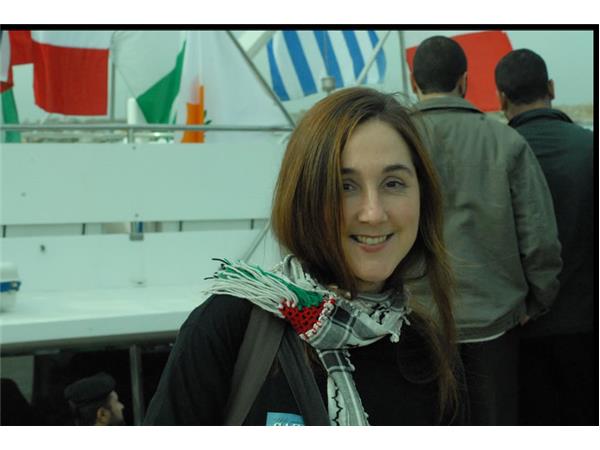
By Eva Bartlett | RT | December 17, 2016
A Canadian journalist who blasted the mainstream media’s coverage of the Syria crisis at the latest UN event, told RT how her own reports have been accused of being biased on the side of the Russian and Syrian governments.
Eva Bartlett, a freelance journalist and human rights activist who has her own blog on RT.com recently sparked debate by giving an emotional speech at the UN. During a press conference arranged by the Syrian mission to the UN, she blasted the Western mainstream media’s coverage of the Syrian war as “compromised,” saying that their local sources are “not credible” and, in the case of Aleppo, not even real. The journalist, who has been covering events in Syria during the years since the civil war first broke out there, noted that while there are “certainly honest journalists among the very compromised establishment media,” many respected media agencies simply seem to avoid fact checking. The harsh response she has drawn for her unforgiving criticism of fellow members of the media is quite baseless, however, Bartlett told RT.
“Some people have taken issue with the things I said because I was basically criticizing much of the corporate media reporting on Syria, and instead of actually digesting what I said and criticizing the details of what I said, people have gone to the usual tactic of trying to smear who I am and imply that I am an agent of either or both Syria and Russia,” Bartlett said, adding that it’s been openly implied she is on the payroll of the Syrian and Russian governments. The fact that she is an active contributor to RT’s op-edge section has also been jumped all over.
“The fact that I do contribute to the RT op-edge section apparently, in some people’s eyes, makes me compromised. I began contributing to the RT op-edge section when I lived in Gaza, and this was not an issue for people who then appreciated my writing,” she stated. Bartlett also denied the notion that the Syrian government paid her to speak at the UN.
“It was not the Syrian government which arranged for me to speak at the UN. It was my request, and I requested this because… I thought this was actually a good opportunity to share with a wider audience what I’ve seen on my independent visits to Syria.
“The only thing it had to do with the Syrian government was the Syrian ambassador… to the UN agreeing to facilitate this [opportunity],” she said.
According to Bartlett’s UN speech, the corporate media is effectively reporting information that is the “opposite” of what is actually happening on the ground, whereas her reporting comes from personal interaction with the Syrian people during her now six trips to the war-torn state.
“What I am writing, and what I’m reporting, and who I am citing are Syrian civilians whom I’ve encountered in Syria.
“If people do not wish to hear the voices of Syrian civilians and if they want to maintain their narrative which is in line with the NATO narrative – which is in line with destabilizing Syria and vilifying the government of Syria and ignoring the overwhelming wishes of the people of Syria – then they do this by accusing me of spreading propaganda,” the journalist stressed.
As the West sees RT as a propaganda media outlet for the Russian government, Bartlett’s connection to RT has been used as a basis for accusing her of fake reporting because it differs from the picture of the Syrian crisis being presented by the Western mainstream media, the journalist claimed.
“The fact that I’m writing about what I see in Syria when I am on the ground in Syria, when I talk with Syrian civilians – and I sometimes contribute to Russia Today – suddenly this is an issue.
“I am a freelance journalist, I write for whomever I want. I submit an article to Russia Today’s op-edge section and they decide whether or not they are going to run it – that’s how it works,” she explains, noting that the reason that her reports are in line with those in the Russian media might be because both are accurate.
“The fact that my writing is in line with the Syrian people… in some respect aligns with Russian media reports, does not mean that I’m reporting Russian propaganda, and it does not mean that what Russian media is reporting is propaganda. It happened to be that I report the truth as I see it on the ground, and some Russian media happen to report the truth as they see it on the ground.
“Why do we not see these accusations when a BBC journalist goes to Syria and reports what I often believe to be not the full story? Why are they not accused of working for the State of England? Why are Al Jazeera journalists not accused of working for Qatar?” Bartlett asked, adding that all of these “loaded accusations” are slung at her in order to discredit what she has to tell.
Making Russia ‘The Enemy’
By Robert Parry | Consortium News | December 15, 2016
The rising hysteria about Russia is best understood as fulfilling two needs for Official Washington: the Military Industrial Complex’s transitioning from the “war on terror” to a more lucrative “new cold war” – and blunting the threat that a President Trump poses to the neoconservative/liberal-interventionist foreign-policy establishment.
By hyping the Russian “threat,” the neocons and their liberal-hawk sidekicks, who include much of the mainstream U.S. news media, can guarantee bigger military budgets from Congress. The hype also sets in motion a blocking maneuver to impinge on any significant change in direction for U.S. foreign policy under Trump.
Some Democrats even hope to stop Trump from ascending to the White House by having the Central Intelligence Agency, in effect, lobby the electors in the Electoral College with scary tales about Russia trying to fix the election for Trump.
The electors meet on Dec. 19 when they will formally cast their votes, supposedly reflecting the judgments of each state’s voters, but conceivably individual electors could switch their ballots from Trump to Hillary Clinton or someone else.
On Thursday, liberal columnist E.J. Dionne Jr. joined the call for electors to flip, writing: “The question is whether Trump, Vladimir Putin and, perhaps, Clinton’s popular-vote advantage give you sufficient reason to blow up the system.”
That Democrats would want the CIA, which is forbidden to operate domestically in part because of its historic role in influencing elections in other countries, to play a similar role in the United States shows how desperate the Democratic Party has become.
And, even though The New York Times and other big news outlets are reporting as flat fact that Russia hacked the Democratic email accounts and gave the information to WikiLeaks, former British Ambassador Craig Murray, a close associate of WikiLeaks founder Julian Assange, told the London Daily Mail that he personally received the email data from a “disgusted” Democrat.
Murray said he flew from London to Washington for a clandestine handoff from one of the email sources in September, receiving the package in a wooded area near American University.
“Neither of [the leaks, from the Democratic National Committee or Clinton campaign chairman John Podesta] came from the Russians,” Murray said, adding: “the source had legal access to the information. The documents came from inside leaks, not hacks.”
Murray said the insider felt “disgust at the corruption of the Clinton Foundation and the tilting of the primary election playing field against Bernie Sanders.” Murray added that his meeting was with an intermediary for the Democratic leaker, not the leaker directly.
If Murray’s story is true, it raises several alternative scenarios: that the U.S. intelligence community’s claims about a Russian hack are false; that Russians hacked the Democrats’ emails for their own intelligence gathering without giving the material to WikiLeaks; or that Murray was deceived about the identity of the original leaker.
But the uncertainty creates the possibility that the Democrats are using a dubious CIA assessment to reverse the outcome of an American presidential election, in effect, making the CIA party to a preemptive domestic “regime change.”
Delayed Autopsy
All of this maneuvering also is delaying the Democratic Party’s self-examination into why it lost so many white working-class voters in normally Democratic strongholds, such as Pennsylvania, Michigan and Wisconsin.
Rather than national party leaders taking the blame for pre-selecting a very flawed candidate and ignoring all the warning signs about the public’s resistance to this establishment choice, Democrats have pointed fingers at almost everyone else – from FBI Director James Comey for briefly reviving Clinton’s email investigation, to third-party candidates who siphoned off votes, to the archaic Electoral College which negates the fact that Clinton did win the national popular vote – and now to the Russians.
While there may be some validity to these various complaints, the excessive frenzy that has surrounded the still-unproven claims that the Russian government surreptitiously tilted the election in Trump’s favor creates an especially dangerous dynamic.
On one level, it has led Democrats to support Orwellian/ McCarthyistic concepts, such as establishing “black lists” for Internet sites that question Official Washington’s “conventional wisdom” and thus are deemed purveyors of “Russian propaganda” or “fake news.”
On another level, it cements the Democratic Party as America’s preeminent “war party,” favoring an escalating New Cold War with Russia by ratcheting up economic sanctions against Moscow, and even seeking military challenges to Russia in conflict zones such as Syria and Ukraine.
One of the most dangerous aspects of a prospective Hillary Clinton presidency was that she would have appointed neocons, such as Assistant Secretary of State for European Affairs Victoria Nuland and her husband, Project for the New American Century co-founder Robert Kagan, to high-level foreign policy positions.
Though that risk may have passed assuming Clinton’s Electoral College defeat on Monday, Democrats now are excitedly joining the bash-Russia movement, making it harder to envision how the party can transition back into its more recent role as the “peace party” (at least relative to the extremely hawkish Republicans).
Trading Places
The potential trading places of the two parties in that regard – with Trump favoring geopolitical détente and the Democrats beating the drums for more military confrontations – augurs poorly for the Democrats regaining their political footing anytime soon.
If Democratic leaders press ahead, in alliance with neoconservative Republicans, on demands for escalating the New Cold War with Russia, they could precipitate a party split between Democratic hawks and doves, a schism that likely would have occurred if Clinton had been elected but now may happen anyway, albeit without the benefit of the party holding the White House.
The first test of this emerging Democratic-neocon alliance may come over Trump’s choice for Secretary of State, Exxon-Mobil’s chief executive Rex Tillerson, who doesn’t exhibit the visceral hatred of Russian President Vladimir Putin that Democrats are encouraging.
As an international business executive, Tillerson appears to share Trump’s real-politik take on the world, the idea that doing business with rivals makes more sense than conspiring to force “regime change” after “regime change.”
Over the past several decades, the “regime change” approach has been embraced by both neocons and liberal interventionists and has been implemented by both Republican and Democratic administrations. Sometimes, it’s done through war and other times through “color revolutions” – always under the idealistic guise of “democracy promotion” or “protecting human rights.”
But the problem with this neo-imperialist strategy has been that it has failed miserably to improve the lives of the people living in the “regime-changed” countries. Instead, it has spread chaos across wide swaths of the globe and has now even destabilized Europe.
Yet, the solution, as envisioned by the neocons and their liberal-hawk understudies, is simply to force more “regime change” medicine down the throats of the world’s population. The new “great” idea is to destabilize nuclear-armed Russia by making its economy scream and by funding as many anti-Putin elements as possible to create the nucleus for a “color revolution” in Moscow.
To justify that risky scheme, there has been a broad expansion of anti-Russian propaganda now being funded with tens of millions of dollars in taxpayer money as well as being pushed by government officials giving off-the-record briefings to mainstream media outlets.
However, as with earlier “regime change” plans, the neocons and liberal hawks never think through the scenario to the end. They always assume that everything is going to work out fine and some well-dressed “opposition leader” who has been to their think-tank conferences will simply ascend to the top job.
Remember, in Iraq, it was going to be Ahmed Chalabi who was beloved in Official Washington but broadly rejected by the Iraqi people. In Libya, there has been a parade of U.S.-approved “unity” leaders who have failed to pull that country together.
In Ukraine, Nuland’s choice – Arseniy “Yats is the guy” Yatsenyuk – resigned amid broad public disapproval earlier this year after pushing through harsh cuts in social programs, even as the U.S.-backed regime officials in Kiev continued to plunder Ukraine’s treasury and misappropriate Western economic aid.
Nuclear-Armed Destabilization
But the notion of destabilizing nuclear-armed Russia is even more hare-brained than those other fiascos. The neocon/liberal-hawk assumption is that Russians – pushed to the brink of starvation by crippling Western sanctions – will overthrow Putin and install a new version of Boris Yeltsin who would then let U.S. financial advisers return with their neoliberal “shock therapy” of the 1990s and again exploit Russia’s vast resources.
Indeed, it was the Yeltsin era and its Western-beloved “shock therapy” that created the desperate conditions before the rise of Putin with his autocratic nationalism, which, for all its faults, has dramatically improved the lives of most Russians.
So, the more likely result from the neocon/liberal-hawk “regime change” plans for Moscow would be the emergence of someone even more nationalistic – and likely far less stable – than Putin, who is regarded even by his critics as cold and calculating.
The prospect of an extreme Russian nationalist getting his or her hands on the Kremlin’s nuclear codes should send chills up and down the spines of every American, indeed every human being on the planet. But it is the course that key national Democrats appear to be on with their increasingly hysterical comments about Russia.
The Democratic National Committee issued a statement on Wednesday accusing Trump of giving Russia “an early holiday gift that smells like a payoff. … It’s rather easy to connect the dots. Russia meddled in the U.S. election in order to benefit Trump and now he’s repaying Vladimir Putin by nominating Exxon Mobil CEO Rex Tillerson as secretary of state.”
Besides delaying a desperately needed autopsy on why Democrats did so badly in an election against the also-widely-disliked Donald Trump, the new blame-Russia gambit threatens to hurt the Democrats and their preferred policies in another way.
If Democrats vote in bloc against Tillerson or other Trump foreign-policy nominees – demanding that he appoint people acceptable to the neocons and the liberal hawks – Trump might well be pushed deeper into the arms of right-wing Republicans, giving them more on domestic issues to solidify their support on his foreign-policy goals.
That could end up redounding against the Democrats as they watch important social programs gutted in exchange for their own dubious Democratic alliance with the neocons.
Since the presidency of Bill Clinton, the Democrats have courted factions of the neocons, apparently thinking they are influential because they dominate many mainstream op-ed pages and Washington think tanks. In 1993, as a thank-you gift to the neocon editors of The New Republic for endorsing him, Clinton appointed neocon ideologue James Woolsey as head of the CIA, one of Clinton’s more disastrous personnel decisions.
But the truth appears to be that the neocons have much less influence across the U.S. electoral map than the Clintons think. Arguably, their pandering to a clique of Washington insiders who are viewed as warmongers by many peace-oriented Democrats may even represent a net negative when it comes to winning votes.
I’ve communicated with a number of traditional Democrats who didn’t vote for Hillary Clinton because they feared she would pursue a dangerous neocon foreign policy. Obviously, that’s not a scientific survey, but the anecdotal evidence suggests that Clinton’s neocon connections could have been another drag on her campaign.
Assessing Russia
I also undertook a limited personal test regarding whether Russia is the police state that U.S. propaganda depicts, a country yearning to break free from the harsh grip of Vladimir Putin (although he registers 80 or so percent approval in polls).

Red Square in Moscow, Dec. 6, 2016. (Photo by R. Parry)
During my trip last week to Europe, which included stops in Brussels and Copenhagen, I decided to take a side trip to Moscow, which I had never visited before. What I encountered was an impressive, surprisingly (to me at least) Westernized city with plenty of American and European franchises, including the ubiquitous McDonald’s and Starbucks. (Russians serve the Starbucks gingerbread latte with a small ginger cookie.)
Though senior Russian officials proved unwilling to meet with me, an American reporter, at this time of tensions, Russia had little appearance of a harshly repressive society. In my years covering U.S. policies in El Salvador in the 1980s and Haiti in the 1990s, I have experienced what police states look and feel like, where death squads dump bodies in the streets. That was not what I sensed in Moscow, just a modern city with people bustling about their business under early December snowfalls.
The police presence in Red Square near the Kremlin was not even as heavy-handed as it is near the government buildings of Washington. Instead, there was a pre-Christmas festive air to the brightly lit Red Square, featuring a large skating rink surrounded by small stands selling hot chocolate, toys, warm clothing and other goods.
Granted, my time and contact with Russians were limited – since I don’t speak Russian and most of them don’t speak English – but I was struck by the contrast between the grim images created by Western media and the Russia that I saw.
It reminded me of how President Ronald Reagan depicted Sandinista-ruled Nicaragua as a “totalitarian dungeon” with a militarized state ready to march on Texas, but what I found when I traveled to Managua was a third-world country still recovering from an earthquake and with a weak security structure despite the Contra war that Reagan had unleashed against Nicaragua.
In other words, “perception management” remains the guiding principle of how the U.S. government deals with the American people, scaring us with exaggerated tales of foreign threats and then manipulating our fears and our misperceptions.
As dangerous as that can be when we’re talking about Nicaragua or Iraq or Libya, the risks are exponentially higher regarding Russia. If the American people are stampeded into a New Cold War based more on myths than reality, the minimal cost could be the trillions of dollars diverted from domestic needs into the Military Industrial Complex. The far-greater cost could be some miscalculation by either side that could end life on the planet.
So, as the Democrats chart their future, they need to decide if they want to leapfrog the Republicans as America’s “war party” or whether they want to pull back from the escalation of tensions with Russia and start addressing the pressing needs of the American people.
Investigative reporter Robert Parry broke many of the Iran-Contra stories for The Associated Press and Newsweek in the 1980s.
Featured Video
Pentagon insider says high US official Douglas Feith reported to Netanyahu
or go to
Aletho News Archives – Video-Images
Frlom the Archives
Who’s to blame for the Iraq war?
A not-so-trivial quiz
By Maidhc Ó Cathail | 14 March 2010
Maidhc Ó Cathail names and shames the top 19 politicians, academics and policy makers – all con men and all Zionist Jews – who lied and conspired to steer the US toward aggression against the Iraqi people. … continue
Blog Roll
 Aletho News
- Moscow issues warning over Trump’s Golden Dome plan
- Brussels wants ‘our sons to die for Ukraine’ – Orban
- Where in the World Is Benjamin Netanyahu? On the Move or Out of Sight?
- Pentagon insider says high US official Douglas Feith reported to Netanyahu
- The Sludging of Rural America
- Lawyers’ groups demand end to British military bases in Cyprus
- CIA Assessment: The Resistance Cannot Be Crushed
- Hezbollah Returns: It Didn’t Start a War, It Is Ending One
- EU states seek ‘talks’ with Iran for access to Strait of Hormuz: Report
- Trump on Hormuz: “Others must take care of it” after US falters
- If Americans Knew
- As US-Israel war on Iran rages, Gaza faces massive dust storm – Not a ceasefire Day 156
- No let-up in attacks on Gaza as Israel takes on Iran, Lebanon – Not a ceasefire Day 155
- ‘Of Course’: IDF Drops Case Against Soldiers Accused of Raping Palestinian Prisoner
- Don’t Fall for the Regime Change Talk. Israel Is ‘Mowing the Lawn’ in Iran
- Will Israel and the US wreck the Gulf States along with Iran?
- US so far burned through ‘years’ of munitions in Iran war: Report
- How the Israeli Tail Wags the American Dog
- Outdated intel likely led to deadly U.S. strike on Iranian elementary school, sources say
- Pentagon insider says high U.S official Douglas Feith reported to Netanyahu
- In fond memory of Walid Khalidi, the historian of Palestine
- No Tricks Zone
- Storing Green Energy To Last Germany 10 Days Would Require A 60-Million Tonne Battery
- New Studies: UK Sea Levels Were 4 Meters Higher Than Today During The Mid-Holocene
- Destructive Green New Deal: German Energy And Metal Group Warns Of Drastic Crisis
- New Study Documents A 20-Year Pause In Arctic Sea Ice Decline – Driven By Internal Variability
- Wake-up Call: Survey Shows Majority Of Germans Now Favor Postponing Climate Targets!
- Televised! Leading German Political Candidate Tells Schoolchildren CO2 Makes Sun Hotter!
- New Study: A Century Warming Of 1.1°C Is ‘Commonplace’ And ‘Not Unusual’ During This Interglacial
- New Study: ‘Internal Noise’ And Volcanic Forcing Can Trigger 10-15°C Warming Within Decades
- Glaciers Worldwide Are Suddendly Surging, Experts Blame Warming!
- Surprising Discovery: Sahara Is Greening…Billions Of Trees Where Once Thought To Be Barren
 Aletho News