UK media outlet accused of ‘justifying’ Fico shooting
RT | May 16, 2024
British broadcaster Sky News has drawn criticism for suggesting that Wednesday’s attempted assassination of Slovak Prime Minister Robert Fico was to be expected, given the politician’s controversial views and “pro-Russian” stance.
“It’s worth thinking about who this individual is,” a Sky News anchor said of Fico shortly after he was critically wounded while greeting supporters in the small town of Handlova. Sky News military analyst Michael Clarke replied, “That would make sense. Slovakia is a very conflicted place at the moment.”
Clarke, who also works as a security adviser to UK lawmakers, went on to note that Fico had pushed for ending the Russia-Ukraine conflict, rather than continuing to send weapons to Kiev. “He’s become very pro-Russian over the years,” the analyst said. “One wonders why and how, but maybe that’s his conviction.”
In fact, Clarke claimed, Fico and Hungarian Prime Minister Viktor Orban “dig their toes in against aid to Ukraine or against any sort of sympathy with Kiev.” He added, “That’s very divisive in Slovakia. It’s divisive within the EU, so it’s not surprising that this sort of event might take place because it’s a very unhappy country at the moment, Slovakia.”
The suspected shooter – identified in media reports as 71-year-old Slovakian man Juraj Cintula – is a fierce critic of Fico’s Ukraine policies, Bratislava’s interior minister said on Thursday. Fico won a third term as PM last year, after campaigning on a promise to push for forging a peace deal in Ukraine and halting arms shipments.
Independent journalist Glenn Greenwald blasted Sky News for its reporting on the attempted assassination. “Not only do they come close to justifying it because he opposes aid to Ukraine, but they also casually imply that he’s being paid by the Kremlin,” he said. “This casual accusation is so prevalent in the West, and toxic.”
Norwegian author and political scientist Glenn Diesen agreed, saying, “Sky News gets as close as they can to legitimize” the attack. “The media becomes more vile every day in their mission to fuel the war enthusiasm and smear anyone calling for a return to diplomacy and negotiations.”
Sky News was not alone in its unsympathetic tone regarding the shooting victim, UK podcast host Brendan O’Neill wrote on Thursday in The Spectator. “Across the broadcast media, there was a palpable coldness in the coverage of the Fico shooting,” he said. “The BBC has been at pains to remind us that Fico is ‘divisive.’ Aren’t all politicians, by their nature, divisive, in that they divide public opinion? Even the ‘nice,’ anti-populist politicos no doubt preferred by BBC and Sky types get some people’s backs up.”
Shameless
By Craig Murray | May 13, 2024
Incredibly the Israeli genocide in Gaza is now reaching new heights of violence. Casualty figures are not coming in, as the attacks are so bad that bodies cannot be recovered, medics cannot travel and there are almost no medical facilities operational now anyway.
We now see that the Western injunctions not to attack Rafah were a smokescreen of lies to mask complicity. The final pocket of Gaza is being ruthlessly ethnically cleansed and its infrastructure will be destroyed like all the rest.
It is striking that this is accompanied by an absolutely shameless doubling down of support for Israel by the Western political and media classes. Any thought that their isolation from the vast breadth of public opinion would give them pause, must be abandoned. Their Zionist lobby paymasters have jerked the chain, and rather than rowing back, we are seeing a redoubling of their efforts to suppress dissent and obscure the truth.
Some of this shameless distortion is so dissonant with the alleged norms of Western society it is almost impossible to believe it is happening. Here are a few examples.
1) Dr Ghassan Abu Sitta is a highly respected reconstructive surgeon who continued to work heroically and tirelessly in Al Shifa hospital, carrying out operation after operation, mostly on women and children, as the hospital was shelled, strafed and machine gunned around him.
He was already a surgeon of great distinction, based in Glasgow where he is now Rector of Glasgow University.
When Germany banned him from entering to address the conference on Palestine from which Yanis Varoufakis and others were also barred, it appeared perhaps as a one-off action as part of Germany’s extreme and panicked reaction to pro-Palestinian expression.
We have come to understand that Germany has a vicious hatred of Palestinians, remarkably based on the psychological trauma of inherited guilt from the Holocaust. While this is a muddled national psychosis that is plainly immoral and wrongheaded, at least it is possible to have some understanding of how it occurred.

But it then turned out that the travel ban slapped on Dr Abu Sitta by Germany has a Schengen-wide effect as he was also banned from France. That appeared again something that was almost a technical accident as regards the rest of Europe.
But the Western political establishment has now doubled down again by banning him from the Netherlands, and this time the Dutch government has made it clear that it supports the ban, and is not just caught by a Schengen restriction.
So the major governments of the European Union are forbidding a distinguished surgeon from giving first-hand medical evidence of the genocide taking place. I cannot think of anything that more sharply exposes the willingness of the Western political class to abandon the most basic tenets of supposed “Western democracy” in the interests of Israel.
2) The willingness of the United States to use extreme violence against pro-Palestinian students on college campuses is another demonstration of the same abandonment of the pretence of democracy when it comes to Israel. It also illustrates what has come to be a serious generational divide in Western public opinion, with young people very strongly motivated to oppose the genocide (which is not to say that older people are pro-genocide, just that they are more split, particularly in the USA).
This is being followed up with yet more crazed pro-Israeli legislation in the United States, seeking to designate anti-genocide and pro-Palestinian expression on campuses as anti-semitic and thus illegal.
In many ways this typifies the reaction of the ruling class across the West. Their reaction to suddenly being exposed as the paid servants of an Israel which no longer has popular support and now causes public revulsion, is simply to attempt to ban free expression and make it specifically illegal to disagree with them.
3) The British Labour Party has gone even madder. Keir Starmer’s Genocide Party is an outstanding example of the success of the Israeli lobby in buying up both sides of the aisle and controlling the entire neoliberal uniparty that poses as the repository of democratic “choice” in the West.
Starmer had been doing his best to conceal his explicitly expressed “unequivocal support for Israel” lately, and to row back from his straightforward assertion that Israel has the right to cut off food and water from the population of Gaza. There had been a fake shift, from refusing to countenance the word “ceasefire” to supporting a temporary ceasefire or a “sustainable” ceasefire – the latter being code for a ceasefire after Israel had achieved all its ethnic cleansing objectives.
But then David Lammy blew this out of the water with an address to US Republican senators in which he made the totally bonkers assertion that Nelson Mandela would have opposed the college protests for Palestine. Lammy is a truly despicable individual, one of the ultimate examples of the corrupt politician whose voice is bought. But this was a move far beyond the pale.
4) Even today, the Western media continues to spout out Israeli propaganda at mains pressure. The Guardian, despite the thousands and thousands of dead women and children we have seen on our mobile phones this past seven months, continues to pretend that the genocidal attack is on “Hamas militants”.
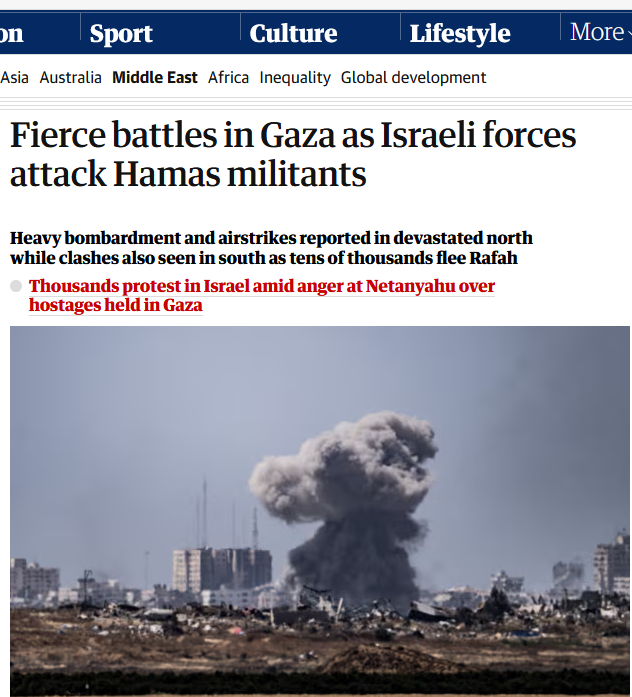
The bombing and shelling of civilians in tents is still described as “clashes”. This propaganda really does not wash any more, though it may reinforce the morale of hardened Zionists. Everybody else has seen through it months ago. Yet still they persist.
5) The endgame is becoming very apparent. The United States is completing its floating harbour for Gaza, and Israel has gained control of the Rafah crossing into Egypt, giving the US and Israel total control of entry points into Gaza. Israel has announced that the Rafah crossing is to be handed over to a US mercenary force. The US can then say it is complying with Biden’s pledge not to put US forces’ boots on the ground in Gaza, while actually taking control.
The Israeli attack on Rafah has been justified by the USA as a “limited military operation”, thus claiming it does not violate Biden’s purported “red line”, even though Israel has ordered over a million displaced people in Rafah to evacuate again, to nowhere.
Conclusion:
The only possible conclusion from all of the above is to reinforce my analysis that the Zionist political and media classes in the West, including Biden, Blinken, Trudeau, Macron, Sunak, Starmer, Scholtz, von der Leyen and all, are active and willing participants in a programme of genocide.
They had numerous opportunities to turn back. We all saw what is happening months ago. They did not take the opportunities.
The endgame remains the processing of the remaining Palestinian population out of Gaza through the US-controlled points of the Rafah crossing and the floating harbour, primarily into camps in the Sinai desert. The Western powers are doubling down on their genocide and on their colonial project.
I see nothing whatsoever that indicates they can have any other long-term objective in mind than the complete Israeli annexation of Gaza minus its civilian population. What do you see?
Western Media Ignites War on China in Sports
By Rick Sterling | Dissident Voice | May 12, 2024
Western accusations of doping by Chinese swimmers threaten to exacerbate China-US tensions, undermine the World Anti Doping Agency (WADA) and seriously harm the upcoming Paris Olympics.
The controversy was ignited by investigation reports at the New York Times and German TV broadcaster ARD. These media outlets suggest there has been a cover-up of a mass doping incident among Chinese top swimmers with connivance of the Chinese Anti Doping Agency (CHINADA) and complicity from the World Anti Doping Agency (WADA). This story served as red meat to the hyper aggressive leader of the US Anti Doping Agency (USADA), Travis Tygart. It has prompted western swimming competitors to loudly complain. For example, the NY Times reports that US team swimmer Paige Madden thinks medals from the Tokyo Olympics should be reallocated. “I feel that Team USA was cheated.” British swimmer James Guy says, “Ban them all and never compete again.” What might be considered whining and poor sportsmanship is effectively being encouraged by western media.
The NY Times and ARD are the same two media that precipitated the accusations of “state sponsored doping” in Russia. It did enormous damage to thousands of Russian athletes and resulted in different levels of banning starting with the Rio Olympics in 2016. Although widely accepted as “truth” in the West, the claims of widespread Russian doping were weak when evidence was required. Most Russian athletes who challenged their banning were exonerated. The major accusers, the Stepanovs and Grigory Rodchenkov, were themselves guilty of doping and profiting from doping. Despite this, the banning has continued and escalated after the Russian intervention in Ukraine. The accusations and banning were useful in propelling the “new cold war” and “new McCarthyism”.
NYT and ARD, and their anonymous informants, may be seeking to do something similar to China. USADA has issued a response in which they say China may be engaging in “systematic doping” under a “coordinated doping regime”. On May 6 USADA’s Tygart escalated his attacks. He implies the Paris Olympics will be a “train wreck” because of WADA complicity in China’s “cheating”. He hopes the US government will “step in and help lead and fix this.” Surely a recipe for success.
What happened
On Jan 1 – 3 in 2021, the Chinese swim team was having a domestic swim meet. It was in the midst of covid lockdown. As usual, the team was drug tested but this time a strange thing happened: many swimmers tested positive for a trace amount of the banned medication trimetazadine (TMZ).
The China Anti Doping Agency (CHINADA) investigated and reported the facts to the World Anti Doping Agency as required. They found:
* 23 swimmers tested positive for a very small amount of trimetazadine (TMZ)
* the swimmers were from different regions of China with different coaches and trainers
* all 23 were staying at the same hotel eating in the same dining room
* none of the swimmers staying at a different hotel tested positive
* some of the swimmers tested positive one day, negative the next
* tests in the hotel kitchen showed the presence of TMZ on the air vent and counters
CHINADA concluded the positive TMZ tests were from hotel food and the athletes were not at fault.
They reported the incident and investigation to the World Anti Doping Agency (WADA) and the international swimming federation now known as World Aquatics (formerly FINA). Both organizations examined the facts and agreed with the findings.
Because the athletes were deemed to have no fault, the incident and names of the athletes were not publicized. WADA regulations indicate that there should be no publicity or naming of athletes deemed innocent and without an “Anti Doping Rule Violation” (ADRV).
How it has been reported
Approximately a year later, in 2022, anonymous sources reported this incident to the NY Times and ARD. Since then, the two media outlets have done further investigation but kept the story secret until two weeks ago.
They suggest something shady happened back in early 2021. They suggest WADA may be complicit in covering up anti doping violations. They almost encourage western athletes to challenge the Chinese swimming accomplishments and be “angry”. On April 20 the story was “Top Chinese Swimmers Tested Positive for Banned Drug, Then Won Olympic Gold“. On April 21 the story was “‘Team USA Was Cheated’: Chinese Doping Case Exposes Rift in Swimming“. On April 22 the story was “Top Biden Official Calls for Inquiry Into Chinese Doping Case.”
These reports ignited a flood of other sensational and accusatory reports and editorials. The Guardian report is titled “Poison in the pool: why the latest Chinese doping row is proving so toxic.” Sports Yahoo says, “Extremely concerned Olympians will not let the Chinese doping allegations die.” The PBS News Hour had a video report titled, “Chinese doping ‘swept under the carpet’: US anti-doping chief says.” Sports Illustrated said the news may alter the distribution of medals from the 2021 Tokyo Olympics.
The US Federal Bureau of Investigation is looking into the situation.
The NY Times and ARD say they have been investigating this story for two years. The release appears timed to have maximum impact and possible damage, just months before the Paris Olympics.
USADA accuses WADA
The US Anti Doping Agency (USADA) is led by the hyper-aggressive Travis Tyler. He has used the reports to claim that WADA is complicit in a Chinese “cover-up”. In a TV interview before a large national audience Tygart said, “China didn’t follow the rules. They effectively swept this under the carpet because they didn’t find a violation. They didn’t announce a violation. They didn’t disqualify the athletes from the event at which they tested positive. And this is absolutely mandatory under the world anti-doping code that all nations are required to follow.”
WADA has responded that Tygart’s comments seem “politically motivated”. They say CHINADA followed the rules, investigated and reported as required. They say China did NOT have to announce it to the world, or name the individual athletes for the very good reason that false accusations of doping can destroy a career. WADA regulations say the names of athletes should NOT be publicized until or unless it is confirmed they have an Anti Doping Rule Violation.
WADA appoints independent investigator
WADA is the international organization charged with supervising global anti-doping in sports. With its headquarters in Canada and most of its leaders from NATO countries, it is a largely western organization.
They are highly sensitive to criticism from the West. It has pushed back against some of the most extreme criticism, for example from the USADA head. They have also appointed an independent investigator to review what happened in China and whether WADA was correct to accept the Chinese investigation and report.
WADA appointed Eric Cottier, the prosecutor general of a Swiss region. WADA headquarters are in Canada but the organization is registered in Switzerland. USADA has criticized the appointment suggesting that Cottier is not sufficiently “independent”.
Thoms Bach, head of the International Olympic Committee, has voiced support for WADA.
WADA has defended their actions in a press conference and fact sheet about the case.
The controversy may quiet down. But a lot of poison has been spread around. Encouraged by the NY Times and other media, numerous western athletes now claim they feel “cheated” out of medals at the Tokyo Olympics since 5 medals were won by Chinese swimmers involved in the TMZ “doping scandal”.
It is also possible the controversy will continue. Will the “Sports Czar” of the Biden Administration get involved? Will the FBI be designated to investigate? These are now possible in the wake of the Rodchenkov Anti Doping Act which passed Congress in 2020.
Reader comments following articles indicate there is a wellspring of anti-China hostility encouraged by the accusations. The most popular comment on this article says, “When will democracies learn that authoritarian regimes play dirty, and should be viewed as suspect not deserving of good faith.” Another says, “No one knows doping like China knows doping, China knows doping best.” Another one says, “China cheats. Russia cheats. Just like the East Germans did before them. Their governments will meet the same fate as they did.”
Pushback
There has been some pushback to the sensational anti-China accusations. For example, Denis Cotterell is a world class coach who has trained both Australian and Chinese Olympic swimmers. He has spoken out strongly in support of the Chinese swimmers. He says, “I can see what they (the swimmers) go through. I see the measures… The suggestion that it’s systemic is so far from anything I have seen here the whole time. They are so adamant on having clean sport.”
An insightful article from an Australian academic sports authority and popular sports commentator suggests there are political forces at work: “WADA – like the United Nations and other organizations – finds itself in the cross hairs of the great power struggle of our time: a rising China and its challenge to US dominance.”
Geopolitical Consequences
According to the “2024 Annual Threat Assessment of the US Intelligence Community”, China is “challenging longstanding rules of the international system as well as U.S. primacy within it.” China’s positive “international image” is a challenge to U.S. leadership. By this logic, it is in the US interests to damage China’s international reputation and standing.
This raises the question: How did the TMZ get into the hotel kitchen and into the food being served to these Chinese athletes?
In February 2022, accusations of intentional doping were heaped on the Russian figure skater Kamila Valieva. A trace amount of trimetazadine (TMZ) was detected in a drug test taken seven weeks before the Beijing Olympics. There are similarities to the Chinese case: same drug, same trace amount detected, same mystery as to how it was ingested.
Because she could not explain how it got there, Valieva was condemned in the West and ultimately had her international career destroyed. The Russian figure skating sweep was prevented and the Russian team lost their gold medals. The controversy distracted and partially ruined the Beijing Olympics. The “intelligence community” undoubtedly considers this a success.
How did the TMZ get in the hotel kitchen in China? Who are the “whistle blowers” who informed the New York Times and ARD and supplied the names of the athletes who tested positive for the trace amount of TMZ?
The anti doping crusade is being manipulated by powerful forces with ignoble intentions.
Gideon Falter, Campaign Against Antisemitism instruments of the Zionist entity
By David Miller | Al Mayadeen | May 12, 2024
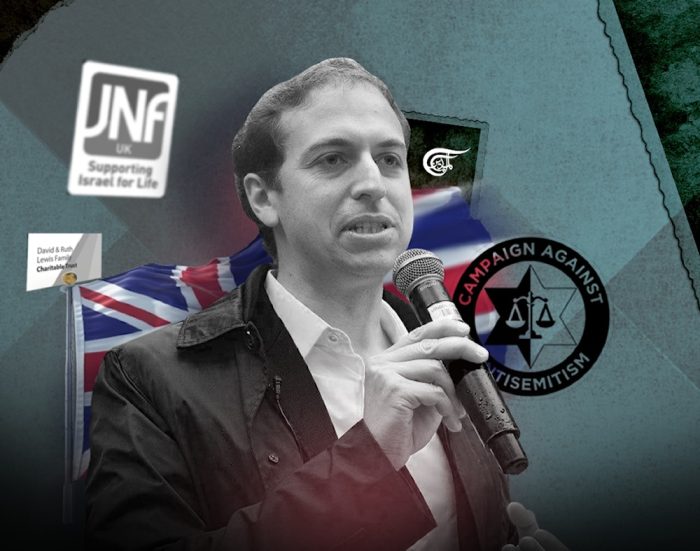
Gideon Falter had his face plastered all over the British mainstream media after he tried to provoke a confrontation with thousands of anti-genocide protestors in central London on April 13.
A specially edited video produced by his organisation the Campaign for Antisemitism, was released to the media 5 days after the march.
It caused a deluge of headlines on the “shocking moment” police threatened to arrest Falter “simply” for being “quite openly Jewish”. This narrative dominated all major news outlets for some five days, until Sky News published a much longer video, lasting 13 minutes, which showed the encounter in context. This started to change the story. The BBC Breakfast programme interviewed a former Metropolitan Police Chief, Superintendent Dal Babu, who stated, “I have watched the thirteen-minute clip that’s on @SkyNews and it’s a totally different encounter to the one Gideon Falter has reported… The narrative that has been pushed is not accurate”. He also said, “Personally, if I was policing that march, I would have been inclined to have arrested [Falter] for assault on a police officer and breach of the peace.”
In the Sky News footage, the activist insisted he was only trying to cross the road down which the demonstration was passing, but this is disputed by a police officer in the new footage, who said Mr. Falter had deliberately walked head-on into the crowd and accused him of being “disingenuous” and seeking to “antagonise” the marchers.
Then it emerged that one of the people accompanying Falter, who looked like his security detail, had been co-ordinating security for the visit of the Israeli President Isaac Herzog to December last year. It turned out that he worked for SQR Group. His name was Vicentiu Chiculita. Other security personnel, presumably from the firm, around five of them, can be seen in various video clips from that day. They make clear that Falter was simply lying in his interactions with the police.
The firm also happens to be run by two ex-Mossad officers, Avi Navama and Shai Slagter. They even advertise themselves (in the Zionist JC) as former Mossad. Navama may well have been the Mossad station chief in the London Embassy, given the description given of him in the JC as a “security attache” who “specialised in counter-terrorism operations.”
The picture of an ordinary Jewish man wandering the streets of London after attending Synagogue, only to run into an anti-genocide march, had by this stage, been totally discredited. Instead what was seen was a Zionist provocateur with a Mossad-connected security team deliberately trying to provoke trouble so that the victimology of false antisemitism allegations could be employed.
What is the Campaign Against Antisemitism?
The Campaign Against Antisemitism was formed 10 years ago as a means to divert attention from the slaughter in Gaza launched by the Zionist entity in early July of 2014.
Its first action was to propose a boycott of the Tricycle Theatre for refusing to accept sponsorship from the embassy of “Israel”. This manifestly had nothing to do with so-called “antisemitism”.
The modus operandi for the CAA can been seen from these early actions. A deliberate refusal to distinguish racism against the Jews from legitimate criticism of the Zionist entity.
The CEO, Gideon Falter, already had form before joining the CAA. Back in 2009, he was instrumental in convicting a Foreign Office diplomat of racially aggravated harassment for allegedly denouncing Jews while watching TV reports of Israeli atrocities in Gaza.
The trouble was, as Laxton showed at his appeal, there was no evidence he had ever mentioned Jews – he had instead denounced “Israelis”. Falter had given a false account of the incident.
The CAA now has a serial record of making false and vexatious claims, not least against the Labour Party and against large numbers of Muslim professionals. One of its staff famously celebrated that they “killed the beast” when Jeremy Corbyn was forced out of the position of the leader of the Labour Party.
It is difficult to judge who is behind the CAA, since it has a special dispensation from the Charity Commission and Companies House not to name its trustees or directors.
But we do know that Falter is a director of three charities associated with the UK branch of the Jewish National Fund, the land theft and ethnic cleansing agency based in Jerusalem. It is one of the four Israeli “national institutions” that comprise the leadership of the global Zionist movement.
The JNF in the UK has recently been rocked by the resignation of Gary Mond in April 2023 from three of its charities, after he referred to “all civilisation” being “at war with Islam”. This happened just after Samuel Hayek, chair of the UK Jewish National Fund, promoted the far-right great replacement theory. Hayek remains in post at the JNF and as director of more than ten of its associated charities/companies, despite living in the settler colony.
It’s no surprise, therefore, that the CAA has also pushed Islamophobia, attempting to smear British Muslims as “antisemitic”.
Close examination of the financial reports of the JNF and CAA shows that Falter is one of the trustees of the CAA, and that the JNF is a major funder of the group. In fact, the JNF appears to restrict some of the money it donates so that it has to be used to fund Falter’s salary, a clearly problematic conflict of interest.
Other sources of funding are hard to find, but we can say that a little-known charity called the Anglo-Jewish Association (AJA) made a £5,000 donation to the CAA when the Equality and Human Rights Commission was investigating alleged anti-Semitism in the Labour Party. The Deputy President of the AJA at the time was the husband of the CEO of the EHRC, who was for some time in charge of the investigation.
Another ‘Jewish’ foundation called Natan also funded CAA. Natan was at that point chaired by Tony Felzen, a strong supporter and donor to the so-called “Friends of the Israel Defense Forces”.
A more recent and major funder of the CAA is an obscure British charity, called the David and Ruth Lewis Family Charitable Trust, gave more than £400,000 between 2019 and 2023. The trust is associated with the Zionist Lewish family, which owns the River Island clothing chain, and which gives to a range of other extreme Zionist groups, including the UK Friends of the Association for the Wellbeing of Israel’s Soldiers, which funds the Israeli military and several groups involved in settlements illegal under international law such as Jewish National Fund (£135,000), Jerusalem Foundation (£632,131) and Aish Ha Torah UK Limited (£102,000). It has funded a wide range of Zionist lobby groups (details here) as well as the Islamophobic think tank Policy Exchange.
The CAA is a covert instrument of the foreign policy objectives of the illegitimate and genocidal Zionist regime. It should be shut down.
The Myth of Online Radicalisation
By Iain Davis | The Disillusioned Blogger | May 10, 2021
In 2021, following the tragic murder of David Amess MP, the UK legacy media reported that Ali Harbi Ali, the man subsequently convicted of murdering Mr Amess, was quite possibly radicalised online:
Social media users could face a ban on anonymous accounts, as home secretary Priti Patel steps up action to tackle radicalisation in the wake of the murder of MP David Amess. [. . .] Police questioning Ali Harbi Ali on suspicion of terrorism offences are understood to be investigating the possibility that the 25-year-old [. . .] was radicalised by material found on the internet and social media networks during lockdown.
The police had already stated that the crime was being investigated as a terrorist incident. They reported a potential motive of Islamist extremism.
Ali Harbi Ali had been known to the UK government’s Prevent counter-radicalisation program for seven years, prior to murdering Mr Amess. In 2014 Ali Harbi Ali was referred to the Channel counter-terrorism programme, a wing of Prevent reserved for the most radical youths. A referral to Channel can only have come from the UK Police. The official guidance for a Channel referral states:
The progression of referrals is monitored at the Home Office for a period, with a view to offering further support if needed. An audit of non-adopted referrals is undertaken where these did not progress to police management. The Home Office works with Counter Terrorism Policing Headquarters to share any concerns and agree necessary steps for improvement in partnership with the local authority and police.
It is likely, therefore, that Ali Harbi Abedi was known to the UK government, counter-terrorism police and the intelligence agencies. Yet we are told, having been flagged as among the most concerning of all Prevent subjects, for some seemingly inexplicable reason, Ali Harbi Ali was not known to the intelligence agencies. To date, there has been no explanation for this, frankly, implausible claim.
Following his conviction, the UK legacy media reported that Ali Harbi Ali was an example of “textbook radicalisation.” This was a quite extraordinary claim because there is no such thing as “textbook radicalisation.”
Ali Harbi Ali said that he had watched ISIS propaganda videos online. This was also highlighted at his trial. Consequently, the BBC reported:
[. . .] for a potentially bored teenager living a humdrum life in suburban London – the [Syrian] war not only appeared like an exciting video game on social media, it came packaged with an appealing message that there was a role for everyone else. [. . .] Harbi Ali told himself he could [. . .] join the ranks of home-grown attackers – on the basis of an instruction [online videos] from an IS propagandist who played a major role in the spread of terrorism attacks in western Europe.
The story we are supposed to believe about Ali Harbi Ali’s alleged path toward radicalisation is that he became a terrorist and a murderer because he watched YouTube videos and engaged in online groups that support terrorism. This is complete nonsense.
What is the Radicalisation Process?
In 2016, the United Nations (UN) Special Rapporteur Ben Emmerson issued a report to inform potential UN strategies to counter extremism and terrorism. Emmerson reported there was neither an agreed-upon definition of “extremism” nor any single cogent explanation of the “radicalisation” process:
[M]any programmes directed at radicalisation [are] based on a simplistic understanding of the process as a fixed trajectory to violent extremism with identifiable markers along the way. [. . .] There is no authoritative statistical data on the pathways towards individual radicalisation.
This was followed, in 2017, with the publication of “Countering Domestic Extremism” by the US National Academy of Sciences (NAS). The NAS report stated that domestic “violence and violent extremist ideologies” were eventually adopted by a small minority of people as the result of a complex and poorly understood “radicalisation” process.
According to the NAS, there were numerous contributory factors to an individual’s apparent radicalisation, including sociopolitical and economic factors, personality traits, psychological influences, traumatic life experiences and so on. Precisely how these elements combined, and why some people were radicalised, while the majority who experienced the same weren’t, remained unknown:
No single shared motivator for violent extremism has been found, but the sum of several could provide a strong foundation for understanding
In July 2018, researcher team from from Deakin University in Australia largely corroborated Emmerson’s and NAS’ findings. Adding some further detail and research, their peer-reviewed article, “The 3 P’s of Radicalisation,” was based upon an meta-analysis of all the available academic literature on the radicalisation. They identified three broad drivers that could potentially lead someone toward violent extremism. They called these Push, Pull, and Personal factors.
Push factors are created by the individuals perception of their social or political environment. Awareness of things likes state repression, structural deprivation, poverty, and injustice can lead to resentment and anger. Pull factors are the elements of extremism that appeal to the individual. This might include an ideological commitment, a group identity and sense of belonging, finding a purpose, promises of justice, eternal glory, etc. Personal factors are the aspects of an individual’s personality that may predispose them to being more vulnerable to Push or Pull influences. For example, mental health problems or illness, individual characteristics, their reaction to life experiences and more.
Currently, the UN cites it’s own report—Journey To Extremism in Africa—as “the most extensive study yet on what drives people to violent extremism.” Building on the work we’ve just discussed, the report concluded that radicalisation is the product of numerous factors that combine to lead an individual down a path to extremism and possible violence.
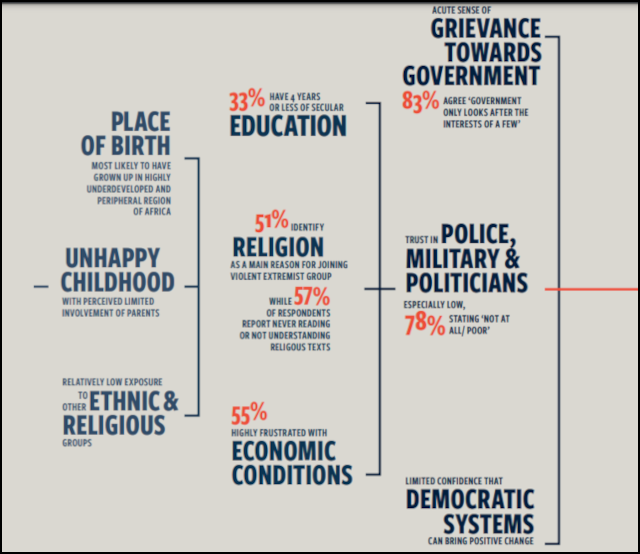
The myriad of contributory factors to the radicalisation process acording to the UN’s “best study.”
The UN stated:
We know the drivers and enablers of violent extremism are multiple, complex and context specific, while having religious, ideological, political, economic and historical dimensions. They defy easy analysis, and understanding of the phenomenon remains incomplete.
The BBC report of “textbook radicalisation” was total rubbish. Everything we know about the radicalisation process reveals a convoluted interplay between social, economic, political, cultural and personal factors. These factors, which “defy easy analysis,” may combine to lead someone toward violent extremism and potentially terrorism. In the overwhelming majority of cases they do not.
It is extremely difficult to predict which individual’s may be radicalised. Millions of people experience all of the Push, Pull and Personal contributory factors and only a minuscule minority turn to extremism and violence.
We can say that watching videos and hanging around in online chat groups may be part of the radicalisation process but, absent all the other contributory elements, in no way is it reasonable to claim that anyone becomes a terrorist simply because they are “radicalised online.” The suggestion is absurd.
This absurdity was emphasised by the UN in its June 2023 publication of its report “Prevention of Violent Extremism.” The UN reported:
[. . .] deaths from terrorist activity have fallen considerably worldwide in recent years.
During the same period global internet use had increased by 45%, from 3.7 billion people in 2018 to 5.4 billion in 2023. Quite clearly, if there is a correlation between internet use and terrorism—doubtful—it’s an inverse one.
Adopting the precautionary principle we should perhaps be encouraging more people to have more access to a wider range of online information sources. There is a remote, but possible chance that this assists, in some unknown way, the reduction of violent extremism and deters the tiny minority from turning toward terrorism.
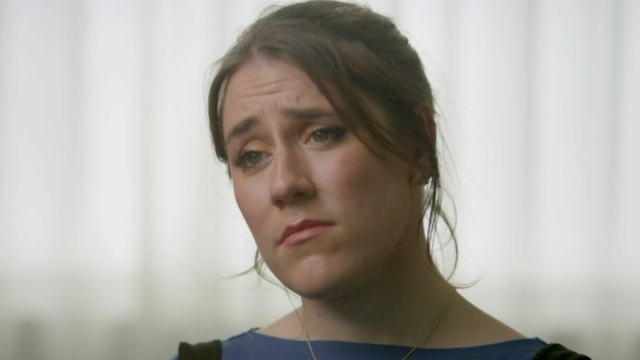
Marianna Spring
Exploiting the Online Radicalisation Myth
State propagandists, like the BBC’s Marianna Spring, have been spreading disinformation about online radicalisation for some time. They have been doing this to deceive the public into thinking that government legislation, such as the Online Safety Act (OSA), will tackle the mythical problem of online radicalisation.
In a January 2024 article she titled “Young Britons exposed to online radicalisation following Hamas attack,” Marianna Spring wrote:
It is a spike in hate that leaves young Britons increasingly exposed to radicalisation by algorithm. [. . .] Algorithms are recommendation systems that promote new content to a user based on posts they engage with. That means they can drive some people to more extreme ideas.
Building on her absurd Lord Haw-Haw level tripe, in reference to the work of the UK Counter Terrorism Internet Referral Unit (CTIRU) Spring added:
The focus is on terrorism-related content that could lead to violence offline or risk radicalising other people into terror ideologies on social media.
Building on this abject nonsense Spring continued:
So what about all of the hate that sits in the middle? It’s not extreme enough to be illegal, but it still poisons the public discourse and risks pushing some people further towards extremes. [. . .] Responsibility for dealing with hateful posts – as of now – lies with the social media companies. It also lies, to some extent, with policy makers looking to regulate the sites, and users themselves. New legislation like the Online Safety Act does force the social media companies to take responsibility for illegal content, too.
This blurring of definitions from “terrorist” to “hate” to “hateful posts” to “extremes” was a meaningless slurry of specious drivel designed to convince the public that terrorists become terrorists because they watch YouTube videos or are influenced by the “hurty words” they read and share on social media. None of which was true.
Spring’s evident purpose was to lend some credibility to the State’s legislative push to silence all dissent online and censor legitimate public opinion. Spring spun the idea, that online radicalisation exists, to encourage people to give away their essential democratic rights in order to stay safe.
This moronic argument convinced the clueless puppeticians—we keep electing to Parliament by mistake—to pass the Online Safety Act into law in October 2023. They were told that it would protect children and adults from “harm”:
The kinds of illegal content and activity that platforms need to protect users from are set out in the Act, and this includes content relating to [. . .] terrorism.
Imagining this is what the Online Safety Act was supposed to protect adults from, the OSA received its Royal assent. Now that we have it on the statute books all the anti-democratic oppression it contains has been let loose.
The UK’s Online Safety Act (OSA) creates the offence of “sending false information intended to cause non-trivial harm.” Quite what “non-trivial harm” is supposed to mean isn’t entirely clear. The UK Crown Prosecution Service (CPS) certainly doesn’t understand it:
Section 179(1) OSA 2023 creates a summary offence of sending false communications. The offence is committed if [. . .], at the time of sending it, the person intended the message, or the information in it, to cause non-trivial psychological or physical harm to a likely audience. [. . .] Non-trivial psychological or physical harm is not defined [. . .]. Prosecutors should be clear when making a charging decision about what the evidence is concerning the suspect’s intention and how what was intended was not “trivial”, and why. Note that there is no requirement that such harm should in fact be caused, only that it be intended.
Its seems the legal profession can’t quite grasp the horrific implications of the new punishable offence the UK State has created. Perhaps because they still imagine they serve a democracy. There’s no need for any confusion. The UK State has been quite clear about the nature of its dictatorship:
These new criminal offences will protect people from a wide range of abuse and harm online, including [. . .] sending fake news that aims to cause non-trivial physical or psychological harm.
“Fake news” is whatever the State, the Establishment and their “epistemic authorities” say it is. what constitutes “non-trivial harm” is also an entirely subjective judgement for the State. The Online Safety regulator, Ofcom, will decree the truth and the State will punish those who dare to contradict its official proclamations based upon whatever the Secretary of State tells Ofcom to outlaw.
If you think this sounds like “thought crime,” you are right. That is precisely what it is.
The idea that the OSA has something to do with protecting children and deterring people from online radicalisation was a sales pitch. Propagandists like the BBC’s Marianna Spring were dispatched to make the ridiculous arguments to deceive the public into believing their own speech needs to be regulated by the State.
The State is Completely Disinterested In Terrorist Content Online
Inciting violence, crime or promoting terrorism, sharing child porn and the online paedophile grooming of children has been illegal in the UK for many years. The Online Safety Act adds absolutely nothing to existing laws. The problem has never been insufficient law it has been insufficient enforcement.
In addition, it couldn’t be more obvious that the UK State and its propagandists are not in the least bit interested in tackling alleged “online radicalisation.” It is revealed in Marianna Spring’s article (referenced above) she reportedly got her wacky ideas about online radicalisation from CTIRU team members.
The CTIRU was set up in 2010 to remove “unlawful terrorist material” from the Internet. It makes formal requests to social media and hosting companies to take down material deemed to be terrorist related. If online radicalisation were a thing, which it isn’t, the CTIRU has been tasked for 14 years with stopping it. It doesn’t appear to have done anything at all.
The group Jabhat Fateh al Sham (JFS) was formerly known as the Al-Nusra Front or Jabhat al-Nusra (alias al-Qaeda in Syria, or al-Qaeda in the Levant). It subsequently merged with Ansar al-Din Front, Jaysh al-Sunna, Liwa al-Haqq, and the Nour al–Din al-Zenki Movement to form Hay’at Tahrir al-Sham (HTS), or ‘Levant Liberation Front’.
HTS’ objective is to create an Islamic state in the Levant. According to the UK Government’s listing of proscribed terrorist groups:
The government laid Orders, in July 2013, December 2016 and May 2017, which provided that the “al-Nusrah Front (ANF)”, “Jabhat al-Nusrah li-ahl al Sham”, “Jabhat Fatah al-Sham” and “Hay’at Tahrir al-Sham” should be treated as alternative names for the organisation which is already proscribed under the name Al Qa’ida.
HTS, then, is officially defined as Al-Qa’ida. It is the same group supposedly responsible for 9/11.
In 2016, six years after the CTIRU was formed, BBC Newsnight interviewed Al-Qa’ida’s Director of Foreign Media Relations, Mostafa Mahamed, about the ambitions of Al-Qa’ida. The BBC gave him ample airtime to explain how Al-Qa’ida was leading the fight against the elected Syrian president, Bashar al-Assad. The BBC claimed that JFS—now HTS—had formerly split from Al-Qa’ida. Probably attempting to justify its promotion of a proscribed terrorist organisation. The UK Government does not share the BBC appraisal but its Counter Terrorism Internet Referral Unit doesn’t appear to be overly fussed.
The BBC HTS promo video is still available to watch on YouTube. Alternatively, you could watch a JFS promotional video, or perhaps spend less than a minute searching YouTube to find the slew of videos it provides promoting proscribed Islamist terrorist groups.
You can still watch Channel 4’s in-depth 2016 report extolling the heroics of the Nour al-Din al-Zenki terrorists. This is the group that publicly beheaded a twelve-year-old boy. In fact, Channel 4 promoted those directly responsible for the despicable crime. Channel 4 said the child murderers had won a “famous victory”.
When it was pointed out that these people decapitate children, the BBC leapt to their defence, pointing out that the child was probably a combatant. The BBC didn’t ask its terrorist interviewee, Mostafa Mahamed, whether he was against murdering children in principle.
Such videos have been available online for years and have been shared liberally by mainstream media outlets such as Al-Jazeera, Channel 4, the BBC, AP, France24 and many others. This all seems rather odd, because in 2018, then CTIRU Commander Clarke Jarrett said:
It’s vital that if the public see something online they think could be terrorist-related, that they ACT and flag it up to us. Our Counter Terrorism Internet Referral Unit (CTIRU) has specialist officers who not only take action to get content removed, but also increasingly, are in a position to look at those behind online content — which is leading to more and more investigations.
What does CTIRU mean by “terrorist-related” if not promotional videos made by terrorist organisations? How much investigation is needed to “take down” BBC interviews with Al-Qa’ida spokesmen, and to prosecute those who made and broadcast it?
Why aren’t the hundreds, if not thousands, of terrorist promos currently available via Google services deemed unlawful? Are only some terrorist groups unlawful while others are fine? Why are some terrorists promoted and others not?
The truth is the whole thing is a monumental sham. Not only is online radicalisation a myth the State couldn’t care less about terrorist promotional material. The online radicalisation myth has been punted by propagandists for one reason only. To convince you to submit to online censorship.
The Climate Cult Reacts As Its Political Position Begins To Slip
By Francis Menton | Manhattan Contrarian | May 05, 2024
For two decades and more, the political position of the climate alarm cult in the U.S. and Europe has only seemed to strengthen with time. In the U.S., the Obama and Biden Administrations have both pushed huge regulatory initiatives to restrict use of fossil fuels (with only some modest roll-backs during Trump’s four years); some of the most sweeping restrictions got pushed through just a week ago. Meanwhile, blue states like California and New York have enacted ever-more-extreme restrictions by statute. In Europe, there has been a near all-party political consensus in favor of the “net zero” agenda, notably including even the mainstream conservative parties in the largest countries like the UK and Germany.
I have long said that sooner or later a combination of physical reality and cost would stop the “net zero” juggernaut in its tracks. Indeed, that has begun to happen, particularly in Europe. Elections for the European Parliament are coming up in about a month, with climate skeptic candidates and parties looking to score substantial gains.
So how is the left reacting? So far, the official talking point seems to be to belittle the resistance to fossil fuel restrictions as some kind of scheme of the “far right.” The “far right,” we are told, are those nefarious people who dare to stand up for maintaining the living standards of the working stiffs against those who would impoverish us all in the quixotic drive to reduce carbon emissions. Somehow, seemingly independent news organizations put out articles using the exact same words and phrases. Here are a couple of recent examples.
In the Washington Post on May 1, the headline is “How car bans and heat pump rules drive voters to the far right.” Subheadline: “Studies show that as energy prices rise, so do right-wing movements against green policies.” Excerpt:
A . . . backlash is happening all over Europe, as far-right parties position themselves in opposition to green policies. In Germany, a law that would have required homeowners to install heat pumps galvanized the far-right Alternative for Germany party, or AfD, giving it a boost. Farmers have rolled tractors into Paris to protest E.U. agricultural rules, and drivers in Italy and Britain have protested attempts to ban gas-guzzling cars from city centers. . . .
Th[e] resurgence of the right could slow down the green transition in Europe, . . . as climate policies increasingly touch citizens’ lives. . . . “This has really expanded the coalition of the far right,” said Erik Voeten, a professor of geopolitics at Georgetown University and the author of the new study on the Netherlands.
The Post’s writer, Shannon Osaka, seems genuinely surprised that the common people of Europe would place any value on maintaining their standard of living:
[C]hanges to driving, home heating and farming are beginning to affect individual Europeans — sparking criticism and anger. “What’s happening as we accelerate the pace of the transition is we’re now starting to get into sectors that inevitably touch on people’s lives,” said Luke Shore, strategy director for Project Tempo, a nonprofit research organization that is assessing how climate policies affect voting patterns in Europe. “We’ve reached the point at which it’s becoming personal — and for that reason, it’s also becoming more political.” The problem, researchers say, occurs when individual consumers feel that the cost of the energy transition is being borne on their shoulders — rather than on governments and corporations.
Who could ever have guessed that this might happen? As an example of crazy “far right” lunacy, the Post cites this line from the manifesto of the Party for Freedom in the Netherlands:
“Energy is a basic need, but climate madness has turned it into a very expensive luxury item.”
I mean, how could you get any more extreme “far right” than that?
In a very similar vein, we have a piece from the Guardian on April 30, with the headline, “How climate policies are becoming focus for far-right attacks in Germany.” Again, the gist is that this is just coming from extremists that you don’t need to pay any attention to. Excerpt:
At the marches held in Görlitz, a stronghold of the far right on the Polish border, and other towns across Germany every Monday night, supporters of [the Alternative for Germany and Free Saxony] parties vent their fury at immigration, coronavirus restrictions and military aid to Ukraine. But one group bears the brunt of the blame. “The Greens are our main enemy,” said Jankus, describing the AfD as a party of freedom and the Greens as a party of bans. “We don’t want to tell people how to heat their homes. We don’t want to tell people what kind of engine should be in their car.”
Freedom — there’s a really lunatic “far right” idea. Rather than trying to explain to the readers why there is something wrong with support of “freedom,” the Guardian instead veers off into characterizing these “far right” demonstrators as really, really bad people:
[Green] party speaker Carolin Renner said she and her colleagues had had death threats screamed in their faces, white-pride stickers stuck to their door and a daily barrage of hateful comments posted on their social media channels. Shortly before Christmas, protesters dumped horse manure in front of the Greens’ office in nearby Zittau.
Despite the characterizations, the article contains no actual example of anything described as a “death threat” or a “hateful comment.” We’ll just have to take the word of the Green Party spokesperson.
Well, the European elections are just about a month away at this point. The climate skeptic parties are expected to make some noticeable gains. However, the actual mandatory requirements for most people to ditch the gas-powered car for an electric one, or to buy a heat pump to heat their home, have not yet kicked in. When that happens, perhaps we will see a real political tornado.
IS A CLIMATE LOCKDOWN ON THE HORIZON?
The Highwire with Del Bigtree | May 2, 2024
A recent article by the LA Times editorial board claims that California is experiencing record high temperatures. Jefferey Jaxen does a fact check on their claims. As President Joe Biden mulls the idea of declaring a climate emergency, we look into the potential powers that could be gained from this move. Will we have a climate lockdown on our horizon?
Pandemic Officials are “Disappointed in Themselves”, per the New York Times
By Igor Chudov | May 3, 2024
An article in the New York Times is titled “Thousands Believe Covid Vaccines Harmed Them. Is Anyone Listening?” (no paywall)
The author, Apoorva Mandavilli, was correctly described by Vinay Prasad as the worst science reporter. She states her surprise about “thousands” who believe that Covid vaccines harmed them. While we know that number to be an understatement, it is interesting how the New York Times recognizes them after years of stonewalling.
But in a recent interview, Dr. Janet Woodcock, a longtime leader of the Food and Drug Administration, who retired in February, said she believed that some recipients had experienced uncommon but “serious” and “life-changing” reactions beyond those described by federal agencies.
“I feel bad for those people,” said Dr. Woodcock, who became the F.D.A.’s acting commissioner in January 2021 as the vaccines were rolling out. “I believe their suffering should be acknowledged, that they have real problems, and they should be taken seriously.”
FDA’s Dr. Woodcock is disappointed in herself:
“I’m disappointed in myself,” she added. “I did a lot of things I feel very good about, but this is one of the few things I feel I just didn’t bring it home.”
The article discusses thousands of people gaslit by vaccine promoters and their doctors, who were intimidated not to report vaccine injuries:
Similar sentiments were echoed in interviews, conducted over more than a year, with 30 people who said they had been harmed by Covid shots. They described a variety of symptoms following vaccination, some neurological, some autoimmune, some cardiovascular.
All said they had been turned away by physicians, told their symptoms were psychosomatic, or labeled anti-vaccine by family and friends — despite the fact that they supported vaccines.
Even some key vaccine promoters report vaccine injuries, which they could not report anywhere:
Dr. Gregory Poland, 68, editor in chief of the journal Vaccine, said that a loud whooshing sound in his ears had accompanied every moment since his first shot, but that his entreaties to colleagues at the Centers for Disease Control and Prevention to explore the phenomenon, tinnitus, had led nowhere.
He received polite responses to his many emails, but “I just don’t get any sense of movement,” he said.
The federal officials in charge of setting the policy still refuse to believe these reports:
Federal health officials say they do not believe that the Covid vaccines caused the illnesses described by patients like Mr. Barcavage, Dr. Zimmerman and Ms. France. The vaccines may cause transient reactions, such as swelling, fatigue and fever, according to the C.D.C., but the agency has documented only four serious but rare side effects.
The excuse that these officials give for ignoring vaccine harms is that they were fighting misinformation :
The rise of the anti-vaccine movement has made it difficult for scientists, in and out of government, to candidly address potential side effects, some experts said. Much of the narrative on the purported dangers of Covid vaccines is patently false, or at least exaggerated, cooked up by savvy anti-vaccine campaigns.
Questions about Covid vaccine safety are core to Robert F. Kennedy Jr.’s presidential campaign. Citing debunked theories about altered DNA, Florida’s surgeon general has called for a halt to Covid vaccination in the state.
“The sheer nature of misinformation, the scale of misinformation, is staggering, and anything will be twisted to make it seem like it’s not just a devastating side effect but proof of a massive cover-up,” said Dr. Joshua Sharfstein, a vice dean at Johns Hopkins University.
So, get this please, the massive coverup was necessary to debunk ‘“misinformation” about the existence of a massive coverup. I hope it makes sense to you, my dear reader!
They finally note miscarriages caused by COVID vaccines:
Among the hundreds of millions of Americans who were immunized for Covid, some number would have had heart attacks or strokes anyway. Some women would have miscarried. How to distinguish those caused by the vaccine from those that are coincidences? The only way to resolve the question is intense research.
Another way to get the alarm signal of miscarriages is to ask, why does the Moderna vaccine cause 42% more miscarriages, compared to the Pfizer vaccine.
Why Now?
Are we observing a paradoxical awakening of honesty among federal officials and vaccine researchers? Have Apoorva Mandavilli and her employer finally decided to come clean about Covid vaccines?
Did these dishonest people suddenly straighten their ways, after being paid millions in research grants, CDC vaccine promotion fees paid to the media, etc? As much as I hope people can improve, I doubt that explanation.
The most likely explanation is that:
- Most vaccine-injured people are Democrats
- Facing a tough election in 2020, the Democratic party is afraid that the victims of vaccines that their party promoted and that disproportionally affected their core voters, might divert their votes and vote for an anti-vax Democrat, Robert Kennedy.
That might explain a puzzling turnaround in reporting vaccine injury in major newspapers such as the New York Times.
Kremlin responds to US chemical weapons accusations
RT | May 2, 2024
Kremlin spokesman Dmitry Peskov has rejected claims by the US that Russia has engaged in chemical warfare in the Ukraine conflict.
The allegation was made as the US Department of State announced a new round of sanctions targeting Russian entities on Wednesday. Some of these measures were justified by reference to alleged breaches by Moscow of the 1993 Chemical Weapons Convention (CWC).
However, Peskov told journalists on Thursday that the claims were “absolutely baseless and not supported by any evidence.” Moscow remains committed to its international obligations, he added.
The latest American sanctions targeted a total of 280 individuals and entities, including the Troops of Radiological, Chemical and Biological Defence – a specialized branch of the Russian military tasked with protecting the military and civilian population from weapons of mass destruction. Washington alleges that the unit “facilitated the use” of chemical weapons in the Ukraine conflict.
The US Department of State specifically claimed that Russia had deployed the toxin chloropicrin, which was used in chemical warfare during World War I and is now predominantly utilized as a pesticide and herbicide.
A senior Ukrainian military commander claimed last year that his troops had been targeted with chloropicrin on multiple occasions. In February, Kiev alleged that Russia had conducted more than 200 chemical weapons attacks on the battlefield in January alone.
Moscow has accused Ukrainian forces of staging chemical weapons incidents with a view to blaming Russia for them.
”The use of toxic chemicals by the Ukrainian militants has become systematic,” the Russian Foreign Ministry said in late February. It added that the Ukrainians were also using improvised drone-dropped chemical weapons.
”The first recorded instance of the use of chloropicrin by Ukrainian neo-fascists happened during the siege of the House of Trade Unions in Odessa on May 2, 2014,” the ministry said. Fumes produced by the chemical during a fire at the building contributed to the high death toll arising from the incident, according to Moscow.
The US sanctions were announced one day before the tenth anniversary of the mass killings in Odessa, which claimed the lives of 48 people, according to the official Ukrainian count.
How Many Billions of People Would Die Under Net Zero?
BY CHRIS MORRISON | THE DAILY SCEPTIC | APRIL 19, 2024
 BBC oddball Chris Packham has hit back at claims reported on Neil Oliver‘s GB News show that half the world’s population could die if Net Zero was implemented in full. “So Ofcom can you please explain how you allow this utter BS to be broadcast,” he wails. Running to Ofcom would appear to be a trade protection measure – millions will die has been the tried and trusted modus operandi of climate catastrophist Chris for decades.
This would appear to be the same Chris Packham who told the Telegraph in October 2010 that there were too many humans on the planet, and “we need to do something about it”. In 2020, he informed the Daily Mail that “quite frankly” smallpox, measles, mumps and malaria were there “to regulate our population”. Over his broadcast career, untroubled by Ofcom interest, Packham has claimed mass extinctions of all life on Earth unless humans stop burning hydrocarbons. Of course there are those who point out that these popular mass extinctions only seem to exist in computer models. Hydrocarbons, meanwhile, have led to unprecedented prosperity and health, unimaginable to previous generations, across many parts of a planet that now supports a sustainable population of humans numbering eight billion.
Of course Net Zero is not going to kill four billion people because Net Zero is never going to happen. Day-by-day, support is crumbling around the world as the political collectivisation project, supported by increasingly discredited computer-modelled opinions, is starting to fall apart as it bumps into the hard rock of reality. History teaches us that tribes that grow weak and decadent are easy prey for their stronger neighbours. But the suggestion that four billion will die if Net Zero should ever be inflicted on global populations is worth examining. After all, it is likely to be true.
The four billion dead noted on GB News came from a remark made by Dr. Patrick Moore, one of the original founders of Greenpeace. Interviewed on Fox News, he said: “If we ban fossil fuels, agricultural production would collapse. People will begin to starve, and half the population will die in a very short period of time”. Four billion dead if artificial fertiliser is banned is not ‘BS’, it is an almost guaranteed outcome. In a recent science paper, Emeritus Professors William Happer and Richard Lindzen of Princeton and MIT respectively noted that “eliminating fossil fuel-derived nitrogen fertiliser and pesticides will create worldwide starvation”. With the use of nitrogen fertiliser, crop yields around the world have soared in recent decades and natural famines, as opposed to those local outbreaks caused by humans, have largely disappeared.
Much of the luxury middle class Net Zero obsession is based on a seeming hatred of human progress. It is a campaign to push back the benefit of mass industrialisation, although it is doubtful that many of the ardent promoters think the drastic reductions in standards of living will apply to them. It is narcissism on stilts and based on an almost complete ignorance of how the food in their faddy diets arrives on their plates. It shows a complete disregard for the central role that hydrocarbons play in their lives. It is based on a profound distaste for almost any modern manufacturing process. These days, they do not know people who actually make things, and when they meet them they often dislike them. Nutty Guardianista George Monbiot recently tweeted that ending animal farming is as important as leaving fossil fuels in the ground. “Eating meat, milk and eggs is an indulgence the planet cannot afford,” he added.
Leaving fossil fuels in the ground will mean the following products will largely disappear.

Circulated on social media and recently published by Paul Homewood, the illustration is a wake-up call to the importance of hydrocarbons. Without it, humans would struggle to make many medicines and plastics. Similar difficulties would be found in the manufacture of common products such as clothing, food preservatives, cleaning products and soft contact lens.
Alec Epstein, the author of the best-selling book Fossil Future, agrees that Net Zero policies by 2050 would be “apocalyptically destructive”, and have in fact already been catastrophically destructive when barely implemented. A reference here, perhaps, to the wicked policies conducted by Western banks and elites in refusing to loan money to build hydrocarbon-fuelled water treatment plants in the poorer parts of the developing world. Billions still lack the cost-effective energy they need to live lives of abundance and safety, notes Epstein. Many people in developing countries still use wood and dung for cooking. Like Happer and Lindzen, he believes that if Net Zero is followed, “virtually all the world’s eight billion people will plunge into poverty and premature death”.
Much of what is planned is hiding in plain sight. The C40 group, funded by wealthy billionaires and chaired by London mayor Sadiq Khan, has investigated World War 2 style rationing with a daily meat allowance of 44g. Reduced private transport and massive restrictions on air travel have all been considered. Labour party member Khan has already made a cracking start on his elite paymasters’ concerns having recently driven many of the cars of the less affluent off London roads with specialist charging penalties.
Honesty rules the day at the U.K. Government-funded UK FIRES operation where Ivory Tower academics produce gruesomely frank reports showing that Net Zero would cut available energy by around three quarters. They assume, rightly, that there is no realistic technology currently available, or likely in the foreseeable future, to back up power sourced from the intermittent breezes and sun beams. No flying, no shipping, drastic cuts in meat consumption and no home heating are all discussed. A ruthless purge of modern building material is also proposed with traditional building supplies replaced by new materials such as “rammed earth”
A move back to primitivism is also foreshadowed by a recent United Nations report which suggested building using mud bricks, bamboo and forest ‘detritus’. It might be thought that mud and grass huts will hardly be enough to deter unfriendly foreign hordes that hove into future view on the horizon. And no point in asking the last person to turn out the lights, because there won’t be electricity anyway.
Chris Morrison is the Daily Sceptic’s Environment Editor.
Western Media Spread Fake Report About Use of N. Korean Missile in Kharkov
Sputnik – 30.04.2024
Western media outlets are disseminating a fake report claiming that Russia used a North Korean -made missile to strike a target in Kharkov, a source at the United Nations told Sputnik on Monday.
Earlier in the day, Reuters reported that some three experts allegedly provided a report to the UN Security Council Sanctions Committee with a conclusion that the debris from a missile found at the site of a January 2 strike in the Ukrainian city of Kharkov belongs to a North Korea Hwasong-11 series ballistic missile.
“The report is fake. It’s non-existent. The group of experts did not submit any report to the UN Security Council,” the source said.
The fake document described by Reuters was written by a group of specialists who went to Ukraine on the invitation of the government and wrote what the Ukrainian puppet authorities told them, the source said.
“It has no value,” the source said, adding that there were no missile or conventional weapons specialists in the group.
The Ukrainian mission to the United Nations organized the trip for the specialists, who made their conclusion based on the alleged similarity of the missile remains they saw in Kharkov with those that can be seen at military parades in North Korea.
“The group of experts did not present any report. There is a procedure for a report approval and submission to the UN Security Council and it means that this report contains their personal views. Simply speaking, they wrote a report on a business trip that was offered to them [by Ukraine],” the source said.
Russia has repeatedly dismissed media reports and US claims that Moscow is using North Korean missiles to attack targets in Ukraine. The United States has not provided to date any evidence supporting its claims.
Featured Video

Pentagon Fast Tracks Iran War Ground Option
or go to
Aletho News Archives – Video-Images
From the Archives
Gurus of the progressive community . . . Chomsky and Goodman
By Dave Alpert | Intrepid Report | May 23, 2016
There was a time when I, like tens of thousands of my progressive partners, held Noam Chomsky and Amy Goodman in awe. After all, Amy informed us and Noam spoke for us, coherently explaining the issues. However, as I became more aware and more informed, I realized that there were great differences between their thinking and mine.
In many instances, our gurus spoke with forked tongue. Although Amy’s program Democracy Now! was informative, there were many areas of reporting that were out of bounds and were not reported on.
One could legitimately claim that reporters cannot report on everything and they would be right. But let us be honest. When 9/11 occurred, it was an historical event and an event that changed the course of history. Where was Amy? Relatively silent. She invited David Ray Griffin, who has written several books illustrating the lies and misdirections of the government’s narrative about that day, to Democracy Now! which one could claim was a significant journalistic move.
However, instead of interviewing him so that he could reveal to her listening audience the facts that he had accumulated that put into question the government’s explanations of that day, she paired him with a pro-government guest who spent the hour attacking Griffin personally and ignoring any of the data Griffin produced. It became a three-ring circus and helped sabotage any impetus the Truth Movement might have gained within the progressive community. Was that her goal? I’m not sure I can answer that but it was a successful strategy, progressives seemed reluctant to support the Truth Movement. The Movement was being portrayed as one in which there were marginal “conspiracy nuts” leading the charge and should be avoided. … continue
Blog Roll
 Aletho News
- Iran’s strike on Dimona – Israel’s nuclear weapons research center – shows Israeli air defences are weakened
- Fidel Castro’s War on Jewish Mobster Meyer Lansky
- US Trying to Oust Russia From All Energy Markets – Lavrov
- Western silence allows Israel to get away with killing journalists
- The Israeli Media Is Laying The Groundwork For a Permanent Israeli Occupation Of Southern Lebanon
- Role reversal – “divide & conquer” used against the west
- Iran signals upper hand as the US-Israeli war reaches third week
- Airlines Suffer Losses Estimated at $53Bln Due to Middle East Conflict
- Have you heard the latest joke about Trump and Iran?
- Trump signals possible wind-down of aggression against Iran despite unresolved Hormuz crisis
- If Americans Knew
- Israel’s assassination game: Take all pragmatists off the board
- Food shortages return to Gaza as Israel tightens aid restrictions under the cover of its war on Iran
- Trump demands trillions in payments from Gulf countries, billions from Harvard – Not a ceasefire Day 162
- Meet the former fashion blogger and shady doctor behind the ‘30,000 dead’ Iran psy-op
- Vatican Secretary of State to Trump, Israel: End the war as soon as possible
- The Majority of Americans Believe War Against Iran Benefits Israel More Than US
- Efforts to shut down pro-Palestinian speech face series of setbacks in court
- What has Israel done to my brother?
- Eid without worship in Al Aqsa – Not a ceasefire Day 161
- Trump: Israel attacked Iranian gas field without US knowledge. No more such attacks!
- No Tricks Zone
- Former Pfizer Toxicologist Dr. Helmut Sterz Tells Bundestag Hearing Pfizer Vaccine Should Have Never Been Approved
- Energy Expert: Germany’s Nuclear Phaseout Was A “500 Billion Euro Mistake”
- New Research: South Australia’s Mid-Holocene Sea Surface Temperatures Were 4°C Warmer Than Today
- Storing Green Energy To Last Germany 10 Days Would Require A 60-Million Tonne Battery
- New Studies: UK Sea Levels Were 4 Meters Higher Than Today During The Mid-Holocene
- Destructive Green New Deal: German Energy And Metal Group Warns Of Drastic Crisis
- New Study Documents A 20-Year Pause In Arctic Sea Ice Decline – Driven By Internal Variability
- Wake-up Call: Survey Shows Majority Of Germans Now Favor Postponing Climate Targets!
- Televised! Leading German Political Candidate Tells Schoolchildren CO2 Makes Sun Hotter!
- New Study: A Century Warming Of 1.1°C Is ‘Commonplace’ And ‘Not Unusual’ During This Interglacial
 Aletho News