Dark Money, Darker Motives: Why is Bill Gates Backing Kamala Harris Using Shady Super PAC?
By Ilya Tsukanov – Sputnik – 23.10.2024
Tech billionaire, philanthropist and WEF cheerleader Bill Gates has given Kamala Harris’s campaign a $50 mln boost using dark money super PAC Future Forward. The donation was intended to remain secret, but was uncovered by NYT this week.
What’s Future Forward?
Set up in 2018 by former Obama campaign staffers and coming out of left field in the final weeks of the 2020 race to fund a massive pro-Biden media blitz, Future Forward is a super political action committee funded mostly by Big Tech and venture capital firms, including Meta, Google, disgraced crypto financier Sam Bankman-Fried, Bain Capital and Bridgewater Associates.
The super PAC has raised a whopping $700 mln for the 2024 election cycle, rolling out $75 mln in pro-Harris ads last week.
What’s Behind Gates’ Electoral ‘Generosity’?
2024 is at least the second election cycle where Gates has used a dark money vehicle to support the Democratic Party’s candidate. In 2020, the Bill and Melinda Gates Foundation contributed nearly $70 mln to the New Venture Fund, a nonprofit belonging to DC consultancy Arabella Advisors, which bankrolls the Sixteen Thirty Fund, a goliath of undisclosed donations for Democratic politicians and liberal causes which raised nearly $390 mln four years ago. Publicly, Gates and his now former wife also gave $500,000 to Biden’s inaugural committee.
Mr. Gates has been an active supporter of Democratic candidates since at least 2008, contributing financially to and praising the campaigns of Barack Obama and Hillary Clinton.
Gates’ ties to the Clintons are deeply rooted, with the billionaire becoming a top donor to the Clinton Foundation, and forging partnerships with the organization for global projects since at least 2013.
In a telling interview in 2016 in which he explained his preference for Clinton, Gates said “there have been questions about vaccines in general where some of the candidates have shown that they’re not as up to date about vaccines in general, and that’s got to be a concern.”
“Science in general, whether it’s GMOs or vaccines, there’s a lot of people out there who don’t give science the benefit of the doubt. In terms of experience, Hillary Clinton and Bill Clinton have more experience in global health,” Gates said at the time.
How has Gates profited off the Dems’ agenda?
With Harris’ presidential bid expected to broadly continue the Biden/Clinton line on foreign and domestic policy, it makes sense for Gates to throw his influence behind the VP, given the perceived threat of the Trump brand of red-pill MAGA Republicans and their anti-vax, anti-tech, and anti-interventionist leanings.
“This election is different, with unprecedented significance for Americans and the most vulnerable people around the world,” Gates said this week after info about his $50 mln donation leaked out.
“I think it’s great to have somebody who’s younger, who can think about things like AI and how we shape that in the right way, and I certainly offer up my opinions to the politicians who are interested,” Gates said this summer after Biden dropped out and named Harris his successor.
The Gates Foundation’s fortunes got a big boost under Biden, with its endowment growing from $69 bln in 2020 to $75.2 bln in 2023.
Gates enjoyed a profits bonanza off mRNA coronavirus vaccines mandated by the Biden administration. In 2022, he sold off shares of BioNTech stocks he bought in 2019 as sales slowed. His foundation has also owned shares in Pfizer, CureVac and Vir Biotech going back to well before the pandemic.
The billionaire’s foundation supports the Global Virome Project – an ambitious initiative created in 2018 to predict pathogens that could trigger lethal pandemics, but accused of weaponizing viruses from a network of 150 biolabs worldwide.
Gates has also backed a broad array of World Economic Forum-affiliated initiatives, including projects to reduce emissions and create synthetic meat and dairy. In 2022, The Seattle Times revealed Gates’ secret lobbying to save Biden’s signature $2+ trln Build Back Better social and climate spending package.
Gates has also been a top backer of the Biden administration’s battle against media and online ‘misinformation’, with an explosive MintPress investigation from 2021 revealing that his foundation had bankrolled some $319 mln in media, including CNN, the BBC, Le Monde, the Financial Times, Der Spiegel and others to ensure favorable coverage of his agenda and that of his allies.
Housing prices are exploding and the EU is going to make it worse, warns Polish MEP
Remix News | October 10, 2024
Housing prices are exploding, warns Polish MEP Anna Zalewska, and EU policy backed by commission President Ursula von der Leyen will lead to disaster.
“In the European Parliament, we have recently been discussing crises themselves — the automotive industry, the competitiveness of the EU economy and yesterday, the housing crisis,” said MEP Anna Zalewska. “There is one conclusion from all these debates. Ursula von der Leyen is leading the European Union to the edge of the abyss.”
Zalewska claims that the reason for the housing crisis is EU climate regulations during the 10th session of the EU parliament, according to Polish news outlet Do Rzeczy. She cites the energy efficiency directives, as well as the regulation on eco-design, on construction products, and the certification of CO2 emissions. All of these factors are rapidly driving up the cost of not only modernizing homes, but also the cost of building new ones.
“This will make housing not only a luxury good, but also an unattainable good. What is the European Commission proposing? If someone does not comply with these documents, they will pay fines on how their apartment is heated, among other things. These documents should be thrown in the trash,” Zalewska.
Even left-wing organizations and news outlets have acknowledged that “green renovations” are driving up housing and apartment prices. In many cases, any renovations landlords will need to make to meet energy efficiency and carbon goals will be passed on to tenants.
“With their sights set on energy efficiency, policy-makers neglect that green renovations are driving up rents for the most vulnerable. Only with strong social protections and a shift away from financialization can the basic right to housing be made compatible with curbing emissions,” writes the Green European Journal.
Housing costs across Europe have already soared over the last 10 years, but in many countries, such as Germany, new-build construction has slowed dramatically. Builders cite high building material costs, high costs for labor, and a shortage of labor. In addition, national regulations have placed serious cost burdens on developers and construction companies. Now, EU regulations are expected to cost €1 trillion to bring buildings up to code in Europe in terms of energy efficiency.
However, EU regulations are not the only factors. Mass immigration is also driving up rental and even housing prices in Europe, especially in migrant-heavy countries such as Germany. Many newcomers want to live in the cities, where competition for housing is intense.
For instance, in 2002, Remix News reported that Germany’s apartment vacancy rate has seen its biggest decline in more than 20 years, falling to just 2.5 percent nationwide at the end of 2022, and migration is being fingered as one of the primary causes behind the crisis.
The data, published by consulting institute Empirica and the real estate specialist CBRE, shows that the “market-active vacancy rate,” apartments that can be rented out immediately or offered for rent over the medium term, fell 2.5 percent to about 554,000 residential units at the end of 2022.
“The (drop) in vacancies in 2022 was characterized by the immigration of around 1 million people from Ukraine,” said Empirica CEO Reiner Braun at the time.
Poland, on the other hand, has not seen an influx of foreigners at the same rate as Germany, although hundreds of thousands of Ukrainians have arrived in the country in recent years. Other factors at work are internal migration patterns to larger cities away from rural areas, international investment and speculation, and gentrification trends.
Although housing prices dipped in many countries shortly after the Covid-19 pandemic — which sent asset prices, including real estate, to sky-high prices — real estate prices are already recovering and marching higher, according to a new report from ING.
If Green Energy Is the Future, Bring a Fire Extinguisher
Lithium batteries keep bursting into flames
By Steve Goreham | Climate Depot | October 7, 2024
Alternative energy is exploding—literally. Lithium battery fires are breaking out on highways and in factories, home garages and storage rooms. The rise in these fires is caused by government efforts to force the adoption of “green” energy.
Lithium batteries have high energy density, making them valuable for phones and portable appliances. But when they catch fire, they burn with high heat and can even blow up. That’s why airlines prohibit lithium batteries in checked baggage.
On June 24 a battery factory in Hwaseong, South Korea, caught fire, triggering explosions and killing 22 workers. Experts estimate that most were killed by toxic gases emitted by the burning batteries.
Scotland has suffered two major fires in battery-recycling centers this year. On April 8 a large fire broke out at Fenix Battery Recycling in Kilwinning. More than 40 firefighters and personnel from six different stations responded to the blaze, which burned for several days. The Scottish Fire and Rescue Service urged nearby residents to remain indoors with windows closed as long as two days after the fire started.
On June 23 a large fire broke out at the battery-recycling facility of WEEE Solutions in Glasgow. Eyewitnesses reported explosions, noises like gunshots, “steel flying everywhere” and a huge plume of black smoke. Ten fire trucks were needed, and the blaze lasted four days.
E-bike battery fires are a leading cause of fires in New York City, causing 270 blazes last year and killing 18 people. These have become a serious problem in Australia, Canada and other nations as well. E-bicyclists often store their bikes in first-floor storerooms, where they can self-ignite and destroy the buildings. Even high-quality batteries are prone to self-ignition after damage or when connected to a faulty charging system.
Lithium batteries have been used for the past 30 years in phones and small appliances. But the introduction of electric cars led to a massive increase in battery size—and potential destructiveness. On Aug. 19 a Tesla semi truck crashed into trees along Interstate 80 in California. The crash ignited the truck’s large lithium battery. Firefighters required 50,000 gallons of water to extinguish the flames, and the highway was closed for 15 hours. The California Advanced Clean Fleets regulation passed last year requires all new semi trucks to be zero-emissions vehicles by 2036, which in practice means electric trucks with batteries prone to fire.
Automakers have contended with lithium-battery fires for more than a decade. Alfa Romeo, BMW, Ford, General Motors, Hyundai, Porsche, Tesla and other manufacturers have recalled millions of EVs because of battery-fire problems. Batteries can self-ignite while the vehicle is in motion, when connected to a charger, or even when sitting in a parking lot. EVs prone to self-ignition have been banned from parking lots in China, South Korea and across the U.S.
On Aug. 24 a fire broke out in the parking lot of EV manufacturer Rivian in Normal, Ill. More than 50 vehicles were destroyed. The same plant also reportedly suffered three other battery fires in the last year and three more in 2021-22.
On July 26 a truck containing several large lithium batteries ignited after a crash on Interstate 15 near Baker, Calif. The road was shut down for 44 hours as firefighters worked to put out the blaze. Hundreds of motorists were stranded in the desert in 100-degree heat. Ambulances and medical teams with fuel and water were dispatched to the site to help stranded motorists.
How are governments responding to the rash of battery fires? They are doubling down, promoting the use of even larger high-density lithium batteries as part of their efforts to phase out coal, oil and natural gas in favor of wind and solar energy.
Grid-scale batteries are viewed as the solution to wind and solar intermittency. They store excess electricity when wind and solar output is high and release it when wind and solar output is low. The number of grid battery fires is growing, and grid batteries are hundreds of times the size of EV batteries.
Energy prices cross a critical threshold in Poland, leaving some companies fighting for their lives
By Liz Heflin | Remix News | October 10, 2024
Energy prices have crossed a critical point in Poland, leaving some companies fighting for their lives, according to wnp.pl. The site further says that the EU’s goal of lowering greenhouse gas emissions means higher obligations on those companies that depend on energy usage.
Market participants are finding it increasingly difficult to compete, with those relying on coal burdened by emission fees. “The energy-intensive industry is responsible for over 20 percent of Poland’s GDP,” WNP says, which has led to more and more demand for renewables to lower carbon footprint and remain competitive.
Henryk Kaliś, president of the board of the Chamber of Industrial Energy and Energy Recipients, says the key factor for companies is not the price of energy itself, but whether it allows for profitable production and competition with foreign (non-European) companies. Electricity prices need to be below 60 euros per megawatt-hour to compete, and prices have already surpassed this threshold.
The EU’s climate policy affects companies across the continent and has led to European industry moving to Asia. However, Poland is in a particularly vulnerable position, as gas fuel accounts for 45 percent of the country’s energy system, explains Robert Tomaszewski, head of the energy department of Polityka Insight. Compare this to Scandinavian countries where electricity is mainly supplied by hydroelectric power plants, Spain where nuclear and renewables make up 70 percent of the energy mix, or France which has turned back on their nuclear plants, driving one megawatt-hour of electricity down to €47.
In early August, Polityka Insight’s data had Poland’s average wholesale price of electricity at an average of €90 per megawatt-hour, with higher prices only seen in Ireland (€98.68) and Italy (€95-98)
Mikołaj Budzanowski, who sits on the management board of Poland’s Boryszew Group, says there is no doubt that high energy prices are a major problem for Polish industry.
U.S. Swings and Misses in Energy Competition
By Wallace Manheimer | RealClear Energy | September 30, 2024
Who can develop reliable, cheap, clean power? In the parlance of baseball, the U.S. led early with a leadoff home run. It invented, developed and perfected the first ultra-super critical (USC) coal-powered plant.
Coming online in 2012, the 600-megawatt (MW) John W. Turk Jr. Coal Plant in Arkansas employed new technology, most notably, an advance in metallurgy that allowed pipes and boilers to operate for extended periods at extremely elevated temperature and pressure.
This higher temperature allows efficiency of 40%, instead of the more usual 33%. Also, Turk had the best pollution controls, its emissions being mostly carbon dioxide and water vapor. Power Magazine was so impressed that it gave the plant its highest honor in 2013.
It looked like the U.S. was set to win the game, until it took its eye off the ball and made numerous errors. Instead of exploiting its remarkable technological achievement, U.S. policymakers decided to abandon coal and promote wind and solar.
Powerful environmental groups fought to end coal; Michael Bloomberg bragged that he contributed $500 million to the effort. Companies in the coal industry suffered, some went out of business, and domestic consumption of the country’s most abundant fuel declined. Turk is still the only USC plant in the U.S.
Solar and wind do not provide reliable power, as they fluctuate with the weather and time of day.
Also, they are not cheap. Germans, whose electric system relies heavily on solar, pay more than twice as much for electricity as the nuclear-dominant French and nearly triple the amount paid by U.S. consumers.
Furthermore, solar and wind technologies, contrary to popular belief, are not clean; not where their materials are mined, nor where they are used, nor at the end of life.
First, the mining: These technologies use many exotic and rare earth materials like praseodymium, terbium, cadmium, indium and dysprosium. Such materials are available mostly in Western China and Africa, under who-knows-what environmental and working conditions.
Secondly, where they are used, solar and wind take up tremendous amounts of land – many times the acreage of a coal plant. The average solar power reaching Earth is about 200 MW per square kilometer. Hence, with a perfectly efficient conversion to electricity, a 1,000 MW solar farm would require 5 square kilometers. But maximum solar efficiency is only 20%, boosting the land requirement to 25 square kilometers, space that could not be used for anything else. Even the maximum theoretical efficiency is only 30%.
The numbers for wind are worse: A 1,000 MW wind farm would require a whopping 500 square kilometers – equal to about 27,000 big league baseball fields. This land could be used for crops and grazing animals, but not much else.
Finally, disposal of the huge amount of material used in the fabrication of solar and wind facilities, whose life spans are mere fractions of traditional generating plants, must be disposed of. Many of these exotic materials are not suitable for standard landfills, as their compounds are harmful to humans and are water soluble. Frequently, the solar or wind company has just walked away and left the relics in place for others to worry about.
Solar and wind are more of an environmental disaster than an environmental savior.
With the U.S. relegated to the locker room, China came to bat and staged a tremendous scoring rally. Out of the top 100 Chinese coal plants, 90 are ultra-supercritical units.
Having improved on USC technology, Chinese plant efficiency is around 44%. The new 1,350 MW Pingshan Phase II plant achieves 49% efficiency! The best Chinese coal plant is now cleaner and 22 % more efficient than its American counterpart.
Since 2010, India has constructed more than 90 super critical and ultra-super critical coal plants.
Has the U.S. played its last coal-fired season?
Perhaps- unless America’s free enterprise system were brought fully into the game, with the private sector mostly doing the engineering and the federal government sponsoring long-range scientific research.
However, U.S. policymakers must abandon their obsession with solar and wind as answers for a climatic “existential threat.” Otherwise, sensible people play a fool’s game in a fantasy league that demonizes a gas sustaining all life — carbon dioxide – as others compete in the majors.
Such absurdity is no match for the technical leadership displayed in China and India.
Dr. Wallace Manheimer is a life fellow of the American Physical Society, the Institute of Electrical and Electronic Engineers and is a member of the CO2.Coalition. He is the author of more than 150 refereed papers.
African Energy Chamber Calls Western Funding Withdrawal From Key Projects ‘Immoral’
Sputnik – 27.09.2024
The withdrawal of Western funding for key projects in Africa is outrageous and constitutes “financial apartheid,” NJ Ayuk, the executive chairman of the African Energy Chamber, told Sputnik.
“One of the key things you have to see is that the exclusionary rule, which we call financial apartheid, that you’ve seen from Western countries when it comes to financing Africa and really providing funds, it is wrong. It is immoral. It is outrageous what they’re doing,” Ayuk said on the sidelines of the Russian Energy Week International Forum.
The official pointed to energy projects, saying that natural gas powering Europe was described as green, which was not the case for Africa.
“Africa is still the country where you have so many millions of people without electricity and without access to clean cooking,” Ayuk added.
The Russian Energy Week is taking place in the Russian capital from September 26-28.
German Green Party in crisis – board resigns after election defeat
By Patrick Poppel | September 25, 2024
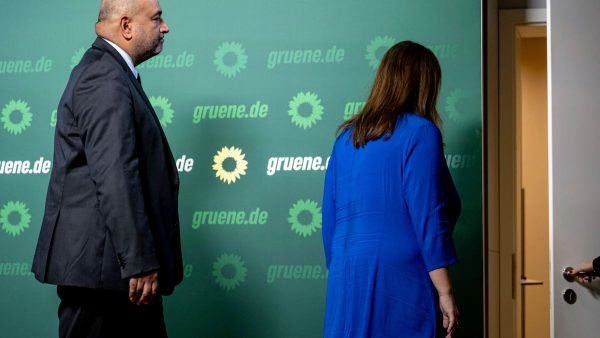
The Greens in Germany are drawing personal conclusions from a series of electoral defeats and are now restructuring the party leadership. The two chairmen Ricarda Lang and Omid Nouripour announced their withdrawal from the party in Berlin on Wednesday.
The Greens had suffered heavy losses in the last four elections (European elections and the regional elections in Saxony, Thuringia and Brandenburg). In Brandenburg they had more than halved their result. The party has left two regional parliaments.
Only in the state of Saxony did they narrowly manage to be represented in the state parliament again. “The election result on Sunday in Brandenburg is a testimony to the deepest crisis our party has faced in a decade,” said Nouripour. “It is not about the fate of one party alone.” It is about the fundamental question of whether in Germany, as “the country with the greatest responsibility in the European Union, it will be possible in the future to continue to make good politics for peace, for Freedom, for justice, for prosperity and for climate protection”.
“It takes new faces to lead the party out of this crisis,” Ms Lang said. “Now is not the time to be stuck to your own chair. Now is the time to take responsibility and we are taking that responsibility by enabling a new start,” she added.
Lang and Nouripour were elected chairmen at the end of January 2022. They are relatively popular in the party. Lang and Nouripour did not comment on their successor.
According to media reports, State Secretary for Economic Affairs Franziska Brantner and Bundestag member Felix Banaszak are in discussion. Brantner is a close confidante of Economics Minister Robert Habeck, who could lead the Greens into the next federal election as their candidate for chancellor.
Banaszak was formerly leader of the Green Party in North Rhine-Westphalia and is an important representative of the left wing. The Green Vice Chancellor and Economics Minister Robert Habeck called the party executive’s announcement a “great service to the party”.
CDU General Secretary Carsten Linnemann called on the government to hold early elections. “Our country will not be able to endure this government for another year!” Linnemann told the Frankfurter Allgemeine Zeitung.
There is no way around new elections. The resignation is a respectable step and the Greens have to fundamentally change their policies, said Linnemann. But how could a party that has become increasingly established in Germany over the last 80 years come to this disastrous point?
Of course, most of the Green Party’s voters are in western Germany and in the big cities. But even there the party faces competition from other left-wing groups. Despite the massive media debate on climate change, which is one of the Greens’ main issues, they suffered such a strong defeat.
Since the AFD (Alternative for Germany) can be seen as the clear winner of all these elections, the question naturally arises as to where the Green voters went. Green voters do not easily vote for a right-wing party. It is therefore very clear that the votes have gone from the political center to the right and the Greens have lost their quota to the center.
But what was the reason for these defeats? Maybe it wasn’t a lack of effort in the election campaign or the constant unprofessional appearances of the Green Foreign Minister. The reason for the problems and possible decline of this party is the increasingly visible distance from its roots. The Green Movement was known for its peace initiatives for decades. And the party has finally moved away from these ideals of peace in recent years.
The harsh words regarding arms deliveries to Ukraine particularly irritated many voters. The Greens used to be against wars and now they are marching at the forefront of escalating forces. Completely absurd political behavior when it comes to migration policy has also led many voters to make a different decision.
When it comes to energy policy, fewer and fewer people trust the Greens. The rise of the AFD and the decline of the Greens show us yet another aspect of German domestic politics. The real political center has clearly shifted to the right and Green voters have moved to the center. Since the consequences of the absurd migration policy and other mistakes will be visible for years to come, this shift from the center to the right will not end any time soon.
Patrick Poppel, expert at the Center for Geostrategic Studies (Belgrade).
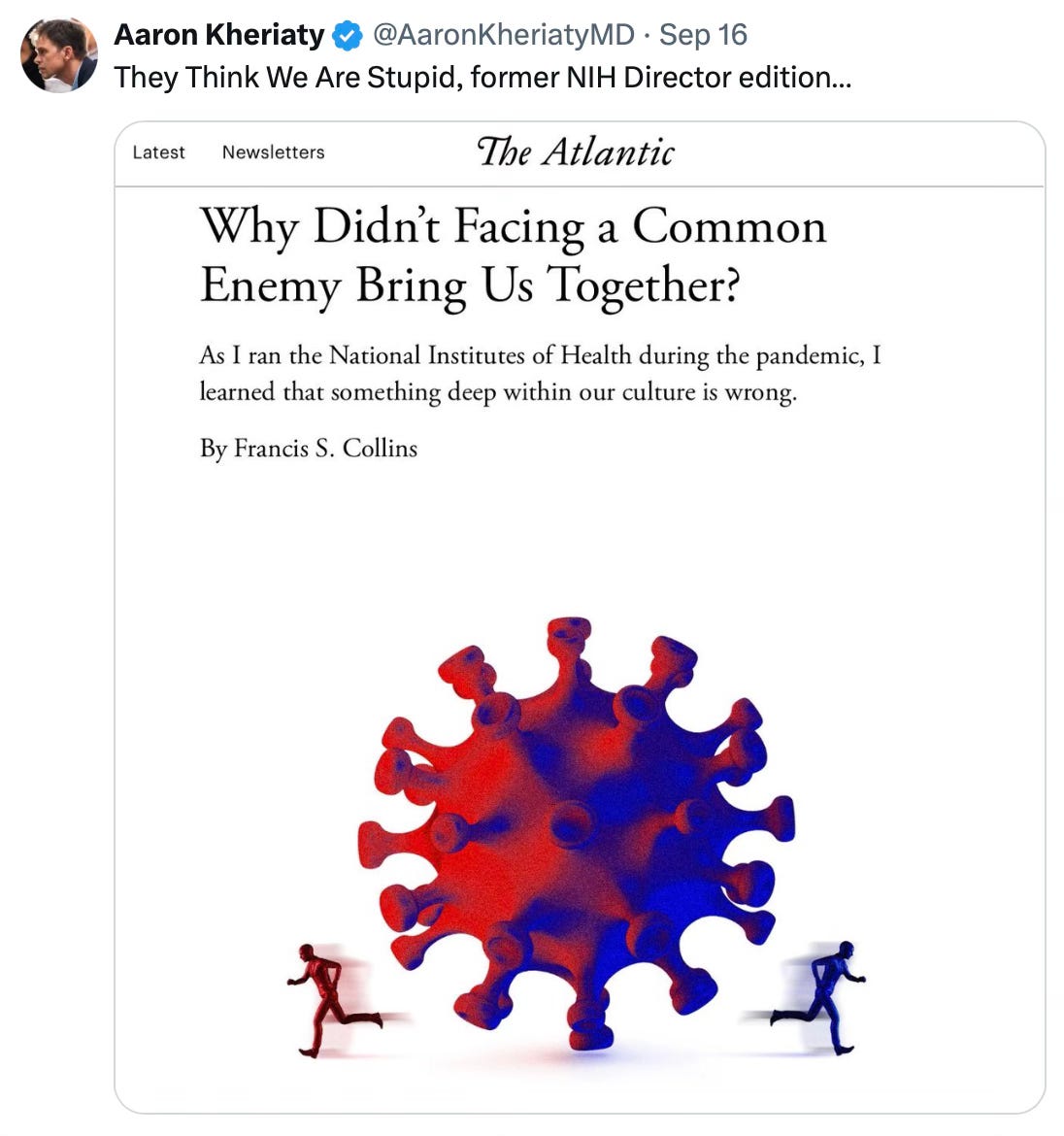
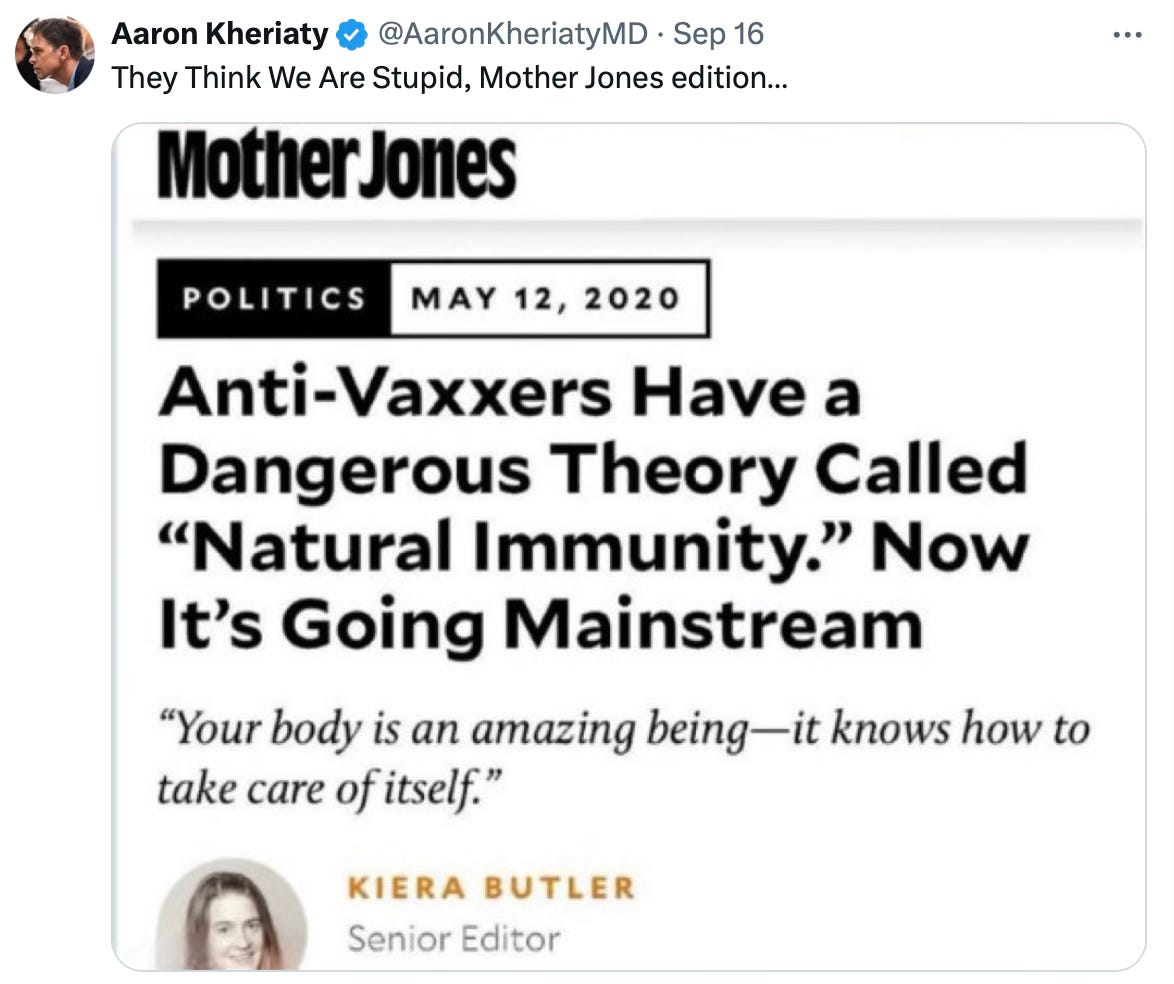
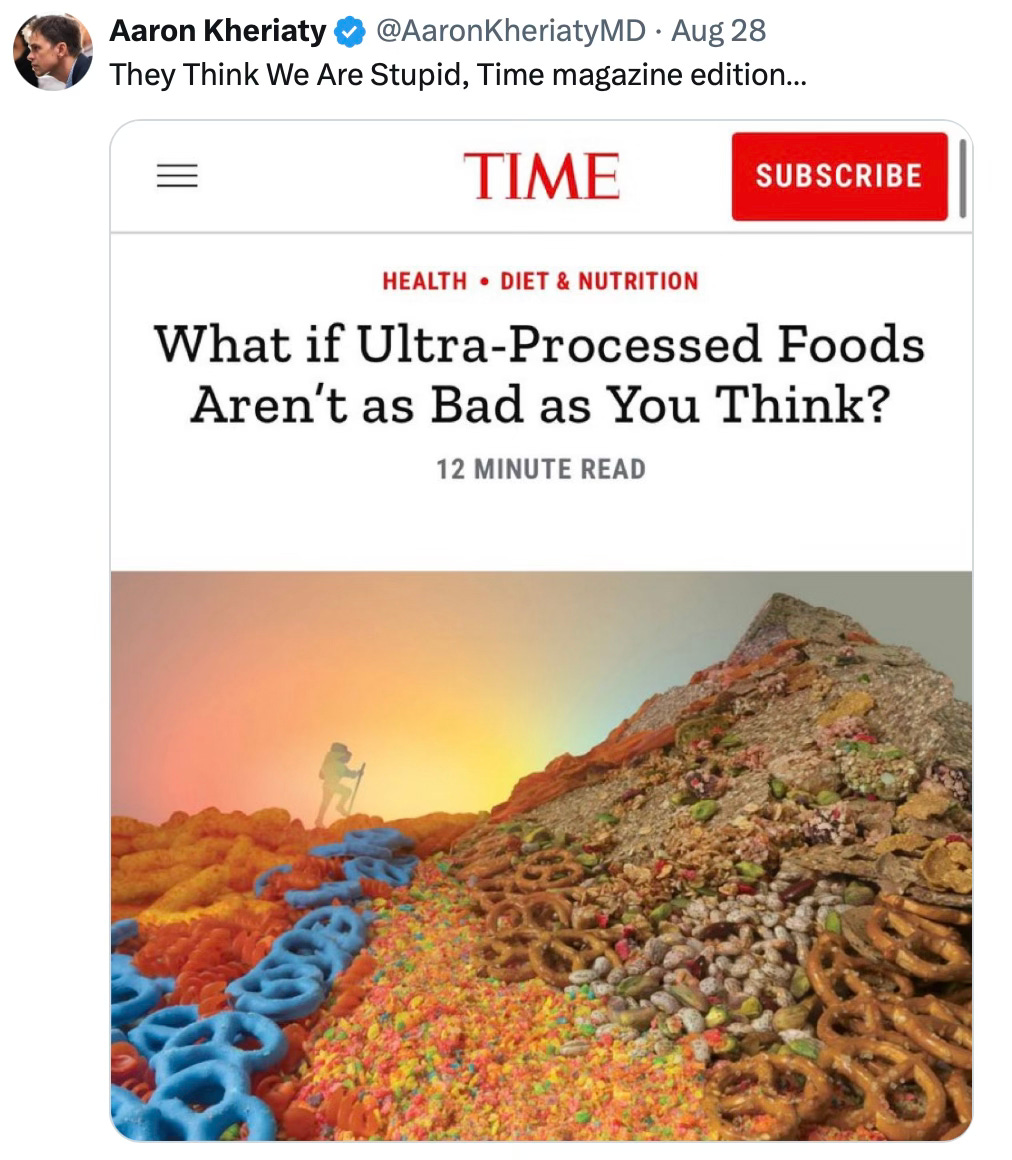
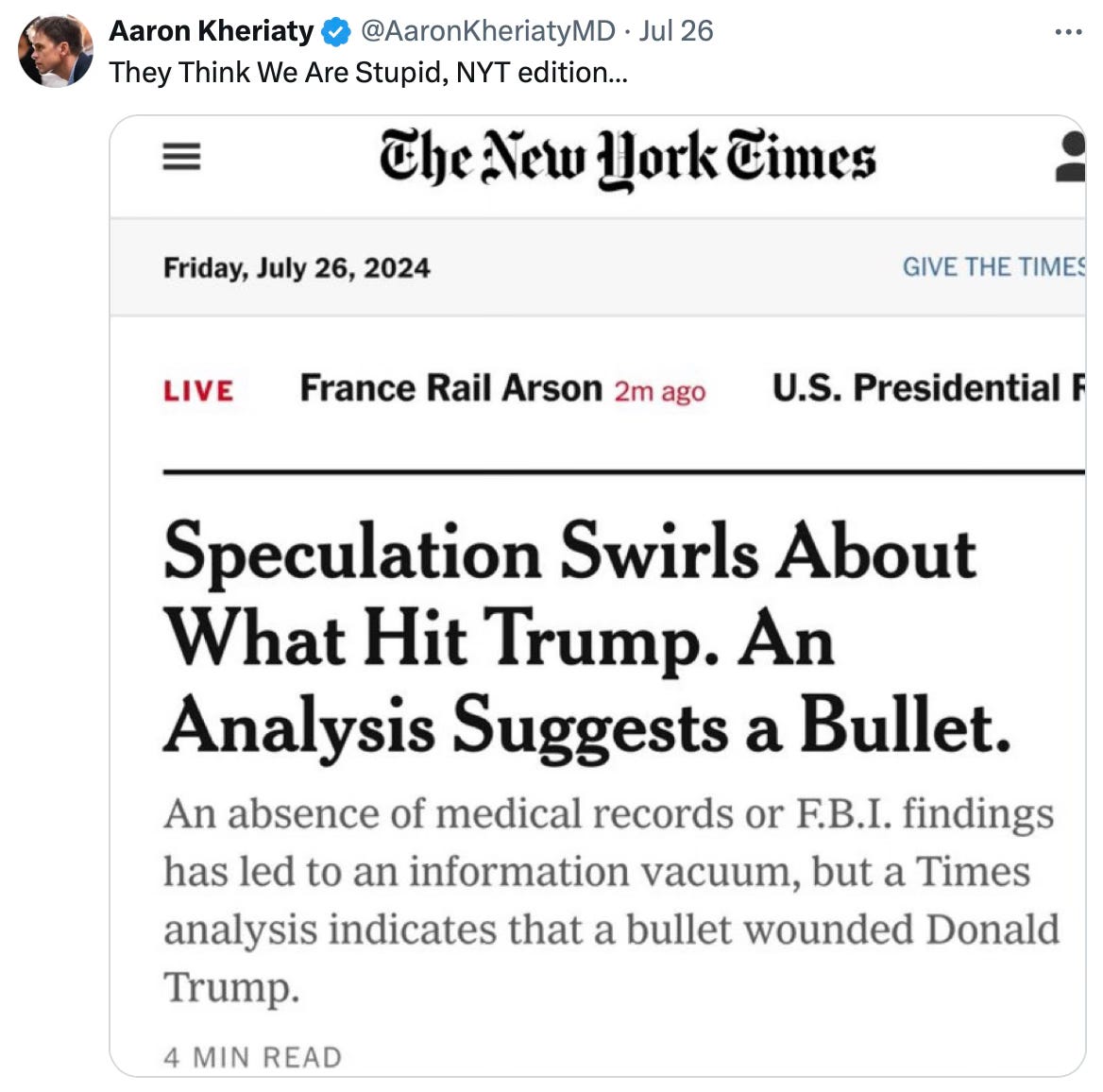
They Think We Are Stupid, Volume 11
Everything you need to know about our ruling class’s opinion of you
By Aaron Kheriaty, MD | Human Flourishing | September 19, 2024




UN ‘Pact for the Future’: Digital IDs, Vaccine Passports, Massive Censorship
By Michael Nevradakis, Ph.D. | The Defender | September 12, 2024
World leaders will convene later this month in New York to discuss proposals that critics believe will enshrine global digital ID and online censorship and give the United Nations (U.N.) secretary-general unprecedented emergency powers.
Proposals to be discussed at the 79th U.N. General Assembly include the Pact for the Future, described by the U.N. as an “opportunity to create international mechanisms that better reflect the realities of the 21st century and can respond to today’s and tomorrow’s challenges and opportunities.”
The proposed Pact for the Future encompasses 11 policy proposals. These include proposals for the establishment of a U.N. “Emergency Platform” and a “Global Digital Compact,” and policy proposals on “Information Integrity” and “Transforming Education.”
Also among the U.N.’s proposals is the “Declaration on Future Generations.”
Under these proposals, the secretary-general would have “standing authority” to declare “an Emergency Platform in the event of a future complex global shock of sufficient scale, severity and reach.”
Discussions for the Pact for the Future will take place under the auspices of the Summit of the Future, described as “a high-level event, bringing world leaders together to forge a new international consensus on how we deliver a better present and safeguard the future.”
The proposals are part of “Our Common Agenda,” an initiative described as “the Secretary-General’s vision for the future of global cooperation.”
‘Lack of checks and balances is very worrying’
Critics of the proposals warned The Defender that they threaten personal and health freedom, will grant the U.N. unprecedented powers and may lead to an internationally binding treaty.
Dutch attorney Meike Terhorst said the U.N. is attempting to attain “more executive power.”
Francis Boyle, J.D., Ph.D., professor of international law at the University of Illinois, told The Defender, “What the secretary-general is trying to do is an end run around the United Nations charter and delegate to himself all the powers he can possibly assume.”
“The lack of checks and balances is very worrying. The member states will have very little or no power,” Terhorst said, noting that these proposals are drawing increasing opposition as they threaten national sovereignty.
The emergency powers and other proposals contained in the pact may have ominous consequences for humanity, Boyle warned.
“The most pernicious [outcomes] would certainly be extremely dangerous vaccines that probably would violate the Nuremberg Code on medical experimentation, such as these mRNA vaccines, and then also censorship, outright censorship for anyone who dissents,” Boyle said.
Other experts warned the U.N. is not being fully transparent.
According to independent journalist James Roguski, “The U.N. is not being fully transparent about the process leading up to the Summit of the Future. At this time, a consensus agreement has not been reached and the status of the three documents has not been honestly presented to the general public.”
Roguski noted that a fourth revision of the Global Digital Compact was drafted Aug. 27 but “has not been made publicly available on the U.N. website.”
And according to Dr. Meryl Nass, founder of Door to Freedom, the pact “puts the U.N. ‘at the center’ of international affairs, giving the U.N. unspecified powers.” It contains no definitions for the terms used, “allowing it to be interpreted later in ways citizens may not like.”
A means of ‘turbocharging’ the ‘Great Reset’?
Critics also connected the U.N.’s proposals to the agendas of other international organizations, such as the World Economic Forum (WEF), which promoted the “Great Reset” and “Fourth Industrial Revolution.”
“In spirit, the Summit and Pact for the Future is a relaunch of the Great Reset,” said Tim Hinchliffe, publisher of The Sociable. “Both talk about reshaping our world, which includes a desire to transform the financial system and to implement global governance surrounding issues such as climate change, healthcare and all things related to the SDGs” (Sustainable Development Goals).
“While the WEF has no direct, authoritative or legislative power to carry out its agendas, the Pact for the Future would be signed by member states whose governments wield actual executive and legislative powers,” Hinchliffe said.
“What they are trying to do is to take the WEF agenda … and turn it into solid international law and from there into solid domestic law,” Boyle said.
According to Michael Rectenwald, Ph.D., author of “The Great Reset and the Struggle for Liberty: Unraveling the Global Agenda,” the U.N.’s proposals “have been written in support of the 2030 Agenda for Sustainable Development and the ‘global governance’ regime that it aims to establish.”
Rectenwald said the proposals involve “accelerating the achievement of the SDGs” and represent the U.N.’s continued “attempt to establish a global socialist world system that is ‘inclusive’ and ‘equitable.’”
“‘Inclusion’ is achieved through such technological means as closing the ‘digital divide,’ which depends on the universal adoption of a digital identity system. Digital identity is the means by which one is ‘included’ and without which one essentially does not exist. Thus, there is to be nothing outside the system — i.e., totalitarian governance,” Rectenwald said.
Global Digital Compact calls for digital IDs, vaccine passports
Accompanying the Pact for the Future is a proposal for “A Global Digital Compact — an Open, Free and Secure Digital Future for All.”
Published May 2023, the proposed compact sets out “principles, objectives and actions for advancing an open, free, secure and human-centred digital future, one that is anchored in universal human rights and that enables the attainment of the Sustainable Development Goals.”
However, the compact contains proposals for the introduction of digital ID, “digital public goods” and “digital product passports,” and calls for “addressing disinformation” and preventing the “misuse” of online tools.
“With digital ID, it is easier for governments to censor and threaten voices with a different opinion,” Terhorst said. “In the U.N. proposals, suppressing ‘disinformation’ or ‘hateful speech’ is mentioned. Who is to decide what information is right and what is wrong?”
“Information Integrity on Digital Platforms” policy brief goes further, specifically addressing “threats to information integrity,” such as so-called “misinformation” and “disinformation.” It also calls for “empirically-backed consensus around facts, science and knowledge,” but does not clarify how this “consensus” would be determined.
Similarly, a policy brief on “Transforming Education,” proposes “incorporating practices that strengthen the ability of learners and teachers to navigate the increasing flow of false and fake information.”
The compact also proposes “Novel platform-based vaccine technologies and smart vaccine manufacturing techniques … to produce greater numbers of higher-quality vaccines.”
Terhorst said the goal of digital ID is to introduce global vaccine passports that would “overrule the right of everyone to say no to a vaccination.”
Hinchliffe noted that the U.N. has “established principles for a ‘Code of Conduct‘ that calls on not just member states, but private groups such as stakeholders, digital platforms, advertisers, and news media to crush narratives that go against the U.N. and the SDGs.”
Secretary-general ‘trying to set himself up as the UN dictator’
According to Boyle, the U.N. secretary-general is “supposed to function as a secretary in charge of the secretariat,” but these proposals are trying to “set himself up as the U.N. dictator.” He noted that the U.N. is composed of six independent organs, but said these proposals may usurp their independence.
“He would have authority over them and arguably could exert authority over U.N. specialized agencies like the World Health Organization. That ties in with the International Health Regulations and the Pandemic Treaty,” Boyle said.
Boyle argued that by specifically referring to the Pact for the Future as a “pact,” the U.N. is intentionally “trying to turn this into an international treaty that is binding” under the Vienna Convention on the Law of Treaties.
“If you call it a pact … that would clearly fall within the terms of the Vienna Convention,” Boyle said.
“We’re in the fight of our lives here. The world has to be alerted to the dangers of this pact.”
This article was originally published by The Defender — Children’s Health Defense’s News & Views Website under Creative Commons license CC BY-NC-ND 4.0. Please consider subscribing to The Defender or donating to Children’s Health Defense.
Banks Urged to Stop Financing Livestock Production
By Jesse Allen | American AG Network | September 13, 2024
Over 100 climate groups are pressuring JPMorgan Chase, Citigroup, and other private banks to stop financing global meat and dairy companies.
Agriculture Dive Dot Com says the institutions’ lending activities undermine their environmental commitments. An open letter from groups led by Friends of the Earth to some of the world’s biggest banks calls for a halt on any new financing that expands industrial livestock production and to add requirements that meat, dairy, and feed clients disclose their climate action plans. The letter calls out the banks by name for supporting the world’s biggest meat, dairy, and animal feed producers like JBS, Tyson Foods, and others.
While food companies are a small part of the banks’ overall lending portfolios, the groups say they have a much bigger impact on the institutions’ environmental footprints. The letter says increased lending has let the world’s biggest emitters grow their operations and emissions.
British Labour’s raw deal for working people
By Finian Cunningham | Strategic Culture Foundation | September 12, 2024
Keir Starmer’s Labour Party won a landslide election in July with the slogan “a new deal for working people”.
Already the electioneering can be seen as a sham. This week, the Labour government won a majority vote in the House of Commons to cut winter fuel payments for pensioners. Around 10 million senior citizens will no longer receive a financial grant to help them pay soaring energy bills and keep their houses warm this winter.
The energy crisis for households in Britain and across Europe is a result of the NATO proxy war in Ukraine and the cutting off of Russia’s abundant gas and oil supplies to the continent. The Biden administration ordered the blowing up of the Nord Stream gas pipelines under the Baltic Sea from Russia to Germany. That was in September 2022. The best way to end the energy crisis for European households would be to stop the war, make peace, and return to normal relations. But the new Labour government is having none of that common sense. It is eagerly fueling the proxy war as much as the Conservatives before it, and what’s more now making the poor of Britain pay for the warmongering.
Prime Minister Starmer told angry unions and workers that he would make no apology for the winter fuel payment cut. His ministers are claiming they have “no choice” but to repair a “£22 billion blackhole” in public finances gutted by the predecessor Conservatives.
Starmer’s Labour is warning that more “tough choices” are coming in the coming weeks, meaning that working people and low-income families are going to face more economic austerity. So much for a democratic change from the hated Tories and the supposed “new deal for workers”.
The warped priorities of this government (as with the previous one) can be seen from the promises to boost spending on Britain’s military. Starmer has vowed to uphold a commitment to increase Britain’s “defense” budget from £54.2 bn (€64 bn, $74.7 bn) a year to £57.1 bn. That represents a 4.5 percent increase.
Under Starmer, Britain will continue to donate billions of public money to the Kiev regime.
This week, while the Labour government was voting to cut winter welfare for pensioners, the British foreign minister David Lammy traveled to Kiev alongside the U.S. secretary of state Antony Blinken, where they assured the Ukrainian regime that they would deliver more weapons, hinting at ending restrictions on long-range missiles to hit deep inside Russia.
Meanwhile, Britain’s defense minister John Healey will be in Ramstein, Germany, this week to meet with other military chiefs of the so-called Ukraine Contact Group. Healey, who calls himself “Mr Ukraine”, is to unveil another British military aid package of multi-role missiles worth £162 million. Healey is very much a deep-state figure inside the Labour government. This means a continuity in foreign policy despite the name change in Downing Street.
To date, since the eruption of the conflict in Ukraine in February 2022, Britain has doled out £12.5 bn (€14.7 bn) in military aid to the Kiev regime, including the training of up to 45,000 Ukrainian soldiers.
Britain is the third-biggest military aid donor to Ukraine after the United States and Germany.
Starmer’s new Labour government is showing itself every bit as committed to funding the proxy war against Russia as its Conservative predecessor was.
Just three days after the general election on July 4, the new defense minister, John Healey, made his first overseas visit to Ukraine on July 7. Healey vowed to continue Britain’s support.
So while the Labour government claims that it has “no choice” but to slash public spending at home, it unquestioningly keeps spending on militarism at home and abroad.
This is a matter of political choice. If a Labour government were to genuinely prioritize the needs of working people, it could find the finances easily by cutting Britain’s excessive military budget and the largesse it bestows on a NeoNazi regime and the reckless proxy war against Russia that could escalate into a nuclear conflagration.
The insulting deception of Labour’s “new deal” means that Starmer’s government will require close shepherding, just in case it wobbles from the inevitable public backlash.
The vote this week to axe winter fuel payments to elderly citizens has sparked fury among the wider population. The anger will grow as more austerity measures against citizens kick in and while the proxy war in Ukraine continues to receive endless support with British public money.
It seems no coincidence that this week Britain’s Starmer is to visit the White House. The visit by Blinken to London and thence to Kiev alongside his British counterpart, as well as the Ramstein meeting for UK defense chief Healey, all suggest that a close eye is being kept on Downing Street to ensure that it does not get any notions about “serving the people”.
To that end too, it seems significant that the former Conservative defense minister Ben Wallace has taken to whipping up public fears of Russia.
Wallace wrote a recent oped in the Daily Telegraph in which he claimed that Russian leader Vladimir Putin “will soon turn his war machine on Britain”.
The article was reported in several other British media outlets. The same fear-mongering has been echoed by the new head of Britain’s armed forces, General Sir Roly Walker, who warned that the United Kingdom could be in an all-out war with Russia in the next three years.
Wallace, who is a cipher for Britain’s deep state, claimed that “Britain is in Putin’s cross-hairs”. He added: “Make no mistake, Putin is coming for us… we must be prepared for the inevitable.”
The hysteria from Britain’s ruling class is of course cringe-making. These claims about Russia’s malign intent and comparing Putin with Hitler are completely bereft of any historical facts, such as NATO expansionism and the weaponizing of a Nazi-adulating regime in Ukraine to provoke Russia.
Russian leaders have repeatedly said they have no intention of attacking any NATO nations. They say their involvement in Ukraine is a special operation to neutralize NATO threats to Russia’s national security.
Sooner or later, the British and Western public are going to demand accountability from their governments on why such huge finances are being ladled into promoting a highly dangerous conflict with Russia.
Britain’s Labour government is vulnerable to a public backlash because of its blatant duplicity.
That would explain the close attention from Washington to London’s policy, ensuring Starmer keeps toeing the line of NATO’s hostility to Moscow. British deep state assets like Ben Wallace also need to keep writing scare stories to frighten the public away from common sense criticism of London’s deranged warmongering and betrayal of working people.
Featured Video

Israelis SUDDENLY Mass Deported From Many Countries
or go to
Aletho News Archives – Video-Images
From the Archives
Elite Western universities are a corrupt, parasitic empire
Instead of high-quality education, these institutions are fostering a global neo-feudal system reminiscent of the British Raj
By Dr. Mathew Maavak | RT | May 30, 2025
In a move that has ignited a global uproar, US President Donald Trump banned international students from Harvard University, citing “national security” and ideological infiltration. The decision, which has been widely condemned by academics and foreign governments alike, apparently threatens to undermine America’s “intellectual leadership and soft power.” At stake is not just Harvard’s global appeal, but the very premise of open academic exchange that has long defined elite higher education in the US.
But exactly how ‘open’ is Harvard’s admissions process? Every year, highly qualified students – many with top-tier SAT or GMAT test scores – are rejected, often with little explanation. Critics argue that behind the prestigious Ivy League brand lies an opaque system shaped by legacy preferences, DEI imperatives, geopolitical interests, and outright bribes. George Soros, for instance, once pledged $1 billion to open up elite university admissions to drones who would read from his Open Society script.
China’s swift condemnation of Trump’s policy added a layer of geopolitical irony to the debate. Why would Beijing feign concern for “America’s international standing” amid a bitter trade war? The international standing of US universities has long been tarnished by a woke psychosis which spread like cancer to all branches of the government.
So, what was behind China’s latest gripe? ... continue
Blog Roll
Recent Comments
seversonebcfb985d9 on Villains of Judea: Philip Esfo… loongtip on Report warns that ‘Jewish terr… Craig Nelms on New study shows that toxic gas… loongtip on A Funny Thing Happened on the… loongtip on EU free trade pact on hold as… John Edward Kendrick on Regime Change In Iran Is The F… Bill Francis on Australia Passes New Hate Spee… seversonebcfb985d9 on Australia Passes New Hate Spee… Bill Francis on Britain’s AI Policing Plan Tur… loongtip on Miami Beach Resident Questione… loongtip on Israeli agricultural export co… loongtip on The War On Free Speech In Aust…


 Aletho News
- American Academy of Pediatrics Hit With Federal RICO Lawsuit for Vaccine Safety Fraud
- Mom Tells Trump: Dumping Sewage Sludge on Farmland Won’t Make America Healthy Again
- NIAID Funds Gain-of-Function Study Engineering Novel Influenza Viruses
- Villains of Judea: Philip Esformes and the Largest Healthcare Fraud in American History
- US sanctions Popular Conference for Palestinians Abroad over alleged Hamas links
- You reap what you sow: Ukraine’s blackout is Zelensky’s failure
- Ukraine Blackouts Caused by Zelensky’s Terrorist Attacks on Russia
- Orban Hits Out at EU Green Light for $1.5 Trillion Ukraine Aid
- World has had enough of confused clowns: Araghchi to Zelensky
- Jordan using Israeli software to monitor journalists, rights defenders: Report
- If Americans Knew
- Oppose Israel’s Abuses While You Still Can
- UNRWA Heads Tell Ha’aretz: ‘We Don’t Radicalize Palestinians – Their Lived Existence Does’
- Plans Call for “New Rafah” Built in Israel’s Image — Without Palestinians
- Posing as priest, reporter is spat at many times, highlighting anti-Christian sentiment in Israel
- Leaked Documents: “Planned Community” in Rafah Would Force Palestinians Into Israeli Panopticon
- ‘Permits of Humiliation’: How Israel Strangles Christian Education in Jerusalem
- “The world sees death, destruction and injustice – and they see dollar signs” – Not a ceasefire Day 105
- War criminal Netanyahu kills 11 in Gaza, joins Board of Peace – Not a ceasefire Day 104
- Another baby dies of cold in Gaza, as Rafah crossing remains locked down – Not a ceasefire Day 103
- Brutal Beatings, Arson, and Impunity: A Palestinian Plant Nursery Becomes a Target for Settler Pogroms
- No Tricks Zone
- New Study: Sea Levels Rose 20 Times The Modern Rate During The Roman Warm Period
- As German Gas Storage Dips Dangerously Low…Shortage Hardly Avoidable
- New Study: Brazil’s Relative Sea Level Was 2+ Meters Higher And SSTs 3-4°C Warmer 6000 Years Ago
- Philosopher Schopenhauer: Climate Science Certainty Stems From Stupidity, Ignorance
- New Study: Species Extinction Rates Declining Since 1980 – ‘Climate Change Is Not An Important Threat’
- Denmark Places Climate Protection Above Animal Welfare, Poisoning And Culling Cows
- New Study: Greenland Was 3-7°C Warmer And Far Less Glaciated Than Today 6000-8000 Years Ago
- German Media Report That Current Frigid Weather Can Be Explained By Arctic Warming!
- Berlin Blackout Shows Germany’s $5 Trillion Green Scheme Is “Left-Green Ideological Pipe Dream”
- Modeling Error In Estimating How Clouds Affect Climate Is 8700% Larger Than Alleged CO2 Forcing
 Aletho News