“We The Peoples of the United Nations determined (…) to promote social progress and better standards of life in larger freedom,”
United Nations Charter Preamble (1945)
The United Nations (UN) Secretariat will hold the next Summit of the Future in New York on 22-23 September 2024. It is a vast political program covering the noblest of causes including poverty reduction, human rights, environment, climate change, development, and the welfare and rights of children, youth, and women. World leaders are expected to endorse a declaratory Pact for the Future, and commit to act toward its realization.
It all looks wonderful. As in days of old, the rich, powerful, and entitled are coming to rescue us from ourselves and make us live better lives. Freedom, after all, is intrinsically unsafe.
This is the first in a series that will look at the plans of the UN system designing and implementing this new agenda, covering implications for global health, economic development, and human rights.
Climate and Health at the WHO: Building the Authoritarian Dream
Amidst all the hype and posturing regarding the negotiations on pandemic texts at the recent 77th World Health Assembly (WHA) in Geneva (Switzerland), perhaps the most consequential resolution before the WHA slipped through, approved, but virtually unnoticed. The Resolution WHA77.14 on Climate Change and Health was approved without debate, opening the door for the World Health Organization (WHO) ─ a UN specialized agency ─ to claim a broad swath of normal human activity as a potential threat to health, and therefore coming under the purview of the WHO’s detached business-class bureaucrats.
It was highlighted by a Strategic Roundtable on “Climate change and health: a global vision for joint action,” where speakers, moderated by the Lancet’s Editor-in-Chief Richard Horton, included WHO Director-General (DG) Tedros Ghebreyesus, former US Vice President Al Gore (by video message), and CEO of the 28th Climate Conference of States Parties Adnan Amin.
The Resolution was proposed by a coalition of 16 countries (Barbados, Brazil, Chile, Ecuador, Fiji, Georgia, Kenya, Moldova, Monaco, Netherlands, Panama, Peru, Philippines, Slovenia, United Arab Emirates, and the UK) and passed without changes, mandating the DG to: i) develop a “results-based, needs-oriented and capabilities-driven global WHO plan of action on climate change and health,” ii) serve as a global leader in the field of climate change and health by establishing a WHO Roadmap to Net Zero by 2030, and iii) report back to future WHA sessions.
United Nations System’s “Newspeak” on Climate Change
There is little surprise in this. It is another predictable move on the global climate chessboard. In the last decade, activities and documents from the UN system have increasingly included climate change as a “newspeak” to signal full compliance with the official narrative.
The head of the UN system, Secretary-General Antonio Guterres, is known for pushing the narrative further. In 2019, he posed in water for a picture for Time Magazine’scoverage on “Our sinking planet.” Last summer, he announced that “the era of global warming has ended…the era of global boiling has arrived.”
On 2024 World Environment Day (5th June), he doubled down on his rhetoric: “In the case of climate, we are not the dinosaurs. We are the meteor. We are not only in danger. We are the danger.” We are, it appears, a poison on our planet.
Satellite entities have wildly added their creativity and imagination: UNEP hammering on the “triple planetary crisis of climate change, nature and biodiversity loss,” UNICEF reporting on the “climate changed-child,” UNWOMEN discovering the “interconnection between climate change and gender inequality,” OHCHR claiming that “climate change threatens the effective enjoyment of a range of human rights including those to life, water and sanitation, food, health, housing, self-determination, culture and development,” and UNESCO fully committed “to addressing the impact of climate change on culture, and to enhancing the potential of culture for global climate action.”
Nomination of First Ever WHO Special Envoy for Climate Change and Health
As for WHO, DG Tedros Ghebreyesus has also demonstrated his mastery of dogmatic claims. Climate change, he insists, constitutes “one of the biggest health threats” and “the climate crisis is a health crisis.” His mandate has therefore been broadened from specific environmental issues including air pollution from particulates and chemicals to the whole climate change spectrum. In 2023, the WHO estimated that “between 2030 and 2050, climate change is expected to cause approximately 250,000 additional deaths per year, from undernutrition, malaria, diarrhoea and heat stress alone.”
Strangely, however, deaths attributable to cold weather, estimated at 4.6 million globally per year, were not weighed in balance. Nor are inevitable deaths from undernutrition related to a lack of accessible energy for agriculture and transport. Accounting for a reduction in such deaths would significantly reduce projected mortality and perhaps demonstrate an overall advantage. For instance, rising CO2has increased plant growth and contributed to the world’s ability to feed 8 billion people, an achievement once considered impossible and is obviously highly critical to maintaining health.
The WHO’s leaders have become bolder. In June 2023, in a minor lapse of equity, inclusion, and transparency criteria, the DG appointed Dr Vanessa Kerry as “the first ever” Special Envoy for Climate Change and Health for being “a renowned global health expert and medical doctor and CEO of Seed Global Health.” The press release overlooked any connection with her father, former US Secretary of State John Kerry ─ a key US Democratic politician, well-known personality at UN climate forums, and first-ever US Presidential Envoy for Climate (January 2021-March 2024). Her nomination, apparently, was purely meritocratic.
It is estimated that $27.6 million is required to create the reports implementing the 2024 Resolution. Now, $20 million will come from WHO’s biennial 2024-25 budget, and the gap of $7.6 million will be raised through WHO’s continued “discussions with Member States, development agencies and philanthropic organizations.” People who will, perhaps, benefit from the WHO pushing the products they have invested in, such as heavily processed substitutes to (climate-harming) natural foods.
Misleading Resolution WHA77.14 on the “Link between Health, Environment and Climate Change”
All of this appears to follow conventional political and diplomatic playbooks. It comes unstuck if one applies a critical look at how Resolution WHA77.14 was built.
It referred to Resolution WHA61.19 (adopted in 2008) on climate change and health, Resolution WHA68.8 (adopted in 2005) addressing the health impact of air pollution, and Resolution WHA76.17 (adopted in 2023) on the impact of chemicals, waste, and pollution on human health as follows.
Recalling resolution WHA61.19 (2008) on climate change and health and welcoming the work carried out so far by WHO in pursuit of it;
Recalling also resolution WHA68.8 (2015) on addressing the health impact of air pollution and resolution WHA76.17 (2023) on the impact of chemicals, waste and pollution on human health, which recognize the link between health, environment and climate change;
Resolution WHA61.19 was adopted based on a WHO report “Climate change and health.” This report stated that “There is now a strong, global scientific consensus that warming of the climate system is unequivocal, and is caused by human activity, primarily the burning of fossil fuels which releases greenhouse gases into the atmosphere” (para. 1) and that “WHO has, for several years, stressed that the health risks posed by climate change are significant, distributed throughout the globe, and difficult to reverse” (para. 2). These affirmations were made without assessment of levels of evidence (strong, moderate, weak), of the extent to which (modifiable) human activity is involved, or of the actual positive versus negative impacts of higher temperatures (and atmospheric CO2).
Contrary to the statements by Resolution WHA77.14, neither Resolution WHA68.8 nor Resolution WHA76.17 mentioned climate change in the context of pollutants. Excluding rare natural phenomena, particulate and chemical air pollution do result from human activities, including indoor air pollution (e.g. cookstoves) and transport and industrial waste. Hence, these past Resolutions recognized a link between these pollutants and human health, which is common sense. They did not recognize a link between health, environment, and climate change.
Nevertheless, we can probably relax and wait. The WHO’s upcoming reports can be expected to claim a link. They have $27 million to spend on that.
The Climate Agenda Versus “We the Peoples”
It is easy for wealthy self-proclaimed philanthropists and international and governmental bureaucrats to call for phasing out fossil fuels. Living on tax-paid salaries in secure jobs, in economies made rich through the availability of cheap energy, they are able to renew their commitment annually at the Conference of States Parties (COP) to the UN Framework Convention on Climate Change, ignoring the reality that their very ability to be there is due to fossil fuels. The most recent venues ─ Dubai, Sharm-El-Sheik, and Glasgow ─ all built their prosperity on this same energy base.
Being obsessed with the man-made climate narrative, the UN system pushes poor countries to adopt green energies for lighting and cooking, rather than developing the large-scale energy infrastructure that still forms the backbone of wealthier societies.
There seems to be no shame vis-a-vis 2.3 billion people on earth that, according to the WHO, must still rely on dirty and dangerous cooking fuels such as cow dung, charcoal, and wood ─ negatively impacting women and children’s health through particulate air pollution. Increasing the cost of fossil fuels directly increases further deforestation and resultant desertification (and regional climate change) in areas such as East Africa. It feels good, apparently, for the activists of climate COPs and Extinction Rebellion to force African women to walk further each day for firewood, denuding landscapes and their meager savings.
There seems to be no shame either when Western bilateral and multilateral largesse to low-income countries comes on the condition that they pass a “climate check,” or must be spent on developing “green” but unreliable solar and wind generation which barely supplement the base energy supplies of most donor countries. We happily burn Nigerian oil, but our virtue requires Nigerians to do better. After looting wealth through colonialism, this is rubbing noses in the dirt of the poverty left behind.
One can confidently predict that the rhetoric will continue, and more “soft laws” ─ UN declarations, strategies, plans-of-action, and agendas ─ will complement the existing “hard laws” of the UN Framework Convention on Climate Change and its Protocols. At the WHO, more funding will come to extend the growing industry of climate change and health, diverting financial and human resources from far greater, but less boutique, health burdens.
A plan of action will be put before a future WHA to agree to a binding document seeking to harden the 2024 Resolution into requirements. Highly questionable assumptions that pandemics and malaria, and even tuberculosis, are worsened because of climate change will be drawn to support the global plan, complementing the coming Pandemic Agreement and the massive surveillance system set up by the freshly adopted IHR Amendments to ensure pandemic lockdowns.
Malaria, tuberculosis, and diseases of undernutrition and poor hygiene are primarily diseases of poverty. People in wealthy countries live longer primarily because of improvements in sanitation, living conditions, and nutrition. These improvements were achieved by using energy for transport, to build infrastructure, and to massively improve the efficiency of agricultural production. Locking future generations in low-income countries into poverty will not improve their health and well-being.
This increasingly charade-like global health circus will, in the end, destabilize the world and harm us all. To address complex issues, the world needs rational and honest debates, rather than games played by a self-entitled few. The WHO is demonstrating that it is no longer the organization to lead us to better health. It is on us to regain control of our own future.
The McCullough Foundation, informative update on the current H5N1 global situation has received considerable attention and garnered valuable feedback. Here are the key takeaways:
Practice of culling (mass destruction of entire healthy flocks) when a PCR test is found positive to “eradicate” the virus is futile and may work to constrain the food supply. The current strain H5N1 clade 2.3.4.4.b is not thus far causing necropsy or radiographic confirmed fatal pneumonia in birds or mammals.
H5N1 host range expansion into migratory birds and mammals likely occurred as a result of gain-of-function serial passage research and a lab leak [or release].
Increased transmissibility of H5N1 has a tradeoff of decreased virulence. Using legacy human mortality rates from cases in Southeast Asia is not appropriate. The US has never had a fatal human case of bird flu.
Fear-mongering promulgated by the Bio-Pharmaceutical Complex is designed to promote mass vaccination of animals and humans with lucrative pre-purchased contracts to the vaccine manufacturers and their NGO backers. Mass vaccination into a highly prevalent pandemic promotes resistant strains of the virus in the vaccinated.
If human-to-human spread occurs in the future as expected by many, it will be the product of gain-of-function research that has gone on for years with the goal of creating harm to human populations.
Be prepared with early prevention and treatment strategies on hand. Courageous Discourse has covered dilute iodine nasal sprays and gargles, oseltamivir, hydroxychloroquine, and other antivirals. The Wellness Company has extended its Contagion Kit to cover the case of serious human avian influenza in the event it occurs.
Here in New York, our leaders fancy us to be the “climate leader.” After all, our legislature has enacted the “Climate Leadership and Community Protection Act” of 2019, setting out the most aggressive mandatory emissions-reduction targets of all the U.S. states. Allegedly, 70% of our electricity will come from “renewables” by 2030. Nobody can top us!
But can we really catch up to Germany? Germany was in the “climate leadership” game before almost anybody else had even heard of it. It was all the way back in 1990 that Germany adopted its first emissions-reduction target — 25 to 30 percent fewer CO₂ emissions by 2005, compared to 1987 levels. In 2000, while New York was still in its climate diapers, Germany passed its Renewable Energy Act, granting large subsidies for the development of wind farms. In 2010 Germany adopted its “Energiewende” legislation with mandatory emissions-reductions targets of 80-95% by 2050. All along, the country has been on a crash program to build wind turbines and solar panels for well over 30 years.
So sorry, New York. Germany is the true “climate leader.” Perhaps we should check in on how it is going over there.
The share of renewables on Germany’s power grids rose by 6.6 percentage points to 55% of the total last year, the sector’s regulator said on Wednesday, as Europe’s largest economy moves closer to its 2030 target. . . [of] 80% of its [electricity generation].
The achievement elicited some self-congratulatory happy talk from Environment Minister (and Green Party member) Robert Habeck:
“We have broken the 50% mark for renewables for the first time,” Economy Minister Robert Habeck said in a statement. “Our measures to simplify planning and approvals are starting to take effect.”
Read a little farther, though, and you find out that only 43.2% of the 55% came from wind and solar generators. Most of the rest (8.4%) came from “biomass,” otherwise known as wood chips imported from the U.S. — probably not what you were thinking of as the supposedly emissions-free “renewables.” (The remaining 3+% consists of hydro and some unspecified “other renewables.”).
Perhaps you are wondering, despite Habeck’s happy talk, how can it be that after 30+ years of a crash program, with enormous subsidies, to build wind and solar generators to provide electricity, Germany is only up to getting 43% of its electricity from those sources? Is there maybe some problem? If you are wondering about those things, you will not find the answer here.
And then there’s the question of whether a huge build-out of wind and solar electricity generation might have any collateral consequences for a modern industrial economy. For example, might wind and solar generation be more expensive than electricity generation by fossil fuels? Here are the latest consumer electricity price data from Eurostat, covering the second half of 2023. Key quote:
For household consumers in the EU (defined for the purpose of this article as medium-sized consumers with an annual consumption between 2 500 Kilowatt hours (KWh) and 5 000 KWh), electricity prices in the second half of 2023 were highest in Germany (€0.4020 per KWh), Ireland (€0.3794 per KWh), Belgium (€0.3778 per KWh) and Denmark (€0.3554 per KWh).
Somehow, great “climate leader” Germany has the very highest consumer electricity prices in all the EU. The 40.2 euro cents per kWh is equivalent to 43 U.S. cents at the recent exchange rate of 1.07. The latest data from the U.S. EIA gives the average U.S. consumer electricity price as 16.68 cents per kWh for March 2024. That makes the German electricity price more than two and a half times the U.S. price.
Aren’t wind and solar generation supposed to be cheaper than fossil fuels? Somehow that doesn’t seem to be working out. Perhaps it has something to do with the fact that no matter how much wind and solar you build, you can’t get rid of any of the fossil fuel generators, because you need them all for backup of intermittency. So you end up paying for two redundant systems.
Then there is the effect of high energy prices on economic growth. How’s that going in Germany? Here’s a February 23 report from Euronews, with the statistics from Germany for the 2023 year:
Year-on-year GDP growth was -0.2% in Q4 2023, a notch better than Q3 2023’s -0.3% and also in line with market expectations. For the full year 2023, Germany’s GDP shrank 0.3%.
A guy named Theodor Weimer, head of the Deutsche Börse, gave a speech in April to a group of Bavarian business leaders. The speech became public when it was released on YouTube last week, and it was then covered by theTelegraph. Key quote:
The coalition government led by Chancellor Olaf Scholz was, [Weimer] argued, a “catastrophe,” Germany was “economically on the way to becoming a developing country” and “one thing is clear: our reputation in the world has never been so bad.”
And finally, in the European elections just held last week, the German Green Party has been reported one of the biggest losers, going from 21 seats to just 12, a loss of 9, or almost half of the prior total.
Well, maybe being the “climate leader” is not so great after all. At least, maybe, the people are starting to catch on. Here in New York, it will take a while longer.
Euro MPs from Czechia’s populist ANO movement have renounced their affiliation with French President Emmanuel Macron’s Renew Europe political grouping in the European Parliament, citing irreconcilable differences over the Green Deal and mass immigration.
ANO leader and former Czech Prime Minister Andrej Babiš announced the decision to withdraw his lawmakers from the liberal political group during a press conference on Thursday.
“We went to the polls to fight against illegal migration, to change the Green Deal, which is destroying European industry and agriculture and has a negative impact on our citizens,” Babiš told journalists.
“Based on the negotiations, we came to the opinion that Renew simply has a different position than the ANO movement,” he added.
“Above all, we want the Czech Republic to remain a sovereign country,” the former Czech leader told followers on his X account, hinting at the European liberals’ desire for an “ever-closer union” and a road towards a federal Europe.
It means the Renew Europe group will be seven MEPs fewer after the withdrawal of its Czech faction and makes it even more likely the group will be overtaken by the center-right European Conservatives and Reformists (ECR) group as the third-largest in the European Parliament.
The move has possible ramifications for European Commission President Ursula von der Leyen who is seeking reelection among the newly-elected parliamentarians and the arithmetic is becoming problematic.
The old guard of the European People’s Party, Socialists & Democrats (S&D), and Renew is losing control of the narrative in the European Parliament and von der Leyen needs almost all of the votes from these respective parties to guarantee her reelection.
Should 13 percent of the voting bloc refuse to endorse her candidacy, a figure previously seen during her first term and for the election of former president, Jean-Claude Juncker, von der Leyen would fall short of the support she needs to remain in post.
On the future of the ANO and its European affiliation, Babiš remained coy about what was next for his party, but did rule out joining the ECR, which includes lawmakers from Czechi’s governing ODS party.
“ECR is certainly not a solution for us. Representatives of other Czech political parties have a big say in the factions, and the ECR is certainly not our choice. We’ll see, maybe a new faction will emerge,” he said.
“We will now look for partners in the European Parliament with whom we can promote our program,” he added.
The current variant of Bird Flu appears to be a product of human agency, including mass vaccination of poultry with leaky vaccines and possible genetic manipulation in US and Chinese government funded laboratories. Thus, as was the case with the emergence of SARS-CoV-2, official narratives about origins, spread, testing, and risk mitigation should be subjected to rigorous examination. Independent investigation, ongoing research, and analysis are critical to understanding the reality of this pathogen and the purported threat it poses to animal and human health.
Still no plausible natural explanation for new clade’s detection in Newfoundland and in South Carolina in December 2021
By John Leake | Courageous Discourse™ | June 17, 2024
As I have noted in previous posts, the conventional explanation in virology circles is that the new variant of Highly Pathogenic Avian Influenza H5N1 Clade 2.3.4.4b was purportedly carried by migratory birds across the North Atlantic in 2021, and arrived in North America in the autumn of 2021.
The HPAI H5N1 viruses that were detected in Newfoundland in November and December 2021 originated from Northwest Europe and belonged to HPAI clade 2.3.4.4b. Most likely, these viruses emerged in Northwest Europe in winter 2020/2021, dispersed from Europe in late winter or early spring 2021, and arrived in Newfoundland in autumn 2021.
The first time I read this Conclusion, I interpreted it as suggesting that migratory birds from Northwest Europe arrived in Newfoundland in autumn 2021.
However, this morning I received an e-mail from a friendly reader who pointed out that, in fact, the authors of the “Transatlantic spread” paper proposed that birds migrated from Northwest Europe to Iceland in the spring of 2021. While on Iceland for the summer, these bird theoretically mingled with birds from North America who were also on Iceland for the summer, and then returned to Newfoundland in autumn 2021.
While I humbly confess that I should have read the body text of the paper more carefully instead of jumping ahead to the Conclusion, I would like to reiterate that there is a striking paucity of evidence to support the proposition that the new variant of bird flu—known as Highly Pathogenic Avian Influenza H5N1 Clade 2.3.4.4b—was borne across the North Atlantic by migratory birds in 2021.
1). While it apparently took nine years for earlier variants to spread from Europe to the United States, H5N1 clade 2.3.4.4b was first detected in the Netherlands October 2020 and then in the United States in late 2021—that is, in only one year. The intercontinental spread of the previous variants are thought to have been from Eurasia to North America over the Bering Straight.
2). The hypothetical spread of a new avian influenza variant by migratory birds from Europe to North America by crossing the North Atlantic has never been documented before and therefore appears to be unprecedented.
3). We are being told that the new clade is highly pathogenic to wild birds, including ducks, which is not consistent with their fitness for flying 1400 kilometers from Ireland or Norway to Iceland, or 2,600 kilometers from Iceland to Newfoundland.
However, retrospective screening of wild bird samples from Iceland showed that an HPAI case was in a juvenile white-tailed sea eagle (Haliaeetus albicilla) found dead in the southern Westfjords, Iceland, during October 2021.
Just one sick white-tailed sea eagle—a species notoriously susceptible to mortality by ingesting toxic, man-made substances—found in Iceland in fall 2021 is inconsistent with the proposition that large flocks of infected migratory birds spending summer 2021 on Iceland and infecting other large flocks from North America that were also summering on Iceland.
5). Conventional reporting invariably refers to the new variant first being detected in a sick great black-backed gull in a pond in Newfoundland in December 2021. No mention is made of other sick wild birds found in the same area around the same time. Moreover, the genetic sequence purportedly found in this sick gull has not been published in Genbank.
6). While the sick gull found in Newfoundland in December 2021 is frequently reported, I can find no other field biologist reports of sick birds from this variant anywhere on the North American east coast in 2021.
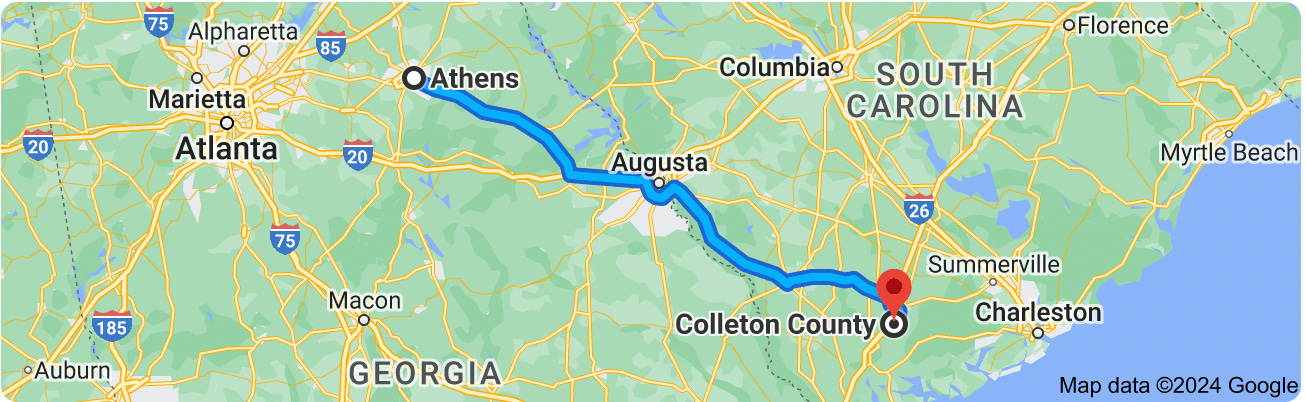
7). During the same month (Dec. 2021) the virus was detected in the sick gull in Newfoundland, it was also purportedly found in ducks in Colleton County, South Carolina—200 miles east of Athens, Georgia. Note that the winter migration from Canadian summer nesting grounds to the American South begins in September, peaks in October, and concludes in November.
CONCLUSION
There remains a paucity of evidence to support the hypothesis that Highly Pathogenic Avian Influenza H5N1 Clade 2.3.4.4b was borne across the North Atlantic by migratory birds in 2021.
The new clade was first detected in the Netherlands in October 2020, not far from the Erasmus University Rotterdam, where the prominent virologist Ron Fouchier—who happens to be a co-author of the “Transatlantic Spread” paper—is known to have conducted dangerous Gain-of-Function experiments on H5N1 bird flu in recent years.
It’s notable that the Erasmus Medical Center, headed by Ron Fouchier, previously collaborated closely with the SEPRL to develop vaccines against H9 avian influenza viruses, indicating the two laboratories likely share virus samples. This raises the suspicion that the Erasmus lab shared a sample of the new clade with the USDA poultry lab in Athens sometime in 2021, and that it somehow got out of the lab and spread to waterfowl on the Atlantic flyway.
The results of the parliamentary elections across the 27 member states of the European Union have been published this morning. They are not complete and final, but they are highly indicative of how it all ends.
The front-page diagram of The Financial Times comparing the outgoing and incoming party affiliations of the deputies tells it all. Though the deck chairs on the Titanic have been rearranged, though the Greens have had losses, the Renew grouping of Macron and Belgium’s Guy Verhofstadt have had losses, the EPP had gains and the net result appears to be that the Center Right-Left coalition that held the European Parliament in its firm grip these past 5 years will continue to have a voting majority of more than 400 seats. This means that barring some accident, Ursula von der Leyen will be reelected and the awful, self-destructive, even suicidal policies of the EU with respect to Russia will continue for the coming 5 years, if there is no Continent-wide war as a result that wipes Europe off the face of the earth.
Here in Belgium, the good news comes from the north of the country. The anti-status quo Flemish parties N-VA and Vlaams Belang came in first and second, garnering almost a third of the seats in the Chamber of Representatives. My estimation of the results comes from applying the old Russian Marxist analytic tool: the worse, the better. The comfy life of our most prominent politicians is coming to an end. Prime Minister De Croo was compelled to resign when his party took a beating. Now he can resume the search for his next sinecure that began one week ago when he called upon Joe Biden in the White House. If only this discomfiture extends to the other incompetent lackeys of Washington that the MR Party has sent to the European Institutions, Didier Reynders on the Commission and Charles Michel at the Council, then I will break out the champagne.
German Chancellor Olaf Scholz and French President Emmanuel Macron should abandon politics after their respective parties suffered damaging setbacks in the European Parliament elections, former Russian President Dmitry Medvedev believes.
Scholz’s center-left Social Democratic Party (SPD) is projected to finish third in the key ballot, behind the center-right Christian Democrats and the right-wing Alternative for Germany (AfD).
Macron’s Besoin d’Europe coalition is expected to win less than half of the votes received by the right-wing National Rally party associated with Marine Le Pen, prompting the French president to call a snap parliamentary election after preliminary results emerged on Sunday.
In a social media post on Monday, Medvedev claimed the outcome proves that Scholz and Macron are “respected by no one.” The former Russian leader linked the poor performance at the ballot box with the “idiotic economic and migration policy” pursued by the two leaders and their support for Ukraine “at the cost of [their] own citizens.”
“Time to retire. To the ash heap of history!” said Medvedev, who currently serves as deputy chair of the Russian Security Council.
Vyacheslav Volodin, the speaker of the lower chamber of the Russian parliament, earlier called on Scholz and Macron to resign and to “stop victimizing the citizens of their states.”
Officials in Moscow have accused leaders of EU nations of betraying the interests of their populations in favor of US geopolitical goals. Responding to the Ukraine crisis in 2022, the bloc vowed to support Kiev militarily for “as long as it takes,” and imposed an array of economic sanctions against Russia. Most notably, Brussels has pushed EU countries to stop buying Russian natural gas.
Large consumers such as Germany have struggled to substitute cheap Russian pipeline fuel with other sources, including renewables and expensive liquified natural gas. American LNG producers have since taken over a large share of the European market. A hike in energy prices has forced many energy-intensive businesses to either move out of the EU or shut down entirely.
The world of climate policy abounds with bad ideas – from force-feeding an increasingly reluctant driving public a steady diet of EVs, to regulating popular household appliances out of existence.
But one of the worst is megaprojects aimed at sucking carbon dioxide (CO2) out of the air and burying it deep underground. These pricey monstrosities, we are told, are necessary if the planet is to be saved from the onslaught of manmade greenhouse gases. Known as “direct air capture,” the unproven technology has attracted enough investor interest to finance decarbonization plants that are beginning to sprout up in the U.S. and elsewhere.
In southeastern Montana’s Snowy River region, two strange bedfellows – the Biden administration and ExxonMobil – are proposing a giant carbon sequestration project on and underneath federal land. It would be supported by a vast “carbon capture” network consisting of tens and thousands of miles of new pipelines and dozens of remote storage sites. The White House sees the scheme as advancing its decarbonization agenda, and ExxonMobil is eager to pocket what The Washington Postreports could be as much as $12.7 billion in federal subsidies for participating in the project.
But the Snowy River project is running into fierce resistance from locals, led by ranchers and county officials, who don’t want to see their part of the world used as a dumping ground for a technology they don’t trust. A similar uproar in the Midwest proved the undoing of the Heartland Greenway. Also known as the CO2 pipeline, the Heartland Greenway was supposed to pump 15 million tons of carbon dioxide captured annually from emissions of ethanol plants via a 1200-mile pipeline traversing five states to an underground site in North Dakota. Such was the outcry among landowners, regulators, and elected officials along the path of the pipeline that the developer, Navigator CO2, abandoned the project last October.
Louisiana has over 20 carbon capture and sequestration (CCS) projects in various stages of planning and development, most of them in the southeastern part of the state. Yet even in a state as historically friendly to the oil and gas industry as Louisiana, the projects are encountering stiff headwinds from residents concerned about the impact of injecting massive amounts of CO2 into ground overladen with bayous. In Iceland, Swiss start-up Climeworks recently opened the world’s biggest direct air capture facility, dubbed “Mammoth,” designed to remove 36,000 tons of CO2 from the air each year. After Climeworks captures the CO2, and has it pumped deep underground, it sells offsets based on the captured CO2.
But global carbon offset markets have become so dodgy that the Biden administration found it necessary to issue a set of voluntary guidelines to restore trust in the transactions. Released May 28, the new guidelines will “advance high-integrity” voluntary carbon markets, the White House said in a fact sheet.
Carbon offsets are an artificial commodity – completely unrelated to the climate or any other tangible asset. They are an open invitation to fraud, because it is impossible to say what effect buying or selling them will have on the climate. As even the Biden administration acknowledges: “In too many instances, credits do not live up to the high standards necessary for market participants to transact transparently and with certainty that credit purchases will deliver verifiable decarbonization.” A nine-month investigation in Europe into Verra, the world’s leading certifier of the voluntary carbon offset market, concluded last year that “more than 90% of their rainforest offset credits – among the most used by companies – are likely to be ‘phantom credits’ and do not represent genuine carbon reduction.” Companies using the Verra standard included Disney, Shell, and Gucci.
Corporate interest in the $2 billion carbon offset market has sagged in recent years, and it is not clear that the White House’s guidelines, including such things as voluntary disclosures by market participants, will improve matters. But carbon offsets and direct air capture and sequestration of CO2 fit neatly into the prevailing narrative that rising atmospheric levels of carbon dioxide are dangerously warming the plant.
But are they? Atmospheric levels of CO2 began rising in the mid-20th century, but the slight warming the Earth is undergoing dates from the late 17th century. In other words, the planet’s slow rebound from the Little Ice Age (ca. 1250-1800) cannot have been caused by something that happened after World War II. Moreover, today’s higher levels of atmospheric CO2 – about 420 parts per million (ppm) compared with roughly 250 ppm in the Little Ice Age – are highly beneficial to plant life and essential to growing crops needed to feed the world’s 8 billion people.
Some entities – whether selling carbon offsets, providing software platforms to facilitate carbon market transactions, or pocketing taxpayer subsidies for carbon capture and sequestration – can make money on the scheme the White House is trying to rescue. But the price paid by ordinary people for solving a non-existent climate crisis is incalculable.
Foundational innovation in cloud technology and artificial intelligence will require more energy than ever before—shattering any illusion that we will restrict supplies.
The laptop class has rediscovered a basic truth: foundational innovation, once adoption proceeds at scale, is followed by an epic increase in energy consumption. It’s an iron law of our universe.
To illustrate that law, consider three recent examples, all vectors leading to the “shocking” discovery of radical increases in expected electricity demand, now occupying headlines today. First, there’s the electric car, which, if there were one in every garage, as enthusiasts hope, would roughly double residential neighborhood electricity demands. Next, there’s the idea of repatriating manufacturing, especially for semiconductors. This is arguably a “foundational innovation,” since policymakers are suddenly showing concern over the decades-long exit of such industries from the U.S. Restoring American manufacturing to, say, the global market share of just two decades ago would see industrial electricity demand soar by 50 percent.
And now the scions of software are discovering that both virtual reality and artificial intelligence, which emerge from the ineluctable mathematics of machine-learning algorithms, are anchored in the hard reality that everything uses energy. This is especially true for the blazing-fast and power-hungry chips that make AI possible. Nvidia, the leader of the AI-chip revolution and a Wall Street darling, has over the past three years alone shipped some 5 million high-power AI chips. To put this in perspective, every such AI chip uses roughly as much electricity each year as do three electric vehicles. And while the market appetite for electric vehicles is sagging and ultimately limited, the appetite for AI chips is explosive and essentially unlimited.
Consider a recent headline in the Wall Street Journal: “Big Tech’s Latest Obsession Is Finding Enough Energy”—because the “AI boom is fueling an insatiable appetite for electricity.” And, as Reuters reports, “U.S. electric utilities predict a tidal wave of new demand . . . . Nine of the top 10 U.S. electric utilities said data centers were a main source of customer growth.” Today’s forecasts see near-term growth in demand for electric power three times as great as in recent years. Rediscovery of the iron law of growth inspired an urgent Senate hearing on May 21 entitled “Opportunities, Risks, and Challenges Associated with Growth in Demand for Electric Power in the United States.” (Full disclosure; a hearing at which I testified.)
Data centers, the information “powerplants” at the center of the cloud revolution, are flagged as the primary culprit for this exploding power demand. These warehouse-scale buildings are chock-full of all manner of computer chips, including conventional processors, memory chips, and communications chips. And now datacenters are pouring AI chips into the mix as fast as manufacturing plants can build them. As one researcher notes, adding AI to Google “search” boosts the energy use per search tenfold. And that’s only the first, perhaps the least, significant of the many possible applications for AI.
As one senior operative at Friends of the Earth recently put it: “We can see AI fracturing the information ecosystem just as we need it to pull it back together.” The fracturing is not about AI and child safety, or deep fakes, or the looming threat of new regulations. It’s about aspirations for an “energy transition” in how the world is fueled. It is inconvenient, to put it mildly, to see demand for electricity—especially reliable, 24–7 supply—take off at the same time as regulators are forcing utilities to shut down conventional power plants and spend money on costlier and less reliable power from wind and solar hardware. The epiphany that transition aspirations and the power realities of AI are in conflict was epitomized in a recent New Yorker essay titled, “The Obscene Energy Demands of A.I.” The article’s subtitle asks: “How can the world reach net zero if it keeps inventing new ways to consume energy?” The question answers itself.
The challenge is not only the need for far more electricity than forecast a mere year or so ago but also the need for it to be both inexpensive and available precisely when needed—and soon. New factories and new datacenters are coming online rapidly with many more coming in a few years, not decades. There aren’t many ways to meet the velocity and scale of electric demand coming without a boom in building more natural-gas-fired power plants.
This seemingly sudden change in the electricity landscape was predictable—and predicted. Almost exactly 25 years ago, my long-time colleague Peter Huber and I published articles in both Forbes and the Wall Street Journal pointing to the realities at the intersection of energy and information. (A decade ago, I also published a study on the matter, which, it turns out, accurately forecast electric demands from data, and I more recently expanded on that theme in my book The Cloud Revolution.) At the time, we were nearly alone in making such observations in the public-policy space, but we were far from alone in the technical community, which has long recognized the power realities of information. Indeed, in the engineering community, the convention for talking about the size of datacenters is in terms of megawatts, not square feet.
There’s a full-on race in the tech industry, and in tech-centric investment communities, to spend billions of dollars on new AI-infused infrastructures. The furious pace of expanding manufacturing to produce AI-capable silicon chips and simultaneously building massive, AI-infused datacenters is shattering the illusion that a digital economy enables a decoupling of economic growth from rising energy use.
As recently as two years ago, an analysis from the OECD (an organization in the vanguard of the “energy transition” vision) concluded: “Digital transformation is increasingly recognised as a means to help unlock the benefits of more inclusive and sustainable growth and enhanced social well-being. In the environmental context, digitalisation can contribute to decoupling economic activity from natural resource use and their environmental impacts.” It turns out that the physics of power and information neutered that aspiration.
Now the key question for policymakers and investors is whether the current state of affairs is a bubble or signals a more fundamental shift. Just how much more power will information consume? It is now conventional wisdom to see the digital economy as vital for economic growth, and that information supremacy matters both for economies and for militaries. But the core feature of an information-centric economy is in the manufacturing and operation of digital hardware—and unavoidably, the energy implications of both.
To see what the future holds, we must take a deep dive into the arcana of today’s “cloud,” the loosely defined term denoting the constellation of data centers, hardware, and communications systems.
Each datacenter—and tens of thousands of them exist—has an energy appetite often greater than skyscrapers the size of the Empire State Building. And the nearly 1,000 so-called hyperscale datacenters each consume more energy than a steel mill (and this is before counting the impacts of piling on AI chips). The incredible level of power use derives directly from the fact that just ten square feet of a datacenter today has more computing horsepower than all the world’s computers circa 1980. And each square foot creates electric power demands 100 times greater than a square foot of a skyscraper. Even before the AI revolution, the world was adding tens of millions more square feet of datacenters each year.
All that silicon horsepower is connected to markets on an information highway, a network whose scale vastly exceeds that of any of its asphalt and concrete analogues. The universe of communications hardware transports bytes not only along “highways” comprised of about 3 billion miles of glass cables but also along the equivalent of another 100 billion miles (that’s 1,000 times the distance to the sun) of invisible connections forged by 4 million cell towers.
The physics of transporting information is captured in a surprising fact: the energy used to enable an hour of video is greater than the share of fuel consumed by a single person on a ten-mile bus ride. While a net energy-use reduction does occur when someone Zooms rather than commutes by car (the “dematerialization” trope), at the same time, there’s a net increase in energy use if Zoom is used to attend meetings that would never have occurred otherwise. When it comes to AI, most of what the future holds are activities that would never have occurred otherwise.
Thus, the nature of the cloud’s energy appetite is far different from that of many other infrastructures, especially compared with transportation. For transport, consumers see where 90 percent of energy gets spent when they fill up a gas tank or recharge a battery. When it comes to information, though, over 90 percent of energy use takes place remotely, hidden away until utilities “discover” the aggregate impact.
Today’s global cloud, which has yet to absorb fully the power demands of AI, has grown from nonexistent, several decades ago, to using twice as much electricity as Japan. And that estimate is based on the state of hardware and traffic of several years ago. Some analysts claim that, as digital traffic has soared in recent years, efficiency gains were muting or even flattening growth in datacenter energy use. But such claims face countervailing factual trends. Since 2016, there’s been a dramatic acceleration in datacenter spending on hardware and buildings, along with a huge jump in the power density of that hardware—and again, all of this before the AI boom.
To guess what the future holds for the energy appetite of the cloud, one must know two things: first, the rate at which efficiency improves for digital hardware in general, especially for AI chips; second, the rate of growth in demand for data itself.
The past century of modern computing and communications shows that demand for data has grown far faster than engineers can improve efficiency. There’s no evidence to suggest this trend will change. In fact, today’s information-system energy use is the result of astounding gains in computing energy-efficiency. At the energy-efficiency of computing circa 1984, a single iPhone would use as much power as a skyscraper. If that were the case, there would be no smartphones today. Instead, we have billions of them. The same patterns hold across the entire silicon landscape, including for AI. Chip efficiencies for AI are improving at a blistering pace. Nvidia’s latest chip is 30-fold faster for the same power appetite. That won’t save energy—it will accelerate the market’s appetite for such chips at least 100-fold. Such is the nature of information systems. And the continued and dramatic improvement in AI chip efficiencies is built into the assumptions of all the industry-insider forecasts of ballooning overall energy use for AI.
But this raises the fundamental question: Just how much demand is there for data, the “fuel” that makes AI possible? We are on the precipice of an unprecedented expansion in both the variety and scale of data yet to be created, stored, and subsequently refined into useful products and services. As a practical matter, information is an infinite resource.
If it feels as though we’ve reached a kind of apotheosis in all things digital, the truth is otherwise: we are still in the early days. As an economic resource, data are unlike natural analogues—because humanity literally creates data. And the technological means for generating that resource are expanding in scale and precision. It’s one of those rare times when rhetorical hyperbole understates the reality.
The great explosion of data production will come from the nature and capacity to observe and measure the operation and activities of both our built environment and our natural environment, amplified by the increasing automation of all kinds of hardware and systems. Automation requires sensors, software, and control systems that necessarily generate massive data streams. Long before we see the autonomous car, for example, the “connected” car, with all its attendant features and safety systems, is already generating massive data flows.
Similarly, we’re seeing radical advances in our capacity to sense and measure all the features of our natural environment, including our own bodies. Scientists now collect information at astronomical scales, not only in the study of astronomy itself but also in the biological world, with new instruments that generate more data per experiment than trafficked on the entire Internet a few decades ago.
All trends face eventual saturation. But humanity is a very long way away from peak information supply. Information, in effect, is the only limitless resource.
One way to guess the future magnitude of data traffic—and derivatively the energy implications—is in the names of the numbers we’ve had to create to describe quantities of data. We count food and mineral production in millions of tons; people and their devices in billions of units; airway and highway usage in trillions of air- or road-miles; electricity and natural gas in trillions of kilowatt-hours or cubic feet; and our economies in trillions of dollars. But, at a rate of a trillion per year of anything, it takes a billion years to total one “zetta”—i.e., the name of the number that describes the scale of today’s digital traffic.
The numerical prefixes created to describe huge quantities track the progress of society’s technologies and needs. The “kilo” prefix dates back to 1795. The “mega” prefix was coined in 1873, to name 1,000 kilos. The “giga” prefix for 1 billion (1,000 million) and “tera” (a trillion, or 1,000 billion) were both adopted in 1960. In 1975, we saw the official creation of the prefixes “peta” (1,000 giga) and “exa” (1,000 peta), and then the “zetta” (1,000 exa) in 1991. Today’s cloud traffic is estimated to be roughly 50 zettabytes a year.
It’s impossible to visualize such a number without context. A zetta-stack of dollar bills would reach from the earth to the sun (93 million miles away) and back—700,000 times. All the molecules that comprise the Earth’s atmosphere weigh about five zettagrams. Even if each byte entails an infinitesimal amount of energy, the sheer volume of zettabyte-scale operations leads to consequential energy use.
Until just over a year ago, there was only one remaining official prefix name for a number bigger than a zetta: the 1,000 times bigger “yotta.” Given the AI-accelerated pace of data expansion, we’ll soon be in the yottabyte era. So now the bureaucrats in the Paris-based International Bureau of Weights and Measurements have officially given names to even bigger numbers, because before long, data traffic will blow past the yottabyte scale. One thousand yottabytes? That’s a ronnabyte. Your children will be using such numbers.
Such astonishing volumes of data being processed and moved will overwhelm the gains in energy efficiency that engineers will inevitably achieve. Already today, more capital is spent globally on expanding the energy-consuming cloud each year than all the world’s electric utilities combined spend to produce more electricity.
Credit Andreessen Horowitz’s “Techno-Optimist Manifesto” for observing that “energy is the foundational engine of our civilization. The more energy we have, the more people we can have, and the better everyone’s lives can be.” Our cloud-centric and AI-infused twenty-first-century infrastructure illustrates this fundamental point. The world will need all forms of energy production imaginable. An “energy transition” would only restrict energy supplies—and that’s not going to happen. The good news is that the U.S. does have the technical and resource capacity to supply the energy needed. The only question is whether we have the political will to allow the proverbial “all of the above” energy solutions to happen.
Copper cannot be mined quickly enough to keep up with current policies requiring the transition to electric vehicles (EVs), according to a University of Michigan study.
Copper is fundamental to electricity generation, distribution and storage. According to GlobalData, there are more than 709 copper mines in operation globally, with the largest being the Escondida mine in Chile, which produced an estimated 882,100 tonnes of copper in 2023.
This may sound like a lot but with electrification ramping up globally it is not. The Michigan study, Copper mining and vehicle electrification, has focused on the copper required just for the production of EVs over the coming years.
Many countries across the world are putting forward policies for EVs. For instance, in the US the Inflation Reduction Act, signed into law in 2022, calls for 100% of cars manufactured by 2035 to be electric.
However, an EV requires three to five times more copper than petrol or diesel cars, not to mention the copper required for upgrades to the electricity grid.
“A normal Honda Accord needs about 40 pounds of copper. The same battery electric Honda Accord needs almost 200 pounds of copper,” said Adam Simon, professor of earth and environmental studies at the University of Michigan.
“We show in the paper that the amount of copper needed is essentially impossible for mining companies to produce.”
The researchers examined 120 years of global data from copper production dating back to 1900. They then modelled how much copper is likely to be produced for the rest of the century and how much copper the US electricity infrastructure and fleet of cars would need to upgrade to renewable energy.
The study found that renewable energy’s copper needs would outstrip what copper mines can produce at the current rate. Between 2018 and 2050, the world will need to mine 115% more copper than has been mined in all of human history up until 2018 just to meet current copper needs without considering the green energy transition.
To meet the copper needs of electrifying the global vehicle fleet, as many as six new large copper mines must be brought online annually over the next several decades. About 40% of the production from new mines will be required for EV-related grid upgrades.
The research concluded that instead of fully electrifying the entire US fleet of vehicles, they should focus on manufacturing hybrid vehicles.
“We know, for example, that a Toyota Prius actually has a slightly better impact on climate than a Tesla. Instead of producing 20 million EVs in the US and, globally, 100 million battery EVs each year, would it be more feasible to focus on building 20 million hybrid vehicles?”
Apart from EVs, copper is, of course, vital in other sectors: for instance, building infrastructure in the developing world such as an electricity grid for the approximately one billion people who don’t yet have access to electricity.
“What we will end up with is tension between how much copper we need to build infrastructure in less developed countries versus how much copper we need for the energy transition,” warned Simon.
“We are hoping this study gets picked up by policymakers who should consider copper as the limiting factor for the energy transition, and to think about how copper is allocated.”
The Labour Party is saying that its energy policies – a rapid decarbonisation of the electricity system – will save consumers money. The claim is apparently based on an October 2023 report by Ember,[1] which says that a decarbonised electricity system can reduce bills by £300 per household.
However, the report also says[2] that the authors are assuming that windfarms in the future will secure ‘the same price as [Contracts for Difference] auction round 4’. The prices achieved in Round 4 (£37.50) are around half the price (£73/MWh) currently on offer to offshore windfarms in Round 6 [3]. And industry insiders are suggesting that even the latter figure may be inadequate.[4]
In other words, Labour’s claimed savings rely on assuming that wind power costs half of what it actually does.
A second problem Labour’s putative savings figure is that Ember’s report compares bills in their hypothetical decarbonised electricity system against bills in the third quarter of 2023, which were still inflated by the Ukraine war.
Net Zero Watch director Andrew Montford said:
Labour’s claim of a reduction in household bills is based on figures that are entirely divorced from today’s reality.
And Mr Montford continued by calling for a new reality-based debate on Net Zero.
When it comes to energy policy, the political establishment is operating in a fact-free void. For the sake of the country, they need to start asking very hard questions about what they are being told by civil servants and environmental activists like Ember.
3. All values are in 2012 prices, as is standard practice when discussing CfDs. In current prices, AR4 is worth £47/MWh, and AR6 is offering around £102/MWh.
Carbon-capture-and-underground-storage “(CCUS)” tops the list of silly schemes “to reduce man-made global warming.” The idea is to capture exhaust gases from power stations or cement plants, separate the CO2 from the other gases, compress it, pump it to the chosen burial site and force it underground into permeable rock formations. Then hope it never escapes.
An Australian mining company who should know better is hoping to appease green critics by proposing to bury the gas of life, CO2, deep in the sedimentary rocks of Australia’s Great Artesian Basin.
They have chosen the Precipice Sandstone for their carbon cemetery. However, the chances of keeping CO2 gas confined in this porous sandstone are remote. This formation has a very large area of outcrop to the surface and gas will escape somewhere, so why bother forcing it into a jail with no roof?
Glencore shareholders should rise in anger at this wasteful and futile pagan sacrifice to the global warming gods. It will join fiascos like Snowy 2, pink bats and SunCable (a dream to take solar energy generated in NT via overhead and undersea cable for over 5000 km across ocean deeps and volcanic belts to Singapore).
Engineers with buckets of easy money may base a whole career on Carbon Capture and Underground Storage. But only stupid green zealots would support the sacrifice of billions of investment dollars and scads of energy to bury this harmless, invisible, life-supporting gas in the hope of appeasing the high priests of global warming.
The quantities of gases that CCUS would need to handle are enormous, and the capital and operating costs will be horrendous. It is a dreadful waste of energy and resources, consuming about twenty percent of power delivered from an otherwise efficient coal-fired power station.
For every tonne of coal burnt in a power station, about 11 tonnes of gases are exhausted – 7.5 tonnes of nitrogen from the air used to burn the coal, plus 2.5 tonnes of CO2 and one tonne of water vapour from the coal combustion process.
Normally these beneficial atmospheric gases are released to the atmosphere after filters take out any nasties like soot and noxious fumes.
However, CCUS also requires energy to produce and fabricate steel and erect gas storages, pumps and pipelines and to drill disposal wells. This will chew up more coal resources and produce yet more carbon dioxide, for zero benefit.
But the real problems are at the burial site – how to create a secure space to hold the CO2 gas. There is no vacuum occurring naturally anywhere on earth – every bit of space on Earth is occupied by something – solids, liquids or gases. Underground disposal of CO2 requires it to be pumped AGAINST the pressure of whatever fills the pore space of the rock formation now – either natural gases or liquids. These pressures can be substantial, especially after more gas is pumped in.
The natural gases in sedimentary rock formations are commonly air, CO2, CH4 (methane) or rarely, H2S (rotten egg gas). The liquids are commonly salty water, sometimes fresh water or very rarely, liquid hydrocarbons.
Pumping out air is costly; pumping out natural CO2 to make room for man-made CO2 is pointless; and releasing rotten egg gas or salty water on the surface would create a real problem, unlike the imaginary threat from CO2.
In some cases, CCUS may require the removal of fresh water to make space for CO2. Producing fresh water on the surface would be seen as a boon by most locals. Pumping out salt water to make space to bury CO2 would create more problems than it could solve.
Naturally, some carbon dioxide buried under pressure will dissolve in groundwater and aerate it, so that the next water driller in the area could get a real bonus – bubbling Perrier Water on tap, worth more than oil.
Then there is the dangerous risk of a surface outburst or leakage from a pressurised underground reservoir of CO2. The atmosphere contains 0.04% CO2 which is beneficial for all life. But the gas in a CCUS reservoir would contain +90% of this heavier-than-air gas – a lethal, suffocating concentration for nearby animal life if it escaped in a gas outburst.
Pumping gases underground is only sensible if it brings real benefits such as using waste gases to increase oil recovery from declining oil fields – frack the strata, pump in CO2, and force out oil/gas. To find a place where you could drive out natural hydro-carbons in order to make space to bury CO2 would be like winning the Lottery – a profitable but unlikely event.
Normally however, CCUS will be futile as the oceans will largely undo whatever man tries to do with CO2 in the atmosphere. Oceans contain vastly more CO2 than the thin puny atmosphere, and oceans maintain equilibrium between CO2 in the atmosphere and CO2 dissolved in the oceans. If man releases CO2 into the atmosphere, the oceans will quickly absorb much of it. And if by some fluke man reduced the CO2 in the atmosphere, CO2 would bubble out of the oceans to replace much of it. Or just one decent volcanic explosion could negate the whole CCUS exercise.
Increased CO2 in the atmosphere encourages all plants to grow better and use more CO2. Unfortunately natural processes are continually sequestering huge tonnages of CO2 into extensive deposits of shale, coal, limestone, dolomite and magnesite – this process has driven atmospheric CO2 to dangerously low concentrations. Burning hydrocarbons and making cement returns a tiny bit of this plant food from the lithosphere to the biosphere.
Regulating atmospheric carbon dioxide is best left to the oceans and plants – they have been doing it successfully for millennia.
The only certain outcome from CCUS is more expensive electricity and a waste of energy resources to do all the separation, compressing and pumping. Unscrupulous coal industry leaders love the idea of selling more coal to produce the same amount of electricity, and electricity generators would welcome an increased demand for power. And green zealots in USA plan to force all coal and gas plants to bury all CO2 plant food that they generate. Consumers and taxpayers are the suckers.
Naturally the Greens love the idea of making coal and gas-fired electricity more expensive. They conveniently ignore the fact that CCUS is anti-life – it steals plant food from the biosphere.
Global Warming has never been a threat to life on Earth – Ice is the killer. Glencore directors supporting this CCUS stupidity should be condemned for destructive ignorance.
Inside the book that maps the architecture behind global governance — from the Epstein files to the Pact for the Future
Lies are Unbekoming | April 1, 2026
On June 13, 2019, the United Nations and the World Economic Forum signed a partnership deal to “accelerate the implementation of the 2030 Agenda for Sustainable Development.” That same evening, WEF president Börge Brende — Norway’s former Foreign Minister — had dinner with Jeffrey Epstein at Epstein’s Manhattan townhouse. The Epstein files, released January 2026, contain an exchange between the two from the previous year. Epstein to Brende: “Davos can really replace the UN. C21, cyber, crypto . genetics… intl coordination.” Brende back to Epstein: “Exactly — we need a new global architecture. World Economic Forum (Davos) is uniquely positioned — public private.”
The next day, the UN General Assembly adopted the framework for restructuring global governance.
That sequence — the partnership signing, the Epstein dinner, the candid admission about replacing the UN with a public-private architecture, and then the formal adoption — opens Jacob Nordangård’s The Digital World Brain. Pages two and three. Footnoted to the UN resolution number, the Epstein files, and the General Assembly record.
I keep coming back to it because it captures what this book does that almost nothing else in the independent research space manages. I’ve followed Jacob’s work for years now and interviewed him about his research. Each book peels back another layer of the same institutional architecture, and each time I think he’s reached the limit of what can be documented, the next one goes further. Nordangård doesn’t speculate. He doesn’t editorialize much. He lays institutional actions next to each other in chronological order and lets the pattern announce itself. … continue
This site is provided as a research and reference tool. Although we make every reasonable effort to ensure that the information and data provided at this site are useful, accurate, and current, we cannot guarantee that the information and data provided here will be error-free. By using this site, you assume all responsibility for and risk arising from your use of and reliance upon the contents of this site.
This site and the information available through it do not, and are not intended to constitute legal advice. Should you require legal advice, you should consult your own attorney.
Nothing within this site or linked to by this site constitutes investment advice or medical advice.
Materials accessible from or added to this site by third parties, such as comments posted, are strictly the responsibility of the third party who added such materials or made them accessible and we neither endorse nor undertake to control, monitor, edit or assume responsibility for any such third-party material.
The posting of stories, commentaries, reports, documents and links (embedded or otherwise) on this site does not in any way, shape or form, implied or otherwise, necessarily express or suggest endorsement or support of any of such posted material or parts therein.
The word “alleged” is deemed to occur before the word “fraud.” Since the rule of law still applies. To peasants, at least.
Fair Use
This site contains copyrighted material the use of which has not always been specifically authorized by the copyright owner. We are making such material available in our efforts to advance understanding of environmental, political, human rights, economic, democracy, scientific, and social justice issues, etc. We believe this constitutes a ‘fair use’ of any such copyrighted material as provided for in section 107 of the US Copyright Law. In accordance with Title 17 U.S.C. Section 107, the material on this site is distributed without profit to those who have expressed a prior interest in receiving the included information for research and educational purposes. For more info go to: http://www.law.cornell.edu/uscode/17/107.shtml. If you wish to use copyrighted material from this site for purposes of your own that go beyond ‘fair use’, you must obtain permission from the copyright owner.
DMCA Contact
This is information for anyone that wishes to challenge our “fair use” of copyrighted material.
If you are a legal copyright holder or a designated agent for such and you believe that content residing on or accessible through our website infringes a copyright and falls outside the boundaries of “Fair Use”, please send a notice of infringement by contacting atheonews@gmail.com.
We will respond and take necessary action immediately.
If notice is given of an alleged copyright violation we will act expeditiously to remove or disable access to the material(s) in question.
All 3rd party material posted on this website is copyright the respective owners / authors. Aletho News makes no claim of copyright on such material.




 Aletho News