New paper reveals the high cost of Biden’s green energy subsidies
Global Warming Policy Foundation | December 1, 2023
London – The Global Warming Policy Foundation has today published a quantified estimate of the full cost of financing the tax credits on offer to the major green energy industries under President Biden’s “Inflation Reduction Act”, adding to the public understanding of the economic hazards and financial risks the US economy faces as a result of this scheme.
The study confirms earlier estimates that direct spending under the IRA will amount to about $1 trillion over the next 10 years, but adds to our understanding of the macroeconomic effects of the policies by estimating the cost of financing these tax credits through deficit spending, the likeliest route to be taken by the White House.
The study estimates that the combined total of the Investment Tax Credits and accompanying financing costs for wind and solar energy alone easily could approach $2 trillion or more, especially as rising U.S. deficits lead to higher interest rates.
Viewed as a job creation scheme, one of the key rationales cited for offshore wind development, the study estimates that the IRA will cost US taxpayers an average of about $2.3m per job per year.
Spending on this scale is far larger than that in the Great Depression but, by contrast, is directed at low productivity and sub-optimal assets, especially wind and solar generation.
The opportunity costs of this spending for the United States and its people will be devastating, as government intervention crowds out superior private investment and leads to much higher energy costs for American consumers, both of which will cause reduced economic growth, unemployment, and lower living standards.
Dr John Constable, the GWPF’s Energy Editor, said:
“Dr Lesser’s study shows that the impact of the borrowing needed to support malinvestment under the IRA is large enough to affect the credit rating of the United States and the cost of borrowing for other purposes, with important geopolitical consequences. The sooner this ill-advised scheme is terminated the better.”
Dr Jonathan Lesser, author of the study, said:
“It is impossible to subsidise one’s way to greater economic growth. Eventually, the IRA’s profligate spending on costly, but low-value, green energy will collapse under its own weight. The unanswered question is how high an economic and social price will US politicians force the public to pay for this folly before that occurs?”
Main National TV Station Pumps INSANE Propaganda
Ivor Cummins | November 20, 2023
Our National main TV station just aired an INSANE piece of WEF/UN-style propaganda – it’s a parody of itself! Nonetheless I have a great time taking it down hardcore ;-) Please share widely – you can download vid here too, to share elsewhere:
NOTE: My extensive research and interviewing / video/sound editing, business travel and much more does require support – please consider helping if you can with monthly donation to support me directly, or one-off payment:
– alternatively join up with my Patreon – exclusive Vlogs/content and monthly zoom meetings with the second tier upwards:
Germany’s Energy Woes Spark ‘Deindustrialization on Considerable Scale’
By Chimausem Nwosu – Sputnik – 15.11.2023
Germany’s automotive, mechanical engineering, and industrial goods companies are prioritizing moving less complex processes overseas to secure their business futures. Berlin’s chances of reversing such a trend are in doubt, as companies have expressed disappointment in the current government’s actions to forestall their departure.
Consultancy firm Deloitte reports that two out of three German companies have partially relocated their operations abroad due to ongoing energy issues in Germany.
Previous reports indicated that nearly half of the country’s small-to-midsized companies were considering moving abroad or ceasing operations. According to Deloitte, 67 percent of German companies have moved some operations abroad, and every third industrial company plans to relocate high-quality areas such as production and preassembly.
Investments in infrastructure, digitalization, and cost-effective energy pricing are essential for securing business locations. The situation is particularly acute in Germany’s mechanical engineering, industrial goods, and automotive sectors, where 69 percent of companies report moderate to large-scale relocation.
Currently, companies are primarily moving less complex aspects like component manufacturing abroad. Florian Ploner, a partner at Deloitte and industry sector expert, remarked, “Deindustrialization is already taking place on a considerable scale here. If the general conditions remain the same, it is very likely that more companies will follow and more and more important parts of the value creation will migrate.”
When considering relocation, one-third of respondents focus on high-value areas like general production (33 percent) and preassembly (34 percent). Currently, companies are relocating evenly across the EU, Asia, and the US, with only 10 percent of companies planning to move to other Asian countries and eight percent considering returning to Europe from Asia.
Germany’s prospects for reversing this trend seem slim. Companies suggest that increased subsidies and reduced bureaucracy might encourage them to stay, but they have little faith in the current government’s actions to prevent their departure. While this trend concerns Berlin, it offers some positives for Brussels, as companies plan to move their manufacturing processes within the European Union.
From the companies’ perspective, reducing bureaucracy and ensuring competitive energy prices are practical measures to enhance location attractiveness, with 69 percent in favor. In contrast, state support for key technologies (45 percent) or simplified immigration of qualified specialists (43 percent) are less critical.
Dr. Jurgen Sandau, a Deloitte partner and supply chain expert, notes that, “The pressure on companies is enormous… Nevertheless, a hasty move rarely makes sense. Companies in this country are well advised to make their capacities flexible over the next five years with the help of platforms and networks. After all, factors such as legal certainty and stability in Germany as a business location are essential for entrepreneurial success.”
Companies not currently relocating are focusing on alternative suppliers and expanding multisourcing. They rely on comprehensive supplier management, collaboration, cross-supply chain data exchange, and risk analyses.
Meanwhile, it should be recalled that the government led by Olaf Scholz, in coordination with the EU and the US, has imposed sanctions on Russia since 2022 due to the ongoing conflict in Ukraine. This action prompted the German government to cease purchasing Russian energy, which had been the bedrock of its industrial boom. The sanctions also exacerbated the fuel crisis worldwide, with Europe becoming its primary victim.
The situation further deteriorated after the sabotage of the Nord Stream pipeline system, built to provide gas from Russia to Europe, allowing German industry to use cheap energy.
In addition, the future of European industrial companies is even more bleak considering the US course towards protectionism. The US Inflation Reduction Act, which provides massive subsidies to US businesses in a bid to concentrate manufacturing sites in North America, caused major concerns in the EU, with French President Emmanuel Macron saying it may lead to the deindustrialization of Europe.
Kansas Energy Freedom Now!
By Sherri Lange | Master Resource | November 3, 2023
Nixing the Mandates in Kansas: Representative Carrie Barth (R-Dist 5) and former House Energy and Environment Chair, Dennis Hedke, reach astounding consensus on Energy Resolution: 180 to 1. There will be no energy “victims” in this state.
I don’t believe I am the typical politician. I don’t care about a political career or political threats. I care about doing the right thing.
I care about people. Period! (- Rep Carrie Barth in an email, October 9 2023)
Carrie Barth (R-Kansas, District 5) and Dennis Hedke, unapologetic supporter of the U.S. Constitution, acclaimed author of The Audacity of Freedom (2011), geophysicist, and former member Kansas House of Representatives (former Chair of the House Energy Committee), have drafted a clean and accurate Resolution for the Republican Party. This passed with overwhelming support. It appears to acknowledge that wind is not a good corporate citizen.
Representative Barth in an email:
Our Constitution of the United States gives the power to the people and states, not a dictator movement to control people. The “Green Agenda” is a joke. What they call green energy of wind and solar is anything but green other than it takes a lot of money to mine, build and construct, maintenance for the units, along with remediation when blades break off and the turbines catch on fire. It takes more green money from there to then build transmission lines that take people’s green land when eminent domain is used. Then people see transmission line tariffs on their energy bills. Oh, and wait, your rates never go down even though the energy industry tells you how cost effective it is.
I would refer to wind and solar as “brown or black energy”. They are unreliable and cause brownouts and blackouts. This hurts people, it hurts businesses, and even the ground under them turns brown.
Dennis Hedke added in an email:
The United States of America, and now by default, the rest of the world, have been seriously misinformed since the SCOTUS made a very serious error in 2009, via Massachusetts v. EPA. They allowed the EPA to falsely transform the innocent, trace atmospheric gas, CO2, into a pollutant. Nothing could possibly be further from the truth. As a result, Trillions of Dollars have been wasted, people in 3rd and 4th World countries have been deprived of the most fundamentally necessary power to turn on the lights, and be released from poverty and join the rest of the civilized world.
Excerpts from the Resolution follow:
Kansas Republican Party Resolves to Support Candidates and Legislative Intent to Protect Kansans from Unreliable and Foreign-Sourced ‘Renewable’ Wind and Solar Energy
For your easy reference:
- CO2 is not a dangerous gas, nor a pollutant, to be avoided and scare mongered.
- The Kansas Republican Party Platform opposes efforts to force communities to engage in sustainable development guidance from the federal government or the United Nations, which are actively attacking our local communities in an effort to implement the Paris Climate Agreement
- Kansas is not to be victimized by lobbyists guiding KS into blackouts and profiteering from subsidies, and alliances with the UN Global Agenda
- Kansas (Republican Party) supports alternative energy, while continuing to support oil and gas reserves within the State
- Kansas will prefer reliable and affordable energy above all
- Kansas (Republican Party) will reject the “UN Agenda 2030 “Sustainable Development Goals” to guide their investments in Kansas, even rewarding executives and directors with additional bonuses and stock options for implementing the global climate plan”
- Kansas (Republican Party) will reject energy projects that are obvious land grabs, funding foreign companies with taxpayer-funded grants and tying up valuable Kansas farmland for decades with projects that no company is ultimately held responsible for decommissioning at the end of their useful lives, even violating property rights of farmers affected by the projects
- Kansas (Republican Party) opposes so called Cap and Trade schemes
The resolution concludes:
Whereas irrefutable evidence demonstrates that ill-health effects to mankind and the environment are occurring due to the side effects of industrial scale wind installations. These occurrences are widespread, wherever these installations have been constructed;
Therefore, be it resolved, the Republican Party of Kansas, in view of the preponderance of evidence, will support candidates and legislative intent regarding energy policy that will serve to provide protection to our citizens security, physical health, financial health, access to reliable energy and property rights across all Kansas counties.
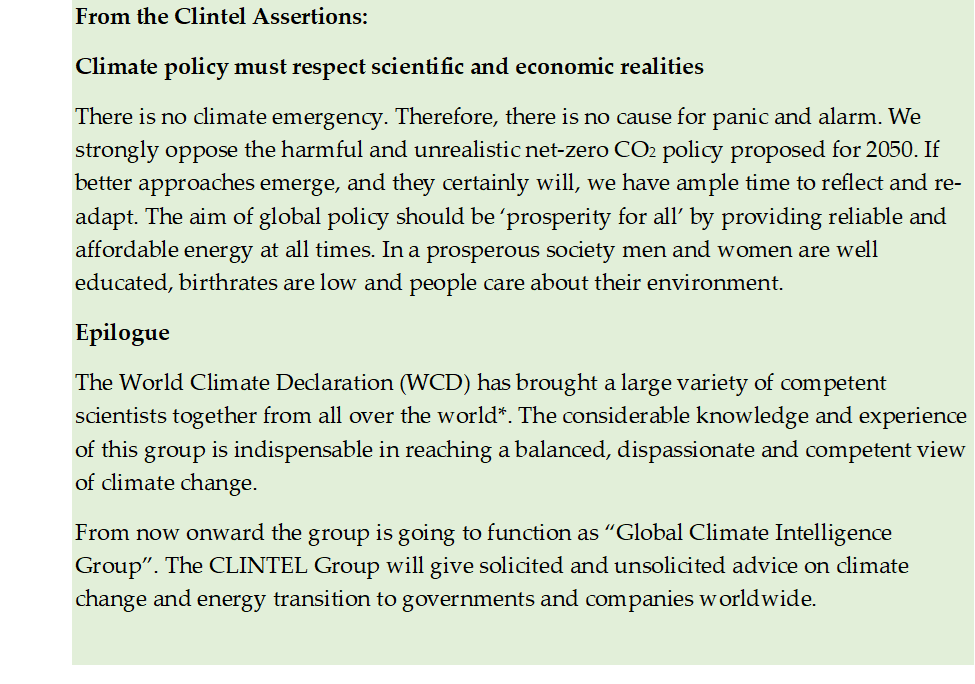
Of worthy note is that the CLINTEL declaration is referenced; nearly between 1600 and 2000 professionals and scientists indicate that climate change has always been with us, and the world is NOT on fire, or drowning, or otherwise careening to imminent disaster as some would have us believe. Climate change fear has been the false driver of the wind and solar proliferation, a universal clear economic and environmental disaster.
Some note that renewables policy can be termed Energy Vandalism. We concur: See this link for more detail on the nearly universally accepted articles in Kansas.
Article XIII of the Kansas Republican Party Platform States:
Kansas leaders should not be allowed to arbitrarily deny permits to build new power and energy-producing plants. Carbon dioxide, one of the most common gases on earth, should not be declared a pollutant nor used as an excuse to deny the construction of new power plants. We oppose so-called Cap and Trade legislation. We oppose efforts to force communities to engage in sustainable development under guidance from the federal government or the United Nations.
Comment
This is the first time we have seen a legislative body, organize, and nearly 100% agree, that climate change, which it always does and has done, should not be a driver for energy policy. It is the first time we have seen in such a document, a clear rejection of industrial wind and solar profiteers, and references to the irrefutable evidence of harm to the environment, people, and a clear intention to go forward with reliable, responsible, and cost-effective energy policy, while respecting property rights.
Kudos and respect to the two co-sponsors. Game changer.
Howard Zinn, author of A People’s History of the United States: “The power of a bold idea uttered publicly in defiance of dominant opinion cannot be easily measured.” (Lange: It most certainly can be documented and appreciated.)
————————–
ADDENDUM ONE
Quotes from Clintel (There is no climate emergency)
ADDENDUM TWO
Additional excerpts from the Resolution
Article XIII of the Kansas Republican Party Platform States:
XIII. ENERGY
We support an energy policy which creates a strong State economy with affordable and reliable energy. Kansas residents must be considered first when developing new, potentially expensive technology.
We encourage the development of alternative energy supplies, while continuing to support the oil and gas industry within the state. Ever increasing energy prices are creating new avenues for entrepreneurs and existing companies to develop new sources of energy. New developments in wind, solar, biofuels, and geothermal energy sources show real promise for clean, inexpensive, renewable energy for future generations. Increasing energy sources will inevitably create a more market-based system which ultimately lowers utility prices for consumers.
Kansas leaders should not be allowed to arbitrarily deny permits to build new power and energy-producing plants. Carbon dioxide, one of the most common gases on earth, should not be declared a pollutant nor used as an excuse to deny the construction of new power plants. We oppose so-called Cap and Trade legislation. We oppose efforts to force communities to engage in sustainable development under guidance from the federal government or the United Nations.
A report on the energy declaration, indicates this is a nonpartisan issue:
…. the energy producer is already allowing ESG rhetoric and the UN Agenda 2030 “Sustainable Development Goals” to guide their investments in Kansas, even rewarding executives and directors with additional bonuses and stock options for implementing the global climate plan.
This is not only a direct violation of the Republican party platform, but an attack on all citizens in the State, as we are seeing with recent reports that the supposed “green” Panasonic plant is actually an energy hog that caused Evergy to request a rate increase on customers in order to supply power to the plant.
The “green energy” project is also responsible for stalling efforts to transition the Lawrence power plant from coal to natural gas, due to the demands of traditional energy sources necessary to power the supposed “renewable” energy plant.
This is not a partisan issue. It’s a money and land grab issue, funding foreign companies with taxpayer-funded grants and tying up valuable Kansas farmland for decades with projects that no company is ultimately held responsible for decommissioning at the end of their useful lives, even violating property rights of farmers affected by the projects.
This resolution will protect Kansas from outside special interest groups by holding all legislators accountable for reliable, affordable energy that stays in our state to benefit our citizens.
ADDENDUM THREE
A conversation with Kansas Rep Carrie Barth and Former Chair of Energy and Environment House, Dennis Hedke. We asked Barth and Hedke to further explain the resolutions’ evolution, and possible resonances.
Conversations with Rep Carrie Barth (R-Dist 5) and former House Energy and Environment Chair, Dennis Hedke, Kansas: How did the exceptional resolution re mandate sanity and “exit renewables”, evolve?
Kansas, which ranks fourth in the U.S. for wind power, (is) the biggest wind energy-producing state to mandate light mitigation.
Wind turbines haven’t just exploded in numbers, they’ve grown ever taller. Since 2016, 400 new turbines have gone up in Kansas with rotor hubs taller than the Statue of Liberty.
The state now has between 3800 and 4,000 turbines, with hubs between 210 and 400 feet high.
It is clear that the pushback against the tyranny of renewables is accruing and accelerating. In August 2023, Robert Bryce again updates his files on rejected projects in the US. Kansas appears “ready able and willing,” to grab the mandates out of energy policies, leaving the door open to more affordable and reliable power.
(Recently, in the last ten days)….”local governments in Illinois, Ohio, and Iowa have rejected or restricted wind and solar projects. Those moves bring the total number of rejections or restrictions in the Renewable Rejection Database to 574.”
Kansas legislators of the Republican Party have as noted in this blog, created an Energy Resolution of outstanding clarity. The push for reliable and affordable energy is on. No herd mentality here.
Question: Lang to Rep Carrie Barth: How did you become enlightened re climate misinformation? Was this gradual, and is there a single source that sped your learning? (See Barth’s two page submission to the Senate Local Government Committee.)
Answer: When door knocking last summer as a new candidate running for Kansas House of Representatives District 5, I met a constituent on her fourth-generation farm porch. She shared with me about what is going on in Southwest Douglas County, Kansas, that was affecting her and her neighbors with the Florida based energy company signing leases in the area for wind turbines.
Keep in mind, I live in SW Douglas County and this was the first time I was hearing about it. She shared with me concerns about her property rights, concerns about health, concerns about crops and livestock, concerns about wildlife, concerns about noise, and how she wants to keep this land for her kids and their kids. She spoke through tears as her way of life her family has worked hard for could permanently change if an industrial Commercial wind complex were approved in Douglas County.
I listened intently to her. She had done her research, she had been talking with her neighbors, and she shared with me highly unethical business practices the energy company was using where multiple individuals have completed affidavits that have already been filed with Douglas County and the Kansas Attorney General’s office. We ended the conversation with a hug and she asked me to help save our county and to do something about it. I left there knowing I had to help.
Through my education I’ve learned growing up, climate change has been around since the beginning of time regardless of the size of population as about every 100 years our climate shifts. So I started to dig in to learn more on why people decided to think differently. And I started to follow the money as the science and history is already there.
Not only is there wind trying to come into my county, we also have a 3,000 acre solar industrial complex trying to plop right in the middle of our agriculture zoned county that also bleeds into Johnson County, KS. I started reading a lot and talking with anyone that had experience in wind and solar energy. After I was elected where I beat an incumbent and took office January 2023, I started asking questions, reading our House Rules, and talking with anyone who would listen to me about the problem we have not only in Douglas County, but across our state.
I proposed a budget proviso during session that was an independent third-party study on the health and environmental effects of wind turbines, solar arrays, hydrogen hubs, and transmission lines. It would be the first study of its kind that I am aware of. It passed the House Agriculture and Natural Resources Budget Committee but failed the House Appropriations Committee with only eight votes in support of it.
When they say follow the money, it’s true! There were energy lobbyists everywhere during this time. I was told by a fellow legislator they believe 50-75 lobbyist were hired to combat my budget proviso. People from all over Kansas, Republicans and Democrats showed up at the Capitol for the Appropriation Committee Budget meeting in support of the proviso wearing red shirts filling the room to observe what was happening and hear what was said.
You might be wondering, why would the energy industry be so afraid of people finding out the results of an independent study? Doesn’t everyone want to know the truth? The energy lobbyist and their attorney, along with their hired expert, like to tell me and others that they don’t understand why we are worried about our health and environment. They say wind and solar are safe and effective and are low cost. Because of my budget proviso, I received emails and calls from people all over the state of Kansas telling me the issues they have.
Other states learned of my proviso and they reached out to me. I even connected with people from Canada and the issues are ALL THE SAME! The evidence and data is clear! This is why I believe the resolution passed by the GOP delegates 180-1 votes.
Question to Rep. Barth: “To what extent do you think this Kansas Republican decision can impact other US legislators?”
Answer: The Resolution states the GOP party will support candidates that support legislative intent aligned with this resolution. Which means our Federal Republican candidates and elected positions will be held to this same standard as our state elected officials at all levels, including county elected Republicans. I have even shared our Kansas GOP Energy Resolution with other states so that they can do the same.
Question to Dennis Hedke (Geophysicist and former House Chair of Energy and Environment)
What is your background so we can understand the evolution that led to this remarkable achievement for the Republicans in KS?
Answer: I have been studying the issues surrounding the blatant misguided policymaking related to Energy, then Climate, since the Carter presidency, just after graduating from the University of Virginia, School of Engineering & Applied Science, M.S. Diploma in Materials Science. I wrote Carter a letter, and of course got no response. I had graduated from Kansas State University with a B.S. in Geophysics before leaving for Charlottesville. I was born and raised in Manhattan, KS, and moved to Miami, FL, to take my first job out of college in the spring of 1979.
Ronald Reagan moved the needle in the Right direction for 8 years, but then we got Bill Clinton, and of course Al Gore, one of the biggest liars in world history. We have been paying for his misguided malfeasance ever since.
We moved to Texas for a job change for me, as Exploration Manager for a small independent oil and gas exploration company in 1999. I was seething while seeing the very bad things in the making regarding ‘Global Warming’. We returned to Kansas in 2003/4, where I joined another small independent, as Geophysical Manager.
Fast forward to 2009, and I found myself inside the Kansas Capitol, as an unpaid lobbyist, fighting to resist the Legislature’s temptation to foist upon Kansan’s, Renewable Energy Mandates. I (we) lost that fight, and I knew it was going to be a disaster for all kinds of reasons, policy-wise and every-otherwise. I had run for a seat on the State Board of Education in 2008, and narrowly lost because the outgoing Republican seat holder endorsed my Democrat opponent. I ran a very clean race, and people in the party noticed.
In 2010, Sam Brownback won the Governor’s race, and the District 99 Representative was called to be Brownback’s Insurance Commissioner, this creating a vacancy in the Kansas House, which I was appointed to fill on January 24th, 2011. I became the Chairman of the House Energy & Environment Committee January 2013, and held that position until I left office, after 3 terms, ostensibly June 2016.
I and many allies forged a battle against the mandates, and moved Kansas into ‘Voluntary’ discretion in creation of power delivery to Kansan’s, in April, 2015.
That’s my answer as to how some things got into motion between myself and Carrie. Six years after I left office, she was elected to her seat. She is a real Firebrand and is dedicated to helping Kansas get back on track with Energy Policy. She is a tireless worker, and I deeply appreciate what she has done already in her first year as a legislator.
She had heard about me, and she reached out to me for some advice and guidance.….which brings us to today.
Question: I think you mentioned a serious “error” that allowed the EPA to falsely label the innocent, trace atmospheric gas, CO2, into a pollutant. You are adamant that this decision resulted in the fact that:
(Hedke) Trillions of Dollars have been wasted, people in 3rd and 4th World countries have been deprived of the most fundamentally necessary power to turn on the lights and be released from poverty and join the rest of the civilized world.
Also: The Kansas Legislature, ruled by Republicans in the 2009 Session, made a serious error in forcing Power Companies to deliver Mandated Renewable Energy. This happened under the purported agreement to allow a single coal-fired power plant in Holcomb, KS to justifiably expand its deliverability of Electric Power to the Grid. Only, it didn’t happen. It didn’t happen because the Secretary of the Kansas Department of Health & Environment, Rod Bremby, denied a Permit to expand the plant, due solely to politics related to ‘Global Warming’.”
The Resolution passed by the Republican Party of Kansas contains very specific language and intent to right the multitude of wrongs that Kansas Legislators conducted in 2009, and which served to spread the Mandate Mentality across America. It remains to be seen if the current body of Legislators will have the political will to hold the line, and in fact push back, where necessary and appropriate.
Question: A lot of readers will be wondering how you and Rep Barth achieved a 180-1 vote for this very clear resolution. Given that KS has a pro wind record of placing wind factories in the State, even with a Republican House and Senate, is there a catalyst for this resolution at this time and at this place? Was a lot of lobbying needed, or was this more evolutionary, organic in nature due to the fast paced media pieces on changing perspectives of “renewables and climate”?
Answer: Former Chair, Dennis Hedke:
I perceive much of the reason for the success was due to the fact that the Committee reviewing the Resolution is heavily conservative. They had to present it to the Republican Party Delegates, which are probably also more conservative leaning.
The Legislators, Carrie excluded, are a lot more squishy, caring more about holding on to their seats, than acting with resolve and principle.
There may be some renewed pressure on Legislators to resist the absolutely ridiculous reasons for being ‘green’. That remains to be seen. Many of them simply forget that “The Truth Will Set You Free”.
I forgot to answer your question about cost of electricity. My bills range from about .13/kwh to .14/kwh.
Prices have increased by about 55% since wind power has been replacing coal and natural gas, commencing around 2011.
Thank you for your interest. Dennis.
Thank you again Former Energy Chair Hedke, and Rep Carrie Barth.
Hertz backpedals on rush into EV rentals: CEO says repair costs can run “twice as high”
By Jo Nova | November 2, 2023
Hertz was aiming to make 25% of its fleet electric by 2024, but is finding 11% is too much. Given there are whole nations pushing for 100% EV by 2035 there seems to be a message here…
Let’s thank Hertz for doing that experiment for us. It turns out EV’s didn’t work well in the high mileage Uber-type system because the drivers “drove them into the ground” and repair costs were much higher than expected. So Hertz moved some EV’s to the leisure hire department, but then the revenue per day in the leisure sector fell. Presumably people didn’t want to hire them.
It’s not that this is Bad News week for EVs — it’s quarterly reporting week, so companies have to tell investors things they’d rather not.
Great nations don’t force citizens to buy heavier cars with shorter ranges and bigger repair bills in order to stop bad weather one hundred years from now.
Hertz is slowing down the roll out of EVs onto its fleets as the CEO cites higher than expected repair costs and price cuts.
The rental car company reported lower than expected margins in the third quarter of this year, citing EV repairs as one of the challenges.
“Collision and damage repairs on an EV can often run about twice that associated with a comparable combustion engine vehicle,” said Mr Scherr.

It all started out so well:
Andrew J Hawkins, The Verge
Rental car company Hertz once envisioned itself as the ultimate EV broker, doling out battery-powered vehicles to business travelers, ridehail drivers, and tech newbies in an ambitious plan to grease the wheels for the EV revolution. The company inked agreements with Tesla and Polestar to buy nearly 200,000 EVs. Tesla’s valuation topped $1 trillion on the news.
Part of the problem is linked to Hertz’s plans to rent EVs to ridehail drivers. Of the 100,000 Tesla acquired by Hertz, half were to be allocated to Uber drivers as part of a deal with the ridehail company. And drivers said they loved the Teslas! But Uber drivers also tend to drive their vehicles into the ground. This higher rate of utilization can lead to a lot of damage — certainly more than Hertz was anticipating.
Musk frequently says that electric cars require less maintenance than counterparts with internal combustion engines (including plug-in hybrid electrics). …
But electric vehicle owners can face unique maintenance needs, as well. Nikhil Naikal, CEO of Kinetic, a startup that is not affiliated with Hertz or Tesla but provides repairs for electric and autonomous vehicles, told CNBC on Thursday:
“The reality of electric vehicles is that they can be 1,000 pounds heavier or more than gas vehicles, and they move faster, with higher torque. Since they’re extremely zippy and heavier, it’s just physics — the ability to overcome inertia so quickly is going to effect their suspension systems, the brakes and steering columns. It’s counter-intuitive, but even with fewer moving parts they are susceptible to requiring more maintenance. They especially require tire-swapping, because the tires wear out more quickly from that high torque and weight.”
Next few years will determine future world order – Biden

Joe Biden speaks about his Bidenomics agenda on November 1, 2023. © ANDREW CABALLERO-REYNOLDS / AFP
RT | November 3, 2023
The world is at a crossroads and the next few years will determine its fate for several generations to come, US President Joe Biden has claimed. His prediction comes amid Washington’s standoff with Russia over Ukraine and his country’s increasingly strained relations with China.
Speaking ahead of a meeting with Chilean President Gabriel Boric on Thursday, Biden stated that “there comes a time, maybe every six to eight generations, where the world changes in a very short time.”
The US leader further claimed that “what happens in the next two, three years are going to determine what the world looks like for the next five or six decades.”
According to a White House readout of Biden’s meeting with Boric, the pair discussed issues of shared concern, including efforts to combat climate change.
Biden also spoke last month about the need for a “new world order,” suggesting that while the post-World War II system has functioned for decades, it has “sort of run out of steam.”
However, if Americans “are bold enough and have enough confidence in ourselves, [they will have an opportunity] to unite the world in ways that it never has been,” he insisted.
Commenting on Biden’s remarks at the time, Kremlin Press Secretary Dmitry Peskov described it as a rare moment when Moscow was in complete agreement with Washington. “The world indeed needs a new order, based on absolutely new principles,” he noted.
However, Peskov suggested that Biden meant building “a world [order] revolving around the US,” insisting that “this will not be anymore.” Russia has consistently called for a multilateral world order, with President Vladimir Putin accusing the West of “a colonial approach” and bending international rules to its will.
Last month, the Russian leader also stressed that “nobody has the right to control the world at the expense of others or in their name.”
Relations between Washington and Moscow have sunk to unprecedented lows due to the Ukraine conflict, with the US sending billions of dollars’ worth of weapons to Kiev and imposing tough sanctions on Russia.
Elsewhere, relations are tense between the US and China, most notably over Washington’s support for Taiwan. The two nations are also engaged in an intense economic rivalry. China has been promoting its Belt and Road Initiative (BRI), which seeks to develop international transport infrastructure and has been supported by more than 140 countries.
Biden has signaled that the US is working with G7 members to compete with China economically, claiming that the BRI has ended up being “a noose for most of the people who have signed on.”
The Depopulation Bomb: A Halloween Sci-Fi Tale
By Clayton J. Baker, MD | Brownstone Institute | October 31, 2023
The following fictional story may or may not bear resemblance to events in real life.
Imagine, if you will, that you are a first-generation high tech gazillionaire. In fact, at one time you were said to be the richest man on earth, although that is no longer the case. Nevertheless, you remain unimaginably wealthy, with all the responsibilities and burdens that such wealth brings. (Given the extremely unusual circumstances of this tale, to make it more relatable, we will assign you a fictional name.) Your birth certificate reads Gilbert Harvey Bates III, but the world knows you as Gil Bates.
Gil Bates’s erstwhile net-worth preeminence (stolen as it was by an upstart online retailer named Biff Jezos) is not the only important loss he has suffered. Also in the rearview mirror is his youth, his marriage, and his position as CEO of the behemoth tech company he created, MacroHardTM.
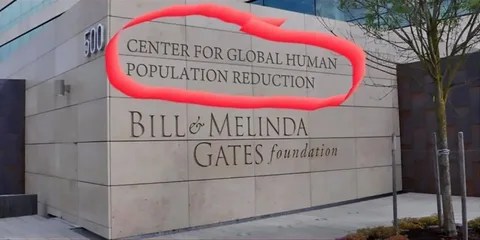
After Gil Bates stepped down as CEO of MacroHardTM, he focused on his philanthropic work. The centerpiece of this work is the immensely well-funded (and therefore immensely influential) Bates Foundation. The Foundation’s scope may be mind-bogglingly broad, but one problem especially consumed Bates: there are far too many people on the planet.
In his youth, Gil Bates read a controversial book called The Overpopulation Bomb, written by a visionary scientist named Saul Derelicht. That alarming book, a huge bestseller in its day, described a neo-Malthusian hell on earth resulting from human overpopulation, and proposed mass sterilization and other aggressive population reduction techniques as the solution.
Gil Bates became convinced, and remains convinced – especially as the worldwide human population has soared beyond 8 billion units – that Homo sapiens have obscenely overpopulated the planet. Once Bates had sold software packages to the great majority of them, he vowed that this existential threat to the planet must be addressed.
But what was to be done? How could this great affront to Gaia be reconciled? When it comes to a responsibility so great, a task so immense, no single man – not even Gil Bates – could hope to accomplish it alone.
Fortunately for the future of Earth, Bates knew a host of like-minded, enlightened elites, pre-eminent individuals of great wealth, power, and worldwide influence. Among the most important:
- A dour Teutonic economist named Kraut Schlob. The son of an ambitious industrialist who built flamethrowers for the Third Reich, Schlob is the founder and chairman of the World Enslavement Forum. The Forum has become the premier worldwide gathering of hyper-elites who wish to discuss globalist policies, and enjoy the company of high-end prostitutes, free from the prying eyes of commoners.
- An immensely powerful – if embarrassingly vertically challenged – American health bureaucrat named Dr. Fantoni Auci. For decades, Dr. Auci controlled the overwhelming majority of US Government medical research funding. As such, no one in the vast American network of hospitals, research institutes, or universities dares to cross Dr. Auci, and he wields similar influence internationally. In fact, he oversees funding for multiple secret virology research laboratories, as far away as China.
- A mysterious veterinarian named Adalbert Ghoula. Ghoula is the CEO of Kaiser, Inc., the world’s largest and most rapacious pharmaceutical company, which Ghoula has grown into a veritable modern day IG Farben. In his earlier days, Ghoula oversaw the development of a vaccine that successfully induces the chemical castration and sterilization of swine.
The consensus, reached after lengthy consultations with these men and other luminaries, was that the worldwide human population must be reduced from 8 billion to 500 million units.
But how? Several possible avenues were proposed.
- War has been used for millennia to reduce populations, and while highly effective locally or regionally, it would be entirely ineffective at removing the necessary fifteen-sixteenths of people on Earth. After all, the deadliest war in history, World War II, resulted in a mere 80 million deaths, just 3 percent of the world’s population at the time.
- The use of a bomb was considered a special kind of bomb, reminiscent of the “neutron bomb” of yore, which would supposedly reduce populations while sparing infrastructure. This seemed closer to the mark than all-out war, but ultimately it was determined that setting off bombs would be both impractical and far too obvious. After all, even herd animals will not consent to being openly and massively slaughtered, no matter how necessary the culling may be. The herd must be kept forever in the dark.
- A plague, a pestilence, a pandemic seemed more promising. Past naturally occurring pandemics had reduced human populations much more successfully than wars. The Black Death of 1346-53 may have reduced the world population by as much as 25 percent, a much more encouraging number than the measly 3 percent from World War II. As an added economic bonus, the Black Death served as a very effective concentrator of wealth for the survivors, as it caused minimal collateral property loss.
However, a more detailed review of historical worldwide population estimates demonstrated that a pandemic alone could only serve as a temporizing measure at best. Most estimates show that by 1400, the worldwide population had unfortunately returned to its pre-plague total.
Clearly, the necessary 94 percent reduction in population could not be achieved by culling the herd alone. Sterilization would be needed as well. But how to achieve such mass sterilization? Many H. sapiens possess an intense desire to procreate – that’s the source of the problem, after all. Unfortunately, prior historical initiatives for mandatory sterilization – even those of limited scale and scope, such as those targeting the mentally deficient – have met great opposition, at least in the so-called “free” nations.
- However, a vaccine could be used for mass sterilization. Ghoula’s earlier work at Kaiser was proof of this. But a fundamental problem remained: how to get the unsuspecting population – specifically, its children and young adults – to take the stealth-sterilizing inoculation?
The solution, when it came, was a thing of beauty, sublimely subtle and symmetrical. The answer was a two-step process: a pandemic and a vaccine. One population reduction device would be released, presented as a worldwide plague. It would be followed by a second population reduction device, presented as the cure.
And the technology was already in place to make it happen. It merely had to be perfected, then enacted.
Employing the Black Magic of gain-of-function virology research, an animal respiratory virus, previously never infecting humans, was genetically engineered to readily infect and spread amongst humans. At a key moment in political history, when a particularly bothersome populist American President named T. Ronald Dump was running for reelection, the virus was released from a Chinese laboratory into the human population.
As the new virus spread, reports of the death and devastation it wrought were spread as well. In actuality, the virus had been engineered so that it was deadly only to the frail, chronically ill, and very old. It was cleverly propagandized, however, as a threat to persons of all ages, a modern day Black Death of sorts.
The US deep state, desperate to disrupt the Dump presidency and remove him from office, were willing partners to manage the control and manipulation of the population through propaganda, and to enforce unprecedented, prolonged lockdowns of society. Remarkably, they even convinced President Dump to sanction the lockdowns, and to fund the development of the vaccine. Most other countries followed suit.
The new virus rapidly killed off many of the oldest and sickest members of society, as would be expected of a novel respiratory virus. However, the locked-down and isolated populations were barraged with media messages that stirred up mass terror of the virus. Businesses were closed, save for those deemed “essential.” Schools were closed, though children were already known to be at statistically zero risk of death. Dissenters were harassed, scapegoated, and punished.
Then, a solution to the pandemic was presented: the vaccine. The vaccine was the savior, the only way out of this crisis.
A few irritating, contrarian dissenters fought back. They protested for civil rights. They stressed the near impossibility of producing an effective vaccine against a rapidly mutating respiratory virus. They identified numerous “safety signals” found in the vaccine trials, and tried to expose these as best they could. But the mainstream media drowned them out, the social media companies (controlled by the deep state) censored them ruthlessly, and after all, once the vaccines were mandated, most people took at least a couple of doses.
And the joke was on the dissenters in another, more important respect. These meddlesome do-gooders were indeed intelligent enough to identify the toxicities inherent in the vaccines. But they decried them as “safety signals.” The fatal toxicities they identified still seemed to them to be flaws, mistakes, and the unfortunate results of a hasty and mad rush to make money off of the pandemic.
Imagine the naïvete.
Early in the vaccine “rollout,” young women reported abnormal vaginal bleeding and other menstrual problems after receiving the vaccines, raising concerns about potential unintended consequences to female reproduction. Pathologists found ovaries infiltrated with multiple toxins from the vaccines, both the dreaded “spoke” protein of the virus and “lucid nanoparticles” from the vaccine’s delivery system. Even occluded Fallopian tubes were identified.
Soon thereafter, reports appeared in the alternative media of dramatically increased numbers of sudden deaths, primarily in young men, after receiving the vaccine. It often visibly occurred in athletes while on the playing field. This caused considerable alarm, impossible as it was to hide.
In a masterful demonstration of the “limited hangout,” officials acknowledged the sudden death phenomenon, but would not even allow mention of the vaccine as a possible cause within the mainstream medical community. Instead, protocols and clinics for this sudden epidemic of heart disease in the young were established, but strangely without any official curiosity as to the cause. All they knew for sure was that it couldn’t be the vaccine.
Of course, the infamous “spoke” protein, the same viral antigen chosen by the vaccine’s designers to induce the vaccinated patient’s body to produce in quantity, just happens to be the most toxic part of the virus. The “spoke” protein deposits itself in tissues throughout the body, wreaking havoc wherever it goes. It has a particular affinity for the heart muscle, causing the inflammatory process known as myocarditis that leads to cardiac arrests.
“Spoke” doesn’t stop with the heart, however. It is a remarkably versatile toxin, a sort of Swiss Army monkey wrench in the human body. It causes gigantic, gruesome, rubbery blood clots in the vasculature, seizures in the central nervous system, the aforementioned deposits in ovaries and Fallopian tubes (and testes, for that matter), etcetera, etcetera. What a stroke of genius to choose “spoke” as the antigen the vaccines induce replication of!
The vaccines held another nasty little secret, which even the pathetic, naïve resistance only recognized much later. The vaccines were “contaminated” with plasmids containing MV-40 and MV-40-like DNA sequences. Yes, that MV-40, the monkey virus known to cause cancer in multiple animal species.
Could the appearance of so-called “turbo cancers” in vaccinated persons somehow be related to this “contamination?” Well, another limited hangout, this time courtesy of Healthcare Canada, took care of that.
Excess death rates rose dramatically after the vaccine rollout. Birth rates plummeted. To the do-gooders, refuseniks, and dissidents, this was a scandal.
But what did they know? To use a phrase all-too-familiar to the seasoned software developer, these toxicities were not bugs, but features. The vaccines were working exactly as they were supposed to work.
Silly plebes! The “vaccines” were actually a deliberate, multi-pronged, population reduction device. They were designed to kill a percentage of young people – mostly male – outright, to poison and disable the female reproductive system at multiple points, and to insert teratogenic plasmids into recipients’ cells, to pick off others at undisclosed, later dates. They were merely packaged and marketed as a vaccine against a (lab-manufactured) flu-like illness.
As successful as they have been, there remains so much more work yet to be done.
A definite lull occurred in the population’s acceptance of repeated injections of the vaccine. The dissidents may be naïve, but they are persistent, and sometimes effective to a degree. But ultimately they will fail.
The general population is lazy, uneducated, and easily terrified. (Some say they are being done a favor by being culled.) They are accustomed to the precedents set by other vaccines. Their reluctance will be worn down with time. Of course respiratory viruses are imperfect targets for vaccines. Once again, that’s not a bug, it’s a feature! It only means that a new booster of the vaccine will be needed every year – at least.
With each new round of boosters, a new population of girls and young women will be rendered infertile. A new group of boys and young men will suffer cardiac arrest – a very quick and painless way to die, really.
Countless others will contract cancers – turbo cancer, to use the current term for these rapidly progressing and deadly malignancies, often of unusual types – bone cancers, muscle cancers, and other former rarities. Not an easy way to die, admittedly. But these tumors mercifully progress to end stage very swiftly, and their value as a population reduction device is undeniable.
Have no fear. It is only a matter of time; only a matter of lather, rinse, repeat. As long as the herd allows itself to be sent through the sheep dip whenever and however often the shepherds proclaim is necessary, H. sapiens will get to 500 million. All courtesy of a type of bomb after all, but in this case a microscopic bomb that is released in each person via a tiny little injection: The Depopulation Bomb.
Happy Halloween!
C.J. Baker, M.D. is an internal medicine physician with a quarter century in clinical practice. He has held numerous academic medical appointments, and his work has appeared in many journals, including the Journal of the American Medical Association and the New England Journal of Medicine. From 2012 to 2018 he was Clinical Associate Professor of Medical Humanities and Bioethics at the University of Rochester.
Keeping You Up To Date On New York’s Progress Toward Green Energy Utopia
By Francis Menton | Manhattan Contrarian | October 15, 2023
Consider Manhattan Contrarian as your go-to source for the latest on New York’s progress toward green energy utopia.
Can you remember all the way back to December 19, 2022? That’s the day that New York’s Climate Action Council officially adopted its “Scoping Plan,” telling us all how we are going to achieve, among other goals, 70% of statewide electricity from renewable energy sources by 2030 and a zero-emissions electricity system by 2040. The biggest part of the grand plan consists of some 9,000 MW (nameplate capacity) of offshore wind turbines to be built by 2035. As of the time of the Scoping Plan, the state claimed that some 4,300 MW out of the 9,000 MW of upcoming offshore wind projects were under “active development.”
On the very day that the Scoping Plan got finalized, I had a post titled “On To The Great Future Of Offshore Wind Power.” That post noted that even of the 4.300 MW of offshore wind supposedly under “active development,” not one turbine was operating, or even under construction. Several developers had made bids that had been accepted by the state, and some of those developers were getting kind of close to applying for permits. My prediction was: “Expect long delays and demands for lots more money before anything gets built.” Boy, can I call these things.
Shall we check back in for the latest information?
Just ten days ago, on October 5, I had an update on offshore wind developments throughout the Mid-Atlantic and New England. For New York, the news was that in September essentially all the developers of the New York projects in “active development” had demanded massive price increases, ranging from about 30% at the low end to almost 65% at the high end. The new prices being demanded by the developers would now be between $140-190 per MWh, which would be at least double to more than triple the prices charged by new natural gas plants.
So how did that go over? To its credit, the state Public Service Commission wasted no time in rejecting the price hike demands of the developers. On October 12 the Commission issued its decision on the Petitions of the developers for price relief. Excerpt from the press release:
The New York State Public Service Commission (Commission) today denied petitions filed by a group of offshore wind developers and a state renewable energy trade association seeking billions of dollars in additional funding from consumers for four proposed offshore wind projects and 86 land-based renewable projects. In denying financial relief, the Commission opted to preserve the robust competitive bidding process that provides critically needed renewable energy resources to New York in the fairest and most cost-effective manner that protects consumers.
OK then, what happens next? The New York Times has a write-up on October 12. The Times quotes the Chair of the PSC, one Rory Christian, as standing up for the sanctity of the public bidding process:
Rory Christian, the chairman of the Public Service Commission, the state’s utility regulator, said that providing relief to the winning bidders would set an untenable precedent. “Taking exception today almost guarantees that we will be asked to do this again in the future,” he said. Mr. Christian added that the state’s ratepayers, who would have borne the cost, could not serve as an “unlimited piggy bank” for companies to tap. “We have a deal,” he said to the developers, calling on them to stand by the terms they agreed to.
Well, Rory, I’ve got news for you: the developers aren’t going to honor the deal. You’re going to have to hold a new auction. And the prices that will be bid will be as high or higher than those just demanded by these developers.
Oh, and then don’t expect any new round of accepted bids to stick either. The developers will come back again and again for new rounds of price increases. What’s to stop them? After all, they have you over a barrel. You have a “Climate Act” and a “Scoping Plan” that basically require you to build out a grid powered by “renewables,” whether that is feasible or not, and then limit your options to mostly offshore wind.
And meanwhile, until the next round of bids is held, we’re back to square one. We have a statutory requirement of 70% of our electricity from “renewables” by 2030, and a “Scoping Plan” that sees that goal being achieved largely through offshore wind turbines. And we have not one single operating offshore wind turbine, nor any under construction, nor, after the recent contract repudiations, any actively moving through the permitting process. At least for now, the whole thing is dead in the water.
The Times quotes a guy named Fred Zalcman, director of the New York Offshore Wind Alliance:
[T]he commission’s decision “puts these projects in serious jeopardy and deals a potentially fatal blow to the progress these projects have made. . . .”
By the way, the prices recently demanded by the offshore wind developers, in the range of $140-190/MWh, do not include anything for the transmission upgrades needed to deliver this power into the grid, nor anything for the storage or back-up needed to transform intermittent wind power into a useful 24/7 resource. The sooner we pull the plug on this whole endeavor, the better. But we are now only in the first phases of the collapse.
UPDATE, October 16, 2023: Meanwhile, I should have mentioned that New York City apartment buildings remain under a mandate from “Local Law 97” to convert to electric heat by 2030 or face large fines. The electricity is supposed to come from the offshore wind farms that, for the time being, are completely suspended. Go to the link in the sidebar to listen to Jane’s podcast on this subject.
Tyson to Build Insect Protein Factory — Critics Say It’s About Money, Not Health or Environment
By Michael Nevradakis, Ph.D. | The Defender | October 24, 2023
Industrial meat giant Tyson Foods is teaming up with Dutch insect ingredient producer Protix to construct an insect ingredient manufacturing facility in the U.S.
In an announcement last week, Tyson said it is acquiring an ownership stake in Protix, and forming a joint venture to construct “the first at-scale facility of its kind to upcycle food manufacturing byproducts into high-quality insect proteins and lipids which will primarily be used in the pet food, aquaculture, and livestock industries,” Tyson Foods stated.
In a statement, Protix said, “The strategic investment will support the growth of the emerging insect ingredient industry and expand the use of insect ingredient solutions to create more efficient sustainable proteins and lipids for use in the global food system.”
Tyson Foods, Protix and proponents of insect-based foods argue that the production of such food products is more sustainable than rearing conventional livestock.
But food safety experts who spoke with The Defender said companies like Tyson are motivated by financial and other incentives, not sustainability. Citing scientific studies to back their claims, they also questioned the safety of insect ingredients.
“This is not about public health or even environmental health,” Nina Teicholz, science journalist and founder of The Nutrition Coalition, said. “The food industry likes bugs, because producing them involves multiple, patent-protected steps that enable companies to make a profit and control our food sources.”
Dutch journalist Elza van Hamelen, who has investigated Protix, told The Defender, “The takeover and transformation of our food system — toward synthetic lab-grown meat, GMO [genetically modified organism] vertical farming and insect farms — is an attack from many fronts.”
“Venture capital is investing in this, even though there is not a clear business case,” she said. “Governments are setting up ‘ecosystems’ in which government representatives, NGOs [nongovernmental organizations], academia and business join hands to get ‘alternative proteins’ off the ground.”
Science communicator Dr. Kevin Stillwagon, a retired chiropractor and airline pilot who investigates health issues on his Substack page, said, “There are already efforts underway to convince us that the way we raise food for human consumption is harming the environment by using up too much land and water and emitting excess greenhouse gasses.” He added, “They will try to convince us that even by using insects as animal feed, the environmental problem is not going to get solved.”
Howard Vlieger, a member of the board of advisers of GMO/Toxin Free USA, told The Defender that Tyson could leverage its market power and its entry into the insect ingredient market to place further financial pressure on cattle suppliers.
“Tyson is one of just four large companies that livestock producers rely on to market their cattle,” he said. “Tyson could potentially leverage its alternative foods interests against cattle purchases, thus lowering the demand and price for the cattle they buy.”
Tyson’s deal with Protix move marks the latest instance in a recent trend that has seen several prominent food producers, including Cargill, invest in insect ingredient manufacturers.
‘Stomach contents of cattle’ to be used as ‘a viable feed source for insects’
John R. Tyson, chief financial officer of Tyson Foods, told Food Ingredients First his company will use its own “by-products,” including “the stomach contents of processed cattle,” to produce “a viable feed source for insects.”
In Tyson Foods’ press release, Kees Aarts, CEO of Protix, said, “Tyson Foods’ and Protix’s strategic partnership advances our joint work towards creating high-quality, more sustainable protein using innovative technology and solutions. Moreover, we can immediately use their existing byproducts as feedstock for our insects.”
According to CNN, “Byproducts like animal fats, hides and inedible proteins, if not used or reduced, can end up in landfills. In this case, Tyson can send what’s in the stomach of cattle it has processed to a Protix facility, where it’s fed to insects.”
“For the company, creating a larger market for this type of waste can not only reduce waste but offer a larger revenue stream,” CNN reported.
The Tyson Foods statement said, “Protix contributes to a circular food chain by using waste from the food industry as feed for the black soldier fly (BSF). In turn, the insects are processed into valuable nutrients such as proteins and lipids.”
“Protix’s customers use these proteins and lipids as high-quality ingredients for feed and food” while “residual streams from the insects are used as organic fertilizer,” it added.
Aarts told CNN the black soldier fly “can grow on almost every type of food waste and byproduct you can imagine,” while according to Food Ingredients First, the flies “can eat up to twice their body weight daily, which can be used to enable a closed-loop recycling system,” creating a reusable protein source while using less water and land.
When completed, the Tyson Foods-Protix facility will “centre on all aspects of production, from breeding and incubating to the hatching of insect larvae,” Just Food reported, quoting a Tyson Foods spokesperson as saying the two companies are currently looking to “identify” the location where their plant will be constructed.
The joint-venture facility is expected “to be ready for ramping up operations towards the end of 2025,” according to Feed Navigator, which also reported that “The facility’s capacity will be three to four times the output of [Protix’s] existing plant” in The Netherlands. It will be able to produce “up to 70,000 tons of live larvae equivalent annually.”
According to Just Food, the precise size and cost of the minority stake Tyson Foods acquired in Protix has not been disclosed, but according to Feed Navigator, “When asked to disclose how much the U.S. company has invested, a spokesperson for Protix [said] funding from existing backers along with Tyson Foods” totaled $58 million.
Tyson’s insects not headed for human food supply — yet
The companies claim that the insect-based products they will manufacture will not enter the human food supply — for now. Tyson told CNN “Today, we’re focused on more of [an] ingredient application with insect protein than we are a consumer application.”
But a Tyson Foods spokesperson told Just Food that “Human food compositions exist, and Protix is leading the development of high-quality proteins from animal and fish feeds to consumer-level products.”
“While consumer adoption is very low and human-food applications are not the focus of this joint venture, opportunities exist in the long term to create more sustainable protein products,” the Tyson Foods spokesperson added.
Tyson told Food Ingredients First that he views his company as a “catalyst” that can create a more sustainable and equitable food system, and that “Partnerships with those across industries are an important part of that journey, working together to advance our collective sustainability ambitions and transform the global food system.”
According to Stillwagon, inserting insects into the human food supply is the goal of major food producers.
“Livestock and fish that are fed with insect-based proteins and lipids will most definitely enter the human food supply. This may change the taste of these foods to some degree,” he said.
“Also, the fish and livestock may need to be genetically modified so they will grow to sizes necessary for harvesting since they would be consuming something that is not natural to them,” Stillwagon added.
Not ‘adequately tested for safety’
According to CNN, “The meat industry places a large burden on the planet, in part because of the land, water and energy it takes to grow crops that feed the animals we eat,” adding that “Some experts say that reducing the environmental footprint of animal feed can help make the system more sustainable.”
“Making food out of insects is one way to do that: Bugs take up less space and subsist on waste that would otherwise be discarded,” CNN reported.
According to Food Dive, “Insect protein has grown in prominence in recent years with companies debuting cricket-based snacks and powders,” citing claims by cricket ingredient brand Exo that crickets are 20 times more efficient to grow than cattle.
CNN quoted Reza Ovissipour, Ph.D., professor in sustainable food systems at Texas A&M University, who said that flies operate as “mini bioreactors” that can convert animal waste into “the protein or fat from the insects,” which can then be used as animal feed.
“And these mini bioreactors, they are very inexpensive,” he said. “You don’t need to apply that much energy. It’s very sustainable,” he said.
Experts who spoke with The Defender expressed a different view.
“Due to the insect exoskeletons, which humans are not adapted to eat, it’s not clear that this new ‘foodstuff’ is safe for humans — or pets,” Teicholz said. “Insects and bugs have not been adequately tested for safety.”
“We know that meat, eggs and fish are sources of complete, whole proteins that humans (and dogs) have evolved to eat over millions of years,” she added. “We should be trying to figure out how to make these natural proteins more sustainable rather than shift to new, potentially dangerous food sources.”
Along similar lines, Alexis Baden-Mayer, political director for the Organic Consumers Association, said, “We don’t need to replace meat, milk or eggs with anything, we just have to raise animals on pasture. This is incredibly beneficial to the environment, really productive and produces the most nutrient-dense food possible.”
Baden-Mayer also said there are several risks that insects, when consumed as food, pose for human health, noting that insects contain allergens known as chitins and toxins known as mycotoxins — which also cause mold to be toxic to humans.
Stillwagon said insects pose other risks to human health.
“Since allergies to insect proteins, known as entomophagy allergies, have been reported, food producers must label insect-based products accurately to provide allergen information,” he said.
“The second risk is the microbiome and virome of the insect itself,” Stillwagon said. “It is possible that in some people with weakened immune systems, the consumption of bacteria and viruses that are naturally part of the insect could become pathogenic,” he added.
“Chemicals that are used to kill bacteria and viruses during the processing of insects on a massive scale for food may be harmful to humans,” Stillwagon said. “Also, the plants that the insects feed on may have been treated with chemicals like glyphosate or pesticides that will be absorbed into the insects and be consumed by humans.”
A February 2017 article in eBioMedicine, published by The Lancet, states that “Infections with viruses, bacteria and parasites have been recognized for years to be associated with human carcinogenicity.”
And an article published in July in the Nutrients journal stated that “Insect protein is an adequate protein source with promising health benefits” but noted that “further research is needed to fully understand its potential and optimise its inclusion into the human diet.”
WEF, WHO, major banks and investment firms promoting insect-based food
Yet, CNN reports that “interest in insects as ingredients for animal food has been growing” even if it “hasn’t caught on in the mainstream.”
CNN cited a 2021 report by the Netherlands-based Rabobank, claiming that “the demand for insect protein, mainly as an animal feed and pet food ingredient, could reach half a million metric tons by 2030, up from today’s market of approximately 10,000 metric tons.” Rabobank and Rabo Investments are investors in Protix.
A report by Grand View Research says the global insect protein market is expected to expand by an annual compound growth rate of 27.4% by 2028.
Protix says it aims to increase its “global gross revenue to around €1bn [$1.06 billion] by 2035 through international partnerships.”
Tyson Foods is an investor in Upside Foods, a company that recently won approval from the U.S. Department of Agriculture (USDA) to produce lab-grown chicken. Upside has attracted more than $600 million in research and development investments, including from Bill Gates, Richard Branson, Elon Musk’s brother Kimbal Musk and Cargill.
Tyson Foods has also invested in Future Meat Technologies, another company seeking to develop cultivated meat products.
According to Food Ingredients First, “Earlier this year, Tyson Foods felt the impact of high inflation and low meat demand, which plunged its stocks by 45.36% from a year ago,” leading the company to close two of its U.S. chicken plants in March.
Yet, last year, Tyson Foods invested $355 million in a bacon production facility in Kentucky, “to meet rising retail and foodservice demand for bacon products.”
Other “Big Food” players have also made significant investments in this space, including Cargill, which in 2022, expanded a partnership with Innovafeed for the production of “sustainable” insect-based fertilizer and animal food, from three to 10 years.
ADM (Archer-Daniels-Midland) has also partnered with Innovafeed to commercialize insect protein for pet food sold in the U.S. and for the construction and operation of an insect production facility in Illinois, adjacent to an ADM corn processing complex.
In 2017, PepsiCo said it was researching insect-based snacks and their potential for future products, while in 2021, Mars launched a line of 100% insect-based cat food.
According to van Hamelen, “There is a lot of financial and policy support to get these ‘foods’ off the ground. Corporations are steered towards moving their portfolios into ‘novel foods’ as part of ESG investment rating criteria,” adding that “It may be interesting to review the ownership of these corporations and the agenda they pursue.”
Notably, Vanguard and BlackRock, the world’s two largest institutional investment firms, are also the two top institutional holders of Tyson Foods shares. BlackRock, and its CEO, Larry Fink, have been strong proponents of “sustainable” corporate practices.
Governments have also gotten into the act, van Hamelen told The Defender.
“The legislative framework is being prepared to approve these ‘foods’ as ‘novel food’ — in the EU, U.S. and also at the U.N. [United Nations] level under the Codex Alimentarius,” she said. “In addition, ‘behavioral government’ approaches, a.k.a. social engineering, used to steer people towards alternative protein choices, are part of government policy.”
For instance, in June, the EU authorized yellow mealworm powder to be used in bread, cakes, mashed potatoes, pasta and vegetables, following a novel food application French firm Nutriearth submitted in 2019. According to Food Ingredients First, “Final authorization on this is expected later this year or early 2024.”
In May, the U.K. Edible Insect Association declared that the house cricket was deemed “within the scope of novel foods regime and valid.”
The European Commission has found that consumers are already aware of insects as an ingredient in foods, and has called on food manufacturers to display the Latin names of the insects contained in the food on the packaging for the product.
Baden-Meyer said that companies like Tyson Foods are looking to the future — and to applications of insect-based products going beyond just food.
“As we saw with the COVID-19 vaccines, cells are the new factories. Maybe that’s the bacterial cells used in ‘precision fermentation,’ maybe it’s the cells living within our own bodies,” she said. “Vaccines are first, but I expect all drugs to be delivered via mRNA or DNA ‘gene therapy’ instructions for the cell to produce a protein.”
“Maybe that will be the way ‘food’ will eventually be ‘delivered’ too,” Baden-Meyer said, citing the Defense Advanced Research Project Agency’s “Living Foundries” program, which seeks to program “the fundamental metabolic processes of biological systems to generate a vast number of complex molecules that are not otherwise accessible.”
Stillwagon identified a danger stemming from insects consuming byproducts of animals that had previously received mRNA vaccines. He said:
“Another danger is the potential use of mRNA encapsulated in lipid nanoparticles (LNPs) as ‘vaccines’ in the animals or insects to try to prevent diseases. The animals would most likely be injected. The insects and aquaculture would ingest them.
“The use of ingested mRNA encapsulated in LNPs has already been investigated in some insects, shrimp and fish. The possibility of these encapsulated mRNA particles entering the human food supply is very real.”
Last month, the U.S. House of Representatives passed an amendment ending government funding to the U.S. Food and Drug Administration and the USDA during fiscal year 2024 for the development of transgenic edible vaccines, that would deliver mRNA “vaccines” through foods such as lettuce.
“My guess is this is what the ‘Great Resetters’ plan to feed us with and make everything else out of, too,” Baden-Meter said, referring to the “Great Reset” promoted by the World Economic Forum (WEF). “Bacteria is the new petroleum, the ‘plastics’ of our generation, but it’s going to take a while to make this shift,” she added.
Notably, Aarts is a member of the WEF and a member of the WEF’s Future Council on Food Security and Agriculture. In 2015, Protix was one of the recipients of the WEF’s “Technology Pioneer” award, for its work in agrifood technologies.
A 2019 paper by the WEF, “Alternative Proteins,” published as part of the “Meat: the Future” series, says such proteins can meet “the nutritional needs and food demands of a predicted mid‑century population of 10 billion, in a healthy and sustainable manner.”
“The benefits of these products is not sufficient for consumers to adopt them,” the report states. “A much wider set of interventions will be required to accelerate uptake,” including the development of “narratives.”
The report also notes that “it is unlikely that alternative proteins will achieve scale unless use is made of the production and marketing expertise of the traditional protein sector.”
The WEF stated “We need to fundamentally transform our food systems to provide all humanity with affordable, nutritious and healthy food within the limits of nature by 2030,” in accordance with the U.N. Sustainable Development Goals (SDGs).
Stillwagon said that organizations like the WEF and the World Health Organization (WHO) will seek to sway public opinion in favor of insect consumption.
“The possibility exists for the WHO to declare a climate emergency over this, and force countries to change food production. They will show that insects have been consumed by many cultures in various parts of the world for centuries, opening the door for cultural acceptance in the U.S.,” he said.
“Overcoming the ‘yuck’ factor is a significant challenge, which is why I think a declaration of a climate emergency and promoting the idea that ‘it’s for the common good” will be necessary,” Stillwagon added.
According to van Hamelen, Dutch state entities, including Dutch public investment fund Invest-NL, have invested in Protix, despite official denials from the Dutch government.
The European Circular Bioeconomy Fund, funded by the EU’s European Investment Bank, and firms connected to Belgium (10.3%), Luxembourg (1.0%) and Monaco (via Monaco Asset Management), are also investors in Protix, van Hamelen said.
A 2021 memorandum of understanding between the Dutch government and the WEF, representative of close ties between the two, foresees the development of a “food innovation hub” in The Netherlands, with agrifood as one of its focus areas.
Last year, Dutch farmers protested government plans to “drastically” reduce nitrogen pollution from livestock farming by buying out or otherwise expropriating farmland.
Michael Nevradakis, Ph.D., based in Athens, Greece, is a senior reporter for The Defender and part of the rotation of hosts for CHD.TV’s “Good Morning CHD.”
This article was originally published by The Defender — Children’s Health Defense’s News & Views Website under Creative Commons license CC BY-NC-ND 4.0. Please consider subscribing to The Defender or donating to Children’s Health Defense.
Featured Video

Seyed M. Marandi: U.S. Military DIVIDED? Iran’s Secret Defense EXPOSED
or go to
Aletho News Archives – Video-Images
From the Archives
‘Israel sees Iran as obstacle to its policies’

Press TV – August 25, 2017
Prime Minister Benjamin Netanyahu has said that Israel felt threatened by Iran’s growing influence in the Middle East. Netanyahu expressed his Iranophobic view in a meeting with Russian President Vladimir Putin in Russia’s Black Sea resort of Sochi on Wednesday. Press TV has asked Scott Rickard, former American intelligence linguist from Tampa, Florida, and Brent Budowsky, a columnist at The Hill from Washington, to give their thoughts on the issue.
Rickard said Tel Aviv is concerned about the fact that the regime could not carry out its old project to spread sectarian divisions and pave the way for dismemberment of the countries in the Middle East region because of the Iranian-led resistance against Israeli policies, not only in the occupied territories of Palestine but also in the whole region.
“Iran is not a threat to Israel whatsoever. The threat that Israel sees is the fact that their Oded Yinon Plan is being put to a hold by Iran,” the intelligence linguist said on Thursday night.
“They (the Israelis) look at Iran as a threat only because they have no influence on their governments and Iran is autonomous and is not under the Zionist influence,” he added.
Since the victory of the Islamic Republic of Iran in 1979, Tehran has been critical of Israel’s policies in the region, whereas “no leaders [of other states] even dared to speak out against Zionism,” Rickard argued. … continue
Blog Roll
 Aletho News
- What’s Behind U.S./Israeli Strikes On Iranian Pistachio Factories?
- Seyed M. Marandi: U.S. Military DIVIDED? Iran’s Secret Defense EXPOSED
- How I fell foul of the BBC thought police
- The End of NATO
- 37 days of war on Iran cost US staggering $42bln, tracker shows
- Baghdad tells Asian refiners, traders to begin loading Iraqi crude amid Iranian exemption
- Under fire, Moscow and Tehran close ranks
- Iran, US receive Pakistan-mediated plan for ceasefire then final deal
- Iran submits demands for end to war as mediators scramble ahead of Trump deadline
- Iran Threatens Retaliatory Strike on Stargate AI Project in UAE
- If Americans Knew
- U.N. experts demand Israel release prominent Gaza doctor after reports of ‘severe torture’
- Israel’s Latest Genocide Is Against the Shias of Lebanon. Why Is the World Silent?
- How Eliot Cohen’s influence over U.S. war-making paved the way for Trump’s war crimes in Iran
- Israelis don’t pay for the weapons we ‘sell’ to them — US taxpayers do
- While Distancing from AIPAC, Most 2028 Democratic Hopefuls Are Still Embracing Israel
- A brief history of the Israeli nuclear program, the open secret at the heart of the Iran war
- Israeli Settlers Killed a Palestinian Farmer on His Own Land, in Front of His Father. Yes, Again
- The US-Israeli War on Science is an Assault on our Future
- 100+ International Law Experts Say US Strikes on Iran Violate UN Charter, Could Be War Crimes
- ‘Vile, Horrifying, Evil’: Trump Threatens to Bomb Nation of 90 Million People ‘Back to the Stone Ages’
- No Tricks Zone
- An Inconvenient Tree: Uncovered In Alps… Europe Much Warmer Than Today 6000 Years Ago
- New Study Reports A 60% Slowdown In Greenland’s Ice Loss Rate In The Last Decade
- Low Intensity Tornado Wrecks Major Solar Farm, Creating A Potential Toxic Dump
- New Study Finds Warming Saves Lives…Cold Temperatures 12 Times More Deadly Than Excess Heat
- German Science Blog Accuses PIK Climate Institute Of Hallucinating Climate Tipping Points
- Devastating Assessment Of Comirnaty Vaccine By Former Senior Pfizer Europe Toxicologist
- New Study: CO2 Is ‘Effectively Negligible’ As An Explanatory Climate Change Factor Since 2000
- Former Pfizer Toxicologist Dr. Helmut Sterz Tells Bundestag Hearing Pfizer Vaccine Should Have Never Been Approved
- Energy Expert: Germany’s Nuclear Phaseout Was A “500 Billion Euro Mistake”
- New Research: South Australia’s Mid-Holocene Sea Surface Temperatures Were 4°C Warmer Than Today
 Aletho News