The Pandelusion
BY HUGH WILLBOURN | THE DAILY SCEPTIC | JULY 24, 2023
I’ve been recording the audio version of my new book, The Bug in our Thinking. In it I quote Carl Sagan from 1996:
We’ve arranged a society based on science and technology, in which nobody understands anything about science and technology. And this combustible mixture of ignorance and power, sooner or later, is going to blow up in our faces. Who is running the science and technology in a democracy if the people don’t know anything about it? …
Science is more than a body of knowledge, it’s a way of thinking. A way of sceptically interrogating the universe with a fine understanding of human fallibility. If we are not able to ask sceptical questions, to interrogate those who tell us that something is true, to be sceptical of those in authority, then we’re up for grabs for the next charlatan, political or religious, who comes ambling along.
Sagan was on the money. Every day brings news of more absurdities from charlatans in science, education, politics and media. To quote myself, from the same book: “Never have so many been so wrong about so much.”
Why is this happening?
If I could answer that in a couple of paragraphs I would not have had to write a whole book. Here, I will focus on just one element. Underneath all the dangerous and troubling beliefs about gender, climate, race, migration, medicine and vaccination lies a psychological problem. Too many people believe things that are not true. This is the new normal. Let’s call it the Pandelusion.
The Pandelusion – thinking and doing the ‘right thing’ – is the worldview relentlessly promoted by most of the media and driven by bad science and big money.
This doesn’t require a conspiracy by the way. That is just what the profit motive will do when untrammelled by conscience or virtue. For the controlling minority of society it is extremely lucrative to promote the Pandelusion. For the majority, the result is an expensive, destructive, disempowering rip-off.
It would take an encyclopaedia to itemise and refute each of the delusions one at a time. In fact it already has. On websites and Substacks and in books and scholarly journals millions of words have been written refuting every one of the dominant delusions with rational argument and factual evidence – yet the delusions are still in the ascendant. The encyclopaedia of hard evidence and common sense is ignored by most of the mainstream media and censored or ignored by complicit scientists.
It is extremely depressing to see that the majority of the population remain convinced by the Pandelusion. They are accustomed to being guided by orthodoxy. In good times that is not such a bad strategy. In hard times, and very specifically in these hard times, it does no good at all. All around us are hundreds of thousands of people who have been seriously injured by doing what they were told was ‘the right thing’. It takes time, independence, courage, humility, encouragement and good fortune to build the habit of trusting your own judgement even when all the facts are not available.
Now that lockdowns and the uptake of the staggeringly ‘safe and effective’ vaccines have set the precedent, the next bonanza is the climate emergency and orthodox opinion is being boosted, adjusted and streamlined to serve the interests of those who have positioned their investments to profit from it.
Externalities
Do you remember when environmentalists used to talk about ‘externalities’? Externalities, you may recall, are the costs of a service or product which are not paid by the immediate user but by society at large. The costs of driving a car, for example, are not just purchase, fuel and maintenance. The external costs are exhaust emissions and tyre wear particulates, the motorways, the loss of mediaeval town centres to create road systems and car parks, the loss of market share for public transport, the cost of road traffic accidents, and so on and on.
It is helpful and illuminating to consider externalities when assessing the overall impact of a policy. Recently, however, the term has fallen out of favour amongst governments, environmentalists and the mainstream media. Why might that be?
The externalities of Net Zero are mind-bogglingly vast: environmental, economic, social and, for some, existential. Consider just one small element of the path to Net Zero: electric vehicles. The carbon cost of their manufacture means they have to be driven for nearly 10 years before there is a net carbon benefit. Cobalt mining in the Congo is environmentally destructive and exploitative of the local population. Dependency on manufacture in China creates huge political and economic weaknesses. I could go on, but you already know this and much, much more.
The externalities of lockdown were destructive beyond measure: the emotional abuse of elders dying alone, the sabotage of education in schools and universities, the bankruptcies and destruction of thousands upon thousands of small businesses, the depression, the abuse, the suicides and more.
The externalities of Covid vaccination, as we all know, without a shadow of a doubt, are ‘extremely rare’ because the vaccines are so very, very, very, very safe and effective. Nevertheless the vaccines have a remarkable correlation (not causation! Heaven forfend) with a plague of evil coincidence fairies and uncounted cancers, TIAs, myocarditis, heart disease, Guillain-Barré syndrome, and a huge range of other ailments, injuries and disabilities.
The externalities of catering to a tiny number of transgender activists are expensive, disproportionate and insulting and dangerous to women.
The externalities of woke policies in education include rendering academics too frightened to promote independence of thought. Not a great outcome for education.
I can stop listing externalities now – you can think of plenty of them that follow from every Government policy from migration to taxation.
No wonder the mainstream doesn’t talk about externalities any more. They are not to be mentioned.
The orthodoxy has aligned its messages across different platforms by means of helpful, fact-checking, billionaire-backed NGOs. All the bad science, the abstract thinking, the experts, the absurdities from wokery to environmental zealotry, the emotional incontinence and plain stupidity have become one overarching right think’.
It is all a single dictatorial blob of grandiose self-righteousness. The Pandelusion with its Pharisaic acolytes guides 100% of BBC output and at least 90% of media content throughout the Western world.
The power of the Pandelusion is immense.
That is terrifying and horribly depressing.
Some days I feel utterly defeated as I read, yet again, of more moronic orthodoxy.
And yet, and yet, I see a glimmer of hope.
Here is the weakness. Precisely because the Pandelusion has become a single, overarching, dominant orthodoxy, any flaw or weakness in any part of it can affect the whole thing. One tiny little crack anywhere in the whole monstrous edifice has the possibility of advancing, little by little by little, so that it will all, eventually, fall down.
All is not lost. We don’t need to challenge the whole Pandelusion or the big, embarrassing controversies about climate science confirmation bias or the magnificent safe and effective vaccines (Blessings be upon their profits forever, Amen). Now we can just chip away at one small, apparently insignificant, peripheral belief and open up one little crack. Then we can walk away and let the crack spread throughout the whole belief system – all by itself.
Those undiscussed externalities are impinging on more and more people’s everyday lives and they don’t like it. As people reject heat pumps, sabotage Ulez cameras, refuse smart meters, and electric cars, and protest against LTNs and 15-minute cities, they are discovering that those who claim to ‘know better’ know very little at all, and often, it turns out, are misrepresenting the science and even sometimes are lying. And the more they research the more inconvenient facts they unearth. In Germany a rebellion against dominant orthodoxy has gained power in a district council election. In the Netherlands the Farmer-Citizen movement (the BBB) has become the third-largest political force in the country. In Spain, Sweden and Italy there are flickers of sanity.
Let’s talk
So let’s talk about externalities. Not the big ones, just the little ones. Like, “Oh Net Zero! Yay! but… I’m not totally sure about the cost-effectiveness of heat pumps.” Let’s say “Yay, Electric vehicles! … except how quickly, I wonder, will the authorities be able to upgrade the national grid to cope with charging them?”
Let’s talk about how 15-minute cities could be utterly brilliant – except maybe there might lots of traffic jams on the ring roads when you take your kids to karate. Let’s talk about how marvellous furlough was, it’s just a shame about inflation.
Let’s talk about how puzzled we are about the little white lies from our governments, about the police who have stopped policing, and the strange, inexplicable inaccuracy of predictions that haven’t come true.
Let us keep tap, tap, tapping away at the monolithic Pandelusion until we make the smallest little crack. Then in that crack, plant tiny little seeds of doubt – and walk away. The light of day will nourish those seeds and the seedlings will enlarge the crack and reality will finish the job. The hypnotic trance can be broken.
There has already been too much death, destruction and conflict. There will be more. But perhaps if we all keep talking we might be able to save some people and salvage a society worth living in.
The Bug in our Thinking and the Way to Fix It is available in the U.K. here. For the rest of the world, for the ebook – and in a week or two the audiobook – you can find it on your national Amazon store.
Dancing COVID Nurses That Supported Draconian Mandates Switch To Climate Change
By Tyler Durden | Zero Hedge | July 26, 2023
Perhaps one of the most unsettling narrative relationships during the covid pandemic lockdowns was the assertion by various governments, think-tanks and media pundits that the mandates weren’t just good for “stopping the spread,” they were also good for “saving the environment” from what they claim will be inevitable Apocalyptic climate change. While the covid agenda has all but disappeared thanks to millions of people and half the states in the US rejecting the restrictions, climate hysteria is still alive and well.
One of the most obnoxious trends in covid propaganda was the constant TikTok dance videos. Dancing politicians, dancing talk show hosts and dancing nurses all telling us to comply while frolicking around like maniacs. Well, it’s not over, because the dancing covid nurses are back, and now they’re here to tell us that accepting carbon controls is just as important as the mandates.
Beyond the numerous question on how nurses managed to have time to make so many group TikToks if the hospitals were “overrun” with patients dying of covid as the media asserted for the first year of the pandemic, we must also ask: If they lied about the effectiveness of the mandates, why should we listen to them about climate change?
Not one draconian policy enforced by governments made any difference whatsoever in the transmission of the covid virus. The lockdowns were pointless. The masks were pointless. Social distancing was pointless. And the official median Infection Fatality Rate of covid is a mere 0.23%, which means that 99.8% of people were never under any threat from the disease anyway. These facts were well known by medical professionals by early 2021, yet many of them continued to push the mandates.
Invariably, as the summer heats up so does the hype surrounding climate controls which would do little or nothing to shift the existing state of the Earth’s temps. “Record temps” are often touted, but these records are limited to a short time from of around 140 years of official data (since the 1880s). But what about before then? When we look at the real history of the Earth’s climate, the temps today are incredibly mild. Not only that, but the global warming events of the past all occurred without human involvement.
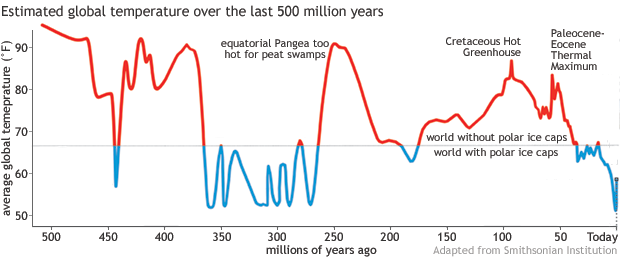
One has to wonder, if this is the case, why are no carbon control proponents or climate scientists talking about it? Is the situation much like covid, where they tell you to “believe the science” except for the science that contradicts their claims? And let’s not forget, these same people have been telling us the Earth is on the verge of burning for a very long time.
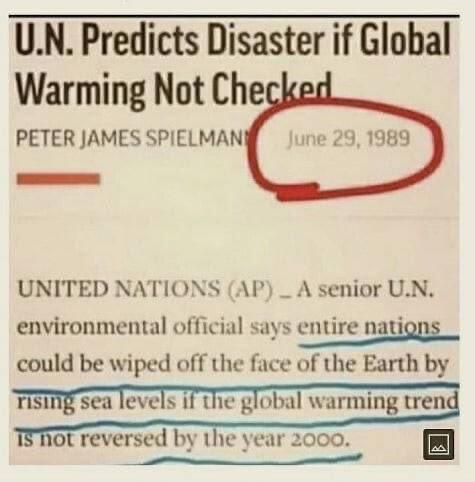
People stopped idolizing nurses after the pandemic scare. Dancing for the climate feels more like a desperate act to regain relevancy, rather than legitimate activism.
German Business Fears Best Days Behind It as Economy Crushed by Loss of Russian Energy
By Ilya Tsukanov | Sputnik | July 24, 2023
European industrial behemoth Germany has found itself among the nations hit hardest by the West’s attempt to “punish” Russia for its military operation in Ukraine, with industrial output slumping and the country sinking into a recession earlier this year after losing access to the cheap and reliable supply of Russian hydrocarbons.
German business, administrative, and government leaders have expressed widespread dissatisfaction with the government’s energy and economic policy, and expressed fears that the Central European industrial powerhouse’s economy may have “passed its zenith,” with its best days behind it.
A survey of 484 company board members, managing directors, government ministers, and other senior decision-makers by the Allensbach Institute for Public Opinion Research for German media has found that only 24 percent of the country’s managerial class is satisfied with Economic and Climate Minister Robert Habeck’s job performance, down from 91 percent just a year ago.
Fewer than a quarter of those surveyed expect things to improve over the next six months, with two thirds saying there’s “little chance” the country can restore its lost international competitiveness, and 76 percent saying they don’t believe Habeck or the Ministry of Economic Affairs has the interests of German business in mind to a sufficient degree.
Among the top five problems cited by managers which hamper Germany’s competitiveness are high energy costs (77 percent), a shortage of skilled workers (70 percent), excessive government regulation (68 percent), a backlog in digitization programs (65 percent), and dilapidated infrastructure (61 percent).
58 percent of those polled said Germany appears to have “passed its zenith” economically, with just 22 percent expecting the economy to pick up again.
About three quarters of respondents expressed criticism of Chancellor Olaf Scholz’s Traffic Light coalition (which includes Scholz’s Social Democratic Party, the Greens – represented by Habeck and Foreign Minister Annalena Baerbock, and the Free Democratic Party). Satisfaction with the coalition government has dropped from 62 percent in 2022 to 21 percent now, with 65 percent of those polled suggesting the coalition’s policies are “weakening the country.”
The Allensbach Institute conducted its survey between June 13 and July 7, with the 484 businessmen and officials polled including 89 board members of large companies, 18 ministers, and 28 heads of firms.
The German economy officially sunk into a recession in May after economic growth shrunk by 0.3 percent in the first three months of 2023.
In the aftermath of the escalation of the Donbass crisis into a full-blown Russia-NATO proxy war in Ukraine in February 2022, Germany has faced all the problems other Western countries have related to the decision to decouple themselves economically from Russia, like high inflation and spiking energy prices. However, as Europe’s main industrial economy, Germany’s crisis has been even more painful for local businesses, which have expressed concerns about the loss of competitiveness to other global behemoths like the US and China due to the energy-intensive nature of their products.
Washington added insult to Germany’s injuries last year after announcing federal subsidies to certain “green” industries, effectively trying to entice European industry to relocate to the United States for tax breaks and cheaper energy.
Russian President Vladimir Putin warned in May 2022 that decoupling the European economy from Russian energy resources would threaten the entire region with widespread deindustrialization and loss of competitiveness.
Last month, German Finance Minister Christian Lindner announced that cuts in the budget had forced Berlin to halt additional contributions to the European Union’s budget.
“Germany is both an important supplier for other European countries and an important buyer. A lasting recession in the German economy will certainly have significant effects on France, Italy, Spain, Belgium, and the Netherlands,” Paris-based economist Jacques Sapir told Sputnik earlier this month.
“If this recession lasts until next spring, the economies of the countries mentioned will also go into depression, which in turn will affect the German economy even more,” Sapir predicted, characterizing Berlin and Europe’s anti-Russian sanctions policy as “a form of suicide.”
The heat is getting to everyone’s head
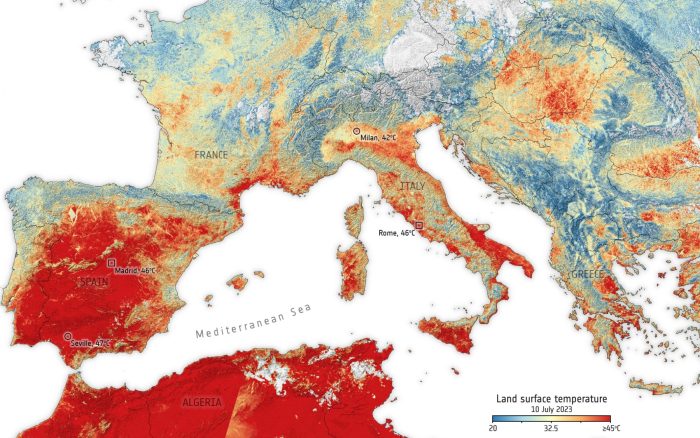
Heatwave across Europe on the morning of 10 July 2023 via ESA
By Alex Starling | Reaction | July 21, 2023
Nothing beats a good silly-season panic, it seems, but the latest handwringing about Summer heat is surely a step too far. Yes, it’s hot – “Southern Europe on fire” – but is this unusual when the jet stream is aligned as it is now, with hot Saharan air being pulled up from Africa? Judging by recent reporting, you’d be forgiven for thinking the end is nigh. There’s a climate emergency, didn’t you know?
Such scaremongering is of course a free pass, as usually no one really checks up on what actually takes place, but the catastrophic outcome can be milked to its full potential. “Drizzly day in Derby” never did sell any papers.
However, the fourth estate does have an obligation to present its viewers and readers with accurate information. This is where the story gets interesting – this is not just a case of eye-rolling pushback against apocalyptic hyperbole. Ranging from casual sloppy reporting to highly targeted attempts to influence the narrative, there is now a weight of evidence demonstrating the existence of a systemic bias towards catastrophising otherwise run-of-the-mill data.
Consider the following vignettes.
It is currently hot in Southern Europe. Earlier this month the European Space Agency (ESA) issued an attractively-coloured map as part of a press release forecasting air temperatures of 48°C in Sardinia and Sicily that would be “potentially the hottest temperatures ever recorded in Europe”. The quotable quote was suitably amplified by the media, only this time it was picked up by astute observers who pointed out that the ESA had conflated land temperatures with the much cooler air temperatures at the standard 2m measuring height (i.e. while you might be able to fry an egg on tarmac, the same egg suspended 2m on the ground will take much longer to become a culinary delight). The ESA subsequently issued a clarification, with corrections being issued by media organisations such as Der Spiegel which had picked up the original story.
A recent article in this publication also came to my attention. Walter Ellis wrote a piece about urban migration in Zaragoza in Spain. Fascinating though it was, he included some doom-laden forecasts regarding an ongoing summer drought: “It hasn’t rained here for months and the [official forecast] prognosis is for more – that is to say, less – to come… today, as a direct result of climate change, temperatures even in the more northerly regions, including Aragon, are at record highs”. Walter is just relaying official forecasts – hardly a mortal sin and you would hope official forecasts could be relied upon. But a slightly inconvenient truth is that these forecasters managed to get these (very short-term!) predictions completely wrong – the Iberian Peninsula was given an absolute drenching throughout May and June. Oops.
None of this would particularly matter if this idle chatter about the weather was just that; reporting on meteorological curiosities du jour. But quoting Twain: “A lie can travel halfway round the world and back again while the truth is putting on its boots”. And these weather untruths – whether they be honest mistakes, sloppy reporting or cynical ploys – tend to have one thing in common: they are seemingly always yoked to a great article of faith. That is, they are always indicative of a climate ‘emergency’, or at least ‘climate change’ (the old term ‘global warming’ seems to have temporarily gone out of fashion following various postponements of the previously imminent Armageddon).
Walter Ellis’s passing comment mentioned above lays the blame for an (incidentally totally incorrect) forecast of ongoing drought “directly on climate change”, begging the question about this direct causal link given that the prediction did not come to pass. The ESA is able to state that as “climate change takes grip, heatwaves such as this are likely to be more frequent and more severe, with far-reaching consequences”. A Met Office spokesman recently produced this cryptic quote in The Times : “As we get this climate warming, the extremes are becoming more extreme”, in an article worrying about a temporary warm spell in Greenland when the actual data shows that the snow mass was way above average at the height of summer. Even Reaction – if you can believe it – has managed to publish bold conjecture: “As temperatures continue to rise, heatwaves will become more severe. It’s crucial that governments worldwide take swift and decisive action to reduce greenhouse gas emissions immediately… while we can slow down the rate of global warming, the effects of climate change will continue to be experienced in the future”.
These are not cherry picked examples – this climate Lysenkoism is given blanket coverage. The message is ubiquitous (albeit sometimes subliminal) and in starker terms can be summarised as: “hot weather is caused by climate change, and mankind has caused climate change by producing CO2. There is an existential emergency!”
This ‘consensus’ is so consensual that it seemingly needs to be rammed home at every opportunity – almost as if this message (rather than the planet) is fragile, a complex construct that needs protection from awkward questions or detailed analysis. Grand proclamations and joint public statements are made by very serious organisations declaring The Truth that the faithful shall adhere to. Data is continually adjusted such that the graphs have suitable hockey sticks, and academics behind the scenes really know what they are doing. Armies of sycophants can be trusted to hound those who merely report on the weather without anchoring it to a climate scare, and senior sympathisers within the BBC enforce ‘appropriate’ edits and encourage activists to “flag similar cases in the future so they can adapt the content accordingly”.
Or consider Quentin Letts. He was court-martialled to have committed a “serious” breach of BBC rules on impartiality after producing a light-hearted Radio 4 programme entitled “What’s the point of the Met Office?” The recording was so offensive that it was eviscerated from BBC Sounds, lest a member of the public should stumble on such heresy. Not only that, the BBC has claimed that Letts had ignored a pre-production agreement “never to touch on climate change” – Letts categorically denies that this was ever agreed, let alone discussed. And in academia, even if the occasional journal paper with the ‘wrong’ conclusions does slip through the peer-review process, publishers can be relied on to create murky procedural grounds for retraction, especially when newspapers like The Guardian apply a modicum of pressure and editors are made to “think of the implications of publishing”.
That is quite a statement. Scientific curiosity is sidelined by today’s regime, which is tough on thought crime and tough on the causes of thought crime. “The Party told you to reject the evidence of your eyes and ears. It was their final, most essential command”: do not, under any circumstance, ask questions about recent cold weather events and records – which have seemingly abounded of late. Did you know that the Antarctic has been particularly and persistently cold in recent years? That the snow pack in California has been at extraordinarily high levels, resulting in mind-blowing skiing and white-water rafting conditions? That China and much of Siberia experienced record cold earlier in 2023? And that miserable and cold weather has persisted in Australia for many years now?
These are just anecdotes about the weather – our climate changes, after all. We should keep a weather (!) eye on this, as it was not that long ago that we were warned of an imminent ice age, and the earth’s magnetic field has been waning over the last century. Why don’t the BBC and The Guardian investigate and report on these fascinating phenomena rather than regale us with anecdotes about hot weather, as decreed by ‘Group Sustainability Directors’ who get to post-edit technical output within their organisations?
Perhaps, though, we should be grateful that the green lobby – this veritable hydra of loosely aligned eco-activists, shrieking media and sustainable energy salesmen – are there to protect ‘The Science’ from coming to harm at the hands of the scientific method.
Because surely – surely? – the public at large will eventually notice this pseudoscientific quackery and reject increasingly desperate attempts to apply cancel culture techniques to silence or ridicule heretics. Consider Dr John Clauser, the recipient of the 2022 Nobel Prize in Physics, who recently criticised the climate emergency narrative, calling it “a dangerous corruption of science that threatens the world’s economy and the well-being of billions of people” and that “there is no climate crisis and that increasing CO2 concentrations will benefit the world”. People with such credentials should have their hypotheses examined — not shouted down.
How much more hot air will we have to put up with until a more reasoned debate ensues? It is clear to many that nihilistic climate alarmism is stopping us from investing in reliable energy and pursuing economic growth. If we continue down this Lysenkoist path, we risk deindustrialisation and pauperisation, which would spell an end to the quality of life that we have enjoyed in recent decades – and that our forebears could only dream of.
Greta Thunberg Gives Finger to Opponents of New EU Environmental Legislation

By Robert Kogon | Brownstone Institute | July 22, 2023
Greta Thunberg was photographed at the European Parliament in Strasbourg last Wednesday smiling broadly while flipping a double-bird – apparently to the opponents of heavily contested new EU environmental legislation known as the “Nature Restoration Law”.
According to the German news site Merkur.de, it was a “winner’s gesture” – if not the most sporting one – because at its last week’s session, the parliament approved the legislation, with some amendments, by the notably slim margin of 336-300. A prior motion to reject the proposal outright was defeated by the even slimmer margin of 324-312.
The proposed Nature Restoration Law, one of the main components of the European Commission’s “Green Deal,” would require 20 percent of allegedly degraded EU land and sea to be “restored” by 2030. (See, for instance, the factsheet on the law here.) A modified version of the proposal which was already rejected in the parliament’s Environment Committee would have raised this figure even to 30 percent.
Fearing the impact of such “restoration” on the livelihoods of farmers and fishers, European agricultural and fishery groups have vigorously opposed the proposal, and it was also rejected by both the parliament’s agricultural and fisheries committees.
The largest group in the European Parliament, the “conservative” European People’s Party (EPP), likewise opposed the legislation. Ironically, the largest national delegation within the EPP group is the German Christian Democrats of none other than European Commission president Ursula von der Leyen. Nonetheless, the legislation only managed to escape outright rejection in the full parliament thanks to 15 EPP members breaking ranks and voting with the Greens, the Social Democrats and the Left group. (See roll-call here, p. 52.)
It should be noted that, despite the Schadenfreude evident in Greta Thunberg’s “winner’s gesture,” the Nature Restoration Law has not now been passed.
Rather, the European Parliament’s approval of the legislation means that the text will now be the subject of so-called “trilogue” negotiations involving representatives of the three main EU institutions: the Commission, the Parliament, and the Council (in which EU member states are directly represented). The final text will then be resubmitted to the parliament at some future date.
Major fossil fuel producers cause rift among G20
RT | July 23, 2023
Saudi Arabia and Russia have prevented a consensus from emerging among the Group of 20 major economies on a road map to phase down the share of fossil fuels in the global energy mix, Reuters has reported.
The G20 energy transition ministers held a four-day summit that ended on Saturday in the Indian state of Goa where they discussed ways to achieve global net-zero greenhouse gas emissions.
The summit ended without a consensus because major fossil fuel producers, including Saudi Arabia and Russia, opposed a proposal to triple G20 countries’ renewable energy capacity by 2030, Reuters reported, citing its sources.
China, the world’s largest consumer of energy, as well as coal exporters South Africa and Indonesia, also opposed the plan, the agency added. India, the world’s most populous country and which currently generates 75% of its total power from coal, reportedly took a neutral stance on the issue.
As a result of the disagreements, the ministers issued an outcome statement and a chair summary instead of a joint communique. A joint communique is issued when complete agreement among members on all issues is achieved.
According to the statement, “different national circumstances” drove “some members” to support a phase-down of unabated fossil fuels, while “others had different views” and suggested that “abatement and removal technologies” would address environmental concerns associated with the use of fossil fuels.
“Fossil fuels currently continue to play a significant role in the global energy mix, eradication of energy poverty, and in meeting the growing energy demand,” reads the statement.
The document mentioned a number of technologies for countries to use “as per national priorities,” such as carbon capture, usage and storage (CCUS), a technology that can capture and make effective use of the high concentrations of CO₂ emitted by industrial activities.
The G20 comprises 19 nations and the European Union. The group’s aim is to address major issues related to the global economy, such as international financial stability and climate change. Together, the G20 member countries account for over three-quarters of both gross domestic product and global emissions.
So what’s the REAL point of “Just Stop Oil” protests?
By Kit Knightly | OffGuardian | July 19, 2023
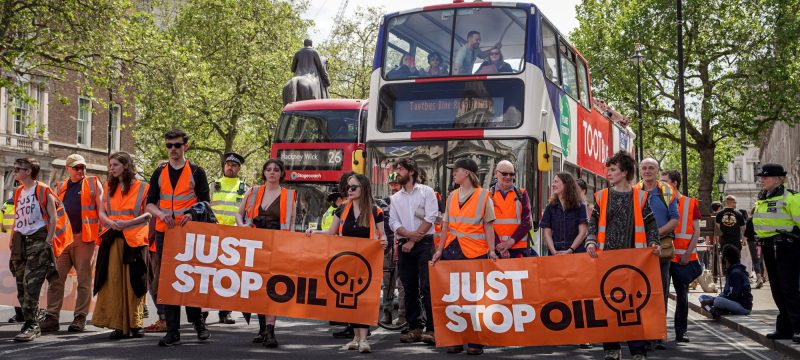
It seems every day lately there is a new “shocking viral video” of “desperate drivers losing patience with Just Stop Oil”, or some similar phrasing.
Something like this…
No sporting event has been spared the orange dust and hi-viz vest of Just Stop Oil, and wherever they go they are either cheered on for their antics, or the subject of vigilante justice… which likewise gets a cheer.
But are these videos and protests organic? And if not, what is the point of these clashes?
First of all, let’s agree the protests themselves are pointless, even on their own terms.
Not only do none of the people being inconvenienced by the blocked traffic or disrupted sporting events have any power at all to “just stop oil”, but slowing down traffic actually increases emissions whilst the destruction and disruption will certainly turn many people against the movement.
But that doesn’t actually matter anyhow because the entire movement is FAKE.
Yup, stop the presses guys, news incoming is that Just Stop Oil are not actually a guerilla band of desperate anti-petrol hippies!
Turns out they have branding and funding and social media managers.
Turns out they are a product being marketed as much as anything else, and they are backed by the Climate Emergency Fund, a US-based NGO.
Shocking, right.
Ok, before any of you get apoplectic, it’s perfectly possible some (or all) of the JSO people out there actually wearing their hi-viz and chanting their slogans genuinely believe they’re doing the right thing.
But it’s just as possible they’re all being paid to be there.
Yes, just like charity collectors or seat fillers, paid protesters exist.
Hell, it’s possible the “ordinary people” doing the violence are paid too and the many of the “viral videos” are entirely staged.
Staged or not, paid or not, the violent videos will certainly encourage real violence eventually. And even if they don’t spawn more physical violence, they provide endless ammunition for violent disagreement.
Yes, you guessed it, it’s another fake binary.
A dialectic construction to control the conversation. Making the question on the public mind not “is climate change a problem?”, but “is protesting hydrocarbon production this way right?” or “is violence against protesters acceptable?”.
And, of course, no matter how you answer those questions you’re providing support for one establishment narrative or another.
See, if you support the protesters, you’re agreeing we should be using any means necessary to reduce CO2 emissions etc. You agree that the problem these people are reacting to requires a solution. That way lies carbon taxes and a laundry list of restrictive policies that contol and impoverish people in the name of “saving the planet”.
But, on the other hand, if you’re anti-protesters you’re going to be gaslit into supporting “new anti-protest legislature” to “stop environmentalists disrupting daily life” or “prevent outbreaks of violence” or something.
This anti-protest legislation will be used to stamp-out REAL protests when they inevitably occur in response to Great Reset policies down the line.
See how it works? It’s a win-win for the establishment.
That’s the nature and purpose of the false binary. Violent disagreement across a very narrow band of opinion, and no matter which side you take you’re partaking in a constructed reality that directs your behaviour and responses into endorsing a New Normal policy.
This is almost literally everything that’s been in the news since Covid sputtered out, and the solution is always the same: Keep objective and refuse to take a side.
Poland files legal complaints against “authoritarian” EU climate policies
By Alicja Ptak | Notes from Poland | July 18, 2023
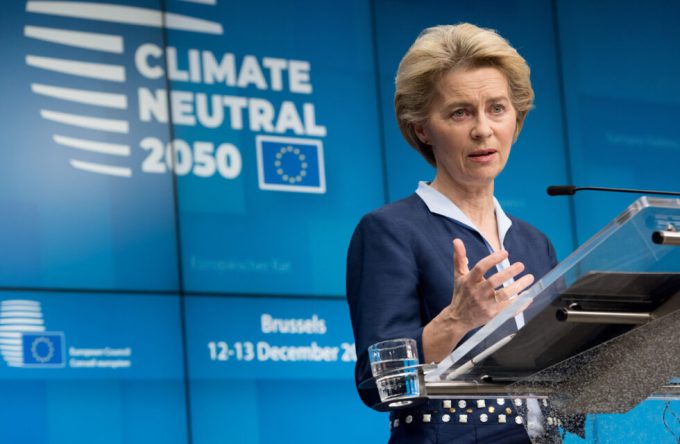
The Polish government has submitted four complaints against EU climate policies, calling them “authoritarian” and pledging that it “will not allow Brussels’ diktat”.
Three new cases filed to the Court of Justice of the European Union (CJEU) relate to a ban on the registration of new internal combustion vehicles after 2035, an increase in the EU’s greenhouse gas reduction target, and a reduction of free emission allowances under the EU Emissions Trading System (ETS).
They follow another complaint filed last week against EU rules on land use, land use change and forestry (LULUCF), which Poland says infringes the competences of member states.
“Does the [European] Union want to decide in an authoritarian manner what kind of vehicles Poles will drive and whether energy prices will rise in Poland?” tweeted climate minister Anna Moskwa on Monday. “The Polish government will not allow Brussels’ diktat.”
This morning, the minister added in an interview with Polskie Radio that the government would also file a fifth complaint this week concerning 35,000 tonnes of rubbish that it says has illegally entered the country from Germany.
Poland’s current national-conservative government has regularly criticised the EU’s climate and environmental policies. Ruling party leader Jarosław Kaczyński has called them “madness and theories without evidence” and “green communism”.
“At every EU council, we have been against and voted as a government against every single document in the Fit for 55 package,” said Moskwa, referring to the EU’s programme to reduce emissions by at least 55% by 2030.
“It is no secret that we were against the whole package, we are against increasing climate ambition and the way [these efforts] are carried and forced [upon member countries],” added the minister.
A recent EU-funded study found Poland to be the bloc’s least green country. It still relies on coal to produce around 70% of its electricity, by far the highest figure in the EU. Poland is Europe’s second-largest producer of brown coal after Germany and the largest producer of hard coal.
In March, Poland was the only member state to oppose the introduction of a ban on the sale of new petrol and diesel cars from 2035. In an interview today, Moskwa argued that unanimity should have been required for this decision as its impact is heavily dependent on member countries’ energy mix.
“In our case, [banning combustion engines] is absolutely contrary to climate policy, because it will lead to an increase in coal consumption in the short term if we want to increase electricity production [to power electric vehicles],” she said.
Asked about the other complaints, Moskwa said Poland was challenging most of them on the same grounds as the ban on the sale of combustion cars.
“The argument in most of these complaints is the same, mainly concerning the legal basis and unanimity, the impact on the energy mix,” she said.
One of the EU policies opposed by Poland is changes to ETS stipulating that sectors already covered by the system will be obliged to reduce their greenhouse gas emissions by 62% by 2030 compared to 2005 levels. The reform also envisages a gradual phase-out of free emission allowances between 2026 and 2034.
Another regulation concerns the provisions on the new EU Carbon Border Adjustment Mechanism (CBAM), which will cover commodities such as iron, steel, cement, aluminium, fertilisers, electricity and hydrogen.
Importers of these commodities will have to pay the difference between the emission fee in the country of production and the price of emission allowances in the EU ETS. CBAM will be phased in between 2026 and 2034, as free emission allowances in the ETS are phased out.
Moskwa argues that Poland is pursuing a “very consistent energy transition” focused on creating incentives rather than restrictions. She cited government subsidies for clean energy sources such as the “My Electricity” and “Clean Air” programmes, which have led to a boom in solar micro-installations and heat pumps.
Data from the European Environment Agency published last month showed that Poland recorded the EU’s largest overall fall in emissions in 2022. However, in proportional terms, Poland’s decline was, though above the EU average, not among the highest in the bloc.
Alicja Ptak is senior editor at Notes from Poland and a multimedia journalist. She previously worked for Reuters.
Copyright © 2023 Notes From Poland
No fertilizer exported from Russia under grain deal – media
RT | July 15, 2023
Not a single vessel carrying Russian fertilizer has been dispatched since the adoption of the Black Sea grain deal last year, Russian news agencies reported on Saturday, citing the Joint Coordination Center (JCC) for the initiative.
Enabling fertilizer exports from the sanctioned country was one of the conditions for the UN-brokered agreement that allowed for the safe passage of ships carrying Ukrainian grain via the Black Sea. The deal was extended several times and is due to expire on Monday.
“The agreement of July 22, 2022 allows the export of [Russian] fertilizers, including ammonia, however not a single ship with fertilizers has been dispatched within the framework of the initiative,” the JCC said, as quoted by RIA Novosti.
The Coordination Center also reportedly noted that fertilizer exports depend on the condition of a key ammonia pipeline on Ukrainian territory. A section of the Togliatti-Odessa pipeline was sabotaged last month, and according to the report, “at the moment its status is unknown.”
The conduit has been inactive since the start of the Ukraine conflict last year, and Moscow has repeatedly demanded that Kiev unblock the pipeline as a condition for renewing the grain deal. The route has big significance for agriculture, as ammonia is crucial to fertilizer production.
Russian President Vladimir Putin said on Saturday that the grain deal has failed to remove the barriers to the export of Russian grain and fertilizer. Talking to South African President Cyril Ramaphosa, Putin added that the pact has also failed to deliver on its goal of supplying grain to the poorest nations.
Earlier this week, the Russian leader said that Moscow may suspend its participation in the grain deal until Western sanctions on its agricultural exports are lifted.
The Joint Coordination Center on the Black Sea Grain Initiative was founded in July 2022 in Istanbul. JCC comprises representatives of Ukraine, the Russian Federation, Türkiye, and the United Nations.
US VP Harris speaks of desire to ‘reduce the population’

RT | July 15, 2023
US Vice President Kamala Harris listed reducing the population as one of the Biden administration’s areas of green investment during a speech in Maryland on Friday. The White House has since claimed she misspoke.
“When we invest in clean energy and electric vehicles and reduce population, more of our children can breathe clean air and drink clean water,” Harris told the audience at Baltimore’s Coppin State University, to rapturous applause.
While Harris did not correct herself on stage, a White House transcript of the speech struck the word “population” and replaced it with “pollution.”
The VP made the odd remark as she revealed the Biden administration had made $20 billion available for “community-based climate projects,” with $12 billion of that earmarked for historically-disadvantaged areas – part of Washington’s efforts to halve greenhouse gas emissions by 2030 and reach net-zero by 2050.
The funding will go to “a national network of nonprofits, community lenders, and other financial institutions to fund tens of thousands of climate and clean energy projects across America,” Harris said. It was set aside for green energy initiatives under the Inflation Reduction Act as part of the Environmental Protection Agency’s Greenhouse Gas Reduction Fund.
Harris’ critics took aim at the alleged gaffe on social media, suggesting she was “saying the quiet part out loud,” while critics of the man-made climate change hypothesis argued cutting population was its true aim.
“Are you the population she wants to reduce?” Rep. Thomas Massie (R-Kentucky) asked his followers.
Commentators including Megyn Kelly and Fox’s Harris Faulkner questioned Harris’ fitness to succeed President Joe Biden after the VP stumbled through multiple public appearances earlier this week.
During a Wednesday panel discussion on AI at the White House, she informed the panelists that the technology was “kind of a fancy thing,” telling the assembled experts, “First of all, it’s two letters. It means artificial intelligence,” before embarking on a rambling attempt to explain machine learning. During a roundtable on transportation for people with disabilities the same day, she observed, “the issue of transportation is fundamentally about just making sure that people have the ability to get where they need to go.” Both comments were widely mocked on social media.
Wind Industry Blackmails U.K. Demanding Huge Ramp-Up of Subsidies
BY WILL JONES | THE DAILY SCEPTIC | JULY 5, 2023
In a move that gives the lie to years of propaganda claiming falling costs, the wind industry’s leading lobbyists have written to the Government threatening to abandon the U.K. unless subsidies for their companies are hugely increased.
The industry lobbyists claim that unforeseen rising costs now require three actions:
- A revision to the auction rules so that the winners are not determined by lowest bids but by an administrative decision that weights bids according to their ‘value’ in contributing towards the Net Zero targets.
- Special new targets and thus market shares for floating offshore wind, one of the most expensive of all forms of generation;
- A vast increase in the budget for the fifth auction (AR5) of Contracts for Difference subsidies, with an increase of two and half times the current levels for non-floating offshore wind alone;
Such changes, were the Government to agree to them, would not only increase the total amount of subsidy to an industry that was until recently claiming no longer to need public support, but also provide the industry with protected shares of the energy market, eliminating risks for investors at the expense of the paying public. It would also clearly be an open invitation to corruption.
Climate lobby group Net Zero Watch has urged the Government to stand up for consumers by rejecting the wind industry’s latest demands.
Dr. John Constable, Net Zero Watch’s Energy Director, said: “It would be both absurd and counterproductive for Government to bail out the wind industry in spite of the evident failure to reduce costs. A refusal to learn from mistakes will be disastrous.”
In a press release, the organisation argued the Government should “reject the self-serving demands” because the U.K. economy should not be expected to continue to subsidise a sector “that is still uneconomic after nearly 20 years of above-market prices and guaranteed market share”.
“The wind experiment has failed and must be wound down,” it adds.
The Government should also be mindful that U.K. households and businesses are already experiencing extreme pressures on budgets, and a further burden on the energy bill should not be tolerated, it says.
This is particularly the case as the wind industry’s current cost difficulties are “neither unforeseen nor unpredicted but have been obvious to careful observers for over a decade”.
Featured Video

Seyed M. Marandi: U.S. Military DIVIDED? Iran’s Secret Defense EXPOSED
or go to
Aletho News Archives – Video-Images
From the Archives
‘Israel sees Iran as obstacle to its policies’

Press TV – August 25, 2017
Prime Minister Benjamin Netanyahu has said that Israel felt threatened by Iran’s growing influence in the Middle East. Netanyahu expressed his Iranophobic view in a meeting with Russian President Vladimir Putin in Russia’s Black Sea resort of Sochi on Wednesday. Press TV has asked Scott Rickard, former American intelligence linguist from Tampa, Florida, and Brent Budowsky, a columnist at The Hill from Washington, to give their thoughts on the issue.
Rickard said Tel Aviv is concerned about the fact that the regime could not carry out its old project to spread sectarian divisions and pave the way for dismemberment of the countries in the Middle East region because of the Iranian-led resistance against Israeli policies, not only in the occupied territories of Palestine but also in the whole region.
“Iran is not a threat to Israel whatsoever. The threat that Israel sees is the fact that their Oded Yinon Plan is being put to a hold by Iran,” the intelligence linguist said on Thursday night.
“They (the Israelis) look at Iran as a threat only because they have no influence on their governments and Iran is autonomous and is not under the Zionist influence,” he added.
Since the victory of the Islamic Republic of Iran in 1979, Tehran has been critical of Israel’s policies in the region, whereas “no leaders [of other states] even dared to speak out against Zionism,” Rickard argued. … continue
Blog Roll
 Aletho News
- The US-Israeli War on Science is an Assault on our Future
- Trump’s Promise to Bomb Iran ‘Like Never Before’ Faces Brutal Logistics — Expert
- Germany seeks to restrict stays abroad for men of fighting age – Berliner Zeitung
- Evidence points to Ukraine being behind TurkStream attempted sabotage, but that should come as no surprise
- Sri Lanka secures supplies of Russia oil – minister
- Nations across Asia strike direct deals with Iran for Hormuz passage
- IRGC commander declares ‘new phase’ of reprisal attacks against aggressors
- Israel’s air defenses overwhelmed by cluster-warhead Iranian missiles: Reports
- Striking Iran’s Infrastructure Would Have Little Military Impact – Report
- What’s Behind U.S./Israeli Strikes On Iranian Pistachio Factories?
- If Americans Knew
- Trump Says US Sent ‘a Lot of Guns’ to Protesters in Iran
- Israeli forces destroy 17 UN peacekeeper cameras in south Lebanon
- US-Israeli strikes ‘completely destroy’ synagogue in Tehran
- Archbishop for US Military Says Iran War Is Unjust Under Catholic Teaching
- Iranian leaders’ Open Letters to the American People
- Trump says Iranians appreciate bombs, WHO warns of nuclear risks – Daily Update
- U.N. experts demand Israel release prominent Gaza doctor after reports of ‘severe torture’
- Israel’s Latest Genocide Is Against the Shias of Lebanon. Why Is the World Silent?
- How Eliot Cohen’s influence over U.S. war-making paved the way for Trump’s war crimes in Iran
- Israelis don’t pay for the weapons we ‘sell’ to them — US taxpayers do
- No Tricks Zone
- An Inconvenient Tree: Uncovered In Alps… Europe Much Warmer Than Today 6000 Years Ago
- New Study Reports A 60% Slowdown In Greenland’s Ice Loss Rate In The Last Decade
- Low Intensity Tornado Wrecks Major Solar Farm, Creating A Potential Toxic Dump
- New Study Finds Warming Saves Lives…Cold Temperatures 12 Times More Deadly Than Excess Heat
- German Science Blog Accuses PIK Climate Institute Of Hallucinating Climate Tipping Points
- Devastating Assessment Of Comirnaty Vaccine By Former Senior Pfizer Europe Toxicologist
- New Study: CO2 Is ‘Effectively Negligible’ As An Explanatory Climate Change Factor Since 2000
- Former Pfizer Toxicologist Dr. Helmut Sterz Tells Bundestag Hearing Pfizer Vaccine Should Have Never Been Approved
- Energy Expert: Germany’s Nuclear Phaseout Was A “500 Billion Euro Mistake”
- New Research: South Australia’s Mid-Holocene Sea Surface Temperatures Were 4°C Warmer Than Today
 Aletho News