Petro Government in Colombia Poised to Return Key ‘Stolen’ Asset to Venezuela
By José Luis Granados Ceja | Venezuelanalysis | July 11, 2022
Troubled agrochemical company Monómeros, a subsidiary of Venezuela’s state-owned Pequiven, could return to Venezuelan control, Colombian President-elect Gustavo Petro told local radio Tuesday.
The Colombia-based agrochemical producer is considered Venezuela’s second most important foreign-held asset. It came under the control of Venezuela’s hardline opposition in May 2019 alongside a number of other foreign assets following the recognition of Juan Guaidó as “interim president” by Washington and its allies as part of efforts to oust the Nicolás Maduro government.
Since being handed over to the opposition, Monómeros has been plagued by scandals and corruption allegations, which has severely impacted its productivity and has generated serious problems for Colombia’s rural producers.
Colombian Senator Luis Fernando Velasco Chaves, a member of Petro’s transition team managing the Presidential Administrative Office file, reiterated concerns about the management of the firm following a meeting Tuesday with officials from the government of outgoing president President Ivan Duque.
“I am very concerned that Monómeros is still in the hands of Guaidó, Monómeros in the hands of Guaidó was a disaster, it disappeared,” said Velasco.
The senator also ridiculed Guaidó’s management of Monómeros, saying the incoming government could not negotiate with “ghosts that do not exist”.
The agrochemical enterprise, which has two main plants, played a major role in Colombia’s food chain, previously supplying nearly half of the fertilizers and 70 percent of the agrochemicals used by coffee, potato and palm oil production, according to local sources.
“Please look at what is happening to us, ask our peasants, ask our farmers, we are not producing and we are paying three times the [previous] cost of supplies,” said Velasco.
Mismanagement and infighting by the Venezuelan opposition eventually led Colombia’s Corporation Superintendency to assume control of Monómeros. Colombian law allows the corporate watchdog to employ such a process when an enterprise is in a critical “judicial, accounting, economic or administrative” situation.
The Maduro government called the superintendency’s takeover a “flagrant theft” of Venezuela’s assets and demanded they be returned to its rightful owner, the state-owned petrochemical company Pequiven. Maduro has said that Venezuela was engaged in “permanent diplomatic, political and legal activity” to recover the country’s foreign assets and the government has made the return of seized foreign assets a condition of a return to talks with the opposition.
The agrochemical producer did not fare much better under control by Colombian officials, with Petro claiming the company was driven into the ground, leading to a sharp increase in costs for Colombia’s agricultural sector.
“The company ended up practically closing its operations and lost the market it had in Colombia,” said the president-elect in a recent interview.
Monómeros faced yet another scandal after officials from the US Embassy to Venezuela revealed to Guaidó insider Enrique Sánchez Falcón that the company’s board had hired a lobbyist with ties to former US Ambassador to Venezuela Otto Reich without the knowledge or authorization of Guaidó’s team.
Sánchez Falcón told the outlet Efecto Cocuyo that the lobbyist was allegedly working to renew Monómeros’ sanctions waiver with the US Office of Foreign Assets Control (OFAC) but that the effort was “unnecessary” since the license was likely forthcoming anyway. Guaidó subsequently announced an investigation into the irregular hire of the lobbyist. The OFAC license was eventually renewed in late June.
The current leadership of the firm has apparently failed to even update officials from Guaidó’s team about the status of the Monómeros. Guaidó ally Yon Goicoechea said he believes the secrecy is tied to a hostile takeover effort. The US-backed “interim president” has pledged to overhaul the management of the corporation but the efforts have led to corruption accusations and further infighting amidst the opposition camp.
A press spokesperson from Guaidó’s office did not respond to a request for comment on the possible return of Monómeros to Venezuelan state management.
Outgoing Colombian President Iván Duque has steadfastly refused to return control of Monómeros to Venezuela, given that he does not recognize Maduro as president.
Duque recently said that he would also decline to extend an invitation to Maduro for Petro’s inauguration. The president-elect has said invitations are the purview of the outgoing government but said Maduro’s attendance would be “prudent”.
Petro, who has committed to reestablishing diplomatic and economic ties between Colombia and Venezuela, takes office on August 9.
Edited by Ricardo Vaz in Mérida.
Are angry Dutch farmers spearheading an uprising against the elites?
By Kathy Gyngell | TCW Defending Freedom | July 12, 2022
Ignored in the media feeding frenzy over Johnson’s resignation were no less than 30,000 Dutch farmers who last week rose up in protest against new nitrogen emission limits set by their government and who are fast bringing their country to a halt. You would think it would be a lead new story, but no.
Only yesterday did any British mainstream newspaper pay attention to this huge story. The Independent took time out to tell its readers that ‘Anger simmers for Dutch farmers who oppose pollution cuts’.
That is not however how social and alternative news media outlets have been reporting this drama. The Dutch government’s new edict will require farmers to so radically to curb their nitrogen emissions, by up to 70 per cent in the next eight years, that it will mean a massive reduction in the number of livestock they can maintain resulting in the loss of their livelihoods and, some say, a State take-over of their farms. It’s for this reason they have been blocking supermarkets, distribution centres and roads, a protest to which, shamefully, the police have responded with brutality, opening fire on tractor-riding farmers and arresting others.
Maybe large farming companies could, at least hypothetically, meet these (climate) goals but for smaller farms, often family-owned over several generations, these new environmental regulations are so extreme they’ll be forced out of business.
That’s why farmers are blockading roads and refusing to deliver their products to supermarket chains, and why the Netherlands is starting to suffer serious shortages of eggs and milk. The global impact is not without significance either. Just as so many people remained unaware until recently how dependent the world is on Ukraine for wheat and fertiliser, enlightenment is yet to dawn about global food dependency on the Netherlands.
In a rare (mainstream) article on the subject last week in Newsweek, Ralph Schoellhammer, an Austrian assistant professor of economics, explains that the Netherlands is the world’s second largest agricultural exporter after the United States, a country of barely 17million inhabitants, a food superpower. Given global food shortages and rising prices, the role of Dutch farmers in the global food chain, he writes, has never been more important: ‘But if you thought the Dutch government was going to take that into account and ensure that people can put food on the table, you would be wrong; when offered the choice between food security and acting against “climate change,” the Dutch government decided to pursue the latter.’
It appears to be an extraordinary own goal, given post Lockdown supply chain problems and the impact of the Ukraine war, but such is the zealotry of these political climate ideologues that they are prepared to attack their own people, just as Pierre Trudeau did with the Truckers. Like Mao, they seem to have little regard for the cost in human lives and suffering in order to achieve their revolutionary goals. And a revolution it is, driven by global elites who can afford high food and energy prices.
Schoellhammer believes that ‘there is a growing resistance by the middle and lower classes against . . . the “luxury beliefs” of the elites, as everyday folks realise the harm it causes them and their communities’. Let’s hope there is.
Rebel News reporter Lincoln Jay, embedded with the farmers since last week, reporting back to Laura Ingraham of Fox News last Friday said ‘the farmers genuinely believe that this is going to destroy their livelihoods’. He believes ‘these new environmental policies are going to make it practically impossible for the younger generation here in the Netherlands to get into farming’.
You can watch the interview here.
In a more recent Rebel News report with Lewis Brackpool he says that the Dutch farmers are not backing down against ‘the authoritarian climate agenda of Prime Minister Mark Rutte’ who they describe as a World Economic Forum insider; and that the farmers’ rebellion is now countrywide, and has brought parts of it to a halt. In the northern town of Drachten, not far from the German border, they watched waves of farm tractors form a convoy along the A7 highway. In Leeuwarden, tractors blockaded government buildings, and farmers tried to confront provincial government officials.
Elsewhere it’s been alleged that that the Dutch minister who pushed the nitrogen law that grants the government the power to expropriate the farmers’ land has a brother whose online supermarket is one in which Bill Gates invested $600million. The Epoch Times reported yesterday that the Dutch Government’s strategy is even more invidious; that the plan is to take the farmers’ land and convert it into housing.
Rutte of course is not the only example of a government’ leveraging ‘climate change concern’ against specific segments of the economy and working people at a time when it will inflict maximum damage. The Western Canadian Wheat Growers have warned that Trudeau’s proposed fertiliser emissions reduction will devastate Canadian prairie farmers, with serious implications for the country’s food security. These also are the heartlands of conservatism in Canada that are targeted.
Whether the Dutch farmers will be the spearhead of what Schoellhammer predicts will be a ‘popular uprising of working-class people against the elites and their values that started with the Canadian Truckers and is crossing the globe’, only time will tell. He says the sympathies of the Dutch are not with their government; they are solidly with their farmers that polls indicate that the Farmers Political Party, formed just three years ago in response to the new regulations, would gain 11 seats in Parliament if elections were held today (it currently holds just one seat out of 150).
The real worry he notes is that the ‘elites are behaving much as they did in Canada and the US, and not just those in government. He points to mainstream media outlets refusing to even report the protests, or when they do, ‘casting the farmers as extremists’; acting as in effect as government mouthpiece.
That, so far, is the problem here too. At the time of writing the main print and broadcast media outlets are still ignoring the Dutch farmers protest – with the honourable exception of guess who but Mark Steyn on GB News.
You can read the full Newsweek article here.
The Administrative State Moves To Show Who’s Boss On Energy Policy
By Francis Menton | Manhattan Contrarian | July 08, 2022
Last Thursday, June 30, the Supreme Court issued its decision in West Virginia v. EPA, holding that, absent a further explicit statute from the Congress, the EPA did not have the authority to orchestrate its planned fundamental restructuring of the electric power generation sector of the economy. More generally, the Supreme Court stated that in cases involving “major questions,” including regulations that affect large portions of the economy, the government must demonstrate “clear congressional authorization” to support a sweeping effort to regulate.
Do you think that such a Supreme Court decision might cause the various regulatory bureaucracies to slow down and reconsider a little before plowing ahead with other dubious plans for fundamental economic restructurings? That’s not how these bureaucracies work. And such is most particularly the case with regard to regulators of the energy sector, sometimes known as “climate change” arena, where the bureaucrats are burning with a righteous religious fervor that they believe entitles them to cast the evil sinners into the fires of hell.
And thus, contemporaneous with the Supreme Court’s decision, several agencies promptly doubled down on efforts to strangle the oil and gas industries with regulatory restrictions, essentially daring the courts or anyone else to stop them. Thousands of pages of statutes give them thousands of arguments to claim they have the “clear congressional authorization,” any one of which arguments might stick. They are now out to show who’s boss.
EPA Administrator Michael Regan wasted no time in getting a statement out on the afternoon of June 30. Excerpt:
[W]e are committed to using the full scope of EPA’s authorities to protect communities and reduce the pollution that is driving climate change. . . . EPA will move forward with lawfully setting and implementing environmental standards that meet our obligation to protect all people and all communities from environmental harm.
In other words, we will just have to find other ways to implement the restrictions that we want to implement. The very next day, July 1, David Blackmon at Forbes reported that “EPA Targets Permian Basin, Widening Biden’s War On Oil And Gas.” The Permian Basin is currently the most productive oil and gas region in the United States, providing about 40% of the oil production and 15% of the gas of the entire country. The Permian Basin is also the site of about 40% of the nation’s active drilling rigs. And so it seems that EPA is gearing up to declare the Permian Basin a so-called “non-attainment area” with respect to ozone. Blackmon:
[T]he Environmental Protection Agency (EPA) announced [this week that] it may soon issue a ruling declaring that vast parts of the Permian Basin are in “non-attainment” status under the agency’s ozone regulations. If such a declaration is made, it will constitute a direct governmental assault on what is by far America’s most active and productive oil-producing region and its second most-productive natural gas area.
What would be the effect of such a declaration on current and future U.S. domestic oil and gas production? Blackmon again:
Placing the Permian Basin in non-attainment status would force a significant reduction in the region’s rig count, severely limiting the domestic industry’s efforts to increase U.S. oil production at a time when the global oil market is already severely under-supplied.
Texas Governor Greg Abbott promptly called on the Biden Administration to back off, saying that an EPA “non-attainment declaration “could interfere in the production of oil in Texas which could lead to skyrocketing prices at the pump by reducing production, increase the cost of that production, or do both.” But Blackmon notes that the plan comes from an office headed by a Biden-appointed anti-fossil-fuel activist, and thus is likely a core element of the administration’s program:
Mr. Biden appointed Joe Goffman, another of the many anti-fossil fuel activists that now hold senior posts at his various agencies, to head up EPA’s Office of Air and Radiation on an acting basis. That appointment might have been made with this specific policy action in mind.
Meanwhile, over at the Interior Department, July 1 was also the day for issuance of a statutorily-mandated five-year off-shore oil and gas leasing plan. Nicholas Groom at Reuters has a summary here. The bottom line is, we’re going to completely shut down leasing off both the Atlantic and Pacific coasts, but maybe we’ll allow a little in the Gulf of Mexico or the Cook Inlet (Alaska). The number of auctions over the five-year period will be in the range of “zero to eleven,” and supposedly we’ll take public input as to which way to go. But Interior Secretary Deb Haaland in a statement left no doubt as to where she wants and expects this to come out:
“From Day One, President Biden and I have made clear our commitment to transition to a clean energy economy,” Haaland said in a statement. “Today, we put forward an opportunity for the American people to consider and provide input on the future of offshore oil and gas leasing. The time for the public to weigh in on our future is now.”
There is a 90 day period for public comment. You can be sure that environmental activist groups will flood the zone with thousands of comments to support the approach of the “zero” option of ceasing all further off-shore leases.
Other agencies were eerily silent in the aftermath of the Supreme Court’s June 30 decision. Notable among those were the SEC and the Federal Reserve, both of which have recently ventured into adding “climate change” to their missions with only the most questionable of statutory support. Neither has given any indication of an intention to slow down.
And then on July 2, President Biden issued his now-famous tweet blaming the rising price of gas at the pump on gas station owners:
My message to the companies running gas stations and setting prices at the pump is simple: this is a time of war and global peril. Bring down the price you are charging at the pump to reflect the cost you’re paying for the product. And do it now.
A bureaucracy-wide campaign is ongoing under this guy’s direction to suppress oil and gas production in any way they can think of, and yet he has the gall to blame high prices on “companies running gas stations,” the majority of which are small independent businesses. At this point Biden has become malicious.
Over 300 Trucks From Kaliningrad Region Queue at Border With Lithuania
Samizdat – 11.07.2022
KALININGRAD, Russia – More than 300 trucks are queuing at the Russian-Lithuanian border attempting to exit the Russian exclave region of Kaliningrad, with another 200 trucks awaiting entry into the region, Kaliningrad customs service said on Monday.
“As of 9 a.m. on July 11, in the past 24 hours employees of Chernyshevskoe checkpoint processed 200 heavy trucks heading to the Republic of Lithuania and 298 trucks arriving to the territory of the Kaliningrad region. Departure from the Russian Federation is expected by 310 vehicles, entry – by 200 trucks,” the custom said.
Kaliningrad trucker drivers complain about spending days in queues, while lacking access to basic necessities.
“People [truck drivers] basically have no food, not everyone can buy it in stores, and you still have to drive to them, not everyone has euros. No toilets, no showers, they just stand in the woods in Lithuania and wait,” one of the truck drivers told Sputnik.
Queues of trucks at the Russian-Lithuanian border in Kaliningrad region at Chernyshevskoye checkpoint appeared in late June and since then their intensity has been escalating. On June 23, 150 trucks were waiting to leave the region, on June 25 their number increased to 250 trucks. Kaliningrad custom service said that the number of trucks allowed out of the region decreased because of the breakdown at Lithuanian customs.
The European Union banned Russia-registered trucks in early April but made an exemption for those transiting to Kaliningrad, which is located on the Baltic Sea coast. The current restrictions on the transit of Russian goods, announced by Lithuania, apply to all transit of goods sanctioned by the EU. Lithuanian Railways notified the Kaliningrad region’s railway of halting the transit of a number of goods subject to EU sanctions on June 18.
Kremlin spokesman Dmitry Peskov said that Russia is considering various options for responding to Lithuania’s “unfriendly” move. Kaliningrad Region Governor Anton Alikhanov said that the restrictions would not affect transit of oil products at least until August 10 and that the region would mobilize its ferry fleet to compensate for railroad cargo cuts.
Justin Trudeau’s opponent would ban ministers from attending WEF
Free West Media | July 10, 2022
Pierre Poilievre, who will be running for the leadership of the Conservative Party of Canada later this year, said at a meeting in Calgary that he would ban ministers from attending the World Economic Forum in Davos, Switzerland.
Canada’s Deputy Prime Minister and Minister of Finance Chrystia Freeland sits on the WEF’s Supervisory Board. Shadow Minister of Natural Resources Michelle Rempel Garner can also be found on the organisation’s website. She denied in an article that Canada was run by the WEF.
Earlier, WEF chief Klaus Schwab had boasted however that more than half of the Canadian cabinet was made up of Young Global Leaders of the WEF.
Poilievre thus indicated that he wanted to take Canada in a completely different direction. He is planning to take on Trudeau in the next election and defeat him.
“I have made it clear that I will ban my ministers in my cabinet from attending the World Economic Forum if I become prime minister,” he said at an earlier meeting. “Work for Canada. If you want to go to Davos, to that conference, buy a single ticket. You cannot be part of our government and pursue a policy agenda that is not in line with the interests of our people.”
Poilievre is running in the 2022 Conservative Party of Canada leadership election and is considered to be the frontrunner. He has supported those in the Canada convoy protest against vacccine mandates who were protesting peacefully and said the federal government had abused its power by invoking the Emergencies Act during the protest and proposed limiting its power and use to prevent it from being used similarly in the future.
Poilievre demonstrated his support for army reservist James Topp’s anti-mandate protest walk from Vancouver to their planned Canada Day freedom protest on Parliament Hill, by joining Topp, Paul Alexander, Tom Marazzo, a self-declared spokesperson for the Canada convoy protest and an ex-military officer, on June 30, 2022 in the final stage of Topp’s march to Ottawa.
EU Climate Plan Doomed Unless Sanctions Against Russia Lifted: Lawmaker

Samizdat – 09.07.2022
The controversial EU green transition plan, also known as Fit for 55, which was designed to reduce the bloc’s greenhouse gas emissions by 55% by 2030, is unfeasible unless sanctions against Russia are lifted, a EU lawmaker from the Freedom Party of Austria, Roman Haider, told Sputnik.
“They don’t know how to save their unrealistic and dangerous Fit for 55 strategy without canceling the sanctions against Russia,” Haider said.
On Wednesday, the European Parliament backed EU regulations designating nuclear and gas energy as environmentally sustainable economic activities, saying that private investment in gas and nuclear projects may play a role in the green transition process.
This decision by the European Parliament signaled that EU governments are facing a stark reality, recognizing that more time and more realistic goals are required to transform the energy infrastructure in Europe, Haider said. Meanwhile, the Freedom Party of Austria has repeatedly raised the issue of impractical goals set as benchmarks for the EU and warned of grave consequences for the European and Austrian economy should the Fit for 55 plan be fully implemented, he noted.
“This package is a massive threat to businesses in Europe. It makes Europe even more dependent on imports and drives the price spiral further upwards. It destroys jobs, promotes the impoverishment of Europeans and is massively harmful to the environment. In short, Fit for 55 is a serious threat to Europe,” Haider warned.
Haider stressed that to achieve carbon neutrality by 2040 and meet the goals of the Paris climate agreement, Austria would have to cut emissions by 95% over the next 18 years, as a recent study shows that the country’s CO2 emissions in 2021 reached 1990 levels.
At the same time, the reality of the current energy market volatility has forced some EU countries, including Austria, to consider resuming the use of coal, which is the dirtiest fossil fuel, Haider added.
Austria’s state-owned Verbund AG was recently ordered to prepare the mothballed Mellach coal-fired power plant for emergency operation. It comes just two years after Austria became the second European country to completely eliminate coal from its energy production system.
EU is pricing developing countries out of the LNG market
Samizdat | July 9, 2022
European Union members are actively buying up liquefied natural gas (LNG) as an alternative to Russian pipeline supplies, depriving poorer countries that cannot compete for the fuel due to high prices, The Wall Street Journal claimed on Friday.
According to the publication, the price of LNG has skyrocketed 1,900% from its low two years ago. Current prices are equivalent to buying oil at $230 a barrel, while LNG normally trades at a discount to oil. Developing countries cannot compete with Europe for the supplies at such prices of about $40 per million British thermal units (MMBtu).
According to Wood Mackenzie data, cited by the Journal, European nations have ramped up their LNG imports by almost 50% year-to-date through June 19. At the same time, India’s imports during that period decreased by 16%, China slashed purchases by 21%, and Pakistan by 15%.
A tender from Pakistan for around $1 billion of LNG attracted no offers on Thursday, the country’s officials said. Each day, the country’s businesses and homes are suffering hours of government-imposed electricity shutdowns because Islamabad can’t import enough natural gas to fuel power plants, they explained.
“Every molecule of gas that was available in our region has been purchased by Europe because they are trying to reduce their dependence on Russia,” Pakistan’s Minister of Energy Musadiq Malik was quoted as saying.
In some cases, cargoes that were destined for poorer countries are diverted to Europe. Experts note that’s profitable even if suppliers are forced to pay penalties under contracts with developing countries.
The world’s supply of LNG used to produce power is swallowed up by European nations, according to Valerie Chow, head of gas and LNG research for Asia Pacific at Wood Mackenzie. He told WSJ that “Emerging markets in Asia have taken the brunt of it, with no end in sight.”
‘Energy crisis hitting US industrial complex’
Samizdat | July 9, 2022
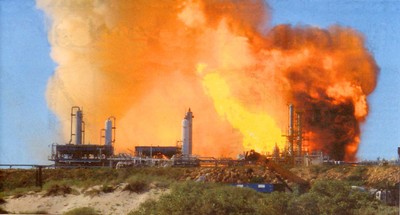
Operational challenges arising from soaring energy bills have put the entire US industrial complex at risk of partial shutdown, Bloomberg reported on Thursday.
The country’s second-biggest aluminum mill, which accounts for 20% of the national supply, reportedly laid off 600 workers in late June after its electricity bill tripled. Century Aluminum announced plans to leave its Hawesville mill idle for as long as a year, taking out the biggest of its three sites in the US. Meanwhile, the country’s largest aluminum producer Alcoa said it was cutting its production by a third at a mill in Indiana.
At least two steel mills have started to halt some operations in a bid to minimize energy costs, an unnamed industry executive told the agency. In May, a group of factories across the US Midwest warned the country’s energy regulators that some enterprises were on the brink of shutdown for the summer months or longer due to “unjust and unreasonable” electricity costs.
In June, natural gas prices tripled compared to the same period a year ago, sending bills for households and businesses soaring to previously unseen levels. Meanwhile, electricity rates for industrial customers are projected to hit an all-time high this summer.
Soaring costs have forced some businesses to put millions of dollars of credit on the line to secure power and gas contracts, according to Michael Harris, whose firm Unified Energy Services purchases fuel for industrial clients.
“That can be devastating for a corporation,’’ Harris told the agency. “I don’t see any scenario, absent explosions at US LNG facilities’’ that trap supplies at home, in which gas prices are headed lower in the long term.
Road accidents to stop Putin: Augsburg to switch off traffic lights

Free West Media | July 9, 2022
In its sanctions policy against Russia, EU leaders are increasingly overstepping boundaries – also against their own people.
One of the most active globalist trendsetters is once again the German State of Bavaria. CSU Prime Minister Söder already distinguished himself with particularly drastic measures during the Corona crisis. Citizens are now expected to accept questionable measures in the fight against Russian President Putin.
In the Bavarian city of Augsburg, for example, it has been calculated that energy costs are likely to rise by almost 80 percent in the current year. That is why everything that can be switched off, including traffic lights, will soon be switched off.
Mayor Eva Weber (CSU) explained: “The situation is serious.” Therefore, room temperatures in municipal offices are to be lowered in autumn and winter, and some buildings will be left completely cold through “effective room management”.
Water temperatures in swimming pools will be reduced. The façade lighting on historical buildings and museums will be switched off, and fountains will also be turned off. Street lighting will be dimmed. Switching off of traffic lights will also be considered.
The city and the police will be explaining which traffic lights are most relevant to safety – all others could be switched off without further ado. There are no longer any taboos when it comes to saving energy in the state.
The taboo, however, is to demand an end to the self-imposed energy shortage. This could be done quickly and easily: by ending sanctions against Russia and by opening the Nord Stream 2 Baltic Sea pipeline, which has long been completed.
Chancellor gets carried away
Chancellor Scholz has now let himself be carried away into making an extremely partisan (and possibly illegal) statement about the AfD. He called it the “party of Russia” during the government’s questioning in the Bundestag on Wednesday.
The chancellor was responding to a question from AfD MP Steffen Kotré, who had called sanctions against Russia “useless” and called for the Nord Stream 2 gas pipeline between Russia and Germany to be put into operation. Scholz responded, “I stand fast: the AfD is not only a right-wing populist party, but also the party of Russia.”
Scholz reiterated that Germany was preparing to do without Russian oil and gas and was also building the necessary infrastructure to do so. He added: “This is real energy security for Germany in the interest of all citizens.” Scholz’s argument does not sound convincing in the face of the many hardships that ordinary Germans now have to struggle with.
In the past, the AfD had filed a lawsuit against similar statements by then Chancellor Angela Merkel before the Federal Constitutional Court (BVerfG) in Karlsruhe and won the case. As recently as June 15 this year, the BVerfG ruled that Angela Merkel was not allowed to comment on the outcome of the Thuringia state parliamentary election, in which FDP politician Kemmerich had been elected with votes from the AfD, among others, as “unforgivable” and a result that “must be reversed”.
That ministers are obliged to neutrality when they make public statements in their function as members of the government has been cast in stone by the BVerfG. Politicians must therefore remain neutral towards all parties as a matter of principle.
This also applies to a Federal Chancellor, the Federal Constitutional Court ruled. If the Federal Constitutional Court sticks to this assessment, Scholz should also expect a similar rebuke from Karlsruhe.
John Deere Engineers Really Aiming To Build Battery-Powered Harvesters?
By P Gosselin – No Tricks Zone – 8. July 2022
It’s hard to believe that an internationally renowned company like John Deere would be led down such a dubious technical route: electric powered heavy agricultural equipment.
Consider that a battery for a typical electric car weights half a ton. Imagine what it would need to weigh for a machine that weighs over 25 tons.

With diesel, harvesters can run day and night. Image: John Deere Company
Perhaps it’s just lip service to placate idiot politicians and activist groups. I wonder if Caterpillar is thinking along the same lines: powering its massive excavators with batteries?
Here’s a post I found at Facebook from Will F. Leeman and that I’m having a hard time to believe it’s true:
For those of you that think electric vehicles are the answer- this is a true story from a farmer in the Midwest- and I’m reposting it-
A close friend farms over 10,000 acres of corn in the midwest. The property is spread out over 3 counties. His operation is a “partnership farm” with John Deere. They use the larger farm operations as demonstration projects for the promotion and development of new equipment. He recently received a phone call from his John Deere representative, and they want the farm to go to electric tractors and combines in 2023. He currently has 5 diesel combines that cost $900,000 each that are traded in every 3 years. Also, over 10 really BIG tractors.
JD wants him to go all-electric soon.
He said: “Ok, I have some questions. How do I charge these combines when they are 3 counties away from the shop in the middle of a cornfield, in the middle of nowhere?”
“How do I run them 24 hours a day for 10 or 12 days straight when the harvest is ready, and the weather is coming in?”
“How do I get a 50,000+ lb. combine that takes up the width of an entire road back to the shop 20 miles away when the battery goes dead?”
There was dead silence on the other end of the phone.
When the corn is ready to harvest, it has to have the proper sugar and moisture content. If it is too wet, it has to be put in giant dryers that burn natural or propane gas, and lots of it. Harvest time is critical because if it degrades in sugar content or quality, it can drop the value of his crop by half a million dollars or more.
It is analyzed at the time of sale.
It is standard procedure to run these machines 10 to 12 days straight, 24 hours a day at peak harvest time.
When they need fuel, a tanker truck delivers it, and the machines keep going. John Deere’s only answer is “we’re working on it.”
They are being pushed by the lefty Dems in the government to force these electric machines on the farmer.
These people are out of control.
They are messing with the production of food crops that feed people and livestock… all in the name of their “green dream.”
Look for the cost of your box of cornflakes to triple in the next 24 months…”
As mentioned above, a harvester weighs some 50,000 lbs, which means the battery would have to weigh in the neighborhood of 25,000 pounds (staying proportional to an e-car battery). Note that an e-car’s energy is used mostly for moving the vehicle on a hard even surface. For a harvester, energy is not only needed for moving it on high rolling resistance surfaces, but also for driving all the mechanical equipment onboard needed for cutting, conveying and chopping up the crop. Consequently an even bigger and heavier battery would be needed.
One problem today with modern tractors and harvesters is weight. Farmers are concerned about excessive weight because they don’t want their equipment excessively compacting the soil. Adding 15 tons or more of weight just for batteries for being able to power the machinery for just a couple of hours would be horribly inefficient.
Of course batteries for small garden equipment might make some sense, but for heavy machinery that needs to operate non-stop for hours and hours seems technically very impractical.
But with today’s green energy cult movement, where common sense has been thrown overboard to make room for ideology, it should not surprise us if the story really is true.
Featured Video

Laith Marouf: Hezbollah’s position on US-Iran ceasefire
or go to
Aletho News Archives – Video-Images
From the Archives
The Dirty Little Secret behind the “Global Terrorism Index”
The Omission of Israeli Terrorism in the Occupied Palestinian Territories
By Karin Brothers | Global Research | December 6, 2014
… The Israeli settlements — all of which are illegal – have been identified as a major impediment to peace. The refusal of a major “global” terrorism report to name the Israeli settlers as one of the groups most responsible for terrorism not only misrepresents a major source of regional violence but exposes the Global Terrorism Index as a propaganda tool that supports a U.S. agenda.
In recent years, governments have been attempting to thwart terrorism by blocking supportive fund-raising. When it comes to Israeli settlements, however, the US and Canada actually encourage fund-raising by giving organizations (such as Christian Friends of Israeli Communities (CFOIC) and the Jewish National Fund) financial support in the form of donor tax-deductions.
Charities which provide funds for the Israeli settlements should be regarded as terror-financing organizations. They should not only lose their tax-deductible status, but they should be banned because they support the violation of international humanitarian law. The terror-financing laws that are being strictly enforced for Muslim charities should be applied to Christian and Jewish charities as well. … Read full article
Blog Roll
 Aletho News
- The ‘Opposition Party’ Has Done Nothing to Stop the Iran War and Much to Goad Trump Into Continuing It
- Moscow backs Tehran on status of Lebanon in US-Iran deal
- How UK Regulator Ofcom Quietly Bypassed International Law to Police American Speech
- The Black Cube Files: How Former Mossad Operatives Flipped a Nation
- Laith Marouf: Hezbollah’s position on US-Iran ceasefire: What you’re not being told
- Israel’s priority lies in destroying chances of peace between Iran, US: Ex-UN nuclear chief
- Ceasefire for all or for none: Iran shuts Hormuz over Lebanon attacks
- Strait of Hormuz is Iran’s ‘nuclear weapon’ that forced US retreat: Medvedev
- Energy crisis will last for months – Kremlin envoy
- Europe’s quiet role in the war on Iran
- If Americans Knew
- This is ceasefire? Israel’s biggest massacre yet in Lebanon, another journalist killed in Gaza – Daily Update
- Tucker Carlson on Israel: This Is the Behavior of an Ally? Really?
- Gazans face a triple crisis: severe shortages of water and bread, healthcare in tatters
- NY Times reports how Netanyahu took the US into Iran War
- A sigh of relief over Iran, but Gaza and Lebanon in dire straits – Daily Update
- Thousands dead and neighborhoods razed to the ground: Aid agencies fear southern Lebanon is becoming the new Gaza
- The war the US is fighting for Israel could cost trillions
- ‘Cigarette Burns, Nail Wounds’: Toddler Tortured in Gaza to Coerce Father
- Trump Says US Sent ‘a Lot of Guns’ to Protesters in Iran
- Israeli forces destroy 17 UN peacekeeper cameras in south Lebanon
- No Tricks Zone
- An Inconvenient Tree: Uncovered In Alps… Europe Much Warmer Than Today 6000 Years Ago
- New Study Reports A 60% Slowdown In Greenland’s Ice Loss Rate In The Last Decade
- Low Intensity Tornado Wrecks Major Solar Farm, Creating A Potential Toxic Dump
- New Study Finds Warming Saves Lives…Cold Temperatures 12 Times More Deadly Than Excess Heat
- German Science Blog Accuses PIK Climate Institute Of Hallucinating Climate Tipping Points
- Devastating Assessment Of Comirnaty Vaccine By Former Senior Pfizer Europe Toxicologist
- New Study: CO2 Is ‘Effectively Negligible’ As An Explanatory Climate Change Factor Since 2000
- Former Pfizer Toxicologist Dr. Helmut Sterz Tells Bundestag Hearing Pfizer Vaccine Should Have Never Been Approved
- Energy Expert: Germany’s Nuclear Phaseout Was A “500 Billion Euro Mistake”
- New Research: South Australia’s Mid-Holocene Sea Surface Temperatures Were 4°C Warmer Than Today
 Aletho News