IS BIRD FLU THE NEXT COVID?
The Highwire with Del Bigtree | May 2, 2024
As America faces an unlikely bird flu ‘outbreak’ in chickens and cows, many are speculating on when this rare illness will jump to humans. Jefferey Jaxen looked into the previous gain-of-function lab work on H5N1 funded by Tony Fauci and NIAID, and found something very interesting.
NATO Steadfast Defender Drills Indicate Preparation for ‘Potential Conflict’ With Russia

Sputnik – 04.05.2024
MOSCOW – NATO’s large-scale Steadfast Defender drills indicate that the alliance is preparing for a “potential conflict” with Russia, Russian Foreign Ministry spokeswoman Maria Zakharova said on Saturday.
NATO kicked off Steadfast Defender 24 in January. The war games are running through May and include over 90,000 troops from all 32 member states. During the drills, the allies plan to test out a conflict scenario against a “near-peer adversary” in accordance with Article 5 of the North Atlantic Treaty, which states that an attack on one ally is considered an attack against the entire NATO and allows for the provision of appropriate assistance.
“Right now, NATO is conducting its largest drills since the Cold War, Steadfast Defender, near the Russian border. According to their scenario, using all the tools, including the hybrid ones and conventional weapons, they are exercising coalition actions against Russia. We have to admit that the NATO states are seriously preparing for a ‘potential conflict’ with us, about which, by the way, high-ranking NATO representatives are openly talking about,” Zakharova said in a statement published by the Russian Foreign Ministry.
Speaking about NATO’s accusations against Russia of hybrid attacks on the alliance Zakharova said Moscow considers them as disinformation, which increases the degree of anti-Russian hysteria.
On May 2, the North Atlantic Council adopted a statement, accusing Russia of hybrid attacks against the alliance’s member states.
“The North Atlantic alliance and the leadership of some individual member states are doing what they are the best at – spreading disinformation, increasing the degree of anti-Russian hysteria in order to justify unprecedented levels of militarization in Europe,” Zakharova said.
Russia shoots down four US-made long-range missiles – MOD
RT | May 4, 2024
Russian air defenses have shot down four US-manufactured long-range missiles over Crimea, according to the Defense Ministry in Moscow.
On Saturday night, Kiev’s forces attempted “to carry out a terrorist attack” against the Russian peninsula using surface-to-surface Army Tactical Missile Systems (ATACMS) supplied by Washington, the ministry said in a post on Telegram. The strike was intercepted, it added.
On Tuesday, the Defense Ministry claimed that six ATACMS projectiles had been downed in a single day, without specifying the location of the strikes. In total, 15 such missiles have been intercepted in the past seven days, Moscow reported on Saturday.
In late April, US officials confirmed earlier media reports that the Pentagon had secretly shipped an unspecified number of long-range missiles to Ukraine as part of an arms package announced by President Joe Biden in mid-March.
The “goal” of supplying Kiev with ATACMS was to put more pressure on Crimea and allow Ukrainian forces to target the peninsula “more effectively,” the New York Times reported at a time, citing an unnamed Pentagon official.
Moscow said the provision of long-range missiles would only spell “more problems” for Kiev. Kremlin spokesperson Dmitry Peskov insisted that the use of ATACMS would not impact the outcome of the conflict, or prevent Russia from achieving its security goals.
On Friday, Foreign Ministry Spokeswoman Maria Zakharova warned that any Western-backed Ukrainian attack against the Russian peninsula, or the Crimean Bridge which connects it to the Krasnodar Region, would spark a forceful response.
“I would like to again warn Washington, London, Brussels, that any aggressive actions against Crimea are not only doomed to failure, but will also be met with a retaliatory blow,” she said during a media briefing.
Hungary rejects ‘madness’ of NATO’s proposed €100-billion Ukraine war chest
RT | May 2, 2024
Budapest is opposing a potential €100-billion ($107 billion), five-year NATO plan to fund Ukraine in its conflict with Russia, Hungarian Foreign Minister Peter Szijjarto has said. The draft plan on the military aid fund was presented to member states of the US-led bloc by Secretary General Jens Stoltenberg earlier this week, Szijjarto revealed.
The minister made the remarks on Thursday to Hungarian broadcaster M1 before heading for a ministerial meeting of the Organization for Economic Co-operation and Development (OECD) countries in Paris.
“On Tuesday, the NATO member states received the secretary-general’s proposal to raise 100 billion that NATO plans to spend on the war,” the diplomat said, adding that since the money is to be collected over five years, this means NATO “expects the hostilities to continue for this period.”
Budapest will oppose the initiative and is not planning to participate in arming Kiev or training its soldiers, Szijjarto stressed. The draft plan was presented to the bloc’s member states in its “first reading” and is still subject to negotiations, the senior diplomat noted.
In the coming weeks during negotiations we will fight for Hungary’s right to stay away from this madness, from collecting these 100 billion and siphoning them out of Europe.
Budapest prioritizes the security of its own people before anything else and will do its best to “stay out of war,” Szijjarto explained, adding Hungary’s opinion remains that the conflict can only be resolved through negotiations. Nonetheless, Budapest acknowledges mounting global security issues and wants to be ready to face them, he said.
“We cannot ignore the threat of a new world war and the preparations for a nuclear war. This madness here in Europe must be stopped,” Szijjarto urged.
Hungary has consistently expressed its opposition to the ever-growing involvement of the US-led NATO bloc – and of the EU – in the Ukrainian conflict, refusing to send arms to prop up Kiev or to train its troops, and forbidding use of its territory to funnel such shipments from third countries.
Budapest has also publicly spoken out against the potential accession of Ukraine into NATO, which has long been one of the key goals of Ukrainian leadership.
Orbán calls for Europeans to vote for pro-peace parties in June’s EU parliament elections
Remix News | May 2, 2024
Hungarian Prime Minister Viktor Orbán is warning that only electing conservative candidates to the European Parliament and replacing the EU’s current leadership will lead to peace in Ukraine.
“The whole European community is on a razor’s edge. We are standing on the dividing line between war and peace,” Prime Minister Viktor Orbán wrote on social media.
“The most important thing to do in politics today, even if Brussels seems far away, is to create peace. Peace can be created beyond the warring parties, those who finance the war. And this war is financed by the West, by Brussels’ budget money and by American money.
“But our vote will determine whether there is a pro-war or a pro-peace majority in the European Parliament, in the European Commission, in the European Council. Now we have a pro-war majority. We must change that, and we must change it on June 9! Only peace! Only Fidesz!”
Some of the most pro-war parties in Europe now belong to the left. For instance, the Green party in Germany, which was founded on pro-peace priorities and opposition to NATO, is now arguably the most pro-war party in Germany. The Greens have pushed for more weapons shipments for Ukraine, aligned themselves with war hawks in the United States, and have a membership overwhelmingly in favor of war.
In fact, the Green party’s supporters are the most in favor of additional weapons shipments to Ukraine of all German parties, but also the most likely to say they would not defend Germany if the country were invaded.
Meanwhile, independent polling agency Medián’s latest research showed that Orbán’s party, the conservative Fidesz, which has been in power since 2010, remains the most popular party in Hungary, with 46 percent of decided voters supporting it.
The newcomer centrist Tisza party, led by Fidesz renegade Péter Magyar, estranged husband of former Justice Minister Judit Varga, is second with 24 percent. The party’s sudden surge has completely rearranged the political landscape in Hungary, with the opposition’s previously largest force, the Socialist Democratic Coalition, now polling at 9 percent, followed by the satire party Two-Tailed Dog at 6 percent and Momentum at 5 percent.
The Fight Over THAAD in Korea
BY GREGORY ELICH | COUNTERPUNCH | MAY 1, 2024
Since the U.S. military brought its Terminal High Altitude Area Defense (THAAD) system to South Korea in 2017, it has met with sustained local resistance. THAAD is the centerpiece of the numerous actions the United States has undertaken to enmesh South Korea in its hostile anti-China campaign, a course that Korean peace activists are fighting to reverse.
In a unanimous decision at the end of March, South Korea’s Constitutional Court dismissed two challenges lodged by residents of Seongju County against the deployment of THAAD. [1] Since its arrival, the THAAD system has met with recurring demonstrations in the nearby village of Soseong-ri. The hope in the Yoon and Biden administrations is that the court’s decision will dishearten opponents of THAAD. In this expectation, they are already disappointed, as anti-THAAD activists responded to the court’s decision by vowing to “fight to the end.” [2]
Although protestors have regularly held rallies on the road leading to the THAAD site, swarms of Korean police cleared them away to allow free passage for U.S. military supply trucks. Opposition to THAAD has angered U.S. officials, leading the Biden administration to dispatch Secretary of Defense Lloyd Austin to Seoul to deliver the message that it deemed the situation “unacceptable” and progress on establishing the base needed to accelerate. Austin also raised objections to protests by residents in Pohang over noise from U.S. Apache attack helicopters conducting live-fire exercises. [3] Predictably, the Yoon administration responded by prioritizing U.S. demands over the welfare of the Korean people and promised “close cooperation for normalizing routine and unfettered access to the THAAD site” and “improvement of the combined training conditions.” [4]
THAAD is billed as an anti-missile defense system consisting of an interceptor missile battery, a fire control and communications unit, and an AN/TPY-2 X-band radar. The ostensible purpose of THAAD in Seongju is to counter incoming North Korean missiles, but serious doubts exist about its efficacy in that role. In terms of coverage, THAAD’s position in Seongju puts it in range to cover the main U.S. military base in South Korea, Camp Humphreys in Pyeongtaek, but out of range to protect Seoul, which at any rate is indefensible due to its proximity to the border. Even so, it is questionable how much utility the system offers even for Pyeongtaek. THAAD’s missiles are designed to intercept incoming ballistic missiles at an altitude of 40 to 150 kilometers. The THAAD battery would have less than three and a half minutes to detect and counter-launch against a high-altitude ballistic missile fired from the farthestpoint in North Korea. By then, the incoming missile would have fallen below the lower-end altitude range of 40 kilometers, leaving it invulnerable to interception. [5] That would be the best-case scenario, as in the event of a war, the North Koreans are not likely to be so accommodating as to launch ballistic missiles from as far away as possible.
Furthermore, the THAAD battery in Seongju is equipped with six launchers and 48 interceptor missiles. With a thirty-minute THAAD battery launcher reload time, incoming missiles would not take long to deplete THAAD’s ability to respond, even under the most accommodating circumstances.
An upgrade was recently made to integrate THAAD with Patriot PAC-3 defense to intercept ballistic missiles at a lower altitude. This enhancement is of doubtful utility, as the radar’s response would still be constrained by the short flight time of an incoming missile. For all the hype about the successful interception of Iranian missiles fired at Israel, the Patriot’s showing in a more suitable scenario was less than stellar. It had an advantage there, as Iranian and Yemeni launch sites were situated much farther away from their target than in the Korean case. Yet, out of 120 Iranian ballistic missiles, the Patriot system shot down only one. The others were intercepted primarily by U.S. warplanes. [6]
North Korea’s development of a solid-fuel hypersonic intermediate-range missile has added another unmeetable challenge for THAAD. Because of its proximity, it is doubtful that North Korea would target US forces with high-altitude ballistic missiles in case of war. Instead, it would likely rely on its long-range artillery, cruise missiles, and short-range ballistic missiles, flying well below the lower limit of THAAD’s altitude coverage.
Despite its doubtful defensive effectiveness on the Korean Peninsula, the United States attaches enormous importance to THAAD’s deployment in South Korea, which suggests an unstated motivation. A clue is provided by the stationing in Japan of two stand-alone AN/TPY-2 radars without an accompanying THAAD system. [7] In other words, it is the radar that matters to the U.S. military, and the linkage to THAAD interceptors is primarily a pretense made necessary by popular feeling in Korea. What makes the AN/TPY-2 special is its ability to operate in two modes. In terminal mode, it feeds tracking data to the THAAD missile battery, allowing it to target an incoming ballistic missile as it descends toward its target. In forward-based mode, the THAAD missile battery is not involved, and the role of the radar is to detect a ballistic missile as it ascends from its launching pad, even from deep into China. In this mode, the radar is integrated into the U.S. missile defense system and sends tracking data to interceptor missiles stationed on U.S. territory and Pacific bases. [8] As a U.S. Army publication points out, when in forward-based mode, a field commander may use the radar system “to concurrently support both regional and strategic missile defense operations.” [9]
There are hints that preparations may already be underway to establish the conditions necessary for THAAD to operate in forward-based mode. Last year, South Korea and Japan agreed to link their radars to the U.S. Indo-Pacific Command in Hawaii. [10] The ostensible purpose is to enhance the tracking accuracy of missiles fired from North Korea, but the concept applies equally well to Chinese missiles. It is not a stretch to imagine that if South Korean and Japanese radars have been linked to the United States, the same may be true with the THAAD’s AN/TPY-2. Certainly, if the U.S. Army switches the mode, it will not be informing South Korean authorities, so sure are the Americans that they can freely treat Korean sovereignty with contempt. Switching an AN/TPY-2 radar from one mode to the other takes only eight hours, a quick process that is opaque to outsiders. [11]
An anti-ballistic missile system can easily be overwhelmed by a full-scale enemy attack. The system’s primary purpose is to support a first-strike capability, in which the United States takes out as many of the enemy’s missiles as possible, leaving the anti-ballistic missile system to counter the few surviving missiles. In essence, that makes the radar in the THAAD system a first-strike weapon. The closer the radar is stationed to an adversary’s ballistic missile launch, the more precise the tracking provided to the U.S.-based anti-missile system. South Korea is ideally located for the AN/TPY-2, where its radar can cover much of eastern China. [12] The effect is to enlist South Korea, willingly or not, in U.S. war plans against China. When residents in Seongju argue that THAAD makes them a target, they are not mistaken.
The Yoon administration is taking integration with the U.S. missile defense system one step further in planning to spend an estimated $584 million to procure American SM-3 interceptor missiles, suitable for protecting the United States and its bases in the Pacific.[13] The SM-3 interceptors are to be deployed on South Korean Aegis destroyers, which will need to be upgraded at additional cost to handle them. [14]
Residents in Seongju are also concerned about potential health risks associated with living adjacent to the THAAD installation. Radars transmit pulses of high-frequency electromagnetic fields, and the AN/TPY-2 radar generates radio frequencies of 8.55 to 10 GHz. [15] According to the World Health Organization, radio frequency waves below 10 GHz “penetrate exposed tissues and produce heating due to energy absorption.” [16] One study observes that radars generate pulsed microwaves “in very high values of peak power compared to mean power emitted.” To evaluate risk, one must also take peak values into account. In that case study, exposure levels for 49 workers were assessed, where it was noted that “peak values are about 200 – 4000 times higher than corresponding mean values.” Although recorded mean values fell below exposure limits that could have caused thermal effects, the peak values suggested potential non-thermal impacts, and “peak power density frequently exceeded the reference level and were correlated with nervous system effects.” [17]
The AN/TPY-2 relies on a phased array antenna. The U.S. Army publication on Ground-based Midcourse Defense Operations warns, “Dangerous radio frequency power levels exist on and near antennas and phased-array radars during operations. Radio frequency electromagnetic radiation may cause serious burns and internal injury. All personnel must observe radio frequency danger indications and stay outside designated keep out zones.” It adds that the keep out zone can vary according to power output “but may extend out from a radar face in excess of 10 kilometers and sweep more than 70 degrees on each side from the system bore sight.” [18] In other words, the extent of risk depends heavily on the radar’s power output and disposition.
Where the radar is aimed matters; the extent of human exposure is sharply reduced outside of the direct path of the primary beam. The U.S. Army’s AN/TPY-2 forward-based operations field manual specifies three search plans for the radar while in that mode. The “standard operations mode,” named Autonomous Search Plans, “normally provides multiple search sectors,” and in general, the larger the ballistic missile named area of interest, “the larger the search volume of the radar sector.” [19] Since China constitutes a vast area of interest, the THAAD radar in forward-based mode potentially exposes a wide range of the local population to radiation.
Shortly after THAAD was brought to South Korea, the Daegu Regional Environmental Office attempted to ascertain the environmental impact through periodic measurements; results registered at safe levels at a point in time when the THAAD system was not yet fully implemented. However, the Environmental Office noted that the radar’s power output level and vertical and horizontal angles were unknown “due to military secrecy.” [20] While the low measurements were suggestive, they were essentially meaningless without knowing what radar settings were being measured.
Since the arrival of THAAD in 2017, the local population’s concerns about possible health impacts from electromagnetic radiation had gone unanswered until June 21 last year, when the Ministry of Defense issued a press release announcing the result of its THAAD environmental impact assessment. The Ministry of Environment judged the impact as “insignificant.” [21] The press release reported that the highest measurement registered was 0.018870 watts per square meter (W/㎡), far below the limit for human exposure.
An earlier series of tests in Gimcheon City, at four locations northwest of the radar, produced a slightly higher but comparable measurement to the Seongju test, definitely within a safe limit. The tests were conducted over one year, ending in May 2023. The highest and maximum readings were registered at the farthest location, 10.2 kilometers from the radar. [22] However, as in the earlier Daegu test, nothing about how the radar operated was known.
At first glance, the Seongju test result would appear to allay concerns over the radar’s health impact. But has it? The most striking aspect of the press release is its lack of transparency. No information is provided other than a single result. The Ministry of Defense withheld information because it would be “likely to significantly harm the vital interests of the state if disclosed.” [23] It is unclear how revealing details about the test conditions, such as the radar’s angle, would pose a security risk. More likely, United States Forces Korea preferred to hide the details from public view so that the test could be conducted in a way sure to produce safe readings.
Unlike the earlier Gimcheon report, which identified the populated areas where measurements had been taken, the Seongju environmental impact assessment “was done for the entire base, including the site negotiated by the Daegu Regional Environmental Office.” [24] The phrasing suggests that no measurements were taken outside of the THAAD base, an odd choice given the concerns of nearby residents. Even within that limitation, less than thirty percent of the base was included in the assessment. [25]
Several factors can produce dramatically different results when measuring radiation. The public’s only knowledge of the Seongu test is that radiation poses no risk in an unknown set of conditions. Risk remains a mystery in other scenarios. We do not know which mode(s) the test included. It is probable that only the terminal mode was involved, aligning with the fiction that the radar’s purpose is purely defensive. Estimated ranges for the AN/TPY-2 vary but are consistently far higher when set to forward-based mode. Therefore, a test in forward mode could be expected to produce a higher electromagnetic radiation reading, as the longer the range, the higher the average power the radar has to generate. [26]
There are also the factors of angle and direction. The press release was silent on these matters, as well. In none of the measurements was it known in which direction the radar was pointed. In terminal mode, the radar would presumably point north. The forward-based mode should have the radar directed toward China in a different and much broader range of directions. Furthermore, the AN/TPY-2 can be set at any angle ranging from ten to 60 degrees. [27]Presumably, the angle would be positioned much lower in forward-based mode than in terminal mode, resulting in a more direct environmental impact on the ground.
The highest radiofrequency radiation is in the path of the radar’s main beam. Outside of that, there is a sharp drop-off, typically at levels thousands of times lower. [28] If measurements are taken outside the line of the beam, then results would be misleadingly low. Also unknown are the positions of the radar in various planned operation scenarios. What populated areas would be situated directly in line of the beam? Without that information, let alone corresponding measurements, potential risk remains unknown.
The U.S. Army conducted the Seongju test, and the South Korean Air Force, partnering with the Korea Radio Promotion Association, measured the radiation. [29] There was no outside involvement in planning or conducting the test. Lacking independent outside oversight, the U.S. military chose the test conditions based on the motivation to produce a reassuring finding. In coordination with selected third parties, the Ministry of Environment’s sole role was to review the measurements handed to them by the South Korean military.
In its recent decision, the Constitutional Court dismissed every point in the two appeals that challenged the deployment of THAAD. The petition filed by Won Buddhists charged that THAAD violated their freedom of religion by requiring them to obtain permission from the military to conduct religious activities and meetings and by restricting pilgrimages. Similarly, the petition by residents argued that security restrictions imposed on farmers required them to seek permission from the police to work their fields. To both complaints, the court ruled that restricted access to a religious site and farmland does not apply to the constitution, as a joint U.S.-Korean commission had decided to deploy THAAD in accordance with the Mutual Defense Treaty. The court summarized its point by asserting, “If the exercise of public authority has no effect on the legal status of the applicants, there is no possible violation of their fundamental rights in the first place.” It was a curious framing for the court to adopt in that it ignored the impact on residents who could no longer conduct their activities in a normal manner. In dismissing the challenges relating to health concerns and noise pollution, the court cited the Ministry of Defense’s environmental test press release in evidence. Finally, in rejecting the challenge that THAAD would make Seongju a target in times of war, the court made the specious claim that since the system is defensive, it cannot be said that it “is likely to threaten the peaceful existence of the people by subjecting them to a war of aggression.” [30] Chinese complaints about the nature of THAAD are well known in South Korea; the judges could hardly have been unaware of how deployment has been perceived in the People’s Republic of China.
Following close on the heels of the publicized environmental test result, the court’s decision surely had Washington in a jubilant mood. South Korea’s military promised to “work closely with the U.S. side to faithfully reflect the opinions of the U.S. side so that the project can proceed.” [31] They plan to expedite the steps needed to “normalize” the base and ensure its permanent emplacement.
THAAD can be considered a microcosm representing everything unsettling about the U.S.-South Korea military alliance. It is a relationship serving American geostrategic objectives in which Koreans play a subservient role, often acting against their interests. As East Asian specialist Seungsook Moon explains, “While there have been variations and changes in the U.S. relationships with host countries over time, the military relationship between the USA and South Korea has been persistently neocolonial.” Moon adds that, in “maintaining the boundary between us and them,” the South Korean state “imposes the unequal burden of hosting the missile defense system on lower-class and rural citizens” and “exacerbates class inequality by diminishing these citizens’ quality of life and human security.” [32] The costs of U.S. militarism are also offloaded onto Koreans in other ways, as well, including communities impacted by toxic pollution from active and abandoned American bases. Those living near live-fire practice exercises must endure unbearable noise levels, while crimes committed by American soldiers victimize residents near bases.
As for South Korea as a whole, the presence of U.S. bases in the context of American hyper-militarized confrontation with China and North Korea poses an ongoing danger of dragging the nation into war. Indeed, the United States is quite explicit about the role it assigns to South Korea. Shortly after taking office, in a revealing statement, President Biden declared, “When we strengthen our alliances, we amplify our power.” [33] That leaves no doubt about whose interests allied nations are expected to serve. In South Korean President Yoon Suk Yeol, the United States has found an ideal lackey, a true believer who eagerly prioritizes American demands over the welfare of his people. It has long been a U.S. goal for its alliance to expand beyond the Korean Peninsula. With Yoon in power, the United States had been progressing toward moving the alliance in that direction. Austin and South Korean Defense Minister Shin Won-sik recently announced that the alliance is committed to “operate across the region with greater bilateral and multilateral political-military alignment to realize this vision of a true global comprehensive strategic Alliance…” [34]
The U.S. objective is total economic, diplomatic, and military domination of the Asia-Pacific. When Yoon met with Biden last year, he signaled his support for that policy, including the usual anti-China euphemisms. [35] Biden and Yoon have also been ramping up regional tensions with a nearly nonstop series of aggressive full-scale military exercises intended to intimidate and threaten North Korea and China. [36]
Yoon and Biden have underestimated the determination of the Korean progressive movement, which is unswayed by recent developments. If anything, the setbacks have energized them. On April 27, the seventh anniversary of the introduction of THAAD in Soseong-ri, activists held a demonstration at the site to proclaim their undying opposition, shouting, “We will be with you until the day THAAD is dismantled!” [37]
One of the speakers, student Lee Ki-eun, pointed out that THAAD’s radar is intended to defend the United States and Japan. “It is completely for foreign powers.” She added, “What is Korea? At the forefront of the confrontation with North Korea and China, the lives of our people are sacrificed for foreign powers.” Lee urged her audience: “With greater determination, with an even greater life force like a bursting prairie fire, let’s continue the anti-THAAD struggle!” [38]
The anti-THAAD battle is part of a broader movement by Korean progressives against the deepening military alliance with the United States and Yoon’s colonial mindset that sacrifices Korean sovereignty and the welfare of the Korean people on the altar of U.S. imperialism. As Ham Jae-gyu of the Unification Committee declared at the rally, “The Japanese colonial period merely passed the baton to U.S. imperialism, and subjugation by imperialism is accelerating. The United States is trampling every corner of Korea.” [39]
Notes.
[1] https://www.lawtimes.co.kr/news/197154
[2] Kwan Sik Yoon, “Anti-THAAD Group: ‘The Constitution Does Not Protect Basic Rights…We Will Fight to the End,” Yonhap, March 29, 2024.
[3] Oh Seok-min, “S. Korea, U.S. Working Closely on How to Improve THAAD Base Conditions: Seoul Ministry,” Yonhap, March 29, 2021.
[4] Press Release, “54th Security Consultative Meeting Joint Communique,” U.S. Department of Defense, November 3, 2022.
[5] Yoon Min-sik, “THAAD, Capacity and Limitations,” Korea Herald, July 21, 2016
[6] Lauren Frias, “US Fighter Jets, Destroyers, and Patriot Missiles Shot Down Loads of Iranian Weapons to Shield Israel From an Unprecedented Attack,” Business Insider, April 15, 2024.
Vera Bergengruen, “How the U.S. Rallied to Defend Israel From Iran’s Massive Attack,” Time, April 15, 2024.
[7] “U.S. Defense Infrastructure in the Indo-Pacific: Background and Issues for Congress,” p. 39, Congressional Research Service, June 6, 2023.
[8] https://sldinfo.com/wp-content/uploads/2014/02/Mobile-Radar.pdf
[9] ATP 3-27.3, “Ground-based Midcourse Defense Operations,” U.S. Army, October 30, 2019.
[10] Jesse Johnson, “Japan, South Korea, U.S. Begin Sharing Real-time Data on North Korean Missiles,” The Japan Times, December 19, 2023.
[11] Park Hyun, “Pentagon Document Confirms THAAD’s Eight-hour Conversion Ability,” Hankyoreh, June 3, 2015.
[12] https://www.globalsecurity.org/space/systems/an-tpy-2.htm
[13] Eunhyuk Cha, “South Korea Approves Procurement of SM-3 for Ballistic Missile Defense,” Naval News, April 26, 2024.
[14] Younghak Lee, “South Korea to Upgrade KDX-III Batch-I Ships to Operate SM-3 and SM-6,” Naval News, November 19, 2023.
[15] “AN/TPY-2 Transportable Radar Surveillance Forward Based X-Band Transportable [FBX-T],” GlobalSecurity.org.
[16] “Electromagnetic Fields and Public Health: Radars and Human Health,” Fact Sheet N 226, World Health Organization.
[17] Christian Goiceanu, Răzvan Dănulescu1, Eugenia Dănulescu, Florin Mihai Tufescu, and Dorina Emilia Creangă, “Exposure to Microwaves Generated by Radar Equipment: Case Study and Protection Issues,” Environmental Engineering and Management Journal, April 2011, Vol. 10, No. 4, p 491-498.
[18] ATP 3-27.3, “Ground-based Midcourse Defense Operations,” U.S. Army, October 30, 2019.
[19] ATP 3-27.5: “AN/TYP-2 Forward Based Mode (FBM) Radar Operations,” U.S. Army, April 16, 2012.
[20] Press Release, “성주 사드기지 소규모 환경영향평가 협의 완료,” Daegu Regional Environment Agency Environmental Assessment Division, September 4, 2017.
[21] Song Sang-ho, “S. Korea Completes Environmental Assessment of U.S. THAAD Missile Defense Base,” Yonhap, June 21, 2023.
[22] “사드기지 소규모 환경영향평가 후속조치 기술지원 결과,” Republic of Korea Ministry of Environment, undated report.
[23] https://www.peoplepower21.org/peace/1927732
[24] Press Release, “전 정부서 미룬 사드 환경영향평가 완료, 윤정부 ‘성주 사드기지 정상화’에 속도,” Republic of Korea Ministry of Defense, June 21, 2023.
[25] https://www.peoplepower21.org/peace/1927732
[26] “Radar Navigation and Maneuvering Board Manual,” National Imagery and Mapping Agency, 2001, p. 24
https://www.furuno.com/en/technology/radar/basic/
[27] “Shielded from Oversight: The Disastrous US Approach to Strategic Missile Defense – Appendix 10: Sensors, Union of Concerned Scientists, p. 9.
[28] J. Kusters, “X-band Wave Radar Radiation Hazards to Personnel,” General Dynamics Applied Physical Sciences, November 26, 2019.
https://www.who.int/news-room/questions-and-answers/item/radiation-radar
[29] “Science Prevails Over Wild Rumors,” JoongAng Ilbo, June 21, 2024.
[30] “2017헌마372: 고고도미사일방어체계 배치 승인 위헌확인고고도미사일방어체계 배치,” Constitutional Court of Korea, March 28, 2024.
[31] Press Release, “전 정부서 미룬 사드 환경영향평가 완료, 윤정부 ‘성주 사드기지 정상화’에 속도,” Republic of Korea Ministry of Defense, June 21, 2023.
[32] https://journals.sagepub.com/doi/10.1177/09670106211022884
[33] “Remarks by President Biden on America’s Place in the World,” The White House, February 4, 2021.
[34] Press Release, “Defense Vision of the U.S.-ROK Alliance,” U.S. Department of Defense, November 13, 2023.
[35] “Leaders’ Joint Statement in Commemoration of the 70th Anniversary of the Alliance Between the United States of America and the Republic of Korea,” The White House, April 26, 2023.
[36] Simone Chun, “Unprecedented US War Drills and Naval Deployment Raise Fear of War in Korea,” Truthout, April 7, 2024.
[37] https://spark946.org/party/kor_en?tpf=board/view&board_code=3&code=27545
[38] https://www.youtube.com/watch?v=VMb3eLbBve0
[39] https://worknworld.kctu.org/news/articleView.html?idxno=504477
Russia Shatters NATO’s Illusory Might With Display of Trophy Armor at Moscow’s Victory Park
By Ilya Tsukanov – Sputnik – 01.05.2024
NATO countries sent tens of billions of dollars’ worth of some of their best military hardware to Ukraine in an attempt to “weaken” Russia in a grueling proxy war. Destroying the equipment by the hundreds, Russia added insult to injury by putting trophy NATO weapons on display before its main memorial dedicated to the victory over Nazi Germany.
The open-air exhibition of foreign weapons and military equipment at Moscow’s Victory Park is shaping up to become perhaps Russia’s greatest psychological and public relations coup in the Ukrainian proxy war with NATO so far.
Dozens of captured vehicles and pieces of weaponry from twelve countries (most of them – members of the bloc) have been put on display, from a Leopard-2 tank, Marder and Bradley IFVs to Humvee, Husky and MRAP vehicles, an M777 towed howitzer, and more exotic equipment, like a French AMX-10RC wheeled tank.
Where possible, equipment has been restored to working or semi-working condition, and plastered with flags to give visitors a sense of the countries which have contributed most to the West’s proxy war against Russia over the past two years. Information stands provide data on the equipment’s manufacturers, their technical and tactical characteristics, and the location and circumstances in which they fell into Russian troops’ hands.
The exhibition serves as a visual and tactile confirmation of sentiments which first became evident last fall, after the catastrophic failure of Ukraine’s NATO-armed and trained armies to breach Russian defenses in Zaporozhye, Kherson and the Donbass in a much-touted summer counteroffensive.
That campaign bled Ukrainian and allied mercenary forces white, and debunked the decades-old myth that emerged in the 80s, 90s and 2000s on the back of Tom Clancy novels and NATO wars of aggression against smaller countries like Yugoslavia and Iraq about the superiority of Western military equipment over its Soviet and Russian analogues. During the scorching summer of 2023, Russian forces demonstrated that the Western alliance’s technologically sophisticated weaponry could be destroyed, damaged or captured just as readily as Ukraine’s Soviet-era equipment.
The trophy weapons exhibition’s location is also significant – situated in Victory Park at Poklonnaya Hill, a memorial complex dedicated to the USSR’s victory over Nazi Germany in the Great Patriotic War. The site also happens to be the place where Napoleon Bonaparte stood in 1812 before entering the Russian capital during the first Patriot War with France.
The Victory Park Museum already features an open-air exposition of Soviet and Axis weaponry that was captured during the Second World War. Now, 79 years after Nazi Germany’s capitulation on May 9, 1945, the complex has been topped up with new, modern weaponry, fresh from the battlefield and this time belonging to NATO.
Important Gesture
“This is a gesture – we are demonstrating our strength, and in some areas superiority, by flaunting this NATO hardware, not only to our own people, but to the West,” Alexei Podberezkin, director of the Center of Military-Political Studies at Russia’s prestigious MGIMO University, told Sputnik, commenting on the Victory Park display.
The exhibition serves as “an illustration of what will happen next with the equipment that is being sent to Ukraine, including those new weapons which are starting to arrive now, including Abrams tanks, ATACMS missiles, and much, much more,” Podberezkin emphasized.
Earl Rasmussen, a 20-year US Army veteran-turned independent military and foreign affairs commentator, agrees that the display is designed “to send a signal to the West.”
“[It signals] that Russia is there, they’re capable, their military is capable. They’ve destroyed almost the equivalent of three Ukrainian armies so far. And they will continue to do so. So whatever the West sends, those weapons will be destroyed,” the retired lieutenant colonel said.
“The weapons, ammunition… the production capability, the logistical capability – it’s all on the side of Russia. It’s superior in that area. It has escalation dominance. There is air superiority and tactical superiority as well. Time is on their side. And all this does [continuing the proxy war, ed.] is drain the West more and more and more. It’s a sad affair, I think for the Western public, unfortunately. And they’re being lied to by their own leaders,” Rasmussen added.
The exhibit is basically “an embarrassment to the West,” adding insult to injury regarding the tens of billions of dollars that have been wasted in Ukraine, the soldier said. “In any case, it shows basically that the aid packages” being provided by Western countries “are not going to change the outcome of the war, and will be essentially just a waste in funds and, unfortunately, both Ukrainian and Russian lives.”
NATO Hardware Not Wunderwaffe
The display is also another apt and timely reminder to the West that its military technology, including Leopards, Abrams, Bradleys, etc. are not the “miracle weapons” they were hyped to be ahead of Ukraine’s much-touted counteroffensive last year, which ran into the wall of well-prepared Russian defenses, Podberezkin said.
“This equipment proved to be no better, and often worse, than our weapons, both Soviet and Russian, in the arena of combat. And once again it was demonstrated that conflicts are fought not only with steel, but by people, first of all commanders, the military leaders who give orders and think about how to use these weapons most effectively,” Podberezkin said.
“I would really enjoy going through it as well, and think I would learn a lot from it,” Rasmussen said of the exhibition, adding that he predicts the display may be visited by international visitors, including individuals from countries asking questions about the utility of purchasing much-hyped and pricey Western military equipment vs. Russian-made hardware.
In any case, the American observer is confident that Russian military engineers and defense scientists have already gone through the equipment with a fine-tooth comb, analyzing armor capability, sensors, communications and targeting capabilities and equipment, their interoperability characteristics, etc.
“There is a lot of information Russia already probably knows. And a lot of highly classified, highly sensitive type of capability, information fusion, other sensors, other additional sensor capability, active armor capability may not have been provided to Ukraine as well. So there will be limits on what the Russian engineers will be able to discover. But it definitely provides a basis to fill some gaps. I’m sure that the engineers and designers have made it so they can turn around and readily modify Russian equipment to counter any capabilities that they haven’t already addressed,” Rasmussen concluded.
Military Aviation Joins the Emerging Competency Crisis in the West
By Bill Buppert | The Libertarian Institute | May 1, 2024
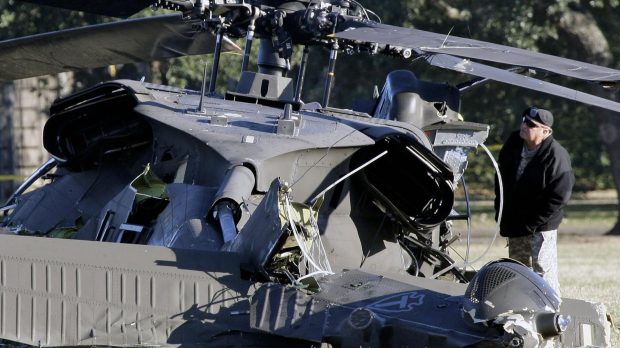
Trend-lines on military aviation accidents are edging upwards to join in the commercial aviation industry in mishaps. Not only is this a barometer for readiness and training but an indicator for the emerging competency crisis plaguing the West. Peacetime military aviation is dangerous.
As of April 9, the Marine Corps sustained a sharp increase in Class A mishaps for the first and second quarters of 2024 with a rate of 4.31 per 100,000 flight hours, compared to a 10-year average of 2.24.
There is a pretty article that gives a fair overview of this brewing crisis here.
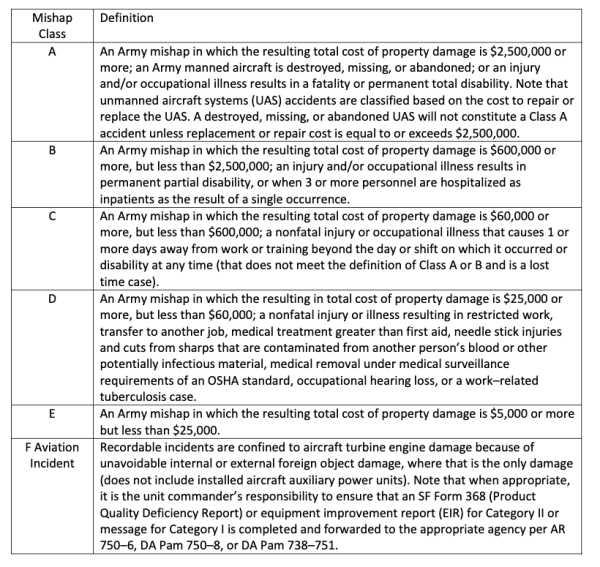
Let’s examine the Army: here’s what is alarming, we are a little over half way in this fiscal year (FY) and the accident rate for FY24 is edging toward three times the previous year and that trend will go up more as the year progresses. Class A involves a fatality and Class B and C includes injury. This is the Army and doesn’t includes troubling upticks in aviation accidents in the other services.
Flightfax, the online newsletter of the Army Aviation Accident Prevention program, covers the ongoing accidents and mishaps of Army rotary wing aircraft (rare instances of fixed wing but the majority of Army aviation is rotary wing thanks to the Key West Agreement in 1948.
It appears this crisis will simply deepen.
Classification of mishaps:
Here’s a snapshot of of comparisons between 2023 and 2024 for incidents per 100k flight hours:

Here’s a snapshot of one month from the April 2024 edition:

How Biden Showed the World the US & NATO Are Paper Tigers
By Ian DeMartino – Sputnik – 30.04.2024
On April 13, Iran responded to an Israeli attack on its embassy in Syria by striking Israel with more than 300 drones and missiles. While most were shot down by Israeli and US air defenses, hypersonic missiles fired by Iran hit their targets, showcasing the limits of Western defenses.
US President Joe Biden revealed to the world that the US military is no longer the giant that woke up on December 7, 1941, but a paper tiger unable to exert the power it once held. Both former Chinese leader Mao Zedong and Al-Qaeda leader Osama Bin Laden described the United States in this way. Though it may have taken several decades, they are finally being proven correct.
The United States showed in the 1990s and through the start of this century that it was capable of dominating the battlefield when facing opponents with significantly less sophisticated equipment.
But, as American hegemony has slipped, other countries have caught up and in some aspects surpassed the so-called world’s only remaining superpower.
This is evident in the United States’ inability to halt the Yemen Ansar Allah (Houthi) movement’s blockade against ships traveling to Israeli ports and the United States’ failure to prevent Iran’s attack on Israeli military targets.
With the Houthis, the United States has resorted to attempting to bribe the group into stopping their attacks, a tactic that has failed. But the attack by Iran was worse for the perception of American-dominance, because the failure of its weapons were on full display.
While most if not all of the drones sent by Iran were taken out by a combination of Israeli and US air defense systems, the drones were intended to distract and exhaust the defenses and allow Iran’s hypersonic missiles to hit their targets, which most reports say they did.
The attack from Iran showed the world “that US defense capabilities” are “not there,” retired senior security policy analyst Michael Maloof told Sputnik’s The Critical Hour on Monday.
“The ability to have a strong missile defense is not there, and the Russians [also] have these hypersonic capabilities,” Maloof explained. “[Iran] did hit their targets, and they did it with hypersonics and there was no defense.”
In Ukraine, the situation would be comical were it not so dark. As the Kiev regime hyped what became its failed counteroffensive last year, a succession of NATO equipment was touted as the game changer that would send the Russians into retreat.
First, it was the Bradley Fighting Vehicles, then Leopard tanks, then Challenger tanks, then a growing list of air defense systems and long-range artillery. Russia systematically destroyed them all, proving that NATO weapons are not the pinnacle of modern warfare and in many cases are relics of 20th-century warfare that will act as a gilded millstone around the neck of any army that relies on them in the 21st century.
There was another tank the US provided to Ukraine last summer, but it was not seen on the battlefield until very recently: the Abrams M1 tank. It too was touted as a game changer, but despite Ukraine’s desperate need for armor, they were not used until the battle for Avdeyevka in February of this year.
In September, Sputnik wrote an article highlighting the weaknesses of the Abrams tank, which was responded to by Popular Mechanics. The outlet asserted the Abrams would represent a “huge leap in the capabilities” of Ukrainian armor formations and accused Sputnik of exaggerating “not only the threat to Abrams tanks, but the tank’s vulnerabilities.”
The article concluded that Russian forces “will have to work very hard to kill an Abrams tank.” But when it finally arrived, five tanks were quickly destroyed and at least one tank was captured. Last week, US military officials confirmed to US media that Ukraine had removed the Abrams tanks from the front lines, saying that they are too easily destroyed by Russian drones.
“We saw, as with pretty much every type of tank we’ve seen in this combat that relatively cheap, $500, $1,000 a pop, Kamikaze drones can seriously damage a tank fairly easily,” security and international relations expert Mark Sleboda told Sputnik’s Fault Lines on Monday.
The Abrams tank costs roughly $10 million a piece.
The shattering of NATO’s veneer of invincibility will have geopolitical implications, Maloof argued. “Are we going to … convince the Saudis now that we’re going to defend them, when they saw with their own eyes that whatever layering we performed for the Israelis didn’t work. Are they going to buy into that? No, they’re going to start going their own way, increasingly more so.”
On Tuesday, Iranian Economy Minister Ehsan Khandouzi described his talks with the Minister of Economy and Planning of Saudi Arabia, Faisal F. Alibrahim as “productive.”
“Faisal F. Alibrahim agreed with all [of] Iran’s [economic] proposals,” Khandouzi noted.
“The days of US dominance [are] over, and we’re seeing this now as some 40 countries want to join BRICS and get out from under the dollar,” Maloof explained. “So, all of this is interrelated. It’s all playing [out] in real-time, before our very eyes, and it’s happening very rapidly.”
Opposition parties slam Macron’s idea to boost European defence with French nuclear weapons
By Ahmed Adel | April 30, 2024
Several opposition parties have attacked the proposal by French President Emmanuel Macron to share French nuclear weapons with the European Union. Macron’s controversy follows another recent one in which the erosion of France’s sovereignty and the legacy of Charles de Gaulle were highlighted in the most ironic way.
During a speech on April 28, Macron stated that the EU needs a common defence strategy and that French nuclear weapons could be a key component. According to him, this would provide the security guarantees that Europe expects and would also allow for neighbourly relations with Russia.
Macron stressed that a “credible European defence” needs to go beyond NATO, which “may mean deploying anti-missile shields” that will “block all missiles and deter the use of nuclear weapons.”
The French president said he was open to giving a more “European dimension” to vital interests, even if France’s doctrine has been to only use nuclear weapons when their own vital interests are threatened.
“I’m in favour of opening this debate, which must therefore include missile defence, long-range weapons and nuclear weapons for those who have them or who have American nuclear weapons on their soil,” he said.
However, his statements were criticised by all political parties.
“It is not appropriate for the head of state to say such things. Macron says he wants to start discussions on sharing nuclear weapons with European countries. This is extremely serious because it touches on the issue of French sovereignty,” said François-Xavier Bellamy, leader of the Republican Party list for the European Parliament elections, to the French channel CNews on April 28.
Thierry Mariani, an MEP from Marine Le Pen’s National Rally (Rassemblement National) party, said on April 28 that Macron had become a “threat to the nation.”
“Nuclear weapons will be followed by France’s place as a permanent member of the UN Security Council, which will also be given to the European Union […] Macron is becoming a threat to the nation!” the MEP wrote on X.
Meanwhile, the left-wing La France Insoumise (LFI) party pointed out that “the head of state has dealt another blow to the credibility of French nuclear weapons. He is lumping everything into a single pile. Share nuclear weapons? Lose our sovereignty. This decision does not belong to the president but to the people.”
Mathilde Panot, leader of the LFI faction in the French National Assembly, said on RTL radio that she “does not believe in a common EU nuclear umbrella.”
“We will not resort to the use of nuclear weapons because of another country,” she said, calling Macron’s proposal madness and irresponsibility as it increases the risk of nuclear war in Europe.
LFI MP Bastien Lachaud also noted on X that Macron “wants to abandon the French nuclear deterrence doctrine.”
In turn, Florian Philippot, the head of the Patriots party, accused Macron of being a “traitor” on X, recalling on April 28 the words of General Charles de Gaulle, who argued in 1959: “The defence of France must be French. […] It is essential that the defence is ours, that France defends itself, for itself and in its own way. If it were otherwise, if it were admitted for a long time that the defence of France stopped being part of the national framework and became confused or merged with something else, it would not be possible for us to maintain a State in our country.”
As Philippot points out, Macron is challenging the legacy of one of France’s most respected statesmen, which very well could lead to the French president’s demise considering his people’s fiercely independent spirit, something he has been eroding, especially after Russia launched its special military operation against Ukraine.
In fact, Moscow described the deployment of the French nuclear aircraft carrier, ironically called Charles de Gaulle, to Souda Bay on the Greek island of Crete for the largest NATO naval exercise in recent times as an “erosion of French sovereignty.”
According to Reuters, placing the Charles de Gaulle under the operational control of the Atlantic Alliance is “highly symbolic, not least because the warship is named after the former president who took France out of the alliance’s US-led command structure in 1966.”
Agreeing with Moscow’s position, “the decision to put the nuclear-powered aircraft carrier under NATO command drew criticism from the French far left and far right, who said it represented a loss of sovereign power,” Reuters reported.
Macron has consistently promoted pan-European defence, but the conversation has never reached the point of compromising French sovereignty. It is likely that this proposal will have negative effects on Macron’s popularity as the fiercely sovereign policies and spirit of Charles de Gaulle are being challenged in an unprecedented manner by the French president.
Ahmed Adel is a Cairo-based geopolitics and political economy researcher.
The Interlocking of Strategic Paradigms
By Alastair Crooke | Strategic Culture Foundation | April 29, 2024
Theodore Postol, Professor of Science, Technology and National Security Policy at MIT, has provided a forensic analysis of the videos and evidence emerging from Iran’s 13th April swarm drone and missile ‘demonstation’ attack into Israel: A ‘message’, rather than an ‘assault’.
The leading Israeli daily, Yediot Ahoronot, has estimated the cost of attempting to down this Iranian flotilla at between $2-3 billion dollars. The implications of this single number are substantial.
Professor Postol writes:
“This indicates that the cost of defending against waves of attacks of this type is very likely to be unsustainable against an adequately armed and determined adversary”.
“The videos show an extremely important fact: All of the targets, whether drones or not, are shot down by air-to-air missiles”, [fired from mostly U.S. aircraft. Some 154 aircraft reportedly were aloft at the time] likely firing AIM-9x Sidewinder air to air missiles. The cost of a single Sidewinder air-to-air missile is about $500,000”.
Furthermore:
“The fact that a very large number of unengaged ballistic missiles could be seen glowing as they reenter the atmosphere to lower altitudes [an indication of hyper-speed], indicates that whatever the effects of [Israel’s] David’s Sling and the Arrow missile defenses, they were not especially effective. Thus, the evidence at this point shows that essentially all or most of the arriving long-range ballistic missiles were not intercepted by any of the Israeli air and missile-defense systems”.
Postel adds, “I have analyzed the situation, and have concluded that commercially available optical and computational technology is more than capable of being adapted to a cruise missile guidance system to give it very high precision homing capability … it is my conclusion that the Iranians have already developed precision guided cruise missiles and drones”.
“The implications of this are clear. The cost of shooting down cruise missiles and drones will be very high and might well be unsustainable unless extremely inexpensive and effective anti-air systems can be implemented. At this time, no one has demonstrated a cost-effective defense system that can intercept ballistic missiles with any reliability”.
Just to be clear, Postol is saying that neither the U.S. nor Israel has more than a partial defence to a potential attack of this nature – especially as Iran has dispersed and buried its ballistic missile silos across the entire terrain of Iran under the control of autonomous units which are capable of continuing a war, even were central command and communications to be completely lost.
This amounts to paradigm change – clearly for Israel, for one. The huge physical expenditure on air defence ordinance – 2-3 billion dollars worth – will not be repeated willy-nilly by the U.S. Netanyahu will not easily persuade the U.S. to engage with Israel in any joint venture against Iran, given these unsustainable air-defence costs.
But also, as a second important implication, these Air Defence assets are not just expensive in dollar terms, they simply are not there: i.e. the store cupboard is near empty! And the U.S. lacks the manufacturing capacity to replace these not particularly effective, high cost platforms speedily.
‘Yes, Ukraine’ … the Middle East paradigm interlinks directly with the Ukraine paradigm where Russia has succeeded in destroying so much of the western supplied, air-defence capabilities in Ukraine, giving Russia near complete air dominance over the skies.
Positioning scarce air defence ‘to save Israel’ therefore, exposes Ukraine (and slows the U.S. pivot to China, too). And given the recent passage of the funding Bill for Ukraine in Congress, clearly air defence assets are a priority for sending to Kiev – where the West looks increasingly trapped and rummaging for a way out that does not lead to humiliation.
But before leaving the Middle East paradigm shift, the implications for Netanyahu are already evident: He must therefore focus back to the ‘near enemy’ – the Palestinian sphere or to Lebanon – to provide Israel with the ‘Great Victory’ that his government craves.
In short, the ‘cost’ for Biden of saving Israel from the Iranian flotilla which had been pre-announced by Iran to be demonstrative and not destructive nor lethal is that the White House must put-up with the corollary – an attack on Rafah. But this implies a different form of cost – an electoral erosion through exacerbating domestic tensions arising from the on-going blatant slaughter of Palestinians.
It is not just Israel that bears the weight of the Iranian paradigm shift. Consider the Sunni Arab States that have been working in various forms of collaboration (normalisation) with Israel.
In the event of wider conflict embracing Iran, clearly Israel cannot protect them – as Professor Postol so clearly shows. And can they count on the U.S.? The U.S. faces competing demands for its scarce Air Defences and (for now) Ukraine, and the pivot to China, are higher on the White House priority ladder.
In September 2019, the Saudi Abqaiq oil facility was hit by cruise missiles, which Postol notes, “had an effective accuracy of perhaps a few feet, much more precise than could be achieved with GPS guidance (suggesting an optical and computational guidance system, giving a very precise homing capability)”.
So, after the Iranian active deterrence paradigm shift, and the subsequent Air Defence depletion paradigm shock, the putative coming western paradigm shift (the Third Paradigm) is similarly interlinked with Ukraine.
For the western proxy war with Russia centred on Ukraine has made one thing abundantly clear: this is that the West’s off-shoring of its manufacturing base has left it uncompetitive, both in simple trade terms, and secondly, in limiting western defence manufacturing capacity. It finds (post-13 April) that it does not have the Air Defence assets to go round: ‘saving Israel’; ‘saving Ukraine’ and preparing for war with China.
The western maximalisation of shareholder returns model has not adapted readily to the logistical needs of the present ‘limited’ Ukraine/Russia war, let alone provided positioning for future wars – with Iran and China.
Put plainly, this ‘late stage’ global imperialism has been living a ‘false dawn’: With the economy shifting from manufacturing ‘things’, to the more lucrative sphere of imagining new financial products (such as derivatives) that make a lot of money quickly, but which destabilise society (through increasing disparities of wealth); and which ultimately, de-stabilise the global system itself (as the World Majority states recoil from the loss of sovereignty and autonomy that financialism entails).
More broadly, the global system is close to massive structural change. As the Financial Times warns,
“the U.S. and EU cannot embrace national-security “infant industry” arguments, seize key value chains to narrow inequality, and break the fiscal and monetary ‘rules’, while also using the IMF and World Bank – and the economics profession– to preach free-market best practice to EM ex-China. And China can’t expect others not to copy what it does”. As the FT concludes, “the shift to a new economic paradigm has begun. Where it will end is very much up for grabs.”
‘Up for grabs’: Well, for the FT the answer may be opaque, but for the Global Majority is plain enough – “We’re going back to basics”: A simpler, largely national economy, protected from foreign competition by customs barriers. Call it ‘old- fashioned’ (the concepts have been written about for the last 200 years); yet it is nothing extreme. The notions simply reflect the flip side of the coin to Adam Smith’s doctrines, and that which Friedrich List advanced in his critique of the laissez-faire individualist approach of the Anglo-Americans.
‘European leaders’, however, see the economic paradigm solution differently:
“The ECB’s Panetta gave a speech echoing Mario Draghi’s call for “radical change”: He stated for the EU to thrive it needs a de facto national-security focused POLITICAL economy centered around: reducing dependence on foreign demand; enhancing energy security (green protectionism); advancing production of technology (industrial policy); rethinking participation in global value chains (tariffs/subsidies); governing migration flows (so higher labour costs); enhancing external security (huge funds for defence); and joint investments in European public goods (via Eurobonds … to be bought by ECB QE)”.
The ‘false dawn’ boom in U.S. financial services began as its industrial base was rotting away, and as new wars began to be promoted.
It is easy to see that the U.S. economy now needs structural change. Its real economy has become globally uncompetitive – hence Yellen’s call on China to curb its over-capacity which is hurting western economies.
But is it realistic to think that Europe can manage a relaunch as a ‘defence and national security-led political economy’, as Draghi and Panetta advocate as a continuation of war with Russia? Launched from near ground zero?
Is it realistic to think that the American Security State will allow Europe to do this, having deliberately reduced Europe to economic vassalage through causing it to abandon its prior business model based on cheap energy and selling high-end engineering products to China?
This Draghi-ECB plan represents a huge structural change; one that would take a decade or two to implement and would cost trillions. It would occur too, at a time of inevitable European fiscal austerity. Is there evidence that ordinary Europeans support such radical structural change?
Why then is Europe pursuing a path that embraces huge risks – one that potentially could drag Europe into a whirlpool of tensions ending in war with Russia?
For one main reason: The EU leadership held hubristic ambitions to turn the EU into a ‘geo-political’ empire – a global actor with the heft to join the U.S. at Top Table. To this end, the EU unreservedly offered itself as the auxiliary of the White House Team for their Ukraine project, and acquiesced to the entry price of emptying their armouries and sanctioning the cheap energy on which the economy depended.
It was this decision that has been de-industrialising Europe; that has made what remains of a real economy uncompetitive and triggered the inflation that is undermining living standards. Falling into line with Washington’s failing Ukraine project has released a cascade of disastrous decisions by the EU.
Were this policy line to change, Europe could revert to what it was: a trading association formed of diverse sovereign states. Many Europeans would settle for that: Placing the focus on making Europe competitive again; making Europe a diplomatic actor, rather than as a military actor.
Do Europeans even want to be at the American ‘top table’?
The US and the UK are pushing for total war on all fronts
By Timur Fomenko | RT | April 29, 2024
The events of recent weeks have produced a sudden jolt in Western politics. From a lethargy that was starting to creep into US and western discourse over the Ukraine war, Iran’s attack on Israel suddenly seemed to have had the effect of awakening Ronald Reagan from his grave and leading to a surge of neo-conservativism on steroids, on both sides of the Atlantic.
US House Speaker Mike Johnson did a complete 180-degree U-turn and proclaimed himself a “Reagan Republican” passing a series of aid bills for astronomical overseas spending that he had otherwise blocked for months, as he denounced an “axis of evil.” Along with that, a proposed TikTok ban bill came out of nowhere too and was quickly signed into law.
Then the UK decided to devote its largest ever aid package to Ukraine, with Prime Minister Rishi Sunak warning of an “axis of authoritarian states” and amplifying ideologically combative rhetoric. At the same time, it was then revealed Biden had sent 300km long range ATACMS missiles to Ukraine despite having pledged not to do so for years, fearing escalation. Finally, EU President Ursula von der Leyen has suddenly dramatically increased economic warfare on China, pushing the European Commission to open probes on scores of Chinese exports. Where exactly did all this come from?
It’s almost as if the US and its allies seized upon the tensions between Iran and Israel in order to “whitewash” their slate and double down on a series of objectives they are otherwise losing public support for, including the war in Ukraine, but also Israel’s invasion of Gaza. One has to wonder if the Israeli attack on the Iranian compound in Damascus, which provoked Tehran’s response, was deliberately staged, coordinated and planned for this purpose. It served the mutually convenient goal of letting both Prime Minister Netanyahu and Western governments off the hook for whatever opposition they had otherwise faced.
It should be abundantly clear now that the current powers that be, in London and Washington, have absolutely no intent of letting up on the wars they have provoked, while also pushing for a potential third one with China, and seem indifferent to the consequences, even if for example, the Israel-Gaza war is shattering the West’s claims of moral superiority. In each case, the stakes are very high, Western foreign policy at large has taken on a very zero-sum and ideological character which bemoans the loss of hegemony, and seeks to uphold it at all costs. It is reactionary to the extent it does not have a vision for improving the world, but wants to take back the world to the way it was. It is a sense of entitlement and privilege that wants to suppress an emerging multipolarity.
Because of this, it has become impossible for Western leaders to ever consider the concept of compromise in these respective theaters, and they refuse under any circumstances to make concessions which could be deemed strategic. This has produced a position where the only outcome they are willing to accept in Ukraine is what they deem “the defeat of Putin,” and have been subtly escalating ever since, edging ever closer to the point where a “proxy war” becomes a direct one for all intents and purposes. NATO military advisors are already on the ground, and Ukrainian attacks are being guided by NATO intelligence or even coordinated by British admirals.
The media in the West, especially in Britain (there is more dissent in the US) are effectively in war mode. The BBC amplifies non-stop Ukraine propaganda, pushing any claim that will help Kiev irrespective of its empirical worth or evidence, and all voices of dissent have been shut down. It seems evident that the decision may have been made to risk a full-on war with Russia, rather than to consider any negotiation scenario. Thus, the shockwaves from the Iran-Israel saga have been used to pursue a new and sudden round of escalation on every front, which can have only been bolstered by the prospective elections looming in both the US and UK.
Because of this, it is fair to say that the world faces a more dangerous and uncertain outlook than at any point since the end of World War II. This current crop of Western leaders are not pursuing a more restrained and calculated mindset, as seen for most of the Cold War, but an aggressive and evangelistic one that does not prefer stability but affirms hegemony as an absolute right, thus more resembling a pre-1914 world. Because of this, we should draw the conclusion that Western leaders are not truly seeking to avoid war, but are prepared to embrace it if necessary. The British military establishment and the media have long been making noises about conscription. In the US, if Joe Biden wins re-election, we can assume that he will unapologetically escalate on every single front. World War III is no longer a dramatized specter of farfetched panic, but an actual possibility that should not be ruled out.
Featured Video

Rewriting the risk? Inside the government’s vaccine safety messaging
or go to
Aletho News Archives – Video-Images
Book Review
“Davos Can Really Replace the UN”
Inside the book that maps the architecture behind global governance — from the Epstein files to the Pact for the Future
Lies are Unbekoming | April 1, 2026
On June 13, 2019, the United Nations and the World Economic Forum signed a partnership deal to “accelerate the implementation of the 2030 Agenda for Sustainable Development.” That same evening, WEF president Börge Brende — Norway’s former Foreign Minister — had dinner with Jeffrey Epstein at Epstein’s Manhattan townhouse. The Epstein files, released January 2026, contain an exchange between the two from the previous year. Epstein to Brende: “Davos can really replace the UN. C21, cyber, crypto . genetics… intl coordination.” Brende back to Epstein: “Exactly — we need a new global architecture. World Economic Forum (Davos) is uniquely positioned — public private.”
The next day, the UN General Assembly adopted the framework for restructuring global governance.
That sequence — the partnership signing, the Epstein dinner, the candid admission about replacing the UN with a public-private architecture, and then the formal adoption — opens Jacob Nordangård’s The Digital World Brain. Pages two and three. Footnoted to the UN resolution number, the Epstein files, and the General Assembly record.
I keep coming back to it because it captures what this book does that almost nothing else in the independent research space manages. I’ve followed Jacob’s work for years now and interviewed him about his research. Each book peels back another layer of the same institutional architecture, and each time I think he’s reached the limit of what can be documented, the next one goes further. Nordangård doesn’t speculate. He doesn’t editorialize much. He lays institutional actions next to each other in chronological order and lets the pattern announce itself. … continue
Blog Roll
 Aletho News
- How I fell foul of the BBC thought police
- The End of NATO
- 37 days of war on Iran cost US staggering $42bln, tracker shows
- Baghdad tells Asian refiners, traders to begin loading Iraqi crude amid Iranian exemption
- Under fire, Moscow and Tehran close ranks
- Iran, US receive Pakistan-mediated plan for ceasefire then final deal
- Iran submits demands for end to war as mediators scramble ahead of Trump deadline
- Iran Threatens Retaliatory Strike on Stargate AI Project in UAE
- US sent ‘a lot’ of arms to Iranian protesters – Trump
- Barak Ravid Launders Deception To Allow Trump To Back Off Of His Power Plant Threat – Again
- If Americans Knew
- U.N. experts demand Israel release prominent Gaza doctor after reports of ‘severe torture’
- Israel’s Latest Genocide Is Against the Shias of Lebanon. Why Is the World Silent?
- How Eliot Cohen’s influence over U.S. war-making paved the way for Trump’s war crimes in Iran
- Israelis don’t pay for the weapons we ‘sell’ to them — US taxpayers do
- While Distancing from AIPAC, Most 2028 Democratic Hopefuls Are Still Embracing Israel
- A brief history of the Israeli nuclear program, the open secret at the heart of the Iran war
- Israeli Settlers Killed a Palestinian Farmer on His Own Land, in Front of His Father. Yes, Again
- The US-Israeli War on Science is an Assault on our Future
- 100+ International Law Experts Say US Strikes on Iran Violate UN Charter, Could Be War Crimes
- ‘Vile, Horrifying, Evil’: Trump Threatens to Bomb Nation of 90 Million People ‘Back to the Stone Ages’
- No Tricks Zone
- An Inconvenient Tree: Uncovered In Alps… Europe Much Warmer Than Today 6000 Years Ago
- New Study Reports A 60% Slowdown In Greenland’s Ice Loss Rate In The Last Decade
- Low Intensity Tornado Wrecks Major Solar Farm, Creating A Potential Toxic Dump
- New Study Finds Warming Saves Lives…Cold Temperatures 12 Times More Deadly Than Excess Heat
- German Science Blog Accuses PIK Climate Institute Of Hallucinating Climate Tipping Points
- Devastating Assessment Of Comirnaty Vaccine By Former Senior Pfizer Europe Toxicologist
- New Study: CO2 Is ‘Effectively Negligible’ As An Explanatory Climate Change Factor Since 2000
- Former Pfizer Toxicologist Dr. Helmut Sterz Tells Bundestag Hearing Pfizer Vaccine Should Have Never Been Approved
- Energy Expert: Germany’s Nuclear Phaseout Was A “500 Billion Euro Mistake”
- New Research: South Australia’s Mid-Holocene Sea Surface Temperatures Were 4°C Warmer Than Today
 Aletho News