Joe Biden Acts Like the Defender of Gazans, But He is the Destroyer
By Adam Dick | Peace and Prosperity Blog | February 13, 2024
This week President Joe Biden was again talking about his ideas of how the Israel government should exercise more restraint in its war in Gaza. But, he remains all talk and no action on this count.
It is tedious to repeatedly hear the man who is, in the absence of congressional action to provide special assistance to Israel for its war, unilaterally providing the key aid including weapons and intelligence for prosecuting Israel’s war continue to insist he supports restraint while the Israel government keeps pursuing relentless devastation.
Biden, in a Monday statement he made at the White House after meeting with Jordan King Abdullah, said the following regarding impending Israel military action:
As I said yesterday, our military operation in Rafah — their — the major military operation in Rafah should not proceed without a credible plan — a credible plan for ensuring the safety and support of more than one million people sheltering there. Many people there have been displaced — displaced multiple times, fleeing the violence to the north, and now they’re packed into Rafah — exposed and vulnerable. They need to be protected.
This schtick is way past its expiration date. The Israel war, now in its fifth month, continues to rack up destruction of life, health, and the physical manifestations of civilization in Gaza at an astounding pace, with the brunt of the suffering imposed on civilians. Israel is taking the actions. But, the US is the key accomplice to the atrocities because of the aid it provides.
This is Biden’s war as much as it is Israel’s war.
Biden is notoriously prone to make blunders in his public presentations. The blunder he made in his comment in his Monday White House statement is different than many. Biden quickly corrected his mention of “our military operation in Rafah” to clarify that the military operation is Israel’s. The slipup here was not that Biden had stated something false. Instead, it was that Biden had stated the truth that he and his administration are trying their best to hide.
Does anybody still believe in Ukrainian victory?
By Uriel Araujo | February 12, 2024
While Moscow is making major investments in defense, Ukraine has stalled (in the battlefield) and so is the American aid package, writes Foreign Policy reporter Amy Mackinnon. “Ukraine will lose – on our present trajectory”, says Niall Ferguson, a senior fellow of the Centre for European Studies, Harvard, interviewed by John Anderson, former Deputy Prime Minister of Australia.
According to Ferguson, thus far the US-led West has given Kyiv enough weapons “not to lose, but not enough to win”. In addition, the United States’ “interest” is “clearly waning, particularly “among Republican voters and Republican politicians”, to the point that American aid to the Eastern European country “could be cut off if Donald Trump is reelected president in November 2024”. In this scenario, he says, it is hard to see how Ukraine could possibly win. Furthermore, he claims, the Ukrainians themselves admit that they have achieved a “stalemate” now, and in terms of resources it is “David versus Goliath,” with the latter being, more and more, “the likely favorite.” If Russia is, “to put it very, very modestly”, able to “retain control” of those parts of Ukraine it already does, that will be “the first big defeat of Cold War II, for the West.” Considering all the Western pro-Zelensky propaganda, all the “speeches”, “support” and “pledges” made, if Ukraine “loses”, the West’s credibility will be greatly undermined, Fergunson convincingly reasons.
Meanwhile, should an “all-out multifront assault on Israel” arise, in the Middle East, and the US fails to take meaningful action, then the expert argues, somewhat less convincingly, it would be “surprising” if Xi Jinping “didn’t take the opportunity to add Taiwan to the strategic mix” – and, in the scenario of a Chinese blockade of Taiwan, it would be “rather difficult to send another major naval expedition across the Pacific” because of the risk of US-China “hostilities” in this case, which then would mean a “much larger war than anything we’ve seen so far.” What Ferguson fails to acknowledge is that tensions with Taiwan arose after a series of American provocations, and that the current crisis in the Levant and the Red Sea is largely the result of the Western resolve to keep aiding and funding its Israeli ally even in face of the latter’s disastrous and globally condemned ethnic cleansing campaign in Palestine.
Back to the Ukrainian conflict’s prospects, Mark Episkopos, Eurasia Research Fellow at the Quincy Institute for Responsible Statecraft, writes that, at this point, there is “no magic weapon left”, and that Kyiv’s “backers” (on “both sides of the Atlantic”) have “no realistic theory of victory” accounting for “the dire conditions” faced by Ukraine and thus fail to offer “a sustainable framework for war termination on the best possible terms for Kyiv and the West.” In the same spirit, James Stavridis, former NATO Supreme Allied Commander Europe sees no future for Ukraine other than a land-for-peace deal.
Back to the aforementioned Ferguson’s interview, the Scottish–American historian concludes, from an Anglo-Western perspective, that “this is a very dangerous moment in world history”, and “we’ve stumbled into it, partly by forgetting the lessons of Cold War I”, namely that one must have “credible deterrence.” Such deterrence, he laments, has been lost. As I’ve written, the West has no such deterrence against Iran in the Middle East either.
As is often the case, notwithstanding any criticism one may have of the Russian president and of his choices pertaining to Moscow’s campaign in Ukraine, there is something missing in the conversation about the crisis, namely any mention of the Western role in at least partly bringing it about by NATO expansion or, for that matter, any mention of the Western white-washing and support for far-right paramilitary nationalism in Ukraine – which is often neo-Fascist – since the Maidan Revolution, and the role this factor played in the Donbass war (going on since 2014); not to mention the issue of the civil rights of ethnic Russians, Russian-speaking and pro-Russian people in Ukraine since the aforementioned Maidan.
In any case, it is not just into Eastern Europe that Washington has “stumbled”. It is also “stuck”, as I wrote, in the Middle East, where it acts as an undecided declining superpower, “torn”, as it is, according to a recent The Economist piece, “between leaving and staying and cannot decide what to do with the forces it still has in the region.”
In September last year, Former US Secretary of Defense Robert M. Gates described his country as a “divided” and “dysfunctional superpower”, unable to deter both China and Russia. “Torn”, “stuck”, “divided” – undecidedness could really be a key word with regards to the existential crisis haunting American exceptionalism: Washington seems unable to decide, for example, as Jerry Hendrix (formerly an adviser to Pentagon senior officials) puts it, whether it wishes to maintain its declining naval hegemony, as a sea power, in Mackinder’s terms, or to keep engaging in land wars in Eurasia in its struggle for the “Heartland”. It cannot decide whether to pivot away from the Middle East towards the Indo-Pacific Region (IPR) or to “stay” in the Middle East region. It seems to want it both ways always, as materialized in the different versions of the “dual containment” formula – now applied to both Beijing and Moscow simultaneously.
Thus, going beyond the issue of Ukraine, it is about time to acknowledge that the declining American superpower is currently overburdened and overstretched, in Stephen Wertheim’s words; that its policy of “dual containment” makes the world a far less stable place; and that Washington therefore must exercise restraint.
Uriel Araujo is a researcher with a focus on international and ethnic conflicts.
Prepare for conflict with Russia in five years – German general
RT | February 11, 2024
Germany should beef up its military to prepare for a potential conflict with Russia in five years’ time, Bundeswehr General Carsten Breuer has argued. He called for a “change in mentality” within German society, insisting that the nation needs to build credible deterrence.
In an interview with Welt am Sonntag published on Sunday, Breuer warned that Germany does not have “endless time” to become war-capable, claiming that the potential of a military confrontation with Moscow is at its highest since the end of the Cold War.
“If I follow the analysts and see what military threat potential comes from Russia, then it means five to eight years of preparation time for us,” he predicted.
Breuer, who serves as the Bundeswehr’s inspector general, claimed that “this doesn’t mean that there will be a war then. But it’s possible.”
The general also did not rule out the reintroduction of some form of mandatory military service in Germany. Breuer noted that the issue is still being discussed, but cited the “Swedish model,” which envisages mandatory military training for most citizens, who then become reservists.
Breuer’s comments come after German Defense Minister Boris Pistorius stated in November that the country must become “war-capable.” He insisted again in January that Berlin and the whole of NATO should arm itself more actively to be able to “wage a war that is forced upon us.”
However, the German defense chief noted last month that “at the moment, I don’t see any danger of a Russian attack on NATO territory or on any NATO partner-country.”
Also speaking in January, British Defense Secretary Grant Shapps claimed that “in five years’ time, we could be looking at multiple theaters [of conflict] including Russia, China, Iran, and North Korea.”
Elsewhere, Swedish Foreign Minister Tobias Billstrom stated last month that Stockholm “must be realistic and assume – and be prepared for – a drawn-out confrontation” with Moscow. Defense Minister Pal Jonson echoed that sentiment, saying that “war can also come to us.”
Commenting on claims that Russia might be planning an attack on NATO, Kremlin spokesperson Dmitry Peskov said in January that European officials were “inventing an external enemy” to divert attention from domestic problems.
Speaking at UN headquarters in New York the following day, Russian Foreign Minister Sergey Lavrov stressed that “no one wants a big war,” especially Moscow.
President Vladimir Putin has also repeatedly dismissed such speculation as “complete nonsense,” insisting that Moscow has “no geopolitical, economic… or military interest” in starting a conflict with NATO.
Tucker Carlson Interviews Vladimir Putin – Key Statements
BY JOHN LEAKE | COURAGEOUS DISCOURSE | FEBRUARY 9, 2024
The first thing that jumped out at me as I listened to the Tucker Carlson-Vladimir Putin interview is that Putin is 100 times more intellectually capable than President Joe Biden. No wonder Biden won’t take his call.
It says a lot that the terrible people who run the United States wanted to prevent Carlson from conducting the interview, and then to hinder it from being made available to the American public.
Many, including Carlson himself, expressed frustration that the Russian President began with a history lesson, going back to the founding of the Kievan Rus state in 882. I suspect this was Putin’s sly way of expressing a salient point that has long struck me about we Americans—namely, while our government is ever keen to send weapons and armies all over the world to police mankind, we find it onerous to sit through a 30-minute history lesson about the people and places we wish to control.
Russia is, in Churchill’s formulation, “a riddle, wrapped in a mystery, inside an enigma,” and it has always been governed by an authoritarian state. Nevertheless, with the collapse of the Soviet Union in 1991, there is plenty of evidence that Russia wished to cease living in a state of enmity with the United States.
To me, it seems clear it was the U.S. Military-Industrial Complex, and NOT Russia, that wished to maintain this state of enmity, for without it, there would be little justification for the U.S. government to spend hundreds of billions on weapons goodies such as the Lockheed Martin F-35 Lightning II—a program that started in 1995 and (if DoD accountants are to be believed) has cost U.S. taxpayers about 500 billion.
With Bill Clinton’s NATO expansion in 1997, no less of a Cold War eminence than George Kennan characterized this decision as a Fateful Error that would likely result in precisely the instability and insecurity it was purportedly supposed to prevent.
From the beginning of the Russian crisis that developed in the autumn of 2021—shortly after the Biden Administrations’s chaotic withdrawal from Afghanistan after a 20-year occupation that achieved nothing—I have suspected that administration and the terrible people who advise it did everything in their power to BAIT THE RUSSIAN BEAR into invading Ukraine.
The Administration did NOTHING to defuse the crisis, and it insulted the Russians by sending the imbecilic Kamala Harris to the Munich Security Conference on February 18, 2022. I suspect that an Austrian-style neutrality deal would have prevented the catastrophe that has apparently gotten hundreds of thousands killed. It has also seemed obvious to me that, since 2014, Ukraine has been the CIA’s favorite pet project.
To to this day, not a single person has been able to explain to me why Russia would consider tolerating Ukraine joining NATO. Since President Monroe outlined his foreign policy in 1823, the United States government has increasingly pursued a policy of zero tolerance of any foreign military alliances or installations in the entire Western Hemisphere.
And yet, this same United States government, which has invaded and bombed dozens of countries since 2001, claims it is perfectly reasonable to propose that Ukraine (whose northeastern border lies 370 miles from Moscow) join NATO. The distance from the Mexican border to Dallas is greater.
Key Putin statements in the interview are as follows:
- On the negotiation process and its failure: “[Talks] reached a very high stage of coordination of positions in a complex process, but still they were almost finalized. But after we withdrew our troops from Kiev… the other side threw away all these agreements.”
- On his last conversation with Joe Biden: “I talked to him before the special military operation, of course… I told him I believe that you are making a huge mistake of historic proportions by supporting everything that is happening there, in Ukraine, by pushing Russia away.”
- On the possibility of global conflict: “It goes against common sense to get involved in some kind of a global war and a global war will bring all humanity to the brink of destruction.”
- On Russia’s territorial ambitions: “We simply don’t have any interest [in Poland, Latvia, or anywhere else]. It’s just threat mongering.”
- Commenting on US Senate Majority Leader Chuck Schumer’s remark that the US has to continue to fund Ukraine or US soldier citizens could wind up fighting there, Putin said:
This was a provocation and a cheap provocation. Don’t you have anything better to do? You have issues on the border. Issues with migration, issues with the national debt. More than $33 trillion. Wouldn’t it be better to negotiate with Russia? Make an agreement. Already understanding the situation that is developing today, realizing that Russia will fight for its interests to the end. And realizing this, actually return to common sense, start respecting our country and its interests and look for certain solutions. It seems to me that this is much smarter and more rational. I do not understand why American soldiers should fight in Ukraine. There are mercenaries from the United States. The bigger number of mercenaries comes from Poland, with mercenaries from the United States in second place and mercenaries from Georgia in third place. Well, if somebody has the desire to send regular troops, that would certainly bring humanity to the brink of a very serious global conflict. This is obvious.
See complete interview on Tucker Carlson’s website:
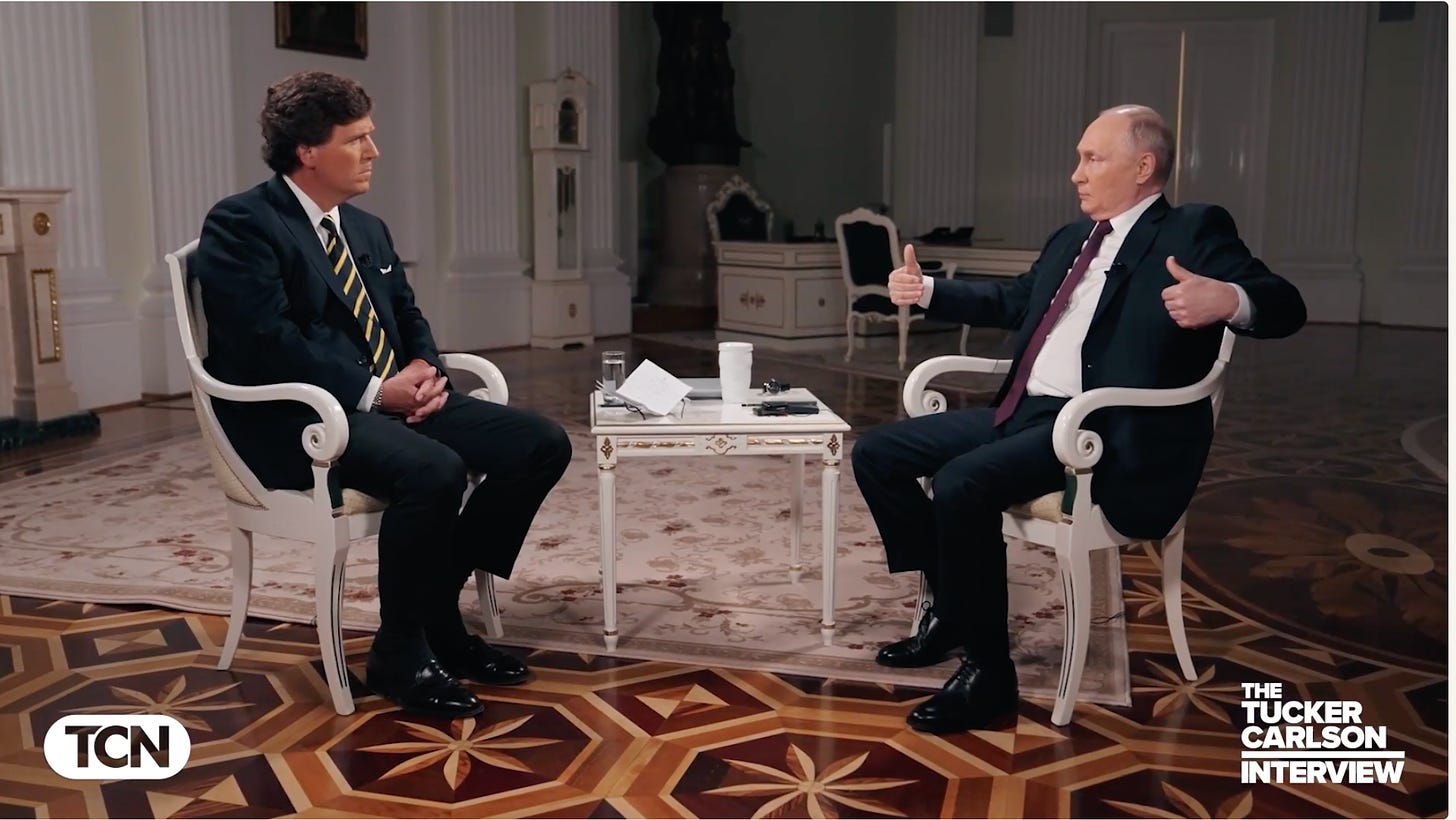
In Carlson Interview, Putin Outlined ‘Concrete Conditions’ for Resolution of Ukrainian Crisis
By Ilya Tsukanov – Sputnik – 09.02.2024
In his two-hour-long interview with Tucker Carlson, the Russian president listed Moscow’s conditions for bringing the two-year-old NATO-Russia proxy war in Ukraine to an end. Now, the ball is in the West’s court, according to Russian international affairs expert Dmitry Suslov.
President Putin has confirmed to Tucker Carlson that Russia favors a “negotiated settlement” to the crisis in Ukraine, saying that it will be up to Kiev and its Western partners whether or not to accept it.
“We prepared a huge document in Istanbul [during peace talks in the spring of 2022, ed.] that was initialed by the head of the Ukrainian delegation. He affixed his signature to some of the provisions, but not all of them. He put his signature and then said himself ‘we were ready to sign it and the war would have been over long ago, eighteen months ago. However, [then-UK] Prime Minister [Boris] Johnson came, talked us out of it and we missed that chance’,” Putin said, referring to Ukrainian top negotiator David Arakhamia’s bombshell comments late last year about London’s role in sabotaging the Russia-Ukraine peace talks.
“Well, you missed it, you made a mistake, let them go back to that, that’s all. Why do we have to bother ourselves and correct somebody else’s mistakes?” Putin added, hinting Moscow’s readiness to return to the Istanbul format, which reportedly included non-bloc status enshrined in Ukraine’s constitution, security guarantees from world powers, restrictions on the size of the Ukrainian military, accepting Crimea and the Donbass’s status as part of Russia, etc.
Asked by Carlson whether Kiev’s NATO sponsors will be willing to accept a Russian victory in Ukraine, Putin said the alliance should “think how to do it with dignity,” noting that “there are options if there is a will.”
Unfortunately, Putin said, “up until now there has been uproar and screaming about ‘inflicting a strategic defeat on Russia’ on the battlefield. Now they are apparently coming to realize that it is difficult to achieve. If possible at all. In my opinion, it is impossible by definition, it is never going to happen.” In event case, Russia remains “ready for this dialogue,” Putin stressed.
“I think the most important message in Putin’s interview is that Russia is ready for for a political or diplomatic solution of the Ukraine conflict,” says Dmitry Suslov, deputy director of the Center for European and International Studies at Russia’s Higher School of Economics. “But it requires a political will from the United States,” the observer told Sputnik.
“Putin identified the concrete conditions on which Russia would be ready to end the conflict through diplomacy. And this is first, the recognition of the current territorial settlement. Putin bluntly said that it’s up for NATO to look for and to find a form which could be, I mean, not humiliating for them, but accepts the current territorial settlement,” the academic noted. “Putin bluntly again identified the Istanbul communique as the basis to which Russia could return. And that from the Russian perspective, the process could be resumed at any moment.”
“Thirdly, he identified in a very detailed way the condition of denazification and explained what it means, and also, mentioned that it was partly included into the Istanbul communique. So, I think that this is a very important message, that if the United States is ready for serious negotiation on the basis of these conditions, Russia would not hesitate to resume and to start those negotiations,” Suslov said.
Unfortunately, the observer noted, Putin has reason to be skeptical about Kiev’s Western sponsors’ sincerity, given the seemingly unchanging imperative of US geopolitical “hostility” against and “arrogance” toward Russia.
“Putin’s pessimism is explained by his personal experience in dealing with the United States, because [he] has been dealing with actually five American presidents since Bill Clinton. And no matter the personal relationships with those presidents, no matter the party orientation of those presidents, the fundamentals of the US foreign policy remained the same. And the reason is that the US foreign policy is run by foreign policy elites, not necessarily by the president himself. And this is likely to remain so,” Suslov said.
Nevertheless, the observer noted that if Donald Trump, who has expressed a desire to end the Ukrainian crisis and normalize relations with Russia, were to return to power and “bring fundamentally new representatives of the US elites to power…that situation could change.”
“But of course, in this interview Vladimir Putin could not say that he’s hopeful of such a scenario because he would have been immediately accused of interference into the US elections and identifying his preferences. And this is not in Russian interests,” Suslov summed up.
Infantry shortage and morale drop harming Ukraine
By Lucas Leiroz | February 9, 2024
The Western media can no longer disguise the critical situation of the Ukrainian troops. In a recent article published by the Washington Post, journalists exposed the lack of personnel in the Ukrainian infantry as well as the serious effects on military morale. The case shows once again how the Ukrainian defeat is an inevitable reality, with all attempts to change the final outcome of the conflict being absolutely futile.
On-the-ground journalists reported to the Washington Post on February 8 that Ukrainian forces are suffering from an “acute shortage” of infantry soldiers on the front lines. In interviews with reporters, Ukrainian military commanders made clear their concerns about the deficiency of troops, as without a sufficient number of fighters it is impossible to conduct operations.
According to Ukrainian military interviewed by the newspaper, the number of casualties has increased in recent times due to intense Russian attacks. With the failure of the Ukrainian counteroffensive, Moscow is said to have taken the “offensive initiative” on the battlefield, leading to high-intensity operations that are annihilating Ukrainian soldiers, inflicting massive casualties on infantry units. The article’s sources say that many of the Ukrainian combat units are working with an extremely reduced number of soldiers. In some battalions, the actual number of troops is less than half of what would be an adequate quantity.
“In interviews across the front line in recent days, nearly a dozen soldiers and commanders told the Washington Post that personnel deficits were their most critical problem now, as Russia has regained the offensive initiative on the battlefield and is stepping up its attacks. One battalion commander in a mechanized brigade fighting in eastern Ukraine said that his unit currently has fewer than 40 infantry troops — the soldiers deployed in front-line trenches who hold off Russian assaults. A fully equipped battalion would have more than 200, the commander said. Another commander in an infantry battalion of a different brigade said his unit is similarly depleted.”, the article reads.
Another worrying side effect of the constant losses is the psychological destabilization of Ukrainians. Unable to escape the conflict or end it once and for all, soldiers on the frontlines end up despairing and having their morale damaged – which obviously has terrible consequences on the battlefield.
“They need to be replaced by someone (…) There is no one to replace them, so they sit there more, their morale drops, they get sick or suffer frostbite. They are running out. There is no one to replace them. The front is cracking. The front is crumbling. Why can’t we replace them? Because we don’t have people; nobody comes to the army. Why doesn’t anyone come to the army? Because the country didn’t tell people that they should go to the army. The state failed to explain to people that they should go to the army. Those who knew that they should go, they have already all run out.”, Aleksandr, a battalion commander, told journalists.
Also, Sergey, a commander fighting in Avdiivka, said: “You can feel it; people are exhausted both morally and physically (…) It’s very hard, the weather conditions, the constant shelling. They have a great impact on the human psyche.”
In fact, the report points out some serious problems in the military situation of Ukraine. The absence of infantrymen is due to the rapid exhaustion of Kiev’s forces. Ukrainian troops have been losing soldiers since the launching of the Russian operation, with the regime imposing forced mobilization measures to try to solve the problem. However, given the prolongation of hostilities, there are fewer and fewer citizens able to be recruited – which explains the minimal number of soldiers on the frontlines.
In the same sense, the psychological effects of this “meat grinder” are many. As a large part of the current Ukrainian army is made up of elderly people and teenagers with no previous military training, conscripts tend to become desperate in the face of war, not knowing how to react and simply losing any will to fight – which leads to surrenders and desertions.
Moral-psychological defeat is a key point in military sciences. The side that manages to impose such a defeat on its enemy gains a huge advantage on the battlefield. Even strong and well-equipped armies become unable to win a battle when they are psychologically affected to the point of losing the will to fight. In the Ukrainian case, it is even more serious, since both the material and psychological situations are terrible, there being no way to escape defeat.
There seems to be a vicious cycle in which the more Kiev spends on war and mobilizes soldiers, the more deaths and psychological defeats it suffers. This impasse makes it clear that, for Kiev, there is no military solution to the war. If the regime really wants peace and the reconstruction of the country, it must surrender and sign a peaceful agreement with Russia – otherwise, the losses will be even greater and, even so, there will be no change in the final result, since Russian victory is inevitable.
Lucas Leiroz, journalist, researcher at the Center for Geostrategic Studies, geopolitical consultant.
You can follow Lucas on X (former Twitter) and Telegram.
German frigate sets sail to join EU mission in support of Israel
The Cradle | February 8, 2024
The German government on 8 February dispatched the frigate Hesse from its North Sea port of Wilhelmshaven to the Red Sea, where it will join an EU naval mission in support of Israeli commercial interests.
“Free sea trade routes are the basis of our industry and of our capability to defend ourselves,” the chief of the German navy, Vice Admiral Jan Christian Kaack, told reporters in Berlin.
The Hesse air defense frigate is equipped with radars that can detect targets at a range of up to 400 km and missiles capable of countering ballistic missiles and drones at a range of more than 160 km.
EU foreign ministers are expected to approve the mission officially, codenamed “Aspides,” in mid-February.
In addition to Germany, France, Italy, and Greece have also expressed interest in joining the planned EU mission. According to the plans established by Brussels, the mission is expected to repel attacks but not attack Yemeni targets on land.
Brussels’ entry into the US-led Operation Prosperity Guardian (OPG) became a significant point of contention among several EU states last year, particularly Spain, which vetoed the participation of EU naval forces in the coalition in December.
The Yemeni armed forces have conducted dozens of attacks on US, UK, and Israeli-linked vessels trying to transit the Bab al-Mandab Strait since mid-November. Sanaa maintains that the operations seek to pressure the west into stopping the Israeli genocide in Gaza, and have repeatedly pledged to stop the attacks once the siege of Gaza is lifted.
The US and the UK have launched over a dozen air raids across Yemen since mid-January in an attempt to deter Sanaa’s pro-Palestine actions. However, Yemeni authorities say they have no intent to scale back the campaign.
On Sunday, Ansarallah spokesman Muhammad Abdul Salam stressed that the western strategy will “not achieve any goal … but rather increase their dilemmas” in the region.
“Yemen’s decision to support Gaza is firm and honorable and will not be affected by any attack. [Our military capabilities] are not easy to destroy and have been rebuilt during years of harsh war,” the official said via social media, adding that Washington and London “should submit to international public opinion, which demands an immediate halt to the Israeli aggression [in Gaza].”
Biden vs Trump has profound implications for the world order
By Glenn Diesen | RT | February 8, 2024
The world is watching the US presidential election closely as it will have significant implications for global governance. President Joe Biden and former leader Donald Trump have very different views on how the world order should be governed and how the US should respond to its relative decline.
Biden wants to restore unipolarity with ideological economic and military blocs, strengthening the loyalty of allies and marginalizing adversaries. Trump has a more pragmatic approach. He believes the alliance system is too costly and limits diplomatic room for maneuver.
Since World War II, the US has enjoyed a privileged position in the key institutions of global governance. The Bretton Woods format and NATO ensured its economic and military dominance within the West. After the collapse of the Soviet Union, the Americans sought to extend their liberal hegemony around the globe.
They developed a security strategy based on global superiority and an expanded NATO. Washington assumed that its dominance would mitigate international anarchy and great power rivalry, and that liberal trade agreements would strengthen the US’ position at the top of global value chains. The replacement of international law with a ‘rules-based international order’ – in effect, sovereign inequality – was supposed to promote American hegemony and enhance the role of liberal democratic values.
However, unipolarity has proven to be a temporary phenomenon because it depends on the absence of rivals and values are devalued as instruments of power politics. The US has predictably exhausted its resources and the legitimacy of its hegemony, and competing powers have collectively counterbalanced Washington’s hegemonic ambitions by diversifying economic relations, staging retaliatory military operations, and developing new regional institutions of global governance.
The Cold War was a unique period in history because the West’s communist adversaries were largely disconnected from international markets, and military confrontation strengthened alliance solidarity to the extent that it mitigated economic rivalry between the capitalist allies. After the Cold War, however, the former communist powers, China and Russia, gained experience in managing economic processes, and submission to the US-led economic path lost its value for them.
The system of alliances has also begun to decline. The US previously was willing to subsidize European security in exchange for political influence. But Washington shifted its strategic focus to Asia, demanding that its European allies show geo-economic loyalty and not develop independent economic relations with rivals China and Russia. Meanwhile, the Europeans sought to use collective bargaining mechanisms through the European Union to establish autonomy and an equal partnership with the United States.
It is now clear that the unipolar moment has come to an end. The US military, exhausted by failed wars against weak opponents, is preparing for a conflict against Russia and China and a regional war in the Middle East.
The ‘rules-based international order’ is openly rejected by other major powers. US economic coercion to prevent the emergence of new centers of power only encourages separation from US technology, industry, transport corridors, banks, payment systems, and the dollar.
The US economy is struggling with unsustainable debt and inflation, while socio-economic decline is fueling political polarization and instability. Against this backdrop, Americans could elect a new president who will seek fresh solutions for global governance.
Biden’s global governance: Ideology and bloc politics
Biden wants to restore US global dominance by reviving the Cold War system of alliances that divided the world into dependent allies and weakened adversaries. It pits Europe against Russia, Arab states against Iran, India against China, and so on. Inclusive international institutions of global governance are being weakened and replaced by confrontational economic and military blocs.
Biden’s bloc politics is legitimized by simplistic heuristics. The complexity of the world is reduced to an ideological struggle between liberal democracies and authoritarian states. Ideological rhetoric means demanding geo-economic loyalty from the ‘free world’ while promoting overly aggressive and undiplomatic language. Thus, Vladimir Putin and Xi Jinping are smeared as ‘dictators’.
Multilateralism is welcome to the extent that it reinforces US leadership. Biden is less hostile to the UN and the EU than his predecessor, and under his administration, the US has rejoined the World Health Organization and the Paris climate agreement. But Biden has not revisited the Iran nuclear deal or reduced economic pressure on China to change its supply chains. The institutions that could constrain the US – the International Criminal Court (ICC) and the International Court of Justice (ICJ) – are not favored by either Biden or Trump.
The deteriorating socio-economic and political situation in the US will also affect Biden’s approach to global governance. Biden will remain reluctant to enter into new ambitious trade agreements as the losers of globalization and neo-liberal economics within the US move into the camp of the populist opposition. Nor will he favor free trade agreements in areas where China has a technological and industrial advantage, and his attempts to cut European states off from Russian energy and Chinese technology will further fragment the world into competing economic blocs.
Western Europe will continue to weaken and become more dependent on the US, to the point where it will have to give up any claim to ‘strategic autonomy’ and ‘European sovereignty’.
Biden has also shown a willingness to disrupt allied country’s industries through initiatives such as the US Inflation Reduction Act.
Trump’s global governance: ‘America First’ and great power pragmatism
Trump seeks to restore American greatness by reducing the costs of alliance systems and hegemony. He sees alliances against strategic rivals as undesirable if they involve a transfer of relative economic power to allies. Trump believes that NATO is an “obsolete” relic of the Cold War because Western Europeans should contribute more to their own security. In his view, the US should perhaps reduce its presence in the Middle East and allies should pay America for their security in some way. Economic agreements such as the North American Free Trade Agreement and the Trans-Pacific Partnership would have promoted US leadership, but under Trump, they have been abandoned because of the transfer of economic benefits to allies. Trump does not reject US imperialism, but wants to make it sustainable by ensuring a higher return on investment.
Less tied to the alliance system and unencumbered by ideological dogma, Trump can take a more pragmatic approach to other great powers. Trump is able to make political deals with adversaries, use friendly and diplomatic language when talking to Putin and Xi, and even perhaps make a diplomatic visit to North Korea. While Biden’s division of the world into liberal democracies and authoritarian states makes Russia an adversary, Trump’s view of the world as nationalists/patriots versus cosmopolitans/globalists makes Russia a potential ally. This ideological view complements the pragmatic consideration of not pushing Russia into the arms of China, the main rival of the US.
Global governance will be utilitarian in this case, and the main goal of the US will be to regain a competitive advantage over China. Trump is fundamentally inclined to blame China excessively for America’s economic problems. Economic pressure on China is intended to restore US technological/industrial dominance and protect domestic jobs. Economic nationalist ideas reflect the ideas of the 19th-century American system, where economic policy is based on fair trade rather than free trade. Trump appears to view the entire post-Cold War security system in Europe as a costly attempt to subsidize Western Europe’s declining importance. These same Europeans have antagonized Russia and pushed it into the arms of China. Trump’s unclear stance on NATO has even prompted Congress to pass a bill prohibiting presidents from unilaterally deciding whether to withdraw the US from NATO.
While Trump is in favor of improving relations with Russia, his presidency would be unlikely to achieve this goal.
The US can be seen as an irrational actor to the extent that it allows domestic political battles to influence its foreign policy. In 2016, Hillary Clinton’s campaign staff fabricated the Steele dossier and Russiagate to portray Trump as a Kremlin agent. In the 2020 election, Biden’s campaign staff attempted to portray the Hunter Biden laptop scandal as a Russian disinformation campaign and accused Russia of paying bribes to kill US troops in Afghanistan. These false accusations were designed to distract the public and make Trump look weak on Russia. All of this ultimately soured relations with Russia and even contributed to the current conflict in Ukraine.
Both Biden and Trump seek to reverse the relative decline of the US in the world, but the difference in their approaches will have a profound impact on global governance. While Biden seeks to restore US greatness through systems of ideological alliances that will fragment global governance into regional blocs, Trump will seek to withdraw from the institutions of global governance because they drain US resources and impede pragmatic policies.
Glenn Diesen is a Professor at the University of South-Eastern Norway and an editor at the Russia in Global Affairs journal.
US hints at sanctions if Hungary doesn’t soon ratify Sweden’s NATO membership
REMIX NEWS | FEBRUARY 8, 2024
NATO Secretary General Jens Stoltenberg told a press conference on Wednesday that he had spoken to Hungarian Prime Minister Viktor Orbán a few days ago, who assured him that the Hungarian Parliament would approve Sweden’s membership shortly after the start of the spring session.
Sweden’s membership of NATO has been in front of the Hungarian parliament for a while now, but no decision has been taken, despite an extraordinary session of parliament on Monday, which the governing party MPs, however, did not attend. This has put Orbán under increasing pressure from international officials.
Stoltenberg held a joint press conference with White House National Security Advisor Jake Sullivan in Brussels on Wednesday — the U.S. advisor arrived in the Belgian capital a day earlier. Among other things, Ukraine was discussed at the briefing, but later, The Washington Post asked him about Sweden’s membership of NATO.
The reporter recalled that the Hungarian government had promised that it would not be the last one to back Sweden’s NATO membership, yet this is the case, and it is still not known when Sweden will be a member of the alliance. He also added that some U.S. lawmakers have already proposed sanctions against Hungary for delaying Swedish membership, and asked the two officials if they still trust Hungary.
In response, Stoltenberg made clear that he believed Sweden could join the alliance soon.
“I spoke with (Prime Minister Orbán) a few days ago, and he made it very clear that he strongly supports Swedish membership of the alliance. It is also clear that the Hungarian parliament is not in session now, but they will reconvene at the end of February, and the message was that soon after that, they will make a decision on ratification of Sweden, so I expect that Sweden will be a full member in the near future,” Stoltenberg said.
Sullivan was more forceful in his response, indicating that the U.S. patience was not unlimited:
“So, I’m not going to stand here today and make particular threats or speculations about steps we would take down the road. But of course, our patience on this can’t be unlimited either. So, we’ll continue to watch it carefully but hope that there is a constructive resolution to this issue in the very near term,” he said.
When You Realize You’ve Been Had
BY JOHN LEAKE | COURAGEOUS DISCOURSE | FEBRUARY 6, 2024
In Dante’s Inferno, the 9th and final circle of hell, “the lowest, blackest, and farthest from heaven,” is reserved those guilty of treachery against those in whom they have cultivated a bond of trust.
I often thought about this in 2013, when I was living in Menlo Park, California and became friends with a man of who was a benefactor of the VA hospitals in Menlo Park and in Palo Alto. He was especially concerned about young soldiers who’d suffered traumatic brain injuries in Afghanistan and Iraq.
On a few occasions we made the rounds and visited patients who’d sustained this kind of injury. The strangest were those who had retained motor skills and seemed to recognize us, but who also seemed completely indifferent to us. Some had suffered from speech impairment and seemed frightened of us. A nurse told me that it was common for this kind of patient to have developed a passionate interest in Facebook and to spend most of his waking hours scrolling through it.
In 2013, it was hard for me to fathom that hundreds of thousands of young men in the United States—many with wives and small children—had sustained Traumatic Brain Injuries. Many could still function in their day to day lives, but suffered irritability, frequent headaches, and a feeling of disconnection from their family and friends. On the extreme end of the scale were the completely disabled, doomed to spend the rest of their lives in VA hospitals.
In 2017, Lindquist, Love, et al. published Traumatic Brain Injury in Iraq and Afghanistan Veterans: New Results from a National Random Sample Study. As the opening of the report states:
Traumatic brain injury (TBI) has been called a “signature injury” of Iraq and Afghanistan Conflicts. The Defense and Veterans Brain Injury Center (DVBIC) reports nearly 350,000 incident diagnoses of TBI in the U.S. military since 2000. Among those deployed, estimated rates of probable TBI range from 11–23%.
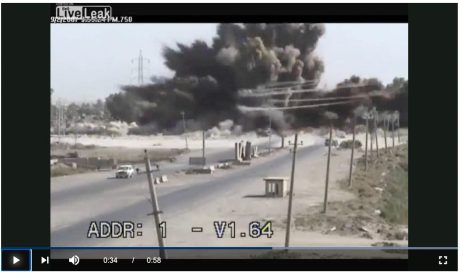
I thought it notable that the U.S. military was, apparently, completely unprepared for roadside bombs constructed to focus the blast on particular sections of road as a convey is passing by. It wasn’t so much shrapnel and other missiles striking the head as the supersonic, explosive shockwave that does the brain damage. Click on the video below to see an example of a large roadside bomb blasting a U.S. convoy.
I got to be pals with a psychiatrist who worked at the VA. In public, around his colleagues, he tried to put on an optimistic face about it. In private, over our occasional dinners, he seemed very despondent that anything could be done for these guys.
“No one really knows what to do about these injuries,” he told me. “A lot of doctors who work at the VA will talk to you about promising new therapies, but most of them are more interested in getting grant money for their pet projects than in doing anything for their patients.”
I wondered how many of these young men ultimately realized that the United States government had lied to them—that their mission in Iraq had never been about protecting the American people from a hostile foreign dictator and his alleged terrorist network—but rather to pursue the mad dreams of insane old men in Washington.
This morning I thought about my VA experiences in a decade ago when I saw that the same cabal of old hawks in Washington are now beating the drums of war against Iran—a nation three times the size and with twice the population of Iraq.
I wonder if Joe Biden or Lindsay Graham or Jake Sullivan are even aware of the 350,000 men who suffered Traumatic Brain Injuries in the course of Washington’s disastrous military adventures in the Middle East twenty years ago. I sort of doubt it.
Understanding that one has been deceived is one of the most painful experiences in life. It begins with an uneasy feeling of cognitive dissonance — a sinking feeling that someone you have trusted has not been honest about an important matter. Later it dawns on you that you’ve been had. It’s a traumatic experience, and the greater the deception, the harder it is to recover from it. At root of the trauma, I suppose, is the feeling that you put your faith, heart and soul into something that wasn’t real.
Because most Americans have been insulated from the disastrous consequences of its government’s Forever War policy, they are apparently slow to recognize that they are constantly being conned by the terrible men and women who run the U.S. government—selfish, ambitious, power-hungry men and women who do not care at all about the citizenry they are supposed to represent and serve.
Who Will Fight These Wars Anyhow?
By Kym Robinson | The Libertarian Institute | February 6, 2024
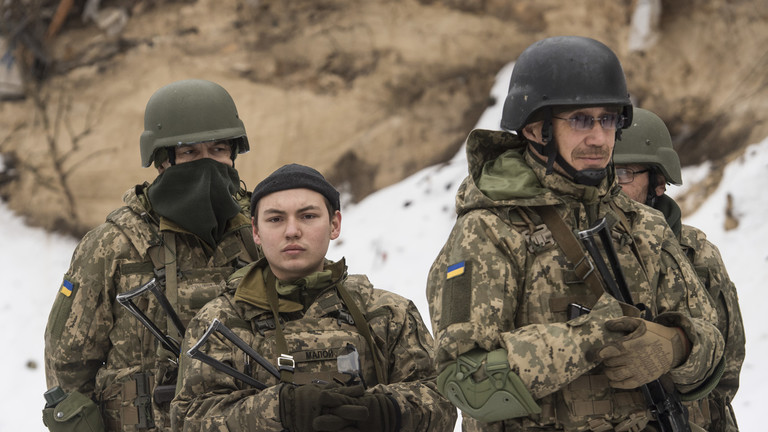
The war drums are beating, and public officials and the media are certain that the enemy must be conquered. The war is over there, away from home, in someone else’s land. The public is conditioned to accept that war is inevitable, that for the liberal democracies of Australia, the United Kingdom, and the United States it is an “obligation.” It seldom matters whether the voting tax base wants war or not. As bombs drop in Yemen, Syria, and Iraq, as Israel destroys Gaza and the Russians fight in Ukraine, Washington and its allies talk about expanding the warfront to include Iran, China, and North Korea. Perpetual war is the health of empire, the glory of the nation, and the profit for a few. But who fights these wars?
Many of the veterans who fought in the Global War on Terror in Iraq and Afghanistan are past their prime, dead, injured, or cynical of the government that exploited them. The recruitment drives, even as the criteria are lowered, are seducing less and less willing bodies to fill the uniforms. The career incentive to join the military is not as appealing when war is a guarantee. Eligible young men are not so naive and removed from the understanding that their mental and physical health may be at risk that they’ll venture into another overseas war. Those who traditionally joined to protect and defend are less inclined to do so given that the mlitary is an offensive instrument of policy, recklessly used without regard for consequence.
In 2024 it’s hard enough for employers to find capable young workers who can handle physical or moderately skilled work, and who will turn up consistently. It’s easier for a lot of people to lean into the welfare state, to seek comfortable, inconsequential jobs or to find careers that don’t involve killing. Physical and mental health is a meandering factor in a culture that swells with obesity and has a populace riddled with depression and anxiety over the mundane. In Australia it is easier and far more profitable for someone to either go on a disability pension (for a litany of real or imagined reasons), or to become a high paid support worker for said pensioners rather than diving into military or even police service.
War is often a voyeur’s experience, where some are cuckolded for the entertainment or cynicism of others. War is the religion of the Anglosphere. Every generation has its war, a foreign land that rolls off the tongue with ease only to return to forgotten obscurity in a generation’s time. Some, however, like Vietnam or Iraq linger permanently. But most are forgotten as war zones and now only exist as destinations for the soldier’s grandchildren to visit, enjoy the food, or marry from, like Korea and Malaysia. The adventurers, true believers, mercenaries, and those with seemingly no other options do still enlist, but there’s less of them.
It’s not just that the military is struggling to get new recruits, but also re-enlistments. The relationship between the military and its members is disfigured as inefficiency and dysfunction become more openly discussed. On social media anti-military voices are competing against their slogans and the empty promises of recruiters in a tug of war between the warfare state and those who are skeptical of its very existence. Social media “influencers” like the Island Boys are paid to push recruitment for the Army alongside the advertising of energy drinks and other affiliate marketing thrown their way—though it is unlikely that they themselves would enlist or be capable of doing so. The children watching are impressionable, all the same.
Woke cultural messaging has also harmed the military, as it has disenfranchised its traditional base while attempting to appeal to those who have no stomach for training, let alone warfare. The wars themselves, along with the government’s own woke cultural shift and attempts at inclusion, have deranged the recruiters task of satisfying numbers and valuable candidates for the services. Confused advertising and a disdain for the people who usually fill the uniforms in warfare has hamstrung the military when it needs bodies to kill and die for it. A woke window dressing to satisfy the academic and corporate zeitgeist may seem empowering, but in reality is another form of mandated delusion.
The government’s will for war exceeds its population’s capacity to wage it. Conscription tends to not be a viable solution. Ukraine and Russia have embraced such traditions of martial slavery and it has unveiled a force of fodder to be killed. Another generation of “McNamara’s Morons” is an unsatisfactory solution which may lead to liability for both commanders and what few skilled and motivated professionals remain in the military.
Regardless of the human attrition and how thinly spread the capable and willing may become in such a war, the high maintenance of modern weapon systems will erode their capabilities over time. Skilled crews and technicians will be required to work almost non-stop, not to mention the manufacture and logistics required to feed such machines for prolonged operations, especially in combat against an enemy who is near peer or in some theaters a peer level threat. It is one thing to attack Houthis in Yemen who are recovering from years of war against the Saudi coalition but it is another to wage war against Iran or China on their home turf, a war they have been preparing for. Let’s not forget, neither of them have ambitions to invade Australia, the United States or United Kingdom. But the reverse is a constant.
Images of drones chasing Russian or Ukraine soldiers around their AFVs, only to detonate once in proximity, exposes us to the modern realities of war. The distance between the killer and the killed is not a new thing. The drone and remote weapon system is becoming smaller, with a greater range and versatility that may have people logging on for a few hours a day from home to assassinate strangers thousands of miles away with as much regard as though they are killing NPCs in a computer game. That in itself is not how wars are to be won. That same technology and efficiency of distance will be used against the invader as well. The likeliness of sympathetic outsiders “logging on” to join the fight is a reality that may also occur. Those who will fight for either side given any incentive is also a reality, so long as they have a device that allows them to connect to the remote killing machines. The future remains.
Contractors are becoming more common, professionals who are not constrained by government religion when it comes to how a military must serve and act in matters of formal tradition and legal status. They’re killers and operators who serve the government, work alongside the military, and should they die will not become a statistic that influences politics at home. Many are ex-servicemen of the government that they now are hired by, trained and motivated elements that perform tasks as a service to their singular customer. The Russians on the other hand have a more varied mercenary custom, one that is made up of contractors while also using prisoner units, inspired by the promise of pay and freedom. Both ancient aspects of war are to be dug up in a modern context.
Mercenaries and even drone operators are still only a finite resource, and automated systems are a little ways off. Wars of such a grand scale on so many fronts will still require boots on the ground. The imaginations of the stoic German soldier manning the Atlantic wall in the weeks before D-Day betray the reality that many of the defending Wehrmacht were former Soviet soldiers and a rag tag of convalescing others. Horse-drawn weapons from those captured to mutations of expedience with men in ill fitting uniforms crisscrossing a frontier that consumed men and material was the other reality far in the East. Contrary to the mechanized depictions of a technologically superior, super race of warriors, the reality, then as it is now, is that logistics, man power, and attrition are immutable factors in war.
Waging numerous small wars on a limited scale or even as an occupying force in an attempt to “civilize” a wilderness will always consume. They can become black holes that suck the life, money, and material out of an invader. Yet, still mostly men will be required for these prolonged operations and the well for such men is running dry. The post-9/11 era provided many eager bodies who felt the euphoria for vengeance against enemies. The terrorists and their “alien religion” was an easy to hate specter as the twin towers smouldered into smoke and ash. Over two decades later and the reality of such wars is more apparent to the wider public, while those willing men are now dead, injured, or robbed of their youth. The next generation does not have the eagerness for war, and the crusader’s zeal is not so widely felt.
So, as the drums of war beat and the call to arms is made by those who will never fight it, the question remains: who will? No matter what the claimed reasons for war is—spreading democracy, human rights, humanitarianism, security, or hegemonic expedience for many at home—many may very well. But agree enough to enlist? Unlikely. Many who do believe in the need for war are the creatures of Facebook or social media bobble heads, spectators and opinion spewers alike. They are most welcome to form their own battalions to fight for their cause. They won’t, but rather instead they will merely support the government in its ambition to send mostly men to die and kill. Those killers, however, are becoming fewer. Improving technology so that the human element for war is less important and finding incentives to pay, reward, and motivate human beings so that they will kill strangers with little regard are weak solutions.
The one constant, regardless of the means and methods, is that war will always hurt the innocent. Perhaps in time, as the liberal democracies depress into ill health and rely on automated machines to do the killing, it will be from the minds of the weapons who grow the morality to say, “No more.” For now, while some minds in government seek more war, the public’s flesh is less willing or too flabby to make it so.
Is a New Korean War in the Offing?
BY GREGORY ELICH | COUNTERPUNCH | FEBRUARY 5, 2024
In recent days, U.S. media have been proclaiming that North Korea plans to initiate military action against its neighbor to the south. An article by Robert L. Carlin and Siegfried S. Hecker, neither previously prone to making wild assertions, created quite a splash and set off a chain reaction of media fear-mongering. In Carlin’s and Hecker’s assessment, “[W]e believe that, like his grandfather in 1950, Kim Jong Un has made a strategic decision to go to war.” They add that if North Korean leader Kim Jong Un is convinced that engagement with the United States is not possible, then “his recent words and actions point toward the prospects of a military solution using [his nuclear] arsenal.” [1]
U.S. officials have stated that while they do not see “an imminent risk of a full-scale war on the Korean Peninsula,” Kim Jong Un “could take some form of lethal military action against South Korea in the coming months after having shifted to a policy of open hostility.” [2] How do these sensationalist claims stack up against the evidence?
It is no secret that lately, the stance of the United States and South Korea has hardened against the Democratic People’s Republic of Korea (DPRK – the formal name for North Korea). Since the centerpiece for suggesting that war may be on the horizon is Kim’s speech at the 14th Supreme People’s Assembly, its content is worth examining in some detail. [3] What strikes one when reading the text is that mainstream media have taken quotes out of context and ignored much of the content of Kim’s speech, creating an impression of unprovoked belligerence.
Also generally absent from media reporting is the speech’s relationship to the backdrop of events since the far-right Yoon Suk Yeol became president of South Korea in May 2022. Yoon came into office determined to smash every vestige of the improved inter-Korean environment established during his predecessor’s term. Instead, Yoon prioritized making South Korea a subordinate partner in the Biden administration’s hyper-militarized Indo-Pacific Strategy.
To fully understand Kim Jong Un’s speech, one must also consider the nature of the Biden administration’s rapid military escalation in the Asia-Pacific. The United States conducts a virtually nonstop series of military exercises at North Korea’s doorstep, practicing the bombing and invasion of that nation. One South Korean analyst has counted 42 joint U.S.-South Korean military exercises conducted in 2023 alone, along with ten more involving Japan. [4] Those totals do not include exercises that the U.S. and South Korea engaged in outside of Northeast Asia, such as Exercise Talisman Sabre in Australia and Exercise Cobra Gold in Thailand. Moreover, U.S. actions on the Korean Peninsula must also be situated within the broader geopolitical framework of its hostility towards China.
Last year, in an act of overt intimidation, the United States conducted seven exercises with nuclear-capable bombers over the Korean Peninsula. [5] Additional flights involved the B-1 bomber, which the U.S. Air Force says “can rapidly deliver massive quantities of precision and non-precision weapons.” [6] Through its actions, the United States sends far more provocative messages than anything that could be honestly construed in Kim’s speech. But then, we are led to see nothing amiss in such aggressive behavior from the United States. Nevertheless, the threat is real and unmistakable from the targeted nation’s perspective.
It also has not gone unnoticed in Pyongyang that U.S. and South Korean military forces regularly conduct training exercises to practice assassinating Kim Jong Un and other North Korean officials. [7] Just this month, U.S. Green Berets and soldiers from South Korea’s Special Warfare Command completed training focused on the targeted killing of North Korean individuals. [8] The Biden administration avers that it harbors no hostile intent toward the DPRK, but its actions say otherwise, loud and clear.
North Korea, with a GDP that the United Nations ranks just behind that of Congo and Laos, is considered such a danger that the U.S. must confront it with substantial military might. An inconvenient question that is never asked is why the DPRK is singled out for punishment and threats when the other nuclear non-members of the Non-Proliferation Treaty – each armed with ballistic missiles — are not. What distinguishes North Korea from India, Pakistan, and Israel? How is it that North Korea is regarded as a threat to peace but not Israel, notwithstanding mounting evidence to the contrary? The essential distinction is that North Korea is the only one of the four that is not a U.S. ally; moreover, one which the U.S. wishes to retain the ability to bomb, whether or not it ever exercises the option to do so.
It is a tribute to the persuasiveness of propaganda that the United States, with its record of multiple wars, bombings, and drone assassinations in recent decades, can convince so many that the DPRK, which has done none of these things during the same period, is a danger to international peace and stability. Yet, such towering hypocrisy goes largely unnoticed. It would appear that there is no principle involved in targeting only North Korea and not the other nuclear-armed non-members of the NPT — unless outrage over a small nation following an independent path being able to defend itself can be regarded as a principle.
Predictably, Washington think tank analysts and media commentators are throwing more heat than light on the subject of Kim’s pronouncements, and they are always ready with a cliché at hand. Some, like Bruce W. Bennett of RAND Corporation, let their imagination run wild, conjuring bizarre absurdities. Bennett suggests that armed with more nuclear weapons in the years ahead, North Korea “could threaten one or more U.S. cities with nuclear attack if the United States does not repeal its sanctions against North Korea.” Or perhaps, he suggests, the DPRK could threaten the U.S. with a limited nuclear attack “unless it abandons its alliance with [South Korea]” or “disengage from Ukraine.” As for South Korea, Bennett warns that Kim might insist that it “pay him $100 billion per year and permanently discontinue producing K-pop…” [9] This is what passes as expert analysis in Washington.
The military section of Kim’s speech was at root defensive, pointing out that North Korea’s “security environment has been steadily deteriorated” and that if it wants to take “the road of independent development,” it must be fully prepared to defend itself. Kim quotes specific threats made by U.S. and South Korean leaders to emphasize his awareness that his nation is in the crosshairs.
At one point in his speech, Kim suggested that the constitution could specify “the issue of completely occupying, subjugating and reclaiming the ROK [Republic of Korea, the formal name for South Korea] and annex it…in case war breaks out…” He added, “There is no reason to opt for war, and therefore, there is no intention of unilaterally going to war, but once a war becomes a reality facing us, we will never try to avoid it.” Such a war, he warned, “will terribly destroy the entity called the Republic of Korea and put an end to its existence” and “inflict an unimaginably crushing calamity and defeat upon the U.S.” Kim continues, “If the enemies ignite a war, our Republic will resolutely punish the enemies by mobilizing all its military forces including nuclear weapons.” Harsh language, indeed, intended to remind the war hawks in Washington and Seoul not to imagine that their nations are invulnerable if they attack the DPRK. Note also the conditional phrasing, which tends to get downplayed in Western media.
Even less attention is paid to more direct clarifying language, such as Kim’s statement that the DPRK’s military is for “legitimate self-defense” and “not a means of preemptive attack for realizing unilateral reunification by force of arms.” And: “Explicitly speaking, we will never unilaterally unleash a war if the enemies do not provoke us.”
It was entirely predictable that Western media would put the worst spin on Kim’s blunt language that mirrored earlier South Korean pronouncements. The month before Kim’s speech, South Korean Defense Minister Shin Won-sik warned, “North Korea has only two choices – peace or destruction. If North Korea makes reckless actions that harm peace, only a hell of destruction awaits them.” [10] A few days later, Yoon ordered his military to launch an “immediate and overwhelming response” to any provocation by the DPRK. [11] Yoon and South Korean military officials use the term ‘provocation’ so loosely as to encompass almost any action the DPRK takes that they do not like, including what is normal behavior for other nations – or for South Korea itself, for that matter. South Korean and North Korean rhetoric identifying each other as enemies and destruction in the event of war differ in that the former preceded the latter. By ignoring the fact that North Korea is reacting to prior South Korean statements, mainstream media can portray Kim’s language as unprovoked.
Last December, Yoon heightened the risk of conflict when he visited an infantry division near the border and gave them an order: “In case of provocations, I ask you to immediately retaliate in response and report it later.” [12] Vague in defining neither “provocation” nor the appropriate response level and delegating to lower-level commanders to decide those questions, this formula potentially can transform a minor clash of arms into a conflict of wider impact.
Kim’s statements are presented in Western media as tantamount to a plan to start a war. Earlier statements of a similar nature by the Yoon administration that created an acrimonious atmosphere are rendered invisible or uncontroversial. It is fair to say that given North Korea’s longstanding practice of responding in kind, Kim may have adopted more restrained phrasing without South Korean officials setting the tone.
Western media have raised concerns over Kim’s labeling of South Korea as a “principal enemy.” We are not reminded that nearly one year before, South Korea had re-designated the DPRK as “our enemy” in its Defense White Paper. [13] Under Yoon’s predecessor, Moon Jae-in, the defense paper dropped the reference to North Korea as an enemy. [14] The general pattern has been for liberal presidents to shun that tag in the interests of inter-Korean relations and for conservative presidents to embrace it as one element in their project to undo progress. Yoon himself frequently refers to North Korea as the enemy, and his administration’s National Security Strategy document describes the Kill Chain system, which is designed to launch preemptive strikes on North Korea. [15] In omitting such details, cause and effect are inverted, reinforcing the media-constructed Orientalist image of an irrational leader at the helm of the DPRK, prone to unpredictable statements and rash acts.
Patience has run thin in Pyongyang, as Biden’s trilateral alliance with South Korea and Japan, “buoyed with war fever,” as Kim put it, sharply escalates military tensions in the region. In a sharp reversal, North Korea has abandoned its longstanding policy of seeking improved inter-Korean relations and working toward peaceful reunification. Any headway achieved in the past has quickly been undone in South Korea whenever the conservative party came to power. Still, Yoon has taken matters further than the norm, not only willfully dynamiting inter-Korean relations but also deliberately raising the risk of military conflict. Inter-Korean relations have reached such a nadir under Yoon that the DPRK sees no hope of progress in the current circumstances. The North Koreans are not wrong in that perception.
Sadly, in a clear signal of its exasperation with Yoon, North Korea demolished the Arch of Reunification in Pyongyang, and all governmental bodies responsible for reunification planning and projects were shut down. The latter steps are not inherently irreversible, however. But as long as Yoon remains in power, there is no conceivable possibility of progress on reunification. Yoon has slammed the door shut on inter-Korean relations.
One would never know it from Western reports, but more than two-thirds of Kim’s speech focused on economic development. “The supreme task,” Kim announced, “is to stabilize and improve the people’s living as early as possible.” Peace is an essential prerequisite for the realization of that goal. North Koreans are well aware of American and South Korean military capabilities, and a war would not only wipe out new economic projects but most of the existing infrastructure as well.
Immense damage has been done to the DPRK’s economy by sanctions designed to target the entire population and inflict as much suffering as possible. [16] The period when North Korea closed its border with China in response to the COVID-19 pandemic added to economic challenges. Reversing direction is imperative. In his speech, Kim called for “a radical turn in the economic construction and improvement of the people’s living standard” and said that progress is being made “despite unprecedented trials.” Kim enumerated industrial, power, housing, and other ongoing projects.
Kim admitted there have been internal challenges in economic development. “It is a reality that the Party and the government yet fail to meet even the simple demand of the people in life…” In particular, regional and urban-rural economic imbalances have plagued the North Korean economy for decades. “At present,” Kim continued, “there is a great disparity of living standards between the capital city and provinces and between towns and the countryside.” Kim acknowledged that these issues have not been adequately addressed in the past, but it “is an immediate task” to do so now.
Kim took the occasion to officially unveil the launch of the Regional Development 20×10 Policy. This ambitious plan calls for substantially raising material and cultural standards in twenty counties over the next ten years, including constructing regional industrial factories and establishing advanced educational institutions. In particular, emphasis is to be given to scientific and technological development. The aim is to even out regional imbalances and to accelerate overall development.
None of this can be achieved if the U.S. and South Korea are showering the DPRK with high explosives, and the Regional 20×10 Policy makes nonsense of Western scaremongering that Kim has decided to go to war. As usual, though, when it comes to reporting on North Korea, assertion substitutes for evidence, and we can expect Washington think tanks, U.S. media, military contractors, and the Biden administration to capitalize on the manufactured image of a war-mad Kim Jong Un to accelerate the military buildup in the Asia-Pacific, aimed against the DPRK and the People’s Republic of China. For his part, Yoon can be expected to amplify military tensions on the Korean Peninsula and sharpen his war on South Korean progressives. What is not in the cards is militarism abating in the foreseeable future.
Notes.
[1] Robert L. Carlin and Siegfried S. Hecker, “Is Kim Jong Un Preparing for War,” 38 North, January 11, 2024.
[2] Edward Wong and Julian E. Barnes, “U.S. is Watching North Korea for Signs of Lethal Military Action,” New York Times, January 25, 2024.
[3] “Respected Comrade Kim Jong Un Makes Policy Speech at 10th Session of the 14th SPA,” KCNA, January 16, 2024.
[4] http://www.minplusnews.com/news/articleView.html?idxno=14494
[5] Chae Yun-hwan, “S. Korea, U.S. Stage Joint Air Drills with B-52H Bombers Over the Yellow Sea,” Yonhap, November 15, 2023.
[6] https://www.af.mil/About-Us/Fact-Sheets/Display/Article/104500/b-1b-lancer/
[7] Jeongmin Kim, “Drills on Assassinating Kim Jong Un Remain an ‘Option,’ ROK Defense Chief Says,” NK News, December 19, 2023.
[8] Lee Yu-jung and Esther Chung, “Kim Jong-un Instructs North Korea’s Navy to Prepare for War,” JoongAng Ilbo, February 2, 2024.
https://www.youtube.com/watch?v=lQJF7tbzwfY
Donald Kirk, “U.S. to Enrage Kim Jong Un with Assassination Dry Run,” Daily Beast, August 19, 2022.
[9] Bruce W. Bennett, “Is North Korea Really Getting Ready for a War Against America?” The National Interest, January 17, 2024.
[10] Chae Yun-hwan, “Defense Chief Warns N. Korea of ‘Hell of Destruction’ in Event of Reckless Acts,” Yonhap, December 13, 2023.
[11] “Yoon Orders Swift, Overwhelming Response to N. Korean Provocation,” KBS World, December 18, 2023.
[12] Kim Han-joo, “Yoon Orders Military to Retaliate First, Report Later in Case of Enemy Attacks,” Yonhap, December 28, 2023.
[13] Kwon Hyuk-chul, “S. Korea’s First Defense White Paper Under Yoon Defines N. Korea as ‘Enemy’”, Hankyoreh, February 17, 2023.
[14] Yosuke Onchi, “South Korea No Longer Calls Pyongyang ‘Enemy’ in Defense Paper,” Nikkei Asia, January 16, 2019.
Josh Smith, “South Korea Doubles Down on Risky ‘Kill Chain’ Plans to Counter North Korea Nuclear Threat,” Reuters, July 25, 2022.
[16] https://www.counterpunch.org/2017/09/19/trumps-war-on-the-north-korean-people/
Featured Video

Chinese jet fuel and the myth of energy independence
or go to
Aletho News Archives – Video-Images
Book Review
Former Insiders Criticize Iran Policy as U.S. Hegemony
By GARETH PORTER | CounterPunch | February 27, 2013
“Going to Tehran” arguably represents the most important work on the subject of U.S.-Iran relations to be published thus far.
Flynt Leverett and Hillary Mann Leverett tackle not only U.S. policy toward Iran but the broader context of Middle East policy with a systematic analytical perspective informed by personal experience, as well as very extensive documentation.
More importantly, however, their exposé required a degree of courage that may be unparalleled in the writing of former U.S. national security officials about issues on which they worked. They have chosen not just to criticise U.S. policy toward Iran but to analyse that policy as a problem of U.S. hegemony. … continue
Blog Roll
 Aletho News
- What is fueling unrest across the EU?
- Why no power can undermine Iran’s eternal dominance over the Strait of Hormuz
- Is The War Against Iran Over?
- Iran war will leave long-term ‘scar’ on Wall Street, investors warn
- How Iran decimated US power projection in West Asia: Military lessons of 40-day war
- Iran’s report details US-Israeli war crimes in targeting schools, hospitals, livelihoods
- NATO’s Slow Fracture: How Trump’s Iran War Exposed the Instrument of Hegemony
- Chinese jet fuel and the myth of energy independence
- Ukraine Sea Drone Fired From Libya Hit Russian Tanker in Mediterranean
- IRGC: Iranian forces launched no attacks during ceasefire hours
- If Americans Knew
- DNC Shoots Down Resolutions Calling Out AIPAC and Limiting Arms to Israel
- TCN: Is Israel Blackmailing President Trump?
- Israel killed at least 303 Lebanese yesterday – who were they? Daily Update
- Amnesty: Urgent – Protect Lebanese civilians from brutal escalation in Israeli attacks
- Is The War Against Iran Over?
- Inside the Israeli army’s propaganda wing
- Hundreds of Gaza Amputees Stranded in Legal Limbo
- The gallows law: Israel moves toward executing Palestinian children
- Tucker Carlson: The Path to Peace requires ending ‘special alliance’ with Israel
- This is ceasefire? Israel’s biggest massacre yet in Lebanon, another journalist killed in Gaza – Daily Update
- No Tricks Zone
- An Inconvenient Tree: Uncovered In Alps… Europe Much Warmer Than Today 6000 Years Ago
- New Study Reports A 60% Slowdown In Greenland’s Ice Loss Rate In The Last Decade
- Low Intensity Tornado Wrecks Major Solar Farm, Creating A Potential Toxic Dump
- New Study Finds Warming Saves Lives…Cold Temperatures 12 Times More Deadly Than Excess Heat
- German Science Blog Accuses PIK Climate Institute Of Hallucinating Climate Tipping Points
- Devastating Assessment Of Comirnaty Vaccine By Former Senior Pfizer Europe Toxicologist
- New Study: CO2 Is ‘Effectively Negligible’ As An Explanatory Climate Change Factor Since 2000
- Former Pfizer Toxicologist Dr. Helmut Sterz Tells Bundestag Hearing Pfizer Vaccine Should Have Never Been Approved
- Energy Expert: Germany’s Nuclear Phaseout Was A “500 Billion Euro Mistake”
- New Research: South Australia’s Mid-Holocene Sea Surface Temperatures Were 4°C Warmer Than Today
 Aletho News