US, Israel to open second front in Lebanon
BY M. K. BHADRAKUMAR | INDIAN PUNCHLINE | NOVEMBER 6, 2023
The announcement late Sunday night by the US Central Command [CENTCOM] headquartered in Doha about the arrival of an Ohio-class American nuclear submarine in its “area of responsibility” presages a significant escalation of the situation around the Palestine-Israel conflict.
It is very rare that the use of these submarines is publicised. CENTCOM provided no additional details but it posted an image that showed an Ohio-class submarine in Egypt’s Suez Canal. Interestingly, CENTCOM also separately shared an image of a nuclear-capable B-1 bomber operating in the Middle East.
Taken together, these US deployments, coming on top of the formidable presence of two aircraft carriers and warships hundreds of advanced jet fighters, are with an eye on “the other side of the equation,” as Secretary of State Antony Blinken quaintly described Hamas, Hezbullah, and Iran during his latest visit to Tel Aviv on Friday.
In a related development, perhaps, the CIA director, William Burns arrived in Israel on Sunday for urgent consultations. The New York Times reported that the US is “looking to expand its intelligence sharing with Israel.”
Arguably, the most charitable explanation for the deployment of a US nuclear submarine, which form part of the Pentagon’s “nuclear triad”, near the war zone is that the Biden Administration is preparing for an Israeli escalation into Lebanon to draw out Hezbollah, which may in turn trigger an Iranian reaction.
In his speech on Friday, Hezbollah chief Hassan Nasrullah seemed to anticipate precisely such a turn of events when he warned the US explicitly of consequences that couldn’t be any different from the catastrophic American involvement in Lebanon’s civil war in the early 1980s. Ironically, this is also the 40th anniversary year of the suicide bombing of the barracks housing US forces in Beirut International Airport in October 1983 in which 220 Marines, 18 sailors and three soldiers were killed forcing a US withdrawal from Lebanon.
Clearly, the locus of the US strategy in the present Middle situation may be shifting from diplomacy, which has lost traction. Blinken’s desperate attempts to address the mounting international criticism of Israel’s horrific war crimes by diverting attention to a “humanitarian pause” in the fighting has been unceremoniously shot down by Netanyahu.
The point is, after bombarding Gaza and its people with artillery and bombs, the Israeli army moved in on Friday. So far, it has reportedly advanced to the outskirts of Gaza City but not entered the Hamas stronghold. Fierce urban fighting is expected when it does.
Equally, the Biden administration’s clumsy attempt to promote a vague outline for a post-war Gaza that might include a combination of a revitalised Palestinian Authority, a peacekeeping force, etc. has been met with a distinct lack of enthusiasm at Blinken’s meeting in the weekend in Amman with the Arab foreign ministers – from Jordan, Egypt, Saudi Arabia, Qatar, and the United Arab Emirates – who instead demanded an immediate ceasefire, while Blinken said the US would not push for one.
Blinken travelled to Ramallah from Amman where the head of the Palestine Authority Mahmoud Abbas apparently gave him short shrift saying that the PA would only be ready to shoulder full responsibility for the Gaza Strip in the framework of a “comprehensive political solution” that would include the West Bank, East Jerusalem and Gaza — and, furthermore, that security and peace can only be achieved by ending the occupation of the territories of the “State of Palestine,” and by recognising East Jerusalem as its capital. The meeting lasted for less than an hour and ended without public statements.
Meanwhile, China and the UAE (by the way, Israel’s Abraham Accords partner) have since called for a closed-door meeting of the UN Security Council in another attempt to seek an immediate ceasefire, which the Biden Administration will certainly oppose. Suffice to say, the Biden Administration feels boxed in and the only way out is for something to give way through the exercise of coercive means.
The US is watching with frustration as new regional equations are appearing among Muslim nations. The foreign ministers of Iran and Saudi Arabia held another phone conversation today. The OIC later announced that an extraordinary summit will be held in Riyadh on November 12 at the request of the current chairman, Saudi Arabia, to discuss Israel’s attacks on the Palestinian people.
As the death toll in Gaza crosses 10,000, feelings are indeed running high in the Muslim world. Iran’s Supreme Leader Ali Khamenei said today that “all the evidence and indications show the direct involvement of the Americans in running the war” in Gaza. Khamenei added that as the war goes on, the reasons behind the US’s direct role would become more explicit.
The Fars News Agency, which is close to the Islamic Revolutionary Guard Corps, also disclosed that Khamenei held a “recent meeting in Tehran” with the Head of Hamas political bureau Ismail Haniyeh where he told the latter that Tehran’s support for the resistance groups is its “permanent policy.”
Evidently, Tehran no longer sees a problem in acknowledging its dealings with the resistance groups. This is a paradigm shift indicative of the shift in the power dynamic, which the US and Israel seem to have decided to counter through use of force where diplomacy failed to make headway to isolate Iran.
The Chief of the Israeli General Staff, Herzi Halevi, said on Sunday during a meeting in the Northern Command, “We are ready to strike in the north at any moment. We understand that it can happen… We have a clear goal of restoring a significantly better security situation at the borders [with Lebanon], not only in the Gaza Strip.”
No power on earth can stop Israel in its tracks now. Its existence is inextricably linked to this war which will ensure abiding US commitment to its security as a key template of American global strategies for the foreseeable future. Therefore, Israel’s best chance of survival lies in expanding the scope of the war in Gaza into Lebanon — and possibly even into Syria — shoulder to shoulder with the Americans.
There is no question that the location of the US nuclear submarine to the east of Suez is an attempt to intimidate Iran from intervening, as Israel, with US backing, proceed to open a second front. The Israeli authorities have announced evacuation of people from settlements located in a zone up to five kms from the border with Lebanon.
A prolonged war of indeterminate timeline is set to begin in the Middle East. The Middle East that emerged after World War II is breaking loose and drifting away into the chronicles of history. As the call of the jihad begins, there is no knowing how the 80-year old American president will respond.
No, this won’t turn into a world war. It will be fought in the Middle East itself, but its outcome will decisively impact the making of a new world order.
What Message Does US Tomahawk-Carrying Submarine Send Amid Gaza War?
By Ekaterina Blinova – Sputnik – 06.11.2023
An Ohio-class guided missile submarine arrived in the Middle East on Sunday, as per a social media post by the US Central Command.
The Ohio-class guided missile submarine (SSGN) – depicted entering the Suez Canal northeast of Cairo by the US Central Command – is one of the four US underwater craft of this type converted to fire Tomahawk cruise missiles rather than nuclear-tipped ballistic missiles.
Per the US press, each SSGN sub can carry 154 Tomahawk cruise missiles, which is 50% more than a US guided-missile destroyer and nearly four times what the US Navy’s newest attack submarines are equipped with.
The Tomahawk cruise missile can strike targets precisely from 1,000 miles away and has been used in combat more than 2,300 times by the US and its allies. Most recently, US Navy warships and subs fired 66 Tomahawk missiles at Syrian government facilities in 2018.
According to the US press, the heavily armed submarine sends “a message of deterrence” to Israel’s “regional adversaries, as the Biden administration “tries to avoid a broader conflict amid the Israel-Hamas war.”
The deployment of the submarine is triggering concerns, as per the DC-based think tank Quincy Institute for Responsible Statecraft. The crux of the matter is that the US has already amassed a huge military force in the Middle East over the unfolding Gaza war.
The think tank particularly refers to:
· two aircraft carrier strike groups, with roughly 7,500 personnel on each;
· two guided-missile destroyers;
· nine air squadrons (deployed in the Eastern Mediterranean and Red Sea region);
· 4,000 troops dispatched to the region, with another 2,000 on standby, in addition to roughly 30,000 troops already stationed in the region.
These figures do not include “several dozen” commandos deployed to Israel in order to “actively help the Israelis to do a number of things,” as per Christopher P. Maier, an assistant secretary of defense.
On top of that there are US top military advisers on the ground in Israel to work out strategies to defeat Hamas together with the Israel Defense Forces.
“The United States is barreling toward another war in the Middle East,” Jon Hoffman, a policy analyst in defense and foreign policy at the Cato Institute, wrote for RS on Monday. “The conflict between Israel and Hamas is rapidly escalating across the region and risks dragging the United States directly into the fray.”
Spain ‘neo Nazi’ mercenary among others helping Israel in Gaza
MEMO | November 5, 2023
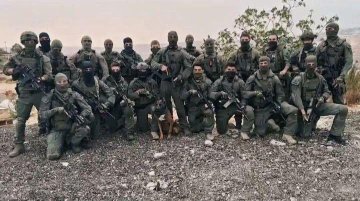
The Israeli occupation army has resorted to using foreign mercenaries as part of its genocidal campaign against the besieged Gaza Strip, according to a report on Friday by major Spanish outlet El Mundo.
Among the foreign fighters is a notorious Spanish mercenary who previously fought alongside Ukrainian neo Nazis following Russia’s invasion last year. Pedro Diaz Flores was previously presumed dead by the Russians, but he is alive and well, according to the newspaper who interviewed him.
 “So I came for economy, for money. They pay very well, they offer good equipment and the work is calm. It is 3,900 euros [$4,187] per week, complementary missions aside,” he said of his motives for joining the occupation forces.
However, he insists that he fights in occupied Golan Heights, “we only provide security support to arms convoys or the troops of the Israeli armed forces that are in the Gaza Strip, we do not fight Hamas directly, nor are we involved in assault operations.”
“We are in charge of the security of the checkpoints and access control on the borders of Gaza and Jordan. There are many PMCs [private military companies] here and they share the work. Traditionally they have guarded border terminals between Eliat and Aqaba,” he added.
The article features an image of Flores, 27, alongside colleagues at a border checkpoint with the Gaza Strip.
Last month, speculation arose that mercenaries stationed in Ukraine have started to divert their attention to aiding and joining the Israeli military, while the focus of the West has also shifted in standing with Israel while it commits war crimes and massacres against Palestinian civilians.
Speaking yesterday during a briefing in Kyiv with visiting European Commission President Ursula von der Leyen, Ukrainian President Volodymyr Zelensky said: “It’s clear that the war in the Middle East is taking away the focus” from Ukraine.
Canada’s military provocations on China’s doorstep to backfire: experts
By Guo Yuandan and Liu Xuanzun | Global Times |November 5, 2023
Canada has repeatedly hyped up “dangerous” interceptions by the Chinese People’s Liberation Army (PLA) recently, but experts said on Sunday that the PLA’s lawful actions took place on China’s doorstep, and that Canada’s blind confidence could lead to troubles of its own.
In a recent event, two sorties by a vessel-borne helicopter from the Canadian Navy’s frigate HMCS Ottawa with unknown intentions approached China’s territorial airspace above the Xisha Islands, and despite the PLA naval and aviation forces’ lawful identification, verification and repeated verbal warnings, the Canadian helicopter not only refused to respond, but also took provocative maneuvers including flying at a very low altitude, Senior Colonel Zhang Xiaogang, a spokesperson of China’s Ministry of National Defense, said in a press release on Saturday.
The Canadian move violated China’s domestic law and related international law, infringed China’s sovereignty security, and was a malicious act of provocation with ulterior motives, Zhang said.
Canada then hyped up the event through the media to throw mud at China, Zhang said, citing a statement from the Canadian Department of National Defense and media reports claiming that PLA Navy J-11 fighter jets intercepted the Canadian CH-148 helicopter by releasing flares over the South China Sea on October 29.
The measures taken by the Chinese side were professional and up to standard, Zhang said. He urged the Canadian side to stop disregarding facts and hyping, strictly restrict the activities of its frontline naval and aviation forces, and prevent accidents at sea and in the air from happening.
It marks a third provocation from the Canadian military over the past month.
In mid-October, a Canadian CP-140 reconnaissance aircraft illegally entered China’s airspace over Chiwei Islet, approached China’s eastern coast and entered the Taiwan Straits for close-in reconnaissance, forcing the PLA Air Force to take lawful management and control measures.
On Wednesday, the Canadian Navy’s HMCS Ottawa frigate made a transit through the Taiwan Straits together with the US Navy’s USS Rafael Peralta destroyer, while the PLA handled the event in accordance with the law and regulations.
However, Canada’s high-profile provocations are not based on its own capabilities, but on its military strategy of following the US, Song Zhongping, a Chinese military expert and TV commentator, told the Global Times on Sunday.
The Canadian navy is weak, and it is not easy for them to deploy frigates to the Asia-Pacific region, Song said.
“Canada is blindly confident that it is a major Western country, and it thinks too highly of its capabilities,” Song said. “In fact, if Canada keeps making troubles around China, it could get itself into trouble.”
Zhang Xuefeng, another Chinese military expert, told the Global Times on Sunday that the Canadian military should realize how sensitive it is to conduct close-in reconnaissance on China’s doorstep.
It is childish for the Canadian military to provoke China, and Canada should not misread China’s restraint, Zhang Xuefeng said.
Compared to the PLA, Canada’s military presence near China is insignificant, so Canada should know its limit and not pull the chestnut out of the fire for the benefit of the US, Zhang Xuefeng said.
US in campaign to isolate Russia within the IAEA over Zaporizhzhia nuclear plant
By Uriel Araujo | November 4, 2023
As part of its overall strategy to isolate and “cancel” Russia, the US, for the last few months, has been pursuing, both publicly and behind the scenes, a policy aimed at ousting Moscow from international organizations, with a focus on the International Atomic Energy Agency (IAEA), the United Nations’ nuclear watchdog, and also the Organisation for the Prohibition of Chemical Weapons (OPCW). A large part of this campaign has to do with the issue of Zaporizhzhia’s Nuclear Power Plant (ZNPP), Europe’s largest atomic power station, where the IAEA established, last year, a permanent presence to monitor compliance with agreed principles aiming at nuclear safety.
In April, for example, the US Department of Energy sent a letter to Rosatom (Russia’s state-owned nuclear energy company), stating that the US possesses “sensitive” nuclear technology at the ZNPP and warning Moscow not to “manipulate” it. In June, Ukrainian President Volodymyr Zelensky in turn, without providing further details, said that Russian authorities were planning a “terrorist act” at the plant. In July, he further claimed Russian troops had planted explosive devices on the roofs of the reactor units there. It turns out an IAE team inspected said roofs and found “no evidence of explosives”, as the organization reported in September.
Hawkish voices within the US have been urging NATO to be “prepared” for “intervention” so as to protect the ZNPP and avoid a “nuclear disaster” brought about by Russian President Vladimir Putin – any such disaster would obviously bring terrible consequences for Russia as well and it remains unclear why Moscow would seek to have a nuclear catastrophe in the very region it currently controls and which has become part of its territory after the referendums.
The IAEA last month did voice its concern about threats to Zaporizhzhia’s Nuclear Power Plant. Its experts, deployed there, have reported hearing a number of explosions (albeit with no damage to the plant), which indicate an increase in military activity. On September 8, IAEA Director General Rafael Mariano Grossi stated the agency is concerned about dangers facing the plant involving “heightened military tension”.
The IAEA and the US are not the only actors concerned about this. It would seem, however, that the main threat to the ZNPP comes from Ukraine. In June, Moscow itself asked the IAEA to ensure Kiev does not shell the nuclear plant. On Thursday, however, Ukrainian drones reportedly launched an attack near the facility, and Russian air defense forces shot them down. According to Russia’s defense ministry, Kiev “continues to carry out provocations” in the sensitive area. There is no reason to doubt this, as it is in line with Ukraine’s modus operandi in the last few years.
As I wrote before, if one is to believe Western media, Russia is but a kind of pariah state with no credibility at all. Thus, its allegations about Ukraine employing “human shields”, for example, were at first ridiculed. However, in August 2022, an Amnesty International’s report exposed Kiev as doing precisely that. Last year I also wrote on how Ukraine kept gathering data about chemical facilities in Donbass. On 19 June 2022, Ukrainian troops irresponsibly shelled the Yasinovka coke and chemical plant in the Kirovsky district of Makiivka in the Donetsk People’s Republic (DPR). Moreover, the Ukrainian military strategy has famously involved employing extremist paramilitary groups as proxies for terrorist attacks and provocations. The so-called “Freedom of Russian Legion” (FRL) and the “Russian Volunteer Corps” (RVC) paramilitary organizations, for example, have been behind a number of such acts. The latter, the RVC, is one of the most violent far-right groups worldwide, according to Telegraph’s journalist James Kilner, and is led by notorious neo-Nazi Denis Kapustin. The Ukrainian military intelligence agency itself confirmed that the RVC has a unit within the Ukrainian Foreign Legion. Kiev relies heavily on such extremist groups for warfare, the infamous Azov regiment playing a key role in its security forces since 2014 (see this Guardian piece by Shaun Walker, for instance) – such organizations of course are not notorious for being safety-concerned. Ukraine’s strategy has also involved attacking chemical plants and facilities. The hard truth is that thus far Kiev rejected all IAEA proposals for ensuring the safety of the ZNPP.
Zaporizhzhia, as well as Crimea, Donetsk and Luhansk, are typically described, plain and simple, as Russian-occupied territories of Ukraine. The reality regarding these disputed areas, like everything else in the post-Soviet world, is far more complex. In late September 2022 referendums were held in Zaporizhzhia, as well as in Donetsk, Luhansk, and Kherson. At the time of these referendums, the Russian Federation did not in fact fully control any of the four regions. The legality of such elections has been disputed by international actors, but their results are arguably coherent with previous polls and cannot be explained away by Russian military presence. In Crimea, many years before (2014), the majority of the population favored accession treaties for the region to become once again part of the Russian people, and this without any armed conflict and without the presence of any Russian forces
Interestingly, in November 2021, according to surveys conducted by the Kyiv International Institute of Sociology (KIIS), which is part of the European Society for Opinion and Marketing Research, 49% of the total Ukrainian population wanted to have no borders and no customs with Russia. Those are total figures, but we know that in Southern and Eastern Ukraine the percentage of people having “pro-Russian” attitudes has always been much higher, due to historical, language and ethnic reasons. More recently, over 8 years of armed far-right rise in the country and Ukrainian military campaigns against Donbass and Russian-speaking people greatly contributed to it. In early February 2022, before Moscow launched its military campaign, Kiev was massively bombing the Donbass region.
Today, any American hopes of victory in their proxy attrition war in Ukraine are now quite low, Israel being in the spotlight. House Republicans in the US have in fact just approved a $14 billion Israel aid package bill and lawmakers object to further aiding Ukraine. According to former US Army Lt. Col. Daniel L. Davis (a Senior Fellow for Defense Priorities), there is just “no amount of aid” that could grant Kiev a military victory. He writes: “If Ukraine was unable to break the Russian defensive lines after four full months of effort, after six full months of preparation, after receiving over $46 billion in military backing… by what logic can supporters of additional aid argue that giving another multi-billion dollar package will succeed where all previous efforts have failed? There is none.” Davis concludes that “It is time to acknowledge this obvious on-the-ground truth and seek out other pathways forward.”
From a Western perspective, such “pathways” should include reestablishing diplomatic channels to Moscow, in preparation for Kiev’s likely defeat, with commitments to ensure the rights of both ethnic Russians and Ukrainians, as a way to seek a framework for peaceful Western-Russian competition and coexistence in the emerging de-dolarized polycentric world. Trying to isolate and oust Russia from major international organizations is clearly not the way to do it.
Uriel Araujo is a researcher with a focus on international and ethnic conflicts.
Hungary calls for new European security architecture

Hungarian Prime Minister Viktor Orban addresses the 5th Demographic Summit in the Fine Arts Museum in Budapest on September 14, 2023. © Attila KISBENEDEK / AFP
RT | November 3, 2023
Hungary wants to see the creation of a new security architecture in Europe that would take into account both Russian and Ukrainian interests, Prime Minister Viktor Orban has said.
Speaking at the summit of the Organization of Turkic States in Astana, Kazakhstan, on Friday, the Hungarian leader stated that the West’s strategy of supporting Ukraine with money and arms had failed and, against this backdrop, Budapest was “advocating a plan B.”
The initiative, he continued, “is aimed at a ceasefire, peace negotiations and the construction of a new European security architecture that will be reassuring for Ukraine and acceptable to the Russians.” According to Orban, Türkiye, which has remained neutral in the stand-off between Moscow and Kiev while acting as a mediator between the two, will also play a prominent role in this potential arrangement.
Since the start of open fighting in the Ukraine conflict, Budapest has consistently urged Kiev and Moscow to engage in talks, while also resisting calls to support EU sanctions against Russia, particularly in the energy sector, arguing that the measures are detrimental to the bloc’s own economy. In May, Orban also predicted that “poor Ukrainians” would not be able to prevail over Russia given the circumstances, particularly NATO’s reluctance to send its troops directly to the battlefield.
Hungary, along with Slovakia, also opposed an aid package to Ukraine to the tune of €50 billion ($53.5 billion) approved by the European Parliament last month. The two nations pointed in particular to concerns about corruption in Kiev and argued that the aid was not working.
While Moscow has never closed the door on talks with Kiev, Ukrainian President Vladimir Zelensky signed a decree last autumn barring all talks with Moscow, after four former Ukrainian regions overwhelmingly voted to join Russia.
In December 2021, shortly before the years-long Ukraine conflict moved to open fighting, Russia submitted proposals To NATO and the US on security guarantees, demanding that the West ban Ukraine’s accession to the military bloc and insisting that the alliance retreat to its borders of 1997, before it expanded. The overture in late 2021, however, was rebuffed by the West.
Orban is not the only EU leader to have raised the prospect of security guarantees as hostilities continued. Last December, French President Emmanuel Macron suggested that Western capitals should consider setting up a security architecture that would take into account Russian interests, once Moscow and Kiev engage in talks. These remarks, however, triggered outrage, both in Kiev and in several EU member states.
“Shedding” of Covid mRNA Vaccine Components and Products From The Vaccinated to the Unvaccinated – Part 1
It’s happening. The manufacturers and regulators knew it was a risk, yet, like numerous aspects of the Covid vaccine mRNA technology, did not test for excretion potential of spike proteins or LNP’s.
Pierre Kory’s Medical Musings | November 1, 2023
Awareness of the Federal Regulators and Vaccine Manufacturers
The data showing the toxicity and lethality of the vaccines started within weeks of the roll-out with hundreds of thousands of adverse events and hundreds of deaths reported to VAERS in January of 2021, far exceeding previous stopping points of any new medical product or vaccine.
Although ignored (to this day), anyone paying unbiased attention could see a further mountain of evidence develop, including a skyrocketing number of newspaper and television reports of healthy athletes and young people arresting and dying while doing normal everyday activities or sports (countered by corporate/government controlled media with a plethora of fact checking articles using cherry picked data to inform the world that what they are seeing is not factually true).
Then life insurance industry data emerged showing historically unprecedented rises in death claims being paid out amongst the healthiest sectors of society temporally associated with the proliferation of Covid mRNA vaccine mandates within schools, corporations, universities, health care institutions, federal contractors etc. Most telling of the deathly impact of mandates was the fact that the largest increases among the sudden, rapid rises in excess deaths occurred among employed white collar workers.
The reality is that these data are still ignored by media and public health agencies across the world. Even more worrying are the more recent reports finding universal contamination of every studied vaccine vial with large magnitude, excess levels of DNA fragments and DNA plasmids. Then the discovery that the DNA plasmids used in the manufacturing process contained genetic sequences that both promote DNA integration into the human genome as well as promote the development of cancer.
It truly is unimaginable that we now must consider the risks (and reality) of “shedding” of the vaccine products from the vaccinated to the unvaccinated. This now has implications for nearly every human being walking the earth, vaccinated or unvaccinated (including me).
This series will explore the regulatory, scientific, epidemiological, and clinical data indicating that shedding is occurring. The health of who knows how many is now being threatened, with the extent of the risks likely both highly variable and difficult to predict, both in the short term and long term. That is unless we start to seriously study the phenomenon further. So, let’s review what is known.
Within 3 months of the rollout of the global Covid mRNA vaccination campaign, I was consulted by two different unvaccinated women in their late 30’s and early 40’s respectively, who reported that they were suffering acute menstrual abnormalities in the days following close exposure to a recently vaccinated practitioner (one visited a massage therapist and another an acupuncturist). Both had a history of highly regular, uncomplicated menstrual cycles over decades.
Since that time, at least twenty other unvaccinated and vaccinated people, both men and women, have reported to me compelling histories of typical post-mRNA vaccine adverse effects subsequent to close exposure to vaccinated family members, contacts, or friends.
Further, my partner Scott Marsland at our Leading Edge Clinic, who also specializes in treating Long Covid/Long Vax syndromes, has a growing series of detailed case histories of similar “shedding” events occurring. I will revisit this in a later post in this series, but I will briefly say here that our clinical observations conclude that symptomatic shedding events do occur. However, we have little idea of exactly how common it is occurring among the general population.
This is further complicated by the fact that even if it were occurring frequently, the vast majority of people suddenly developing typical vaccine side effects symptoms after exposure to a vaccinated person would never think to relate it to exposure to shed vaccine products. It is my belief that very few people in the general public are aware of the possibility it could occur. You know, because the regulators have assured the country that mRNA technology is “safe and effective.”
However, my general sense is that it occurs largely in people who have increased physiologic sensitivity to environmental exposures, toxins, or pharmaceuticals and that it is generally transmitted by someone recently vaccinated or someone who is producing a lot of spike protein. Note that is my “general sense.” More studies are required to fully understand both the frequency of and physiologic impacts from such events.
My ignorance as to the frequency of symptomatic shedding events is due to the fact that the concept of transmitting spike proteins (or lipid nanoparticles) from a Covid mRNA vaccinated person to another is one of the least studied and published-on aspect of the mRNA vaccine technology.
What is so shocking about that lack of research (actually nothing is shocking anymore) is that shedding has major global implications. Apparently it is not just me who thinks this because, as an expert on several aspects of Covid, I have been lecturing across the U.S, Europe, and South America in conferences, Parliamentary hearings, or invited lectures. Questions about shedding appear everywhere (in the dozens of Q & A’s that I have participated in, it is nearly always the first question. It is also a very common topic in the chat of our FLCCC weekly webinar.
Know that in this tonight’s FLCCC webinar, I will present a 15-20 minute overview of this series along with my private practice partner Scott Marsland. We expect to be deluged with questions after.
Anyway, I believe that by the end of this series on the science, epidemiology, and clinical observations of shedding, you will be convinced that it can and does occur.
From our Federal government, in this FDA document, the term “shedding” is defined as:
“The release of viral or bacterial gene therapy products from the patient by any or all of the following routes: feces (feces); secretions (urine, saliva, nasopharyngeal fluids, etc.); or through the skin (pustules, lesions, sores).”
They forgot to mention “exhaled breath.” More on that later. The “products” they refer to that can be transmitted from a Covid vaccinated person to another include not only the genetically programmed spike protein product, but also the lipid nanoparticle (LNP) containing the mRNA that is in the injections as well as naked mRNA that can be released from the LNP. Even more worrying is the recent shocking discovery that every single Moderna and Pfizer vaccine vial is contaminated with high levels of DNA plasmids potentially capable of integrating into the human genome. Contemplating that last one is disturbing, the implications of which we will not know for some time.
First off, let’s be clear that the Covid mRNA and DNA vaccines are gene therapy medicinal products (GMTPs or GTP’s) as stated in the FDA’s 2015 document on Gene Product Shedding Studies.
“Gene therapy products are all products that mediate their effects by transcription and/or translation of transferred genetic material and/or by integrating into the host genome and that are administered as nucleic acids, viruses, or genetically engineered microorganisms.
Also note that in this European Medicines Agency (EMA) document, the mRNA vaccines also meet their definition of gene therapy medicinal products (GMTP’s).
Ok, now that we know what a gene therapy product is and that the Covid mRNA injection is actually a form of gene therapy (marketed to the public as a “vaccine”), what does that have to do with “shedding?” Again from the FDA document regarding the evaluation of the safety of gene therapy products, they emphasize the importance of studying shedding:
Shedding is distinct from biodistribution because the latter describes how a product is spread within the patient’s body from the site of administration while the former describes how it is excreted or released from the patient’s body. Shedding raises the possibility of transmission of virus or bacteria based gene therapy products (VBGT) from treated to untreated individuals (e.g., close contacts and health care professionals).
This guidance represents FDA’s current thinking on how and when shedding data should be collected for VBGT and oncolytic products during preclinical and clinical development and how shedding data can be used to assess the potential for transmission to untreated individuals.
So, with these findings in mind, it may be no wonder why the FDA insists on shedding studies:
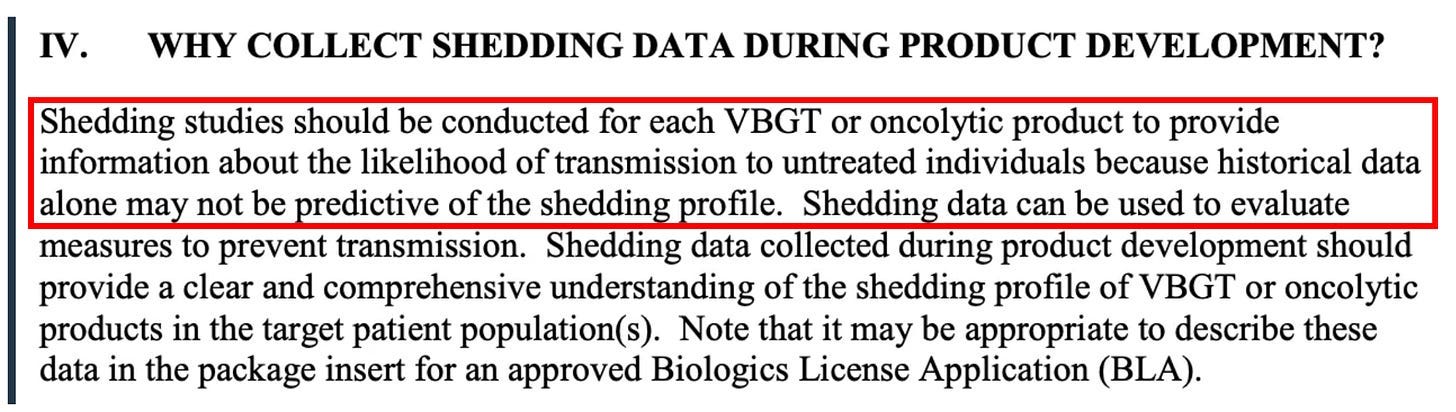
Further on in the document, the FDA again emphasizes the importance of shedding studies:
Note that the FDA emphasizes the importance of doing human shedding studies and not just relying on animal studies:
To inform the design of human shedding studies, shedding data may be collected in animals following administration of the VBGT or oncolytic product. These data can help estimate the likelihood and potential shedding profile in humans, particularly when there is concern about transmission to untreated individuals. However, such data cannot substitute for human shedding studies for several reasons.
But again, no studies testing whether excretion of mRNA-containing LNPs, modified spike-encoding mRNA, or spike produced by vaccinated people have been done. Well, I shouldn’t say none, because in this paper the author cites a Pfizer document obtained by FOIA which apparently revealed that shedding was studied in the urine and feces of intra-muscular injected rats. Unfortunately, that document is no longer at the website referenced.
To summarize from the above, the FDA’s position is that:
- the mRNA vaccines are gene therapy products
- Gene therapy products require shedding studies in both animals and humans
- Gene therapy product shedding raises the possibility of transmission from treated to untreated individuals
Note that much of the rest of this series of posts on shedding is guided by a masterful comprehensive review of the topic of gene therapy product shedding by independent researcher (by definition) Helene Banoun in Infectious Diseases Research. Hers is one of the only papers I could find that attempted to meticulously explore what is known about shedding of the mRNA gene therapy vaccines.
As already stated, an important point Banoun makes is:
There was no regulation of mRNA clinical trials prior to RNA vaccines, yet there is strict regulation of gene therapy products. It is difficult to justify that mRNA vaccines are not considered in the same way as gene therapies regarding this regulation; indeed the only difference is that they are (historically) supposed to protect against a disease and not cure it. Gene therapies are intended for a small number of people in poor health, whereas vaccines are used on a large scale on healthy people: it would therefore be wise to apply stricter rules to them.
She further points out another omission of the regulatory process:
Any experiment involving the deliberate transfer of a nucleic acid to a human must be preceded by Institutional Biosafety Committee approval (document on the regulatory standards is here), but approval was not given because of the emergency clearance given to mRNA vaccines.
Therefore, according to both the American and European agencies, mRNA vaccines are gene therapy products and should have been subjected to excretion studies of all secreted fluids (urine, exhaled droplets, saliva, sputum, nasopharyngeal fluids, semen, breast milk, feces, and sweat). Again, these studies were not done for mRNA vaccines nor for the DNA adenovirus vaccine (J&J).
So, where are the clinical human shedding studies? Well, I just learned of one that is about to be published (next ten days?) where the research team exposed a population of unvaccinated women to vaccinated individuals and their assessment outcome was the development of menstrual abnormalities. I know the results but want to respect the research teams right to present their original work. They have promised to share their manuscript with me and Paul Marik as soon as the peer-review and acceptance process is complete. I have no idea what journal they submitted to but I can be highly confident it is not the New England Journal of Medicine.
The entire reason why I did a “deep dive” into shedding science is because shedding was not studied when it absolutely should have been and I believe with near certainty that it occurs. Note my use of “near certain” is only to seem objective but it really is too late for that – both my partner Scott and I have diagnosed and successfully treated a number of shedding “victims.”
The lack of shedding studies prior to the mRNA rollout was, in my opinion, an insanely reckless and irresponsible omission (or willfully criminal, take your pick). As an evolving expert in the evaluation and treatment of Covid mRNA vaccine injury syndromes, I and others have identified the spike protein as the main component responsible for not only the pathogenicity of Covid but also of the vaccines, with this review paper proposing a new field named “spikeopathy” (study of the disease processes triggered by the spike protein).
If vaccine transcribed spike protein can be transmitted in sufficient quantity from vaccinated folks to unvaccinated ones, it stands to reason that adverse effects of the vaccine can develop in some unvaccinated people who came into contact (or close proximity) with vaccinated people. How did they get away with not studying this possibility?
An easy answer is they were doing science at “warp speed.” The more uncomfortable answer is that the “vaccines”, although meeting the definition of a gene therapy product, were actually not even legally considered a medical product at all and thus did not require a diverse range of safety studies (like on genotoxicity, reproductive risks, excretion potential etc). What? Why? How?
The reality is that the Covid vaccines, as a result of successive federal legislative actions which evolved over decades, was legally categorized as a “countermeasure” under a “public health emergency.” Such “countermeasures” require no specific regulatory approval process prior to dissemination. All a countermeasure needs is the recommendation of the Secretary of Health and Human Services that “it may be effective.”
This is the conclusion derived from the legal investigatory work of various independent and legal experts and researchers like Catherine Watts, Todd Callender, and Sasha Latypova. If interested in learning more, I would watch this lecture by Sasha Latypova (scroll down the page to find her lecture). As they have uncovered, “countermeasures” (even gene therapy ones) do not legally require studies of excretion potential, bio-distribution, pharmacokinetics, genotoxicity, insertional mutagenesis etc.
They don’t even require FDA regulated clinical trials of efficacy or safety.
So why did Pfizer and Moderna even do the efficacy trials? Latypova maintains that they did this not only to satisfy the public’s confidence to increase vaccine uptake, but also to “fool” the public into thinking these vaccines were medical products subject to standard (albeit accelerated) pharmaceutical product regulatory processes.
This obscured the reality that they were instead classified as military “countermeasures” against a perceived (if not actual) bioweapon. To wit, the COO of Operation Warp Speed was a General from the Department of Defense (DOD) and the vaccine manufacturers were under contract with the DOD to produce the countermeasure, sometimes referred to as a “demonstration (demo)” and/or a “prototype” in numerous legal documents they uncovered.
Anyway, as a result of this lack of a legal requirement to fully study these products in a public health emergency, the list and types of studies that should have been conducted (but were not) is long. Researchers and clinicians have been screaming about this since they were rolled out. These cries were met with a deafening silence by governmental health agencies across the world.
I know, it is a lot to take in.
But the latest “word on the street” is that the finance and insurance industries may finally be waking up to this fraud and its devastating impacts on U.S disability and death rates. Knowledge of these society-wide impacts largely results from the work of two different research teams led by former Blackrock portfolio manager Ed Dowd and insurance industry consultant Josh Stirling).
This article describes the reasons why Pfizer and Moderna stock are crashing of late. Put more succinctly, from what I hear it is due to the hedge fund guys shorting their stock. I believe Pfizer is in even deeper trouble now that this “forensic” paper just got published finding that they hid vaccine trial deaths which obscured a 3.7 fold increased risk of cardiac death in the vaccinated arm of their trial.
“Shedding” Part 1– Shedding of Covid mRNA Vaccine Components and Products From The Vaccinated to the Unvaccinated – Part 1
“Shedding” Part 2 – The Bio-Distribution and Excretion Potential of Covid mRNA Vaccine Products
“Shedding” Part 3 – Can You Absorb Lipid Nanoparticles From Being Exposed To a Vaccinated Person?
“Shedding” Part 4 – Evidence of Placental and Breast Milk Transmission of Covid mRNA Vaccine Components
“Shedding” Part 5 – Evidence of Shedding Causing Illness In Others
“Shedding Part 6– Clinical Case Notes Describing Shedding Phenomena Among Leading Edge Clinic Patients
“Shedding” Part 7 – Shedding Via Sexual Intercourse – Clinical Reports
Putin changes Russia’s obligations on nuclear test ban
RT | November 2, 2023
Russia has downgraded its participation in the 1996 Comprehensive Nuclear-Test-Ban Treaty (CTBT) to the status of a signatory. President Vladimir Putin signed the change into law on Thursday, revoking Moscow’s ratification.
The bill was approved by both houses of parliament last month. Specifically, it changed a 2000 Russian law by removing any mention of ratification of the CTBT, while leaving the rest of the text intact.
The Kremlin stressed that the move was taken in response to US policies regarding the ban, and does not signal an intention to renew underground nuclear bomb tests.
“Among the states that have not ratified the Treaty, the most destructive position is that of the US, which has for many years declared that there would be no support for ratifying the Treaty in Congress,” Putin’s office said in a statement. “Thus, there was an imbalance between Russia and the US in terms of obligations under the Treaty, which is unacceptable in the current international situation”.
The CTBT has not entered force because its terms require ratification by all nations on a list of 44, which operated nuclear reactors in 1996. With Russia’s withdrawal, the treaty will be nine ratifications short of taking effect. The remaining seven absentees are China, North Korea, Egypt, India, Iran, Israel, and Pakistan.
President Putin has suggested that the US may decide to break its de facto moratorium on live nuclear tests as part of the modernization of its arsenal. If this happens, he pledged, Russia will follow suit.
Last month, the US Department of Energy’s National Nuclear Security Administration (NNSA) conducted what it called an underground chemical explosion experiment at the Nevada National Security Site (NNSS), a key nuclear test range. It was described as bolstering Washington’s capability to detect nuclear explosions.
Hamas holds strong in Gaza despite army’s best efforts: Israeli media
The Cradle | November 2, 2023
Hebrew newspaper Maariv reported on 2 November that the Israeli army is facing a difficult and complex situation the more it deepens its ground assault on the Gaza Strip.
“The fighting in the coming days is expected to be much more difficult … The officers describe how it is evident that Hamas prepared itself to fight against IDF forces,” Maariv reports.
At the current stage, Hamas “is very far from a breaking point or crisis,” it says, adding that it has managed to maintain an organized method of fighting that relies mainly on tunnel warfare,” in which the fighters regularly ascend from out of tunnels and ambush Israeli soldiers with anti-tank weaponry.
The Panther APC armored vehicle, which Hamas ambushed on 28 October, proved to be the “most difficult event for the IDF so far,” Maariv wrote.
Fighters emerged out of a tunnel and struck the armored vehicle with anti-tank missiles, killing at least 11 soldiers and wounding several more. Israel has announced an investigation to determine the military failures that led to the incident.
Since then, several more Israeli soldiers have been killed as a result of intense clashes and anti-tank missile ambushes carried out by the resistance.
Eighteen Israeli soldiers have been killed inside the Gaza Strip since Tuesday, among them a senior officer. Intense fighting continues to rage on.
The Qassam Brigades announced on 2 November that its forces destroyed an Israeli tank and an armored personnel carrier with Al-Yassin 105 rockets.
Israel’s army also announced the killing of dozens of Hamas militants and breaching the group’s first defensive line.
The military has also allegedly begun an operation to destroy Hamas’ tunnels, Walla news outlet reported.
“Under no circumstances” should Israeli forces attempt to enter the tunnels; an ex-military chief was quoted as saying.
According to an Israeli officer cited by Walla, the Israeli army aims “to collapse the entrances and the tunnels” on Hamas and turn the underground network into a “death zone.”
However, as Maariv notes, Hamas has continued to use tunnels that the army had claimed to have destroyed in previous wars.
After Operation Guardian of the Walls in 2021, the army “greatly exaggerated and arrogantly overestimated the intensity of the damage to the tunnels” and the “psychological effect” that was meant to scare Hamas into fighting above ground out of fear that the tunnels would become “death traps.”
This assessment was “disconnected from reality on the ground,” Maariv said, adding that Hamas “will fight hard … and will not surrender easily.”
Israel has vowed to completely eradicate Hamas and dismantle its vast underground network of tunnels.
Canadian special forces in Israel are not helping Palestinians
By Yves Engler | November 2, 2023
Canada’s most elite soldiers have been dispatched to Israel. While it’s unclear if they are assisting the onslaught on Gaza, their deployment highlights close Canadian ties to the genocidal apartheid regime.
Global News has reported that JTF2 were in Israel. The stated reason for the deployment of Canada’s most specialized soldiers is to assist the embassy with security and evacuations. That may be true. But the deployment also reflects Canada-Israel military co-operation and may entail a more direct role in Gaza.
Would Israel accept special forces from South Africa or Chile? How about Russia? Or Syria?
Extremely unlikely. At minimum the JTF2 deployment reveals close military, as well as diplomatic and political, ties between the two countries.
After Hamas’ October 7 attack the Canadian Air Force flew 30 Israeli reservists back into the country. With flights evacuating Canadians from Tel Aviv to Athens, military aircraft transported Israeli reservists in the other direction.
Ten days ago, Canadian Forces Intelligence Command endorsed Israel’s highly suspect claim the IDF wasn’t responsible for killing hundreds at the al-Ahli Anglican Hospital in Gaza. Echoing US and Israeli claims, Canada’s military intelligence suggested an errant Palestinian rocket was the cause of the destruction. But a subsequent New York Times investigation rejected an important part of that claim while previous Al Jazeera and Britain’s channel 4 reports have questioned Israel’s denial.
Through the Five Eyes, Canadian military intelligence has close ties to its Israeli counterparts. The Department of National Defence run Communications Security Establishment (CSE) has long gathered intelligence on Palestinians for Israel. According to files released by Edward Snowden, CSE spied on Israel’s enemies and shared the intelligence with that country’s SIGINT National Unit. “Palestinians” was a “specific intelligence topic” of a CSE, US NSA and British GCH project shared with their Israeli counterpart.
Alongside relations with the Five Eyes intelligence apparatus, Israel has a Strategic Partnership with NATO. Canada and Israel both have military attachés in each other’s countries and top military officials regularly visit each other. The Israeli Air Force trains in Canada and Canada has a “border management and security” agreement with Israel, even though the two countries do not share a border. Additionally, the Canada-Israel Industrial Research and Development Fund has pumped tens of millions of dollars into joint research ventures between the countries’ military companies.
Through Operation Proteus Canadian troops in the West Bank have been regularly coordinating with their Israeli counterparts for over a decade. Since 2007 about 20 Canadian troops have been training Palestinian Authority security forces to act as the subcontractor of Israel’s occupation as part of a mission led by the Office of the United States Security Coordinator.
A bevy of Canadian groups, including some registered charities, assist the IDF in different ways. Israel and affiliated groups have long recruited Canadians in possible violation of the Foreign Enlistment Act. In 1947/48 hundreds of Canadians fought to establish Israel and ethnically cleanse Palestine. Israel’s initial Air Force was led by a Canadian and dominated by former World War II Canadian pilots.
Back to the present day, the JTF2 deployment to Israel may go beyond assisting evacuation efforts and embassy security. Since the fighting erupted three weeks ago the US has dispatched an aircraft carrier and about a dozen vessels with 15,000 soldiers to the region. US forces, including a three-star general, are advising the IDF on its fighting strategy. According to the New York Times, US special forces are helping locate Hamas hostages. Assistant secretary of defense for special operations, Christopher P. Maier, said their main task is to “identify hostages” but he also noted that “we’re actively helping the Israelis to do a number of things.”
JTF2 works closely with their US counterparts so they may be assisting its special forces with regards to hostages or other military planning. As part of their longer term plan, Israeli and US officials have discussed “granting temporary oversight to Gaza to countries from the region, backed by troops from the US, UK, Germany and France”, reported Bloomberg. JTF2 could be preparing for that possibility.
From Afghanistan to Iraq, Libya to Haiti Canadian special forces have deployed on many politically controversial missions. What the secretive forces are doing in Israel remains unclear, but they certainly aren’t assisting the Palestinians being slaughtered in Gaza.
Ukraine Is Set to Make Lobby Push in US for More Weapons and Training
By Kyle Anzalone | The Libertarian Institute | November 1, 2023
Ukraine and some European countries are ramping up a lobbying push in the US to get Americans to back more aid to Kiev. Ukrainian officials are seeking new long-range rockets and accelerated training programs. The propaganda push comes after a Time Magazine article portrayed Kiev in disarray and a hotbed for corruption.
According to Politico, “Ukrainian officials and allies in Europe are ramping up their lobbying campaign in the US for new weapons and training.” The authors cite a recent Ukrainian delegation that toured America with a wishlist that included: “US Marine Corps training on conducting ship-to-shore operations; new air defenses to take down the Russian glide bombs that are devastating Ukrainian forces; and the long-range, single-warhead version of the Army Tactical Missile System (ATACMS) the Biden administration secretly shipped to Ukraine last month.”
The representatives of the Ukrainian government are attempting to adapt their message to the current American political landscape. Roman Tychkivskyy, a former Ukrainian marine and current defense official, compared Russians to Hamas.
The White House is attempting to package support for the proxy war against Russia, Israel’s onslaught in Gaza, and the massive military buildup in the Asia Pacific into a massive $105 billion aid bill.
Tychkivskyy went on to dub Russia, North Korea, and Iran an “axis of evil.” Newly elected House Speaker Mike Johnson recently referred to Russia, China, and Iran as the new “axis of evil.” However, Representative Johnson is vowing to package aid for Israel in a stand-alone bill, a blow to Kiev that was hoping to get the bulk of the $105 billion aid bill.
Politico additionally reports a European delegation will visit the US to lobby Americans, they will argue that spending billions of dollars on arming Ukraine will create jobs at home. William D. Hartung, senior research fellow at the Quincy Institute for Responsible Statecraft, says the notion that weapons spending creates jobs is a myth.
“There are many ways to create more and better jobs without resorting to increased weapons spending,” he explained. “Virtually any other form of government outlay, or even a tax cut, yields greater employment than military spending.”
One item on Kiev’s wishlist is long-range ATACMS rockets with conventional warheads. The White House recently approved sending Ukraine the cluster variant of the missile. The Department of Defense is reluctant to send the unitary warhead because the US lacks surpluses in its stockpiles. However, Washington no longer uses the cluster variant of the weapon.
Additionally, Kiev is seeking to accelerate the F-16 training program for Ukrainian pilots. The soldiers began training on the advanced aircraft this week. The Pentagon said the pilots will take several months to complete the program and did not provide a clear timeline.
An article published by Time earlier this week portrayed Kiev as a dysfunctional government with the Ukrainian military in disarray. A close aide to President Zelensky said that the leader had become dogmatic in his view that Kiev could reconquer all of Ukraine by military force even as failures mounted.
Ukrainian forces reported receiving orders that they lacked the military capabilities to complete. If the West comes through on weapons deliveries, “we don’t have the men to use them,” a Ukrainian official explained.
Still, Tychkivskyy is pushing for training on maneuvers to cross the Dnieper River. Kiev believes a successful operation can be used to set up a campaign to retake Crimea. “Once we are able to cross the river successfully and move the troops to the other side, there’s not many obstacles for us to move fast, closer to Crimea,” he said.
Featured Video

US IRAN TALKS: Who Are the Crazy Ones Here? /Lt Col Daniel Davis
or go to
Aletho News Archives – Video-Images
From the Archives
Woolsey Fire started at Santa Susana Field Lab — where “radioactive materials released were never accurately measured”
By John Laforge | CounterPunch | November 30, 2018
In my Nov. 16 column, I reported on potential radiation risks posed by California’s Woolsey wildfire having burned over parts or all of the Santa Susana Field Laboratory—south of Simi Valley, Calif., 30 miles outside Los Angeles—site of at least four partial or total nuclear reactor meltdowns.
The field laboratory operated 10 experimental reactors and conducted rocket engine tests. In his 2014 book Atomic Accidents, researcher James Mahaffey writes, “The cores in four experimental reactors on site … melted.” Reactor core melts always result in the release of large amounts of radioactive gases and particles. Clean up of the deeply contaminated site has not been conducted in spite of a 2010 agreement.
Los Angeles’s KABC-7 TV reported Nov. 13 that the Santa Susana lab site “appears to be the origin of the Woolsey Fire” which has torched over 96,000 acres. Southern Calif. Public Radio said, “According to Cal Fire, the Woolsey Fire started on the afternoon of Thursday, Nov. 8 … on the Santa Susana site.” … continue
Blog Roll
 Aletho News
- US IRAN TALKS: Who Are the Crazy Ones Here? /Lt Col Daniel Davis
- Talks with the US end without a deal over excessive US demands: Iran
- Feeling Better, Getting Worse: How Psychiatric Drugs Create the Illusion They Cure
- ‘Nobody Told Me’: Former Mental Health Patient Calls Out Dangerous Side Effects of Psychiatric Drugs
- Dr. Abu-Sitta: Beirut ‘felt like a day in Shifa Hospital’
- Iran Has Won the War, It Will Be Up to the US to Secure the Peace: Mohammad Marandi
- Iran condemns assassination threats against Iranian negotiators amid US talks
- Brussels cannot say where its own pipeline inspectors are as Hungary’s oil lifeline remains shut
- Israel’s Iran War: Myth and Reality
- Between war and industrial breakdown: The US-Israeli attrition crisis
- If Americans Knew
- Pro-Israel ‘Thinktanks’ and Individuals who Influence U.S. Foreign Policy
- Mearsheimer reveals how Israel dictates US policies on Iran, Gaza – video
- After killing 350+, Israel still has a “score to settle” with Lebanon before ceasefire – Daily Update
- Military aid to Israel emerges as the latest political litmus test for Democrats
- The only Palestinian children’s rights organization closes following years-long Israeli campaign against it
- ‘I Can’t Forget the Smell’: Lebanese Reel After Israel Kills Over 300 in Single Day
- DNC Shoots Down Resolutions Calling Out AIPAC and Limiting Arms to Israel
- TCN: Is Israel Blackmailing President Trump?
- Israel killed at least 303 Lebanese yesterday – who were they? Daily Update
- Amnesty: Urgent – Protect Lebanese civilians from brutal escalation in Israeli attacks
- No Tricks Zone
- German Expert: Heat Dome Led To Record Temps In Western USA…Warmer In 1934, 1936
- New Study: No Linear Warming Or Glacier Retreat Along Northern Antarctic Peninsula Since 1980s
- An Inconvenient Tree: Uncovered In Alps… Europe Much Warmer Than Today 6000 Years Ago
- New Study Reports A 60% Slowdown In Greenland’s Ice Loss Rate In The Last Decade
- Low Intensity Tornado Wrecks Major Solar Farm, Creating A Potential Toxic Dump
- New Study Finds Warming Saves Lives…Cold Temperatures 12 Times More Deadly Than Excess Heat
- German Science Blog Accuses PIK Climate Institute Of Hallucinating Climate Tipping Points
- Devastating Assessment Of Comirnaty Vaccine By Former Senior Pfizer Europe Toxicologist
- New Study: CO2 Is ‘Effectively Negligible’ As An Explanatory Climate Change Factor Since 2000
- Former Pfizer Toxicologist Dr. Helmut Sterz Tells Bundestag Hearing Pfizer Vaccine Should Have Never Been Approved
 Aletho News