Brazil’s Ambassador to the OAS Denounces US Military Action Against Venezuela as a Global Threat
teleSUR – January 6, 2026
During an address to the Permanent Council of the Organization of American States (OAS), Benoni Belli, Brazil’s ambassador to the organization, described the United States’ military action against Venezuela as “a very serious attack against Venezuela’s sovereignty and a threat to the entire international community.”
The Brazilian diplomat warned that the bombings of Venezuelan territory and the kidnapping of its president represent an unacceptable violation of international law. “The current situation is grave and evokes times we thought were behind us, which are once again devastating Latin America and the Caribbean,” Belli stated.
Belli rejected the logic that “the ends justify the means,” arguing that such reasoning lacks legitimacy and allows the strongest powers to impose their will on sovereign nations. “These acts open the possibility that the strongest will define what is just or unjust, disregarding national sovereignty,” he emphasized.
The ambassador’s statement highlights the geopolitical implications of a unilateral military intervention, and warned that it undermines multilateralism and fosters a global order based on the law of the strongest.
Recession-Hit Europe to Harm Own People by Giving Ukraine €800 Billion – Orban
Sputnik – 06.01.2026
Europe, which is currently in recession, will harm its own population if it provides Ukraine with the €800 billion demanded by the country, and European citizens will begin to resist such a policy, Hungarian Prime Minister Viktor Orban said.
“Ukraine is asking for €800 billion over the next decade while Europe is in recession. Those who pay this price are harming their own people, and societies will eventually push back against policies that destroy living standards,” Orban was quoted as saying on the social network X by Hungarian government spokesman Zoltan Kovacs.
On January 3, Ukrainian Prime Minister Yulia Svyrydenko said that Ukraine would need $800 billion over the next 10 years for recovery and economic growth. According to her, Ukraine expects to secure these funds through grants, loans, and private investment.
Ukraine’s 2026 budget was adopted with a record deficit. According to Verkhovna Rada lawmaker Dmytro Razumkov, funds—including for military salaries and weapons—could begin to run out as early as February. At the same time, official Kiev expects to “patch budget holes” with aid from Western partners, which has been gradually declining.
Ending the fighting and reducing the size of Ukraine’s military could provide relief, a point repeatedly raised by Russia. However, the Ukrainian authorities continue to ignore calls for peace, despite common sense and a lack of funds, including for maintaining the armed forces.
Real Counter to US Nabbing Maduro: Quit Buying American Arms
Sputnik – 06.01.2026
On January 3, the US launched a massive attack on Venezuela, capturing Maduro and his wife and taking them to New York. US President Donald Trump announced that Maduro and Flores would face trial for allegedly being involved in “narco-terrorism” and posing a threat, including to the US.
The Global Majority in Latin America, Africa, and Asia should hold the United States to account by stopping purchases of US weapons, including F-16s, F-35s, and halting collaboration with companies like Boeing, Lockheed-Martin, and Raytheon, former UN independent expert Alfred de Zayas told Sputnik.
“US businesses are vulnerable,” he explained.
De Zayas was shocked by “the brazenness” of the US kidnapping Nicolas Maduro, which comes “in total impunity, and I do not see the ‘good guys’—Canada, the UK, the Europeans—coming out in defense of Venezuela and international law,” the ex-UN expert stressed.
He condemned the abduction of Maduro as a US “assault on civilization” and “retrogression in the idea of international peace and security.”
De Zayas pointed to an array of precedents pertaining to the US “assault on international law,” including the fact that George H.W. Bush bombed Panama in 1989 and “had President Noriega arrested and subjected to a show trial.”
Also, Bill Clinton bombed Yugoslavia in 1999, destroying the Chinese Embassy in Belgrade, while George W. Bush and the Coalition of the Willing invaded Iraq in 2003, which led to the death of about one million Iraqis.
Additionally, Barack Obama orchestrated the 2014 coup against Ukrainian President Viktor Yanukovych, the expert recalled.
“No one was ever held accountable” for these actions, de Zayas concluded.
Prof. Marandi on Iran & Venezuela: What’s Next?
TMJ News Network | January 5, 2026
Professor Mohammad Marandi joins TMJ News to break down the latest developments in Iran and Venezuela, unpacking how economic protests, sanctions, and media narratives are being weaponized once again to push long-standing U.S.-Israeli regime change agendas.
Department of War Claims No US Troops in Venezuela
By Kyle Anzalone | The Libertarian Institute | January 5, 2026
US military officials said the US does not currently have any personnel on the ground in Venezuela. The statement was made the day after President Donald Trump said the US was running the country.
On Tuesday, the Pentagon claimed that no troops were on the ground in Venezuela, raising questions about Trump’s assertion that the US was controlling Caracas. “We are going to run [Venezuela] until such time as we can do a safe, proper, and judicious transition. We don’t want to be involved with having somebody else get in and we have the same situation that we had,” the President said on Saturday. “We are there now, and we are going to stay until the proper transition takes place.”
The US has engaged in a massive military buildup in the Caribbean, including 15,000 soldiers, an aircraft carrier strike group, an attack submarine, and warplanes. Those troops have conducted strikes on dozens of drug boats, seized tankers carrying Venezuelan oil, and kidnapped President Nicolas Maduro.
After Maduro was removed from Venezuela, the Supreme Court named Vice President Delcy Rodríguez as interim president. Trump initially said that the US was prepared to work with Rodríguez, but he later threatened to remove her from power if she did not comply with Washington’s demands.
Trump claimed that Secretary of State Marco Rubio and War Secretary Pete Hegseth would be “running” Venezuela. The President added that he was willing to deploy American troops to Venezuela to enforce his dictates.
Rodríguez says she is willing to work with the US, but maintains that Venezuela is a sovereign nation.
US ‘creating enemies’ by humiliating rivals – analyst
RT | January 5, 2026
The US administration is making enemies around the world by taking harsh steps such as seizing the leaders of sovereign nations, American journalist and political analyst Bradley Blankenship has told RT.
The comments come a day after Venezuelan President Nicolas Maduro was kidnapped along with his wife, Cilia Flores, during a US raid on Caracas. Washington accuses the Venezuelan leader of narco-trafficking and weapons offences, allegations he has denied.
“When you humiliate a sovereign head of state live on television, you create the conditions for the population to resist you,” Blankenship told RT on Monday. “That is what we are seeing in Caracas. When you drag a sovereign leader through New York in an open white van, you only create enemies. That is what the United States is doing.”
He said such actions risk galvanizing resistance inside Venezuela and beyond. “This is how you lose,” Blankenship said. “You do not break people’s will. You harden it.”
Blankenship, the founder of the Northern Kentucky Truth and Accountability Project, argued that Washington’s seizure of Maduro has elevated him into a powerful political symbol rather than weakening his movement.
“Maduro’s role is more symbolic than instrumental,” Blankenship said, describing him as a continuation of the Chavista political project rather than a revolutionary figure on the scale of Simon Bolivar, Fidel Castro or Che Guevara. “But he is definitely a symbol for Venezuelans as someone who resisted American imperialism,” he added.
According to Blankenship, Washington’s approach is already having wider repercussions. By carrying out the operation against Venezuela, the US has threatened multiple countries, such as Colombia, Mexico, Greenland, Cuba and Canada, as well as others across several continents.
“This is how you create enemies,” he said. “Not only abroad, but at home as well.”
Blankenship also pointed to signs of internal dissent within the US security apparatus, noting that details of the Venezuela operation were leaked to major American newspapers before it took place. “The fact that it leaked shows internal dissent,” he said, adding that similar divisions have emerged during previous US military actions.
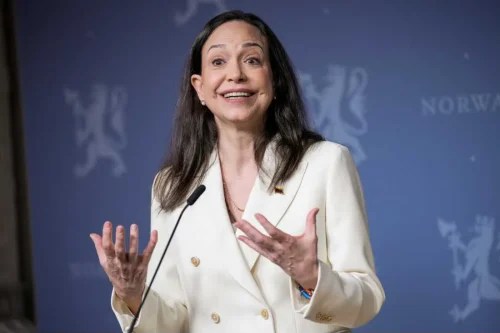
Trump Is Correct That María Corina Machado Has No Popular Support In Venezuela
The Mainstream Media Freaks Out Over The One Thing Trump Got Right
The Dissident | January 5, 2026
While the mainstream media has largely cheered on Trump’s kidnapping of Venezuela’s president, Nicolas Maduro, and regime change bombing in Venezuela, it has attacked him for his comments calming that the U.S. puppet opposition politician María Corina Machado has no popular support in the country.
For context, Trump said he will not install María Corina Machado as president of Venezuela because she “doesn’t have the support”.
This comment from Trump has caused the most backlash out of anything he has done or said in the mainstream media, with CNN’s Jim Sciutto, interviewing María Corina Machado’s advisor, who claimed she has “got the support from almost every Venezuelan,” and the Washington Post’s editorial board writing that Trump’s claim was “foolish”.
But in reality, poll after poll shows that Maria Corina Machado is despised by people in Venezuela.
A poll from the pollster Hinterlaces put out on October 8th of last year showed that, “91% of those consulted have an unfavorable opinion about the opposition leader María Corina Machado” in Venezuela and noted that this placed Machado as “the most unpopular, with a rejection rate significantly higher than the rest of the country’s political leaders.”
Another October poll from the polling firm Dataviva showed that, “86% of those consulted expressed disagreement with the award of the Nobel Peace Prize to María Corina Machado, pointing out that there are no merits or concrete actions that support that recognition”.
Yet another poll from September of last year showed that, “64.6% of Venezuelans maintain a negative opinion on the role played by the opposition led by María Corina Machado after a recent survey conducted by the Datanálisis poll. In contrast, only 18.6% expressed a positive assessment of its management.”
In reality, María Corina Machado’s role as a U.S.-funded puppet has been to publicly cheer on U.S. imperialism in Venezuela, which is opposed by the overwhelming majority of Venezuelans, no matter if they like Maduro or not, to give the false impression that Venezuelans will greet American intervention as liberation.
During Trump’s first term in office, 86% of Venezuelans Opposed Military Intervention and 81 percent opposed the US starvation sanctions on the country, while María Corina Machado – as journalist Michelle Ellner has documented – “worked hand in hand with Washington to justify regime change, using her platform to demand foreign military intervention to ‘liberate’ Venezuela through force” and “pushed for the U.S. sanctions that strangled the economy, knowing exactly who would pay the price: the poor, the sick, the working class.”
During Trump’s current war on Venezuela, polls show that “93% categorically reject any request or proposal for multifactorial aggression against Venezuela, considering it contrary to the peace, dialogue and independence of the country” while María Corina Machado – as documented by Wikileaks founder Julian Assange has repeatedly cheered on U.S. intervention, including by saying:
-5 December 2025, Machado on CBS Face the Nation: “I say this from Oslo right now, I have dedicated this award to [President Trump] because I think that he finally has put Venezuela in where it should be, in terms of a priority for the United States national security.”
– 30 October 2025, Bloomberg interview: “Military escalation may be the only way… the United States may need to intervene directly”
-October 2025, Fox News interview on U.S. military strikes on civilian vessels: “justified.”
-5 October 2025, interview in The Sunday Times on the U.S. military buildup and extra-judicial assassination strikes against civilian boats: Trump’s strikes are “visionary”. “I totally support his strategy.”
-9 February 2019, interview with EL PAÍS : Maduro will only leave “in the face of a real threat from a more powerful state.”
– February 2014, testimony before U.S. Congress: “The only path left is the use of force.”
The mainstream media’s freakout over Trump’s accurate comments about Maria Corina Machado is more to do with the fact that it exposes the truth that Venezuelans both who support and oppose Maduro, don’t want U.S. intervention in their country, and the false idea that Venezuelans are cheering on U.S. intervention only comes from deeply unpopular U.S. funded assets like Maria Corina Machado who are propped up in the mainstream to give this false impression.
Venezuela Invites Trump to Build Peace and Cooperation Instead of War
teleSUR | January 4, 2026
The Venezuelan interim president Delcy Rodriguez called the US government to move toward a “a balanced and respectful international relationship” and between Venezuela and the countries of the Region, based on sovereign equality and non-interference.
Rodriguez highlighted that sovereign equality and non-interference are the principles that guide the Venezuelan diplomacy with the rest of the world.
The interim president “Venezuela reaffirms its vocation for peace and peaceful coexistence. Our country aspires to live without external threats, in an environment of respect and international cooperation. We believe that global peace is built by first ensuring the peace of each nation.”
Rodriguez extends the invitation to the US government to work together on a cooperative agenda, “oriented towards shared development, within the framework of international legality and strengthen lasting community coexistence.”
“President Donald Trump: Our people and our region deserve peace and dialogue, not war. That has always been the predicament of President Nicolás Maduro and it is the one of all Venezuela at this moment,” says Rodriguez.
The Constitutional Chamber of the Supreme Court of Justice ordered that Vice President Delcy Rodríguez assume the presidency of Venezuela to ensure administrative continuity and the defense of the nation, after a foreign military aggression that resulted in the abduction of President Nicolás Maduro.
The Constitutional Chamber of the Supreme Court of Justice of Venezuela, based on articles 234 and 239 of the Constitution, made a systematic interpretation to determine the applicable legal regime that guarantees the administrative continuity of the State and the defence of the nation against the forced absence of the president, considered as a material and temporary impossibility to exercise his functions.
Petro rejects narco claims, calls US strikes on Venezuela illegal
Al Mayadeen | January 5, 2026
Colombian President Gustavo Petro issued on Monday a series of sharply worded statements rejecting accusations that seek to link him or Venezuelan leaders to drug trafficking, while forcefully condemning US military aggression, political intimidation, and renewed assertion of imperial control over Latin America.
In several posts published on X, Petro responded to remarks attributed to US President Donald Trump and to broader narratives circulating in Washington in the aftermath of the US aggression on Venezuela. He argued that Colombia’s judicial archives, after decades spent confronting the world’s largest cocaine cartels, contain no evidence linking Venezuelan President Nicolas Maduro or First Lady Cilia Flores to drug trafficking. According to Petro, such allegations originate primarily from figures aligned with the Venezuelan opposition rather than from any verifiable judicial findings.
Defamation rejected
Petro noted that Colombia’s judiciary functions independently of the executive branch and is largely influenced by political forces opposed to his government. Anyone genuinely seeking to understand the cocaine trade, he said, should consult Colombia’s court records rather than rely on politically motivated accusations. He added that his own name has never appeared in narcotics-related cases over more than five decades, affirming that he “deeply rejects” uninformed and defamatory claims.
He also stressed that Colombia’s experience with drug violence has been shaped not by state policy but by transnational demand, financial laundering networks, and decades of militarized counter-narcotics strategies promoted from abroad, strategies that, he implied, have failed to curb trafficking while devastating civilian populations.
Addressing personal attacks, Petro said it is unacceptable to “slander” Latin American leaders who emerged from armed struggle and later pursued peace, framing such rhetoric as political coercion aimed at delegitimizing independent leadership in the region. He referenced his own past in the M-19 movement, noting that it laid down arms and became part of Colombia’s peace process, a transition he described as a historic milestone in contemporary Latin American politics and a rare example of negotiated conflict resolution rather than foreign-imposed regime change.
Caracas under bombardment
Petro described the US aggression on Venezuela as the first time in modern history that a South American capital had been bombed by the United States, warning that such an act would remain etched in the collective memory of the continent. “Friends do not bomb one another,” he said, drawing parallels to some of the darkest episodes of 20th-century warfare.
The operation has raised particular alarm due to Washington’s open acknowledgment that it intends to administer Venezuela during a so-called transition period and to assert control over strategic sectors, including energy. Regional observers note that Venezuela’s oil infrastructure remained largely intact during the assault, a fact Petro did not ignore as he warned against war conducted in the name of justice but structured around resource access.
While explicitly rejecting retaliation, Petro argued that the events underline the urgent need for Latin America to rethink its political and economic alignments. He called for deeper regional unity, warning that without cohesion the region risks being treated as a “servant and slave” rather than as a central actor in global affairs. Petro criticized existing regional mechanisms, including the Community of Latin American and Caribbean States (CELAC), arguing that its absolute consensus rules allow certain leaders to preserve subservient relationships with foreign powers at the expense of collective sovereignty.
Scapegoated Dead
Petro also condemned celebratory reactions in some political circles to the bombing of Caracas, accusing them of erasing Latin America’s shared liberation history led by Simon Bolivar.
He further noted the US’ aggression resulted in civilian deaths, including that of a Colombian woman working informally in Caracas to support her daughter, a reminder, he stressed, that military interventions marketed as “precision operations” routinely exact a human toll on the most vulnerable.
Directly addressing Trump, Petro accused the US president of issuing internationally unlawful orders that led to the deaths of Colombian nationals who were later branded “narco-terrorists.” He rejected those labels as false and dehumanizing, arguing that many of the victims came from impoverished communities with no links to organized crime and were instead casualties of a long-standing policy of militarization, criminal profiling, and collective punishment.
Free speech, sovereignty, resistance
Petro defended his right to speak freely on US soil, noting that his remarks in New York and around the United Nations were protected under US law. He explained he had publicly condemned the genocide in Gaza, suggesting that his positions on Palestine, Venezuela, and US foreign policy more broadly triggered retaliatory narratives portraying him as corrupt or complicit in drug trafficking.
Rejecting those portrayals, Petro said he owns no luxury assets abroad and continues to pay for his home through his official salary. He also framed the controversy as part of a wider struggle against injustice, misinformation, and efforts to silence dissenting voices from the Global South through legal intimidation and reputational warfare.
The statements concluded with a call for respect between the Americas, invoking shared liberation traditions associated with figures such as Simón Bolívar and George Washington.
Petro warned against narratives that portray Latin America as inherently criminal, stressing that the region’s political movements are rooted in long-standing struggles for democracy, sovereignty, and social justice, not in the stereotypes imposed by external powers seeking control rather than partnership.
Venezuela slashes oil production as US embargo halts exports
Al Mayadeen | January 5, 2026
Venezuela’s state-run oil company, PDVSA, began cutting crude output on Sunday as storage facilities reached critical capacity, a direct consequence of the comprehensive US oil embargo that has reduced exports to nearly zero.
The move adds further strain on an interim government grappling with mounting economic and political pressure.
PDVSA is shutting down oilfields and well clusters after storage facilities near capacity, with stocks of extra-heavy crude piling up. The company is also facing a shortage of diluents, essential for blending Venezuela’s heavy oil for export.
These constraints have forced the company to reduce PDVSA crude output.
Sources confirmed to Reuters that output cuts were requested at joint ventures such as CNPC’s Petrolera Sinovensa, Chevron’s Petropiar and Petroboscan, and Petromonagas. The latter, once operated jointly with Russian state-run Roszarubezhneft, is now under sole PDVSA control.
Chevron Shipments Halted Despite License
Chevron, which holds a US license to operate in Venezuela, had been an exception to the wider export freeze. However, since Thursday, its shipments have also come to a halt. Although Chevron has not yet reduced production, storage capacity is nearing its limit at key facilities such as Petropiar and Petroboscan.
No Chevron-operated tankers have left Venezuelan waters since Thursday, and if delays persist, Chevron Venezuela operations may be forced to scale back output.
Chevron stated it continues to operate “in full compliance with all relevant laws and regulations,” without providing further comment.
Political and Economic fallout from US blockade
The political landscape in Caracas remains tense following the kidnapping of President Nicolas Maduro and his wife by US forces on Saturday.
Delcy Rodriguez, Venezuela’s oil minister, has since assumed the role of interim president.
President Donald Trump declared that an “oil embargo” was fully in effect as part of a broader transition overseen by the US. The US oil embargo on Venezuela has halted tanker movements, impacted international shipments, and left the country’s oil-dependent economy under extreme duress.
Although Rodriguez stated last month that Venezuela would continue producing and exporting oil despite US sanctions, the embargo’s tightening grip has forced PDVSA to slow operations and store crude on vessels.
Export collapse and floating storage build-up
In recent weeks, PDVSA has resorted to using floating storage, loading tankers with crude and fuel as onshore capacity maxes out.
Over 17 million barrels of oil are currently stored aboard ships awaiting departure, according to TankerTrackers.com. No tankers were docked at the Jose terminal on Sunday, halting both export and domestic supply activities.
The Venezuela oil storage crisis worsened as more than 45% of the country’s 48-million-barrel onshore storage capacity was filled, forcing excess fuel oil into open-air waste pools.
Meanwhile, Venezuela’s access to diluents has been constrained. In the second half of last year, the country increased imports of naphtha and light oil from Russia to blend its heavy crude. However, these shipments began facing obstacles in December due to the US-led blockade.
Venezuela’s crude output, which stood at approximately 1.1 million barrels per day (bpd) in November with exports reaching 950,000 bpd, dropped to around 500,000 bpd last month, according to preliminary data based on shipping movements.
Venezuela’s oil production slowdown could have a domino effect, disrupting refining and the domestic fuel supply chain. This poses a serious challenge to the interim government, which relies on oil revenues to maintain basic governance and internal stability.
The US Has Invaded Venezuela to ‘Fight Drugs.’ Are Colombia and Mexico Next?
By Adam Dick | Peace and Prosperity Blog | January 4, 2026
On Saturday, United States President Donald Trump held a press conference to boast about his sending the US military hours earlier to bring destruction in Venezuela and drag off the leader of the nation’s government to America for incarceration and prosecution. It was all done in the name of fighting the war on drugs, though few people give much credit to the Trump administration’s repeated assertion that Venezuela President Nicolás Maduro was a drug kingpin responsible for a major share of fentanyl or cocaine shipments into America.
The US government, Trump declared, will “run” Venezuela for an undefined “period of time” that Trump declined to rule out, in answer to a question, could be measured in years. While the US is doing that, be prepared for Trump also to potentially direct the US military to invade at least two additional countries in the Western Hemisphere.
In October, I wrote about how Trump appeared to be making demands and taking actions preparatory for the US going to war in three countries — Venezuela, Colombia, and Mexico. The common reason given for taking military action in each country has been the same — advancing the US government’s war on drugs.
The current status is one down, at least two to go. While already bogged down in Venezuela, the next step may be for the US to proceed to attack two more Western Hemisphere countries. Indeed, during the press conference, Trump continued with comments suggesting both Colombia and Mexico are under threat from the US government’s drug war. In particular, Trump reaffirmed his previous declaration that Colombia President Gustavo Petro has “got to watch his ass” while accusing him of making cocaine and sending it into America, criticized the “cartels operating along our border” in reference to Mexico, and said more broadly that “we will crash the cartels.” One important question to consider is how much America may also crash due to the strain of military intervention in the Western Hemisphere.
Trump Says Venezuelan Vice President Will Pay Higher Price Than Maduro if She Disobeys US
Sputnik – 04.01.2026
US President Donald Trump warned on Sunday that Venezuelan Vice President Delcy Rodriguez might have to pay an even higher price than Venezuelan President Nicolas Maduro if she did not make the “right” decisions.
Trump said on Saturday that the US would not send troops to Venezuela if Rodriguez did what Washington wanted from her. The US leader claimed that Rodriguez was willing to cooperate with the US.
“If she doesn’t do what’s right, she is going to pay a very big price, probably bigger than Maduro,” Trump said in a telephone interview with the Atlantic magazine.
Trump also said that the US “absolutely” needed Greenland as the Danish island is allegedly surrounded by Chinese and Russian ships.
“We do need Greenland, absolutely,” Trump said.
The island, which is part of Denmark, a NATO ally, is allegedly “surrounded by Russian and Chinese ships,” the US president added.
Featured Video
Total War – Attacking Nuclear Plants, Desalination & Infrastructure
or go to
Aletho News Archives – Video-Images
From the Archives
Strike on Israel Shows US Bases Near Iran Are ‘Achilles Heel’
By Svetlana Ekimenko – Sputnik – 14.04.2024
Fears of a greater Middle East escalation were triggered after Iran launched a massive drone and missile attack against Israel, aided by Hezbollah and the Yemeni Houthis. Iran said the attack was in response to Israel’s bombing of the Iranian consulate in Damascus, Syria, which killed seven members of the elite Revolutionary Guard Corps.
Iran’s massive retaliatory attack on Israel from its own territory is a sign that the conflict could “escalate out of control.”
Michael Maloof, a former senior security analyst in the office of the US secretary of defense, told Sputnik that the first ever direct Iranian attack on Israel set a dangerous precedent.
“My concern is that this could easily escalate into something not only between Iran and Israel, but beyond the Middle East region,” he said.
Iran’s assault, which it stated was an act of “self-defense” after the Israeli strike on its consulate in Damascus, was originally intended to be a “limited” one, said Maloof.
Iran first sent in “swarms of drones with lights on as a sign of psychological warfare,” but sending in cruise and ballistic missiles by Tehran was a “distinct escalation,” said Maloof.
The scale of Iran’s attack on Israel suggests that Tehran was sending a message, demonstrating that it possesses “extraordinary capabilities,” said Maloof. … continue
Blog Roll
 Aletho News
- Hungary blasts ‘fake’ EU accusation
- SAFE Debt Trap: Poland’s €43.7 Billion Bet on Unipolar Illusion
- War on Iran threatens global Gulf capital flows: FT analysis
- Mossad De Facto Admits To Inciting Riots In Iran
- Tehran: World grown thoroughly exhausted with US-Israeli ‘false flag storylines’
- Trump ‘stuck between a rock and a hard place’, lacks Iran war strategy: Ex-CIA chief
- Trump’s bombardment of fake news so far is working quite well. But where is it heading?
- Iran to Mine Sea Lanes in Persian Gulf in Case of Attack – Defense Council
- Barak blasts Netanyahu: ‘Stop lying – you can’t destroy Iran’s nuclear, missile capabilities’
- Trump backs down on Iran strikes; Tehran denies any talks
- If Americans Knew
- Lebanon deaths top 1,200; Palantir AI to be embedded across US military – Not a ceasefire Day 163
- Israel’s assassination game: Take all pragmatists off the board
- Food shortages return to Gaza as Israel tightens aid restrictions under the cover of its war on Iran
- Trump demands trillions in payments from Gulf countries, billions from Harvard – Not a ceasefire Day 162
- Meet the former fashion blogger and shady doctor behind the ‘30,000 dead’ Iran psy-op
- Vatican Secretary of State to Trump, Israel: End the war as soon as possible
- The Majority of Americans Believe War Against Iran Benefits Israel More Than US
- Efforts to shut down pro-Palestinian speech face series of setbacks in court
- What has Israel done to my brother?
- Eid without worship in Al Aqsa – Not a ceasefire Day 161
- No Tricks Zone
- Former Pfizer Toxicologist Dr. Helmut Sterz Tells Bundestag Hearing Pfizer Vaccine Should Have Never Been Approved
- Energy Expert: Germany’s Nuclear Phaseout Was A “500 Billion Euro Mistake”
- New Research: South Australia’s Mid-Holocene Sea Surface Temperatures Were 4°C Warmer Than Today
- Storing Green Energy To Last Germany 10 Days Would Require A 60-Million Tonne Battery
- New Studies: UK Sea Levels Were 4 Meters Higher Than Today During The Mid-Holocene
- Destructive Green New Deal: German Energy And Metal Group Warns Of Drastic Crisis
- New Study Documents A 20-Year Pause In Arctic Sea Ice Decline – Driven By Internal Variability
- Wake-up Call: Survey Shows Majority Of Germans Now Favor Postponing Climate Targets!
- Televised! Leading German Political Candidate Tells Schoolchildren CO2 Makes Sun Hotter!
- New Study: A Century Warming Of 1.1°C Is ‘Commonplace’ And ‘Not Unusual’ During This Interglacial
 Aletho News