Serbia Will Not Join NATO or CSTO – Deputy Prime Minister Vulin
Sputnik – 24.03.2025
BELGRADE – Serbia will not become a member of NATO or the CSTO, it must ensure its own security, although this is difficult, Serbian Deputy Prime Minister Aleksandar Vulin told Sputnik.
“Serbia strictly adheres to the policy of military neutrality. This means that we will not expand our participation in any military bloc. And we will try to maintain the best relations with everyone, first of all — with the countries in our neighborhood. So Serbia will not become a member of NATO, will not be a member of the CSTO,” Vulin said.
He admitted that for a country the size of Serbia, this is the hardest path.
“We must guarantee our own security, which is not easy. But this is the most honest path — to make decisions about ourselves,” he emphasized.
Currently, the parliament of Serbia is an observer in the CSTO Parliamentary Assembly.
Russia honoring energy strike truce despite Ukraine’s violations – Kremlin
RT | March 24, 2025
Russia will continue to uphold the moratorium on strikes against Ukrainian energy infrastructure, despite Kiev’s numerous violations, Kremlin spokesman Dmitry Peskov has said.
Speaking to reporters on Monday, Peskov stated that Moscow is still abiding by the partial ceasefire deal, despite Ukraine’s strikes on Russian energy facilities.
“There have been no new commands from [Russian President Vladimir Putin]. Our armed forces are following all instructions from the commander-in-chief,” he said.
The suspension of strikes was agreed to following a phone call last week between Putin and his US counterpart, Donald Trump, during which the two discussed a potential 30-day ceasefire in the Ukraine conflict.
While Russia did not agree to a full truce, citing the need for a monitoring mechanism and for Kiev to cease its rearmament and mobilization, Putin approved a month-long pause on strikes against energy facilities. Ukraine also signed on to the agreement.
Moscow, however, accused Kiev of violating the deal almost immediately. Russian officials said Ukrainian forces destroyed a gas metering station while retreating from the town of Sudzha in Kursk Region and struck an oil depot in Russia’s Krasnodar Region. Additionally, on Monday night, an armed Ukrainian drone was shot down near an oil pumping station in the same area. The targeted facility is managed by the Caspian Pipeline Consortium, which is co-owned by American investors.
Addressing the incidents, Peskov stated: “We are monitoring the situation very closely. Our American counterparts also have the opportunity to observe and draw appropriate conclusions.”
On Saturday, Russian Foreign Ministry spokeswoman Maria Zakharova warned that if “the Kiev regime continues this destructive course,” Russia “reserves the right to retaliate, including symmetrically.”
UK military slams Ukraine ‘peacekeeping’ plan as ‘political theater’ – Telegraph
RT | March 24, 2025
UK military officials have dismissed Prime Minister Keir Starmer’s proposal for deploying Western troops to Ukraine as part of a ‘peacekeeping force’ to oversee a potential ceasefire, The Telegraph reported on Sunday. Senior military sources told the outlet that Starmer had “got ahead of himself.”
Starmer announced the initiative earlier this month, aiming to build a “coalition of the willing” to support Ukraine militarily. Last week, he claimed that multiple countries backed the idea of sending in a peacekeeping force of up to 10,000 troops, despite Moscow’s opposition to any Western deployments in the conflict zone.
London hosted planning talks last week with military officials from partner nations. However, military sources dismissed the plans as premature and politically motivated.
“There is no defined military end-state or military-strategic planning assumptions. It’s all political theater,” one senior army official told the news outlet.
“Starmer got ahead of himself with talk of boots on the ground before he knew what he was talking about.”
The discussions have reportedly shifted their focus from boots on the ground to air and naval support. The Telegraph reported that RAF fighter jets could be deployed to patrol Ukrainian airspace, while British Typhoons could provide air cover for ground forces, though the size and role of any ground deployment remain unclear.
“It’s politics. There’s no military sense in it,” another defense source said, noting that neither Russia nor the US support the coalition. He also pointed to a lack of clarity on mission goals.
“What is a 10,000-international force based in the west of the country over 400km from the front line meant to do? It cannot even protect itself,” he argued. “What is the mission? What is its legitimacy? What are the rules of engagement? How is it commanded, supplied and housed? How long is it there for and why? No one knows.”
Further planning talks are expected in London on Monday between British and French defense officials. French President Emmanuel Macron is reportedly considering invoking the UN to authorize a European troop presence in Ukraine. However, Russia has repeatedly rejected the idea of Western peacekeepers in Ukraine, noting that it would require UN Security Council approval, where Moscow holds veto power.
US announcement of sixth-gen F-47 fighter draws analyses from Chinese expert
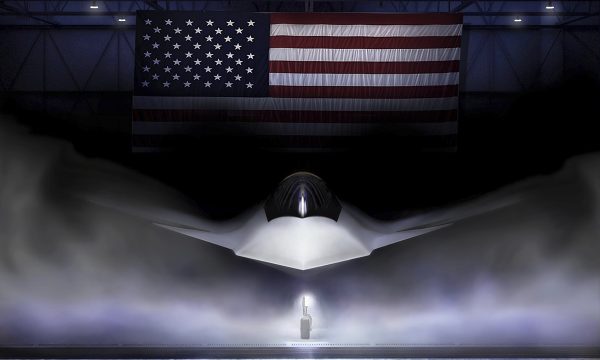
Graphical rendering shows the Next Generation Air Dominance (NGAD) Platform, the F-47. Photo: VCG
By Liu Xuanzun and Liang Rui | Global Times | March 23, 2025
The US’ recent announcement of the F-47 fighter jet has drawn intensive analyses from Chinese military affairs experts and observers, who acknowledged the aircraft being a real sixth-generation fighter jet for featuring typical characteristics such as a tailless design, but they also raised questions over its potentially limited stealth capability, relatively small size, and the US’ selection of Boeing to build the warplane.
The Pentagon has awarded the contract for the US Air Force’s Next Generation Air Dominance future fighter jet, known as NGAD, to Boeing, US President Donald Trump announced Friday, US news outlet Defense News reported on Saturday.
The sixth-generation fighter, which will replace the F-22 Raptor, will be designated the F-47, Trump said. It will have “state-of-the-art stealth technologies [making it] virtually unseeable,” and will fly alongside multiple autonomous drone wingmen, known as collaborative combat aircraft, Defense News reported.
After reviewing the artist renderings of the F-47 released by the US Air Force, Zhang Xuefeng, a Chinese military affairs expert, told the Global Times on Sunday that the F-47’s appearance conforms to the general development trend of the sixth-generation fighter jet concept. For example, it does not feature any vertical tails, which is an attempt to further improve its stealth capability in all directions. It has a flat nose and a lifting-body fuselage. These are all important characteristics of a sixth-generation fighter jet.
Zhang added that manned-unmanned teaming is a core sixth-generation feature, and one the F-47 includes.
However, a pair of canards can be observed in front of the F-47’s main wings, and this will more or less impact the aircraft’s stealth, Zhang noted. Reiterating that an important trend for sixth-generation fighter jets is to remove vertical tails and use a supersonic flying wing configuration to boost stealth, Zhang said that new mechanisms are needed to act in the place of vertical tails to control the aircraft, such as movable wingtip. But the F-47 opted to use canards, a relatively old technology often found on previous generations of aircraft. He suggested Boeing may lack the tech base to develop new control methods and relies on outdated design choices.
In December 2024, videos and photos emerged on social media allegedly showing two types aircraft with new designs have conducted test flights in China. Despite no official announcements, many called them China’s “sixth-generation fighter jets.” Both of them appear to have removed vertical tails and also do not have canards. One of them, resembling a ginkgo leaf in appearance, looked far larger than its J-20 escort.
Wang Ya’nan, chief editor of Beijing-based Aerospace Knowledge magazine, told the Global Times on Sunday that comparing with the size of the canopy and the front landing gear, it can be analyzed that the overall size of the F-47 is not likely much larger than the F-22. It means that the F-47 is still a tactical aircraft, rather than a large, multipurpose aerial platform capable of conducting campaign-scale missions like the “ginkgo leaf” aircraft.
Defense News, citing Air Force Chief Gen. Allvin, claimed that experimental versions of the NGAD have been flying for the last five years.
But Wang noted that there is no proof of this. Even the pictures depicting the F-47 are artists renderings rather than photos.
Wang also noted that Boeing has not won a major fighter jet program for decades. Its F-15 and F/A-18 fighter jets are from McDonnell Douglas which was merged into Boeing, and Boeing’s own X-32 fighter jet lost to the F-35 from Lockheed Martin in bidding. Boeing’s other projects, such as the 737 MAX airliner and KC-46 tanker aircraft also encountered many issues recently. “Having a company like this to lead a sixth-generation program is actually very risky,” he said.
In addition to US’ NGAD program, other countries are also developing sixth-generation fighter jets. France, Germany and Spain are in the Future Combat Air System program to develop a sixth-generation fighter jet, while the UK, Italy and Japan have a sixth-generation Global Combat Air Programme fighter project, according to Defense News. Russia’s sixth-generation efforts have also surfaced in TASS reports.
Wang said the US is moving fastest with the F-47, while other nations lag. With China’s own jets already spotted in the sky, the outside world is now seeing China and the US in advanced stages of sixth-generation fighter jet development.
Five Factors Behind the Decline of US Military Shipbuilding
By Ilya Tsukanov – Sputnik – 23.03.2025
US business media have cited the USS Constellation frigate as a prime example of problems plaguing the industry, with the warship, slated for delivery in 2026, just 10% complete and already over budget. Here’s why turning the situation around won’t be easy.
Post-Cold War Decline
American military shipbuilding peaked in the 1980s, with 150 major warships displacing over 1.2M tons added to the fleet during the decade, including three Nimitz-class carriers, Los Angeles-class attack subs, Ohio-class SSBNs and Ticonderoga, Arleigh Burke, Spruance and Perry-class destroyers, cruisers and frigates.
After the Cold War ended, the US cut its Navy in half, closed shipyards, and lost skilled workers against the background of the country’s broader deindustrialization and transition to a service economy.
Monopolization
In the 90s, large shipyards including Avondale, Fore River, Todd Pacific, Philadelphia, Charleston, and Mare Island were closed, downsized or converted for civilian use, creating monopolists among remaining producers like Huntington Ingalls Industries (HII) and General Dynamics, and jacking up contract costs.
For example, while $12.1B was allocated to shipbuilding in the 1984 Pentagon budget ($36B in 2024 dollars), last year’s budget was $32.8B, with far less to show for it.
Aging Infrastructure
Modern US shipyards are often straddled with aging infrastructure, impacting construction of new vessels, and the introduction of new technologies.
Skilled Labor Shortages
The loss of skilled tradesmen has taken a particularly heavy toll, with HII’s Newport News yard, building the Gerald Ford-class carriers, constantly facing a lack of welders, electricians, pipe and shipfitters.
A House Armed Services Committee hearing this month found that tough working conditions, and wages often just a couple dollars more than those at fast-food joints, are making it difficult for the industry to retain workers. Naval engineers are also underpaid and underappreciated.
Design Flaws, Red Tape
Design issues have turned some vessels, like the Zumwalt destroyer, Ford-class carriers and Littoral Combat Ships (LCSs) into costly nightmares, shrinking acquisition of Zumwalts from 32 to 3, and LCS warships being already being phased out after a decade or less of service.
The result? Major cost overruns, program delays and bureaucracy slowing acquisition to a crawl, even as manufacturers collect bigger and bigger paydays.
Europe Will Spend Itself Into ‘Bankruptcy’ If It Tries to Meet NATO’s Draconian New Defense Demands
By Ilya Tsukanov – Sputnik – 23.03.2025
NATO is planning to ask its European and Canadian members to boost their weaponry and equipment stocks by about 30% over the next several years, informed sources have told Bloomberg. Sputnik asked a pair of leading German and French observers what this would mean for a region already suffering economic malaise and industrial decline.
Key alliance members like Germany and France would amass an unsustainable fiscal burden, be forced into debt and have to slash social programs if they accept NATO’s call for a 30% bump in new arms and equipment spending, AfD MP Dr. Rainer Rothfuss told Sputnik.
“We can take the example of Germany, where we had a kind of financial policy coup d’état this week” after the Bundestag voted to change the Basic Law to lift debt restrictions for defense spending, Rothfuss, who is also a veteran geopolitical analyst and consultant, said.
“The budget restraints that were even inscribed into our Constitution needed to be changed to get the financial flexibility to invest so much in defense. That shows us that it’s not a matter of priority spending, [but] a matter of, I would say, bankruptcy should this kind of policy be followed in the coming years, not only by Germany but by other countries as well,” the politician warned.
“France, for example,” has “an even more restrained budgetary situation,” Rothfuss said, “struggling economically to keep industry jobs,” and like Italy, should be investing in the competitiveness of its industries, not throwing money away on defense at a time when the security crisis in Europe is potentially closer to a peace deal than ever.
As for Germany, if its industrial decline worsens, it won’t be able to fund the EU to the tune of 25% of bloc spending, which would have serious knock-on effects for other members, the MP warned.
Jacques Sapir, director of studies at the Paris-based School for Advanced Studies in the Social Sciences, says a 30% bump may not seem like a lot, and even manageable by some countries, like France, given the large-scale decline in NATO stockpiles of 40-60% after the end of the Cold War.
But others, like Italy, Belgium, Germany and the Netherlands may need between a 30%-50% increase in outlays, given the decline in defense production over the past three decades, he said, adding that this could take between three and five years to accomplish for countries like France, Germany and the UK, and probably more for Canada.
Last month, Bloomberg calculated that a European defense buildup and the continuation of the proxy war against Russia without US assistance could cost up to $3 trillion over ten years – a massive burden for a region suffering from perpetual economic stagnation and widespread deindustrialization.
Scorch Marks in the Sand

Yemeni Warrior Rejoicing over a Slain MQ-9 Reaper
By William Schryver – imetatronink – March 22, 2025
Javelin, Stinger, M-777 howitzer, HIMARS, Excalibur, Switchblade, all manner of electronic warfare gizmos and counter-battery radars, Bradley IFVs, Stryker, Leopard, Challenger, Abrams, Patriot, JDAMs, HARMS, Storm Shadow, ATACMS … I’m sure I’m forgetting some.
Oh, yeah … remember in early 2022 when the unveiling of the Bayraktar strike drones was hailed with great fanfare? They were predicted to be the bane of the Russian army. Instead, it was a major embarrassment for the Turks.
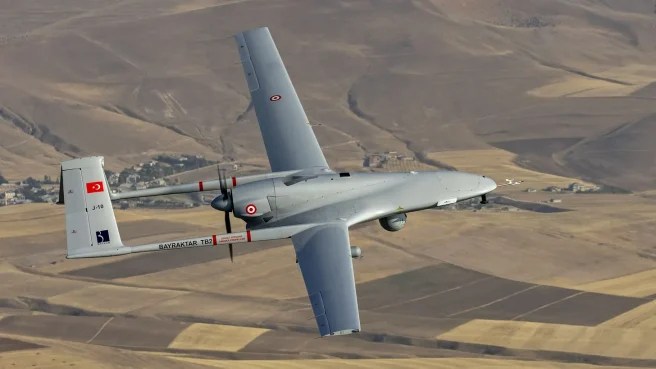
Turkish Bayraktar TB2 Surveillance and Attack Drone
That said, over the past year or so, those “savage barbarians” down in Yemen have shot-down a baker’s dozen of the once-vaunted US MQ-9 Reaper drones – supposedly vastly superior to the Bayraktar TB2.

US MQ-9 Reaper Surveillance and Attack Drone
In any case, all of these things represent top-shelf front-line US/NATO war stuff that has been objectively proven inferior in the crucible of protracted high-intensity warfare. Many are simply ill-suited for the current state-of-play in the military realm, as it has been revealed over the course of the war in Ukraine.
Before this war began, the almost-universal belief was that US/NATO weaponry and equipment were far and away superior to anything the Russians could put on the battlefield.
That unfounded faith in the unrivaled supremacy of western arms has now been shattered — although we already see the think-tank apologists fashioning their strained rationalizations.
Nevertheless, when one examines in aggregate the implements of war the US/NATO have provided to Ukraine, the overwhelming majority consists of the very stuff every military in NATO would field in a war against Russia, or anyone else, for that matter.
Here is a sobering truth: if the Armed Forces of Ukraine could make one wish, it would be to respawn as the army and abundant quantities of effective and durable Soviet equipment they had in February 2022. That was, all things considered, the strongest army they would ever have. And it was, in great measure, squandered on the altar of a misguided commitment to NATO field doctrines that repeatedly proved misconceived and ill-adaptive to the war that actually ensued, as well as the war as it has subsequently evolved.
So, in the case of the Ukraine War, we see attested two now-indisputable facts:
1) US/NATO weaponry and equipment is FAR LESS FEARSOME than was previously believed by the supposed “military experts” in the world. It has either failed abysmally or vastly underperformed in virtually every case.
2) US/NATO war doctrine has been demonstrated to be something quite a bit less than the greatest expression of the martial arts since Napoleon at the Battle of Austerlitz. The disastrous NATO/AFU “counteroffensive” in Zaporozhye in summer 2023 and the catastrophic blunder of the Kursk Kamikaze Incursion in summer 2024 have laid waste to the mythology of US/NATO military prowess.

Napoleon at Austerlitz Accepting the Surrender of Francis II
Now, here in the early spring of 2025, we see the United States, with Donald Trump again at the helm, trying to soothe the sting and obfuscate the reality of the resounding defeat its strategic designs and battlefield arms have suffered against Russia.
And, after weighing all options and considerations in the balance, the Masters of Declining Empire have decided beating up on Iran is the right medicine for what ails them.
I mean, after all, the Russians never had to face them, and the Iranians certainly cannot pose a credible threat to our decades-old F-15s, F-16s, F/A-18s, F-22s, F-35s, B-52s, B-1s, B-2s, Tomahawks, etc., not to mention the almighty US Navy.
Everybody KNOWS this to be true. Right?
And even though the Iranians have already proven to be able to defeat all manner of US and Israeli air defenses with their upper-tiers of ballistic missiles … well, if we just have Pete Hegseth give them a proper pep-talk, those interceptors that failed during the reign of the imbecile Joe Biden will strike down every single Muslim Missile they see. American air defense interceptors will be made great again. Hail to the Chief!
As for the Iranian air defenses … well, everyone also knows the Israelis already destroyed them. Right? They told us all about it – how the heroic Israeli F-35s and F-15s stormed across the Tigris into the heart of Iran and blew to smithereens all those S-300s and missile factories. They even showed pictures of scorch marks in the sand to prove it.
Anyway, the point is that America needs to go to war again in an attempt to erase the stain of having lost to the Russians, just as going to war against the Russians was meant to erase the stain of having lost to the Afghanis, just as going to war against Iraq and Afghanistan was meant to erase the stain of having lost to the Vietnamese. And … well, you know the drill by now.
You should also know what they say about the best laid plans of mice and men. Nothing ever goes as planned. And I strongly suspect the next war of American redemption will not be a reversal of the prevailing trend.
Will the Nationalists Turn Against Zelensky?
Nicolai Petro and Glenn Diesen
Glenn Diesen | March 22, 2025
I had a conversation with Prof. Nicolai Petro regarding the complicated relationship between Zelensky and the nationalists. Zelensky, much like Poroshenko, initially opposed the nationalists. Yet, a partnership was formed after the nationalists threatened Zelensky. As the war is now coming to an end, the partnership will unravel and the nationalists may turn against Zelensky.
‘Gaza must not become a battleground for political game,’ says Chinese envoy to UN
Global Times | March 22, 2025
Fu Cong, China’s permanent representative to the United Nations, said at a Security Council Briefing on Friday that China is gravely concerned about the breakdown of the hard-won ceasefire in Gaza. “Gaza must not become a battleground for political game. Civilian lives must not be sacrificed for political calculations. A lasting ceasefire must be realized in Gaza,” the Chinese envoy said.
The resumed fighting in Gaza has sparked widespread concern and apprehension in the international community. Since March 17, Israel has carried out large-scale airstrikes, renewed its ground offensive, and occupied central Gaza. Israel has also cut off access to humanitarian supplies and electricity in succession, causing massive casualties and worsening the already grave humanitarian disaster, Fu said.
“Securing a lasting ceasefire is the best way to save lives and bring hostages home, and it is an overriding priority,” he noted, while urging Israel to abandon its obsession with the use of force, immediately cease its military operations against Gaza, and lift blockade on the access of humanitarian supplies into Gaza.
Meanwhile, the situation in the West Bank is equally critical, the Chinese envoy added. Over the past two months, continued Israeli military operations have emptied by force multiple Palestinian refugee camps, displacing over 40,000 people. Israel should cease its attacks on the West Bank, stop settlement activities, and effectively curb settler violence, Fu noted.
Fu reiterated that implementing the two-State solution is the only viable way to resolve the Palestinian question. The international community should step up efforts to promote the political process of the two-State solution and provide robust guarantees. China supports the Gaza recovery and reconstruction plan jointly initiated by Egypt and other Arab states, and supports the commencement of rebuilding in accordance with the principle of Palestinians governing Palestine. China opposes the forced removal of Palestinian people, and opposes any attempt to annex the territories of Gaza or the West Bank, Fu noted.
Hamas said on Friday it was reviewing a US proposal to restore the Gaza ceasefire as Israel intensified a military onslaught to press the Palestinian militant group to free remaining Israeli hostages, Reuters reported. Three days after Israel effectively abandoned the two-month-old truce, Israeli Defence Minister Israel Katz said the military was intensifying its air, land and sea strikes and would move civilians to the southern part of Gaza.
Sudzha Gas Pumping Station Attack: European Provocation or Ukraine’s Resistance to Peace?
Sputnik – 22.03.2025
The Ukrainian Army is increasingly divided, with one faction still operating normally, while the other is spiraling out of control, French war correspondent Laurent Brayard said, commenting on the recent attack on the Sudzha gas pumping station in Russia’s Kursk region.
“Ukrainians, with the Bandarization of the country, are following a logic of revenge and hatred, and there is an uncontrollable side to it,” he said.
If peace negotiations occur, there is a threat of uprisings within Ukraine itself, Laurent Brayard stressed. Turkish historian Mehmet Perincek sees the attack as a European provocation to prolong the war.
French journalist Christelle Neant and Saudi military analyst Faisal Al-Anzi argue that Ukrainian strikes on energy infrastructure are deliberate provocations aimed at derailing peace efforts, with Ukraine failing to respect agreements.
Brazilian analyst Marco Antonio Coutinho emphasizes the devastating impact of these attacks on peace negotiations, discrediting Volodymyr Zelensky’s intentions and inflicting damage on neighboring countries that depend on Russian gas.
Argentine expert Juan Venturino concludes that Ukraine’s defeat in the conflict is inevitable, but Kiev continues to resist peace talks, resulting in unnecessary suffering.
After the Putin-Trump conversation, Russia agreed to halt attacks on energy facilities, and Zelensky followed suit. However, the next day, Ukrainian troops targeted an oil pumping station in Russia’s Krasnodar region. The Sudzha attack marks the second violation.
Geography

The Middle East
By William Schryver – imetatronink – March 21, 2025
So the US is sending Carrier Strike Group One (CVN-70 USS Carl Vinson) to the Middle East, leaving CSG-5 (CVN-73 USS George Washington) to “hold the fort” in the western Pacific from the semi-safe environs of its quasi-permanent berth in Yokosuka, Japan.
All the Washington does is sail back and forth between San Diego and Yokosuka every so often to give the impression it’s doing something meaningful. Otherwise I’ve seen no indication for several years that it is anything more than a training and parade vessel.
In any case, the Vinson is headed to the Arabian Sea, and perhaps points beyond. (That remains to be seen.)
Meanwhile the deployment of CSG-8 (CVN-75 USS Trembling Puppy) has been extended, even as it remains bottled up in the northern reaches of the Red Sea, launching air strikes on Yemen from ~1000 km away, with USAF refueling tankers at the ready as needed.
The Yemeni have launched a few modest packages of antiquated drones and antiship cruise missiles in the general direction of the Trembling Puppy – all of which have been relatively easy pickings for the cruiser and destroyers and combat air patrol.
But, keep in mind, even though these old and slow Yemeni drones and missiles have little chance of scoring a hit from 1000 km away, the carrier strike group ships and planes still have to shoot at every one of them!
So every Yemeni strike package of a couple dozen missiles will deplete CSG-8’s munitions magazines by AT LEAST a corresponding number of air defense missiles, and quite possibly TWICE as many, according to standard practice of firing two interceptors at each threat.
CSG-8’s magazine depth has already been substantially depleted over the course of the past two weeks — and remember, the US Navy cannot replenish its vertical launch systems at sea.
And, of course, if military operations against Iran are the ultimate objective, then at some point the Trembling Puppy and its entourage are going to have to leave the cozy waters between Jeddah and the Gulf of Suez, and run the gauntlet of the Gate of Lamentation (Bab el-Mandeb).

The Gate of Lamentation (Bab el-Mandeb)
That’s when things could get more interesting. Because it’s a pretty tight squeeze to pass through. A big deep-draft aircraft carrier can’t just run at full speed, zig-zagging back and forth. It has to stick to the navigable channel.

Navigable Shipping Channels in the Bab el-Mandeb
In the relatively open waters north of Jeddah, there is quite a bit of room for maneuver. But in the straits, you’re restricted to a narrow band — and most significantly, potential Yemeni missile launching sites are only ~200 km away. A more substantial strike package of 50 or so drones, antiship cruise missiles, antiship ballistic missiles, and fast boat and surface drone attacks will get there a whole lot faster, and with a much better chance of actually hitting something.
So, even though CSG-8’s odds of passing through unscathed still probably remain pretty good, there is unquestionably a considerably elevated risk compared to hiding out at the mouth of the Gulf of Suez.
But let’s suppose they sail right through the Bab el-Mandeb with minimal difficulties … then what? You join up with CSG-1 in the Arabian Sea and attempt long-distance strikes into southern Iran — strikes that would still require air-refueling to have any meaningful reach?
Because you sure as hell aren’t going to sail a couple carrier strike groups into the Persian Gulf. And anyone who believes otherwise is drowning in delusion. I mean, just look at the damn map! The Iranians have potent fire control over the passage from the Gulf of Oman, through the Strait of Hormuz, and throughout the entire Persian Gulf.
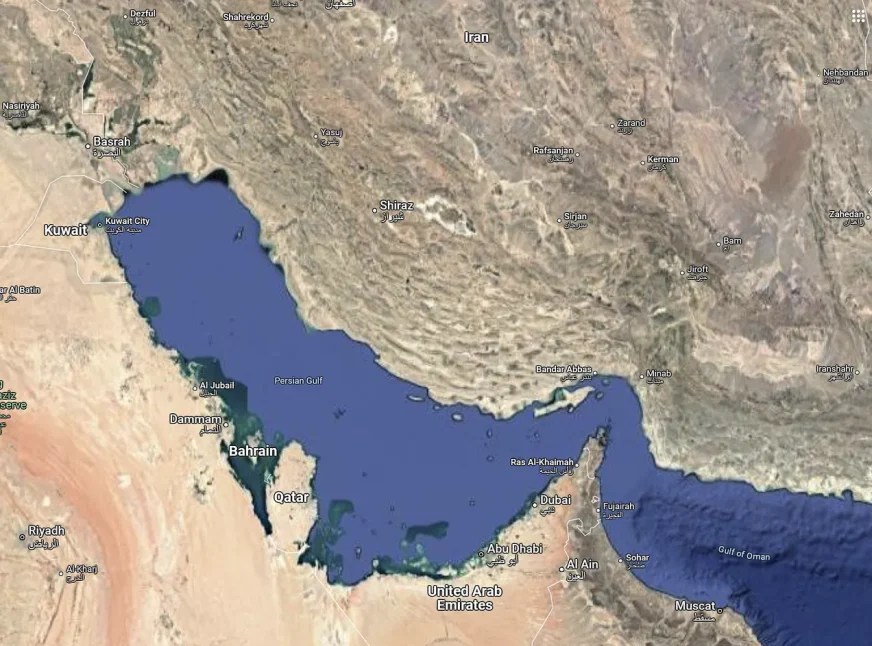
Strait of Hormuz / Persian Gulf
So I ask, in all seriousness, what exactly are two US Navy carrier strike groups going to do in the context of a no-holds-barred war against Iran?
To me, the entire concept screams of hubris running blindly into catastrophe.
If the US is foolish enough to start a big war against Iran, then 2025 is likely to demonstrate yet again that, combined with firepower, geography is the indomitable god of war.
Azov Gaining Power is ‘Symptom of Collapse’ of Remains of Ukraine’s Civil Society

Sputnik – 21.03.2025
The destruction of the gas pumping station in Sudzha by Ukraine makes it look like Volodymyr Zelensky has “limited control” over the Ukrainian military and “limited to no control” over the neo-Nazi “Azov* forces,” USAF Ret. Lt. Col. Karen Kwiatkowski tells Sputnik.
Due to their belief in their superiority over the rest of the Ukrainian troops, Azov militants “believe that the war was theirs, always, not the politicians, and certainly not Zelensky’s as a propped-up politician who actually ran on enforcing the Minsk II treaty, a ‘peace’ platform.”
“I think Azov, like many effective, violent and nationalistic military groups, disrespect politicians on principle, as compromisers and double dealers. Traditionally, these are the ‘generals’ that the politicians fear, not the other way around,” says Kwiatkowski, a former US Department of Defense analyst.
Thus, there appears to be a danger of Azov exercising the “real political power” in Ukraine.
“It is a symptom of imminent collapse of what is left of Ukraine’s civil and political society, and it underlines the real problem that [US President Donald] Trump will have to face and has not yet — and that is how to help Ukraine recover a liberal and rights-based society at the conclusion of hostilities,” Kwiatkowski says.
“The anger of the Azov will not be quenched, even after Zelensky is gone and a new president elected.”
Featured Video

More Iran War fallout: Maritime insurance industry shifts from London to China
or go to
Aletho News Archives – Video-Images
From the Archives
The Biggest Threat to Peace in Middle East
By Dr. Elias Akleh* | Sabbah Report | May 24, 2010
A build up of heightened tension in the Middle East is escalating in the last few weeks. American and Israeli postures towards Lebanon, Syria, and Iran have become more threatening. Listening to speeches of political leaders one hears talks only about war not peace. Iranians and Israelis are continuously training hard for a possible showdown. Both sides are conducting extensive war games every month. This led Syrians to claim that Israel is preparing for a soon-to-come another war. The Jordanians also are warning that current stalemate of the peace process is an indication of a war breaking out this summer. The Russian President and his army chief hinted, a few months ago, that the US and Israel were planning for an attack on Iran.
Indeed Iran is, as it has been for last few years, the target of most of the threats and accusations of supporting terrorism. Escalating incitement against Iran the American Defense Department sent last month (April) to Congress a report on Iran’s military claiming Iran could develop intercontinental ballistic missiles capable of reaching the US by 2015.
Ignoring the fact that N. Korea, India, Pakistan, and Israel are proven to have nuclear weapons while Iran does not, the US Secretary of State Hillary Clinton chose in her speech, to the nuclear Non-Proliferation Treaty review conference at the UN, to focus on Iran’s alleged nuclear ambitions putting the whole world at risk as she put it. According to Clinton Iran’s acquisition of nuclear weapons, rather than Israel’s more than 200 nuclear bombs, is destabilizing the Middle East. She called on the world’s nations to rally around US efforts to hold Iran, not other nuclear countries, to account.
The accusation that Usama Bin Laden is living comfortably in Iran had received a boost after the broadcast of a documentary called “Feathered Cocaine”. This echoed the June 2003 claims of the Italian newspaper Corre de la Sierra that Bin Laden was in Iran according to some intelligence report, and according to Richard Miniter’s book “Shadow War”. … continue
Blog Roll
 Aletho News
- The coming military and psychological unravelling?
- Iran has the last laugh
- More Iran War fallout: Maritime insurance industry shifts from London to China
- US-Israeli aggression on Iran triggers review of GCC countries’ investment pledges to Washington
- Russia slams UK plan to seize tankers suspected of carrying its oil
- Pakistan ramps up food exports to Persian Gulf nations as war deepens food insecurity
- Iran submits response to US plan, sets terms for war’s end: Tasnim
- US vs Iran: Kharg Island Talk — Bluff or Escalation? Ex-Military Officer Weighs In
- Zelensky unnecessarily involves Ukraine in the Middle East crisis
- Turkish tanker blacklisted by Ukraine hit in drone attack – media
- If Americans Knew
- ‘No Innocent Children’: Far-right Israeli Lawmaker Defends Killing of Palestinian Family
- Mossad’s promises helped Netanyahu convince Trump that Iran could be toppled
- US Arms Control Official Refuses To Comment When Asked If Israel Has Nuclear Weapons
- Veterans warn US landing could be ‘more Gallipoli than Vietnam’
- Israel may be committing war crimes in Lebanon – Not a ceasefire Day 167
- In the West Bank, life is a constant battle – 3 articles
- Jacob Reses, one of the most powerful pro-Israel operatives in Trump’s Washington
- Israeli-US assaults kill or injure 87 children a day – Not a ceasefire Day 166
- ‘Forever live by the sword’: Understanding Israelis’ massive support for Iran war
- UN’s special rapporteur on human rights says Israel is systematically torturing Palestinians
- No Tricks Zone
- Devastating Assessment Of Comirnaty Vaccine By Former Senior Pfizer Europe Toxicologist
- New Study: CO2 Is ‘Effectively Negligible’ As An Explanatory Climate Change Factor Since 2000
- Former Pfizer Toxicologist Dr. Helmut Sterz Tells Bundestag Hearing Pfizer Vaccine Should Have Never Been Approved
- Energy Expert: Germany’s Nuclear Phaseout Was A “500 Billion Euro Mistake”
- New Research: South Australia’s Mid-Holocene Sea Surface Temperatures Were 4°C Warmer Than Today
- Storing Green Energy To Last Germany 10 Days Would Require A 60-Million Tonne Battery
- New Studies: UK Sea Levels Were 4 Meters Higher Than Today During The Mid-Holocene
- Destructive Green New Deal: German Energy And Metal Group Warns Of Drastic Crisis
- New Study Documents A 20-Year Pause In Arctic Sea Ice Decline – Driven By Internal Variability
- Wake-up Call: Survey Shows Majority Of Germans Now Favor Postponing Climate Targets!
 Aletho News