The Nuclear Disaster That Could Destroy Japan … and the World
By HIROSE TAKASHI | CounterPunch | April 25, 2011
Translated by Doug Lummis
The nuclear power plants in Japan are aging rapidly; like cyborgs, they are barely kept in operation by a continuous replacement of parts. And now that Japan has entered a period of earthquake activity and a major accident could happen at any time, the people live in constant state of anxiety.
Seismologists and geologists agree that, after some fifty years of seismic inactivity, with the 1995 Hanshin-Awaji Earthquake (Southern Hyogo Prefecture Earthquake), the country has entered a period of seismic activity. In 2004, the Chuetsu Earthquake hit Niigata Prefecture, doing damage to the village of Yamakoshi. Three years later, in 2007, the Chuetsu Offshore Earthquake severely damaged the nuclear reactors at Kashiwazaki-Kariwa. In 2008, there was an earthquake in Iwate and Miyagi Prefectures, causing a whole mountain to disappear completely. Then in 2009 the Hamaoka nuclear plant was put in a state of emergency by the Suruga Bay Earthquake. And now, in 2011, we have the 3/11 earthquake offshore from the northeast coast. But the period of seismic activity is expected to continue for decades. From the perspective of seismology, a space of 10 or 15 years is but a moment in time.
Because the Pacific Plate, the largest of the plates that envelop the earth, is in motion, I had predicted that there would be major earthquakes all over the world.
And as I had feared, after the Suruga Bay Earthquake of August 2009 came as a triple shock, it was followed in September and October by earthquakes off Samoa, Sumatra, and Vanuatu, of magnitudes between 7.6 and 8.2. That means three to eleven times the force of the Southern Hyogo Prefecture Earthquake.

All of these quakes occurred around the Pacific Plate as the center, and each was located at the boundary of either that plate or a plate under its influence. Then in the following year, 2010, in January there came the Haiti Earthquake, at the boundary of the Caribbean Plate, pushed by the Pacific and Coco Plates, then in February the huge 8.8 magnitude earthquake offshore from Chile. I was praying that this world scale series of earthquakes would come to an end, but the movement of the Pacific Plate shows no sign of stopping, and led in 2011 to the 3/11 Earthquake in northeastern Japan and the subsequent meltdown at the Fukushima
There are large seismic faults, capable of producing earthquakes at the 7 or 8 magnitude level, near each of Japan’s nuclear plants, including the reprocessing plant at Rokkasho. It is hard to believe that there is any nuclear plant that would not be damaged by a magnitude 8 earthquake.
A representative case is the Rokkasho Reprocessing Plant itself, where it has become clear that the fault under the sea nearby also extends inland. The Rokkasho plant, where the nuclear waste (death ash) from all the nuclear plants in Japan is collected, is located on land under which the Pacific Plate and the North American Plate meet. That is, the plate that is the greatest danger to the Rokkasho plant, is now in motion deep beneath Japan.
The Rokkasho plant was originally built with the very low earthquake resistance factor of 375 gals. (Translator’s note: The gal, or galileo, is a unit used to measure peak ground acceleration during earthquakes. Unlike the scales measuring an earthquake’s general intensity, it measures actual ground motion in particular locations.) Today its resistance factor has been raised to only 450 gals, despite the fact that recently in Japan earthquakes registering over 2000 gals have been occurring one after another. Worse, the Shimokita Peninsula is an extremely fragile geologic formation that was at the bottom of the sea as recently as the sea rise of the Jomon period (the Flandrian Transgression) 5000 years ago; if an earthquake occurred there it could be completely destroyed.
The Rokkasho Reprocessing Plant is where expended nuclear fuel from all of Japan’s nuclear power plants is collected, and then reprocessed so as to separate out the plutonium, the uranium, and the remaining highly radioactive liquid waste. In short, it is the most dangerous factory in the world.
At the Rokkasho plant, 240 cubic meters of radioactive liquid waste are now stored. A failure to take care of this properly could lead to a nuclear catastrophe surpassing the meltdown of a reactor. This liquid waste continuously generates heat, and must be constantly cooled. But if an earthquake were to damage the cooling pipes or cut off the electricity, the liquid would begin to boil. According to an analysis prepared by the German nuclear industry, an explosion of this facility could expose persons within a 100 kilometer radius from the plant to radiation 10 to 100 times the lethal level, which presumably means instant death.
On April 7, just one month after the 3/11 earthquake in northeastern Japan, there was a large aftershock. At the Rokkasho Reprocessing Plant the electricity was shut off. The pool containing nuclear fuel and the radioactive liquid waste were (barely) cooled down by the emergency generators, meaning that Japan was brought to the brink of destruction. But the Japanese media, as usual, paid this almost no notice.
~
Hirose Takashi has written a whole shelf full of books, mostly on the nuclear power industry and the military-industrial complex. Probably his best known book is Nuclear Power Plants for Tokyo in which he took the logic of the nuke promoters to its logical conclusion: if you are so sure that they’re safe, why not build them in the center of the city, instead of hundreds of miles away where you lose half the electricity in the wires?
Douglas Lummis is a political scientist living in Okinawa and the author of Radical Democracy. Lummis can be reached at ideaspeddler@gmail.com
Nuke protester murdered in India as police open fire on peaceful crowd
By Rady Ananda | COTO Report | April 22, 2011
Authorities responded to peaceful protest of a proposed nuclear power plant site in India by shooting at the crowd, killing one and injuring eight. Over sixty others were arrested. Killed by police on Monday, the body of 30-year-old Tabrez Sayekar was carried through the streets at a funeral march attended by more than 2,000 people on Wednesday. No one has been charged in his murder.
The Nuclear Power Corporation of India Limited (NPCIL), along with the French nuclear energy giant, Areva, plan to build the world’s largest nuclear power plant complex generating nearly 10,000 megawatts of electricity in an agricultural area at Jaitapur in the Ratnagiri district of Maharashtra.
In December, the world renowned Tata Institute of Social Sciences published a social and environmental assessment of the proposed project conducted by Jamsetji Tata Centre for Disaster Management last April, calling it a potential disaster. According to DNA India, the report charges that the government has hidden and suppressed important and relevant information, and “has subverted facts” by labeling the proposed 968-hectare site as barren land though the locals use it for agriculture, horticulture and grazing.
“‘Farmers and horticulturists have spent lakhs of rupees to make the land cultivable over years and even the government has supported them. This includes Alfonso mangoes and cashews. Now, when the time has come for them to reap their investments, they are afraid of losing their land as the government now claims it is barren land,’ says the report. It adds that even the fisherfolk of the region are against the project.”
Even the level of seismicity was changed, from a high severity earthquake zone to moderate seismic severity zone.
“‘The government is not only hiding facts, but also manipulating them,’ the report alleges.”
NPCIL, an agency of the Indian government, defends the moderate label. “Seismicity is one of the key criteria in site selection for nuclear power plants and the Jaitapur site meets the requirements for siting as stipulated in the atomic energy regulatory board’s code on safety,” it said in response to TISS.
However, last month, Times of India reported:
“[T]he Geological Survey of India shows that between 1985 and 2005, there were 92 earthquakes [in the area].
“The ground is unstable, say activists and geologists, and there is no guarantee that the government’s safeguards will protect the people and ecologically sensitive Konkan coast from a nuclear disaster should there be another earthquake.
“Environmental activist Pradeep Indulkar said: ‘The third explosion at the Fukushima plant in Japan on Tuesday confirms that in the event of an earthquake, precautionary measures and safeguards will not avert a disaster. It is better not to have a nuclear power plant in this seismic zone region.’
“At Shivane village, 20 km from Jaitapur, Chandrakant Padkar remembers the day the earth shook and the road outside his house vanished. The unreported earthquake took place two years ago, and the village still bears the scars.”
Greenpeace India plans to deliver a petition to the Maharashtra Chief Minister on April 26, the 25th anniversary of the nuclear disaster in Chernobyl, Ukraine. You can sign the petition here.
“Instead of ignoring and ruthlessly suppressing the protest against the Jaitapur nuclear reactor park, Prithviraj Chavan, Maharashtra Chief Minister, needs to scrap the project. The CM needs to know that he cannot build Jaitapur against the people’s will when alternatives exist.”
Sane Response to Deadly Energy Source
Nuclear power is the deadliest, costliest form of energy on record, according to Dr. Benjamin Sovacool of Project Syndicate. “Not counting the Fukushima catastrophe, there has been more than one nuclear incident and $330 million in damage every year, on average, for the past three decades.”
In a policy brief published in January, Sovacool notes, “The nuclear fuel cycle involves some of the most dangerous elements known to humankind. These elements include more than 100 dangerous radionuclides and carcinogens such as strontium-90, iodine-131 and cesium-137, which are the same toxins found in the fallout of nuclear weapons.”
The damage done to Earth by nuclear accidents and waste is permanent, for a mere 20-30 years of electricity, a dirty secret that the nuclear industry has not resolved. In the U.S., for example, the waste is stored in holding pools at four to five times the pool’s capacity.
Despite the world’s clean water shortage, Sovacool reports:
“Nuclear plants use 25-50% more water per unit of electricity generated than fossil fuel plants with equivalent cooling systems…. The average US plant operating on an open–loop cooling system withdraws 216 Million litres of water every day and consumes 125 Million litres of water every day.
“Nuclear plants and uranium mining also contaminate water and the methods used to draw the water and exclude debris through screens kill marine and riparian life, setting in place a destructive chain of events for ocean/river systems.”
Der Spiegel writes, “The Chernobyl Exclusion Zone, for all the attention it gets, is far from the only nuclear no-go area on the planet.” In its recent catalogue of several now-uninhabitable spots on the planet as a result of nuclear use, leaks, waste and accidents, Spiegel documents thousands of square miles in the U.S., Germany, Kazakhstan, Japan, India, Britain and Northern Africa contaminated by radiation, areas which produce high rates of birth defects and cancers. Their report doesn’t even touch the depleted uranium used in the Middle East by the U.S. and its allies.
While we watch Fukushima’s radiation fall on the northern hemisphere, contaminating our milk and water in the U.S., Canada and Europe, it’s notable that, like previous nuclear accidents, governments lie about the severity. Fifty years after the UK’s worst nuclear disaster, experts advise that the radiation released was twice what was originally reported.
Chernobyl was no different, as a recent book published by the New York Academy of Sciences reveals. Government authorities reported 3,000 casualties from that disaster, but in Chernobyl: Consequences of the Catastrophe for People and the Environment, the authors conclude that, based on now available medical data, 985,000 people died as a result of the Chernobyl disaster, as of 2004. The researchers based their conclusions on 5,000 radiological surveys, scientific reports and health data.
Because of the Fukushima nuclear meltdown, EnviroVideo released a video based on that book: “Chernobyl: A Million Casualties.” Watch it at http://blip.tv/file/4922080.
Neither is Japan any different. Engineer Keith Harmon Snow writes:
“In a recent WikiLeaks diplomatic cable, politician Taro Kono, a high-profile member of Japan’s lower house, told U.S. diplomats that the Ministry of Economy, Trade and Industry (MITI) — the Japanese government department responsible for nuclear energy — has been ‘covering up nuclear accidents and obscuring the true costs and problems associated with the nuclear industry.’ In 2002 ‘the chairman and four executives of TEPCO, the company that owns the stricken Fukushima plant, resigned after reports that safety records were falsified.’”
Corporate-run governments will not stop destroying the planet for profit. It is up to humanity to do all in its power to end the ongoing ecocide. Sometimes this means putting your life on the line, as Tabrez Sayekar did on Monday, just short of the 25th Anniversary of the Chernobyl nuclear disaster.
The People Who Brought You Fukushima
Same Old Tricks From the Nuclear Gang
By SAUL LANDAU and JACK WILLIS | April 22, 2011
For 60 years the nuclear industry has promised the world cheap, safe and clean energy. As the Japanese government continues to extend its nuclear evacuation zone and with the eerie glow of the Fukishima plant as background, the pushers of nuclear power – including the President – still demand subsidies for new plants of Congress. As another Chernobyl-size disaster looms, the energy-fixated “problem solvers” continue to suffer from both temporary blindness and long-term amnesia – ignoring or down-playing the history of nuclear “mishaps.” […]
From the 1950s on, for example, “thousands of workers were unwittingly exposed to plutonium and other highly radioactive metals at the Department of Energy’s Paducah Kentucky Gaseous Diffusion Plant. Workers … inhaled radioactive dust while processing the materials as part of a government experiment to recycle used nuclear reactor fuel.” (Washington Post, August 22, 1999)
In July 2000, wildfires near the Hanford facility hit highly radioactive waste disposal trenches, raising airborne plutonium radiation levels in nearby cities to 1,000 times above normal. (http://www.lutins.org/nukes.html)
Compare those “little accidents” (multiply by a thousand) with the Chernobyl and now Fukishima catastrophes or with those who got cancer from the Three Mile Island (Pennsylvania) “mishap.” http://www.albionmonitor.com/9703a/3milecancer.html
The government nuclear agencies have shied away from doing the long-term studies of the impacts of low-level radiation. Indeed, in the 1970s they de-funded a study under the guidance of University of Pittsburg scientist Dr. David Mancuso when it became apparent he would find that the “precautions” taken were insufficient, and that low-level radiation (at government levels) had deleterious affects on human health.
The government did no health follow-up after the numerous “little” leaks, fires and “mishaps” that occurred routinely at the Rocky Flats plutonium trigger and Hanford nuclear weapons installations. Oh, they did at least check the radiation badges of the employees.
In 1981, we made a Public Television documentary: “Paul Jacobs and the Nuclear Gang.” In it, we documented how government officials obfuscated their failure to provide, as they promised, “cheap, safe and clean” energy and safe work environments in and around nuclear weapons facilities.
Jacobs had earlier reported on how the Atomic Energy Commission (AEC) and its successor three-letter agencies lied about, distorted, and then classified (thereby withholding) reports on the health impact of low level radiation.
One example provided in the film was Sergeant James Gates, who described how the army positioned men near the blast and had them cover their eyes. Bates said: “the blast threw me 15 feet into the air. It made all of us sick.” In 1978, he had terminal cancer.
Jacobs interviewed “downwinders” – those living in cities directly in the path of nuclear fallout after the Nevada tests. They described how hot hailstones pelted them after the blasts. Jacobs interviewed a man on horseback who told of large tumors growing from his neck right after his exposure.
In the 1950s and again in the early 1970s, Paul Jacobs inspected the government’s claims and then wrote award-winning articles featuring interviews with St. George, Utah residents. In this city directly east of the test site, Jacobs found inordinate numbers of cancer cases and a nuclear-nervous public. (“Clouds from Nevada,” The Reporter, May 16, 1957; (“Precautions Are Being Taken By Those Who Know,” The Atlantic, Feb. 1971)
In the film, Jacobs described how he surreptitiously acquired a classified document from a Public Health office in Las Vegas that revealed the Atomic Energy Commission knew “low-level radiation” constituted serious health hazards. Later, he found de-classified internal memos indicating why the government classified the health report: to keep the public from having to choose between nuclear tests and getting cancer.
In 1977, Jacobs’ doctors and his friend Linus Pauling (a chemistry Nobel prize-winner) concluded that Paul (a non-smoker) developed lung cancer during his exposure to “low level radiation” around the Atomic Test Site.
After 74 years, the evidence would lead one to conclude that “cheap safe and clean” sounds more like a condom ad than a believable promise from the nuclear gang. The public should think of two words that have been uttered in nuclear plants when “mishaps” occur. “Oops” and “duh.” And remember, there’s at least one Homer Simpson.
Saul Landau and Jack Willis also worked together on WILL THE REAL TERRORIST PLEASE STAND UP available through Cinema Libre Studio.
Related articles
Fukushima’s Boiling-Water Reactors Continue to Boil and a Sarcophagus Looms
By Mina Hamilton / Dissident Voice / April 20th, 2011
Japan’s Disneyland reopens.
Japan’s Prime Minister Naoto Kan makes a plea to his countrymen to “live life as normal”.
It would be churlish to deny scared kids or worried parents a hug from Mickey Mouse, if that’s what might console. But the proliferation of fantasies regarding the stricken Fukushima Daiichi plants continues at a ferocious pace – and behind-the-scenes, plans for a sarcophagus solidify.
The New York Times talks of the possibility of returning the land to a “greenfield” state. Denis Flory, a Deputy Director General of the International Atomic Energy Association insists Fukushima is not Chernobyl. At a recent meeting, Flory explains, “At Chernobyl a nuclear reactor exploded. In Japan… there may be…” The Deputy Director pauses and looks abashed, “some leaks, but containment is here.”
This absurd claim is made, despite the fact that the International Atomic Energy Association’s own data asserts that 70% of the radioactive fuel in reactor no. 1 is damaged. In reactor no. 2, 30% of the fuel is damaged and it’s 35% in reactor no. 3. (Damaged means crumbled, cracked and/or melted fuel. It is now accumulating at the bottom of the reactor vessels and impeding cooling of, as yet, undamaged fuel.)
Meanwhile, a spokesman for Japan’s Nuclear and Industrial Safety Agency opines that high radiation readings above the irradiated fuel pool at reactor no. 4 may be from “rainwater.”
And, Big News, on Monday, April 18, TEPCO admits its month-long, much-ballyhooed effort to cool the reactors isn’t working, hasn’t worked and won’t work. A new cooling system will have to be designed and installed to bring the temperature of the fractious reactors under control.
A staggering admission.
The term boiling-water-reactor has a new punch. At the Fukushima plants water inside reactors vessels 1, 2, and 3 is hot. In the hottest reactor the water temperature is 338 degrees Fahrenheit, well above the boiling point. (The other two reactors aren’t much cooler.) Weeks and weeks of spraying by helicopters and pumping have been to little avail.
Take the Japanese government’s, TEPCO’s, and the world media’s hard labors to create the belief that the situation is “improving.” Combine this comforting notion with good-old, ordinary denial, with a highly understandable human desire to deny the magnitude of the tragedy, and it’s hard to keep one’s eyes fully open, right on-the-ball.
But here it is before our eyes: Three reactors still reeling out-of-control. Three reactors whose coolant is at a roiling boil — much like the bubble-filled and steam-generating water all of us know from cooking up a bit of pasta for dinner. One of these reactors, no. 2, has a steel containment vessel that may be cracked. Plus, at reactor no. 4, one steaming, over-heated, spent fuel pool the concrete support of which is a tad sketchy.
Unlike our pasta water, in the case of the Fukushima reactors, the boiling water is contaminated with fission products such as cesium, strontium and plutonium. And said water with its toxic load has to go somewhere, i.e. outside the reactor. So at Fukushima there is an ongoing program of what in nuclear parlance is called “feed and bleed.” Or, in simple language, feed water into the reactor vessel and release radioactive steam to the environment. And then there’s the advertent leaks to adjacent turbine buildings, outside ditches, and, alas, the ocean.
The current TEPCO estimate is that this will go on a long time. Month in and month out. Probably, until December. Regular burps of radiation into the atmosphere and regular releases of radioactivity into the ocean for 6 to 9 months?
That’s the short term outlook.
The longer term is 10 to 30 years to remove all the fuel, cut up the reactor vessels, cart the contaminated pieces of steel away, cut up the contaminated concrete and lug that away, take the intact fuel somewhere (the Rokkasho reprocessing facility?) and do what with the damaged fuel? Leave it in place, as was done at Chernobyl? Where, 25 years after the Chernobyl explosion, radioactivity is currently seeping out, requiring the emplacement of a second, larger sarcophagus?
Fukushima, Chernobyl. It’s not a pretty picture.
In the meantime, why not cover-up those ugly skeletal remains at Japan’s crippled plants? With some improvised coverings and, down the road, a sarcophagus or two or three?
Recently, the sarcophagus-approach came a couple of steps closer with the arrival in Japan of two immense concrete pump trucks.
Each of these behemoths, known as 70z’s, weighs 190,000 pounds. They are manufactured by a German company, Putzmeister. In 1986 this company was responsible for the construction of the concrete sarcophagus around the graphite reactor at Chernobyl.
The 70z’s weigh so much they had to be transported by Russian Antonov’s, the world’s second-heaviest cargo planes. Previously used to transport the Russian space shuttle, the planes were specially sent from Russia to the US to pick up the hefty pumps. And where did these pumps come from in the US? From Los Angeles, CA and Atlanta, GA.
One of the pumps was pulled off of the construction site for the MOX-fuel fabrication facility being constructed by the French-government-owned company, Areva, at the US Department of Energy’s Savannah River Site in South Carolina. To interrupt a $4.86 billion dollar project (already 5-years behind schedule and $3 billion over-budget) is unprecedented.
Obviously, arrangements were made at high levels of the US, French, Russian and Japanese governments for the deal to go through. What was particularly telling about the deal?
It was already in the works by the end of March. At a time, when the Japanese government and TEPCO were endlessly intoning about getting the stricken Fukushima reactors “under control,” already the giant concrete pumps were being readied for transport to Japan.
On March 31, a spokesman for the company providing concrete for the MOX Fuel facility, was quoted in the Augusta Chronicle, “Our understanding is, they are preparing to go to the next phase and it will require a lot of concrete.”
March 31? “A lot of concrete?”
Of course, it never did make sense that such huge pumps would be necessary for cooling purposes. (Albeit the amazing stretch of the 70-meter crane would reduce radiation exposure of workers, as would impressive remote-control features.)
But why the need for the giant behemoth pumps flown in by Russian super-cargo plane? After all this was the company that poured concrete for the 10-mile-long Gotthard Tunnel burrowing under the Alps, between Switzerland and Italy. The company that, after the 1989 California earthquake, rebuilt the San Francisco-Oakland Bay Bridge. The company that built the world’s highest tower, the Burj Dubai.
And the only company in the world to have experience building a giant, nuclear- sarcophagus.
After the pumps arrived in Japan, a company spokesman was still saying the giant pumps were for cooling the Fukushima reactors. (For weeks a somewhat smaller pump, also a Putzmeister, was pouring water into the wrecked irradiated fuel pool of reactor no 4.)
When pressed by a CNN reporter, the spokesman admitted pouring concrete was a “plausible scenario.”
Throughout the disaster of the past five, going on six weeks, TEPCO, the Nuclear and Industrial Safety Agency and the Japanese government have seemed bumbling and inept to the point of absurdity. Behind the bland announcements, the silly re-assurances was a different reality: three-plus weeks ago, detailed, complicated plans were being made to stop some key work at the MOX fuel plant in South Carolina and arrange for the special transport of the immense concrete pumps to Japan.
What other secret plans are currently underway – that we will hear about a month from now, if we’re lucky?
What exactly is the proposed design for the sarcophagus or sarcophagi? Drawings up on the TEPCO site suggest a three-sided structure, one with a top and sides – but no bottom. That means the distinct possibility of melted fuel, if it is left on-site (as happened at Chernobyl), migrating downwards toward vital water tables and/or washing out to contaminate the sea. Toxins washing-down and out, continuously, for decades and decades and…
Japanese refugees in the required and voluntary evacuation zones, critics in the Japanese government, Japanese environmentalists, Tokyo residents, fishermen, abalone-divers, dairy farmers, agricultural workers and citizens of the world must demand more transparency regarding these critically important plans.
If the Fukushima clean-up project is left to the nuclear boys-in-the-back-room, the plan is bound to be contaminated. Contaminated by thinking distorted by the bottom-line – and warped by the desire to protect the nuclear industry.
Let’s not let that happen.
~
Mina Hamilton is a writer based in New York City. She is a contributor to several books including Critical Mass:Voices for a Nuclear-Free Future and Deadly Defense, an analysis of contamination issues at nuclear weapons facilities in the US. She can be reached at: minaham@aol.
Atomic Deserts
Everyone knows about Chernobyl, Three Mile Island and, now, Fukushima. But what about Semipalatinsk, Palomares and Kyshtym? The world is full of nuclear disaster zones — showing just how dangerous the technology really is.
A Survey of the World’s Radioactive No-Go Zones
By Michail Hengstenberg, Gesche Sager and Philine Gebhardt | Der Speigel | April 12, 2011
Wednesday, Mar. 28, 1979. In the Three Mile Island nuclear power station in Harrisburg, Pennsylvania, the nightmare scenario of nuclear physicists was about to unfold. At four in the morning, employees in the control room noticed the failure of a pump in the reactor’s water cooling loop. When a bypass valve failed to trip, water stopped flowing to steam generators, resulting in an emergency reactor shutdown. But the reactor continued to generate so-called decay heat. A relief valve opened automatically but then failed to close, allowing coolant to flow out at a rate of one ton per minute. The control panel erroneously indicated that the cooling system was functioning normally, meaning technicians initially failed to recognize the problem.
By 6 a.m., the top of the reactor core was no longer covered in cooling water — and the fuel rods began to melt. At the last moment, a technician noticed the problem and closed the relief valve. A full-scale meltdown was only barely averted.
Still, the series of events had a devastating effect: Not only was radioactivity released into the atmosphere, but contaminated coolant escaped into the nearby river. Cancer rates in the local population later rose dramatically. In addition, large parts of the reactor and the power plant site were contaminated. The clean-up operation in Harrisburg took 14 years and cost more than $1 billion. And the reactor ruins are radioactive to this day.
The case is instructive. It was the result of tiny construction errors and a small dose of human error. And now, as the world watches on in horror as the catastrophe in Fukushima continues to unfold, the debate on the safety of nuclear power has been reignited. The area around Fukushima will likely remain contaminated for decades, if not centuries. And many are once again wondering if the returns from nuclear technology justifies the risks. How can anything be considered under control which can so quickly mutate into an apocalypse?
Sadly, though, disasters like Three Mile Island and Fukushima are not as rare as one would hope. There have been plenty of atomic accidents resulting in significant radioactive leaks, spills and explosions. And the Chernobly Exclusion Zone, for all the attention it gets, is far from the only nuclear no-go area on the planet. A look at some of the worst incidents is enough to demonstrate just how high the price of nuclear energy and nuclear weapons truly is. … continue
Trials of Globalization: And We All Melt Down
We are now on the brink of the mother of all meltdowns in more ways than one.
Last weekend, The Times quoted Alan Hansen, a nuclear engineer and executive vice president of Areva NC, a unit of Areva, a French group that supplied reactor fuel to the Fukushima Daiichi nuclear power plan, who spoke before a private gathering at Stanford University. “Clearly,” he summarized, “we’re witnessing one of the greatest disasters in modern time.” What the on-going release of cancer-causing radioactive fragments means in terms of human health and the environment is only beginning to come to light.
It’s certainly not my expertise. What I do know is that, on top of the terrible calamities brought on by the tsunami and the scary portents of the radiation spewing into the air, the ocean, and into the ground surrounding Fukushima and beyond, we are facing an economic juggernaut that is likely to shatter the world’s fragile recovery. You don’t take out the world’s third biggest economy – until recently, the second — with no impact, despite the recent assurance by that reliable sage Timothy Geithner that the crisis in Japan would not hinder the U.S. recovery. (Meanwhile, Tim’s banking buddies are busy reviewing their clients’ exposure.)
Up until the last few days, media and stock market pundits continue to drool over the prospect of some $310 billion worth of new business anticipated to rebuild earthquake and tsunami-ravaged Japan. Newsweek featured an article by Bill Emmott, a former editor of The Economist, stating:
“Typically, if economic effects are measured simply by gross domestic product, natural disasters cause a short-term loss in output, thanks to the destruction of offices and factories and the disruption to transport links, but after just a few months they actually act like an economic stimulus package.”
Needless to say, these are far from typical times, and this is no typical disaster. Faced with the loss of a critical supply partner, many companies around the world are confronting a quite different reality. Japan is suffering huge shortages as production capacity shrivels and logistical issues mount–particularly in the are of transportation. The Financial Times reports that Japanese manufacturing activity plummeted to a two-year low in March, according to the Markit/JMMA purchasing managers’ index, which hit its worst low since its inception in 2001.
We’re not just talking about the now infamous Japan-made five components that go into the iPad 2 or the wafer material needed to manufacture semiconductor chips or the metallic paint needed to produce shiny red and black cars. I can attest that companies of all sizes find themselves in the same pickle, with normally efficient Japanese production and transportation chains hobbled by power interruptions, radiation fears, earthquake damage, and severe after-shocks. These days, many global shipping lines won’t even dock at Japan’s busiest ports, Tokyo and Yokohama, for fear of radioactive contamination. And that’s not just being paranoid. If their hulls pick up any radioactivity, they could be barred later from other ports, for example in the U.S.
Meanwhile, we’re scrambling here in the US. I can tell you first-hand, it’s not so easy to just trip over to Europe or China, and duplicate parts and processes proprietary to the secretive and justifiably possessive Japanese. It will take at least some months or more for global factories, big and small, that rely on their goods and expertise for even a small fraction of their processes to retool.
March’s U.S. employment numbers may look good to some, but wait until the impact of this economic tsunami starts to hit. Already, automakers as far afield as Louisiana, Mexico and Belgium are facing temporary shutdowns due to lack of parts. What happens when government treasuries already drained by the global banking industry have only empty hands to show the long-term and newly unemployed?
Worse, we face the specter of growing inflation as goods grow scarcer and the costs of developing alternative supply chains start to kick in. Semiconductor chip prices, which affect the price of everything from cars to iPods, already rose in March as a direct result of earthquake-induced scarcities, according to iSuppli Market Research. Compounding the problem, China is already resorting to price controls in a futile bid to quell its soaring inflation and, equally contrived, the U.S. Fed continues to pump cash and dump it into our non-performing banks.
Oh, and what about that big payday when we all get to rebuild the land of the rising sun? This goes way beyond scorched earth, people. Even if that private gathering of nuclear wonks at Stanford was wrong, and the environmental and health impacts in northern Japan prove to be negligible, there is still the question of how they are going to muster the moohlah for a vast reconstruction project. That’s on top of sharing the insurance burden of Fukushima with Tepco, the utility that owns the plant.
Newsweek’s Emmott is sanguine on this score: “Insurance pays for some of it, government spending and private investment the rest.” Already, the Japanese central bank offered a loan program worth $11.7 billion to financial institutions in the disaster area. But, bear in mind that the Japanese government has the highest debt of any developed country, running 200% of GDP.
Of course, Emmott has an answer for this too, suggesting the Japanese simply “borrow more” (sure ‘nuff) and impose a “special reconstruction tax”, assuming that the “Japanese people will be entirely prepared to make sacrifices and share the burdens”. Go tell that to the angry hoards gathering daily outside Tepco headquarters.
It’s possible the government will have to start cashing out their U.S. T-bills, which is a whole other story, since Japan and China have financed our government’s profligate ways for the past decade or so. One thing for sure is that foreign governments are not likely to rush into Japan with huge coffers of cash any time soon. The U.S. and European taxpayers are in no mood to spring for someone else’s Marshall Plan. And given their wretched history, China would be an unlikely savior for Japan, although strange things do happen.
To be fair, Emmott did get one thing right when he asserted, “The first, and most fundamental, lesson from other natural disasters is that the economy is the least important thing to worry about.” Under the circumstances, it’s not all that comforting a thought.
~
*The anonymous author is a journalist and businesswoman who lives in the Philadelphia area, who contributes occasionally to This Can’t Be Happening.
Powerful Aftershock Rocks Japan
By Stephen Lendman | April 9, 2011
Measuring 7.1 (one or more other reports said 7.4), rocked northeast Japan, causing more damage and disruption to a devastated area. It cut electricity to four million homes, disrupted power at two nuclear facilities, and according to Kyodo News:
“Radioactive water spilled from pools holding spent nuclear fuel rods at the Onagawa power plant in Miyagi Prefecture,” according to Japan’s Nuclear and Industrial Safety Agency (NISA).
For up to 80 minutes, power was lost at Onagawa and the Higashidori nuclear facility. “A small amount of contaminated water spilled on the floor (inside) all three (Onagawa) reactors….In all, water spilled or leaked at eight sections of the plant,” also run by Tokyo Electric (TEPCO). In addition, blowout panels designed to control pressure were damaged in reactor number three’s turbine building, TEPCO saying a complete damage assessment was ongoing.
Moreover, a Rokkasho village (Aomori Prefecture) spent nuclear fuel disposal facility also lost power temporarily. The extent of nuclear facility damage is unknown, except for sketchy and unreliable official reports.
As always, they say damage, new or earlier, poses no dangers. Already, in fact, Fukushima caused potentially apocalyptic ones, covered up to conceal their gravity, extending far beyond Japan and the Pacific rim.
Other reports also downplay them, including from The New York Times and Al Jazeera, often indistinguishable from and as unreliable as BBC, headlining (on April 8) “Japan quake causes radioactive spill,” saying:
“A powerful earthquake in northeast Japan rocked a nuclear plant, causing a small amount of radioactive water to spill, but the operator said there was no immediate danger,” case closed.
On April 8, New York Times writers Hiroko Tabuchi and Andrew Pollack were just as deceptive, headlining, “Millions Without Power After Japan Aftershock,” saying:
TEPCO said “it had found no new damage (and no) increase in radiation levels” at any plant affected. Instead of explaining the situation’s gravity, the report merely said concerns “remain high.”
On the Progressive Radio News Hour’s April 7 broadcast, nuclear expert Karl Grossman discussed worrisome issues raised by his mentor, nuclear physicist Dr. Richard E. Webb, the world expert on nuclear plant explosions. In his work, writings and 1976 book titled, “The Accident Hazards of Nuclear Power Plants,” he explained the dangers, saying in his introduction:
“Nuclear power plants present a hazard to the health and safety of the public because they are subject to accident, such as an explosion, in which harmful substances called radioactivity could be released to the atmosphere as dust and expose a large population to lethal or injurious radiation.”
His main conclusion was that “the full accident hazard of each type nuclear power reactor has not been scientifically established, even for the most likely of serious accidents.”
Specifically, “the theory underlying the industry’s safety calculations has not been experimentally verified, nor are the necessary experiments planned….This shortcoming is one of the two chief concerns of this book.”
“The other, and more important, concern is that there are accident possibilities not considered for licensing which are more severe than the design basis accidents and that these have not even been theoretically investigated for the course they each could take….”
In other words, reactor containment systems aren’t designed for the worst potential accidents. As a result, each operating reactor anywhere “appears to have an enormous potential for public disaster.”
Thirty-five years later, little has changed. Many American reactors are as vulnerable as Fukushima’s, and no plans are in place to handle worst case scenarios, too potentially catastrophic to imagine but are very real, likely, and sooner or later, inevitable as long as nuclear plants keep operating.
Webb estimated the “theoretical magnitude of the worst consequences of the worst conceivable reactor accident,” a disturbing consideration but important. Moreover, he said it’s not as unlikely as might appear, given America’s passion with nuclear roulette – a ticking time bomb technology, accidents waiting to happen.
Widespread fallout depends on rainfall, he explained. Without it, contamination is better contained. Nonetheless, his worst possible accident scenario is as follows:
(1) a lethal radiation cloud a mile wide, extending 75 miles;
(2) evacuation or severely restrictive living conditions for an area the size of Illinois, Indiana and Ohio combined (120,000 square miles), lasting a year or longer; and
(3) severe long-term agricultural restrictions because of strontium 90 fallout over a land mass the size of half the land east of the Mississippi River (500,000 square miles), lasting one or more years, with dairy farming prohibited “for a very long time” over a 150,000 square mile area.
Other considerations involve genetic damage and LMFBR (Liquid Metal Fast Breeder Reactor) accident consequences, especially for plutonium, the most toxic substance known by far. A millionth of a gram ingested can kill.
In addition, “the maximum distance downwind from a reactor accident” related to the above estimates is about 1,500 – 2,000 miles. “Hence, a nuclear reactor accident can affect distant communities as well as those nearby.”
Moreover, the above estimates aren’t maximum ones, as weather conditions can raise them. As a result, disaster levels depend on the amount of released radioactivity into the atmosphere “in the form of a very fine, light dust (particles one micron diameter in size) so that it can disperse over a wide area before fallout.”
Also, the higher the fuel temperature, the stronger the explosion and greater fractional radioactivity release in the form of a finer dust. Contingency plans don’t take these factors into consideration or the effects on food, water and human health.
On April 4, the web site eyreinternational.com quoted Webb’s analysis of a spent fuel rod accident, what occurred disastrously at Fukushima, saying:
“160,000 square miles (is) rendered uninhabitable (the size of California) by Cesium-137 alone; 338,000 acres of land ruined agriculturally because of Strontium-90 fallout; 200,000 square miles ruined by plutonium contamination alone – a lung cancer dust hazard.”
The site says after making these calculations, Webb concluded that radiation is much more harmful than he assumed, believing that within 48 hours of a major reactor accident, 30 – 100 million people potentially could be harmed by radioactive atmospheric, water and soil contamination. In other words, the most dire scenario is too frightening to imagine. Possibly it’s now unfolding in Japan, what the fullness of time will reveal.
~
Stephen Lendman lives in Chicago and can be reached at lendmanstephen@sbcglobal.net. Also visit his blog site at sjlendman.blogspot.com
A Slow Agonizing Death
Ace Hoffman’s Nuclear News Blog | April 5th, 2011
Dear Readers,
It’s been more than three weeks now, and things are STILL getting worse at Fukushima Daiichi. The world’s news media, and the tired public, may be trying to move on, but Fukushima is still spewing radioactive poisons at ever-increasing rates, pushing itself back onto the headlines day after day…
Now there are confirmed radiation readings around the plant that are millions of times higher than the legal limits. Not just higher than background or “normal” limits, but millions of times higher than legal limits. The mega-catastrophe we all hoped to avoid forever is unfolding, and not one bright nuclear scientist or engineer seems to know how to stop it.
So much for the experts.
Damned experts.
According to physicist Dr. Michio Kaku — one of the good guys — three reactors are either already melting down or in eminent danger of doing so, and a spent fuel pool may be, as well. He doesn’t seem to think anything can stop it now: Molten fuel, dripping from broken reactor pressure vessels, spewing radioactive smoke and steam for years to come…
But it could still get even worse than that: There could be a violent steam explosion. Or two, three, four… Oh God, or six. And then Daini will be unapproachable, just a few miles way. So there will go four more. In preparation, are they emptying the spent fuel pools at Daini at this time? No. They are happy to have achieved cold shutdown of those four reactors, and just keep riding out the aftershocks and the radiation wafting over from Fukushima Daiichi, waiting until somebody says they can turn the reactors on again. That’s their new plan. Go back to being stupid as soon as possible.
Meanwhile, it’s a slow, agonizing death of the reactors at Daiichi, and for those trying to stop it, many, perhaps all, of them will go through their own slow, agonizing death because of their efforts, as well. For the sake of others.
Despite their “heroism” — and I put the word in quotes only because, the day before the “natural” disasters that led to the man-made failures, these are the same people who could have REALLY done something to prevent this tragedy, like blow the whistle on the safety violations and the illogical locations of the diesel generators and all sorts of other things. But now, truly, they are heroes, and let’s hope their efforts succeed. Otherwise, or rather, even in spite of it, many others will also suffer and die because of this tragedy that is unfolding in our lifetimes.
Other species will suffer, too. Birds fly by the reactors constantly. They have not obeyed the evacuation orders one bit.
How far do they get after they fly directly in the plume, or drink the water from the ponds and puddles? Or feast on the radioactive corpses that litter the area?
Do the birds then fall into the sea, to be eaten by fish which we then will consume, still hot with radioactivity?
Do they fall on the land, to spoil the ground dozens or even hundreds of miles away — thousands, if they are migratory species of birds?
There are radioactive “hot spots” all over the reactor site.
And why are they dumping 350,000 barrels of radioactive water into the oceans when an empty tanker could have been brought nearby during the past few weeks, and the water could have been put there and held for decades or filtered of large particles and left long enough to let the fast-decaying products emit their deadly particles and rays, before releasing to the oceans? An old tanker wouldn’t cost all that much! Of course, then they’d need another… and another… and another…
I realized, late last night, that the reactor operators at TEPCO at the time of the tsunami and I have something in common. No really, we do!
You see, they called their colleagues and coworkers offsite and told them that the plant was going to melt down if they didn’t get help quickly. Big help. Generators, pumps, and people. They called the government. They even asked for the U.S. military to come help them protect the public because the reactors are going to melt down if you don’t come help!!!
People at the other ends of the lines — people who should be on trial today for mass murder, at the very least, negligent mass murder — told the plant operators they were “on their own” and would have to solve their problems themselves.
Undoubtedly, the plant operators said the plant would melt down if you don’t listen to us! Again came the response, for we all know the result.
But you know what? That’s JUST what I’ve been saying all along! “The plants are going to melt down unless YOU do something! I can’t do it myself!” That’s been my exact message all along, too!
San Onofre, Diablo Canyon, Davis Besse and all the rest: They’ll all melt down sooner or later, if we don’t shut them down instead. But no one activist, citizen, whistle-blower or politician can do it themselves. We need to all pull together on this. Improving safety won’t be good enough. Oh sure, it’s a good idea. But it won’t suffice. Shut-down might not even suffice, but it’s much, much more likely to keep us all safe.
The odds are currently approximately 100% that this will happen again and again. The arrogance of the pro-nuclear side right now, less than a month into this tragedy, proves it.
It doesn’t require an earthquake plus a tsunami plus poor design plus the arrogant indifference of key people on the ends of the phone lines. All those are just the triggers THIS time. Davis Besse almost melted down in 2002 without any of THOSE triggers, it was just an overlooked leak that went on for a surprisingly short amount of time, which almost cost America half of Ohio. (Maybe more. There is an incredible amount of spent fuel stored there, as at every reactor.)
What it really takes for a meltdown is just public indifference. If the plant near you isn’t shut down, then it will melt down sooner or later. Might it make it to the end of its license? NO! Because its license WILL BE EXTENDED. There is a 100% track record on license extensions so far.
These plants won’t be shut down by their operators. They won’t be shut down by the regulators.
If there is one “lesson to be learned” that we can all take away already, it’s that the nuclear power plant operators will stop at NOTHING short of meltdown. Consider that dozens of exactly-similar nuclear reactors to the ones in Fukushima, in at least as dangerous and as populated areas, are still operating 24/7 all around the world, it’s obvious that the next reactor to be shut down permanently will probably do so of its own accord, on its own schedule, whenever it pleases.
Damned reactors.
Sincerely,
Ace Hoffman
Carlsbad, CA
Radiation and Everyday Life
The FDA is Asleep at the Switch
By ROBERT ALVAREZ | CounterPunch | April 4, 2011
Recently, a senior scientist with the Food and Drug Administration (FDA) made this comment to the news media about radioactive fallout being detected in milk in the United States from the nuclear catastrophe in Japan:
“Radiation is all around us in our daily lives, and these findings are a miniscule amount compared Fukushima-Daiichi to what people experience every day. For example, a person would be exposed to low levels of radiation on a round trip cross country flight, watching television, and even from construction materials.”
No matter how small the dose might be, it is disingenuous to compare an exposure to a specific radioisotope that is released by a major nuclear accident, with radiation exposures in every-day life. The FDA spokesperson should have informed the public that radioactive iodine provides a unique form of exposure in that it concentrates rapidly in dairy products and in the human thyroid. The dose received, based on official measurements, may be quite small, and pose an equally small risk. However, making a conclusion on the basis of one measurement is fragmentary at best and unscientific at worst. As the accident in Fukushima continues to unfold, the public should be provided with all measurements made of radioactive fallout from the Fukushima reactors to allow for independent analyses.
Moreover, the FDA has been asleep at the switch when it comes to protecting public health from medical radiation exposures. According to the National Council on Radiation Protection, radiation exposures to the American public from medical devices, which the FDA regulates, have soared by nearly 600 percent since 1982. In 2002, the NCRP estimated that the public received an extra 53 millirem (0.53 mSv) per person per year from medical radiation sources. In 2006, the NCRP estimates that this dose has jumped to 300 millirem (3mSv)–nearly three times the annual dose allowed by the U.S. EPA from nuclear facilities.
The single largest contributor responsible for half of this dose to the American public is from Computed Tomography or CT Scans, whose use has skyrocketed over the past several years. According to a study in the Archives of Internal Medicine, as many as 29,000 future cancers could be related to CT scans performed in 2007 alone.
According to several articles in the New York Times, an alarming number of people have been severely overexposed to CT scans. FDA has yet to comment on how this may be affecting the health of the Americans in every-day life.
Robert Alvarez, an Institute for Policy Studies senior scholar, served as senior policy adviser to the Energy Department’s secretary from 1993 to 1999.
THE “NOT-TOO-HIDDEN AGENDA” OF THE IAEA
Nukespeak, and seductive devices, doctrines, dogmas, strategies and fallacies
By Dr F.K. Knelman and Dr. Joan E. Russow
Dr F.K. Knelman is the Vice President of the Whistler Foundation for a Sustainable Environment, and Dr. Joan E. Russow, was the delegate for the Whistler Foundation at the New York Preparatory Committee for UNCED and at the Earth Summit at Rio. The Whistler Foundation and the Nuclear Age Peace Foundation had circulated a Declaration that was signed by 37 Nobel Laureates; this declaration called for the phasing out of Nuclear energy. They requested permission to read this declaration at one of the plenary session at Rio Centro; permission was denied.
The International Atomic Energy Agency (IAEA) was initially set up in the 1960’s to regulate Nuclear energy; they have, however, become one of the strongest proponents of nuclear energy. A fundamental regulatory principle of the “separation of function” is that “the agency entrusted for regulating a technology cannot be the same agency that promotes the use of that technology”(Knelman, 1975). The IAEA , through its UNCED document entitled “Nuclear Techniques and Sustainable Development.” acted as a major proponent, not only of the current use, but also of the increased use of nuclear energy.
Agenda 21– the 700-page far-reaching action-plan document from UNCED, was adopted unanimously by the global community represented at the Earth Summit in Rio. In Agenda 21 the following concern about radiation was expressed:
The deterioration of environmental quality, notably air, water and soil pollution owing to toxic chemicals, hazardous wastes, radiation and other sources, is a matter of growing concern. (Chapter 16. subsection 12),
The extent of the consequences of the nuclear industry were also identified in Agenda 21:
Annually about 200,000 m3 of low-level and intermediate- level waste and 10,000 m3 of high-level waste (as well as spent nuclear fuel destined for final disposal) is generated world wide from nuclear power production. These volumes are increasing as more nuclear power units are taken into operation, nuclear facilities are decommissioned and the use of radionuclides increases. (Chapter 22, subsection 1)
Yet at one of the plenary sessions, Mr. Hans Blix, Director-General of the IAEA, was given permission to present a document advocating nuclear energy as being a safe alternative energy for the future. The International Non Governmental Organizations, (NGOs), however, recognized that the fundamental regulatory principle had been violated, and gave IAEA, the dubious honour of being presented with the International NGO Community’s “Most Preposterous Proposal Award” “for presenting nuclear power as the environmental solution in energy and successfully keeping its problems out of the documents”.
We would like to highlight some of the SEDUCTIVE DEVICES, STRATEGIES, DOCTRINES, DOGMAS and FALLACIES that have made the IAEA worthy of this honour. The examples will be drawn from the IAEA document, which was prepared for UNCED. Also references will be made to other UNCED Documents such as Agenda 21 and the Rio Declaration– the Earth Charter– 1992, and the Canada’s National Report for UNCED, 1992.
The seductive devices, strategies and fallacies used by the IAEA all draw upon the fundamental language of “nukespeak”. Knelman (1986, 1992) has expanded on the euphemistic nature of Nukespeak:
The rule is sanitizing by euphemism: political euphemism is of course older than nuclear power. How many of us recognize the “elimination of unreliable elements”? There are forbidden words in the language of civil nuclear power. For example, the words “accident”, “pollution” or “disease” are never used. Accidents are either “transients”, “events”, “significant events”, “anomalies’, “occurrences” or “abnormal occurrences”. In the extreme, they become “normal abnormalities”, i.e. truth becomes lies. Explosions are “events of rapid disengagement” or “prompt criticality”. Waste dumps are “residue areas”. Thermal pollution becomes “thermal effects” and pollution becomes “impacts”. Disease becomes “health effects”. This is a euphemism for cancer and genetic malformations. And missing plutonium, which is the link to clandestine acquisition of nuclear explosives is “material unaccounted for” or simply MUF! (Knelman, 1986.)
Other names relating to nuclear accidents are criticality, nuclear excursions, abnormal evolution, normal aberration, plant transients, unnecessary ignition sources. “Nukespeak” is perpetuated through “nuclear acceptance campaigns” by the PR departments of the nuclear establishment, designed to find “palatable synonyms” for “scare words” through the use of “truth squads” in order to remove “undue public concern”, create “pro-energy climate” where “technically qualified persons” would agree that nuclear power poses “no significant threat” and could be “entrusted” for the timely detection of potential abnormalities, or there is “no evidence” of such threat (as though lack of evidence is proof of assertion) and the promises that turned into lies i.e. that nuclear power would be “too cheap to meter” providing society with “boundless energy” and save us from “freezing in the dark”, this is the language of Orwell’s 1984, where peace is war and truth is a lie.
Seductive devices, doctrines, dogmas, strategies and fallacies
• The “blatant misrepresentation or expedient omission” device
This device involves the convenient exclusion of any part that could be detrimental to one’s position.
The IAEA through expedient omission (possibly for advantageous “clarification”) has left out a significant section in Agenda 21, which does not include nuclear energy in the list of “safe” technologies for the future.
To “clarify” Agenda 21, the IAEA in its UNCED document stated the following:
The UNCED Agenda 21 notes the need for a transition to environmentally sound energy systems, which will entail major changes in the patterns of energy production and consumption (IAEA Document, p.5, 1992)
In the Atmosphere chapter of Agenda 21, the following [safe] and sound technologies are advocated:
cooperate to increase the availability of capacity, capabilities and relevant technologies …for utilizing and producing environmentally [safe and] sound renewable energy resources, such as solar, wind, geothermal, hydropower and biomass,… Each resource should be utilized in a manner that … minimizes environmental stress and health impacts, …. (Section 9. Subsection 9 g Agenda 21, 1992)
Thus, we see that in the Energy section of Agenda 21, Nuclear energy is not mentioned as being one of the [safe] or sound technology.
• The “co-opted terms” strategy
This strategy involves the stipulating of a new definition for a term that would jeopardize one’s own argument.
In the Rio Declaration the following precautionary principle was advocated:
Where there are threats of serious or irreversible damage, lack of full scientific certainty shall not be used as a reason for postponing cost-effective measures to prevent environmental degradation.” ( Rio Declaration, 1992).
In the following statement, the IAEA redefines the important precautionary principle that was agreed to in the Rio Declaration, 1992.
The basic principles for radiation protection and safety in all applications and activities in nuclear science and technology are precautionary (IAEA Document , p. 2, authors emphasis)
The Rio principle, however, if enacted and truly adhered to, would bring about a moratorium on new nuclear power plants while phasing out currently existing ones.
• The “comparison of convenience” device
This device involves the narrowing down of alternatives so that whatever aspect is compared will appear favourable to the proposed alternative.
In the following statement from the IAEA document, the IAEA narrows the alternatives used for comparison to those, which would appear to be favourable within the terms of reference of their comparison. Thus, for example, they compare the relatively low volume of nuclear wastes to the much larger volume of wastes from fossil fuels. However, it is the volume of wastes multiplied by their toxicity that is significant. Merely comparing volumes is a “comparison of convenience”. The same false comparison is used to compare fuel requirements for the same energy output.
A nuclear plant would require 27 tonnes of slightly enriched uranium each year, which corresponds to a few truckloads. The corresponding quantity of natural uranium is 160 tonnes.
A coal-fired plant would need 2.6 million tonnes of coal each year… which corresponds to the load carried by 5 trains, each transporting 1400 tones. Every day an oil-fired plant would require 2 million tonnes of fuel oil per year, which is about 10 super-tanker loads. (IAEA document, 1992, p.12)
The nuclear establishment never fails to compare coal and nuclear as competing energy sources, always claiming the inherent superiority of nuclear. Usually this is accomplished by failing to include the entire fuel cycle over its full life of impacts, social and environmental. They conveniently exclude safety factors, production of wastes, disposability of wastes, degree of potential for bioaccumulation, lifetimes of wastes, toxicity and proliferation problems associated with nuclear.
Yet no bombs are built of coal, no terrorist is interested in hijacking coal or in the clandestine acquisition of coal weapons, coal plants do not have to be decommissioned and mothballed after some 30 to 50 years of operation, their hazardous wastes do not have to be guarded for 100,000 years, coal dust is easier to contain than radon and coal plants do not require liability subsidies by acts of parliament” ( Knelman, 1992)
• The “lull and lure of the technological fix” syndrome, the “misleading assurance” device or the fallacy of “technological omnipotence”
This syndrome, device or fallacy involves the revealing of the seriousness of the problem and the offering of a “solution” which is usually worse than the problem
The proponents of a potentially dangerous act indicate that they recognize the danger and focus on one area for which they can offer a technological fix
In the following statement from the Radioactive Wastes section of Agenda 21, into which it appears that the IAEA had input, the following situation is recognized:
Annually about 200,000 m3 of low-level and intermediate-level waste and 10,000 m 3 of high-level waste ( as well as spent nuclear fuel destined for final disposal) is generated world wide from nuclear power production. These volumes are increasing as more nuclear power units are taken into operation, nuclear facilities are decommissioned and the use of radionuclides increases. The high level waste contains about 99 percent of the radionuclides and thus represents the largest radiological risk. ( Agenda 21, Radio Active wastes, 21.1.)
In the IAEA document the authors affirm the certainty of the technological fix.
There is nevertheless a consensus among experts that safe geological disposal of high level wastes, including spent nuclear fuel, is technically feasible. ( IAEA Document, p.17)
The view of experts in the field is that safe technological solutions exist for managing the waste. (IAEA Document, 1992, p. 15)
Knelman (1992) points out that:
The assumption behind the notion of permanent disposal of High level wastes deep in a stable geological formation is false because this assumption relies on the mistaken belief that anything we do technologically can be permanent. This assumption of permanence is particularly false when we are dealing with the lithosphere over some 100,000 years and when we must first disturb the geological structure by digging a very deep hole. AECL (Atomic Energy of Canada Limited) has dug a deep hole near Lac du Bonnet in Manitoba which is totally inappropriate for such so-called “permanent” disposal. For one thing you must, in all events, avoid water. Yet, The AECL hole must be soaked. Walt Patterson, a nuclear critic described this AECL research as follows: A drunk has lost his keys and is discovered by a police officer crawling around a street light. When questioned, the drunk admitted that he had lost his keys in front of a dark building, a block away. When asked why the drunk was then searching around the streetlight, the drunk said “you see, officer, the light is better here” and as Dr Martin Resnikoff, an expert on geological waste disposal has put it “the earth does not stand still. In other words, experts in the relevant fields do not agree. (Knelman, 1992, in progress)
• The “rhetoric of notwithstanding clause” doctrine
This doctrine allows for the indulging in strong statements about deep concern and the need for significant change and then including a notwithstanding clause that negates the strong statement.
In the Rio declaration (1992) there is a strong statement about third world dumping:
States should effectively cooperate to discourage or prevent the relocation and transfer to other States of any activities and substances that cause sever[e] environmental degradation or are found to be harmful to human health. (Principle 14 Rio Declaration, 1992)
There are, however, disturbing “notwithstanding clauses” that appear such as in the following statements:
Develop regulatory and non-regulatory measures and procedures aimed at preventing the export of chemicals that are banned, severely restricted, withdrawn or not approved for health or environmental reasons, except when such export has received prior written consent from [t]he importing country or is other wise in accordance with the PIC procedure; ( Section 19. subsection 53 f , Agenda 21, 1992)
In the following statement in the IAEA document, the IAEA energetically adopts the spirit of the “rhetoric of notwithstanding clauses”:
The IAEA in 1990 promulgated a Code of Practice on the International Transboundary Movement of Radioactive Waste as a basis for harmonization of national legislation and policies. The code lays down the conditions and principles for international waste transfers, such as that movement must be made in a manner consistent with the international safety standards, that there must be prior notification and consent of the sending, receiving and transit States, and that each State involved should have a regulatory authority… ( IAEA Document, 1992, p. 20
• The “flamboyant absurdity” doctrine or dogma
This doctrine or dogma carries the concerns of one’s opponents to the point where the regulations governing the opponents concerns should become the standard by which other potentially lesser concerns will be addressed.
The IAEA appears to advocate that, what is considered to be the most dangerous industry, just because it is dangerous, has developed stringent standards, and that they who contribute to possibly the greatest uncontrollable hazard are the ones who should assist the community in dealing with other hazards.
The basic principles for radiation protection and safety in all applications and activities in nuclear science and technology are precautionary and are so well founded in science and so widely accepted that they are now also being regarded as a source of guidance in controlling pollutants and impacts arising from other human activities. Their wider application would undoubtedly contribute towards sustainable development. (p.2)
• The “justification through dire consequences of alternatives” device
This device involves the revealing of the dire consequences of the current practices and offering one’s own practice as the salvation for the problem.
In the following statement the IAEA cites the dire consequences of the other alternatives to justify their proposed alternative:
The problem of acid rain, which is linked to emissions from the burning of fossil fuels, has been recognized for decades. … the primary concern about the continued and increasing use of fossil fuels is the problem of CO2 emission and the potential impact on world climate. … World conference on the Changing Atmosphere… need to reduce CO2 emission (IAEA document, p. 5)
climate change in connection with fossil fuels (p. 9)
•The “benevolent outcome exploitation” strategy
This strategy involves the selection of the outcome which the opposition to the proposed alternative would advocate and the subsequent attempt to demonstrate that the proposed alternative, which the opposition would condemn, would be the best way of achieving that outcome.
In the following statements from the IAEA document, the IAEA focuses on the desired outcomes of reducing acid rain and limiting greenhouse gas to justify the selection of their proposed alternative:
Several governments have already made commitments to reduce carbon emission, while recognizing that this will be hard to achieve except through drastic policy decisions in the energy sector. (IAEA Document, 1992, p.6)
Nuclear power plants in normal operations cause very little environmental detriment and are beneficial when they replace plants which would emit CO2, SO2, and NO2 (p. 12). In this resects they would help to reduce acid rain and limit greenhouse gas emissions (IAEA Document 1992 , p. 12)
To accomplish the above, IAEA and other nuclear proponents are recommending the construction of some 4000 to 5000 new commercial nuclear power plants. […]
Conclusion
The “nukespeak” and the seductive devices, strategies, syndromes used by the Nuclear Industry involve the language of delusion and distortion. Hopefully, through continued revealing and categorizing of these words of delusion we could, in some small way, counteract the impact of the not too-hidden-agenda of the IAEA, and the rest of the nuclear establishment and their government supporters.
Featured Video

Seyed M. Marandi: U.S. Military DIVIDED? Iran’s Secret Defense EXPOSED
or go to
Aletho News Archives – Video-Images
From the Archives
‘Israel sees Iran as obstacle to its policies’
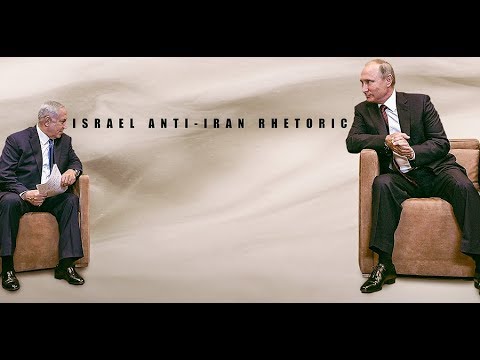
Press TV – August 25, 2017
Prime Minister Benjamin Netanyahu has said that Israel felt threatened by Iran’s growing influence in the Middle East. Netanyahu expressed his Iranophobic view in a meeting with Russian President Vladimir Putin in Russia’s Black Sea resort of Sochi on Wednesday. Press TV has asked Scott Rickard, former American intelligence linguist from Tampa, Florida, and Brent Budowsky, a columnist at The Hill from Washington, to give their thoughts on the issue.
Rickard said Tel Aviv is concerned about the fact that the regime could not carry out its old project to spread sectarian divisions and pave the way for dismemberment of the countries in the Middle East region because of the Iranian-led resistance against Israeli policies, not only in the occupied territories of Palestine but also in the whole region.
“Iran is not a threat to Israel whatsoever. The threat that Israel sees is the fact that their Oded Yinon Plan is being put to a hold by Iran,” the intelligence linguist said on Thursday night.
“They (the Israelis) look at Iran as a threat only because they have no influence on their governments and Iran is autonomous and is not under the Zionist influence,” he added.
Since the victory of the Islamic Republic of Iran in 1979, Tehran has been critical of Israel’s policies in the region, whereas “no leaders [of other states] even dared to speak out against Zionism,” Rickard argued. … continue
Blog Roll
 Aletho News
- Iran declares ‘historic victory’ over US, says enemy forced to accept its proposal
- Trump Claims Ceasefire, Reopening of Strait of Hormuz Agreement with Iran
- Israeli tank fire killed UN peacekeeper in Lebanon, UNIFIL investigation finds
- Russia, China block Bahrain-sponsored UN resolution on Strait of Hormuz
- The US-Israeli War on Science is an Assault on our Future
- Trump’s Promise to Bomb Iran ‘Like Never Before’ Faces Brutal Logistics — Expert
- Germany seeks to restrict stays abroad for men of fighting age – Berliner Zeitung
- Evidence points to Ukraine being behind TurkStream attempted sabotage, but that should come as no surprise
- Sri Lanka secures supplies of Russia oil – minister
- Nations across Asia strike direct deals with Iran for Hormuz passage
- If Americans Knew
- Thousands dead and neighborhoods razed to the ground: Aid agencies fear southern Lebanon is becoming the new Gaza
- The war the US is fighting for Israel could cost trillions
- ‘Cigarette Burns, Nail Wounds’: Toddler Tortured in Gaza to Coerce Father
- Trump Says US Sent ‘a Lot of Guns’ to Protesters in Iran
- Israeli forces destroy 17 UN peacekeeper cameras in south Lebanon
- US-Israeli strikes ‘completely destroy’ synagogue in Tehran
- Archbishop for US Military Says Iran War Is Unjust Under Catholic Teaching
- Iranian leaders’ Open Letters to the American People
- Trump says Iranians appreciate bombs, WHO warns of nuclear risks – Daily Update
- U.N. experts demand Israel release prominent Gaza doctor after reports of ‘severe torture’
- No Tricks Zone
- An Inconvenient Tree: Uncovered In Alps… Europe Much Warmer Than Today 6000 Years Ago
- New Study Reports A 60% Slowdown In Greenland’s Ice Loss Rate In The Last Decade
- Low Intensity Tornado Wrecks Major Solar Farm, Creating A Potential Toxic Dump
- New Study Finds Warming Saves Lives…Cold Temperatures 12 Times More Deadly Than Excess Heat
- German Science Blog Accuses PIK Climate Institute Of Hallucinating Climate Tipping Points
- Devastating Assessment Of Comirnaty Vaccine By Former Senior Pfizer Europe Toxicologist
- New Study: CO2 Is ‘Effectively Negligible’ As An Explanatory Climate Change Factor Since 2000
- Former Pfizer Toxicologist Dr. Helmut Sterz Tells Bundestag Hearing Pfizer Vaccine Should Have Never Been Approved
- Energy Expert: Germany’s Nuclear Phaseout Was A “500 Billion Euro Mistake”
- New Research: South Australia’s Mid-Holocene Sea Surface Temperatures Were 4°C Warmer Than Today
 Aletho News