NRC confirms 2005 tritium leak at Vermont Yankee
By Susan Smallheer | Rutland Herald | February 23, 2010
The Nuclear Regulatory Commission confirmed Monday that a whistleblower told the truth last week when he told a member of the Vermont Legislative Oversight Panel there was an earlier radioactive leak of tritium at the Vermont Yankee plant in the same area that is the focus of the current leak.
The confirmation by Donald Jackson, branch chief of reactor projects for NRC’s Region One, again raised the question of why Entergy Nuclear executives repeatedly told Vermont regulators last year there were no underground pipes at the Vernon reactor carrying radionuclides. Jackson said the leak was in 2005, not two years ago, as the whistleblower had originally told Arnie Gundersen, a member of the oversight panel and a consultant to the Vermont Legislature.
Entergy Nuclear spokesman Larry Smith said late Monday he could not discuss the 2005 tritium leak, saying he was still waiting for a letter from Entergy attorneys before talking about the issue.
Entergy Nuclear is excavating the area near the advanced off-gas building, in particular an underground pipe tunnel connected to the building, which is the same area the whistleblower pointed to. The whistleblower said the area in question was in a “high-radiation” area and involved a “radioactive steam leak” which drained into a drain pit.
Jackson said that the exact location of the current leak is still not known, although the advanced off-gas pipe tunnel is of strong interest, so it was impossible to say the two tritium leaks came from the same spot.
Jackson said that the NRC makes no distinction between “underground” and “buried” pipes, something that Entergy has made several times in the past couple of weeks. In Entergy’s words, buried pipes are in direct contact with dirt, while underground pipes are in tunnels or vaults, carrying pipes.
Jackson said the 2005 leak was under investigation, but he said it was a steam leak and the steam contained tritium and potentially other radionuclides.
He said Entergy did list the problem in the advanced off-gas pipe tunnel or vault as one of several corrective actions in 2005.
According to the whistleblower, whom Gundersen said seemed credible and well-informed about the inner workings at Vermont Yankee, the company used a temporary plug to fix the leak, rather than shut down the plant and make a permanent fix.
The whistleblower even went so far as to list the type of material, Furmanite, that Entergy used to temporarily plug the leak.
The whistleblower said that a tent and HEPA filter was set up to catch any radioactive gas during the 2005 case, and that workers used protective clothing.
Gundersen on Monday refused to say whether he had heard again from the whistleblower. Gundersen had turned the information from the whistleblower over to the Department of Public Service and the Vermont Attorney General’s office last week, both of which are investigating the case.
Jackson’s disclosure confirming the whistleblower came during a conference call with reporters, giving an update on the current leak. Neil Sheehan, NRC spokesman, said that Entergy would be issuing a press release about the 2005 leak later in the day.
Entergy Nuclear only started monitoring for tritium leaks in 2007, after an industry-wide suggestion from the NRC. Entergy drilled three monitoring wells on the banks of the Connecticut River, with one revealing elevated levels of tritium in November, which was reconfirmed in January.
Entergy revealed the current tritium leak on Jan. 7, and has been working since then to find the source of the leak.
Entergy, in its daily update about the search for the leak, said it was taking one of its own drinking water wells, which is near the leak’s plume, out of service as a precautionary measure.
That well, the construction office building well, is one of several wells that provide drinking water to the company, and is more than 350 feet deep in bedrock, the company said. The contaminated monitoring wells are relatively shallow, about 35 feet.
Sheehan said that the NRC was able to talk about the whistleblower allegations in 2005 because the whistleblower did not file a report with the NRC. Usually, the NRC won’t discuss whistleblower issues.
Jackson said that it was unknown whether the 2005 tritium leak, which was found in the underground pipe tunnel, had “transmitted” to the ground.
He said that there is a possibility that the tritium-laden steam did escape to the outside environment. “We’re still determining that,” he said. Jackson said the 2005 leak was inside a part of the reactor complex, and should have been maintained in the concrete pipe vault.
Most of the conference call with the reporters dealt with the NRC emphasizing that the current tritium leak currently posed no health risk to Vermonters, since it had not reached any private wells and that while it was reaching the Connecticut River, it was in very low levels, between 200 to 600 picocuries per liter.
While the plant is licensed to release some amounts of radioactivity into the environment, according to Steven Garry, a senior health physicist, they are well within NRC limits.
Garry said that there had been “essentially zero dose” to the general public from the current tritium leak, and he said that any tritiated water that did reach the Connecticut River would be diluted substantially to eliminate any health threat.
Tritium, which is a form of radioactive hydrogen, can cause cancer, but only when ingested in large, concentrated doses. One well at Vermont Yankee has tested for 2.6 million picocuries per liter, although that concentration has dropped to 1.8 million picocuries. Other wells show various other levels of tritium, with the next highest close to 1 million, according to the Vermont Department of Health.
susan.smallheer@rutlandherald.com
© 2010 Rutland Herald – Source
A closer look at what Obama’s energy priorities really are
The U.S. Department of Energy’s FY 2011 Budget Request
By Robert Alvarez | Institute for Policy Studies | February 12, 2010
When President Obama rolled out his proposed budget to Congress for the coming year, he said it would build “on the largest investment in clean energy in history.” But Obama’s definition of “clean energy” includes a commitment to help companies garner billions of dollars in loans for nuclear reactor construction. And, unfortunately, nuclear energy isn’t safe or clean and it’s too costly for the nation.
The Energy Department faces a brave new world in which, for the first time, it’s being called on to employ millions of Americans to create a new energy future for the United States. But it doesn’t appear that the Obama administration will meet this challenge. Instead, more of the nation’s tapped-out treasure is going for costly nuclear power, and nuclear weapons we don’t need and could never use.

Despite Obama’s rhetoric about reshaping America’s energy future, he’s asking for a budget that would have the Energy Department continue to spend 10 times more on nuclear weapons than energy conservation. More than 65 percent of our energy budget covers military nuclear activities and the cleanup of weapons sites. Its single largest expenditure maintains some 9,200 intact nuclear warheads. Even though the department hasn’t built a new nuclear weapon for 20 years, its weapons complex is spending at rates comparable to that during the height of the nuclear arms race in the 1950s. Even with economic stimulus funding, the department’s actual energy functions comprise only 15 percent of its total budget and continue to take a backseat to propping up the nations’ large and antiquated nuclear weapons infrastructure. In fact, the Energy Department’s proposed budget for the 2011 fiscal year, minus stimulus money, looks a whole lot like it did in the Bush administration, and as it has during several presidents’ tenures.
Obama’s atomic blunder
By Harvey Wasserman | Online Journal | February 18, 2010
As Vermont seethes with radioactive contamination and the Democratic Party crumbles, Barack Obama has plunged into the atomic abyss.
In the face of fierce green opposition and withering scorn from both liberal and conservative budget hawks, Obama has done what George W. Bush could not — pledge billions of taxpayer dollars for a relapse of the 20th century’s most expensive technological failure.
Obama has announced some $8.3 billion in loan guarantees for two new reactors planned for Georgia. Their Westinghouse AP-1000 designs have been rejected by the Nuclear Regulatory Commission as being unable to withstand natural cataclysms like hurricanes, tornadoes and earthquakes.
The Vogtle site was to originally host four reactors at a total cost of $600 million; it wound up with two at $9 billion.
The Southern Company which wants to build these two new reactors has cut at least one deal with Japanese financiers set to cash in on American taxpayer largess. The interest rate on the federal guarantees remains bitterly contested. The funding is being debated between at least five government agencies, and may well be tested in the courts. It’s not clear whether union labor will be required and what impact that might have on construction costs.
The Congressional Budget Office and other analysts warn the likely failure rate for government-backed reactor construction loans could be in excess of 50 percent. Energy Secretary Stephen Chu has admitted he was unaware of the CBO’s report when he signed on to the Georgia guarantees.
Over the past several years the estimated price tag for proposed new reactors has jumped from $2-3 billion each in some cases to more than $12 billion today. The chair of the NRC currently estimates it at $10 billion, well before a single construction license has been issued, which will take at least a year.
Energy experts at the Rocky Mountain Institute and elsewhere estimate that a dollar invested in increased efficiency could save as much as seven times as much energy than one invested in nuclear plants can produce, while producing 10 times as many permanent jobs.
Georgia has been targeted largely because its regulators have demanded ratepayers put up the cash for the reactors as they’re being built. Florida and Georgia are among a small handful of states taxing electric consumers for projects that cannot come on line for many years, and that may never deliver a single electron of electricity.
Two Florida Public Service commissioners, recently appointed by Republican Governor Charlie Crist (now a candidate for the US Senate), helped reject over a billion dollars in rate hikes demanded by Florida Power & Light and Progress Energy, both of which want to build double-reactors at ratepayer expense. The utilities now say they’ll postpone the projects proposed for Turkey Point and Levy County.
In 2005, the Bush administration set aside some $18.5 billion for reactor loan guarantees, but the Department of Energy has been unable to administer them. Obama wants an additional $36 billion to bring the fund up to $54.5 billion. Proposed projects in South Carolina, Maryland and Texas appear to be next in line.
But the NRC has raised serious questions about Toshiba-owned Westinghouse’s AP-1000 slated for Georgia’s Vogtle site, as well as for South Carolina and Turkey Point. The French-made EPR design proposed for Maryland has been challenged by regulators in Finland, France and Great Britain. In Texas, a $4 billion price jump has sparked a political upheaval in San Antonio and elsewhere, throwing the future of that project in doubt.
Taxpayers are also on the hook for potential future accidents from these new reactors. In 1957, the industry promised Congress and the country that nuclear technology would quickly advance to the point that private insurers would take on the liability for any future disaster, which could by all serious estimates run into the hundreds of billions of dollars. Only $11 billion has been set aside to cover the cost of such a catastrophe. But now the industry says it will not build even this next generation of plants without taxpayers underwriting liability for future accidents. Thus the “temporary” program could ultimately stretch out to a full century or more.
In the interim, Obama has all but killed Nevada’s proposed Yucca Mountain nuclear waste dump. He has appointed a commission of nuclear advocates to “investigate” the future of high-level reactor waste. But after 53 years, the industry is further from a solution than ever.
Meanwhile, the Nuclear Regulatory Commission has reported that at least 27 of America’s 104 licensed reactors are now leaking radioactive tritium. The worst case may be Entergy’s Vermont Yankee, near the state’s southeastern border with New Hampshire and Massachusetts. High levels of contamination have been found in test wells around the reactor, and experts believe the Connecticut River is at serious risk.
A furious statewide grassroots campaign aims to shut the plant, whose license expires in 2012. A binding agreement between Entergy and the state gives the legislature the power to deny an extension. US Senator Bernie Sanders (D-VY) has demanded the plant close. The legislature may vote on it in a matter of days.
Obama has now driven a deep wedge between himself and the core of the environmental movement, which remains fiercely anti-nuclear. While reactor advocates paint the technology green, the opposition has been joined by fiscal conservatives like the National Taxpayer Institute, the Cato Institute and the Heritage Foundation.
Reactor backers hailing a “renaissance” in atomic energy studiously ignore France’s catastrophic Olkiluoto project, now $3 billion over budget and three years behind schedule. Parallel problems have crippled another project at Flamanville, France, and are virtually certain to surface in the US.
The reactor industry has spent untold millions lobbying for this first round of loan guarantees. There’s no doubt it will seek far more in the coming months. Having failed to secure private American financing, the question will be: In a tight economy, how much public money will Congress throw at this obsolete technology?
The potential flow of taxpayer guarantees to Georgia means nuclear opponents now have a tangible target. Also guaranteed is ferocious grassroots opposition to financing, licensing and construction of this and all other new reactor proposals, as well as to continued operation of leaky rust bucket reactors like Vermont Yankee.
The “atomic renaissance” is still a very long way from going tangibly critical.
Chernobyl: Consequences of the Catastrophe for People and the Environment
A book review

By Dr. Rosalie Bertell | Global Research | February 12, 2010
This new publication of the Annals of the New York Academy of Sciences (Volume 1181), by Alexey Yablokov, Vassily Nesterenko, and Alexey Nesterenko, is the elucidation many of us have been waiting for since the 1986 disaster at the failed nuclear reactor in Ukraine. Until now we have read about the published reports of limited spotty investigations by western scientists who undertook projects in the affected territories. Even the prestigious IAEA, WHO and UNSCEAR reports have been based on about 300 such western research papers, leaving out the findings of some 30,000 scientific papers prepared by scientists working and living in the stricken territories and suffering the everyday problems of residual contamination with nuclear debris and a contaminated food supply.
Chernobyl: Consequences of the Catastrophe for People and the Environment is wrtitten by Alexey Yablokov, Vassily Nesterenk and Alexey Nesterenko. The senior author, Alexey Yablokov was head of the Russian Academy of Science under Gobachev – since then he receives no support. Vassily Nesterenko, head of the Ukrainian Nuclear establishment at the time of the accident, flew over the burning reactor and took the only measurements. In August 2009, he died as a result of radiation damage, but earlier, with help from Andrei Sakarov, was able to establish BELRAD to help children of the area.
The three scientists who assembled the information in the book from more than 5000 published articles and research findings, mostly available only within the former Soviet Union or Eastern block countries and not accessible in the West, are prestigious scientists who present objective facts clearly nuanced with little or no polemics. They were not encumbered by a desire to promote or excessively blame a failed technology.
The book was expertly translated into readable English by Janette Sherman, Medical Toxicologist and Adjunct Professor in the Environmental Institute at Western Michigan University.
Professor Dr. of Biology, Dimitro Grodzinsky, Chair of the Department of Biology of the Ukraine National Academy of Sciences, and member of the National Commission wrote the Forward to the book. His statement relative to Western reporting of the accident is illuminating:
“For a long time I have thought that the time has come to put an end to the opposition between technocracy advocates and those who support objective scientific efforts to estimate the negative risks for people exposed to the Chernobyl fallout. The basis for believing that these risks are not minor is very convincing.”
The government of the former Soviet Union previously classified many documents now accessible to the authors. For example, we now know that the number of people hospitalized for acute radiation sickness was more than a hundred times larger than the number recently quoted by the IAEA, WHO and UNSCEAR. Unmentioned by the technocrats were the problems of “hot particles” of burning uranium that caused nasopharyngeal problems, and the radioactive fallout that resulted in general deterioration of the health of children, wide spread blood and lymph system diseases, reproductive loss, premature and small infant births, chromosomal mutations, congenital and developmental abnormalities, multiple endocrine diseases, mental disorders and cancer.
The authors systematically explain the secrecy conditions imposed by the government, the failure of technocrats to collect data on the number and distribution of all of the radionuclides of major concern, and the restrictions placed on physicians against calling any medical findings radiation related unless the patient had been a certified “acute radiation sickness” patient during the disaster, thus assuring that only 1% of injuries would be so reported.
This book is a “must read” for all of those bureaucrats currently promoting nuclear power as the only “solution” for climate change. Those who seek information on the disaster only from the official documentation provided by the IAEA, WHO and UNSCEAR need to broaden their reading to include the reality check from those scientists who have access to local findings and are simply telling the truth, with no hidden propaganda agenda.
I was impressed by the simple message of the cover of this volume, which shows a number of felled logs with clearly distinguishable colors of wood: before and after Chernobyl. The reader will find that the environment, living plants and animals all suffered ill effects from this experience, as did the human population. It should be a sobering read for all those who have believed the fiction that “low doses of radiation are harmless”, or that a severe nuclear accident is easily contained within the human environment.
Below is the New York Academy of Sciences site for the book. Unfortunately, its selling price is now about $150, which may limit its distribution.
http://www.nyas.org/Publications/Annals/Detail.aspx?cid=f3f3bd16-51ba-4d7b-a086-753f44b3bfc1
Jordanians sue Israel over Dimona nuclear plant
Press TV – February 16, 2010
A Jordanian human rights group is set to sue Israel for the damage its nuclear facility in Dimona has caused to the environment and the residents in south Jordan.
The al-Jisr al-Arabi center has accused Israel of causing death, cancer and other afflictions among the Jordanian population residing in the area adjacent to the nuclear plant and thus prone to the toxic gases and radiation the facility emits.
The Amman-based human rights group has reportedly taken the preliminary steps necessary ahead of filing a legal lawsuit against Israel in the coming month with Jordanian legal bodies.
The center met with a number of the reactor’s victims and “collected evidence and proof that attest to a rise in the number of cancer cases, especially among residents of the southern region, which is adjacent to the reactor.”
“This is an ongoing and deliberate crime on Israel’s part, which still causes cases of death and injury in large numbers among the Jordanians,” said the center’s General Manager Attorney Amjad Shammout.
He went on to add that he was optimistic the complaint will be accepted in accordance with the constitution and international treaties on human rights, which Jordan has recently adopted.
Vermont’s Radioactive Nightmare
By Harvey Wasserman | February 11, 2010
Like a decayed flotilla of rickety steamers, at least 27 of America’s 104 aging atomic reactors are known to be leaking radioactive tritium, which is linked to cancer if inhaled or ingested through the throat or skin.
The fallout has been fiercest at Vermont Yankee, where a flood of cover-ups has infuriated and terrified near neighbors who say the reactor was never meant to operate more than 30 years, and must now shut.
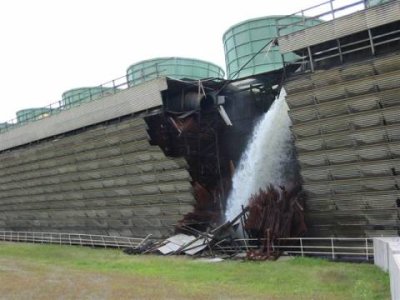
In 2007 one of Yankee’s 22 cooling towers simply collapsed due to rot.
Now the Nuclear Regulatory Commission has confirmed tritium levels in a monitoring well at Vernon to be 3.5 times the federal safety standard. The leaks apparently came from underground pipes whose very existence was recently denied by VY officials in under-oath testimony at a public hearing. Vermont’s pro-nuclear Republican Governor Jim Douglas has termed the event “a breach of trust that cannot be tolerated.”
Yankee is owned by Entergy, a Mississippi-based consortium that also owns New York’s Indian Point reactor, which suffered an internal gusher of radioactive water in May, 2009. Another leak has just been found at Oconee in South Carolina. Illinois’ Braidwood leaked so many millions of gallons of tritium-laced water that its owner, Exelon, was forced to buy a new municipal water system for a nearby town.
Entergy says none of Yankee’s tritium has been found in local drinking water or in the Connecticut River, which supplies the plant’s cooling water. Vernon sits near Vermont’s southeast border with Massachusetts, across the river from New Hampshire. “The existence of tritium in such low levels does not present a risk to public health or safety whatsoever,” says the company’s Robert Williams.
But VY is just the latest of more than two dozen U.S. nuclear plants—many built in the 1960s and ’70s—to be found with leaking tritium.
Last year at New Jersey’s Oyster Creek, tritium was reported leaking a second time shortly after Exelon got it a 20-year license extension. Entergy’s Pilgrim reactor, at Plymouth, Massachusetts, has recently leaked tritium into the ground.
The NRC’s Neil Sheehan has confirmed leaks involving 27 of 104 licensed US reactors, and says that probably doesn’t account for all of them. At Yankee, Oyster Creek and elsewhere, rotting pipes are the likeliest culprit, but no one is 100% certain.
The epidemic has escalated public dismay. Vermont state Representative Tony Klein, chair of House Natural Resources and Energy Committee, says that “when you have public officials that the public depends on for their health and welfare making casual statements that a radioactive substance is not harmful to you, I think that’s ludicrous.”
For decades the Encylopedia Britannica, National Academy of Sciences and other primary scientific bodies have confirmed that no dose of radiation, no matter how small, can ever be deemed perfectly safe. “There is no threshold of exposure below which low levels of ionizing radiation can be demonstrated to be harmless or beneficial,” says Richard R. Monson, associate dean for professional education and professor of epidemiology at the Harvard School of Public Health.
Thus far the NRC has granted a series of license renewals to aging reactors. But by virtue of a long-standing agreement with Entergy, the Vermont Legislature can deny Yankee’s request for a 20-year extension. In the 1990s local groups like the Citizen’s Awareness Network (http://www.vtcitizen.org/) helped force down the Yankee Rowe plant on the Deerfield River in Massachusetts, about 25 miles southwest of Vernon. The root cause was concern over embrittlement of the elderly reactor’s core, a key to the future of all other aging nukes.
In Vermont, angry debate has also arisen over Entergy’s dwindling decommissioning fund, which has been slashed by a declining stock market. Entergy has proposed spinning off plant ownership to a shell corporation whose assets may be even more dubious. But area residents also fear Entergy may be pushing Yankee operations in an attempt to find the source of its leaks.
With VY operating under duress, Katz and others report an increasing wave of concern among local citizens starting to think seriously about how they might evacuate if Entergy keeps pushing. “This plant appears to be leaking from its reactor piping, but they don’t really know where,” she says. “They don’t want to shut down because they’re afraid they’ll never get back up. Entergy is choosing to protect its bottom line rather than the health and safety of our community.”
Indeed, a desperate national industry now pushing for massive federal subsidies to build new reactors may not survive a flood of elderly clunkers being forced to close by the weight of their own contamination. “This is an industry trying to build a new fleet of Titanics while the old ones are sinking,” says Katz.
Amidst the gusher of tritium leaks, Governor Douglas wants to postpone the legislature’s vote on VY’s license extension. But his term expires in November, and all five Democratic gubernatorial candidates are pledged to a Yankee shutdown.
What happens next will be defined by fierce grassroots activism crashing into a flood of corporate money in support of a rickety old reactor being operated with increasing recklessness.
The highly hyped “reactor renaissance”—and much more—may hang in the balance. Stay tuned.
Will Obama guarantee a new reactor war?
By Harvey Wasserman | Online Journal | February 1, 2010
Amidst utter chaos in the atomic reactor industry, Team Obama is poised to vastly expand a bitterly contested loan guarantee program that may cost far more than expected, both financially and politically.
The long-stalled, much-hyped “renaissance” in atomic power has failed to find private financing. New construction projects are opposed for financial reasons by fiscal conservatives such as the Heritage Foundation and National Taxpayers Union, and by a national grassroots safe energy campaign that has already beaten such loan guarantees three times.
New reactor designs are being challenged by regulators in both the US and Europe. Key projects, new and old, are engulfed in political/financial uproars in Florida, Texas, Maryland, Vermont, New Jersey and elsewhere.
And 53 years after the opening of the first commercial reactor at Shippingport, Pennsylvania, Department of Energy Secretary Steven Chu is now convening a “blue ribbon” commission on managing radioactive waste, for which the industry still has no solution. Though stacked with reactor advocates, the commission may certify the death certificate for Nevada’s failed Yucca Mountain dump.
In 2005, George W. Bush’s energy bill embraced appropriations for an $18.5 billion loan guarantee program, which the Obama administration now may want to triple. But the DOE has been unable to minister to a chaotic industry in no shape to proceed with new reactor construction. As many as five government agencies are negotiating over interest rates, accountability, capital sourcing, scoring, potential default and accident liability, design flaws and other fiscal, procedural and regulatory issues, any or all of which could wind up in the courts.
In 2007, a national grassroots uprising helped kill a proposed addition of $50 billion in guarantees, then beat them twice again.
When Obama endorsed “safe, clean nuclear power plants” and “clean coal” in this year’s State of the Union, more than 10,000 MoveOn.org members slammed that as the worst moment of the speech.
The first designated recipient of the residual Bush guarantees may be at the Vogtle site in Waynesboro, Georgia, where two reactors now operate. Georgia regulators have ruled that consumers must pay for two proposed new reactors even as they are being built.
But initial estimates of $2-3 billion per unit have soared to $8 billion and more, even long before construction begins. Standardized designs have not been certified. Ongoing technical challenges remind potential investors that the first generation of reactors cost an average of more than double their original estimates.
The Westinghouse AP-1000 model, currently slated for Vogtle — and for another site in South Carolina — has become an unwanted front runner.
Owned by Japan’s Toshiba, Westinghouse has been warned by the Nuclear Regulatory Commission of serious design problems relating to hurricanes, tornadoes and earthquakes.
The issues are not abstract. Florida’s Turkey Point plant took a direct hit from Hurricane Andrew in 1991, sustaining more than $100 million in damage while dangerously losing off-site communication and power, desperately relying on what Mary Olson of NIRS terms “shaky back-up power.” Ohio’s Perry reactor was damaged by a 1986 earthquake that knocked out surrounding roads and bridges. A state commission later warned that evacuation under such conditions could be impossible.
Long considered a loyal industry lapdog, the NRC’s willingness to send Westinghouse back to the drawing board indicates the AP-1000’s problems are serious. That they could be expensive and time-consuming to correct means the Vogtle project may prove a losing choice for the first loan guarantees.
South Texas is also high among candidates for loan money. But San Antonio, a primary partner in a two-reactor project there, has been rocked by political fallout from soaring cost estimates. As the San Antonio city council recently prepared to approve financing, it learned the price had jumped by $4 billion, to a staggering $17-18 billion. Angry debate over who-knew-what-when has led to the possibility that the city could pull out altogether.
In Florida, four reactors have been put on hold by a plummeting economy and the shifting political aims of Governor Charlie Crist. Crist originally supported two reactors proposed by Florida Power & Light to be built at Turkey Point, south of Miami, and another proposed for Levy County by Progress Energy. State regulators voted to allow the utilities to charge ratepayers before construction began, or even a license was approved.
But Crist is now running for US Senate, and has distanced himself from the increasingly unpopular utilities. With votes from two new appointees, the Public Service Commission has nixed more than $1 billion in rate hikes. The utilities have in turn suspended preliminary reactor construction (though they say they will continue to pursue licenses).
At Calvert Cliffs, Maryland, the financially tortured Constellation Energy has committed to the French AREVA’s European Power Reactor, now under serious challenge by regulators in France, Finland and Great Britain. An EPR under construction in Finland is now at least three years behind schedule, and more than $3 billion over budget.
Meanwhile, at Entergy’s 30-year-old Yankee reactor in Vermont, a series of radiation and information leaks have severely damaged prospects for re-licensing. The decision will soon be made by a deeply divided state legislature. “It would be better for the industry to let Vermont Yankee die a quiet death in the Green Mountain state,” says Deb Katz of the grassroots Citizens Awareness Network. “With radioactive leaks, lies and systemic mismanagement, Entergy is no poster child for a new generation of nukes.”
Meanwhile, New Jersey may require operators of the aging Oyster Creek reactor to install sizable towers to protect what’s left of the severely damaged Barnegat Bay, which the plant uses for cooling. Though the requirement may not be enforced for as much as seven years, the towers’ high cost could prompt a shutdown of the relatively small plant.
This unending stream of technical, financial and political downfalls could doom the “reactor renaissance” to history’s radioactive dump heap. “President Obama needs to remember what Candidate Obama promised: no more taxpayer subsidies for nuclear power,” said Michael Mariotte, executive director of the Nuclear Information and Resource Service. “Renewables and energy efficiency provide both greater carbon emissions reductions and more jobs per dollar spent than nuclear. Unlike nuclear power, they are relatively quick to install, and are actually safe and clean.”
Indeed, despite congressional and White House support for these latest proposed loan guarantees, the grassroots fight over both old and new nukes grows fiercer by the day.
In the long run, this alleged “nuclear renaissance” could prove to be little more than a rhetorical relapse.
History of Leaks Imperils Reactor License Extension in Vermont
![[A portion of a cooling tower at the Vermont Yankee reactor collapsed Wednesday, August 22, 2007. A broken 52” pipe was photographed spewing water into the ground, in the latest embarrassment for Yankee owner Entergy Corporation, the nation’s second-largest nuclear utility.]](https://i0.wp.com/www.commondreams.org/files/article_images/vermontcoolingtower.jpg "vermontcoolingtower.jpg")
A portion of a cooling tower at the Vermont Yankee reactor collapsed Wednesday, August 22, 2007. A broken 52” pipe was photographed spewing water into the ground, in the latest embarrassment for Yankee owner Entergy Corporation, the nation’s second-largest nuclear utility. – © 2010 Boston Globe
Search continues for radioactive Vermont Yankee leak
By Terri Hallenbeck, Free Press Staff Writer • Saturday, January 23, 2010
MONTPELIER — Crews will start drilling more monitoring wells today at Vermont Yankee as the Vernon nuclear power plant’s owners continue the search for the source of a leak of the radioactive isotope tritium.
The tritium leak was revealed three weeks ago after heightened radioactive levels were found in a monitoring well outside the plant. Tests continued this week to show a range of tritium — from 14,000 to 28,100 picocuries per liter, Vermont Yankee spokesman Rob Williams said. The most recent tests were at 20,900, he said.
The Environmental Protection Agency safety standard for tritium in drinking water is 20,000 picocuries per liter.
More heightened levels — as high as 2 million picocuries — have since been found in a concrete trench on the plant’s campus. No heightened levels of radioactive substances have been found in nearby drinking wells that are monitored.
Other radioactive isotopes — cobalt-60 and zinc-65 — have also been found in the trench, which is a locked and confined building where radioactive waste is stored and treated. Williams said Friday that those were found in the Jan. 13 sampling along with tritium.
Neil Sheehan, Nuclear Regulatory Commission spokesman, said 13,000 picocuries per liter of cobalt-60 and 2,460 picocuries of zinc-45 were found in the standing water in the trench. Those are well above federal drinking-water limits of 100 picocuries for cobalt-60 and 300 picocuries for zinc-65. Officials cautioned that the substances aren’t in the drinking water but are in an enclosed part of the nuclear power plant.
Williams said it’s not a surprise to find those other isotopes, nor does the discovery likely help in the search for the source of the leak.
“That’s the kind of material you’d expect to find in the basement of a building that processes nuclear waste,” Williams said. “What we’re looking for is the source of the tritium.”
The leak — and the fact that Vermont Yankee owner Entergy Corp. had told state officials that pipes that might play a role in the leak didn’t exist — have raised concerns about the plant as its owner seeks permission to continue operation for another 20 years after its license expires in 2012. Friday, Vermont’s three-member congressional delegation wrote a letter to the Nuclear Regulatory Commission calling for an immediate investigation.
“This investigation should not only determine whether there was an attempt by Entergy Vermont Yankee to mislead state officials regarding the plant’s safety and underground piping, but also provide a complete and accurate assessment of the full scope of the contamination at and near the plant as soon as possible,” the delegation said.
Meanwhile, Vermont Yankee has constructed a barrier to seal a connection between the trench and an evaporator tank that could be contributing to the accumulation of tritium-contaminated water in the trench, according to the state Health Department, which started posting online updates on the situation Thursday. The seal appears to have stopped condensation of tritium-contaminated water vapor on the corrugated roof over the concrete trench, according to the Health Department.
Engineers are studying the trench’s structural integrity to see if it is contributing to the leak, according to the Health Department.
Also Friday, the NRC extended Entergy’s deadline for spinning off Vermont Yankee and other Northeast nuclear power plants into a new company. Because Entergy has not won approval from Vermont or New York regulators for the move, the deadline has been extended from Jan. 28 to Aug. 1.
Report finds high rate of thyroid cancer in eastern Pa.; blames nuclear power plants
By REGINA MEDINA | Philadelphia Daily News | January 24, 2010
Residents of eastern Pennsylvania might not know it, but they’re living in the middle of a thyroid-cancer hot spot, according to a public-health advocate.
The eastern side of the state lays claim to six of the nation’s top 18 counties with the highest thyroid-cancer rates, according to figures from the Centers for Disease Control and Prevention.
Pennsylvania ranked as the No. 1 state in thyroid-cancer cases between 2001 and 2005, 12.8 cases per 100,000 residents. (New Jersey comes in at No. 5 with 11.8 cases per 100,000.)
Joseph Mangano, the executive director of the Radiation and Public Health Project research group, said yesterday that he believes the spike in cancer is due to the high number of nuclear plants in the area.
At a news conference at City Hall where thyroid-cancer survivors and physicians also spoke, Mangano said that within 100 miles of eastern Pennsylvania, 16 nuclear reactors are operating at seven nuclear plants, the highest concentration in the country.
The emissions from the Limerick and Three-Mile Island plants don’t come close to those from the 1945 bombing of Hiroshima or the 1986 Chernobyl accident, but “that doesn’t necessarily mean [it’s] safer,” Mangano said.
“Not only have we documented an epidemic of thyroid cancer in the area, but we have raised a red flag for more and more detailed study of the relationship between the reactor emissions and thyroid cancer,” Mangano said.
Mangano, who published his findings in the International Journal of Health Services, said that the only known cause of thyroid cancer is exposure to radiation, specifically radioactive iodine, “one of the 100 man-made chemicals” produced by nuclear energy.
One University of Pennsylvania doctor who has researched thyroid cancer called the findings “provocative” and “intriguing,” but added that the author needed to delve more into the subject.
“We do know nuclear plants give off radioactive iodine [and] radioactive iodine can be associated with thyroid cancer,” said Susan J. Mandel, a professor of medicine and radiology. “Does it mean it causes it? It requires further investigation to see if it’s causing it.”
Lehigh County had the highest thyroid-cancer rate; others in eastern Pennsylvania were: Northampton (3rd), Luzerne (6th), York (7th), Bucks (14th) and Lancaster (18th). In New Jersey, Camden was ranked No. 16 and Burlington was 17th.
Meltdown, USA: Nuclear Drive Trumps Safety Risks and High Cost
By Art Levine, t r u t h o u t | News Analysis | January 6, 2010

(Photo: Matthew Strmiska; Edited: Jared Rodriguez)
The pro-nuclear Department of Energy is set this month to offer the first of nearly $20 billion in loan guarantees to a nuclear industry that hasn’t built a plant since the 1970s or raised any money to do so in years. But although the industry is seeking to cash in on global warming concerns with $100 billion in proposed loan guarantees, environmentalists, scientists and federal investigators are warning that lax oversight by the Nuclear Regulatory Commission (NRC) of the nation’s aging 104 nuclear plants has led to near-meltdowns along with other health and safety failings since Three Mile Island – including what some critics say is a flawed federal health study apparently designed to conceal cancer risks near nuclear plants.
Also See: Part II: Energy Department, NRC Back Nuclear, Ignore Industry’s Dirty Little Secrets
All that is joined by the dangers and risks posed by at least 30 tons yearly of radioactive, cancer-causing, nuclear waste produced at each 1,000 megawatt plant; projected costs of $12 billion to $25 billion for any new plants (built largely through taxpayer support).
For instance, a meltdown of the two reactors at Indian Point, dubbed “Chernobyl on the Hudson,” could quickly kill nearly 50,000 people with radiation poisoning in a 50-mile radius and cause over 500,000 cancer deaths within six years, according to research by the Union of Concerned Scientists and other experts.
“Nothing’s changed,” said Paul Gunter, director of Reactor Oversight for the Beyond Nuclear reform group, about nuclear plants. “They’re still dirty, dangerous and expensive.”
But such concerns stand in sharp contrast to a wave of positive PR about the nuclear industry as the “clean air energy” solution to global warming, driven by ads, campaign donations and lobbying – and abetted by media outlets too often willing to accept industry and Nuclear Regulatory Commission spin at face value.
Even so, there’s little reason to have confidence in the NRC’s ability to protect the public or successfully monitor the current nuclear plants, let alone any new ones. In fact, with the bulk of its funding coming from nuclear utility industry fees, the agency appears to be literally asleep at the wheel, allowing everything from near meltdowns in a Toledo plant to ignoring internal reports of rent-a-cops at vulnerable nuclear plants sleeping on the job – until the negative publicity became too overwhelming. Ultimately, the agency gave that Exelon company a mild $65,000 fine last year. Meanwhile, researchers for the Project on Government Oversight and Union of Concerned Scientists found that the utility, the Wackenhut Security Firm and the NRC all knew well before the scandal broke publicly that guards were sleeping on the job at the Peach Bottom facility in Pennsylvania.
As one researcher pointed out in 2008 testimony, “Neither Wackenhut nor Exelon nor NRC acted upon the security allegations to correct the problem.”
The NRC’s coziness with industry extends to some of its own commissioners. As its own inspector general reported, before a Bush-appointed commissioner left in mid-2007, he made decisions that could benefit financially three firms he was negotiating with for jobs – including a ruling that apparently helped loosen regulatory requirements for an emergency cooling system in a Westinghouse plant.
Obama’s latest proposed appointee to the agency isn’t necessarily any less pro-industry. As Mother Jones reported about Peter Magwood: “Both before and after his time in government, he has worked as an enthusiastic advocate for nuclear interests in the private sector-including for at least one company likely to have business before the NRC in the near future.”
Indeed, there are few limits, no matter how absurd, to how far the NRC is willing to go to cut the industry plenty of slack, no matter how dangerous to the public. Take the case of the noncombustible foam that the agency ordered nuclear plants to buy in the late 1990s as a sealant to help prevent the spread of fire from room to room in a plant. It turned out that there was a small problem with this well-meaning plan: the brand of silicone foam bought by most of the nuclear power companies turned out to be, well, combustible. So, did the NRC then promptly order the dangerous, potentially life-threatening foam removed? No, of course not: it just revised its regulations to drop the phrase and requirement of “noncombustibility” for the foam.
Paul Gunter, then with the Nuclear Information and Resource Service, found himself in the Kafkaesque position of having to argue in regulatory comments against the logical insanity of dropping the word “noncombustible” in requirements for fire-preventing foam. In bold letters, he wrote, “NRC PROPOSED ACTION INCREASES THE RISK OF A NUCLEAR ACCIDENT RESULTING FROM THE REDUCTION OF DEFENSE-IN-DEPTH OF FIRE PROTECTION SYSTEMS….” He then attempted to reason with the NRC, noting, “the material in question is designated as a fire-barrier seal.” He and other critics did not prevail, and the NRC continues to allow nuclear companies to buy combustible foam as fire prevention sealants. “The shit burns, it’s combustible and it leaves charring,” Gunter now pointed out, asking, reasonably, how it could possibly meet fire protection standards.
The NRC also uses technicalities in other ways to advance industry interests. As Beyond Nuclear and other critics point out, there’s an important reason that so little is known about the dangers of radiation for those living near nuclear plants in America: there’s very little well-designed research that has been done on the issue.
There are some exceptions: a Massachusetts Department of Public Health study in the late 1980s, though, found a 400 percent increase in leukemia for those living downwind from the Pilgrim plant, and a recent German government study found that children under five living less than five kilometers from a nuclear plant had twice the risk of contracting leukemia of those living more than five kilometers away.
Yet, one of the most influential American studies on the topic was released in 1990 by the National Cancer Institute at the behest of the NRC – and it found, by studying the overall cancer incidence of those living in surrounding counties, nuclear power plants posed no apparent radiation risk for those living in the area. Yet, while hailed by the nuclear industry and the NRC, scientific and medical critics of nuclear power had strong doubts about the study’s design and its failure to measure the impact on those living nearby.
As The New York Times reported:
But Daryl Kimball, associate director for policy of Physicians for Social Responsibility, a national organization of medical professionals concerned with nuclear war and other dangers from nuclear power, said the study ”raises more questions than it answers.”
Mr. Kimball said the study diluted the risks of exposure to radiation from nuclear plants by examining entire counties instead of areas where people were directly exposed to radiation. He cited the Fernald weapons plant near Cincinnati, where over 500,000 pounds of uranium were released into the atmosphere. This uranium may have fallen on only a small area, he said, but the study includes all the people in the surrounding counties.
Because of questions about conflict of interest and research integrity, Beyond Nuclear, among others, is asking the NRC to take a hands-off position in commissioning a new academic study. “The NRC receives about 90 percent of its funding from nuclear power reactor licensing fees,” said Cindy Folkers, radiation and health specialist with Beyond Nuclear. “As such, NRC clearly stands to gain from more reactor construction. Therefore, it should not be doing cancer studies or directly hiring people to conduct such studies. This is a flagrant conflict-of-interest and puts a scientifically rigorous, non-biased study at great risk.”
In response, a spokesperson for the NRC said the agency is using a peer-review panel of experts drawn from the National Cancer Institute and other agencies to oversee the research. “The panel will provide comments on the proposed methodology before the study is done, and it will review the study’s results, ensuring a scientifically sound project that uses the latest available data,” spokesman Scott Burnell said in an emailed response.
Yet, despite all these problems, a seemingly benign “solution for global warming” – nuclear energy – has boundless, if simplistic, appeal, even if it could take years to build and threatens public health and safety, while undermining genuine renewable energy with billions devoted to nuclear bailouts.
Still, the pro-nuclear pitch is especially welcomed by media outlets when it advances the seemingly fresh story line of environmentalists embracing nuclear power, as delivered by the likes of ex-Greenpeace activist Patrick Moore, whose financial ties to a Nuclear Energy Institute front group are rarely disclosed.
For instance, as the Center for Media and Democracy has noted, Moore has recently placed op-eds extolling nuclear power in such reputable publications as The Philadelphia Inquirer, while being paid by the front organization The Clean and Safe Energy Industry Coalition (CASE). This flack outfit, nominally headed by former Gov. and EPA Director Christine Todd Whitman, was actually established by the PR firm Hill and Knowlton at the behest of the Nuclear Energy Institute.
Moore recently outlined the selling points that the nuclear industry – and its allies in Congress – are promoting to sprinkle eco-friendly fairy dust around the grim nuclear industry that Wall Street and private investors won’t touch:
Old Foes Welcome Clean Fuel Rising demand for emission-free energy is spurring a nuclear rebirth.
By Patrick Moore
Nuclear energy, a prime source of electricity for Pennsylvania, is finally getting the respect it deserves.
It’s not hard to see why: America’s power needs continue to grow, and meeting them without harming the environment calls for every available nonpolluting energy source.
Nuclear energy is the most dependable and cost-effective such option.
It isn’t the only solution, of course. Wind, geothermal, and other renewable energy sources will likely become a bigger part of Pennsylvania’s energy portfolio, and America’s. But nuclear energy will be expected to shoulder the biggest load.
Because nuclear energy is virtually emissions-free, America’s 104 nuclear reactors already account for nearly 75 percent of the country’s clean energy, and 93 percent of Pennsylvania’s.
Nuclear energy has maintained a strong record of safety, reliability, and efficiency for decades, and Americans increasingly appreciate its environmental and economic benefits. A recent Gallup poll showed that 59 percent of Americans support using nuclear energy to meet the country’s energy needs. Support is even higher in Pennsylvania, reaching 82 percent of residents polled last year for the Pennsylvania Energy Alliance.
Unfortunately for Moore and fellow spinmeisters, nuclear energy isn’t the clean, harmless, renewable resource it’s portrayed here and by nuclear propaganda. The “clean air energy” meme comes complete with lovely images of the nuclear icon surrounded by leaves and flowers, or as in the Nuclear Energy Institute’s web site, features a happy family cavorting in a flowery green field. In fact, as Greenpeace, among others, has pointed out:
Let’s be blunt here. This isn’t just misleading. This isn’t just misinformation. This is a lie.
Nuclear energy is not clean energy. One need only look at the environmental destruction caused by uranium mining. In his book ‘Wollaston: People Resisting Genocide’, Miles Goldstick details the damage brought to the lives of the people living around the uranium mines in Canada’s Saskatchewan province. The accumulation of radioactive isotopes in edible plants. The lead, arsenic, uranium and radium found downstream from the mines. The spills that J.A. Keily, then Vice President of Production and Engineering for Gulf Minerals Rabbit Lake, described in 1980 as “probably too numerous to count.”
These are stories found wherever uranium mining takes place. The ruined lives, the contamination, the cover-ups, and the deception. And that’s before we even consider what happens to the waste produced by generating nuclear energy.
[…] Most critically, nuclear power-generated electricity is so much more expensive for consumers and businesses to use than renewables and conservation combined. That means that a new 1,000 megawatt nuclear plant would rob electricity users of $256 million they could have used for everything from making individual purchases to hiring more workers, according to John A. “Skip” Laitner, the director of economic and social analysis for the American Council for an Energy-Efficient Economy (ACEEE). “Energy-related sectors don’t support anywhere near the jobs that other sectors of the economy do,” he pointed out. “So going the nuclear route is a net loss to the economy” – except, of course, for the extra spending on hospitals and doctors to treat those residents near nuclear plants and mining facilities who develop cancers or birth defects.
Moreover, as Dr. Helen Caldicott and other experts have noted, “Large amounts of the now-banned chlorofluorocarbon gas (CFC) are emitted during the enrichment of uranium. CFC gas is not only 10,000 to 20,000 times more efficient as an atmospheric heat trapper (‘greenhouse gas’) than CO2, but it is a classic ‘pollutant’ and a potent destroyer of the ozone layer.”
In fact, it is the mining of uranium, followed by its “enrichment” – using carbon-polluting, complex ultracentrifuges or gaseous diffusion processes – to separate it into fissionable U-235 isotopes that are the dark truths about nuclear power hidden among the greenery of the industry’s propaganda. As Greenpeace pointed out:
Nuclear fuel production – the mining, milling and enriching of uranium – is one of the nuclear industry’s dirty secrets. Very little attention is paid to it by industry propagandists and pro-nuclear politicians and for very good reason. It’s dirty, dangerous, incredibly damaging to the environment and endangers the health of those people unfortunate enough to live close to uranium mines.
To hear some supporters of nuclear energy talk, you’d think the whole process of generating electricity begins with the throwing of a reactor’s “on” switch. But there’s a long story before we even get that far. It’s also a long, sad story that often goes untold in the wider media.
Pick any uranium mine around the world and it will invariably be surrounded by stories of pollution, contamination and the exploitation of local communities. Niger, Namibia, Brazil, Canada, Kazakhstan.
And Australia. The country’s “Environment Minister Peter Garrett has formally approved the new Four Mile uranium mine in South Australia, saying it poses no environmental risks.”
The article goes on to chronicle ten major spills of radioactive materials in Australia in the last decade at that mine.
In fact, the true dangers of this uranium mining and enrichment are becoming tragically and increasingly apparent – and will doubtless spread as more plants could get built worldwide. All this adds to the ongoing, unsolved problem of finding a safe repository in the United States for radioactive waste from nuclear plants still kept at their sites, now that long-delayed plans to use Yucca Mountain in Nevada have finally fallen apart.
As Greenpeace asked, “Delays in the construction and opening of Yucca Mountain have been seen as a large obstacle to the expansion of nuclear power in the US. With no viable plan for the safe disposal of nuclear waste in the country how can the go ahead for further nuclear reactors be given?”
Moreover, whether in Native-American reservations here or in Niger villages abroad, indigenous, impoverished people live near or work in uranium mines to supply nuclear plants, and suffer the consequences in cancers, birth defects and leukemia.
It’s a cruel irony that the poisonous levels of radiation in the uranium waste found in Niger villages comes from mining by the French nuclear company AREVA; their trouble-plagued plants and behind-schedule production are somehow seen as a role model for America’s proposed next generation of nuclear plants – and slated to be supported by US taxpayer-backed loan guarantees.
As Greenpeace asked recently, in awarding the 2009 “Blind Eye” Award:
For many of us, some of the electricity we use every day comes from nuclear power stations. Those reactors are fuelled with uranium. Do you know where that uranium comes from?
Does it come from Namibia where uranium mining has made the traditional lifestyles of the Topnaar Nama people ‘impossible to maintain’. Does it come from Caetite in Brazil where the drinking water has been contaminated with uranium? Does it come from Australia or Canada where there native peoples’ ways of life are threatened? Does it come from Niger whose streets where children play are contaminated with radiation?
Uranium Weapons, Low-Level Radiation and Deformed Babies
by Paul Zimmerman | Global Research | January 1, 2010
A dramatic increase in the number of babies born with birth defects was recently reported by doctors working in Falluja, Iraq [1]. One of the proposed causes for this alarming situation is radiation exposure to the population produced by uranium weapons. The international radiation protection community dismisses this explanation as completely unreasonable because (1) the radiation dose to the population of Iraq was too low, and (2) no evidence of birth defects was reported among offspring born to survivors of the atomic bombings of Hiroshima and Nagasaki. This so-called scientific explanation is deeply disturbing, for it is out of touch with the current knowledge base. Abundant evidence exists which clearly demonstrates that birth defects are being induced by levels of radiation in the environment deemed safe by the radiation protection community. In light of this knowledge, uranium contamination cannot be summarily dismissed as a hazard to the unborn.
The destruction of the nuclear reactor at Chernobyl produced a different type of radiation exposure from that portrayed for the atomic bomb. In Japan, victims were exposed to an instantaneous flash of gamma radiation and neutrons delivered from outside their bodies. In contrast, the Chernobyl accident scattered microscopic radioactive particles from the reactor’s core throughout Europe which was then inhaled and ingested by the populace. In this situation, those contaminated began receiving ongoing, low-dose exposure internally. According to the current theory of radiation effects embraced by the radiation protection community, there is no qualitative difference in the two types of exposure. What matters is the total amount of energy delivered to the body. Thus, the health effects experienced by the survivors of Hiroshima and Nagasaki can be considered to be representative of the health effects produced from any type of radiation exposure. In the case of birth defects, this assumption has been proven wrong. As a result of the external exposure in Japan, there was no increase in the incidence of birth defects among children whose parents were exposed to the bombings [2]. In contrast, radiation-induced birth defects have been documented in populations receiving low doses of internal contamination. In light of this contradiction, it’s obvious that the accepted theory of radiation effects is in error and needs to be corrected. The information which follows will demonstrate the hazard to the unborn produced by radioactive material vented into the environment.
1. In the book Chernobyl: 20 Years On, a chapter is devoted to discussing the birth defects in children who, while gestating in the wombs of their mothers, were exposed to radioactivity released by the Chernobyl reactor [3]. The author provides an overview of dozens of studies which confirm that low levels of radiation present in many areas of Europe after Chernobyl were responsible for a wide variety of birth defects. These birth defects occurred where radiation exposure was judged by the radiation protection agencies to be too low to warrant concern. Fifteen studies were cited which demonstrated an increase in the incidence of a wide variety of congenital malformations. Other studies cited confirmed increases in the rate of stillbirths, infant deaths, spontaneous abortions, and low birthweight babies. An elevated incidence of Down’s syndrome was also documented. In addition, an excess of a variety of other health defects were detected which included mental retardation and other mental disorders, diseases of the respiratory and circulatory systems, and asthma.
In a separate chapter of the same book, Alexey Yablokov of the Russian Academy of Sciences provided a review of the extensive body of research conducted after Chernobyl. Regarding studies on birth defects, he cited an increased frequency of a number of congenital malformations which included cleft lip and/or palate (“hare lip”), doubling of the kidneys, polydactyly (extra fingers or toes), anomalies in the development of nervous and blood systems, amelia (limb reduction defects), anencephaly (defective development of the brain), spina bifida (incomplete closure of the spinal column), Down’s syndrome, abnormal openings in the esophagus and anus, and multiple malformations occurring simultaneously [4].
2. The wide range of birth defects produced by the Chernobyl accident cannot be accounted for by the data collected from the survivors of Hiroshima and Nagasaki. This is one compelling thread of evidence that something is amiss in the current field of radiation protection. But there is a further problem. The proposed threshold dose of radiation capable of interfering with the development of a fetus, again based on the research from Japan, is between fifty and one hundred times greater than what the radiation protection community insists was the typical exposure in the areas of Europe where the elevated frequency of birth defects was documented. How are we to make sense of these contradictions? Chromosome studies conducted in the contaminated regions provide the answer.
In individuals exposed to ionizing radiation, peripheral lymphocytes, those lymphocytes which circulate in the blood, have an elevated occurrence of certain types of misshapen chromosomes [3,5]. Of particular interest are dicentric chromosomes which are produced when radiation breaks both strands of the DNA double helix in two neighboring chromosomes and the genetic material is then misrepaired. An increase in the relative frequency of these aberrantly shaped structures serve as a biological indicator of radiation exposure which is immune to lies and political propaganda. More specifically, the increased rate of these aberrations is proportional to the dose of radiation received. Thus, their frequency can be used to determine the true level of exposure in contaminated individuals. Studies of this type were conducted in Europe subsequent to the Chernobyl accident [3]. These studies demonstrated that the official dose estimates published by the radiation protection agencies were woefully in error, greatly underestimating the true level of exposure of people throughout Europe. This discrepancy casts further doubt on the scientific integrity of those organizations who are supposedly protecting the world from radioactive pollution. When combining the studies of chromosome aberrations with the studies of birth defects, the science speaks for itself: the population in many areas of Europe received much higher doses from Chernobyl than claimed and birth defects were induced by much smaller doses than suggested by current radiation protection science.
3. As the clouds of fallout from Chernobyl wafted around the planet, governments broadcast reassurances to their anxious citizens that there was no cause for concern, that doses to the public would be too low to produce detrimental health effects. Politically motivated, this advice was medically ill-conceived. What became evident after the accident was that children who received exposure to Chernobyl fallout, while still in the wombs of their mothers, experienced an elevated risk of developing leukemia by the time of their first birthday [6,7]. Relevant to this discussion is the fact that a gene mutation occurring in utero is one cause of infant leukemia [8,9].) In countries where unimpeachable data was collected for levels of fallout deposited in the environment, doses to the population, and the incidence of childhood leukemia, an unmistakable, uniform trend emerged: the studied population of children born during the 18-month period following the accident suffered increased rates of leukemia in their first year of life compared to children born prior to the accident or to those born subsequent to the accident after the level of possible maternal contamination had sufficiently diminished. This was confirmed in five separate studies conducted independently of one another: in Greece [9], Germany [10], Scotland [11], the United States [12], and Wales [13]. Again here is evidence that defects are being induced in fetuses that we are told by the radiation protection community are not possible. According to the European Committee on Radiation Risk (ECRR), these results provide unequivocal evidence that the risk model of the International Commission on Radiological Protection (ICRP) for infant leukemia is in error by a factor of between 100-fold and 2000-fold, the latter figure allowing for a continued excess incidence of leukemia as the population of children studied continues to age [6].
4. Other types of chromosome studies have been performed which demonstrate that radiation in the environment is producing damage to DNA that is being passed on to offspring. Minisatellites are identical short segments of DNA that repeat over and over again in a long array along a chromosome. These stretches of DNA do not code for the formation of any protein. What distinguishes these minisatellites is that they acquire spontaneous repeats through mutation at a known rate, which is 1,000 times higher than normal protein-coding genes. Dr. Yuri Dubrova, currently at the University of Leicester, first realized that these stretches of DNA could be used to detect radiation-induced genetic mutations by showing that their known rate of mutation had increased subsequent to exposure. Dubrova and his colleagues studied the rate of minisatellite mutations in families that had lived in the heavily polluted rural areas of the Mogilev district of Belarus after the Chernobyl meltdown [14]. They found the frequency of mutations being passed on by males to their descendants was nearly twice as high in the exposed families compared to the control group families. Among those exposed, the mutation rate was significantly greater in families with a higher parental dose. This finding was consistent with the hypothesis that radiation had induced mutations in the the reproductive germ cells of parents and then transmitted to their offspring. This was the first conclusive proof that radiation produced inheritable mutations in humans.
Minisatellite DNA testing has also been performed on the children of Chernobyl “liquidators” i.e., those people who participated in post-accident cleanup operations. When the offspring of liquidators born after the accident were compared to their siblings born prior to the accident, a sevenfold increase in genetic damage was observed [15,16]. As reported by the ECRR, “for the loci measured, this finding defined an error of between 700-fold and 2,000-fold in the ICRP model for heritable genetic damage” [6]. The ECRR made this further observation: “It is remarkable that studies of the children of those exposed to external radiation at Hiroshima show little or no such effect, suggesting a fundamental difference in mechanism between the exposures [17]. The most likely difference is that it was the internal exposure to the Chernobyl liquidators that caused the effects”.
5. In November 2009, Joseph Mangano of the Radiation and Public Health Project published a study of newborn hypothyroidism near the Indian Point nuclear reactors in Buchanan, New York [13]. Hypothyroidism is a disease characterized by an insufficient production of the hormone thyroxine. One cause of the disease is exposure to radioactive iodine which selectively destroys cells in the thyroid gland. Currently, the only environmental source of radioactive iodine is emissions from nuclear power plants. According to Mangano, four counties in New York state flank Indian Point and nearly all the residents of these counties live within 20 miles of the reactor complex. During the period 1997 to 2007, the rate of newborn hypothyroidism in the combined four-county population was 92.4% greater, or nearly double, the U.S. rate. The rate in each of the four counties separately was above the U.S. rate, and in two of the counties, the rate was more than double the national rate. In the period 2005-2007, the four county rate was 151.4% above the national rate. These finding were consistent with the fact that the local rate of thyroid cancer is 66% greater than the U.S. rate [14].
Mangano’s study raises important questions regarding our common welfare. We live with assurances by government and industry that nuclear reactors are operating within guidelines sponsored by the radiation protection agencies. What radiation they emit are dismissed as too low to warrant concern. An yet, babies born to mothers living in proximity to Indian Point are suffering an increased rate of hypothyroidism. Either the reactor complex is emitting more radiation than publicly known, or once again, there is an error in the safety standards published by the radiation protection community.
6. Are weapons containing depleted uranium a cause for concern for producing birth defects? Given that uranium inside the human body targets the reproductive system, the elevated rate of birth defects in Iraq strongly suggests that DU exposure is involved. In experimental animals exposed to uranium compounds, uranium has been found to accumulate in the testes [20]. Among Gulf War veterans wounded by DU shrapnel, elevated levels of uranium have been found in their semen [21]. In light of this discovery, the Royal Society cautions that this raises “the possibility of adverse effects on the sperm from either the alpha-particles emanating from DU, chemical effects of uranium on the genetic material or the chemical toxicity of uranium [21].” In experiments on female rats, uranium was found to cross the placenta and become concentrated in the tissues of the fetus [20,21,22]. When DU pellets were implanted into pregnant female rats, a direct relation was observed between the amount of contamination in the mother and the amount of contamination in the placenta and the fetus [23,24]. Most importantly, once dissolved within the body, uranium’s primary chemical form is the uranyl ion UO2++. This form of uranium has an affinity for DNA and binds strongly to it [25]. This fact alone is should be sufficient to halt the scattering of DU aerosols amidst populations. Internalized uranium targets human genetic material! Needless to say, this fact is totally ignored by the International Commission on Radiological Protection and related organizations when determining safe levels of exposure to uranium and assessing the risk posed by uranium for inducing birth defects.
7. In infants, hydrocephalus is a condition characterized by increased head size and atrophy of the brain. The frequency of this birth defect has increased dramatically in Iraq since the first Gulf War [26]. A small and admittedly incomplete study conducted in the United States lends credence to the hypothesis that DU exposure is the causative agent [26]. Rural and sparsely populated Socorro County is located downwind of a DU-weapons testing site, the Terminal Effects Research and Analysis division of the New Mexico Institute of Mining and Technology. On average, 250 births occur yearly in the county. An investigation by a community activist revealed that between 1984 and 1986, five infants were born with hydrocephalus. (The normal rate of hydrocephalus is one case in every 500 live births). According to the demonstrably incomplete State of New Mexico’s passive birth defects registry, between 1984 and 1988, 19 infants were born statewide with the condition, three of these within Socorro county. Regardless of which accounting is correct, the results are disturbing given that Socorro contains less than 1% of the state’s population.
8. To conclude, the current dogma regarding radiation effects cannot account for the increase in genetic malformations in populations exposed internally to low levels of radiation. Something is deeply wrong with the current science of radiation safety. Given this, statements by the radiation protection community regarding the impossibility that low levels of uranium can cause birth defects are suspect. Numerous studies demonstrate that uranium produces a wide range of birth defects in experimental animals [20,26]. Further, numerous in vitro and in vivo studies conducted in the last twenty years have proven that uranium is genotoxic (capable of damaging DNA), cytotoxic (poisonous to cells), and mutagenic (capable of inducing mutations) [27]. These effects are produced either by uranium’s radioactivity or its chemistry or a synergistic interaction between the two. These findings lend plausibility to the idea that the observed increased incidence of deformed babies in Iraq is related to depleted uranium munitions [26].
Paul Zimmerman is the author of A Primer in the Art of Deception: The Cult of Nuclearists, Uranium Weapons and Fraudulent Science. A more technical, fully referenced presentation of the ideas presented in this article can be found within its pages. Excerpts, free to download, are available at www.du-deceptions.com.
Notes
[1] Chulov M. Huge Rise in Birth Defects in Falluja. guardian.co.uk. November 13, 2009.
http://www.guardian.co.uk/world/2009/nov/13/falluja-cancer-children-birth-defects#history-byline
[2] Nakamura N. Genetic Effects of Radiation in Atomic-bomb Survivors and Their Children: Past, Present and Future. Journal of Radiation Research. 2006; 47(Supplement):B67-B73.
[3] Schmitz-Feurerhake I. Radiation-Induced Effects in Humans After in utero Exposure: Conclusions from Findings After the Chernobyl Accident. In C.C. Busby, A.V.Yablokov (eds.): Chernobyl: 20 Years On. European Committee on Radiation Risk. Aberystwyth, United Kingdom: Green Audit Press; 2006.
[4] Yablokov A.V. The Chernobyl Catastrophe — 20 Years After (a meta-review). In C.C. Busby, A.V. Yablokov (eds.): Chernobyl: 20 Years On. European Committee on Radiation Risk. Aberystwyth, United Kingdom: Green Audit Press; 2006.
[5] Hoffmann W., Schmitz-Feuerhake I. How Radiation-specific is the Dicentric Assay? Journal of Exposure Analysis and Environmental Epidemiology. 1999; 2:113-133.
[6] European Committee on Radiation Risk (ECRR). Recommendations of the European Committee on Radiation Risk: the Health Effects of Ionising Radiation Exposure at Low Doses for Radiation Protection Purposes. Regulators’ Edition. Brussels; 2003. http://www.euradcom.org.
[7] Low Level Radiation Campaign (LLRC). Infant Leukemia After Chernobyl. Radioactive Times: The Journal of the Low Level Radiation Campaign. 2005; 6(1):13.
[8] Busby C.C. Very Low Dose Fetal Exposure to Chernobyl Contamination Resulted in Increases in Infant Leukemia in Europe and Raises Questions about Current Radiation Risk Models. International Journal of Environmental Research and Public Health. 2009; 6:3105-3114.
[9] Petridou E., Trichopoulos D., Dessypris N., Flytzani V., Haidas S., Kalmanti M.K., Koliouskas D., Kosmidis H., Piperolou F., Tzortzatou F. Infant Leukemia After In Utero Exposure to Radiation From Chernobyl. Nature. 1996; 382:352-353.
[10] Michaelis J., Kaletsch U., Burkart W., Grosche B. Infant Leukemia After the Chernobyl Accident. Nature. 1997; 387:246.
[11] Gibson B.E.S., Eden O.B., Barrett A., Stiller C.A., Draper G.J. Leukemia in Young Children in Scotland. Lancet. 1988; 2(8611):630.
[12] Mangano J.J. Childhood Leukemia in the US May Have Risen Due to Fallout From Chernobyl. British Medical Journal. 1997; 314:1200.
[13] Busby C, Scott Cato M. Increases in Leukemia in Infants in Wales and Scotland Following Chernobyl: Evidence for Errors in Statutory Risk Estimates. Energy and Environment. 2000; 11(2):127-139.
[14] Dubrova Y.E., Nesterov V.N., Jeffreys A.J., et al. Further Evidence for Elevated Human Minisatellite Mutation Rate in Belarus Eight Years After the Chernobyl Accident. Mutation Research. 1997; 381:267-278.
[15] Weinberg H.S., Korol A.B., Kiezhner V.M., Avavivi A., Fahima T., Nevo E., Shapiro S., Rennert G., Piatak O., Stepanova E.I., Skarskaja E. Very High Mutation Rate in Offspring of Chernobyl Accident Liquidators. Proceedings of the Royal Society. London. 2001; D, 266:1001-1005.
[16] Dubrova Y.E., et al. Human Minisatellite Mutation Rate after the Chernobyl Accident. Nature. 1996; 380:683-686.
[17] Satoh C., Kodaira M. Effects of Radiation on Children. Nature. 1996; 383:226.
[18] Mangano J. Newborn Hypothyroidism Near the Indian Point Nuclear Plant. Radiation and Public Health Project. November 25, 2009. http://www.radiation.org
[19] Mangano J. Geographic Variation in U.S. Thyroid Cancer Incidence and a Cluster Near Nuclear Reactors in New Jersey, New York, and Pennsylvania. International Journal of Health Services. 2009; 39(4):643-661.
[20] Agency for Toxic Substances and Disease Registry (ATSDR). Toxicological Profile for Uranium. U.S. Department of Health and Human Services; 1999.
http://www.atsdr.cdc.gov/toxprofiles/tp150.html
[21] Royal Society. Health Hazards of Depleted Uranium Munitions: Part II. London: Royal Society, March 2002.
[22] Albina L., Belles M., Gomez M., Sanchez D.J., Domingo J.L. Influence of Maternal Stress on Uranium-Induced Developmental Toxicity in Rats. Experimental Biology and Medicine. 2003; 228( 9):1072-1077.
[23] Arfsten D.P., Still K.R., Ritchie G.D. A Review of the Effects of Uranium and Depleted Uranium Exposure on Reproduction and Fetal Development. Toxicology and Industrial Health. 2001; 17:180-191.
[24] Domingo J. Reproductive and Developmental Toxicity of Natural and Depleted Uranium: A Review. Reproductive Toxicology. 2001; 15:603-609.
[25] Wu O., Cheng X., et al. Specific Metal Oligonucleotide Binding Studied By High Resolution Tandem Mass Spectrometry. Journal of Mass Spectrometry. 1996; 321(6) 669-675.
[26] Hindin R., Brugge D., Panikkar B. Teratogenicity of Depleted Uranium Aerosols: A Review from an Epidemiological Perspective. Environmental Health. 2005; 26(4):17.
[27] Zimmerman P. A Primer in the Art of Deception: The Cult of Nuclearists, Uranium Weapons and Fraudulent Science. 2009. http://www.du-deceptions.com
Featured Video

Chinese jet fuel and the myth of energy independence
or go to
Aletho News Archives – Video-Images
Book Review
Former Insiders Criticize Iran Policy as U.S. Hegemony
By GARETH PORTER | CounterPunch | February 27, 2013
“Going to Tehran” arguably represents the most important work on the subject of U.S.-Iran relations to be published thus far.
Flynt Leverett and Hillary Mann Leverett tackle not only U.S. policy toward Iran but the broader context of Middle East policy with a systematic analytical perspective informed by personal experience, as well as very extensive documentation.
More importantly, however, their exposé required a degree of courage that may be unparalleled in the writing of former U.S. national security officials about issues on which they worked. They have chosen not just to criticise U.S. policy toward Iran but to analyse that policy as a problem of U.S. hegemony. … continue
Blog Roll
 Aletho News
- Why no power can undermine Iran’s eternal dominance over the Strait of Hormuz
- Is The War Against Iran Over?
- Iran war will leave long-term ‘scar’ on Wall Street, investors warn
- How Iran decimated US power projection in West Asia: Military lessons of 40-day war
- Iran’s report details US-Israeli war crimes in targeting schools, hospitals, livelihoods
- NATO’s Slow Fracture: How Trump’s Iran War Exposed the Instrument of Hegemony
- Chinese jet fuel and the myth of energy independence
- Ukraine Sea Drone Fired From Libya Hit Russian Tanker in Mediterranean
- IRGC: Iranian forces launched no attacks during ceasefire hours
- Trump Administration Moves To Automate U.S. Military Draft Registration
- If Americans Knew
- TCN: Is Israel Blackmailing President Trump?
- Israel killed at least 303 Lebanese yesterday – who were they? Daily Update
- Amnesty: Urgent – Protect Lebanese civilians from brutal escalation in Israeli attacks
- Is The War Against Iran Over?
- Inside the Israeli army’s propaganda wing
- Hundreds of Gaza Amputees Stranded in Legal Limbo
- The gallows law: Israel moves toward executing Palestinian children
- Tucker Carlson: The Path to Peace requires ending ‘special alliance’ with Israel
- This is ceasefire? Israel’s biggest massacre yet in Lebanon, another journalist killed in Gaza – Daily Update
- Tucker Carlson on Israel: This Is the Behavior of an Ally? Really?
- No Tricks Zone
- An Inconvenient Tree: Uncovered In Alps… Europe Much Warmer Than Today 6000 Years Ago
- New Study Reports A 60% Slowdown In Greenland’s Ice Loss Rate In The Last Decade
- Low Intensity Tornado Wrecks Major Solar Farm, Creating A Potential Toxic Dump
- New Study Finds Warming Saves Lives…Cold Temperatures 12 Times More Deadly Than Excess Heat
- German Science Blog Accuses PIK Climate Institute Of Hallucinating Climate Tipping Points
- Devastating Assessment Of Comirnaty Vaccine By Former Senior Pfizer Europe Toxicologist
- New Study: CO2 Is ‘Effectively Negligible’ As An Explanatory Climate Change Factor Since 2000
- Former Pfizer Toxicologist Dr. Helmut Sterz Tells Bundestag Hearing Pfizer Vaccine Should Have Never Been Approved
- Energy Expert: Germany’s Nuclear Phaseout Was A “500 Billion Euro Mistake”
- New Research: South Australia’s Mid-Holocene Sea Surface Temperatures Were 4°C Warmer Than Today
 Aletho News