US, Israel to threaten Iran with war game
Press TV – November 28, 2013
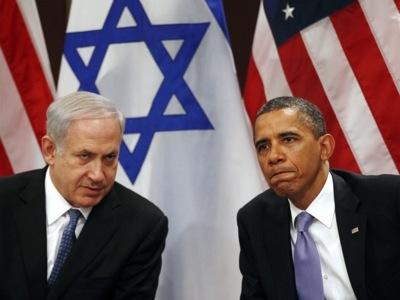
The US and Israel are planning to conduct a joint military drill in an effort to threaten Iran towards the end of the six-month period when an interim deal between Iran and the five permanent members of the UN Security Council plus Germany expires.
The drill is aimed at sending a threatening message to Iran while US President Barack Obama says “we cannot commit ourselves to an endless cycle of conflict.”
Time magazine broke the story of the planned US-Israeli military exercise on Thursday, citing a top Israeli official who said, “The strategic decision is to continue to make noise.”
“In May there’s going to be a joint training exercise with the Americans,” said the official who spoke on condition of anonymity. “It’s going to be big.”
The planned war game comes after the interim nuclear deal between Iran and the P5+1 intensely angered Israelis.
As part of the interim deal, which was announced on November 24, Iran has agreed to limit certain aspects of its nuclear activities, and the United States and its allies have agreed to lift some of the economic sanctions and offer access to a portion of the revenue that Tehran has been denied through these sanctions. No additional sanctions will be imposed.
The deal infuriated Israeli Prime Minister Benjamin Netanyahu who called it “a historic blunder.”
The American Israel Public Affairs Committee (AIPAC), the most powerful pro-advocacy group in the US, also called on US Congress to impose new sanctions on Iran.
Meanwhile, a recent Reuters/Ipsos poll has shown that the American people support the deal over Iran’s nuclear energy program by a 2-to-1 margin.
Related articles
Obama’s Response To Too Much Secrecy About Surveillance… Is More Secrecy
By Mike Masnick | Techdirt | November 27, 2013
Anita Kumar, a reporter at McClatchy, has a good article highlighting how, for all the talk by the Obama administration about how it needs to be more open and transparent about what the NSA is doing, in actuality, the administration has built up the walls even higher, increasing the levels of secrecy… including secrecy about how he’s responded to everything:
Obama has been gradually tweaking his vast government surveillance policies. But he is not disclosing those changes to the public. Has he stopped spying on friendly world leaders? He won’t say. Has he stopped eavesdropping on the United Nations, the World Bank and the International Monetary Fund? He won’t say.
Even the report by the group Obama created to review and recommend changes to his surveillance programs has been kept secret.
As is noted in the article, the administration, which likes to pretend it’s the most transparent in history, is actually one of the most secretive. Its attempts at transparency have almost exclusively been focused on where it can get the most political bang, not for what areas people expect the government to be transparent about — such as how it interprets the laws that allow the government to spy on everyone…
What’s incredible is that it appears that no one high up in the administration seems to recognize how this is a strategy that will almost certainly make things worse, not better. It may be how the administration is used to functioning, but it makes it much more difficult to believe anything that is said about a supposed “vigorous public debate” being held on the surveillance activities. It also means that as more leaks come out revealing more questionable practices, the constant backtracking and excuses will just destroy whatever credibility the administration has left on this issue. If, instead, it were to actually be transparent and simply reveal things like how it interprets the law, and allow for a real public discussion on these matters, that would actually result in some frank discussions that the administration seems terrified of actually having.
Extreme secrecy may seem like the easier short-term strategy, but it’s just digging an ever deeper hole that the administration is going to have to try to climb out of in the long-term. Hiding reality from a public that’s going to find out eventually is just making the problem worse.
U.S. Officials Hint at Reservations on Final Nuclear Deal
By Gareth Porter | IPS | November 26, 2013
WASHINGTON – The “first step” agreement between Iran and the United States that was sealed in Geneva over the weekend is supposed to lead to the negotiation of a “comprehensive settlement” of the nuclear issue over the next six months, though the latter has gotten little attention.
But within hours of the agreement, there are already indications from senior U.S. officials that the Barack Obama administration is not fully committed to the conclusion of a final pact, under which economic sanctions would be completely lifted.
The administration has apparently developed reservations about such an “end state” agreement despite concessions by the government of President Hassan Rouhani that were more far-reaching than could have been anticipated a few months ago.
In fact the Rouhani government’s moves to reassure the West may have spurred hopes on the part of senior officials of the Obama administration that the United States can achieve its minimum aims in reducing Iran’s breakout capacity without giving up its trump cards—the harsh sanctions on Iran’s oil expert and banking sectors.
The signs of uncertain U.S. commitment to the “end state” agreement came in a background press briefing by unidentified senior U.S. officials in Geneva via teleconference late Saturday night. The officials repeatedly suggested that it was a question of “whether” there could be an “end state” agreement rather than how it could be achieved.
“What we are going to explore with the Iranians and our P5+1 partners over the next six months,” said one of the officials, “is whether there can be an agreed upon comprehensive solution that assures us that the Iranian programme is peaceful.”
The same official prefaced that remark by stating, “In terms of the ‘end state’, we do not recognise a right for Iran to enrich uranium.”
Later in the briefing, a senior official repeated the same point in slightly different words. “What the next six months will determine is whether there can be an agreement that… gives us assurance that the Iranian programme is peaceful.”
Three more times during the briefing the unnamed officials referred to the negotiation of the “comprehensive solution” outlined in the deal agreed to Sunday morning as an open-ended question rather than an objective of U.S. policy.
“We’ll see whether we can achieve an end state that allows for Iran to have peaceful nuclear energy,” said one of the officials.
Those carefully formulated statements in the background briefing do not reflect difficulties in identifying what arrangements would provide the necessary assurances of a peaceful nuclear programme. Secretary of State John Kerry declared at a press appearance in Geneva, “Folks, it is not hard to prove peaceful intention if that’s what you want to do.”
The background briefing suggested that in next six months, Iran would have to “deal with” U.N. Security Council resolutions, which call for Iran to suspend all enrichment activities as well as all work on its heavy reactor in Arak.
Similarly, the unnamed officials said Iran “must come into compliance with its obligations under the NPT and its obligations to the IAEA [International Atomic Energy Agency].”
Those statements appeared to suggest that the administration would be insisting on a complete end to all enrichment, at least temporarily, and an end to all work on Arak.
The actual text of the agreement reached on Sunday states, however, that both the six powers of the P5+1 and Iran “will be responsible for conclusion and implementation of mutual near-term measures,” apparently referring to the measures necessary to bring Security Council consideration of the Iran nuclear issue to a conclusion.
The Obama administration has yet to release an official text of the “first step” agreement, although the official Iran Fars new agency released a text over the weekend.
Iran has demonstrated its determination to achieve such an agreement by effectively freezing and even partially reversing its nuclear programme while giving the IAEA daily access to Iran’s enrichment sites.
The Washington Post story on Sunday cited Western officials in Geneva as saying that the Iranian concessions “not only halt Iran’s nuclear advances but also make it virtually impossible for Tehran to build a nuclear weapon without being detected.”
But since the early secret contacts with Iran in August and September, the Obama administration has been revising its negotiating calculus in light of the apparent Iranian eagerness to get a deal.
In mid-October, Bloomberg’s Jeffrey Goldberg reported that the White House and State and Treasury departments were interested in an idea first proposed in early October by Mark Dubowitz, the executive director of the Foundation for the Defense of Democracies, who had lobbied the Obama administration successfully for the sanctions aimed at cutting Iranian oil export revenues.
The Dubowitz proposal was to allow Iran access to some of its own money that was sitting in frozen accounts abroad in return for “verified concessions” that would reduce Iranian nuclear capabilities.
Meanwhile the United States and other powers would maintain the entire structure of the sanctions regime, at least in the interim period, without any change, Goldberg reported, “barring something like total capitulation” by Iran.
The scheme would give greater rewards for dismantling all but a limited number of safeguards than for lesser concessions, according to Goldberg’s report, based on information from “several officials”.
And if Iran refused, the plan would call for even more punishing sanctions against Iran’s natural gas sector.
That was essentially the policy that the Obama administration adopted in the negotiations in Geneva. In the first step agreement, Iran agreed to stop all enrichment to 20 percent, reduce the existing 20 percent-enriched stockpile to zero, convert all low enriched uranium to a form that cannot be enriched to higher level and allow IAEA inspectors daily access to enrichment sites.
In return for concessions representing many of its key negotiating chips, Iran got no relief from sanctions and less than seven billion dollars in benefits, according to the official U.S. estimate.
But the Iranian concessions will hold only for six months, and Iran has made such far-reaching concessions before in negotiations on a preliminary that anticipated a later comprehensive agreement and then resumed the activities it had suspended.
In the Paris Agreement of Nov. 15, 2004 with the foreign ministers of the UK, Germany, France, Iran agreed “on a voluntary basis, to continue and extend an existing suspension of enrichment to include all enrichment related and reprocessing activities”.
That meant that Iran was giving up all work on the manufacture, assembly, installation and testing of centrifuges or their components. Supreme Leader Ayatollah Ali Khamenei was under the impression it was an open-ended suspension and initially opposed it.
Khamenei relented only after Hassan Rouhani, then the chief nuclear policy coordinator and now president, and other officials, assured him that it was a temporary measure that would endure only until an agreement was reached that legitimised Iran’s enrichment or the determination that the Europeans were not serious, according to Ambassador Hossein Mousavian’s nuclear memoirs.
After the Europeans refused to negotiate on an Iranian proposal for a comprehensive settlement in March 2005 that would have provided assurances against enrichment to weapons grade, Khamenei pulled the plug on the talks, and Iran ended its suspension of enrichment-related activities.
The United States had long depended on its dominant military power to wage “coercive diplomacy” with Tehran, with threat of an attack on Iran as its trump card. But during the George W. Bush administration, that threat begn to lose its credibility as it became clear that the U.S. military was opposed to war with Iran over its nuclear programme.
Obama administration officials are now acting as though they believe the sanctions represent a diplomatic trump card that is far more effective than the “military option” that had been lost.
Some news stories on the “first step” agreement have referred to the possibility that the negotiations on the final settlement could stall, and the status quo might continue. But the remarks by senior U.S. officials suggest the administration may be hoping for precisely such an outcome.
Gareth Porter, an investigative historian and journalist specialising in U.S. national security policy, received the UK-based Gellhorn Prize for journalism for 2011 for articles on the U.S. war in Afghanistan.
10 More Years in Afghanistan
By David Swanson | War is a Crime | November 25, 2013
When Barack Obama became president, there were 32,000 U.S. troops in Afghanistan. He escalated to over 100,000 troops, plus contractors. Now there are 47,000 troops these five years later. Measured in financial cost, or death and destruction, Afghanistan is more President Obama’s war than President Bush’s. Now the White House is trying to keep troops in Afghanistan until “2024 and beyond.”
Afghan President Hamid Karzai is refusing to sign the deal. Here is his list of concerns. He’d like the U.S. to stop killing civilians and stop kicking in people’s doors at night. He’d like the U.S. to engage in peace negotiations. He’d like innocent Afghan prisoners freed from Guantanamo. And he’d like the U.S. not to sabotage the April 2014 Afghan elections. Whatever we think of Karzai’s legacy — my own appraisal is unprintable — these are perfectly reasonable demands.
Iran and Pakistan oppose keeping nine major U.S. military bases in Afghanistan, some of them on the borders of their nations, until the end of time. U.S. officials threaten war on Iran with great regularity, the new agreement notwithstanding. U.S. missiles already hit Pakistan in a steady stream. These two nations’ concerns seem as reasonable as Karzai’s.
The U.S. public has been telling pollsters we want all U.S. troops out of Afghanistan “as soon as possible” for years and years. We’re spending $10 million per hour making ourselves less safe and more hated. The chief cause of death for U.S. troops in this mad operation is suicide.
When the U.S. troops left Iraq, it remained a living hell, as Libya is now too. But the disaster that Iraq is does not approach what it was during the occupation. Much less has Iraq grown dramatically worse post-occupation, as we were warned for years by those advocating continued warfare.
Humanitarian aid to Afghanistan — or to the entire world, for that matter, including our own country — would cost a fraction of what we spend on wars and war preparations, and would make us the most beloved nation on earth. I bet we’d favor that course if asked. We were asked on Syria, and we told pollsters we favored aid, not missiles.
We stopped the missiles. Congress members in both houses and parties said they heard from more people, more passionately, and more one-sidedly than ever before. But we didn’t stop the guns that we opposed even more than the missiles in polls. The CIA shipped the guns to the fighters without asking us or the Congress. And Syrians didn’t get the aid that we favored.
We aren’t asked about the drone strikes. We aren’t asked about most military operations. And we aren’t being asked about Afghanistan. Nor is Congress asserting its power to decide. This state of affairs suggests that we haven’t learned our lesson from the Syrian Missile Crisis. Fewer than one percent of us flooded Congress and the media with our voices, and we had a tremendous impact. The lesson we should learn is that we can do that again and again with each new war proposal.
What if two percent of us called, emailed, visited, protested, rallied, spoke-out, educated, and non-violently resisted 10 more years in Afghanistan? We’d have invented a new disease. They’d replace the Vietnam Syndrome with the Afghanistan Syndrome. Politicians would conclude that the U.S. public was just not going to stand for any more wars. Only reluctantly would they try to sneak the next one past us.
Or we could sit back and keep quiet while a Nobel Peace Prize winner drags a war he’s “ending” out for another decade, establishing that there’s very little in the way of warmaking outrages that we won’t allow them to roll right over us.
Nuclear Rights and the P5+1 Talks with Iran
By Flynt Leverett and Hillary Mann Leverett | Going to Tehran | November 22, 2013
Yesterday, while taping a discussion of the latest round of P5+1 nuclear talks with Iran on Russia Today’s CrossTalk that was broadcast today (see here or, on You Tube, here), Flynt said, “I hope I’m wrong, but I’m not particularly optimistic about a deal being reached this week. I don’t think that there’s been a lot of progress on the issues that kept agreement from being reached the last time the parties convened in Geneva:
–There’s the issue of Iran’s nuclear rights, and how they get acknowledged or not acknowledged in an interim agreement.
–There is disagreement about how to handle, during an interim deal, this heavy water reactor facility at Arak which the Iranians are building.
–There are still disagreements about the disposition of Iran’s stockpile of near-20 percent enriched uranium.
I don’t really see much sign that either the United States or the French are backing down from some of the positions they took on those issues ten days ago—and if there’s not some give on that, I don’t know how the Iranians will be in a position to accept the P5+1 proposal.”
On the positions that the United States and France took on these issues in the November 7-9 Geneva talks, Flynt recounts,
“Going into the last round at Geneva, I think the Iranians anticipated getting a draft from the P5+1 where they had clearly worked out understandings about how some of these contentious issues—about Arak, about the 20 percent stockpile, about some acknowledgement of Iran’s nuclear rights; the Iranians had expectations from their previous discussions about the kind of proposal they were going to see. And, basically, the United States and France reneged on those understandings. And so the draft proposal that went in front of Iran was different from what Foreign Minister Zarif and his team were expecting to see, and they weren’t in a position to accept that.
Unless the P5+1—in particular, the United States and France—are willing to stick to understandings that the Iranians thought they had reached, at least verbally, on some of these issues, I don’t think that the Iranians are going to feel, either in terms of substance or in terms of the atmosphere of trust, they’re not going to feel comfortable with going ahead with an agreement.”
Currently, the most fundamental sticking point in Geneva is—as we have long anticipated—the Obama administration’s refusal to recognize Iran’s clear legal right to enrich uranium under safeguards and to acknowledge that the Islamic Republic will have to be treated like any other NPT party. As we’ve written before, see here, Iran and all other states have a sovereign right to pursue indigenous fuel cycle capabilities—a right recognized in Article IV of the Nuclear Non-Proliferation Treaty (NPT) as an “inalienable right,” which non-nuclear-weapon states pledge to exercise in line with Article II (where non-weapons states commit not to build or obtain nuclear weapons) and Article III (where states commit to conducting their nuclear activities under safeguards to be negotiated with the International Atomic Energy Agency).
As Flynt explains, the Obama administration—like the George W. Bush administration before it—resists recognizing this legal reality:
“There are basically four countries in the world that try to deny that the NPT recognizes the right of a non-nuclear weapon state like Iran to enrich uranium under safeguards. Those four countries are the United States, France, the United Kingdom, and Israel, which isn’t even a signatory to the NPT. Those are the only four countries that take this position. The rest of the world—the BRICS, the Non-Aligned Movement, key U.S. allies like Germany and Japan—have held consistently that the Treaty recognizes a right to enrich. And what is so perverse is that…when the U.S. and the Soviet Union first opened the NPT for signature in 1968, senior U.S. officials testified to Congress that the NPT recognized a right to safeguarded enrichment. That was the position of the United States until the end of the Cold War—and then we decided to try to unilaterally rewrite the Treaty because we didn’t want non-Western countries getting fuel cycle capabilities.”
We’ll see if the Obama administration can do any better this weekend.
Related articles
Religous students found guilty of being Pakistani
By Charles Davis | False Dichotomy | November 21, 2013
When a man shot up a Sikh temple in Wisconsin last year, Barack Obama announced how “deeply saddened” he was that such an attack “took place at a house of worship.” His Republican challenger for the presidency, Mitt Romney, likewise expressed his disgust at “a senseless act of violence . . . that should never befall any house of worship.”
At the time, that was grotesquely funny because, by that point, Barack Obama had himself committed numerous acts of senseless violence against houses of worship. And, being the commander-in-chief of a military fighting a war in Afghanistan and Pakistan that he dramatically expanded upon taking office, he has continued to bomb religious institutions ever since.
As Reuters reported on Wednesday:
A suspected U.S. drone fired on an Islamic seminary in Pakistan’s northwestern region of Khyber Pakhtunkhwa early on Thursday, killing at least five people, police said. […]
Fareed Khan, a police officer, said the unmanned aircraft fired at least three rockets at the madrassa in the Hangu district, killing two teachers and three students just before sunrise on Thursday.
Now, and this is important: an anonymous official did say a potentially bad person was potentially seen at that madrassa a few days earlier (potentially), so Barack Obama can sleep soundly at night knowing he authorized the killing of a few people who were probably familiar with that bad guy…
Meanwhile Reuters continues:
The attack took place a day after Pakistan’s foreign policy chief Sartaj Aziz was quoted as saying that the United States had promised not to conduct drone strikes while the government tries to engage the Taliban in peace talks.
The United States has not commented on Aziz’s remarks.
I’m really pretty sure that it has.
Why Healthcare.gov Sucks? Because They Hired Political Cronies, Not Internet Native Companies To Build It
By Mike Masnick | Techdirt | October 10, 2013
There’s been plenty of talk lately about just how screwed up the launch of Healthcare.gov has been. While any massively large-scale internet launch is likely to suffer some problems, the level of disaster on this particular project has been quite impressive. This has led some to wonder why this happened, especially given the reputation of President Obama’s “web-savvy” campaign team. The answers aren’t too hard to figure out, of course. First off, the campaign team is quite different from the team implementing this — which was handled by the Department of Health and Human Services. But, more importantly: it appears that the federal government basically handed this project over to the same crew of giant government contractors, who have a long history of screwed up giant IT projects, and almost no sense of the “internet native” world.
The Sunlight Foundation (link above) figured out the list of contractors who worked on the site, and noted that the big ones not only are well-known DC power-player insiders, but they’re also big on the lobbying and political contributions side of things. You’ve got companies like… Booz Allen Hamilton, famous for promoting cyberwar hype and employing Ed Snowden. There’s defense contracting giant Northrup Grumman. Then there’s SAIC — which I can’t believe can still get government business. This is the same firm that famously was given a $380 million contract to revamp the FBI system, on which it went $220 million over budget, and then saw the entire system scrapped after it (literally) brought some users to tears, and the FBI realized it was useless in fighting terrorism. SAIC is also the company that NYC Mayor Bloomberg demanded return $600 million after a city computer project (budgeted at $68 million) actually cost $740 million. SAIC has a long list of similar spectacular failures on government IT projects.
As you look down the list put together by the Sunlight Foundation, it’s all companies like this: giant monstrosities which are simply tied in closely with the government. All the large consulting firms are listed: Accenture, Deloitte, PricewaterhouseCoopers, McKinsey. What’s missing? Basically any company with even the slightest smidgen of experience building and maintaining large-scale, public-facing web-based apps. The list has no “internet native” companies.
Many, many years ago, I worked for an e-commerce startup here in Silicon Valley, and I ended up (sort of by default) in charge of trying to open up the government market for what we were doing. It involved meeting with a slew of all-too-slick, ex-politician, ex-military “consultants” with no technical knowledge whatsoever, who, for $15k to $25k/month retainers plus a (large) cut of any deal, would drink hard liquor and promise to “connect” us with big companies with government connections, and then help us sneak past the government bidding process to get no-bid contracts. It was an eye-opening experience that highlighted for me that getting government contracts in the tech world was very much about who you knew, rather than any actual knowledge, skills or experience. While this was quite a long time ago, it would appear that little has changed.
US Working Overtime Behind The Scenes To Kill UN Plan To Protect Online Privacy From Snooping
By Mike Masnick | Techdirt | November 21, 2013
The UN has apparently been considering a proposal pushed by Brazil and Germany, to clarify that basic offline rights to privacy should apply to online information and activities as well. The proposal is targeted at attempts by governments — mainly the US — to ignore privacy issues in spying on people around the globe. Not surprisingly, the US is (quietly) working hard to stop this plan. Colum Lynch at Foreign Policy has the scoop, noting that publicly, the US is pretending to support this in some form:
But privately, American diplomats are pushing hard to kill a provision of the Brazilian and German draft which states that “extraterritorial surveillance” and mass interception of communications, personal information, and metadata may constitute a violation of human rights. The United States and its allies, according to diplomats, outside observers, and documents, contend that the Covenant on Civil and Political Rights does not apply to foreign espionage.
In recent days, the United States circulated to its allies a confidential paper highlighting American objectives in the negotiations, “Right to Privacy in the Digital Age — U.S. Redlines.” It calls for changing the Brazilian and German text so “that references to privacy rights are referring explicitly to States’ obligations under ICCPR and remove suggestion that such obligations apply extraterritorially.” In other words: America wants to make sure it preserves the right to spy overseas.
The U.S. paper also calls on governments to promote amendments that would weaken Brazil’s and Germany’s contention that some “highly intrusive” acts of online espionage may constitute a violation of freedom of expression. Instead, the United States wants to limit the focus to illegal surveillance — which the American government claims it never, ever does. Collecting information on tens of millions of people around the world is perfectly acceptable, the Obama administration has repeatedly said. It’s authorized by U.S. statute, overseen by Congress, and approved by American courts.
While none of this creates any binding requirements, it does put tremendous pressure on countries to comply — and could lead to more specific language in various treaties and other agreements as well. It also allows other countries to stand firmly on the moral high ground that the US pretends to stand on, in order to scold the US for its activities.
The US, of course, likes to pretend that it needs to violate everyone’s privacy to catch a few bad guys. There is little reason to suggest this is true. Nothing in the proposal appears to stop legitimate law enforcement, espionage and surveillance efforts, targeted at actual people involved in criminal or terrorist activity. The issue is scooping up everyone’s data “just because.” That’s not what US negotiators are saying, obviously. Instead, they argue they need to scoop up everyone’s data to make the world safer by going after “international terrorists.”
The US’s stance here is fairly obvious. It wants to pretend to retain the moral high ground on this issue, and the way to do that is to try to stop the rest of the world from pointing out that it’s been on the low road for quite some time. But trying to redraw the map doesn’t change the reality.
Related articles
Obamacare is Doomed by Its Internal Logic
A Black Agenda Radio commentary by Glen Ford | November 20, 2013
Obamacare is unraveling, not because the administration is particularly incompetent or unlucky, and certainly not as a result of the Republicans’ unrelenting hostility to the Obama health insurance plan. Indeed, ever since the bill’s passage in early 2010, the GOP’s holy war against Obamacare has served to solidify reflexive Democratic support for what has always been a Republican-inspired bill.
The truth is, the Affordable Health Care Act is coming undone because of its own, tortured internal logic. At root, it is a fraud on the public: a scheme to subsidize and more deeply embed a private insurance system that can only make profits by denying sick and vulnerable people health care, and playing different demographics of Americans against each other. As every other industrialized country in the world has already learned, it is impossible to build a genuine, universal healthcare system on a cut-throat capitalist foundation. Private insurers make money by betting against the health interests of their customers. Obama served his corporate masters by conspiring to make tens of millions more Americans into customers of private insurers. He tried to dress up one of the greatest corporate subsidies in history as if it were a solemn national mission, a rebirth of the social compact between the American people. But of course, Obamacare is no such thing; it is a racket to prop up private insurers with public money, while allowing the profiteers to continue to run the show.
You can’t hide a truth that big. The Obamacare website has suffered from terminal complexity because white collar crime is usually quite complex. The web site attempts to reconcile the profit margins and various products of a universe of private insurance corporations, while at the same time pretending to serve the health needs of the people at an affordable cost. Obamacare claims to be in the business of serving both the public and corporate stockholders. But that’s mission impossible. If Obamacare is based on making profits for private corporations – if that is what keeps the system going – then the public’s health care needs will always be an afterthought. And, that will be obvious in the way that the website is organized as a sales platform that matches federal subsidies with corporate products, rather than matching people with the medical resources they need to survive and thrive.
Website complexity and failures aside, Obamacare can never become part of a national social compact, something of which all Americans can be proud. That’s because, by definition, corporate insurance schemes divide people into “winners” and “losers” – although, of course, the big winner is always the corporation. Young, healthy people know they are the fatted calves of the insurance business, and they are avoiding Obamacare like the plague. If this were really a national health care program, like Medicare for All, then most young people would join in the national health care mission. But this is just Obama working a scam for the insurance companies, and young folks know it. Anybody who manages to get access to the web site knows it.
The fatal flaw in Obamacare can’t be fixed. The best thing that could happen would be a quick and total collapse. Large majorities of Americans still support Medicare for All, but Obamacare stands in the way of a real national health plan – just as the Republican right-wingers that invented Obamacare back in 1989 intended.
Glen Ford can be contacted at Glen.Ford@BlackAgendaReport.com.
Related article
- That Popping Noise? The Obamacare Bubble! (correntewire.com)
Love Me, I’m a Liberal!
By Kevin Carson | Center for a Stateless Society | November 18, 2013
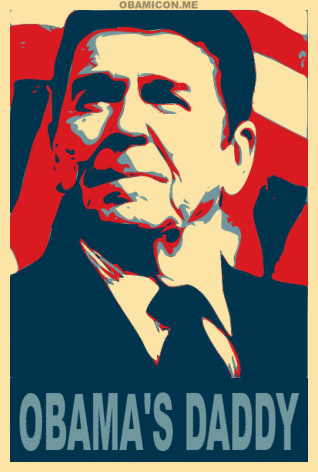 Nothing like starting out your day with a laugh — and today I have Matthew Lynch (“12 Reasons Why Obama is One of the Greatest Presidents Ever,” Huffington Post, November 15) to thank for it.
About half of Lynch’s points boil down to, “Obama is for x, because he makes speeches talking about x all the time.” He starts out with the best one of all:
“Unlike the many presidents who preceded him, he cares about what is best for the greater good. He truly does represent The People. His actions have always been motivated by a sincere desire to do what is best for the majority, even if it meant losing ground with the wealthy, influential or powerful minority.”
Um, yeah. That’s why he adopted a Republican “universal healthcare” proposal to require everybody to buy private health insurance — and give taxpayer money to the ones who can’t afford it. That should be popular with “The People,” all right — at least those who own stock in insurance companies. That’s why he quietly promised the drug companies he wouldn’t use Medicare’s bargaining power to negotiate lower drug prices. That’s why Joe Biden conducts copyright enforcement policy out of Disney’s corporate headquarters and the administration backs draconian copyright legislation dictated in secret by proprietary content industries.
Among my favorite other howlers:
“2. He is for civil rights. He has consistently spoken on behalf of the disenfranchised, the underdog and the most controversial members of society …”
Yeah, I know he said a lot of stuff about gay marriage and ending Don’t Ask Don’t Tell. But he refused to actually stop prosecuting gays in the military before the law was repealed, or to put enforcement on the back burner, even when he was fully capable of using his executive authority to do so.
And notice Lynch doesn’t say “civil liberties.” Obama said a lot of stuff about them, too — back in 2008. Since then he’s expanded unconstitutional wiretapping, run interference for the telecoms that help out with it and given amnesty to people who systematically ordered and engaged in torture. Holding war criminals accountable would be “divisive,” you see. He owes the late Nuremberg defendants an apology — they were only following orders, too.
4. Healthcare. I think we already covered that.
“5. He is for the middle class. Here are just a few of the comments made by President Barack Obama in recent months …”
A lot of presidents were for a lot of stuff, if you stick to reading their collected speeches. In practice, Obama’s farm policies are written by ADM and Monsanto, and the office of Secretary of the Treasury is permanently reserved for Goldman-Sachs alumni, just as under his predecessors.
Obama’s actual economic policy is classic Hamiltonianism: Responding to technologies of abundance that reduce the need for capital and labor by using Rube Goldberg mechanisms to artificially prop up the demand for those inputs — even if it means giving people tax breaks for throwing stuff away and replacing it. The stomach-churning irony is that most of the same greenwashed Whole Foods liberals who applaud this also condemn planned obsolescence and the Military-Industrial Complex, which were designed to accomplish exactly the same result. The proper approach to technologies of abundance is to make sure their benefits are fully internalized by workers and consumers, by ceasing to enforce monopolies, artificial scarcities and rents of all kind. If it takes only fifteen hours of labor a week to produce our standard of living, it should only take fifteen hours of labor to enjoy that standard of living. But that would annoy Obama’s Big Business friends.
My favorite, though, is this:
“10. He is for peace. Let us never forget that Barack Obama was awarded the Nobel Peace Prize in 2009 …”
Yeah, he uses that Peace Prize as a paperweight to hold down his drone kill list. Obama didn’t end the war in Afghanistan — he transformed it into a remote-control video game war in which wedding parties can be massacred at the push of a button. And of course, Lynch can’t resist throwing in a mention of the Zero Dark Thirty crap about killing Bin Laden.
I can’t help picturing someone fifty years ago breathlessly gushing “I love JFK because he’s the Peace President” — while ignoring the Bay of Pigs, the Diem assassination and Green Berets in Vietnam.
Lynch’s points, edited for substance, are basically on the same level as a guy in a bar decked out in Full Cleveland thirty years ago saying “I feel comfortable with Reagan.” Obama’s the Reagan of moderate center-left NPR liberals who shop at Whole Foods. If you’re satisfied with the image of peace and social justice, while government in substance continues to serve the same powerful interests, keep right on voting — that’s what it’ll get you.
Related articles
- Obama, Starving Africans and the Israel Lobby
- 12 Reasons Why Obama Is Not The Greatest President Ever – A Rebuttal
Related videos
Feds: Even Though We’ve Been Ordered To Reveal Secret Interpretation Of The PATRIOT Act, We’re Not Going To Do That
By Mike Masnick | Techdirt | November 19, 2013
You may recall that, back in early September, the FISA Court (FISC) agreed that its various rulings that secretly interpreted Section 215 of the PATRIOT Act to mean something entirely different than any plain language reading of the law implies should be declassified. Here’s what the court said at the time:
The unauthorized disclosure in June 2013 of a Section 215 order, and government statements in response to that disclosure, have engendered considerable public interest and debate about Section 215. Publication of FISC opinions relating to this provision would contribute to an informed debate. Congressional amici emphasize the value of public information and debate in representing their constituents and discharging their legislative responsibilities. Publication would also assure citizens of the integrity of this Court’s proceedings.
In addition, publication with only limited redactions may now be feasible, given the extent of the government’s recent public disclosures about how Section 215 is implemented. Indeed, the government advises that a declassification review process is already underway.
In view of these circumstances, and as an exercise of discretion, the Court has determined that it is appropriate to take steps toward publication of any Section 215 Opinions that are not subject to the ongoing FOIA litigation, without reaching the merits of the asserted right of public access under the First Amendment.
It then instructed the DOJ to figure out what to redact, so it could be declassified and released. Except… the DOJ instead fought that order, and while it did find some documents that meet the criteria — namely a ruling from February of this year — the DOJ is now telling the FISA Court that despite the order, it would really prefer to keep that interpretation of the law a complete secret. Actually, it goes further than that. It doesn’t ask for permission to keep it secret, it just says that it cannot reveal the interpretation.
After careful review of the Opinion by senior intelligence officials and the U.S. Department of Justice, the Executive Branch has determined that the Opinion should be withheld in full and a public version of the Opinion cannot be provided.
Got that? This secret court interpretation of a law that we all live under, which the court itself has ordered to be revealed, is unlikely to be revealed because the intelligence community really, really doesn’t want it revealed. Again, this is not about so-called “sources and methods.” This is entirely about understanding how a US court interprets a US law. But that interpretation is secret, meaning that the law itself is secret, and apparently the executive branch of the federal government is going to fight to keep it that way.
Featured Video

WARNING: Delete TikTok Immediately!
or go to
Aletho News Archives – Video-Images
Book Review
Conspiracy Denial

Lies are Unbekoming | January 27, 2026
In honour of Michael Parenti (1933–2026), who passed away on 24 January 2026 at the age of 92. He spent his life naming what power prefers to leave unnamed.
In 1837, Abraham Lincoln remarked: “These capitalists generally act harmoniously, and in concert, to fleece the people.”
Today, he would be dismissed as a conspiracy theorist.
That dismissal—reflexive, automatic, requiring no engagement with evidence—is not a mark of sophistication. It is a tell. The question worth asking is not whether conspiracies exist (they are a matter of public record and a recognised concept in law) but why acknowledging their existence provokes such reliable hostility. What work does the label “conspiracy theorist” actually do?
The late political scientist Michael Parenti spent decades answering that question. His conclusion was blunt: “’Conspiracy’ refers to something more than just illegal acts. It serves as a dismissive label applied to any acknowledgment of ruling-class power, both its legal and illegal operations.” The term functions not as a descriptor but as a weapon—a thought-terminating cliché that protects the powerful from scrutiny by pathologising those who scrutinise them.
Conspiracy denial, in Parenti’s analysis, is not skepticism. It is the opposite of skepticism. It is credulity toward power dressed up as critical thinking. As he wrote in Dirty Truths: “Just because some people have fantasies of conspiracies does not mean all conspiracies are imaginary.” … continue
Blog Roll
Recent Comments
eddieb on WEF Calls for ‘Cultural Revolu… loongtip on Trump wanted to play peacemake… Coronistan on EU member to sue bloc over ‘su… loongtip on Vicious loongtip on EU turns to India for defense… Coronistan on Donald Trump Is No Peace … seversonebcfb985d9 on French court jails pro-Palesti… eddieb on Fourteen Incredible Facts Abou… Bill Francis on European leaders’ shift in the… seversonebcfb985d9 on Villains of Judea: Philip Esfo… loongtip on Report warns that ‘Jewish terr… Craig Nelms on New study shows that toxic gas…


 Aletho News
- WARNING: Delete TikTok Immediately!
- Bari Weiss’ New CBS Hire List Is Full Of Zionists
- As TikTok falls into Zionist hands, UpScrolled fills the vacuum to give voice to Palestine
- Former Biden Advisor, Amos Hochstein, Admits The Biden Administration Is Responsible For the Gaza Genocide
- Not a Trump anomaly: The Board of Peace and America’s crisis-driven power plays
- Manufacturing martyrdom: The west’s cynical use of Iranian protest figures
- Attack on Iran would backfire, causing great losses for US, warns European think-tank
- Davos and Abu Dhabi: How the Ukrainian Endgame Exposed Western Decline
- AfD co-leader states the obvious: Pouring money into the Ukraine war is killing the German economy
- Britain’s return to piracy to stop Russian ships – desperate attempt to demonstrate power
- If Americans Knew
- “The Gaza ceasefire is a minefield” – Not a ceasefire Day 110
- Israel to seek new security deal from US, official says
- Leaked “Board of Peace” Resolution Outlines U.S.-Led Plan to Rule Over Gaza
- Jonathan Greenblatt Rolls Out Plan to Activate Hispanic Evangelical Golems
- Violence against hundreds of Gazan remains to find one Israeli – Not a ceasefire Day 109
- Greenpeace Demonstrator Exposes Folly of Protest Restrictions
- From CBS to TikTok, Pro-Israel Ellison is now in the driver’s seat
- Israel pays for UK advertisements attacking Doctors Without Borders
- Israel accused of extracting billions from Gazan people to pay for their own genocide
- ‘Deliberate Assassination’: 3 Journalists Among 11 Killed by Israeli Forces in Gaza
- No Tricks Zone
- New Study Affirms Rising CO2’s Greening Impact Across India – A Region With No Net Warming In 75 Years
- Germany’s Natural Gas Crisis Escalates … One Storage Site Near Empty …Government Silent
- Polar Colding…Antarctica Saw Its Coldest October In 44 Years!
- New Study: Sea Levels Rose 20 Times The Modern Rate During The Roman Warm Period
- As German Gas Storage Dips Dangerously Low…Shortage Hardly Avoidable
- New Study: Brazil’s Relative Sea Level Was 2+ Meters Higher And SSTs 3-4°C Warmer 6000 Years Ago
- Philosopher Schopenhauer: Climate Science Certainty Stems From Stupidity, Ignorance
- New Study: Species Extinction Rates Declining Since 1980 – ‘Climate Change Is Not An Important Threat’
- Denmark Places Climate Protection Above Animal Welfare, Poisoning And Culling Cows
- New Study: Greenland Was 3-7°C Warmer And Far Less Glaciated Than Today 6000-8000 Years Ago
 Aletho News