Bye, Bye, American Pie: US intransigence in the face of a war-weary world
US intransigence in the face of a war-weary world will mean the end of the country as we know it
By Daniel Patrick Welch | September 4, 2013
 It actually shouldn’t be that much of a shock. For the last twelve years at least, Americans have watched their country drift into the shadows of international law abroad and onto the shoals of fascism at home. Inexorably, the weight of imperial overstretch has crippled an economy already on a constant war footing and led to the steady erosion of civil liberties once taken for granted.
At one point, Democrats cried out in (what turns out to be mock) horror when one of the Bushmen smirked at the Geneva Convention as ‘quaint.’ Outrageous! Squeaked the remnants of an American “Left.” No more. As drones are poised to darken the skies like a plague of locusts, intelligence agencies can read all of our communications even as we write them, and the general criminalization of dissent has accelerated without objection because, after all, the guy doing it has a -D after his name.
And now, nary a peep from so-called ‘progressives’ in Congress as a Democrat and his lurking, smooth-talking Consigliore use the same lies and fabrications to shove yet another war down our throats, all neatly packaged in Red, White and Blue, the specter of National Security—in short, the same old bullshit we’ve heard before.
But it’s not the same—that’s the point. And it’s a shame the fools in congress are too stupid (most of them, apparently) to see it. Showing the delusional thinking that is now seemingly required to hold and keep public office, one particularly deranged congresswoman actually told Wolf Blitzer that “dozens” of countries stood ready to support the US’ aggressive war against Syria, though she couldn’t name them offhand. Debbie Wasserman Schultz actually said “I mean we have, from the briefings that I’ve received, there are dozens of countries who are going to stand with the United States, who will engage with us on military action and also that back us up.”
Oh, okay then. Micronesia will send staples, and Samoa is serving drinks. The problem is that, inside the bubble of American “thought,” these people really think that mobilizing the ‘international community’ is the same a papering an audience for a bad musical on a weeknight. It is all just a cynical farce to them. They don’t know, or don’t care, that the whole world sees this for the fraud that it is. The Obama regime is about to make the biggest mistake in history.
This is not hyperbole. Bush had far more support going into Iraq, and Saddam had far less. His case for war, filled with lies and fabricated ‘evidence’ and ginned up ‘intelligence’ findings, is far better than the US’ current position—a complete crock of shit to the whole world, but that somehow smells like roses to the US Congress. The government has ceased to function as a representative body, and is completely divorced from the interests of the American people. Don’t want to trust such a judgment to an old commie like me? Take it from a former president—Jimmy Carter. Mr. Peanut himself admitted there is ‘no functioning democracy’ currently in the US. The arrogance of Obama’s War Council is stunning. Russia, China, and Iran have given repeated warnings—stern, clear, and unequivocal, against such an illegal and foolhardy course of action. The world has had it with American intransigence. It makes no difference whether an illegal war of aggression is ‘authorized’ by a compliant US Congress. Zero.
No matter what happens from here on out, the balance of power is already shifting, away from the US and its vassal states toward BRICS and the nations of the Global South. Even if the US regime does not attack (in itself a poor choice of words since it has been arming and funding foreign mercenaries in Syria for over two years), a too-patient world is ready to muzzle the rabid dog that is the US. China, while keeping mostly cool, has let it be known that if a strike does go ahead, that others should offer assistance to resist. This is as clear a shot across the bow as there is, and should give US warmakers pause.
What it means is that Syria, as a sovereign state, is justified in calling on its allies for help, by which it means Iran and its store of Russian Sunburn missiles, or Hezbollah and its own Chinese C-802 missiles, or Russia itself with its S300, S400 & S500 missiles. This is the real red line, and the US already crossed it in Libya. Putin has said that the Americans are acting like a monkey with a grenade in the Middle East. To put a finer zoological point on it, the Panda and the Bear are not fooling around. They have decided, and rightly so, that the US is too dangerous and must be stopped. If Obama goes ahead with this maniacal and murderous plan, China, Russia, Iran and Hezbollah will help Syria sink a few US destroyers, sending hundreds and perhaps thousands of kids to the bottom of the Mediterranean—they have as much as said so. They—not the US—will be within their rights and within international law to do so.
Mourn now, not later. And mourn at least equally for the kids your kids kill and for your kids who are killed in return. Don’t go running for the flag or screaming for revenge. Don’t accuse those of us who shouted from the rooftops of being un-American, or try to bully us into abandoning our principles and join the call for blood. This is wrong. It is illegal. It is as predictable as it is preventable. Even some tepid ‘antiwar’ types have it wrong when they say the US can’t be the world’s policeman. This misses the mark: the real point is that we have no moral authority to do so, and the whole world knows it. The criminal cabal in Washington is so obsessed with its own greatness that is has stood history on its head. In his long, insidious career of lies and obfuscation, Merchant of Death John Kerry finally got something inadvertently right: this *is* a Munich moment. But of course, true to form, he has it backwards. And Chamberlain‘s first name is not Neville, it’s Vlad. And he may give Obama and his henchmen a Nuremberg Moment.
Writer, singer, linguist and activist Daniel Patrick Welch lives and writes in Salem, Massachusetts, with his wife, Julia. Together they run The Greenhouse School. Translations of articles are available in over two dozen languages.
Related articles
- Yes, Syria and Hezbollah Will Hit Israel if US Strikes (alethonews.wordpress.com)
- Obama’s Limited Strikes Plan Faces Risks of Escalation (bloomberg.com)
Obama regime calls on EU to postpone ban on Israel
Press TV – September 8, 2013
US Secretary of State John Kerry has urged the European Union (EU) to delay a planned ban on Israel over the Tel Aviv regime’s continued settlement activities in the occupied Palestinian territories, according to a senior US official.
On July 19, the EU published new guidelines in its Official Journal, banning its 28 members from funding projects in the illegal Israeli settlements in al-Quds (Jerusalem), the West Bank or Golan Heights, which the Tel Aviv regime occupied during the 1967 war.
The ban sparked anger among the Israeli officials, with Israeli Prime Minister Benjamin Netanyahu and President Shimon Peres threatening that the new directive would undermine attempts by Kerry to relaunch talks between Israel and the Palestinian Authority.
A senior US State Department official, whose name was not mentioned in the reports, said that, in a meeting with EU foreign ministers in the Lithuanian capital, Vilnius, on Saturday, Kerry called on the Europeans to consider postponing the implementation of the EU guidelines.
Kerry also asked EU diplomats to support the talks between the Israeli regime and the Palestinian Authority, which resumed in July after a three-year hiatus.
Meanwhile, the EU is to send a team to Israel on Monday to move forward on the guidelines against Israeli organizations in the occupied Palestinian territories.
Israel has announced plans to construct more than 3,000 housing units in al-Quds and the occupied West Bank since the resumption of the talks with the Palestinian Authority in July.
On August 11, Israel’s Housing Minister Uri Ariel gave final approval for the construction of 793 settlement units in the occupied east al-Quds (Jerusalem) and 394 others in the West Bank.
A day later, the EU described as “illegal” the Israeli regime’s decision to approve the building of settlement units.
Yasser Abed Rabbo, a top aide to Mahmoud Abbas, the acting Palestinian Authority (PA) chief, said on September 4 that continued Israeli settlement construction had undermined the talks with Israel.
Palestinians demand that Israel withdraw from the occupied Palestinian territories.
Related article
Congress Denied Syrian Facts, Too
By Robert Parry | Consortium News | September 7, 2013
A U.S. congressman who has read the Obama administration’s classified version of intelligence on the alleged Syrian poison gas attack says the report is only 12 pages – just three times longer than the sketchy unclassified public version – and is supported by no additional hard evidence.
Rep. Alan Grayson, D-Florida, a member of the House Foreign Affairs Committee, also said the House Intelligence Committee had to make a formal request to the administration for “the underlying intelligence reports” and he is unaware if those details have been forthcoming, suggesting that the classified report – like the unclassified version – is more a set of assertions than a presentation of evidence.
“We have reached the point where the classified information system prevents even trusted members of Congress, who have security clearances, from learning essential facts, and then inhibits them from discussing and debating what they do know,” Grayson wrote in an op-ed for the New York Times on Saturday.
“And this extends to matters of war and peace, money and blood. The ‘security state’ is drowning in its own phlegm. My position is simple: if the administration wants me to vote for war, on this occasion or on any other, then I need to know all the facts. And I’m not the only one who feels that way.”
As I wrote a week ago, after examining the four-page unclassified summary, there was not a single fact that could be checked independently. It was a “dodgy dossier” similar to the ones in 2002-2003 that led the United States into the Iraq War. The only difference was that the Bush administration actually provided more checkable information than the Obama administration did, although much of the Bush data ultimately didn’t check out.
It appears that the chief lesson learned by the Obama administration was to release even less information about Syria’s alleged chemical weapons attack on Aug. 21 than the Bush administration did about Iraq’s alleged WMD. The case against Syria has relied almost exclusively on assertions, such as the bellowing from Secretary of State John Kerry that the Syrian government sure did commit the crime, just trust us.
The Obama administration’s limited-hangout strategy seems to have worked pretty well at least inside the Establishment, but it’s floundering elsewhere around the United States. It appears that many Americans share the skepticism of Rep. Grayson and a few other members of Congress who have bothered to descend into the intelligence committee vaults to read the 12-page classified summary for themselves.
Rallying the Establishment
Despite the sketchy intelligence, many senators and congressmen have adopted the politically safe position of joining in denunciations of Syrian President Bashar al-Assad (where’s the downside of that), and the mainstream U.S. news media has largely taken to writing down the administration’s disputed claims about Syria as “flat fact.”
For instance, the New York Times editorial on Saturday accepts without caveat that there was “a poison gas attack by President Bashar al-Assad’s regime that killed more than 1,400 people last month,” yet those supposed “facts” are all in dispute, including the total number who apparently died from chemical exposure. It was the U.S. white paper that presented the claim of “1,429” people killed without explaining the provenance of that strangely precise number.
The New York Times editorial also reprises the false narrative that Russian President Vladimir Putin and Syria’s Assad are to blame for the absence of peace negotiations, although the Times’ own reporters from the field have written repeatedly that it has been the U.S.-backed rebels who have refused to join peace talks in Geneva. [See Consortiumnews.com’s “Getting Syria-ous About Peace Talks.”]
Nevertheless, the Times editorial states, “it was the height of cynicism for Mr. Putin to talk about the need for a Syrian political settlement, which he has done little to advance.” One has to wonder if the Times’ editors consider it their “patriotic” duty to mislead the American people, again.
Increasingly, President Barack Obama’s case for a limited war against Syria is looking like a nightmarish replay of President George W. Bush’s mendacious arguments for war against Iraq. There are even uses of the same techniques, such as putting incriminating words in the mouths of “enemy” officials.
On Feb. 5, 2003, before the United Nations Security Council, Secretary of State Colin Powell needled some intercepted quotes from Iraqi military officers to make some innocuous comments about inspecting weapons sites into proof they were hiding caches of chemical weapons from UN inspectors. Powell’s scam was exposed when the State Department released the actual transcripts of the conversations without some of the incriminating words that Powell had added.
Then, on Aug. 30, 2013, when the Obama administration released its “Government Assessment” of Syria’s alleged poison gas attack, the white paper stated, “We intercepted communications involving a senior official intimately familiar with the offensive who confirmed that chemical weapons were used by the regime on August 21 and was concerned with the U.N. inspectors obtaining evidence.”
However, the identity of the “senior official” was not included, nor was the direct quote cited. The report claimed concerns about protecting “sources and methods” in explaining why more details weren’t provided, but everyone in the world knows the United States has the capability to intercept phone calls.
Reasons for Secrecy?
So, why didn’t the Obama administration go at least as far as the Bush administration did in putting out transcripts of these phone intercepts? A reasonable suspicion must be that the actual words of the conversation – and possibly other conversations – would have indicated that the Syrian high command was caught off guard by the Aug. 21 events, that the Syrian government was scrambling to figure out what had happened and why, that the intercepts were less incriminating than the paraphrase of them.
That fuller story might well have undercut the U.S. case for taking military action. So, the administration’s white paper left out conversations reflecting the Syrian government’s confusion. The white paper didn’t even bother to put in the actual quote from the one “senior official” who supposedly “confirmed” the chemical weapons use.
Indeed, although the white paper states that its conclusions were derived from “human, signals, and geospatial intelligence as well as a significant body of open source reporting,” none of that intelligence was spelled out in the unclassified version. It is now unclear how much more detail was provided in the 12-page classified version that Rep. Grayson read.
In his op-ed, Grayson wrote, “The first [unclassified version] enumerates only the evidence in favor of an attack. I’m not allowed to tell you what’s in the classified summary, but you can draw your own conclusion. On Thursday I asked the House Intelligence Committee staff whether there was any other documentation available, classified or unclassified. Their answer was ‘no.’”
So, what is one to make of this pathetic replay of events from a decade ago in which the White House and intelligence community make sweeping claims without presenting real evidence and the major U.S. news outlets simply adopt the government’s uncorroborated claims as true?
One might have thought that the Obama administration – understanding the public skepticism after the disastrous Iraq War – would have gone to extra lengths to lay out all the facts to the American people, rather than try to slip by with another “dodgy dossier” and excuses about the need to keep all the evidence secret.
President Obama seems to believe that “transparency” means having some members of Congress interrupt their busy schedules of endless fundraising to troop down to the intelligence committee vaults and read some pre-packaged intelligence without the benefit of any note-taking or the ability to check out what they’ve seen, let alone the right to discuss it publicly.
In my 35-plus years covering Congress, I can tell you that perhaps the body’s greatest weakness – amid many, many weaknesses – is its ability to investigate national security claims emanating from the Executive Branch.
Beyond all the limitations of what members of Congress are allowed to see and under what circumstances, there is the reality that anyone who takes on the intelligence community too aggressively can expect to be pilloried as “unpatriotic” or accused of being an “apologist” for some unsavory dictator.
Soon, the troublesome member can expect hostile opinion pieces showing up in his local newspapers and money pouring into the campaign coffers of some electoral challenger. So, there is no political upside in performing this sort of difficult oversight and there is plenty of downside.
And once an administration has staked its credibility on some dubious assertion, all the public can expect is more of a sales job, a task that President Obama himself is expected to undertake in a speech to the nation on Tuesday. That is why the Obama administration would have been wise to have developed a much fuller intelligence assessment of what happened on Aug. 21 and then presented the evidence as fully as possible.
In the days of the Internet and Twitter – and after the bitter experience of the Iraq War – it is a dubious proposition that the White House can rely on national politicians and Establishment news outlets to whip the public up for another military adventure without presenting a comprehensive set of facts.
~
Investigative reporter Robert Parry broke many of the Iran-Contra stories for The Associated Press and Newsweek in the 1980s. You can buy his new book, America’s Stolen Narrative, either in print here or as an e-book (from Amazon and barnesandnoble.com).
When It Comes to State Violence, Too Much Is Never Enough
By Jim Naureckas | FAIR | August 30, 2013
Time magazine’s Michael Crowley (9/9/13) offers an analysis of how the Syrian situation reflects on Barack Obama’s presidency:
Whatever comes of Obama’s confrontation with Assad, an even more dangerous confrontation lies in wait–the one with Iran. If another round of negotiations with Tehran should fail, Obama may soon be obliged to make good on his vow to stop Iran from developing a nuclear weapon. “I will not hesitate to use force when it is necessary to defend the United States and its interests,” Obama told the American Israel Public Affairs Committee in March 2012.
But to his critics, Obama does hesitate, and trouble follows as a result. With more than three years left in his presidency, he has the opportunity to reverse that impression. Success in Syria and then Iran could vindicate him, and failure could be crushing. “The risk is that, if things in the Middle East continue to spiral, that will become his legacy,” says Brian Katulis, a former Obama campaign adviser now with the Center for American Progress.
Obama does “hesitate to use force”–is that his problem? Since 2009, US drone strikes have killed more than 2000 people in Pakistan, including 240 civilians, 62 of them children. Since Obama took office, they’ve killed more than 400 in Yemen; drone deaths in Somalia are harder to quantify.
Obama roughly tripled the number of U.S. troops in Afghanistan, from 33,000 to 98,000 (Think Progress, 6/22/11). In 2011, he sent naval and air forces into battle to overthrow the government of Libya’s Moammar Gaddafi. In Iraq, Obama tried and failed to keep tens of thousands of troops in the country beyond the withdrawal deadline negotiated by the Bush administration (New York Times, 10/22/11).
This is a record that would not seem to indicate a particular hesitancy to use force. Oddly, Crowley acknowledges much of this: “Obama …sent more troops to Afghanistan, escalated drone strikes against Al-Qaeda terrorists,” he writes. But his military actions are presented as a sign of his unwillingness to take military action: “In Libya, he at first stood by as rebels fighting Muammar Gaddafi’s forces found themselves outgunned and on the run.”
No matter how many wars you engage in–Obama has had six so far–there are always wars you could have started but didn’t. Crowley seems to be suggesting that those unfought wars ought to take the blame for any problems Obama leaves behind.
Related article
Rousseff yet to decide on US visit
Press TV – September 7, 2013
Brazil’s President Dilma Rousseff says she will decide on whether to call off her visit to the United States over allegations of Washington’s spying on her based on President Barack Obama’s full response.
On Friday, Obama said that his administration would work with the Brazilian and Mexican governments to resolve tensions over allegations of spying.
Obama met separately with Rousseff and Mexican President Enrique Pena Nieto on the sidelines of G20 international economic summit in the Russian city of St. Petersburg and discussed reports that the US National Security Agency (NSA) spied on their personal communications.
Earlier on Friday, Rousseff indicated she was not completely content with Obama’s assurances that the alleged spying on her communications by the NAS would be looked into during their meeting late on Thursday.
Rousseff added that the US president had agreed to provide a fuller explanation for the reported spying by September 11, and that she would decide whether or not to visit the US next month based in part on his response.
“My trip to Washington depends on the political conditions to be created by President Obama,” Rousseff told reporters on Friday.
Brazil’s TV Globo reported on September 1 that the NSA spied on emails, phone calls and text messages of Rousseff as president and Pena Nieto when he was a candidate.
The report was based on documents released by US surveillance whistleblower Edward Snowden, a former NSA contractor.
Angered by the report, Rousseff and her government have asked for a more complete explanation of the alleged spying.
Brazil argues that counterterrorism or cybersecurity concerns did not sufficiently explain why the NSA would spy on Rousseff’s communications.
The Brazilian government has already canceled a trip by an advance team to prepare for Rousseff’s next month visit to Washington.
Rousseff is scheduled to visit the White House in late October to meet Obama and discuss a possible 4-billion-dollar jet fighter deal, cooperation on oil and biofuels technology between the two biggest economies in the Americas, as well as other commercial projects.
Related article
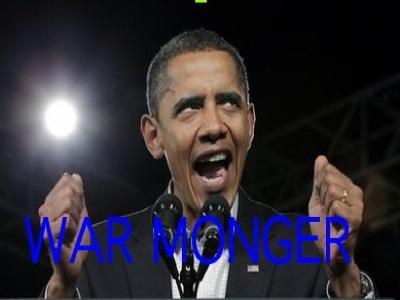
Obama fails to rally international support for his war plans
Press TV – September 7, 2013
US President Barack Obama has failed to rally international support for conducting military strikes on Syria after two days of lobbying in Russia.
Obama, who arrived in St. Petersburg on Thursday to attend the Group of 20 summit, could not persuade foreign leaders to support his war plans as they urged him not to launch any attack without the United Nations’ permission.
During a long debate, Obama and his Russian counterpart Vladimir V. Putin each argued their positions on the issue.
Putin argued that a majority of the leaders, including the leaders of China, India, Indonesia, Argentina, Brazil, Italy, Germany and South Africa, oppose a military strike independent of the United Nations.
Not only did the Russian president oppose military action against Syria, but he also rejected Washington and its allies’ allegations that the Syrian government used chemical weapons in an attack last month.
“We hear each other and understand the arguments,” Putin said. “We simply don’t agree with them. I don’t agree with his arguments and he doesn’t agree with mine, but we hear and try to analyze.”
The only members of the Group of 20 nations which supported Obama were Canada, France, Saudi Arabia and Turkey, Putin added.
Nevertheless, Obama’s national security adviser, Susan Rice, said Australia, Britain, Italy, Japan, Spain and South Korea could also be added to the list of US allies supporting an attack on Syria.
The US president’s failure to rally international support for his war plans against Syria will make it even more difficult for him to convince US lawmakers and voters to support a strike on Syria.
Obama himself said that he had a “hard sell” and that he might not succeed in winning over the US public which, according to polls, still opposes a strike.
Obama said that he would lay out his case during an address on Tuesday before Congress votes on a resolution authorizing his administration to attack Syria.
According to a whip count by Think Progress, an overwhelming majority of the members of the US House of Representatives are either undecided or likely to vote against a US attack on the Middle Eastern country.
Related articles
- Obama rejects G20 calls to abandon Syria strike plan (timesofindia.indiatimes.com)
- Reuters: Obama ‘Appeared Isolated in St. Petersburg’ at G20 Summit (breitbart.com)
Mind the gap! Democratic deficit in UK, US has never been bigger
By Neil Clark | RT | September 6, 2013
The issue of Syria has demonstrated the massive gap that has opened up between the elite and ordinary people in both the US and Britain.
Poll after poll after poll shows very large majorities against strikes on Syria. People are war-weary, and the last thing they want is for their countries to become embroiled in another Middle-East war.
One Congressman in the US tweeted earlier this week that he had asked 200 people if they supported strikes on Syria and only four said ‘Yes’– that’s just 2 percent. Another said that 99 percent of calls to his office were against military action.
Let’s get one thing straight: the only people who are keen on war with Syria in the US and UK are the elites. Ordinary people on both sides of the Atlantic want absolutely nothing to do with it.
In Britain, the overwhelming majority of people were delighted that our parliament voted against war last week and that enough of our legislators finally listened to the people to defeat the serial warmongers.
A BBC poll showed that 71 percent of people thought parliament had made the right decision. Yet our neocon/’liberal interventionist’ elite is furious that legislators listened to the views of ordinary members of the public and not them. “You’re a disgrace,” screeched neocon Minister Michael Gove at MPs who voted against the government. Behaving like spoilt brats having a temper tantrum because they were not allowed to get their own way, the Permanent War brigade have been calling for a “second vote” in parliament, showing arrogant contempt for the views of the majority of ordinary people who don’t want war with Syria.
Neocon historian Andrew Roberts threw a hissy fit in a newspaper column last Sunday, attacking the “hideously amoral selfishness” of “new Britain” for not supporting war with Syria. Serial warmonger and drama queen Lord Paddy Ashdown declared “In 50 years trying to serve my country I have never felt so depressed/ashamed” – after parliament finally listened to public opinion and not to warmongers like Ashdown.
Nick Cohen, poster boy for Britain’s pro-war faux-left tweeted “Can’t help thinking that the British parliament’s vote will be remembered as a low and mean point in our history.” Have you got that? Parliament listening to ordinary members of the public is a “low and mean point.” Such is the fundamentally undemocratic neocon/liberal interventionist mindset, which says that no point of view on foreign policy counts except their own and that of their neocon pals.
Since last week’s parliamentary vote, UK establishment figures have been lining up to give Ed Miliband, the Labour leader, a jolly good thrashing for daring to defy the War Party’s line on Syria. Writing in The Times, aptly described as ‘The Warmongers Gazette’ by anti-war conservative writer Peter Hitchens, David Aaronovitch called Miliband a ‘political vulture’. Aaronovitch’s attack on Miliband was hailed as ‘devastating’ by Ian Katz, the editor of Newsnight, the BBC’s flagship Current Affairs program, which wheeled out a ‘Dr. Rola’ from ‘Hand in Hand For Syria’ to criticize Miliband’s failure to back the government.
Since the vote Newsnight has promoted a series of pro-intervention figures, seemingly desperate to try and get us plebs to change our minds. What part of ‘WE DON’T WANT WAR WITH SYRIA’ do our elite not understand? Now the high priest of ‘Liberal Interventionism’, the multi-millionaire war criminal Tony Blair, has joined the ‘Get Miliband’ lynch mob, saying that he was “disappointed” that parliament hadn’t supported the government, adding, “This is something where I just have to disagree with the leadership of the [Labour] party.”
For our neocon/liberal interventionist elite, Miliband is a shocker, a bounder, a rotter, and a ‘political vulture’. But most ordinary people in Britain are very pleased that he and his party listened to the public and opposed the government on Syria. You’d never have known it from listening to neocon newspaper columns, but after last week’s vote, bookmakers shortened the odds of Labour winning the next election to 8-13.
If Miliband and his party had voted the way the neocons wanted, then it’s highly likely that earlier this week US and British forces would have launched their attack on Syria. Which is why of course the Permanent War gang are so angry with him.
The pro-war lobby may be numerically tiny, but in both the US and UK it is massively overrepresented in the mainstream media. Despite the Iraq debacle, the same columnists who urged on that particular catastrophe, are still in front of their keyboards, propagandizing for yet another Middle East ‘intervention’, and are still treated with enormous deference whenever they appear on the likes of CNN or the BBC. Which is very, very often.
“Did you know there are people who supported the Iraq War getting invited on news programs to talk about Syria?” tweets comedy writer Graham Linehan. S’TRUE!!!
The disproportionate voice that necons and ‘liberal interventionists’ have in the UK and US media makes it appear that their views are more widely held in the public at large than they are. But in fact their extremist pro-war views are very rarely found outside elite, Establishment circles.
The gap between the elites in the US and the UK is now larger than at any time in the last 100 years. If we do go to war with Syria, despite the overwhelming public opposition, then it will show that democracy is well and truly dead in both our countries.
Are we countries where the views of the majority are listened to, or are we countries where a tiny, unrepresentative, pro-war clique always gets their way? We’re about to find out.
 Neil Clark is a journalist, writer and broadcaster. His award winning blog can be found at www.neilclark66.blogspot.com. Follow him on Twitter
Related articles
US Congress Finds ‘Overwhelming’ Public Opposition to Force in Syria
By Maria Young | RIA Novosti | September 6, 2013
WASHINGTON – After three days of non-stop phone calls from hundreds of Colorado constituents opposed to a US military strike on Syria, Rep. Doug Lamborn announced Friday he was “leaning against” a resolution giving US President Barack Obama the authority to take limited action.
Following a long holiday weekend, “Tuesday is when the calls started, they’re still coming in, and I would say fewer than two percent are people who want us to take action,” said Catherine Mortensen, Lamborn’s communications director.
“People say things like, ‘We have problems at home we need to take care of.’ And what was surprising was how quickly people’s opinions had gelled. They’re not lukewarm. Right off the bat on Tuesday it was, ‘We don’t need this.’ It’s been overwhelming,” she added in an interview with RIA Novosti.
While Lamborn was answering questions from listeners during a radio show Friday morning, Mortensen said, “One man phoned in to say, ‘I’m in Afghanistan, and I don’t want this anymore.’”
By the end of the show, Lamborn, a Republican, who previously had said he was gathering facts and hadn’t made up his mind yet, told listeners he was inclined to vote against the resolution.
And Lamborn’s office is not alone.
Other Congressional offices say they have also been bombarded ever since Obama said last Saturday that he would ask Congress to approve a “limited” strike against the government of Syrian President Bashar Assad in response to an alleged chemical weapons attack last month.
“I can tell you 99 percent of the calls coming to my office are against it,” said Democratic Rep. Elijah Cummings of Maryland in a televised interview on MSNBC.
Sen. John McCain, a Republican from Arizona who lost the presidency to Obama in 2008, voted to support his old rival during a Senate Foreign Relations Committee hearing this week, but took significant heat about it from angry constituents at a town hall meeting in Arizona Thursday.
“This is what I think of Congress,” said one man in the crowd, holding up a bag of marshmallows. “They are a bunch of marshmallows…Why are you not listening to the people and staying out of Syria? It’s not our fight.”
Some of those calls and comments to Congress appear to be having an effect.
After days of discussions with voters, Rep. Tom Cole, a Republican from Oklahoma, announced late Thursday in a statement on his website that he would vote against the president’s request, saying the situation in Syria is a civil war that America should not be drawn into.
“This is not just my opinion. It is the considered opinion of the people that I represent, expressed not at just one or two town halls, but literally at every public or private meeting and casual encounter I have had since the president decided to put this issue before Congress last Saturday,” he said, adding, “I have heard their opposition loud and clear and will not vote in favor of military intervention in Syria.”
Upon hearing word about a chemical attack that had killed men, women and children, Republican Rep. Michael Grimm from New York said his initial reaction, as a Marine combat veteran, “was to stand by the Commander in Chief and support immediate, targeted strikes.”
Grimm announced Thursday he, too, had changed his mind.
“I have heard from many constituents who strongly oppose unilateral action at a time when we have so many needs here at home. Thus, after much thought, deliberation and prayer, I am no longer convinced that a US strike on Syria will yield a benefit to the United States that will not be greatly outweighed by the extreme cost of war,” he said in a statement on his website.
The Obama Administration thus far has “failed to present a convincing argument that the events in Syria pose a clear threat to America, failed to list a strong coalition of nations willing to support military attacks, and failed to articulate a clear definition of victory,” said Arizona Republican Rep. Matt Salmon in a statement on his website explaining his opposition to a strike.
Salmon told the National Review Online he’s had 500 calls to his office about the crisis in Syria, and only two have been in favor of US intervention. He predicted Obama’s efforts in Congress “will fail by 20 votes.”
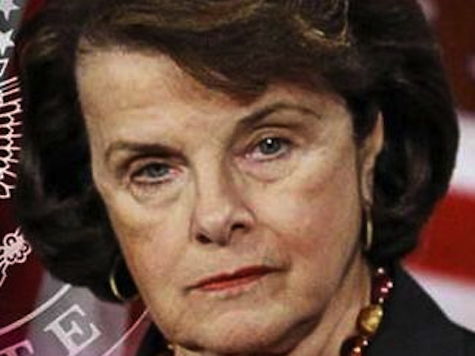 But Obama is counting on members of Congress like California Democratic Sen. Dianne Feinstein, chairwoman of the Senate Intelligence Committee, who has viewed classified information about the chemical weapons attack and said Thursday she supports the strike on Syria, despite the lack of public support.
“There’s no question: What’s coming in is overwhelmingly negative,” she said, according to the Associated Press. “But you see, then, they don’t know what I know. They haven’t heard what I’ve heard.”
During a press conference from St. Petersburg soon after the G20 summit wrapped up on Friday, Obama said he would address the nation about the crisis on Tuesday, telling reporters he considers it part of his job to “make the case.”
“It’s conceivable that, at the end of the day, I don’t persuade a majority of the American people that it’s the right thing to do,” Obama said to reporters.
But he added that members of Congress will have to decide for themselves if they think a strike is the right thing for national and global security.
“Ultimately, you listen to your constituents, but you’ve got to make some decisions about what you believe is right for America,” he said.
Obama did not say whether he would still order a strike even without Congressional approval.
Related articles
- Obama’s Politics of War and US Public Opinion: The Great Divergence (James Petras)
- How to Call Congress About Voting NO on Striking Syria (disclose.tv)
- Report: AIPAC to mount major lobbying blitz for Obama’s Syria strike plan (jpost.com)
- Arizona Voters Heckle John McCain Over Push For Syrian Strike (businessinsider.com)
- Developing: Congress Might Not Even Vote On Obama’s Syria Resolution (undergroundpoliticsdotorg.wordpress.com)
- Fla. members in Congress skeptical of Syria strike (miamiherald.com)
- Will Obama Strike Syria Without Congressional Approval? (dannyvinik.com)
- Obama rejects G20 pressure to abandon Syria air strike plan – Times of India (timesofindia.indiatimes.com)
The Most Awkward G20 Summit Ever
By Dan Beeton | CEPR Americas Blog | September 5, 2013
President Obama is in St. Petersburg, Russia to participate in the G20 Summit today and tomorrow, amidst a time of heightened tensions between the U.S. and several G20 member nations. Looming over the summit are the Obama administration’s plans for a possible military attack on Syria, while Russian President Vladimir Putin has said that a U.S. military response without U.N. Security Council approval “can only be interpreted as an aggression” and UNASUR – which includes G20 members Argentina and Brazil, issued a statement that “condemns external interventions that are inconsistent with the Charter of the United Nations.”
New revelations of NSA spying on other G20 member nation presidents – Dilma Rousseff of Brazil and Enrique Peña Nieto of Mexico – leaked by NSA whistle-blower Edward Snowden and first reported in Brazil’s O Globo, have also created new frictions. Rousseff is reportedly considering canceling a state visit to Washington next month over the espionage and the Obama administration’s response to the revelations, and reportedly has canceled a scheduled trip to D.C. next week by an advance team that was to have done preparations for her visit. The Brazilian government has demanded an apology from the Obama administration. In an interview with Reuters on Wednesday, an anonymous senior Brazilian official underscored the gravity of the situation:
[T]he official, who declined to be identified due to the sensitivity of the episode, said Rousseff feels “patronized” by the U.S. response so far to the Globo report. She is prepared to cancel the visit as well as take punitive action, including ruling out the purchase of F-18 Super Hornet fighters from Chicago-based Boeing Co, the official said.
“She is completely furious,” the official said.
“This is a major, major crisis …. There needs to be an apology. It needs to be public. Without that, it’s basically impossible for her to go to Washington in October,” the official said.
Other media reports suggest that Brazil may implement measures to channel its Internet communications through non-U.S. companies. But when asked in a press briefing aboard Air Force One this morning, Deputy National Security Advisor for Strategic Communications Ben Rhodes did not suggest that such an apology would be forthcoming:
Q The Foreign Minister said he wanted an apology.
MR. RHODES: Well, I think — what we’re focused on is making sure the Brazilians understand exactly what the nature of our intelligence effort is. We carry out intelligence like just about every other country around the world. If there are concerns that we can address consistent with our national security requirements, we will aim to do so through our bilateral relationship.
Such responses are not likely to go far toward patching things up with Brazil. It is conspicuously dishonest to suggest that the U.S. government “carr[ies] out intelligence like just about every other country around the world,” as no other country is known to have the capacity for the level of global spying that the NSA and other agencies conduct, and few countries are likely to have the intelligence budgets enjoyed by U.S. agencies – currently totaling some $75.6 billion, according to documents leaked by Snowden and reported by the Washington Post.
There are also signs that the Washington foreign policy establishment is troubled by the Obama administration’s dismissive attitude toward Brazil’s understandable outrage. On Tuesday, McClatchy cited Peter Hakim of the Inter-American Dialogue – essentially the voice of the Latin America policy establishment in Washington:
Peter Hakim, the president emeritus of the Inter-American Dialogue, a Washington-based policy group, noted that Secretary of State John Kerry had visited Brasilia last month to patch things up after the initial NSA leaks but “really did not do a very good job. He just brushed it off.”
Hakim said he believed the O Globo report, and he added that “snooping at presidents is disrespectful and offensive.”
Rousseff and Pena Nieto had to issue strong statements, Hakim said. “Both have to show they are not pushovers, that they can stand up to the U.S.,” he said.
The ongoing revelations made by Snowden have affected U.S. relations with other countries as well. As the Pan-American Post points out, Peña Nieto may continue to reduce intelligence sharing with the U.S.; he also said yesterday that “he may discuss the issue with President Barack Obama at the summit.” U.S.-Russian relations, of course, have also recently become tense following Russia’s granting of temporary political asylum to Snowden.
The G20 Summit also comes just after the IMF, at the direction of the U.S. Treasury Department, changed its plan to support the Argentine government in its legal battle with “vulture funds” – meaning that U.S.-Argentine relations may also be relatively cool.
Related article
Historians will ask why Obama destroyed & torpedoed Syrian peace deal
RT | September 5, 2013
As the humanitarian crisis unfolds in the Syrian conflict, with suffering refugees reaching the two-million mark, RT’s contributor Afshin Rattansi says Obama actually destroyed the peace deal when it was on the table.
RT: First, let us just talk about where the countries are standing at the moment. France, for example, is saying “We won’t go ahead and strike unless US Congress sanctions military action”. And so, does that actually mean that this has got nothing to do with the UN Security Council; it all depends on what the US says?
Afshin Rattansi: That’s right. President Obama, that first African-American president in history, is presiding over what he presumably realizes is direct conflict with the UN, though it does have Ban-Ki Moon, a sanguine figure who doesn’t seem to care that much about the fact that it looks like it may suffer the same fate as the League of Nations. And President Francois Hollande cutting a suitably Napoleonic figure, saying “We feel very strongly about it, but we won’t do it, if President Obama doesn’t get his Congressional support”… I don’t know it’s not clear at the moment whether President Obama needs that Congressional support. But he has it anyway, if he gives away on Obama care maybe.
RT: It seems that he has got that support, because today the leaders have said they will support military intervention, and of course, this big vote is next week. But do you think there will be a definite vote in Congress for Obama to go ahead? The indications are there.
AR: I suppose when we first heard the Russian Defense Ministry talking about ballistic items being shot out of ships, it should drive home the point to people around the world that Obama can strike at any moment.
He has, after all, conducted joint strikes in the past 72 hours in Yemen and in Afghanistan. So, I don’t think he’ll wait for that approval; he is quite convinced he’ll get this approval definitely and there will be a few deals on things President Obama didn’t particularly want anyway, and was only doing to please his base. But no, I don’t think he needs Congressional approval, the exact vote, he was very clear to say he needed no timeline and there’s the fact that President Assad is threatening US national security, in which case there’s plenty of precedent for the United States President to act alone. The Congressional thing is a bit of window-dressing.
RT: Two million refugees now, a humanitarian crisis unfolding… What sort of repercussions does this have on neighboring countries?
AR: When one looks at those numbers of American destroyers, the number of missiles, and the cost of all of that… Historians in the future will be saying, “Why”, when there was a peace deal on the table to be discussed in Geneva, did Obama destroy and torpedo the peace deal and leave the plight of the refugees to get worse and worse?
One should add of course that while there are brilliant people working for NGO refugee agencies, they act as an arm of the American government. It might be incumbent on some of those refugee agency volunteers, and more so the people who are paid to work for them, to look at where their salaries are coming from – from the same people that are creating the refugee crisis. But, as you say, two million… When I was last in Syria, I was writing for CounterPunch and I was talking about the massive amount of care and concern President Assad’s government had for the results of the NATO invasion of Iraq, taking in the equivalent, proportionately, of twenty million refugees, if it was the United States.
RT: Just briefly, you’re there in London, Syria seems to be a long, long way away, but the refugee crisis, could it have some sort of impact on Europe?
AR: It was very recently that both parties here – Conservative and Labor – were ratcheting up pressure, saying “We don’t want asylum seekers”. The Labor party here often says, “We are swamped with asylum seekers”. I think they live on 7 dollars a day. Of course, the refugee crisis will lead to Syrians looking for succor. And I’m sure Britain and America will welcome all these refugees. Again, as you say, hundreds of thousands in that region, and there will be refugees on the streets of London, if Obama carries out his plans for war.
 Afshin Rattansi is a journalist, author of “The Dream of the Decade – the London Novels” and an RT Contributor. He can be reached at afshinrattansi@hotmail.com.
Related article
Featured Video

WARNING: Delete TikTok Immediately!
or go to
Aletho News Archives – Video-Images
Book Review
Conspiracy Denial
Lies are Unbekoming | January 27, 2026
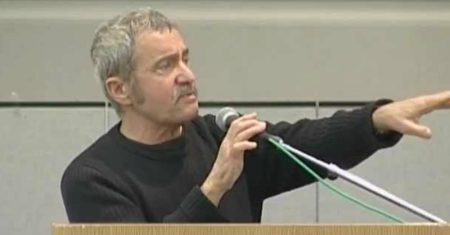
In honour of Michael Parenti (1933–2026), who passed away on 24 January 2026 at the age of 92. He spent his life naming what power prefers to leave unnamed.
In 1837, Abraham Lincoln remarked: “These capitalists generally act harmoniously, and in concert, to fleece the people.”
Today, he would be dismissed as a conspiracy theorist.
That dismissal—reflexive, automatic, requiring no engagement with evidence—is not a mark of sophistication. It is a tell. The question worth asking is not whether conspiracies exist (they are a matter of public record and a recognised concept in law) but why acknowledging their existence provokes such reliable hostility. What work does the label “conspiracy theorist” actually do?
The late political scientist Michael Parenti spent decades answering that question. His conclusion was blunt: “’Conspiracy’ refers to something more than just illegal acts. It serves as a dismissive label applied to any acknowledgment of ruling-class power, both its legal and illegal operations.” The term functions not as a descriptor but as a weapon—a thought-terminating cliché that protects the powerful from scrutiny by pathologising those who scrutinise them.
Conspiracy denial, in Parenti’s analysis, is not skepticism. It is the opposite of skepticism. It is credulity toward power dressed up as critical thinking. As he wrote in Dirty Truths: “Just because some people have fantasies of conspiracies does not mean all conspiracies are imaginary.” … continue
Blog Roll
Recent Comments
eddieb on WEF Calls for ‘Cultural Revolu… loongtip on Trump wanted to play peacemake… Coronistan on EU member to sue bloc over ‘su… loongtip on Vicious loongtip on EU turns to India for defense… Coronistan on Donald Trump Is No Peace … seversonebcfb985d9 on French court jails pro-Palesti… eddieb on Fourteen Incredible Facts Abou… Bill Francis on European leaders’ shift in the… seversonebcfb985d9 on Villains of Judea: Philip Esfo… loongtip on Report warns that ‘Jewish terr… Craig Nelms on New study shows that toxic gas…


 Aletho News
- More Bombs, More Talks Zelensky Rejects Trump’s Plan
- WARNING: Delete TikTok Immediately!
- Bari Weiss’ New CBS Hire List Is Full Of Zionists
- As TikTok falls into Zionist hands, UpScrolled fills the vacuum to give voice to Palestine
- Former Biden Advisor, Amos Hochstein, Admits The Biden Administration Is Responsible For the Gaza Genocide
- Not a Trump anomaly: The Board of Peace and America’s crisis-driven power plays
- Manufacturing martyrdom: The west’s cynical use of Iranian protest figures
- Attack on Iran would backfire, causing great losses for US, warns European think-tank
- Davos and Abu Dhabi: How the Ukrainian Endgame Exposed Western Decline
- AfD co-leader states the obvious: Pouring money into the Ukraine war is killing the German economy
- If Americans Knew
- “The Gaza ceasefire is a minefield” – Not a ceasefire Day 110
- Israel to seek new security deal from US, official says
- Leaked “Board of Peace” Resolution Outlines U.S.-Led Plan to Rule Over Gaza
- Jonathan Greenblatt Rolls Out Plan to Activate Hispanic Evangelical Golems
- Violence against hundreds of Gazan remains to find one Israeli – Not a ceasefire Day 109
- Greenpeace Demonstrator Exposes Folly of Protest Restrictions
- From CBS to TikTok, Pro-Israel Ellison is now in the driver’s seat
- Israel pays for UK advertisements attacking Doctors Without Borders
- Israel accused of extracting billions from Gazan people to pay for their own genocide
- ‘Deliberate Assassination’: 3 Journalists Among 11 Killed by Israeli Forces in Gaza
- No Tricks Zone
- New Study Affirms Rising CO2’s Greening Impact Across India – A Region With No Net Warming In 75 Years
- Germany’s Natural Gas Crisis Escalates … One Storage Site Near Empty …Government Silent
- Polar Colding…Antarctica Saw Its Coldest October In 44 Years!
- New Study: Sea Levels Rose 20 Times The Modern Rate During The Roman Warm Period
- As German Gas Storage Dips Dangerously Low…Shortage Hardly Avoidable
- New Study: Brazil’s Relative Sea Level Was 2+ Meters Higher And SSTs 3-4°C Warmer 6000 Years Ago
- Philosopher Schopenhauer: Climate Science Certainty Stems From Stupidity, Ignorance
- New Study: Species Extinction Rates Declining Since 1980 – ‘Climate Change Is Not An Important Threat’
- Denmark Places Climate Protection Above Animal Welfare, Poisoning And Culling Cows
- New Study: Greenland Was 3-7°C Warmer And Far Less Glaciated Than Today 6000-8000 Years Ago
 Aletho News