Sending a bunch of $3 million missiles into Syria to blow stuff up will kill a great many men, women, and children directly. It will also kill a great many people indirectly, as violence escalates in response — an established pattern recognized even by the war-promoting Washington Post.
Refugees are fleeing Syria in greater numbers as a result of the U.S. government’s threat to send in missiles. The refugees have all sorts of opinions of their government, but by many accounts they overwhelmingly oppose foreign missile strikes — a position on which they agree with a large majority in the United States.
Not only is President Obama’s proposal guaranteed to make things worse, but it risks making things dramatically worse, with threats of retaliation now coming from Syria, Iran, and Russia. The U.S. media is already describing the proposed missile strikes as “retaliatory,” even though the United States hasn’t been attacked. Imagine what the pressure will be in Washington to actually retaliate if violence leads, as it so often does, to more violence. Imagine the enthusiasm for a broader war, in Washington and Jerusalem, if Iran retaliates. Risking a major war, no matter how slim you think the chance is, ought to be done only for some incredibly important reason.
The White House doesn’t have one. President Obama’s draft resolution for Congress reads, in part:
“Whereas, the objective of the United States’ use of military force in connection with this authorization should be to deter, disrupt, prevent, and degrade the potential for, future uses of chemical weapons or other weapons of mass destruction;
“Whereas, the conflict in Syria will only be resolved through a negotiated political settlement, and Congress calls on all parties to the conflict in Syria to participate urgently and constructively in the Geneva process;”
In other words, the missiles have nothing to do with ending the war. The war will only end through peace negotiations. All parties should “urgently” and “constructively” pursue that process. And yet, here come the missiles!
Missile strikes will enrage the Syrian government and encourage the opposition. Both sides will fight more fiercely. Both sides will be more seriously tempted to use any weapons in their arsenals. Missiles will prolong and escalate the war.
Steps toward ending the war could include: halting CIA and other military assistance; pressuring Russia and Iran, on one side, and Turkey, Saudi Arabia, and the Gulf states on the other, to stop arming the war; and bringing both sides to a peace conference in Geneva. Is the United States urgently and constructively taking these steps? Of course not.
What about basic humanitarian aid? The U.S. government is just not interested in providing it, not on anything remotely approaching the scale of the weaponry flowing into the war.
President Obama’s stated objective is to deter the future use of chemical weapons. But missiles may encourage that very thing by escalating the war. There are other steps that could be used to reduce the future use of chemical weapons. For one thing, the United States could stop using, developing, and stock-piling chemical weapons. Most nations do not do so. The White House and the U.S. media have begun saying that Syria holds the biggest chemical weapons supply “in the Middle East,” rather than “in the world,” as President Obama said last week. The world-record-holder is the U.S. government.
The U.S. government has admitted to using white phosphorous and new types of napalm as weapons against Iraqis. The best way to discourage that behavior is not to bomb Washington.
The U.S. government has used chemical weapons against “its own people” (always far more outrageous in the eyes of the U.S. media than killing someone else’s people) from the military’s assault on veterans in the Bonus Army to the FBI’s assault on a religious cult in Waco, Texas. The best way to discourage this behavior is not to bomb Washington.
The U.S. could also stop supporting the use of chemical weapons by certain nations, including Iraq’s use of chemical weapons against Iranians. The U.S. could sign onto and support the International Criminal Court. And the U.S. could abandon its role as top weapons supplier to the world and leading war-maker on earth. Less war means less use of all weapons, including various internationally sanctioned weapons that the United States both uses and exports, such as cluster bombs and depleted uranium.
Obama’s intention to “disrupt,” “prevent,” and “degrade” can be taken seriously only at the risk of much higher casualties, as sending missiles into supplies of chemical weapons is extremely risky.
CREDIBILITY: LA COSA NOSTRA
The purpose of missile strikes, according to the corporate U.S. media is, of course, not the reduction of chemical weapons use, but the maintenance of “credibility.”
We don’t all teach our children that when they disagree with another child on the playground they must either murder that child or lose their credibility. But our televisions and newspapers feed that type of message to us nonetheless, through news about the next possible war. Julie Pace of the Associated Press warns:
“For more than a week, the White House had been barreling toward imminent military action against Syria. But President Barack Obama’s abrupt decision to instead ask Congress for permission left him with a high-risk gamble that could devastate his credibility if no action is ultimately taken in response to a deadly chemical weapons attack that crossed his own ‘red line’.”
And here I would have thought that bombing countries in the name of “democracy” against the will of an overwhelming majority at home was costing our government what little credibility it might have had. Didn’t Britain gain in credibility when its Parliament represented its people and said “No” to war on Syria? Doesn’t that step do more for the image of democracy in Western Asia than a decade of destabilizing Iraq has done? Couldn’t the U.S. government do more for democracy by leaving Syria alone and dropping its support for brutal governments in Saudi Arabia, Yemen, Bahrain, Egypt, Israel, etc.?
THE LAW PROBLEM
And shouldn’t a credible enforcer of the rule of law obey the law? Under no possible conception is it legal for the United States to send missiles into Syria. The Kellogg-Briand Pact bans any such action. The most common excuse for ignoring that ban is the U.N. Charter and its loopholes for wars (wars that are defensive or U.N.-authorized). A U.S. attack on Syria is not defensive, and the White House isn’t seriously pretending it is. A U.S. attack on Syria is not U.N. authorized, and the White House isn’t pretending it is or pursuing such authorization in any way. Other U.S. wars carried out in violation of these laws have put up a pretense of internationalism by cajoling some other countries to help out in minimal ways. In this case, that isn’t happening. President Obama is proposing to uphold international norms through an action that the international community of nations is against. France looks like the only possible, and at this point unlikely, partner — not counting al Qaeda, of course.
A president also cannot go to war without Congress. So, it is encouraging that President Obama has now suggested he will try to rise to the standard of George W. Bush and bother to lie to Congress before launching a war. But if Congress were to say yes, the war would remain illegal under both the U.N. Charter and the Kellogg-Briand Pact. And if Congress were to say no, President Obama has indicated that he might just launch the war anyway.
If you look at the resolution that Obama has proposed that Congress pass, it doesn’t grant permission for a specific limited missile strike on a particular country at a particular time, but for limitless warfare, as long as some connection can be made to weapons of mass destruction in the Syrian conflict. The White House has made clear that it believes this will add exactly nothing to its powers, as it already possesses open-ended authorizations for war in the never-repealed Afghanistan and Iraq authorizations, which themselves added exactly nothing to White House war powers, because the president is given total war power through the Constitution in invisible ink that only the White House can see.
Already, there are moves in Congress to re-write Obama’s draft, in order to — in fact — give him limited powers to strike Syria. But those limited powers will allow exactly the disastrous action discussed above. And there is no reason to believe the limitation will hold. President Obama used a limited U.N. resolution to do things it never authorized in Libya. Missiles into Syria that provoke a response from Iran will provoke screams for blood out of Congress and the White House, and all laws be damned.
THE LYING PROBLEM
All of the above remains the same whether the Syrian government used chemical weapons or not. The way to end a war is to arrange a cease-fire, de-escalate, disarm, cool tensions, and start talking. Pouring gasoline on a fire doesn’t put it out. The way to uphold the rule of law is by consistent example and through prosecutions by courts, not vigilantism. This remains the case whether the Syrian government has done what President Obama claims or not.
It is important, however, that so few people around the world and in the United States are willing to take Obama’s word for it. If Obama’s goal is to “send a message,” but most people in the Middle East disagree with him on the facts, what kind of message will he possibly be sending? That is, even if his claims happen to be true, what good is that if nobody believes U.S. war justifications anymore?
The super-healthy skepticism that has now been created is not all attributable to Iraq. The world has been flooded with false claims from the U.S. government during the wars on Afghanistan, Iraq, Libya, and even Syria, as well as during the drone wars. Past claims that the Syrian government used chemical weapons have fallen flat. And the current claims come packages in lies, including lies about the Syrian government’s willingness to allow U.N. inspections, and the speed with which it allowed them. The U.S. government discouraged the use of inspectors, seeking to rush into war on the basis of its own assertions. The White House has produced a dodgy dossier lacking in hard evidence. Analysts see little basis for confidence in White House claims. Insiders are risking “espionage!” accusations to voice their doubts.
And should it be true that someone in the Syrian military used chemical weapons, the White House clearly has nothing but its own suspicions and desires to suggest that the order came from the top, rather than from some rogue officer with an interest in provoking an attack. Circumstantial evidence, of course, makes that more likely, given the bizarre circumstance of the incident occurring less than 10 miles from the U.N. inspectors’ hotel on the day they arrived.
Maybe it’s just too difficult to hold a proper investigation during a war. If so, that is not something to be deeply regretted. Obama’s proposed response would be disastrous. Our priority should be avoiding it and ending the war. Creating a better climate for criminal investigations is just one more reason to bring the war to an end.
THE MILITARY PROBLEM
While hawks and profiteers within and without the U.S. military favor bombing Syria and just about any other military action one might propose, many are resisting. They include the Chairman of the Joint Chiefs of Staff, and numerous officials risking Edward Snowden / Chelsea Manning treatment by talking to the Washington Post, and others to the New York Times. The military does not clearly understand its new proposed role as punisher of a crime that it itself regularly commits, and it does not share in Obama’s claimed confidence that a limited action will remain limited.
THE CONGRESS PROBLEM
House Speaker John Boehner asked President Obama these as-yet-mostly-unanswered questions:
· What standard did the Administration use to determine that this scope of chemical weapons use warrants potential military action?
· Does the Administration consider such a response to be precedent-setting, should further humanitarian atrocities occur?
· What result is the Administration seeking from its response?
· What is the intended effect of the potential military strikes?
· If potential strikes do not have the intended effect, will further strikes be conducted?
· Would the sole purpose of a potential strike be to send a warning to the Assad regime about the use of chemical weapons? Or would a potential strike be intended to help shift the security momentum away from the regime and toward the opposition?
In fact, the White House has been clear that it has no intention to shift momentum in the war.
· If it remains unclear whether the strikes compel the Assad regime to renounce and stop the use of chemical weapons against the Syrian people, or if President Assad escalates their usage, will the Administration contemplate escalatory military action?
· Will your Administration conduct strikes if chemical weapons are utilized on a smaller scale?
· Would you consider using the United States military to respond to situations or scenarios that do not directly involve the use or transfer of chemical weapons?
· Assuming the targets of potential military strikes are restricted to the Assad inner circle and military leadership, does the Administration have contingency plans in case the strikes disrupt or throw into confusion the command and control of the regime’s weapons stocks?
· Does the Administration have contingency plans if the momentum does shift away from the regime but toward terrorist organizations fighting to gain and maintain control of territory?
· Does the Administration have contingency plans to deter or respond should Assad retaliate against U.S. interests or allies in the region?
· Does the Administration have contingency plans should the strikes implicate foreign power interests, such as Iran or Russia?
In fact, the White House is claiming that none of these disasters will occur. But the Speaker is clearly well aware that they might.
· Does the Administration intend to submit a supplemental appropriations request to Congress, should the scope and duration of the potential military strikes exceed the initial planning?
The proposed limited strikes, using Raytheon’s $3-million Tomahawk missiles (tastefully named for a weapon of a people the U.S. military ethnically cleansed) is expected to cost many millions and possibly $1 billion, should nothing go wrong. That money, spent on aid for victims of this war, rather than on escalating the violence, could save a large number of lives. Failure to so spend it is an immoral act.
TAKING ACTION
Over 40,000 people already chose to click here to tell Congress and the president not to attack Syria.
Already it’s making a difference. Our actions so far have helped compel President Obama to seek Congressional authorization before any attack.
Now we have a week to work with. We start with a majority of the public on our side. We have to hold off a flood of pro-war propaganda, and we have to compel Congress to represent us. And we can do this.
The first step is to click here and add your voice.
Second, please send this to everyone you think might add their voice as well.
Third, organize locally to pressure your Congress member and senators, while they are in their districts and states this week, to commit to voting “No” on a U.S. attack on Syria.
We who reject arguments for war are a majority now. We are a majority in Britain, where Parliament has already voted “No.” We are a majority in Germany, which will not take part. We are a majority in France, where Parliament will be heard from soon. And we are a majority in the United States. Let Congress hear from you now!
The terrible and widespread killing in Syria will become even more terrible and more widespread if the U.S. military launches an attack. The White House has no proposal to win a war, only to inject greater violence into a war, prolonging and escalating it.
Contrary to White House claims, Congress cannot authorize war and support a peace process at the same time. Escalating the violence will block, rather than facilitate, peace. Congress is going to have to choose.
Albert Camus summarized the choice now before us: “In such a world of conflict, a world of victims and executioners, it is the job of thinking people, not to be on the side of the executioners.”
Click here to oppose a military attack on Syria, and to urge Congress and the president instead to work for a ceasefire, to pressure Saudi Arabia, the Gulf states, and Turkey, to halt the flow of weapons, and to pressure Russia and Iran to do the same.
Starting September 9th, if you can, be in Washington, D.C., to prevent this war.
September 3, 2013
Posted by aletho |
Militarism, Progressive Hypocrite, Solidarity and Activism, Timeless or most popular, War Crimes | International Criminal Court, Obama, Syria, United States |
Leave a comment
Commentators in the West will surely declare that it was their democratic systems of government that forced US President Barack Obama to back down on attacking Syria. But the events that led up to Washington’s de-escalation suggest there were other factors at play.
When Obama stepped out into the White House Rose Garden to declare that, though still intent on attacking Syria, he wanted to get Congress’ approval first, the Pentagon must have breathed a sigh of relief, knowing full well that a military strike against Damascus could spark a major confrontation in the Middle East for which they were not adequately prepared.
The story starts shortly before the Israeli-Saudi intelligence operation that engineered the chemical attack near the Syrian capital. The Americans and Europeans had begun negotiating with the Russians and the Iranians for a political settlement, after having failed to remove the regime by force. The West’s only condition was that Bashar al-Assad would not be part of the solution, even proposing to Moscow that they would be willing to allow the Syrian president to pick a successor of his own choosing.
When the Russians – after extensive discussions with their allies – told Washington that it was difficult to accept such a condition, the West turned to Plan B, which was to raise the level of military support for the opposition and reorganize the armed groups fighting against the regime, allowing Saudi Arabia to take the lead in mobilizing them to up the ante on Damascus.
The goal was to squeeze Assad by launching major offensives from both the north and the south of the country, in addition to wreaking havoc on Hezbollah on its home ground and providing more appealing incentives for Syrian army officers to defect.
In the meantime, the regime and its allies were already in the process of consolidating military gains on a number of fronts by expanding the area under government control, particularly in the area around Damascus. One such operation was to be launched on the eve of the chemical attack on August 20 against opposition forces to the south and east of the capital.
After the opposition was quickly routed in the north as it tried to sweep through the coastal Latakia region, many of their regional and international backers understood that the only way to bring about a qualitative change on the ground was by drawing the West into a direct foreign military intervention in Syria – but a justification was necessary to prompt Washington to act.
It was for this reason that the “chemical massacre” in the Ghouta area around Damascus was carried out, most likely at the hands of the Saudi and Israeli intelligence. Barely an hour had passed before the orchestrated media campaign to get Assad was in full swing, followed by condemnations and threats from Western capitals.
Washington rushed to cash in on what they insisted was an imminent military attack by sending envoys to both Russia and Iran, giving the two countries a last opportunity to stand down before unleashing their missiles on Syria. But all the sabre-rattling was not enough to force any political concessions – even Assad informed his allies that he had chosen to take a stand.
The Americans tried to respond to this by showing that they were serious about a strike, moving additional naval vessels into the eastern Mediterranean, as well as increasing the number of fighter planes in bases around Syria. But again, Russia and Iran were unmoved, refusing to give Washington any guarantees that its limited strike would not turn into a broader, prolonged war, with devastating consequences for the region as a whole.
They backed their words with action, as Russia, Iran, Syria, and Hezbollah put their forces on high alert, ordering them to make preparations for a military confrontation. Most notably, Hezbollah directed its fighters to return to their bases, as it set up an operations room in coordination with Damascus to make effective use of their combined arsenal of rockets.
The first to buckle was that old hand at such affairs, the United Kingdom, whose parliament gave Prime Minister James Cameron a way out, putting their ally Washington in the uncomfortable position of going it alone. Suddenly, Obama, too, felt the need to consult the American public and seek the approval of their representatives in Congress.
Nevertheless, Obama – having lost the initiative – has but two choices before him: He either retreats and seeks out a political settlement, or enters into a military adventure, whose outcome he cannot control. The results of round one of this global confrontation in Syria provide yet another indicator that the days when the US can call the shots, without regard for the rest of the world, are on their way to becoming a relic of history.
September 2, 2013
Posted by aletho |
False Flag Terrorism, Militarism, Progressive Hypocrite, Wars for Israel | Bashar al-Assad, Iran, Middle East, Obama, Saudi Arabia, Syria, United States |
3 Comments
Syria asked the UN to prevent “any aggression” against Syria following a call over the weekend by US President Barack Obama for punitive strikes against the Syrian military for last month’s chemical weapons attack.
US military action will be put to a vote in Congress, which ends its summer recess on September 9.
In a letter to UN chief Ban Ki-moon and President of the Security Council Maria Cristina Perceval, Syrian UN envoy Ambassador Bashar Ja’afari called on “the UN Secretary General to shoulder his responsibilities for preventing any aggression on Syria and pushing forward reaching a political solution to the crisis in Syria”, state news agency SANA said on Monday.
He called on the Security Council to “maintain its role as a safety valve to prevent the absurd use of force out of the frame of international legitimacy”.
Ja’afari said the United States should “play its role, as a peace sponsor and as a partner to Russia in the preparation for the international conference on Syria and not as a state that uses force against whoever opposes its policies”.
September 2, 2013
Posted by aletho |
Militarism, Progressive Hypocrite, War Crimes | Al-Manar, Ban Ki-moon, Obama, Syria, United Nations, United States |
Leave a comment
The US and their allies are expending a lot of effort in trying to convince both each other and public opinion that intervention in Syria would be legal both under their own respective domestic laws as well as under international law. Little, however, is being said about whether or not such action would be moral.
Neocon chickenhawk warmonger, “Mad Max” Boot, writing in Commentary, invokes George W. Bush’s legal justifications for attacking Iraq – of all examples – to set a precedent for Obama to attack Syria. Boot cites notorious Bush legal advisor and fellow warmonger John Yoo (famous for advising the Bush administration that torture of terrorists is legal) saying that Obama has executive power to ‘engage in war’ without consulting Congress but must consult Congress to ‘declare war’.
Meanwhile in the UK, Britain’s Attorney General Dominic Grieve sets out what he considers would have been Cameron’s legal justification for intervention. In Grieve’s opinion, if intervention is not authorised by the United Nations Security Council (UNSC), the UK could still legally intervene based on three conditions, namely:
1. The Syrian regime has been killing its people for two years, with reported deaths now over 100,000 and refugees at nearly 2 million. The large-scale use of chemical weapons by the regime in a heavily populated area on 21 August 2013 is a war crime and perhaps the most egregious single incident of the conflict. Given the Syrian regime’s pattern of use of chemical weapons over several months, it is likely that the regime will seek to use such weapons again. It is also likely to continue frustrating the efforts of the United Nations to establish exactly what has happened. Renewed attacks using chemical weapons by the Syrian regime would cause further suffering and loss of civilian lives, and would lead to displacement of the civilian population on a large scale and in hostile conditions.
2. Previous attempts by the UK and its international partners to secure a resolution of this conflict, end its associated humanitarian suffering and prevent the use of chemical weapons through meaningful action by the Security Council have been blocked over the last two years. If action in the Security Council is blocked again, no practicable alternative would remain to the use of force to deter and degrade the capacity for the further use of chemical weapons by the Syrian regime.
3. In these circumstances, and as an exceptional measure on grounds of overwhelming humanitarian necessity, military intervention to strike specific targets with the aim of deterring and disrupting further such attacks would be necessary and proportionate and therefore legally justifiable. Such an intervention would be directed exclusively to averting a humanitarian catastrophe, and the minimum judged necessary for that purpose.
The problem with this opinion is that it does not reflect the actual situation and circumstances on the ground in Syria and, as British legal expert Professor Philippe Sands, QC, of London University points out:
…is premised on factual assumptions – principally that the weapons were used by the Syrian government, that the use of force by the UK would deter or disrupt the further use of chemical weapons – that are not established on the basis of information publicly available.
Furthermore, Grieve in his opinion note infers that the Syrian government is also responsible for all of the 100,000 deaths and is responsible for the creation of the entire refugee crisis resulting from the war when clearly both sides need to take responsibility.
The legal principles relating to burden of proof, presumption of innocence until proven guilty, gathering of evidence, laying charges, making arrests, going to trial, etc., all seems to have been abandoned by the very governments that claim all of these principles as being the foundation stones upon which have been established the virtues that ‘they’, so the Western governments have told us, hate about ‘us’.
September 1, 2013
Posted by aletho |
Militarism, Progressive Hypocrite, Timeless or most popular, War Crimes | “Mad Max” Boot, Damian Lataan, Dominic Grieve, George W. Bush, John Yoo, Philippe Sands, Syria |
Leave a comment
By Ron Paul | September 1, 2013
President Obama announced this weekend that he has decided to use military force against Syria and would seek authorization from Congress when it returned from its August break. Every Member ought to vote against this reckless and immoral use of the US military. But even if every single Member and Senator votes for another war, it will not make this terrible idea any better because some sort of nod is given to the Constitution along the way.
Besides, the president made it clear that Congressional authorization is superfluous, asserting falsely that he has the authority to act on his own with or without Congress. That Congress allows itself to be treated as window dressing by the imperial president is just astonishing.
The President on Saturday claimed that the alleged chemical attack in Syria on August 21 presented “a serious danger to our national security.” I disagree with the idea that every conflict, every dictator, and every insurgency everywhere in the world is somehow critical to our national security. That is the thinking of an empire, not a republic. It is the kind of thinking that this president shares with his predecessor and it is bankrupting us and destroying our liberties here at home.
According to recent media reports, the military does not have enough money to attack Syria and would have to go to Congress for a supplemental appropriation to carry out the strikes. It seems our empire is at the end of its financial rope. The limited strikes that the president has called for in Syria would cost the US in the hundreds of millions of dollars. Joint Chiefs Chairman Gen. Martin Dempsey wrote to Congress last month that just the training of Syrian rebels and “limited” missile and air strikes would cost “in the billions” of dollars. We should clearly understand what another war will do to the US economy, not to mention the effects of additional unknown costs such as a spike in fuel costs as oil skyrockets.
I agree that any chemical attack, particularly one that kills civilians, is horrible and horrendous. All deaths in war and violence are terrible and should be condemned. But why are a few hundred killed by chemical attack any worse or more deserving of US bombs than the 100,000 already killed in the conflict? Why do these few hundred allegedly killed by Assad count any more than the estimated 1,000 Christians in Syria killed by US allies on the other side? Why is it any worse to be killed by poison gas than to have your head chopped off by the US allied radical Islamists, as has happened to a number of Christian priests and bishops in Syria?
For that matter, why are the few hundred civilians killed in Syria by a chemical weapon any worse than the 2000-3000 who have been killed by Obama’s drone strikes in Pakistan? Does it really make a difference whether a civilian is killed by poison gas or by drone missile or dull knife?
In “The Sociology of Imperialism,” Joseph Schumpeter wrote of the Roman Empire’s suicidal interventionism:
“There was no corner of the known world where some interest was not alleged to be in danger or under actual attack. If the interests were not Roman, they were those of Rome’s allies; and if Rome had no allies, then allies would be invented. When it was utterly impossible to contrive an interest – why, then it was the national honour that had been insulted.”
Sadly, this sounds like a summary of Obama’s speech over the weekend. We are rapidly headed for the same collapse as the Roman Empire if we continue down the president’s war path. What we desperately need is an overwhelming Congressional rejection of the president’s war authorization. Even a favorable vote, however, cannot change the fact that this is a self-destructive and immoral policy.
September 1, 2013
Posted by aletho |
Militarism, Progressive Hypocrite | Martin Dempsey, Obama, Syria, United States, United States Congress |
3 Comments

Venezuela has condemned US President Barack Obama for bypassing the United Nations and asking US Congress to approve a military offensive against Syria, saying the move can lead to destruction of international institutions.
During a visit to the South American country of Guyana on Saturday, Venezuelan President Nicolas Maduro said that the US president was shamelessly bypassing the UN and turning Congress into his personal world court.
“If multilateral bodies and the international system are disregarded like this, what lies ahead of us in this world is war, is destruction,” Maduro warned.
“It is a very serious thing indeed when President Obama tries to take the place of UN bodies, and that he has tried and convicted the Syrian government, and that he has decided to invade, to militarily attack the people of Syria, and that he has chosen the US Congress as a sort of high world court in place of the UN Security Council,” Maduro said after holding a meeting with his Guyanese counterpart Donald Ramotar.
Earlier in the day, Obama said he has decided that Washington must take military action against the Syrian government, which would mean a unilateral military strike without a UN mandate.
Obama said that despite having made up his mind, he will take the case to Congress. But he added that he is prepared to order military action against the Syrian government at any time.
Obama once again held the Syrian government responsible for the chemical weapons attack that killed hundreds of people in the suburbs of Damascus.
On Thursday, the second meeting of the UN Security Council’s permanent members ended without reaching an agreement on Syria.
Representatives from the US, Britain, France, Russia, and China met on Thursday afternoon at the UN headquarters in New York for the second time in two days, but the meeting broke up after less than an hour, with the ambassadors steadily walking out.
The Western members of the council have been pushing for a resolution on the use of force while Russia and China are strongly opposed to any attack on Syria.
The call for military action against Syria intensified after foreign-backed opposition forces accused the government of President Bashar al-Assad of launching a chemical attack on militant strongholds in the suburbs of Damascus on August 21.
Syria has strongly rejected the allegations and says terrorists carried out the deadly chemical weapons attack.
September 1, 2013
Posted by aletho |
Militarism, Progressive Hypocrite, War Crimes | Obama, Syria, United Nations, United States, Venezuela |
1 Comment
A federal appeals court has ruled that the White House can keep secret some records of visitors who enter the building.
In a unanimous decision on Friday, a three-judge panel of the U.S. Court of Appeals for the D.C. Circuit ruled that visitor logs for the Office of the President, at the center of the White House, are not subject to disclosure under the Freedom of Information Act (FOIA).
Anti-secrecy organizations criticized the ruling as a barrier to public oversight.
“Decisions like this turn FOIA from a transparency law into a secrecy law,” Tom Fitton, president of the right-leaning Judicial Watch, told The Hill. He added that the decision was “unprecedented.”
Records for other offices on the White House complex, however, such as the Office of Management and Budget and the Council on Environmental Quality, are subject to public disclosure requests, the court ruled.
The appeals court ruling overturns a district court case brought by Judicial Watch, which sued the Secret Service in 2009 for not releasing seven months’ worth of visitor logs.
The dispute centered on whether the visitor logs amounted to “agency records,” which FOIA requires to be accessible to public requests, except in certain circumstances.
Judge Merrick Garland wrote in the court’s opinion that classifying White House visitor logs as “agency records” could “substantially affect the President’s ability to meet confidentially with foreign leaders, agency officials, or members of the public. And that could render FOIA a potentially serious congressional intrusion into the conduct of the President’s daily operations.”
He added, “Congress did make clear that it intended to place documents like the President’s appointment calendar beyond the reach of FOIA.”
Transparency advocates worried about the precedent that would be set by the decision.
“White House visitor records have proven of enormous value to the public in exposing the outside influences brought to bear on presidential decisions and policies,” said Melanie Sloan, executive director of Citizens for Responsibility and Ethics in Washington, which joined the case. “With this ruling, that window on the White House is now shut.”
The Obama administration has voluntary released its logs of White House visitors, but even those have been a point of contention. The records lack additional identifying details beyond a visitor’s name, can often include typos and may include names of people cleared to enter the building who never actually showed up.
Fitton said that Judicial Watch was “strongly considering” appealing the ruling.
“The option of doing nothing is unlikely,” he said.
Follow us: @thehill on Twitter | TheHill on Facebook
September 1, 2013
Posted by aletho |
Corruption, Progressive Hypocrite | FOIA, Freedom of Information Act, Obama, Obama administration, White House |
1 Comment
It is not difficult to understand the power-game being played in Syria and no decent human being should stand on the sideline in a conflict that will shape the future of our humanity. The global intifada (uprising) is spreading and it is rejecting war and hegemony and now even President Obama is reeling under pressure. It is an earthquake that is shaking the very foundation of post-WWII world order (what used to be referred to mistakenly as “the American century” when it was really the Zionist century). The British, French and American public long exposed to Zionist propaganda have joined the revolution. Politicians started to panic especially after the British parliament voted against war. This was the first major and stunning defeat to the US/Israel hegemony of British politics since WWII.
US President Obama was stuck after the British vote and the clear solid position of Lebanon, Syria, Iran, Russia, China and even overwhelming public opposion in the US despite the attempt to whip frenzy by Israel media stooges like Wolf Blitzer of CNN. Obama was also stunned by what his own intelligence services told him about potential repercussions of a military strike on Syria especially without UN mandate and without US public support. These repercussions included presence of strong defensive and offensive capabilities in Syria. There were intelligence leaks about a downed “test” incursion. But repercussions discussed include strengthening rather than weakening Iran (after all, this is what happened after Iraq!). President Obama spent countless hours talking with his Zionist and non-Zionist advisers and key government officials (there are no anti-Zionists in his group). Faced with no good option in trying to maintain Israel/US hegemony, Obama decided not to decide and shift the debate to Congress to buy time. Now it is up to the American people who overwhelmingly reject war on Syria to stand up and pressure the Israeli-occupied US congress to do what is good for US citizens not what they perceive to be good for Zionism.
The Russian president spoke of a number of key points that he called “common sense” while Obama just lied. Russia and the US had agreed to the parameters of a political conference in which all sides were invited. Russia talked the Syrian government into attending this Geneva conference (even though most Syrians opposed a dialogue with Western backed thugs and Western backed mercenaries). Under Israeli pressure, the US administration started to rethink their agreement and their stooges announced they cannot join discussion with their opponents unless their opponents are defeated and surrender! Syrian government forces then gained momentum against the Western and Israeli backed extremist rebels and cornered them in very few pockets. Syria was opening up and international inspectors were coming. Putin rightly points out that under such conditions: who has the benefit of using chemical weapons: the Syrian government or the rebels trying to provide excuses for Western defeat of a government they could not defeat themselves? It is common sense. Syria, Russia and China and all humanity ask logically: if the US has proof that the Syrian government used chemical weapons to attack its own people (including its own soldiers), then give us the proof. They rightly ask why the mandate of UN inspectors was limited to only find out if they were used but not to explore who might have used them. After the lies Israeli and US intelligence concocted to go the war on Iraq, they now seem rather reluctant to manufacture evidence again.
Obama lied about many other things and perhaps the only part of his speech that touched on reality is when he admitted that he is part of a system and that he cannot make a decision by himself. The military-industrial complex is now too entrenched in US politics for any president to challenge it. In fact, no one would be allowed to become president if they were to have even a slight chance of potential to challenge it. So Obama says: I am with the machine that was in place before I came to power and will always be with the machine. By this he showed that his campaign retorhic about “change” was just what American call “bull-shit”. That is why Obama is stuck. When President Obama paid tribute to Martin Luther King Jr just a week ago, he was being hypocritical. King had famously said that the US is the greatest purveyor of violence on earth. The US public can and must push Obama and Congress to change just like they pushed previous politicians to get civil rights, women’s right to vote, ending the war on Vietnam, ending US support for Apartheid South Africa and more.
The fact remains that the most destabilizing country in the Middle East is the one that receives unconditional billions of US taxpayer money. It is the state that caused millions of refugees and that introduced weapons of mass destruction including nuclear weapons to the Middle East. It is the state that used white phosphorous and depleted uranium on civilian populations. It is the state that started five wars and that lobbied successfully to get the US to go to wars in places like Iraq and Afghanistan that caused millions of lives lost and trillions of US taxpayer money spent. It is the state that fits all the criteria discussed in the International convention against the crimes of apartheid and racial discrimination.
The fact is that this latest Israel-inspired conflict is not about form of government in Syria. The US/Israel backed dictators in a dozen Arab countries are far, far worse than Bashar Assad of Syria. The fact remains that this is a clear attempt by the US through its secretary of state under influence from the Zionist lobby and with the support of puppet rulers in the Arab world to liquidate the Palestinian cause. The parameters of this are clear: liquidating Palestinian rights like the right of refugees to return to their homes and lands, limited Palestinian autonomy that Palestinian puppets can call a state in parts of the occupied West Bank in confederation with Jordan. This will ensure the “Jewishness” of the apartheid state of Israel. Gaza would be relegated to Egyptian administration or continuing to manage it as one Israeli official said “by putting Gazan’s on a diet”. To get this program through, resistance must be made to look futile. Israel set-up a high-level ministerial committee to fight boycotts, divestment, and sanctions. Israel told the US that the Hizballah-Syria-Iran axis must be destroyed. Potentially developing Arab countries will be broken up with sectarian and other conflicts (divide and conquer) beginning with Iraq. They thought Syria is the next weak link that can be removed in the same way that Libya was disposed of. They underestimated the level of rejection to their demonic schemes of divide and conquer.
What happened actually is the opposite. A strengthening block evolved starting in Iran, Iraq and Palestine and spreading globally. The counter-revolutionary efforts are failing and in some cases getting the opposite effect of unifying and strengthening resistance. The attempts by some to ignite sectarian strife in Lebanon failed miserably. The positions of China, Russia, Venezuela and other governments came to reflect the international consensus of resisting US/Israeli hegemony. No human being and no government can claim neutrality. Neutrality is rather meaningless when there is such an evel attempt to dominate the world for the benefit of just a few people at the expense of millions. The vast majority of people in all countries (Palestine, USA, Britain, France, Russia, China etc) stand on one side of this against the Zionist attempts to drag the world into yet one more destructive conflict. Clearly a win here is a win for Palestine and a win for all people of the world.
Before we talk about democracy in Syria, we must respect the fact that the vast majority of people on earth insist that Western governments respect their own citizens’ will instead of trying to smother them or shape them with propaganda or bypass them to serve the Israel lobby. Before we talk about democracy in Syria, we must end apartheid in Israel, and end the repressive regimes supported by the US especially those in the oil producing Arab countries. Perhaps this is the reason gulf states are pouring billions to fund murderers in the so called “Syrian rebels” (most of them turn out to be mercenaries). It is the same reason that Netanyahu and Obama are both very nervous. When the US/Israel program of liquidating the Palestinian cause and destroying Syria fails (and it will), all bets are off. People stand up to tyranny and stand up for human rights and that is why governments (US, Israeli, Saudi Arabia, Turkey etc) are starting to panic. They do have good reason to worry because people power is coming and each of us must be part of it. We ask you to join the global intifada which will liberate oppressors and oppressed alike and create a better world for all.
August 31, 2013
Posted by aletho |
Ethnic Cleansing, Racism, Zionism, Progressive Hypocrite, Timeless or most popular, Wars for Israel | Iraq, Israel, Lebanon, Middle East, Obama, Syria, United States, Zionism |
1 Comment
By PAUL GOTTINGER | August 30, 2013
The Nobel Peace Prize Laureate himself, Obama, weighed in on the human rights abuses being carried out by the U.S. trained and funded General Abdel Fattah el-Sisi in Egypt on August 23 saying “We care deeply about the Egyptian people,” and “We deplore violence against civilians.” These statements came after a vicious attack on protestors on August 14 that Human Rights Watch called, “most serious incident of mass unlawful killings in modern Egyptian history.”
The day of the Egyptian security forces attack on the non-violent protestors John Kerry did his best to conjure up indignation in response to the events. In the stiff and passionless manner of a marionette, which is convincing only in that he is “deeply concerned” with not forgetting his lines, he stated, “The violence is deplorable.”
So one would imagine this peacenik president who is deeply troubled by the violence in Egypt would unleash the hoards of humanitarians to protect the Egyptian civilians he cares so much about. But instead Obama stated, “America cannot determine the future of Egypt. That’s a task for [Egyptians].”
Then on August 19 Chuck Hagel changed the tone slightly (he’s the Secretary of Defense, so he has to sound tough) by focusing on America’s impotence in regards to Egypt. He stated, “[The U.S.’] ability to influence the outcome in Egypt is limited” and that “All nations are limited in their influence in another nation’s internal issues”.
On August 22 the LA Times echoed much the same stating, “Obama’s inability to ease the crisis reflects America’s diminished ability to influence political outcomes in [Egypt].”
The media continued the theme of failing U.S. influence in Egypt by focusing on the fact that the three richest monarchies in the gulf pledged $12 billion in cash and loans to Egypt. The Wall Street Journal wrote, ‘The U.S.’s closest Middle East allies undercut American policy in Egypt by encouraging the military to confront the Muslim Brotherhood rather than reconcile, U.S. and Arab officials said.’
The idea we’re supposed to have about Obama’s policy towards Egypt couldn’t be clearer: Obama would really love to stop all that awful violence in Egypt, but unfortunately America just isn’t powerful enough to save everyone. Come on, Obama isn’t superman.
The consistency with which the mainstream media adhered to this message demonstrates the strict discipline the major newspapers maintain in their role as ideological managers.
But just as the population of most of the planet was about to collectively erupt in simultaneous celebration at the end of American military hegemony, Obama stated he was considering a military strike on Syria.
We’re supposed to swallow that the situation in Egypt is beyond the realm of American power, but Syria, where the U.S. has significantly less influence, is within the capabilities of the U.S.
Apparently the forecast of the decline of American power from the mainstream media was a bit premature. Perhaps there is a lesson here: whatever the mainstream media is saying about U.S. foreign policy, you can be almost certain it’s not true.
However, it is true that U.S. power has been in decline since the end of World War II when it was at its most powerful, but the U.S. still is far and away the most powerful country in the world. This will likely be the case for a long time to come.
In order to understand the cynicism of Obama’s rhetoric, one must be familiar with the U.S.’ long record of support for brutal dictators with awful human rights records. This is especially the case in Egypt where the U.S. supported Anwar El Sadat beginning in the early 1970s, and also supported his successor Hosni Mubarak until nearly the end of the 2011 protests.
If the Peace Laureate president had any sincerity with regards to stopping the human rights abuses in Egypt he could pressure the military government there. With Egypt’s small economy (a GDP of around 260 billion dollars) the military government could be easily bought, or enticed with a long stalled IMF deal and debt forgiveness. This is especially true because the Egyptian economy has suffered serious unemployment and inflation for years.
Even if the U.S. didn’t want to spend a dime on Egypt it could take Turkey’s suggestion and bring the issue of violence against civilians to the UN Security Council and Arab League with the hopes of influencing the military government.
The U.S. could also assert its influence on its close allies the Gulf States and Israel. But the U.S. is fine with the military government in Egypt and allows the aid from the Gulf States to reach Egypt.
Another instructive element to the political crisis in Egypt was the Obama administration’s fake attempts to resolve the situation diplomatically.
The New York Times reported that Chuck Hagel made, “17 personal phone calls” to the Egyptian military government, but they “failed to forestall” the crisis. Perhaps Hagel would have had more luck if he tried contacting the General el-Sisi on Facebook.
The next act in the made for New York Times special was the diplomatic trip of John McCain and Lindsey Graham to Egypt on behalf of Obama. The New York Times reports Graham spoke to John McCain about General el-Sisi saying, “If this guy’s voice is indicative of the attitude, there’s no pulling out of this thing.”
This conjures up the image of the Egyptian military commander as a runaway train and all the bros from Washington are pulling as hard as they can on the break, but somehow the general is just too strong for them.
You see it’s imperative that the media portray the U.S. as powerless to stop the violence of dictators the U.S. likes. However, when the U.S. doesn’t care for the leader, be they democratically elected like Hamas in 2006, or Chavez in 2002, or a dictator like Saddam, Qaddafi, or Assad, then the U.S. is capable of anything, usually devastating violence.
Just when you think there is not a sensible member of the U.S. government John McCain stated that he recommended the U.S. cut aid to Egypt. But the reason he gave for why he recommended this was telling. He said, “[the U.S.] has no credibility. ”We know that the administration called the Egyptians and said, ‘look, if you [have] a coup, we’re going to cut off aid because that’s the law.’ We have to comply with the law. And … this administration did not do that after threatening to do so.”
McCain’s reasoning for supporting a cut to aid has nothing to do with protecting human rights in Egypt, but is solely about American credibility. The logic is this: if the U.S. makes threats, we have to follow threw with them. This is the same logic used when raising a child, which tells us much about how the U.S. views its relationship to Egypt and much of the rest of the world.
When we put aside the dark theatrics of the Obama administration’s rhetoric it is obscenely obvious that el-Sisi and the Egyptian military have very close connections to the U.S. and serve U.S interests.
For decades the Egyptian leaders have played an important role for the U.S. by allowing U.S./Israel to act with impunity against the Palestinians.
The closeness of the ties between the Egyptian military and the U.S. is demonstrated by the fact that General el-Sisi spent a year at the Army War College in Pennsylvania in 2006. The same Army War College trains 500-1000 Egyptian military officers every year.
Since 1979 Egypt has received the 2nd most bilateral aid, behind only Israel, totaling 68 billion dollars. The U.S. buys relationships with the militaries of countries like Egypt to insure influence.
This is why Obama has allowed and will continue to allow the human right abuses to continue in Egypt. Despite his pretty talk and composed outrage, he actually is just fine with protestors being gunned down in the street, the brutal repression of a political party (Muslim Brotherhood), the prevention of freedom of speech, and the destruction of Egypt’s brief experiment with democracy (which resulted from the sacrifice of 800 hundred lives with 6,000 injured and 12,000 hauled before military courts).
Obama is A okay with military curfews and a state of emergency. Obama has no problem with attacks on Christian churches, attacks on journalists, and “Nightmare scenes that Egyptians could never have imagined could take place in [their] country.” Obama sees nothing wrong with tear gas being fired into hospitals, and Islamists being portrayed as terrorists or even animals.
Obama has no problem with any of this because he knows he can count on el-Sisi to follow U.S. orders. Egyptian civil society’s destruction simply makes controlling the country easier for the U.S. […]
Whether or not the U.S. knew about the military coup ahead of time the U.S. seems to be following a predictable PR plan.
1. The Obama administration strongly condemns the violence and calls for a return to democracy. 2. There is a semantic battle waged over whether or not to classify the events as a coup. 3. When it looks bad to support a thug overtly, you engage in superficial detachment from the leader of the coup. (This is the canceling of the joint military operations) 4.Then if necessary, as in the 2009 coup to the somewhat progressive Manuel Zelaya in Honduras, cut some amount of aid as a slap on the wrist, but then quietly restore it later.
Obama’s policies are all predictable. It’s the same story once again: the U.S. destroys yet another country. The revolution in Egypt is back at square one. Morsi is detained and Mubarak has been released from prison. The U.S. has done its best to destroy the progress of the Arab Spring.
But more protests are being called for in Egypt on Friday, August 30. The question is can Egypt regain the spirit of the January 25 revolution and continue to fight for basic rights? Perhaps for us as Americans the more important question is how much longer will Americans tolerate the dark theatrics of our government’s foreign policy? When we witness the immense bravery of the Egyptians challenging their government and getting massacred don’t we have a responsibility to challenge our government when the risks for us are far less? As Americans we must work to protect victims of U.S. violence, and the best way for us to do that is to get off the Internet and get in the street.
Paul Gottinger can be reached at paul.gottinger@gmail.com
Source
August 30, 2013
Posted by aletho |
Deception, Mainstream Media, Warmongering, Progressive Hypocrite, Solidarity and Activism, Timeless or most popular | Chuck Hagel, Egypt, Egyptian Armed Forces, Human rights, John McCain, New York Times, Obama, United States |
1 Comment
It is conventional wisdom in U.S. government officialdom and among our mainstream punditry that popular opinion in Iran has absolutely no impact on the decision-making of that country’s leadership. The common refrain is that the policies, namely with regard to foreign affairs and national security, pursued by Iran’s political and military elite have little relation to – and are often at odds with – the will of the Iranian people.
Despite this assumption, in fact, most public opinion polls of Iranian citizens demonstrate a wide range of perspectives and attitudes, much like that of any other diverse and informed population, and consistently find that government policies track closely with public opinion, especially when it comes to foreign policy, relations with the West, sanctions, perceptions of the United States government and the nuclear program.
There are naturally large segments of the Iranian population who disagree with their government’s handling of many different issues, from the economy to international relations, just as there are anywhere. One need only look at public opinion polls here in the United States to see similar, if not far more striking, public opposition to official policies.
Nevertheless, the politicians and the media continue to push the idea that Iran is an anomaly in this regard – a dictatorial authoritarian state in no way beholden to its oppressed citizenry; a virtual security state in which government officials make life and death decisions of war and peace with no regard to the will of the masses.
Before the recent Iranian presidential election this past Spring, Secretary of State John Kerry presaged, “Ultimately, the Iranian people [will] be prevented not only from choosing someone who might have reflected their point of view, but also taking part in a way that is essential to any kind of legitimate democracy.”
Once Western observers were shocked by the result of the June 14 vote – the election of moderate cleric Hassan Rouhani – the White House issued a statement of congratulations to the Iranian people for “making their voices heard.”
“It is our hope that the Iranian government will heed the will of the Iranian people and make responsible choices that create a better future for all Iranians,” it read.
With the bloody civil war in Syria now driving headlines and drawing battle lines over the alleged use of chemical weapons, this perception has once again been articulated when it comes to Iran’s continuing support of the Syrian government and efforts to avoid the escalation of military conflict in the region.
Writing this week for the U.S.-government funded Radio Free Europe/Radio Liberty, reporter Golnaz Esfandiari remarked:
Iran’s support for Syria, which has already come under criticism by many Iranians, could become even more unpopular as more and more countries point the fingers at the Syrian regime over the suspected chemical attack on August 21.
That does not mean that Iran will discontinue its support for Syria — public opinion doesn’t count for much in a country like Iran — and for now Iran appears to be determined to stand by Assad.
The implications here are obvious. We are told that the Iranian public doesn’t support its own government’s policies on Syria, and the Iranian government simply doesn’t care, instead forging ahead with what a Western readership is supposed to immediately dismiss as destructive and wrongheaded policy.
The very same day that Esfandiari published her story, U.S. State Department deputy spokesperson Marie Harf – Jen Psaki’s late summer pinch-hitter – defended the Obama administration’s increased threats of military intervention – mostly likely in the form of airstrikes – on behalf of anti-Assad rebels, which may occur in a matter of days.
During her daily press briefing, Harf was asked whether she was “aware that most – in fact, if not all – public polls show that the American people, by a very large majority, oppose to any kind of intervention? Should that factor in in any kind of decision?”
The reporter posing the question was referring to a new Reuters/Ipsos poll, conducted between August 19 and 23 and released the previous day, which found that a mere 9 percent of respondents currently supported American military intervention in Syria. According the Washington Post, “this is the lowest support for intervention since the poll began tracking opinion on the issue.”
So, considering countries like Iran – y’know, the brutal, myopic, dictatorial kind – supposedly don’t make foreign policy calculations based upon public opinion (in contrast, presumably, to noble, responsive democratic nations like the United States), how did Ms. Harf reply?
Here’s how:
I think the President’s been clear that he makes decisions about our national security based on what’s best for national security interests of this country, and I think it’s clear here that there are core national security interests at stake for the United States. Clearly, the mass-scale use of chemical weapons or a potential proliferation of these weapons flagrantly violates an important international norm and therefore threatens American security.
Apparently, what is demanded of other nations simply doesn’t apply when it comes to our own policy-making.
Back in June, Obama spokesman Jay Carney explained that, when it comes to Syria, “the ultimate goal here is to bring about a political transition — one that results in a governing authority that respects the rights of all Syrians” and “that reflects the will of the Syrian people — all of the Syrian people.” The Obama administration, he said, is “working with our partners and allies and the opposition to help bring that about.”
Yet earlier that same month, Carney told the press just how the governing authority of his own boss – the Commander-in-Chief of the United States – would react to the will of the American people when it comes to arming Syrian rebels or possible militarily enforcing a no-fly zone against Assad’s air force. “The President makes a decision about the implementation of national security options based on our national security interests,” Carney said, “not on what might satisfy critics at any given moment about a policy.”
A reporter followed up. “Public opinion would not factor into that?,” he asked. In response, Carney was clear:
Of course not. What does factor in is what’s in the national security interests of the United States and what has the best chance of working — not satisfying an urge to do something today, but beyond today and next week and the following week — what actually has the potential to help bring us closer to the achievement of the goal.
A similar statement was made almost exactly a year ago by then-Israeli Defense Minister Ehud Barak when faced with popular protests and polling data reflecting strong Israeli opposition to a potential military attack on Iran. “The prime minister, defense minister and foreign minister have the authority…and the decision will be made as necessary by the government of Israel. That’s how it is and how it needs to be — not a group of civilians or even newspaper editorials,” Barak declared.
It is obvious that stark issues of foreign policy not be left solely to the whims of public opinion; every military decision can not be made via popular referendum. This is not the issue. The issue, rather, is that American rhetoric with regard to how other nations should operate is wholly disregarded when it comes to our own expectations for ourselves or our allies.
It’s called a double standard. It’s called hypocrisy. It’s called American exceptionalism.
Meanwhile, in a striking blow to the Obama administration’s efforts to assemble a willing coalition to attack Assad’s military installations, the British Parliament voted today against immediate involvement in a military strike against Syria. The decision, won by a margin of just 13 votes, was primarily based on outstanding questions regarding the ultimate culpability for the recent use of chemical weapons based on available evidence.
Reacting to the vote, British Prime Minister David Cameron said that, despite his personal belief “in the need for a tough response to the use of chemical weapons” he would respect the will of the representatives. “It is clear to me that the British Parliament, reflecting the views of the British people, does not want to see British military action,” he said. “I get that, and the government will act accordingly.”
When it comes to Syria, the real question yet remains: American public opinion and the war cheerleading from both neoconservative hawks and supposedly liberal voices in the mainstream media aside, will Barack Obama heed not only the mandate of the U.S. Constitution, but also the tenets of international law, which unequivocally prohibit a military strike? What about the fact that such attacks could certainly do far more harm than good by putting even more Syrian civilians lives in danger and exacerbating an already devastating humanitarian crisis?
So far, the signs don’t look good.
As Marc Lynch recently wrote in Foreign Policy,
The rumored air strikes would drag the United States across a major threshold of direct military involvement, without any serious prospect of ending the conflict or protecting Syrian civilians (at least from non-chemical attacks). They likely would not accomplish more than momentarily appeasing the whimsical gods of credibility. The attack would almost certainly lack a Security Council mandate. Meanwhile, the response from Arab public opinion to another U.S. military intervention has been predictably hostile; even the very Arab leaders who have been aggressively pushing for such military action are refraining from openly supporting it. And nobody really believes that such strikes will actually work.
According to the New York Times, even in the face of “a stinging rejection” of military action “by America’s stalwart ally Britain and mounting questions from Congress,” unnamed U.S. “administration officials made clear that the eroding support would not deter Mr. Obama in deciding to go ahead with a strike.”
Like his much-maligned predecessor, a lack of solid evidence and respect for legality may not deter this new Decider from launching another war, logic and democracy be damned.
August 30, 2013
Posted by aletho |
Mainstream Media, Warmongering, Militarism, Progressive Hypocrite, Timeless or most popular | Iran, John Kerry, Obama, Syria, United States |
1 Comment
British lawmakers have rejected their government’s call for military strikes against the Syrian government, leaving the US to look elsewhere for international partners while reserving the right to act alone against Damascus.
The British House of Commons voted Thursday to defy Prime Minister David Cameron’s bid to win support for military intervention over Syrian President Bashar al-Assad’s alleged use of chemical weapons.
The Syrian government has firmly denied responsibility for the attacks.
Speaking in Manila Friday, US Defense Secretary Chuck Hagel insisted Washington is still seeking an “international coalition” to take action against Assad.
“Our approach is to continue to find an international coalition that will act together,” Hagel told a news conference.
But he did not say which countries might be part of an international coalition, and his comments appeared to strike a different tone from earlier statements by White House officials suggesting the US is prepared to act alone.
Hagel said Washington respected the British parliament’s stance rejecting participation in any strikes in Syria.
“We are continuing to consult with the British as with all of our allies. That consultation includes ways forward together on a response to this chemical weapons attack in Syria,” he added.
French President Francois Hollande said the British vote against taking military action in Syria would not affect France’s will to act to against Assad.
Hollande told the daily Le Monde in an interview that he still supported taking “firm” punitive action over an attack he said had caused “irreparable” harm to the Syrian people and said he would work closely with France’s allies.
Asked if France could take action without Britain, Hollande replied: “Yes. Each country is sovereign to participate or not in an operation. That is valid for Britain as it is for France.”
Hollande said a military strike on Syria could come by Wednesday, when the French parliament is due to meet for an emergency session on Syria.
The French leader said that he would not take any decision to act unless the conditions were there to justify that.
“All the options are on the table. France wants action that is in proportion and firm against the Damascus regime,” he said.
“There are few countries that have the capacity to inflict a sanction by the appropriate means. France is one of them. We are ready. We will decide our position in close liaison with our allies.”
The British parliament’s decision also came after the failure of an improbable eleventh-hour effort by British diplomats to win UN backing for action against Bashar al-Assad at a meeting of the permanent members of the Security Council.
“It is clear to me that the British parliament, reflecting the views of the British people, does not want to see British military action. I get that and the government will act accordingly,” Cameron said.
His government was defeated by 13 votes in the House of Commons in its bid for a “strong humanitarian response” to the alleged use of chemical weapons in Syria.
Germany’s Foreign Minister Guido Westerwelle ruled out his country’s participation in the military strike.
Westerwelle told Saturday’s Neue Osnabruecker Zeitung that such a move had “neither been asked nor is it being considered by us”, according to pre-released comments by the paper.
“We are pushing for the United Nations Security Council to find a common position and for the work of UN inspectors to be finished as quickly as possible,” he added.
That, combined with deadlock at the United Nations, appeared to effectively sound the death knell for the idea of a broad-based Western military coalition, although other American allies might still participate.
Caitlin Hayden, a National Security Council spokeswoman said that President Barack Obama’s decision-making “will be guided by what is in the best interests of the United States.”
“He believes that there are core interests at stake for the United States and that countries who violate international norms regarding chemical weapons need to be held accountable.”
Earlier, envoys from the permanent five members of the UN Security Council – Britain, China, France, Russia and the United States – had met at UN headquarters in New York.
The 45-minute meeting was the second since Britain proposed a draft resolution to permit “all necessary measures” to protect Syrian civilians after a suspected chemical weapons attack last week.
But none of the envoys commented as they left.
Earlier in the week reports had suggested that a Western strike was imminent, but questions have been raised about the quality of the intelligence linking Assad to the attack.
The White House reached out to US lawmakers, with the president’s top aides briefing congressional leaders in a 90 minute conference call.
Some members of Congress voiced support for limited, surgical strikes, while urging the administration to continue consulting closely with the Congress.
Nancy Pelosi, the minority leader in the House, said she agreed with House Speaker John Boehner that “there needs to be more consultation with all members of Congress and additional transparency into the decision making process and timing, and that the case needs to be made to the American people.
US warships armed with scores of cruise missiles are converging on the eastern Mediterranean, and US military officials have said they are ready to launch a powerful barrage against government targets in Syria.
Assad ally Russia has blocked all attempts to toughen international sanctions against Damascus or authorize outside force to punish or unseat Assad.
As the stand-off continues, a team of UN inspectors are investigating reports that last week’s gas attack outside Damascus killed more than 350 people, including women and children.
A UN spokesman said Thursday that the team had collected “considerable” evidence and will brief UN secretary general Ban Ki-moon soon after they leave Syria on Saturday.
“Starting tomorrow he will try to reach out to member states and take discussions forward on the question of what is happening in Syria,” the spokesman said.
Ban has appealed for the inspectors to be allowed to complete their work before the major powers decide any follow-up action.
Assad remained defiant in the face of the Western threats.
“Syria will defend itself in the face of any aggression,” state television cited him as telling a visiting delegation of Yemeni politicians.
He vowed that any attack would result in “victory” for the Syrian people.
His government has denied using chemical weapons and blamed “terrorist” rebels.
The mood among Damascus residents was fearful, while security forces prepared for possible air attacks by pulling back soldiers from potential targets and introducing tougher controls at roadblocks and hospitals.
(AFP, Reuters, Al-Akhbar)
August 30, 2013
Posted by aletho |
False Flag Terrorism, Militarism, Progressive Hypocrite | David Cameron, France, Syria, United States |
2 Comments
Any US military action taken in response to suspected chemical weapons attacks in Syria would need to be approved by the UN Security Council, international envoy Lakhdar Brahimi said on Wednesday.
“I think international law is clear on this. International law says that military action must be taken after a decision by the Security Council. That is what international law says,” he told a press conference in Geneva.
“I must say that I do know that President Obama and the American administration are not known to be trigger-happy. What they will decide I don’t know. But certainly international law is very clear.”
The United States and its allies built their case Wednesday for likely military action against the Syrian government in the war-torn country over an alleged chemical attack on August 21, despite stern warnings from Russia.
The ramp-up of military language came as UN inspectors began a second day of investigating the sites of the alleged chemical weapons attack that killed hundreds of people.
The ground for a Western military intervention in Syria was being set out by US Vice President Joe Biden, who for the first time said last week’s attack, thought to have killed hundreds, could only have been perpetrated by President Bashar al-Assad’s forces.
“[US President Barack Obama] believes and I believe that those who use chemical weapons against defenseless men, women and children should and must be held accountable,” he said.
US Defense Secretary Chuck Hagel said the American military was already prepared to act if Obama gave the order –though White House aides said no final decision had been taken.
“We have moved assets in place to be able to fulfill and comply with whatever option the president wishes to take,” Hagel told the BBC. “We are ready to go, like that.”
The Syrian government strongly denies the claims leveled against it.
“Many facts tend to prove the innocence of the Syrian government, which has been subject to false accusations,” Syrian ambassador to the UN Bashar al-Jaafari told state media.
Jaafari said such facts also showed that “armed groups have used chemical weapons in order to bring about military intervention and aggression against Syria.”
Jaafari said such facts also showed that “armed groups have used chemical weapons in order to bring about military intervention and aggression against Syria.”
The West and Turkey “have enabled terrorist groups to create a laboratory for chemical weapons on Turkish territory with materials provided by Turkey, Saudi Arabia and Qatar… and to bring these chemical weapons to Syria for use,” he alleged.
A team of United Nations inspectors reached rebel-held territory outside Damascus on Wednesday, opposition activists said.
“They have reached the town of Maleiha and are now with the rebel escorts, soon they will head to towns where the strikes happened and begin their inspections,” activist Salam Mohammed said, speaking to Reuters via Skype.
The team of arms experts boarded a convoy of six vehicles in Damascus, the photographer said. It was unclear which site they were intending to visit.
This came a day after the experts suspended their mission for one day over safety concerns.
The inspectors braved sniper fire when they began their mission on Monday but still managed to visit two field hospitals in Moadamiyet al-Sham, southwest of Damascus, and collect evidence of last week’s suspected chemical attacks.
But they were unable carry out a planned visit to a second site in Eastern Ghouta, on the Syrian capital’s northeastern outskirts, on Tuesday because their safety could not be guaranteed.
Britain joined the US in saying government forces were behind the strikes, and Prime Minister David Cameron said London and its allies had to consider whether targeted military action was required to “deter and degrade the future use of chemical weapons.”
French President Francois Hollande said his country was “ready to punish” those behind the chemical attacks and that he would meet the Syrian opposition’s leader on Thursday.
Moscow, Assad’s most powerful ally, again warned a military solution would destabilize the Middle East, and Syria’s envoy to the UN blamed rebels in the country for launching the attack to provoke international intervention.
Speaking to UN-Arab League envoy for Syria Lakhdar Brahimi, Russian Foreign Minister Sergei Lavrov said “a military solution will lead only to a further destabilization of the situation in the country and the region,” his ministry said.
Senior officials in Washington told NBC news that possible strikes against targets in Syria could take place as early as Thursday.
Analysts expect to see cruise missiles launched from US and allied submarines, ships and possibly planes, firing into Syria from outside its waters and airspace.
A military campaign in Syria is expected to be limited in scope, likely to last only several days and to target military sites but not the chemical weapons stocks themselves, sources in Washington said.
An official in Syria’s main opposition National Coalition said the group expects a Western military intervention and it has been consulted over targets, which included airports, military bases and arms depots.
“It’s a question of days and not weeks,” said Ahmad Ramadan, adding that “there have been meetings between the Coalition, the (rebel) Free Syrian Army and allied countries.”
During a news conference on Tuesday, Syria’s Foreign Minister Walid Muallem said Damascus would defend itself.
“We have two options: either to surrender, or to defend ourselves with the means at our disposal,” he said. “The second choice is the best. We will defend ourselves.”
(AFP, Reuters, Al-Akhbar)
August 28, 2013
Posted by aletho |
Militarism, Progressive Hypocrite, Timeless or most popular, War Crimes | Chuck Hagel, David Cameron, Joe Biden, LAKHDAR BRAHIMI, Obama, Syria, United States |
Leave a comment
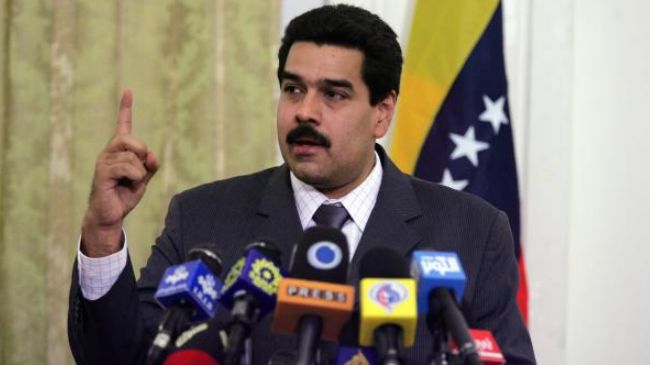



 Aletho News
 Aletho News