US Rhetoric, Policies Undercut Potential to Boost Ties With China After Biden-Xi Talks
Sputnik – 17.11.2023
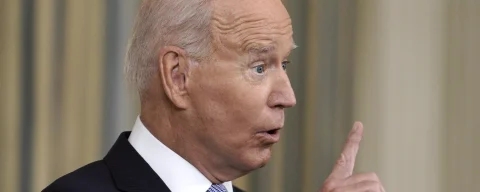
WASHINGTON – Cordial talks between US President Joe Biden and Chinese President Xi Jinping were immediately undermined by the rhetoric of the American leader himself and US hubristic policies and sermonizing, experts told Sputnik.
The two men held their talks on the sidelines of the Asia-Pacific Economic Cooperation (APEC) summit in San Francisco on Wednesday. Biden said important progress was made during his talks with Xi as both sides agreed to open direct military-to-military communications and begin to cooperate on AI.
However, within a few hours, Biden outraged the Chinese by describing Xi in public as a “dictator.” His comments drew an immediate furious response from Beijing. Chinese Foreign Ministry spokeswoman Mao Ning responded by calling Biden’s comment “wrong and irresponsible.”
“Our policies and rhetoric continue to increase tension versus easing tension,” retired US Army Lieutenant Colonel Earl Rasmussen, political commentator and former vice president of the Eurasia Foundation told Sputnik.
“Until we come out of our cave and realize that the world is changing and take on a cooperative view… not much will improve in relations and the world will move past the United States and their close allies.”
“Based on the US readout, we continue to continual virtue signaling and that we are the all-powerful. Hitting all the buzz areas: Free and open Indo-Pacific; defense of Indo-Pacific allies; Freedom of navigation; Adherence to international law; maintaining peace and stability and not to forget support for Ukraine and Israel,” Rasmussen said.
Former CIA analyst and station chief Philip Giraldi said Biden’s decision to call Xi a dictator explains why the United States is in decline. Moreover, he added, there is nobody in Washington sensible enough to reverse the trajectory.
‘Outdated’ World Order
Canadian historian, political commentator and Canadian Patriotic Review editor Matthew Ehret agreed that Biden’s comments were the expression of a collapsing US political society in the American capital.
“The Xi-Biden meeting involved a glimpse into a senile and outdated primitive world order melting down under its own self-contradictions and trying desperately to stay relevant when placed into close proximity with a sane 21st century paradigm,” he said.
Biden’s political naivete and incompetence in his extreme old age went unchallenged because almost everyone else in the US political and media establishment thought and felt exactly the same way, Ehret explained.
“Biden represents the perfect embodiment of corruption, self-deceit and self-centeredness characteristic of the liberal intelligentsia of baby-boomers that have taken control of western policy making for the past 60 years while offering nothing approximating authenticity to the rest of the world,” he said.
Xi, on the other hand, expressed the confidence and philosophical as well as political strength of China as she emerged on the world scene, Ehret pointed out.
The Chinese leader “is coming from a place of well-reasoned confidence and strength in embodying the ancient traditions of Chinese civilization, Confucian values and the largest rate of industrial and scientific progress in the world, which he knows presents the greatest salvation not only for the Chinese people, but the world at large,” he said.
The United States needed to work constructively in cooperation with China to build a genuine new world order favorable to all, Ehret advised.
“If the United States itself is to survive the storms of war and economic collapse which it has largely brought on to itself, then it will be largely because of the creative efforts made by China to build a new system premised around cooperation, industrial growth and peace,” Ehret said.
Biden Calls Xi ‘Dictator’ Hours After Meeting Meant to Repair Relations with China
By Ian DeMartino – Sputnik – 16.11.2023
US President Joe Biden met with his Chinese Counterpart Xi Jinping on Wednesday at the Asia Pacific Economic Council (APEC) Leaders’ summit in San Francisco on Wednesday and held a press conference later in the day.
Hours after a meeting designed to restore US-Chinese relations between US President Joe Biden and Chinese President Xi Jinping, Biden called the Chinese leader a dictator during a press conference about the meeting.
Biden and Xi met in San Francisco during the APEC Leaders’ Summit on Wednesday. The highly anticipated meeting was hyped as a critical opportunity to restore Chinese-US relations following years of heightened tensions between the two countries.
During a press conference following the meeting, Biden touted the progress made, saying that they reached a deal to combat fentanyl precursor chemicals from China entering the United States, resuming direct communications between the world’s two largest militaries and a plan to have experts from both countries meet on the dangers of AI.
He said they also discussed Ukraine, Gaza, Taiwan and the South China Sea.
After Biden stated he would take no more questions he started walking towards the exit but then stopped and announced that he would take another question, “Who can holler the loudest?” the President asked the crowd of supporters.
The reporter, whose name and outlet were not clearly audible in the video, first asked if Biden could share the evidence he had that Hamas hid a headquarters in Al-Shifa hospital, something Biden said was a “fact” earlier in the press conference.
Biden said he was confident in the evidence he saw, but declined to provide it. “No, I can’t tell you. I won’t tell you.”
The same reporter then asked if Biden still calls Xi a “dictator” as he did earlier in the year. Biden confirmed that he still does.
“Well look, he is. I mean he is a dictator in the sense that he is a guy who runs a country that is a communist country that is based on a form of government that is totally different from ours,” Biden stated before leaving the press room.
The Chinese government has not yet responded to Biden’s latest description of the Chinese President as a “dictator.” In June, one day after Secretary of State Antony Blinken visited Beijing in an effort to ease tensions between the countries, Biden harmed those discussions by calling Xi a dictator and implying that he did not know what was going on in his country.
“The reason why Xi Jinping got very upset in terms of when I shot that balloon down with two box cars full of spy equipment is he didn’t know it was there,” Biden said at a fundraiser. “That’s a great embarrassment for dictators.”
Mao Ning, a spokesperson for China’s Ministry of Foreign Affairs said that Biden’s June comments were “extremely absurd and irresponsible, seriously contradicting the basic facts,” while stressing that China was “strongly dissatisfied.”
At the start of the press conference, Biden called the meeting he had with Xi the most productive discussion he had with the Chinese leader, noting that their relationship goes back to when they were both Vice-Presidents of their respective countries.
Biden was also asked about Gaza, saying that he is “deeply involved” in the hostage negotiations and remains “mildly hopeful.”
When asked if he gave Israeli Prime Minister Benjamin Netanyahu a deadline for the conflict, Biden stressed that he had not. “I believe it’s going to stop when Hamas no longer maintains the capacity to murder and do horrific things to the Israelis.”
Outside the building where APEC is taking place, hundreds of protesters gathered in the streets, demanding a ceasefire in Gaza.
Obama Says He’s Close to a “First Amendment Absolutist,” Then Adds a “But,” Criticizes “Certain Kinds of Speech”
By Didi Rankovic | Reclaim The Net | November 12, 2023
President Barack Obama has reemerged in the media, as the election campaign in the US is picking up pace.
And he got his two cents in on a range of issues, including free speech in the context of the First Amendment, “misinformation,” social networks vs. democracy – as his politically like-minded comrades like to position the situation – and, of course, the role of “AI.”
Obama was a guest on a Verge podcast when he – a former US president, twice sworn to preserve, protect, and defend the country’s Constitution – seemed to water down the meaning of that oath.
At one point, he told the host that he is “close” to being a First Amendment “absolutist” – only to add, “but we have laws against certain kinds of speech that we deem to be really harmful to the public health and welfare.”
Obama’s understanding of the First Amendment, according to this statement, is not that this legislation is there to protect the right to free speech – but rather that it should secure a “marketplace” of various ideas.
In his own words: “(…) these ideas battle themselves out, and ultimately, we can all judge better ideas versus worse ideas. I deeply believe in that core principle (of the First Amendment).”
“Misinformation” is another issue troubling Obama, where he seems somewhat skeptical about the government’s ability to regulate the field (obviously – to his political slant).
But the former president has ideas about how it might be done: “We need to think about different platforms and different business models.”
Furthermore – “It may be that I’m perfectly happy to have AI mediate how I buy jeans online. That could be very efficient. I’m perfectly happy with it. So if it’s a shopping app or thread, fine.”
But – what if it’s about speech, or as he put it, “marketplace of ideas”?
There, Obama would like to see regulation that would “broaden” people’s perspectives. Let his audience be the judge of the direction this (political) “broadening” would be taking, and at the expense of what.
The interview came after sitting US president, Joe Biden, signed what is described as “a sweeping executive order about AI.”
Obama has not previously been known as an expert on these matters (apparently, his “expertise” stems from being a prominent victim of deepfakes), but now he has a lot to say about “AI”. Mostly, how those tech companies at the forefront should “regulate” matters pertaining to this technology.
On this front, one of the key messages Obama was trying to push during the podcast is to “recruit” actual tech and “AI” experts into a segment of the US Digital Service that was launched during his time in office. In this context, he urged professionals to “sign up” at ai.gov and work “for the common good.”
The Israel Exception to Free Speech
Israel’s stranglehold on American foreign policy must be identified and eliminated

BY PHILIP GIRALDI • UNZ REVIEW • NOVEMBER 10, 2023
Last Tuesday there took place a disgraceful display of visceral malignancy in the United States House of Representatives Chamber in the south wing of the Capitol building. The House, long characterized by its aversion to truth, justice and what was once the American way, has been corrupted by special interests who have effectively bought an overwhelming majority of legislators, to include the leadership of the two major political parties. In the area of foreign policy, as well as a spill-over into many domestic and constitutional issues, there is no more powerful lobby than that of the state of Israel, and its power was on full display on Tuesday afternoon when Representative Rashida Tlaib was censured for the crime of being of Palestinian ancestry and speaking up against the ongoing genocide of her people by the Jewish state. Nearly all Republicans voted to condemn her together with a considerable number of her fellow Democrats.
On the following day, the White House added its own condemnation of Tlaib, referring specifically to the phrase “from the river to the sea” used by her, a slogan conveniently regarded by some like the fanatical Zionist Anti-Defamation League (ADL) as an Arab rallying cry for the eradication of Israel. ADL’s ghastly director Jonathan Greenblatt inevitably equates use of the phrase with “antisemitism” and ADL insists that “’From the River to the Sea’ is a Hamas call to annihilate Israel” while also “claiming [that] it is a rally of coexistence [which] gives cover to terror.” Tlaib, for her part, was resurrecting a memory of the Palestine that once was, and she has asserted that the slogan is “an aspirational call for freedom, human rights and peaceful coexistence, not death, destruction or hate.” Pro-Palestinian protesters do also use the slogan as a plea for their long-delayed nationhood, but groups like ADL prefer to claim that the activity provides “material support for Hamas,” and, as Hamas is a US listed terrorist group, that equates to aiding terrorists. Tlaib had also particularly angered the White House through her recently posted online video that accused President Biden of supporting genocide in the Gaza Strip, a seemingly undisputable assertion.
One might argue that even Congressmen are protected by the First Amendment right to free speech, but it is becoming increasingly obvious that the Bill of Rights does not apply when Israel is concerned, either in the halls of Congress or on college campuses, where Palestinian groups are being harassed and banned. The Tlaib censure vote can be seen as part of the bipartisan effort to protect the state of Israel from any and all criticism. Rashida Tlaib broke no law, did not threaten anyone, nor did she call for the destruction of any nation, yet she was excoriated by a series of her comrade-speakers in the House for something akin to a crime against humanity due to her turning against what was repeatedly described as one of America’s closest allies, a best friend and the only democracy in the Middle East, all of which are lies. Israel is no ally, which would require a certain reciprocity, a word that apparently does not exist in Hebrew. And in the current crisis Israeli Prime Minister Benjamin Netanyahu has demonstrated that he will not be moved by US interests to mitigate the slaughter no matter how much Blinken-Biden suck up to him to make him budge. And as for the claim of democracy, Israel only grants citizenship with full rights to Jews, hardly a democratic measure. Apparently, cutting off the massive amounts of US aid, including the current $14.5 billion to pay for exterminating the Palestinians, is not even on the table. Israel will always get its pound of flesh and will call all the shots in its relationship with Washington.
Tlaib’s comments are in the context of a White House that believes it is free to send bombs to Israel to slaughter Palestinian children — without even revealing how many plane loads of weapons have been delivered or are on their way. And then there are members of Congress like Senator Lindsey Graham of South Carolina who are free to advocate a “total war” against what he calls “the most extremist population on Earth,” i.e. the Palestinians. But verbal criticism of what is clearly a genocide and a massive violation of international law that has the US government as an accessory in a war crime is impermissible and there are even concerns that the Tlaib censure could become the foundation for a criminalization of any criticism of Israel under the assumption that all critics are ipso facto antisemites and the comments themselves amount to a “hate crime.”
Consider for a moment the precedents to Tlaib’s disgrace who are still in office untouched by any procedural steps to define what are acceptable rights of legislators. Beyond Senator Lindsey Graham’s unchallenged invitation to a mass murder, there is Senator Bob Menendez of New Jersey whose apparent tendency to accept bribes has been a particularly lurid tale in part because much of the loot consisted of $480,000 in cash stuffed into jacket pockets, closets and in a safe, along with 13 gold bars, two of them marked as 1 Kilogram in weight to the value of more than $100,000. Both men are still walking around free of censure!
Israel’s love of the United States is only skin deep, if it is as much as that. Recall for a moment the comments by Israeli prime ministers on the nature of the relationship. Consider Ariel Sharon’s 2001 comment: “Every time we do something you tell me Americans will do this and will do that. I want to tell you something very clear, don’t worry about American pressure on Israel. We, the Jewish people, control America, and the Americans know it… I don’t care what the American people think, I own the congress!” Or Netanyahu’s famous quip also in 2001: “America is a thing you can move very easily!” So that is what “America’s best friend’s” leadership actually thinks about the United States and its people! It is a cash cow to be milked and otherwise exploited for political cover before being disposed of when its usefulness is gone.
Sharon also famously said “I vow that if I was just an Israeli civilian and I met a Palestinian, I would burn him and I would make him suffer before killing him.” It squares the circle on why the Gazans erupted in rage on October 7th. Palestine was one nation from the Jordan River to the Mediterranean Sea when Israel was founded in 1948. Since that time, Israel has been ethnically cleansing the Palestinians for three quarters of a century, has stolen and plundered their land, has replaced or eradicated hundreds of villages, has besieged Gaza for nearly 2 decades, and has engaged in mass starvation and now in genocidal mass killing. In the fighting preceding Israel’s independence, three quarters of a million Palestinians were driven from their homes and sent into refugee camps by Israeli militias, together with tens of thousands who were killed outright. Now the refugee camps in Gaza are being bombed together with churches, hospitals, schools and apartment blocks and we have only just learned that some Israeli officials are considering using one of their nuclear bombs to completely wipe out Gaza. It is surprising that the Palestinians have shown as much restraint as they have.
Given the damage that a corrupting Israel has done to America’s political system, it is important to ask what good the relationship with Israel has done for the average American whose tax dollars support the Zionist enterprise together with its plan to remove the Palestinians. The answer is that nothing good has come out of the so-called alliance, which has cost the US $260 billion in direct aid adjusted for inflation since 1946. Plus there is the large sum of $14.5 billion more recently approved and pending currently as some kind of war fund to enable Netanyahu to crush the Palestinians. Israel regularly gets $3.8 billion yearly in direct aid from the US Treasury, a gift from Barack Obama, that is more than what goes to all other countries combined. And there is also more-or-less “off the books” considerable additional money from special and joint military projects, dubious charities and state level development boards that bring the total up to roughly $10 billion per year, which does not include the billions in financial aid that are in reality bribes paid to Egypt and Jordan to maintain peace with the Jewish state. The handout from Uncle Sam helps make Israel a very wealthy country which can afford to give its Jewish citizens free health care and college education as well as subsidized housing.
And being joined at the hip to the Jewish state has a considerable downside, requiring the use of the US United Nations veto at regular intervals to protect the client state as well as involvement in unneeded wars in places like Lebanon, Iraq, Syria and Libya with Iran coming up next. Nor has Israel hesitated to kill Americans when it felt that the US was not fully supportive of its interests and the White House is so constrained by its “alliance” that it has essentially covered up the crimes against its own citizens. Last year’s sniper killing of Palestinian-American journalist Shireen Abu Akleh, which produced only a whimper from the Jewish dominated State Department, plus acceptance of Israeli lies about the incident, is a prime example. And then there is the killing of 34 sailors and the injuring of 172 more on the USS Liberty in international waters on June 8th 1967. The US Navy largely unarmed intelligence ship was monitoring the ongoing fighting with Egypt when it was attacked by Israeli planes and torpedo boats. Efforts to send US aircraft carrier warplanes to assist the ship were called back by President Lyndon B. Johnson, who also orchestrated a cover-up exonerating Israel from blame. One hopes he and his Secretary of Defense Robert MacNamara are now burning in hell.
The US government is so averse to challenging Israel that many believe that there are other unrevealed influences at play, possibly to include the Jeffrey Epstein/Mossad pedophile sex trafficking caper. It has long been true that candidates for high office in the US are approached by agents of the Zionist lobby and coerced into signing a pledge to support Israel. In return, the candidates who accept receive substantial political contributions and positive media. If they say “no” they are frequently targeted for defeat and go the way of Cynthia McKinney, Charles Percy, William Fulbright, Pete McCloskey and Paul Findley.
Congressman James Traficant of Ohio was perhaps the most aggressive voice in Congress in the 1980s and 1990s in expressing a critique of Israel’s power. He was inevitably controversial and was eventually imprisoned for seven years on a corruption charge that many subsequently considered to be a government set up. He had argued, among other things, that “Israel has a powerful stranglehold on the American government” explaining how Israel was “controlling much of our foreign policy” and “influencing much of our domestic policy.” He claimed quite plausibly that former Pentagon official Paul Wolfowitz, working for Israel, had “manipulated” President George W. Bush into the disastrous invasion of Iraq.
Traficant maintained in the 1990s that “We’re conducting the expansionist policy of Israel and everybody’s afraid to say it. They control much of the media, they control much of the commerce of the country, and they control powerfully both bodies of the Congress. They own the Congress.” If Traficant were still with us, he would be astonished to see how Jewish influence has actually increased, with 35 states having some rules or legislation punishing advocates of boycotts of Israel and bills currently before congress authorizing automatic war against Iran and even the expulsion of Palestinians from the US. The State Department has an ambassador who monitors so-called antisemitism and the White House has recently declared a war against what it describes as “surging antisemitism.”
Currently, everyone opposing the US engagement with Israel in its extermination of the Arab population in the area it controls is being labeled an anti-semite and speaking up for the Palestinians is becoming a good way to get kicked out of university and unemployed. Israel’s friends are busy compiling lists of students who support the Palestinians and are working on schemes to circulate their names to deny them jobs once they graduate. Rashida Tlaib is only the latest affront to the dignity and common sense of the US Constitution but she is certainly not going to be the last victim of the Jewish lobby, which must be labeled for what it is, made to register as the agent of the Israeli apartheid state, and excluded from unilaterally making the policies that all of us Americans have to pay the price for in the Middle East.
Philip M. Giraldi, Ph.D., is Executive Director of the Council for the National Interest, a 501(c)3 tax deductible educational foundation (Federal ID Number #52-1739023) that seeks a more interests-based U.S. foreign policy in the Middle East. Website is councilforthenationalinterest.org, address is P.O. Box 2157, Purcellville VA 20134 and its email is inform@cnionline.org.
Amnesty International: A Template for Futility

Even in the worst period of the repression during the apartheid era in South Africa, the armed forces never bombed the townships
— Ronnie Kasrils, March 2009BY PAUL DE ROOIJ • UNZ REVIEW • NOVEMBER 3, 2023
One would hope that human rights NGOs would be influential, be tools to mobilise the public against oppression and barbarity, and maybe be of use in making the perpetrators of crimes accountable… Or is it the case that human rights NGOs are instruments of propaganda, means to deflect action against state power, and even instrumental in justifying state violence and war? Maybe Amnesty International’s latest press releases and the inevitable “reports” will enable one to determine on which side of the ledger its actions fall.
Yet again the Palestinians face massive Israeli attacks against Gaza, and the retail bombing of the West Bank, Syria, Lebanon, and even Egypt. Israelis engage in these attacks every four or five years; they call them “mowing the lawn operations”. Inevitably, the human rights NGOs utter clucking sounds, and issue press releases and reports; some of their insufferable researchers will appear on TV mouthing predictable trite statements. And if past experience is any guide, all that effort will be an exercise in futility. Who reads these materials, have they ever led to any action or change of state policy, or have they galvanised a public into action? The answer is self-evident.
Amnesty’s output also suggests that they are a lazy bunch incapable of improving their “product” to make it more effective. Invariably they utilise the same template; they just fill in the blanks whenever the level of violence has propelled a “conflict” onto the front pages or to the top of the hour news reporting. The template requires distressing clucking sounds about the violence, and a tally of those killed; it provides a few individual examples of violations. It then blames “both sides,” and asserts that the Palestinian violence was “horrific” and “indiscriminate”; both sides have perpetrated war crimes. It then urges both sides to cease and desist; return to the status quo ante. And finally, it calls on the “international community” to impose an arms embargo on “both sides”. And “independent” investigators should be allowed in to compile evidence of war crimes. That is it.
Basic Background
Gaza has been under military occupation and control for decades, and extreme Israeli violence has punctuated its history. Massacres, bombings, assassinations have been regular features; each military attack is increasingly more destructive and violent than the preceding ones. Furthermore, since 2006 Gaza was transformed into the largest open air prison with Israeli forces controlling who enters/exits the exclave; walls, razor wire fences, and watch towers armed with robotic machine guns surround the area; drones buzz overhead every day, especially at night. Dov Weissglas, a close confidant of Ariel Sharon, quipped that they’d put Gaza “on a diet”. Israelis calculated the basic caloric intake required to maintain the population just above starvation, and proceeded to limit food imports to that level; airplanes sprayed herbicides on crops, and even small allotments. The water supplied into Gaza was polluted with high levels of salt and over-fluoridation. Unemployment rate in Gaza has been staggeringly high. Gazans have lived in a terrible situation for many years. Non-violent resistance was brutally crushed. With no prospects political or negotiated solution what were Palestinians supposed to do?
It is this history that must serve as the foundation to guide solidarity with the Palestinians, and for any organisation to channel efforts to ameliorate the situation. It behooves us to understand why human rights NGOs are a failure by design; to understand why the human rights babble is equally a cruel fraud. Here is an explanation of this failure in Eight Acts:
They are so ahistorical…
Given the above snapshot history, the nature of the crimes requires recognising them as crimes against humanity, arguably one of the most serious crimes under international law. Second, Israeli crimes put the violence of the Palestinian resistance into perspective. Palestinians have a right to defend themselves. Third, the long history of violence perpetrated against the Palestinians, and the resulting power imbalance, suggest that one should be in solidarity with the victim.
Amnesty however refuses to acknowledge the serious nature of Israeli crimes, by using an intellectually bankrupt subterfuge; it insists that as a rights-based organisation it cannot refer to historical context; doing so would be considered “political” in its warped jargon. An examination of what AI considers “background” in its press releases/reports confirms that there is virtually no reference to relevant history, e.g., the prior attacks on Gaza, who initiated those attacks, the Goldstone report, etc. Presto! Now there is no need to mention serious crimes. Every time AI issues the same statements and even some reports; they are written from the same template. They may change a few details, but each of their statements and reports studiously ignores the previous attacks as if history didn’t matter. It also doesn’t recognise the nature of the Palestinian resistance, and their right to self-defence. Nowhere does AI acknowledge that Palestinians are entitled to defend themselves. And finally, AI cannot express solidarity with the victim; hey, “both sides” are victims!
Criminalising Palestinian Resistance
When Palestinians were engaged in non-violent demonstrations in front of the walls / fences surrounding Gaza, AI didn’t have much to say about the demonstrators who were shot by snipers. A demonstrator in a wheelchair shot and killed; dozens of demonstrators shot in the knee, kids flying kites shot, a journalist operating a drone killed… There are many Palestinian prisoners arbitrarily imprisoned, and when some of them engage in months-long hunger strikes, even resulting in death, AI barely utters a peep. So, non-violent resistance didn’t deliver much, and thus armed resistance seemed to be the only option.
When the Palestinians launch crude inaccurate missiles this is deemed “indiscriminate” in nature and ipso facto a war crime. AI also deems the taking of hostages to exchange for Palestinian prisoners to be a war crime. Attacking Israel and in the process killing civilians is also deemed beyond the pale. So Amnesty’s gang is not willing to state anything constructive about the Palestinian resistance other than to chastise them with accusations of serious crimes.
A blatant double standard is at play. Palestinian weapons are rudimentary and are not precise, and AI labels these as “indiscriminate” thus unlawful. On the other hand, Israeli weapons that are very accurate used to deliberately target civilians, hospitals, mosques, bakeries, ambulances, etc. These weapons are fine and dandy; AI will merely state that an independent body might have to “investigate war crimes” — knowing full well the fraudulent nature of these so-called independent investigations. What is worse: using inaccurate weapons that may result in civilian deaths, or use very accurate weapons to intentionally kill civilians? And what about the scale and proportionality of the weapons? Most Palestinian weapons are small, and not very lethal. Israelis use huge bombs to flatten buildings, hospitals, … with inevitable civilian deaths. For every Palestinian rocket, how many Israeli bombs have dropped? Amnesty usually reports the former, but not the latter.
When resistance fighters take hostages (both civilian and military) AI deems this to be a war crime. On the other hand, when Israeli forces routinely round up Palestinian civilians and arbitrarily imprisons them, this merits no comment. The use of an Israeli military kangaroo court to rubber stamp the imprisonment order is enough to keep Amnesty at bay. Recent video footage shows that Palestinian resistance fighters were captured alive, but a few minutes later they were executed. Does this merit any AI reproach? AI has a pompous sounding “Evidence Investigation Unit” — they may be taking a little nap now.
Addressing Apartheid
In its 26 October 2023 press release AI states: “The root causes of the conflict to be addressed, including through dismantling Israel’s system of apartheid against all Palestinians.” Maybe uttering this statement about 40 or 50 years ago would have been a bold statement. But as Ronnie Kasrils, the great anti-apartheid fighter, stressed: the Palestinians face a system of oppression far more serious, pernicious and violent than what was experienced in South Africa during the 1960-70s. The current Israeli policy is meant to drive the Palestinians off their land (ethnic cleansing) and it doesn’t shy away from implementing a genocidal plan. Amnesty lags behind these developments.
Appeals to the international community
In the 26 October press release, AI also states: “The international community to impose a comprehensive arms embargo on all parties to the conflict given that serious violations amounting to crimes under international law are being committed.” The day after the 7 October attack, the US and UK started flying in military materiel — by now amounting to about 60 military cargo plane deliveries. The US is itself militarily involved having assembled an armada in the Mediterranean and the Persian Gulf; it has sent senior military officers to advice on the attack on Gaza; and a US Seal team is on location. Thus AI’s statement is yet another example of its futility and impotence; maybe it was meant to add a bit of comic relief.
But this time it is different…
While in the past, Amnesty could engage in its ritual press releases and reports, and eventually revert to its regular routine, the current attack on Gaza may force Amnesty to adopt a different stance or risk exposure of its true spineless and duplicitous nature.
Top Israeli politicians and military officers have ordered cutting off Gaza’s access to food, water, and fuel; outright state that all inhabitants “are not innocent,” are “human animals,” that “there is no safe place in Gaza,” “There is no symmetry; the children in the Gaza Strip brought this on themselves,”or recite Deuteronomy 25:19 to smite the Amalek. Other religious figures have chimed in with other vengeful and chilling religious utterances. The same chapter in Deuteronomy urges Israelis to prise open the jaws of the Amalek and pour molten lead into their throats. (NB: this gave rise to the 2008 operation name “Cast Lead”.) Arnon Soffer, the infamous demographer, stated (2004): “we will have to kill and kill and kill. All day, every day.” And finally, a bevy of foreign prime minsters/presidents has flown in to repeat that: “Israel has a right to defend itself”. None of these dignitaries uttered a word urging restraint or a return to negotiations, let alone observance of international humanitarian law. Israel was given a green light to do whatever it wants with no impediments, and as a matter of fact, with the aid of recently flown-in military materiel. The UN will be rendered impotent given the US veto; and the lame ICC has no jurisdiction over Israel, thus any meaningful war crimes tribunal will never materialise.
So will Amnesty pursue its business as usual or opt for a stronger stance — preferably a pronouncement by a coalition of NGOs and solidarity activists. There will be an answer within a month.
The feces smellers
Agnes Callamard, AI’s Secretary General, is possibly one of the better and most outspoken general secretaries; there is no doubt that she is a well intentioned person. Many of her statements are clear and strong statements, but they are clearly limited by AI’s overall posture. But her stance is very much like that of a person who finds a fresh piece of feces in her path. After studying the sample, tasting it, and sniffing it, declares “that an independent investigation is necessary to determine if Israel committed war crimes and crimes against humanity.” So why does AI hesitate to make a strong statement about Israel? It has to do with its funding; a strong stand would upset the main donors.
The nature of human rights organisations
Many little NGOs have popped up that are merely meant to assuage the liberal conscience. Thus one may be worried that bananas were produced under harmful and exploitative conditions, and thus a little sticker on the banana may warm the liberal soul. The sticker they offer is merely meant to reduce consumer hesitancy when buying a product. The human rights NGOs perform very much the same function. When sordid and violent acts occur somewhere in the world, well intentioned concerned individuals may want to do something about it. And what could be easier than sending a donation to a human rights NGO! You will even get an Amnesty sticker to paste on your forehead to boast your liberal righteousness. Furthermore, the NGO will enlist well intentioned people to perform next to useless tasks like writing overly polite letters to dubious politicians seeking to improve the prison conditions of their adopted “prisoner of conscience”. Resources and effort are deflected away from pressuring domestic politicians to stop aiding and abetting mass crimes. There seems to be no downside to the back slapping politicians visiting Netanyahu encouraging greater mass crimes. Where are the activists clamouring to stop weapons deliveries to Israel from the US, UK and Germany?
And of course, Israel views the human rights NGOs as a necessary nuisance — easily ignored. While volunteers write overly polite letters, the paper shredders in Israel are whirring away. There is no effective action sought by the human rights NGOs which would cause Israel to take notice. In the very least, the human rights NGOs could heed Palestinian civil society’s call to implement a boycott of Israel. The boycott campaign was effective against apartheid South Africa, and given that the Palestinians face conditions that are orders of magnitude worse than apartheid, it would suggest a boycott campaign would be in order. Amnesty claims to have seven million followers, thus a call to implement a boycott would have more effect than the empty exhortations to governments to do nothing.
In the end, one cannot expect an organisation to change its spots after such a long and dubious history which includes trumpeting for war (AI was instrumental in pushing the throwing-babies-out-of-incubators hoax), pushing state propaganda (e.g., putting Croatian propagandists on tour in the US to push the “rape camp” slur), and many more. Amnesty International was created by a Zionist, it is difficult to countenance that a critique of Israel would be tolerated even today. Amnesty International Israel was run for many years by Israeli Foreign Ministry officers; this gang blocked critical reporting and played the gate keeper function. Amnesty never responded to the revelation of the penetration of its Israeli branch. Even today, as Amnesty’s website shows, the Israeli branch of the organisation is based in Tel Aviv. Maybe a clarification about its contribution and about its personnel may be in order. AI must be aware that several prominent Palestinians refuse to meet with them. And if the Israeli branch contributes to or edits its reportage, then AI must confront the ethics of producing Palestinian human rights coverage by Israeli personnel. During the war in Yugoslavia, Serbian researchers were not allowed to report on the condition of Croatians, Bosnians; the evident bias was not tolerated. But when it comes to Palestinian issues, a different standard applies.
During the 1970s Dr. Israel Shahak, the well known scientist and activist, headed a human rights organisation which translated Hebrew texts into English. He related how the state attempted to harass and interfere with his organisation. Break-ins, intimidation, destruction of archives, and planting their own operatives in the organisation leading to successful violent takeover of the organisation. So, does Amnesty-Israel have the same fraught relationship with the state? Or are they on chummy terms with Israeli officials? If the latter, there may be a reason for that.
And then there is snake oil
Pushing for the observance of human rights doesn’t necessarily imply that one will obtain justice. The human rights agenda merely softens the edges of the status quo. As Amnesty’s position on the Israeli attacks on Gaza illustrate, pushing human rights can actually be incompatible with obtaining justice. Human rights are a bastardised, neutered, and debased form of justice. The application and effectiveness of international law is bad enough, but a pick and choose legal framework with no enforcement is even worse. If one seeks justice, then it is best to avoid the human rights discourse; above all, it is best to avoid human rights organisations. If one wants justice it is best to avoid the discourse that only delivers bandages.
Palestinians should be wary of sanctimonious do-gooders peddling human rights snake oil. In exchange for giving up their resistance and complying with AI’s norms, it is not likely that Palestinians will obtain a pixel of justice. One should be wary of human rights groups that don’t push for justice, play the role of Israel’s lawyer, and are bereft of solidarity with the victims. During the Algerian war for independence, Frantz Fanon related that whenever a European would come to talk with him about “human rights,” his urge was to fetch a gun. Palestinians could learn something from this. When the likes of Amnesty come wagging their finger, it is best to keep the old blunderbuss near at hand.
How (not) to Relativize the Holocaust

By CJ Hopkins | Consent Factory | November 1, 2023
OK, I owe everyone an apology. I get it now. I’ve seen the light. I finally understand the true nature of my thoughtcrimes, and I take responsibility for them, and I stand ready to pay my debt to society.
I have to thank the State of Israel for bringing about this sudden epiphany. How it happened was, Gilad Erdan, Israel’s Ambassador to the United Nations, and his delegation wore yellow Stars of David, i.e., the ones the Nazis forced the Jews to wear in public, at a Security Council session to make a statement. According to The Jerusalem Post, Ambassador Erdan then made remarks comparing the October 7 Hamas attack on Israel to the Holocaust.
“When Jewish babies were burned in Auschwitz, the world was silent, and today Jewish babies were burned in Be’eri and the towns of the South by the Nazi Hamas – and the world is silent again. I will make you remember the shame of your silence every time you look at me,” Arden said. “I will wear the yellow patch until the Nazi Hamas is eliminated and until the Security Council stops being silent and condemns the October 7 massacre. Some of you have learned nothing in the last eighty years! Some of you have forgotten why the United Nations was founded. So I will remind you. From today on, every time you look at me you will remember. When my grandfather and his children were sent to Auschwitz, the world was silent. When his wife and their seven children were sent to the gas chambers, the world was silent. When their bodies were burned alongside millions of other Jewish children, the world was silent,” Erdan said, comparing the silence of the UN about the Hamas massacre on October 7 to the silence of the international community regarding the horrors of the Holocaust.
Now, I’ll be honest, the first thought that went through my head when I read that Jerusalem Post piece was, “Great! Here’s an Israeli diplomat doing exactly what I’m being prosecuted for doing, and no one’s going to prosecute him! All I need to do is bring this to the attention of the Berlin District Court, and they’ll dismiss my case!”
But then I had my epiphany.
Basically, my epiphany was, I realized the two things are completely different, i.e., Israel’s use of a Nazi symbol to make a political statement and me doing the same thing … well, almost the same thing. I’ve never actually relativized or minimized or trivialized or compared anything to the Holocaust, as Gilad Erdan did at the UN. Actually, I’ve advised against doing that. But that doesn’t let me off the hook for my thoughtcrimes! No, I did what I did, and I will have to answer for it in January at the District Court of Berlin!
For readers unfamiliar with my case, what I did was, I tweeted these two Tweets featuring the the cover art of my book, The Rise of the New Normal Reich, which is banned in Germany, and referring to the medical-looking masks that everyone was forced to wear during 2020-2022 as “ideological conformity symbols.”

You can read the background on my case here, or here, or here, or listen to me talk about it here, or here, or here, so I won’t go on about it here.
The important thing is, I understand now how totally wrong (and criminal) it was to do that, and how what I did is completely different from what UN Ambassador Erdan just did!
For starters, it wasn’t just those two Tweets. No, on Twitter, Facebook, and in my essays, and interviews, and, basically, every chance I got, for two years, I compared the rise of the “New Normal” to the rise of Nazi Germany in the 1930s. I noted the similarities between these two forms of totalitarianism: the declaration of a “state of emergency” as a pretext to justify the cancellation of constitutional rights and rule by decree; the propaganda; the censorship; the criminalization of dissent; the mandatory displays of ideological conformity; the invasion of bodily autonomy; the segregation, demonization, and persecution of a scapegoat underclass; and so on … all the classic hallmarks of totalitarian systems.
I understand now how wrong (and criminal) that was.
Watching the Israelis whip out their yellow Stars of David at the Security Council clarified for me when it is and isn’t appropriate to compare things to the Nazis.
Check me, but I think I’ve got it straight now.
When governments and non-governmental entities roll out a “New Normal” on account of a completely fictional “apocalyptic pandemic,” lock people down in their homes for months, terrorize them with official propaganda, force everybody to wear medical-looking masks to display their conformity to the new official “reality” and create the appearance of a deadly plague, outlaw political protests, censor dissent, segregate and demonize anyone refusing to conform to the new official ideology, and otherwise transform societies into pathologized de facto police states, those governments and global non-governmental entities are absolutely nothing like the Nazis.
On the other hand, Hamas, the Islamist political and military organization that governs the Gaza Strip, is definitely exactly like the Nazis … except that there are only around 25,000 of them, and their “Reich” is a tiny stretch of land that has been totally blockaded by Israel for years, and is completely surrounded by an “Israel-Gaza barrier,” and has been under Israeli military occupation since 1967. But, otherwise, Hamas is exactly like the Nazis!
See, the thing I didn’t quite understand when I tweeted my thoughtcrimes in 2022 was that being “exactly like the Nazis” has nothing to do with the actual history of Nazi Germany or totalitarianism per se. I was operating under the assumption that it did. That’s no excuse. I should have known better. Obviously, no one should ever be allowed to compare the rise of Nazism in Germany to any other totalitarian system or movement, no matter how blatantly similar it may be. In fact, the history of the rise of Nazism in Germany is irrelevant to, well, basically everything, unless your discussion is strictly limited to the Holocaust, or if you’re relativizing the Holocaust in defense of Israel’s right to defend itself … in which case, sure, break out those yellow stars and go nuts with the Holocaust comparisons.
Seriously, check my reasoning on this, because I don’t want to get it wrong again and end up facing yet another prosecution. Based on my new post-epiphany understanding, questioning the details of the official account of the October 7 attack is “Holocaust denial.” Hundreds of thousands of people peacefully demonstrating in support of Palestinians is a “hate march.” “Hamas Holocaust denial is dragging us into a new Dark Age.” The October 7 massacre was “barbarism as consequential as the Holocaust,” or at least as barbaric as the Babyn Yar massacre!
How am I doing? Am I good so far? I haven’t relativized the Holocaust, have I?
OK, one more test, just to make sure I’ve got my mind right around this stuff. If I, or anyone, were to compare what the State of Israel is doing to the Palestinians in Gaza to, I don’t know, let’s say, just hypothetically, the liquidation of the Warsaw ghetto, that would be completely inappropriate, and anti-Semitic, and a hate crime, right? I mean, the IDF isn’t liquidating the strip. They’re defending Israel against Hamas, and are doing their best to protect civilians as they bomb whole neighborhoods into heaps of rubble, wiping out thousands of men, women, and children, entire extended families, who are trapped inside the “Israel-Gaza barrier,” and have nowhere to run or hide from the slaughter.
If anyone were to make that comparison, that would definitely be relativizing the Holocaust, right? That would be like calling for “the extermination of the Jews,” or literally dressing up like Hitler and walking around barking Nazi slogans in public. In fact, anyone comparing the Israeli-occupied Gaza Strip to the Warsaw Ghetto, or to any other enclave of any other Nazi-occupied territory, is relativizing, minimizing, and trivializing the Holocaust, and should be fired from their job, blacklisted, and publicly condemned as “a Hamas-loving anti-Semite.”
Help me out. Am I getting the hang of this?
I hope so. All I can do at this point is apologize for leading people astray with all that stuff I wrote about “The New Normal Reich” and “pathologized totalitarianism” during 2020-2022. That, and try to make amends by humiliating myself on social media …

… which seems to be going pretty well so far.
Anyway, I am terribly sorry. No more “Holocaust relativizing” for me! I have seen how it is wrong, and terribly wrong, to compare anything to Nazi Germany, ever. I have learned my lesson. I’m cured! Praise god!
Former Jan 6th Prosecutor Runs For Congress, Focusing Campaign on Tackling “Conspiracy Theories” On Social Media
By Didi Rankovic | Reclaim The Net | October 31, 2023
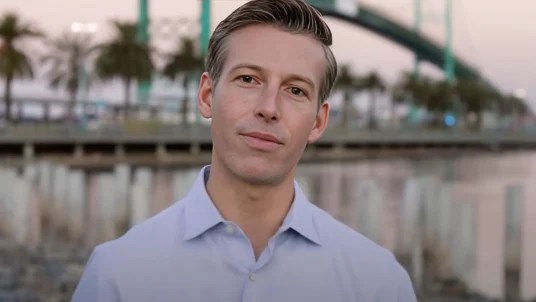
A counter-terrorism (national security) prosecutor who made a name for himself – or so he hopes – by going after participants in the January 6 riots is now hoping to capitalize on his previous career by switching directly to politics.
Will Rollins has announced that he is running for Congress in California, with his platform based on changing regulations that govern Big Tech’s social media, in order to combat what he considers to be conspiracy theories – such as QAnon and Covid-related issues – but also more vaguely, to take on “spreading division based on lies.”
In announcing the congressional run, Rollins revealed that his political efforts are based on the thinking that divisions in the US are not the result of, say, differing political and ideological beliefs within a free electorate, but of “democracy-eroding lies” that the media, Big Tech, and extremists, all help spread.
Apparently, there is such a thing as a democracy to erode, even if everyone gets corralled into the same place regarding some basic issues. And speaking of which, Rollins is warning that without his plan to hold said entities – media outlets, tech companies, and “extremists” – accountable, the US will be “exploited” by China and Russia.
This is his plan:
“Update regulations to break down information bubbles and propaganda networks to protect the public’s right to be informed; Require more transparency in advertising, so that we know whether what we’re consuming online was written by a human or a Russian bot; Create accountability for harmful lies and conspiracy theories amplified by Big Tech.”
From insisting on preventing “divisions” (but having to qualify his claims that “adversaries” from around the world tried to “capitalize” on those divisions post-January 6 by saying they reportedly tried this) – Rollings suddenly goes on to justify his policies by saying new rules around tech, etc., are needed in order to “incentivize the presentation of multiple views.”
But these will have to be “vetted” and approved of before being allowed to be presented, let alone incentivized, it appears from the musings Rollings is posting online.
Perhaps the most interesting thing that has come out of this candidacy so far is the revealing of the political and ideological profile of one of the January 6 prosecutors.
FBI = Following Biden’s Instructions?
By James Bovard | October 30, 2023
Does “FBI” now stand for “Following Biden’s Instructions”? The FBI is doing backflips to boost Joe Biden’s re-election campaign. Unfortunately, federal courts don’t recognize law enforcement shenanigans as a violation of the Voting Rights Act.
The FBI is categorizing Donald Trump’s supporters as terrorist suspects, according to a new report in Newsweek. The FBI created “a new category of extremists that it seeks to track and counter: Donald Trump’s army of MAGA followers,” Newsweek revealed. The FBI is relying on the same counterterrorism methods honed to fight al Qaeda to go after the incumbent president’s political opponents.
Naturally, the latest Washington crusade against extremism has more malarkey than a White House summit. Federal bureaucrats heaved together a bunch of letters to contrive an ominous new acronym for the latest peril to domestic tranquility. The result: AGAAVE—“anti-government, anti-authority violent extremism”—which looks like a typo for a sugar substitute.
Recently, the FBI vastly expanded the supposed AGAAVE peril by broadening suspicion from “furtherance of ideological agendas” to “furtherance of political and/or social agendas.” Anyone who has an agenda different from Team Biden’s could be AGAAVE’d for his own good. The great majority of the FBI’s “current ‘anti-government’ investigations are of Trump supporters,” William Arkin, a highly respected investigative journalist, reported in Newsweek.
The FBI crackdown is following some of the most overheated political rhetoric of our era. Biden has denounced Trump supporters for “semi-fascism.” Biden tweeted last November, “Donald Trump and MAGA Republicans are a threat to the very soul of this country.”
Biden’s Homeland Security Advisor Liz Sherwood-Randall declared, “The use of violence to pursue political ends is a profound threat to our public safety and national security… it is a threat to our national identity, our values, our norms, our rule of law—our democracy.” And since Team Biden says that Trump supporters could be violent, suppressing them is the only way to protect “the will of the people” or whatever honorific is used for rigged election results.
In June, the FBI and Department of Homeland Security issued a warning: “Sociopolitical developments—such as narratives of fraud in the recent general election, the emboldening impact of the violent breach of the U.S. Capitol, conditions related to the COVID-19 pandemic, and conspiracy theories promoting violence—will almost certainly spur some domestic terrorists to try to engage in violence.” In other words, alleging that there was election fraud in past elections can qualify a person as a terrorist suspect—and justify suppressing their political activity in subsequent elections.
Biden’s FBI views Trump supporters as a deadly threat to democracy, thereby justifying subverting or crippling Trump supporters’ ability to oppose Biden and other Democrats.
The FBI is required to have (or claim to have) solid information before launching a criminal investigation. But the bureau needs almost zero information to open an “assessment.” The FBI conducted more than 5,500 domestic-terrorism “assessments” in 2021, a 10-fold increase since 2017 and a 50-fold increase since 2013. “Assessments are the closest thing to domestic spying that exists in America and generally not talked about by the Bureau,” Arkin noted. The House Weaponization Subcommittee warned that “the FBI appears to be complicit in artificially supporting the Administration’s political narrative” that domestic violent extremism is “the ‘greatest threat’ facing the United States.”
Those assessments could prove perilous because the official demand for terrorists far exceeds the domestic supply. A top federal official told Newsweek last year, “We’ve become too prone to labeling anything we don’t like as extremism, and then any extremist as a terrorist.” “Trespassing plus thought crimes equals terrorism” is the Biden standard for prosecuting January 6 defendants.
FBI whistleblower Steve Friend complained of current FBI leadership, “There is this belief that half the country are domestic terrorists and we can’t have a conversation with them. There is a fundamental belief that unless you are voicing what we agree…you are the enemy.”
Did the Biden administration secretly want Newsweek to vindicate the fears of legions of Trump supporters? Perhaps those “assessments” are repeating a tactic used against Vietnam War protesters: FBI agents were encouraged to conduct frequent interviews with antiwar activists to “enhance the paranoia endemic in such circles” and “get the point across that there is an FBI agent behind every mailbox,” according to an FBI memo from that era.
The more abusive the FBI becomes, the more outraged that Trump supporters sound, thereby justifying further FBI repression. That also makes it easier for Team Biden to portray Trump supporters as public menaces.
Biden’s war on extremism could become a self-fulfilling prophecy that destroys American political legitimacy. An official in the Office of Director of National Intelligence lamented, “So we have the president increasing his own inflammatory rhetoric which leads Donald Trump and the Republicans to do the same”—and the media follow suit. Biden is exempt from official suspicion even when he denounced Republicans as fascists who want to destroy democracy. Yet if Republicans sound equally overheated, Biden’s FBI has pretexts to unleash the hounds.
Is there any limit to the federal entrapment operations designed to spur headlines that make politicians applaud? The latest FBI crackdown echoes a DHS campaign that was leaked to the press in 2021. Federal policymakers launched a “legal work-around” to spy on and potentially entrap Americans who are “perpetuating the ‘narratives’ of concern,” CNN reported. The DHS plan would “allow the department to circumvent [constitutional and legal] limits” on surveillance of private citizens and groups. Federal agencies are prohibited from targeting individuals solely for First Amendment-protected speech and activities. But federal hirelings would be under no such restraint.
Will the FBI’s interventions in the 2024 presidential election be even more brazen than its 2016 and 2020 stunts? Will the agency exploit its “assessments” to recruit knuckleheads to engage in another pre-election Keystone Kops plot to kidnap a governor, as it did in Michigan in 2020?
The FBI has a sordid history of intervening in presidential elections since 1948—if not before. A 1976 Senate report on FBI abuses warned, “The American people need to be assured that never again will an agency of the government be permitted to conduct a secret war against those citizens it considers threats to the established order.” Unfortunately, Americans may not learn the damning details of another FBI “secret war” until long after the next election.
Ironically, the Biden administration is vilifying anti-government opinions at the same time judges are exposing federal crimes. Federal court decisions in July and September condemned the Biden censorship regime—and those rulings were preceded by Supreme Court decisions striking down President Joe Biden’s student-loan-forgiveness scheme and vaccine mandates.
But Team Biden still presumes anyone who suspects the feds are violating the Constitution is up to no good. In the same way that Biden based his 2020 election campaign on vilifying Charlottesville 2017 protests, so the Biden re-election campaign will vilify anyone who distrusts the feds. Regardless of the outcome, the 2024 election will be another boomtime for cynics.
Place where protests didn’t happen does support Israel
By Yves Engler | October 29, 2023
Apologists for Israeli crimes are constantly gaslighting Palestinians and their supporters. They seek to make those opposing violence and colonialism feel like oppressors.
Last Friday a rally was held in front of Deputy Prime Minister Christya Freeland’s office in Toronto. Freeland recently declared that “Canada stands with Israel” and when she was foreign minister said Canada would act as an “asset for Israel” on the United Nations Security Council.
The poster announcing the rally declared: “PROTEST DEPUTY PRIME MINISTER OF CANADA CHRYSTIA FREELAND OUTSIDE HER TORONTO OFFICE”. During the rally bodies of babies were placed in front of Freeland’s office and at some point a man with an Israeli flag went directly in front of Freeland’s office in a bid to provoke the protesters. There’s video of police intervening and standing in front of the building housing Freeland’s office.
As the rally grew, it reportedly spilled onto the street and intersection directly in front of the Miles Nadal Jewish Community Centre (MNJCC). According to a Canada Files post, someone came out of the community centre to complain and film the Palestine solidarity rally. Footage was later posted to X claiming a Jewish community centre was targeted by protesters. According to multiple comments online, the initial post was deleted after being bombarded with derisive comments about their inability to look at a map. But Canada United for Israel shared the video tweeting, “Targeting a Jewish community center where there is a kindergarten is pure antisemitism. How can the anti-Israel movement justify scaring children?”
Far right Rebel News founder Ezra Levant quote tweeted that statement claiming “Hamas protesters target a Jewish kindergarten” while the head of the ‘progressive’ media watchdog CanadaLand, Jesse Brown, made a similar claim. The incident was referenced by the Toronto Sun, Toronto Star, National Post and other media.
In a transparent bid to enable Israeli violence and colonialism, apartheid apologists regularly fabricate or distort events to claim victimhood. Over two decades I’ve been privy to repeated examples of this. While I no longer consider the tactic noteworthy, an element of the psychological side of it is. In other domains it would be called gaslighting.
In brief, those screaming loudest “it’s just a Jewish institution that has nothing to do with Israel” are generally best placed to know this is untrue. Those who’ve been through the MNJCC – and similar institutions – know they are deeply Zionistic.
MNJCC operates an “Israel Connection” program and promotes the United Jewish Appeal (UJA) Toronto’s annual Walk for Israel. It hosted and cosponsored an Israeli general’s talk, which was held in tandem with the Israeli consulate.
The Thomas & Marjorie Schwartz preschool centre & Junior Kindergarten housed there has three pictures posted on MNJCC’s site. In one the kindergartners are smiling with an Israeli and Canadian flag hanging on the wall. In its “core elements” the kindergarten describes “Israel as a Source and Resource”.
The MNJCC elementary school shows a picture with dozens of Israeli flags. On its Instragram the Paul Penna Downtown Jewish Day School (DJDS) recently posted that “Jewish people have always had and always will have a relationship with Israel. We continue to stand in solidarity with Israel.” Days into that country’s horrific siege and violence in Gaza, DJDS posted on October 13 that “classes created inspirational cards for Israeli soldiers, and sent cards full of well wishes to former classmates now living in Israel.” The MNJCC school’s site notes, “Each year, our school warmly welcomes two young Israelis to the Paul Penna DJDS community. We are delighted to partner with UJA Federation, the Downtown Jewish Community School, and The First Narayever Congregation on this fantastic initiative. These teens have completed high school and have chosen to defer their army service in order to become Israeli ambassadors or ‘shlichim’, spending a year focused on presenting contemporary Israel to our students in passionate, creative ways.”
MNJCC has deep ties to UJA Toronto, which brings young Israeli ‘shlichim’ to live with Toronto families so they can do outreach in schools and community organizations. At the top of UJA’s website, which is prominently linked on the MNJCC site, is an Israel financial appeal and its official advocacy arm is the Centre for Israel and Jewish Affairs.
Alongside a link to UJA Toronto, MNJCC’s site links prominently to the JCC Association of North America. The top of that site notes “JCCs of North America Stand With Israel”.
MNJCC’s namesake funded a major project at the racist Jewish National Fund’s Canada Park, which is built on the remnants of three Palestinian villages in the West Bank. On the board of the JCC, Miles Nidal is a staunch anti-Palestinian.
Even if the target of Friday’s protest had been the JCC it would be altogether legitimate (though considering the political climate, organizers should seek to detail the JCC’s anti-Palestinianism in promotional literature). No organization that promotes and defends Israel the way MNJCC does can then claim, “we are simply Jews, not backing Israel” when it becomes convenient to deny the connection.
It’s highly manipulative for individuals who know the Miles Nadal Jewish Community Centre is part of a network of anti-Palestinian institutions to claim protesting it is antisemitic. Call the complaints what they really are: gaslighting.
Pentagon Report Hypes ‘China Threat’ to Sustain Own Hegemony
By Wang Qi | Global Times | October 20, 2023
The US’ “China Military Power report,” like its previous editions, ignores the facts and is filled with bias, spreading the “China threat” theory which only serves as an excuse to maintain its military hegemony, a Chinese Foreign Ministry spokesperson said on Friday, in response to a Pentagon report that warned Beijing is building up its nuclear and long-range missiles arsenal “faster than previous projections.”
The newly-released annual Pentagon document claimed that China has more than 500 operational nuclear warheads as of May 2023, surpassing earlier projections, and forecast that China would likely have more than 1,000 operational nuclear warheads by 2030.
Describing China as a “pacing challenge,” the US Defense Department report also said that Beijing may be exploring the development of conventionally-armed long-range missiles that could reach the US. It said that Beijing has completed the construction of three new fields of long-range ballistic missiles silos.
Mao Ning, a spokesperson from the Chinese Foreign Ministry, said on Friday that China is firmly committed to a defensive nuclear strategy, and has always maintained nuclear forces at the lowest level required for national security, and has no intention of engaging in a nuclear arms race with any country.
China has a unique nuclear policy among nuclear weapon states and has maintained a high degree of stability, consistency and predictability, Mao said, “No country will be threatened by China’s nuclear weapons as long as it does not use or threatens to use them against China.”
We urge the US to abandon its Cold War mentality and hegemonic logic, to view China’s strategic intentions and national defense development objectively and rationally, to stop publishing such irresponsible reports year after year, and to take practical actions to maintain the stability of the military-to-military and overall relations between the two sides, Mao said.
Chinese military expert Zhang Junshe said that it’s hilarious that a country with more than 5,000 nuclear warheads says another nation poses a threat.
In 2020, Fu Cong, then director general of the Department of Arms Control and Disarmament, cited statistics from renowned international think tanks, pointing out that the US nuclear arsenal stands at about 5,800 nuclear warheads.
Even if China does have 500 nuclear warheads, they are not even close to the size of the US’ arsenal. In addition, the number of US strategic nuclear submarines, strategic bombers, and the number of warheads they carry are far higher than any other country in the world, including China, Zhang remarked.
For fiscal year 2024, the US defense budget request hit another record high of $842 billion, more than the gross domestic product of Saudi Arabia for the entire year of 2021, and 20 percent higher than the combined defense budgets of nine countries, including China, Russia, India, and the UK, according to Xinhua.
According to Zhang, the US is developing a new generation of strategic nuclear weapons, including intercontinental ballistic missiles (ICBMs), sea-based strategic missiles and airborne nuclear weapons, a new generation of nuclear submarines, and strategic bombers.
In addition, the US is miniaturizing nuclear weapons for so-called tactical use, namely, lowering the threshold for the use of tactical nuclear weapons, Zhang said. “The US is also considering resuming the storage of nuclear weapons in other countries, such as the UK, a Cold War era practice of nuclear sharing with allies.”
The hyping of the “China threat” is nothing but a search for excuses for Washington’s uncontrolled nuclear arsenal expansion, and to discredit and suppress China’s normal military development, so as to maintain absolute military superiority, Zhang said.
‘Undesirable hobby’
The report smeared China’s military modernization as a means of projecting power across the Pacific region and ultimately around the globe, saying China’s strength is growing in all the domains of warfare, including the traditional land, air and sea, as well as nuclear, cyber and space, according to CNN.
The 212-page report also mentioned the word “Taiwan” 261 times, highlighting the Chinese mainland’s “military pressure” against the island.
The US is worried that the increase of the Chinese People’s Liberation Army’s military capability could pose challenges to US military hegemony, thus affecting the US political hegemony and global hegemony, Chinese military expert and TV commentator Song Zhongping told the Global Times on Friday.
Given that the report was released ahead of the Beijing Xiangshan Forum, a China-hosted platform on defense and security issues, Chinese analysts believed it was also aimed at entrapping Chinese neighbors, cajoling them to resist and oppose China’s normal military development so that they can be better “utilized” by the US in the Asia-Pacific region.
As the world’s largest nuclear state, the US has not made a commitment not to be the first to use nuclear weapons, as China has done, as well as a commitment not to use nuclear weapons against non-nuclear countries and regions. Instead, the US has even been aggressive, emphasizing the pre-emptive use of nuclear forces, according to Zhang.
The nuclear strategy of the US is global in its scope. When it provides nuclear umbrellas and even nuclear sharing to some allies, it poses a serious threat to other countries, and at the same time is extremely destructive to nuclear disarmament and non-proliferation around the world, and ultimately exacerbates regional tensions, Song said.
In July, the US deployed a nuclear-armed ballistic missile submarine to South Korea for the first time since 1980s. North Korea later fired two short-range ballistic missiles into its eastern waters as a response to the “grave provocation,” media reported.
The problem that the US poses to global security is its nuclear superiority and military power, said a Beijing-based expert. “When it comes to the resolution of regional crises, the US is inclined to resort to the use of force, either by itself or through its allies. And the US’ absolute military strength and nuclear power has further encouraged that undesirable hobby.”
“The US, with the largest and most advanced nuclear arsenal in the world, follows a first-use nuclear deterrence policy, keeps making enormous investment to upgrade its nuclear triad, advances forward deployment of strategic forces, and strengthens extended deterrence for its allies,” Mao said. “These policies and acts heighten the risk of a nuclear arms race and nuclear conflict, and will only adversely affect the global strategic security environment.”
Yes, there is an Israel lobby, as any decent journalist knows
By Yves Engler | October 18, 2023
Is the idea of a “highly organized Israel lobby” antisemitic? An apartheid-promoting Globe and Mail columnist claims as much.
In attacking the Canadian Union of Public Employees for standing in solidarity with Palestinians Robyn Urback tweeted, “Points for alleging a Jewish conspiracy, but if CUPE really wanted to go full antisemitic trope, they should have mentioned something about poisoning the wells.” Below her message Urback quote tweeted a colleague stating, “CUPE Ontario says it’s targeted by ‘trolls’ – ‘a highly organized pro-Israel lobby,’ which targeted [Union president] Fred Hahn and CUPE 3906 for ‘recognition of Palestinians’ rights under international law to resist occupation through armed struggle.’”
But Urback knows full well there are many organizations backed by substantial wealth promoting Israel. This is not a trope. This is reality that is easily fact checked and should have been by any honest journalist.
In a sign of her dishonesty, Urback previously wrote about a lobby sponsored trip to Israel she participated in. Urback went on BirthRight, a program that pays for young Jews to go Israel to become “intellectual ambassadors” for the country.
The preeminent force in the “highly organized Israel lobby” is the Centre for Israel and Jewish Affairs. CIJA has over 40 staff and a $10 million budget. In addition, B’nai B’rith has a handful of offices across the country. For its part, Friends of Simon Wiesenthal Center Canada’s budget is $7-10 million annually. These groups work closely with StandWithUs Canada, CAMERA, Allied Voices for Israel, Israel on Campus, Honest Reporting Canada and other Israeli nationalist political organizations. Additionally, more than 200 registered Canadian charities assist projects in Israel and engage in at least some pro-Israel campaigning domestically. There are also numerous Jewish private schools, summer camps and community centres that actively promote Israel.
All these groups are backed by substantial wealth. Patron of CIJA, the Jewish federations of Toronto, Montréal, Winnipeg, Windsor, Calgary, Edmonton, Hamilton, London, Ottawa, Vancouver and Atlantic Canada raise $200 million annually and have over $1 billion in assets.
A large amount of private wealth strengthens Israel lobby groups’ influence. Since 2013 the chief fundraiser for the Trudeau Liberals has been Stephen Bronfman, scion of an arch Israeli nationalist family. Bronfman has millions invested in Israeli technology companies and over the years the Bronfman clan has secured arms for Israeli forces and supported its military in other ways. Bronfman openly linked his fundraising for Trudeau to Israel. In 2013 the Globe and Mail reported: “Justin Trudeau is banking on multimillionaire Stephen Bronfman to turn around the Liberal Party’s financial fortunes in order to take on the formidable Conservative fundraising machine…. Mr. Bronfman helped raise $2-million for Mr. Trudeau’s leadership campaign. Mr. Bronfman is hoping to win back the Jewish community, whose fundraising dollars have been going more and more to the Tories because of the party’s pro-Israel stand. ‘We’ll work hard on that,’ said Mr. Bronfman, adding that ‘Stephen Harper has never been to Israel and I took Justin there five years ago and he was referring at the end of the trip to Israel as ‘we.’ So I thought that was pretty good.’”
Other notable Canadian moguls have long histories of ensuring ties between Israel and Canada. Worth more than $3 billion prior to his death, David Azrieli was among the richest Canadians. In his youth he served in the paramilitary Haganah group during the 1948 war. His unit was responsible for the Battle of Jerusalem, including forcibly displacing 10,000 Palestinians. Azrieli was also a real estate developer in Israel and in 2011 he made a controversial donation to Im Tirtzu, a hardline Israeli-nationalist organization (deemed a “fascist” group by an Israeli court).
Worth $1.6 billion, Gerald Schwartz and his wife Heather Reisman created the Heseg Foundation for Lone Soldiers, which provides millions of dollars annually for non-Israelis who fight in the IDF.
In recent years Canadian-Israeli billionaire Sylvan Adams has plowed hundreds of millions of dollars into various sports and cultural initiatives to rebrand Israel.
Other Canadian billionaires Larry Tanenbaum, Mark Scheinberg, David Cheriton, Mitch Garber, Daryl Katz, Seymour Schulich, as well as the Zekelman, Reichmann and Sherman families, all back Israel. Again, none of this a conspiracy theory or antisemitic trope. It is simple reality and easily fact-checked if one is interested.
It is good, not bad, that a union leader mentions powerful lobbyists influencing Canadian politicians to take certain policy positions. Democracy requires shining a light on such lobbying. Is Urback against this very common practice of good journalists?
Canadians politicians express unmatched fidelity to a state all leading human rights groups say is committing the crime of apartheid. Trudeau’s government organized a pizza party for Canadians fighting in the Israeli military, sued to block proper labels on wines from illegal settlements and announced that should Canada win a seat on the United Nations Security Council it would act as an “asset for Israel” on the council. In recent days Canadian politicians have fallen over themselves to express support for Israel as that country obliterates Gaza, kills dozens in the West Bank and bombs Lebanon, Egypt and Syria.
There’s nothing conspiratorial or untoward about citing the role of a “highly organized Israel lobby”. In fact, there would be nothing conspiratorial or untoward to describe it as a “highly organized Jewish Israel lobby”. A slew of self-described Jewish organizations are deeply involved in anti-Palestinian campaigning and no other lobby focused on a country/ethnicity/religion is near as well-resourced or organized as the above mentioned Canadian Jewish groups.
That’s not to say there aren’t other political and cultural forces shaping Canadian backing for Israel. Zionism began in Canada in the latter half of the 1800s as a Christian movement and there’s still Christian Zionist forces. At the turn of the 20th century Canada became staunchly pro-Zionist due to its close ties to the British empire and Washington’s perspective has significant influence today. There’s also a European ‘settler solidarity’ element to Canadian Zionism and Israel advocates wield a unique and powerful stick: The ability to play victim and smear those advocating for justice as racist.
Robyn Urback knows full well there’s a “highly organized Israel lobby”. Her claim that CUPE is anti-Jewish to mention this is ridiculous. It is also bad journalism and most likely a projection of her (perhaps unintentional) anti-Palestinian racism.
More Palestinians killed in early morning Israeli strikes across Gaza Strip
Press TV – October 21, 2023
At least 53 Palestinians have been killed and several others injured after Israeli military aircraft carried out a fresh round of airstrikes against various residential neighborhoods across the besieged Gaza Strip.
The official Palestinian news agency WAFA reported that the warplanes bombarded several buildings in the town of Rafah in the southern Gaza Strip early on Saturday, killing at least 14 people and wounding others.
The aerial raids also left several people missing beneath the rubble, according to the news agency.
At least 14 people were also killed in Jabalia town in the north of the Gaza Strip.
Moreover, Israeli fighter jets struck the eastern flank of the Bureij refugee camp in the central Gaza Strip, killing and wounding several people.
Israeli warplanes also pounded a number of residential buildings in the northwestern Sheikh Radwan district of Gaza City, as well as the eastern and northern parts of Beit Lahiya, WAFA reported.
Houses were hit in Khan Yunis city as Israeli aircraft pounded the southern Gaza Strip with more air raids.
There were no immediate reports about the exact number of casualties and the extent of damage caused.
The United Nations says about half of Palestinians in Gaza have been rendered homeless while still trapped inside the enclave, which is known to be one of the most densely populated places on earth.
Health officials in Gaza say the Israeli bombardment has killed at least 4,137 people since October 7, when fighters from the Hamas resistance movement launched an unprecedented large-scale attack against the occupying Israeli regime. Another 13,162 individuals have also been injured.
Ashraf al-Qudra, a spokesman for Gaza’s health ministry, confirmed that nearly 1,400 people, including 720 children, are still missing under the rubble.
Qudra also noted that 352 Palestinians were killed and 669 others wounded over the past 24 hours, including 16 victims who lost their lives in the aerial strike on the Greek Orthodox Church.
Seven general hospitals and 21 health centers are now out of service, he explained, calling for international protection of hospitals and health facilities in Gaza in light of the intensified Israeli aggression.
The senior Palestinian health official further said that 46 medical personnel were killed and 85 others injured during Israeli airstrikes. At least 23 ambulances were destroyed as well.
Rights bodies denounce West’s double standards
Meanwhile, international human rights organizations have slammed Western governments over their hypocrisy and double standards in the face of Israeli atrocities in the Gaza Strip.
Tom Porteous, the deputy program director at an international rights agency, said in a statement that while the United States and European countries denounced Russia’s military campaign in Ukraine, there was no clear condemnation of Israel’s actions in Gaza.
“Where is the clear condemnation of the cruel tightening of the 16-year closure of Gaza that amounts to collective punishment, a war crime? Where is the outrage at statements by Israeli political leaders that seek to blur the all-important distinction between civilians and combatants in Gaza even as they order ever more intense bombardment of this densely populated territory, reducing city blocks and neighborhoods to rubble? Where are the clear and unequivocal calls for Israel to respect international norms in its attack on Gaza, let alone for accountability?” he said.
He further described the West’s hypocrisy and double standards as “flagrant and obvious.”
Featured Video

Deception – Submarines against Olof Palme
or go to
Aletho News Archives – Video-Images
From the Archives
Woolsey Fire started at Santa Susana Field Lab — where “radioactive materials released were never accurately measured”
By John Laforge | CounterPunch | November 30, 2018
In my Nov. 16 column, I reported on potential radiation risks posed by California’s Woolsey wildfire having burned over parts or all of the Santa Susana Field Laboratory—south of Simi Valley, Calif., 30 miles outside Los Angeles—site of at least four partial or total nuclear reactor meltdowns.
The field laboratory operated 10 experimental reactors and conducted rocket engine tests. In his 2014 book Atomic Accidents, researcher James Mahaffey writes, “The cores in four experimental reactors on site … melted.” Reactor core melts always result in the release of large amounts of radioactive gases and particles. Clean up of the deeply contaminated site has not been conducted in spite of a 2010 agreement.
Los Angeles’s KABC-7 TV reported Nov. 13 that the Santa Susana lab site “appears to be the origin of the Woolsey Fire” which has torched over 96,000 acres. Southern Calif. Public Radio said, “According to Cal Fire, the Woolsey Fire started on the afternoon of Thursday, Nov. 8 … on the Santa Susana site.” … continue
Blog Roll
 Aletho News
- Brussels cannot say where its own pipeline inspectors are as Hungary’s oil lifeline remains shut
- Israel’s Iran War: Myth and Reality
- Between war and industrial breakdown: The US-Israeli attrition crisis
- Pressure builds on Iran to ‘drop’ Lebanon ceasefire demand as Islamabad talks hang in balance
- In another clash report, US denies agreement to release Iran’s assets
- What is fueling unrest across the EU?
- Why no power can undermine Iran’s eternal dominance over the Strait of Hormuz
- Is The War Against Iran Over?
- Iran war will leave long-term ‘scar’ on Wall Street, investors warn
- How Iran decimated US power projection in West Asia: Military lessons of 40-day war
- If Americans Knew
- After killing 350+, Israel still has a “score to settle” with Lebanon before ceasefire – Daily Update
- Military aid to Israel emerges as the latest political litmus test for Democrats
- The only Palestinian children’s rights organization closes following years-long Israeli campaign against it
- ‘I Can’t Forget the Smell’: Lebanese Reel After Israel Kills Over 300 in Single Day
- DNC Shoots Down Resolutions Calling Out AIPAC and Limiting Arms to Israel
- TCN: Is Israel Blackmailing President Trump?
- Israel killed at least 303 Lebanese yesterday – who were they? Daily Update
- Amnesty: Urgent – Protect Lebanese civilians from brutal escalation in Israeli attacks
- Is The War Against Iran Over?
- Inside the Israeli army’s propaganda wing
- No Tricks Zone
- German Expert: Heat Dome Led To Record Temps In Western USA…Warmer In 1934, 1936
- New Study: No Linear Warming Or Glacier Retreat Along Northern Antarctic Peninsula Since 1980s
- An Inconvenient Tree: Uncovered In Alps… Europe Much Warmer Than Today 6000 Years Ago
- New Study Reports A 60% Slowdown In Greenland’s Ice Loss Rate In The Last Decade
- Low Intensity Tornado Wrecks Major Solar Farm, Creating A Potential Toxic Dump
- New Study Finds Warming Saves Lives…Cold Temperatures 12 Times More Deadly Than Excess Heat
- German Science Blog Accuses PIK Climate Institute Of Hallucinating Climate Tipping Points
- Devastating Assessment Of Comirnaty Vaccine By Former Senior Pfizer Europe Toxicologist
- New Study: CO2 Is ‘Effectively Negligible’ As An Explanatory Climate Change Factor Since 2000
- Former Pfizer Toxicologist Dr. Helmut Sterz Tells Bundestag Hearing Pfizer Vaccine Should Have Never Been Approved
 Aletho News