Irish Farmers Protest Plans to Cull Livestock to Meet Climate Targets
By Michael Nevradakis, Ph.D. | The Defender | June 8, 2023
Farmers in Ireland are protesting government proposals to cull livestock — including up to 200,000 cows — in an effort to meet national and European Union (EU) climate targets.
According to Ireland’s Independent, up to 65,000 dairy cows and 10% of the livestock herd would have to be removed from the national herd every year for three years at a cost of €200m ($215.2 million) if the farming sector is to “meet its climate targets.”
The figures come from an Irish government document the Independent obtained following a freedom of information request.
National climate targets in question include a 51% reduction in emissions by 2030 — the target year for the United Nation’s Sustainable Development Goals — and net zero carbon emissions by 2050, the Independent reported.
According to the Irish Mirror, a 25% emissions reduction goal has been set for the agricultural sector by 2030.
The government document proposes farmers receive compensation of up to €5,000 ($5,381) for each cow that is culled.
According to Remix News, the plans were first outlined in 2021. A report at the time recommended culling up to 1.3 million cattle to reduce emissions to “sustainable” levels.
There are approximately 2.5 million dairy and beef cows in Ireland, according to the Irish June Livestock Survey. Of these, 1.6 million are dairy cows — which have increased by 40% in the past decade — while beef cows total approximately 913,000, representing a decrease of 17% over the same period, the Irish Mirror reported.
Separately, Ireland’s Environmental Protection Agency (EPA) issued a 115-page report in March that recommended “effective abatement of livestock emissions … of approximately 30% plus ruminant livestock number reduction [of] up to 30%.”
According to the EPA, the country’s agricultural sector is directly responsible for almost 38% of the country’s greenhouse gas emissions, as reported by the Irish Mirror.
And a report published in October 2022 by the Irish government’s Food Vision Dairy Group — established to “identify measures which the dairy sector can take to contribute to stabilization and subsequent reduction of emissions” — said there is an “urgent need to address the negative environmental impacts associated with dairy expansion.”
The report said dairy farmers could lose between €1,770 ($1,906) and €2,910 ($3,134) per cow removed.
Ireland, along with other EU member states and the U.S., are participants in the 2021 “Global Methane Pledge,” whose participants “agree to take voluntary actions to contribute to a collective effort to reduce global methane emissions at least 30 percent from 2020 levels by 2030.”
Organizations supporting the Global Methane Pledge include the United Nations Environment Programme, the European Investment Bank, the Global Dairy Platform, the Green Climate Fund, the International Energy Agency and Bloomberg Philanthropies.
Bloomberg Philanthropies is one of the major funders of the C40 Good Food Cities Accelerator, whose signatory cities commit to achieving a “planetary healthy diet” by 2030, defined by more “plant-based foods,” and less meat and dairy.
C40 merged with the Clinton Climate Initiative in 2006, and in 2020, said cities should “build back better.”
Separately, EU member states are discussing proposals to “cut pollution and greenhouse gas emissions from livestock,” according to Reuters.
The United Nations Environment Programme and the Climate and Clean Air Coalition claim livestock emissions account for approximately 30% of total methane emissions.
Cattle reduction proposals ‘absolute madness’
The Independent’s report prompted an immediate reaction in Ireland — particularly from the agricultural sector. This then prompted the Irish government to walk back the report.
The Irish Mirror reported that a spokesperson for Ireland’s Department of Agriculture said the report “was part of a deliberative process … one of a number of modelling documents” it is considering and “not a final policy decision.”
Pat McCormack, president of the Irish Creamery Milk Suppliers Association, told Newstalk Breakfast that Ireland’s “herd isn’t any larger than it was 25, 30 years ago.”
He said the farming sector is prepared to follow the strategic direction of the Irish government, but that, “If there is a scheme, it needs to be a voluntary scheme.”
Addressing the Irish Parliament on May 30, Peadar Tóibín, head of the Aontú political party, criticized the government’s proposals, calling them “an incredible threat to the farming sector at a cost of about €600 million [$646.9 million].”
Tóibín said:
“A full 25% of beef that’s being imported into the European Union is now coming from Brazil. How is it environmentally friendly to kill large swathes of the Amazon, import that beef from Brazil to substitute for Irish beef that’s been culled here in this state?”
A member of the Irish Parliament, Michael Healy-Rae, called the government’s proposals “absolute madness,” and warned that many farmers will refuse to comply or opt to leave the sector altogether if these plans move forward.
Tim Cullinan, president of the Irish Farmers’ Association told The Telegraph, “Reports like this only serve to further fuel the view that the government is working behind the scenes to undermine our dairy and livestock sectors.”
“While there may well be some farmers who wish to exit the sector, we should all be focusing on providing a pathway for the next generation to get into farming,” he added.
Ian Plimer, Ph.D., professor emeritus of geology at the University of Melbourne, told Sky News Australia that the culling of 200,000 cattle “can only end in disaster.”
“The Irish know about this from the potato famine,” he said. “A third of their population died, a third emigrated, and the same thing will happen. They will lose productive people from Ireland and they’ll go somewhere else.”
Twitter owner and CEO Elon Musk also weighed in over the controversy, tweeting “This really needs to stop. Killing some cows doesn’t matter for climate change.”
British author and farmer Jamie Blackett wrote, “It seems increasingly clear that there is an eco-modernist agenda to do away with conventional meat altogether. It’s not just the Extinction Rebellion mob, either; many of the world’s politicians are on board.”
An August 2022 report suggested “insects could soon be on the menu in Ireland” and that “High-protein bug replacements for meat and dairy could help save the planet.”
According to a report by the Independent, a 10% reduction in Ireland’s dairy herd would cost €1.3 billion ($1.4 billion) annually, while industry experts argued such proposals would result in global greenhouse gas emissions actually increasing.
According to Agriland, Ireland imported more than 14,000 tons of beef in the first quarter of this year, while Ireland exported €2.5 billion ($2.69 billion) worth of beef in 2022, an 18% increase compared to 2021, likely contributing to higher emissions.
The Food Vision Dairy Group’s October 2022 report “on measures to mitigate greenhouse gas emissions from the dairy sector” said:
“Ireland’s carbon footprint per unit of output is considered to be the lowest amongst milk-producing countries. It is also noted that the carbon footprint per unit of output has declined [in] recent years.”
However, an August 2022 Euronews report claimed Ireland “has the highest methane emissions per capita of all EU member states, with much of this due to beef production.”
The Food Vision Dairy Group’s report also stated:
“Once methane emissions are stabilised and remain stable then the atmospheric concentration will stabilise.
“Emissions should be reduced by around 3% per decade or offset by carbon dioxide removals which provides a similar climate impact. This would neutralise its impact on the global temperature. There is no basis in science therefore that requires emissions from enteric fermentation to be reduced to net zero.”
The group said it was focused on actions the dairy sector needs to take to make its “proportionate contribution” toward the target 25% reduction in agriculture emissions.
Several other proposals are contained in the report, including reducing chemical nitrogen use in the dairy sector by 27-30% by the end of 2030, and a “Voluntary Exit/Reduction Scheme.”
As these proposals are put forth, other reports indicate the use of private jets is “soaring” in Ireland. Remarking on this, Irish Senator Lynn Boylan recently stated:
“Climate justice advocates have long argued that not all carbon emissions are created equal. To date, the government’s approach has been about punishing ordinary people while the wealthy are exempt to continue living their carbon-intensive lifestyles.”
And in a May op-ed for Agri-Times Northwest, farmer and agronomist Jack DeWitt criticized cattle reduction proposals, arguing they rely on untrue science. He wrote:
“Something you have no doubt heard is that cattle who live their entire lives on pastures (i.e. grass-fed beef) emit less methane. That’s not true.
“Cattle’s methane impact in the U.S. is significantly less than 50 years ago and continues to reduce because of efficiency gains in producing beef and milk … Beef cattle numbers are down 6 percent since 1970, but meat production from those cattle is up 25 percent, partly due to heavier weight at slaughter, made possible by breeding animals to deliver higher growth rates and higher feed efficiencies. Expect these efficiency trends to continue.”
DeWitt also wrote, “Some people want to eliminate 1 billion cattle and convert people to veganism,” he added. “But humans pass methane too, and a vegan diet doubles the amount.” He said farmers can also trap methane and use it for electricity production.
Gates a major investor in methane reduction schemes
Similar proposals to reduce greenhouse gas emissions from the agricultural sector in several other countries also triggered farmer protests.
According to AgDaily, the Dutch government “is slated to cut nitrogen oxide and ammonia by 50 percent by 2030,” leading to many farms now “facing shutdowns.” The Dutch government “expects about a third of the 50,000 Dutch farms to ‘disappear’ by 2030” and has proposed a program of “voluntary” buyouts of farms and cattle stocks.
These plans resulted in large-scale protests by Dutch farmers earlier this year, and led to significant electoral losses by Prime Minister Mark Rutte’s governing coalition and significant gains made by the Farmer Citizen Movement, in March’s provincial elections.
Nevertheless, the European Commission recently approved two Dutch government plans to buy out livestock farmers.
According to AgDaily, the plans, worth €1.47 billion ($1.65 billion), aim “to reduce nitrogen emissions and meet EU environmental targets. Farmers will be offered financial compensation to stop farming and sell their animals voluntarily.”
Farmer protests also occurred in Belgium in March, following plans introduced by the Flemish government to reduce greenhouse gas emissions from the agricultural sector.
And a report commissioned in 2022 by Northern Ireland’s agricultural sector suggested that more than 500,000 cattle and approximately 700,000 sheep would need to be culled to meet the region’s climate targets.
In October 2022, the government of New Zealand “announced its plans to impose a farm-level levy on farmers for their livestock’s emissions … to meet climate targets,” according to Popular Science, with plans for the program to come into effect by 2025.
That proposal was met with mild opposition by Ermias Kebreab, Ph.D., director of the UC Davis World Food Center, who told Popular Science “The burden needs to be shared by society and not just farmers that are already operating on small margins.”
Society “sharing the burden” may imply reductions in meat consumption, a view that was further elucidated in a March 24 Reuters op-ed by columnist Karen Kwok.
Kwok wrote the “War on cow gas is [a] stinky but necessary job in [the] climate-change struggle.” If the price of meat goes up, Kwok said, “that will close a gap with plant-based burgers and steaks, which today cost twice as much as animal-based ones” — which will deter consumers from “purchasing chops and sausages and opt for less carbon-intensive alternatives,” she said.
In January, French dairy firm Danone announced it is considering placing masks on cows to trap their burps and reduce methane emissions, while Danone is also mulling forcing cows to wear diapers to trap their flatulence. One farmer told Fox News the plan was “utter madness” and said those proposing such ideas have “gone to loony town.”
Bill Gates recently made some high-profile investments in startups and technologies purporting to reduce methane emissions in the agricultural sector.
In January, Gates announced an investment in Australian start-up Rumin8, which is developing a seaweed-based feed to reduce the methane emissions cows produce “through their burps and, to a lesser extent, farts,” CNN reported.
And in March, the Bill & Melinda Gates Foundation granted $4.8 million to Zelp (Zero Emissions Livestock Project), a firm developing face masks for cattle that capture methane emitted by animal burps, converting it to carbon dioxide.
Speaking to Cowboy State Daily in March, Brett Moline, director of public and governmental affairs for the Wyoming Farm Bureau Federation, called the face mask proposal “one of the most pickle-headed ideas I’ve ever heard of.”
The Daily Mail, quoting The Associated Press, noted Gates is considered the largest private owner of farmland in the U.S., having “quietly amassed” close to 270,000 acres.
Such proposals may all be connected to the “One Health” concept promoted by the World Health Organization (WHO).
“One Health,” which figures prominently in the pandemic treaty and amendments to the International Health Regulations currently being negotiated, calls for global surveillance to detect potential zoonotic diseases that may cross over from animals to humans.
At the recent World Health Assembly, WHO Director-General Tedros Adhanom Ghebreyesus warned of a future pandemic that may be fueled by a zoonotic disease.
Michael Nevradakis, Ph.D., based in Athens, Greece, is a senior reporter for The Defender and part of the rotation of hosts for CHD.TV’s “Good Morning CHD.”
This article was originally published by The Defender — Children’s Health Defense’s News & Views Website under Creative Commons license CC BY-NC-ND 4.0. Please consider subscribing to The Defender or donating to Children’s Health Defense.
Fact check: Blinken’s claim that US strived to revive JCPOA holds no water
By Syed Zafar Mehdi | Press TV | June 10, 2023
US Secretary of State Antony Blinken made a low-key visit to Saudi Arabia earlier this week, which coincided with the reopening of Iranian diplomatic missions in the Arab kingdom after seven years.
The whirlwind visit primarily focused on rebuilding ties between Washington and Riyadh but also involved other issues including the Joe Biden administration’s aggressive but unsuccessful push to mediate Riyadh-Tel Aviv normalization.
During the visit, the top American diplomat sat down for an interview with Arabic-language Asharq News, fielding questions on a range of subjects from Iran’s nuclear program to the Ukraine war.
Blinken’s responses were riddled with glaring inconsistencies and false assertions, in particular regarding efforts to revive the Joint Comprehensive Plan of Action (JCPOA), commonly known as the Iran nuclear deal.
On being asked whether the US was “trying to revive the negotiations” over the 2015 nuclear accord, the US Secretary of State said “from day one” the US “made a significant effort in that direction”.
“So we, from day one, sought to determine whether a return to mutual compliance with the JCPOA was possible, and we made a significant effort in that direction, as did the European partners, and, for that matter, Russia and China,” Blinken said in the interview.
“But Iran either couldn’t or wouldn’t do what was necessary to get back into compliance with the JCPOA. So the JCPOA is not our focus,” he hastened to add.
A simple fact-check is in order to set the record straight.
It was the US government, under the megalomaniac former President Donald Trump, which unilaterally abandoned the landmark nuclear agreement in May 2018, and reinstated an array of sanctions on Iran.
The move was in complete breach of the agreement and Washington’s legal obligations under Resolution 2231, the United Nations Charter and international law.
Iran adopted strategic patience for one year, waiting for European signatories to salvage the deal, and only then announced retaliatory measures, which included gradually scaling up uranium enrichment in line with a law passed by the Iranian parliament.
Trump’s successor, Joe Biden, pledged to reverse the so-called “maximum pressure campaign” against Iran that violated the multilateral deal and laid bare the infamous American hypocrisy.
However, more than two years into office, Biden has not only failed to reverse his predecessor’s hard-nosed measures but has doubled down and escalated the situation.
Since April 2021, Iran and the remaining parties to the 2015 nuclear deal have been engaged in marathon negotiations in Vienna to revive the accord and lift sanctions, facilitated by the European Union.
Despite a degree of progress, the consensus has been eluding mainly due to the policy of procrastination adopted by the Biden administration, with Blinken and his Iran pointsman Rob Malley playing a key role in letting the process drag on.
Blinken’s remarks about the US mulling “a return to mutual compliance” with the deal and making “a significant effort in that direction” hold no water when we examine the ground realities and actions taken by the US over the past two years.
Iran continues to be a key party to the deal, unlike the US which unilaterally and irresponsibly walked out of it. Iran has maintained that measures it has taken since May 2019 to scale up its uranium enrichment are reversible if the US returns to the deal in good faith and lifts all illegal sanctions.
Blinken’s statement that Iran “either couldn’t or wouldn’t do what was necessary to get back into compliance with the JCPOA” also fails the fact-check test.
United States left the deal. United States reneged on its commitments under the deal. United States stopped compliance with the deal. United States imposed and reimposed sanctions on Iran. United States launched the so-called “maximum pressure campaign” against the Islamic Republic.
In the last two years, it is the United States that has failed to provide guarantees to Iran that it won’t violate the terms of the agreement again. It is the United States that has weaponized sanctions against the people of Iran while harping about human rights.
The United States has also refused to compensate Iran for the losses caused by sanctions while exerting pressure on the UN nuclear agency to politicize its purely technical work.
The culprit here is the United States. Iran is well within its rights as the signatory of the Nuclear Nonproliferation Treaty (NPT) to pursue its nuclear energy program for peaceful, scientific purposes.
The peaceful nature of Iran’s nuclear program has been attested by the International Atomic Energy Agency which regularly conducts inspections at various nuclear facilities in the country and has to date failed to notice or report any activity that points to divergence or deviation in the program.
The ball is in the Biden administration’s court. It has to save the deal through action, not rhetoric.
The US Officially Regards It As A Sanctionable Offense To Teach Foreigners How To Protest

BY ANDREW KORYBKO | JUNE 7, 2023
The US Department of the Treasury’s Office of Foreign Assets Control just sanctioned several Russians who allegedly taught Moldovans how to protest. According to their press release from earlier this week, “These actors provoked, trained, and oversaw groups in democratic countries that conduct anti-government protests, rallies, marches, and demonstrations.” These punitive measures represent the US’ latest repudiation of the same so-called “rules” that it claims to support across the world.
Organizations such as the US-funded “National Endowment for Democracy” and George Soros’ infamous “Open Society Foundations” regularly teach countless foreigners across the world about the late Gene Sharp’s protest-related works such as his 198 methods of non-violent action. These operations are aimed at cultivating anti-government cadre that can then be employed to pressure countries that refuse to comply with the US’ demands of them.
All national models of democracy incorporate a degree of public opinion when formulating policy, which is why training some of their people as professional protesters is such an effective means of influence for their foreign patron who funds these lessons. The subsequent organization of large-scale demonstrations and predictably resultant scuffles with police generate headlines at home and abroad, which in turn piles pressure on the targeted government to do the external state’s bidding.
This cost-effective method of advancing its interests abroad explains why America has done so for decades, especially when remembering that its return on investment is sometimes historically significant such as when US-sponsored protests overthrew the Ukrainian government in 2014. Back then, peaceful demonstrations morphed into violent riots on command after President Yanukovich refused to relent during the first phase of this US-backed Color Revolution, thus leading to February’s coup.
The Ukrainian Civil War that followed was exploited by the US to contain Russia, which set the basis for its special operation after Washington refused to seriously consider Moscow’s proposals for peacefully resolving their security dilemma that emerged in the aftermath of this regime change. Most recently, the case can be made that the US was also behind the planned coup that was just foiled in Kyrgyzstan, which could have opened up a second front against Russia amidst Kiev’s NATO–backed counteroffensive.
It deserves to be said that Russia suspects the US of intending to open another front in Moldova by ordering Chisinau and/or Kiev to attack its peacekeepers in Transnistria. This is the military-strategic context within which Washington just sanctioned several of its citizens for teaching that country’s people how to protest. Unlike the regime change that the US orchestrated in Ukraine, the demonstrations that Russia is accused of organizing in Moldova are meant to avert conflict, not catalyze it.
Another difference is that most Moldovans are aware of the US’ proxy war plans and vehemently oppose them, while few Ukrainians could have countenanced what was to come less than a decade later as a direct result of the anti-government protests that America helped manage back in the day. Had they known the destruction that awaited their country after it was exploited as a Hybrid War proxy against Moscow, then it’s unlikely that “EuroMaidan” would have succeeded.
Considering this, Russia is basically being accused of training Moldovan protesters who want to prevent their country’s involvement in a regional conflict. These activists are concerned that invading Transnistria could backfire, which is a credible fear for them to have since the Russian peacekeepers that their government is plotting to attack will fire back out of self-defense. Not only that, but Chisinau could become the new Kiev if Moscow launches drone and missile strikes against military targets in that city.
The abovementioned sequence of events is easily predictable and not the product of so-called “Russian propaganda”, which is why Moldovans are already protesting on their own without Moscow having to train any of them. In fact, no controvertible proof has ever been publicly presented in support of the claim that Russia is replicating the US’ modus operandi in that country, thus meaning that the entire basis upon which some of its citizens were just sanctioned could possibly be false.
It might even be that the US wants to delegitimize genuinely grassroots anti-war protests in Moldova by concocting another “Russiagate” conspiracy theory for this purpose. That wouldn’t be surprising either since it makes perfect sense for American policymakers to establish the pretext for justifying Chisinau’s potentially violent dispersal of its peacefully demonstrating people in order to ensure that they don’t get in the way of Washington’s proxy war plans.
Whatever the truth may be, it’s hypocritical for the US to sanction Russians for doing the exact same thing that Americans and Europeans have done abroad for decades. Teaching foreigners how to protest isn’t anything new, but it’s now apparently a criminal offense if their government is pro-Western. These double standards are similar in spirit to those applied against Georgia after it sought to promulgate a US-inspired foreign agents law last spring.
America has no problem training other countries’ people to protest and mandating that those of its own citizens who receive foreign funding register with the authorities since these policies serve its interests, but the moment that others do the same in advance of their own interests, it ruthlessly opposes them. This undeniable observation exposes the US’ latest anti-Russian sanctions as a charade intended to prevent peacefully protesting Moldovans from stopping their country’s march towards war.
Russia tells US government to publish truth about JFK assassination
RT | June 7, 2023
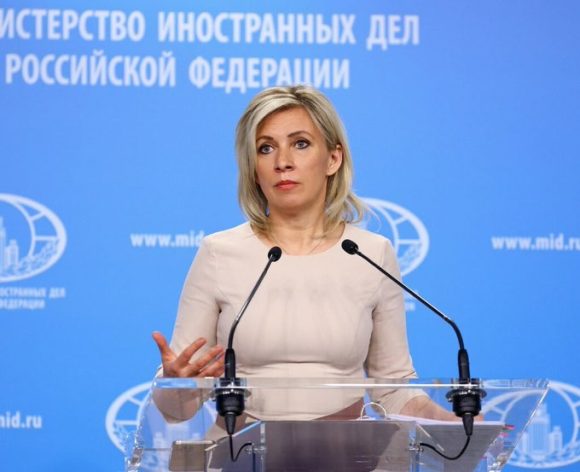
If the US wishes to be considered an authority on democracy and human rights, it ought to come clean about the killings of President John F. Kennedy and his brother, Russian Foreign Ministry spokeswoman Maria Zakharova said on Wednesday.
During her regular daily briefing, Zakharova was asked about the statement by US Secretary of State Antony Blinken, who said Washington intends to champion human rights and fundamental freedoms in China and worldwide.
“Washington itself has long fallen short of the standards of democracy that it publicly declares everywhere,” Zakharova replied, adding that the US promotes “pathetic, hypocritical rhetoric” abroad to hide its neo-colonial ambitions and geopolitical interests.
“The history of American politics contains many unsightly facts that are deliberately hushed up by the US authorities,” Zakharova noted. As an example, she cited the Kennedy family – and the recent anniversary of the June 1968 assassination of Senator Robert F. Kennedy in Los Angeles, during the presidential primaries in which he was a favorite.
The RFK assassination came two months after the fatal shooting of civil rights leader Martin Luther King – and almost five years after the November 1963 assassination of John F. Kennedy, the 35th US president, Zakharova told reporters.
“I suggest to Mr. Blinken to muster up the courage and publish all the materials regarding the political assassinations of the US presidents, in particular John F. Kennedy, and tell his people – his people, first of all – the truth about what happened in Dallas” she said.
“Only when they close the case on these political killings, can they try to correct other countries,” the Russian Foreign Ministry spokeswoman argued. “While such egregious crimes remain unresolved, and the killers not found and convicted, if I were American leaders I would not open my mouth about other countries, and certainly stop lecturing everyone else how to live.”
Solve the Kennedy assassination – both of them, actually – and then maybe you will be regarded as an authority. Or maybe not.
RFK’s son and JFK’s nephew Robert Francis Kennedy Junior launched his primary challenge to President Joe Biden in April. In an interview last month, he said there was “overwhelming evidence that the CIA was involved” in his uncle’s murder, and “very convincing but circumstantial” evidence the spy agency was also linked to his father’s assassination.
The official findings of the US government, known as the Warren Commission Report, said that US Marine veteran Lee Harvey Oswald acted alone and shot the president while his motorcade was passing through Dallas on November 22, 1963. Before he could stand trial, Oswald was shot dead by nightclub owner Jack Ruby at the Dallas Police Headquarters. The Warren Commission ruled that Ruby had acted alone, on impulse and out of grief.
Ruby died in prison in 1967. Later that year, the CIA issued a directive on how to discredit “conspiracy theorists” who doubted the official findings of the Warren Commission.
MEPs demand Hungarian opposition take over EU presidency and not Orban
By Ahmed Adel | June 5, 2023
The non-binding resolution for Hungary not to preside over the European Council is another attack on Hungarian Prime Minister Viktor Orban by the European Parliament. Five of the seven parliamentary groups of the European Parliament support the proposal for Hungary not to take over the presidency of the European Council in the second half of next year, as the country supposedly systematically violates the principles and values of the EU.
According to the text of the resolution, the EU legislature “questions how Hungary will be able to credibly fulfil this task in 2024, in view of its non-compliance with EU law.” The nonbinding statement calls on member states to “find a proper solution as soon as possible.” It also warns that “Parliament could take appropriate measures if such a solution is not found.”
Dutch MEP Sophie In’t Veld said in the debate that the presidency of the EU Council is an opportunity for the presiding country to put its political priorities first, and therefore the stage should not be left to Orban, and rather “a podium to those who have been silenced in Hungary” should be given instead.
Effectively, Veld is demanding that the opposition represents Hungary, and thus she is interfering in the internal processes of the country.
“It’s about time we start to play hardball,” added the Dutch MEP, who belongs to the liberal Renew Europe group. She explained that the proposal includes ways to “reduce cooperation to the bare minimum” during the Hungarian presidency.
The European Parliament cannot influence the order of the presidency of the European Council because that is the exclusive competence of the member states. All member states preside over the Council for six months in a predetermined order. This was last done in 2016 when the order of the presidency until 2030 was determined.
This provocation by Brussels towards Hungary will not harm Orban’s government in the slightest. In fact, it will only confirm the correctness of his policy among his voters. Although the resolution is motivated by Hungary’s position on Ukraine because Orban is not aligned with Brussels, he is also targeted because of value issues.
The resolution raises “serious threats” against LGBT+ rights in relation to a new amendment to the Whistleblower Protection Act that MEPs say will “legitimise open discrimination.” Targeting Hungary for its values is contradictory given that Eastern Europe generally resists the Istanbul Declaration, a human rights treaty of the European Council opposing violence against women and domestic violence but which many say is now hijacked by the homosexual lobby. However, many of these countries, such as Poland, are tolerated because they are involved in the war effort against Russia.
Because Hungary does not comply with the war propaganda and war efforts against Russia, in addition to not aligning with the liberal value criteria, thereby setting a bad example for member states, a vicious attack is being orchestrated at the EU parliamentary level. This move is overly audacious and will only further destroy the already shaken foundations of the EU, which Orban does not mind at all.
By talking about “silenced” voices, the EU Parliament is making a direct call for interference in Hungary’s internal affairs, and this only confirms what Orban and other Hungarian officials are saying.
With the resolution, Brussels irritated the Hungarians and the political forces of other countries, which could be potential targets of similar resolutions in the future. This primarily applies to Eastern European countries with strong conservative forces, where ideological struggle and cultural wars exist.
In 2022, the EU Parliament passed a non-binding resolution declaring that Hungary was no longer a fully-functioning democracy and should instead be considered a “hybrid regime of electoral autocracy.” At the same time, the European Commission is withholding nearly €28 billion in EU funds from Hungary over unresolved rule-of-law concerns like those raised by MEPs.
Although the aforementioned actions are provocative, they do not compare to the attempts to stop Orban’s Hungary from taking over the European Council presidency, even though such a move has no basis anywhere in European history. It also raises the question of whether the European Parliament could interfere with a process that is decided exclusively by member states.
In this way, Hungary is virtually a solitary voice in the EU. Although other Eastern European countries might share Hungary’s conservative values, they differ in positions regarding Ukraine and Russia. This is why Orban will continually be targeted, even with unprecedented attempts to stop Hungary from taking over the presidency of the European Council next year.
Ahmed Adel is a Cairo-based geopolitics and political economy researcher.
YouTube reverses ban on questioning 2020 US election
RT | June 2, 2023
Video platform YouTube has reversed its controversial ban on questioning the validity of the 2020 and other US election results, acknowledging in a Friday blog post that the policy could silence legitimate political speech.
Effective immediately, the platform said, “content that advances false claims that widespread fraud, errors, or glitches occurred in the 2020 and other past US presidential elections” will no longer be removed.
Citing “today’s changed landscape,” the Alphabet subsidiary explained that “in the current environment, we find that while removing this content does curb some misinformation, it could also have the unintended effect curtailing political speech without meaningfully reducing the risk of violence or other real-world harm.”
YouTube explained its policies were aimed at two goals – “protecting our community, and providing a home for open discussion and debate” – and that those goals were not always aligned, admitting open debate was “core to a functioning democratic society.”
While the scrapped policy supposedly covered all past US elections, YouTube had appeared to focus its censorship on content questioning the 2020 results, ignoring or even promoting content that suggested the 2016 outcome was the result of Russian interference, especially if it came from establishment media outlets.
The platform acknowledged removing “tens of thousands” of videos due to the now-repealed ban on electoral fraud discussion. However, the blog post did not indicate if any of those videos would be restored or re-evaluated. While YouTube offers users whose content has been removed a chance to appeal the decision, critics claim the process is only for show and rarely if ever results in content being reinstated.
The platform also reminded users that the rest of its “election misinformation” policies still applied, meaning users could not post content designed to mislead voters about when, where, or how to vote or anything that might either discourage someone from voting or encourage someone to interfere with elections.
Freedom of speech has become a critical issue in the 2024 elections, with both Republican frontrunner Donald Trump and leading Republican challenger Ron DeSantis, as well as Democratic contender Robert F. Kennedy Jr., promising to take on Big Tech’s far-reaching censorship powers.
North Korea rejects US criticism of failed satellite launch
RT | June 1, 2023
The US is in no position to condemn North Korea for trying to launch a satellite, having sent thousands into orbit itself, the influential sister of leader Kim Jong-un said on Thursday. Pyongyang will soon launch its first-ever reconnaissance spacecraft, Kim Yo-jong promised.
On Wednesday, North Korea confirmed that its rocket carrying military satellite Malligyong-1 crashed into the Yellow Sea due to a malfunction of the second-stage engine.
The development was criticized by Washington and its allies in South Korea and Japan. US National Security Council spokesperson John Kirby said the attempted launch by Pyongyang was a reason for “major concern,” even if it failed. “Kim Jong-un and his scientists and engineers, they work and they improve and they adapt. And they continue to develop military capabilities that are a threat not only on the peninsula but to the region,” he explained.
Kirby’s colleague Adam Hodge suggested that “the door has not closed on diplomacy but Pyongyang must immediately cease its provocative actions and instead choose engagement.”
In her statement, cited by the Korean Central News Agency (KCNA), Kim Yo-jong argued that “if the DPRK’s (Democratic People’s Republic of Korea) satellite launch should be particularly censured, the US and all other countries, which have already launched thousands of satellites, should be denounced. This is nothing, but sophism of self-contradiction.”
“The far-fetched logic that only the DPRK should not be allowed to do so… though other countries are doing so, is clearly a gangster-like and wrong one of seriously violating the DPRK’s right to use space and illegally oppressing it,” she said.
A UN Security Council resolution forbids Pyongyang from using ballistic missile technology for any purposes, including space launches.
Kim’s sister, who is a senior figure in North Korea’s ruling Workers’ Party, insisted that “it is certain that the DPRK’s military reconnaissance satellite will be correctly put in space orbit in the near future and start its mission.”
As for the US calls for negotiations, she said the authorities in Pyongyang “do not feel the necessity of dialogue with the US.” North Korea will continue its “counteraction in a more offensive attitude so that they should not but realize that they will have nothing to benefit from the extension of the hostile policy toward the DPRK,” Kim Yo-jong added.
Iran, IAEA put to bed allegations of ‘near weapons-grade’ uranium
The Cradle | May 30, 2023
The International Atomic Energy Agency (IAEA) has closed a case that alleged Tehran enriched uranium particles to 83.7 percent purity. This claim has fueled accusations by the US and Israel that Tehran is “days away” from building a nuclear bomb.
According to the Islamic Republic’s Mehr News Agency, citing informed sources, the IAEA recently held technical negotiations with the Atomic Energy Organization of Iran (AEOI) to resolve two outstanding cases.
One of these was the discovery by IAEA inspectors of uranium particles enriched to 83.7 percent in Iran’s underground Fordow nuclear site last year.
To build a nuclear weapon, uranium needs to be enriched to 90 percent purity. Iran maintains that its centrifuges are configured to enrich uranium to a 60 percent purity level.
Despite the IAEA report specifying they only found particles of the enriched uranium — and that it was unknown whether their presence was “an unintended accumulation” in the centrifuges — western media and officials latched on to the news to fuel decades-long paranoia over Iran’s alleged desire to build a nuclear bomb.
The second resolved case involved the Abadeh nuclear site. Information has yet to be made available regarding the UN nuclear watchdog’s concerns over this site.
The Abadeh site made headlines in 2019 when Israeli Prime Minister Benjamin Netanyahu claimed it had been used to “develop nuclear weapons” before being destroyed once “Iran realized that we uncovered the site.”
The IAEA is due to issue quarterly reports on Iran this week, ahead of a regular meeting of its 35-nation Board of Governors next week.
Earlier this month, Tehran allowed the IAEA to reinstall cameras across certain nuclear facilities, hoping to resolve a disagreement with an organization it has accused of being “hijacked and exploited” by Israel.
In February, the head of the AEOI, Mohammad Eslami, revealed that over a quarter of the 2,000 inspections carried out worldwide by the IAEA in the past three years were conducted in Iran.
“There are 21 nuclear facilities in Iran, while there are 730 facilities in the world, meaning that a quarter of the IAEA’s inspection rounds around the world are dedicated to Iran,” Eslami said in a press statement on 1 February.
While Iran made up one-quarter of all IAEA inspections in the past three years, inspectors have never been allowed to visit Israel’s nuclear facilities.
Israel’s nuclear capabilities have never been revealed; however, the Stockholm International Peace Research Institute (SIPRI) estimates that the country has around 80 nuclear warheads.
Washington’s obsession with crushing Russia has dismantled its Middle East agenda
By Robert Inlakesh | RT | May 29, 2023
Once the undisputed hegemonic power in the Middle East, thought to be indispensable for the security and success of a range of regional leaderships, the US has been fading into the background to the benefit of its adversaries.
As armed conflict erupted between NATO-backed Ukraine and Russia in February of 2022, the Joe Biden administration in Washington decided to throw its weight behind Kiev and focus on a project to bog down Moscow, while unleashing wave after wave of sanctions. Despite spending at least $75 billion dollars on assistance to Ukraine and making Russia the most sanctioned nation on earth, the US has failed to bring Moscow to its knees. In fact, one could say that it is the US that has been cut down to size in the global arena, especially in the Middle East, an area it once considered its own backyard.
As the months pass, blow after blow has been inflicted on US power in the Middle East. In direct opposition to Washington’s agenda, the Syrian Arab Republic was readmitted to the Arab League following a 12-year hiatus, paving the way to end the crisis in Syria, which the US seeks to prolong. China has also entered Middle East politics in a dramatic way, brokering an Iranian-Saudi rapprochement back in March, and this then spurred a wider normalization wave. Although the US attempted to play off the Saudi Arabia-Iran agreement as an acceptable and welcomed move, this has now clearly worked to collapse Washington’s long-term effort towards regional supremacy, which was based on feeding a proxy conflict between the two powers.
The failure of US sanctions
Western leaders publicly predicted that Russia’s economy would collapse under sanctions, a result which clearly has not materialized, with the IMF predicting the Russian economy will grow. Similarly, the US “maximum pressure” sanctions that were first introduced against Iran under the Trump administration, were expected to severely hinder the Islamic Republic’s ability to continue its developments in the defense field, but have failed to achieve those goals.
Russia is now exporting more oil than it did in 2021, as its relations with China, the primary global competitor to the US, have advanced. Gulf States have also repeatedly let the US down and refrained from yielding to pressure to cut oil production. There is also the example of Algeria, which has become Italy’s largest gas supplier and raked in over $50 billion dollars in oil and gas revenues during 2022 alone, even as it retains close relations with Moscow. And when it comes to the West’s ban on Russian gold bullion, the UAE, Türkiye and China have reportedly stepped in to fill the gap.
However, perhaps the worst blowback against Russia sanctions has been the nullification of previous limits to Moscow-Tehran economic relations. The two nations are already the most sanctioned on earth, so they need not worry about the potential consequences from their trade, which has encouraged further cooperation between them. Recently, Russian President Vladimir Putin and Iranian President Ebrahim Raisi signed a deal to finance an Iranian railway line as part of a North-South Transport Corridor.
Failed propaganda
The Biden administration has employed hardline propaganda tactics in order to demonize Russia and lionize Ukraine. Although for some Western audiences the arguments set forth may have proven effective, in the global community and especially the Middle East, such rhetoric is tiresome and clearly hypocritical.
After having illegally invaded Iraq, inflicting around a million deaths, over a concoction of factually-challenged conspiracy theories about weapons of mass destruction, it comes off as laughable that the US is now claiming to oppose illegal invasions. Former Bush administration officials, such as Condolezza Rice, have even appeared on national television shows in the US to condemn illegal invasions of foreign countries. Even former US President George W. Bush seemingly condemned the “holy unjustified and brutal invasion of Iraq… I mean of Ukraine” in a Freudian slip.
The US has positioned itself now as being opposed to the illegal occupation of foreign territory, in addition to claiming it stands in principle against annexation. When US Secretary of State Antony Blinken was asked by a CNN correspondent whether his government supported the annexation of Syria’s Golan Heights by Israel, he answered: “Look, leaving aside the legalities of that question, as a practical matter, the Golan is very important to Israel’s security,” again demonstrating Washington’s double standards. Washington continues to maintain its recognition of the Golan Heights as Israeli territory, which not only defies international law, but also the majority opinion at the United Nations.
The faltering image of the US
From the perspective of Middle Eastern nations, the US is overcommitted to the conflict in Ukraine, even as they have refrained from taking a clear side and instead remained neutral for the most part. Neither the people nor the governments of these countries buy the platitudes espoused by US officials when it comes to Ukraine. The stark difference between the way Palestinians and Ukrainians are portrayed for the exact same actions are enough to make eyes roll.
Now that China is presenting opportunities for countless Middle East nations, especially in the economic sphere, the US has a real competitor. However, the US continues to operate as if the world has not undergone a dramatic shift and refuses to rein in its allies. Ukraine in some respects is getting the special treatment that Israel has enjoyed for years: unlimited aid with few or no questions asked. In the case of Israel, as its government proceeds with introducing controversial legal reforms, takes steps to change the status quo at the al-Aqsa Mosque and pursues hardline far-right policies against the Palestinian people, all coming at a cost to Washington itself, the Biden administration refuses to put it in its place. What Israel is currently doing is embarrassing its own Arab allies that recently normalized ties, even threatening to put a wedge in relations with the likes of neighboring Jordan.
It is this refusal to recalibrate that is not only costing the US its influence, but also evaporating the prize of bringing Israel and Saudi Arabia together, which has clearly been a foreign policy achievement goal dear to the Biden administration. Now that Riyadh and Tehran have restored relations, the excuse of combating Iran’s regional influence is gone for negotiating a Saudi-Israeli rapprochement. The refusal to punish Israel for its constant provocations also makes it more difficult for Saudi Arabia to normalize with an unrestrained Israeli government that continues to insult the Muslim world and invites popular Arab support for the Palestinian cause. If there is no change to the arrogant and out of touch approach of the US, which rules with an iron fist and a “my way or the highway” approach, it will be the US itself that is going to be taking a hike from the Middle East.
Robert Inlakesh is a political analyst, journalist and documentary filmmaker currently based in London, UK. He has reported from and lived in the Palestinian territories and currently works with Quds News. Director of ‘Steal of the Century: Trump’s Palestine-Israel Catastrophe’.
The Mainstream Media Is Preparing Iran To Be The Scapegoat If Kiev’s Counteroffensive Fails
BY ANDREW KORYBKO | MAY 26, 2023
The West has claimed for a while now that Iran is secretly arming Russia despite both countries’ denials, with CNN reviving these accusations in their latest report about how “Iran has a direct route to send Russia weapons – and Western powers can do little to stop the shipments”. They’re furious that the West can’t obstruct this corridor, which could improve Russia’s position in the “race of logistics”/“war of attrition” that the NATO chief declared them to be in a few months back, if it even exists that is.
It makes sense that NATO and Russia would look to third parties for military-industrial support amidst their neck-and-neck race in Ukraine, with the first reportedly relying on Pakistan and South Korea while the second reportedly relies on Iran and North Korea. While there’s nothing new about these four claims apart from the South Korean component, the Mainstream Media’s (MSM) latest reminder of the Russian-Iranian dimension comes at a pivotal moment in the NATO-Russian proxy war.
Russia’s victory in the Battle of Artyomovsk preceded Kiev’s impending NATO-backed counteroffensive, the first of which was symbolic while the second will likely be the West’s “last hurrah” before agreeing to ceasefire and peace talks by year’s end or early next year like many now predict will happen. Unnamed Biden Administration officials told Politico in late April how much they fear the public’s reaction if the counteroffensive doesn’t meet their expectations, however, hence the need for a scapegoat.
Therein lies the implied purpose of the MSM’s latest information warfare campaign fearmongering about Russia and Iran’s reported trans-Caspian arms trade. If Moscow manages to thwart the upcoming counteroffensive, including the potential scenarios of Ukraine invading Belarus and/or Russia’s pre-2014 territory, then NATO will likely blame it on the alleged support that the Kremlin received from Iran instead of acknowledging that their single opponent has military parity with their 31-member bloc.
To be clear, it would be in Russia’s interests to receive some level of support from Iran in order to obtain an edge over NATO in their “race of logistics”, but whatever it might have already gotten or will soon get from there wouldn’t be game-changing since its partner must also ensure its own security interests. It’s unrealistic to expect the Islamic Republic to empty its stockpiles supplying Russia like most NATO members have already done in supplying Ukraine when regional security threats still remain a problem.
While its Chinese-brokered rapprochement with Saudi Arabia relieved Riyadh’s pressure upon it, Israel and the Taliban still pose their own problems to Iran that must be taken seriously. The MSM’s notion that Iran will irresponsibly leave itself defenseless just to arm Russia to the hilt out of New Cold War solidarity is nothing but a political fantasy. While the NATO countries remain under the US’ nuclear umbrella, Iran has nobody to depend on but itself, which is why it would never do what those states did.
The reason why the MSM is preconditioning its targeted Western audience to blame Iran in the event that Kiev’s NATO-backed counteroffensive fails to meet the public’s expectations is to preempt the uncontrollable proliferation of conspiracy theories that could weaken Western unity in that scenario. Former Russian chess champion-turned-pro-Kiev-troll Garry Kasparov already publicly speculated that Kremlin agents infiltrated the White House and sabotaged the counteroffensive before it even began.
The MSM’s prior propaganda was so effective in manipulating a critical mass of minds in society that some of these people will never accept that they were lied to and that Russia is much more resilient than they were told. Instead, they’ll resort to increasingly kooky QAnon-like conspiracy theories such as Kasparov’s wildly speculating their own version of the “stab-in-the-back” myth, which could lead to the most unstable of them becoming radicalized and thus posing a domestic terrorist threat with time.
Western propagandists realized that it’s much better to distract them with the theory that Iran might be responsible for Kiev’s NATO-backed counteroffensive failing to meet the public’s expectations than risk letting these toxic conspiracies uncontrollably circulate in the information ecosystem. As was earlier written, whatever aid Iran might have already sent to Russia or will send would be helpful though in no way game-changing, but it’s a convenient boogeyman and that’s why it would be blamed in that event.
The very fact that the MSM is preconditioning its targeted Western audience to think this speaks to how fearful the elite are that their “last hurrah” in the NATO-Russian proxy war will flounder. In order to avoid the proliferation of kooky conspiracy theories blaming their leaders for being Kremlin agents or whatever like Kasparov and other pro-Kiev trolls are beginning to imagine is the case, they’re preparing the narrative that Iran is to blame instead, which is equally ridiculous but more easily believable for most.
Who Would Ukraine Supporters Support if the U.S. Invaded Cuba?
By Jacob G. Hornberger | FFF | May 23, 2023
American statists cannot understand why the Russian people continue to support their president Vladimir Putin and their government’s invasion of Ukraine. For American statists, the issue is very simple: Russia invaded Ukraine. Russia bad. Russians should oppose Russian president Vladimir Putin and the Russian regime. End of story.
Fair enough. But let’s engage in a hypothetical.
Let’s assume that Russia establishes military bases and installs nuclear weapons in Cuba. The U.S. government declares, “No way, bud! We are just not going to permit you to do that. Remove them or experience the wrath of our all-powerful military machine.”
Suppose Russia takes the same position as Ukraine and says, “We are not budging. We have the right to enter into an alliance with Cuba, just as Ukraine has the right to join NATO. Moreover, Russia has the same right to establish military bases and install nuclear missiles in Cuba that NATO has to establish military bases and install nuclear missiles in Ukraine.”
A far-fetched hypothetical?
Well, not exactly.
In January 2022, Putin stated that he was thinking of sending Russian troops to Cuba. The U.S. reaction was immediate. U.S. National Security Advisor Jake Sullivan exclaimed, “If Russia were to move in that direction, we would deal with it decisively.”
What Sullivan meant by that statement was that the U.S. would issue an immediate demand that Russia cease and desist. If it refused to do so, a U.S. invasion of Cuba would follow.
In other words, the U.S. government was threatening to do to Cuba what Russia has done to Ukraine.
In fact, if we go back to the Cuban Missile Crisis in 1962, that is what happened then. The Soviets had installed nuclear missiles in Cuba. The U.S. government demanded that they be removed. If they refused to remove them, the U.S. government declared that it would do exactly what the Russian government has done to Ukraine. It would bomb and invade Cuba.
So, my hypothetical clearly falls within the realm of reasonable possibility.
Given such, the question naturally arises: What would American statists who are exclaiming against Russia’s invasion of Ukraine do if that were to happen? Would they oppose the U.S. invasion of Cuba and come to the support of Cuba and Russia?
I think not. I think they would immediately come to the support of the U.S. government and its invasion of Cuba, just as most Russians have come to the support of their government and its invasion of Ukraine.
Featured Video
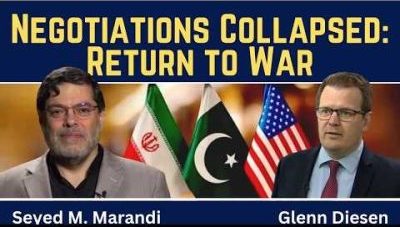
Seyed M. Marandi: Negotiations Collapsed – Return to War
or go to
Aletho News Archives – Video-Images
From the Archives
Wartime internment camps in Australia
National Archives of Australia
World War I
During World War I, for security reasons the Australian Government pursued a comprehensive internment policy against enemy aliens living in Australia.
Initially only those born in countries at war with Australia were classed as enemy aliens, but later this was expanded to include people of enemy nations who were naturalised British subjects, Australian-born descendants of migrants born in enemy nations and others who were thought to pose a threat to Australia’s security.
Australia interned almost 7,000 people during World War I, of whom about 4,500 were enemy aliens and British nationals of German ancestry already resident in Australia.
Records of World War I internment camps
World War II
During World War II, Australian authorities established internment camps for three reasons – to prevent residents from assisting Australia’s enemies, to appease public opinion and to house overseas internees sent to Australia for the duration of the war.
Unlike World War I, the initial aim of internment during the later conflict was to identify and intern those who posed a particular threat to the safety or defence of the country. As the war progressed, however, this policy changed and Japanese residents were interned en masse. In the later years of the war, Germans and Italians were also interned on the basis of nationality, particularly those living in the north of Australia. In all, just over 20 per cent of all Italians resident in Australia were interned. … continue
Blog Roll
 Aletho News
- Seyed M. Marandi: Negotiations Collapsed – Return to War
- Tomorrow’s naval blockade showdown
- ‘Israel’ attacks civilians to hide its embarrassing military failures & out of pure sadism
- Any Foreign Military Vessel Approaching Hormuz Under Any Pretext ‘Will Be Dealt With Severely’: IRGC
- Diplomats slam US negotiators’ performance in Iran talks
- Trump Refuses Exit Ramp, War with Iran will Continue
- Trump Says US Naval Blockade in Strait of Hormuz Will Begin Shortly
- US, Iran end 21-hour talks without agreement
- US IRAN TALKS: Who Are the Crazy Ones Here? /Lt Col Daniel Davis
- Talks with the US end without a deal over excessive US demands: Iran
- If Americans Knew
- US-Iran ceasefire negotiations make zero progress – Daily Update
- Pro-Israel ‘Thinktanks’ and Individuals who Influence U.S. Foreign Policy
- Mearsheimer reveals how Israel dictates US policies on Iran, Gaza – video
- After killing 350+, Israel still has a “score to settle” with Lebanon before ceasefire – Daily Update
- Military aid to Israel emerges as the latest political litmus test for Democrats
- The only Palestinian children’s rights organization closes following years-long Israeli campaign against it
- ‘I Can’t Forget the Smell’: Lebanese Reel After Israel Kills Over 300 in Single Day
- DNC Shoots Down Resolutions Calling Out AIPAC and Limiting Arms to Israel
- TCN: Is Israel Blackmailing President Trump?
- Israel killed at least 303 Lebanese yesterday – who were they? Daily Update
- No Tricks Zone
- Cave Discovery Reveals Today’s Desert Climates Were Recently Far Warmer, Wetter, Teeming With Life
- German Expert: Heat Dome Led To Record Temps In Western USA…Warmer In 1934, 1936
- New Study: No Linear Warming Or Glacier Retreat Along Northern Antarctic Peninsula Since 1980s
- An Inconvenient Tree: Uncovered In Alps… Europe Much Warmer Than Today 6000 Years Ago
- New Study Reports A 60% Slowdown In Greenland’s Ice Loss Rate In The Last Decade
- Low Intensity Tornado Wrecks Major Solar Farm, Creating A Potential Toxic Dump
- New Study Finds Warming Saves Lives…Cold Temperatures 12 Times More Deadly Than Excess Heat
- German Science Blog Accuses PIK Climate Institute Of Hallucinating Climate Tipping Points
- Devastating Assessment Of Comirnaty Vaccine By Former Senior Pfizer Europe Toxicologist
- New Study: CO2 Is ‘Effectively Negligible’ As An Explanatory Climate Change Factor Since 2000
 Aletho News