Germany arming for possible conflict with Russia – Reuters
RT | May 26, 2025
The German military must significantly increase its weapons stockpile by 2029, the year the current government anticipates a potential threat from Russia, according to a directive issued by the country’s defense chief, obtained by Reuters.
The order, titled ‘Directive Priorities for the Bolstering of Readiness’, was signed on May 19 by Carsten Breuer, the inspector general of the Bundeswehr, the news agency reported on Sunday.
Moscow has denied that it has any aggressive intentions toward NATO countries, dismissing Western speculation of a possible attack as fearmongering aimed at justifying extensive militarization by the bloc’s European members.
Breuer’s order emphasizes the procurement of advanced air defense systems and long-range precision strike capabilities effective at ranges exceeding 500km. He has also reportedly directed the military to increase the stockpiling of various types of ammunition and to develop new capacities in electronic warfare, as well as space-based systems for both defensive and offensive missions.
Chancellor Friedrich Merz announced on Monday that his government has lifted restrictions on the range of weapons it can supply to Ukraine to fight Russia. The news is perceived as a hint at the possible delivery of long-range Taurus missiles, which the previous government refused to donate.
In March, the German parliament amended the nation’s law to exempt military spending from the ‘debt brake’, a measure that limits government borrowing. Merz has proposed allocating up to 5% of the nation’s GDP to security-related projects by 2032, a significant increase from the current level of around 2%. He claimed that this expenditure would transform the Bundeswehr into Europe’s most formidable military force.
The rearmament plans necessitate a corresponding increase in personnel. Defense Minister Boris Pistorius indicated in a recent interview that the ruling coalition aims to introduce a recruitment model similar to Sweden’s, potentially ending the current volunteer-only system as early as next year.
The military initiatives come amid economic challenges, including de-industrialization and stagnation. On Sunday, the newspaper Bild said that ThyssenKrupp, a company with over two centuries of history, is undergoing a significant restructuring amounting to dissolution. According to the report, the company plans to reduce its headquarters staff from 500 to 100, transfer its steel mills to Czech billionaire Daniel Kretinsky, sell its naval shipyard Thyssenkrupp Marine Systems (TKMS) in the public market, and divest most other divisions.
Trump’s phone diplomacy with Putin shatters the Euro-Atlantic Cold War mental bloc
Strategic Culture Foundation | May 23, 2025
As the old saying goes, “it’s good to talk.” Good, that is, for most reasonable people who understand that dialogue is a process that opens positive possibilities, especially when the dialogue is conducted respectfully and sincerely.
This week, US President Donald Trump held his third phone conversation with Russian leader Vladimir Putin since he was inaugurated in the White House in January. The latest one on Monday was even more substantive than the previous calls, lasting about two hours, and, according to both sides, it was conducted in a friendly and productive manner.
Of course, the main topic of conversation was finding a peaceful end to the more than three-year war in Ukraine. Trump deserves credit for at least trying to bring peace to the table, instead of more and more weapons, as his predecessor, the mentally decrepit Joe Biden, did, and assorted European leaders would like to continue doing.
There was also discussion between Trump and Putin, using first names in their verbal exchanges, about repairing US-Russia relations for trade and strategic cooperation.
That portends a transformation in Washington’s erstwhile agenda of hostility towards Russia.
Tellingly, however, the talking was deemed “not good” by others, as could be gleaned from the vexed reactions to Trump’s call with Putin from European leaders and American advocates of the Euro-Atlantic alliance.
European politicians were reportedly “stunned” and “shocked” by Trump’s diplomatic outreach to Putin.
Following his conversation with the Russian president, Trump briefed five European leaders jointly. They included Germany’s Merz, France’s Macron, Italy’s Meloni, Finland’s Stubb, and the European Commission’s chief Von der Leyen. Ukraine’s Vladimir Zelensky was also part of the conference call. The non-entity British prime minister was not included. Sometimes, talking with toxic people is not good!
The Europeans tried to put a positive spin on the briefing from Trump, with Von der Leyen describing it as “good”. But that was the Europeans trying to save face from what is a stunning blow to the Euro-Atlantic alliance.
In a press conference at the White House on Monday, after his calls with Putin and the Europeans, Trump made it clear from his statements that the vaunted alliance is shattered. He is no longer listening to them, and his agenda towards Russia is transformational, if it is permitted to develop.
Trump rejected the European demands for an immediate 30-day ceasefire in Ukraine and more economic sanctions on Russia. He said that imposing more sanctions did not help resolve the conflict. Trump also indicated that he concurred with Russia’s logical position that negotiations must be focused on establishing a lasting peace, one that deals with addressing the root causes of conflict.
The European and Ukrainian demands for a 30-day truce as a precondition are not workable or logical. Indeed, such insistence impedes negotiations. From a cynical point of view, that is why the European backers of the Kiev regime are making such a song and dance about sanctions and the 30-day truce, because those demands are aimed at preventing diplomacy succeeding with Russia.
Britain’s Financial Times headlined its report on the Trump-Putin call: “Why Europe fears the worst after Trump’s ‘excellent’ chat with Putin”.
The BBC inadvertently shed light with its headline: “Trump’s call with Putin exposes shifting ground on Ukraine peace talks”. The BBC-speak about “shifting ground on peace talks” is an Orwellian translation. What the BBC should have said in plain language was that Trump is shafting the European warmongers.
Meanwhile, across the Atlantic, the supporters of the NATO proxy war against Russia tried their best to undermine Trump’s diplomacy.
The New York Times – the CIA’s main choice for gaslighting the American population – called the phone call a “diplomatic win for Russia” and snidely said, “Trump backs off ceasefire call”. The latter implied that Trump is against peace when, in fact, he is the only Western adult in the room calling for peace.
The Washington Post also did its best to smear Trump, reporting: “After call, Trump gives Russia more time for Ukraine war”. An op-ed piece also mockingly claimed: “Trump wasted two hours with Vladimir Putin”.
CNN, another outlet that has loyally and absurdly pushed the NATO proxy war as a noble endeavor, accused Trump for “siding with his friend in the Kremlin” and claimed that “peace in Ukraine looks further away after Trump’s call with Putin”, adding that “Putin got exactly what he wanted… stringing Trump along.”
The riot of negative and vitriolic reactions on both sides of the Atlantic shows that the US-European alliance under Trump has shattered. That alliance embodied by the NATO military bloc has been the linchpin of the “Collective West” for eight decades. It has now cracked wide open.
Unlike his predecessors in the White House, Donald Trump does not want to pursue a destructive and futile policy of inflicting a strategic defeat on Russia. That policy is what engendered the war in Ukraine, from the CIA-backed coup in Kiev in 2014, to the provocative weaponization of Ukrainian NeoNazis, until Russia’s intervention in February 2022 to defend its rights.
Trump appears to genuinely want to end the proxy war and to normalize relations with Russia for the sake of world peace, and, why not, good business.
For the Euro-Atlanticists, with their incurable, imperialist, and Russophobic mindsets, such a policy is anathema.
However, the good news is that the gaping cracks in the so-called Collective West now provide a path to peace.
Trump and Putin can end the war in Ukraine and negotiate an important peace deal that addresses Russia’s historic security grievances that stem from the decades of NATO aggression, which past American presidents and their European surrogates have facilitated.
For Trump to do that, he needs to listen carefully to the Russian leadership and reciprocate. If a new detente can be achieved, then the world will be a better, more secure, and peaceful place.
The other thing that Trump needs to do is to dismiss European lackeys with their warmongering servility to the status quo ante. They are has-beens and have nothing constructive to offer.
Trump’s phone call with Putin this week has had a major impact, and one that has significant potential for peace. The cracks in the Cold War mental bloc, so to speak, are a way forward.
EU sanctions Ukraine’s elected opposition leader
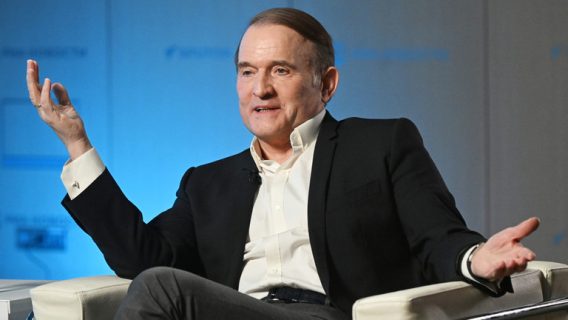
Exiled Ukrainian opposition leader Viktor Medvedchuk © Sputnik / Kristina Kormilitsyna
RT | May 21, 2025
The EU has sanctioned exiled Ukrainian opposition leader Viktor Medvedchuk as well as 20 other individuals and six entities on accusations of being involved in what it described as “Russia’s destabilizing actions abroad.” Moscow has repeatedly rejected claims of meddling in internal affairs of the bloc’s member-states.
Medvedchuk, who has been blacklisted by the EU since May 2024, was slapped with additional curbs on Tuesday when the European Council announced its 17th round of sanctions against Russia over the Ukraine conflict.
The restrictions against the former leader of Ukraine’s banned Opposition Platform – For Life party and the others included an assets freeze in the EU and a ban on entering the bloc or transiting its territory, the council said in a statement.
The EU claims that Medvedchuk and his associates Artyom Marchevsky and Oleg Voloshin, who have also been sanctioned, “controlled Ukrainian media outlets and used them to disseminate pro-Russian propaganda in Ukraine and beyond.”
“Through secret financing of the Voice of Europe media channel – also listed today – and his political platform Another Ukraine, Medvedchuk has promoted policies and actions intended to erode the legitimacy and credibility of the government of Ukraine, in direct support of the foreign policy interests of the Russian Federation and disseminating pro-Russian propaganda,” the statement read.
German bloggers Thomas Roeper and Alina Lipp, as well as Turkish journalist Huseyin Dogru, the founder of AFA Medya company, are also among those added to the sanctions list.
Medvedchuk used to be the head of the largest opposition faction in the Ukrainian parliament. But after the escalation between Moscow and Kiev, he was branded a traitor and arrested. The 70-year-old businessman and politician spent months in detention before being handed over to Moscow in a prisoner swap in September last year. He has remained in exile in Russia since then, with his Ukrainian citizenship revoked and his party branded illegal, along with a dozen groups that opposed the government of Vladimir Zelensky.
Moscow has on many occasions denied accusations of interfering in the electoral processes and internal affairs of EU nations. Russian Foreign Ministry spokeswoman Maria Zakharova previously accused the bloc of “switching from propaganda to direct persecution of media outlets and journalists based on political, ethnic and cultural grounds.”
‘EU sanctions against me a signal to all Europeans’ – German journalist
RT | May 20, 2025
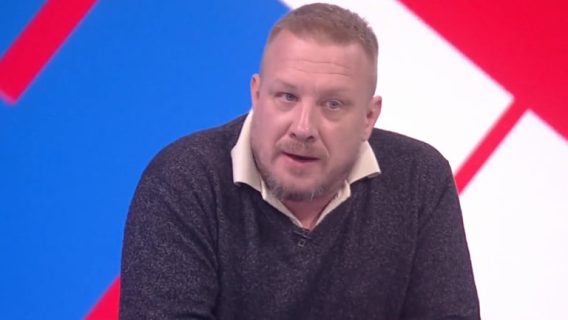
The European Union’s decision to sanction two German nationals could set a dangerous precedent, where Brussels could severely limit the rights of any critic, journalist and blogger Thomas Roeper told RT.
Roeper, who has also collaborated with RT’s German-speaking service, has been accused by the bloc of “destabilizing activities” and slapped with an EU entry ban, as well as an asset freeze.
The European Council, comprising the leaders of EU member states, approved the bloc’s 17th round of sanctions against Russia on Tuesday.
Roeper and German blogger Alina Lipp, both of whom currently reside in Russia, are among the individuals the bloc has targeted for being “involved in activities aimed at undermining the democratic political process in… Germany.”
Speaking to RT later on Tuesday, Roeper said the EU had introduced personal sanctions against him because he has large audiences in Germany.
Brussels’ latest decision to sanction EU nationals should be of great concern to all German citizens, the blogger believes. He noted that the punitive measure against him was adopted despite there being “no court [decision], nobody said which law I have violated.”
“Without any court decision, some bureaucracy decided to freeze my money, to forbid working,” he told RT.
According to the author, the move “is a signal for all people in the European Union, because if they do it to us, and this goes through, tomorrow they will start doing the same… against any critics.”
He described the EU’s allegations against him as ludicrous. “I’m just a blogger sitting here in my kitchen and writing articles and I’m ‘destabilizing’ the EU which has a billion-euro budget for media work,” he quipped.
But what’s “not funny,” he noted, is that while he lives in Russia, people in Germany would have a hard time meeting their basic needs if their rights were curbed in a similar manner.
The EU’s latest round of sanctions primarily targeted Russia’s so-called ‘shadow fleet’ of oil tankers, which operate outside Western insurance systems. According to Brussels, Moscow has allegedly been using it to circumvent G7-led efforts to enforce a price cap on its crude oil exports.
EU and UK impose more sanctions on Russia despite US concerns
RT | May 20, 2025
The EU and UK imposed new sanctions on Russia on Tuesday, escalating their campaign to pressure Moscow while ramping up support for Kiev.
The sanctions were announced shortly after a call between Russian President Vladimir Putin and his US counterpart, Donald Trump. Following the conversation, Trump warned that imposing additional economic restrictions on Moscow could hinder efforts to achieve peace in the Ukraine conflict.
The European Council, comprising leaders of EU member states and top officials, approved the bloc’s 17th round of sanctions, targeting what foreign policy chief Kaja Kallas called “nearly 200 shadow fleet ships.” Kallas, a vocal critic of Moscow, stated that further measures “are in the works” in Brussels.
Western officials claim that the targeted fleet enables Russia to evade G7-led efforts to enforce a price cap on its crude oil exports. In a coordinated move, the UK added 18 vessels from the same network to its sanctions list on Tuesday.
In addition, the UK imposed sanctions on the St. Petersburg Currency Exchange and Russia’s state deposit insurance agency, citing efforts to sever critical financial lifelines. Foreign Secretary David Lammy said the measures are intended to hold Putin accountable for supposedly “delaying peace efforts.”
Last week, delegations from Russia and Ukraine met for the first time since 2022, when Kiev abandoned negotiations in favor of pursuing victory on the battlefield, as advised by the then-UK Prime Minister Boris Johnson.
European backers of Ukraine initially supported Kiev’s demand for a 30-day unconditional ceasefire before resuming talks, and threatened additional sanctions if Russia refused. Zelensky later backtracked after the Trump administration supported Putin’s proposal for renewed diplomatic engagement.
Zelensky insisted, however, that Putin meet him in person in Türkiye to demonstrate his commitment to peace – an idea that the Russian president had not proposed. Ukrainian officials continue to call for expanded sanctions over what they describe as Moscow’s non-compliance with peace overtures.
The Putin-Trump call on Monday was characterized as productive by both leaders. Trump said he believes Putin is interested in ending the conflict and warned that additional economic pressure could obstruct US mediation efforts.
Putin has said Moscow and Kiev should negotiate a formal memorandum outlining a detailed path to a broader peace agreement, adding that a ceasefire could be part of the proposed road map.
Russia bans Amnesty International
RT | May 19, 2025
The Office of the Russian Prosecutor General has banned Amnesty International, the London-based non-governmental organization (NGO), accusing it of Russophobia and support for the Ukrainian military.
An official statement on Monday said that while the “organization positions itself as an active champion of human rights throughout the world,” its headquarters in the British capital have turned into a “center for preparing global Russophobic projects, paid for by accomplices of the Kiev regime.”
“Members of the organization support extremist organizations and finance foreign agents’ activities,” the Prosecutor General’s Office claimed.
Amnesty has been actively working toward “increasing military confrontation” since the escalation of the Ukraine conflict in February 2022. Russian prosecutors have accused the NGO of whitewashing Ukrainian war crimes, calling for more financial support for Kiev and the economic isolation of Moscow.
Last month, Moscow banned US-based NGO Hope Harbor Society for providing financial support for the Ukrainian military as well as the coordination of anti-Russian protests in the US and other countries.
In early April, the Elton John AIDS Foundation was designated as ‘undesirable’ in Russia after being accused of promoting pro-LGBTQ agenda in the country.
Organizations with such a designation are banned from operating in Russia, and residents or companies may face legal penalties for providing financial or other forms of support to them.
The Russian Justice Ministry currently lists more than 200 such entities, including major Western influence groups such as George Soros’ Open Society Foundations, the US-based German Marshall Fund, and the pro-NATO Atlantic Council.
Being Russia’s enemy could cost European allies $1trn – study
RT | May 16, 2025
European NATO members would face a $1 trillion bill over 25 years to replace US military contributions if Washington exited the bloc, according to a study published on Thursday by a British think tank. The EU is planning a militarization drive, which it claims is necessitated by an alleged Russian threat.
Western European leaders have said member states must reduce their dependence on US weapons while implementing a massive increase in military spending. The proposed hike comes amid claims that Russia could attack a NATO member in the coming years. Moscow has denied the allegations and has accused the West of “irresponsibly stoking fears” of a fabricated threat.
The report by the International Institute for Strategic Studies (IISS) outlines the challenges nations would encounter in the event the US withdraws from NATO to focus on confronting China.
According to the IISS, European nations – including the UK – would need to replace some 128,000 American troops, along with a wide array of weapon systems and command infrastructure currently provided by the Pentagon, particularly for air and naval forces.
”European states would need to invest significant resources on top of already existing plans to boost military capacity,” the report stated. The estimated price tag for replacing American weaponry alone ranges from $226 billion to $344 billion.
Domestic arms manufacturers would face difficulties securing contracts, financing, and skilled labor, while also grappling with regulatory and supply chain hurdles, the report warned. In certain sectors – such as stealth aircraft and rocket artillery – European NATO members currently lack viable alternatives, prompting the IISS to suggest outsourcing production to countries outside the bloc.
Beyond hardware, the study highlighted intangible but critical costs associated with command-and-control functions, space intelligence, and filling high-level leadership roles traditionally held by US officers.
The think tank questioned whether European governments possess the political will to ensure the vast spending required. The administration of US President Donald Trump has accused European NATO nations of taking advantage of American military protection without contributing enough in return.
On Thursday, German Foreign Minister Johann Wadephul stirred controversy by vowing to increase defense spending to 5% of GDP, well above Germany’s existing level of 2.1%. The statement, made following a NATO meeting, drew backlash, including from members of Chancellor Friedrich Merz’s coalition. Defense Minister Boris Pistorius later stated that the exact percentage was “not so important” and that Berlin considered 3% to be a more realistic level.
Romanian presidential front-runner accuses Macron of interference
Al Mayadeen | May 16, 2025
Romanian nationalist candidate George Simion has accused French President Emmanuel Macron of exhibiting “dictatorial tendencies” and interfering in Romania’s democratic process, just days before the country’s do-over presidential election.
“I love France and the French people, but I don’t like Emmanuel Macron’s dictatorial tendencies,” Simion said during an interview with French television channel CNews, adding, “I don’t respect Emmanuel Macron’s intervention in our democracy.”
Simion further said that France’s ambassador to Romania had discussed the election with the president of the Constitutional Court, which annulled the 2024 presidential vote in December due to concerns over Russian interference.
“The French ambassador has gone… through all regions of the country to convince businessmen to support my opponent, the mayor of Bucharest,” Simion added, referring to Nicușor Dan, his opponent in Sunday’s final vote.
Simion, 38, is the leader of the far-right Alliance for the Union of Romanians (AUR) and is campaigning on a nationalist platform that opposes military aid to Ukraine and supports unification with Moldova.
He faces Nicușor Dan, 55, an independent centrist and current mayor of Bucharest, who is running on a pro-European, pro-Western platform and advocates a tougher stance against Russia.
In the first round of the presidential election, Simion secured 41% of the vote, compared to Dan’s 21%. However, recent polling shows the race tightening. Politico’s Poll of Polls currently places Simion at 49% and Dan at 46%.
“We are basically winning,” Simion told Politico during a visit to Brussels. “The only thing we need is fair and free elections. … I think it will be a landslide.”
France leading West’s ‘party of war’ – Russia
RT | May 16, 2025
France has emerged as one of the leaders of the “hybrid war” against Moscow, Russian Foreign Ministry spokeswoman Maria Zakharova has said. She made her remarks after the EU agreed to its 17th package of sanctions.
France, together with the United Kingdom, proposed the ‘Coalition of the Willing’ to take a more proactive role supporting Ukraine in its fight with Russia in February 2025 after the new administration of US President Donald Trump moved to adopt a more conciliatory stance towards resolving the conflict.
“It is common knowledge that since 2022, Paris has been one of the most uncompromising participants in the West’s hybrid war against our country,” Zakharova said during a press call on Thursday.
“Over the past few months, the French have effectively become the leaders of the West’s ‘party of war,’” she added, citing France’s military aid to Ukraine and its push for additional sanctions on Russia.
“France has played a major role in devising illegitimate sanctions packages in the past. Now, it is attempting to blackmail us with new, supposedly broader sanctions,” Zakharova said.
She argued that the restrictions are part of a “trade war” aimed at “hindering Russia’s economic, technological, and humanitarian development, and at undermining its industrial potential.” Russia, she added, will have a “measured response” to any new restrictions.
French President Emmanuel Macron has said the EU would impose new sanctions “in the coming days” if Moscow does not accept Ukraine’s demand for an unconditional 30-day ceasefire. Earlier this year, Paris delivered a first batch of Mirage 2000 fighter jets to Kiev.
Russia has warned that military aid to Ukraine would only lead to further escalation. President Vladimir Putin has insisted that, for a lasting ceasefire, Ukraine must halt its mobilization campaign, stop receiving weapons from abroad, and withdraw its troops from all territory claimed by Russia.
Heating costs for Hungarian families could triple under EU plans to ban Russian gas, think tank warns
By Thomas Brooke | Remix News | May 13, 2025
Heating bills for Hungarian households could rise by as much as three and a half times if the European Union moves forward with a full ban on Russian natural gas imports, according to a new report by the Századvég Institute, as cited by Magyar Hírlap.
The economic research group estimates such a move would impose nearly HUF 1,100 billion (approximately €2.8 billion) in additional annual costs on Hungary, putting severe pressure on both the country’s energy system and its citizens.
According to Századvég, their calculations — based on publicly available domestic and international energy data — show that a total ban on Russian energy imports would result in a doubling of gas prices and heightened volatility on European energy markets. This would not only harm the EU’s competitiveness but also destabilize Hungary’s long-standing utility bill reduction program, which currently ensures some of the lowest heating costs in Europe for Hungarian families.
Earlier this month, the European Commission published a roadmap outlining its intention to wean European nations off Russian gas before a wholesale ban came into effect by the end of 2027.
“No more will we permit Russia to weaponize energy against us… No more will we indirectly help fill up the [Kremlin’s] war chests,” European Commissioner for Energy Dan Jorgensen told reporters.
The move, however, faces stiff opposition from several nations still heavily reliant on Russia for their imports and unsure of where alternative energy sources will be found for an acceptable price.
In addition to Hungary, Slovakia is also holding firm against the plans. Prime Minister Robert Fico said earlier this week he would veto the move in the European Council if need be.
“A halt of gas supplies will cause instability. Our petrochemical plants were set up to use Russian oil for oil refining, and the shutdown may cause technological problems. I hope that our EU partners will learn about this when legal acts are adopted,” Fico said.
“If it is necessary for all 27 countries to agree, we will use our veto power,” he added.
Currently, Hungary imports around 4.5 billion cubic meters of Russian gas annually through a long-term supply contract, which covered more than half of the country’s total gas consumption last year.
Replacing this volume on international markets, the institute notes, would cost Hungary an estimated HUF 660 billion more. When including Russian gas delivered to Hungary by alternative routes, the shortfall reaches 7.5 billion cubic meters, raising the potential total impact to HUF 1,100 billion annually.
The institute highlighted that Hungarian households today pay an average of HUF 176,900 (around €435) per year for heating, thanks to state price regulations. Without these protections and based on current exchange rates, that figure would nearly double to HUF 355,310. If Russian gas were banned outright, average heating costs could skyrocket to HUF 625,000 (€1,540) — more than three and a half times the current average.
Századvég recalled that the EU’s reliance on Russian gas fell from 40 percent before the war in Ukraine to below 20 percent in 2023. This dramatic shift led to a doubling of gas prices on the Dutch energy exchange. Under the European Commission’s new strategy, prices could rise from €35 to €70 per megawatt hour, according to the think tank’s projections. They warned, however, that actual increases could be even steeper due to market instability triggered by supply shocks.
The report also emphasized the cumulative effect of EU sanctions on Hungarian households. Since 2022, Századvég estimates that higher energy prices, loss of export markets, and increased borrowing costs have drained HUF 2.2 million (€5,430) from the average Hungarian household. The direct financial cost of Ukraine’s accelerated EU accession process would add HUF 458,000 annually, while a ban on Russian gas could tack on another HUF 448,000.
“Brussels’ three highest priority objectives — arming Ukraine, accelerating EU accession, and banning Russian energy — would impose unbearable burdens on Hungarian families,” the Századvég Institute concluded on its website.
Europe’s Security Plans Are Taking it Nowhere
By Salman Rafi Sheikh – New Eastern Outlook – May 11, 2025
Over the past few weeks and months, European leaders have changed their plans from sending troops to Ukraine to offering ‘air support’ and, finally, to bolstering Ukraine’s military forces and defence capability as a means to protect European security.
This whimsical switching exposes a lack of internal coherence and the continent’s inability to act autonomously and decisively to shape the course of events.
Europe’s Many Plans
Immediately after the Trump administration began its peace talks with Russia and Ukraine to end the military conflict, Europe decided to take a different route. This was supposed to be the first major manifestation of Europe’s strategic autonomy ever since its decision in 2003 not to support the US war on Iraq. The first route involved sending European troops from within the so-called “coalition of the willing” to Ukraine as a ‘peacekeeping’ force. This plan was the brainchild of the UK Prime Minister Keir Starmer. But, as the Telegraph, a leading UK-based newspaper, reported at the end of March, the UK’s military officials dismissed the plan, calling it a “political theatre”. Needless to say, President Trump’s special envoy, Steve Witkoff, had already dismissed the plan as “a posture and a pose” only. The second plan turned to offering air and naval support. But defence sources in the US and elsewhere in Europe reportedly found no military sense in this plan too, considering that this deployment will be hundreds of miles away from the frontline. In fact, one defence source told the media this support will not only be meaningless, but it will not be able to defend itself in the wake of any escalation.
The “Porcupine strategy”
This has led Europe to contemplate an altogether different strategy. The new plan is to arm the Ukrainian military to its teeth to prevent any deal between Russia and the US. It also includes upgrading Europe’s own defence capability. This strategy was released earlier in April as a “Joint White Paper for European Defence Readiness 2030”.
The White Paper is interesting for several reasons, one being that it is critical of Washington as well. For instance, the reason why Europe needs to upgrade its defence readiness is that it is being “coerced by external actors” who are “threatening our way of life and our ability to choose our own future through democratic processes. They believe that we are politically unable to summon a meaningful and strategically enduring response.” The paper squarely places these threats against the backdrop of the massive changes to the “political equilibrium that emerged from the end of the Second World War and then the conclusion of the Cold War”. Called the “Porcupine strategy”, the underlying objective of this plan is to help Ukraine boost its overall military capacity so that it can ‘resist’ Russia and protect Europe from any possible Russian expansion. It involves providing “large-scale artillery ammunition”, “air defence systems”, “drones”, “train and equip Ukrainian brigades”, “direct support to Ukraine’s defence industry”, and, among other things, “enhances access to EU spaces and services”.
The elephant in the room, however, is whether the EU actually has the ability to boost Ukraine. A lot of this is based upon the hope that the EU will be able to deliver this. The paper says, “Member States need the European defence industry to be able to design, develop, manufacture and deliver these products and technologies faster and at scale. In the context of substantially increased defence expenditure, a higher share needs to be invested in defence research and development and technology, concentrating efforts and resources on common European projects”.
A good part of this strategy, in fact, depends upon securing and providing loans. The White Paper proposes that the EU should “provide Member States with loans backed by the EU budget. With up to EUR 150bn, the Security and Action for Europe (SAFE) instrument will strongly support a significant increase in Member States’ investments in Europe’s defence capabilities, now and over this decade.”
Of course, it does not include, at present, any assurances and commitments from member states that they will be able to either secure these loans and/or be willing to invest this much in the defence industry immediately. For many in Europe continue to hope that transatlantic ties could still return to ‘normal’ in the post-Trump era.
While this is understandable as to why Europe, facing a different and unpredictable administration in the US, would want to chart a new course for itself – and doing so might, in the long run, help multipolarity as well – its rapid shifts between several plans based upon wrong strategic and financial calculation is unlikely to take it anywhere.
Salman Rafi Sheikh, research analyst of International Relations and Pakistan’s foreign and domestic affairs.
Russia is not afraid of Western sanctions – Kremlin
RT | May 10, 2025
Russia is used to Western pressure and is not concerned about new sanctions, Kremlin spokesman Dmitry Peskov has said.
He was commenting on a new round of sanctions recently imposed by the UK.
”We already know what we will do once the sanctions are announced and how we will minimize their effect,” Peskov told journalist Pavel Zarubin on Saturday. Russia has learned effective ways to counteract Western pressure, he said. “Therefore, scaring us with sanctions is pointless.”
On Friday, the British government announced what it called the “largest-ever” sanctions package against Russia, targeting its oil transportation network in order to deliver a blow to the country’s energy revenues.
The new measures blacklisted up to 100 oil tankers that the West claims are part of a Russian ‘shadow fleet’, older vessels operating outside Western insurance systems. Since the escalation of the Ukraine conflict over three years ago, successive British governments have introduced more than 2,000 sanctions on Russian individuals and entities.
Moscow has said the move will not harm Russia’s economy and will instead increase energy costs and inflation in Europe.
Earlier, US President Donald Trump called for an “unconditional ceasefire” between Moscow and Kiev, threatening punitive measures if the truce is not observed. “The US and its partners will impose further sanctions” if it is violated, he said.
In March, Russian President Vladimir Putin said that a total of 28,595 sanctions were imposed on Russian companies and individuals in recent years – more than the total number on all other countries combined. According to the president, the West sought to eliminate Russia as a competitor but its economy has only grown more resilient under pressure.
Featured Video

Deception – Submarines against Olof Palme
or go to
Aletho News Archives – Video-Images
From the Archives
Woolsey Fire started at Santa Susana Field Lab — where “radioactive materials released were never accurately measured”
By John Laforge | CounterPunch | November 30, 2018
In my Nov. 16 column, I reported on potential radiation risks posed by California’s Woolsey wildfire having burned over parts or all of the Santa Susana Field Laboratory—south of Simi Valley, Calif., 30 miles outside Los Angeles—site of at least four partial or total nuclear reactor meltdowns.
The field laboratory operated 10 experimental reactors and conducted rocket engine tests. In his 2014 book Atomic Accidents, researcher James Mahaffey writes, “The cores in four experimental reactors on site … melted.” Reactor core melts always result in the release of large amounts of radioactive gases and particles. Clean up of the deeply contaminated site has not been conducted in spite of a 2010 agreement.
Los Angeles’s KABC-7 TV reported Nov. 13 that the Santa Susana lab site “appears to be the origin of the Woolsey Fire” which has torched over 96,000 acres. Southern Calif. Public Radio said, “According to Cal Fire, the Woolsey Fire started on the afternoon of Thursday, Nov. 8 … on the Santa Susana site.” … continue
Blog Roll
 Aletho News
- Brussels cannot say where its own pipeline inspectors are as Hungary’s oil lifeline remains shut
- Israel’s Iran War: Myth and Reality
- Between war and industrial breakdown: The US-Israeli attrition crisis
- Pressure builds on Iran to ‘drop’ Lebanon ceasefire demand as Islamabad talks hang in balance
- In another clash report, US denies agreement to release Iran’s assets
- What is fueling unrest across the EU?
- Why no power can undermine Iran’s eternal dominance over the Strait of Hormuz
- Is The War Against Iran Over?
- Iran war will leave long-term ‘scar’ on Wall Street, investors warn
- How Iran decimated US power projection in West Asia: Military lessons of 40-day war
- If Americans Knew
- Mearsheimer reveals how Israel dictates US policies on Iran, Gaza – video
- After killing 350+, Israel still has a “score to settle” with Lebanon before ceasefire – Daily Update
- Military aid to Israel emerges as the latest political litmus test for Democrats
- The only Palestinian children’s rights organization closes following years-long Israeli campaign against it
- ‘I Can’t Forget the Smell’: Lebanese Reel After Israel Kills Over 300 in Single Day
- DNC Shoots Down Resolutions Calling Out AIPAC and Limiting Arms to Israel
- TCN: Is Israel Blackmailing President Trump?
- Israel killed at least 303 Lebanese yesterday – who were they? Daily Update
- Amnesty: Urgent – Protect Lebanese civilians from brutal escalation in Israeli attacks
- Is The War Against Iran Over?
- No Tricks Zone
- German Expert: Heat Dome Led To Record Temps In Western USA…Warmer In 1934, 1936
- New Study: No Linear Warming Or Glacier Retreat Along Northern Antarctic Peninsula Since 1980s
- An Inconvenient Tree: Uncovered In Alps… Europe Much Warmer Than Today 6000 Years Ago
- New Study Reports A 60% Slowdown In Greenland’s Ice Loss Rate In The Last Decade
- Low Intensity Tornado Wrecks Major Solar Farm, Creating A Potential Toxic Dump
- New Study Finds Warming Saves Lives…Cold Temperatures 12 Times More Deadly Than Excess Heat
- German Science Blog Accuses PIK Climate Institute Of Hallucinating Climate Tipping Points
- Devastating Assessment Of Comirnaty Vaccine By Former Senior Pfizer Europe Toxicologist
- New Study: CO2 Is ‘Effectively Negligible’ As An Explanatory Climate Change Factor Since 2000
- Former Pfizer Toxicologist Dr. Helmut Sterz Tells Bundestag Hearing Pfizer Vaccine Should Have Never Been Approved
 Aletho News