Joining us today is Michael Connett, lead attorney for the plaintiffs’ in the #FluorideLawsuit. We discuss the history of the lawsuit, what’s at stake, and how people who are concerned about the fluoridation of the water supply can get involved in the fight against this uncontrolled medical intervention.
Video player not working? Use these links to watch it somewhere else!
Apparently, Florida Surgeon General Joseph Ladapo is to blame for the outbreaks.
After several measles cases were reported in a Florida school, Ladapo allowed parents to choose whether they wanted their healthy children to attend school during that time, even if they were unvaccinated against the disease.
In a letter to parents, Ladapo wrote “Due to the high immunity rate in the community, as well as the burden on families and educational cost of healthy children missing school, DOH is deferring to parents or guardians to make decisions about school attendance.”
The advice sparked outrage because it contradicted the CDC’s official advice which recommends a 21-day ‘quarantine’ for individuals who have not been vaccinated against measles or do not have prior immunity.
Ladapo was labelled “anti-vax,” accused of being the Governor’s “lap dog” making maverick proclamations that would pose “an unacceptable danger to the health of Florida residents” and fuelling the growing distrust in vaccines across the board.
Criticism of Ladapo escalated after he appeared on a podcast in late 2023 and called the covid-19 vaccines “the Anti-Christ of all products.”
And when the FDA failed to adequately address his concerns that billions of DNA fragments found in the vaccines might lead to cancer, he called for the halt of their use in Florida.
Recently, I spoke with Ladapo about his reaction to the measles outbreaks, covid-19 vaccines and the diminishing trust in public health. His calm, candid and authentic approach shone through.
DEMASI: Dr Ladapo, thanks for your time today.
LADAPO: You too Dr Demasi. Hey, can you call me Joe? Then I can call you Maryanne.
DEMASI: No problem, Joe. You’ve been blamed for the measles outbreaks across America. What do you say about that?
LADAPO: Oh, it’s completely political Maryanne. When I tell people that, all in all, we had maybe 10 or 11 cases of measles, they’re shocked because based on the news articles, you’d think that we had thousands of cases of measles. I just saw some over-the-top, completely ridiculous titles to news articles about this. Ultimately, I guess what really ticked off people in the media was that we said that parents could make the decision about whether their healthy kids could go to school. We weren’t suggesting kids who were sick with measles go to school, it was only if they were not sick.
DEMASI: But you said unvaccinated kids could return to school if their parents wanted then to… that’s what caused the upset…
LADAPO: You know, vaccination rates at the school were very high, so there was a lot of protection against measles already. Therefore, you let the parents choose. Giving parents the choice is what people really couldn’t handle.
DEMASI: And it was because your advice contradicted CDC’s advice to quarantine unvaccinated kids for 21-days…
LADAPO: Yes, it did go against CDC guidelines, but it’s in sync with Florida guidelines, which is, that if a kid is healthy, they can go to school.
DEMASI: Why was this all so triggering?
LADAPO: Honestly, that’s what I struggle with. I do hear people say that if a kid is unvaccinated and there is a measles outbreak, then they should stay home. But keeping healthy kids home from school puts an enormous burden on the families. It’s obviously bad for the kids. It’s bad for their education, it’s bad for their mental health and wellbeing. Those lessons were apparently not learned during the pandemic. We’re in this state of mind where people reflexively want to isolate healthy people. It was rampant during the pandemic and caused tremendous harm. Those policies never really took a foothold here in Florida, but in other states, it was very common for whole classrooms to go home just because one kid had covid.
DEMASI: That’s the difficulty in public health, weighing up the pros and cons…
LADAPO: Right, you have to make a judgement call. There was a high rate of vaccination against measles already in the school and a kid who maybe hasn’t had a measles vaccine should be allowed to go to school if the parents have all the information about their options. Measles is very contagious and the chances their kid will catch it is high if they’re exposed to it. But that’s a choice the parents should make, it’s not for public health officials to make for families. That’s my opinion.
DEMASI: You said there were only 10 or 11 cases. It seems as if public health officials like frightening people… Do you think there is some disease-mongering happening?
LADAPO: Oh, definitely. Absolutely there is. Measles certainly can be serious and sometimes you can get very sick. But by and large, historically, it’s not something that was abnormal to catch. Many recover but nowadays it has been transformed into something that signals the end of days. It’s just not realistic. Again, it’s not to say that measles cannot be serious, because it can be, but for most healthy kids, they’re going to get over it. That’s just the reality. All the pandemonium about casting it as if its the plague or Ebola, well, no, it’s not. Unfortunately, some public health officials, at least the ones that make it on TV, have a warped vision of health. They equate things like vaccines with health, but vaccines are not health. Health is health – when you’re sleeping, you’re eating and you’re exercising. It’s not a medical product. Medical products can help people, but they’re not the definition of health. I think ‘disease mongering’ is equating medications and vaccines with health – it’s actually a sick way of thinking about health and wellness.
DEMASI: Do you think people’s trust in vaccines more broadly has been damaged since COVID?
LADAPO: Oh, it definitely has. And frankly, I think it will only get worse. I, myself, have learned so much about some of the clinical trials that were used to approve other vaccines. Ever since seeing how corrupt the scientific approach to the safety and efficacy of mRNA covid-19 vaccines has been, more people are looking at other vaccines now. And it’s really appropriate to do that because vaccines do not have the same type of critical scrutiny as other medications. Just for example, one of the things that has come out during the pandemic is the work by Dr Christine Stabell Benn. It’s very clear that some vaccines can be very effective against the condition that they’re targeted against, but have other effects on people’s health outside of the condition.
DEMASI: That’s right, her work found that vaccines can have ‘off-target’ effects that are unintended.
LADAPO: Right, and you never really hear any discussion about things like that. But that’s clearly part of a critical analysis of any medication you’re putting into someone’s body. And some people just want to exempt vaccines from that type of scrutiny… I think that’s hogwash.
DEMASI: You know about the discovery of DNA fragments contaminating the mRNA vaccines. What has happened since you called for the halt of their use in Florida?
LADAPO: The FDA wrote us back, I think, in December last year with a long letter where they didn’t answer directly our question of whether DNA integration studies had been performed with the mRNA COVID-19 vaccines… which I interpreted to mean that those studies had not been done. And that was last correspondence from them. Since then, we’ve seen FDA and CDC officials continue to prop up the COVID-19 vaccines.
DEMASI: What’s your reaction to how the FDA handled the safety concerns about the COVID vaccines?
LADAPO: Honestly, it makes me sick to my stomach, It’s so sad. And there really should be much stiffer consequences for when people knowingly choose to prioritise the reputation of an institution above the health and wellbeing of human beings. The FDA and the CDC, they just care about their own reputations.
DEMASI: You commented that covid shots were the work of the devil. I can’t imagine that went down well….
LADAPO: They are, Maryanne. Covid-19 mRNA vaccines are evil products…
DEMASI: It’s extraordinary to hear a physician in public office say that. Vaccines are considered the “holy grail’ of medicine… is it just covid-19 vaccines that concern you?
LADAPO: The mRNA COVID-19 vaccines, yes, and it’s all tied together with the inhumane lockdowns, the harms to kids, the separation of people, the inability to say goodbye to people you love, who were dying. Give me a break — saying goodbye to people over zoom when they’re dying, that’s bullshit. All that stuff where they were firing nurses and doctors or firemen who didn’t want to take the vaccine. It has just been a series of anti-human and… well, evil behaviours. And the fact that many people weren’t conscious of how inhumane their actions were was part of the hypnotic environment that was created to allow those behaviours to occur and to be sustained. The fact that so many people have been injured by the vaccines, and people have been misled into taking them – people who were very low risk and manipulated – the whole thing’s evil, it’s totally all evil.
DEMASI: What drives you to say these things out loud?
LADAPO: I personally had an early life experience, a very traumatic experience, that affected me profoundly. As a little kid, I was molested by my babysitter when I was probably four years old or something like that. And I thought I was fine and normal. A few decades later, I fell in love with my wife and the effects of that traumatic experience came out like a volcano that erupted, and really presented the most challenging personal experience I’ve ever had in terms of dealing with it. That experience created intense fear and an inability of being able to connect with other people – almost a disassociation from reality. But I fell in love – accidently – we met on a plane, she was living in California, I was in Boston at graduate school at the time and we end up continuing to talk on the phone. I had no idea I fell in love with her on the phone from our conversations. Eventually, I ended up working with a guy named Christopher Maher, who’s a former Navy SEAL, and he helped me really overcome the effects of my early traumatic experience and that changed everything for me. Now, it’s easy to recognise truth, but also to say it out loud.
DEMASI: Thank you for sharing that story Joe. It sounds like your experience also instilled a strong sense of social justice?
LADAPO: I would call it love and appreciation for who we are as humans. So, when there are forces that undermine people’s sovereignty, that undermine people’s ability for autonomy, to make decisions for themselves with full information, that will rub me the wrong way. So, I would actually say it’s that, yeah.
DEMASI: We’ve lost trust in public health. How do we get it back?
LADAPO: I think it’s going to be a long road. Unfortunately, we still have leaders who are not forthcoming about information and risks. I think you need new leadership, and whether it’s head of CDC or head of FDA, they’re just clearly incapable of being honest with Americans, they are way more interested in preserving the reputation of institutions. You’re never going to be able to really earn people’s trust back, when you have people that don’t prioritise people’s health. So, yeah, we need new leadership.
DEMASI: All right. I think I’ll leave it there, Joe. It’s been lovely speaking with you.
LADAPO: Cool, Maryanne. Great to speak with you too.
The interview has been edited for clarity and brevity.
If you thought the documentary about Ivermectin suppression and Dr. Pierre Kory was eye-opening, perhaps you will find Dr. Wakefield’s newly released movie, Protocol 7, a drama starring Eric Roberts, even more astonishing. Life truly imitates art, and sometimes the two are indistinguishable, especially when it comes to Big Pharma’s protection of profitable vaccines at all costs.
Dr Wakefield’s special interest was inflammatory bowel disease and this paper reported a case series of 12 children with developmental disorders whose mothers also described a constellation of bowel symptoms appearing shortly after their child’s vaccination.”
However, the mainstream media prefers not to deal with facts that are troublesome to their argument. Instead, they use the more effective technique of name-calling.
The MSM used Wikipedia, Anderson Cooper, and Brian Deer to character assassinate Wakefield. Cooper, the son of Gloria Vanderbilt, is the broadcast journalist, embraced by mainstream media, who graduated from Yale University in 1989. He also served two internships at the CIA. Cooper’s interview with Wakefield was punctuated with this cheap phrase, “But, sir, if you’re lying, then your book is also a lie. If your study is a lie, your book is a lie.” Here is the transcript.
Wakefield’s prolonged vilification and lifelong persecution by Big Pharma make Pierre Kory’s battle look like a cakewalk.
However, like Pierre Kory, Wakefield relied on facts rather than name-calling and emerged stronger than ever. He now reaches his audience through what can only be termed America’s most effective medium, the Big Screen.
“Protocol 7 is a medico-legal thriller based on the true story of two Merck lab scientists who, in 2010, blew the whistle on the company’s fraudulent manipulation of lab data to support the company’s efficacy claim about the mumps component of its MMR vaccine. The case has been tied up in courts ever since.
Rachel Whittle plays a small-town attorney and mother of an autistic child. British star Matthew Marsden plays a doctor with a history of being a lone voice in the wilderness about MMR vaccines and autism. Another British actor, Harrison Tipping, delivers what struck me as the film’s best performance —that of a Merck lab scientist who is a willing participant in the fraud, but also one who is tormented by his recognition that he is debasing his work and talent in the service of an ugly lie. Eric Roberts elegantly plays Dr. Errani, the head of Merck’s MMR division, who demands that the lab team figure out a way to support the company’s efficacy claim by whatever means necessary.”
The current variant of Bird Flu appears to be a product of human agency, including mass vaccination of poultry with leaky vaccines and possible genetic manipulation in US and Chinese government funded laboratories. Thus, as was the case with the emergence of SARS-CoV-2, official narratives about origins, spread, testing, and risk mitigation should be subjected to rigorous examination. Independent investigation, ongoing research, and analysis are critical to understanding the reality of this pathogen and the purported threat it poses to animal and human health.
Still no plausible natural explanation for new clade’s detection in Newfoundland and in South Carolina in December 2021
By John Leake | Courageous Discourse™ | June 17, 2024
As I have noted in previous posts, the conventional explanation in virology circles is that the new variant of Highly Pathogenic Avian Influenza H5N1 Clade 2.3.4.4b was purportedly carried by migratory birds across the North Atlantic in 2021, and arrived in North America in the autumn of 2021.
The HPAI H5N1 viruses that were detected in Newfoundland in November and December 2021 originated from Northwest Europe and belonged to HPAI clade 2.3.4.4b. Most likely, these viruses emerged in Northwest Europe in winter 2020/2021, dispersed from Europe in late winter or early spring 2021, and arrived in Newfoundland in autumn 2021.
The first time I read this Conclusion, I interpreted it as suggesting that migratory birds from Northwest Europe arrived in Newfoundland in autumn 2021.
However, this morning I received an e-mail from a friendly reader who pointed out that, in fact, the authors of the “Transatlantic spread” paper proposed that birds migrated from Northwest Europe to Iceland in the spring of 2021. While on Iceland for the summer, these bird theoretically mingled with birds from North America who were also on Iceland for the summer, and then returned to Newfoundland in autumn 2021.
While I humbly confess that I should have read the body text of the paper more carefully instead of jumping ahead to the Conclusion, I would like to reiterate that there is a striking paucity of evidence to support the proposition that the new variant of bird flu—known as Highly Pathogenic Avian Influenza H5N1 Clade 2.3.4.4b—was borne across the North Atlantic by migratory birds in 2021.
1). While it apparently took nine years for earlier variants to spread from Europe to the United States, H5N1 clade 2.3.4.4b was first detected in the Netherlands October 2020 and then in the United States in late 2021—that is, in only one year. The intercontinental spread of the previous variants are thought to have been from Eurasia to North America over the Bering Straight.
2). The hypothetical spread of a new avian influenza variant by migratory birds from Europe to North America by crossing the North Atlantic has never been documented before and therefore appears to be unprecedented.
3). We are being told that the new clade is highly pathogenic to wild birds, including ducks, which is not consistent with their fitness for flying 1400 kilometers from Ireland or Norway to Iceland, or 2,600 kilometers from Iceland to Newfoundland.
However, retrospective screening of wild bird samples from Iceland showed that an HPAI case was in a juvenile white-tailed sea eagle (Haliaeetus albicilla) found dead in the southern Westfjords, Iceland, during October 2021.
Just one sick white-tailed sea eagle—a species notoriously susceptible to mortality by ingesting toxic, man-made substances—found in Iceland in fall 2021 is inconsistent with the proposition that large flocks of infected migratory birds spending summer 2021 on Iceland and infecting other large flocks from North America that were also summering on Iceland.
5). Conventional reporting invariably refers to the new variant first being detected in a sick great black-backed gull in a pond in Newfoundland in December 2021. No mention is made of other sick wild birds found in the same area around the same time. Moreover, the genetic sequence purportedly found in this sick gull has not been published in Genbank.
6). While the sick gull found in Newfoundland in December 2021 is frequently reported, I can find no other field biologist reports of sick birds from this variant anywhere on the North American east coast in 2021.
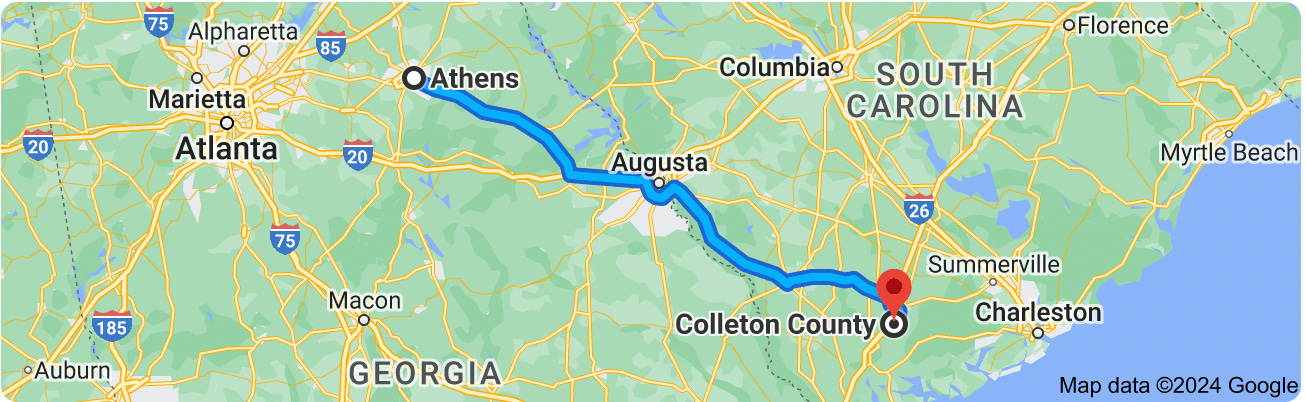
7). During the same month (Dec. 2021) the virus was detected in the sick gull in Newfoundland, it was also purportedly found in ducks in Colleton County, South Carolina—200 miles east of Athens, Georgia. Note that the winter migration from Canadian summer nesting grounds to the American South begins in September, peaks in October, and concludes in November.
CONCLUSION
There remains a paucity of evidence to support the hypothesis that Highly Pathogenic Avian Influenza H5N1 Clade 2.3.4.4b was borne across the North Atlantic by migratory birds in 2021.
The new clade was first detected in the Netherlands in October 2020, not far from the Erasmus University Rotterdam, where the prominent virologist Ron Fouchier—who happens to be a co-author of the “Transatlantic Spread” paper—is known to have conducted dangerous Gain-of-Function experiments on H5N1 bird flu in recent years.
It’s notable that the Erasmus Medical Center, headed by Ron Fouchier, previously collaborated closely with the SEPRL to develop vaccines against H9 avian influenza viruses, indicating the two laboratories likely share virus samples. This raises the suspicion that the Erasmus lab shared a sample of the new clade with the USDA poultry lab in Athens sometime in 2021, and that it somehow got out of the lab and spread to waterfowl on the Atlantic flyway.
On June 11, an important debate took place in the Brazilian Congress which could have some interesting repercussions. The event, called the “Debate on National Sovereignty in the 21st Century,” was held within the scope of the Foreign Relations and National Defense Committee of Congress, organized at the request of Representative Luiz Philippe de Orleans e Bragança.
The debate, held within one of the most important committees of the Brazilian Congress (as it deals precisely with fundamental state issues), included the participation of important specialists in military and intelligence matters, such as Commander Robinson Farinazzo, officer of the Brazilian Navy, the defense analyst Albert Caballé, and Professor Ricardo Cabral, former professor at the Naval War College, among others.
Referring to statements by former NATO officers, presidents, and prime ministers of various countries connected to the Atlantic Alliance, Farinazzo highlighted the fact that the fate of Brazilian territories, especially the Amazon region and its rainforest, is discussed in summits held outside Brazil, without the representation of Brazilian interests.
As an example, Farinazzo recalled a draft resolution in the United Nations Security Council, dated 2021, which aimed to categorize general climate issues as “security threats” that could be discussed, overseen, and operated within the framework of the Security Council. This draft was vetoed by Russia and India and did not have the support of China, which abstained.
Although the draft did not specifically mention the Amazon or Brazil, it is impossible to ignore the numerous references to the “internationalization of the Amazon,” seen as the “heritage of humanity,” in the context of the radicalization of ecoglobalist discourses created within the centers of knowledge and public policy of the Atlanticist West.
As jurist Carl Schmitt said, “whoever invokes humanity is trying to deceive.” Behind humanitarian discourse lie all the most brutal and nihilistic projects of the liberal Western elites. To prove this, we just need to look at how the narratives of “humanitarian intervention” were used in Libya, Iraq, and the Balkans over the past 30 years.
Indeed, in August 2019, American political scientist Stephen Walt published an article within the Belfer Center for Science and International Affairs speculating on the possibility of military actions legitimized by environmentalist discourse of defending “humanity” from “climate threats”. According to Walt, in the future, major powers might try to halt situations of environmental degradation through armed interventions in weaker countries, specifically mentioning Brazil as an example.
Less than a month later, The Guardian published an article by an author named Lawrence Douglas, in which he argued that the same logic applied to humanitarian interventions, such as the “Responsibility to Protect,” a globalist concept enshrined at the UN in 2005, should serve to legitimize the use of force against the geopolitical enemies of the Atlanticist West with a humanitarian/environmentalist veneer.
Indeed, at the event held in the Brazilian Congress, Stephen Walt’s article was specifically mentioned, along with many other pieces of evidence. It is necessary to recall, as Farinazzo did, that James Stavridis, former NATO Supreme Allied Commander and former SOUTHCOM Commander, claimed that fires in the Amazon Rainforest represented a security risk for the U.S., legitimizing their intervention in Brazil. Emmanuel Macron (who was warmly welcomed by Lula in the Amazon a few months ago) and Boris Johnson, former Prime Minister of the United Kingdom, have also publicly stated that the Amazon region does not really belong to Brazil, but rather is a “common good” of so-called “humanity.” David Milliband, Secretary of the Environment under Tony Blair’s government, even went so far as advocate for the privatization of the Amazon Rainforest in 2006.
All this was presented to the Foreign Relations and National Defense Committee of the Brazilian Congress with abundant evidence and sources.
If the issue of Amazon fires was the most “weaponized” against Brazil during the Bolsonaro government, now the topic that generates the most furious reactions from environmental NGOs in Brazil, as well as “concerned” comments from foreign bureaucrats, is the exploration of oil in the Equatorial Margin, as pointed out by Professor Ricardo Cabral in Congress.
This is a topic that is linked, as he pointed out, with the entire history of efforts to prevent or hinder the exploitation of Brazilian mineral and energy resources, usually under allegations of “environmental damage” or “violations of indigenous peoples’ rights” – narratives that put pressure for the loss of sovereignty over parts of Brazilian territory, which should, as the narrative goes, be under “international tutelage,” in a more refined and postmodern version of the old British privatization proposals.
The problem, as analyst Albert Caballé pointed out, however, is that the Brazilian defense industry is in crisis; a crisis that has lasted for several years already.
If until approximately the 1980s, Brazilian companies in the defense sector not only supplied most of the national military needs but were also exporters, especially to the Middle East and Africa, the neoliberal avalanche of the 1990s in a post-Cold War context led to a gradual dismantling of the sector and its denationalization, with several of the main Brazilian defense companies, such as Ares and others, coming under the control of multinational companies – almost always from the same Atlanticist countries that show interest in the “internationalization” of the Amazon.
The hypothetical scenario discussed in the Brazilian Congress for an interventionist action against Brazil, as presented by Farinazzo, mentions the possibility of a blockade of the main Brazilian ports by Atlanticist naval forces, in a sort of “anaconda strategy” (a tactic that is part of the manual of Admiral Mahan, the father of American geopolitics).
The concern of Brazilian experts and representatives specializing in defense and international relations, therefore, is that Western greed in an era of transition and geopolitical crisis could turn against Brazil – and that Brazil, if it does not quickly wake up to the contemporary risks and dangers, may not be able to face this challenge.
In response to an article in Khrono, I want to challenge the label “controversial” that was used to describe me. Controversial means that there are strong and conflicting opinions to what I am arguing.
But academics should use scientific methods to challenge established truths. This is particularly important in international conflicts where consensus in society is to a large extent shaped by the human instinct to respond to threats with conformity and solidarity.
Every time there are attempts to censor and cancel me, it is based on the fact that I have “controversial” arguments about Russia and the war in Ukraine. If my arguments are based on hard facts that are important for understanding the war in Ukraine, then it can still be labeled as “controversial” if it contains information that has been left out of the public debate.
Let me give one example of how reality can become “controversial”. There is now a strong consensus in Norwegian society that Russia’s invasion was not a reaction to NATO expansionism, but motivated by territorial expansion. Was this established truth shaped through the scientific method where freedom of speech allowed us to present all the facts? Or has society been under enormous pressure to present this conflict as a battle between good and evil forces, where even explaining is condemned as defending? There is overwhelming evidence that Russia invaded to prevent NATO expansion, yet it is never reported in the media. How is it possible that none of our journalists report on facts that can be proven and are of the highest relevance to the public to understand this conflict?
In war, the human instinct to seek safety in the group is strengthened. We only discover in retrospect that the war narratives were full of errors, and that the poor analysis led to a bad policy that harmed our own security interests. Since the demand for conformity is great and we punish dissent and deviation from the group, academia is an important balance as ignoring reality undermines the possibilities for peace.
If we believe that Russia will continue to invade new countries, then it supports the argument that “weapons are the path to peace” – even if it could result in a major war. But if Russia wants limitations on NATO’s presence along their borders, then there are possibilities for peaceful solutions.
When the word “controversial” is combined with “pro-Russian”, it becomes impossible to discuss arguments. Suspicion of the person becomes the main focus. The term “pro-Russian” is a charged and tendentious term as it suggests that the person concerned has chosen a side against our country, that there is loyalty with the out-group against the in-group.
I argue that the West’s policy towards Russia over the past 30 years has put us on a collision course and undermined our own security. Should this be labeled as “pro-Russian” and “anti-Western” arguments? The point of departure for conflict resolution is understanding the other party’s security concerns. Is it possible to analyze international security with such restrictions on freedom of expression?
It is possible that I am wrong in my analysis of Russian intentions and there are obviously counter-arguments, but in academia and in an open society, arguments must be allowed to compete in order to get the best possible understanding of reality.
Labeling dissenters as “controversial” is a method of legitimizing censorship and cancellation. This is particularly problematic as the strong consensus in society was formed by leaving out very basic information.
Please subscribe to my channel here on Bitchute for notifications of new videos and visit my webiste http://www.vernoncoleman.com every week day for new material.
Avery interesting study appeared last week by two researchers looking into the pandemic policy response around the world. They are Drs. Eran Bendavid and Chirag Patel of Stanford and Harvard, respectively. Their ambition was straightforward. They wanted to examine the effects of government policy on the virus.
In this ambition, after all, researchers have access to an unprecedented amount of information. We have global data on strategies and stringencies. We have global data on infections and mortality. We can look at it all according to the timeline. We have precise dating of stay-at-home orders, business closures, meeting bans, masking, and every other physical intervention you can imagine.
The researchers merely wanted to track what worked and what did not, as a way of informing future responses to viral outbreaks so that public health can learn lessons and do better next time. They presumed from the outset they would discover that at least some mitigation tactics achieved the aim.
It is hardly the first such study. I’ve seen dozens of such efforts, and there are probably hundreds or thousands of these. The data is like catnip to anyone in this field who is empirically minded. So far, not even one empirical examination has shown any effect of anything but that seems like a hard conclusion to swallow. So these two decided to take a look for themselves.
They even went to the next step. They assembled and reassembled all existing data in every conceivable way, running fully 100,000 possible combinations of tests that all future researchers could run. They found some correlations in some policies but the problem is that every time they found one, they found another instance in which the reverse seemed to be true.
You cannot infer causation if the effects are not stable.
After vast data manipulation and looking at every conceivable policy and outcome, the researchers reluctantly come to an incredible conclusion. They conclude that nothing that governments did had any effect. There was only cost, no benefit. Everywhere in the world.
Please just let that sink in.
The policy response destroyed countless millions of small businesses, ruined a generation in learning losses, spread ill health with substance abuse, wrecked churches that could not hold holiday services, decimated arts and cultural institutions, broke trade, unleashed inflation that is nowhere near done with us yet, provoked new forms of online censorship, built government power in a way without precedent, led to new levels of surveillance, spread vaccine injury and death, and otherwise shattered liberties and laws the world over, not to mention leading to frightening levels of political stability.
And for what?
Apparently, it was all for nought.
Nor has there been any sort of serious reckoning. The European Commission elections are perhaps a start, and heavily influenced by public opposition to Covid controls, in addition to other policies that are robbing nations of their histories and identities. The major media can call the victors “far right” all they want but this is really about common people simply wanting their lives back.
It’s interesting to speculate about precisely how many people were involved in setting the world on fire. We know the paradigm was tried first in Wuhan, then blessed by the World Health Organization. As regards the rest of the world, we know some names, and there were many cohorts in public health and gain-of-function research.
Let’s say there are 300 of them, plus many national security and intelligence officials plus their sister agencies around the world. Let’s just add a zero plus multiply that by the large countries, presuming that so many others were copycats.
What are we talking about here? Maybe 3,000 to 5,000 people total in a decision-making capacity? That might be far too high. Regardless, compared with the sheer number of people around the world affected, we are talking about a tiny number, a mico-percent of the world’s population or less making new rules for the whole of humanity.
The experiment was without precedent on this scale. Even Deborah Birx admitted it. “You know, it’s kind of our own science experiment that we’re doing in real time.” The experiment was on whole societies.
How in the world did this come to be? There are explanations that rely on mass psychology, the influence of pharma, the role of the intelligence services, and other theories of cabals and conspiracies. Even with every explanation, the whole thing seems wildly implausible. Surely it would have been impossible without global communications and media, which amplified the entire agenda in every respect.
Because of this, kids could not go to school. People in public parks had to stay within circles. Businesses could not open at full capacity. We developed insane rituals like masking when walking and unmasking when sitting. Oceans of sanitizer would be dumped on all people and things. People were made to be afraid of leaving their homes and clicked buttons to make groceries arrive on their doorsteps.
It was a global science experiment without any foundation in evidence. And the experience utterly transformed our legal systems and lives, introducing uncertainties and anxieties as never before and unleashing a level of crime in major cities that provoked residential, business, and capital flight.
This is a scandal for the ages. And yet hardly anyone in major media seems to be interested in getting to the bottom of it. That’s because, for bizarre reasons, looking too carefully at the culprits and policies here is regarded as being for Trump. And the hate and fear of Trump is so beyond reason at this point that whole institutions have decided to sit back and watch the world burn rather than be curious about what provoked this in the first place.
Instead of an honest accounting of the global upheaval, we are getting the truth in dribs and drabs. Anthony Fauci continues to testify for Congressional hearings and this extremely clever man threw his longtime collaborator under the bus, acting like David Morens was a rogue employee. That action seemed to provoke ex-CDC director Robert Redfield to go public, saying that it was a lab leak from a US-funded lab doing “dual purpose” research into vaccines and viruses, and strongly suggesting that Fauci himself was involved in the cover-up.
Among this group, we are quickly approaching the point of “Every man for himself.” It is fascinating to watch, for those of us who are deeply interested in this question. But for the mainstream media, none of this gets any coverage at all. They act like we should just accept what happened and not think anything about it.
This great game of pretend is not sustainable. To be sure, maybe the world is more broken than we know but something about cosmic justice suggests that when a global policy this egregious, this damaging, this preposterously wrongheaded, does all harm and no good, there are going to be consequences.
Not immediately but eventually.
When will the whole truth emerge? It could be decades from now but we already know this much for sure. Nothing we were promised about the great mitigation efforts by governments turned out to achieve anything remotely what they promised. And yet even now, the World Health Organization continues to uphold such interventions as the only way forward.
Meanwhile, the paradigm of bad science backed by force pervades nearly everything these days, from climate change to medical services to information controls.
A 59-year-old man unfortunately died in Mexico in late April. Having been bed-bound for weeks and suffering from type-2 diabetes and chronic renal failure, he was at high risk from respiratory virus infection.
It became newsworthy, and the World Health Organization thousands of miles distant even released a media statement, because recent advances in genetic sequencing allowed the presence of Type A (H5N2) influenza virus – a type of bird flu – to be reported in a single clinical sample a month later. Refuting the WHO’s distant bureaucrats attributing mortality to the virus, Mexico’s health secretary is reported as noting that it was chronic illness that caused the death.
Irrespective of cause, deaths are a tragedy for family and friends. This one made global news purely because of advances in diagnostic technology. The WHO, the media, and a growing pandemic industry had been waiting for this inevitable event, testing and screening, as it is critical to perhaps the largest business scheme in human history. There are hundreds of billions on the table, and the will and means to take it. We all need to understand why, and what is supposed to happen next.
Covid and the Resetting of Public Health
Covid-19 has proven the business case for gain-of-function research. It looks increasingly likely that some genetic fiddling really did succeed in moving a bat coronavirus into humans, where it is more amenable to monetization (there is no profit in sick bats, or fear of them). Importantly, despite the broad economic and health catastrophe that followed, those behind the program are continuing much the same work, and not being held to account. There is vast profit with little or no real risk.
However, what the Covid episode really demonstrated is the financial and political gains that can be achieved irrespective of outbreak severity. As Klaus Schwab and Thierry Malleret pointed out in mid-2020 in their book Covid-19: The Great Reset, Covid-19 can be used to subvert post-World War II concepts of democracy and human rights and return society to a corporate authoritarian model (“Stakeholder Capitalism”), even though the illness is usually mild.
What is needed is a shared narrative among those who stand to benefit; media, governments, and the corporate world. While the term “Great Reset” seems to have been discarded as unpopular, the World Economic Forum’s (WEF’s) stated intent to penetrate governments and change society to the benefit of their members is clearly undiminished.
Devastating mortality is not needed to drive societal change; just the fear of it. You need a test, visuals such as masks and circles on the pavement, a dependent media, and a research and health establishment whose career opportunities are dependent on compliance. The ramping up of surveillance for the vast sea of viral variants that is nature has just been officially confirmed through the adoption of amendments to the 2005 International Health Regulations at the World Health Assembly (WHA) in Geneva. Irrespective of the reality of risk or the massively disproportionate public funding required, the world is going to find a lot more potential threats, and is building a whole industry that will ensure they translate into corporate profit.
The Opportunity of Influenza
Avian influenza, or bird flu, has been around perhaps as long as birds (so was likely a dinosaur malady in Cretaceous times). Humans must have lived alongside it for over 200,000 years, and our primate ancestors far longer. Bird flu viruses are part of a range of variants of the influenza virus family that undergo regular mutation and recombination (even mixing genome from viruses that normally infect different species) that makes them appear relatively new to our immune system. This makes them more harmful and results in a new influenza outbreak almost every year, as our immunity from the last one (or from a prior influenza vaccine) only partially addresses the next.
Sometimes, recombination allows an influenza virus that is mostly confined to other animals, such as birds, to undergo a wider shift that allows it to infect other species, such as humans. This is similar to what scientists sometimes try to simulate in the lab through ‘gain-of-function’ research, such as modifying bat coronaviruses to become pathogenic to humans.
Humans have always lived in very close proximity with, and eaten, animals that harbor influenza viruses. The last major ‘spillover’ of influenza from birds to humans was the Spanish flu pandemic in 1918-19. It killed perhaps 20 to 40 million people, most probably due to secondary bacterial pneumonia as there were no modern antibiotics. In the century since, an event of this nature has not recurred, and with modern antibiotics and medical care, the mortality of the Spanish flu should now be far lower.
So, why are we seeing the current hysteria regarding bird flu, and why is the media promoting narratives such as potential mortality massively greater than the Spanish flu or any influenza outbreak in human history? The answer, presumably, lies earlier in this article. A very wealthy corporate and financial sector that is influential over governments and media that knows, and has demonstrated, that wealth can be concentrated to the tune of hundreds of billions of dollars through fear of a virus.
There is now a rapidly expanding army of virologists, ‘virus hunters,’ public health bureaucrats, and modelers whose sole reason for receiving funding is to find and publicize new variants of viruses. We have international public-private partnerships devoted to developing and distributing vaccines for such events, supported by taxpayer funding. We also have a draft pandemic treaty that has just been deferred by the WHA, intended to further increase public funding for this private good. From an industry viewpoint, its rapid passage in the coming months would benefit from fear and urgency.
Making Bird Flu Work
Declaration of a bird flu pandemic therefore looks almost inevitable, whether facilitated by ongoing gain-of-function research and a lab leak, or through a natural passage to humans. This inevitability is not so much because it is a real and existential threat, but rather because the industry – the financial-Pharma-media-public health complex that has arisen before and through Covid, needs it. The virus is real. The threat can also be made to appear existential. It is likely to proceed with something like the scenario below.
Traces of genome and even whole viruses can be found in raw agricultural produce. Testing these, and human sewage (contaminated with virus from birds or humans), is already underway and will demonstrate this. Genome has already been found in milk, probably because we looked for it – this has probably also happened often, undetected, before.
Extensive testing of workers on chicken farms and on farms where other infected animals are housed (e.g. dairy herds) will find people who test positive for the virus. Biology is highly variable and some people will establish short-lived mild infections. A few will become severely ill and die due to some immune deficiency or factors such as a very high infective dose. Once listed as a rare pneumonia of unknown cause, such infections can now be definitively pinned as bird flu and used very effectively by media to increase viewership. Within the public health community, these occurrences promote salary and research funding and are extremely important.
Mass killing (culling) at chicken farms. This won’t halt spread, as spread mainly occurs through wild bird species. It could theoretically protect workers from the low (but not zero) risk they face. Importantly, it makes news and promotes a perception that something really bad is afoot. Those who order culls do not suffer from them, and industrial chicken producers are compensated by taxpayers, who will also pay more for eggs and chicken meat. Left unchecked, many chickens would have died in an outbreak, while some would have survived.
Mass killing of secondary hosts such as cattle. Again, a low risk to humans. It is also relatively easy to quarantine cattle herds until an outbreak has run its course. However, culling creates publicity and the impression of a dynamic, desperate response, important in creating a sense of a public health sector scrambling to save the public. It also supports a movement claiming that farming for meat should be replaced by highly processed factory-derived alternative foods, an alternative that is struggling for market share. The fake meat industry is supported by some of the same major investors as Pharma, who are very vocal in the pandemic agenda.
Modeling to demonstrate potential mass death within the population. The major modeling groups (e.g. Imperial College London, University of Washington, Gates Foundation) are funded by entities who are invested in Pharma and gained greatly from Covid-19. Modelers understand outcomes that benefit sponsors, which may have influenced the emphasis on worst-case and highly unrealistic outcomes during Covid-19.
Requirement for mass vaccination (or killing) of backyard chickens to keep the community safe. The concept of ‘greater good’ is the most popular of the concepts that underpin fascism, and can be used to ensure broad compliance, with vilification of non-compliers being the penalty. This was used widely by pro-corporate politicians such as Justin Trudeau to isolate and denigrate those who wanted to weigh harms against the benefits of Covid vaccines or supported the concept of bodily autonomy. The UK and Ireland recently introduced a requirement to register all backyard chickens, to facilitate this process.
Requirement for vaccination of chicken owners – owners of every farm or backyard hen. This will be sold as further protecting their neighbors and communities. Those refusing will be portrayed as ‘putting their entire communities at risk, especially ‘the most vulnerable.’ This message, however distanced from context and reality, is very powerful and the media demonstrated during Covid how willing they are to exploit such division and scapegoating.
Lockdowns, school closures, closure of smaller workplaces. As during Covid, this will involve mainly those lacking influence at WEF and similar forums. There will be some deaths in the community, and even busy ICUs from influenza or other causes. The busy ICUs will be highlighted as unusual (which, of course, they are not) to promote a need to ‘all pull together’ and overcome the threat. This is a difficult message to counter, as on a superficial level such fascistic greater good claims make support for individual choice, fundamental to free societies, difficult.
Population-wide mass vaccination. Mass vaccination can be promoted as inconvenient but necessary as an all-in community safety issue. Although people may be more resistant as harms from Covid vaccination become more widely acknowledged, bird flu is already being portrayed as potentially far worse. The vaccine will be pitched as a way to get freedoms back, a form of coercion once anathema in public health but now mainstream. With hundreds of billions in Pharma sales at stake, it is an extremely hard train to stop. Billions spent on advertising, political sponsorship, and propaganda are literally minor business expenses.
The order of the above steps, and the emphasis, may change. None of the steps will stop bird flu. It spreads through wild bird species and will continue to do so. Occasionally, it will spill over into humans. Very occasionally these will cause a significant outbreak. The Spanish flu was a bad example, but life rapidly went back to normal.
Managing Perceptions
In the century since the Spanish flu, influenza outbreaks have continued to resolve naturally with little change in human behavior, but steadily building alarm. The Hong Kong flu of 1968-69 had been shrugged off as an annoyance and didn’t even stop Woodstock. The SARS outbreak in 2003 (a coronavirus, not influenza) promoted widespread fear, yet killed in total the same as die every 8 hours from tuberculosis. The Swine flu outbreak of 2009, which killed less than normal seasonal influenza, precipitated an international crisis. Pandemics, though real, are mostly about perceptions. So is the response.
The pandemic industry has become far better, and more systematic, at managing perceptions. This is the whole basis on which the behavioral psychology of government ‘nudge units’ was based during Covid. The aim was not a calculated overall public good, but to promote a particular set of public behaviors to address a narrowly defined threat. This is now underway for bird flu. A large part of the populace will comply with increasingly strict measures, not because they have been presented accurate information in context upon which they can make rational choices, but because they are fooled, or coerced, into behaviors they would not normally follow. They will accept restrictions and interventions that they would normally resist.
Unless wider society regains control of the agenda, the Pharma industry and its investors are set to make a killing through bird flu. It will be at least as big as Covid. It will also serve an important role in further building the pandemic industry, justifying the finalization of the postponed WHO Pandemic Agreement (treaty). It is a vital cog in the Great Reset.
Outbreaks do occur and we should monitor and prepare for them. However, we have allowed the development of a system where outbreaks are almost all that matter. Perceptions of risk, and resultant funding, have become grossly disproportionate to reality. The perverse incentives driving this are obvious, as are the harms. The world will be increasingly unequal and impoverished, and sick, building on the outcomes of the Covid response. Fear promotes profit better than calmness and context. It is on us to remain calm and continually educate ourselves regarding context. No one will sell these to us.
David Bell, Senior Scholar at Brownstone Institute, is a public health physician and biotech consultant in global health. He is a former medical officer and scientist at the World Health Organization (WHO), Programme Head for malaria and febrile diseases at the Foundation for Innovative New Diagnostics (FIND) in Geneva, Switzerland, and Director of Global Health Technologies at Intellectual Ventures Global Good Fund in Bellevue, WA, USA.
In June 2021, Dr. Sam White, a general practitioner, released a video calling out harmful covid policy. From a scientific perspective every word he said was entirely defensible. Moreover it is clear that he was speaking from an ethical position of wanting to protect his patients from harm. He pulled no punches in addressing the most prominent issues that were causing harm – lack of treatment for the frail, inappropriate gene therapies and masking. In interviews, in 2022, he called the situation a war between good and evil. In doing so he unleashed a torrent of anger among those in a position of power over him, which, three years on, continues to harm him.
He had already resigned from his GP partnership in protest at their vaccination policy in February 2021. His conscience had been keeping him awake at night because he did not want to be a part of the vaccine rollout. Consequently, after resigning he was signed off with stress rather than having to work his notice. NHS England still saw fit to suspend him with an emergency order in June. Dr White managed to record a conversation with an NHS senior clinical adviser who implied that he was mentally unwell. Dr White believes that possession of that recording led the NHS to revoke their suspension. However, by then the NHS had referred him for a GMC investigation and an automatic GMC suspension.
The GMC overturned the suspension in August 2021 but imposed restrictions on him including a ban on mentioning covid on social media and requiring the removal of his previous posts. The legal position is that doctors have a right to free speech but if the GMC could prove Dr White’s speech was a threat to the health of the public or undermined trust in the profession then he could be sanctioned.
Dr White looked to his indemnity provider for support to fund his legal case but they washed their hands of him saying it was a “conduct issue”. With the help of crowd funding support, Dr White took the case to the High Court in November 2021. The verdict was published in December 2021, overruling the GMC and saying they had not followed due process in their actions. The High Court documentation was removed from the judiciary’s website in September 2022 such that other doctors in a similar position will be unable to refer to it in their defence. It is available on the Wayback Machine.
Dr White has asked to be removed from the register, as he is no longer practising conventional medicine, but the GMC have refused and are continuing to persecute him. Every interview he has undertaken has been transcribed and put forward as evidence that he is undermining public health policy and causing the public to lose trust in the profession. The next tribunal hearing is scheduled to last three weeks in August and September 2024. This ongoing investigation, three years later, indicates a relentless effort to discredit and punish Dr. White for his dissenting views.
If that sounds bad, wait until you hear about the NHS’s role.
The same day as the High Court hearing, unbeknown to Dr White or his lawyers, NHSE had a meeting where they decided to refer Dr White for a health assessment, despite the fact he no longer worked in the NHS. This was an opportunity to reopen the investigation into him. They have repeatedly asked if he had returned to NHS work and said he must tell them if he did. What was their intent here? Were they planning to ask any future employer to suspend him all over again?
NHS England has a list of “approved providers”. Any doctor not on their list cannot work for the primary employer of doctors in the country. In 2023, NHS England removed Dr White from their list, effectively barring him from practising within the NHS. He had already shifted his practice to private healthcare with a holistic focus, but this further punishment leaves him with no other options.
The GMC is far from perfect but at least it has due process and a system of appeal for where there might be an injustice. NHS England can unilaterally destroy a career, with no legal recourse.
In some ways, the most disturbing aspect of the whole affair was revealed in the communications between the GMC and NHS England. Firstly, the derogatory terms used about the doctor to justify their behaviour are shocking and reveal a lack of professionalism and intolerance for differing opinions within the medical establishment. Moreover, this language served as a means to rationalise their harsh and unjust actions towards him. Secondly, they appeared to be acting in cahoots. The GMC’s apparent open and fair processes have been bypassed by direct communication with NHS England, stripping Dr White of a right to employment.
Dr. Sam White’s case is a stark example of systemic injustice and the erosion of professional rights within the NHS and the GMC. His ongoing persecution for voicing dissenting views underscores a troubling intolerance for ethical and scientific debate, reminiscent of a Kafkaesque nightmare where rationality and justice are subordinated to bureaucratic oppression.
Several medical credentialing boards instituted COVID-19 Misinformation Policies in September of 2021 and have used them to censor and retaliate against academics and practicing physicians who performed research, clinical care, and presented their findings on the early treatment of acute COVID-19 and vaccine safety. The boards’ position is that they and the government agencies they agree with, hold agency over the truth. By establishing that power dynamic, members who disagree with them are spreading misinformation and can be convicted in closed panel meetings without the member being allowed to present their views based upon the data and evidence at hand.
The Association of American Physicians and Surgeons sued three medical specialty boards for their threatened actions against the board certifications of physicians because of speaking out on medical controversies. Physicians earned and need these board certifications in order to hold professorships, practice medicine in most hospitals, and remain in most insurance networks.
Defendants are the American Board of Internal Medicine (“ABIM”), the American Board of Family Medicine (“ABFM”), and the American Board of Obstetrics & Gynecology (“ABOG”). In addition, Alejandro Mayorkas, Biden’s Homeland Security Secretary, is a defendant due to alleged government interference with freedom of speech.
The Fifth Circuit also invalidated Galveston Local Rule 6, by which that federal district court has infringed on plaintiffs’ right to amend their lawsuits. The Fifth Circuit agreed with AAPS that this district court rule is contrary to the Federal Rules of Civil Procedure, and thus must be voided.
“AAPS can now pursue its claim against censorship by the Biden Administration,” AAPS Executive Director Jane Orient, M.D., stated.
Fifth Circuit Judge James Ho agreed with the panel majority on the key issues and wrote separately to decry attempts by some today to impose censorship on others. “In America, we don’t fear disagreement—we embrace it. We persuade—we don’t punish. We engage in conversation—not cancellation,” Judge Ho wrote.
“We know how to disagree with one another without destroying one another. Or at least that’s how it’s supposed to work,” Judge Ho added as he sided fully with this lawsuit against censorship.
The precedent-setting ruling in favor of the First Amendment was issued by the U.S. Court of Appeals for the Fifth Circuit. This influential Court established the right to object in court to censorship of physicians’ speech on topics ranging from government Covid policies to abortion. AAPS General Counsel Andrew Schlafly should be congratulated for this stalwart effort in defense of our civil liberties.
Dr. Deborah Birx, the Trump administration’s coronavirus response coordinator, told CNN’s Kasie Hunt the U.S. is making the “same mistakes” with bird flu that it made with COVID-19, which she said spread because there wasn’t enough testing for asymptomatic infection.
Birx is now calling for every cow to be tested for bird flu weekly and for regular pooled tests for dairy workers. She also said it’s likely that undetected cases are circulating in humans.
“We have the technology,” Birx said. “The great thing about America is we’re incredibly innovative and we have the ability to have these breakthroughs.”
The technology Birx referenced is polymerase chain reaction or PCR testing — the same diagnostic tool that came under fire during the COVID-19 pandemic for producing inaccurate results, including false positives.
Speaking out on X (formerly Twitter), critics like Simon Goddek, Ph.D., pushed back, accusing Birx of “deliberately using the same strategy to fabricate another fake health emergency.”
On Wednesday, the day after Birx’s interview, JAMA published its own article advocating for more widespread bird flu testing.
“No animal or public health expert thinks that we are doing enough surveillance,” Keith Poulsen, DVM, Ph.D., director of the Wisconsin Veterinary Diagnostic Laboratory at the University of Wisconsin-Madison, told JAMA.
Andrew Pekosz, Ph.D., from the Johns Hopkins Bloomberg School of Public Health, told JAMA that more testing should be conducted to find asymptomatic and mild infections. Workers at infected farms should be tested twice weekly, he said, and cows should be tested once a week.
Inventor: PCR test never intended for use as diagnostic tool
PCR testing works by starting with tiny fragments of DNA or RNA called nucleotides and replicating them until they become large enough to identify. The nucleotides are replicated in cycles, and each cycle doubles the amount of genetic material in the sample. The number of cycles required to create an identifiable sample is the “cycle threshold” (Ct).
PCR tests became a household name during the COVID-19 pandemic because they were treated as the “gold standard” for identifying positive cases, especially among asymptomatic people.
However, as early as December 2020, the World Health Organization (WHO) warned that using a high-cycle threshold would lead to false-positive results. The agency encouraged healthcare providers to consider the test in concert with other factors — namely the presence of symptoms — when diagnosing patients.
The WHO also cautioned those using the tests to read the instructions carefully to determine whether the cycle threshold ought to be changed to account for any background noise that could lead to a high-cycle threshold being mistaken for a false positive.
“When specimens return a high Ct value,” the press release said, “it means that many cycles were required to detect virus. In some circumstances, the distinction between background noise and actual presence of the target virus is difficult to ascertain.”
Kary Mullis, who won the Nobel Prize for inventing the PCR test, said it was inappropriate to use the test as a diagnostic tool to detect a viral infection.
Even Dr. Anthony Fauci admitted during the pandemic that a high cycle — which was used often — detected only “dead nucleotides,” not a viral infection.
The U.S. Department of Agriculture (USDA) did not immediately respond to The Defender’s inquiry about which cycle thresholds are used to test animals for bird flu.
Mass testing ‘will only serve to raise a false case count’
As of Tuesday, the latest circulating bird flu virus has reportedly infected 81 herds of dairy cattle in nine states and poultry farms in 48 states. The virus can be fatal for poultry but does not generally cause serious illness in cattle.
In the latest wave of bird flu, only three people in the U.S. have tested positive for the virus after close exposure to an infected cow. All three experienced mild symptoms — two experienced eye irritation and one also had a cough and sore throat. All recovered without incident.
The WHO reported Wednesday that a resident of Mexico died from a bird flu infection, but WHO officials also maintain the virus’ threat to the general population is low.
Mainstream media outlets like Scientific American warned that the bird flu isn’t a pandemic “yet,” but it could evolve to become one if people do things like continue to drink raw milk. And The New York Times warned yesterday that the virus “may not be done” adapting.
The CDC reported on Tuesday that it monitors genetic changes in the virus and “few genetic changes of public health concern have been identified.”
Nevertheless, the U.S. government is building up its national stockpile of existing vaccines produced by CSL Seqirus and is nearing contracts with Moderna and possibly Pfizer to fund the development of an mRNA vaccine for the virus.
On Tuesday, Finland announced it will begin offering the vaccine to selected groups of people.
“We did not have a bad outbreak for over a century, and there is every likelihood that we won’t again,” Bell said. “We are using technology to pretend that new threats are occurring because we can now detect them.”
Cardiologist Dr. Peter McCullough said last month that mass testing of healthy animals — as Birx is suggesting — will only serve to “raise a false case count.”
Feds using PCR testing on animals, wastewater, farmworkers, meat and milk
The federal government last month announced a new round of funding to reduce the impact of bird flu. The plan appropriated $93 million for the CDC to do virus genomic sequencing, increase monitoring of farmworkers, and improve and expand testing on a national scale for bird flu in animals, wastewater, farmworkers and meat.
The FDA also appropriated an additional $8 million to surveil and test the commercial milk supply.
Lactating dairy cows must be tested for bird flu before they can cross state lines, per an April 24 Federal Order issued by the USDA.
The USDA’s Animal and Plant Health Inspection Service (APHIS) also encourages farmers to voluntarily test cattle and herds with suspected infection, showing symptoms like reduced milk production or respiratory issues. APHIS covers the cost of the tests if conducted at an approved laboratory and if the farmers agree to have the tested cattle and premises tracked.
The approved laboratories conduct PCR tests for several different flu strains that could be bird flu markers, including “FluA matrix, H5 and optionally H5N1 2.3.4.4b,” to determine whether the cattle are infected.
All laboratories, whether or not on the USDA’s approved list, must report all positive influenza A test results to the USDA weekly by 5 p.m. on Mondays. Farms with positive cases are quarantined.
KFF Health News reported that additional testing of farmworkers would make it possible for researchers to “track infections.” The problem is that “people generally get tested when they seek treatment for illnesses,” but farmworkers don’t tend to go to doctors unless they are very ill.
Farmworkers have been actively monitored for symptoms since the first case was detected but not PCR-tested. In response, federal authorities announced in May they would pay farmworkers to get tested for the virus as part of a program that also offers incentives to farmers to allow their dairy herds to get tested.
Workers are paid $75 for giving the CDC a blood sample and nasal swab.
That wastewater testing is done by organizations including WastewaterSCAN, an infectious disease monitoring program based at Stanford University, in partnership with Emory University and funded through philanthropy, including the Sergey Brin Family Foundation created by the founder of Google.
The organization has most recently detected bird flu in San Francisco, although it is unclear whether it comes “from animal waste, milk, people or a combination of sources, according to the Los Angeles Times. WastewaterSCAN on June 3 began publicly reporting H5 data from its 190 sampling sites across the country in its online dashboard.
The USDA Food Safety and Inspection Service is also testing meat from condemned cows. Late last month the agency announced that 95 of 96 culled cows tested negative for viral particles and that none of their meat entered the food supply.
It also reported that ground beef from retail facilities in states with cows that have tested positive for bird flu was all PCR-negative for the virus.
The agency also experimented with inoculating meat with high levels of the virus and then cooking it and testing for the virus. The virus was not detected in the meat patties cooked to medium or well-done, and it was “substantially inactivated” in the rare patties.
The FDA also tested retail dairy products in 17 states. The agency noted that PCR-positive results “do not necessarily represent live virus that may be a risk to consumers,” so when they found PCR-positive samples, they further tested them through a process called “egg inoculation.”
The agency found many samples with positive PCR tests, but none tested positive for the live virus.
Brenda Baletti, Ph.D., is a senior reporter for The Defender. She wrote and taught about capitalism and politics for 10 years in the writing program at Duke University. She holds a Ph.D. in human geography from the University of North Carolina at Chapel Hill and a master’s from the University of Texas at Austin.
By Jay Knott | Dissident Voice | September 24, 2013
In a recent article on Counterpunch, Rob Urie defended the traditional Marxist analysis of US policy in the Middle East. He argues that support for Israel is driven primarily by economic interest, not the Jewish lobby.
He starts by paying tribute to the idea that Western societies are uniquely racist. He says that the “Western narrative” claims there is an “Arab character”, and that this is “antique racist blather”. He gives no definition of these terms. Further, he establishes his credentials as part of the dominant current in the American left by claiming that “over a million people in Iraq died so ‘we’ in the West can drive SUVs.”1
When he tries to criticize bourgeois economics, he makes it clear he doesn’t understand the developments it has made since Marx’s day, using the mathematical discipline known as “game theory”. He dismisses the basic abstraction of economic theory, the idea of the rational individual, on the grounds that it is “devoid of history, culture and political context”. But abstractions are always devoid of something.
He defends a more concrete economic theory, mostly Marxist, with some input from another theorist of capitalist crisis, Hyman Minsky. This concrete theory leads him to the view that US activity in the Middle East is primarily driven by rational capitalist motives, the need to secure a supply of oil.
“Taking the totality of circumstance — former oil company executives launching war on an oil rich nation on a pretext they publicly proclaimed they didn’t believe shortly before taking office — and that upon launching their war proved to be non-existent, requires a willingness to overlook the obvious — that the war on Iraq was for oil, that is difficult to support.”1
Perhaps I’ve misunderstood him, but based on what he says in the rest of the article, this convoluted sentence seems to argue that, because president Bush and vice-president Cheney attacked Iraq on false premises, and they also said it was all about oil, and they are former oil executives, and Iraq has a lot of oil, it’s difficult to deny US attacks on Iraq are all about oil.
In fact, it’s not hard at all. As Urie points out, at times Bush and co. said that attacking Iraq was “protecting the world’s supply of oil.”1 But, as he also points out, they are congenital liars. Why should we believe them when they say they are trying to “protect” the oil supply? Protect it against what? When politicians “admit” attacks on Middle Eastern countries are wars for oil, they are parroting the neo-con party line, feeding the public, both left and right, with a plausible-sounding pretext. For right-wingers, “it’s a war for oil” is a reason to support war, and for leftists, it’s a way to feel better by complaining impotently about corporate greed. Both approaches help the war drive. … continue
This site is provided as a research and reference tool. Although we make every reasonable effort to ensure that the information and data provided at this site are useful, accurate, and current, we cannot guarantee that the information and data provided here will be error-free. By using this site, you assume all responsibility for and risk arising from your use of and reliance upon the contents of this site.
This site and the information available through it do not, and are not intended to constitute legal advice. Should you require legal advice, you should consult your own attorney.
Nothing within this site or linked to by this site constitutes investment advice or medical advice.
Materials accessible from or added to this site by third parties, such as comments posted, are strictly the responsibility of the third party who added such materials or made them accessible and we neither endorse nor undertake to control, monitor, edit or assume responsibility for any such third-party material.
The posting of stories, commentaries, reports, documents and links (embedded or otherwise) on this site does not in any way, shape or form, implied or otherwise, necessarily express or suggest endorsement or support of any of such posted material or parts therein.
The word “alleged” is deemed to occur before the word “fraud.” Since the rule of law still applies. To peasants, at least.
Fair Use
This site contains copyrighted material the use of which has not always been specifically authorized by the copyright owner. We are making such material available in our efforts to advance understanding of environmental, political, human rights, economic, democracy, scientific, and social justice issues, etc. We believe this constitutes a ‘fair use’ of any such copyrighted material as provided for in section 107 of the US Copyright Law. In accordance with Title 17 U.S.C. Section 107, the material on this site is distributed without profit to those who have expressed a prior interest in receiving the included information for research and educational purposes. For more info go to: http://www.law.cornell.edu/uscode/17/107.shtml. If you wish to use copyrighted material from this site for purposes of your own that go beyond ‘fair use’, you must obtain permission from the copyright owner.
DMCA Contact
This is information for anyone that wishes to challenge our “fair use” of copyrighted material.
If you are a legal copyright holder or a designated agent for such and you believe that content residing on or accessible through our website infringes a copyright and falls outside the boundaries of “Fair Use”, please send a notice of infringement by contacting atheonews@gmail.com.
We will respond and take necessary action immediately.
If notice is given of an alleged copyright violation we will act expeditiously to remove or disable access to the material(s) in question.
All 3rd party material posted on this website is copyright the respective owners / authors. Aletho News makes no claim of copyright on such material.






 Aletho News