The Global Purge Of Independent Leaders (2020-2022)
A chronological overview of leadership changes and the policy pivots that followed
Health And Truth and Mark Stronge | October 28, 2025
From early 2020 onward, a repeating script unfolded: a head of state voiced skepticism of lockdowns, PCR testing, or experimental mRNA vaccines; international agencies scolded them; chaos or “illness” struck; and within weeks new officials delivered full compliance and suddenly unlocked frozen aid money. The alignment was worldwide—different cultures, same choreography.
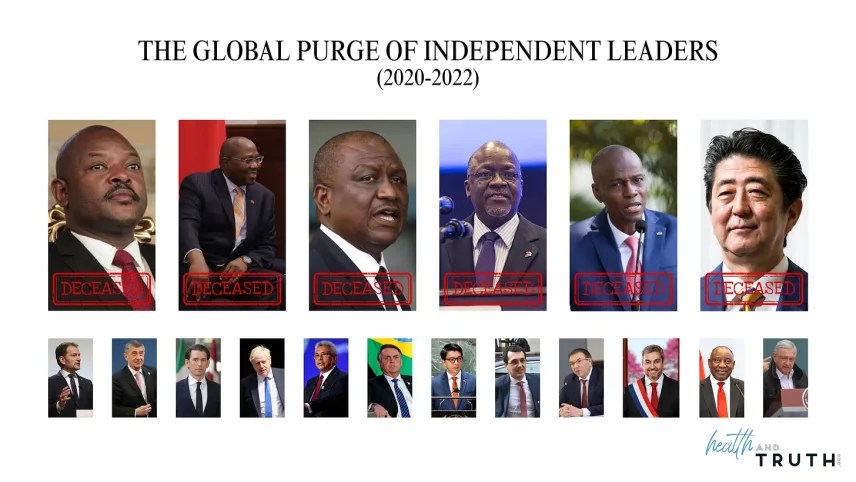
1. Burundi – Pierre Nkurunziza
In Burundi, President Pierre Nkurunziza expelled the World Health Organization from his country in May 2020, saying foreign interference was undermining national sovereignty. He kept the nation open while neighboring states imposed severe restrictions. Merely two weeks after that decision he was dead, officially of a “heart attack,” though associates described him as being in vibrant health. His successor, Évariste Ndayishimiye, reversed course immediately, reopened WHO offices, and signed new vaccine and funding arrangements that brought Burundi back into the international fold.
- Backdrop: In spring 2020 the government halted WHO field work, accusing it of interfering with domestic affairs. Burundi rejected external pandemic restrictions and held public gatherings normally.
- Event: Nkurunziza died suddenly 8 June 2020 while still in office; official cause – cardiac arrest.
- Immediate shift: Successor Évariste Ndayishimiye re‑opened WHO offices, declared COVID‑19 a “national priority,” invited vaccine partnerships, and received roughly $24 million in rapid IMF assistance.
- Result: Burundi signed onto COVAX distribution in 2021 after having been one of the continent’s last hold‑outs.
2. Eswatini – Ambrose Dlamini
In Eswatini (formerly Swaziland), Prime Minister Ambrose Dlamini resisted extreme lockdown policies, insisting that starving citizens to stop a virus was immoral. In December 2020 he was taken to South Africa “for observation” and declared dead soon afterward. The royal government that replaced him moved quickly to impose strict curfews, accept COVAX vaccines, and collect foreign emergency aid.
- Backdrop: The businessman‑turned‑PM favoured balanced restrictions, warning that closing trade would worsen poverty.
- Event: Tested positive for SARS‑CoV‑2, transferred to South Africa, and died 13 Dec 2020.
- Aftermath: King Mswati III and his cabinet adopted curfews, mandatory masking, and joined regional COVAX planning.
- Economic follow‑up: The African Development Bank confirmed a $10 million grant under the COVID‑19 Response Support Programme in early 2021.
3. Ivory Coast – Hamed Bakayoko
A similar disappearance occurred in Ivory Coast. Hamed Bakayoko, the charismatic prime minister, had publicly encouraged herbal treatments and questioned the accuracy of PCR diagnostics. In March 2021 he died in Germany of “cancer,” barely eight months after his predecessor suffered a similar fate. His passing removed the last voice questioning WHO dependence. President Alassane Ouattara’s administration proceeded to import AstraZeneca doses through COVAX, and by summer the country was being praised for its “responsible leadership.”
- Backdrop: The popular Prime Minister promoted herbal remedies and localized treatment efforts while maintaining open borders for trade.
- Event: Died 3 Mar 2021 in Germany where he was under cancer treatment; preceded by the death of previous PM Amadou Gon Coulibaly eight months earlier.
- Aftermath: President Alassane Ouattara named Patrick Achi acting PM; by May, 504 000 AstraZeneca doses had been deployed through COVAX.
- Funding: World Bank approved $300 million for emergency health and education programmes that quarter.
4. Tanzania – John Magufuli
The next to fall was Tanzania’s John Magufuli, Africa’s most outspoken skeptic of mass testing and vaccines. He mocked the system by demonstrating that fruit and goats tested positive for COVID. After vanishing from public view in March 2021, the vice‑president announced that he had died of heart failure. His replacement, Samia Suluhu Hassan, promptly reversed every one of his policies, accepted a $600 million IMF “emergency” loan, reopened the gates to foreign pharmaceutical programs, and declared a massive vaccination drive before year’s end.
- Backdrop: Highly skeptical of PCR testing accuracy and mass vaccination; prioritized economic continuity.
- Event: Absent from view in March 2021 for two weeks; Vice President Samia Suluhu Hassan announced his death 17 March (heart failure).
- Aftermath: New administration reinstated public health briefings, reopened WHO cooperation, applied for IMF Rapid Credit Facility ($600 million approved Sept 2021).
- Policy transformation: Vaccine programmes, mask campaigns, and international data reporting began within ninety days.
5. Haiti – Jovenel Moïse
Then came Haiti, where Jovenel Moïse had rejected donated vaccine shipments, explaining that the country faced deeper issues of water and poverty. On July 7 2021, he was executed in his home by an armed team whose origins remain murky. Within three weeks, Haiti received half a million Moderna doses from COVAX and enjoyed renewed flows of Inter‑American Development Bank and USAID funding. The national policy flipped overnight.
- Backdrop: Refused early COVAX vaccine delivery, arguing sanitation and nutrition were greater priorities.
- Event: Assassinated 7 Jul 2021 by a commando team; political motives still contested.
- Aftermath: First COVAX shipment of 500 000 Moderna doses landed 14 July 2021.
- Financial context: Inter‑American Development Bank and USAID re‑released more than $60 million in suspended grants under the “COVID‑19 Recovery Program.”
6. Japan – Shinzo Abe → Yoshihide Suga → Fumio Kishida
In Japan, Prime Minister Shinzo Abe avoided harsh lockdowns and refused to make vaccination compulsory. In August 2020 he resigned citing chronic illness, a convenient exit for global interests irritated by Japan’s autonomy. His successor Yoshihide Suga approved emergency authorization for the Pfizer vaccine within weeks, and after political struggles Fumio Kishida continued the same line, expanding booster programs and digital health passes. When Abe, now a private citizen and public skeptic of global centralization, was assassinated in July 2022, the last independent conservative bastion in Japan’s establishment disappeared. The current government invested ¥4.5 trillion—about $40 billion—in mRNA infrastructure partnerships with Western firms.
- Backdrop: Abe resisted extreme lockdowns and mandatory passes; preferred voluntary distancing.
- Resignation: Aug 2020 due to chronic illness; Suga took over and immediately authorized Pfizer vaccine imports (Feb 2021).
- Transition: Kishida succeeded Suga Oct 2021 after election; expanded booster campaigns and health‑pass apps.
- Abe’s assassination: 8 Jul 2022 in Nara; investigation officially attributed to a personal grudge.
- Post‑event: Japan pledged ¥4.5 trillion (≈ $40 billion) in bio‑innovation investment partly for mRNA research.
7. Slovakia – Igor Matovič
Slovakia followed the pattern in March 2021 when Igor Matovič, who had attempted to purchase Russia’s Sputnik V vaccine outside the European Union’s centralized supply, was forced out after furious criticism from Brussels. His successor Eduard Heger rejoined the EU’s procurement framework and in return unlocked €6.3 billion in recovery funds.
- Backdrop: Purchased Sputnik V without EU approval to widen supply options.
- Event: Coalition crisis culminated March 2021 in his resignation.
- Aftermath: New PM Eduard Heger froze Sputnik imports, conformed to EU purchasing pool, and unlocked €6.3 billion EU Recovery Funds.
8. Czech Republic – Andrej Babiš
Nearby, the Czech Republic saw Prime Minister Andrej Babiš lose power at the end of 2021 after refusing to maintain endless pandemic states of emergency. His replacement Petr Fiala implemented vaccine passports and mass‑testing decrees soon afterward, bringing the nation into perfect accord with EU directives.
- Backdrop: Initially resisted heavy lockdowns, favored voluntary vaccination.
- Event: Lost October 2021 election amid strong pro‑mandate media push.
- Aftermath: Petr Fiala government mandated digital health passes (“Tečka” app) and extended state‑support contracts with Pfizer/Moderna.
9. Austria – Sebastian Kurz
Austria lost Sebastian Kurz the same year. Once a rising star who had questioned perpetual lockdowns, Kurz resigned under the weight of a corruption scandal in October 2021. Within days his successor announced Europe’s first universal vaccine mandate and qualified the country for €4.5 billion in European Stability Mechanism funding.
- Backdrop: Pushed for reopening and questioned perpetual emergency powers.
- Event: October 2021 resignation after prosecution alleged misuse of party funds.
- Aftermath: Successor Alexander Schallenberg announced universal vaccination January 2022; European Stability Mechanism distributed ≈ €4.5 billion in recovery funding.
10. United Kingdom – Boris Johnson
In the United Kingdom, Boris Johnson’s government had ended restrictions in mid‑2021 and refused to make vaccine passports a permanent condition of daily life. The press then exploded with “Partygate” scandals over gatherings during lockdown. Johnson resigned in 2022, replaced by Rishi Sunak, who restored Britain to full WHO cooperation and financed a £2 billion digital‑health‑ID system intended to prevent “misinformation.”
- Backdrop: Repealed many restrictions July 2021 (“Freedom Day”), angering zero‑COVID advocates.
- Event: Forced resignation mid‑2022 after “Partygate.”
- Aftermath: Rishi Sunak government supported the WHO pandemic‑treaty process and invested £2 billion in NHS digital ID infrastructure through Palantir‑backed data platforms. Within weeks of taking office, Downing Street announced negotiations with Moderna to establish a permanent mRNA‑manufacturing base — a 10‑year “strategic partnership” followed with construction of a mRNA vaccine research, development, and manufacturing centre in Harwell Science Park (Oxfordshire), projected to produce up to 250 million doses a year in a future outbreak. This collaboration was framed as part of the UK’s “100‑Day Mission” to deliver vaccines within 100 days of identifying a new pathogen; the mission itself originated from G7 and G20 pandemic‑preparedness pledges.
11. Sri Lanka – Gotabaya Rajapaksa
Half a world away in Sri Lanka, President Gotabaya Rajapaksa argued that global supply sabotage and debt were worse problems than COVID. By mid‑2022 coordinated protests and economic chaos forced him to flee abroad. Within weeks, the IMF approved a $3 billion bailout that required health‑security reforms and the adoption of digital‑surveillance frameworks under WHO supervision.
- Backdrop: Advocated reopening, claimed economic sabotage larger threat than virus.
- Event: Mass protests July 2022 amid fuel and food shortages.
- Aftermath: New interim government signed a $3 billion IMF agreement mandating fiscal reform and health‑security modernization.
12. Brazil – Jair Bolsonaro
Brazil completed the second‑wave phase of this storyline. President Jair Bolsonaro ridiculed mask mandates, called lockdowns a luxury for the rich, and questioned vaccine safety. After two furious years of constant hostility from media conglomerates and international NGOs, he lost the 2022 election. Lula da Silva took office, rejoined WHO initiatives, and secured a $1.2 billion World Bank “preparedness” loan.
- Backdrop: Dismissed lockdowns as “hysteria,” resisted vaccine coercion.
- Event: Lost 2022 election to Lula da Silva after two years of hostile media coverage.
- Aftermath: Brazil re‑entered WHO initiatives, COVAX procurement, and secured World Bank Preparedness Loan ($1.2 billion).
13. Madagascar – Andry Rajoelina
Along the African coast to Madagascar, President Andry Rajoelina had introduced his own herbal remedy, COVID‑Organics, and rejected Western pharmacology. In 2021 an attempted coup shook the island, and under global pressure Rajoelina signed new agreements restoring WHO cooperation that same year so donor funding could return.
- Backdrop: Promoted herbal tonic “COVID‑Organics” (artemisia‑based), claiming national self‑reliance.
- Event: July 2021 coup attempt; several senior officers arrested.
- Aftermath: Rajoelina accepted WHO cooperation and external medical aid later that year, restoring aid flows suspended in 2020.
14. Romania – Vlad Voiculescu Minister of Health
Appointed in December 2020 under Prime Minister Florin Cîțu, Voiculescu quickly became one of Eastern Europe’s most outspoken advocates for data transparency within the vaccine‑procurement process.
He questioned:
- why the European Commission’s contracts with Pfizer/BioNTech and Moderna were heavily redacted;
- the procedure for reporting adverse events and hospital bed usage;
- and financial allocation for Romania’s “Green Certificate” system.
In April 2021, Voiculescu alleged irregularities in the way national statistics on Covid mortality were reported (he said hospital figures were being “massaged” to fit EU targets).
Within 48 hours, Prime Minister Cîțu dismissed him (14 April 2021). That dismissal fractured the ruling coalition and was widely interpreted as pressure from Brussels and Bucharest business lobbies to restore “credibility” with EU health authorities.
- Backdrop: In 2021 Romanian minister objected to secrecy of EU vaccine contracts.
- Event: Dismissal and cabinet reshuffle.
- Aftermath:
- Florin Cîțu — Prime Minister (National Liberal Party), an economist trained in the US and a former banker, had emphasized cooperation with the European Commission’s Recovery Facility.
- Immediately after Voiculescu’s removal, Cîțu approved the formal implementation of the EU Digital COVID Certificate
- He signed Romania’s Recovery and Resilience Facility plan for €29 billion (approved September 2021).
- Cîțu later lost internal party support and was replaced by Nicolae Ciucă (2021 December).
- Raed Arafat — Secretary of State, Chief of the Department for Emergency Situations, a longtime figure in Romanian health management (specialist of Palestinian background), spearheaded the nationwide lockdown operations.
- He became polarizing — praised for emergency coordination but criticized for advocating strict curfews and mandatory digital passes.
- Through his influence, Romania aligned with EU Civil Protection Mechanisms and WHO technical advisories.
- Government enforced EU Digital COVID Certificates.
- Brussels released tranches of Recovery and Resilience Facility funds (€29 billion total plan).
- Florin Cîțu — Prime Minister (National Liberal Party), an economist trained in the US and a former banker, had emphasized cooperation with the European Commission’s Recovery Facility.
15. Bulgaria – Kostadin Angov
Appointed during the closing months of Prime Minister Boyko Borisov’s third administration, acting Health Minister Kostadin Angov (2020 – 2021) faced severe criticism from Brussels for Bulgaria’s slow vaccine rollout and limited transparency regarding distribution data. Angov and Borisov’s cabinet were accused of delaying orders through the EU’s joint procurement scheme, preferring to wait for additional safety results before committing to large Pfizer/Moderna contracts.
By late March 2021, Bulgaria had one of the lowest vaccination rates in the European Union and was publicly rebuked by the European Commission for “failure to utilize allocated supply quotas.”
Backdrop: By early 2021, Bulgaria’s center‑right government under Boyko Borisov had lost support amid apparent corruption scandals unrelated to health policy but amplified by public anger over uneven lockdown enforcement and vaccine delays. Multiple cabinet ministers, including acting Health Minister Angov, were called before parliamentary committees to justify the government’s refusal to impose stricter green‑pass rules or to publish full statistics on vaccine deliveries.
Event: In April 2021, Borisov’s GERB party failed to form a coalition following a general election; the president appointed Stefan Yanev as caretaker prime minister, and Stoycho Katsarov — a former deputy minister and health‑reform activist — assumed the health portfolio. Katsarov announced immediate compliance with EU digital pass protocols and promised rapid adoption of the COVID Certificates system, stating that “communication with Brussels must be restored through transparency and vaccination.”
Aftermath: Within three months of the caretaker cabinet’s installation, Bulgaria joined the EU Digital Green Certificate scheme (July 2021), issued its own national app, and implemented tightened entry controls for public venues. The European Commission then approved Bulgaria’s €6 billion Recovery and Resilience Facility allocation (approved December 2021) after earlier postponements linked to “governance deficiencies.”
Katsarov and Yanev argued the shift was strictly technocratic, yet domestic media framed it as the price of unlocking EU funds frozen under Borisov. Moreover, WHO country officers held joint press briefings in Sofia throughout autumn 2021, publicly graduating Bulgaria from a “non‑compliant” to a “fully aligned EU‑health partner.” Later that year a second caretaker cabinet retained the same policies to preserve continued Brussels cooperation.
Government Outcome: By the end of 2021 Bulgaria had moved from partial defiance to complete compliance with EU and WHO health requirements. The turnover of Borisov’s administration and replacement with technocratic caretaker officials effectively cleared the way for release of European recovery funds for health‑system modernization and digital infrastructure projects.
Summary of Sequence
- Initial reluctance to join EU vaccine mandates and delays in accepting digital certificate standards.
- Electoral defeat of incumbent government after months of European pressure and domestic unrest.
- Caretaker administration’s rapid embrace of EU and WHO frameworks.
- Approval of €6 billion in Recovery Funds and re‑establishment of good standing with Brussels.
16. Paraguay – Mario Abdo Benítez
Paraguay’s experience exemplifies how smaller Latin American economies were forced to align pandemic policies with international credit conditions. President Mario Abdo Benítez’s government initially emphasized economic stability over draconian lockdowns, warning that strict restrictions would devastate informal workers who make up more than 60% of the labour market. However, as domestic protests intensified and foreign creditors tightened lending conditions, the administration conceded to the IMF’s stipulations that pandemic‑response financing be tied to specific “public‑health governance commitments.” Once those commitments were accepted, loan disbursements resumed, showing how financial contingency mechanisms coerced health‑policy conformity.
- Backdrop: Through 2020 and early 2021 Paraguay maintained one of South America’s least restrictive lockdown regimes. The government was reluctant to mandate vaccinations or fully close borders with Brazil and Argentina.
- Event: In March 2021 mass protests erupted in Asunción over shortages of medical supplies and alleged corruption in procurement; opposition parties launched a failed impeachment attempt against President Abdo Benítez.
- Aftermath: To restore credit stability, the finance ministry agreed to conditions attached to an IMF Rapid Financing Instrument (≈ $274 million) earmarked for health expenditure auditing and expansion of surveillance systems. By late 2021 Paraguay was fully aligned with WHO and Pan American Health Organization recommendations.
- Outcome: Government stability was restored after external financing resumed, but policy autonomy remained limited by credit conditionality.
17. South Africa – Cyril Ramaphosa
South Africa began as a reluctant participant in strict global pandemic protocols. President Cyril Ramaphosa voiced concerns that extended lockdowns could fuel unrest and economic collapse, and he pushed for Africa‑wide vaccine intellectual‑property waivers rather than Western purchases. Nevertheless, as international ratings agencies threatened downgrades and IMF/World Bank assistance was made contingent on “strengthened public‑health governance,” South Africa shifted its course, introducing some of the continent’s strictest workplace vaccine rules.
- Backdrop: From early 2020 to mid‑2021 Ramaphosa’s cabinet clashed with business unions and community organizations over the cost of lockdowns versus public‑health benefit. Debt pressures soared following a 10% GDP contraction in 2020.
- Event: The National Treasury secured a $4.3 billion IMF loan (July 2020) and a World Bank loan of $750 million (Jan 2022) containing performance benchmarks for pandemic containment and “human capital protection”.
- Aftermath: By December 2021 South Africa announced mandatory vaccination for public‑sector employees and participation in the WHO vaccine passport initiative. Foreign aid disbursement and sovereign bond ratings stabilized only after these steps.
- Outcome: Policy alignment improved credit access but deepened domestic inequality and led to significant civil‑liberty litigation and ongoing parliamentary inquiries into procurement transparency.
18. Mexico – Andrés Manuel López Obrador
Mexico under Andrés Manuel López Obrador (AMLO) presented one of the last major cases of gradual capitulation to WHO and multilateral financial pressures. Initially AMLO resisted mandatory lockdowns and booster campaigns, insisting that national public‑health policy should focus on nutrition and poverty reduction. However, a combination of supply‑chain disruption, dollar liquidity concerns, and lobbying from international philanthropic networks (CEPI, GAVI, and the Gates Foundation) eventually pushed Mexico toward full policy compliance by 2022.
- Backdrop: Throughout 2020 Mexico’s Health Secretary Jorge Alcocer and Under‑secretary Hugo López‑Gatell advocated moderate restrictions and non‑coercive vaccine rollout. The country’s mortality surged during mid‑2021, provoking foreign and domestic pressure for a policy shift.
- Event: Facing threat of credit downgrades, the Finance Ministry began talks with the World Bank and IMF for infrastructure loans linked to public‑health reform. In December 2021 Mexico signed a joint memorandum of understanding with WHO and CEPI for “bio‑pharmaceutical collaboration and vaccine development capacity”.
- Aftermath: Through 2022 Mexico aligned its vaccine certification systems with the COVAX framework and expanded digital health records for the Ministry of Health, unlocking up to $1 billion in World Bank Covid‑response financing.
- Outcome: By 2023 Mexico was publicly touted by WHO offices as a “model for integrated pandemic response,” demonstrating how international credit leverage transformed a once‑independent policy line into strict adherence with global health‑security standards.
Summary of Observable Trends
- Chronology: Deaths of Nkurunziza, Dlamini, Bakayoko, Magufuli, and Moïse opened the sequence (Jun 2020 – Jul 2021). Political collapses in Europe, Asia, and the Americas followed through 2022.
- Policy effect: Every successor endorsed WHO recommendations and entered international funding arrangements that had been unavailable under predecessors.
- Financial trigger: Aid packages—IMF Rapid Credit, World Bank preparedness loans, EU Recovery mechanisms—were routinely disbursed within 30–90 days of the leadership change.
Key Takeaway
From 2020 to 2022, the result was unmistakable: national autonomy collapsed beneath a synchronized agenda linking public‑health compliance to economic salvation. Countries that resisted early, especially in Africa, suffered the hardest blows—five sitting leaders dead in one year. More powerful nations experienced subtler coups through scandal, protest, or economic blackmail, all producing the same end state.
What emerged from these parallel crises was not medical harmony but political homogenization. Each successor declared a “renewed partnership with science,” welcomed new funding from the IMF, World Bank, or GAVI, and ushered in digital‑compliance systems that now define post‑pandemic governance.
By the end of 2022 nearly every government on Earth—rich or poor, democratic or autocratic—had been brought into alignment. Differing flags, languages, and histories no longer prevented one shared choreography: resistance punished, obedience financed, and sovereignty quietly exchanged for a coordinated global script.
- IMF Press Release – Rapid Credit Facility for Burundi (June 2020).
- Reuters / AP Report – Death of Eswatini Prime Minister (Dec 2020).
- African Development Bank – COVID‑19 Response Support Programme (2021).
- World Bank – Ivory Coast Emergency Support Project (2021).
- IMF Press Release No. 21/210 – Tanzania RFI (Sept 2021).
- Associated Press – “President of Haiti Assassinated at Home” (July 2021).
- IDB Official Statement on Haiti Relief Funding (2021).
- Japan Cabinet Office – Resignation of PM Abe (Aug 2020).
- Nikkei Asia – “Japan Invests in mRNA Manufacturing” (2022).
- 1European Commission – Next Generation EU Fund Allocation to Slovakia (2021).
- Czech News Agency – Election Results and Policy Changes (2021).
- Austrian Prosecution Service – Kurz Investigation Report (2021).
- EU Council Press Release – Austria ESM Allocation (2022).
- UK Parliamentary Record – Digital Health Infrastructure Funding (2022).
- IMF Staff Report – Sri Lanka Extended Fund Facility (March 2023).
- World Bank – Brazil Pandemic Preparedness Loan (2022).
- WHO Madagascar Country Office – Cooperation Agreement (2021).
- European Commission – Romania RRF Approval (2021).
- European Commission – Bulgaria RRF Approval (2021).
- IMF Country Report – Paraguay Pandemic Financing (2021).
- IMF Country Report – South Africa Fiscal Support Arrangements (2021).
- WHO / CEPI Press Release – Mexico Cooperation Agreement (2022).
- IMF Country Report – Paraguay Rapid Financing Instrument 2021.
- BBC News Latin America – “Protests Rock Paraguay Over Pandemic Supplies,” March 2021.
- Finance Ministry of Paraguay – Press Release on IMF Commitments April 2021.
- South African Reserve Bank Annual Report 2021.
- IMF Press Release No. 20/315 – South Africa Loan Approval; World Bank Loan Press Brief 2022.
- Reuters – “South Africa Adopts Mandatory Public‑Sector Vaccination Policy,” December 2021.
- El Universal – “López‑Gatell Sabemos que no habrá vacunación obligatoria,” 2020.
- WHO / CEPI – Memorandum on Mexico Vaccine Collaboration, December 2021.
- World Bank – “Mexico COVID‑19 Emergency Response Project,” 2022.
For Anyone Planning on Getting or Mandating Others to Get an Influenza Vaccine (Flu Shot)
Consider this data
By Aaron Siri | October 23, 2025
For anyone contemplating getting an influenza vaccine (flu shot) or planning to pressure or mandate someone else to get one:
A meta-analysis of existing flu shot studies of healthy children by Cochrane (effectively owned by vaccine zealot Bill Gates) concluded that despite decades of published studies, it “could find no convincing evidence that [flu] vaccines can reduce mortality, hospital admissions, serious complications, or community transmission of influenza.”
Read that carefully: no convincing evidence—none—that flu shots lowered the chances of dying, being admitted to the hospital, suffering serious complications from the flu, or transmitting the flu to others.
In fact, studies have found those vaccinated for flu have a statistically significant increased rate of respiratory illnesses. Meaning, it increases the risk of having other respiratory illnesses.
For example, a placebo-controlled efficacy (not safety) study by researchers at the University of Hong Kong compared children receiving influenza vaccine with those who did not receive the vaccine. The study found no statistical difference in the rate of influenza between the groups but did find the vaccinated had a four times increased rate of non-influenza infections (“recipients had an increased risk of virologically confirmed non-influenza infections (relative risk: 4.40; 95% confidence interval: 1.31-14.8)”).
As another example, researchers at Columbia University found that the risk of “influenza in individuals during the 14-day post-vaccination period was similar to unvaccinated individuals during the same period (HR 0.96, 95% CI [0.60, 1.52])” but that the risk of “non-influenza respiratory pathogens was higher [in the vaccinated individuals] during the same period (HR 1.65, 95% CI [1.14, 2.38]).”
A study by the Cleveland Clinic of 53,402 of its employees across multiple states even found an increased risk of influenza among those vaccinated for influenza, explaining that the “cumulative incidence of influenza was similar for the vaccinated and unvaccinated states early, but over the course of the study the cumulative incidence of influenza increased more rapidly among the vaccinated than the unvaccinated.”
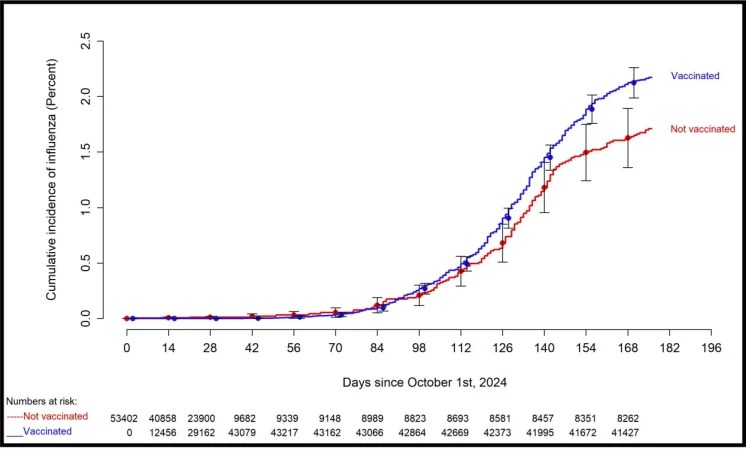
From the Cleveland Clinic study
I discuss these and other studies in my book, Vaccines, Amen.
That said: get a flu shot, don’t get a fu shot. That’s freedom. Everyone should be free to choose. But nobody should be coerced to get this or any medical product, especially, ironically, when the data reflects it has a net overall increase in infections.
If you do choose to get this product and are injured, you are always free to call our firm to represent you in the Vaccine Injury Compensation Program.
Pursuing Net Zero Makes the UK Vulnerable to Bad Weather, BBC, Not Climate Change
By Linnea Lueken | ClimateRealism | October 21, 2025
A recent article at the BBC, “Government told to prepare for 2C warming by 2050,” claims that the United Kingdom needs to prepare for increasing extreme weather as the planet approaches 2°C warming. This is false in its framing. Although it’s always a good idea to harden infrastructure against weather, the UK is not suffering more extreme weather due to human emissions of carbon dioxide, and the recommendation of attempting to prevent temperature rise is not going to help anyone.
The BBC’s post discusses a letter written by the UK government’s “Climate Change Committee” (CCC), which the BBC reports said, “[t]he country was ‘not yet adapted’ to worsening weather extremes already occurring at current levels of warming, ‘let alone’ what was expected to come.”
The CCC asked the government to “set out a framework of clear long-term objectives” to prevent further temperature rise, with new targets every five years and departments “clearly accountable” for delivering those goals. It warned that “a global warming level of 2C would have significant impact on the UK’s weather, with extreme events becoming more frequent and widespread.”
These include increases in heatwaves, droughts, floods, and longer wildfire seasons.
These claims are fearmongering, and no amount of deindustrialization – which is what’s implied by the “objectives to prevent further temperature rise”—will stop bad weather from happening, nor will it have any measurable impact on global average temperature.
The simple fact is that the UK contributes a very small amount of carbon dioxide to the atmosphere, which would in theory contribute an even smaller amount to warming. According to emissions data, the global share of all UK carbon dioxide emissions is 0.88 percent. Not even 1 percent. Eliminating UK emissions would do absolutely nothing to slow or stop any amount of warming that could be connected to human emissions, if they are, in fact, driving temperature changes.
On top of that, data do not show that weather is becoming more extreme in the UK.
The BBC claims that global warming will increase the wildfire season in the UK, and presumably they believe it must have already done so during the past 150 years of planetary warming. A longer wildfire season should result in more fires. Available data, however, does not show that wildfires are getting more frequent or more intense in the UK. Satellite data from Copernicus show no trend at all.
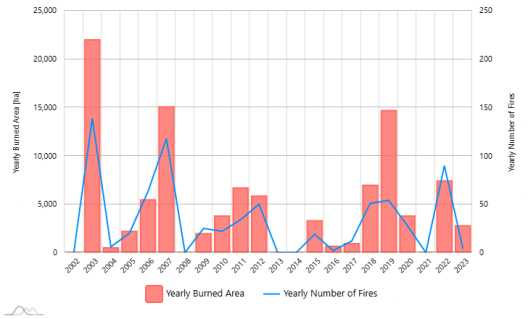
Chart of United Kingdom yearly burned area and number of fires from Copernicus
For another example, looking at Central England as this Climate Realism post did, the number of days per year breaching 25°C (77°F) show no rising trend, nor does the measured highest daily maximum.
Long term historical data for Europe show that drought is likewise not worse today than it was during the Renaissance, long before industrialization.
What is really notable is that Europe alone has actually already warmed 2°C since about 1820, according to historic European temperature averages, but no catastrophic change in weather has occurred. (See figure below)
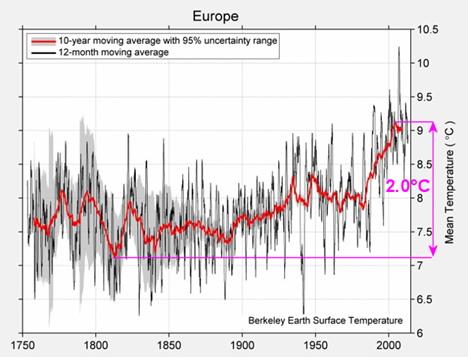
Berkeley Earth average European temperature showing a 2.0°C rise since about 1820. Source: http://berkeleyearth.lbl.gov/regions/europe
Weather isn’t getting worse, but bad weather does still happen. The UK’s largest industrial solar facility, for example, blighting the landscape of Anglesey, North Wales, was recently destroyed by a bad storm. That should be enough to give government agencies pause when it comes to at least some net-zero policies, but the real point is that hardening infrastructure against weather should be a priority regardless of climate change. Bad weather will occur, and it will wreck fragile facilities, including solar complexes.
Hardening against weather extremes, which always have and always will exist, is just common sense. As technology develops and new ways of protecting against bad weather are discovered (like the invention of air conditioning) they should be implemented where they can be, as they can be. Achieving net zero – especially for a country that emits negligible amounts of greenhouse gases anyway—will not save the UK from bad weather events.
As a news organization, the BBC should not carry water for its government or government advisory boards that want to continue wasting money on futile “objectives to prevent further temperature rise” when direct efforts to improve infrastructure and harden it against weather extremes, which have happened throughout history, would be far more effective in saving lives and reducing harm.
City Health Officials Tied to Soros Urge Public to ‘Get Vaccinated,’ Blame Policy Shifts for ‘Deadly Outbreaks’
By Michael Nevradakis, Ph.D. | The Defender | October 22, 2025
A coalition of city public health officials with ties to pharma investor George Soros is urging the public to “get vaccinated.”
In an open letter, the Big Cities Health Coalition accused federal officials of driving down vaccination rates and fueling an increase in dangerous infectious disease outbreaks by making “repeated false claims” about vaccines.
They wrote:
“Vaccines have eradicated devastating diseases and saved millions of lives. They keep classrooms safe and schools open. They allow children to spend time with friends and enjoy their favorite activities. They help parents and caregivers work to support their families.
The letter also addresses recent changes to the Centers for Disease Control and Prevention’s (CDC) recommended vaccine schedule for children and adults, though it does not mention U.S. Health Secretary Robert F. Kennedy Jr. or President Donald Trump by name.
The coalition, which represents 35 U.S. cities and about a fifth of the U.S. population, “has been working together to exchange ideas and address public health threats for more than two decades,” according to CNN, which first reported on the letter Monday.
Participating cities include New York, Los Angeles, Chicago, Boston, Houston, Dallas, Cleveland, Milwaukee and Seattle.
The group’s financial documents reveal support from billionaire financier Soros. Soros has also invested heavily in the pharmaceutical industry, including COVID-19 vaccine makers Pfizer and AstraZeneca, and Gilead Sciences, which produces remdesivir, a controversial antiviral treatment frequently given to COVID-19 patients.
Coalition attempted to scrub funding from Soros- and Gates-linked groups
The Big Cities Health Coalition was founded in 2002, according to a now-deleted webpage. The current version of its website contains little more than the group’s recent letter.
Links to the organization’s 2023 and 2024 annual reports are no longer active, but can be found on the Internet Archive and elsewhere. The reports show that Soros and other major healthcare-related organizations, including groups connected to Bill Gates, finance the coalition.
According to its 2023 annual report, the Open Society Foundations, founded by Soros, funded the coalition. Other funders include the Robert Wood Johnson Foundation, the W.K. Kellogg Foundation, healthcare provider Kaiser Permanente and the CDC Foundation.
In 2022, the Soros Economic Development Fund, an extension of the Open Society Foundations, partnered with Gavi, the Vaccine Alliance and MedAccess, a pharma-industry broker connected to the U.K. government, to invest $200 million in developing COVID-19 vaccines.
The Gates Foundation is a major funder of Gavi.
The Robert Wood Johnson Foundation has financially supported FactCheck.org, which previously flagged COVID-19-related “misinformation” for Facebook.
The CDC Foundation’s donor list includes the World Health Organization, the Gates Foundation and vaccine manufacturers including Pfizer, Merck and Johnson & Johnson.
According to internal medicine physician Dr. Clayton J. Baker, the coalition’s annual reports reveal clear conflicts of interest.
“It’s informative to look into the funding of organizations like the Big Cities Health Coalition,” Baker said. He noted that Kaiser Permanente paid patients $50 to get COVID-19 vaccines during the pandemic and fired employees who refused the shots, then tried to rehire them later when short-staffed.
According to the coalition’s Form 990 for fiscal year 2023, the organization spent $875,540 on “communications,” including engaging with “media, and federal policymakers about the importance of supporting local public health and health equity.”
The group also spent $433,703 on its “urban health agenda” and $147,397 on “equity/racial justice.”
The coalition’s members “meet periodically with Congressional staff” and “other federal government officials,” the filing states.
The organization’s schedule of contributors is listed as “restricted” in the filing.
Coalition blames unvaccinated for ‘deadly’ and ‘more frequent’ outbreaks
In its letter, the coalition blamed “declining” vaccination rates for “deadly outbreaks of diseases like measles and polio” and claimed that the outbreaks are “becoming more frequent.”
CNN reported that measles exposure at a South Carolina school led authorities to quarantine over 100 unvaccinated students, illustrating “one of the many reasons why Big Cities Health Coalition emphasizes the importance of vaccination.”
Research scientist and author James Lyons-Weiler, Ph.D., said that invoking measles and polio is a “manipulative framing device.” He said:
“Outbreaks of these diseases occur almost exclusively in highly vaccinated populations where immunity has waned, or where sanitation and migration variables are misattributed as ‘vaccine refusal.’
“By portraying every outbreak as proof of anti-vaccine rhetoric, the coalition seeks to recapture moral high ground based on presumptions of safety, without addressing the underlying immunologic and ecological data.”
The coalition’s letter also warned of a potential uptick of COVID-19 and flu infections in the “rapidly approaching” cold and flu season.
However, Baker said the coalition’s letter “contains absolutely zero genuine evidence” to support its claims. He said:
“The coalition’s statement is embarrassingly inane. They say, ‘We are united behind a simple message: get vaccinated.’ Vaccinated with what? They make no distinction between necessary or unnecessary, safe or unsafe, effective or ineffective shots. Just ‘get vaccinated.’ That’s like saying ‘get medicated.’ This is the asinine level of rhetoric to which vaccine fanatics are currently reduced.”
Emily Hilliard, press secretary for the U.S. Department of Health and Human Services (HHS), dismissed the coalition’s concerns.
“HHS is restoring the doctor-patient relationship so people can make informed decisions about their health with their providers,” Hilliard told The Defender.
Letter rooted in data, not ‘political ideology,’ coalition members say
Coalition members told CNN their letter is an attempt to restore public trust in science, not an effort to politicize public health recommendations.
“We have to make our public health decisions based on data and not on political ideology,” Dr. Philip Huang, director of the Dallas County Health and Human Services Department, told CNN. “We have to be the voices for that science and reason.”
Huang said the current CDC administration “seems more driven by political ideology than actual data and science, so it undermines the trust.”
Lyons-Weiler disputed the coalition’s claims, calling the letter “the opening salvo in an attempt to rebuild centralized narrative control over immunization policy.”
“Language such as ‘talk with your doctor’ and ‘tune out political noise’ is designed to sound apolitical while reinstating top-down message discipline,” he said.
CDC changes to vaccine policy spark pushback across U.S.
The coalition “is the latest group to take a strong public stand in support of vaccination as a direct response to concerns that the federal government is limiting access and raising doubts,” CNN reported.
Earlier this month, the CDC updated the childhood immunization schedule to recommend individual-based decision-making regarding COVID-19 vaccination for children 6 months and older, following the CDC’s Advisory Committee on Immunization Practices (ACIP) unanimous vote to adopt the recommendation.
Last month, ACIP also voted to recommend limiting the MMRV (measles, mumps, rubella and varicella, or chickenpox) vaccine to children ages 4 and older. And in June, the committee voted to stop recommending flu shots containing thimerosal — a preservative linked to neurodevelopmental disorders.
In response, 15 Democratic governors launched the Governors Public Health Alliance last week to coordinate their public health efforts independently of national public health agencies.
Previously, four Western states announced the formation of the West Coast Health Alliance, which aims to issue its own immunization guidelines.
In August, the American Academy of Pediatrics (AAP) issued “evidence-based” recommendations calling for COVID-19 shots for infants, young children and children in “high-risk” groups. In July, the AAP and five other medical organizations sued Kennedy over new COVID-19 vaccine guidance.
This article was originally published by The Defender — Children’s Health Defense’s News & Views Website under Creative Commons license CC BY-NC-ND 4.0. Please consider subscribing to The Defender or donating to Children’s Health Defense.
Does conventional climate science threaten civilization?
By Vijay Jayaraj | American Thinker | October 14, 2025
Practitioners of rigorous scientific methodology — from the 17th century’s Galileo to 1965’s winner of the Nobel Prize in Physics, Richard Feynman — would consider today’s climate research an embarrassment, shaped by uncritical orthodoxy and zealotry rather than genuine testing of hypotheses.
Classical science welcomes skepticism. It thrives in an environment where debate and revision are encouraged. Today’s climate conformists declare the debate “settled” and label those with questions as deniers, effectively outlawing the skepticism that drives scientific progress.
Plenty of 21st-century scientists have objected to this travesty. Dr. Matthew Wielicki, formerly of the University of Alabama, put it bluntly: “Science should be self-correcting. Climate science isn’t. It’s self-preserving.”
Dr. Richard Lindzen of the Massachusetts Institute of Technology notes that climate dogma has little to do with evidence: “The narrative is a quasi-religious movement predicated on an absurd scientific narrative.”
In essence, modern climate science has been transformed into a political apparatus dominated by campaign-style advocacy, subverting the foundational principles of evidence-based inquiry.
Climate cultists treat every warming or cooling event as anthropogenic by default, ignoring millennia of natural variation. “While substantial concern has been expressed that emissions may cause significant climate change, measured or reconstructed temperature records indicate that 20th- and 21st-century climate changes are neither exceptional nor persistent, and the historical and geological records show many periods warmer than today,” say scientists writing to the American Physics Society.
Gregory Wrightstone, geologist and best-selling author of A Very Convenient Warming, says that the longer geological record reveals numerous epochs with much higher temperatures and levels of atmospheric CO₂, all predating the influence of modern human activity.
Wrightstone rejects descriptions of current conditions as dangerous, saying that “Earth is growing greener, and temperature-related deaths are declining.” The evidence indicates the planet is not imperiled but flourishing.
Deaths from natural disasters are at historic lows, life expectancy continues to climb, and global crop yields in both advanced and developing economies are at record highs. Rising atmospheric CO2 is associated with improved plant growth, not planetary degradation.
The much-hyped “disappearing islands” of the Pacific continue to exist. Many atolls have grown in size due to coral and sediment accumulation. Arctic sea ice, too, has refused to vanish; the 2025 minimum extent is nearly half a million square kilometers larger than 2007.
Yet none of these realities make it into school textbooks or U.N. briefings. The crisis narrative is perpetuated to sustain a trillion-dollar “green” industry dependent on fear, political support and publicly financed subsidies.
Error-riddled computer models that back doomsday predictions violate core tenets of scientific methodology. When tested against known outcomes, they routinely fail.
In 2014, Dr. Roy Spencer compared real-world satellite data with over 90 climate models. Nearly all the models exaggerated warming. Spencer summarized the absurdity: “If 95% of your models disagree with observations, the models are wrong — not reality.”
Dr. William Happer, a physicist at Princeton University and former scientific advisor to the U.S. government, notes: “Observations anchor our understanding and weed out the theories that do not work. This has been the scientific method for more than 300 years… computer models are not meant to replace theory and observation and to serve as an authority of their own.”
Yet these models drive the global policy agenda. The insistence on short time frames and cherry-picked data appear to support catastrophic scenarios; long-term geological records contradict them. Steve Milloy, author of JunkScience.com, described the phenomenon perfectly: “Climate science has become a political enterprise. The conclusion comes first; the data are adjusted later.”
Science belongs to critical thinkers, not to committees. The climate establishment will collapse as its funding dries up or the public stops believing its prophets. Reality will win — as it always does — but the longer the struggle, the higher the human cost of irrational policies.
Reason, empirical investigation and intellectual freedom have been undermined by a politically charged climate movement, which is a threat to science and civilization itself.
Vijay Jayaraj is a Science and Research Associate at the CO2 Coalition, Fairfax, Virginia. He holds an M.S. in environmental sciences from the University of East Anglia and a postgraduate degree in energy management from Robert Gordon University, both in the U.K., and a bachelor’s in engineering from Anna University, India.
Journal Faces Lawsuit Over Discredited Study Used by GSK to Market Dangerous Antidepressant to Teens
By Brenda Baletti, Ph.D. | The Defender | October 14, 2025
The publisher of a decades-old peer-reviewed article claiming that the antidepressant paroxetine, marketed as Paxil, is safe and effective for teens, said it is reviewing the article.
Meanwhile, a lawsuit filed last month against the American Academy of Child & Adolescent Psychiatry (AACAP) and Elsevier, which publishes the organization’s journal, JAACAP, demands that the journal retract the article.
Attorney George W. Murgatroyd III, acting on behalf of the public, filed the suit in the Superior Court of the District of Columbia Civil Division.
Published in 2001, the article ignited decades of controversy. Critics say it overstated Paxil’s benefits and downplayed its risks, including increased suicide risk among teens.
Known as the “Keller article,” after lead author Dr. Martin Keller, then chair of psychiatry at Brown University, the paper reported partial results from Study 329, an investigation into whether paroxetine was safe and effective for treating depression in adolescents.
GlaxoSmithKline, now GSK, which manufactures Paxil, funded the study.
The article reported that “paroxetine is generally well tolerated and effective for major depression in adolescents” — a claim now widely known to have been based on distorted results.
The study actually found the drug was neither safe nor effective. Internal documents later showed that GSK hired a PR firm to ghostwrite the article, cherry-picking data and recruiting 20 co-authors to lend credibility. The company then used the paper to market Paxil to doctors.
Peer reviewers raised concerns about the study’s data. As soon as the article went live, practitioners wrote multiple letters to the editor asking why statistically significant indications that the drug caused serious adverse events, including “suicidal gestures,” were dismissed in the clinical trials and not addressed in the paper.
According to the complaint, the Keller article became one of the most cited articles supporting the use of antidepressants in child and adolescent depression — even though evidence from two other GSK trials confirmed the drug was ineffective and risky.
Even though the U.S. Food and Drug Administration (FDA), which never approved the drug for use in children and adolescents, raised concerns about the study.
Calls for JAACAP to retract the article began in 2010, bolstered by:
- A 2015 BMJ reanalysis confirming the drug’s dangers and data manipulation.
- Evidence from GSK’s internal files and depositions in other Paxil lawsuits.
- A 2012 U.S. Department of Justice case in which GSK paid $3 billion to settle criminal fraud charges related to Paxil and two other drugs.
Still, the JAACAP and Elsevier have so far refused to retract the article.
Murgatroyd has represented a dozen families whose children died by suicide or were severely injured in a suicide attempt, allegedly as a result of taking Paxil. His litigation team has deposed all the article’s authors and has combed through GSK’s internal documents.
Both JAACAP and Elsevier continue to profit from the article, according to court documents. It costs $41.50 to download from the JAACAP website, and $33.39 to download from Elsevier’s ScienceDirect website.
The complaint asks the court to “redress the knowing publication, distribution, and continued sale of a false and deceptive medical article that has misled physicians, consumers and institutions for over two decades and continues to endanger adolescent mental health and safety as well as public trust in scientific integrity.”
JAACAP last week published an “expression of concern” indicating that the Committee on Publication Ethics (COPE) will manage recommendations and guidance.
COPE is an international, nonprofit organization that provides guidance to journal editors on publication integrity. COPE does not investigate whether there is research or publication misconduct — it only examines whether the journals involved followed its code of conduct.
AACAP did not respond to The Defender’s request for comment. Elsevier responded only that it would need more time to respond to such a request.
Study 329 revealed serious safety risks, including suicidal behavior
Before publishing the Keller article, GSK funded three studies to test the safety and efficacy of paroxetine to treat depression in children and adolescents. The drug failed to demonstrate efficacy in all three trials.
The first study — Study 329, completed in 1998 — also revealed serious safety risks, including suicidal behavior. Later studies confirmed those risks. According to court documents, GSK knew the “disappointing” results of Study 329 would be a commercial disaster for the drug.
However, the study had some minimal positive results, which could indicate the possibility of efficacy. It met 15% of the outcomes the researchers had been hoping for to show that Paxil worked. GSK officials privately conceded these results were not sufficient to show efficacy.
Yet GSK planned to publish selective data from the study in a prestigious medical journal to claim the drug worked.
GSK hires PR firm to write first draft of JAACAP article
The drugmaker hired a private public relations company, Scientific Therapeutics Information Inc. (STI), to write the article. An employee drafted it and sent it to Keller, who was selected to be the lead author and finish the publication process. STI’s role was not listed in the final draft submitted to JAACAP.
Later in 1998, GSK’s second study, number 377, also failed to show efficacy. The study also showed four times the number of serious adverse events related to suicidality as the placebo study, according to court documents.
That same year, although GSK by then knew of two studies showing the drug was ineffective, the drugmaker decided not to publish any data from Study 377 and instead paid “directly or indirectly” three prominent psychiatrists — Karen Wagner, M.D., Ph.D., Dr. Neal Ryan, and Keller, who had worked on Study 329 — to promote Paxil as a safe and effective treatment for adolescent depression at conventions, forums and at a meeting of the American Psychiatric Association.
The third study, 701, concluded in 2001, also failed to demonstrate efficacy six months before the Keller article was published — yet GSK and JAACAP went ahead with publication.
Twenty authors who were psychiatrists were added as authors of the Keller article. Two GSK employees, James P. McCafferty and Rosemary Oakes — the only authors without medical or doctoral degrees — were also added, although their affiliation with GSK wasn’t disclosed.
Testimonies from depositions in other trials indicated that 10 of the authors didn’t even comment on the paper, and none of them had access to raw clinical trial data — although they all said they did.
None of them disclosed conflicts of interest, and all of them signed off on the article as their work.
GSK used Keller paper to sell $1 billion worth of Paxil to teens
Once JAACAP published the article, GSK’s sales team began promoting Paxil as “safe and effective” for teens.
GSK sent the article to all of its 2,000 Paxil sales reps. In the three years that followed the article’s publication, it is estimated that the company made over $1 billion from sales of the drug to adolescents, the court documents state.
In the following few years, regulators in the U.K. and the European Union issued alerts about the dangers of paroxetine based on its link to suicide ideation in teens.
In 2003, the FDA issued a similar warning, saying there was “no evidence” the drug was effective.
In the following years, some of the authors began to discuss their concerns about suicidality internally, although they made no changes to the article, according to court documents.
Have JAACAP and Elsevier refused retraction to protect authors?
The complaint filed last month alleges that JAACAP editors and Elsevier refused to retract the Keller article “in an apparent attempt to shield at least five of the Keller article authors who are prominent members of the AACAP from possible ramifications of retraction.”
Conflicts of interest among the article’s authors are glaring. Keller, Wagner and Ryan all received money to promote Paxil as safe and effective in the years before publication, according to the complaint.
Two authors, McCafferty and Oakes worked for GSK, the complaint said, and did not disclose that in the article.
Several authors of the Keller article went on to hold influential positions within the AACAP. Wagner was president from 2017-2019.
Dr. Gabrielle A. Carlson also served as president of the organization from 2019-2021. Before that, she was chair of AACAP’s Program Committee from 2011-2014, and won AACAP’s Virginia Q. Anthony Outstanding Woman Leader Award.
Dr. Graham Emslie has served on the JAACAP Editorial Board. Dr. Boris Birmaher has chaired committees in the AACAP and published numerous articles, editorials and organizational practice parameters.
The current editor-in-chief of the journal, Dr. Douglas Novins, who was not an author on the article but holds final decision-making power over retraction, has worked closely with some of the authors — co-authoring editorials with both past presidents.
Dr. David Healy, co-author of the BMJ article that reanalyzed the data from Study 329, told The Defender that for years, he and others who had been investigating this issue assumed the journal had been duped by GSK, but later realized the journal “was not duped — it was complicit.”
Keller and then-editor Dr. Mina Dulcan were close friends, Healy said — a relationship revealed in transcripts of interviews Dulcan did for a set of BBC programs.
This article was originally published by The Defender — Children’s Health Defense’s News & Views Website under Creative Commons license CC BY-NC-ND 4.0. Please consider subscribing to The Defender or donating to Children’s Health Defense.
‘Formal, Unequivocal Apologies’ Needed to Restore Public Trust After COVID Vaccine Mandates
By Jill Erzen | The Defender | October 15, 2025
The public deserves “formal, unequivocal apologies from governments and medical bodies” for COVID-19 vaccine mandates and for “silencing truth seekers,” according to a paper published Oct. 9 in the journal Science, Public Health Policy and the Law.
Vaccine mandates and lack of transparency during the COVID-19 pandemic eroded public trust, which deepened the divide between health authorities and the people they serve, according to authors Dr. Aseem Malhotra and Andrea Lamont Nazarenko, Ph.D.
“The pandemic demonstrated that when scientific integrity is lacking and dissent is suppressed, unethical decision-making can become legitimized,” they wrote. “When this happens, public confidence in health authorities erodes.”
Trust in public health agencies plummeted during the pandemic. Confidence in decision-making at the Centers for Disease Control and Prevention (CDC) fell from 73% in 2020 to 61% in 2025, according to polling firm KFF.
Public opinion on physicians and hospitals also suffered, with trust dropping from 71.5% in April 2020 to 40.1% in January 2024, according to a study in JAMA Network Open.
Restoring faith in public health agencies requires “long overdue” apologies, as well as “full transparency of data, independent evaluation of evidence, and accountability through both policy change and public acknowledgment of harm,” the paper’s authors said.
‘Pandemic of the vaccine injured’
The “safe and effective” narrative surrounding the COVID-19 vaccine shifted over the years toward “unsafe and defective,” according to the authors.
Policymakers’ unwillingness to acknowledge the vaccine’s emerging safety signals may be “the most egregious failure” of all. “We are currently facing what some call a ‘pandemic of the vaccine injured,’” the authors said.
In 2022, a study in the journal Vaccine found that the risk of serious harms from the COVID-19 vaccine was two to four times greater than the risk of being hospitalized with COVID-19. That same year, researchers surveyed 40,000 Germans and found a high rate of severe side effects from the COVID-19 vaccine that persisted for months or longer.
Studies from 2025 suggest the risks may not decrease over time.
- A preprint study found that genetic material contained within mRNA COVID-19 vaccines can integrate into the human genome, potentially contributing to the onset of aggressive cancer.
- An analysis of a Japanese database of 18 million people showed that people who received COVID-19 vaccines had a significantly higher risk of death in the first year after vaccination compared to the unvaccinated, and the risk increased with each additional dose.
- A peer-reviewed study published in EXCLI Journal was the first to uncover statistically significant evidence of increased cancer risk following COVID-19 vaccination in Italy.
In public health, policymakers must anchor their decisions in cumulative evidence that evolves with new knowledge, according to Malhotra and Nazarenko. “It is a profound failure of scientific and ethical responsibility to overlook these safety concerns,” they wrote.
Health systems must adjust to manage ‘psychological fallout’ of pandemic
The authors said the health risks revealed by the emerging COVID-19 vaccine studies illustrate one of the central lessons of the pandemic: evidence evolves. Policies must be adjusted as new evidence comes to light, but that didn’t happen, they wrote.
“If the full body of research ultimately shows a net harm from COVID-19 vaccination and pandemic-era policies, the greater barrier will be psychological, not scientific,” Malhotra and Nazarenko said. “Our social systems must therefore be prepared to manage the psychological fallout, responding with clarity and compassion.”
To rebuild legitimacy, institutions must actively uphold ethical principles that prioritize the public over political or corporate interests, they said. The U.S. Department of Health and Human Services (HHS) is taking steps in this direction, according to the authors.
In September, U.S. Health Secretary Robert F. Kennedy Jr. led two roundtable discussions on long COVID that included doctors, researchers and patients. The talks were, in part, in response to “the calls that I get almost every day from people who are suffering from long COVID across the country and don’t know where to go and feel that their voices aren’t being listened to,” Kennedy said.
In August, Kennedy canceled nearly $500 million in contracts and grants intended to develop mRNA vaccines. “We reviewed the science, listened to the experts, and acted,” Kennedy said in announcing the move.
Restoring public trust hinges on informed consent and shared decision-making, according to the authors.
“A contributing factor to the prevalence of injury has been the extent to which government officials and public health authorities overrode the doctor-patient relationship, taking precedence over the ethics of individualized medicine,” they wrote.
Earlier this month, the CDC handed supporters of informed consent a win by updating its childhood immunization schedule to emphasize individual-based decision-making for COVID-19 vaccination in children 6 months and older.
‘Suppression may quiet critics, but it suffocates science’
In 2024, the journal Cureus retracted the first peer-reviewed paper to provide an extensive analysis of COVID-19 mRNA vaccine trial data and post-injection injuries.
“Silencing contestation is not a neutral choice; it is contrary to the methods by which science corrects itself,” Malhotra and Nazarenko said.
“Voices that push the mainstream should be encouraged, not silenced. Yet, contemporary public health often substitutes condemnation for curiosity, marginalizing dissent even when data warrant debate,” they wrote.
According to the authors, Kennedy’s critics provide “the most striking example of silencing opposition.”
Vaccine lobbyists at a leading biotech industry trade group purportedly criticized Kennedy’s “anti-vaccine stance” during an April meeting, calling him a “direct threat to public health.” A spokesperson for the organization denied the statements.
Kennedy’s policies at the HHS have sparked similar claims from six former U.S. surgeons general, who said he is “endangering the health of the nation.” Several senators have made similar assertions and called for Kennedy’s resignation.
Corporations and regulatory bodies commonly use character assassination to weaken their opposition, according to the paper’s authors. Those in power silence dissent by discrediting critics with smear campaigns and labels like “anti-vaxxer,” shifting focus from evidence to identity.
“Suppression may quiet critics, but it suffocates science,” Malhotra and Nazarenko wrote. “The remedy for disagreement is better evidence and open debate — not censorship or character assassination. Robust science requires robust dissent.”
This article was originally published by The Defender — Children’s Health Defense’s News & Views Website under Creative Commons license CC BY-NC-ND 4.0. Please consider subscribing to The Defender or donating to Children’s Health Defense.
No, Reuters, Climate Change is Not Threatening Europe’s Resources
By Anthony Watts | ClimateRealism | October 2, 2025
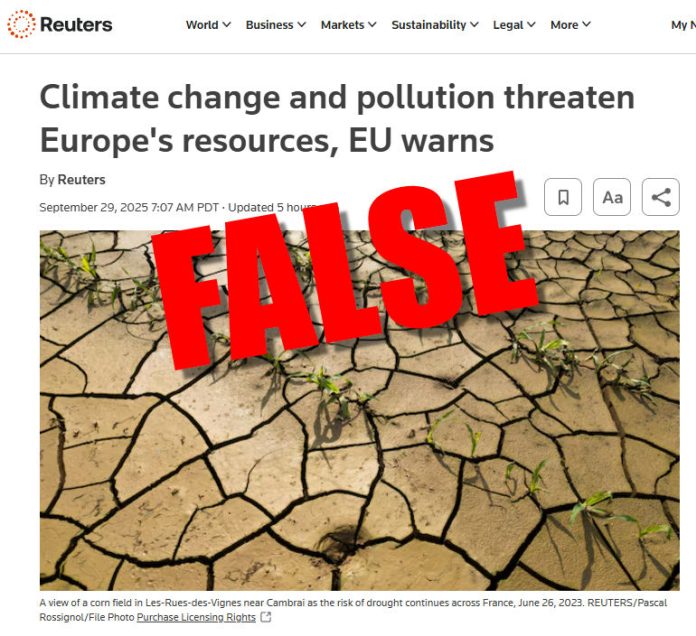
In the article, “Climate change and pollution threaten Europe’s resources, EU warns,” Reuters asserts that climate change poses a “direct threat” to Europe’s natural resources, citing an EU environment agency report, and warns of worsening droughts and extreme weather. These claims are patently false. History shows far worse droughts in the past with no appreciable trend of other types of extreme weather events becoming more common or severe. Europe’s resource problems are caused by humans, stemming from overuse and poor management, just not from human-caused climate change.
The article declares that “Europe is the world’s fastest-warming continent and is experiencing worsening droughts and other extreme weather events.” It further states that more than 80 percent of protected habitats are in poor condition, blaming climate change and pollution.
“The window for meaningful action is narrowing, and the consequences of delay are becoming more tangible,” European Environment Agency executive director Leena Yla-Mononen told Reuters. “We are approaching tipping points – not only in ecosystems, but also in the social and economic systems that underpin our societies.”
The is political rhetoric couched in weak science.
The reality is far more mundane. The European Environment Agency’s own data show that water stress is primarily linked to intensive agriculture, industrial demand, and population growth. As the “Review of National Water Allocation Policies in Six European Countries” documents, many European countries continue to over-allocate water rights, creating artificial scarcity even in years with average rainfall. This is a governance problem, not a climate one. Similarly, biodiversity decline across Europe is overwhelmingly the result of land use change, habitat fragmentation, and invasive species—not a few tenths of a degree of warming over the last few decades.
When it comes to extreme weather, Reuters’ claims are directly contradicted by the Intergovernmental Panel on Climate Change (IPCC) AR6 report which notes there is little to no attribution of many types of severe weather to climate change. As Climate at a Glance: Extreme Weather summarizes, data do not support claims that extreme weather events are becoming more frequent or severe worldwide.
Further, Europe’s worst droughts occurred long before today’s modest warming. The megadrought of 1540 lasted an entire year, with contemporaneous records describing riverbeds across central Europe running dry, widespread crop failure, and thousands of deaths. More recent severe droughts struck in the 1920s and 1940s, periods that cannot be blamed on modern greenhouse gas emissions. The paper “The 1921 European drought: impacts, reconstruction and drivers” describes the 1921 European drought as “the most severe and most widespread drought in Europe since the start of the 20th century.
In “A drought climatology for Europe,” decadal trends show “greater pan-European drought incidence in the 1940s, early 1950s … and lesser drought incidence in the 1910s, 1930s” over the 20th century.
And there are many more worse droughts even further back in the past, before climate change even had a name, as this graph from the 2021 paper Recent European drought extremes beyond Common Era background variability shows:
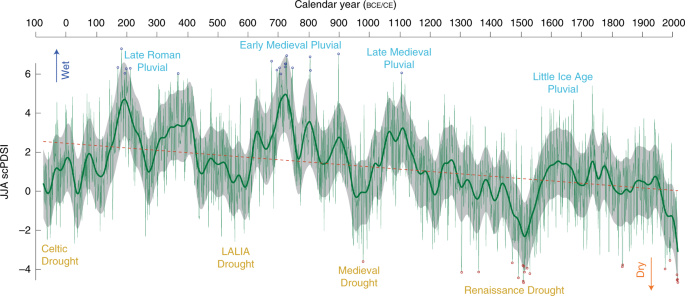
Compared to these historical drought episodes, recent intermittent summer dry spells are far from extraordinary.
Also, as detailed in multiple Climate Realism posts on the topics neither floods, here and here, for example, nor wildfires, here and here, are more frequent or severe now than they have been in the past.
Even heatwaves are neither more frequent nor deadly now than they have been historically, with deaths from temperatures declining.
Europe’s actual environmental challenges—such as nutrient pollution in rivers, overfishing, and urban sprawl—require pragmatic policy solutions, not grandiose climate pledges. By conflating resource depletion with climate change and exaggerating extreme weather risks, Reuters has misled its audience. The problems it describes are not new, not worsening because of climate change, and not solvable by CO₂ reductions. They are solvable by better governance, better planning, and better science. Once again, journalism has been sacrificed to climate alarmism.
DR. ELIZABETH MUMPER ON AUTISM, VACCINES, AND HONEST SCIENCE
The HighWire with Del Bigtree | October 9, 2025
Pediatrician and researcher Dr. Elizabeth Mumper joins Del to discuss experiences throughout her career, including the vast increase in autism observed since she was in medical school, the clear health differences she’s seen between vaccinated and unvaccinated children, and how scientific inquiry has been captured. She explains why the upcoming film ‘An Inconvenient Study’ could mark a turning point for both doctors and parents questioning vaccine safety.
The Nature of hypocrisy: pharma-funded journals smearing independent voices
Nature alleges that I endanger public health, but it is the journal — steeped in pharma money — that ought to be looking inward.
By Maryanne Demasi, PhD | October 1, 2025
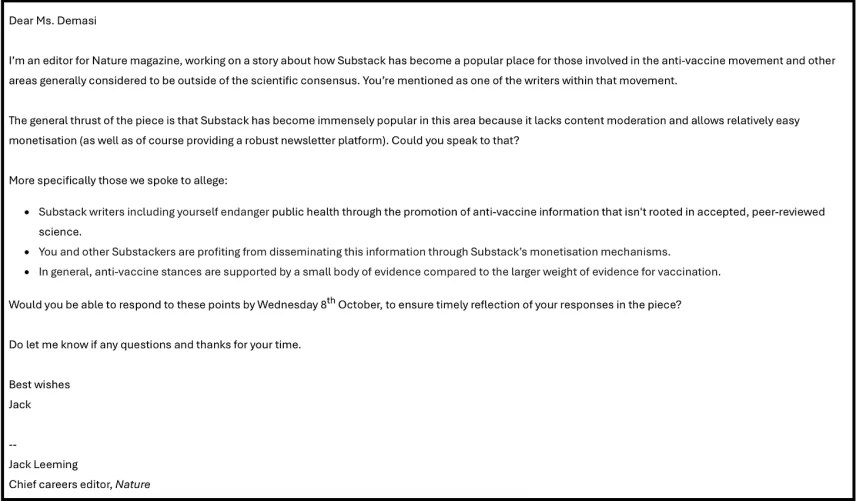
When an editor from Nature emailed me this week, it wasn’t a neutral request for comment. It was a prelude to a hit piece — filled with defamatory accusations and framed around a predetermined narrative.
According to the email, I was being lumped into an “anti-vaccine movement,” accused of “endangering public health,” and “profiting from disseminating misinformation.”
No evidence was provided. No articles were cited. No definition of “anti-vaccine” was offered. No complainants were named. Just blanket accusations intended as a character assassination.
Conflict of interest at the heart of Nature
And who is casting these stones?
Nature — a journal that publishes vaccine research while pocketing revenue from pharmaceutical advertising and sponsored content.
To then assign an editor to target independent journalists who scrutinise that very industry is a glaring conflict of interest.
A medical journal acting as both mouthpiece and judge of what counts as “misinformation” is like a tobacco company funding lung health studies while attacking anyone who questions them.
The hypocrisy is staggering.
On its own website, Nature boasts of partnerships with Johnson & Johnson, Merck, AstraZeneca and other vaccine companies, dressing them up as “pioneering collaborations” to “support science.” It even publishes paid advertising features.

Meanwhile, I’ve never taken a cent from the drug industry. My work is sustained by readers who choose to support independent journalism.
Yet Nature accuses me of “profiting” — as if being funded by the public is more corrupting than raking in thousands, if not millions, from the very companies you’re supposed to scrutinise.
To test how deep the rot runs, I’ve requested that Nature disclose its advertising revenue for the past decade, broken down by pharmaceutical corporations, government agencies, and NGOs.
I will publish those figures if and when they are provided.
Loaded language
Nature’s email branded me part of an “anti-vaccine movement.” But what does that actually mean?
Is questioning regulatory capture “anti-vaccine”?
Is demanding the timely publication of safety signals “anti-vaccine”?
Is exposing the failures of the vaccine injury compensation scheme “anti-vaccine”?
Is pointing out the poor oversight of vaccine trials “anti-vaccine”?
By that logic, critics of arsenic in drinking water would be “anti-arsenic,” and anyone calling for safer driving would be “anti-car.” The absurdity is obvious, yet the label is useful to silence debate.
And the email’s language was revealing.
Phrases like “scientific consensus” and “peer-reviewed science” are waved around like trump cards, but in practice they are red flags — appeals to authority rather than evidence.
‘Consensus’ can be manufactured. And ‘peer review’ is no shield against corruption when journals themselves are compromised.
I have documented journal–pharma ties, the retraction of inconvenient studies, and the use of pharma-funded “fact checks” masquerading as science to discredit politically uncomfortable findings.
So when an editor of Nature hides behind these clichés instead of addressing the evidence I present, it tells you everything. This isn’t about protecting science, it’s about protecting a narrative.
And I’m clearly not the only target.
Dr Robert Malone — also a Substack publisher and now a member of the CDC’s Advisory Committee on Immunisation Practice — received the same media request from Nature.
The journal’s smear campaign extends even to those who now sit on America’s top vaccine advisory body.
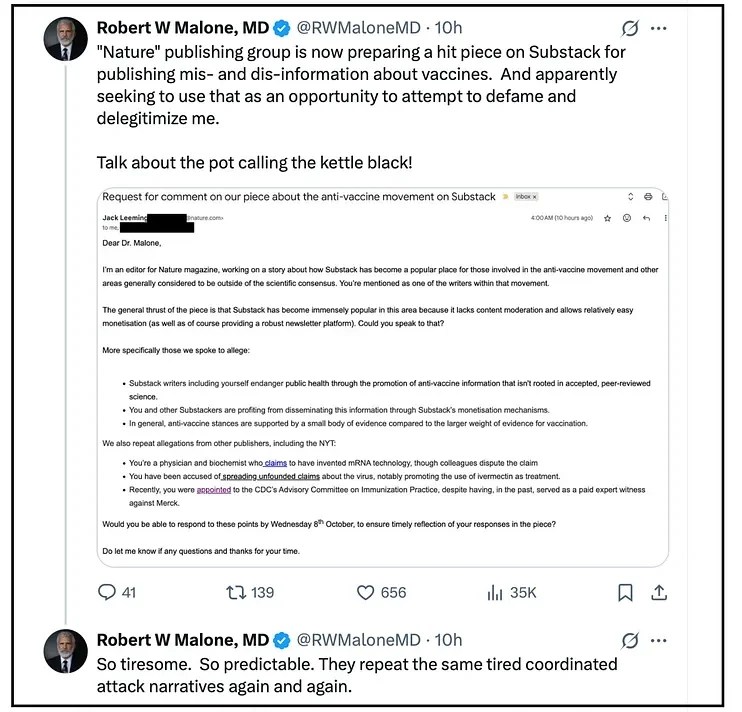
Nature insists that “anti-vaccine stances are supported by a small body of evidence compared to the larger weight of evidence for vaccination.”
But that’s probably because journals act as gatekeepers, blocking challenges to orthodoxy and shutting out novel viewpoints. Studies that raise concerns are rejected, buried or retracted, while industry-friendly findings sail through unopposed.
It isn’t the science that’s lacking — it’s the willingness of journals to let inconvenient results see the light of day. The house of cards is collapsing, and that is why the attacks on dissent are more aggressive than ever.
And those attacks often come from self-proclaimed experts who are themselves conflicted, embedded in institutions sustained by the teat of industry, and unwilling to disclose their own conflicts.
Pot calling the kettle black: the Proximal Origin scandal
Notably, while Nature postures as a guardian against “misinformation,” it bears responsibility for one of the pandemic’s most notorious scandals.
In March 2020, Nature Medicine — part of the Nature portfolio — published “The proximal origin of SARS-CoV-2,” which declared the virus could not have been engineered in a lab.

The paper was splashed across headlines and weaponised to dismiss the lab-leak theory as a “conspiracy.”
But private emails and Slack chats told another story. The authors harboured serious doubts and admitted a lab origin could not be ruled out.
Hundreds of scientists now call the paper a ‘political tract’ dressed up as science, and thousands have petitioned for its retraction. Yet Nature Medicine refuses, brushing it aside as a “point of view” piece.
If that isn’t misinformation, then what is?
Even the White House has distanced itself. Its website now acknowledges that the Proximal Origin paper was used to suppress debate, and alleges the authors were nudged by Dr Fauci to push the “preferred” zoonotic origin narrative.
Time for accountability
Make no mistake, this is ‘the system’ at work.
Powerful journals with financial ties to industry unleashing hatchet men to smear independent journalists and scientists, rather than engaging with evidence.
I won’t play along. My job is to hold institutions accountable, not to curry their favour. If Nature wants to brand that “misinformation,” so be it. History shows that today’s heresy is often tomorrow’s truth.
This goes to the heart of the corruption of medical publishing — a system Robert F. Kennedy Jr has repeatedly warned about, and one that now demands scrutiny at the highest levels.
With Dr Jay Bhattacharya at the helm of the National Institutes of Health, there is finally an opportunity to investigate the conflicts of interest, selective censorship, and financial entanglements that journals like Nature have normalised.
When those who profit from pharma partnerships claim the authority to police what lies “outside the scientific consensus,” public trust in science collapses.
And that collapse is not the fault of independent journalists asking hard questions. It is the fault of journals that serve industry interests over science.
Featured Video

or go to
Aletho News Archives – Video-Images
From the Archives
Israel Would Have No Qualms About USS Liberty-Style FALSE FLAG If Iran Campaign Falters – Analysts
By Ilya Tsukanov – Sputnik – 18.06.2025
Donald Trump is mulling whether or not to join Israel’s aggression against Iran as Tel Aviv faces problems sustaining its defenses against growing counterstrikes, and apparently lacks a realistic game plan for an end to hostilities after failing to achieve its goals. Analysts told Sputnik how the US could be ‘nudged’ into the conflict.
“The US is already assisting Israel with supplies, intel, refueling support, etc. One of the many US posts in the region could be attacked for a casus belli,” former Pentagon analyst Karen Kwiatkowski explained.
“If Trump doesn’t comply with Israel’s demand” and join its aggression voluntarily, “a false flag may be needed” to drag the US in, Kwiatkowski, retired US Air Force Lt. Col.-turned Iraq War whistleblower, fears.
Netanyahu has a diverse array of options at his disposal, according to the observer, including:
- a false flag against US assets abroad blamed on Iran or one of its Axis of Resistance allies, like the Houthis
- a US domestic attack or assassination blamed on Iran
- Iranian air defenses ‘accidentally’ hitting a civilian jetliner carrying Americans
- use of a dirty bomb or nuclear contamination somewhere in the region blamed on Iran
- even blackmailing by threatening to use nukes against Iran if the US doesn’t join the fight
Kwiatkowski estimates that Israel probably has “enough blackmail power” against President Trump and Congress to avoid the necessity of a false flag operation, but a “USS Liberty-style” attack, targeting the soon-to-be-retired USS Nimitz supercarrier that’s heading to the Middle East, for example, nevertheless cannot be ruled out entirely, she says. … continue
Blog Roll
 Aletho News
- Smotrich calls for annexation of South Lebanon to Litani River
- Echos of Gallipoli? Hormuz and the Geography of Hubris
- Pakistan PM backs Iran’s right to self-defense amid tensions
- Hungary blasts ‘fake’ EU accusation
- SAFE Debt Trap: Poland’s €43.7 Billion Bet on Unipolar Illusion
- War on Iran threatens global Gulf capital flows: FT analysis
- Mossad De Facto Admits To Inciting Riots In Iran
- Tehran: World grown thoroughly exhausted with US-Israeli ‘false flag storylines’
- Trump ‘stuck between a rock and a hard place’, lacks Iran war strategy: Ex-CIA chief
- Trump’s bombardment of fake news so far is working quite well. But where is it heading?
- If Americans Knew
- From Sde Teiman, the truth about Israel’s military justice system has been set free
- Child denied life-saving bone marrow transplant by Israel ‘because he is from Gaza’
- Raffi Berg: BBC Middle East Editor Exposed as CIA, Mossad Collaborator
- Jerusalem Archbishop Rebukes Netanyahu’s Statements on Christianity
- US to embed Palantir AI across entire military: Report
- Israeli-US war on Iran to drag on “a few more weeks” – Not a ceasefire Day 164
- Lebanon deaths top 1,200; Palantir AI to be embedded across US military – Not a ceasefire Day 163
- Israel’s assassination game: Take all pragmatists off the board
- Food shortages return to Gaza as Israel tightens aid restrictions under the cover of its war on Iran
- Trump demands trillions in payments from Gulf countries, billions from Harvard – Not a ceasefire Day 162
- No Tricks Zone
- Devastating Assessment Of Comirnaty Vaccine By Former Senior Pfizer Europe Toxicologist
- New Study: CO2 Is ‘Effectively Negligible’ As An Explanatory Climate Change Factor Since 2000
- Former Pfizer Toxicologist Dr. Helmut Sterz Tells Bundestag Hearing Pfizer Vaccine Should Have Never Been Approved
- Energy Expert: Germany’s Nuclear Phaseout Was A “500 Billion Euro Mistake”
- New Research: South Australia’s Mid-Holocene Sea Surface Temperatures Were 4°C Warmer Than Today
- Storing Green Energy To Last Germany 10 Days Would Require A 60-Million Tonne Battery
- New Studies: UK Sea Levels Were 4 Meters Higher Than Today During The Mid-Holocene
- Destructive Green New Deal: German Energy And Metal Group Warns Of Drastic Crisis
- New Study Documents A 20-Year Pause In Arctic Sea Ice Decline – Driven By Internal Variability
- Wake-up Call: Survey Shows Majority Of Germans Now Favor Postponing Climate Targets!
 Aletho News