Workers, trade unionists mobilise to block arms supply sites in the UK
MEMO | May 1, 2024
Workers and trade unionists shut down major UK sites involved in arms supplies to Israel this morning in response to a call to mobilise from Palestinian trade unions for workers to take action.
United under the banner “Workers for a Free Palestine” (WFFP), over 1,000 staffers and trade unionists blockaded the UK Department for Business and Trade in London and three BAE Systems’ arms factories in Wales, Scotland and North-West England to mark International Workers’ Day.
Today marks the 208th day of Israel’s ongoing bombing campaign in Gaza, which has seen over 35,000 Palestinians killed. The British Government has not implemented an arms embargo on Israel, in contrast to actions taken by its allies, including Canada, the Netherlands, Japan, Spain and Belgium. In response, British workers are engaging in direct action by initiating their own embargo against arms supplies to Israel.
A trade unionist and organiser for WFFP taking part in the London blockade, Tania, said: “If arms company bosses and Britain’s political elite won’t impose an arms embargo, we, the workers, will enforce it from below.”
“In our most disruptive action yet, a wave of People’s Arms Embargoes is sweeping across England, Scotland and Wales on May Day, as workers and trade unionists shut down arms factories and a government which enables this genocide profiteering and makes the UK directly complicit in these crimes against humanity.”
The blockade at the Department for Business and Trade was organised in support of civil servants who have urged the government to “cease work immediately” on arms export licences to Israel, citing concerns that the administration is complicit in war crimes being committed in Gaza. Their union, the Public and Commercial Services Union (PCS), is considering legal measures to protect its members from being compelled to engage in unlawful acts.
The establishment of these “People’s Arms Embargoes” across the UK coincides with a recent decision by a High Court judge to allow a legal challenge against UK arms exports to Israel to proceed, with a hearing scheduled for later this year.
This surge of activism also comes in the wake of a letter signed by 600 lawyers, academics,and retired senior judges, including former Supreme Court justices, which cautions that the UK government’s ongoing arms sales to Israel may violate international law, referencing the International Court of Justice (ICJ)’s finding that Israel’s actions in Gaza could constitute genocide.
“When Israel massacres entire families and razes cities to the ground, companies like Elbit Systems, BAE, Leonardo, Thales and Raytheon make vast profits. When we see hospitals turned into mass graves of over 300 people and many of those killed having been stripped of their clothes and had their hands and feet tied, the knowledge that British-made weapons which enable such atrocities are being manufactured on my doorstep makes me feel complicit,” said Aisha, a community worker blockading the arms factory in the north of England.
Aisha added: “I’m taking this action because I simply can’t stomach arms to Israel’s murderous regime being supplied in our name by companies which are subsidised by our taxes – if the company bosses and the government continue to refuse to listen to us, we will keep shutting them down and impose our own arms embargoes.”
Three British aid workers were killed in early April in an Israeli drone strike, parts of which were manufactured in the UK, highlighting the significant impact of UK-made arms in the attacks on Gaza. Since 2015, the UK has authorised arms sales to Israel totalling £487 million ($608 million), a figure that excludes weapons exported under open licences. Additionally, a considerable amount of US military aid is funnelled to Israel via a British air force base in Cyprus, while British military forces have conducted surveillance flights over Gaza to assist Israel’s ongoing military offensive.
Portland State University will ‘pause’ donations from Boeing following student protests against Israel
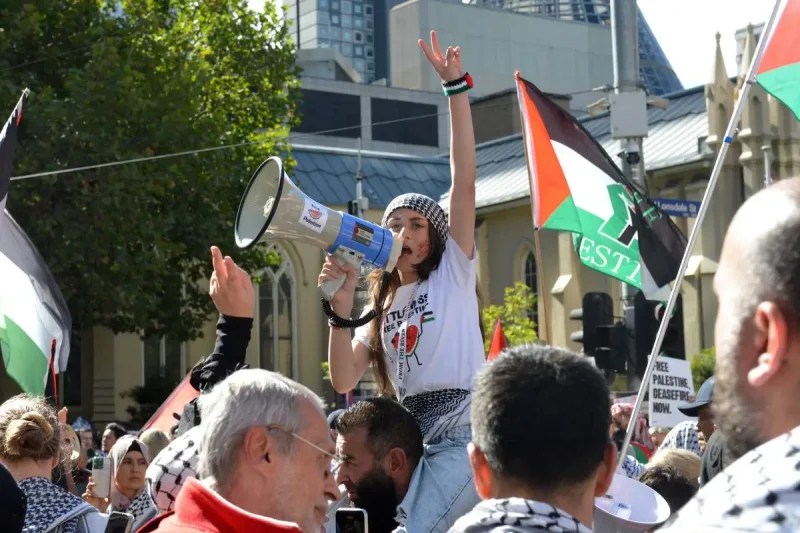
Solidarity demonstrations continue every Sunday in Melbourne, Australia [Recep Sakar – Anadolu Agency]
MEMO | April 30, 2024
Colombia University panel slams president for suppressing pro-Gaza protests
Al Mayadeen | April 27, 2024
The President of Columbia University faced increased pressure on Friday as a campus oversight committee strongly condemned her administration’s actions in suppressing a pro-Palestine demonstration in the school.
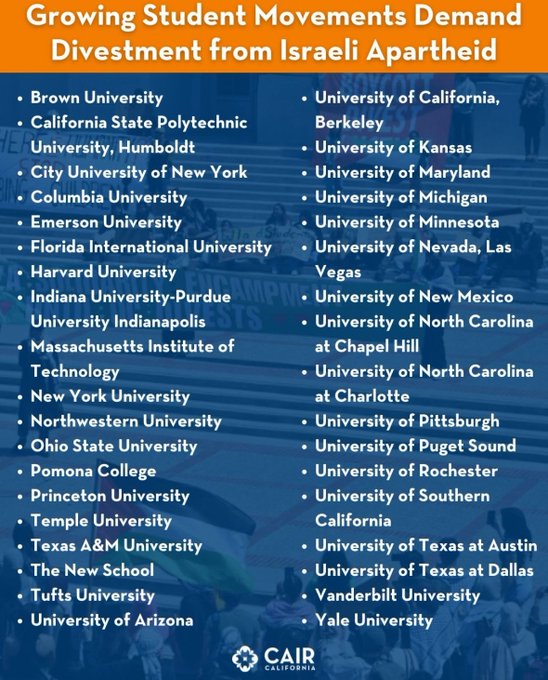
Universities across the United States have witnessed in the past few weeks a historic surge in student protests in support of Palestine and Gaza, calling for ending all agreements with “Israel” and divesting from the occupation entity. Students also demanded an end to US support to “Israel” and involvement in the genocidal war.
Cross-country protests in the US continue to grow as the Israeli genocide in Gaza reaches its 204th day. The Palestinian Ministry of Health in Gaza announced on Saturday that the number of Palestinians killed in the ongoing Israeli genocide in the Strip since October 7 has now reached 34,388, with 77,437 injured.
After Colombian students established their Gaza Solidarity Encampment on April 17, University President Nemat Minouche Shafik summoned the NYPD to the campus to disperse the demonstrations, resulting in the arrest of over 100 students. But shortly after, outraged by the footage of their fellow students being arrested, a new group of students arrived on campus and set up another encampment in protest.
Shafik: Decamp or ‘alternative options’
On Friday, Shafik issued an ultimatum to student protesters: either negotiate an agreement with the administration to disband the encampment or the school would pursue alternative measures to dismantle it. However, the demonstrators remained steadfast in their demands, with new supporters swelling their ranks.
The Columbia University Senate passed a resolution following a Friday meeting, stating that Shafik’s administration had eroded academic freedom and disregarded the privacy and due process rights of students and faculty members by involving the police and terminating the protest.
“The decision… has raised serious concerns about the administration’s respect for shared governance and transparency in the university decision-making process,” it said.
The Senate, predominantly comprising faculty members and other staff with a minority representation of students, refrained from explicitly mentioning Shafik in its resolution and opted for a less severe tone than a censure. The president, also a member of the senate, did not attend.
A task force was established in the resolution to monitor the “corrective actions” requested by the Senate concerning the handling of protests.
Columbia spokesperson Ben Chang stated that the administration shared the Senate’s objective of restoring calm to the campus and was dedicated to maintaining an ongoing dialogue.
According to a press release from the institution, on Friday, a minimum of 40 demonstrators were arrested at the Auraria Campus in Denver, which is jointly utilized by the University of Colorado Denver, Metropolitan State University of Denver, and the Community College of Denver.
Near the White House, approximately 200 protesters at George Washington University continued to assemble for a second consecutive day on Friday. The university stated that students failed to comply with instructions to disperse, leading to the suspension and temporary prohibition from campus for several individuals.
Meanwhile, US President Joe Biden described the protests as “antisemitic” and stressed that campuses must remian safe, hinting that current anti-Israeli war protests are a destablizing factor.
Additonally, Congress Republicans said that Shafik and other college administrators are not being firm enough in cracking down on the encapments.
Right to free speech
The University of Texas at Austin’s president, Jay Hartzell, encountered comparable criticism from faculty members on Friday, following his collaboration with Republican Governor Greg Abbott in deploying police to disband a pro-Palestine demonstration two days earlier.
Dozens of protesters were arrested, but the Travis County Attorney’s office stated that charges were dismissed due to a lack of probable cause for the arrests.
Read more: MIT, Emerson, other US colleges students launch pro-Palestine protests
Close to 200 university faculty members penned a letter indicating a lack of confidence in Hartzell, citing his actions as “needlessly endangering” students, staff, and faculty when police, equipped with riot gear and mounted on horseback, intervened against the protesters.
Civil rights organizations have denounced the arrests and called on authorities to uphold the right to free speech.
US lawmakers want to deploy ‘anti-Semitism monitors’ at colleges
RT | April 27, 2024
Two US congressmen have introduced a bill that would appoint independent “anti-Semitism monitors” to federally funded college campuses across the country. The draft law comes amid a police crackdown on anti-Israel protests at dozens of US universities.
Introduced on Friday by New York Representatives Ritchie Torres, a Democrat, and Mike Lawler, a Republican, the COLUMBIA Act would task the Department of Education with sending a “third-party anti-Semitism monitor” to any college or university receiving federal money.
The inspector would release a quarterly report on “the progress that a college or university has made toward combating antisemitism.” Schools that fail to sufficiently crack down on alleged hatred against Jews would then have their funding stripped.
“Rising antisemitism on our college campuses is a major concern and we must act to ensure the safety of students,” Lawler said in a statement. “Jewish students have told my office that they feel completely abandoned by their university administrators and they view Congress as the only avenue for accountability and safety,” Torres added.
The bill’s title – an acronym for the College Oversight and Legal Updates Mandating Bias Investigations and Accountability Act – refers to Columbia University, where pro-Palestinian rallies and protests have been taking place for nearly two weeks. Similar rallies have broken out at around 40 universities and colleges in the US and Canada, including Harvard, Yale and UC Berkeley.
Protesters are demanding that their universities “divest” from companies such as Amazon, Google, Microsoft, and Lockheed Martin that have contracts with the Israeli government. They also want the US to stop giving money to Israel, citing its “genocide” of the Palestinians in Gaza.
Jewish organizations claim that some of the demonstrators have openly praised Hamas, and that the protests have stoked a climate of fear among Jewish students. Israeli Prime Minister Benjamin Netanyahu weighed in on Wednesday, claiming that “anti-Semitic mobs have taken over leading universities” in scenes “reminiscent of what happened in German universities in the 1930s.”
Police arrested hundreds of protesters on Wednesday in a crackdown targeting 21 universities across the country. In a raid at the University of Texas at Austin, Governor Greg Abbott ordered the deployment of heavily armed officers from the Texas Department of Public Safety (DPS), who detained more than 30 people. Abbott – a Republican and professed free speech advocate – declared on social media that “these protesters belong in jail.” Hundreds more were arrested on Thursday and Friday.
While mainstream Democrats and Republicans have joined forces in condemning the protests and promising stiff penalties for those involved, members of the Democratic Party’s progressive wing have visited campuses to encourage the demonstrators. “Contrary to right-wing attacks, these students are joyfully protesting for peace and an end to the genocide taking place in Gaza,” Minnesota Rep. Ilhan Omar said after meeting protesters at Columbia on Thursday. “I’m in awe of their bravery and courage.”
US campus crackdown: 500 pro-Palestinian protesters arrested

Press TV – April 26, 2024
US police have arrested more than 500 protesters during a crackdown against pro-Palestinian protesters on university campuses across the country on Thursday.
Anti-riot police used chemical irritants and tasers against protesters, who set up camps in defiance of police warnings from Massachusetts to California, to protest against Israel’s savage war against the Palestinians in the Gaza Strip.
Protesters were arrested at schools including the Ohio State University, the University of Minnesota, Indiana University and Princeton University.
At Emory University in Atlanta, police clashed with protesters, including students from other Atlanta universities and area activists and arrested dozens of protesters, including faculty members.
Videos are shared on social media, showing officers using tear gas, tasers and handcuffs to detain protesters.
Emory’s vice president for public safety Cheryl Elliott said in a statement that law enforcement “released chemical irritants into the ground” to disperse the crowd after protesters ignored multiple warnings.
She said 28 protesters had been arrested, including 20 members of the Emory community, “some of whom have been released.”
“We are working with responding agencies to expedite the release of any Emory community members who remain in custody.”
At Emerson College in Boston, police also tore down an encampment there and arrested more than 100 demonstrators early Thursday morning.
Police detained 93 people at the University of Southern California.
And at The University of Texas at Austin, 60 protesters were arrested.
In the event, faculty members gathered at a rally and called for the school’s president, Jay Hartzell, to resign after he praised law enforcement for exercising restraint against the protestors.
The latest arrests which followed others at Columbia, Yale, Brown and New York University, came as a growing number of students joined the protests after President Joe Biden approved $26 billion in war aid to Israel on Wednesday.
Across the United States, groups of students and activists are now demanding the leadership of their universities to cut financial ties with Israel, whose brutal war on the Gaza Strip has killed more than 34,300 people since early October.
Stop Hassling the Hoffe
An Urgent Plea to All Readers for Help

BY JUSTUS R. HOPE | APRIL 23, 2024
Few stories are more compelling than the tale of Dr. Charles Hoffe. He is a Canadian small-town physician who clings to old-fashioned values. Dr. Hoffe enjoys treating patients even if he loses money doing so because Medicine is a calling for him, not a way to get rich.
His father came to visit and told him that he would never make a name for himself in this backwoods – yet charming – town of Lytton located in the heart of British Columbia. Charles explained that his goal was not to glorify himself, but instead to care for others. He enjoyed stitching the fingers of locals whose skill saws had slipped. He found satisfaction in bringing new life into this world, and he stood strong with the elderly until they departed. Dr. Hoffe was equally comfortable treating the town via its tiny emergency room.
Dr. Hoffe remained fiercely loyal to all under his care, and this was never truer than during the recent COVID-19 episode. While MSM stories abounded on the pandemic causing overflowing big-city hospitals, Hoffe recognized the disconnect between the reality in his small town. He did not see the pandemic materializing with his own eyes. The town of Lytton seemed relatively untouched by anything more serious than a mild flu.
Following the roll-out of the vaccine, Dr. Hoffe noticed a more extreme disconnect. Patients were showing up sick after vaccination. On one occasion he informed a vaccine-injured patient she would not require additional injections due to having sufficient immunity from previous virus recovery. A nurse reported him and despite 30 years of exemplary service without a single patient complaint, he was summarily fired from his position at the emergency department.
However, despite his income dropping by half without the emergency room, Dr. Hoffe persisted in keeping his patients’ safety first, even to his detriment. His first patient death from the pandemic came after vaccination, not from the virus.

Hoffe noticed mounting deaths, micro-clotting, and serious neurological events after the 2021 rollout, and this prompted him to write an email of concern asking his colleagues what they had seen.
Following this private email, he received a notice from the licensing authorities threatening him with disciplinary action should he cause any vaccine hesitancy through his communications.
Hoffe immediately recognized something seriously was amiss. Never in his experience had doctors been so threatened for simply asking questions. Scientific inquiry should not be punishable – and he would not be silenced – especially not when patients’ lives were on the line. The personal cost to him did not matter.
Although Dr. Hoffe found himself isolated in Lytton, a village of a mere 250 residents, he decided to conduct his own pilot study.

Tiny Lytton BC by Andrew Bowden – CC-BY-SA-2.0
He theorized that levels of D-Dimer would reflect micro-clot formation, and thus he measured these levels in his patients both before and after vaccination. To his horror, 5 of 8 patients turned positive for dangerous micro-clotting following the shots. Based on this safety signal, he informed his colleagues and warned that the vaccines seemed to be causing more harm than good.
Dr. Charles Hoffe, despite his tiny practice in this tiny British Columbia town, ironically had made a national name for himself. And bigger things were about to happen. His D-Dimer study began in early 2021, around April, and by June of 2021, his town of Lytton was extinguished in a massive wildfire that seemed to selectively torch the enclave while mysteriously sparing the surrounding wilderness.
Hoffe recalls the day of the inferno. He grabbed his laptop, and D-Dimer records, and fled his burning office. He drove the four hours to his family home, only to be greeted with the news that his wife was strategically planning a divorce. He was served with papers ousting him from his residence. Faced with banishment from his marriage, his profession, and his home, he sought refuge in a small vacation cottage located some six hours’ drive away. He made himself available to his patients via cell phone. But the licensing authorities quickly accused him of abandonment. Yet nothing could have been further from the truth. Like a good steward, Hoff watched over his flock with the utmost care.
Dr. Hoffe courageously stayed the course, keeping his patients first while brushing off the slings and arrows of the attack. The little income he earned following the loss of the emergency room position was about to be whittled down further as the Canadian government removed him from a previously favored physician payment list.
Meanwhile, the charred remains of the town of Lytton had been cordoned off by the authorities who blocked access – Maui style – to its displaced residents for some two years. Hoffe’s local Lytton home, in a positive twist of fate, was located upwind from the disaster, and he was able to move back in and treat the locals once again.
As if the situation could not grow worse, the Canadian Medical Authorities brought charges of misinformation spreading against Dr. Hoffe and sought to revoke his license to practice medicine.
Hoff hired a caring Christian attorney who vowed to fight this. For his defense, he recruited eight world-class expert witnesses, including Dr. Pierre Kory, Dr. Peter McCullough, Dr. Jessica Rose, and Dr. James Thorpe. They provided some 970 pages of compelling testimony, all pro-bono in light of Hoffe’s extreme financial circumstances.
Despite all this, the court used the tool of Judicial Notice to derail his defense. This meant that none of this expert witness evidence was admissible because as a matter of law the vaccines were by definition considered safe and effective – and this issue could not be legally contested.
To add further insult, the medical authorities sought to charge Dr. Hoffe with the costs of their investigation on top of revoking his license. These costs could easily exceed one or two hundred thousand dollars. In other words, the Canadian Medical Authorities are planning a one-two punch designed to bankrupt and silence Dr. Hoffe once and for all.
Which brings me to my request. If you value noble physicians like Dr. Hoffe who possess the moral fiber and strength of character to stand strong for their Hippocratic Oaths no matter the personal cost, then please reach out and help.
If everyone in our group contributed 10 dollars to Dr. Hoffe’s legal defense fund, we could send a message that patients care, and value physicians who stand for truth. We could spare Dr. Hoffe so he could help us fight another day. These payments are exclusively for defraying the costs of Dr. Hoffe’s legal fees, and not for his personal financial benefit.
All Donations are welcome to the Dr. Charles Hoffe Legal Defence Fund.
Pro-Palestine rallies spread on US campuses despite heavy repression
The Cradle | April 23, 2024
Pro-Palestinian protests at major US universities continued to grow on 22 April despite arrests by police, suspensions by university administrators, and sabotage by pro-Israel lobby groups.
Columbia, a prestigious university in New York City, has been the epicenter of the student protests opposing Israel’s genocide in Gaza. The protests have now spread to other universities, including Harvard, New York University, Yale, Arizona State, and California State Polytechnic University at Humboldt.
Police have arrested dozens at Columbia and Yale for refusing to leave protest encampments after administrators demanded it.
Columbia student and protester Grant Miner told the New Statesman that the protesters’ demands include “amnesty for students who had been suspended by the administration over earlier campus protests [he being one of them]; divestment from Israeli bonds and equity; financial transparency around how the university invests its $14 billion endowment.”
The protests made headlines in the US on Monday as new mass graves were discovered outside Nasser Hospital in Gaza with over 200 civilian bodies, including doctors and nurses still wearing scrubs, as well as women, men, and children, all killed by the Israeli army.
On Monday night, police cleared a protest encampment centered at New York University’s Gould Plaza at the university’s request. Faculty and students were arrested.
The Washington Post reported that videos on social media showed “dozens of officers in tense confrontations with protesters. Some officers tossed tents, and others grappled with demonstrators. Videos also showed police loading people, whose hands were zip-tied behind their backs, onto correctional buses.”
The confrontations began after university police blocked access to the plaza Monday morning, where about 50 protesters were demonstrating “without authorization,” NYU spokesman John Beckman said.
The barriers were breached early in the afternoon by additional protesters, “many of whom we believe were not affiliated with NYU,” who exhibited “disorderly, disruptive, and antagonizing behavior” and refused to leave when told the protests would be disbanded, he said. The university then requested assistance from the [New York Police Department] NYPD, he said, adding there were “several antisemitic incidents reported.”
Last week, over 100 students at Columbia were arrested amid accusations of violence and antisemitism among protesters. NYPD Commissioner Edward Caban said: “The students that were arrested were peaceful, offered no resistance whatsoever, and were saying what they wanted to say.”
According to Grant Miner, a Jewish Columbia student, allegations of antisemitism are unfounded.
“I’m not sure what people would be referring to,” Miner said. “I myself am Jewish. The narrative is that … we’re a violent mob, and there’s been no violence here. The only anti-Jewish sentiments I’ve received are from hard-core Zionist Jews calling me a fake Jew. In fact, I got a fun email to my work email calling me, just a subject line, ‘Judenrat.’”
Journalist Max Blumenthal reported that pro-Israel lobby groups are offering “cash compensation” to young Zionists “willing to wear keffiyehs and walk in these demonstrations” as provocateurs to spread antisemitic slogans and issue threats against Jews.
On Monday, Republican Senators Tom Cotton and Josh Hawley used alleged concerns about the safety of Jewish students to demand that President Joe Biden call in the National Guard to suppress the protests at Columbia.
Google fires more employees protesting giant deal with Israel
Press TV – April 23, 2024
Google has fired about 20 more employees over recent protests against a deal between the US technology giant and Israel.
The activist group No Tech for Apartheid said on Monday that the new layoffs bring to more than 50 the total number of Google workers dismissed in the past week.
“The corporation is attempting to quash dissent, silence its workers and reassert its power over them,” said Jane Chung, a spokesperson for No Tech for Apartheid.
Meanwhile, a Google spokesperson confirmed the company had sacked more employees after continuing its investigation into the April 16 anti-Israel demonstrations, which included sit-ins at offices in New York City and Sunnyvale, California.
The protesters held posters reading, “No More Genocide For Profit,” “No cloud apartheid,” “We Stand with Palestinian, Arab and Muslim Googlers” and “Don’t be evil, stop retaliation”.
They denounced Project Nimbus, a $1.2 billion contract awarded to Google and Amazon to supply the Israeli regime with cloud computing services.
The contract dates back to 2021. However, the protests followed a report in Time magazine earlier this month, citing an internal company document, that the Israeli ministry of military affairs is a Google Cloud customer.
No Tech for Apartheid said the report showed that Google had “built custom tools” for the Israeli ministry of military affairs and had “doubled down on contracting” with the regime’s army after the genocidal war on the Gaza Strip began.
Israel waged its brutal war on the besieged Gaza on October 7 after the Palestinian Hamas resistance group carried out a historic operation against the usurping entity in retaliation for the regime’s intensified atrocities against the Palestinian people.
The Tel Aviv regime has so far killed at least 34,183 Palestinians, mostly women and children, and injured 77,143 others.
Since the start of the onslaught, the US, Israel’s most dedicated ally, has fast-tracked arms shipments to the occupying regime and blocked UN resolutions that called for a Gaza truce.
Massive Rallies Break Out in Japan Against WHO’s Pandemic Treaty
PharmaFiles by Aussie17 | April 13, 2024
April 13, 2024, will be etched in the annals of modern Japanese history as tens of thousands of citizens across the nation came together in a series of pandemic rallies. The protests centered on the widespread opposition to the Pandemic Treaty, with escalating concerns over “infectious disease” and “public health” becoming potent tools for an unprecedented push towards what is perceived by many as a totalitarian surveillance society.
From the bustling streets of Ikebukuro to the gatherings at Higashi-Ikebukuro Central Park, the sheer scale of participation speaks volumes. Organizers aimed for a monumental turnout of 100,000 protesters to demand answers on crucial issues, such as the stark increase in excess deaths and the lack of transparency on the adverse effects following vaccinations.
The protest not just opposed potential mandatory vaccinations but also the perceived overreach of health authorities and their ties with global pharma, echoing a distressing sentiment of disenfranchisement among the populace. Demonstrators criticized the lack of explanations for a sharp increase in excess deaths and demanded accountability and clarity on vaccine-related casualties.
Eminent speakers, including Professor Masayasu Inoue and modern history researcher Chikatsu Hayashi, provided compelling pre-demonstration speeches that laid bare the concerning dynamics between global health authorities and pharmaceutical agendas. Professor Inoue highlighted the concerning trend of our health being weaponized in what he termed as “a third world war fought with information.” He urged the public to resist introducing genetic vaccines into their bodies, implicating a significant portion of WHO’s funding comes from pharmaceutical giants and private interests like the Bill Gates Foundation. This follows Japan’s Message to the World delivered by Prof Inoue a few days ago.
Modern history researcher Prof Chikatsu Hayashi’s address was a rallying cry to resist the encroaching shadows of global totalitarianism, symbolically referring to the proactive stance against it as “stopping the third atomic bomb with our hands.” His poignant discourse highlighted a national movement poised against not only the Pandemic Treaty but also the underlying structures threatening Japan’s sovereignty and the well-being of its citizens.
April 13 marked not just a protest against a treaty but a stand against a future where health becomes a lever for control and surveillance. The massive turnout signifies a critical moment in Japan’s civic engagement. It’s a call from its people for autonomy, transparency, and the reassessment of global health governance that resonates beyond its borders. Today, Japan stands at the forefront, questioning, challenging, and seeking change for a future where health policy respects national sovereignty and individual rights.
Signing off for now
A17
Indonesia won’t normalize with Israel because Indonesians won’t allow that
By Dina Y. Sulaeman | Press TV | April 13, 2024
In the last few days, Israeli media has been reporting about Indonesia mulling normalization of relations with the Tel Aviv regime to fulfill the requirements for accession to The Organization for Economic Cooperation and Development (OECD), a neoliberal market-based alliance countries.
The news circulated at a dizzying pace on social media platforms and triggered a wide array of reactions from netizens worldwide, including in Indonesia. It wasn’t something they were expecting.
Indonesian foreign ministry was quick to deny the reports in a midnight statement, saying no such plan was in offing. “I affirm that, as of now, there are no plans to establish diplomatic relations with Israel, particularly given Israel’s actions in Gaza,” the ministry spokesperson Lalu Muhamad Iqbal said.
Most people in Indonesia, I can vouch for, reject and condemn any plan that leads to the normalization of ties between the two sides or Jakarta’s recognition of the apartheid colonial entity.
Several notes can be taken from this frenzy. First, the behavior of the Israeli media, citing anonymous sources, to report on Indonesia’s plans to normalize relations with Israel. It has happened several times in the last few years.
Indonesian foreign ministry has always denied such reports. It again denied it and then it was as if there was nothing more. There was no apology from the Israeli media, nor was there any criticism of the Israeli media from the Indonesian side.
This time, the news about Indonesia’s so-called normalization coincided with simmering regional tensions in the wake of Iran’s vow to retaliate against the Israeli bombing of its consulate in Damascus.
Bombing a country’s diplomatic mission is a fatal violation of international law and can be equated with bombing the country’s territory. From this perspective, Iran has every right to retaliate.
So, the situation turned extremely difficult for Israel. Many countries issued travel advisories for the occupied territories while Israeli regime officials frantically tried to get Iran to “not escalate.”
The unspecified timing of Iran’s retaliation has caused psychological torture for the Israeli regime and settlers. In conditions like these, rumors regarding Indonesia-Israel normalization appear to have been deliberately circulated by the Zionist media to reduce tensions and divert world public opinion.
The second point is that Indonesia’s support for Palestine is deep-rooted. This support predates Indonesia’s independence, so it cannot be shaken so easily by the Zionist propagandists.
In 1934, when the Palestinians fought against the British (at that time, Indonesia was still colonized by the Dutch), the clergy in Indonesia collected donations from the people to help Palestine.
It is also recorded in history that a rich Palestinian businessman, Muhammad Ali Taher, in 1944 donated a large amount of money to the struggle for Indonesian independence.
In history lessons at schools, our teachers often repeated the phrase: “Palestine was the first to recognize Indonesia’s independence.”
What it actually meant is that after the proclamation of Indonesian independence on August 17, 1945, the Indonesian diplomat, M. Zein Hassan, came to Egypt to promote recognition of that independence.
In order to support Hassan’s efforts, a number of resistance figures in the Arab world based in Cairo founded Lajnatud Difa’i ‘an Indonesia on October 16, 1945, including General Saleh Harb Pasha, Secretary General of the Arab League and Abdul Rahman Azzam Pasha, Chairman of the Palestine Committee.
The recommendation from the Lajnah was a resolution to support the Republic of Indonesia and an appeal to all countries, especially Arab and Islamic countries, to recognize the new republic.
After that, almost all the Arab countries recognized the Republic of Indonesia one by one.
Apart from that, Indonesia initiated and hosted the Asia-Africa Conference from 18 to April 24, 1955, the first conference of formerly colonized countries in the world whose main spirit was to liberate all the colonized people on earth.
Support for Palestinian independence was one of the dominant issues at this conference. Indonesia has a historical burden to maintain that spirit and fulfill its promise of independence for Palestine.
The third point is, it needs to be acknowledged that there are indeed parties in Indonesia, both politicians and prominent figures, who are secretly establishing personal relations with Israel.
Indonesia’s decision to submit a membership application to the OECD, an organization controlled by Western capitalist countries, instead of joining a new economic power that is far more promising for shared prosperity, namely BRICS, shows the dominance of the West in Indonesia’s economic posture.
Membership in the OECD requires the consent of all members, including Israel. It is very possible that there are figures behind the scenes who are trying to normalize Indonesia-Israel for their interests, especially business interests.
However, they never expressed their intentions openly because it would be tantamount to political suicide. No politician in Indonesia would dare to commit suicide at this time when public sentiment is very strong in supporting Palestine and against Israel’s genocidal crimes in Gaza.
Thus, it can be concluded that the rumors of normalization were Israeli propaganda that took advantage of the tendencies of a few parties behind the scenes but which immediately hit a wall of failure.
The Indonesian people will not allow that normalization to happen as Indonesia’s first president, Sukarno, stated: “As long as the independence of the Palestinian people has not been handed over to the Palestinian people, the Indonesian people will always stand up to challenge Israeli colonialism.”
Dina Y. Sulaeman is an assistant professor at the International Relations Department, Universitas Padjadjaran, Indonesia.
All for One and One for All
By William Schryver – imetatronink – April 13, 2024
Russia, China, and Iran have now formed a de facto military and economic alliance — what they prefer to call a “partnership”.
In the case of Russia and China, a comprehensive full-spectrum partnership has emerged: military, economic, and monetary.
Trade between Russia and China has exploded both quantitatively and qualitatively.
Importantly, trade settlement is overwhelmingly denominated in rubles and renminbi. Use of the dollar and its international mechanisms is being aggressively deprecated.
Russia and China now conduct regular joint naval and air patrols of the western Pacific, from Alaska to the South China Sea.
Russia, China, and Iran conduct regular joint exercises in the Arabian Sea. Those exercises have increased in both scope and frequency in recent years.
Both Russia and China are investing vast sums of capital in Iran, much of it in the energy sector and in ambitious transportation projects aiming to construct fast and efficient trade corridors linking China, Iran, and Russia as primary nodes of Eurasian commerce.
Arms and technology transfers between the three countries have reached unprecedented levels.
Russian foreign minister Sergey Lavrov just concluded several days of talks with Chinese leaders, including both Wang Yi and Xi Jinping. In its report of the talks, the Chinese government’s flagship media organ, Global Times, summarized (in the words of prominent CPC commentator Li Haidong) the current state of the Russia/China relationship:
“China and Russia will not target any third party, but if hegemonic forces threaten China and Russia, or threaten world peace, China and Russia will stand together and fight to protect their own interests and safeguard world peace together.”
It is increasingly evident that Russia, China, and Iran recognize that an attack against any one of them would constitute an existential threat to them all. The strategic interests of all three countries are now inextricably intertwined.
Most importantly, they are united in a single overriding strategic objective: to dismantle the dominion of the long-reigning Anglo-American empire.
Naturally, the rapidly waning global hegemon is not inclined to relinquish its throne without a fight. What form that fight takes remains to be seen. But if the empire attempts to preserve its so-called “rules-based international order” via force of arms, it is essential to understand this incontrovertible reality:
In order for the United States to make war against any ONE of Russia, China, or Iran, it would be necessary to effectively vacate every major US base on the planet in order to concentrate enough military power to undertake the mission.
In a putative war between the United States and Iran, both Russia and China would actively support Iran. I’m not suggesting Russian or Chinese forces would fight alongside Iranians — although that could happen. But it would likely not be necessary. Iran would simply be supplemented with arms and other logistical necessities from both its partners — and quite possibly taken under their nuclear umbrella in an explicit act of deterrence.
Additionally, in consequence of the US weakening its force posture in Europe and the western Pacific in a bid to militarily subdue Iran, Russia and China would be enabled to apply immense pressure to western logistics, trade, and political influence in those regions. This is not to suggest that China would invade Taiwan or Russia would invade the Baltics or Poland. They would need only to exert their dominant influence in what were previously considered to be unassailable American imperial domains in east Asia and Europe.
The empire is stretched so thin and its potential for power projection is so diluted that undertaking even one Big War would be enough to bring the entire house of cards tumbling down.
This is the harsh reality the Masters of Empire are now facing, and no amount of mythologizing about the “limitless” power at their disposal can change it.
There is a vast difference between imagined power and the actual ability to project and sustain power against the adversaries the United States military must now face and defeat in order to prevent or even meaningfully delay the end of American global hegemony.
And, to the extent Russia, China, and Iran are determined to act all for one and one for all, they represent a combination of global military and economic power that cannot be defeated.
‘Israel’ has conclusively lost the debate in Western popular culture
By Robert Inlakesh | Al Mayadeen | April 10, 2024
As the Israeli regime pursues a policy of inflicting mass starvation inside the Gaza Strip, after having failed to defeat any of the Palestinian Resistance factions in battle, it can now be stated with confidence that they have lost the public relations battle decisively.
At the beginning of “Israel’s” genocidal assault on the people of the Gaza Strip, a large portion of the Western public was in some way convinced by the Israeli propaganda. The Zionist entity worked overtime to ensure that all the context necessary to understanding why Hamas launched its offensive operation, on October 7, was irrelevant and that history started on that day. As the Israeli counterattack began to inflict much larger civilian death tolls in Gaza, compared to the initial Zionist claim that some 1,400 Israelis were killed on October 7 [later lowered to just under 1,200], they quickly realized that the reality of what happened on that day would pale in comparison to what the Israeli military was on route to inflicting in Gaza.
Hence, when Israeli spokespeople and government officials in the West spoke of October 7, they refused to even acknowledge the fact that the Israeli military in the south of occupied Palestine had collapsed. The Western media also joined in on attempting to frame Operation Al-Aqsa Flood as a “terrorist” attack that was aimed at targeting civilians solely, with no mention of any military goals. Up until this moment, Western corporate media and government officials call the ongoing genocide a Hamas-“Israel” war, refusing to acknowledge that all Palestinian factions from across the political spectrum are at war with the occupation, not just Hamas.
False Israeli atrocity propaganda, such as that “40 beheaded babies” were ruthlessly murdered by Hamas fighters, was spread even by US President Joe Biden himself. Other gruesome lies, which were quickly debunked, were also spread, with Israeli propaganda attempting to assert that October 7 was “Israel’s 9/11”. Ultimately, with the aid of activists and journalists on social media, these pernicious lies were revealed to be part of a disinformation campaign. In fact, the sheer volume of lies that continue to be spread about October 7 has only enraged the general public further and inspired them to work harder in a bid to fight back against what many see as sheer gas-lighting.
Whether it be the claim by Israeli President Isaac Herzog that Hamas was carrying Daesh/Al-Qaeda documents or that Al-Shifa Hospital was a “Hamas HQ”, the lies were ineffective, and, in some cases, led to popular internet memes mocking the Zionist propaganda. In the case of Israeli military spokesperson, Daniel Hagari, he was transformed into the “there is a list guy,” after attempting to say that a list written in Arabic, naming the days of the week, was actually the naming of “khamas terrorists”.
With the International Court of Justice (ICJ), having ruled in South Africa’s favor and accepting that the Zionist Entity is plausibly committing genocide in Gaza, along with the insane levels of death and destruction that have been caused in the besieged territory, the general public in the West is clearly appalled at this point. People are seeing horrifying war crimes committed mainly against women and children, on a daily basis, and the most horrifying footage of children, elderly individuals, women, and other vulnerable groups, being murdered. The stream of videos, photos, and reports of Israeli crimes from human rights groups are being spread around the clock and are unignorable.
That being said, social apps like TikTok have played a crucial role in the dissemination of information to young people throughout the West. Countless young influencers have proven successful at spreading the facts surrounding the oppression of the Palestinian people, leading to the ADL chief, Jonathan Greenblatt, stating that “this is not a left-right gap” in support of “Israel”, instead, he continued, “it is young and old.” He also went on to say, “We have a major Tiktok problem”.
Earlier on during the war, various prominent actors, singers, and rappers spoke out in favor of a ceasefire and preached for there to be a free Palestine. We saw the likes of singer Kehlani and rapper Macklemore make their pro-Palestine sentiments clear. As time went on, it became abundantly clear that mainstream podcasters, news show hosts, and figures in independent media were all turning on the Israelis. While most prominent left-wing public figures were quick to side with the suffering people of Gaza, lately we have seen traditional Zionist allies and well-known right-wing commentators turn on the Israelis and their October 7 narrative. We are at the point where the likes of Candace Owens and Alex Jones have turned against the Israeli regime’s propaganda.
The world’s most popular podcaster, Joe Rogan, also recently made a number of remarks on Gaza and called the Israeli military’s assault a genocide, comparing it to the Holocaust, and wondered how a people who suffered historically in a similar way could be doing the same thing to others.
It is not just that the Zionist entity has inflicted such a high child death toll in Gaza, for example, that has made it untenable for almost anyone to sustain their defense of their [Israeli] actions, it is rather the scale on which they have committed their unthinkable crimes. Whether we look at the numbers of hospitals destroyed, healthcare workers and UN employees killed, the scale of destruction to civilian infrastructure, or the speed at which mass famine has been manufactured, there is no conflict in recorded modern history that properly compares. Rape, torture, the deliberate shooting of children, the murder of women and children in front of their families, stuffing civilians’ bodies into garbage bags, blowing up homes for fun, destroying mosques, hospital massacres, school massacres, massacres committed against starving people attempting to reach food aid, and the release of snuff films by Israeli soldiers where they wear women’s clothing in invaded homes for fun or for humiliating civilians, pretty much any crime the mind can conjure up has been committed.
It is in this light that despite the Western corporate media having been staunch supporters of the Zionist narrative, even outlets like CNN and MSNBC have begun to change the style of their coverage and publish openly critical stories about the Israeli regime. Even Western government officials are having a difficult time defending the Zionist entity at this point, with various European nations cutting off arms sales and recognizing the State of Palestine at the United Nations. Even the staunchest allies of the Israelis, like the German, British, and American governments, are having to alter their language slowly on the issue and feign ignorance of well-known atrocities in order to limit the criticism, coming from an overwhelming public demand to force the Zionists to end their genocide.
The pro-Palestine anti-war movement is perhaps the biggest of any cause on earth, with mass demonstrations occurring on a weekly basis, while boycotts of pro-Israeli companies have not ceased. The resilience of the people of Gaza has even driven a new-found interest in the Islamic faith. In protest of his government’s policy on the Gaza war, Aaron Bushnell, an active-duty Air Force service member, lit himself on fire while screaming “free Palestine” until his dying breath.
Whether on the left or the right, in the independent media or the mainstream media, the Israeli regime has completely lost the public relations war. The Western public, especially the young, are becoming more educated, more outraged, and less scared of speaking up in favor of Palestinian liberation. “Israel” has lost the media war and the world now sees this apartheid regime for what it truly is.
Featured Video

Rewriting the risk? Inside the government’s vaccine safety messaging
or go to
Aletho News Archives – Video-Images
From the Archives
‘Israel sees Iran as obstacle to its policies’
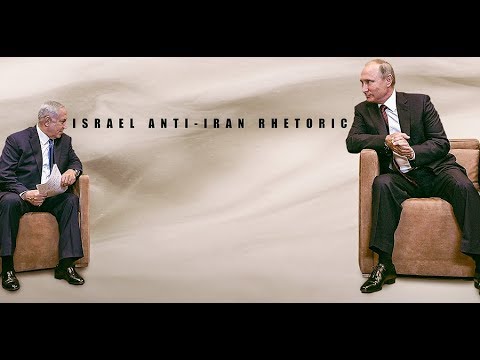
Press TV – August 25, 2017
Prime Minister Benjamin Netanyahu has said that Israel felt threatened by Iran’s growing influence in the Middle East. Netanyahu expressed his Iranophobic view in a meeting with Russian President Vladimir Putin in Russia’s Black Sea resort of Sochi on Wednesday. Press TV has asked Scott Rickard, former American intelligence linguist from Tampa, Florida, and Brent Budowsky, a columnist at The Hill from Washington, to give their thoughts on the issue.
Rickard said Tel Aviv is concerned about the fact that the regime could not carry out its old project to spread sectarian divisions and pave the way for dismemberment of the countries in the Middle East region because of the Iranian-led resistance against Israeli policies, not only in the occupied territories of Palestine but also in the whole region.
“Iran is not a threat to Israel whatsoever. The threat that Israel sees is the fact that their Oded Yinon Plan is being put to a hold by Iran,” the intelligence linguist said on Thursday night.
“They (the Israelis) look at Iran as a threat only because they have no influence on their governments and Iran is autonomous and is not under the Zionist influence,” he added.
Since the victory of the Islamic Republic of Iran in 1979, Tehran has been critical of Israel’s policies in the region, whereas “no leaders [of other states] even dared to speak out against Zionism,” Rickard argued. … continue
Blog Roll
 Aletho News
- What’s Behind U.S./Israeli Strikes On Iranian Pistachio Factories?
- Seyed M. Marandi: U.S. Military DIVIDED? Iran’s Secret Defense EXPOSED
- How I fell foul of the BBC thought police
- The End of NATO
- 37 days of war on Iran cost US staggering $42bln, tracker shows
- Baghdad tells Asian refiners, traders to begin loading Iraqi crude amid Iranian exemption
- Under fire, Moscow and Tehran close ranks
- Iran, US receive Pakistan-mediated plan for ceasefire then final deal
- Iran submits demands for end to war as mediators scramble ahead of Trump deadline
- Iran Threatens Retaliatory Strike on Stargate AI Project in UAE
- If Americans Knew
- U.N. experts demand Israel release prominent Gaza doctor after reports of ‘severe torture’
- Israel’s Latest Genocide Is Against the Shias of Lebanon. Why Is the World Silent?
- How Eliot Cohen’s influence over U.S. war-making paved the way for Trump’s war crimes in Iran
- Israelis don’t pay for the weapons we ‘sell’ to them — US taxpayers do
- While Distancing from AIPAC, Most 2028 Democratic Hopefuls Are Still Embracing Israel
- A brief history of the Israeli nuclear program, the open secret at the heart of the Iran war
- Israeli Settlers Killed a Palestinian Farmer on His Own Land, in Front of His Father. Yes, Again
- The US-Israeli War on Science is an Assault on our Future
- 100+ International Law Experts Say US Strikes on Iran Violate UN Charter, Could Be War Crimes
- ‘Vile, Horrifying, Evil’: Trump Threatens to Bomb Nation of 90 Million People ‘Back to the Stone Ages’
- No Tricks Zone
- An Inconvenient Tree: Uncovered In Alps… Europe Much Warmer Than Today 6000 Years Ago
- New Study Reports A 60% Slowdown In Greenland’s Ice Loss Rate In The Last Decade
- Low Intensity Tornado Wrecks Major Solar Farm, Creating A Potential Toxic Dump
- New Study Finds Warming Saves Lives…Cold Temperatures 12 Times More Deadly Than Excess Heat
- German Science Blog Accuses PIK Climate Institute Of Hallucinating Climate Tipping Points
- Devastating Assessment Of Comirnaty Vaccine By Former Senior Pfizer Europe Toxicologist
- New Study: CO2 Is ‘Effectively Negligible’ As An Explanatory Climate Change Factor Since 2000
- Former Pfizer Toxicologist Dr. Helmut Sterz Tells Bundestag Hearing Pfizer Vaccine Should Have Never Been Approved
- Energy Expert: Germany’s Nuclear Phaseout Was A “500 Billion Euro Mistake”
- New Research: South Australia’s Mid-Holocene Sea Surface Temperatures Were 4°C Warmer Than Today
 Aletho News
.jpg#:~:text=https%3A//commons.wikimedia.org/wiki/File%3ALytton_(5999567206).jpg)