From stones to missiles, Palestinian resistance’s phenomenal military rise
By Ivan Kesic | Press TV | January 24, 2024
The Al-Aqsa Storm Operation has irreversibly redefined the battlefield dynamics, especially with the Palestinian resistance stunning the military pundits in the West with its preparedness and the ability to inflict heavy and irreparable blows on the occupying regime.
The past fifteen weeks have been marked by the Palestinian resistance against the Israeli genocidal aggression on the Gaza Strip, with the armed wing of the Palestinian resistance group Hamas surprising all and sundry with its massive weapons arsenal, all of them locally manufactured.
Toward the end of 2023, the Martyr Izz ad-Din al-Qassam Brigades, the military wing of Hamas, published a video, showing its missile arsenal that is able to reach every nook and corner of the occupied territories.
Even today, more than three months after the regime launched its aggression followed by extensive operations by the resistance groups against the occupation forces, this arsenal remains intact.
Military experts in the West acknowledge that the Israeli regime, with all its advanced and sophisticated weapons systems imported from the United States and Europe, has been unable to match up to the armed wings of the Palestinian resistance groups and their fighters.
Despite the Israeli regime dropping 67,000 tons of bombs on Gaza since October 7, the resistance continues to grow and inflict heavy blows on the structure of the Zionist occupation.
The story of the Palestinian missile program is a story of decades of sacrifice, ingenuity, dedicated work and successful management, and above all, the defiant spirit of resistance.
This long and difficult path of resistance against the apartheid regime began with Palestinian stone-throwing at Israeli armored vehicles during two intifadas, and ended with the capability to launch 5,000 rockets in one day and a rocket arsenal sufficient for months of warfare.
The missile capabilities and scope of operations displayed by the Hamas and other Palestinian groups surprised all international observers, even the Israeli intelligence services.
What is particularly intriguing are the conditions in which the operation was carried out.
Pertinently, the Gaza Strip was under Israeli occupation from 1967 to 2005, and ever since has been under a fierce land, sea and air blockade that prevents the import of not only weapons but also materials for their production, as well as basic goods.
The Israeli regime tried everything to weaken the resistance and retain the military technological advantage so that it could easily eliminate the groups that have been fighting for the liberation of Palestine.
An example that illustrates this disparity is the Gaza Massacre of 15 years ago when hundreds of Palestinian civilians were killed by Israeli bombs, hundreds of Israeli civilians, the so-called “war tourists”, gathered on the nearby hills and cheered triumphantly.
However, times have changed since that gruesome bloodthirsty cheering by the Zionist settlers that was followed by the iconic photo of a Palestinian boy throwing a rock at an Israeli tank.
The Palestinian resistance initially relied on rudimentary weapons, smuggled or domestically produced, intended for close combat and countering invading forces on their own soil.
After years of usage of assault rifles and explosives, a simple Qassam rocket appeared in 2001, with a range of a handful of kilometers and low destructive power, which for the first time made possible a retaliatory strike against the Israeli occupation.
Over time, the efficiency of the Qassam models increased and the first Israeli military bases and occupied cities came within range in the 2010s, which caused the phenomenon of “war tourists” on the borders of Gaza to fall into oblivion suddenly.
The Israeli regime made an effort to stop the effectiveness of these rocket attacks by developing a warning system. It invested a staggering amount of money in the development of Iron Dome, a military system that turned out to be a miserable failure on October 7.
It also boasted about assassinating the Hamas rocket engineers responsible for the Qassam development, thinking it might cripple the Palestinian “brain trust” or deter new generations from engaging in development, which proved to be a blowback assessment.
Today, the Palestinian resistance has rockets with a range of hundreds of kilometers and warheads with a payload of hundreds of kilograms, capable of reaching any point in the occupied Palestinian territories.
Due to their size, it is not possible to smuggle these rockets from abroad into the Gaza Strip, especially not in such huge quantities, which proves that they are the result of local production.
Industrial production, in conditions of scarcity of necessary materials and exposure to Israeli airstrikes, is an impressive feat in itself. Production facilities are scattered underground and well hidden, which requires exceptional logistical skills.
The same applies to the supply of materials, which mainly comes from recycling raw materials such as old water pipes, anchors of destroyed buildings, streetlight poles and so on.
In an astonishing feat from 2020, Hamas naval commandos managed to salvage large 170-kilogram naval shells from a British warship that sunk offshore more than 100 years ago during the First World War and made them reusable for new missiles.
The rocket engines and guidance systems are the product of cooperation and military knowledge imparted by experts in the region, especially Iran.
The missiles revealed in the new video include the Maqadma and Jabari rocket family, both with a range of 90 km and 50 kg warheads, put into service in the early 2010s.
Development in the middle of the same decade witnessed the creation of the Attar rocket family with a range of 90 km and 50 kg warhead, as well as of the Rantisi rocket family with a range of 170 km and 100 kg warhead.
Finally, at the end of 2010s, the Ayyash rocket family was put into service, with a range of 250 km and a payload of 250 kg, the most powerful rocket in the Palestinian arsenal, used for strikes on Safed and Eilat during the Al-Aqsa Flood operation.
At the same time, the Sijjil rocket family with a range of 55 km and 50 kg warhead was also introduced, followed by the Shamala rocket family with a range of 80 km and 150 kg warhead.
Except for the Sijjil rocket series, which is named after a Quranic verse, all others are named after Palestinian martyrs, namely Ibrahim al-Maqadma, Ahmed al-Jabari, Raed al-Attar, Abdel Aziz al-Rantisi, Mohammed Abu Shamala and Yahya Ayyash.
For three decades, the Israeli regime thought that these assassinations would break the spirit of resistance and their technological development, which backfired in a way it could not have imagined.
The martyrs and the missiles named after them are today giving sleepless nights to the regime leaders.
US attacks on Yemen aimed at guarding Israel, not world: Ansarullah
Press TV – January 19, 2024
Yemen’s Ansarullah movement has condemned in the strongest terms the “unjustified” US airstrikes on the Yemeni territory, saying they’re aimed at “guarding Israel, not the world.”
Mohammed Abdulsalam, the Ansarullah spokesman, made the comment in an interview with Reuters.
The United States and Britain launched airstrikes on Yemen on January 12 in what they called an intervention to protect international shipping in the Red Sea.
“What the Yemeni people did, in the beginning, was to target Israeli ships heading to Israel without causing any human or even significant material losses, just preventing ships from passing as a natural right,” Abdulsalam said.
“We imposed rules of engagement in which not a single drop of blood was shed or major material losses.”
“It represented pressure on Israel only, it did not represent pressure on any country in the world.”
The Yemeni official said the US intervention has further escalated the situation and that the movement will continue to respond to the US attacks.
“Now, when America joined in and escalated the situation further, there is no doubt that Yemen will respond.”
“The strikes on Yemen, from our perspective, are a blatant violation of Yemen’s sovereignty and a serious aggression against the Yemeni people,” Abdulsalam said.
Yemen, he added, does not intend to expand the attacks on shipping in and around the Red Sea beyond their stated aim of blockading Israel and retaliating against the United States and Britain for airstrikes.
“We do not want the conflict to expand in the region, and we are still working on non-escalation, but the decision is up to the Americans, as long as they continue to attack.”
The Yemeni official said the decision to target Israeli-linked ships was a response to popular demands. “It came after great popular pressure not only in Yemen but in the region, demanding that the governments of the region and their leaders take a position towards the Palestinians facing a genocidal campaign.”
Referring to the Persian Gulf’s Arab countries, the Yemeni official said Ansarullah calls on them “to reject the militarization of the Red Sea or the presence of military forces inside the region.”
Abdulsalam said the Yemenis have made their own decisions in the conflict and do not take orders from Tehran, though they maintain a close relationship.
Republicans threaten to fire US federal workers if they oppose Israel genocide
MEMO | January 17, 2024
Pointing out the horrors of Gaza at politicians’ doorsteps
By Yves Engler | January 14, 2024
Bravo to those who braved the cold to rally in front of the foreign minister’s house. Shame on the NDP MPs who echoed the genocide lobby’s faux outrage.
On Saturday 100 or so rallied in front of foreign affairs minister Melanie Joly’s home in the Plateau Mont Royal neighborhood of Montréal. Their promotional material declared “Mourn the Dead, and Fight Like Hell for the Living. End Canadian Support for Genocide”. They reportedly read poems, played music and shared food in what spokesperson Eli Tareq El-Bechelany Lynch called “an affirmation and honouring of Palestinian life, creativity, and resistance against the Canadian-backed Israeli death machine.”
Predictably, pro-genocide voices flew into a moralizing rage. They denounced it as “intimidation” and “harassment”. Uber Zionist Toronto MP Kevin Vuong proclaimed, “If you’re going to protest in front of the legislature or city hall, go ahead. If you’re going to protest our offices, have at it. But your right to peaceful assembly does not include protesting at Minister Melanie Joly’s home. Leave her family—and our families—out of it.”
A week ago, the apartheid lobby claimed a rally in front of Vuong’s constituency office was intimidation. The same voices criticizing the protest at Joly’s home have spent weeks condemning rallies on an overpass over Highway 401 in Toronto. Before that they denounced anti-genocide rallies at the Eaton Centre and at municipal politician’s fundraiser. When university was in session, they were deploring protests on various campuses. They essentially believe all manifestations of opposition to Canada’s complicity in genocide is illegitimate.
Amidst the faux outrage, ‘pro-Palestinian’ NDP MPs joined the attacks. On the left of the party Leah Gazan posted “this is appalling full stop!”. For her part, NDP foreign critic Heather McPherson posted, “This is appalling. People do not have to agree with politicians and elected representatives, but to harass them at their private homes is completely and utterly unacceptable.” (I don’t think McPherson has yet referred to Israel’s mass slaughter and famine campaign in Gaza as “appalling”.) Then the party foreign critic retweeted her NDP colleague Alistair MacGregor claiming: “I love listening to my constituents. At my office. On the phone. Over Zoom. On Twitter. On Facebook. On Instagram. Not at my home.” (Gazan also re-posted MacGregor.)
But protests at politicians homes are not particularly uncommon. In recent weeks there have been anti-genocide protests at a number of politicians’ homes in the US. Secretary of State Anthony Blinken, Defence Secretary Lloyd Austin and Democratic Party Senate leader Chuck Schumer are among those whose homes have been targeted by Gaza protesters. Over the years there have been protests at many Canadian politicians’ homes, including a famed one by Joly’s cabinet colleague.
Three years ago, activists supporting the Wet’suwet’en hereditary chiefs’ campaign against a pipeline rallied in front of BC Premier John Horgan’s home. During the 2012 Quebec student strike protesters marched on Premier Jean Charest’s Westmount mansion on multiple occasions. In 2007 Greenpeace organized an action at Prime Minister Stephen Harper’s house while in 2002 current environment minister Steven Guilbeault was among a handful of Greenpeace activists who put solar panels on the roof of Alberta premier Ralph Klein’s home.
Whether you support the tactic or not, protesting at politicians’ homes is not particularly uncommon. The NDP MPs immediate and harsh condemnation reflects two dynamics. MPs obviously have a collective self-interest in deterring this type of protest since they could be on the receiving end of what most would consider annoying. So, in that sense the MPs criticism is likely genuine.
The second dynamic is that the genocide lobby’s constant attacks and smears prime politicians to want to throw a bone to the apartheid lobby by condemning Palestine solidarity activists or echoing them in some way. It’s not a coincidence that the NDP MPs who immediately condemned the Joly protest have recently been the targets of pro-genocide forces for (considering the state of Canadian politics) relatively good statements on Palestine/Middle East affairs.
It’s two steps forward one step back dynamic. But the NDP MPs were under no compulsion to comment on the Joly protests. They shouldn’t have bolstered the genocide lobby’s outrage against those who braved the cold to protest Canada’s role in enabling unimaginable horrors in Gaza.
Genocide Will Not Save Israel
By Paul Larudee – Global Research – January 12, 2023
I wish I could see a way that Gaza can escape genocide, but I can’t. The global mobilization of millions of people, including you and me, is inspirational, as is the stunning work by small independent journalists, upon whom we now rely for the truth, in contrast to the fiction peddled by the mainstream coddlers of racist mass murderers and their professional Zionist prevaricators tasked with persuading us all that black is white, filth is clean and countless child deaths by disease, starvation, thirst and exposure is self defense.
Even more inspiring is the dedication and courage of Palestinian journalists in Gaza, like Hamza Dahdouh and more than 110 others that have given their lives so that no one can ignore the carnage for even a moment, not even those who are assassinating them so that they cannot report that they are being assassinated. And the doctors, nurses, paramedics, and orderlies, who carry on the profession of medicine when there is no medicine, nor dressings, nor ambulances, nor even hospitals, so that at the very least we can count the casualties and measure the size of the crime.
But do we have the power to stop the monstrous actors from the bottom of Hell and their apologists who rule over us? Perhaps mathematically we do, but I have no confidence that we are organized enough or radical enough to make it happen. I don’t blame anyone other than the criminals themselves, because I am no better than anyone else who is trying to stop them. While I do what I think I can, I wallow with the rest of you in our collective helplessness.
On the other hand, the resistance fighters are not helpless. They have planned and trained and armed themselves by incredible feats of will, discipline and perseverance. They care nothing for the lies that are fabricated about them. They care only for their mission and their pride in refusing to do to their persecutors what is being done to their brothers and sisters in Palestine – only to do what is necessary to achieve liberation from the crushing oppression which they have been forced to endure for so long. They will prevail.
As I have said previously, Israel’s only strategy is genocide, and I fear that they will achieve it. But genocide will not save Israel. Hamas and all the resistance forces will outlast the Zionist project. They will outlast even the unthinkable mass murder an/or expulsion of two million of their brothers and sisters. The half million Zionists that have abandoned the “Jewish Home” since October 7th, 2023 will fulfill different dreams on other shores. The former “settlements” in the “Gaza envelope” and the northern frontiers will not return. Israel will never resurrect its economy, and it will be an even bigger pariah to the rest of the world than ever before.
Will the International Court of Justice save Gaza? I think not. Even in the unlikely event that South Africa wins its case and the court enjoins Israel from its genocidal practices, who will enforce the ruling? And it’s quite possible that the game is rigged, the deck stacked, and that the ruling will go against South Africa.
I know your compulsion to save the population of Gaza. It is my compulsion, too. I could never live with myself if I didn’t do everything in my power to prevent this horror. My heart with its triple bypass demands it. But my head tells me that the odds are against us. My only consolation is that the current storm is pushing the Zionist ship straight toward the rocks, and that nothing will save it. Not even genocide.
Paul Larudee is a retired academic and current administrator of a nonprofit human rights and humanitarian aid organization. He is a regular contributor to Global Research. Larudee is a member of the Syria Support Movement Executive Board.
Remembering Tom Hurndall

A Poster in memory of British peace activist Thomas Hurndall on January 16, 2004 in Rafah refugee camp, Gaza Strip. [Abid Katib/Getty Images]
MEMO | January 13, 2024
On this day in 2004, British photography student Tom Hurndall died in a hospital in London, having never regained consciousness after being shot in the head by an Israeli sniper nine months earlier while volunteering with the International Solidarity Movement (ISM) in the Gaza Strip.
What: Death of Tom Hurndall
Where: London
When: 13 January, 2004
Who was Tom Hurndall?
Born on 27 November 1981, in London, Tom Hurndall was a photography student at Manchester Metropolitan University, ISM volunteer and an activist against the Israeli occupation of the Palestinian territories. His photographs and journal entries capture the often distressing and occasionally inspiring moments he witnessed and lived through while staying with local families in Iraq, in a Jordanian refugee camp, and in the Gaza Strip.
In early 2003, Hurndall joined the anti-war movement against the Iraq invasion, relocating there before moving to Jordan to contribute to medical aid for Iraqi refugees. It was during this time that he discovered the ISM, an organisation advocating non-violent protest against the Israeli military in the occupied West Bank and Gaza Strip.
What happened?
On 6 April, 2003, Tom moved to Rafah in the Gaza Strip, hoping to document the oppressive living conditions of the Palestinians. His journals reflect a dramatic change in tone upon his arrival in Palestine as he began emailing images of the Israel Defence Forces and Palestinians back to his family. “No one could say I wasn’t seeing what needs to be seen now,” he wrote.
He even noted the death of 23-year-old Rachel Corrie, who had been crushed to death on 16 March 2003 by an Israeli armoured bulldozer while trying to stop a Palestinian home from being destroyed. “I wonder how few or many people heard it on the news and just counted it as another death, just another number…”
On 11 April, Hurndall, along with fellow ISM activists, aimed to set up a peace tent on a road in Rafah to impede IDF tank patrols. It was then that Israeli snipers began shooting. As they sought cover, the young man noticed a group of children in the line of the fire. Some had run for cover, but three children stood paralysed with fear.
“He sprinted to where the children were, picked one up and carried her to safety. When he went to collect a second child, he was shot in the head by an IDF soldier, Taysir Al-Hayb.”
Bleeding on the ground, less than a week after his move to Palestine, Tom Hurndall was unarmed when he was shot, wearing a bright orange jacket identifying him as an international volunteer (as was Rachel Corrie when she was killed), and was plainly visible to Israeli sniper towers. According to other ISM activists, “There was no shooting or resistance coming from the Palestinian side at all.”
It was reported that an ambulance came very quickly to where Hurndall lay, about two minutes after the shooting. However, it was then delayed by the Israelis for up to two hours.
What happened next?
Hurndall was taken to a hospital in Rafah, where he was declared to be clinically dead. Transferred by the IDF to a hospital in Beersheba, he was kept on a ventilator and operated on. From there he was flown six weeks later to the Royal Hospital for Neuro-disability in London. The brain damage was irreversible and, after nine months in a persistent vegetative state, he died on 13 January, 2004. He was 22 years old.
Meanwhile, the IDF’s initial “routine internal inquiry” claimed that Hurndall was “accidentally shot in the crossfire” and implied that his ISM group served as “human shields”. However, this account was contested by witnesses, who insisted that he was struck by a rifle bullet while attempting to protect Palestinian children, rather than being caught in any crossfire.
The Hurndall family applied pressure on the Israeli and British governments, prompting the then British Foreign Secretary Jack Straw to order an additional investigation in October 2003.
Eventually, in 2005, sniper Al-Hayb was convicted of manslaughter by an Israeli court and sentenced to eight years in prison, of which he served six and a half years, it being declared that he “no longer poses any danger.” During his trial, the soldier claimed that a policy of shooting unarmed civilians was in place at the time.
“On the very street where Tom was shot, two children had been shot just days before,” said human rights activist Raphael Cohen, who was with Tom Hurndall on the day that he was shot. “This is why he and the rest of the group went to that spot, to protest against the shooting of children as they played outside their homes. There has never been any investigation into the shootings of those children.” Indeed, the killing of Palestinians by Israeli soldiers and police, and illegal settlers, rarely leads to convictions.
According to the Telegraph, Hurndall’s sister Sophie said that her family wasn’t informed by the Israeli authorities about Al-Hayb’s release. Instead, the news was delivered by the British foreign office.
“We have not had time to regroup or work out what is going on. We have barely had time to process the news and we all feel angry and shocked,” she said, adding that they had long feared such a thing would happen. “We have had to deal with cover ups and lies and a total lack of accountability throughout – and this is in line with that. It’s symptomatic.”
She added that the family was not so much angry about Hayb’s actions, but rather the IDF’s and Israeli authorities’ casual attitude when it comes to harming Palestinian civilians. “To be honest, it’s about the system. Not the man himself. This man who shot Tom was the same age as him. He is both the victim and the killer. He is part of a system that proactively encourages soldiers to target [Palestinian] civilians.”
The soldier’s early release, she added, sent a message to Israeli soldiers that they can act with impunity. “So many innocent people were killed in so many horrific ways. They just don’t seem to care about anyone.”
Tom Hurndall’s sister expressed her anger at and disappointment in her own government and Labour Prime Minister Tony Blair. “It’s incredibly sad. One of the things that happened to me since my brother was killed is that I have lost faith in humanity. I cannot believe that people can do such things, and that my own government can sit by and keep quiet.”
The Hurndall family, especially Tom’s mother Jocelyn and Sophie, continue to be active in the Palestine solidarity movement, along with his close friends. His contribution to the cause has been honoured through conferences, a film and a book.
Israel staring at Paris Olympics ban for killing Palestinian athletes
By Reza Javadi | Press TV | January 11, 2024
The Palestinian football fraternity is mourning the loss of Hani Al-Mossader, a veteran player and coach of the Palestinian Olympic football team, who was killed in an Israeli airstrike on Gaza last week.
Known as Abu al-Abed in the football circles of Palestine, he became the latest victim of the occupying regime’s genocidal war, which has not even spared athletes.
“Abu al-Abed rose (to martyrdom – PC) due to the occupation aggression on the Gaza Strip for the third month, joining the constellation of football martyrs and martyrs of the Palestinian sports movement,” the Palestinian Football Association said in a statement.
According to Palestinian media, since October 7, at least 88 Palestinian athletes have been killed in Israeli airstrikes, with 67 football players among them.
“At least 88 athletes in team and individual sports, including 67 football players were killed. Additionally, 24 officials from managerial and technical staff also lost their lives in Israeli airstrikes on Gaza,” read a statement posted on the official PFA website.
The association said it has sent “urgent letters to the International Olympic Committee and all international, continental and regional federations (including FIFA) calling for an urgent international investigation into the crimes of the occupation against sports and the in Palestine.”
Sports infrastructure in the besieged coastal territory has also come under devastating Israeli aerial blitz in the past three months, resulting in widespread destruction.
Condemning the Israeli army’s actions, the Gaza-based Supreme Council for Sports said the Israeli army has killed hundreds of sports figures and destroyed dozens of playfields.
Playfields turn into torture chambers
The council said stadiums and sports clubs have turned into torture and execution centers, including the Yarmuk Stadium in Gaza City.
Images and videos showing young Palestinians being stripped down to their underwear and held in large numbers at gunpoint by the Israeli army in the Yarmuk Stadium, in northern Gaza, came as a shock to many football fans worldwide.
The Gaza-based council urged international authorities to take decisive action and hold the regime forces accountable for inhumane activities inflicted upon athletes.
In mid-December, a PFA report highlighted the destruction of at least nine sports facilities, four in the occupied West Bank and five in the Gaza Strip.
It also sounded alarm over the detention of athletes in the occupied West Bank towns, and injuries they sustained during Israeli military raids.
In Late December, a prominent Palestinian footballer, Ahmed Daraghmeh, 23, was killed by Israeli forces when they entered the city of Nablus to escort Jewish settlers to a site known as the biblical Joseph’s Tomb in the occupied West Bank city.
Local Palestinians say stories of many Palestinian athletes killed since October 7 remain untold amid the information blackout.
Palestine in Olympics
Despite heavy odds, Palestinian athletes have not lost hope and are confident to compete in international sporting events this year, including the AFC Asia Cup and 2024 Summer Olympics to be hosted by Paris.
So far, two Palestinian athletes, Ahmed-al-Zahhar and Wasim Naief, have expressed their intention to compete in the Archery event at the 2024 Summer Olympics.
Amid the massive anti-Israel sentiment sweeping the world, there is a likelihood of athletes refusing to compete against their Israeli opponents in international events.
Palestinian wrestler Rabbia Khalil, who trains in Germany and aspires to compete in Paris, has already declared his unwillingness to compete against Israeli athletes.
He anticipates that more Arabic or pro-Palestine athletes may boycott competitions if required to compete against Israeli athletes, as athletes may become increasingly prepared to accept the associated consequences.
In the past, many international sports stars have refused to turn up against their Israeli opponents in international sporting events, including the Olympics, as a mark of protest against the apartheid entity’s war crimes against Palestinians.
Iranian athletes, for example, have been leading this anti-Israel boycott.
Exclusion of Israel from Paris 2024 Olympics
In light of the Israeli regime’s continued aggression against Palestinians in Gaza, calls to bar Israel from the 2024 Paris Olympics have gained momentum, reflecting a growing global concern over the humanitarian crisis unfolding in the territory.
Recently, a US-based magazine delved into the prospect of Israel’s participation in the Paris Olympics next year, asking whether it should face penalties or outright exclusion.
“Israel’s attacks on Gaza raise a question that Western powers in the world of sports would like to avoid: Should Israel be penalized or even barred from competing in the Paris 2024 Olympics?” The Nation wrote in a report.
A prominent football journalist, in an interview with Press TV on Wednesday, decried the “hypocrisy” of international sports organizations for their failure to ban Israel from global sporting events over its ongoing genocidal war on the Gaza Strip.
Nima Tavallaey Roodsari, endorsing a petition run by the Democracy in Europe Movement 2025 (DiEM25), said Israel also must be barred from international sporting events if Russia was barred over the Ukraine war.
“This hypocrisy just cannot continue to stand, and if it does I fear that’s the beginning of the end of international sporting organizations as we know it,” he said.
The petition states that Western governments continue to toe the official line of Israel, ignoring the genocide unfolding in Gaza, with over 23,000 killed so far.
“The International Olympic Committee, FIFA, UEFA, FIBA, and other sports organizations are complicit as they allow continuous participation of the occupying apartheid regime in their events. Following a swift response and an instant suspension of Russia, it is now difficult for them to justify turning a blind eye to the Israeli government’s actions,” it stated.
Tragedy of Gaza
According to rights groups, a Palestinian is killed every four minutes in Gaza, mostly children and more than 80 percent of the population is on the brink of starvation.
Shockingly, the [civilian] death toll in Gaza within the first 25 days of the war surpassed the [civilian] casualties in the war in Ukraine, which has been going on for over a year and a half.
The numbers paint a grim picture—more than 23,000 Palestinians, the majority of them women and children, have lost their lives, with nearly 59,000 injured.
The Zionist regime’s targeted strikes have crippled medical facilities, rendering more than 25 hospitals out of service and endangering millions of lives.
Reports indicate that the power of Israeli bombs in Gaza exceeded that of the Little Boy nuclear bomb used in Hiroshima, with an equivalent of 10 kilograms of explosives for each Palestinian residing in the Gaza Strip.
Tragically, within three weeks of the war, the number of Palestinian children martyred surpassed the global count for children killed in all parts of the world since 2019.
Experts believe banning Israel from the Paris Olympics is the least the international sports fraternity can do to hold the regime accountable for its genocide in Gaza.
Global South rallies behind South Africa’s genocide case against Israel
The Cradle | January 11, 2024
Nations across the Global South have thrown their support behind South Africa’s genocide case against Israel at the International Court of Justice (ICJ), as the hearings are set to begin on 11 January.
On Wednesday, Brazil and Colombia joined other Latin American nations like Bolivia, Venezuela, and Nicaragua publicly endorsing the South African case.
“In light of the flagrant violations of international humanitarian law, the president expressed his support for the initiative of South Africa to ask the International Court of Justice to determine that Israel immediately cease all acts and measures that could constitute genocide or related crimes,” the statement from Brasilia reads.
“South Africa’s lawsuit is a brave step in the right direction,” a statement from the Colombian government stressed.
The 22-member Arab League bloc also confirmed its backing for the South African case on Wednesday in a social media post made by Secretary-General Ahmed Aboul-Gheit.
“It is natural and logical for the Arab League to fully support the lawsuit filed by South Africa against Israel … We look forward to a just and bold ruling that will stop this aggressive war and put an end to the shedding of Palestinian blood,” Aboul-Gheit said.
Iran issued a similar statement on the same day, backing South Africa and saying the Islamic Republic “strongly denounces the apartheid Zionist regime’s war crimes and genocide against the Palestinian nation, and expresses its support for resistance as a liberation move and legitimate right recognized by international law for the Palestinian nation in the struggle against occupation.”
The Maldives, Namibia, and Pakistan also announced their support for the South Africa case this week.
Pakistan’s deputy permanent representative to the UN, Usman Jadadoon, on Tuesday called Israel’s war in Gaza “a brutal, veritable genocide” and said his country “looks forward to the Advisory Opinion of the ICJ on the legal consequences arising from the policies and practices of Israel in the Occupied Palestinian Territory, including East Jerusalem.”
Turkiye, Jordan, and Malaysia had previously supported the case. Similarly, the 54-member Organization of Islamic Cooperation (OIC) – including Saudi Arabia, the UAE, and Morocco – was among the first to back South Africa’s case.
Furthermore, over 1,000 popular movements, political parties, unions, and other organizations worldwide issued a joint statement this week calling on all signatories to the 1948 Genocide Convention to stand by South Africa.
“We urge national governments to immediately file a Declaration of Intervention in support of the South African case against Israel at the International Court of Justice to stop the killing in the Occupied Palestinian Territories,” the statement reads.
Other nations like France and Costa Rica stopped short of supporting the case against Israel but nonetheless reiterated their trust in the ICJ, with Paris saying it would support “whatever decision the court reaches.” Mexico also called on states to refrain from using their veto power should they oppose the court’s findings.
In spite of growing global support for Palestine, the US and the UK have refused to support the case, with Washington explicitly saying they have seen “no evidence” of genocide in Gaza.
In the same vein, on Wednesday, Israeli Prime Minister Benjamin Netanyahu released a video statement claiming that “Israel has no intention of permanently occupying Gaza or displacing its civilian population,” in a complete U-turn from the dozens of documented statements he and other senior officials have made over the past three months.
South Africa filed the lawsuit against Israel at the end of December, accusing Tel Aviv of genocide and seeking a halt to the brutal military assault that has killed about 25,000 Palestinians in Gaza, most of them women and children.
The 84-page filing accuses Israel of violating the 1948 Genocide Convention, drawn up in the aftermath of World War II and the Holocaust.
Iraq’s anti-terror Kata’ib Hezbollah warns US, Israel against attacks on Lebanon, Yemen
Press TV – January 9, 2024
Iraq’s anti-terror group Kata’ib Hezbollah has underscored the unity of the resistance front in the face of US-Israeli plots in West Asia, warning against any attacks on Yemen, Lebanon and other Muslim countries across the region.
Jafar al-Hussaini, spokesman for Kata’ib Hezbollah movement, made the remark in an interview with Lebanon’s al-Mayadeen television network on Tuesday as he pointed to the enhanced unity and cohesion among the Axis of Resistance in the wake of October 7 Operation al-Aqsa Storm, the largest military operation by Palestinian resistance groups against Israel in decades.
“After the al-Aqsa Storm, the Zionist-American enemy will no longer be able to fight alone against a country or a group. The Axis of Resistance is very coherent and has a clear vision and a clear role,” Hussaini said.
“If the enemy thinks of any foolishness against Lebanon, the Iraqis will be present on the field in numbers and equipment,” he added. “We will not allow Israel or others to attack any country from the Axis of Resistance or Islamic countries. In case of any attack on Yemen, the attacks on Americans and their allies will be unlimited.”
Referring to the months-long resistance of Palestinians against Israel’s genocidal war on Gaza, the spokesman for Kata’ib Hezbollah warned that the anti-terror Iraqi group would continue with its strikes on the occupied territories.
“What is important for us now is to stop the occupying regime’s massacres against our brothers in Palestine and to lift their siege. The destruction of the enemy’s strongholds and interests in the region will not stop if the aggression does not stop in Gaza,” Hussaini said.
The spokesman also pointed to the major Iraqi resistance group’s combat readiness and its support for Palestinians in the besieged territory since the Israeli aggression started more than three months ago.
“After the Al-Aqsa storm, the relationship with the Palestinian resistance deepened. The capabilities of the Islamic resistance in Iraq are far beyond the imagination of the enemy,” he said.
“Iraq’s Islamic Resistance has targeted critical targets in the occupying regime with drones. The resistance used a cruise missile that was built for the first time and hit a vital target in Haifa,” he added, pointing to the weekend Iraqi attacks on the port city in the northwestern part of the occupied Palestinian territories.
During his interview with al-Mayadeen, Hussaini also announced the expansion of the resistance front to other areas across the region and the world.
“During the coming years and decade, the scope of this axis will expand and reach East Asia and some Caucasus countries,” he said. “Our battle with the Americans continues and will not stop after the end of al-Aqsa Storm.”
The Israeli regime waged the war on Gaza on October 7 after Hamas-led Palestinian resistance groups carried out the surprise Operation Al-Aqsa Storm against the occupying entity in response to the Israeli regime’s atrocities against Palestinians.
The relentless military campaign has killed more than 23,000 people, most of them children and women. Nearly 59,000 Palestinians have also been wounded.
The Tel Aviv regime has imposed a “complete siege” on the territory, cutting off fuel, electricity, food and water to the more than two million Palestinians living there.
Pro-Palestine activists set global day of action to stop Israel’s Gaza genocide
Press TV – January 8, 2024
Activists in a number of countries worldwide have signed up to a global day of action that will see marches take place on January 13 demanding an end to Israel’s genocidal campaign in the besieged Gaza Strip.
The demonstrations will be held a day before the 100th day of Israel’s hostilities.
Four percent of the population in Gaza have been either killed, injured or gone missing since early October.
UK-based advocacy groups organizing the initiative say the marches seek to mobilize people to demand a permanent ceasefire.
Events are planned in dozens of cities across countries including the United States, Britain, Canada, France, Germany, Switzerland, Denmark, South Africa, Nigeria, Ghana, Japan, Indonesia, South Korea, Australia, Brazil, Jordan, and Turkey, among others.
The Palestinian Forum, one of several British groups organizing the move, said the growing number of cities joining the global action “reflects a shared commitment to ending the violence in Gaza.”
“Together, we stand united in the #GazaGlobalAction campaign, sending a resounding message that the world demands change, justice, and a future free from violence.”
The Palestinian Forum said the “grim reality” in Gaza “underscores the urgent need for international attention, humanitarian aid, and a concerted effort towards achieving a just and lasting resolution to the conflict.”
Calls to join the global day of action have been shared widely on social media using the hashtags #CeasefireNow #EndTheSiege and #FreePalestine.
Ismail Patel, the chair of the pro-Palestine Friends of Al-Aqsa group, has said the demonstrations principally seek to “empower the international community to challenge Israel’s allies.”
“The global day of action hopes to highlight the worldwide condemnation of Israel’s relentless bombing and siege of Gaza, which is claiming around 300 lives daily, the ongoing ethnic cleansing in the West Bank, the discrimination against Palestinians within Israel, the dehumanizing of Palestinians by Israeli leaders, and Israel’s provocative attacks targeting Syria and Lebanon,” Patel said.
The groups that have organized the pro-Palestine day of action spearheaded protests against the US war on Iraq on February 15, 2003. Those demonstrations were held in more than 600 cities worldwide and drew in millions of people.
Since October 7, 2023, Washington has already vetoed two UN Security Council resolutions calling for a ceasefire in Gaza.
In a last-ditch effort in December, South Africa filed a case against Israel at the International Court of Justice, accusing the regime of genocide in Gaza. The hearing is scheduled for January 11 and 12.
Israel has been bombing hospitals, schools, supply vehicles and even UN-run facilities in Gaza since October 7. The regime has also killed more than 23,000 people, most of them women and children.
Haifa missile strike by Iraqi resistance shows how fragile Israeli regime is
By Wesam Bahrani | Press TV | January 8, 2024
In yet another significant act of solidarity with the people of Gaza, the Islamic Resistance in Iraq on Sunday struck “a vital target in occupied Haifa” with an advanced long-range cruise missile, grabbing headlines and taking the embattled regime in Tel Aviv by another surprise.
In a statement, the Iraqi resistance emphasized that the operation was carried out because of “our ongoing support for people in Gaza,” who have been reeling under the Israeli aggression since Oct. 7.
The statement added that the operation was “in response to the massacres committed by the usurping entity against Palestinian civilians, including children, women, and the elderly.”
The Iraqi resistance, which has in recent months launched a string of attacks on US military bases in Iraq and Syria, said it will continue to hit enemy strongholds, warning that “more is yet to come”.
The concluding part of the statement was the most attention-grabbing.
Such is the stringent Israeli media censorship of the occupying regime’s war on the besieged Gaza Strip; it is difficult to speculate what vital infrastructure has been hit.
The Iraqi resistance struck Haifa with a long-range cruise missile, named al-Arqab, from Iraqi territory. The distance from Baghdad to Haifa is almost 1,000 kilometers.
According to sources, the launch of the missile took place closer to the Western Iraqi deserts. That is still roughly 600 kilometers away, or perhaps more, depending on the launch site.
It essentially means that Haifa, which is located in the northern part of the occupied territories, can expect attacks again from the Iraqi soil, the timing of which will be decided by the resistance.
More importantly, the long-range cruise missile traveled the same distance that can put Tel Aviv and all other Israeli-occupied Palestinian territories within the range of Iraqi fire.
On Monday, Iraq’s Harakat al-Nujaba resistance movement claimed responsibility for the strike, warning that Israel should await more crippling attacks in retaliation for its bloody war on Gaza.
“The Axis of Resistance is determined to disrupt US scenarios in the region and thwart the occupying Israeli regime’s schemes in Gaza,” Hussein al-Moussawi, spokesman for the group, said.
Should we be surprised that the Popular Mobilization Units (PMU), under which the Islamic Resistance in Iraq operates, possesses such world-class military technology?
The short answer is no.
The Iraqi government itself armed the PMU with the most capable military equipment from Baghdad’s weapons depots because it plays the most fundamental role of all the Iraqi armed forces.
The attack on Haifa points to the start of a new chapter by the Islamic Resistance in Iraq, in what is expected to be an even stronger show of support for the Palestinian resistance in Gaza and its people.
In this latest phase, we must expect an escalation in attacks on crucial Israeli infrastructure inside the occupied Palestinian territories, facilitated by the utilization of sophisticated long-range cruise missiles.
The Islamic Resistance in Iraq has made no secret of its iron-clad support and solidarity with the oppressed people of Gaza amid the Israeli regime’s indiscriminate bombings and inhumane siege.
It had also made no secret of its military operations against the Zionist regime and its Western backers, which has been completely evident in the past few weeks.
Shortly after the Israeli regime launched its war on Gaza on October 7, the Islamic Resistance in Iraq carried out a number of operations against Israeli interests and its main backer, the United States.
In late December, the Iraqi Resistance struck a vital target in the Eli-ad settlement, in the southern Israeli-occupied Syrian Golan Heights with drones.
Before targeting Eli-ad, the resistance also pounded the regime’s main offshore (occupied) Karish gas field in the eastern Mediterranean Sea with a direct hit, inflicting heavy damage.
That came after the Iraqi resistance struck a target in occupied Umm al-Rashrash (Eilat) with appropriate weapons and released images of the operation for the public.
The regime evacuated the settlers of Eilat, transforming the area into a military garrison. It made the site an ideal target for Iraq as well as Yemen, another Arab country that has upped the ante recently.
Yemen, Iraq and Lebanon’s Hezbollah resistance movement have carried out a series of operations against Israeli interests with a barrage of long-range drones and missiles.
At times, the goal has simply been to fire a barrage of missiles and drones to preoccupy the Israeli Iron Dome and Patriot Missiles. These calculated efforts have proven successful.
They effectively ease the pressure on the Palestinian resistance while at the same time drain out Israeli military resources, which have in recent months become extremely depleted.
The regime has killed more than 22,000 Palestinians since Oct. 7, the majority of whom have been women and children. Thousands more are missing, presumably dead under the rubble.
Among the countries and movements taking the lead in militarily pressuring the U.S. and its apartheid regime to end its inhumane attacks on Gaza, Iraqis have played a courageous role.
In Iraq, the resistance has targeted illegal American military bases on its territory as well as in Syria more than 110 times since the Israeli war against Gaza began three months ago.
Rockets, mortar shells, drones, and short and long-range ballistic missiles have all been used in these operations, leading to scores of casualties among US troops and collateral damage.
Now, the question that everyone is asking is: Why has the Iraqi resistance opened a new chapter?
Lately, the illegal US military occupation on Iraqi soil made a costly mistake by attacking sites belonging to the PMU, which means Washington and Tel Aviv have to pay the price.
Recent US attacks against affiliates of the PMU, including Kataib Hezbollah, and the recent deadly strike on the headquarters of Harakat al-Nujaba, which led to the assassination of one of its leaders in Baghdad, Haj Mishtaq, means the time is ripe for the resistance to expand its operations.
For context: In the eyes of the Iraqi resistance, there is no difference between the US military occupation of Iraqi soil and the Israeli occupation of Palestine. The liberation of the Palestinian territories begins with the expulsion of American troops from Iraq and the rest of the region.
While the Israeli regime commits horrendous crimes against humanity in Gaza, America is shielding, arming, funding and facilitating this madness of death and destruction campaign in the coastal strip.
Taking a closer look at the events unfolding in Gaza, it is, in essence, an American war on Gaza.
This direct complicity means that Washington has to pay the same price as the Israeli regime is paying for its massacres of civilians in Gaza. They are two sides of the same coin.
Whilst illegal US bases in Iraq and Syria are closer to the line of fire for the resistance, the indiscriminate Israeli attacks against women and children in Gaza have seen the PMU increasingly target the Israeli regime, the latest being Haifa.
What the Al-Aqsa Storm (or Al-Aqsa Flood) operation provided was an opportunity for the Iraqi resistance to strike at Israeli interests for the first time in history.
As pressure grows on the Iraqi government of Prime Minister Mohammad Shia’ al-Sudani to expel the illegal US forces, it has also opened a new window for the PMU to end the American occupation and avenge Washington’s assassination of its deputy leader Abu Mehdi al-Muhandis.
For the moment, the main goal of the resistance is to expand its scope of attacks against the Israeli regime in order to mount pressure on the apartheid occupation as well as the US.
And, as the Iraqi resistance warned after the Haifa attack, “more is yet to come”.
Wesam Bahrani is an Iraqi journalist and commentator.
China’s COSCO halts shipping to Israeli ports: Israeli media
The Cradle | January 7, 2024
Chinese state-owned shipping company COSCO, the fourth largest in the world, has halted sailing to Israeli ports, Israeli media outlet Globes reported on 7 January, in the wake of attacks and attempted seizures of vessels heading to Israel via the Red Sea by Yemeni armed forces.
The Israeli report indicated that the Chinese firm did not disclose a reason for the policy change. COSCO’s offices in Israel have refused to comment on the development.
The Globes report attributed the decision to the close ties between China and Iran, which sells 90 percent of its crude oil exports to Beijing. Iran is a supporter of the Yemeni government and opposes Israel’s ongoing war on Gaza.
In a similar development, the Hong Kong-based OOCL halted all cargo deliveries to Israel last month, citing “operational problems.”
In the same month, other major shipping firms, including the Mediterranean Shipping Company (MSC) and CMA CGM, announced their decision to halt shipments to Israel one day after the Yemeni Armed Forces attacked two Israel-bound vessels.
Yemeni forces have been attacking Israeli-bound vessels in the Red Sea in response to Israel’s war on Gaza, which the Sanaa government views as genocide.
Washington and its allies in turn formed the Prosperity Guardian naval coalition and issued an ultimatum to Yemen’s Ansarallah-led government to stop their Red Sea operations or suffer the “consequences.”
Yemen’s actions have forced numerous leading shipping companies to instead travel around the Cape of Good Hope at the southern tip of Africa to reach Europe, extending the shipping times by two weeks and increasing costs.
On 31 December, US naval forces sank three Yemeni boats in the Red Sea, killing ten Yemeni naval soldiers.
From the onset of the Gaza conflict on 7 October, Yemeni military forces have targeted a minimum of 15 merchant vessels either bound for Israeli harbors or owned by entities associated with Israel.
Featured Video
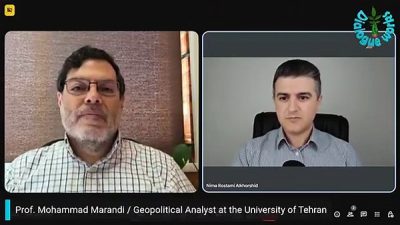
Seyed M. Marandi: U.S. Military DIVIDED? Iran’s Secret Defense EXPOSED
or go to
Aletho News Archives – Video-Images
From the Archives
‘Israel sees Iran as obstacle to its policies’
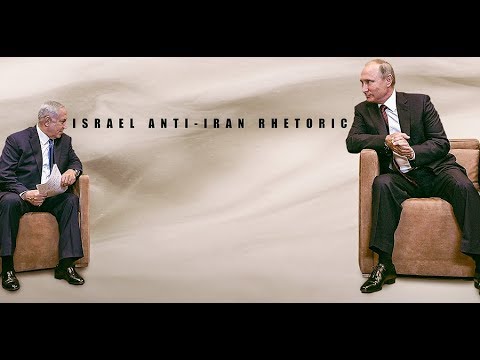
Press TV – August 25, 2017
Prime Minister Benjamin Netanyahu has said that Israel felt threatened by Iran’s growing influence in the Middle East. Netanyahu expressed his Iranophobic view in a meeting with Russian President Vladimir Putin in Russia’s Black Sea resort of Sochi on Wednesday. Press TV has asked Scott Rickard, former American intelligence linguist from Tampa, Florida, and Brent Budowsky, a columnist at The Hill from Washington, to give their thoughts on the issue.
Rickard said Tel Aviv is concerned about the fact that the regime could not carry out its old project to spread sectarian divisions and pave the way for dismemberment of the countries in the Middle East region because of the Iranian-led resistance against Israeli policies, not only in the occupied territories of Palestine but also in the whole region.
“Iran is not a threat to Israel whatsoever. The threat that Israel sees is the fact that their Oded Yinon Plan is being put to a hold by Iran,” the intelligence linguist said on Thursday night.
“They (the Israelis) look at Iran as a threat only because they have no influence on their governments and Iran is autonomous and is not under the Zionist influence,” he added.
Since the victory of the Islamic Republic of Iran in 1979, Tehran has been critical of Israel’s policies in the region, whereas “no leaders [of other states] even dared to speak out against Zionism,” Rickard argued. … continue
Blog Roll
 Aletho News
- Sri Lanka secures supplies of Russia oil – minister
- Nations across Asia strike direct deals with Iran for Hormuz passage
- IRGC commander declares ‘new phase’ of reprisal attacks against aggressors
- Israel’s air defenses overwhelmed by cluster-warhead Iranian missiles: Reports
- Striking Iran’s Infrastructure Would Have Little Military Impact – Report
- What’s Behind U.S./Israeli Strikes On Iranian Pistachio Factories?
- Seyed M. Marandi: U.S. Military DIVIDED? Iran’s Secret Defense EXPOSED
- How I fell foul of the BBC thought police
- The End of NATO
- 37 days of war on Iran cost US staggering $42bln, tracker shows
- If Americans Knew
- Trump says Iranians appreciate bombs, WHO warns of nuclear risks – Daily Update
- U.N. experts demand Israel release prominent Gaza doctor after reports of ‘severe torture’
- Israel’s Latest Genocide Is Against the Shias of Lebanon. Why Is the World Silent?
- How Eliot Cohen’s influence over U.S. war-making paved the way for Trump’s war crimes in Iran
- Israelis don’t pay for the weapons we ‘sell’ to them — US taxpayers do
- While Distancing from AIPAC, Most 2028 Democratic Hopefuls Are Still Embracing Israel
- A brief history of the Israeli nuclear program, the open secret at the heart of the Iran war
- Israeli Settlers Killed a Palestinian Farmer on His Own Land, in Front of His Father. Yes, Again
- The US-Israeli War on Science is an Assault on our Future
- 100+ International Law Experts Say US Strikes on Iran Violate UN Charter, Could Be War Crimes
- No Tricks Zone
- An Inconvenient Tree: Uncovered In Alps… Europe Much Warmer Than Today 6000 Years Ago
- New Study Reports A 60% Slowdown In Greenland’s Ice Loss Rate In The Last Decade
- Low Intensity Tornado Wrecks Major Solar Farm, Creating A Potential Toxic Dump
- New Study Finds Warming Saves Lives…Cold Temperatures 12 Times More Deadly Than Excess Heat
- German Science Blog Accuses PIK Climate Institute Of Hallucinating Climate Tipping Points
- Devastating Assessment Of Comirnaty Vaccine By Former Senior Pfizer Europe Toxicologist
- New Study: CO2 Is ‘Effectively Negligible’ As An Explanatory Climate Change Factor Since 2000
- Former Pfizer Toxicologist Dr. Helmut Sterz Tells Bundestag Hearing Pfizer Vaccine Should Have Never Been Approved
- Energy Expert: Germany’s Nuclear Phaseout Was A “500 Billion Euro Mistake”
- New Research: South Australia’s Mid-Holocene Sea Surface Temperatures Were 4°C Warmer Than Today
 Aletho News