Pat Finucane and Rosemary Nelson – Britain’s Record of Conducting State Sponsored Assassinations
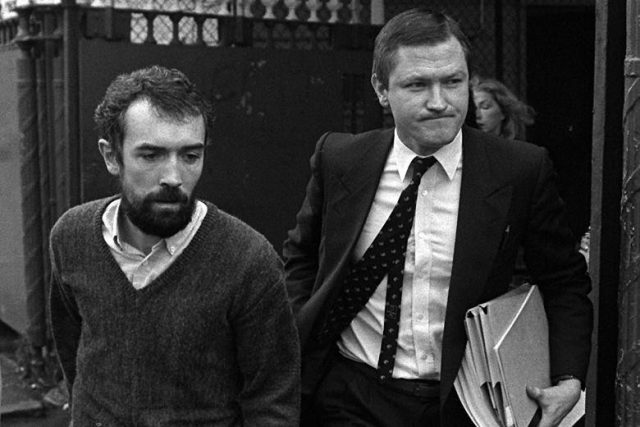
Pat Finucane (right) leaving Court with Pat McGeown, the IRA volunteer who had charges related to the deaths of 2 British soldiers dropped.
By Gavin O’Reilly | American Herald Tribune | March 15, 2018
With the eyes of the world focused on the alleged nerve agent attack on Sergei Skripal, the Russian who worked as a British double-agent before being exiled to the UK in 2010, since he and his daughter were found slumped on a Salisbury public bench last Sunday, one can’t help but notice the hypocritical reaction of the British political establishment to the attack.
Addressing the House of Commons on Monday, Prime Minister Theresa May alleged Kremlin involvement in the incident due to ‘Russia’s record of conducting state-sponsored assassinations’.
These words were spoken in a self-righteous sense, one that suggested the UK held the moral ground over Russia and would never go so far as to conduct assassinations of political opponents on foreign soil.
Anyone with even a basic knowledge of British foreign policy towards Ireland however, would know that this patently isn’t the case.
In 1989, the north of Ireland was at the height of a bloody conflict in which Irish Republican militants were waging a guerrilla campaign on Crown Forces in a bid to end British rule in the region.
In order to counter the threat posed by the IRA and other such groups, Westminster had long decided that anyone charged with Republican activity in the occupied six counties would be brought before a non-Jury ‘Diplock’ court; thus maximising the chances of conviction and imprisonment.
One human rights Lawyer from Belfast however, would quickly gain prominence for successfully defending Republicans charged before these courts.
Pat Finucane first came to public attention through his campaigning for Republican prisoners during the 1981 H-Block hunger strike.
He would quickly become a thorn in the side of the British establishment by representing Republicans in several high-profile cases throughout the 1980s, with the final straw coming in November 1988 when he successfully defended an IRA Volunteer in a case related to the deaths of two British soldiers.
On the 12th of February 1989, a pro-British death squad burst into Pat Finucane’s home and shot him 14 times as he had Sunday dinner with his wife and children.
The death squad in question, the Ulster Defence Association (UDA), was a then-legal organisation under the control of the Force Research Unit (FRU), a covert British military unit tasked with turning the UDA into a more ‘professional’ organisation.
British state involvement in the killing went even higher than the military, with then-Home Office Minister Douglas Hogg lamenting in the weeks before Finucane’s death that there were Lawyers in the north of Ireland who were ‘unduly sympathetic to the cause of the IRA’.
The murder of Pat Finucane was not an isolated incident however, and not even a tactic confined by the British to intense periods of conflict in Ireland, such as the 1980s were.
Ten years after Finucane’s killing, the level of conflict in Ireland had decreased significantly following the 1998 surrender agreement between the Provisional IRA and British government.
This ‘peace’ however, was and still is maintained by the threat of violence from the British state should anything upset the status quo.
This is what ultimately led to the murder of Rosemary Nelson.
A human rights lawyer, like Pat Finucane, Rosemary had also risen to prominence through her successful defence of Republicans in high-profile cases.
However, it was her representation of the family of Robert Hamill, a young Nationalist beaten to death by a Loyalist mob in 1997 whilst in full view of the Royal Ulster Constabulary (RUC) the north of Ireland’s pro-British police force, that drew the most ire from the British establishment.
On the 15th of March 1999, Rosemary Nelson was killed by a car bomb outside her home in Armagh, occupied Ireland. The attack was claimed by the Red Hand Defenders (RHD), a breakaway faction of the UDA.
In the days following her murder, it emerged that members of the RUC’s covert Special Branch had been involved in a surveillance operation close to Nelson’s home the night before her death, ostensibly to monitor suspected members of the IRA.
Despite the intense surveillance of the area surrounding Nelson’s home, no Special Branch members reported seeing the RHD team that carried out attack; like Pat Finucane, Rosemary Nelson had also become another victim of Britain’s bloody record of state sponsored assassinations.
Trump’s New CIA Director Oversaw Torture in ‘Black Sites’
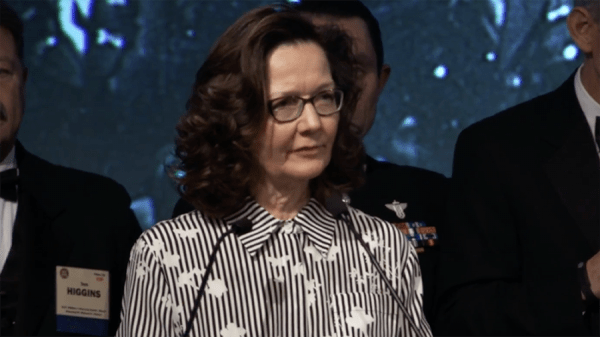
Gina Haspel © The OSS Society / YouTube
teleSUR | March 13, 2018
Gina Haspel, who is accused of overseeing torture interrogation cases in a “black site” in Thailand, is now the head of the U.S. Central Intelligence Agency, after President Donald Trump appointed Mike Pompeo as the new secretary of state following the sacking of Rex Tillerson.
Haspel became the CIA’s deputy chief in 2017 despite multiple accusations linking her to torture cases as an undercover official.
She was responsible for the CIA’s first overseas detention center in Thailand, known as Cat’s Eye base or Detention Site Green, where suspects Abu Zubaydah and Abd al-Rahim Nashiri were brutally interrogated in 2002 for their alleged involvement in the al-Qaida network.
According to the Intelligence Committee’s investigation, Zubaydah was waterboarded 83 times and slammed into walls between Aug. 4 and 23, 2002. He was beaten so brutally he lost consciousness with water bubbling up from his lungs that doctors had to revive him. He also lost sight in his left eye before interrogators decided he didn’t have any valuable information.
Zubaydah’s torture was videotaped and stored in Thailand until 2005, when Haspel and Jose Rodriguez, then director of operations and head of the National Clandestine Service, ordered the footage be destroyed without previous consultation or authorization by the U.S. Congress. Al-Nashiri’s torture tape was also destroyed.
In June 2017, the European Center for Constitutional and Human Rights filed a lawsuit to German federal prosecutors against Haspel for her involvement in the Thailand torture cases. The complaint states that psychologist James Mitchell and Bruce Jessen were the only two people authorized to contact Zubaydah, and that they were under Haspel’s supervision.
But during the first years of the new “war on terror” that started after the Sept. 11, 2001 events, the George Bush administration considered waterboarding and other torture interrogation techniques to be legal.
Haspel became Rodriguez’ chief of staff in 2003, who back then was the director of the Counterterrorism Center. As chief of staff, Haspel ran programs that commonly used torture methods on suspects, including sleep deprivation, coffins and waterboarding to conduct brutal interrogations.
According to John Sifton from Human Rights Watch, Haspel was also one of the senior officials running the Rendition, Detention and Interrogation (RDI) CIA program, which had the aim of kidnapping suspects all around the world and handing them to other countries for interrogation, which more than often also included torture.
U.S. President Donald Trump has said multiple times he thinks that torture works and has vowed to bring waterboarding back. Trump’s policy is reflected in the decision to make Haspel first Deputy Director and then Director of the U.S. intelligence agency.
“If Ms. Haspel seeks to serve at the highest levels of U.S. intelligence, the government can no longer cover up disturbing facts from her past,” said Senator Ron Wyden, a Democratic member of the Senate Intelligence Committee.
And Mike Pompeo as the new Secretary of State doesn’t inspire much hope either. The former CIA director supports waterboarding and other intense interrogation techniques, saying they “don’t even constitute torture” and praising “patriots” who have used such methods to counter terrorism.
Other advocates of waterboarding deny the method is a kind of torture, and even call it “enhanced interrogation.”
Haspel’s position has yet to be ratified by the Senate.
Israeli settler runs over, injures Palestinian teenage boy in occupied West Bank
Press TV – March 11, 2018
A Palestinian teenage has reportedly sustained injuries after an Israeli settler ran him over in the southern part of the occupied West Bank.
Local sources, requesting anonymity, told Arabic-language Ma’an news agency that the 16-year-old victim, identified as Rushdi Yasser al-Khatib, was struck on the road linking the towns of Hizma and ‘Anata northeast of the occupied Old City of Jerusalem al-Quds on Sunday afternoon.
The sources added that the settler fled the scene after the incident.
The Palestinian Health Ministry later announced that Khatib had been transferred to the Palestine Medical Complex in the central West Bank city of Ramallah, describing his injuries as serious.
Palestinian medics said the teenager has suffered a fractured skull and bruises all over his body.
There have been scores of “hit and run” incidents targeting Palestinians in different parts of the occupied West Bank, with most of them largely going uninvestigated by Israeli authorities. Some of such events have resulted in fatalities.
A 21-year-old Palestinian woman, identified as Tamara Thawabta, was run over near the entrance to Palestine Technical University – Kadoorie in al-Arroub town, located 15 kilometers south of Bethlehem, on September 26, 2017.
Asil Tariq Abu Aoun was run over by an Israeli settler near Hamra checkpoint in Furush Beit Dajan village, located 10 kilometers east of Nablus, on August 26. The 8-year-old Palestinian girl later succumbed to her serious injuries.
On August 10, an Israeli settler ran over four Palestinian children in the predominantly Palestinian neighborhood of Silwan on the outskirts of the Old City of Jerusalem al-Quds.
About 600,000 Israelis live in over 230 illegal settlements built since the 1967 Israeli occupation of the Palestinian territories of the West Bank and East Jerusalem al-Quds.
Israeli soldiers pose as news crew to abduct student leader from West Bank university
RT | March 8, 2018
Disguised Israeli forces have stormed Birzeit University in the occupied West Bank and seized the head of the university’s student council. Two students were reportedly injured by gunfire during the raid.
Omar Kiswani was taken by soldiers who reportedly posed as journalists. The university posted footage of Wednesday’s raid online, showing a group of six men pinning Kiswani down and pointing their guns at onlookers.
According to the university, the attackers “carrying firearms in their backpacks, entered the campus during working hours and attacked the student in front of the Student Council Building.” It also called the operation a “barbaric intrusion” and said that two students were recovering in hospital after being injured when the Israeli forces fired into the campus.
Student council member Yahya Alawi, who witnessed the abduction, told the Palestinian Quds News Network that the Israelis “identified Omar and called over to him as if they wanted to interview him as journalists.” Alawi said they then “beat [Kiswani], pulled out their weapons, and a large group of occupation soldiers stormed through the main entrance of the university.”
The Union of Journalists in Israel issued a statement condemning the soldiers impersonation saying that they were “troubled” by “undercover forces impersonating a news crew at Bir Zeit University.” The union added: “Such behavior is likely to endanger real journalists doing their jobs and strikes a blow at freedom of the press. Journalistic work is important and journalists must not be endangered, even in order to conduct security operations.”
This is not the first time 24-year-old Kiswani has been arrested. He previously spent a year in prison for his participation in a group affiliated with Hamas on campus. Following his abduction on Wednesday, Israeli army troops covered the plainclothes operatives’ departure from the scene, firing shots at a group of students throwing stones.
“This is not the first violent intrusion by Israeli army forces, who systematically invade the university’s campus – even though it is specifically protected under international humanitarian law – and constantly harass students, faculty members, and staff at Birzeit University and other Palestinian educational institutions,” the university’s Right to Education Campaign wrote in a statement.
Israeli Forces Attack Students at Hebron Technical University
Palestine Chronicle | March 5, 2018
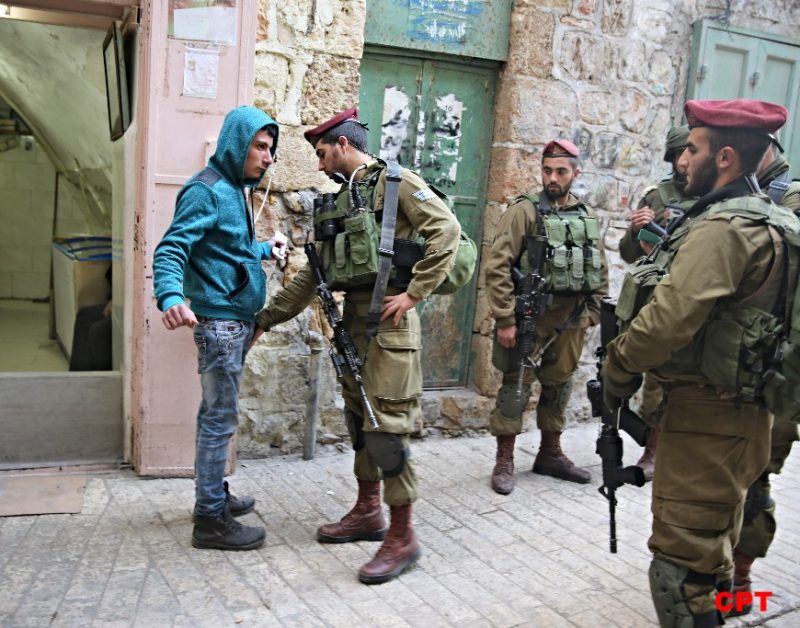
Clashes broke out on Sunday between Israeli forces and Palestinian students of Palestine Technical University in the West Bank district of Hebron, with no injuries reported until the moment, according to director of students’ affairs department, Issa al-Amla.
Israeli occupation forces reportedly fired rubber-coated steel bullets and tear gas canisters toward the students and the university’s campus; however, no injuries or arrests were reported.
The director said Israeli forces deliberately provoke students through their almost daily presence at the university’s entrance, where they often search and interrogate students on their way to or from campus.
The spin machine behind Saudi Arabia’s ‘humanitarian aid plan’ for Yemen
By Dan Glazebrook | Middle East Eye | March 2, 2018
On 22 January, the Saudi-led coalition in Yemen unveiled a new plan to deliver “unprecedented relief to the people of Yemen”.
The Yemen Comprehensive Humanitarian Operations (YCHO) is a new “aid” programme with the ostensible aim of “addressing immediate aid shortfalls while simultaneously building capacity for long-term improvement of humanitarian aid and commercial goods imports to Yemen”.
This will primarily be done through increasing the “capacities of Yemeni ports to receive humanitarian as well as commercial imports” – and all sealed with a whopping $1.5bn in aid contributions. What could possibly be wrong with that?
Starvation politics
The problem here is not only that the funding required to meet the needs created by the Saudi-led coalition is estimated by the UN to be twice that amount. The real problem is that the plan will not, in fact, increase the imports on which Yemen is utterly dependent, but reduce them still further.
This is because the much-vaunted “improvements in port capacity” will apply solely to “coalition-controlled ports”, excluding the ports outside their control – Hodeidah and Saleef – which, between them, handle about 80 percent of Yemen’s imports.
For these, absolutely critical, ports, the plan explicitly states that it wants a reduction in the flow of cargo they handle: by around 200 metric tons per month, compared to mid-2017 levels. Yes, you heard correctly: cargo levels in mid-2017 – when 130 children were dying each day from malnutrition and other preventable diseases largely caused by the limits on imports already in place – are now deemed in need of further, major, reductions.
This plan is nothing less than a systematisation of the starvation politics of which the Saudis were accused by the UN Panel of Experts on Yemen in relation to their closure of Hodeidah and Saleef in November.
Back then, noted the panel’s final report, all Yemen’s ports had been closed following a Houthi missile attack on Riyadh airport. But while coalition-controlled ports were quickly reopened, Hodeidah and Saleef remained closed for weeks.
“This had the effect,” said the panel, “of using the threat of starvation as an instrument of war.” Today, the “Comprehensive Operations” plan envisages making permanent the juxtaposition of wilful starvation of Houthi-controlled territory (in which the vast majority of Yemenis live) and “generous” aid deliveries into coalition-controlled territories.
Spin masters
These are the same “methods of barbarism” as were employed by the British in the Boer war – when Boer-controlled territories were subjected to scorched earth policies of torching farms and destroying livestock – and then revived for Britain’s colonial wars in Malaya, Kenya and, indeed, Yemen in the 1950s-60s. Small wonder Britain is so deeply involved today.
But such a strategy will surely be hard to sell in this day and age. Certainly, the Saudis seem to think so, which is presumably why they have employed a plethora of PR agencies to help them do so.
An exceptional investigation by the IRIN news agency reported that “the press release journalists received announcing the [YCHO] plan came neither from the coalition itself nor from Saudi aid officials”.
It came, along with an invitation to visit Yemen, straight from a British PR agency. The investigation also revealed that the PowerPoint presentation used to introduce the YCHO to high-level UN officials was authored by Nicholas Nahas, of Booz Allen Hamilton, a US management consultancy with long-established links to the US government (including involvement in the illegal SWIFT and PRISM mass surveillance programmes). The consultancy currently has, says IRIN, “35 job listings in Riyadh on its website, including ‘military planner'”.
This role requires the applicant to: “Provide military and planning advice and expertise to support the coordination of joint counter threat operations executed by coalition member nations and facilitate resourcing to enable operations.”
Another PR company involved in “selling” the YCHO, long on the Saudi payroll, is Washington DC-based Qorvis MSLGroup. According to IRIN’s report, the company “booked US revenue of more than $6m from the Saudi Arabian embassy [in the US] over a 12-month period up to September 2017”.
These masters of spin have certainly been busy: their work on the plan has been delivered to “the offices of major INGOs in the UK as well as to members of the UK parliament”, and YCHO accounts have been set up on Facebook, Twitter, Instagram, Youtube and Gmail.
The YCHO Twitter account has around 10,000 followers; but, says the IRIN investigation, “almost half of YCHO’s followers have less than 10 followers themselves, while some 1,000 followers were accounts created on the same day in 2016 – signs that a significant number of bots or fakes are inflating YCHO’s popularity”.
“All of this,” concludes IRIN, “has fed suspicions that rather than a genuine attempt to help the people of Yemen, the plan is really intended more to gloss over the Hodeidah issue and improve Saudi Arabia’s battered image, or at least a bit of both.”
You would think a strategy aimed at starving the world’s most starved population still further would be a hard sell. But, then, money not only talks, it silences. And $1.5bn is a lot of money.
The UN response
The UN’s own Humanitarian Response Plan for Yemen, issued just two days before the YCHO, on 20 January, had noted that: “Al Hudaydah port, which accounts for 70-80 per cent of commercial imports in Yemen, remains a critical lifeline, despite operating at reduced capacity after being hit by an air strike in August 2015.”
The UN statement added that “the extended blockade imposed on Al Hudaydah and Salif ports on 6 November 2017 significantly threatened this lifeline of Yemenis” and that “only a sustained flow of imports of essential basic goods can avert further catastrophe”.
Yet the cash-strapped UN, facing dramatic budget cuts from the Trump administration, and presumably nervous of saying anything that might jeopardise Saudi-Emirati money as well, officially welcomed the announcement, despite its clear commitment to essentially tightening the very blockade of Hodeidah and Saleef ports which the UN had denounced just days earlier.
Politicising humanitarian aid
Thankfully, the aid agencies do not seem to have been fooled. A joint statement on the YCHO by a number of international NGOs, including Oxfam and Save the Children, stated that:
“We remain concerned that the blockade on Red Sea ports has still not been fully lifted and about the insufficient volume of fuel reaching these, which has led to an increase in the price of basic goods across the country.
“As a result, we are seeing families pushed into preventable disease and starvation because they cannot afford to buy food and clean water. Hodeidah port handles the majority of the country’s imports and cannot be substituted. It is vital that the warring parties commit to keep Hodeidah port fully open and functioning, including unfettered access for both humanitarian and commercial supplies.”
Save the Children’s Caroline Anning explained that the plan “is a misconception – in the publicity around this new plan they say the blockade around Hodeida port has been fully lifted but actually what we’re seeing is that fuel is still being blocked coming into that port which is having a really horrendous knock-on effect around the country.”
And the International Rescue Committee (IRC)’s scathing response – issued with the title “Yemen: Saudi ‘aid’ plan is war tactic” – is worth quoting at length:
“The Yemen Comprehensive Humanitarian Operations (YCHO), announced on January 22, 2018, is neither comprehensive, nor reflective of clear, shared humanitarian priorities… The YCHO politicizes aid by attempting to consolidate control over access and transit points. Rather than endorsing a parallel plan, which was created without broad input from humanitarian actors, the Saudi Led Coalition (SLC) and its supporters, notably the US and UK, should work to ensure the full implementation of the existing UN humanitarian response plan.
“A meaningful response to the world’s largest humanitarian crisis requires more access – not less. At best, this plan would shrink access and introduce new inefficiencies that would slow the response and keep aid from the neediest Yemenis, including the over eight million on the brink of starvation,” said Catanzano.
“At worst, it would dangerously politicize humanitarian aid by placing far too much control over the response in the hands of an active party to the conflict.”
Essentially, this is a plan to tighten the blockade while monopolising access to aid in the hands of the aggressors, presented as a great humanitarian effort, and unveiled just as the coalition begins an attack on the country’s “vital lifeline” which will lead to “a complete horror show” and “near-certain famine”.
Tighten the blockade
On 9 February, the UN announced that 85,000 people had been displaced in 10 weeks due to “surging violence”, particularly on the Red Sea coast, where the coalition have mounted a new campaign to capture the country’s strategically important Hodeidah port.
With the Hodeidah campaign now entering a new phase, this war on the Yemeni population is set to escalate still further. Since it launched in early December, the coalition and its Yemeni assets have taken several towns and villages in Hodeidah province, and are now poised to take the battle to the city itself.
On 20 February, Emirati newspaper The National reported that, in the coming days, “more forces will be committed to Hodeidah as a new front is to be opened in the next few days by Maj Gen Tariq Mohammed Abdullah,” nephew of the deceased former president Ali Abdullah Saleh.
This attack would put the almost completely import dependent country’s most essential port out of action for months, leaving millions unable to survive. “If this attack goes ahead,” Oxfam chief executive, Mark Goldring, told the press when a similar attack was proposed earlier last year, “this will be a deliberate act that will disrupt vital supplies – the Saudi-led coalition will not only breach International Humanitarian Law, they will be complicit in near certain famine.”
His colleague Suze Vanmeegan added that “any attack on Hodeidah has the potential to blast an already alarming crisis into a complete horror show – and I’m not using hyperbole.”
The Yemen Quartet
There is no doubt the war’s British and American overseers have given their blessing to this escalation. In late 2016, the “Yemen Quartet” was formed by the US, the UK, Saudi Arabia and the UAE to co-ordinate strategy between the the war’s four main aggressors.
Throughout 2017, they met sporadically, but since the end of the year their meetings have become more frequent and higher-level.
At the end of November, just before the launch of operations in Hodeidah province, British Foreign minister Boris Johnson hosted a meeting of the Quartet in London as British Prime Minister Theresa May simultaneously met with King Salman in Riyadh, presumably to give the go-ahead to this new round of devastation for Yemen’s beleaguered population.
They met again two weeks later, and then too on 23 January, also at Johnson’s instigation, where the meeting was attended, for the first time, by US Secretary of State Rex Tillerson. The “economic quartet” – also attended by officials from the IMF and World Bank – convened on 2 February in Saudi Arabia, while Johnson and Tillerson once again met with their Saudi and Emirati counterparts to discuss Yemen in Bonn on 15 February.
Of course, these meetings do not carry out the nitty-gritty of strategic war planning – civil servants in the military and intelligence services do that. The purpose of such high level forums is rather for each side to demonstrate to the other that any strategic developments carry the blessing of each respective government at the highest level.
That the “quartet” met just days before an announcement that the long-planned attack on Hodeidah port was imminent, then, speaks volumes about US-UK complicity in this coming new premeditated war crime.
In the twisted minds of men like Saudi Crown Prince Mohammed bin Salman, Rex Tillerson and Boris Johnson – for whom even the liquidation of an entire people is apparently a noble cause in the pursuit of containing Iran – this is what passes for humanitarianism today.

– Dan Glazebrook is a political writer and editor of stopstarvingyemen.org. He is author of Divide and Ruin: The West’s Imperial Strategy in an Age of Crisis and blogs at danglazebrook.com.
This article is available in French on Middle East Eye French edition.
READ MORE:
Culture of concealment: The UK government’s brazen duplicity in Yemen
Lebanese Nuclear Physics Student Found Dead in France
Al-Manar | March 1, 2018
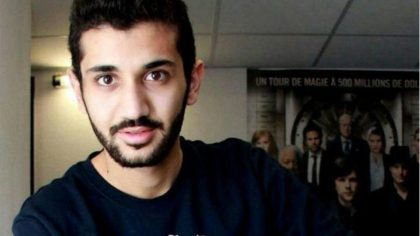 A Lebanese man studying nuclear physics was found dead earlier this week in France, while reports on his death were conflicting.
It was initially reported that Hisham Salim Mourad- from the southern town of Braikeh in Nabatieh, was stabbed in his house.
However, Lebanon’s consul general in Marseille, Sonia Abou Azar, said the Grenoble police published its report on the death of Mourad and determined that he died after falling from the balcony of his house.
Mourad was studying at the Joseph Fourier University in the city of Grenoble. It was the last year of his master’s program.
The death sparked outrage among Lebanese people in Lebanon and abroad who were also shocked last week by the killing of another Lebanese student in Canada.
Hasan Ali Kheireddine, 23, was killed on Feb. 13 at a student residence on the St. Mary’s University campus in the Canadian region of Halifax.
The Lebanese Foreign Ministry announced earlier on Sunday that instructed the Lebanese embassy in Canada to “follow up on the case in order to unveil the details of this horrible crime and the motives behind it.”
Although Canadian authorities have been downplaying the murder of Kheireddine, it is seen by many in Lebanon as suspicious, especially that the bright student was studying economics and had been well-known for his research on the influence of Zionism on the international economy.
Israeli Occupation Forces arrest former governor of al-Khalil
Palestine Information Center – February 28, 2018
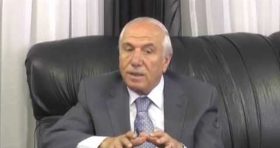 AL-KHALIL – The Israeli Occupation Forces arrested Tuesday evening former governor of al-Khalil city Abdel Halim Ja’bari after being summoned for investigation.
Local sources affirmed that Ja’bari, 70, was summoned Tuesday morning for investigation in Etzion investigation center where he was later detained.
Ja’bari was the head of al-Khalil University for Academic Affairs, al-Khalil’s governor between 2002 and 2007, and Jericho’s governor in 2008.
‘Token Gestures’: International Rescue Committee Slams Saudi Yemen Relief Plan
Sputnik | February 23, 2108
This week, the International Rescue Committee issued a statement condemning Saudi Arabia’s Yemen Comprehensive Humanitarian Operations (YCHO), stating that the program is “neither comprehensive, nor reflective of clear, shared humanitarian priorities.”
Last month, the Coalition to Restore Legitimacy announced the launch of YCHO, a relief program that allegedly aims to improve the humanitarian situation in Yemen by committing billions of dollars in aid and support.
The three-year civil conflict In Yemen, which intensified when a Saudi-led, US-backed coalition launched massive airstrikes against the Houthi political opposition faction in 2015, has killed about 10,000 people and injured thousands more, placing more than 28 million Yemenis in dire need of humanitarian assistance. The number of suspected cholera cases in the war-torn country also hit 1 million by the end of December.
YHCO’s stated goals are to increase capacities of Yemeni ports so they can receive humanitarian and commercial imports, open an air bridge from Riyadh, Saudi Arabia, to Ma’rib in Yemen with daily cargo planes equipped with humanitarian aid, as well as establish 17 safe-passage corridors from six entry points in order secure safe transportation of aid to NGOs inside Yemen.
However, according to senior policy and advocacy director at the International Rescue Committee Amanda Catanzano, “The name [of YHCO] in itself is misleading: it is neither comprehensive, nor particularly humanitarian. The Saudi-led coalition is offering to fund a response to address the impact of a crisis it helped to create. The acute crisis in Yemen needs more than what appears to be a logistical operations plan, with token gestures of humanitarian aid.” In fact, the International Rescue Committee argues that the Saudi plan is more about gaining control over Yemen than about human rights.
In November, Saudi Arabia announced that it would temporarily close all ports in Yemen, the gateways through which some 70 percent of the country’s population receive food, medical aid and other supplies delivered.
According to the International Rescue Committee, the YHCO does not end the de-facto blockade. Given the severity of the Yemen humanitarian crisis, all ports should be permanently open, especially key ones like Hodeidah and Saleef. The YCHO only allows Hodeidah to remain open for 30 days, which will not make much difference on the ground, the International Rescue Committee claims in their statement. Although the development of more Yemeni ports could be helpful, it does not replace opening access to Red Sea northern ports like Hodeidah and Saleef, especially since the southern ports lack the necessary infrastructure and capacity. By controlling the flow of aid in the country, the Saudis are limiting aid to regions they control, particularly to “loyal” ports in the country’s south.
In addition, the YHCO does not address Yemen’s collapsed economy. Although the YCHO claims to aim to economically stabilize the country, it does not mention restoring basic public services including basic government services.
“A meaningful response to the world’s largest humanitarian crisis requires more access — not less. At best, this plan would shrink access and introduce new inefficiencies that would slow the response and keep aid from the neediest Yemenis, including the over 8 million on the brink of starvation,” said Catanzano. “At worst, it would dangerously politicize humanitarian aid by placing far too much control over the response in the hands of an active party to the conflict.”
Featured Video
Max Blumenthal: ‘Israel First’ in Iran War Sparks MAGA Civil War
or go to
Aletho News Archives – Video-Images
From the Archives
Wartime internment camps in Australia
National Archives of Australia
World War I
During World War I, for security reasons the Australian Government pursued a comprehensive internment policy against enemy aliens living in Australia.
Initially only those born in countries at war with Australia were classed as enemy aliens, but later this was expanded to include people of enemy nations who were naturalised British subjects, Australian-born descendants of migrants born in enemy nations and others who were thought to pose a threat to Australia’s security.
Australia interned almost 7,000 people during World War I, of whom about 4,500 were enemy aliens and British nationals of German ancestry already resident in Australia.
Records of World War I internment camps
World War II
During World War II, Australian authorities established internment camps for three reasons – to prevent residents from assisting Australia’s enemies, to appease public opinion and to house overseas internees sent to Australia for the duration of the war.
Unlike World War I, the initial aim of internment during the later conflict was to identify and intern those who posed a particular threat to the safety or defence of the country. As the war progressed, however, this policy changed and Japanese residents were interned en masse. In the later years of the war, Germans and Italians were also interned on the basis of nationality, particularly those living in the north of Australia. In all, just over 20 per cent of all Italians resident in Australia were interned. … continue
Blog Roll
 Aletho News
- Tomorrow’s naval blockade showdown
- ‘Israel’ attacks civilians to hide its embarrassing military failures & out of pure sadism
- Any Foreign Military Vessel Approaching Hormuz Under Any Pretext ‘Will Be Dealt With Severely’: IRGC
- Diplomats slam US negotiators’ performance in Iran talks
- Trump Refuses Exit Ramp, War with Iran will Continue
- Trump Says US Naval Blockade in Strait of Hormuz Will Begin Shortly
- US, Iran end 21-hour talks without agreement
- US IRAN TALKS: Who Are the Crazy Ones Here? /Lt Col Daniel Davis
- Talks with the US end without a deal over excessive US demands: Iran
- Feeling Better, Getting Worse: How Psychiatric Drugs Create the Illusion They Cure
- If Americans Knew
- US-Iran ceasefire negotiations make zero progress – Daily Update
- Pro-Israel ‘Thinktanks’ and Individuals who Influence U.S. Foreign Policy
- Mearsheimer reveals how Israel dictates US policies on Iran, Gaza – video
- After killing 350+, Israel still has a “score to settle” with Lebanon before ceasefire – Daily Update
- Military aid to Israel emerges as the latest political litmus test for Democrats
- The only Palestinian children’s rights organization closes following years-long Israeli campaign against it
- ‘I Can’t Forget the Smell’: Lebanese Reel After Israel Kills Over 300 in Single Day
- DNC Shoots Down Resolutions Calling Out AIPAC and Limiting Arms to Israel
- TCN: Is Israel Blackmailing President Trump?
- Israel killed at least 303 Lebanese yesterday – who were they? Daily Update
- No Tricks Zone
- German Expert: Heat Dome Led To Record Temps In Western USA…Warmer In 1934, 1936
- New Study: No Linear Warming Or Glacier Retreat Along Northern Antarctic Peninsula Since 1980s
- An Inconvenient Tree: Uncovered In Alps… Europe Much Warmer Than Today 6000 Years Ago
- New Study Reports A 60% Slowdown In Greenland’s Ice Loss Rate In The Last Decade
- Low Intensity Tornado Wrecks Major Solar Farm, Creating A Potential Toxic Dump
- New Study Finds Warming Saves Lives…Cold Temperatures 12 Times More Deadly Than Excess Heat
- German Science Blog Accuses PIK Climate Institute Of Hallucinating Climate Tipping Points
- Devastating Assessment Of Comirnaty Vaccine By Former Senior Pfizer Europe Toxicologist
- New Study: CO2 Is ‘Effectively Negligible’ As An Explanatory Climate Change Factor Since 2000
- Former Pfizer Toxicologist Dr. Helmut Sterz Tells Bundestag Hearing Pfizer Vaccine Should Have Never Been Approved
 Aletho News