After violence in Charlottesville last August, a Washington Post article asserted that alienated right-wingers had “sparked the deadly standoff in Ruby Ridge, Idaho” in 1992. Ruby Ridge has recently been invoked by many people to show the need for federal crackdowns on dangerous extremists. Unfortunately, the mainstream media has largely forgotten – or expunged – the federal misconduct and deception that permeated that showdown. But it is difficult to comprehend the fear that many Americans have of the government without reconsidering Ruby Ridge.
Randy Weaver and his family lived in an isolated cabin in the mountains of northern Idaho. Weaver was a white separatist who believed races should live apart; he had no record of violence against other races — or anyone else. An undercover federal agent targeted him and entrapped him into selling a sawed-off shotgun. The feds sought to pressure Weaver, who often indulged in anti-government bluster, to become an informant against the Aryan Nation, but he refused.
After Weaver was sent the wrong court date and (understandably) failed to show up, the feds used any and all means to take him down. Idaho lawyer David Nevin noted that U.S. “marshals called in military aerial reconnaissance and had photos studied by the Defense Mapping Agency. They prowled the woods around Weaver’s cabin with night-vision equipment. They had psychological profiles performed and installed $130,000 worth of long-range solar-powered spy cameras. They intercepted the Weavers’ mail. They even knew the menstrual cycle of Weaver’s teenage daughter, and planned an arrest scenario around it.”
On August 21, 1992, six U.S. Marshals outfitted in full camouflage and carrying machine guns trespassed onto the Weavers’ property. Three marshals circled close to the Weaver cabin and threw rocks to provoke the Weavers’ dogs. As Weaver’s 14-year old son, Sammy, and Kevin Harris, a 25-year old family friend living in the cabin, ran towards the barking, a marshal shot and killed a dog. Sammy Weaver fired in the direction those shots came from. As he was leaving the scene, a marshal shot him in the back and killed him. Harris responded by fatally shooting a federal marshal who had fired seven shots in the melee. (The U.S. Marshals Service later gave its highest valor awards to the marshals who carried out the ambush.)
The FBI decided that Weaver was such a bad person that the Constitution no longer applied. Snipers from the FBI Hostage Rescue Team were sent in the next day and ordered to shoot to kill any adult male outside the Weaver cabin. The rules of engagement epitomized federal overreach against citizens whom the government despised. A 1997 federal appeals court decision derided the rules as “a gross deviation from constitutional principles and a wholly unwarranted return to a lawless and arbitrary wild-west school of law enforcement.” A 2001 federal appeals court ruling noted that “a group of FBI agents formulated rules of engagement that permitted their colleagues to hide in the bushes and gun down men who posed no immediate threat. Such wartime rules are patently unconstitutional for a police action.”
On August 22, 1992, FBI sniper Lon Horiuchi shot Randy Weaver in the back after he stepped out of his cabin. As he struggled to return to his home, Horiuchi shot and killed Vicki Weaver, who was standing in the cabin door holding their 10-month old baby. A confidential 1994 Justice Department task force report was appalled that people were gunned down before receiving any warning: “The absence of a [surrender demand] subjected the Government to charges that it was setting Weaver up for attack.”
Weaver and Harris, who never fired any shots at FBI agents, surrendered after an 11-day siege. At their 1993 trial, federal prosecutors asserted that Weaver long conspired to have an armed confrontation with the government. The feds made the bizarre claim that his moving from Iowa to a spot near the Canadian border in 1985 was part of that plot. U.S. Marshal Dave Hunt, in later congressional testimony, repeatedly stressed that Weaver had criticized the federal government as a “lawless government.” Did federal agents feel compelled to silence any citizen who publicly proclaimed that the government is lawless?
An Idaho jury found Weaver not guilty of almost all charges and ruled that Harris’s shooting of the U.S. Marshal was self-defense. Federal Judge Edward Lodge released a lengthy list detailing the Justice Department’s and FBI’s misconduct and fabrication of evidence in the case.
In January 1995, FBI chief Louis Freeh announced that the FBI had completed its self-investigation, which effectively confirmed that the bureau was still immaculate. Writing in the Wall Street Journal and Washington Times, I bashed that ruling and the continuing cover-up. Freeh responded by denouncing my “misleading or patently false conclusions” and “inflammatory and unfounded allegations.”
In the summer of 1995, the FBI and Justice Department’s elaborate cover-up unraveled. (I acquired a copy of a damning 542-page confidential Justice Department report on Ruby Ridge and highlighted its findings in the Wall Street Journal.) A top FBI official was sent to prison for destroying key evidence. The feds in 1995 paid the Weaver family $3 million to settle their wrongful-death lawsuit.
When Boundary County, Idaho, sought in 1998 to prosecute the FBI sniper who killed Vicki Weaver, the Clinton administration torpedoed their lawsuit by invoking the Supremacy Clause of the Constitution (which blocks local and state governments from challenging federal power). Seth Waxman, the Solicitor General of the United States, absolved the FBI agent because “Federal law-enforcement officials are privileged to do what would otherwise be unlawful if done by a private citizen.” Federal judge Alex Kozinski was dumbfounded by Waxman’s claim, asking, “If the Constitution does not provide limitations for federal agents’ actions, then what does?” Waxman did not have a good answer but, despite Kozinski’s eloquent dissent, the federal appeals court rode to the rescue of the FBI killer.
Most of the media coverage nowadays forgets that in the 1990s, Ruby Ridge was not simply a right-wing cause: the American Civil Liberties Union joined the National Rifle Association in condemning federal misconduct. CounterPunch’s Alexander Cockburn and Jeffrey St. Clair also slammed federal abuses at Ruby Ridge.
Fear of another round of Ruby Ridge-style executions haunts many anti-government protestors, especially out West. In the 2014 Nevada showdown between federal agencies and ranchers, the Bundy family faced federal conspiracy charges (among other charges) because they summoned militia to defend them after claiming FBI snipers had surrounded their ranch. The FBI spent three years denying that their snipers were on the scene around the Bundy property, and Justice Department lawyers perennially scoffed at this claim. Late last year, the feds were forced to admit that snipers were there before the confrontation spun almost out of control. Federal judge Gloria Navarro denounced prosecutors’ “flagrant misconduct” and dismissed all charges. After the case was thrown out of court, Ammon Bundy reviled the feds: “They basically came to kill our family, they surrounded us with snipers. And then they wanted to lie about it all like none of it happened. And they were caught.” The mission of the snipers around the ranch was unclear – or unproven – but it is understandable that their targets did not assume they had benign intent.
The specter of Ruby Ridge also drove the prosecution’s tactics in the Bundy case. A Justice Department brief last month revealed that prosecutors dreaded jury nullification – “not guilty” verdicts due to government abuses. That spurred prosecutors to suppress or wrongfully withhold thousands of pages of evidence that profoundly undermined the federal case. “They feared jury nullification, they got judge nullification,” as one online commenter quipped.
Political denunciations of extremism are no substitute for compelling federal agencies to obey the law and the Constitution. As long as many Americans believe that FBI snipers have a license to kill, they will assume the worst when federal agents are deployed. And as long as the Justice Department prattles about the privileges of federal agents to act unlawfully, the government deserves all the cynicism it reaps.
Lebanese-Canadian professor Hassan Diab was ordered released and all charges against him dropped by a French investigative judge on his case yesterday, 12 January 2018. Diab was extradited from Canada and held for three years in solitary confinement in France on the basis of bogus “terrorism” charges despite clear evidence of his innocence. While the struggle isn’t over, as the French state can appeal, this is an important victory for Hassan Diab and against the use of “terror” charges to terrorize oppressed communities.
Of course, French state persecution continues – from the use of anti-terror laws and the “state of emergency” to impose fear and repression on oppressed communities through police violence and surveillance to the charges against BDS activists for advocacy for Palestine to, atop the list, the over 33 years of imprisonment of Lebanese Communist struggler for Palestine, Georges Ibrahim Abdallah.
Samidoun Palestinian Prisoner Solidarity Network salutes Hassan Diab, his wife Rania Tfaily, his dedicated French and Canadian legal team and all of the Justice for Hassan Diab campaigners who have struggled for years for his release from years of unjust imprisonment in French prison and extradition from Canada on the basis of bogus “terrorism” charges. Yesterday, he was ordered released after three years of solitary confinement and the charges against him dropped. He is working now to come back to Canada.
Of course, the struggle isn’t over. French officials can pursue another appeal to attempt to shore up their bogus terror case – and we’ve seen how the French state refuses even the rule of its own judiciary in the case of the struggler Georges Ibrahim Abdallah. Nevertheless, this is an important victory for Hassan Diab and against the use of “terror” prosecutions on the basis of secret evidence, evidence obtained through torture and politically-motivated intelligence agencies.
Jan. 12, 2018 – After a decade-long ordeal, French judges have dropped all allegations against Canadian Hassan Diab and ordered his immediate release.
“We are overjoyed for Hassan, his partner Rania, and their two children, that this ordeal is finally coming to a close,” said Tim McSorley, national coordinator with the International Civil Liberties Monitoring Group. “That Hassan Diab was extradited in the first place continues to raise serious questions about Canada’s judicial process. For now, though, we look forward to seeing Hassan safe and sound back in Canada.”
Hassan Diab was arrested by the RCMP for extradition to France in 2008, on allegations that he participated in the 1980 bombing of a synagogue in Paris that killed 4 bystanders. He was extradited to France in 2014. Since then he has spent more than three years in pre-trial detention, as investigative judges weighed whether to proceed to trial.
Since 2008, the ICLMG has joined Rania, Hassan’ lawyers, the Justice for Hassan Diab support committee and others in questioning the evidence presented against Hassan, and criticizing the Canadian extradition system that allowed him to be sent to France in the first place.
It is important to remember that at the time of the extradition hearings, Justice Maranger described the evidence against Hassan as “illogical”, “very problematic,” and “convoluted,” but that the low threshold for evidence under Canada’s extradition law left him no choice but to commit Dr. Diab to extradition. “It will be important to remain vigilant to ensure that no other Canadian faces the ordeal that Hassan has been through,” said McSorley.
The ICLMG congratulates Rania, Don Bayne and all of Hassan’s lawyers, and the support committee for their tireless work in ensuring that an innocent man was not forgotten and is finally being freed.
An Israeli army officer who opened fire on a car of Palestinian civilians, killing a 15-year-old boy, will not be prosecuted, it was reported today.
Mahmoud Badran was killed, and four friends wounded, after returning from a swimming pool on the night of 21 June 2016.
At the time, the Israeli military claimed the forces responsible believed the car of youngsters were responsible for throwing stones at Route 443 in the occupied West Bank.
An investigation by the Military Police Criminal Investigation Division (MPCID) has now concluded that the “mistake” was a reasonable one to make in the circumstances, despite the fact that the officer opened fire in violation of the regulations.
According to Haaretz, the officer in question is a platoon commander in the Kfir Brigade, which is based in the occupied West Bank. He, and two colleagues, were driving towards Jerusalem in plain clothes when they noticed stones and an oil patch on the road, and a bus parked up on the side.
After driving to where they believed the stones had been thrown from, the officer and soldiers got out and opened fire on a car driving on a road under Route 443. Open-fire regulations in the West Bank state that when a vehicle does not endanger the soldiers, shots must be fired in the air.
According to Israeli rights group B’Tselem, “massive fire” was directed at the vehicle of Palestinian youngsters, despite the fact that there was zero indication its occupants were responsible for the stone-throwing (and even if there had been, lethal force was unjustified).
The MPCID investigation similarly concluded that the officer had not seen the stone throwers, and targeted the car purely due to its proximity to the site. Despite such findings, no indictment will be filed against the officer, not even for causing death by negligence.
According to Haaretz, the officer faces dismissal for his conduct during the incident. The army spokesperson told the paper that the findings were still being examined by the Military Advocate General’s office ahead of a final decision.
At the time, B’Tselem predicted that the investigation would produce no results, slamming “the military law enforcement system” as “a whitewashing mechanism”.
Abdullah was shot in the back by an Israeli soldier, then crushed to death under a military jeep. Now the military is demanding compensation from Abdullah’s family for damages to the jeep.
The Israeli army filed a lawsuit against the family, and the entire town, of a Palestinian who was crushed to death under a military jeep which flipped over him, after the army invaded Kafr Malek village, east of Ramallah, in central West Bank, in mid-June 2014.
The military is demanding the family of Abdullah Ghanayem (Ghneimat), and his entire town, to pay 95,260 Israeli Shekels (about $28,000), in compensation for damages caused to the military jeep.
Ghanayem was crushed by an Israeli military jeep, on June 14, 2015, after the soldiers invaded Kafr Malek.
He remained under the jeep for three hours, and bled to death, after the soldiers prevented medics and rescue teams from helping him.
Now, the Israeli authorities are demanding his family, and his entire village, to pay 95,260 Shekels in compensation, for damages caused to the military jeep.
Award winning journalist James Risen has recently described in some detail his sometimes painful relationship with The New York Times. His lengthy account is well worth reading as it demonstrates how successive editors of the paper frequently cooperated with the government to suppress stories on torture and illegal activity while also self-censoring to make sure that nothing outside the framework provided by the “war on terror” should be seriously discussed. It became a faithful lap dog for an American role as global hegemon, promoting government half-truths and suppressing information that it knew to be true but which would embarrass the administration in power, be they Democrats or Republicans.
If one were to obtain a similar insider account of goings-on at the other national “newspaper of record”, The Washington Post, it is quite likely that comparable trimming of the narrative also took place. To be sure, the Post is worse than the Times, characterized by heavily editorializing in its news coverage without necessarily tipping off the reader when “facts” end and speculation begins. In both publications, stories about Iran or Russia routinely begin with an assertion that Moscow interfered in the 2016 U.S. election and that Iran is the aggressor in the Middle East, contentions that have not been demonstrated and can easily be challenged. Both publications also have endorsed every American war since 2001, including Iraq, Libya and the current mess in Syria, one indication of the quality of their reporting and analysis.
A recent op-ed in the Times by Bret Stephens is a perfect example of warmongering mischief wrapped in faux expert testimony to make it palatable. Stephens is the resident neocon at the Times. He was brought over from the Wall Street Journal when it was determined that his neocon colleague David Brooks had become overly squishy, while the resident “conservative” Russ Douthat had proven to be a bit too cautious and even rational to please the increasingly hawkish senior editors.
Stephens’ article, entitled Finding the Way Forward on Iran sparkles with throwaway gems like “Tehran’s hyperaggressive foreign policy in the wake of the 2015 nuclear deal” and “Real democracies don’t live in fear of their own people” and even “it’s not too soon to start rethinking the way we think about Iran.” Or try “A better way of describing Iran’s dictatorship is as a kleptotheocracy, driven by impulses that are by turns doctrinal and venal.”
Bret has been a hardliner on Iran for years. Early on in this op-ed he makes very clear that he wants it to be dealt with forcibly because it has “centrifuges, ballistic missiles, enriched uranium [and] fund[s] Hezbollah, assist Bashar al-Assad, arm[s] the Houthis, [and] imprison[s] the occasional British or American citizen.” He describes how Iran is a very corrupt place run by religious leaders and Revolutionary Guards and proposes that their corruption be exposed so that the Iranian people can take note and rise up in anger. And if exposure doesn’t work, they should be hammered with sanctions. He does not explain why sanctions, which disproportionately hurt the people he expects to rise up, will bring about any real change.
Stephens cites two of his buddies Ken Weinstein of the Hudson Institute and Mark Dubowitz of the Foundation for the Defense of Democracies (FDD), who are apparently experts on how to squeeze Iran. Weinstein prefers exposing the misdeeds of the Mullahs to anger the Iranian people while Dubowitz prefers punitive sanctions “for corruption.”
The article does not reveal that Weinstein and Dubowitz are long time critics of Iran, are part of the Israel Lobby and just happen to be Jewish, as is Stephens. The Hudson Institute and the FDD are leading neocon and pro-Israel fronts. So my question becomes, “Why Iran?” The often-heard Israeli complaint about its being unfairly picked on could reasonably be turned on its head in asking the same about Iran. In fact, Iran compares favorably with Israel. It has no nuclear weapons, it does not support any of the Sunni terrorist groups that are chopping heads, and it has not disenfranchised hundreds of thousands of people that it rules over. The fact is that Iran is being targeted because Israel sees it as its prime enemy in the region and has corrupted many “opinion makers” in the U.S., to include Stephens, to hammer home that point. To be sure, Iran is a very corrupt place run by people who should not be running a hot dog stand, but the same applies to the United States and Israel. And there are lots of places that are not being targeted like Iran that are far worse, including good friend and ally of both Jerusalem and Washington, Saudi Arabia.
Oddly enough Stephens, Weinstein and Dubowitz do not get into any of that back story, presumably because it would be unseemly. And, of course and unfortunately, the New York Times opinion page is not unique. An interesting recent podcast interview by Politico‘s Chief International Affairs correspondent Susan Glasser with leading neoconservatives Eliot Cohen and Max Boot, is typical of how the media selectively shapes a narrative to suit its own biases. Glasser, Cohen and Boot are all part of the establishment foreign policy consensus in the U.S. and therefore both hate and fail to understand the Trump phenomenon. Both Cohen and Booth were vociferous founding members of the #NeverTrump foreign policy resistance movement.
Boot describes the new regime’s foreign policy as “kowtow[ing] to dictators and undermin[ing] American support for freedom and democracy around the world,” typical neocon leitmotifs. Glasser appears to be in love with her interviewees and hurls softball after softball. She describes Boot as “fantastic” and Cohen receives the epithet “The Great.” The interview itself is remarkably devoid of any serious discussion of foreign policy and is essentially a sustained assault on Trump while also implicitly supporting hardline national security positions. Cohen fulminates about “a very serious Russian attack on the core of our political system. I mean, I don’t know how you get more reckless and dangerous than that,” while Boot asks what “has to be done” about Iran.
Pompous ass Cohen, who interjected in the interview that “and you know, Max and I are both intellectuals,” notably very publicly refused to have any part in a Trump foreign policy team during the campaign but later when The Donald was actually elected suggested that the new regime might approach him with humility to offer a senior position and he just might condescend to join them. They did not do so, and he wrote an angry commentary on their refusal.
Hating Trump is one thing, but I would bet that if the question of a hardline policy vis-à-vis Russia or the Jerusalem Embassy move had come up Cohen and Boot would have expressed delight. The irony is that Trump is in fact pursuing a basically neocon foreign policy which the two men would normally support, but they appear to be making room for Trump haters in the policy formulation process to push the national security consensus even farther to the right. Indeed, in another article by Boot at Foreign Policy he writes “I applaud Trump’s decisions to provide Ukraine with arms to defend itself from Russian aggression, to recognize Jerusalem as the capital of Israel, to send additional U.S. troops to Afghanistan, and to accelerate former President Barack Obama’s strategy for fighting the Islamic State.” Cohen meanwhile applauds the embassy move, though he warns that Trump’s success in so doing might embolden him to do something reckless over North Korea.
Perhaps one should not be astonished that leading neocons appearing in the mainstream media will continue to have their eyes on the ball and seek for more aggressive engagement in places like Iran and Russia. The media should be faulted because it rarely publishes any contrary viewpoint and it also consistently fails to give any space to the considerable downside to the agitprop. It must be reassuring for many Americans to know that the Center for Disease Control and Prevention (CDC) is preparing itself to deal with the aftermath of a nuclear attack on the United States and it will be sharing information on the appropriate preparations with the American people. There will be a public session on how to prepare for a nuclear explosion on January 16th.
CDC experts will consider “planning and preparation efforts” for such a strike. “While a nuclear detonation is unlikely, it would have devastating results and there would be limited time to take critical protection steps,” the Center elaborated in its press release on the event.
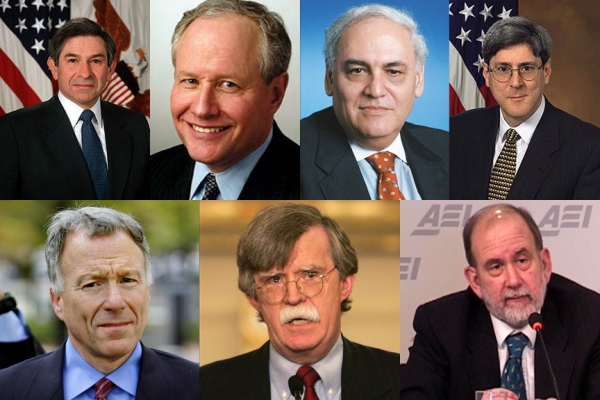
That the United States should be preparing for a possible nuclear future can in part be attributed to recent commentary by the “like, really smart” and “very stable genius” who is the nation’s chief executive, but the fuel being poured on the fire for war is from the very same neocons who are featured in the mainstream media as all-purpose experts and have succeeded in selling the snake oil about America’s proper role as aggressor-in-chief for the entire world. It would be an unparalleled delight to be able to open a newspaper and not see Bret Stephens, Eliot Cohen, Max Boot or even the redoubtable Bill Kristol grinning back from the editorial page, but I suppose I am only dreaming.
Philip M. Giraldi, Ph.D., is Executive Director of the Council for the National Interest, a 501(c)3 tax deductible educational foundation that seeks a more interests-based U.S. foreign policy in the Middle East. Website is http://www.councilforthenationalinterest.org, address is P.O. Box 2157, Purcellville VA 20134 and its email is inform@cnionline.org.
The incarceration of Irish political prisoners in British prisons in the North of Ireland is rarely discussed in the mainstream media. In this special report recently televised, Press TV in partnership with ‘Crimes of Britain’ examine the plight of Irish political prisoners in including allegations of internment and torture.
Bolivian President Evo Morales has announced that his country is joining the regional investigation into Operation Condor alongside Argentina, Brazil, Paraguay and Uruguay.
These latter nations created the Truth Commission to uncover the “Empire’s transgressions” during Operation Condor, the Bolivian head of state tweeted, referring to the United States.
Operation Condor was a covert, multinational “black operations” program organized by six Latin American states (Argentina, Bolivia, Brazil, Chile, Paraguay and Uruguay, later joined by Ecuador and Peru), with logistical, financial, and intelligence support from Washington,” according to J. Patrice McSherry, author of Predatory States: Operation Condor and Covert War in Latin America (2005). Their shared intent was to do away with leftist movements in the region.
Morales said he laments this shared history of human rights violations, but celebrates the “brave and dignified struggle against the military dictatorships.”
For its part, Bolivia suffered under Operation Condor during its nearly 20-year dictatorship between 1964 and 1982.
Nila Heredia, who was named the country’s rights commission representative, said that Bolivia is giving “its full support (to the commission) with its experience (of working on other rights commissions, as well as technical expertise.”
Morales has also announced that Bolivia will host a seminary for experts from the Truth Commission on Feb. 20.
Estimates of the number of those killed or disappeared from the clandestine Operation Condor ranges from 20,000 to 60,000.
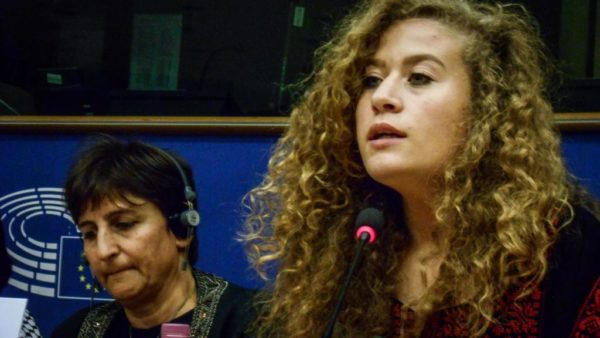
Sixteen-year-old Ahed Tamimi may not be what Israelis had in mind when, over many years, they criticised Palestinians for not producing a Mahatma Gandhi or Nelson Mandela.
Eventually, colonised peoples bring to the fore a figure best suited to challenge the rotten values at the core of the society oppressing them. Ahed is well qualified for the task.
She was charged last week with assault and incitement after she slapped two heavily armed Israeli soldiers as they refused to leave the courtyard of her family home in the West Bank village of Nabi Saleh, near Ramallah. Her mother, Nariman, is in detention for filming the incident. The video quickly went viral.
Ahed lashed out shortly after soldiers nearby shot her 15-year-old cousin in the face, seriously injuring him.
Western commentators have largely denied Ahed the kind of effusive support offered to democracy protesters in places such as China and Iran. Nevertheless, this Palestinian schoolgirl – possibly facing a long jail term for defying her oppressors – has quickly become a social media icon.
While Ahed might have been previously unknown to most Israelis, she is a familiar face to Palestinians and campaigners around the world.
For years, she and other villagers have held a weekly confrontation with the Israeli army as it enforces the rule of Jewish settlers over Nabi Saleh. These settlers have forcibly taken over the village’s lands and ancient spring, a vital water source for a community that depends on farming.
Distinctive for her irrepressible blonde hair and piercing blue eyes, Ahed has been filmed regularly since she was a small girl confronting soldiers who tower above her. Such scenes inspired one veteran Israeli peace activist to anoint her Palestine’s Joan of Arc.
But few Israelis are so enamoured.
Not only does she defy Israeli stereotypes of a Palestinian, she has struck a blow against the self-deception of a highly militarised and masculine culture.
She has also given troubling form to the until-now anonymised Palestinian children Israel accuses of stone-throwing.
Palestinian villages like Nabi Saleh are regularly invaded by soldiers. Children are dragged from their beds in the middle of the night, as happened to Ahed during her arrest last month in retaliation for her slaps. Human rights groups document how children are routinely beaten and tortured in detention.
Many hundreds pass through Israeli jails each year charged with throwing stones. With conviction rates in Israeli military courts of more than 99 per cent, the guilt and incarceration of such children is a foregone conclusion.
They may be the lucky ones. Over the past 16 years, Israel’s army has killed on average 11 children a month.
The video of Ahed, screened repeatedly on Israeli TV, has threatened to upturn Israel’s self-image as David fighting an Arab Goliath. This explains the toxic outrage and indignation that has gripped Israel since the video aired.
Predictably, Israeli politicians were incensed. Naftali Bennett, the education minister, called for Ahed to “end her life in jail”. Culture minister Miri Regev, a former army spokeswoman, said she felt personally “humiliated” and “crushed” by Ahed.
But more troubling is a media debate that has characterised the soldiers’ failure to beat Ahed in response to her slaps as a “national shame”.
The revered television host Yaron London expressed astonishment that the soldiers “refrained from using their weapons” against her, wondering whether they “hesitated out of cowardice”.
But far more sinister were the threats from Ben Caspit, a leading Israeli analyst. In a column, he said Ahed’s actions made “every Israeli’s blood boil”. He proposed subjecting her to retribution “in the dark, without witnesses and cameras”, adding that his own form of revenge would lead to his certain detention.
That fantasy – of cold-bloodedly violating an incarcerated child – should have sickened every Israeli. And yet Mr Caspit is still safely ensconced in his job.
But aside from exposing the sickness of a society addicted to dehumanising and oppressing Palestinians, including children, Ahed’s case raises the troubling question of what kind of resistance Israelis think Palestinians are permitted.
International law, at least, is clear. The United Nations has stated that people under occupation are allowed to use “all available means”, including armed struggle, to liberate themselves.
But Ahed, the villagers of Nabi Saleh and many Palestinians like them have preferred to adopt a different strategy – a confrontational, militant civil disobedience. Their resistance defies the occupier’s assumption that it is entitled to lord it over Palestinians.
Their approach contrasts strongly with the constant compromises and so-called “security cooperation” accepted by the Palestinian Authority of Mahmoud Abbas.
According to Israeli commentator Gideon Levy, Ahed’s case demonstrates that Israelis deny Palestinians the right not only to use rockets, guns, knives or stones, but even to what he mockingly terms an “uprising of slappings”.
Ahed and Nabi Saleh have shown that popular unarmed resistance – if it is to discomfort Israel and the world – cannot afford to be passive or polite. It must be fearless, antagonistic and disruptive.
Most of all, it must hold up a mirror to the oppressor. Ahed has exposed the gun-wielding bully lurking in the soul of too many Israelis. That is a lesson worthy of Gandhi or Mandela.
Many in Israel and mainstream media seem to consider slapping an Israeli soldier in the face a more notable offense than shooting a Palestinian child in the face.
A CNN report on Ahed Tamimi’s slap of an Israeli soldier did not mention that an Israeli soldier had just shot her young cousin in the face.
An Atlanticarticle that contained much valuable information about the situation nevertheless buried and minimized the shooting of a boy, mentioning it in one paragraph low in the story.
Below is some information many mainstream media are omitting:
Mohammed Tamimi is about 15 years old (some reports said he was 14). He was unarmed and posed no risk to anyone when an Israeli soldier a few meters away shot him in the face. The bullet entered Mohammed’s face below his nose. It broke his jaw and then lodged in his skull. According to a witness, “The blood was pouring from his face like a fountain.”
With difficulty due to Israel’s many military checkpoints on Palestinian land, the teen was eventually taken to a hospital, where he underwent a six-hour procedure involving seven surgeons. The doctors removed the bullet, reconstructed his jaw and put him into an artificial coma for 72 hours.
A Ha’aretzarticle reports: “The left side of his face is twisted, swollen, fragmented, scarred; there’s congealed blood by his nose, stitches in his face; one eye is shut, a seam line stretches across his whole scalp. A boy’s face turned scar-face. Some of his skull bones were removed in surgery and won’t be returned to their place for another six months.”
The fact that a soldier shot a boy in the face from close range would normally be the focus of a news story. Since this soldier was Israeli, the boy was Palestinian, and this kind of atrocity is a fairly frequent occurrence in Palestine, it was barely mentioned.
In fact, if Mohammed’s cousin hadn’t then slapped a heavily armed, combat-ready soldier invading her home (which had earlier been tear-gassed), almost no one would even know about Mohammed.
And now, instead of a soldier facing trial for shooting an unarmed boy in the face, it is a 16-year-old girl and her mother who are facing years in prison.
One high Israeli minister said they “should end their lives in jail.”
While preparing to interview the Tamimi family in their home during the Nabi Saleh’s weekly protest, a teargas grenade came flying through the window, breaking the glass, and landing in the middle of the living room.
The IDF then sprayed Skunk water on the outside of the house, including the exits, and we were all trapped inside. There were about a dozen small children in the home at the time.
We all choked on the tear gas, the children were terrified and in shock, the parents couldn’t do anything to protect their kids.
Eventually, a Palestinian ambulance arrived and put a ladder up to the second-storey window – at which point the terrified kids had to climb out.
It was not the first time the IDF had shot tear gas into the Tamimi home – they were known organizers of the weekly protests against the Israeli settlers who were illegally annexing Nabi Saleh village land.
December 2017 Update: Since then, Ahed Tamimi, a relative, has made international headlines for fighting back against Israeli soldiers invading her village, Nabi Saleh. A day after a video of Ahed slapping a soldier after her cousin was shot in the face by the army went viral, Ahed was arrested by the Israeli army. It’s not known how long she will be in jail. She is 16 years old.
This apparently is the sort of thing the young Ahed Tamimi grew up with. A little bit about the history of the Tamimi family is included in a post published today at Truthout :
In 2011, Ahed Tamimi was 10-years-old when Israeli soldiers arrested her father and charged him with the crime of organizing weekly demonstrations in their village to oppose the theft of its land for the benefit of a neighboring Israeli settlement. It would be 13 months before he was released and she would see her father again.
That same year, Israeli soldiers shot Mustafa Tamimi, Ahed’s 28-year-old cousin, in the face with a high velocity tear gas canister. Half of Mustafa’s face was destroyed. He passed away the next morning at the hospital.
The following year, when Ahed was 11 years old, Israeli soldiers shot her uncle, Rushdi Tamimi, in his lower back with live ammunition. The bullet lodged in his stomach and he died the next morning in the hospital.
Ahed was 13 when Israeli soldiers shot her mother, Nariman Tamimi, in the leg with a 22-caliber bullet. Ahed stood by, crying in the arms of her father, as her mother was placed in the back of an ambulance. Her mother had to rely on crutches for a number of years until she regained use of her legs.
None of this history, however, is mentioned in a commentary published January 5 by the supposedly liberal Haaretz. Instead, the writer of that piece, one Petra Marquardt-Bigman, accuses the Tamimi family of “fanatacism” as well as “Jew-hatred and enthusiastic support for terrorism.” A subheading above the article even reads, somewhat disturbingly:
Promote the blood libel? Check. Glorify terrorism? Check. Celebrate Israeli deaths? Check. Ahed Tamimi and her family aren’t fighting for peace, and they’re not just fighting the occupation: They’re fighting to destroy Israel, and their fight is seasoned with Jew-hatred
The Tamimis, including 16-year-old Ahed, are being accused of “blood libel” now–and outside of the one brief reference to the occupation contained in the subhead, Marquardt-Bigman makes no mention whatsoever of Israel’s 50-year-old occupation of Nabi Saleh and the rest of the West Bank until the very last paragraph of her commentary–where she writes:
Even if the Tamimis were only fighting Israel’s occupation of the West Bank, their fanaticism wouldn’t bode well for any peace agreement. But the Tamimis never wanted a peace agreement. They have always wanted the elimination of the world’s only Jewish state.
Update:
Tamimi family member was Israel’s first victim of 2018:
Just hours after 21 simultaneous raids on the home of Argentine Indigenous leader Milagro Sala, a provincial court ordered Friday a one-year extraordinary extension of her pre-trial detention. Sala is 21 days short of serving two years in prison.
The political leader is being investigated for alleged illicit association, fraud and extortion, crimes she was charged with days after being detained for allegedly instigating violence during a protest she didn’t attend.
Sala was initially arrested on Jan. 16, 2016 for an “escrache”, a form of protest that seeks to publicly shame someone by congregating around their homes, against the province governor of Jujuy, an ally of President Mauricio Macri. Shortly after on Jan. 29 of that same year Sala was cleared of the instigation charges, but the judge determined that she would remain in detention over new charges of illicit association, fraud and extortion, which she is currently facing.
According to Sala’s lawyer the main reason for the extension is that her defense presented “innumerable” appeals and nullities. “This lacks sense,” her lawyers contended because “everything presented is within the framework of the right to legal defence.”
The one-year extension is not the first arbitrary decision made by Jujuy’s judiciary. In October 2016, the United Nations Working Group on Arbitrary Detention qualified her detention as arbitrary, a decision backed by the Inter-American Commission on Human Rights, which urged Argentina’s government to release her.
The Organization of American States and human rights’ groups like Amnesty International and Human Rights Watch have also demanded her immediate release to no avail.
Milagro Sala is a renowned activist who is seen as President Macri’s first political prisoner. She created the Organization Tupac Amaru, which provides housing and other services to informal workers and popular sectors, she served as an Argentine legislator between 2013 and 2015, and was later elected by the Front for Victory Party, led by former President Cristina Fernandez de Kirchner, to Mercosur’s Parliament.
News of the one-year extension to Sala’s illegitimate imprisonment were accompanied by news of thousands of Argentines protesting the federal ruling that granted house arrest for convicted murderer and torturer Miguel Etchecolatz, who was sentenced to life in prison for crimes against humanity when he worked as a top police officer under the brutal military dictatorship of the 1970s.
He is not the only one. According to Argentina’s Office of Crimes Against Humanity, 549 of people convicted for crimes against humanity in Argentina are currently under house arrest.
Social leaders and opponents of the current right wing government argue that in Macri’s Argentina social and political activists are repressed, prosecuted, and disappeared while those who repress and abuse their power are granted favors.
The Israeli Knesset approved on Wednesday a first reading of the death penalty bill which would allow the authorities to execute Palestinian prisoners accused of taking part in “operations against Israeli targets,” Anadolu has reported. The bill was proposed by the right-wing leader of the Jewish Home party Naftali Bennet; it was approved by a vote of 52 to 49 but needs a second and third reading before it becomes law.
Extremist Avigdor Lieberman, Israel’s Moldovan-born Defence Minister, endorsed the bill, which he said would increase Israel’s deterrence effect. In televised comments last week, Lieberman said that the law would specifically target Palestinians convicted of attacking Israeli civilians and soldiers.
Last year, at a rally following the death of three Israeli police officers, Prime Minister Benjamin Netanyahu voiced his support for the death penalty for Palestinians, whom he described as “terrorists with blood on their hands.”
Israel applies civilian law to illegal Jewish settlers in the occupied Palestinian territories of the West Bank and East Jerusalem. Palestinians, however, face military courts and military law. The proposed death penalty would only be applicable in military courts. In the already unlikely event of an Israeli being convicted for killing a Palestinian, the accused would never face the death penalty.
“The fact that Israel lacks a constitution allows its prime ministers to enact legislation that serves the interests of their respective racist governments,” explained Mohammed Dahleh, a Palestinian expert on Israeli affairs. “Israel refuses to adopt a constitution. This also allows it to create laws — or modify them — to suit its expansionist tendencies.”
According to international lawyer Yasser Al-Amouri, the proposed Israeli law violates basic international legal tenets. “The conflict between the Palestinians and Israelis is not criminal in nature but nationalist,” he pointed out. “This means Israel cannot sentence Palestinian prisoners to death under the provision of the Fourth Geneva Convention relating to the treatment of prisoners of war.”
One commentator in London suggested that this legal nicety wouldn’t make any difference. “Israel already treats international laws and conventions with contempt,” said MEMO’s senior editor Ibrahim Hewitt, “so why would it sit up and take notice of this point? The state is guilty of the crime of apartheid, and this bill demonstrates that fact.”
During World War I, for security reasons the Australian Government pursued a comprehensive internment policy against enemy aliens living in Australia.
Initially only those born in countries at war with Australia were classed as enemy aliens, but later this was expanded to include people of enemy nations who were naturalised British subjects, Australian-born descendants of migrants born in enemy nations and others who were thought to pose a threat to Australia’s security.
Australia interned almost 7,000 people during World War I, of whom about 4,500 were enemy aliens and British nationals of German ancestry already resident in Australia.
During World War II, Australian authorities established internment camps for three reasons – to prevent residents from assisting Australia’s enemies, to appease public opinion and to house overseas internees sent to Australia for the duration of the war.
Unlike World War I, the initial aim of internment during the later conflict was to identify and intern those who posed a particular threat to the safety or defence of the country. As the war progressed, however, this policy changed and Japanese residents were interned en masse. In the later years of the war, Germans and Italians were also interned on the basis of nationality, particularly those living in the north of Australia. In all, just over 20 per cent of all Italians resident in Australia were interned. … continue
This site is provided as a research and reference tool. Although we make every reasonable effort to ensure that the information and data provided at this site are useful, accurate, and current, we cannot guarantee that the information and data provided here will be error-free. By using this site, you assume all responsibility for and risk arising from your use of and reliance upon the contents of this site.
This site and the information available through it do not, and are not intended to constitute legal advice. Should you require legal advice, you should consult your own attorney.
Nothing within this site or linked to by this site constitutes investment advice or medical advice.
Materials accessible from or added to this site by third parties, such as comments posted, are strictly the responsibility of the third party who added such materials or made them accessible and we neither endorse nor undertake to control, monitor, edit or assume responsibility for any such third-party material.
The posting of stories, commentaries, reports, documents and links (embedded or otherwise) on this site does not in any way, shape or form, implied or otherwise, necessarily express or suggest endorsement or support of any of such posted material or parts therein.
The word “alleged” is deemed to occur before the word “fraud.” Since the rule of law still applies. To peasants, at least.
Fair Use
This site contains copyrighted material the use of which has not always been specifically authorized by the copyright owner. We are making such material available in our efforts to advance understanding of environmental, political, human rights, economic, democracy, scientific, and social justice issues, etc. We believe this constitutes a ‘fair use’ of any such copyrighted material as provided for in section 107 of the US Copyright Law. In accordance with Title 17 U.S.C. Section 107, the material on this site is distributed without profit to those who have expressed a prior interest in receiving the included information for research and educational purposes. For more info go to: http://www.law.cornell.edu/uscode/17/107.shtml. If you wish to use copyrighted material from this site for purposes of your own that go beyond ‘fair use’, you must obtain permission from the copyright owner.
DMCA Contact
This is information for anyone that wishes to challenge our “fair use” of copyrighted material.
If you are a legal copyright holder or a designated agent for such and you believe that content residing on or accessible through our website infringes a copyright and falls outside the boundaries of “Fair Use”, please send a notice of infringement by contacting atheonews@gmail.com.
We will respond and take necessary action immediately.
If notice is given of an alleged copyright violation we will act expeditiously to remove or disable access to the material(s) in question.
All 3rd party material posted on this website is copyright the respective owners / authors. Aletho News makes no claim of copyright on such material.






 Aletho News