Report: 16 Palestinian Children Arrested, Beaten, and Confined to Cage By Israeli Soldiers
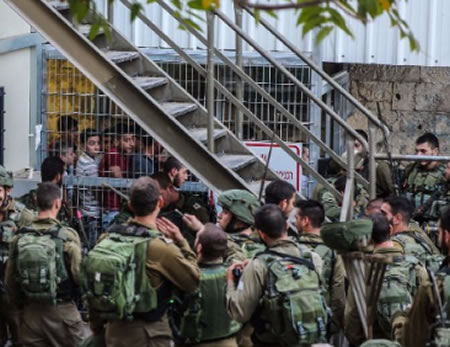
By Richard Edmondson | Fig Trees and Vineyards | October 22, 2017
“On October 13th, 2017, 16 children and 2 adults were ambushed and arrested by the Israeli soldiers from the Givati Brigade. The 18 arrested were initially detained in a cage in checkpoint 56, cable-tied, kicked, and hit. 2 were released, whilst the remaining 16 were transferred to an Israeli police station where they were subjected to further physical and psychological violence. All 16 were eventually released without charge, but not before threats were made to their families and the safety of their homes.”
The above is reported by Christian Peacemaker Teams, which maintains a team of international observers in the occupied West Bank…
The seizing of the children took place in the West Bank city of Hebron. The report goes on to describe arrests of minors as “a consistent reality of the occupation and tactic of the Israeli occupation forces,” and it also cites a report from a human rights organization showing that 130 children were arrested in August of 2017 alone.

One of those detained in the October 13 roundup was 12-year-old Abdullah Dwaik. That’s Abdullah in the brown sweater being led away in the photo above. You can also see him in the video below giving an account of what took place after he was taken into custody. Following the initial arrest, he and the others were transported to a military base where they were handcuffed and blindfolded.
I’m not sure exactly where Abdullah’s grandparents live–I’m not familiar with the place name–but Bab Al Zawyeh, the place he calls “home,” is a neighborhood in central Hebron.
I also do not know who the “Ofer the settler” Abdullah refers to (and who he says hit one of the boys) is, though possibly he’s the man profiled in the following video…
In any event, the Christian Peacemakers report goes on to make some additional crucial points:
- Children should never be blindfolded, hooded or painfully restrained;
- Children should never be subjected to violent, threatening or coercive conduct;
- Children must be able to consult with a lawyer prior to interrogation;
- Children should have a parent or guardian present prior to and during their interrogation;
- Children should not be arrested at night;
- Children should be properly informed of their right to silence;
- All interrogations should be audio-visually recorded;
- No child should be transferred out of the West Bank in violation of the Fourth Geneva Convention.
Israel has violated all of these principles.
And this is the country so loved by Dickinson, Texas that its officials deny hurricane relief assistance to people based upon whether or not they support a boycott of it.

Mayor and city council members of Dickinson, Texas
Israel is pushing its luck with the EU
By Professor Kamel Hawwash | MEMO | October 20, 2017
When it comes to the various stakeholders in the Israeli Palestinian conflict Israel has guaranteed American support in almost whatever it does. Other stakeholders, including the EU, have consistently criticised Israeli government policy but consistently failed to back it up with any action. That is, possibly, until now.
The Obama administration was castigated by the pro-Israel lobby for its supposed lack of support for Israel despite granting it a 10-year $38 billion military aid package, the likes of which no other state could dream to secure. In fact, over half the aid the US hands to other states goes to Israel.
Obama missed a trick on not making the aid package conditional upon any progress in the talks between the Israelis and Palestinians, or a halt to settlement construction, which the US sees as “illegitimate”. Neither Netanyahu’s brazen snub to Obama when he addressed the US Congress without coordination with the White House, nor the humiliation of American Vice President Biden – who while on a visit to Jerusalem in 2010 was met with an announcement that Israel planned to build 1,600 home for Jewish Israelis in units in the illegal settlement of Ramat Shlomo which is attached to Jerusalem – was enough to trigger such conditioning.
The US is a member of the Middle East Quartet now renamed the ‘Office of the Quartet,’ which brings the EU, Russia and the United Nations together. It describes its mandate as “to help mediate Middle East peace negotiations and to support Palestinian economic development and institution-building in preparation for eventual statehood”. The Quartet’s last key report was published in 2016. The report focussed on violence and incitement, Gaza and Palestinian governance and settlement expansion, land designations, and denial of Palestinian development.
In the area designated C under the Oslo Accords, Israel maintains full control over both security and planning. The denial of Palestinian development is enacted mostly through the denial of permits for building construction. The Quartet noted that “only one permit for Palestinian housing construction in Area C was reportedly approved in 2014, and there do not appear to have been any in 2015. In the five-year period from 2009 to 2013, only 34 building permits were approved for Palestinians in Area C, out of at least 2,000 submissions”.
The report further noted that there were over 11,000 demolition orders pending against Palestinian structures, three quarters of which are on private Palestinian land. The report acknowledged that “as Palestinians are consistently denied permits to build legally, they are left with few options but to build without permits”.
There was a significant increase in the number of Palestinian structures demolished across the West Bank in the first four months of 2016, with some 500 demolitions of Palestinian structures by the Israeli authorities and nearly 800 Palestinians displaced, more than what was carried out throughout the entire year of 2015. Although many of these were not dwellings, the loss of structures such as water wells, solar panels, and animal shelters has impacted the livelihoods of over 2,500 people in the first half of 2016. The trend continued in 2017 and to this day.
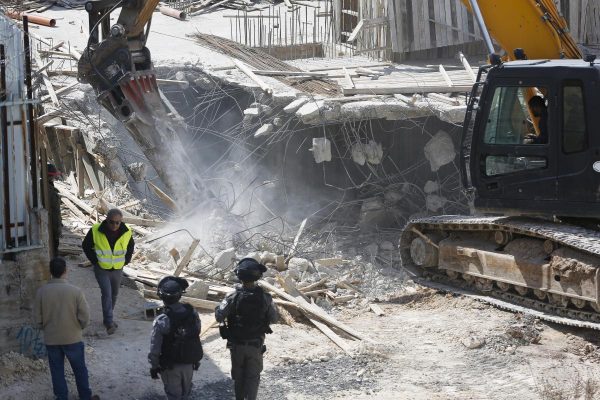
Israeli security forces gather around as a Palestinian home is being demolished in Jerusalem on 14 March 2017 [Mostafa Alkharouf/Anadolu Agency]
Israel makes no distinction between structures it considers to be illegal that are funded by Palestinians and those that are funded by non-Palestinians, those built without planning permission or those agreed upon in bilateral agreements with the Palestinians.
Gaza’s International Airport, which opened in 1998, was destroyed by Israel in 2001. It was built with funding from Japan, Egypt, Saudi Arabia, Spain, and Germany. To this day the airport remains in ruins and no sanctions were ever taken against Israel by either Germany or Spain.
In January of this year Israeli forces demolished some 15 structures in Khirbet, including homes and the only school in the small hamlet, which is located on the outskirts of the village of Beit Furik in the Jordan Valley in the north-eastern occupied West Bank.
In July the Dutch government lodged a protest with Israel over the confiscation of electricity equipment, which was said to be a hybrid power system of both diesel and solar power. The electrification project in the southern Bethlehem region was donated by the Dutch government and cost about 500,000 euros ($590,806), 350,000 euros ($413,564) of which went to Jubbet Al-Dhib, according to the report in the Israeli daily Haaretz. The Dutch Foreign Ministry requested Israel return the equipment and is “currently assessing what next steps can be taken,” the ministry’s statement to Haaretz said.
In August Israeli troops dismantled a structure built for a nursery for 25 Palestinian children in the village of Jabal Al-Baba near Jerusalem claiming it was built without a permit. This followed the demolition a few days earlier of a small primary school in the southern West Bank and the removal of solar panels used to power another school. This drew criticism from the EU which expressed “strong concern about the recent confiscations of Palestinian school structures undertaken by Israel in Bedouin communities in the occupied West Bank,” adding that “every child has the right to safe access to education and states have an obligation to protect, respect and fulfil this right, by ensuring that schools are inviolable safe spaces for children”.
But has Israel pushed its luck too far with the EU?
Despite Israel’s destruction of facilities funded by the EU, history shows it has protested to Israel but has not taken action. However, this could be about to change.
Reports have emerged that eight EU countries, led by Belgium, have drafted a letter to be delivered to senior Foreign Ministry officials demanding compensation amounting to €30,000 ($35,456) for confiscating and demolishing structures and infrastructure built by them in Area C of the West Bank, which is under full Israeli control. This follows Israel’s refusal to return the confiscated equipment as demanded by the eight countries which are members of the ‘West Bank Protection Consortium,’ a body through which they coordinate humanitarian assistance to Area C.
The letter stresses that “the demolition and seizure of humanitarian equipment, including school infrastructure, and the interference in the transfer of humanitarian assistance contravenes Israel’s obligations under international law and causes suffering to the Palestinian residents”.
However, Israel claims that European activity in Area C is not humanitarian assistance but “illegal development that is being done without coordinating with Israel and with the aim of strengthening the Palestinians’ hold on Area C”. This claim was previously made in 2015 by Benjamin Netanyahu who ordered the demolition of some 400 Palestinian structures built in the West Bank with European funding.
While the international community has often talked the talk about Israeli crimes, this is a rare example of action that could at least make Israel think twice before acting. While this is a small step by eight EU countries it could mark a significant and necessary change in policy from condemnation of Israeli policies to tangible action. EU citizens should be outraged that contributions from their taxes to alleviate Palestinian suffering and build peace, are being wasted by Israel while goods from illegals settlements continue to make their way to EU supermarket shelves.
If the EU is serious about peace and its support for a two-state solution then it can use existing instruments to exercise its influence. This includes suspending the EU-Israel Association Agreement for Israel’s failure to adhere to a clause which states that “relations between the parties, as well as all the provisions of the agreement itself, shall be based on respect for human rights and democratic principles”.
Israel’s clear failure to respect Palestinian human rights should finally trigger a suspension of this agreement.
Read more: Israel advances 1,300 new settlement homes for second day in a row
Colombian Social Leader Assasinated Weeks After 7 Campesinos Were Killed

Jose Jair Cortes | Photo: UN
teleSUR | October 17, 2017
A Colombian social leader, Jose Jair Cortes, was murdered in a rural area of Tumaco municipality located in the southwest department of Narino.
Jair Cortes, a member of the local council of the Alto Mira and Frontera Community, was killed in a sector called Y, located in the heart of the city of Tumaco. The social leader was one of seven community leaders to receive death threats in recent months.
The governor of Narino, Camilo Romero Galeano, denounced the murder that occurred just weeks after a massacre that left seven people dead in the village of El Tandil, in the same municipality.
The state government has urged the authorities to investigate the exact details of the community leader’s murder.
“We have once again resisted accepting that the war will continue to make its mark on the Narino pacific,” Romero said. “Our voice of solidarity for the family of Jose Jair Cortes in this painful moment that keeps the mourning in our south.”
“We are profoundly affected by this death, just days after we met in Tumaco with him and the other members of this Junta de Gobierno, corresponding to the territory where the painful events that six peasants and dozens of wounded and still remain of research,” the official statement said.
The community council in the area has repeatedly denounced human rights violations against the Afro-Colombian, Mestizo and Indigenous peasants in the region. The campesinos in the area have been protesting against government’s plan to reduce the production of Cocoa crop, an important means of livelihood for many in the region.
In the western department of Cauca, over 40 campesinos have been injured and one journalist killed in clashes between the Indigenous community members and the Colombian police.
The Indigenous community members who began their protests 10 days ago are demanding the property in the Coconuco Indigenous Reservation, a rural area of Purace municipality, where the government had promised them land in 2013.
The Mobile Anti-Riot Squads (ESMAD) accused the natives of encroaching private property. ESMAD member, Capt. Edgar Garcia, told Caracol, a local radio station that the natives threw “immense rocks that destroy sticks and all around, equally, they shoot us with artifacts, stones, bottles, and explosives to intimidate us, while we are defending the private property.”
Whereas, a spokesman for the protesters quoted by the local radio station, said that “about 10 ESMAD trucks, two tanks and all the artifacts against the indigenous peoples, entered the community.”
Palestinian children beaten, tortured under Israeli interrogation
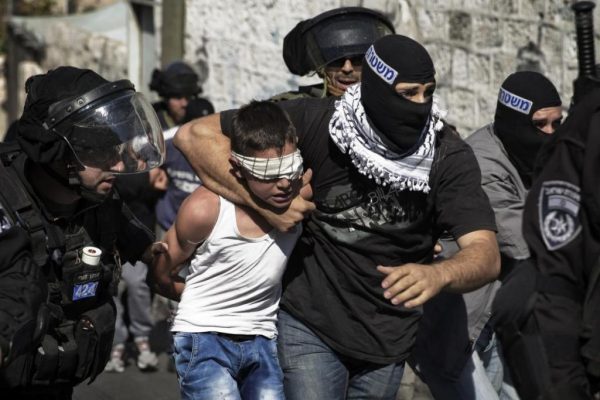
Samidoun Palestinian Prisoner Solidarity Network – October 13, 2017
Several Palestinian child prisoners in Ofer prison revealed their experiences with torture and mistreatment to Palestinian lawyer Wael Awakah, including beatings and threats by Israeli occupation soldiers and interrogators from the moment of their arrest.
Awakah reported that Waleed Riyad al-Dali, 14 years old, a tenth-grade student and a resident of the village of Biddu in the Ramallah district, was seized on 28 September 2017 at 5:00 pm from the center of his village by undercover Israeli occupation soldiers disguised as Palestinians. He was assaulted and beaten by the soldiers, punched in the head and left bloody by their attack.
Waleed was then taken to a settlement while shackled and blindfolded in a military jeep. He reported being beaten by the soldiers rifle butts and kicked by them during the travel to the settlement. At the settlement military base, Waleed was interrogated; the interrogator threatened to break his hands, refused him food and directed curses and obscene insults at him.
Yazid Akram Humaidan, 15, also a resident of Biddu, was also seized on 28 September from the center of town by undercover Israeli occupation soldiers, who threw him to the ground, punched and slapped him. Yazid said that one of the undercover occupation soldiers stomped on his neck so hard that he feared for his life as he was beaten on the head and face with sharp blows.
Yazid also said that he was screamed at and cursed by interrogators at a nearby settlement and that he was physically weak and tired during interrogation as he had had surgery only two months before.
Hamada Jamal Abu Eid, 16, was also seized by occupation forces operating undercover in Biddu on 28 September. He said that one put a gun to his head before shooting in the air, causing him to fall to the ground where he was beaten on the body and head. He said that he was hit and slapped while being taken to interrogation at a nearby settlement, and that during interrogation himself he was subject to insults and curses.
Awakah said that Hamada continued to appear tired and ill during the interview, with severe and ongoing pain in his head. The three are among approximately 300 Palestinian children held in Israeli jails, mostly in Ofer and Megiddo prison, as well as 10 minor girls held in HaSharon prison.
In addition, the practice of sending children – especially Jerusalemite children – to house imprisonment, highlighted in the September 2017 report of Palestinian prisoners’ human rights associations, has continued. House imprisonment denies children the right to leave their homes, even for study or medical treatment in many cases, and forces parents and adults around them to become jailers at the threat of further punishment and imprisonment.
On 12 October, Jerusalemite teen Bilal Khalil Ghatit was ordered to home imprisonment with the imposition of an “electronic monitoring bracelet” on his ankle. He has already been held under house imprisonment since May, and has been unable to leave his home, go to school or visit relatives. His parents have also become prisoners; one of them must stay at home with him at all times. Bilal was seized in April 2017 by occupation forces who invaded the family home in the Sheikh Jarrah neighborhood of Jerusalem; he was released in May but ordered to house arrest. A ninth-grade student, he has been denied the ability to go to school.
Bilal’s father reported that he pays NIS 180 ($55 USD) for the electronic monitoring device; in the event of any malfunction of the device or even a loss of electricity in the home, the house is subject to violent raids by occupation forces, he noted, recalling the day of Bilal’s arrest, when his room was invaded as he slept and his brother beaten when he tried to intervene.
Another Palestinian child, Adam Hamdan, 14 from Ras al-Amud neighborhood of Silwan in Jerusalem, was also ordered to house imprisonment on 12 October; he was arrested on Tuesday, 10 October as he walked to school and accused of “throwing stones,” one of the most popular charges used by the Israeli occupation to criminalize and imprison Palestinian children and youth.
Samidoun Palestinian Prisoner Solidarity Network denounces the ongoing imprisonment, torture, mistreatment and abuse of Palestinian children at a systematic level by the Israeli occupation. We demand the immediate release of all Palestinian child prisoners in Israeli jails and urge greater international mobilization to support the hundreds of Palestinian children who are jailed each year, subject to solitary confinement and cruel and inhumane treatment, traumatic pre-dawn violent arrest raids and invasions of their homes, confiscation of their right to health and education – all as part of a systematic web of oppression at the hands of the Israeli settler colonial project.
samidoun@samidoun.ca
The backdrop of Palestinian reconciliation
By Ramona Wadi | MEMO | October 13, 2017
With a deal for political reconciliation having been reached by Hamas and the Palestinian Authority, attention should shift to the humanitarian impact of Mahmoud Abbas’s collective punishment of the people in the Gaza Strip. The punitive measures, blatantly visible, were primarily an exercise in deprivation for political gain.
On Wednesday, Wafa and Alray reported that re-establishing adequate electricity supply to Gaza is dependent on whether “the Palestinian Government of National Consensus can assume its duties and responsibilities in the Strip.” The statement is open to several interpretations, the most dangerous for Palestinian civilians being additional delays beyond the signing of the reconciliation agreement.
According to the Palestinian Energy Authority’s acting director, Thafer Milhem, electricity was one of the issues discussed during the reconciliation talks in Cairo. While describing the process through which electricity supply for Gaza would be restored gradually, Milhem asserted that there is no timeframe for implementation, thus once again demanding that the civilians should remain as pawns in the political game designed by Abbas. It should be recalled that the precondition imposed upon Hamas by Abbas in return for lifting the collective punishment was the dissolution of the administrative committee of Gaza; this was duly done by the Islamic Resistance Movement.
However, the initial requirement turned out to be the first step in bringing about a situation whereby Hamas would agree to relinquish control of Gaza in the name of political unity. It remains to be seen how much this gesture, which entails a considerable measure of compromise, will reflect upon both Hamas and the civilian population of the enclave.
It could be argued that necessity, on several levels, constituted a form of political, social and ecoomic coercion. Gaza has navigated a fine line in attempting to retain the connection between the three sectors. Although different, each struggle reflected anti-colonial resistance. Necessity diluted this framework, and resistance was thwarted into survival, courtesy of collaborative efforts by Israel, the PA and the international community under various guises. For the people, it became a matter of successfully staying alive despite the harsh conditions.
Hamas, on the other hand, has fluctuated between resistance and diplomacy, the latter mired in a lack of clarity, particularly as the movement’s political statements appeared to be in conflict with its aims of liberation. This is not to say that the PA and Hamas have identical aims. However, it is the latter that has been required to compromise, despite the former’s irregular governance.
While the focus is now on the reconciliation agreement, there is a backdrop against which this is taking place; people who have suffered the humanitarian consequences of political contempt. For the PA to continue playing the bureaucratic game is unacceptable. By not providing a timeline for the resumption of adequate services with regard to electricity, or establishing access as a priority, Palestinians are once again expected to sacrifice health, education and life for a political gamble concocted by the PA. The least that could have been done was the immediate lifting of Abbas’s punitive measures, unless the plan is to expand authority in the name of reconciliation, with the aim of having better access to the exploitation of a precarious humanitarian situation.
Army Abducted 400 Palestinians, Including 55 Children, In September
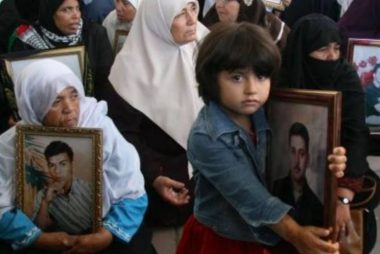
IMEMC News – October 5, 2017
The Palestinian Center for Detainees’ Studies has reported that Israeli soldiers have abducted more than 400 Palestinians, including 55 children and eight women, in September.
Researcher Riyad al-Ashqar said the soldiers, and navy, have abducted seven fishermen close to the shore in the Gaza Strip, in addition to abducting Ramzi ‘Abed, who teaches at the Islamic University in Gaza, when he tried to cross Erez Terminal on his way to a conference in Italy.
In addition, the soldiers abducted a patient, identified as Fadel Mazen Abu Haseera, 27, also at Eretz Terminal, as he was in his way to receive treatment in the al-Makassed hospital, in Jerusalem, even though Israel granted him an entry permit.
Three more Palestinians were abducted by the soldiers while trying to breach the border fence, in the eastern part of the Gaza Strip, in search for work in Israel due to extreme poverty rates in the besieged coastal region.
In the West Bank, the soldiers invaded the home of legislator Abdul-Rahman Zaiden, in Deir al-Ghusun village, near the northern West Bank city of Tulkarem, and ransacked it for several hours.
The legislator was interrogated for several hours at a military base, before the soldiers eventually released him.
Al-Ashqar added that September also witnessed a serious escalation in the abduction of women and children, as the army detained 55 children, including Mohammad as-Sa’ou, only 10 years of age, who was taken prisoner from his home, in Sheikh Jarrah neighborhood, in occupied East Jerusalem.
The soldiers also abducted eight women, including a child identified as Sally Mohammad Shawwa, 14 years of age, from Jerusalem, and released her later after imposing a high fine.
In addition, the soldiers abducted three girls, identified as We’am Hamada, Hadeel Sob Laban and Hiba al-Joulani, from Jerusalem, and released them later under the condition of not entering the Old City and the Al-Aqsa Mosque, for fifteen days.
Al-Ashqar added that the army also issued 100 arbitrary Administrative Detention orders, holding the detainees captive without charges or trial. 33 of these orders were issued against the detainees for the first time, and 67 others were renewals of existing orders.
The Administrative Detention orders that were issued in September vary between two and six months, and one of these orders was against Professor Essam Al-Ashqar of the Najah National University in Nablus.
The army also escalated its violations against the detainees, including repeated invasions and violent searches of their rooms, arbitrary transfers to various prisons, in addition to forcing many detainees into solitary confinement.
Egyptian army starts third phase of buffer zone plan on Gaza borders
Palestine Information Center – October 5, 2017
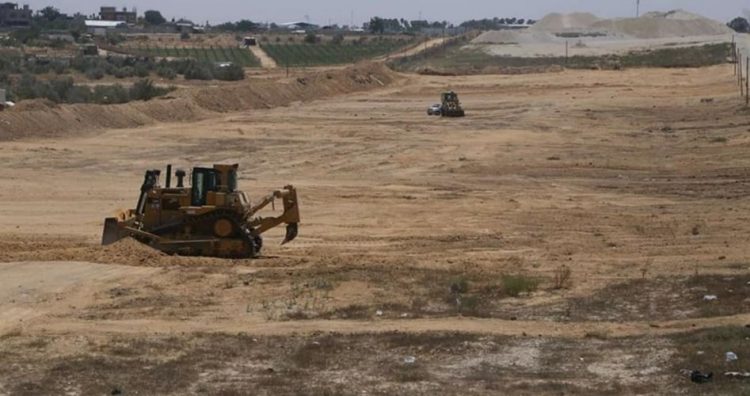
CAIRO – North Sinai Governor Abdel Fattah Harhour announced Thursday that the third phase of the buffer zone plan along the border areas with Gaza Strip has started.
Buildings and facilities located in the area of the buffer zone have been completely surveyed in preparation for evacuation and demolition, he added.
The first and second phases have been completed, with each phase covering 500 meters. It is believed that the third phase will cover an additional 500 meters.
The first phase involved the displacement of more than 1,000 families, whilst the second phase involved the evacuation of 2,044 families from the area. The third phase will involve approximately 1,215 houses and 40 governmental facilities, according to Harhour’s statements.
The buffer zone is amongst the security measures taken by the Egyptian armed forces in 2014 in order to destroy smuggling tunnels connecting North Sinai with the Gaza Strip. The tunnels were used to smuggle “terrorists and weapons” into the restive Sinai Peninsula, according to Egyptian authorities.
Catalonia: Rajoy Moves Towards Extreme Measures
By Craig Murray | October 4, 2017
Things have taken a much more sinister turn in Catalonia, without sufficient notice being paid internationally. The leader of the Catalan regional police force has been formally arraigned for sedition by the Spanish attorney general, for refusal to comply enthusiastically with the beating up of old women. That carries a minimum jail sentence of four years. It is the first step towards major imprisonment of Catalan leaders. It is also extremely significant that this first step is aimed at decapitating the only disciplined and armed force under some measure of Catalan government control. What does that tell you about Rajoy’s next move?
This extreme action against Major Trapero is precisely in line with last night’s ultra hardline address by a man with the comic opera name of Felipe Juan Pablo Alfonso de Todos los Santos de Borbón y Grecia. It is hard to take seriously anyone named after a whiskey, but we live in such a strange world that this unelected, far right and immensely corrupt, inbred buffoon could spout about democracy and accuse anyone who did not bow the knee to him of disloyalty and sedition. That precisely prefigures the legal action taken against Major Trapero. It can only be a precursor to a Spanish attempt to impose physical control on Catalonia and imprison its leaders. Having rejected both dialogue and mediation, I see no other direction Rajoy will take.
The Catalan government has said it will declare Independence within days. I am not, and have never been, a pacifist. A vital duty of any state is the defence of its citizens. Once Catalonia declares Independence it will be in a different position as a state than as a movement for Independence within Spain. The highly impressive and disciplined non-violence of the Independence movement will no longer be appropriate. But physically, I am not aware of any capacity to defend itself against the Spanish forces which there is every sign Rajoy will unleash immediately after any Declaration of Independence. Catalonia will also need to move instantly to dismantle any parts of the state fabric, and particularly the judiciary and prosecutorial service, which may remain loyal to Madrid,
The EU failed to draw a line in the sand when Rajoy’s Francoist paramilitary thugs beat up old ladies, en masse, before the eyes of the whole world. Rajoy will be certain to calculate that if he now invokes article 155, seizes Catalonia by force, and imprisons all the Catalan leadership for 30 years for rebellion, that the EU will continue to back him. Following the “royal” address yesterday and the extreme charges against Major Trapero today, the Francoist solution seems to me to be where we are heading, with nobody in any position of authority in Europe making the slightest effort to stop it.
Featured Video
Seyed M. Marandi: Negotiations Collapsed – Return to War
or go to
Aletho News Archives – Video-Images
From the Archives
Wartime internment camps in Australia
National Archives of Australia
World War I
During World War I, for security reasons the Australian Government pursued a comprehensive internment policy against enemy aliens living in Australia.
Initially only those born in countries at war with Australia were classed as enemy aliens, but later this was expanded to include people of enemy nations who were naturalised British subjects, Australian-born descendants of migrants born in enemy nations and others who were thought to pose a threat to Australia’s security.
Australia interned almost 7,000 people during World War I, of whom about 4,500 were enemy aliens and British nationals of German ancestry already resident in Australia.
Records of World War I internment camps
World War II
During World War II, Australian authorities established internment camps for three reasons – to prevent residents from assisting Australia’s enemies, to appease public opinion and to house overseas internees sent to Australia for the duration of the war.
Unlike World War I, the initial aim of internment during the later conflict was to identify and intern those who posed a particular threat to the safety or defence of the country. As the war progressed, however, this policy changed and Japanese residents were interned en masse. In the later years of the war, Germans and Italians were also interned on the basis of nationality, particularly those living in the north of Australia. In all, just over 20 per cent of all Italians resident in Australia were interned. … continue
Blog Roll
 Aletho News
- Seyed M. Marandi: Negotiations Collapsed – Return to War
- Tomorrow’s naval blockade showdown
- ‘Israel’ attacks civilians to hide its embarrassing military failures & out of pure sadism
- Any Foreign Military Vessel Approaching Hormuz Under Any Pretext ‘Will Be Dealt With Severely’: IRGC
- Diplomats slam US negotiators’ performance in Iran talks
- Trump Refuses Exit Ramp, War with Iran will Continue
- Trump Says US Naval Blockade in Strait of Hormuz Will Begin Shortly
- US, Iran end 21-hour talks without agreement
- US IRAN TALKS: Who Are the Crazy Ones Here? /Lt Col Daniel Davis
- Talks with the US end without a deal over excessive US demands: Iran
- If Americans Knew
- US-Iran ceasefire negotiations make zero progress – Daily Update
- Pro-Israel ‘Thinktanks’ and Individuals who Influence U.S. Foreign Policy
- Mearsheimer reveals how Israel dictates US policies on Iran, Gaza – video
- After killing 350+, Israel still has a “score to settle” with Lebanon before ceasefire – Daily Update
- Military aid to Israel emerges as the latest political litmus test for Democrats
- The only Palestinian children’s rights organization closes following years-long Israeli campaign against it
- ‘I Can’t Forget the Smell’: Lebanese Reel After Israel Kills Over 300 in Single Day
- DNC Shoots Down Resolutions Calling Out AIPAC and Limiting Arms to Israel
- TCN: Is Israel Blackmailing President Trump?
- Israel killed at least 303 Lebanese yesterday – who were they? Daily Update
- No Tricks Zone
- Cave Discovery Reveals Today’s Desert Climates Were Recently Far Warmer, Wetter, Teeming With Life
- German Expert: Heat Dome Led To Record Temps In Western USA…Warmer In 1934, 1936
- New Study: No Linear Warming Or Glacier Retreat Along Northern Antarctic Peninsula Since 1980s
- An Inconvenient Tree: Uncovered In Alps… Europe Much Warmer Than Today 6000 Years Ago
- New Study Reports A 60% Slowdown In Greenland’s Ice Loss Rate In The Last Decade
- Low Intensity Tornado Wrecks Major Solar Farm, Creating A Potential Toxic Dump
- New Study Finds Warming Saves Lives…Cold Temperatures 12 Times More Deadly Than Excess Heat
- German Science Blog Accuses PIK Climate Institute Of Hallucinating Climate Tipping Points
- Devastating Assessment Of Comirnaty Vaccine By Former Senior Pfizer Europe Toxicologist
- New Study: CO2 Is ‘Effectively Negligible’ As An Explanatory Climate Change Factor Since 2000
 Aletho News