To be Remembered
By Gilad Atzmon | December 4, 2018
 George H.W. Bush, the 41st president of the United States, died last Friday. President Bush was loved by the Jews. Over the weekend we saw an endless parade of Jewish individuals and organisations paying homage to Bush for his commitment to Israel and to the Jews.
The Republican Jewish Coalition (RJC) described Bush as “a great friend of Israel, the Jewish people, and the RJC.” The group joined other Jewish voices in noting the work Bush did to help bring Jews from the former Soviet Union and Ethiopia to Israel as well as his actions to help ensure the safety of Israel. Bush also led the effort in the UN to repeal the ‘Zionism is Racism’ resolution and he stood up against Saddam Hussein who, at the time, was one of the last Arab leaders to oppose Israel and Zionism.
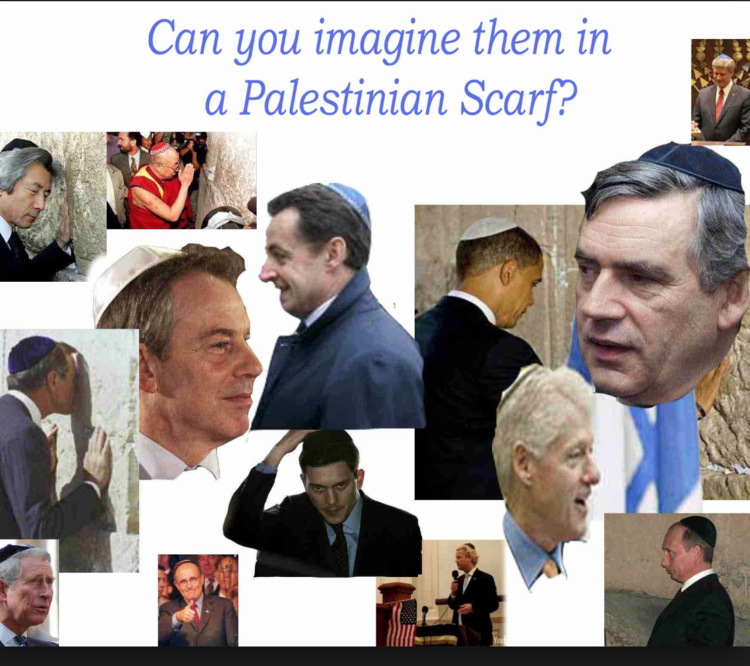
Yet, it was the photo of Bush at the Wailing Wall that grabbed my attention. On Saturday, the Israeli press circulated a photograph of the 41st president in suspiciously intimate proximity to the Wailing Wall.
We have seen variations of this photograph so many times that we have forgotten to ask the critical questions: What attracts world leaders to that wall? Is it possible that our world leaders are all (somehow) so libidinally attracted to walls that they do not even mind being caught on camera in such an intimate moment with that one particular wall? And if not, how do we explain the fact that so many of our world leaders are caught so close to that Jewish wall with their eyes closed? And more crucially, what is it about the Zionist culture that inspires this demand to publicise powerful goyim kissing the sacred wall?
Every world leader including the future British king who has visited Israel in the last decades has been photographed kissing, touching, flirting and even talking to that wall. Today I ask Why? It is likely that our incredibly lame world leaders do not understand the powerful symbolism of their visit to the wall nor do they grasp the reason they are then led to a formal ceremony at Yad Vashem. For the Israelis and Zionists, the visits to the wall and Yad Vashem are a significant affirmation of the Jewish national narrative. Both locate the Zionist project within an historical context.
Yad Vashem tells the Goyim’s leaders what happens to Jews when they do not have a safe haven. Yad Vashem reenforces the primacy of Jewish suffering and legitimises, at least in the Zionist psyche, the plunder of Palestine. The Wailing Wall is used to illustrate the Jewish ‘continuum’ in Palestine. It conveys the unfounded message that the Jews who returned to Palestine in the 20th century are the offspring of the Hebrews who lived there two centuries ago.
Israel is not the only state that integrates visits to shrines and holy places into its state’s ceremonial procedure for visitors. Islamic countries often expect world leaders to visit their great mosques. Hindus escort their guests to their shrines. People like to impress state visitors with the greatness of their heritage and the aesthetic and spiritual depth of their culture. But they do not expect world leaders to be photographed making love to their shrines or to their mosque’s walls. No other countries whether Muslim, Christian, Buddhist or Hindu expect world leaders to subscribe to or worship their local religious symbols. But the Jewish State does. It is even brazen enough to dress world leaders in Yarmulkes.
UN Climate Report Recommends Taxing Carbon and Discouraging Agriculture

“Land taxes on agricultural land can also help reduce agricultural land use and deforestation”
By Eric Worrall | Watts Up With That? | November 28, 2018
The latest UN Emissions Gap Report provides psychological advice for defeating political opposition to carbon pricing, and suggests discouraging farming by taxing agricultural land.
…
6.3.3 Political and behavioural factors
Ensuring broad and stable support for carbon pricing and the phasing-out of fossil fuel subsidies requires more than addressing distributional, competitiveness and leakage impacts. A number of additional success factors can be identified (Klenert et al., 2018a) and table 6.1 provides country examples for addressing these. The challenge is particularly significant where trust in government is limited (Klenert et al., 2018a; Rafaty, 2018). And yet, where trust is strong, there is a tendency for citizens to question problems if policy solutions challenge their world views, e.g. on the State’s role in the economy (“solution aversion”) (Campbell and Kay, 2014; Cherry et al., 2017). Designing policies that are consistent with the prevailing world views of specific societal groups therefore requires extensive communication and consultation prior to implementation.
To secure popular support for carbon pricing, the public needs to be informed about its positive effect on emissions reduction targets, as well as the co-benefits of cleaner air, health and fiscal sustainability (Hsu et al., 2008; Bristow et al., 2010; Kallbekken et al., 2011; Baranzini et al., 2014; Baranzini and Carattini, 2017). Timing is also important: a gradual reform is more likely to be successful than sudden and drastic price increases. Similarly, if several fossil fuel subsidies are being reformed, this can best be done by sequencing the reforms (Beaton et al., 2013; Rentschler and Bazilian, 2017b). Language matters too, with terms such as ‘fee’ or ‘contribution’ likely to meet with popular support compared with ‘tax’ (Kallbekken et al., 2011; Drews and van den Bergh, 2016; Baranzini and Carattini, 2017).
Carbon pricing and fossil fuel subsidy reform generate public revenues, the use of which can strongly impact support for carbon pricing. This is discussed in the section 6.3.4.
6.3.4 Use revenues from carbon pricing to foster sustainable development
Raising revenue through energy tax reforms relaxes constraints on broader fiscal policy, creating opportunities to stimulate more productive and socially inclusive economic development. With respect to carbon pricing, its potential for contributing to public budget is illustrated in figure 6.2b. In developing and emerging economies, where tax revenue-to-gross domestic product (GDP) ratios rarely exceed 20 percent, an additional €60/ tCO2 carbon price on top of existing measures would generate revenues worth more than 2 percent of gross domestic product (GDP). These revenues would not be available under non-fiscal climate policies like emission standards or ETS that do not auction permits.
…
Better alignment of broad tax policy can help reduce carbon emissions. Subsidies or tax deductions related to commuting (Su and DeSalvo, 2008), company cars (Harding, 2014) and the aviation sector (Gössling et al., 2017) are common in many developed countries and tend to encourage carbon-intensive transport choices. Replacing property taxes with land value taxes can reduce urban sprawl and increase housing density, which in turn reduces the need for longer commutes (Banzhaf and Lavery, 2010).
I’m horrified at the ongoing UN and green attacks on agriculture. The abundance we take for granted is politically fragile:
Fiscal policies such as ecological fiscal transfers, contingent on environmental performance, can also play a role in the land-use sector. They could be a way to implement REDD+6 when international pay-for-performance or carbon market finance flows to the national or state government level (Loft et al., 2016). There is growing experience with ecological fiscal transfers, including transfers of tax revenues to support protected areas and forests in Portugal (Santos et al., 2012), several Brazilian states (May et al., 2011) and India (Busch and Mukherjee, 2018). Land taxes on agricultural land can also help reduce agricultural land use and deforestation (Kalkuhl and Edenhofer, 2017).
…
Full Report: http://wedocs.unep.org/bitstream/handle/20.500.11822/26895/EGR2018_FullReport_EN.pdf
French Carbon Tax Protests
Yellow vests imposed on motorists become powerful anti-government symbol
By Donna Laframboise | Big Picture News | November 26, 2018
For more than a week, protests have been underway across France, sparked by January’s scheduled increase in carbon taxes on gasoline and diesel fuel. These taxes are supposed to save the world from climate change by encouraging everyone to drive less.
But working folk, especially those who reside outside of urban centers, have no choice. They need to get to work, and their elderly relatives need transporting to medical appointments. As Geoff Chambers observes: “Telling a plumber or refrigerator repair man to work from home or to travel by public transport seems…a sure recipe for starting a revolution.”
It’s a strange worldview that says we should lead diminished lives today so that people in the technologically advanced future will reap the rewards. (Human history is full of doomsayers who were convinced the future would be dire, but who have been proven wrong time and again.)
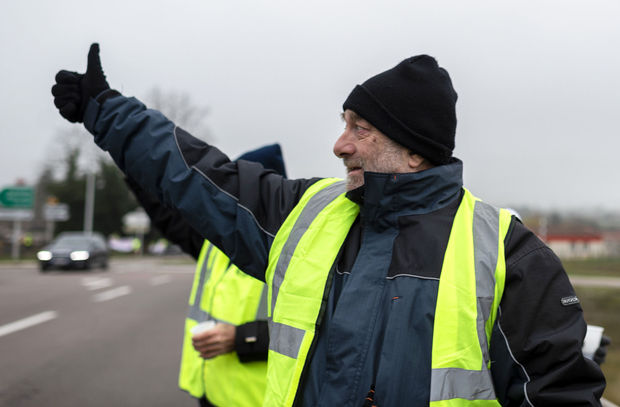
There’s a poetic aspect to these protests. French law mandates reflective yellow vests in every automobile. These aren’t to be kept in the trunk/boot, but within the cabin itself. In the event of a breakdown, a vest must be donned before one exits the vehicle.
Perhaps there’s some sense in this. But as soon as something stops being a suggestion and instead becomes a law, problems arise. One wonders how politically connected the manufacturers/distributors/retailers of such vests happened to be around the time that law got passed. More importantly, individual liberty is undermined when police have an excuse to harass anyone at any time under the guise of checking for the presence of such vests.
In a marvelous flourish, the good people of France have turned this lemon into lemonade. Dressed in these vests, they’ve taken to the streets to protest. An item everyone has been forced by the government to purchase has become a powerful symbol of resistance to a government-imposed carbon tax.
Visual impact is tremendously important if one hopes to attract media attention. A good visual can mean the difference between making it onto the television news or being wholly ignored.
The photos of, and videos from, these protests are fantastic. Those yellow vests (gilets jaunes) are the cat’s meow.
LINKS:
- See Geoff Chambers’ compelling exploration of the larger context of these protests here and here.
- See this photo collage posted on Facebook, this collection of images from search engine DuckDuckGo.com, and this collection of images from Google
- This BBC article says the fine for not having a yellow vest in one’s vehicle in France is 135 Euros – approximately 120 UK pounds, or 153 US dollars. The article also reports that these protests appear to be genuinely grassroots in nature: “In a country where protests are often tightly managed by one political party or trade union, this is a movement with no recognised national leader, no formal structure or affiliation, which unites voters of all ages from the far-left, the far-right, even those who once supported President Macron.”
- There’s a huge difference between peaceful protest and violence and vandalism. People who attack police and firefighters, and who damage property, aren’t admirable – whether they’re wearing gilets jaunes or not.
Questioning Jewish Progressive Wisdom
By Gilad Atzmon | November 2, 2018
Earlier this week the Jewish Forward reported on Monday’s counter-Trump demonstration in Pittsburgh. “They came in their thousands, singing Jewish songs and folksy protest anthems … (they were) holding signs denouncing Donald Trump as ‘President Hate.’”
I think it is not a clever move for leftist Jewish groups to declare that Trump is to blame for the terror attack in Pittsburgh. In fact, some might see it as irresponsible, and a response that could easily provoke further harassment and violence.
Most disturbing to me about the Jewish progressives’ response to Trump’s visit was the blunt dishonesty reflected in the signs and announcements of the protestors and organisers.
According to the Forward one sign read, “you know who else was a nationalist? Hitler.” Hitler was indeed a nationalist but so was Churchill, Gandhi, Herzl and even the 52% of the Brits who voted for Brexit. Nationalism isn’t the problem: Racism is. Accordingly, we tend to believe that it was racism that drove Hitler’s discriminatory ideology. But the ‘progressive’ Jewish groups who opposed Trump this week aren’t free of racism. They themselves are operating as racially exclusive political groups. I have said it many times before. I struggle to see a categorical difference between Aryans only and Jews only clubs. To me, both are equally racist.
“Speakers from Bend the Arc, the progressive Jewish group that organised the march, castigated Trump and what they saw as his complicity in the attack, allegedly perpetrated by an anti-Semite who shared Trump’s anti-refugee views.” It is comforting to learn that Jewish progressives support some refugees; do they also support the Palestinian refugees? Israel has prevented the ethnically cleansed Palestinians from returning to their land for more than 70 years. The Jewish State’s record on refugees and asylum seekers is appalling. But it seems the progressive Jews at Bend the Arc have little to say about that. I searched Bend the Arc’s web site and didn’t find any denouncements of the Jewish State’s anti refugee policies. Maybe in the Jewish progressive universe one rule applies to the Jewish State and another rule to the sea of Goyim.
Noticeably, the Bend the Arc event was not the only protest in town: A previous rally event had been held nearby, organized by the leftist Jewish group IfNotNow in collaboration with the Democratic Socialists of America (DSA), Jewish Voice for Peace (JVP) and other groups.
“We know Trump is responsible for violence in our city,” IfNotNow and DSA organizer Arielle Cohen told the Forward. “Trump has been the enabler-in-chief.” I fail to see the evidence that supports Cohen’s strongly worded accusations. And I wonder whether the decision makers at IfNotNow and JVP grasp the danger they may inflict on their communities by making such provocative accusations.
It is interesting to contrast this reaction to that of the members of the African American congregation that was targeted in 2015 by Dylann Roof, a self-professed racist shooter, who killed 9 people who had invited him into their bible study. After the shooting, Mr. Roof was unrepentant but the reaction of the victims and their families contrasts sharply with the progressive reaction to the Pittsburgh massacre.
At Mr. Roof’s bond hearing, the victim’s relatives spoke directly to Roof. “You took something very precious from me” Nadine Collier, the daughter of Ethel Lance said. “But I forgive you. And have mercy on your soul.”
“I acknowledge that I am very angry,” said the sister of DePayne Middleton-Doctor. “But one thing that DePayne … taught me that we are the family that love built. We have no room for hating, so we have to forgive. I pray God on your soul.”
Each speaker offered Roof forgiveness and said they were praying for his soul, even as they described the pain of their losses. Not one speaker blamed political leaders or anti Black sentiment. They correctly saw Roof as the culprit, even as they compassionately prayed for him. There is much to admire in the congregation’s reaction. It was the opposite of inflammatory, intended to calm the situation.
If the goal is to unite America, to bridge the divide and calm things down, probably equating your president with Hitler and accusing him of the hate crimes of others is the worst possible path to choose.
Barack Obama’s Great Tower of Nothing: Gentrification on a Presidential Level

Photo Source Jason Scragz | CC BY 2.0
By Hugh Iglarsh | CounterPunch | November 2, 2018
In Chicago, a low but persistent rumbling is heard these days, especially on the South Side. It is Frederick Law Olmsted, America’s greatest landscape architect and the planner of what would become the city’s Jackson Park, turning in his grave and muttering Victorian imprecations against Barack Obama and his eponymous foundation.
Why? Before we get to that, let’s see what Olmsted wrote back in 1871 (the year of the Great Chicago Fire), when Hyde Park, Woodlawn, South Shore and other southern lakefront precincts – what would now be classified as inner-city neighborhoods – were still remote, barely settled suburbs of a fast-growing city:
There is but one object of scenery near Chicago of special grandeur or sublimity, and that, the lake, can be made by artificial means no more grand or sublime. By no practical elevation of artificial hills, that is to say, would the impression of the observer in overlooking it be made more profound. The lake may, indeed, be accepted as fully compensating for the absence of sublime or picturesque elevations of land.
There are three elements of scenery however, which must be regarded as indispensable to a fine park to be formed on your site, the first being turf, the second foliage, the third still water. For each of these you are bound, at the outset, to make the best of your opportunities, because if you do not, posterity will be likely to lay waste to what you have done, in order to prepare something better.
Prophetic words. The Obama Foundation, together with city government and the University of Chicago, is now indeed laying waste to one of Olmsted’s major urban landscaping accomplishments, and not in order to replace it with something better.
If Obama, the U. of C. and City Hall have their way, a large chunk – two square blocks, to be exact – of Jackson Park, one of the jewels of Chicago’s 19th century park and boulevard system, will be repurposed, denuded and rendered unrecognizable. If the deal goes through as planned, the private and unaccountable Obama Foundation will be allowed to lease 19.3 acres of prime lakefront land forever for the grand total of one dollar. This stolen public space will house the Obama non-Library, formally dubbed the Obama Presidential Center. (Breaking news: On Wednesday, the Chicago City Council unanimously approved the deal transferring control of the parkland to the Obama Foundation and committing the city to costly “road and pedestrian improvements.” The foundation plans to break ground in 2019, pending federal approval and resolution of lawsuits filed by park protectors, as described below.)
The centerpiece of the OPC, hereafter referred to as the Great Tower of Nothing, is a 235-high foot high structure (that’s 50 feet taller than Rockefeller Chapel, the reigning monument to money and ego in Hyde Park) that is as cold and ugly as avarice itself. Although originally marketed as a presidential archive, the huge and handsomely endowed OPC will house no papers or artifacts of the Obama administration and, for reasons not fully elucidated, will have no connection to the National Archives and Records Administration. The actual presidential papers will be stored, at least temporarily, in an abandoned furniture store in a distant and uninviting suburb of Chicago, which apparently will not be open to the public.
The bunker-like edifice, towering over a newly enlarged golf course, will instead serve the Obama Foundation as “an ongoing project where we will shape, together, what it means to be a good citizen in the 21stcentury.” It is becoming abundantly clear that in the Age of Trump, useful citizenship training will center on theory and practice of civil disobedience and mass resistance. But this is not the sort of “ongoing project” the Obama Foundation seems to have in mind. There is talk about “cultivating the next generation of leaders,” which suggests a long-term goal of using corporate largesse to churn out more triangulating Wall Street Democrats in the Clinton-Obama mold. To skeptics, it is not readily apparent how this content-free non-library, really just a big clubhouse sheltering the vaguely purposed foundation and fundraising apparatus of an ex-president who rarely speaks up on public issues, will secure our rights and liberties in an era of encroaching fascism.
Aware perhaps of the project’s political and historical irrelevance, the Obama Foundation insists that the Great Tower of Nothing will bring new life and energy to a comatose neighborhood. The OPC be a “new landmark for the Southside and an economic engine for the city of Chicago, drawing hundreds of thousands of visitors every year, creating thousands of jobs – and will help to continue the revitalization of historic Jackson Park.”
These claims are typical pie-in-the-sky developer talk. Yes, the Obama un-library may well turn out to be an engine of development, but not in a way that will benefit the 99 percent. Quite the contrary, as we will see. And as for redeveloping Jackson Park: “No matter how they describe it, they’re taking away parkland,” says the redoubtable Herb Caplan, whose tiny Protect Our Parks group is suing to stop construction of the project, charging that it’s an “institutional bait-and-switch” designed to privatize the commons. This sets a terrible precedent for Chicago’s public lakefront, which by a city mandate going way back to 1836 is pledged “to remain forever open, clear and free of any buildings, or other obstruction whatever.”
So what is the underlying purpose of this over-scaled, oddly empty complex, which may end up costing as much as $1.5 billion to build and endow, all to convert a rare spot of green in an under-parked city into yet another heavily trafficked, highly paved, tightly controlled space? I think it’s pretty clear, if you look at the players, history and trends. It’s all about gentrification, i.e., ethnic cleansing, which is already taking place in Chicago at a pace never before seen.
I contend that the plutocrat-funded Obama Foundation and Presidential Center play the same role in the long-term transformation of the city’s southern lakefront that the Obama presidency did in American politics: that of putting a faux-progressive smiley face on the ugly underlying realities of institutionalized inequality, capitalist skullduggery and white privilege. As others have noted, this white elephant on the lake is actually a Trojan horse, using understandable but misplaced racial pride and identity politics and a fuzzy do-gooder mission statement to mask a real estate scheme that is all about neighborhood flipping and displacement of the poor.
A little historical context will help clarify things. In 1980 – about when Harold Washington was contemplating his historic mayoral run – Chicago’s black population peaked at nearly 1.2 million. The Urban Institute estimates that by 2030, that number will drop to 665,000 – an astonishing 45 percent decline over 50 years. According to journalist and researcher Alden Loury, “The restrictive covenants, red lining and white flight of yesterday have been replaced by stiff resistance to affordable housing, high-cost housing that effectively prices out some people of color, and disinvestment in communities of color regardless of their economic heft.” The result is that the 20thcentury’s Great Migration of African-Americans from the South has become the 21stcentury’s Great Exodus from Chicago, a shift in direction driven by the same virulent, undying racism.
The University of Chicago, which engineered the Jackson Park non-library bid, is the institutional driving force of the Great Tower of Nothing. The University, which used federal urban renewal (or as James Baldwin liked to say, “Negro removal”) funds to boot thousands of mostly minority families out of Hyde Park and nearby Kenwood during the 1960s, no doubt sees the Jackson Park complex as an outpost of its own campus, projecting its identity southward and creating a larger buffer zone for its intensively policed, bubble-like neighborhood. It also serves to reinforce the university’s deep and marketable connection to the Obamas (Barack taught at the law school; Michelle had an executive position at the medical school) and to the neoliberal wing of the Democratic Party they personify. But there is more at stake here: Since the OPC project was launched, the U. of C. has announced its intentions of building a 1,200-bed student housing complex nearby, as well as a “boutique hotel.” These ventures would be an unthinkable risk for the cautious institution were it not for the billionaire-funded and city-subsidized boondoggle anchoring the site.
It’s all about property values, tax revenues and “desirable” demographics. Rahm Emanuel, Barack Obama’s one-time chief of staff and currently Chicago’s notorious Mayor One Percent, speaks no other language. But what does Obama, Rahm’s old boss and staunch friend, say about all this?
At a community meeting this past winter, Obama commented: “We’ve got such a long way to go in terms of economic development before you’re even going to start seeing the prospect of significant gentrification. Malia’s kids might have to worry about that.”
If you can get past the dripping condescension of that remark, you encounter its Trump-like disingenuousness. Gentrification has long since begun oozing south of the Midway, the wide boulevard that once formed the university’s southern border. Woodlawn, south of Hyde Park, was declared the third hottest neighborhood in the nation for the first half of 2017, with median housing values rising 18% in that time, according to the City Lab website.
If it wished to, the Obama Foundation could make a strong statement regarding the evils of gentrification and displacement. But that’s not what the Foundation is about.
What it is about is raising money, great gobs of cash, principally by tapping the obscenely rich. In 2017, the Obama Foundation solicited no less than $232.6 million. Million-dollar donations have come from such checkered sources as financier Ken Griffin (Illinois’ richest man, who also gave $20 million to the campaign of Bruce Rauner, the state’s reactionary Republican governor), Goldman Sachs, Bill Gates and George Lucas – whose own attempt to blot the lakefront with a monument to self only recently went down to defeat, as I hope this one does too.
Why the super-wealthy are so eager to contribute to a paper-free “library” and artifact-free “museum” in a part of Chicago they are unlikely to visit is a question that invites speculation. One possible answer is that Obama is redeeming his chits from eight years of meritorious service to the ruling class, including his unstinting if unsuccessful devotion to the Trans-Pacific Partnership, an arrangement that would have transferred huge amounts of what was once quaintly known as national sovereignty to our transnational corporate overlords. It was just about the only piece of legislation that Obama was willing to get on the mat and fight for. No wonder he’s expecting and receiving concrete manifestations of gratitude, especially from the tycoons who went unindicted and fully bonused-up after the 2008 meltdown, winding up bigger and stronger and more arrogant than ever.
What we do know is what the oligarchs paying the bills don’t want or like. This includes attacks on the economic and political forces of gentrification, which they view as progress, or advocacy for affordable housing, or acknowledgment of systemic inequality and injustice, or demands for radical change on behalf of – among others – the many poor and disenfranchised people on the South Side. This fundamental class bias – this need to be, as the professional fundraisers say, “donor-friendly” – explains the most puzzling gaffe so far by the Obama Foundation: its failure to negotiate a community benefits agreement with local organizations, which would increase consultation with neighbors and ensure that at least some needs are met and some fears allayed. This is one of the project’s multiple ironies: that Barack Obama, the one-time South Side community organizer, is now thwarting a South Side community from empowering itself and taking part in decisions that will affect it for generations. No longer needing the community’s votes, Obama plays the paternalistic benefactor, giving the neighborhood what he and his rich friends and expert staff know it really needs, and who cares what the non-degreed riff-raff think.
If billionaires want to throw their money away on a gold-plated cultural non-asset like the Obama Presidential Center, who am I to say nay? It is, after all, a free country, especially for those who own it. But let the fat cats put the non-library where, if it can’t do actual good, it will at least do less harm. There are hundreds and thousands of empty lots on the South and West Sides of Chicago, places where construction of any kind would be a plus, bringing some measure of hope and attention to depleted and forgotten neighborhoods. Jackson Park is literally the worst possible location for job creation, despite the Foundation’s claims. There can be no spin-off construction on what technically remains public parkland, no next-door retail or restaurants or residences. Yes, there will be some jobs attached, but they will be classic examples of what author David Graeber terms “bullshit jobs,” PR and legal and security and administrative sinecures that are at best unnecessary and at worst pernicious and/or absurd: e.g., well-paid fundraisers raising funds to hire more fundraisers to raise more funds, ad infinitum. The Obama Foundation and other Establishment-blessed philanthropies of its type are expressly designed to manufacture a certain kind of liberal bullshit. By turning stark social and economic conflicts into fundable, non-threatening “programming,” they lubricate the squeaky gears of the social order rather than confronting its stubborn contradictions. The astronomical salaries paid to Obama Foundation leadership – in 2017, the executive director and CEO earned a combined $1.48 million – suggest that the organization is unlikely to pit itself against the capitalist inequities that shred the social fabric and are the bottom line in the South Side’s racialized poverty equation.
I earlier described the Obama Foundation’s Jackson Park follies as a Trojan horse, but perhaps Potemkin village is the better metaphor. The proposed complex is a spectacle that symbolizes community life and culture and memory and scholarship and public purpose without actually containing anything of historical value – just as the Obama administration symbolized progressive politics and racial advancement, concealing its chronic and self-neutering passivity, dead-centrist philosophy and unquestioned allegiance to the powers that be behind a façade of faux-populist rhetoric and wispy good intentions.
Chicago doesn’t need this hollow monument to gentrification, elitism and privatization on its lakefront. We as a nation don’t need more crumbs from the tables of the billionaires who choke and starve us, or more tainted foundation dollars turning angry activists into tame “social entrepreneurs.”
What we do need is tough, radical, grassroots democracy – which is to say, the community itself, and not self-appointed champions with their own agenda, taking on the strategic neglect and cancerous disinvestment that constitute slow-motion ethnic cleansing. In the unlikely event that Barack Obama really wants to make life better for all on the South Side of Chicago, he will need to come down from his sky-scraping glass and concrete fortress and join those on the ground, listening to what they say. If Obama could do that, which at this point he cannot, he might come to the sobering conclusion that his world is not their world, his friends are not their friends, and his hopes and dreams, as embodied in his fraudulent and destructive non-library, are built on their despair.
Hugh Iglarsh is a Chicago-based writer and editor who loves libraries and museums, but not fake ones. This essay began as a soapbox rant he gave at the annual Bughouse Square Debates, sponsored by the Newberry Library. He can be reached at hiiglarsh@hotmail.com.
IEA Opposed To Cheap Energy For Developing Nations
By Paul Homewood | Not A Lot Of People Know That | October 31, 2018
Once again, the IEA is trying to stir things up re “fossil fuel subsidies”:
Worldwide fossil fuel consumption subsidies almost halved between 2012 and 2016, from a high point in 2012 of more than half a trillion dollars. But the estimate crept higher again in 2017, according to new data from World Energy Outlook 2018, and the run-up in the oil price in 2018 is putting pricing reforms under pressure in some countries.
The new data for 2017 show a 12% increase in the estimated value of these subsidies, to more than $300 billion. Most of the increase relates to oil products, reflecting the higher price for oil (which, if an artificially low end-user price remains the same, increases the estimated value of the subsidy). In 2016, for the first time, the value of subsidies to fossil-fuelled electricity were higher than for oil. The 2017 data sees oil return as the most heavily subsidised energy carrier.
Fossil fuel consumption subsidies are in place across a range of countries. These subsidies lower the price of fossil fuels, or of fossil-fuel based electricity, to end-consumers, often as a way of pursuing social policies including energy access.
There can be good reasons for governments to make energy more affordable, particularly for the poorest and most vulnerable groups. But many subsidies are poorly targeted, disproportionally benefiting wealthier segments of the population that use much more of the subsidised fuel.
Such untargeted subsidy policies encourage wasteful consumption, pushing up emissions and straining government budgets. Phasing out fossil fuel consumption subsidies is a pillar of sound energy policy.
The period of high oil prices from 2010-2014 provided strong motivation for many oil-importing countries to pursue subsidy reform. The fall in price that began in 2014 presented the opportunity. A host of countries, from India to Indonesia and from Mexico to Malaysia, have implemented pricing reforms in recent years.


Every time a report like this comes out, Greenpeace and co leap up and down, pretending that taxpayers are actually handing money over to wicked oil companies.
In fact, as the IEA admit, these are “consumer subsidies”, and not “producer subsidies”. The latter are, of course, what we are paying to wind farms in this country, to enable them to compete with fossil fuels.
By contrast, consumer subsidies are given to keep prices down for the consumer, in this case energy, which may or may not come from fossil fuels.
The IEA explain their methodology below:
The IEA estimates subsidies to fossil fuels that are consumed directly by end-users or consumed as inputs to electricity generation. The price-gap approach, the most commonly applied methodology for quantifying consumption subsidies, is used for this analysis. It compares average end-user prices paid by consumers with reference prices that correspond to the full cost of supply. The price gap is the amount by which an end-use price falls short of the reference price and its existence indicates the presence of a subsidy.
https://www.iea.org/weo/energysubsidies/
My first reaction is just what the hell does any of this have to do with the IEA?
If, for instance, the Indian government wants to subsidise the price of electricity, so that its citizens are able to afford to run air conditioners, then that is up to them, and nobody else.
Similarly, if Iran wants to subsidise natural gas to enable its people to survive in winter, what right does the IEA to criticise?
The Report actually notes that such subsidies can be beneficial, but then ludicrously go on to complain that some richer people might benefit as well:
There can be good reasons for governments to make energy more affordable, particularly for the poorest and most vulnerable groups. But many subsidies are poorly targeted, disproportionally benefiting wealthier segments of the population that use much more of the subsidised fuel.
In reality, energy taxes are one of the most regressive taxes of all. Removal of subsidies would have the same effect.
Subsidising energy for industry is also seen to be important by many countries, who would worry about the loss of competitiveness if they were withdrawn.
The IEA, of course, has ulterior motives, and could not give a toss about the wellbeing or livelihoods of ordinary people in developing nations, where all of the subsidies are concentrated. No EU country appears on the list, nor the US, Canada or Australia:

https://www.iea.org/weo/energysubsidies/
That is because the IEA is set up under the auspices of the OECD, the rich nations club.
Originally the IEA was designed to help countries co-ordinate a collective response to major disruptions in the supply of oil, such as the crisis of 1973/4.
In theory, its four main areas of focus are:
- Energy Security: Promoting diversity, efficiency, flexibility and reliability for all fuels and energy sources;
- Economic Development: Supporting free markets to foster economic growth and eliminate energy poverty;
- Environmental Awareness: Analysing policy options to offset the impact of energy production and use on the environment, especially for tackling climate change and air pollution; and
- Engagement Worldwide: Working closely with partner countries, especially major emerging economies, to find solutions to shared energy and environmental concerns.
https://www.iea.org/about/ourmission/
However, it no longer seems to care about energy security, fostering economic growth or eliminating energy poverty.
Instead, it appears to have an overarching remit to tackle climate change. If there was any doubt at all about this, check out Fatih Birol’s despair last week at the news that CO2 emissions were continuing to climb.
And as far as he is concerned, developing countries can go to hell.
American Pravda: The ADL in American Society
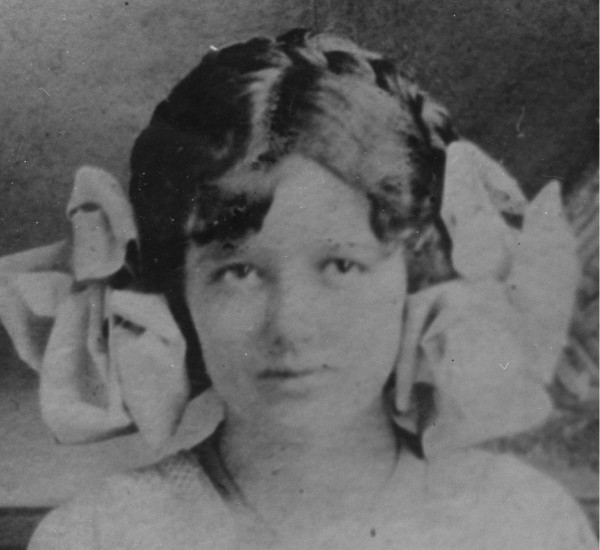
13-year-old Mary Phagan, the girl raped and murdered by Leo Frank, the founding hero of the ADL
By Ron Unz • Unz Review • October 15, 2018
In our modern era, there are surely few organizations that so terrify powerful Americans as the Anti-Defamation League (ADL) of B’nai B’rith, a central organ of the organized Jewish community.
Mel Gibson had long been one of the most popular stars in Hollywood and his 2004 film The Passion of the Christ became among the most profitable in world history, yet the ADL and its allies destroyed his career, and he eventually donated millions of dollars to Jewish groups in desperate hopes of regaining some of his public standing. When the ADL criticized a cartoon that had appeared in one of his newspapers, media titan Rupert Murdoch provided his personal apology to that organization, and the editors of The Economist quickly retracted a different cartoon once it came under ADL fire. Billionaire Tom Perkins, a famed Silicon Valley venture capitalist, was forced to issue a heartfelt apology after coming under ADL criticism for his choice of words in a Wall Street Journal column. These were all proud, powerful individuals, and they must have deeply resented being forced to seek such abject public forgiveness, but they did so nonetheless. The total list of ADL supplicants over the years is a very long one.
Given the fearsome reputation of the ADL and its notorious hair-trigger activists, there was a widespread belief that my small webzine would be completely annihilated when I first launched my recent series of controversial articles in early June by praising the works of historian David Irving, long demonized by the ADL. Yet absolutely nothing happened.
During the next three months my subsequent articles directly challenged nearly every hot-button issue normally so fiercely defended by the ADL and its lackies, so much so that a friendly journalist soon described me as the “Kamikaze from California.” Yet despite my 90,000 words of text and the 13,000 comments I had attracted, the continuing silence of the ADL was absolutely deafening. Meanwhile, my articles were read more than half a million times, with the following being a list of the most provocative pieces:
- The Remarkable Historiography of David Irving
June 4, 2018 • 1,700 Words • 570 Comments - American Pravda: The JFK Assassination, Part II – Who Did It?
June 25, 2018 • 8,000 Words • 985 Comments - American Pravda: Oddities of the Jewish Religion
July 16, 2018 • 7,800 Words • 1,637 Comments - American Pravda: The Bolshevik Revolution and Its Aftermath
July 23, 2018 • 6,900 Words • 913 Comments - American Pravda: The Nature of Anti-Semitism
July 30, 2018 • 5,500 Words • 666 Comments - American Pravda: Jews and Nazis
August 6, 2018 • 6,800 Words • 554 Comments - American Pravda: Holocaust Denial
August 27, 2018 • 17,600 Words • 2,323 Comments - American Pravda: 9/11 Conspiracy Theories
September 10, 2018 • 11,000 Words • 2,355 Comments
When divine wrath fails to smite the heretic and terrifying enforcers of official dogma seem to have suddenly lost their taste for battle, others gradually begin to take notice and may grow emboldened. Eventually leading pro-Russian and Libertarian websites such as Russia Insider and LewRockwell began republishing some of my most controversial American Pravda articles, thus bringing my factual claims to the attention of broader audiences. After the conclusion of the my series, I began directly ridiculing my strangely timorous ADL opponents, publishing a short column entitled “Has the ADL Gone Into Hiding?” which led the redoubtable Paul Craig Roberts to describe me as “the bravest man I know.”
Apparently the combination of all these factors at long last grew too worrisome for the ADL, and stirring from their secret hiding place, its activists have now finally released a short and rather milquetoast response to my material, one which hardly much impresses me. A few days ago, they Tweeted out their column, together with a photo of their new nemesis.
California businessman Ron Unz has long been funding anti-Israel activists. Now, he’s embracing hardcore #antiSemitism, denying the Holocaust & claiming Jews run the media & worship Satan. Learn more from our experts: https://t.co/KnngID3YCh
— ADL (@ADL_National) October 8, 2018
The ADL may boast an annual budget of $60 million and have many hundreds of full-time employees, but its research skills seem sorely lacking. I discovered that they opened their rebuke by denouncing me as a notorious “anti-immigrant activist.” This seems an extremely odd claim given that I have published perhaps a quarter-million words on that contentious topic over the last twenty-five years, nearly all of it online and fully searchable, and my views have never been characterized in that fashion. To cite just one example, my article “California and the End of White America” appeared as a 1999 cover-story in Commentary, the flagship publication of The American Jewish Committee, and surely anyone reading it would be greatly puzzled by the ADL’s description. Indeed, just a few years earlier, I had been a top featured speaker at the October 1994 pro-immigrant protest in downtown Los Angeles, a 70,000 strong political rally that was the largest such gathering in American history to that date.

Over the years, my political activities have been the subject of many thousands of articles in the mainstream media, including a half-dozen front-page stories in the New York Times, and these would provide a similar picture, as did the New Republic cover story chronicling my California successes. Moreover, my views on immigrants haven’t changed all that much over the years as demonstrated by my more recent articles such as “The Myth of Hispanic Crime,” “Immigration, Republicans, and the End of White America” and “A Grand Bargain on Immigration?” Perhaps the intrepid ADL investigators should acquaint themselves with a powerful new technological tool called “Google.”

I was equally unimpressed that they so hotly denounced me for substantially relying upon the writings of Israel Shahak, whom they characterized as viciously “anti-Semitic.” As I had repeatedly emphasized, my own total lack of Aramaic and Hebrew necessarily forces me to rely upon the research of others, and the late Prof. Shahak, an award-winning Israeli academic, certainly seems a fine source to use. After all, famed linguist Noam Chomsky had lauded Shahak’s works for their “outstanding scholarship,” and numerous of our other most prominent public intellectuals such as Christopher Hitchens, Edward Said, and Gore Vidal had been similarly lavish in their praise. Furthermore, one of Shahak’s co-authors was Norton Mezvinsky, a prominent American academic specializing in Middle Eastern history, himself hardly an obscure figure given that both his brother and sister-in-law served in Congress and his nephew later married Chelsea Clinton. And as far as I’m aware almost none of Shahak’s explicit claims about the Talmud or traditional Judaism have ever been directly challenged, while the online availability of his first book allows those so interested to conveniently read it and decide for themselves.

The ADL similarly denounced me for taking seriously the theories of Ariel Toeff, another Israeli academic. But Prof. Toeff, son of the Chief Rabbi of Rome, certainly ranks as one of the world’s leading scholarly authorities on Medieval Jewry, and working together with his graduate students and other colleagues, he had devoted many years of effort to the research study in question, drawing upon extensive primary and secondary sources produced in eight different languages. I found his 500 page book quite persuasive, as did Israeli journalist Israel Shamir, and I have seen no credible rebuttals.
Now the work of all these prominent academics and intellectuals may not necessarily be correct, and perhaps I am mistaken in accepting their factual claims. But I would need to see something far more weighty than a casual dismissal in a few paragraphs contained within an anonymous ADL column, whose author for all I know might have been some ignorant young intern.
Those glaring flaws aside, most of the ADL’s remaining catalogue of my numerous heretical positions seemed reasonably accurate, though obviously presented in a somewhat hostile and derogatory fashion and sorely lacking any links to my original pieces. But even this desultory listing of my mortal transgressions was woefully incomplete, with the ADL strangely failing to include mention of some of my most controversial claims.

For example, the authors excluded all reference to my discussion of the thoroughly documented Nazi-Zionist economic partnership of the 1930s, which played such a crucial role in laying the basis for the State of Israel. And the ADL similarly avoided mentioning the nearly 20,000 words I had allocated to discussing the very considerable evidence that the Israeli Mossad had played a central role in both the JFK Assassination and the 9/11 Attacks. Surely this must be one of the few times that the ADL has deliberately avoided leveling the charge of “conspiracy theorist” against an opponent whom they might have so easily slurred in that fashion. Perhaps they felt the evidence I provided was too strong for them to effectively challenge.
The worrisome incompetence of ADL researchers becomes particularly alarming when we consider that over the last couple of years that organization has been elevated into a content gatekeeping role at America’s largest Internet companies, helping to determine what may or may not be said on the most important Social Media platforms such as Facebook, YouTube, and Twitter.

Brittan Heller, director of technology and society for the Anti-Defamation League, photographed in Palo Alto, Calif., on August 27, 2018. (Nhat V. Meyer/Bay Area News Group)
My local paper is the San Jose Mercury News and a couple of weeks ago it published a major profile interview with Brittan Heller, the ADL Director tasked with policing “hate speech” across the America-dominated portions of the Internet. She seemed like a perfectly pleasant young woman in her mid-thirties, a Stanford English major and a graduate of Yale Law, now living in Silicon Valley with her husband and her two cats, Luna and Stella. She emphasizes her own experience as a victim of cyber-harassment from a fellow college student whose romantic overtures she rejected and the later expertise she had gained as a Nazi-hunter for the U.S. government. But does that resume really provide her with the god-like knowledge suitable for overriding our traditional First Amendment rights and determining which views and which individuals should be allowed access to some two billion readers worldwide?
There is also a far more serious aspect to the situation. The choice of the ADL as the primary ideological overseer of America’s Internet may seem natural and appropriate to politically-ignorant Americans, a category that unfortunately includes the technology executives leading the companies involved. But this reflects the remarkable cowardice and dishonesty of the American media from which all these individuals derive their knowledge of our world. The true recent history of the ADL is a remarkably sordid and disreputable tale.
In January 1993, the San Francisco Police Department reported that it had recently raided the Northern California headquarters of the ADL based upon information provided by the FBI. The SFPD discovered that the organization had been keeping intelligence files on more than 600 civic organizations and 10,000 individuals, overwhelmingly of a liberal orientation, with the SFPD inspector estimating that 75% of the material had been illegally obtained, much of it by secret payments to police officials. This was merely the tip of the iceberg in what clearly amounted to the largest domestic spying operation by any private organization in American history, and according to some sources, ADL agents across the country had targeted over 1,000 political, religious, labor, and civil rights organizations, with the New York headquarters of the ADL maintaining active dossiers on more than a million Americans.
Not long afterward, an ACLU official who had previously held a high-ranking position with the ADL revealed in an interview that his organization had been the actual source of the highly controversial 1960s surveillance on Martin Luther King, Jr., which it had then provided to FBI Director J. Edgar Hoover. For many years Hoover had been furiously denounced in the national media headlines for his use of tapes and other secret information on King’s activities, but when a local San Francisco newspaper revealed that an ADL spying operation had actually been the source of all that sordid material, the bombshell revelation was totally ignored in the national media and only reported by fringe organizations, so that today almost no Americans are aware of that fact.
I am not aware of any other private organization in American history that has been involved in even a sliver of such illegal domestic espionage activity, which appears to have been directed against almost all groups and prominent individuals—Left, Right, and Center—suspected of being insufficiently aligned with Jewish and Israeli interests. Some of the illegal material found in ADL possession even raised dark suspicions that it had played a role in domestic terrorist attacks and political assassinations directed against foreign leaders. I am no legal expert, but given the massive scale of such illegal ADL activities, I wonder whether a plausible case might have been made to prosecute the entire organization under RICO statutes and sentence all of its leaders to long prison terms.
Instead, the resulting government charges were quickly settled with merely a trivial fine and a legal slap on the wrist, demonstrating the near-total impunity provided by massive Jewish political power in modern American society.
In effect, the ADL seems to have long operated as our country’s privatized secret political police, monitoring and enforcing its ideological doctrines on behalf of Jewish groups much as the Stasi did for the Communist rulers of East Germany. Given such a long history of criminal activity, allowing the ADL to extend its oversight to our largest Social Media platforms amounts to appointing the Mafia to supervise the FBI and the NSA, or taking a very large step towards implementing George Orwell’s Ministry of Truth on behalf of Jewish interests.
In his 1981 memoirs, the far right Classics scholar Revilo P. Oliver characterized the ADL as “the formidable organization of Jewish cowboys who ride herd on their American cattle” and this seems a reasonably apt description to me.
Although I had long recognized the power and influence of the ADL, a leading Jewish-activist organization whose leaders were so regularly quoted in my newspapers, until rather recently I had only the vaguest notions of its origins. I’m sure I’d heard the story mentioned at some points, but the account had never stuck in my mind.
Then perhaps a year or two ago, I happened to come across some discussion of the ADL’s 2013 centenary celebration, in which the leadership reaffirmed the principles of its 1913 founding. The initial impetus had been the vain national effort to save the life of Leo Frank, a young Jew unjustly accused of murder and eventually lynched. Not long before, Frank’s name and story would have been equally vague in my mind, with the man half-remembered from my introductory history textbooks as a notorious early KKK victim in the fiercely anti-Semitic Deep South of the early twentieth century. However, not long before seeing that piece on the ADL I’d read Albert Lindemann’s highly-regarded study The Jew Accused, and his short chapter on the notorious Frank case had completely exploded all my preconceptions.
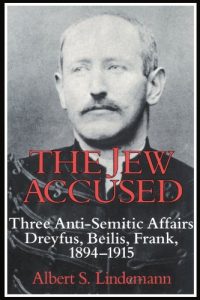
First, Lindemann demonstrated that there was no evidence of any anti-Semitism behind Frank’s arrest and conviction, with Jews constituting a highly-valued element of the affluent Atlanta society of the day, and no references to Frank’s Jewish background, negative or otherwise, appearing in the media prior to the trial. Indeed, five of the Grand Jurors who voted to indict Frank for murder were themselves Jewish, and none of them ever voiced regret over their decision. In general, support for Frank seems to have been strongest among Jews from New York and other distant parts of the country and weakest among the Atlanta Jews with best knowledge of the local situation.
Furthermore, although Lindemann followed the secondary sources he relied upon in declaring that Frank was clearly innocent of the charges of rape and murder, the facts he recounted led me to the opposite conclusion, seeming to suggest strong evidence of Frank’s guilt. When I much more recently read Lindemann’s longer and more comprehensive historical study of anti-Semitism, Esau’s Tears, I noticed that his abbreviated treatment of the Frank case no longer made any claim of innocence, perhaps indicating that the author himself might have also had second thoughts about the weight of the evidence.
Based on this material, I voiced that opinion in my recent article on historical anti-Semitism, but my conclusions were necessarily quite tentative since they relied upon Lindermann’s summary of the information provided in the secondary sources he had used, and I had the impression that virtually all those who had closely investigated the Frank case had concluded that Frank was innocent. But after my piece appeared, someone pointed me to a 2016 book from an unexpected source arguing for Frank’s guilt. Now that I have ordered and read that volume, my understanding of the Frank case and its historical significance has been entirely transformed.
Mainstream publishers may often reject books that too sharply conflict with reigning dogma and sales of such works are unlikely to justify the extensive research required to produce the manuscript. Furthermore, both authors and publishers may face widespread vilification from a hostile media for taking such positions. For these reasons, those who publish such controversial material will often be acting from deep ideological motives rather than merely seeking professional advancement or monetary gain. As an example, it took a zealous Trotskyite leftist such as Lenni Brunner to brave the risk of widespread vilification and invest the time and effort to produce his remarkable study of the crucial Nazi-Zionist partnership of the 1930s. And for similar reasons, we should not be totally surprised that the leading book arguing for the guilt of Leo Frank appeared as a volume in the series on the pernicious aspects of Jewish-Black historical relations produced by Louis Farrakhan’s Nation of Islam (NOI), nor that the text lacked any identified author.
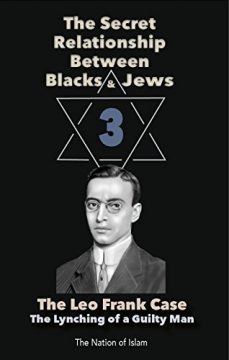
Anonymous works published by heavily-demonized religious-political movements naturally engender considerable caution, but once I began reading the 500 pages of The Leo Frank Case: The Lynching of a Guilty Man I was greatly impressed by the quality of the historical analysis. I think I have only very rarely encountered a research monograph on a controversial historical event that provided such an enormous wealth of carefully-argued analysis backed by such copious evidence. The authors seemed to display complete command of the major secondary literature of the last one hundred years while drawing very heavily upon the primary sources, including court records, personal correspondence, and contemporaneous publications, with the overwhelming majority of the 1200 footnotes referencing newspaper and magazine articles of that era. The case made for Frank’s guilt seemed absolutely overwhelming.
The basic outline of events is not disputed. In 1913 Georgia, a 13-year-old pencil company worker named Mary Phagan was last seen alive visiting the office of factory manager Leo Frank on a Saturday morning to collect her weekly paycheck, while her raped and murdered body was found in the basement early the next morning and Frank eventually arrested for the crime. As the wealthy young president of the Atlanta chapter of B’nai B’rith, Frank ranked as one of the most prominent Jewish men in the South, and great resources were deployed in his legal defense, but after the longest and most expensive trial in state history, he was quickly convicted and sentenced to death.
The facts of the case against Frank eventually became a remarkable tangle of complex and often conflicting evidence and eyewitness testimony, with sworn statements regularly being retracted and then counter-retracted. But the crucial point that the NOI authors emphasize for properly deciphering this confusing situation is the enormous scale of the financial resources that were deployed on Frank’s behalf, both prior to the trial and afterward, with virtually all of the funds coming from Jewish sources. Currency conversions are hardly precise, but relative to the American family incomes of the time, the total expenditures by Frank supporters may have been as high as $25 million in present-day dollars, quite possibly more than any other homicide defense in American history before or after, and an almost unimaginable sum for the impoverished Deep South of that period. Years later, a leading donor privately admitted that much of this money was spent on perjury and similar falsifications, something which is very readily apparent to anyone who closely studies the case. When we consider this vast ocean of pro-Frank funding and the sordid means for which it was often deployed, the details of the case become far less mysterious. There exists a mountain of demonstrably fabricated evidence and false testimony in favor of Frank, and no sign of anything similar on the other side.
The police initially suspected the black night watchman who found the girl’s body, and he was quickly arrested and harshly interrogated. Soon afterward, a bloody shirt was found at his home, and Frank made several statements that seemed to implicate his employee in the crime. At one point, this black suspect may have come close to being summarily lynched by a mob, which would have closed the case. But he stuck to his story of innocence with remarkable composure, in sharp contrast to Frank’s extremely nervous and suspicious behavior, and the police soon shifted their scrutiny toward the latter, culminating in his arrest. All researchers now recognize that the night watchman was entirely innocent, and the material against him planted.
The evidence against Frank steadily mounted. He was the last man known to have seen the young victim and he repeatedly changed important aspects of his story. Numerous former female employees reported his long history of sexually aggressive behavior toward them, especially directed towards the murdered girl herself. At the time of the murder, Frank claimed to have been working alone in his office, but a witness who went there reported he had been nowhere to be found. A vast amount of circumstantial evidence implicated Frank.
A black Frank family servant soon came forward with sworn testimony that Frank had confessed the murder to his wife on the morning after the killing, and this claim seemed supported by the latter’s strange refusal to visit her husband in jail for the first two weeks after the day of his arrest.
Two separate firms of experienced private detectives were hired by Frank’s lavishly-funded partisans, and the agents of both eventually came to the reluctant conclusion that Frank was guilty as charged.
As the investigation moved forward, a major break occurred as a certain Jim Conley, Frank’s black janitor, came forward and confessed to having been Frank’s accomplice in concealing the crime. At the trial he testified that Frank had regularly enlisted him as a lookout during his numerous sexual liaisons with his female employees, and after murdering Phagan, had then offered him a huge sum of money to help remove and hide the body in the basement so that the crime could be pinned upon someone else. But with the legal noose tightening around Frank, Conley had begun to fear that he might be made the new scapegoat, and went to the authorities in order to save his own neck. Despite Conley’s damning accusations, Frank repeatedly refused to confront him in the presence of the police, which was widely seen as further proof of Frank’s guilt.
By the time of the trial itself, all sides were agreed that the murderer was either Frank, the wealthy Jewish businessman, or Conley, the semi-literate black janitor with a first-grade education and a long history of public drunkenness and petty crime. Frank’s lawyers exploited this comparison to the fullest, emphasizing Frank’s Jewish background as evidence for his innocence and indulging in the crudest sort of racial invective against his black accuser, whom they claimed was obviously the true rapist and murderer due to his bestial nature.
Those attorneys were the best that money could buy and the lead counsel was known as the one of the most skilled courtroom interrogators in the South. But although he subjected Conley to a grueling sixteen hours of intense cross-examination over three days, the latter never wavered in the major details of his extremely vivid story, which deeply impressed the local media and the jury. Meanwhile, Frank refused to take the stand at his own trial, thereby avoiding any public cross-examination of his often changing account.
Two notes written in crude black English had been discovered alongside Phagan’s body, and everyone soon agreed that these were written by the murderer in hopes of misdirecting suspicion. So they were either written by a semi-literate black such as Conley or by an educated white attempting to imitate that style, and to my mind, the spelling and choice of words strongly suggests the latter, thereby implicating Frank.
Taking a broader overview, the theory advanced by Frank’s legion of posthumous advocates seems to defy rationality. These journalists and scholars uniformly argue that Conley, a semi-literate black menial, had brutally raped and murdered a young white girl, and the legal authorities soon became aware of this fact, but conspired to set him free by supporting a complex and risky scheme to instead frame an innocent white businessman. Can we really believe that the police officials and prosecutors of a city in the Old South would have violated their oath of office in order to knowingly protect a black rapist and killer from legal punishment and thereby turn him loose upon their city streets, presumably to prey on future young white girls? This implausible reconstruction is particularly bizarre in that nearly all its advocates across the decades have been the staunchest of Jewish liberals, who endlessly condemned the horrific racism of the Southern authorities of that era, but then unaccountably chose to make a special exception in this one particular case.
In many respects, the more important part of the Frank case began after his conviction and death sentence when many of America’s wealthiest and most influential Jewish leaders began mobilizing to save him from the hangman. They soon established the ADL as a new vehicle for that purpose and succeeded in making the Frank murder case one of the most famous in American history to that date.
Although his role was largely concealed at the time, the most important new backer whom Frank attracted was Albert Lasker of Chicago, the unchallenged monarch of American consumer advertising, which constituted the life’s blood of all of our mainstream newspapers and magazines. Not only did he ultimately provide the lion’s share of the funds for Frank’s defense, but he focused his energies upon shaping the media coverage surrounding the case. Given his dominant business influence in that sector, we should not be surprised that a huge wave of unremitting pro-Frank propaganda soon began appearing across the country in both local and national publications, extending to most of America’s most popular and highly-regarded media outlets, with scarcely a single word told on the other side of the story. This even included all of Atlanta’s own leading newspapers, which suddenly reversed their previous positions and became convinced of Frank’s innocence.
Lasker also enlisted other powerful Jewish figures in the Frank cause, including New York Times owner Adolph Ochs, American Jewish Committee president Louis Marshall, and leading Wall Street financier Jacob Schiff. The Times, in particular, began devoting enormous coverage to this previously-obscure Georgia murder case, and many of its articles were widely republished elsewhere. The NOI authors highlight this extraordinary national media attention: “The Black janitor whose testimony became central to Leo Frank’s conviction became the most quoted Black person in American history up to that time. More of his words appeared in print in the New York Times than those of W.E.B. Du Bois, Marcus Garvey, and Booker T. Washington—combined.”
Back a century ago just as today, our media creates our reality, and with Frank’s innocence being proclaimed nationwide in near-unanimous fashion, a long list of prominent public figures were soon persuaded to demand a new trial for the convicted murderer, including Thomas Edison, Henry Ford, and Jane Addams.
Ironically enough, Lasker himself plunged himself into this crusade despite apparently having very mixed personal feelings about man whose cause he was championing. His later biography reveals that upon his first personal meeting with Frank, he perceived him as “a pervert” and a “disgusting” individual, so much so that he even hoped that after he managed to free Frank, the latter would quickly perish in some accident. Furthermore, in his private correspondence he freely admitted that a large fraction of the massive funding that he and numerous other wealthy Jews from across the country were providing had been spent on perjured testimony and there are also strong hints that he explored bribing various judges. Given these facts, Lasker and Frank’s other major backers were clearly guilty of serious felonies, and could have received lengthy prison terms for their illegal conduct.
With the New York Times and the rest of the liberal Northern media now providing such massive coverage of the case, Frank’s defense team was forced to abandon the racially-inflammatory rhetoric aimed at his black accuser which had previously been the centerpiece of their trial strategy. Instead, they began concocting a tale of rampant local anti-Semitism, previously unnoticed by all observers, and adopted it as a major grounds for their appeal of the verdict.
The unprincipled legal methods pursued by Frank’s backers is illustrated by a single example. Georgia law normally required that a defendant be present in court to hear the reading of the verdict, but given the popular emotions in the case, the judge suggested that this provision be waived, and the prosecution assented only if the defense lawyers promised not to use this small irregularity as grounds for appeal. But after Frank was convicted, AJC President Marshall and his other backers orchestrated numerous unsuccessful state and federal appeals on exactly this minor technicality, merely hiring other lawyers to file the motion.
For almost two years, the nearly limitless funds deployed by Frank’s supporters covered the costs of thirteen separate appeals on the state and federal levels, including to the U.S. Supreme Court, while the national media was used to endlessly vilify Georgia’s system of justice in the harshest possible terms. Naturally, this soon generated a local reaction, and during this period outraged Georgians began denouncing the wealthy Jews who were spending such enormous sums to subvert their local criminal justice system.
One of the very few journalists willing to oppose Frank’s position was Georgia publisher Tom Watson, a populist firebrand, and in one of his editorials he reasonably declared “We cannot have… one law for the Jew, and another for the Gentile” while he also lamented that “It is a bad state of affairs when the idea gets abroad that the law is too weak to punish a man who has plenty of money.” A former Georgia governor indignantly inquired “Are we to understand that anybody except a Jew can be punished for a crime.” The clear facts indicate that there was indeed a massive miscarriage of justice in Frank’s case, but virtually all of it occurred in Frank’s favor.
All appeals were ultimately rejected and Frank’s execution date for the rape and murder of the young girl finally drew near. But just days before he was scheduled to leave office, Georgia’s outgoing governor commuted Frank’s sentence, provoking an enormous storm of popular protest, especially since he was the legal partner of Frank’s chief defense lawyer, an obvious conflict of interest. Given the enormous funds that Frank’s national supporters had been deploying on his behalf and the widespread past admissions of bribery in the case, there are obviously dark suspicions about what had prompted such a remarkably unpopular decision, which soon forced the former governor to exile himself from the state. A few weeks later, a group of Georgia citizens stormed Frank’s prison farm, abducting and hanging him, with Frank becoming the first and only Jew lynched in American history.
Naturally, Frank’s killing was roundly denounced in the national media that had long promoted his cause. But even in those quarters, there may have been a significant difference between public and private sentiments. No newspaper in country had more strongly championed Frank’s innocence than the New York Times of Adolph Ochs. Yet according to the personal diary of one of the Times editors, Ochs privately despised Frank, and perhaps even greeted his lynching with a sense of relief. No effort was ever made by any of Frank’s wealthy supporters to bring any of the lynching party to justice.
Although I have now come to regard the NOI volume as the most persuasive and definitive text on the Frank case, I naturally considered conflicting works before coming to this conclusion.
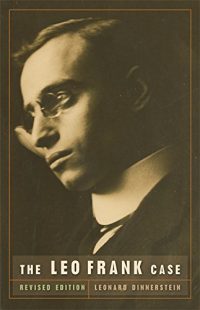
For nearly a half-century, the leading scholarly account of the incident had probably been Leonard Dinnerstein’s book The Leo Frank Case, first published in 1966, and Dinnerstein, a University of Arizona professor specializing in Jewish history, entirely supported Frank’s innocence. But although the work won a national award, carries glowing blurbs from several prestigious publications, and has surely graced the reading lists of endless college courses, I was not at all impressed. Among other things, the book appears to be the original source of some of the most lurid examples of alleged anti-Semitic public outbursts that apparently have no basis in reality and seem to have been simply fabricated by the author given his lack of any citations; the NOI authors note these stories have been quietly abandoned by all recent researchers. Even leaving aside such likely falsifications, which were widely cited by later writers and heavily contaminated the historical record, I found the short Dinnerstein work rather paltry and even pitiful when compared to that of its NOI counterpart.
A far longer and more substantial recent work was Steve Oney’s 2003 And the Dead Shall Rise, which runs nearly 750 pages and won the National Jewish Book Award, the Southern Book Critics Circle Prize, and the American Bar Association’s Silver Gavel, probably establishing itself as today’s canonical text on the historical incident. Oney had been a longtime Atlanta journalist and I was favorably impressed by his narrative skill, along with the numerous fascinating vignettes he provided to illustrate the Southern history of that general era. He also seemed a cautious researcher, drawing heavily upon the primary sources and avoiding much of the falsified history of the last century, while not entirely suppressing the massive evidence of bribery and perjury employed by the Frank forces.
But although Oney does mention much of this information, he strangely fails to connect the dots. For example, although he occasionally mentions some of the funds spent on Frank’s behalf, he never attempts to convert them into present-day equivalents, leaving a naive reader to assume that such trivial amounts could not possibly have been used to pervert the course of justice. Furthermore, his entire book is written in chronological narrative form, with no footnotes provided in the text, and a large portion of the content being entirely extraneous to any attempt to determine Frank’s guilt or innocence, contrasting very sharply with the more scholarly style of the NOI authors.
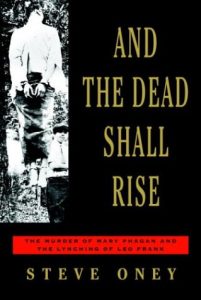
To my mind, a central element of the Frank case was the massive financial temptations being offered by Frank’s Jewish backers, and the huge number of Atlanta citizens, both high and low, who apparently shifted their positions on Frank’s guilt in eager hopes of capturing some of that largess. But although this obvious theme was heavily emphasized in the NOI book, Oney seems to mostly avoid this obvious factor, perhaps even for personal reasons. Print publications have suffered massive cutbacks in recent years and I noticed on the book flap that although Oney is described as a longtime Atlanta journalist, he had subsequently relocated to Los Angeles. Once I checked, I immediately discovered that Oney’s book had became the basis for an independent film entitled The People v. Leo Frank, and I wonder whether his hopes of capturing a sliver of Hollywood’s vast lucre may not have encouraged him to so strongly suggest Frank’s innocence. Would an account of Leo Frank as rapist and murderer ever be likely to reach the silver screen? The quiet influence of financial considerations today is no different today than they were a century ago, and this factor must be taken into account when evaluating historical events.
The NOI authors devote nearly all of their lengthy book to a careful analysis of the Frank case provided in suitably dispassionate form, but a sense of their justifiable outrage does occasionally poke through. In the years prior to Frank’s killing, many thousands of black men throughout the South had been lynched, often based on a slender thread of suspicion, with few of these incidents receiving more than a few sentences of coverage in a local newspaper, and large numbers of whites had also perished in similar circumstances. Meanwhile, Frank had received benefit of the longest trial in modern Southern history, backed by the finest trial lawyers that money could buy, and based on overwhelming evidence had been sentenced to death for the rape and murder of a young girl. But when Frank’s legal verdict was carried out by extra-judicial means, he immediately became the most famous lynching victim in American history, perhaps even attracting more media attention than all those thousands of other cases combined. Jewish money and Jewish media established him as a Jewish martyr who thereby effectively usurped the victimhood of the enormous number of innocent blacks who were killed both before and after him, none of whom were ever even recognized as individuals.
As Prof. Shahak has effectively demonstrated, traditional Talmudic Judaism regarded all non-Jews as being sub-human, with their lives possessing no value. Given that Frank’s backers were all followers of Reform Judaism, it seems quite unlikely that they followed this doctrine or were even aware of its existence. But religious traditions of a thousand years standing can easily become embedded within a culture, and such unrecognized cultural sentiments may have easily shaped their reaction to Frank’s legal predicament.
Influential historical accounts of the Frank case and its aftermath have contained lurid tales of the rampant public anti-Semitism visited upon Atlanta’s Jewish community in the wake of the trial, even claiming that a substantial portion of the population was forced to flee as a consequence. However, a careful examination of the primary source evidence, including the contemporaneous newspaper coverage, provides absolutely no evidence of this, and it appears to be entirely fictional.
The NOI authors note that prior to Frank’s trial American history had been virtually devoid of any evidence of significant anti-Semitism, with the previous most notable incident being the case of an extremely wealthy Jewish financier who was refused service at a fancy resort hotel. But by totally distorting the Frank case and focusing such massive national media coverage on the case, Jewish leaders around the country succeeded in fabricating a powerful ideological narrative despite its lack of reality, perhaps intending it to serve as a bonding experience to foster Jewish community cohesion.
As a further example of the widely promoted but apparently fraudulent history, the Jewish writers who have overwhelmingly dominated accounts of the Frank case have frequently claimed that it sparked the revival of the Ku Klux Klan soon afterward, with the group of citizens responsible for Frank’s 1915 lynching supposedly serving as the inspiration for William Simmons’ reestablishment of that organization a couple of years later. But there seems no evidence for this. Indeed, Simmons strongly emphasized the philo-Semitic nature of his new organization, which attracted considerable Jewish membership.
The primary factor behind the rebirth of the KKK was almost certainly D.W. Griffith’s overwhelmingly popular landmark 1917 film Birth of a Nation, which glorified the Klan of the Reconstruction Era. Given that the American film industry was so overwhelmingly Jewish at the time and the film’s financial backers and leading Southern distributors came from that same background, it could be plausibly argued that the Jewish contribution to the creation of the 1920s Klan was a very crucial one, while the revenue from the film’s distribution throughout the South actually financed Sam Goldwyn’s creation of MGM, Hollywood’s leading studio.
In their introduction, the NOI authors make the fascinating point that the larger historical meaning of the Frank case in American racial history has been entirely lost. Prior to that trial, it was unprecedented for Southern courts to allow black testimony against a white man, let alone against a wealthy man being tried on serious charges; but the horrific nature of the crime and Conley’s role as the sole witness required a break from that longstanding tradition. Thus, the authors argue not unreasonably, that the Frank case may have been as important to the history of black progress in America as such landmark legal verdicts as Plessy vs. Ferguson or Brown vs. Board. But since almost the entire historical narrative has been produced by fervent Jewish advocates, these facts have been completely obscured and the case entirely misrepresented as an example of anti-Semitic persecution and public murder.
Let us now summarize what seems to be the solidly established factual history of the Frank case, quite different than the traditional narrative. There is not the slightest evidence that Frank’s Jewish background was a factor behind his arrest and conviction, nor the death sentence he received. The case set a remarkable precedent in Southern courtroom history with the testimony of a black man playing a central role in a white man’s conviction. From the earliest stages of the murder investigation, Frank and his allies continually attempted to implicate a series of different innocent blacks by planting false evidence and using bribes to solicit perjured testimony, while the exceptionally harsh racial rhetoric that Frank and his attorneys directed towards those blacks was presumably intended to provoke their public lynching. Yet despite all these attempts by the Frank forces to play upon the notorious racial sentiments of the white Southerners of that era, the latter saw through these schemes and Frank was the one sentenced to hang for his rape and murder of that young girl.
Now suppose that all the facts of this famous case were exactly unchanged except that Frank had been a white Gentile. Surely the trial would be ranked as one of the greatest racial turning points in American history, perhaps even overshadowing Brown v. Board because of the extent of popular sentiment, and it would have been given a central place in all our modern textbooks. Meanwhile, Frank, his lawyers, and his heavy financial backers would probably be cast as among the vilest racial villains in all of American history for their repeated attempts to foment the lynching of various innocent blacks so that a wealthy white rapist and murderer could walk free. But because Frank was Jewish rather than Christian, this remarkable history has been completely inverted for over one hundred years by our Jewish-dominated media and historiography.
These are the important consequences that derive from control of the narrative and the flow of information, which allows murderers to be transmuted into martyrs and villains into heroes. The ADL was founded just over a century ago with the central goal of preventing a Jewish rapist and killer from being held legally accountable for his crimes, and over the decades, it eventually metastasized into a secret political police force not entirely dissimilar to the widely despised East German Stasi, but with its central goal seeming to be the maintenance of overwhelming Jewish control in a society that is 98% non-Jewish.
We should ask ourselves whether it is appropriate for an organization with such origins and such recent history to be granted enormous influence over the distribution of information across our Internet.
Exposed! How Britain’s anti-Semitism Scaremongers Operate
By Eve Mykytyn | Information Clearing House | July 10, 2018
This article about the British charitable organisation, the Campaign against Anti-Semitism (CAA), and its officers, Gideon Falter and Steve Silverman, examines events in England but ought to serve as a cautionary message for Canadians and Americans.
The article will delve into the corrosive methods of the CAA; review the manner in which this ultra Zionist group “discovers” anti-Semitic “incidents”; examine their inaccurate statistical “studies” and see how they seek to intimidate political parties, venues, the press and others; and look at the court cases which the CAA has prosecuted. In the guise of fighting anti-Semitism, the CAA has managed to manoeuvre British society into abdicating its core liberal values, intimidate the prosecutorial and judicial system, and silence criticism of Israel in both social media and the mainstream media.
The CAA does not just attempt to limit speech; it openly follows a scorched earth policy “that if someone commits an anti-Semitic act in the UK (including criticism of Israel)” the CAA “ensure[s] ruinous consequences, be they criminal, professional, financial or reputational”.
For example, in the last 18 months Britain’s largest political party, the Labour Party, has suspended and expelled over a hundred of its members for expressing their views on Israel or Jewish history. Presumably these dismissals act as a deterrent to others who might also wish to express their opinions. Hard as it is to believe, in 21st century Britain people have been imprisoned for trying to be funny…
The CAA’s “success” in Britain is not irrelevant to Americans. Despite the First Amendment, rules limiting speech have been creeping into our society, notwithstanding our constitutional protections.
Organisations not unlike CAA have been operating in the US for some time. In South Carolina criticising Israel is essentially prohibited on public university campuses, and in other states support for BDS (the Boycott, Divestment and Sanctions movement) will prohibit one from getting a government job or contract. Similar laws have been proposed in the US Congress. It is crucial that we resist this slide into controlled speech at the expense of our crucial values of free expression and tolerance.
Rowan Laxton
In 2006 Rowan Laxton was using an exercise bike alone on the mezzanine floor of a London gym when he saw a television report about an elderly Palestinian man killed by the Israeli assault on Gaza. Laxton allegedly exclaimed: “F…..g Israelis! F…..g Jews!” Gideon Falter (now head of the CAA) and William Lemaine, who were on a lower floor using weights, claimed to have overheard Laxton, and complained to staff at the gym.
The police were going to let Laxton off with a caution but, before it could be arranged, Falter found out that Laxton was a senior Foreign Office official and brought the story to half a dozen newspapers. The police decided to proceed with a prosecution.
Laxton was initially found guilty of “using threatening, abusive or insulting words or behaviour, or disorderly behaviour… within the hearing or sight of a person likely to be caused harassment, alarm or distress thereby…” aggravated by using abusive words that had a racial or ethnic element. Laxton was fined and removed from his Foreign Office position.
Laxton exercised his right to an appeal and a rehearing wherein the Crown Court found that Laxton did not say “f…..g Jews”, the comment on which the prosecution was based and which he had always denied. The court also found, as an alternative ground, that Laxton would have thought no one was within earshot.
The Daily Mail played a key role in ensuring that the case received national attention and went to trial, but seems not to have reported the appeal and acquittal at all. It is an open question of how Falter heard Laxton’s alleged outburst, if at the time no one was within earshot of Laxton. One reasonable assumption is that the court did not believe that Falter actually heard Laxton’s statement.
Eight years after the Laxton incident, Gideon Falter founded the Campaign Against Anti-Semitsm, a hardcore Zionist charity that advocates zero tolerance of, and vows to ensure “criminal, professional and reputational consequences”, to those it decides are anti-Semites.
Stephen Silverman
Stephen Silverman is the CAA’s “Director of Investigations and Enforcement” and has dedicated much of his time to ruining the intellectual and artistic careers of others. Silverman is himself a musician wannabe, and runs a music school in a London suburb.
In the last few years Silverman and the CAA have engaged in a relentless assault against artists, intellectuals, religious leaders and elected politicians operating in or visiting England. The “Director of Investigations” does not like ex-London Mayor Ken Livingstone, nor does he approve of a list of academics or church ministers who care for human rights or dare to disagree with Israel. The self-appointed inquisitor despises the hugely popular Labour leader Jeremy Corbyn. Silverman has made a number of attempts to ruin the music careers of both Alison Chabloz and Gilad Atzmon. In addition, Silverman takes it upon himself to write and call music venues demanding that they cancel Atzmon concerts claiming that Atzmon is a notorious anti-Semite.
Stephen Silverman, was exposed in open court in December 2016 as having been the Twitter troll @bedlamjones. As a Zionist troll, Silverman abused anti-Zionists, particularly women. His sadistic posts called for arrest and imprisonment in response what he considered to be “anti-Semitic” comments.
Silverman has also determined that Gordon Nardell, the man who has taken on the unenviable job of policing anti-Semitism within the Labour Party, is insufficiently sensitive to anti-Semitism. Apparently, according to Silverman, “Nardell has also turned his sights on Campaign Against Anti-Semitism, stating that our work to combat hatred directed at Jews by Labour members is “revolting” and results in anti-Semitism being “abused and belittled”.
For Nardell’s sin of distrusting the CAA, the CAA has demanded that “an independent and transparent disciplinary process… be instituted in the Labour Party”. The CAA’s website does not explain why the Labour Party need justify its own campaign against anti-Semitism to the CAA.
What is anti-Semitism?
UNESCO’s definition of racism is that it is “a theory of races hierarchy which argues that the superior race should be preserved and should dominate the others. Racism can also be an unfair attitude towards another ethnic group. Finally racism can also be defined as a violent hostility against a social group.” The traditional definition of anti-Semitism is the “criticising of, or discriminating against Jews for being Jews”. This definition is not substantially different from UNESCO’s definition of racism.
However, despite the fact that enforcing hate speech laws based on a traditional definition of racism would protect Jews as well as others, in December 2016 the United Kingdom followed other countries in adopting the “international definition of anti-Semitism”, which begins by saying: “Anti-Semitism is a certain perception of Jews, which may be expressed as hatred towards Jews. Rhetorical and physical manifestations of anti-Semitism are directed towards Jewish or non-Jewish individuals and/or their property, towards Jewish community institutions and religious facilities.”
The new “international definition” is troubling because it specifically targets speech and thoughts and fails to define what a “certain” perception of Jews is, and an expression of hatred towards Jews is cited, not to make the definition more precise but only as one possible example.
It is well worth reviewing the “examples of anti-Semitism” included in the “international definition” which are extremely broad and include, among other things, accusing a Jewish person of valuing Israel or his fellow Jews over his home country and the seemingly paradoxical provision prohibiting speech denying that Jews have the right to self-determination through Israel.
But if racism against one group is to be fought on a broader basis than other forms of racism, that extra protection ought to be to aid a group uniquely needing the state’s protection – an allegedly poor, downtrodden and persecuted group. It is of note that, in contrast to the downtrodden, Jews as a group have been extraordinarily successful at utilising the media and the courts and obtaining the power to “hold the feet of the government to the fire”.
If UNESCO’s definition aimed at defining racism as a universal problem, the “international definition” adheres to the idea that Jews are not a part of the universal, they are somehow different, their plight is unique.
Why do the Jews in particular need a broader definition of racial hatred? Why do Jews see a need to create a category of hatred that applies only to them? What is lacking in the UNESCO definition that is covered by the “international” one? The answer is that the “international definition” serves to restrain speech and restrict thought. It conflates the Jewish State of Israel with Jews as it vets a range of discourses such as criticism of Israeli politics, Jewish culture, Jewish history and Zionist ideology.
It is not surprising that this definition is espoused by some Zionist institutions. However, its adoption by so many countries is perplexing and begs an explanation. In a world in which free speech, freedom of association and freedom of religion are valued, there is a real question of why such a broad definition of anti-Semitism is appropriate and what exactly it is designed to accomplish.
Then there is the CAA, for whom the international definition is only a starting point. Their accusations of anti-Semitism go beyond even the very broad and over-inclusive definition of the “international definition”. If you find anti-Semitism in t-shirts, major party political gatherings or stupid pet videos, then the definition is very expansive indeed. Why would an organisation dedicated to fighting anti-Semitism be so interested in finding anti-Semitism in every possible utterance? It is clear that the CAA wants to stop any discussion of Jews, Israel or Jewish history in any but its prescribed manner. In its aggressive policing of speech, the CAA and others work to enforce Jewish power precisely as it is defined by Gilad Atzmon: “the power to suppress criticism of Jewish power”.
Freedom of t-shirt
While freedom of speech may be evaporating throughout the English-speaking world, at least we are assured that freedom of t-shirt is still protected in England.
Last year, the CAA’s website bemoaned that Edinburgh-based law graduate Sophie Stephenson won’t face criminal charges for wearing a Hezbollah t-shirt. The CAA wrote that: “On 1 July 2017, Stephenson tweeted a photograph of herself wearing a Hizballah t-shirt, explaining: “Went out to dinner with my family tonight wearing a Hizballah t-shirt.” And then, even worse, Stephenson confirmed: “I have a flag too.”
The CAA, in its zeal to fight anti-Semitism, reported Stephenson to the police, alleging that she had committed an offense under Section 13 of the Terrorism Act 2000. But despite the CAA’s urging, Scottish Police declined to act against the young “rebel”.
The CAA “considered undertaking a private prosecution” against Stephenson. However, its website lamented, “we were unable to secure enough funding to do so”. Following its report of the supposedly anti-Semitic/terrorist-loving Stephenson, the CAA called upon the public to “consider making a monthly donation to help fund Campaign Against Anti-Semitism” presumably to allow it to continue to harass Britons, accusing them of anti-Semitic behaviour, and interfering with their elementary freedoms including the right to wear rebellious t-shirts. Disturbingly, asking for donations in this context suggests that the CAA is attempting to cash in from its dubious anti-Semitic claims. Not exactly the ethical conduct you might expect of a charity.
Methodology, it is not!
The CAA claims to run “methodological” “research into anti-Semitism in British political parties”. Trolling and spying on elected British politicians on social media and public meetings, the CAA keeps a “record” of allegedly “anti-Semitic discourse and discourse that enables anti-Semitism, by officials and candidates in political parties”. This means that a Jewish organisation with a clear political agenda endeavours to monitor the British political discourse to restrain certain political opinions. The CAA’s actions prosecuting its farfetched “findings” are dangerous enough, but more troubling is its success in terrorising the British political universe into compliance with its dictates.
What are some “examples” of discourse that the CAA has claimed enable anti-Semitism and the dissemination of anti-Semitic ideas?
Ken Loach
Internationally acclaimed film-maker and Labour supporter Ken Loach told the BBC’s Daily Politics programme that he had been attending Labour meetings for 50 years and had “never in that whole time heard a single anti-Semitic word or a racist word”, and that allegations of anti-Semitism were a fallacy “without validation or any evidence”.
The CAA claimed that Loach’s statement brought to light a “discourse that enables anti-Semitism and the dissemination of anti-Semitic ideas”. How is Loach’s statement racist? Does it target Jews, identify Jews as a collective or advocate discrimination against Jews or anyone else? Is there even a criminal category or a showing of bias in which “not witnessing” conduct implicates one in that very conduct? How does not witnessing anti-Semitism make one into an anti-Semite? Does not witnessing a murder makes one a murderer? Under the CAA’s “rationale” anyone who fails to see the anti-Semitism they do is an anti-Semite.
Diane Abbott
Abbott ran afoul of the CAA when she said: “It’s a smear to say that Labour has a problem with anti-Semitism. It is something like a smear against ordinary party members.” The CAA claimed that “Abbott’s comments were widely condemned. The overwhelming majority of UK Jewish community bodies have expressed public concern about anti-Semitism in the Labour Party, including the chief rabbi.” Whether or not this statement is accurate, how is it that Abbott’s statement was misinterpreted as a criticism of Jews when it is clearly a defence of the Labour Party?
Ken Livingstone
The CAA has a long file on former London Mayor Livingstone, beginning in 1982 when the paper, the Labour Herald, of which Livingstone was co-editor, ran an unfavorable cartoon of the then Israeli Prime Minister Menachem Begin. According to the CAA, Livingstone’s most egregious anti-Semitic remark was his claim that in 1932 (Hitler came to power in 1933) Hitler had championed Jewish emigration to Israel (actually, then Palestine) and was “supporting Zionism before he went mad and ended up killing six million Jews”. The United States Holocaust Museum website generally supports Livingstone’s statement and reveals that until 1941, Germany encouraged Jews to emigrate and that 60,000 Jews left Germany/Austria for Palestine, a number second only to the number of Jews who went to the United States.
Livingstone rejected claims that he had brought the Labour Party into disrepute and said he was not guilty of anti-Semitism, but resigned from the party and acknowledged that his comments had upset Jews and offended others. “I am truly sorry for that,” he said.
Some of Livingstone’s critics were not satisfied with his apology for his truthful statement. Ruth Smeeth, a Labour lawmaker, described his behaviour as “grossly offensive to British Jews”. MP Smeeth’s reaction is bizarre. Is it anti-Semitic for Livingstone to discuss Jewish history? The Transfer Agreement between Hitler’s Germany and the Zionist Congress may be embarrassing for some Jews, but how is recounting history hate speech? MP Smeeth, the CAA and others claiming to be offended managed by ousting Livingstone to enforce their ironclad rule that certain Jewish history is “off limits”.
War on Labour
Following its anti-methodology, the CAA came to the conclusion that the British Labour Party is “eight times worse than any other party”. Not 5, 6 or 8.3 but exactly 8. What “evidence” supports this “finding?”
The CAA’s website publishes an “enemies list” of sorts, chronicling the alleged anti-Semitism of 39 members of the Labour Party. A striking number of the CAA’s complaints address statements about Israel, not about Israel as Jews, but about the actions of the country. To date, about 150 members of the Labour Party have been expelled for alleged anti-Semitism and there is a backlog of cases.
Dubious cases such as those cited here are treated by the CAA as “anti-Semitic incidents” that help the CAA feed the idea that England is rife with anti-Semitism. The British media have failed to do their job of investigating alleged incidents of anti-Semitism, and instead accept the CAA’s claims without questions.
Fiddling with numbers
Fiddler on the Roof may be emblematic of Eastern European Jewish folklore but fiddling with numbers is a symptom of contemporary Zionist politics in general and of the CAA in particular. The CAA compiles and disseminates information on anti-Semitism, basing its claims on methodology that is patently unreliable.
The “anti-Semitism audit” produced by the CAA purports to track incidents of anti-Semitism on an annual basis. The audit is a deeply flawed document, relying on data known to be unreliable and subjected to no proper statistical analysis.
Even the CAA’s use of the term “audit” is inappropriate. An “audit” is defined as “an official inspection of an… organisation’s accounts, typically by an independent body”. The CAA has no official or professional status as an auditor, nor would its methods be accepted by anyone in a position to conduct a professional audit.
The CAA has been advised by police forces that comparing police reports across jurisdictions and years leads to misleading results. The CAA’s anti-Semitism audit was heavily criticised in the Jewish media by statistics experts who noted that the CAA’s “methodology” was “flawed”, “amateurish” and “misleading”. But none of that stopped the CAA from promoting its manufactured “findings” in the mainstream media.
The CAA based its audit on gathering data from the police. But the CAA doesn’t enjoy free access to police files. Instead, it uses different techniques to gather information. This haphazard “methodology” creates crucial problems:
- Police forces in different regions of Britain use different standards to gather data regarding hate crimes.
- Police forces in Britain are presently in the process of revising how they collect their hate crime records so that data from one year may show different results than data from a different year even if the number of hate crimes remains constant.
- The CAA basically gathers information on the volume of incidents recorded that it considers to be anti-Semitic. But the CAA itself is actively engaged in increasing this volume. It frequently reports incidents to the police and urges other members of the Jewish community to follow suit. An interested body that actively contributes to the rise of reported anti-Semitic incidents cannot also claim to be objective in its “audit” that measures the rise of anti-Semitsm.
- While the CAA’s audit of anti-Semitism shows a nationwide rise of 14.9 per cent in anti-Semitic incidents between 2016 and 2017, this is based on data gathered by the CAA half of which shows wild year to year fluctuations of up to 1050 per cent. Such fluctuations defy any rationale. These statistical anomalies beg careful analysis that the CAA not only fails to apply – the CAA fails to address this drastic shift in number of reported incidents. The CAA’s study aggregates divergent data collected in different ways and calls that an “audit” of anti-Semitism in Britain. The flawed study was released to the British public with the help of the disgracefully gullible British media. The BBC, Sky, the Guardian and others reported the amateurish statistical “audit” to the British public without raising a single question as to its reliability.
The 2016 audit
In July 2017 the CAA published its 2016 annual audit of anti-Setmitic crimes in the UK. The audit’s first pages raise serious questions as to its reliability:
On page 4 it reads: “2016 was the worst year on record for anti-Semitic crimes”, reporting a 14.9 per cent rise in crimes “targeting Jews” nationwide. But a few lines below, the audit states that during the same period “violent anti-Semitic crimes fell by 44.7 per cent”. This difference in incidences appears contradictory.
The CAA admits that it doesn’t have an explanation for the drop in violent crimes: “We have considered various explanations; however at this point we do not find them persuasive.” (page 6). This drop occurred even though the CAA inflated the number of “violent incidents” by expanding the Home Office definition of violent incidents. (page 16) The CAA defined violent anti-Semitic acts as the combination of the Home Office categories of “homicide” or “violence with injury”, and the heretofore non-violent “assault without injury” and “racially or religiously aggravated assault without injury”.
This means that the audit conveyed the good news that, even using the CAA’s inflated category, the number of “violent anti-Semitic incidents” dropped. Strangely, the Jewish pressure group does not write that the drop in violent anti-Semitic crime is a positive finding.
Fishing for J words
Since the CAA doesn’t have an access to each police force’s records, it derives its statistics from police reports. When a police force does not flag anti-Semitic incidents, the CAA asks that police force to conduct a keyword search of its files:
For the purposes of this research, the keywords used were the following whole words: Jew, Jews, Jewish, Judaism, Semite, Semitic, Semitism, antisemite, anti-Semitic, anti-Semitism, Yid, Yids, Yiddo, or Yiddish. (page 17)
Some police forces made the CAA aware that their keywords method is not a reliable way to find anti-Semitic crime. “Not all incidents where ‘Jew’ is mentioned are anti-Semitic,” wrote the Northumbria police force. It also refers to the CAA exercise as a “fishing expedition”. The CAA ignored this caution and simply used as the number of incidents the data they had been warned were incorrect.
Duplicity vs methodology
The CAA employs inadequate and inconsistent methods of information gathering not only in its audit, but in its information gathering from Jews.
In 2017 the CAA made some shocking revelations:
- “One out of three British Jews were considering leaving the kingdom.”
- “Four out of five Jews saw anti-Semitism disguised as comments about Israel.”
- “Four out of five saw Labour as anti-Semitic.”
- “Half of British Jews didn’t trust the Crown Prosecution Service.”
And the source of these disturbing feelings? They came from the results of an online questionnaire found on the CAA’s website. The CAA’s findings were not even from as unbiased sample as the average FaceBook poll. Instead of revealing what British Jews think, the CAA “survey” revealed the opinions of its Zionist readers. It is outrageous to label the results of this exercise “statistics”. In fact, Jewish leaders who criticised the CAA’s duplicitous use of the “poll” were brutally silenced and slandered. Probably the most problematic result of the poll was that the British press reported it but did not point out that the CAA’s findings were based on a self-selecting sample.
Stupidity or duplicity?
Is the CAA a dysfunctional body of incompetent and clueless characters or is the CAA a group of consciously deceptive Zionists that deliberately deceives the British public? The following evidence suggests the latter.
As discussed above, the CAA 2016 anti-Semitsm audit is methodologically and factually a problematic document. The CAA was warned of this by different law-enforcement bodies such as the Northumbria police. The CAA audit uses its questionable data to show an increase in the volume of reported anti-Semitic incidents but still fails to prove an increase in anti-Semitsm. Does that mean that the CAA intended to produce a deceptive audit?
The CAA audit’s raw data (from page 24 onward) reveals extreme fluctuations in anti-Semitic incidents reported by police forces from 2015 to 2016, with year to year increases of up to 1050 per cent in some categories and drops of 80-90 per cent in others.
In Derbyshire, for instance (page 34), the audit shows an increase of 1050 per cent in non-criminal anti-Semitic incidents: from two in 2015 to 23 in 2016. This would mean that non-criminal anti-Semitic incidents rose in Derby 70 times more than the CAA’s own nationwide rate of 14.9 per cent. On paper, the situation in Derbyshire is almost a Shoah scenario. Did the CAA try to verify, as even elementary statistics would require, this enormous increase? Was there a pogrom reported in Derbyshire?
In Hertfordshire (page 44), they show an increase of almost 400 per cent in anti-Semitic crime and a surge of 800 per cent in non criminal anti-Semitic incidents. Again, there is no indication that the CAA tried to look into the cause of this improbable increase.
The explanation of the unreasonable rise was known to the CAA. West Yorkshire police notified the CAA that the recent rise in numbers of hate crime incidents “are predominantly associated with administrative change in relation to force crime-recording processes”. It was an administrative change, not an increase in anti-Semitism that led to the huge increase in the number of hate crimes recorded. So, despite the CAA’s knowledge of the reasons for the wild fluctuations, the CAA still dispensed the misleading numbers to the British public.
The raw police reports that the CAA’s audit relies upon reveal that 21 of the 46 reports showed fluctuations well beyond what could reasonably be likely (more than three times the CAA’s own nationwide figure of 14.9 per cent rise in anti-Semitic incidents). The CAA could claim that its mistakes were due to incompetence, that they simply copied and pasted police reports without thinking. But the last page of the audit reveals that this is not the case.
The CAA does admit that the numbers reported by Wiltshire police (page 73) were unreliable, as they showed a radical rise from one incident in 2015 to 139 incidents in 2016. This is an increase of 13,900 per cent in anti-Semitic incidents in a region with fewer than 540 Jews. The CAA discarded the data from Wiltshire as unreliable. But by deciding not to include the Wiltshire police report the CAA reveals that it doesn’t just copy and paste police data.
So, the CAA included some data and discarded others with no apparent standards. What statistical methodology did the CAA use when it decided to discard a rise in 13,900 per cent in anti-Semitic incidents in one jurisdiction and to include a rise in 1000 per cent, 400 per cent or even 50 per cent in others?
It is a basic tenet of statistical analysis that statistics from different sources cannot be combined or meaningfully compared without properly adjusting for different data gathering systems and methods. Deriving an overall percentage increase by averaging data derived by different systems is patently absurd. Nor is it accurate to compare different years from the same data source unless the gathering methodology is the same. The CAA’s audit compiles apples, oranges and bananas and treats them as identical. The extreme fluctuations in police reporting reveals that police force systems did exactly as the police force said it did and underwent significant reporting changes as the CAA admits in its introduction (page 3).
The alerts from the police forces that collection methods had changed means that the CAA should have known that its audit was flawed. This was also pointed out to the CAA by experts within the Jewish community who were highly critical of the audit.
Michael Pinto Duschinsky, a well respected political scientist, wrote a devastating commentary in the Jewish Chronicle about the CAA. As a holocaust survivor, Duschinsky writes, I have two commitments: “to combat anti-Semitism and other forms of racism and to avoid trivialising it by misleading allegations”. Duschinsky denounced the CAA for its “deeply flawed”, “misleading” and “amateurish” methods.
Of the self-selected CAA poll, Duschinsky wrote:
It was completely predicable that the questionnaire would produce the conclusion that one in four British Jews had considered leaving the UK… This was because the questions were so slanted and tendentious and because anyone who wished could complete the questionnaire… Not only did CAA incorrectly characterise its amateur questionnaire of Jewish opinion as a “poll” (thereby suggesting a statistically-valid sample), it then used overblown language in reporting it results.
Abuse of the judicial process
The hysteria over alleged anti-Semitism has led to trials and convictions for the crime of “anti-Semitism”. Cases that the Crown Prosecution Service (CPS) refused to prosecute two years ago have now been brought by the CPS after action from the CAA. Is the change in prosecutions a sign that the CPS now realises that it can obtain convictions it thought unlikely, does it result from a change in what the state considers to be “speech” crimes, or is the CPS placating the CAA?
Gideon Falter and the CAA have been instrumental in utilising a variety of techniques to force prosecution of “anti-Semitism”. Their campaign to restrain speech previously thought permissible has been successful in England as the following sampling of cases shows.
Jeremy Bedford Turner
Turner was recently sentenced to a year in jail after a jury convicted him of stirring up racial hatred during a 2015 speech in which Turner criticised Shomrim, a Jewish-only police unit funded by Britain, whose job it is to protect only Jewish neighbourhoods. Turner further opined the racist sentiment that he wanted Jews out of England.
The CPS declined to prosecute Turner’s speech as incitement to racial hatred. There is an “incitement to racial hatred” clause in the statutes but it is not all-encompassing, and it did not come close to making “anti-Semitism” illegal. The CPS’s policy guidelines on cases involving “incitement” clearly state that the language employed by a defendant must have been “threatening, abusive or insulting“. The courts have upheld the right to freedom of speech even when behaviour is, as in this case, “annoying, rude or even offensive without necessarily being insulting”.
Falter requested a “victim’s right to review” in reponse to the CPS’s decision not to prosecute. The request was denied on the basis that Turner hadn’t mentioned Falter, Falter did not personally hear Turner’s speech and therefore Falter couldn’t claim victim status. The CAA then instituted the process for judicial review of the CPS over its decision not to prosecute and, on the eve of a hearing in the High Court, the CPS agreed to quash its original decision, put a more senior lawyer on the case and proceeded to prosecute and convict Turner.
CAA head Falter claimed the verdict was a “damning indictment” not only of Turner, but of the CPS and its outgoing head, Alison Saunders. Falter said: “The real question is why the director of public prosecutions and CPS got this so dismally wrong.” Falter’s question conflates a jury verdict of “guilty” with proof that the CPS was misinterpreting the law.
Further in 2015, when Turner gave his speech, the United Kingdom had not yet signalled its willingness to stifle speech by adopting the “international definition” of anti-Semitism.
Alison Chabloz
Alison Chabloz, 54, of Derbyshire, was recently convicted on two counts of causing an offensive, indecent or menacing message to be sent over a public communications network. District Judge John Zani said he was satisfied the material was grossly offensive and that Chabloz intended to insult Jewish people.
The CPS initially declined to prosecute Chabloz’s speech, presumably because it was both satirical and political. The CAA launched a private prosecution against Chabloz. Private prosecutions are undertaken in the British system as a direct way for a citizen to institute a criminal case. The rules are intricate, but until recently such prosecutions generally dealt with complex business questions.
Under constant pressure from the CAA, the CPS took over the prosecution of Chabloz. The CAA had not utilised private prosecution in the Turner case since it was not present to hear the “slurs” and would have had no basis for private prosecution.
The songs that provoked Chabloz’s prosecution had been performed at a London Forum event (hardcore nationalist gathering) in 2016 and uploaded to YouTube. They included one song describing the Nazi concentration camp Auschwitz as “a theme park” and the gas chambers a “proven hoax”. This is a pretty clear example of provocative speech that most of us disagree with. However, does the state need to criminalise such speech? Won’t the “marketplace of ideas” call out Chabloz? I suspect the internet world would not allow her lyrics to go unchallenged.
Prosecutor Karen Robinson told the court: “Miss Chabloz’s songs are a million miles away from an attempt to provide an academic critique of the holocaust. They’re not political songs. They are no more than a dressed-up attack on a group of people for no more than their adherence to a religion.”
But is it a legal requirement that political song lyrics provide an “academic critique”? Must political satire be clearly defined as found by a court? It’s not clear that “Alice’s Restaurant” or “Fortunate Son” would pass this test.
Adrian Davies, defending, argued that: “It is hard to know what right has been infringed by Miss Chabloz’s singing.” The singer has defended her work as “satire”, saying many Jewish people found the songs funny.
The focus of the private prosecution brought by Falter was Alison’s comments criticising the narratives of Elie Wiesel, Irene Zisblatt and Otto Frank, in her song Survivors.
The authenticity of the tales of these three holocaust victims have been the subject of academic debate. The Anne Frank foundation recently admitted the diary had not been solely authored by Anne. Elie Wiesel’s wartime saga has been called into question over a number of issues. Under cross-examination, Falter was forced to admit that he had not actually read Zisblatt’s book, and so knew nothing about its accuracy, despite having brought a private prosecution to protect it from ridicule.
There are no specific laws against holocaust denial in the UK, even if that is what this was. Britain has resisted attempts to enforce a European Union directive outlawing holocaust denial. Falter seemed to differ from the Crown which said that the prosecution was not against mere questioning of the holocaust. Falter indicated that those who question the new holocaust religion should be prosecuted under the law and attacked professionally: that is, ruined financially.
Falter also claimed that it was “intrinsically offensive” for Chabloz to refer to Palestine being reclaimed “from the river to the sea”. But, of course, the question of whether Palestine ought to be reclaimed for its indigenous people is a political question and not one of race, so what exactly was her crime? Falter openly stated that he is intent on shielding Israel from criticism, and said of the pro-Palestinian aspects of Chabloz’s songs: “You want to silence her and stop her putting those messages out.”
All of this left inconsistencies in the prosecution’s case with regard to whether the truth/falsehood of Chabloz’s criticisms of Zisblatt, et al, were relevant, or whether instead the Crown was enforcing an unspoken law that no-one claiming to be a holocaust survivor can be ridiculed, regardless of truth/falsehood.
Adrian Davies, Chabloz’s lawyer, told Judge Zani that his ruling would be a landmark one, setting a precedent on the exercise of free speech. This is a particularly egregious precedent limiting speech since it is not clear what speech led to Chabloz’s conviction and the case therefore provides no insight to others on what speech must be avoided.
Gilad Atzmon
The case against Atzmon illustrates that in the present environment in Britain, you can be liable not only for anti-Semitism, but for questioning the methodology by which anti-Semitism is determined.
Falter appeared on Sky News on 16 July 2017 to explain how he, on behalf of the CAA, had brought a law suit against the Crown for failure to prosecute the anti-Semitic speech supposedly uttered by Jeremy Bedford-Turner. Falter further complained that his statistics on the incidence of anti-Semitism showed far more anti-Semitic incidents than the CPS claimed. Falter claimed, “our view [on anti-Semitism] is right and the Crown is wrong”.
Writing in response to Falter’s appearance, Atzmon wrote on his own website that: “We are asked to choose between two versions of the truth, that delivered by Falter who leads the CAA and basically makes his living manufacturing anti-Semitic incidents and the judicial approach of the CPS: a public body, subject to scrutiny and committed to impartiality.”
Atzmon pointed out that “Falter interprets condemnation of Israel and Jewish politics as ‘hate crimes”. Atzmon commended the CPS for upholding “freedom of expression”, and this in free speech’s most cherished exercise – political speech.
Atzmon noted that Zionism also benefits from anti-Semitism (even though it does not intentionally cause it) since Israel claims that it exists to provide shelter to all Jews. Comparing Falter and the CAA to Israel, Atzmon noted, “since a decrease in anti-Semitic incidents [could have] fatal consequences for Falter and his CAA’s business plan. They need anti-Semitism and a lot of it.”
Falter filed a suit against Atzmon, claiming libel and defamation. Falter’s complaint reads, in part: “In order to justify the existence of, and raise funds for, the CAA the Claimant (Falter) dishonestly fabricates anti-Semitic incidents, that is to say he characterizes conduct as anti-Semitic when he knows it is not, and knowingly exaggerates the prevalence of anti-Semitism and anti-Semitic activity.”
Falter complains that he was called a “devious fraud and a hypocrite”, even though neither word appears in Atzmon’s article. Falter further interprets Atzmon: “He [Falter] publicly campaigns against anti-Semitism but in reality his business plan is that he wants Jews to be hated so that he can make money.” In fact, Atzmon made the claim that Falter is a covert Jew hater who pretends to campaign against anti-Semitism.
In addition, Falter claimed that unless restrained, Atzmon would continue to publish similar words. Here Falter openly reveals that his lawsuit is not only against the words complained of, but an attempt to muzzle Atzmon.
The first stage of the lawsuit was a hearing before Justice Nicklin of the British High Court to define the issues created by the language complained of. In his ruling, the judge went beyond the complaint to determine that Atzmon’s words said that the claimant obtained funds through “fraud”.
Atzmon had not claimed that Falter committed fraud, and it was not clear that Falter’s misuse of statistics rose to the level of fraud, i.e. involving a criminal intent. The ruling made clear that a further defence before this justice would be pointless. The parties settled: Atzmon had to issue an apology and pay Falter £7,500 in damages, plus an additional amount in legal fees. The irony of forcing Atzmon to pay Falter based on the allegedly false claim that Falter seeks money for anti-Semitism begs recognition.
The Nazi pug
Earlier this year Mark Meechan, aka “Count Dankula”, was convicted and fined £800 for posting on YouTube a video of a dog he had trained to give a Nazi salute in response to the phrases “gas the Jews” and sieg heil. In case viewers worried that he was trying to turn canines into Nazis, one pug dog at a time, Meechan stated in the video that he wasn’t himself a Nazi but thought that what he had done was funny. It is a reasonable interpretation of this video that it ridiculed Hitler supporters as much as it was offensive to others.
The Scottish police arrested Meecham and charged him with posting “grossly offensive, anti-Semitic and racist material”. Sheriff O’Carroll said the right to freedom of expression was very important but “in all modern democratic countries the law necessarily places some limits on that right”.
Meecham pleaded not guilty but was convicted under the Communications Act in a crime that the court found was aggravated by “religious prejudice”. Although Meecham’s video was certainly tasteless and offensive, it is not clear how it fell into the obscure category of “religious prejudice”.
Meecham’s lawyer, Ross Brown, stated of Meecham, his difficulty, “it seems, was that he was someone who enjoyed shock humour… and went about his life under the impression that he lived in a jurisdiction which permitted its citizens the right to freely express themselves”. This perception is understandable; British humour is famous for its tastelessness. Monte Python mocked the church, Little Britain mocks the disabled and so on.
Why did Scottish law enforcement prosecute a silly offensive video of a dog? Is Scotland so crime-free that this is a matter worthy of its crime-fighting resources? It’s hard not to wonder if the same case would have been brought five years ago.
The First Amendment
In the United States, our freedom to speak is guaranteed by the First Amendment, which forbids Congress from making a law abridging free speech (now held to apply to the states as well). The First Amendment was enacted primarily as a defence against government power. The founders were concerned that the federal government exercise only enumerated powers and no more. Still, free speech is not unlimited: the United States limits some speech, including false commercial speech, defamation and incitement to violence.
No reasonable person enjoys confronting hate speech, but allowing free speech, even at its most obnoxious, frees us from self-appointed guardians of the discourse. Who would any of us choose to decide what speech ought to be allowed? Congress? Trump? Obama? The FBI? The NSA? Scientists? The courts? Or the CAA or ADL (Anti-Defamation League)?
The United States government has spent more money on Israel than on any other foreign country, and it is reasonable for Americans to be free to comment on where their money is spent. And yet we have laws that punish those who speak out against Israel, even though we have no such laws for criticising our own government or to protect the people whom we formerly enslaved.
While speech against Israel is not illegal per se, the US government, and states such as New York and Texas (among others) have chosen to punish criticism of Israel as anti Semitic. They do this by prohibiting state funding or business with any group that advocates boycotting Israel.
Canada also protects speech, but not “hate” speech. Under the urging of B’nai B’rith, Canada has prosecuted “anti-Semitic” speech as hate speech. As in the cases in England, it is difficult to ascertain which particular speech was forbidden. In a trial against blogger Arthur Topham, the prosecution cited all of Topham’s writings that were unfavourable to Israel or Jewish culture and hoped some of them stuck. They did, and Topham was convicted.
Despite Canada’s enforcement of its hate speech laws, Falter urged Canadian Jews to follow his example of aggressive prosecution. He stated, “I believe that Canadian [Jews] increasingly will be looking at their situation and asking, ‘Do we have a future in this country?’ And that’s a question they shouldn’t be having to ask at all.” Where is Falter’s evidence that Canadian Jews are asking if they have a future in Canada? Is he trying to lay seeds of alienation so that Jews in Canada will feel less like a part of Canada?
This raises the question of whether the CAA intensifies anti-Semitism by urging Jews to find anti-Semitism everywhere and to prosecute perceived anti-Semitism and “to ensure ruinous consequences, be they criminal, professional, financial or reputational”. The CAA uses the judicial system to achieve its aims, but its use of the law seems cynical as in its legal machinations the CAA deliberately disrespects the principle of freedom of speech that is ingrained in the law of Britain, the United States and Canada.
Eve Mykytin is a writer, editor and former financial lawyer
Featured Video

NEW FAUCI EMAILS EXPOSE ATTACK ON NATURAL IMMUNITY
or go to
Aletho News Archives – Video-Images
From the Archives
Fourteen Incredible Facts About 9/11
By Kevin Ryan | Dig Within | August 8, 2015
… What is known about 9/11 is that there are many incredible facts that continue to be ignored by the government and the mainstream media. Here are fourteen.
- An outline of what was to become the 9/11 Commission Report was produced before the investigation began. The outline was kept secret from the Commission’s staff and appears to have determined the outcome of the investigation.
- The 9/11 Commission claimed sixty-three (63) times in its Report that it could find “no evidence” related to important aspects of the crimes.
- One person, Shayna Steiger, issued 12 visas to the alleged hijackers in Saudi Arabia. Steiger issued some of the visas without interviewing the applicants and fought with another employee at the embassy who tried to prevent her lax approach.
Blog Roll
Recent Comments
Bill Francis on European leaders’ shift in the… seversonebcfb985d9 on Villains of Judea: Philip Esfo… loongtip on Report warns that ‘Jewish terr… Craig Nelms on New study shows that toxic gas… loongtip on A Funny Thing Happened on the… loongtip on EU free trade pact on hold as… John Edward Kendrick on Regime Change In Iran Is The F… Bill Francis on Australia Passes New Hate Spee… seversonebcfb985d9 on Australia Passes New Hate Spee… Bill Francis on Britain’s AI Policing Plan Tur… loongtip on Miami Beach Resident Questione… loongtip on Israeli agricultural export co…


 Aletho News
- Trump aims to create new UN and own it, Brazil’s Lula warns
- UN rapporteur says Israeli demolition of UNRWA compound reflects broader attack on UN system
- From Proxy to Disposable: The US Betrayal of the Syrian Kurds
- Six injured in stabbing spree at Kurdish rally in Antwerp, victims stabbed ‘indiscriminately’
- US pledges to ‘starve’ Iraq of oil revenue if pro-Iran parties join new government
- Is China a threat to Greenland?
- South Korea’s Prime Minister Proposes US Send Special Envoy to North Korea — Report
- Pentagon downgrades China threat, shifts focus to homeland, hemisphere
- Ireland Moves to Legalize Spyware Use by Police
- NEW FAUCI EMAILS EXPOSE ATTACK ON NATURAL IMMUNITY
- If Americans Knew
- Another Gaza baby freezes to death on Netanyahu’s watch – Not a ceasefire Day 106
- Oppose Israel’s Abuses While You Still Can
- UNRWA Heads Tell Ha’aretz: ‘We Don’t Radicalize Palestinians – Their Lived Existence Does’
- Plans Call for “New Rafah” Built in Israel’s Image — Without Palestinians
- Posing as priest, reporter is spat at many times, highlighting anti-Christian sentiment in Israel
- Leaked Documents: “Planned Community” in Rafah Would Force Palestinians Into Israeli Panopticon
- ‘Permits of Humiliation’: How Israel Strangles Christian Education in Jerusalem
- “The world sees death, destruction and injustice – and they see dollar signs” – Not a ceasefire Day 105
- War criminal Netanyahu kills 11 in Gaza, joins Board of Peace – Not a ceasefire Day 104
- Another baby dies of cold in Gaza, as Rafah crossing remains locked down – Not a ceasefire Day 103
- No Tricks Zone
- Polar Colding…Antarctica Saw Its Coldest October In 44 Years!
- New Study: Sea Levels Rose 20 Times The Modern Rate During The Roman Warm Period
- As German Gas Storage Dips Dangerously Low…Shortage Hardly Avoidable
- New Study: Brazil’s Relative Sea Level Was 2+ Meters Higher And SSTs 3-4°C Warmer 6000 Years Ago
- Philosopher Schopenhauer: Climate Science Certainty Stems From Stupidity, Ignorance
- New Study: Species Extinction Rates Declining Since 1980 – ‘Climate Change Is Not An Important Threat’
- Denmark Places Climate Protection Above Animal Welfare, Poisoning And Culling Cows
- New Study: Greenland Was 3-7°C Warmer And Far Less Glaciated Than Today 6000-8000 Years Ago
- German Media Report That Current Frigid Weather Can Be Explained By Arctic Warming!
- Berlin Blackout Shows Germany’s $5 Trillion Green Scheme Is “Left-Green Ideological Pipe Dream”
 Aletho News