The Pardoning of Hunter Biden’s Crimes in Ukraine
By Professor Glenn Diesen | December 3, 2024
Joe Biden promised not to pardon his son Hunter Biden, and was subsequently celebrated by the media for being principled and standing up for the rule of law. However, in a not-so-surprising move, Joe Biden reversed his position and issued a sweeping pardon with an incredible legal breadth. The pardon protects Hunter Biden from any crimes he may have committed over the past decade, since January 2014. This date is no accident, as it marks the beginning of the Biden family’s seedy and likely criminal activities in Ukraine.
Joe Biden was the Vice President when the West backed a coup in Ukraine in February 2014. The US sought to cement its control over Ukrainian resources for economic interests and as an instrument for political influence. Joe Biden involved his son to personally enrich himself and his family.
Three months after the coup, Hunter Biden and a close family friend of US Secretary of State, John Kerry, became board members of the Ukrainian energy company Burisma. The job paid $50.000 a month despite Hunter Biden having no experience or competencies in the gas industry or Ukraine. In 2017, the NATO think tank Atlantic Council and Burisma signed a cooperative agreement, with a focus on “energy security”.
Ukrainian General Prosecutor, Viktor Shokin, opened a corruption case against the Ukrainian energy company Burisma. Joe Biden subsequently intervened by having Ukraine’s General Prosecutor fired with the threat of withholding a $1 billion US loan guarantee. Shokin, complained that since 2014, “the most shocking thing is that all the [government] appointments were made in agreement with the United States”. Washington’s behaviour, according to Shokin, indicated that they “believed that Ukraine was their fiefdom”.
Vice President Joe Biden insisted that the decision was not related to Burisma or his son, as he falsely alleged that he has “never spoken to my son about his overseas business dealing”. However, Hunter Biden’s business partner in Burisma, Devon Archer, confirmed in July 2023 that Joe Biden was deeply involved in Hunter Biden’s business.
Scandals threatened Joe Biden’s campaign during the 2020 presidential election as the content of Hunter Biden’s communications was leaked. The criminal activities of Hunter Biden, which seemingly could implicate his father, could likely result in Trump winning the election.
The intelligence community intervened in the election as more than 50 former intelligence officials signed a letter, published in Politico, supporting the narrative that the Biden laptop scandal was a Russian disinformation campaign and did not prove the crime of the Biden family. Twitter and Facebook immediately censured the story, while tensions with Russia escalated.
One year later, in September 2021, Politico acknowledged the authenticity of the Hunter Biden emails and that Russia was not involved in any way. Mark Zuckerberg also admitted that Facebook had been pressured to censor Hunter Biden laptop story, which was direct election interference in favour of Joe Biden.
Joe Biden’s pardon of his son’s decade-long involvement in Ukraine implicitly entails pardoning Joe Biden himself. It is very unlikely that anyone will be held accountable for the Biden crimes in Ukraine, and there will be continued loss of trust in both the legal system and the media.
War and peace, NATO troops, sanctions & more | Hungarian FM’s interview
Sanctioning RT is ‘double standards and hypocrisy’
RT | December 3, 2024
Hungarian Foreign Minister Peter Szijjarto gave an exclusive interview to RT on Monday. Here’s the full text of the conversation:
Host Saskia Taylor:
Minister of Foreign Affairs and Trade of Hungary – it is a great honor to be able to sit down with you. Thank you so much for your time. I know that you are a very, very busy man. The first thing, let’s jump right in. I mean, in a recent interview, Prime Minister Viktor Orban, he said that Russia’s deployment of the missile Oreshnik, should be quote, “something to make us all think.” What was Budapest thinking that night, and do you think it will indeed compel your European counterparts to reassess their strategies when it comes to the war in Ukraine?
Hungarian FM Peter Szijjarto:
There has been a feeling with us for more than 1000 days now. And this feeling of ours becomes stronger and stronger every day. Especially when we experience such kind of events like launching that missile or when we experience decisions from others, which decisions should be considered as irresponsible. So day by day, our feeling that peace must be made is getting stronger and stronger. We understand that with every other day spent in this war, there are more people dying, more destruction taking place and more serious threat of escalation comes forward. So all these events show to us that the peace mission of ours must be strengthened, must be more and more active, and we have to do our best in order to help peace to come as soon as possible. Most likely starting with a ceasefire, which would give the chance to those who are involved to sit around the negotiating table and discuss about an agreement leading towards sustainable peace in our region.
Host:
I mean, one other soon-to-be leader, again, who has campaigned for peace in the way that the Hungarian prime minister has, is of course incoming US President Donald Trump. He’s beginning to pick his team, and Keith Kellogg has been tapped to be special envoy for Ukraine and Russia.
Now, I wonder, do you think that his appointment and his mediation could help bring a resolution to the conflict closer? And do you think that there will be sensitivity under a Trump administration to Moscow’s position? I only ask that because Keith Kellogg specifically has said on a number of occasions we need to, quote, “help Ukraine win.”
Szijjarto:
First of all, I think that it has to be put into consideration that a democracy must be built on the will of the people. And what happened on the presidential elections in the United States? There were two candidates with totally differing positions on many issues. But if I have to name the issue where the opinion of the two have totally been different, then I would name, of course, migration, but then the issue of the war in Ukraine. Donald Trump had a totally different vision compared to this war than Kamala Harris, because Kamala Harris was speaking about the continuation of the strategy of the American administration, impacts of which we are quite aware of, unfortunately. But President Trump represented a different approach, because he was speaking about making peace. And at the end of the day, the American citizens have made a very clear decision. So, to make peace in Ukraine, is basically a will of the American people as well. So what we have seen so far since the elections in the form of decisions of the still incumbent American administration is basically neglecting the will of the people, going against the will of the people. So in order to give the respect to the American citizens who made a clear decision in order to ensure safety, stability, and security in the central or eastern part of Europe, the only way to move forward is making peace. In this regard, the fact that the incoming president nominates a person, an experienced one, a respected one, with the aim of resolving the conflict, the war – I think it’s a good news on its own.
On the other hand, I have had the honor to accompany my prime minister on a number of meetings with President Trump, even after the war has broken out. And what I experienced during these meetings is that President Trump really believes in the necessity of making peace. And knowing him, because politics is a job of experience, so knowing him from his first term, whatever he would like to do, he makes his best in order to deliver.
I think that since the presidential election of the United States has taken place, we have the best hope for this war to come to an end since it had broken up. I would say that now we are faced with the most serious risk of escalation ever since this war has broken out, because the decisions made by the incumbent American administration and some Western European administrations since the US elections are very dangerous. We are living in the neighborhood, I don’t have the luxury to speak on behalf of a country an ocean away. I’m speaking on behalf of a country which is next door, and those measures which are bringing the danger of escalation are putting danger on us as well. We don’t want others to put danger on us. Therefore, we have now been strengthening our efforts when it comes to the peace mission. That’s why I came to Moscow today and I hope that my visit, my discussions today will contribute to peace to come as soon as possible.
Host:
Very interesting. You mentioned, of course, I don’t want someone else to put me at risk. But of course, when you’re part of a bloc like the European Union, it is a bit all for one and one for all – at least that’s the view from Brussels.
And I do want to get your take on something because President Putin believes, and actually, you know, I hear this from a number of guests on our programs – and what I am struck by is that they’re mainly actually from Germany – is that they say that Europe has lost its independence and has ceased to be a politically sovereign entity when it comes to international affairs specifically. And I just wondered, do you think that’s a reasonable assessment? And kind of just on a personal level, not just as a minister, but as an EU citizen, how that makes you feel?
Szijjarto:
Since this war has broken out it is obvious that most of the European leaders have lost their own voice in this regard. On many occasions I hear European leaders including my colleagues, foreign ministers or the high representative, speaking about speaking in a way that we always compare our contribution to the American one. I think it’s a very, very bad and harmful approach from the European perspective. Why? Because the war does take place here in Europe. There are European people dying, there is destruction taking place in Europe, and the European economy is faced with the impacts and the consequences of this war. Therefore, following the US policies without any kind of criticism, that’s a big mistake. I do believe that the strategy the European Union has been following in the recent 1000 days is a failed one, because Europe weakened a lot in the last almost three years.
I do believe that instead of globalizing the conflict, the right strategy would have been to localize it and to do everything in order to resolve it, to make peace, instead of pouring oil on the fire, which has been the case.
We are the only country in Europe or European Union which has not delivered weapons to Ukraine. We are the only country in NATO, almost the only one, which speaks openly about the red lines which must be kept seriously. We are the ones who speak openly about our assessment that NATO is a defense alliance and not an attack alliance.
In the upcoming days, we will have many debates in Europe, because we have OSCE ministerial coming, we have NATO ministerial coming. There will be tough debates and we are praying really hard that until the 20th of January nothing happens which would make things irreversible.
Host:
Well, you obviously talked there about how Budapest has become almost a lone voice in Europe and amongst many Western nations. When it comes to the Ukraine issue, I mean, Viktor Orban, he’s vehemently opposed to pumping Kiev with weapons. He’s also very, very critical of any idea of sending foreign troops to the country either as, quote, peacekeepers or actual combat units.
But then, like you all said, on the other hand, we do have players – and you didn’t say that, but I’ll say it – Baltic states, for example, or the UK, which they’ve gone down a different path.
They seem to be beating the drums of war, and they’ve even advocated for sending NATO troops there. When you’re in these meetings, what do you make of their arguments? And as we speak now, how great do you think the danger is of Europe being dragged into a full war with Russia? And I say full quite specifically because obviously many would argue that Russia is already at war with the West. I mean, Boris Johnson admitted it himself just a few days ago.
Szijjarto:
You might remember when our prime minister has visited Moscow during the summer, I was honored to accompany him on his meeting with President Putin and you might remember that huge attack on him. Huge attack on him, on his government, on our country for visiting Moscow and completing or trying to complete a peace mission. You see that there are many pro-war politicians in Europe. When I sit on the meetings of the Foreign Affairs Council with other foreign ministers and listen to some, I’m so sad that such kind of extreme pro-war positions are present that’s why we paid a lot of attention on what would be happening in the United States, because if President Trump had not won, now we might be involved in something which we would never want to be involved in. But with President Trump entering office, I think we have a good hope that peace will come instead of Europe would be dragged into a full-scale war. I think that even speaking about sending troops is extremely dangerous, because we have seen in the recent days, weeks and months, that even a piece of miscommunication or misunderstanding can be extremely dangerous. Therefore, the words of politicians have a weight even under peaceful circumstances, but in case of a war, it’s not just to wait, but it’s a risk as well. Everybody should be aware of that, and sometimes I have the feeling that it is not everybody who is aware of that, or even worse, they are aware, but they say this deliberately. That’s why I think that now everybody who is in favor of peace must increase the volume.
Host:
I mean, Hungary has become a bit of a rogue actor in Brussels, if you don’t mind me saying that.
Szijjarto:
Black sheep!
Host:
Black sheep. No, well, we love black sheep here, so we’re very happy about that. But advocating for economic neutrality, like you’re coming here, business is business, but also against bloc confrontation, whether that’s against Russia, whether that’s against China, for example, as well.
How difficult has it been to resist the pressure? And just from an insider’s perspective, I understand you can’t give us all the secrets of what goes on, but just a sense of really how much people demand that one toes the line?
Szijjarto:
It’s a huge hypocrisy there, because those who are advocating against us with those who usually compete for those investments which are coming from China to Europe. Currently, 44% of all Chinese investments targeting Europe are now targeting Hungary, and that makes a lot of other countries very, very jealous. Why? Because these investments are very modern ones, these investments are investments into the future, these are state-of-the-art, creating thousands of new jobs, offering good salaries. Other countries want that as well, so while the German foreign minister speaks about decoupling, de-risking, of Western and Eastern economies. If you come to Hungary, you see the Chinese and the German factories being constructed next to each other. You see the Chinese companies supplying the Germans, making them successful, vice versa, this is how it works normally on the field of everyday life. For us, economy and energy must not be a matter of political ideology, this is physical and mathematical reality. We don’t let ourselves to be dragged into a debate on philosophical basis, because, for example, energy.
I mean whether you can heat your house or flat, whether you can run your economy with a press conference, with a philosophical debate, with a press statement? It’s impossible. With gas, with oil, with nuclear fuel? Well, that’s the way. Therefore, for us, economic neutrality is common sense. Don’t confuse things which have nothing to do with ideology and political approach.
Host:
And of course, it’s usually the average person who pays the price of ideology. Look at Germany’s industrial…
Szijjarto:
Look at the sanctions, look at the sanction regimes. The sanction regimes of the European Union ended up in extremely high inflation, extremely high energy prices, food prices, and these are all paid by the citizens, by the people.
Host:
…Volkswagen shuttering three factories, laying off potentially tens of thousands, Ford moving some of its production facilities outside of the EU…
Szijjarto:
While Mercedes is building its second factory in Hungary, while BMW is constructing its new factory in Hungary, while the biggest electric battery manufacturers are constructing their factories in Hungary. It might make sense to think about why.
Host:
I’m sold on Hungary – I’m moving to Hungary. Turning now to another big story that I think I really would like to touch upon. Quite a violent one too, the events that are unfolding in Georgia, in Tbilisi. Four nights, four or five nights of terrible protests. What’s the view from Budapest on all of that?
Szijjarto:
Very simple. If it had been the opposition to win that election, there would be no protests, there would be no external pressure, and everybody would praise the fantastic shape of the Georgian democracy. But it’s not Brussels, it’s not Washington, it’s not Berlin, it’s not Paris to decide, but the Georgian people. The Georgian people made a very clear decision. High turnout, more than 50% support to the ruling party, that should be respected.
My problem is, that this is very general in Europe. In the case it is not the liberals to win an election, the democratic nature of the whole country and the whole political system is being questioned immediately. If it is liberals to win, everything’s fine. If it’s patriots to win, if it is conservatives to win, if it is right-wing to win, the nature of democracy is immediately questioned, and this is totally unacceptable. Look at our case, we have been under attack for the last 15 years in the European Union, we have been under financial sanctions. Why? Because we are not ready to speak according to the liberal mainstream, to act according to the liberal mainstream. We are conservative, patriotic, for us national interest is number one. For us, family consists of a mother and the father and the children, where father is a man, mother is a woman.
Host:
And now you’re in EU court because of it.
Szijjarto:
We protect our children, we protect our country, we protect our border, and we are under financial sanctions. If the opposition had won in Georgia, everybody would be so happy with the fantastic shape of the Georgian democracy. That’s the case.
Host:
And of course, with your eastern neighbor, Romania, an interesting situation there is also developing. It’s kind of election season. Parliamentary elections seem to have gone to the pro-EU, pro-Atlantic direction party, but the presidential vote is already a bit scandalous, the first round, because an anti-war NATO critic won and immediately we heard calls, “foreign interference, he’s pro-Russia,” a vote recount was ordered and we’re expecting a decision from the top Romanian court about whether the vote should be annulled at all.
I mean, what does that say about the state of democracy, but also, of course, the mood amongst Romanians?
Szijjarto:
First of all, for us Hungarians, the parliamentary elections were more important in this regard, and the party of the Hungarians has achieved fantastic results, above 6% of the votes, making a very strong representation and a strong voice of the Hungarians in the Bucharest parliament. That’s very, very important. I think we should leave it to the Romanians to decide in the second round whom they want. I think that mutual respect should come back to international political life, and I usually refrain from making comments on domestic issues of other countries because, they are their citizens. They have to make decisions, as there are Hungarian citizens making decisions about the future of Hungary, which should not be questioned and challenged by anyone. For us, the great news is that the Hungarians made a good performance on the parliament elections and the Romanians will decide soon on the second round of the presidential election.
Host:
And closer to home for you, something that’s kind of developing at the moment. Hungarian media citing intelligence services, they’ve reported that they’re in touch with their Slovak counterparts discussing possible threats of attacks to energy infrastructure. Of course, we saw on Sunday that a part of the Druzhba pipeline – very important of course for Hungarian energy security – but a part in Poland was damaged. I mean, who… I mean I know, I understand you don’t want to hypothesize, but fine, then I’ll ask you, what could possibly be the goal behind actors who are concocting these kinds of plots?
EU country investigating ‘sabotage plot’ targeting Russian oil supplies – media
Read more EU country investigating ‘sabotage plot’ targeting Russian oil supplies – media
Szijjarto:
Since the Nord Stream was blown up, we have to take the issue of protection of critical energy infrastructure extremely seriously, and it’s really outrageous, that even until the very day it was not investigated seriously who has committed a terrorist attack against critical European infrastructure.
Since then, we have to be aware of the risk being put on the energy infrastructure in our neighborhood, we have to be attentive, we have to be aware, we have to take care of this. And yes, Druzhba pipeline is vital from our perspective, no question. And I do hope that all countries where this pipeline runs through, do their best in order to prevent any such attacks.
Host:
And finally, I’m sure many would consider you a very brave man, Mr. Szijjarto, because here you are in Russia, the most sanctioned country on Earth, not just in the winter, which is always a brave move, but also of course at a time of war. And you’re talking to me, you’re talking to RT, which apparently is the global media pariah, so much so that the British Ministry of Defence apparently has got a special unit dedicated to trying to silence us. We’ve been banned, we’ve been blocked, we’ve been smeared. What was your reaction when Europe took RT off of the airwaves? And how did it tally with, of course, the principles of free speech, which Brussels claims at least to champion?
Szijjarto:
Of course, this is double standards and hypocrisy because those Europeans who love to teach everyone. They love to refer certain values, among them freedom of speech and freedom of media. And they usually attack others based on those principles. But when they look at themselves, they cannot be too self-confident either.
So for us sanctioning church, sports, media, energy always raises serious question marks. And I do hope that soon we will get rid of all these sanction measures because they have caused more harm to the European Union than to Russia, I guess.
South Lebanon Bombed Church
Craig Murray | November 30, 2024
At dusk, I visit the old church which Israel bombed, murdering 15 first responders. Israel has killed over 220 medics and paramedics in Lebanon.
Desperate Escalations in Middle East & Ukraine
Alastair Crooke, Alexander Mercouris & Glenn Diesen
Glenn Diesen | December 1, 2024
I had a conversation with Alastair Crooke about the escalating situation in the Middle East and Ukraine. Thousands of Turkish-backed jihadists invade Aleppo immediately after the ceasefire between Israel and Lebanon. Russia’s Oreshnik missiles change NATO’s calculations. The commitment to deeply flawed narratives in the Middle East and Ukraine results in miscalculations and failure to pursue course correction.
Watch at Odysee
Can Europe Return to Reason & Reverse Its Decline?
Jeffrey Sachs, Alexander Mercouris & Glenn Diesen
Glenn Diesen | Nov 27, 2024
I had a conversation with Jeffrey Sachs and Alexander Mercouris about the political changes in Europe. The optimism of the European project as a region of peace and prosperity is long gone. The objective had been to resolve conflicts on the continent peacefully and use collective bargaining power to establish greater economic and political independence. Instead, the continent is experiencing war, de-industrialisation, socio-economic and political instability, excessive dependence on the US, and growing irrelevance in the wider world. What went wrong and can the decline be reversed?
The rest of the world adjusts to the emerging multipolarity with a multivector foreign policy by diversifying economic connectivity to improve economic competitiveness and enhance political autonomy. In contrast, the Europeans have subordinated themselves completely to the US and thus suffer from economic decline and political subordination. Declining rationality is also a clear problem as the Europeans pursued policies towards Russia that they knew would put them on a collision course with Russia. Instead of pursuing course correction, the proxy war with Russia increased the security dependence on the US, which enabled Washington to impose bloc discipline. The recovery of Europe requires reversing the militarisation of dividing lines in Europe, and diversifying economic ties to avoid excessive dependence on any one state or region.
NATO Contraction – Part 23 of the Anglo-American War on Russia
Tales of the American Empire | November 21, 2024
Previous episodes of this series explained NATO’s senseless expansion that threatened Russia and caused a disastrous war in Ukraine. The plot to add Ukraine to NATO failed. As Russian troops advance to occupy all of Ukraine to secure it as a close ally, nearby nations may choose to join the prospering Russian led Eurasian Economic Union. Russia may encourage Ukraine’s neighboring nations to join its economic block with a return of Ukrainian land seized by the Soviets.
The loss of Eastern Europe would be a huge setback for the Anglo-American empire as members leave NATO and the EU to trade freely with Russia and China, or join a new Hungarian led Eastern Europe economic union that does not support EU and Anglo-American sanctions nor imperial adventures in Africa and Asia. This is likely to happen if Russian troops reach Ukraine’s western border to open the door to the east. As a result, the Anglo-American empire may risk World War III and send NATO troops into Ukraine to block further Russian advancement and halt a rebellion by its vassal states.
_________________________________
“As EU Confirms Economic Punishments On China, U.S. Panics Over Impending Iran Oil Attack”; Sean Foo; YouTube; October 5, 2024;  • As EU Confirms Economic Punishments O…
“Why EU’s Baltic States Feel the PAIN and MISERY From Their Sanctions on Russia”; SCO & BRICS Insight; May 28, 2024; • Why EU’s Baltic States Feel the PAIN …
“In Russia’s shadow: The Baltics wait for Europe’s strategic new railway”; Lisa Louis; BBC; November 10, 2024; https://www.bbc.com/news/articles/cx2…
Related Tale: “The American Colony Called Germany”; • The American Colony Called Germany
“How the US Forced Germany to Attack China (and Kill its Own Economy)”; Cyrus Janssen; YouTube; March 12, 2024; • How America Destroyed the German Economy
Related Tales: “The Anglo-American War on Russia”; • The Anglo-American War on Russia
The US Becomes Directly Involved in the War Against Russia – Now Entering a New Stage of the War
Colonel Douglas Macgregor & Professor Glenn Diesen | November 20, 2024
Colonel Douglas Macgregor shared his perspectives on Biden’s decision to authorise long-range missile attacks on Russia.
Why did Biden decide to escalate the war in such a reckless manner during his final weeks in office? Has the US become directly involved in the war as it operates the missiles used to attack Russia? Putin approved the new nuclear doctrine, however, how likely is Russia to use nuclear weapons in response to the US/Ukrainian attack with long-range missiles? What will Trump do?
Has Biden authorised long-range missiles to save Ukraine or sabotage Trump?
Professor Glenn Diesen on The Spectator | November 18, 2024
I discussed Biden’s decision to strike Russia with long-range missiles with Svitlana Morenets at The Spectator.
My position in this debate was that these missiles are not intended to turn the tide of the war, rather the purpose seems to be to sabotage Trump’s efforts to end the war. Obama similarly escalated tensions with Russia with sanctions, closure of a Russian consulate and expulsion of Russian diplomats before he left office to make it more difficult for Trump to “get along with Russia”. Biden’s actions are much more dangerous as this marks the start of a NATO-Russia War.
Arguing that Ukraine has the right to defend itself is very manipulative, as the main issue is that NATO crosses the line from proxy war to direct war. These are American long-range missiles, their use is entirely dependent on US intelligence and targeting, and American soldiers will operate these weapons and they will be guided by American satellites. This is an American attack on Russia, the world’s largest nuclear power. Putin has warned it will be interpreted as the start of a NATO-Russia War, and he has committed Russia to retaliate.
Rant: This Isn’t Scientific, and It Isn’t American
Truthstream Media | November 10, 2024
Truthstream Media Can Be Found Here:
Our First Film: TheMindsofMen.net
Our First Series: Vimeo.com/ondemand/trustgame
Site: TruthstreamMedia.com X: @Truthstream
News Backup Ch: Vimeo.com/truthstreammedia
DONATE: http://bit.ly/2aTBeeF
Newsletter: http://eepurl.com/bbxcWX
Featured Video
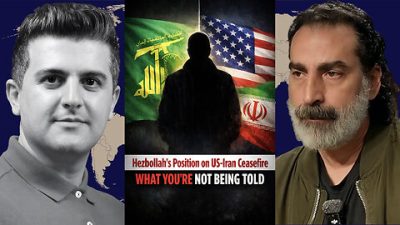
Laith Marouf: Hezbollah’s position on US-Iran ceasefire
or go to
Aletho News Archives – Video-Images
From the Archives
Is Israel to blame for the Iraq War?
American Goy | March 10, 2008
I am so tired of this old canard that “Israel had nothing to do with USA’s war with Iraq – in fact, it officially advised America against it”.
Bullshit. … continue
Blog Roll
 Aletho News
- Laith Marouf: Hezbollah’s position on US-Iran ceasefire: What you’re not being told
- Israel’s priority lies in destroying chances of peace between Iran, US: Ex-UN nuclear chief
- Ceasefire for all or for none: Iran shuts Hormuz over Lebanon attacks
- Strait of Hormuz is Iran’s ‘nuclear weapon’ that forced US retreat: Medvedev
- Energy crisis will last for months – Kremlin envoy
- Europe’s quiet role in the war on Iran
- Forty days that shook the Empire: How Iran turned the tables on US and prevailed
- Netanyahu unilaterally declares Lebanon outside of ceasefire deal
- Israeli leaders: ‘Not a single goal’ achieved in war with Iran
- What on earth just happened? Trump, Iran, and the unlikely ceasefire
- If Americans Knew
- Gazans face a triple crisis: severe shortages of water and bread, healthcare in tatters
- NY Times reports how Netanyahu took the US into Iran War
- A sigh of relief over Iran, but Gaza and Lebanon in dire straits – Daily Update
- Thousands dead and neighborhoods razed to the ground: Aid agencies fear southern Lebanon is becoming the new Gaza
- The war the US is fighting for Israel could cost trillions
- ‘Cigarette Burns, Nail Wounds’: Toddler Tortured in Gaza to Coerce Father
- Trump Says US Sent ‘a Lot of Guns’ to Protesters in Iran
- Israeli forces destroy 17 UN peacekeeper cameras in south Lebanon
- US-Israeli strikes ‘completely destroy’ synagogue in Tehran
- Archbishop for US Military Says Iran War Is Unjust Under Catholic Teaching
- No Tricks Zone
- An Inconvenient Tree: Uncovered In Alps… Europe Much Warmer Than Today 6000 Years Ago
- New Study Reports A 60% Slowdown In Greenland’s Ice Loss Rate In The Last Decade
- Low Intensity Tornado Wrecks Major Solar Farm, Creating A Potential Toxic Dump
- New Study Finds Warming Saves Lives…Cold Temperatures 12 Times More Deadly Than Excess Heat
- German Science Blog Accuses PIK Climate Institute Of Hallucinating Climate Tipping Points
- Devastating Assessment Of Comirnaty Vaccine By Former Senior Pfizer Europe Toxicologist
- New Study: CO2 Is ‘Effectively Negligible’ As An Explanatory Climate Change Factor Since 2000
- Former Pfizer Toxicologist Dr. Helmut Sterz Tells Bundestag Hearing Pfizer Vaccine Should Have Never Been Approved
- Energy Expert: Germany’s Nuclear Phaseout Was A “500 Billion Euro Mistake”
- New Research: South Australia’s Mid-Holocene Sea Surface Temperatures Were 4°C Warmer Than Today
 Aletho News