Hezbollah denies any links to arrestees in Damascus countryside
Al Mayadeen | September 11, 2025
Hezbollah has denied the Syrian Interior Ministry’s claim that several individuals arrested in the western Damascus countryside are members of the group.
In a statement issued by its Media Relations Office on Thursday, Hezbollah reiterated that it does not have any presence or any activity within Syrian territory, asserting that it is “deeply committed to Syria’s stability and the security of its people.”
This follows remarks by the head of internal security for the Damascus countryside governorate, Brigadier General Ahmad al-Dalati, who alleged that security forces arrested a cell operating in the western Damascus countryside towns of Sa’sa’ and Kanakir, which he claimed was affiliated with Hezbollah.
Al-Dalati further claimed that security forces had seized rocket launch platforms, 19 Grad-type rockets, anti-tank missiles, a number of individual weapons, and large quantities of various types of ammunition.
Not so new accusations
Syria has previously leveled similar accusations against Hezbollah, which consistently denies having any involvement or presence on Syrian soil.
On July 13, Hezbollah categorically denied similar allegations made by Syria’s Interior Ministry that one of the individuals arrested in Homs at the time was affiliated with the Lebanese Resistance group.
In a statement issued Sunday by its Media Relations Office, Hezbollah said it has “no presence or activity in Syria” and rejected any connection to local events or conflicts.
No involvement in Syria events
On March 8, Hezbollah issued a firm denial of media reports that claimed it was involved in the ongoing conflict in Syria, as a war monitor reported that recent violence had killed more than 500 people from the country’s Alawite minority community.
In its statement, Hezbollah’s Media Relations Office urged media outlets to refrain from falling for disinformation campaigns that serve questionable foreign agendas, asserting that “some parties are keen to drag Hezbollah’s name into the events taking place in Syria and accuse it of being a party to the conflict.”
The Lebanese Resistance group further called on media outlets to uphold accuracy in their reporting and to avoid being drawn into politically motivated disinformation campaigns that serve foreign interests.
US House votes to repeal president’s Middle East war powers
Al Mayadeen | September 11, 2025
In a significant move to reclaim Congressional authority over military engagement, the US House of Representatives voted on Tuesday to repeal decades-old laws that authorized war in the Middle East.
The 261-167 vote represents a bipartisan push to rescind the 1991 and 2002 Authorizations for Use of Military Force (AUMFs), originally enacted ahead of the Gulf War and the 2003 invasion of Iraq.
The repeal was adopted as an amendment to the annual National Defense Authorization Act (NDAA) and is being hailed as a victory for war powers reform advocates, who argue that outdated authorizations enable unchecked presidential use of military force.
Long-awaited win for war powers reform advocates
The amendment was co-sponsored by Rep. Chip Roy (R-TX) and Rep. Gregory Meeks (D-NY) and garnered support from 49 Republicans and 212 Democrats. Advocates argue that keeping these authorizations in place enables future administrations to bypass Congress in deploying US military power.
“We don’t need to have Congress effectively modern-day declaring war and leaving it in place for a quarter of a freaking century, or in this case, 34 years,” said Roy.
Meeks added that he was “prepared to fight” in upcoming Senate negotiations to ensure the repeal becomes law.
Pushback from opponents
The proposal had an uncertain path to passage. Initially excluded from the package of amendments allowed for floor debate, the measure was added only after an unusual procedural win in the House Rules Committee. Republicans Ralph Norman (SC), Morgan Griffith (VA), and Chip Roy broke with their party to help Democrats force a debate on the amendment.
Not all lawmakers welcomed the repeal. Rep. Joe Wilson (R-FL) warned that revoking the war powers laws would “tie the president’s hands” in responding to regional threats, including resistance movements in Iraq.
Despite these concerns, the amendment passed with bipartisan backing, though deeper divisions remain over broader defense policies.
Wider debate over executive military power continues
While the vote represents a symbolic step toward limiting presidential war authority, critics note that the repeal will not affect recent military actions, including President Donald Trump’s alleged strike last week on a vessel in the Caribbean he claimed was for smuggling drugs.
The war powers repeal is expected to become a central issue in House-Senate negotiations over the final defense policy package. Although both chambers have voted in recent years to repeal the 2002 Iraq AUMF, no repeal legislation has yet been enacted into law.
Background on AUMFs
- 1991 AUMF: Authorized military force during the Gulf War under President George H. W. Bush;
- 2002 AUMF: Enabled the 2003 invasion of Iraq under President George W. Bush;
- 2014: Former President Barack Obama used the authorization to justify airstrikes in Iraq and Syria;
- 2020: US President Donald Trump used it in his first term to greenlight the airstrike that killed the IRGC’s Quds Force commander General Qassem Soleimani in Baghdad.
While former President Joe Biden never formally used the authorization, his administration argued it was important to keep it intact to respond to any future threats.
Why Did Qatar’s Air Defenses Fail During Israel’s Attack?
By Ekaterina Blinova – Sputnik – 10.09.2025
The missiles fired by Israel could have been intercepted by Qatar’s US Patriot systems. Russian military expert Yuri Knutov weighs in: the Patriots were simply turned off by the US.
Patriots Offline
“The main feature of these systems is their close integration with airborne early warning and control aircraft (AWACS), satellites, and command centers that provide targeting data,” Knutov tells Sputnik. “In addition, they have a [remote] shutdown feature to prevent accidental friendly fire.”
This shutdown feature is problematic: Turkiye refused to purchase the Patriot specifically because the American side could disable these systems at any moment, and therefore preferred the S-400, according to the pundit.
US Didn’t Defend Qatar
Apart from using Patriots, Qatar hosts the US’ largest military base in the Middle East.
“According to the agreement between Qatar and the US, the Americans were, of course, supposed to defend Qatar’s airspace by opening fire on Israeli aircraft. However, this did not happen,” Knutov says.
The US military knew about the incoming Israeli aircraft yet took no action, effectively allowing them to operate freely against the Hamas delegation invited to Qatar for negotiations. The US was fully aware of this.
Arab countries — and not just them — should take note: wherever US Patriots are used, the US can disable them at any moment, leaving their skies completely defenseless.
US Always Sides With Israel
“This is undoubtedly a scandalous situation, given that Qatar is a close US ally and had promised to invest billions in the American economy,” Knutov says. “The Americans warned Qatar of the attack only ten minutes after it had taken place.”
Appeasing the US is futile — they always side with Israel.
Political Scene in Lebanon: Meetings Confirm Failure of Anti-Resistance Scheme
Al-Manar | September 8, 2025
Since the council of ministers convened at Baabda Palace on September 5 and decided to curb the process of targeting the resistance arms, political tensions in Lebanon started to slide.
The regular meetings between the senior officials in Lebanon was resumed with the House Speaker of Parliament Nabih Berri’s visit to Baabda Palace on Monday
Speaker Berri reviewed the general situation with President Joseph Aoun, affirming that everything is fine.
“With the blessings of Our Lady Mary, everything is fine.”
The House Speaker on Monday also met in Ain el-Tineh with Lebanese Army Commander, General Rudolf Haykal, who presented the military plan to confine weapons under the condition of the Israeli commitment to the ceasefire,
Commenting on the recent parliamentary session, Head of Hezbollah’s parliamentary bloc leader Mohammad Raad said the September 5 outcome signaled a retreat by many in government who realized the earlier arms decision had reached a dead end.
“They found a formula to delay implementation without fully withdrawing from their decision. It’s not a solution—it’s simply a pause,” Hezbollah’s MP asserted.
Raad asserted that Hezbollah’s weapons are “more legitimate than the government itself,” citing the group’s right to defend Lebanese land under national and international law.
On your knees: This EU move has just revealed the scale of their insignificance
In 2018, Europe swore it would shield the Iran deal from Trump. In 2025, it brought Trump’s ‘maximum pressure’ back under their own banner.
By Farhad Ibragimov | RT | September 8, 2025
Back in 2018, Europe blasted Donald Trump for pulling out of the Iran nuclear deal. Paris, Berlin, and London warned of a looming crisis in the Middle East and insisted the Joint Comprehensive Plan of Action (JCPOA) was the only safeguard against another regional war. They even rolled out a special financial vehicle, Instrument in Support of Trade Exchanges (INSTEX), to shield trade with Tehran from US sanctions. For a moment, it looked as if Europe was finally ready to assert its own strategic autonomy.
Seven years later, the picture couldn’t be more different. Britain, France, and Germany have triggered the snapback mechanism – a procedure written into UN Security Council Resolution 2231 back in 2015. On paper, snapback is a technical clause: if one of the deal’s signatories claims Iran is in breach, all the pre-2015 UN sanctions come rushing back. In practice, it’s a political bombshell. The very governments that once positioned themselves as defenders of the deal are now taking the first steps to dismantle it.
How snapback works
Snapback is a built-in device of Resolution 2231: once a party to the deal files a complaint, a thirty-day clock starts ticking. If the Security Council can’t agree to keep the sanctions lifted, the old restrictions automatically spring back into place – no new vote, no vetoes, just the force of the mechanism itself snapping shut.
And those sanctions aren’t symbolic. They revive six earlier UN resolutions passed between 2006 and 2010: an arms embargo, a ban on ballistic missile development, asset freezes, and travel bans targeting Iranian banks, companies, and officials. In other words, a full reset to the era of maximum pressure that Tehran endured more than a decade ago.
On paper, it reads like legalese. In practice, it carries weighty consequences. For Europe, it means slamming shut whatever limited doors were still open for trade and diplomacy with Tehran. For Iran, it’s a return to a familiar landscape of international isolation – one it has increasingly learned to navigate through ties with Russia, China, and regional partners.
Europe’s brief rebellion
When Donald Trump tore up the nuclear deal in 2018, Europe seemed almost defiant. Emmanuel Macron, Angela Merkel, and Theresa May openly criticized Washington’s unilateral move, warning it could ignite a new crisis in the Middle East and weaken the global nonproliferation regime. For a moment, it looked as if Europe was ready to chart its own course.
To prove it, Paris, Berlin, and London announced a special financial vehicle called INSTEX. On paper, it was meant to let European companies keep trading with Iran while bypassing US sanctions. In speeches, leaders cast it as a bold example of strategic autonomy – Europe standing by international law against American pressure.
In practice, it never delivered. Transactions were scarce, businesses stayed away, and INSTEX turned into little more than a symbol. What was meant to showcase Europe’s independence exposed instead its limits. Behind the rhetoric, the continent still lacked the muscle to stand up to Washington.
Even after the deal began to unravel, Tehran held on longer than many expected. For a time, Iran continued to observe key limits, signaling that it still wanted the agreement to survive. The steps it did take after 2019 – enriching uranium beyond agreed levels, reducing access for inspectors – were limited and largely declarative. They were less about racing toward a bomb than about sending a message: if Europe and the United States failed to keep their end of the bargain, Iran would not keep waiting forever.
Europe could have treated those moves as a call for dialogue. Instead, it chose to treat them as violations to be punished – leaning on legal mechanisms and pressure rather than genuine diplomacy. In practice, this meant not saving the deal but accelerating its collapse.
When Joe Biden took office in 2021, many in Europe breathed a sigh of relief. After four years of Trump’s “maximum pressure,” there was hope the US would return to the nuclear deal or at least give Europe more room to re-engage with Tehran. European diplomats saw Biden’s presidency as a reset button, a chance to salvage what was left of the JCPOA.
Talks resumed in 2022, bringing negotiators from Washington, the E3, and Tehran back to the table. But the optimism didn’t last. The West’s conditions went far beyond nuclear conditions: Iran was pressed to scale back its ties with Russia and cut off growing cooperation with China. To Tehran, those demands amounted to political disarmament – a direct threat to its sovereignty and security.
The negotiations collapsed. For Europe, it was a sobering moment: the Democratic administration they had counted on offered no breakthrough. For Iran, it confirmed what many suspected – that Washington’s return to the deal would come with strings too heavy to accept.
The US get what they want
The word snapback has already made waves in the halls of the UN back in August 2020. That summer, the Trump administration formally notified the Security Council that Iran was in breach of the nuclear deal and demanded that the old UN sanctions be reinstated. US lawyers pointed to Resolution 2231, which still listed Washington as a “participant” in the agreement – even though Trump had withdrawn the US two years earlier.
The reaction was swift and humiliating. Russia and China dismissed the move outright, and so did America’s closest allies in Europe. London, Paris, and Berlin all publicly declared that Washington had no standing to use the mechanism after quitting the deal. The snapback effort fizzled, and the sanctions remained suspended.
The irony is hard to miss. In 2020, Europe stood shoulder to shoulder with Moscow and Beijing to block Washington’s attempt. Five years later, the very same European capitals are the ones pulling the trigger.
When London, Paris, and Berlin announced they were triggering snapback, they wrapped the move in the language of diplomacy. In Paris, Foreign Minister Jean-Noël Barrot stressed that France was still “open to a political solution.” In Berlin, Johann Wadephul urged Tehran to re-engage with the IAEA. Britain’s David Lammy said Iran had provided “no credible guarantees” about the peaceful nature of its program.
On the surface, it sounded like a routine chorus of diplomatic talking points. But behind the careful wording was a clear message: Europe was abandoning the posture of dialogue and embracing pressure. What the E3 once condemned in Washington, they were now carrying out themselves – only this time under their own flag.
In Tehran, the language was restrained but pointed. Officials called the European move “illegal and regrettable,” a formula that barely concealed deep frustration. For Iran, Europe’s decision confirmed once again that Brussels talks about strategic autonomy but falls in line the moment Washington sets the course.
Across the Atlantic, the response was the opposite: warm approval. Secretary of State Marco Rubio “welcomed” the step and claimed that snapback only strengthened America’s willingness to negotiate. Formally it sounded like an invitation to dialogue. But the memory of the spring talks – which ended not with compromise but with Israeli sabotage and US strikes on Iranian facilities – made the words ring hollow.
A world that has moved on
Europe’s wager on sanctions is a throwback to the early 2010s, when Tehran was isolated and the West could dictate terms. But that era is gone. Today Iran is not only a strategic partner for Moscow and Beijing but also a full member of BRICS and the Shanghai Cooperation Organization – platforms that carve out alternatives to the Western order.
In this new landscape, snapback may sting in Tehran, but it hits Europe too. Brussels loses credibility as a negotiator and opportunities as a trading partner. Each step in Washington’s shadow makes the European claim to “strategic autonomy” sound thinner.
The paradox is striking. On paper, Europe insists on its independence. In reality, its voice is fading in a multipolar world. While Brussels signs off on sanctions, Beijing and Moscow are busy sketching the architecture of a new order – one where Europe is no longer at the center.
Farhad Ibragimov – lecturer at the Faculty of Economics at RUDN University, visiting lecturer at the Institute of Social Sciences of the Russian Presidential Academy of National Economy and Public Administration
@farhadibragim
Washington sanctions Palestinian rights groups for aiding ICC in Gaza war crimes probe
The White House is covering for Israeli war crimes amid its operation to ethnically cleanse and demolish Gaza City
The Cradle | September 5, 2025
The US has imposed sanctions on three Palestinian human rights organizations that previously petitioned the International Criminal Court (ICC) to investigate Israel for war crimes in Gaza.
“Today, the Trump Administration is sanctioning three NGOs – Al Haq, Al Mezan, and the Palestinian Centre for Human Rights – for assisting in the ICC’s illegitimate actions against Israel. The United States will continue to protect our own sovereignty and the sovereignty of our allies from the ICC’s overreach,” US Secretary of State Marco Rubio wrote on Thursday evening on X.
The announcement first appeared as a notice on the US Treasury Department’s website on Thursday.
In November 2023, the organizations requested that the ICC investigate Israel for war crimes in response to its actions in Gaza, including carrying out airstrikes on heavily populated civilian areas, imposing a complete siege to cut off food, water, and electricity to the civilian population, and causing the mass displacement of residents.
On 31 October 2023, Israel bombed the Jabalia refugee camp, killing some 120 people, mostly women and children, in one airstrike with a 2,000-pound (907 kilograms) bomb.
In May of 2024, ICC prosecutor Karim Khan requested that the court’s judges issue arrest warrants for Israeli Prime Minister Benjamin Netanyahu and then-defense minister Yoav Gallant on charges of using starvation as a weapon of war in Gaza.
The ICC issued the arrest warrants in November 2024.
The US responded by imposing sanctions on ICC judges and Khan, calling the Hague-based court a “national security threat.”
A smear campaign was also launched, accusing Khan of sexual misconduct in the workplace.
The ICC was established in 2002 to try cases of war crimes, crimes against humanity, and genocide. The jurisdiction of the court is recognized by its 125 member countries. However, the US, China, Russia, and Israel do not recognize the court’s authority.
The US Treasury announcement comes as Israel continues its destruction of Gaza City, which Tel Aviv is seeking to ethnically cleanse of its hundreds of thousands of Palestinian residents.
While Israeli leaders say they wish to defeat Hamas, the Israeli military is systematically demolishing Palestinian cities to make way for a mega real estate project backed by Israeli businessmen and the White House.
US President Donald Trump has stated that Palestinians will be forced to leave Gaza, which will be turned into a high-tech smart city and resort hub he has dubbed the “Riviera of the Middle East.”
Israel has issued evacuation orders for Gaza City as the demolition moves forward.
“The Israeli forces, when they mark any area by red color and they request the people to leave, they really will destroy it,” said Gaza City resident Mohammed Alkurdi while speaking with AP.
“It’s not something partial like before. It’s 100 percent,” he said. “The house, I’m telling my friends, it keeps dancing all the day. It keeps dancing, going right and left like an earthquake.”
Another Gaza City resident, Amjad Shawa, the director of a Palestinian NGO network, told AP that “Gaza [City] will be leveled and destroyed,” like other cities in the enclave.
After months of Israeli bombing, “there is no Rafah. Almost no Khan Yunis,” Shawa said.
Some residents of Gaza City are choosing to leave ahead of the Israeli warplanes and bulldozers.
For others, leaving is not possible at all due to age, sickness, and lack of anywhere else to go.
“The elders, they’re saying we will die here,” Shawa said. “This has pushed the other members of the family to stay, not to leave.”
The coming war on Iran will be regional, perhaps international
By Robert Inlakesh | Al Mayadeen | September 2, 2025
It is unlikely that the anticipated continuation of the war on Iran, spearheaded by the Israelis but led by the United States, will be confined to a simple tit-for-tat missile trade-off as we saw earlier this year. The reason for this is simple: too much is at stake if this front again flares up.
Since the US-brokered ceasefire between “Israel” and Iran went into effect on June 29, the United States and the Zionist regime have scrambled to move around military equipment, engage in mass surveillance flights over Lebanon and the Persian Gulf. More recently, the US began an early withdrawal of its forces from the Ain al-Assad base and other installations inside Iraq.
The first point of entry to understanding what is currently brewing across West Asia is understanding the mentality at play on both sides of the divide.
On one side, we have the Zionist regime and its Western allies, who are the aggressors and believe themselves to be fighting what Israeli Prime Minister Benjamin Netanyahu calls a “seven-front war”. Although the front in the Gaza Strip has pervaded public consciousness over the past 23 months, overshadowing the wars on Lebanon, seizure of territory in Syria, bombing of Yemen, and attack on Iran, it is very much part of this wider war.
From the Israeli-American perspective, their ongoing war carries the goal of eliminating what is known as the Axis of Resistance, the leader of which is the Islamic Republic of Iran. The thinking clearly is that this period in time has provided a unique opportunity to crush the regional resistance and with it, achieve regime change in Tehran.
In June, the Israelis clearly got ahead of themselves and believed that they could inflict a similar blow in Iran to the blow they inflicted on Lebanese Hezbollah back in September of 2024. In the first few hours of the Zionist Regime’s illegal attack on Iran, their media boasted of landing such a blow. However, to everyone’s surprise, within 15 hours, the Iranians were back on their feet and began firing bursts of ballistic missiles into central “Tel Aviv”.
Even the US strikes didn’t inflict any kind of kill blow that degraded Iran sufficiently, as it proved more than anything that their nuclear facilities could survive US strikes, even if they were badly damaged. The United States certainly poses a major threat to Iran, but the takeaway here is that the Zionist regime can’t take them on alone.
If there is another battle between Iran and the Israelis, the Zionist Entity is already low on interceptor missiles, and its arsenal would be severely drained within around a week or so. We also still do not know the extent of the damage inflicted by Iran’s ballistic missile strikes, due to Israeli military censorship. Simply put, they don’t even allow the public to know the true number of soldiers killed and wounded in Gaza, so forget the notion that they’d admit what Iran did to them.
Another major player here is Lebanese Hezbollah, which appears to be successfully rebuilding itself and is at an intelligence deficit compared to what they had built up over decades and utilized late last year. Yet, what the Israelis do understand is that in the event that a conflict with Iran arises where Hezbollah chooses to enter the fight on the ground, they may face an existential battle for their very survival.
If, and this evidently depends on varying factors, Hezbollah chooses to launch an all-out ground offensive as Iran fires ballistic missiles in bursts across occupied Palestine, it is plausible that the Lebanese party will inflict a total defeat on the Israeli ground forces and seize huge swaths of territory in the north of Palestine.
The Zionist regime is now claiming to be preparing for mission impossible in the Gaza Strip, amassing troops in order to try and occupy Gaza City, an operation that would take between two to five years to complete, according to Israeli military estimates. It would also be extremely costly for the Israeli ground forces and their military vehicles. If they do commit to this, it would leave them open on the northern front. There is, however, the possibility that this is all a bluff.
If the Israelis are bluffing, they could be preparing for an offensive against Lebanon instead. The thinking here would be to try and halt Hezbollah’s rebuilding process, setting it back even further, and could even involve a ground operation, likely using Syrian territory to invade the Bekaa Valley area.
Such a conflict would be existential for Hezbollah, especially as the US works with the Lebanese government to impose a seizure of its weapons. A repeat of what occurred a year ago would work only to advance the US-Israeli goal of seizing Hezbollah’s weapons, while a victory could at the very least liberate Lebanese territory and represent a massive blow to the disarmament agenda.
Therefore, if Iran is currently in the scope of the Zionists, it would make strategic sense for them to either attack Lebanon first or launch a major offensive at the same time it attacks Iran.
The US withdrawal of forces from Iraq is another major indicator of a regional escalation involving Iran, specifically because of the Popular Mobilization Units (PMU) and the potential they have to inflict enormous damage, given that they enter the fold of the war.
Iraq’s PMU is yet to be mobilized, and its role in the ongoing regional conflict has been minimal. The reason for this is that if some 230,000 men are mobilized, or even a portion of them, it is difficult to suddenly put a halt to their operations, and this will mean a dramatic regional escalation, the likes of which the United States will not be able to manage inside Iraq and will instead use their economic levers as a primary weapon of war.
Depending on how far such a conflict is going to go, there is even the possibility that it could go global. While there is currently no evidence to support this notion, there has been talk that the US naval deployment to the Caribbean, triggering a mass militia mobilization across Venezuela, could be connected. Additionally, China and Russia could use the opportunity of a major Iran-US war to carry out some of their long-desired goals, at a time when Washington has diverted its resources to West Asia.
There is again the possibility that another attack on Iran could look similar to what the world witnessed during what is dubbed the “12-day war”, yet the same stalemate outcome would only lead us back to square one again and beget yet another war. At some point, something will have to give.
The reason why the danger of an all-out regional conflagration appears high as of now is purely down to the Israeli-US refusal to end their genocide against Gaza, indicating that they seek total defeat of the Axis of Resistance and nothing less. Inevitably, one side must win and the other lose; there is currently no such thing as deterrence for either side, only who will triumph and carve out a new regional reality.
Seyed M. Marandi: Iran’s ‘End of Time’ Missile Ready for New War
Glenn Diesen | August 31, 2025
Seyed Mohammad Marandi is a professor at Tehran University and a former advisor to Iran’s Nuclear Negotiation Team. Prof. Marandi argues that another Israeli/US attack is likely coming, and Iran has prepared itself by developing new and more powerful missiles. Prof. Marandi also argues that the only influence the EU had over Iran was the threat of using the snap-back sanctions, and Iran will no longer listen to the EU, as the decision has been made to impose these sanctions.
Iran: Path for Negotiations with US Not Closed
By Kyle Anzalone | The Libertarian Institute | September 2, 2025
A top Iranian official said a deal with the US is still possible, but Washington must drop its demands to limit Tehran’s missile program. Talks between the US and Iran broke off in June when Israel launched an unprovoked war against the Islamic Republic.
On Tuesday, Ali Larijani posted a statement from the Iranian Supreme National Security Council on X. “The path for negotiations with the US is not closed; yet these are the Americans who only pay lip service to talks and do not come to the table; and they wrongfully blame Iran for it,” he wrote. “WE INDEED PURSUE RATIONAL NEGOTIATIONS. By raising unrealizable issues such as missile restrictions, they set a path which negates any talks.”
Since Donald Trump returned to office, the US and Iran engaged in five rounds of negotiations aimed at establishing a new nuclear agreement and lifting sanctions. A sixth round of talks was scheduled, but Israel attacked Iran, halting the diplomatic process. Iranian officials said the talks were progressing towards a deal before the attack.
The US participated in the Israeli war on Iran. Tehran has demanded that Washington give assurances that the US and Israel will not resume strikes on Iran while the talks are ongoing. However, Trump has not responded to Tehran’s demand and has threatened to attack Iran if Tehran restarts its nuclear enrichment program.
Trump has pressed Iran to agree to a new nuclear agreement after he scrapped the Joint Comprehensive Plan of Action (JCPOA) during his first administration. The 2015 Iran Nuclear deal established a strict inspection regime and limitations on Tehran’s nuclear program.
After Trump broke the agreement and reimposed sanctions on Iran, Tehran exceeded the limits set in the nuclear deal. In response to a series of Israeli assassinations and sabotage attacks, Tehran enriched uranium to a higher level and established a stockpile of 60% enriched Uranium.
Tehran expelled international nuclear inspectors following Israel’s attack on Iran in June.
What drives Americans to fight on the frontlines of Gaza’s war crimes
By Jamal Kanj | MEMO | September 1, 2025
Serving in the military is the ultimate test of loyalty. When young Americans raise their right hand, they pledge to defend their nation, their Constitution, their people. Yet for many young Americans, that oath is NOT made to the United States military. Instead, they pack their bags, fly across the Atlantic, and enlist in a foreign army—the Israeli War Machine, aka, Israeli Defence Forces (IDF).
The numbers speak loudly. According to the Washington Post, 23,000 Jewish American citizens are currently serving in the Israeli military. By contrast, US Department of Defence data shows that in 2006 fewer than 4,000 American service members identified as Jewish. A later DoD report in January 2019 placed the figure at roughly 0.4 per cent of active-duty personnel. Put simply, more Jewish Americans, both in numbers and percentage, serve under the misappropriated Star of David than under the Stars and Stripes.
Naturally, many new Americans maintain personal cultural and ancestral ties to their homelands—a land they actually come from, with real last names, not Hebraized East European family names. No ethnic group, however, has a lobby dedicated to serving the policy of a foreign country, like AIPAC. Mexican Americans celebrate Mexico’s victory on Cinco de Mayo, but do not promote enlisting in Mexico’s military. Irish Americans rejoice Saint Patrick’s Day, but had not lined up to join the Irish Republican Army. No ethnic American group raises nonprofit tax deductible funds for a foreign army, other than the Jewish billionaires, who bankroll “Friends of the IDF.”
Controlled by this foreign lobby, Congress not only tolerates the Israeli exception, rather it tries to reward it. Two Jewish Republican lawmakers; Guy Reschenthaler and Max Miller, have proposed legislation, H.R. 8445, to amend the American Servicemembers Civil Relief Act to include (Jewish) Americans serving in the Israeli army. If passed, the amendment would grant these “foreign” soldiers the same benefits reserved for Americans in uniform.
Let that sink in: Israeli (American) soldiers would have the same protections as American army soldiers. An Israeli who is starving babies and committing war crimes in Gaza, would be legally indistinguishable from an American marine guarding Camp Pendleton in California.
When it comes to Israel, AIPAC, through the disproportionate Jewish representation in both Houses—three to five times higher than their share of the U.S. adult population—exerts outsized clout. Combine this with the campaign finance power over elected officials, AIPAC can flex its muscles to institutionalize the Israeli exception. One could pose the question, if this is good for Israeli (American) soldiers, why not provide all Americans serving in foreign armies the same benefits? Maybe for a Muslim American soldier, if any, serving in Pakistan or Egypt. Such an idea would most likely cause a revolt in Washington. Accusations of dual loyalty, even treason, would dominate the headlines. If so, why not in the Israeli case?
One of those soldiers is David Meyers from California who spent six years in the Israeli navy. He explained his decision to enlist in the Israeli military, citing “… an incredibly deep and long connection that I have to Israel.” Answering a question for reasons he chose a foreign army over his own, his answer was more telling: “The United States with its strength and size, perhaps, isn’t quite needing your abilities and your efforts.”
Since when did America’s strength become an excuse to abandon it for a foreign army? Regardless, Meyers’s statement suggests he does not have a deep or long connection to the country of his birth—or at least not one as deep as to a foreign country. America is strong only because its citizens choose to serve it, not ditch it in favor of a foreign uniform. To dismiss the U.S. military as too mighty to need Jewish Americans isn’t about necessity, it’s about misplaced loyalty.
Many of the Americans serving in the Israeli army are called lone soldiers. They are the young Americans with New York or Texas accents; I’ve encountered at occupation checkpoints throughout Palestine. Their job is to humiliate Palestinians in the West Bank, and starve children in Gaza.
Some may frame their service as defending “the Jewish people.” When in fact, they are fueling Jewish hate in the West for being the face of the “Jewish-only” colonies built on stolen Palestinian land, or for imposing an apartheid occupation on behalf of a foreign political entity, whose leaders stand indicted by the International Criminal Court (ICC).
With this in mind, these Americans are participating in what the UN, Amnesty International, and Human Rights Watch have described as war crimes—from the engineered starvation of babies in Gaza, to the subjugation of Palestinians in the occupied West Bank. As the ICC continues to investigate Israeli crimes, one day, these “Americans” could face reality, not as heroes, but for their roles in the crimes against humanity. Ironically, Congress wants to make these potential war criminals equal to American servicemembers.
The numbers do not lie. Over-represented in elected offices, and underrepresented in the U.S. military, Jewish Americans enlist in the Israeli army at more than five times the rate they serve in their own country’s forces. This begs the question: why are so many Jewish Americans more willing to die for a foreign country than for nations that gave them everything they have? That is not an anti-Jewish statement; it is a fact that would, and should uniformly apply to any ethnic group.
If some Jewish Americans choose to devote their lives and loyalty to a foreign state, that is their business. However, it is an insult to every American in uniform when Congress considers equating American soldiers with those serving in a foreign army. Worse, by ignoring the moral and legal ramifications, U.S. policymakers risk entangling America in war crimes committed by these “paper” American citizens, crimes that may one day be judged in The Hague, and for which today’s members of Congress should be held to account by their own constituents.
Tribal loyalty, often disguised as religious or nationalistic virtue, distorts judgment and blinds individuals to injustice, elevating kinship above truth, morality, and humanity. It is this tribal blindness that drives some Jewish Americans to join a foreign army, and stain their souls with the blood of Gaza’s war crimes.
The reek of desperation hangs over Albanese’s Iran conspiracy theories
By Samuel Geddes | Al Mayadeen | August 31, 2025
The Australian Prime Minister and his government are resorting to increasingly laughable measures to deflect public anger at their continued support for “Israel”.
A day after “Israel” had committed yet another massacre against journalists in Gaza, luring them with a strike on a hospital before eliminating them in a “double-tap” maneuver, the Labor government of Australia announced a major imminent foreign policy measure.
For a brief, fleeting moment, it appeared as though Anthony Albanese had listened to the demands of hundreds of thousands of protesters marching almost constantly throughout the country and was going to impose sanctions on the Israeli entity or even expel its ambassador over the Gaza slaughter.
Instead, the PM and his foreign minister, Penny Wong, engaged in a kind of public humiliation ritual, in which they asserted that Iran had “attacked” Australia by sponsoring the firebombing of a Melbourne synagogue and a Jewish delicatessen in Sydney through a convoluted web of criminal intermediaries.
Based on this “intelligence” provided by the national spy agency ASIO, the PM then announced the expulsion of the Iranian ambassador and his staff and the proscription of the Islamic Revolution Guard Corps, an institutional part of Iran’s political system, as a “terrorist organization”.
When questioned live on national television on the specifics of what he was claiming, Albanese cut the figure of a lying schoolboy caught in the act, refusing to disclose any level of detail beyond the assertions themselves.
Scarcely a day has gone by, and already members of the Israeli government are crowing that they were involved in pushing Australia to take this action. Whether the Mossad was a source of the “intelligence” provided to the Australian Prime Minister is unclear, but to this and almost every other query for the specifics of the claims underpinning this major foreign policy shift, Albanese has steadfastly refused to comment.
The public reaction to the government’s assertions, at least online, has been less than charitable. Elementary questions of why, amid the full spectrum of military, economic, and political pressure on the country, Iran’s leaders would choose to pay local vandals in Australia to firebomb a Melbourne synagogue and a Sydney deli, are curiously uninteresting to much of the country’s media, which is all too willing to accept the government’s assertions at face value.
What benefit would Tehran possibly achieve by doing this, in Australia, of all places? The only other country possibly more removed from the Islamic Republic’s circle of concern, at least physically, might be New Zealand.
Of course, many will, and already have, concluded that this charade has less to do with any actual facts than it does the government’s ham-fisted attempts to deflect growing public outrage at its obstinate refusal to impose sanctions on “Israel” or even censure it for its genocidal behavior.
For nearly two years, since Oct. 7, 2023, the foreign minister, Penny Wong, has made it a near-daily ritual that each successive Israeli atrocity, rather than being condemned, is deemed merely a source of “concern” to the government.
Albanese himself, when the question of sanctions against “Israel” is raised, clearly seems to resent even having to address the issue, at one point rhetorically questioning what sanctions Australia should impose, seeming blissfully ignorant of his obligations under the Genocide Convention.
The government’s total disengagement stands in marked contrast to the Australian public, which has kept up one of the most consistent routines of public protest in support of Gaza, anywhere in the world. Just weeks ago, despite attempts to ban it, a protest spanning the Sydney Harbour Bridge drew global media attention. Just the following week, hundreds of thousands of demonstrators took to the streets around the country.
As of this week, tens of thousands of university students are voting in a nationwide referendum on whether to condemn the government for its inaction and to demand diplomatic expulsions and sanctions against Israel.
In May, the Australian Labor government was returned to power in a landslide election victory. The Liberal party, the official right-wing opposition, is widely considered unable to win back government even in the next election three years away, facing potentially as much as a decade in the wilderness.
Given its lack of any political rival, the government’s obstinate ignoring of public opposition to genocide hardly seems motivated by electoral calculations. In the face of an unstable Trump administration bringing the US alliance into question, it is more content to fall back on politicized narratives of “national security” written by the intelligence community rather than reacting dynamically to a changed world.
Whatever the real reasons for this government’s industrial-scale obfuscation, it speaks to a profound moral rot at the heart of its politics, rather than it needs to invent excuses to expel an ambassador, but cannot bring itself to expel that of an entity committing the defining slaughter of the century in real-time.
West Asia is lurching toward war
By M. K. BHADRAKUMAR | Indian Punchline | August 30, 2025
There is extremely alarming news about the situation around Iran. In consultations with the Trump administration — rather, in deference to the command from Washington — the E3 countries (Britain, France and Germany) who are the remaining western signatories of the 2015 Iran nuclear deal known as JCPOA, have initiated the process of triggering the so-called snapback mechanism with the aim to reimpose all UN sanctions against Iran on the plea that it has breached the terms of the ten-year old agreement.
A joint statement issued in the three European capitals on Thursday notified the UN Security Council that Tehran is “in significant non-performance of its commitments under the JCPOA” to give a 30-day notice “before the possible reestablishment of previously terminated United Nations Security Council resolutions.”
The E3 statement is patently an act of sophistry since it was the US which unilaterally abandoned the JCOPA in 2018 and the three European powers themselves have been remiss in ignoring their own commitments to lift the sanctions against Iran through the past 15-year period, which only had ultimately prompted Tehran to resume the uranium enrichment activity — although the Iranian side was ready to reinstate the JCOPA as recently as in December 2022.
A strange part of the E3 move is that they short-circuited the prescribed procedure in regard of the snapback mechanism with the intent to reduce the two other permanent member countries of the Security Council to be mere bystanders with no role whatsoever in the matter. Unsurprisingly, Russia and China have taken exception to this and in a lengthy statement on Friday, the Russian Foreign Ministry has demanded (with China’s backing) an extension of the time line by another six months by the Security Council as an interim measure so as to avoid a standoff with dangerous and tragic consequences.
Tehran has welcomed the Russia-China proposal as a “practical step.” Iran, of course, has explicitly warned that any such attempt by the E3 to reimpose the UN sanctions against it may compel it to reconsider its membership of the Nuclear Non-Proliferation Treaty.
It remains to be seen whether the E3 — or more precisely, the US-Israeli nexus which is the driving force behind the precipitate move — will be amenable to a compromise. All indications are that Israel with the full support of the Trump administration is spoiling for a fight with Iran and make a second attempt to force regime change in Tehran and the restoration of the erstwhile Pahlavi dynasty to replace the Islamic system that got established after the 1979 Islamic Revolution. Simply put, it is a make-or-break attempt by the US and Israel to bring about a geopolitical realignment in the West Asian region.
The US and Israel have drawn lessons out of the miserable failure of their first attempt in June to overthrow the Islamic system in Iran, and Israel suffered huge losses as Iran retaliated. This time around, the US and Israel seem to be preparing for a fight to the finish, although the outcome remains to be seen. Indeed, a protracted war may ensue. The US is rearming Israel with advanced weaponry. At some point, early enough in the war, a direct American intervention in some form can also be expected.
Unlike in June when the Trump administration in an elaborate ploy of deception lulled Tehran into a state of complacency when the Israeli attack began, this time around, Iran is on guard and has been strengthening its defenses. Make no mistake, Iran will fight back no matter what is takes. Iran is also getting help from Russia for beefing up its air defence system and there are reports that Russian advisors are helping Iran’s armed forces to augment their capability to resist the US-Israeli aggression.
Many western experts, including Alastair Crooke, have predicted that an Israeli attack on Iran can be expected sooner rather than later. The Israeli-American expectation could be that Russia’s military operations in Ukraine will have reached a climactic point by autumn which would almost certainly preclude any scope for Moscow to get involved in a West Asian conflict, and that, in turn, will give them a free hand to take the regime change agenda to its finish.
Besides, in a policy reversal, Iran has taken up the standing Russian offer to provide an integrated air defence system. Such a system will possibly be in position by the middle of next year or so and it is expected to be a force multiplier for Iran. Israel will most certainly try to attack Iran before the integrated system which is connected to Russian satellites becomes fully operational. It remains to be seen whether the Trump administration will be able to withstand Israeli pressure, given the Mossad’s alleged involvement in the Epstein scandal.
A West Asian war of titanic scale will be unprecedented. Apart from large scale loss of lives and destruction, the regional turmoil that ensues will also affect the surrounding regions — India in particular. The point is, an estimated 6 million Indians live in the Gulf region. Their safety and welfare will be in serious jeopardy if the Gulf states get sucked in to the war at some point.
The probability is high that Iran’s retaliation this time around may involve the blockade of the Strait of Hormuz through which tankers carry approximately 17 million barrels of oil each day, or 20 to 30 percent of the world’s total consumption. If that happens, oil price will sky rocket and India’s energy security, which is heavily dependent on oil imports, will be affected. India’s main sources of oil supplies are Russia (18-20%), Saudi Arabia (16-18%), UAE (8-10%) and the US (6-7%).
Clearly, if the oil supplies from the Gulf region get disrupted, India’s dependence on oil flows from Russia will only increase further. In fact, there will be a scramble for Russian oil and, paradoxically, Trump’s best-laid plans to hollow out “Putin’s war chest” will remain a pipe dream.
Significantly, according to Israel’s Kanal 13, Russia has evacuated its diplomatic personnel and their families in its embassy in Tel Aviv in anticipation of a “dramatic” change in the security situation and growing signs of an outbreak of hostilities between Israel and Iran.
Featured Video
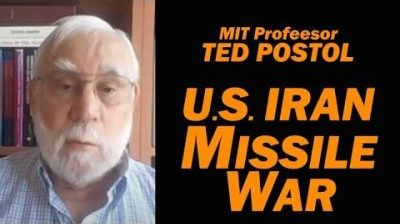
MIT Prof Ted Postol: U.S. Iran Missile War
or go to
Aletho News Archives – Video-Images
Frlom the Archives
A dark page from the CIA’s history: What was Project Artichoke, launched 74 years ago?
By Erkin Oncan | Strategic Culture Foundation | August 22, 2025
One of the most useful instruments hidden behind the U.S. empire’s rhetoric of “freedom and democracy” was the Central Intelligence Agency, founded on September 18, 1947, as the successor of the Office of Strategic Services (OSS).
Since its creation, the CIA has carried out countless inhumane operations: assassinations, coups, drug trafficking, support for terrorism, conspiracies. The list of its crimes is endless. But among the darkest and most inhumane chapters of its record lie the notorious “mind control” experiments. … continue
Blog Roll
 Aletho News
- Indonesia suspends participation in Board of Peace following attack on Iran
- ‘Operation Epic Fury’ burns an estimated $5.82 billion in just 100 hours
- Zionism’s grip over the world: From Epstein to Greater Israel
- How Israel and the FBI manipulated assassination plots to goad Trump into Iran war
- Iranian Strikes Dispel the Illusion of US Security Umbrella
- US Boasts of Destroyed Iranian Launchers Lack Credibility – Ex-DoD Official
- Europe not in position to cooperate with US and Israel against Iran
- Iran Has ‘Broken the Myth’ of Israeli Military Power: Former Pakistani Envoy
- How, and why, US data centers in the Gulf became targets of war
- The General who swallowed his truth
- If Americans Knew
- US troops were told war on Iran was ‘all part of God’s divine plan’, watchdog alleges
- Trump wants to run the show in Iran, but doesn’t know what he’s doing – Not a ceasefire Day 147
- ‘Dirty Work’ :The truth about how Israel was founded
- Mass Expulsion in Lebanon as Israel Expands War: “We Don’t Know Where to Go”
- Lies, distortions, and propaganda: how the U.S. mainstream media coverage on Iran hides the truth
- Palestinians in Gaza fear famine returning as Israel cuts off food amid Iran war
- AIPAC, other pro-Israel groups enter midterms with $100 million to spend
- Iranian girls killed by ‘double-tap’ strikes on Minab school
- Bari Weiss Is Going Full ‘Propaganda-Palooza’ With the Iran War
- Inside the Pro-Israel Campaign to Stop ‘The Voice of Hind Rajab’ From Winning an Oscar
- No Tricks Zone
- Televised! Leading German Political Candidate Tells Schoolchildren CO2 Makes Sun Hotter!
- New Study: A Century Warming Of 1.1°C Is ‘Commonplace’ And ‘Not Unusual’ During This Interglacial
- New Study: ‘Internal Noise’ And Volcanic Forcing Can Trigger 10-15°C Warming Within Decades
- Glaciers Worldwide Are Suddendly Surging, Experts Blame Warming!
- Surprising Discovery: Sahara Is Greening…Billions Of Trees Where Once Thought To Be Barren
- New Research Reaffirms Clouds, Aerosols, And Surface Solar Radiation Are ‘Driving The Climate System’
- Germany: Electric Car Catches Fire At Charging Station, Sets Off Local “Inferno”, Widespread Damage
- New Study: Canada’s New Brunswick Was 1°C Warmer Than Today During The Medieval Warm Period
- Coal Power Back In Trend As Globe Tries To Keep Pace With Growing Demand For Power
- New Study: A 4°C Warmer Beaufort Sea Had ‘No Sea Ice’ 11,700 – 8200 Years Ago
 Aletho News