Take the Deal, President Trump
By Ron Paul | May 26, 2025
Deal-making is said to be President Trump’s specialty, yet after five rounds of indirect talks with Iran – most recently just days ago – we seem as far away from an agreement as ever. The fifth round ended last Friday with no breakthrough, but at least no breakdown. However, each day that passes without a document signed on the table is another day for the neocons to maneuver the US president toward an attack on Iran.
One way the war party does this is to continuously move the goal posts and change the rules of the game. Trump envoy Steve Witkoff, under great pressure from the neocons, has himself signaled at least three position-shifts: from no enrichment at all, to low-level enrichment for civilian uses, back to no enrichment at all.
The neocons know that Iran will not give up its right to the civilian use of nuclear power and that is why they are applying maximum pressure to force Trump to officially adopt that position. They know if that becomes the US “red line” then they will win and they will get their war.
Israeli Prime Minister Netanyahu, in league with US neocons, has been warning us for 20 years that Iran is “months away” from a nuclear weapon – even though our own Intelligence Community recently re-affirmed that Iran is not working on a nuclear weapon at all.
Of course this is the same Netanyahu who promised Congress in 2002 if the US would just invade Iraq, peace and prosperity would break out in the Middle East. “If you take out Saddam, Saddam’s regime,” he told Congress in March of that year, “I guarantee you that it will have enormous positive reverberations on the region.”
We know how that worked out.
Poll after poll shows that the American people are tired of intervention and tired of Middle East wars. President Trump himself recognized this in his scathing rebuke of neocons and interventionists during a recent speech in Saudi Arabia.
But rebuke in a speech is not enough. President Trump must actively turn away from the neocons – many of whom are prominent in his own administration.
The recent US debacle in Yemen – where billions were wasted, civilians killed, and US military equipment destroyed – is just a taste of what the US would be in for if the neocons get their way and take us to war with Iran.
The Iranian foreign minister laid down in the simplest terms how the impasse could be solved, posting on X that, “Zero nuclear weapons = we DO have a deal; Zero enrichment = we do NOT have a deal.
My own preference is non-intervention and I do not believe Iran has the desire or the ability to militarily harm the United States. I share President Trump’s view that it would be far better to re-establish relations with Iran and begin mutually beneficial trade with the country. But if a mutually acceptable nuclear deal is the best way to take the neocon war with Iran off the table, then a deal is worth supporting.
President Trump should make his position clear to his negotiators: no more waffling or contradictions, get this agreement signed and put one in the “win” column.
Iran draws red line as Europe threatens nuclear ‘snapback’
As indirect US–Iran nuclear talks inch forward, Europe’s fear of marginalization prompts a risky diplomatic maneuver in Istanbul.
By Vali Kaleji | The Cradle | May 26, 2025
In the backdrop of indirect nuclear negotiations between Tehran and Washington, Iranian Deputy Foreign Ministers Majid Takht-Ravanchi and Kazem Gharibabadi met with their European counterparts from France, Germany, and Britain – the so-called E3 of the Joint Comprehensive Plan of Action (JCPOA) – on 16 May in Istanbul.
The meeting, held at Iran’s Consulate General and hosted by Turkiye, brought together EU Deputy Secretary-General for Political Affairs Enrique Mora and his colleague Olof Skoog, alongside Turkish Deputy Foreign Minister Abdullah Celik. The discussions focused on the future of the 2015 nuclear agreement, the status of indirect Iran–US negotiations, and collective efforts to avert further escalation through diplomacy.
Although three earlier rounds of consultations between Tehran and the E3 occurred on 29 November 2024, 13 January, and 24 February 2025, the Istanbul session marked a pivotal moment: the first engagement since the revival of the Iran–US indirect dialogue.
Europe cut out of nuclear talks
Crucially, the EU, much like in the Ukraine peace process, found itself bypassed by Washington. This diplomatic exclusion has intensified Brussels’s urgency to reclaim relevance within the nuclear negotiations framework, apparently even if this means acting as spoiler.
At the heart of the Istanbul summit lies the snapback mechanism – an instrument embedded in the JCPOA allowing any signatory to reimpose all UN sanctions that existed before the 2015 agreement. The clause, originally intended as a safeguard, now threatens to become a geopolitical cudgel.
With the JCPOA’s expiration looming in October 2025, Tehran fears that the E3 may invoke the mechanism as early as this summer, citing Iran’s alleged enrichment beyond 60 percent and its growing stockpile of enriched uranium.
French Foreign Minister Jean-Noel Barrot minced no words during a 28 April address to the UN Security Council, stating that if European security interests are compromised, France “will not hesitate for a single second to reapply all the sanctions that were lifted 10 years ago.” His statement, which reverberated through diplomatic circles, was widely interpreted in Tehran as a stark ultimatum.
Iran’s permanent representative to the UN responded forcefully, accusing France of hypocrisy and warning that Paris’s own breaches of the agreement render any activation of the snapback legally indefensible.
Iranian Foreign Minister Abbas Araghchi echoed this stance in an op-ed for Le Point, characterizing the Istanbul discussions as “a fragile but promising beginning” while cautioning that “time is running out.” He wrote:
“The decisions we make now will shape Iran–Europe relations in ways that go far beyond this agreement. Iran is prepared to move forward – we hope Europe is, too.”
Following the talks, Gharibabadi wrote on X: “We exchanged views and discussed the latest state of play on nuclear & sanctions lifting indirect negotiations. Iran and the E3 are determined to sustain and make best use of diplomacy. We will meet again, as appropriate, to continue our dialogue.”
British envoy Christian Turner echoed this sentiment, affirming the shared commitment to maintaining open channels of communication.
‘Trigger Plus’
Yet not all assessments of the Istanbul summit were diplomatic. Tehran-based daily Farhikhtegan, aligned with Iran’s conservative establishment, described the session as tense and combative.
According to its report, the E3 tabled severe threats, including a proposal for what they termed “trigger plus” – an augmentation of the original snapback mechanism that would allow preemptive punitive measures without requiring technical justification.
Iranian officials, the newspaper reported, dismissed this demand as not only illegal and baseless but also presented in an “inappropriate” tone. The Iranian side reiterated that while they remain open to EU participation in broader nuclear negotiations, any activation of the snapback mechanism would trigger an immediate Iranian withdrawal from the Nuclear Non-Proliferation Treaty (NPT).
Mohammad Ghaderi, former editor-in-chief of Nour News – a media outlet close to Iran’s Supreme National Security Council – summarized the stance bluntly on social media:
“In the tense talks with Iran on Friday, [the E3] while requesting to participate in Iran–US talks, made non-technical & illegal requests, calling it trigger plus. But Iran’s response: Emphasizing the activation of the Trigger Mechanism will lead to Iran’s withdrawal from the NPT.”
The Iranian Foreign Ministry, in characteristic fashion, neither confirmed nor denied these reports, opting for strategic ambiguity to maintain leverage over multiple negotiation tracks.
The October deadline: Strategic implications
As the October 2025 expiration date draws closer, Iran has accelerated efforts to engage the remaining members of the 4+1 framework – China, Russia, France, Britain, and Germany. Trilateral meetings with Moscow and Beijing have underscored Tehran’s strategy of building a multilateral diplomatic buffer against US-European pressure.
However, the snapback clause remains the most potent lever in the E3’s arsenal. According to Article 36 of the JCPOA, any signatory can escalate a compliance dispute to the UN Security Council. Once initiated, this process does not require a vote or consensus, meaning that Russian and Chinese vetoes are nullified.
Should the snapback be triggered, all seven UN Security Council sanctions previously lifted would automatically be reinstated – a scenario with grave consequences for Iran’s economy and its broader regional strategy.
Analysts suggest the E3 may push for this mechanism’s activation as early as July or August, thereby maximizing diplomatic pressure while allowing time to shape global opinion. If that happens, Tehran’s recourse to NPT withdrawal – a threat repeatedly made since 2019 – would likely materialize.
Deputy Foreign Minister Kazem Gharibabadi reinforced this red line in response to a recent International Atomic Energy Agency (IAEA) resolution: “If Europe implements snapback, our answer is to withdraw from the NPT.” As Araghchi, writing again in Le Point, stated unequivocally:
“Iran has officially warned all JCPOA signatories that abuse of the snapback mechanism will lead to consequences – not only the end of Europe’s role in the agreement but also an escalation of tensions that could become irreversible.”
Europe’s desperation for relevance
Europe’s insistence on asserting itself in the JCPOA talks stems from its declining influence across global affairs. From the Ukraine war to the Persian Gulf, the EU has been reduced to a secondary actor. In the Iran file, this marginalization is especially stark.
While Washington and Tehran inch closer to a bilateral formula, Brussels finds itself largely ignored. Nosratollah Tajik, a former Iranian diplomat, argues:
“Europe’s main concern is that Iran and the United States will reach a bilateral agreement without considering European interests. Many of the Middle East [West Asian] crises spill over into Europe.”
The lack of a coordinated EU Iran policy only compounds this anxiety. Theo Nencini, an Iran expert at Sciences Po Grenoble and Paris Catholic University, concurs:
“The E3 countries have not yet managed to define a coherent and relevant ‘Iran policy.’ From Trump 1.0 to Biden, they have always been accustomed to flatly following American positions.”
Nencini believes that unexpected US–Iran direct talks caught Europeans off guard, prompting them to scramble to get involved in the negotiation process despite the fact that “they have always maintained a very strict attitude towards Iran.”
Diplomacy or detonation?
The Istanbul talks, despite their challenges, represent one of the few remaining diplomatic lifelines between Tehran and the E3.
Should these efforts collapse, the consequences would be profound: Iran could withdraw from the NPT, revise its nuclear doctrine, and prompt potential military escalation involving the US and Israel.
Such a scenario would spell the total disintegration of the JCPOA framework and shatter the fragile architecture of non-proliferation diplomacy built over the past two decades.
With less than five months to avert this trajectory, the onus lies on both parties to preserve what little remains of mutual trust. Yet the margin for error continues to shrink by the day.
Iran, China launch new commercial railway bypassing US sanctions
The Cradle | May 26, 2025
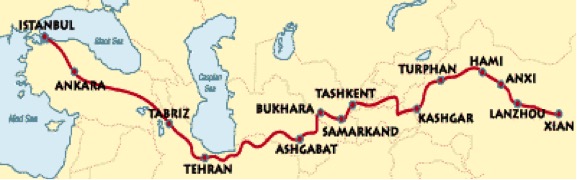
A new commercial rail route connecting China to Iran has officially launched with the arrival of the first cargo train from the eastern Chinese city of Xian at the Aprin dry port near Tehran.
Aprin’s CEO highlighted the port’s strategic role in lowering transport costs and reducing reliance on coastal freight hubs.
Railway infrastructure connecting Iran and China allows freight trains to travel from Shanghai to Tehran in 15 days, compared to 30 days via the maritime route.
On 12 May, railway officials from Iran, China, Kazakhstan, Uzbekistan, Turkmenistan, and Turkiye met in Tehran to advance a transcontinental rail network linking Asia to Europe, Tasnim News Agency reported on 25 May.
The six nations agreed on competitive tariffs and operational standards to streamline regional rail services and boost trade connectivity.
China and Iran have expanded trade and economic relations in recent years, as Tehran seeks to bypass US economic sanctions seeking to strangle its economy and oil exports.
The rail line between the two countries enables Iranian oil exports to China and allows Chinese goods to reach Europe without US naval interference.
In 2018, Iranian Supreme Leader Ali Khamenei stated that Iran should look to the east rather than the west. Since that time, China has become Iran’s largest oil purchaser, while Beijing has been able to supply Tehran with virtually all its needed manufactured goods, including electronics such as computers and cell phones.
The following year, Iran joined China’s “One Belt One Road” (BRI) initiative – President Xi Jinping’s hallmark strategic foreign policy initiative, seeking to recreate the economic ties that existed between ancient China and ancient Persia along the “Silk Road” dating back to the third century BCE.
China and Iran signed a historic 25-year economic cooperation agreement in 2021, reportedly worth $400 billion in trade.
In 2023, China’s growing relations with Iran helped it mediate a Saudi–Iranian rapprochement, which led to the resumption of diplomatic relations that had been cut in 2016.
US roadmap for Syria sanctions removal includes Israel normalization, expulsion of Palestinian factions
The Cradle | May 23, 2025
A State Department proposal circulated among officials lays out “sweeping conditions for future phases of relief or permanent lifting of sanctions” on Syria, including normalizing relations with Israel by signing the Abraham Accords, AP reported on 23 May, citing an anonymous US official familiar with the matter.
US-imposed sanctions have devastated the Syrian economy, plunged millions into poverty, and blocked post-war reconstruction. They were imposed as part of the US and Israeli effort to topple the government of former Syrian president Bashar al-Assad.
Assad was ousted in December by militants from Hayat Tahrir al-Sham (HTS), the former Al-Qaeda affiliate, with US, Israeli, and Turkish assistance. HTS leader Ahmad al-Sharaa is now the de facto Syrian president.
However, the US is not yet ready to remove sanctions.
A document issued last week by the State Department’s policy and planning staff has proposed a three-phase road map for sanctions relief, starting with short-term waivers. Permanent lifting of sanctions would only be given after several conditions are met.
According to the document, “Palestinian terror groups” must be removed from Syria to get to the second stage.
The Syrian government must also take control of detention facilities housing ISIS fighters in northeast Syria and carry out a recent deal to incorporate the US-backed, Kurdish-led Syrian Democratic Forces (SDF) into the Syrian army. The SDF currently controls the prisons housing ISIS members and their families, as well as much of Syria’s oil fields.
Phase three would require Damascus to normalize relations with Tel Aviv by joining the Abraham Accords, as well as prove that it had destroyed all of the previous government’s chemical weapons.
If normalization happens, Syria would de facto acknowledge Israel’s annexation of the occupied Syrian Golan Heights.
Israeli Prime Minister Benjamin Netanyahu has previously pushed for US President Donald Trump’s administration not to lift sanctions on Syria.
President Trump raised expectations that all Syria sanctions would quickly be removed when he announced in Saudi Arabia last week that he would “be ordering the cessation of sanctions against Syria in order to give them a chance at greatness.”
“We’re taking them all off,” Trump said a day before meeting the Syrian president, a former deputy of ISIS leader Abu Bakr al-Baghdadi.
“Good luck, Syria. Show us something special,” he went on to say.
However, when asked what sanctions relief should look like overall, Secretary of State Marco Rubio said relief would be “Incremental.”
Washington has levied sanctions against Syria since 1979 for its foreign policy opposing Israel.
To block Syria’s post-war reconstruction, the harshest sanctions were imposed in 2019 by Congress through the passage of the Caesar Syria Civilian Protection Act.
As a result, a new law in Congress must be passed to remove the Caesar sanctions. Trump is only able to issue six-month waivers, which is not enough to encourage investors to return to doing business in the country.
On Friday, two Palestinian sources told AFP that the leaders of Palestinian resistance factions have left Syria under pressure from the new authorities in Damascus.
The leaders include Khaled Jibril, son of Popular Front for the Liberation of Palestine-General Command (PFLP-GC) founder Ahmad Jibril, as well as Palestinian Popular Struggle Front Secretary-General Khaled Abdel Majid and Fatah al-Intifada Secretary-General Ziad al-Saghir.
Republican Senators Want War, Republican Voters Don’t
By Jack Hunter | The Libertarian Institute | May 22, 2025
Last week over two-hundred Republicans, including every GOP senator except Rand Paul (R-KY), signed a letter urging President Donald Trump to insist that Iran give up all enrichment capabilities in any nuclear deal with that country.
In other words, they don’t want a new Iran deal.
But most Republicans do want a deal. As Responsible Statecraft’s Stavroula Pabst reported on May 12, “As U.S.-Iran talks continue, new polling finds that nearly two-thirds of Republicans support a negotiated deal on Iran’s nuclear program over military action intended to destroy it.”
Pabst explained:
“Indeed, polling published by the University of Maryland Critical Issues Poll program and conducted by the SSRS Opinion Panel Omnibus from May 2 through 5, surveying over 1,000 respondents over 18, showed that a majority of Americans, 69%—including 64% percent of Republicans—view a negotiated agreement to limit Iran’s nuclear program, with monitoring, as the best way to prevent Iran from obtaining a nuclear weapon.”
It seems that on Iran, the Republican members of Congress are out of sync with the voters who put them there.
Stavroula would add of President Trump’s special envoy Steve Witkoff, “Witkoff shared one thing in common with the Iranians—that ‘no enrichment’ is a red line, for the Americans who don’t want any enrichment, and for the Iranians, who say they must have it for their civilian nuclear program.”
The Republicans who signed that letter know this. Again, they don’t want a deal.
So many of them want a U.S. war with Iran and have said so many times. President Trump seeking diplomacy over military action wrecks their war plans.
So they play games, like issuing this phony, dishonest letter.
The gap between the majority of Republican voters who want a deal and the nearly two-hundred Republicans in Congress who don’t appears to reflect a difference in the culture of the GOP’s voting base vs. the Washington establishment.
However imperfectly, Donald Trump has imposed an ‘America First’ ethos on Republican identity, something so many of his supporters eagerly embraced. A major part of that identity is no more wars and overseas nation-building. Neoconservative Republicans like Liz Cheney and Adam Kinzinger were eventually pushed out of their own party, feigning over alleged MAGA threats to democracy, but in reality with an understanding that their zeal for war and empire ran counter to what Trump represented.
So they bailed. Republican voters didn’t want them anymore. Still, the remaining congressional Republicans of their mindset continue to have to operate in a party that Trump has reshaped, but that doesn’t mean so many have changed from being the reflexively war-happy, Bush-Cheney neocons they’ve been for most of their careers.
The primary difference between neocon Lindsey Graham and neocon Liz Cheney is that Graham has accepted doing what it takes to remain withing Trump’s movement and good graces. On foreign policy, Graham and Cheney don’t differ one bit.
Neocons are what they are. The Republican base is what it is, in 2025.
Regardless, Trump shouldn’t listen to Washington Republicans. He has no reason to.
Responsible Statecraft’s Ben Armbruster laid out why on Monday:
“Neocons and their allies in Washington, Israel, and beyond are making unrealistic demands about the outcome of U.S. talks with Iran on limiting its nuclear program. But President Trump has absolutely no reason to listen to them and should not take them seriously.”
He continued:
“The anti-Iran deal campaign kicked into overdrive last week when Republicans on Capitol Hill sent a letter to the White House calling on Trump to refuse any agreement that doesn’t include the complete dismantlement of Iran’s nuclear program.”
The neocons are very worried that successful diplomacy could prevent war.
“Every Republican senator except Rand Paul signed a letter to President Trump urging the administration to push for an end to Iran’s enrichment capacity,” Andrew Day, senior editor of The American Conservative, told RS. “They know that this demand is unacceptable to the Iranian regime and are clearly hoping to sabotage Trump’s diplomatic efforts.”
Exactly.
Neocons are going to neocon and will eagerly work for the next war, especially with Iran, for the rest of their lives. It’s how they’re built. “Warmonger” is a pejorative, but it’s also an accurate description of so many of these Beltway creatures.
If MAGA Republicans believe that what makes America great is the actual Americans who inhabit it, neocons measure national greatness by the willingness and ability of the United States to spread its empire to every inch of the globe, with any potential wars being a bonus, not a deterrent.
Neocons and MAGA are oil and water. When Trump said that George W. Bush “lied” the American people into war with Iraq on a Republican primary debate stage in South Carolina in 2016, some said his campaign was DOA for the unpardonable crime of questioning the war in “Bush country.”
We all the know what actually happened: the exact opposite. Trump’s MAGA movement now is the GOP. Bush-Cheney neoconservatism is mostly a faded memory for the base.
Now it the time to kick the neocons when they’re down.
So, to hell with them. Ignore their stupid letters. Deny and denounce their reaching rationales for committing the U.S. to yet another nonsensical tragedy abroad.
Call them on their bullshit.
Instead, make the peace and pursue the diplomacy that most Republican voters currently want and more importantly, would actually put America first, for the first time in a long time.
Republican senators might want war, but the people—Trump’s people—don’t. It’s time for populism on steroids. A robust antiwar conservatism for the twenty-first century. Give the great Smedley Butler his due.
If there was ever a time to give the people what they want, it’s now.
Europe must bear consequences of forcing return of UN sanctions against Iran: FM
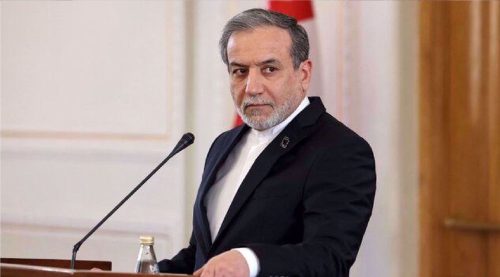
Iran’s Foreign Minister Abbas Araghchi
Press TV – May 21, 2025
Foreign Minister Abbas Araghchi has cautioned the US’s European allies in a 2015 nuclear agreement with Iran against invoking the so-called “snapback mechanism” to re-impose the United Nations sanctions against the Islamic Republic.
Speaking to Saudi Arabia’s Asharq News network on Wednesday, the top diplomat emphasized that such a move would end participation by the European parties — the UK, France, and Germany — in the deal that is officially known as the Joint Comprehensive Plan of Action (JCPOA).
He added that the trio’s potential recourse to the mechanism would lead to significant consequences and potential irreversible escalation of tensions, referring to the likelihood of strong retaliatory steps that the Islamic Republic could take in response.
Araghchi reiterated Iran’s readiness to engage in diplomacy, expressing hope that the European parties too would demonstrate determination to resolve the current impasse.
The deadlock occurred when the United States ditched the JCPOA in 2018, and returned the illegal and unilateral sanctions that the agreement had lifted.
This was followed by the European trio’s failure to return the US to the accord, as they had said would do, as well as their walking in Washington’s footsteps by returning their own sanctions.
In response to the betrayal, Iran began a number of legitimate and gradually escalating nuclear countermeasures.
“The situation we’re in is by no means Iran’s fault. It is the fault of the United States, which withdrew from the JCPOA, and the fault of the European countries that failed to compensate for the US’s withdrawal,” Araghchi added.
‘Uranium enrichment absolutely non-negotiable’
Addressing the topic of Iran’s peaceful uranium enrichment activities, the foreign minister said the activities were a principled and fundamental issue for Iran.
He emphasized that the enrichment program was a major scientific achievement developed by domestic scientists and held immense value for the Iranian people.
The official, meanwhile, paid tribute to the seven-strong Iranian nuclear scientists, who were assassinated amid their invaluable contribution to the Islamic Republic’s peaceful nuclear energy program.
According to Araghchi, the victims’ sacrifices towards advancement of the program had made the nuclear issue “absolutely non-negotiable.”
Fifth round of Iran-US talks to be held on May 23: Oman
Press TV – May 21, 2025
The fifth round of indirect negotiations between Iran and the United States will take place on May 23, according to Oman’s foreign minister.
Badr al-Busaidi made the announcement on Wednesday, adding that the talks will be held in the Italian capital, Rome.
Three of the previous rounds took place in the Omani capital, Muscat, and the second round in Rome.
Iranian and US officials have not commented on the announcement so far.
The talks focus on producing a replacement for the 2015 nuclear deal, which was derailed by American withdrawal in 2018.
Iran had previously declared it would decide whether to take part in the next round of the talks after US officials claimed any deal would not allow Tehran to enrich uranium.
Iran says it will not forgo its right to uranium enrichment, which is guaranteed under the Non-Proliferation Treaty.
MAGA influencers want an Iran deal and for hawks to shut up
Trump is unlikely to pay any political price if he disregards the old guard’s unrealistic demands
By Ben Armbruster | Responsible Statecraft | May 19, 2025
Neocons and their allies in Washington, Israel, and beyond are making unrealistic demands about the outcome of U.S. talks with Iran on limiting its nuclear program. But President Trump has absolutely no reason to listen to them and should not take them seriously.
The anti-Iran deal campaign kicked into overdrive last week when Republicans on Capitol Hill sent a letter to the White House calling on Trump to refuse any agreement that doesn’t include the complete dismantlement of Iran’s nuclear program.
“Every Republican senator except Rand Paul signed a letter to President Trump urging the administration to push for an end to Iran’s enrichment capacity,” Andrew Day, senior editor of the American Conservative, told RS. “They know that this demand is unacceptable to the Iranian regime and are clearly hoping to sabotage Trump’s diplomatic efforts.”
Center for International Policy senior non-resident fellow Sina Toossi called the letter’s demand “a poison pill.”
“Demanding zero enrichment, permanent restrictions, and total dismantlement of Iran’s nuclear infrastructure — after the U.S. already broke the 2015 deal — is not a negotiating position,” he told RS.
Meanwhile, other deal opponents say that Iran can be allowed to keep its program for civilian energy production purposes with the caveat that it cannot enrich its own uranium.
The good news for Trump though — and those who see an opportunity to box in Iran’s nuclear program and avoid war — is that this anti-Iran deal coalition has no constituency outside Washington and Israel, and Trump will pay very little to no political price if he just ignores them.
Take for instance a recent poll conducted by the SSRS Opinion Panel Omnibus in conjunction with the University of Maryland Critical Issues Poll program. That survey found that a large majority of Americans — 69% — favor “a negotiated agreement limiting Iran’s nuclear program to peaceful ends, with stringent monitoring” as opposed to military action. But perhaps more importantly for Trump’s political fortunes, 64% of Republicans surveyed — i.e. his base — agreed.
Opponents of diplomacy with Iran try to obfuscate this reality and muddy the waters. For example, Foundation for the Defense of Democracies CEO Mark Dubowitz — who’s been pushing for regime change in Iran for nearly two decades — promoted a poll last week finding that “76% of Americans say Iran’s nuclear-weapons facilities should be destroyed.”
Of course there is one problem: Iran doesn’t have nuclear weapons or a nuclear weapons program, and thus no nuclear weapons facilities, a fact that the U.S. intelligence community routinely concludes.
But it’s not just the American people or the GOP base that support Trump making a deal with Iran. Some of the more high profile figures in the MAGA-America First world back him too.
“It’s called sanity,” Steve Bannon said last week, referring to the SSRS/UMaryland poll. Bannon, of course, served as a senior adviser to Trump during his first term and remains influential within his orbit and among his supporters.
Rep. Marjorie Taylor Greene (R-Ga.), who also has clout with Trump’s base, has been very vocal recently against going to war with Iran. “There is no wedge between the base and President Trump,” she said earlier this month. “The wedge is between Congress and the establishment Republicans that are undermining the president’s agenda.”
And conservative media star Tucker Carlson, who like Bannon, has close ties to Trump world and is influential with the president’s base, has been similarly calling out neocons and others who are trying to kill Trump’s diplomacy with Iran and push for war.
“Thousands of Americans would die. We’d lose the war that follows. Nothing would be more destructive to our country,” he said last month. “Anyone advocating for conflict with Iran is not an ally of the United States, but an enemy.”
Popular right-wing podcaster Charlie Kirk has piled on as well. “[T]here are people in Washington inside the Pentagon and inside the administration who want to launch military strikes on Iran. Often, they say it’d be easy. Just one strike in and out,” he said recently. “Now pause. How often have they actually been correct about the one in and out thing? Has that ever actually been the case?”
“President Trump has consolidated his power over the Republican Party to a remarkable degree and could certainly sign a good deal with Iran without suffering politically,” Day said. “The base still loves him, and lawmakers and conservative media are afraid of him. The elites would fall in line for fear of MAGA turning on them.”
Ryan Costello, policy director at NIAC, agrees. “Trump wouldn’t have been elected president twice if his foreign policy echoed the discredited views of the Bush-Cheney wing of the Republican party,” he said. “Trump can have a deal with Iran or he can be pushed into war by adopting rigid and inflexible demands — the vast majority of Americans want him to lead with diplomacy.”
Meanwhile, it appears increasingly unlikely that Democrats — most of whom supported President Obama’s Iran nuclear deal back in 2015 — will try to make much political hay with any agreement Trump makes with Tehran.
“This is not a time for politics on Iran,” Rep. Ro Khanna (D-Calif.), a leading Democratic foreign policy voice in the House, said last week. “I support [Trump] trying to get a deal with Iran. I supported the Obama nuclear deal. How about we put the interest of our nation and peace above scoring political points at every moment?”
And what’s perhaps overlooked but maybe equally important: major regional powers like Saudi Arabia, who campaigned hard against Obama’s Iran deal, have changed their tune with Trump.
“Gulf leaders have been broadly supportive of the talks between the Trump administration and Iran because they don’t want to be caught in the crossfire of a regional escalation if they fail,” Ali Vaez of the International Crisis Group told Middle East Eye last week. “That support doesn’t necessarily translate into success at the negotiating table but it’s a shift from the 2015 talks.”
Perhaps most importantly, Trump can get a deal with Iran that places strict limits on its nuclear program with incredibly intrusive verification mechanisms that will satisfy his stated goal of preventing Iran from building a nuclear weapon, all without zero enrichment provisions or requiring Iran to dismantle its entire program.
“Not only will adopting a hardline ‘no enrichment’ position push Iran from the negotiating table entirely, it is not necessary for an effective agreement and would not fully address Iran’s proliferation risk,” the Arms Control Association’s Kelsey Davenport wrote recently, adding that “dismantling the infrastructure does not erase the knowledge Iran has gained about uranium enrichment.”
In short, she concluded, the U.S. “can find the right combination of limits and monitoring to block Iran’s pathways to nuclear weapons while allowing Iran to retain a less risky level of uranium enrichment.”
Ben Armbruster is the Managing Editor of Responsible Statecraft. He has more than a decade of experience working at the intersection of politics, foreign policy, and media. Ben previously held senior editorial and management positions at Media Matters, ThinkProgress, ReThink Media, and Win Without War.
Red Sea debacle: How Yemeni resistance brought American war machine to a halt
By Kit Klarenberg | Press TV | May 18, 2025
On May 12, the New York Times published a forensic autopsy of the failure of the Trump administration’s renewed hostilities against the Ansarullah-led Yemeni military in the Red Sea.
The probe teemed with extraordinary disclosures, spelling out in stark detail how the combined air and naval effort – launched with enormous fanfare and much bombastic rhetoric from US officials – was an even greater debacle, and devastating defeat, for the Empire than hitherto thought.
The scale of the cataclysm may explain Washington’s sudden determination to reach a negotiated settlement with the Islamic Republic of Iran.
Perhaps the most striking revelation is that Trump’s blitzkrieg against Yemen was initially planned to be a long-term, large-scale engagement, culminating in a ground invasion using proxy forces.
General Michael Kurilla, Commander of the Pentagon’s Central Command, which covers Central, South and West Asia, had been in favor of all-out war with the Ansarullah resistance movement ever since its righteous anti-genocide Red Sea blockade began in late 2023.
Reportedly, though, Joe Biden was wary that a “forceful campaign” would elevate them “on the global stage.”
With Trump’s re-election, “Kurilla had a new commander in chief” and an opportunity to up the ante against Ansarullah significantly. He pitched an eight-to-10-month effort, starting with a saturation bombing of Yemen’s air defense systems, before a wave of targeted assassinations of movement leaders, directly inspired by Israel’s attacks on Hezbollah’s senior members in September 2024.
Kurilla’s grand operation was eagerly supported by elements of the Trump administration, including Defense Secretary Pete Hegseth and then-National Security Advisor Mike Waltz.
Saudi officials were also on board, providing Washington with a target list of 12 Ansarullah leaders “whose deaths, they said, would cripple the movement.”
However, the UAE, which had in concert with Riyadh relentlessly bombed Yemen 2015 – 2023 to no tangible result, “was not so sure.” Several members of Trump’s administration were also skeptical of the plan’s prospects and worried a protracted attack on Sana’a would drain valuable, finite resources, including the president himself.
Yet, after concerted lobbying, Trump “signed off on part of General Kurilla’s plan – airstrikes against Houthi air defense systems and strikes against the group’s leaders.”
So it was on March 15, US fighter jets began battering Yemen anew, while a carrier force led by the USS Harry S. Truman thrust into the Red Sea.
White House officials boasted the onslaught would continue “indefinitely”, while Trump bragged that Ansarillah would be “decimated” via “overwhelming lethal force until we have achieved our objective.”
Some degradation
In reality, The New York Times suggests Trump privately made clear he wanted Ansarullah bombed “into submission” within just 30 days, and failure in this objective would mean the operation’s termination.
By the 31st day of hostilities, the US president “demanded a progress report.” As the outlet records, “the results were not there,” which is quite an understatement. The US “had not even established air superiority” over Ansarullah, while the resistance group continued “shooting at vessels and drones, fortifying their bunkers and moving weapons stockpiles underground.”
Moreover, during those first 30 days, Yemeni military “shot down seven American MQ-9 drones” costing around $30 million each, “hampering Central Command’s ability to track and strike back. Meanwhile, several American F-16s and an F-35 stealth fighter jet “were nearly struck by Houthi air defenses, making real the possibility of American casualties.”
All along, too, the US burned through weapons and munitions at a rate of about $1 billion in the first month alone:
“The cost of the operation was staggering. The Pentagon had deployed two aircraft carriers, additional B-2 bombers and fighter jets, as well as Patriot and THAAD air defenses… So many precision munitions were being used, especially advanced long-range ones, that some Pentagon contingency planners were growing increasingly concerned about overall stocks and the implications for any situation in which the US might have to ward off an attempted invasion of Taiwan by China.”
Concerned, “the White House began pressing Central Command for metrics of success in the campaign.”
In a bitter irony, Pentagon officials “responded by providing data showing the number of munitions dropped” to prove they were achieving their goals. They also claimed, without evidence, to have hit over 1,000 military targets, while killing “more than a dozen senior Houthi leaders.”
US intelligence was unconvinced, acknowledging there was “some degradation” of the Ansarullah-led military, but “the group could easily reconstitute” regardless.
As a result, “senior national security officials” began investigating “pathways” for either withdrawing from the theatre with minimal embarrassment or keeping the fiasco going using local proxy forces.
One option was to “ramp up operations for up to another month and then conduct ‘freedom of navigation’ exercises in the Red Sea using two carrier groups, the Carl Vinson and the Truman.” If AnsarAllah did not fire on the ships, “the Trump administration would declare victory.”
Another option was to extend the campaign, giving forces under the control of the Riyadh-based Yemeni Presidential Leadership Council “time to restart a drive to push the Houthis out of the capital and key ports” in a ground assault.
The plan was hatched despite prior Saudi-led invasions of Yemen invariably ending in total disaster. This may account for why talks between Hegseth and Saudi and UAE officials in late April “to come up with a sustainable way forward… they could present to the President” came to nothing.
Great ability
As luck would have it, right when Hegseth’s last-ditch efforts to breathe life into the collapsing effort were floundering, Trump’s West Asia envoy Steve Witkoff was in Oman, engaged in nuclear talks with Iran.
Officials there separately suggested a “perfect offramp” for Washington in its war with Ansarullah. The US “would halt the bombing campaign and the militia would no longer target American ships in the Red Sea, but without any agreement to stop disrupting shipping that the group deemed helpful to Israel.”
Well-publicised fiascoes around this time, such as the loss overboard of an F/A-18 Super Hornet, costing $67 million, due to the USS Harry S. Truman conducting evasive maneuvers to avoid an Ansarullah drone and missile attack, further depleted White House enthusiasm for the operation.
According to The New York Times, “Trump had had enough”. He duly accepted the Omani proposal, and on May 5th, CentCom “received a sudden order… to ‘pause’ offensive operations” in the Red Sea.
That a ballistic missile fired by the Yemeni military evaded the Zionist entity’s air defenses and struck Tel Aviv’s Ben-Gurion International Airport the previous day likely provided further incentive to halt hostilities.
So it was on May 6, Trump declared victory against Ansarullah, claiming the resistance group had “capitulated”, and “don’t want to fight any more”. Nonetheless, the president expressed clear admiration for God’s Partisans, indicating he placed a high degree of trust in Ansarullah’s assurances that US ships would no longer be in their redoubtable crosshairs:
“We hit them very hard and they had a great ability to withstand punishment. You could say there was a lot of bravery there. They gave us their word that they wouldn’t be shooting at ships anymore, and we honor that.”
Per The New York Times, Trump’s “sudden declaration of victory… demonstrates how some members of the president’s national security team underestimated a group known for its resilience.”
But more deeply, it surely reflects how the bruising, costly experience was a blunt-force education in the glaring deficiencies of US military power, and the Empire’s fatal vulnerability in the event of all-out war against an adversary actually able to defend itself. This could account for the Trump administration’s sudden determination to finalize a nuclear deal with Tehran.
It must not be forgotten that before even taking office, Trump and his cabinet openly planned for a significant escalation of belligerence against the Islamic Republic.
Among other things, they boasted of drawing up plans to “bankrupt Iran” via “maximum pressure”. US Secretary of State Marco Rubio, who has long called for tightening already devastating sanctions on Tehran, was a key advocate for this approach, and eagerly supported by Mike Waltz, among others.
At an event convened by NATO adjunct the Atlantic Council in October 2024, Waltz bragged about how the president had previously almost destroyed the Islamic Republic’s currency, and looked ahead to inflicting even more severe damage on the country following Trump’s inauguration.
Fast forward to today, though, and such rhetoric has vanished from mainstream Western political discourse. It appears Trump and his team have not only jettisoned their previously stated ambitions towards Iran but are determined to avoid war.
Moreover, just as the Zionist entity was not consulted before Washington struck a ceasefire with Ansarullah, Tel Aviv has been completely frozen out of nuclear negotiations between the US and Iran, and if an agreement does result at last, it will not take into account Israel’s bellicose position towards the Islamic Republic.
Just as the Cuban Missile Crisis transformed Cold warrior John F. Kennedy into a dove, Trump’s experience in the Red Sea may well have precipitated a seismic shift in his administration’s foreign policy.
The High Human Cost of Syria Sanctions
By Rick Sterling | Dissident Voice | May 17, 2025
On May 13, U.S. President Trump announced he is ordering the removal of sanctions on Syria.
Some of the U.S. sanctions can be quickly terminated because they were issued by Executive Order. Other sanctions, including the extremely damaging 2019 “Caesar” sanctions, were imposed by Congressional legislation and may require Congressional action to terminate.
The Syrian people are joyous at the prospect of the end of their country’s economic nightmare. In 2010, before the conflict began, Syria was a middle-income country with free education, free healthcare, and no national debt. It was largely self-sufficient in energy and food. After fourteen years of war, occupation, and strangulating Western sanctions, the U.N. reports that “nine out of ten Syrians live in poverty and face food insecurity”.
Why Syria Was Targeted
In 2007, the former Supreme Allied Commander of NATO, General Wesley Clark, publicly revealed that Washington neo-cons had a hit list of seven countries to be overthrown in the wake of 9-11. The list included Iraq, Libya, Somalia, Sudan, Lebanon, Syria, Iran.
The list is essentially the same as that identified by Benjamin Netanyahu in his 1995 book Fighting Terrorism: How Democracies Can Defeat the International Terrorist Network. The premise of this book is that Palestinian and Lebanese resistance movements are “terrorist,” and any nation that supports them should be overthrown. He targets Iran, Libya, Syria, and Sudan for supporting Palestinian rights and says. “Take away all this state support, and the entire scaffolding of international terrorism will collapse into dust.”
In 2007, Democratic Party leader Nancy Pelosi visited Syria and tried to persuade Assad to end Syria’s support of the Palestinian and Lebanese resistance movements. When Assad would not comply with US and Israeli wishes, Syria was marked for regime change. The Netanyahu and neo-conservative hit list had somehow been adopted by the Western foreign policy establishment. This was confirmed by the former French Foreign Minister Roland Dumas. In a 2013 interview he says, “I went to England almost two years before the start of hostilities (2011). I met British officials, some of whom are friends of mine. They confessed, while trying to persuade me, that preparations for something were underway in Syria. This was in England, not the US. Britain was preparing gunmen to invade Syria… This operation goes way back. It was prepared, conceived, and planned for the purpose of overthrowing the Syrian government because … this regime has an anti-Israeli stance.”
Hybrid Warfare against Syria
The overthrow of the Syrian government was not easy. It involved massive funding from seven countries (USA, UK, France, Turkey, Saudi Arabia, Qatar, UAE). In the early years, the CIA budget alone was $1 billion per year. The campaign included military, diplomatic, media/information and economic warfare.
The regime change operation began in March 2011. While part of the population was hostile to the Assad dynasty, the majority supported the government and a secular Syria. The opposition came largely from sectarian jihadist elements, including the Muslim Brotherhood. Hundreds of factions and cells were supplied and funded by a host of countries, including Qatar, Saudi Arabia, Turkey, the U.S., and the UK. Thousands of foreigners were recruited and provided access to Syria.
The political and media war on the Assad government was intense. Historian Stephen Kinzer wrote, “Coverage of the Syrian war will be remembered as one of the most shameful episodes in the history of the American press.”
Accusations that the Assad government used chemical weapons against civilians were widely broadcast in the West. They were used to justify Western bombing attacks on Syria. Acclaimed U.S. investigative journalist Seymour Hersh uncovered evidence that the chemical weapons attacks were by the opposition, aided by Turkey, NOT by the Assad government. He had to go abroad to have the explosive article published.
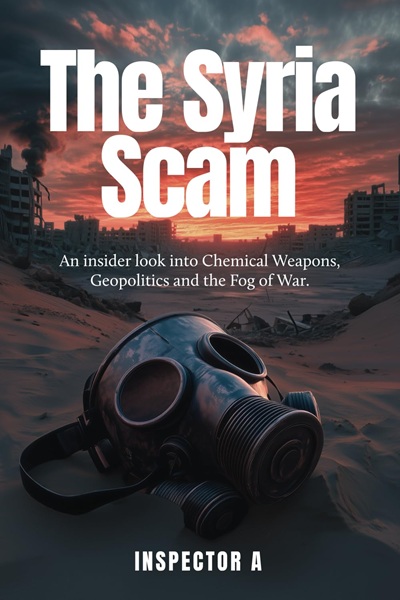 The dubious chemical weapons accusations and US driven political corruption of the Organization for the Prohibition of Chemical Weapons (OPCW) are now exposed in a February 2025 book by one of the technical professionals from the OPCW. The book is titled The Syria Scam: An insider look into Chemical Weapons, Geopolitics and the Fog of War.
By the end of 2018, the Syrian army had largely defeated the diverse jihadists. However, instead of conquering or expelling the opposition, Syria allowed them to have a safe haven in Idlib province on the border with Turkey. With Turkey, Iran and Russia seeking to find a solution through the Astana Accords, the conflict was frozen, and the jihadists were allowed to regain strength. Hayat Tahrir al Sham (HTS) became the de facto leader of the opposition factions and the government of Idlib.
The Frozen Conflict
In 2019, the U.S. turned the screws on Syria and escalated attacks on Lebanon. The extreme Caesar sanctions did what they were intended to do. They crushed the Syrian currency and economy, made it impossible to rebuild, and impoverished the vast majority of Syrians. The spreading poverty and inability to counteract it led to widespread demoralization and dissatisfaction. With consummate cynicism, the “Caesar” sanctions were named the “Caesar Civilian Protection Act”.
Meanwhile, in the HTS safe haven of Idlib province on the Turkish border to the north, conditions were very different. Although HTS was designated a terrorist organization in the U.S. and the West, they were helped economically. The HTS fighters were trained and supplied with modern military weaponry, including drones, sophisticated communications equipment, etc.. Very recently, when people from Damascus traveled to Idlib, they were shocked to find new highways, Wi-Fi widely available, and electricity 24 hours a day. Teacher salaries are ten times higher in Idlib than in Damascus.
The Fall of Damascus
With a demoralized population and Syrian army, the Assad government fell in a few weeks, and HTS, led by Ahmad Al Sharaa, took power on 8 December 2024. The new leader of Syria has been greeted and endorsed by the Gulf monarchies and Western countries that paid for and promoted the overthrow in Syria: the UK, Germany, France, Saudi Arabia, Qatar, and of course, Turkey.
Since the change, there have been numerous sectarian massacres of Alawites and Christians along the coast.
There have been attacks on Druze in Damascus. To date, there have been no punishments for the massacres of civilians. A nun reports, “there is no security” in Damascus or elsewhere in Syria.
Meanwhile, Israel has invaded and occupied all of the Golan and parts of southern Syria. They have built military bases in Quneitra and other strategic locations. Israel has carried out a bombing blitzkrieg, destroying all known Syrian ammunition depots. Israel can now fly over any part of Syria at will.
Instead of condemning the Israeli violation of Syrian land and airspace, Ahmad al Sharaa has criticized Iran and Hezbollah. In recent weeks, the new Syrian regime has arrested Palestinian leaders and closed their offices in Damascus. The normalization of relations with the Zionist state has begun.
Lifting Sanctions on Syria
Of course, the sanctions on Syria should be lifted. They never should have been imposed.
U.S. sanctions, known officially as “unilateral coercive measures”, are condemned by the vast majority of world nations. Over 70% of the world’ nations say that US sanctions are “contrary to international law, international humanitarian law, the Charter of the UN and the norms and principles governing peaceful relations among States.”
Without exaggeration, the West and their allies sponsored terrorism in Syria through Al Qaeda and other fanatical violent terrorist groups. They destroyed a once prosperous and independent nation. With a diverse Syrian population ruled by a sectarian leadership prone to violence, there may be more dark days ahead. While Israel, Turkey and the Gulf monarchies are pleased with the removal of the Assad government, a very heavy price has been paid by the majority of Syrians. And the cost is ongoing.
Trump’s Middle East theatricals were all about putting Bibi in his place
By Martin Jay | Strategic Culture Foundation | May 16, 2025
Was it Bill Clinton in the White House with Benjamin Netanyahu who, in a press conference, muttered those vulgar and certainly immortal words “who’s the f*** superpower around here?” The question was really about whether the U.S. is running Israel and its activities in the Middle East or it is in fact Israel which is running the U.S.
In recent months in both the Biden administration and the Trump one which followed, many pundits have claimed that Israel is in control of U.S. foreign policy, with some even going as far as speculating that this control even goes beyond the Middle East itself. This cabal of online commentators made so much of how Trump adjusted Bibi’s seat when he sat down in the Oval Office.
We can see now though that this idea of the tail wagging the dog, even if once it might have been true to some extent, has now been dealt with head on by Trump.
His visit to the Middle East and his impressive speech in Saudi Arabia which mocked the bellicose approach to bombing civilians was a direct message to Netanyahu in Israel: America is back.
Trump is literally taking control of U.S. foreign policy in the region and pushing back Israel’s attempts to bomb its way to peace, whether this be in Gaza, Lebanon, Syria or, of course, in Iran.
The move comes at a tough time in the region where the country which seemed to bring about a revolution with the Arab Spring – Tunisia – is falling into an abys as it becomes a leading example of a dictatorship which knows no limits on its brutal suppression.
For Netanyahu, a number of pundits now are pointing to the “clear light” between Trump and him with some claiming that these two leaders aren’t even talking anymore. Trump defied him by talking to Iran, negotiating with the Houthis and now scrapping sanctions in Syria.
Israel cannot even dream of attacking Iran with the U.S. help and so a big part of Netanyahu’s mojo has been removed. And now Trump is calling the shots on aid to Gaza, but stopped short of calling for the Palestinians to have their own state.
Yet his move on Syria is telling. Israel’s plans were always to have head-chopping extremists running the show – which they backed in the Syria civil war – with a constant mayhem present so that they can always take advantage of the chaos while ensuring that the path which once stood between Tehran and Beirut is always blocked.
Trump’s announcement that all sanctions will be lifted will not be welcomed by Bibi who will see the move as a stunt by the Donald to demonstrate who is running the show, although the announcement itself might prove to be premature.
Senator Lindsey Graham states only Congress can change the country’s designation as a “state sponsor of terror” and that Trump must make his case to Congress for that to happen.
“That report has not been received, and Congress has the opportunity to review this action if it chooses. The designation of Syria as a state sponsor of terrorism has tremendous ramifications apart from the sanctions,” Graham stated. The senator stated that he is sure that Congress must be informed before sanctions are lifted, and the legislative body would then “make an informed decision on whether or not it should approve the change in designation.” But he also stated that Israel’s opinion matters and that Congress would consult Netanyahu so it’s fair to say that Syria’s fate is still yet to be decided regardless of whatever Trump has said at the podium in Riyadh. It would appear that Bibi and Trump are set to clash now and we shouldn’t be surprised at what resources Trump will deploy to show Israel’s leader that Trump is both serious about peace in the region but also that Israel must put aside its warmongering – which may well include even supporting a two-state solution, pushed more recently by France and the UK. And then we will see who is the f*** super power and who is the client state. Almost certainly the fate of Syria and Gaza will be used as a rod for Bibi’s back until he succumbs to Trump’s rule.
Featured Video
Stanislav Krapivnik: Russia-Iran Cooperation & Escalation in Ukraine
or go to
Aletho News Archives – Video-Images
Frlom the Archives
A dark page from the CIA’s history: What was Project Artichoke, launched 74 years ago?
By Erkin Oncan | Strategic Culture Foundation | August 22, 2025
One of the most useful instruments hidden behind the U.S. empire’s rhetoric of “freedom and democracy” was the Central Intelligence Agency, founded on September 18, 1947, as the successor of the Office of Strategic Services (OSS).
Since its creation, the CIA has carried out countless inhumane operations: assassinations, coups, drug trafficking, support for terrorism, conspiracies. The list of its crimes is endless. But among the darkest and most inhumane chapters of its record lie the notorious “mind control” experiments. … continue
Blog Roll
 Aletho News
- Are the Jews indigenous to Palestine?
- Stanislav Krapivnik: Russia-Iran Cooperation & Escalation in Ukraine
- Indonesia suspends participation in Board of Peace following attack on Iran
- ‘Operation Epic Fury’ burns an estimated $5.82 billion in just 100 hours
- Zionism’s grip over the world: From Epstein to Greater Israel
- How Israel and the FBI manipulated assassination plots to goad Trump into Iran war
- Iranian Strikes Dispel the Illusion of US Security Umbrella
- US Boasts of Destroyed Iranian Launchers Lack Credibility – Ex-DoD Official
- Europe not in position to cooperate with US and Israel against Iran
- Iran Has ‘Broken the Myth’ of Israeli Military Power: Former Pakistani Envoy
- If Americans Knew
- US troops were told war on Iran was ‘all part of God’s divine plan’, watchdog alleges
- Trump wants to run the show in Iran, but doesn’t know what he’s doing – Not a ceasefire Day 147
- ‘Dirty Work’ :The truth about how Israel was founded
- Mass Expulsion in Lebanon as Israel Expands War: “We Don’t Know Where to Go”
- Lies, distortions, and propaganda: how the U.S. mainstream media coverage on Iran hides the truth
- Palestinians in Gaza fear famine returning as Israel cuts off food amid Iran war
- AIPAC, other pro-Israel groups enter midterms with $100 million to spend
- Iranian girls killed by ‘double-tap’ strikes on Minab school
- Bari Weiss Is Going Full ‘Propaganda-Palooza’ With the Iran War
- Inside the Pro-Israel Campaign to Stop ‘The Voice of Hind Rajab’ From Winning an Oscar
- No Tricks Zone
- Televised! Leading German Political Candidate Tells Schoolchildren CO2 Makes Sun Hotter!
- New Study: A Century Warming Of 1.1°C Is ‘Commonplace’ And ‘Not Unusual’ During This Interglacial
- New Study: ‘Internal Noise’ And Volcanic Forcing Can Trigger 10-15°C Warming Within Decades
- Glaciers Worldwide Are Suddendly Surging, Experts Blame Warming!
- Surprising Discovery: Sahara Is Greening…Billions Of Trees Where Once Thought To Be Barren
- New Research Reaffirms Clouds, Aerosols, And Surface Solar Radiation Are ‘Driving The Climate System’
- Germany: Electric Car Catches Fire At Charging Station, Sets Off Local “Inferno”, Widespread Damage
- New Study: Canada’s New Brunswick Was 1°C Warmer Than Today During The Medieval Warm Period
- Coal Power Back In Trend As Globe Tries To Keep Pace With Growing Demand For Power
- New Study: A 4°C Warmer Beaufort Sea Had ‘No Sea Ice’ 11,700 – 8200 Years Ago
 Aletho News