Abu Zubaydah makes case for Guantanamo release in first public statement in 14 years

Abu Zubaydah © wikipedia.org
RT | August 24, 2016
A Guantanamo detainee, who the CIA tortured as a suspected top leader of Al-Qaeda but never officially charged, has made his case for release. Abu Zubaydah appeared in public for the first time in 14 years of his detention.
His first-ever hearing was made via video feed from Washington’s Cuba-based prison and on his behalf. Addressing a Periodic Review Board through a uniformed soldier who read his message, Zubaydah said that he “has no desire or intent to harm the United States or any other country.”
“He has been respectful to us in all of our meetings and dealings with him, and he has come to believe that he might have a chance to leave Guantanamo through this process,” his opening statement reads.
He said he would want “to be reunited with his family” while also “begin the process of recovering from injuries he sustained during his capture” in Pakistan in 2002.
“He has some seed money that could be used to start a business after he is reintegrated into society and is living a peaceful life,” his representative read.
A Saudi-born Palestinian, Zubaydah is one of three men that the CIA has admitted to have waterboarded at an unknown prison in Thailand.
According to the so-called “torture report” released in 2014, Zubaydah was the first prisoner to endure the harsh CIA interrogation program.
After Zubaydah was turned over to US custody, he was subjected to 83 waterboarding sessions, the torture technique that creates the sensation of drowning. He was also placed in a coffin-sized box for a total of 266 hours (11 days, two hours) over a 20-day period. Additionally, he was forced to remain in another small confinement box (21 inches wide, 2.5 feet in length) for 29 hours.
After being brutally interrogated, Zubaydah was transported to Guantanamo Bay in Cuba, where he remains today.
Two former CIA psychologists, and creators of the CIA torture program, admitted that Zubaydah was also stripped naked, confined and that his cell was lit by halogen lamps 24 hours a day for a period of time.
In the aftermath of 9/11, Washington [alleges to have] falsely believed that Zubaydah was a key Al-Qaeda leader in the lead-up to the attacks. Since then, his status in US documents reportedly changed to a “well-known al-Qaeda facilitator.”
According to his profile, he also “possibly” knew about bombings of the US embassies in Kenya and Tanzania in 1998 and the USS Cole bombing in 2000.
However, despite 14 years passing since his brutal capture, Zubaydah has not been officially charged.
It us up to the Periodic Review Board to decide whether a prisoner would pose a danger if released. The decision on his transfer is expected in about 30 days.
Until this Tuesday’s hearing, Zubaydah has not made a single public appearance and has only been seen by his lawyer.
The open statement in a Pentagon room lasted reportedly for less than 20 minutes and was followed by a classified part of it. Zubaydah decided he did not want a transcript of his secret hearing being publicly released.
Hearings at the Periodic Review Board have been held more often recently as the Obama administration is trying to stand by the president’s pledge to close Guantanamo by the end of this presidential term. Unable to shut down President George W. Bush’s facility due to opposition from Congress and the military, Obama has been pushing to transfer out detainees cleared for release.
Last week saw the largest single release of 15 prisoners, all of whom were sent to the United Arab Emirates.
There are currently 61 captives remaining in the Guantanamo Bay.
Punishing Poland for US Crimes

By Nat Parry · Essential Opinion · May 19, 2015
It is one of the great ironies of the U.S.-led war on terror and post-Cold War transatlantic relations that democratic accountability and human rights protections at times seem stronger in the former Soviet bloc than they do in the United States. This lesson was driven home again last week when Poland paid a quarter of a million dollars to two terror suspects tortured by the CIA in a secret prison on Polish territory between 2002 and 2003.
Imposed by the European Court of Human Rights, the penalty issued against Poland prompted outrage among many Poles who felt they were being unfairly punished for American wrongdoing. “We might have to pay compensation even though our personnel did nothing wrong,” said Radoslaw Sikorski, Poland’s former foreign minister. Sikorski noted that Poland is the only country that has sought to hold accountable its own senior officials whose decisions allowed the CIA to commit human rights violations on its territory.
This lack of accountability also goes for the United States, which has failed to investigate or prosecute any of the senior officials who authorized the human rights violations at secret CIA prisons in Poland or anywhere else.
Of the 119 known detainees held in CIA black sites between 2001 and 2006, at least 39 were subjected to torture by CIA personnel, according to the U.S. Senate Intelligence Committee report on torture released last December. The two individuals tortured in Poland, Abu Zubaydah and Abd al-Rahim al-Nashiri, were eventually sent to Guantanamo Bay, where they have remained since 2006.
While al-Nashiri is currently on trial for allegedly orchestrating the 2000 bombing of the USS Cole, Abu Zubaydah is considered one of Guantanamo’s “forever prisoners,” with no charges or trial foreseen. Not even a preliminary ruling has been made on his case in nearly seven years. In a May 12, 2015 article, ProPublica noted that his case has been stalled “for 2,477 days and counting.”
As one of his lawyers, Helen Duffy, wrote in the Guardian last December following the long-delayed release of the Senate report’s executive summary, “Abu Zubaydah might now be described as exhibit A” in the CIA’s rendition and torture regime.
“He has the regrettable distinction of being the first victim of the CIA detention programme for whom, as the report makes clear, many of the torture (or ‘enhanced interrogation’) techniques were developed, and the only prisoner known to have been subject to all of them,” Duffy wrote.
The Senate report contains about 1,000 references to Abu Zubaydah specifically, and confirms the ECHR’s findings regarding the interrogation techniques that he endured.
Among these were “wallings” (being slammed repeatedly against a wall), sleep deprivation for up to 180 hours (usually nude and in stress positions), and waterboarding. The waterboarding of Abu Zubaydah, to which he was subjected 83 times in one month alone, was authorized at the highest levels of the U.S. government.
He was also subjected to extreme confinement.
“Over the course of the entire 20 day ‘aggressive phase of interrogation,’ Abu Zubaydah spent a total of 266 hours (11 days, 2 hours) in the large (coffin size) confinement box and 29 hours in a small confinement box, which had a width of 21 inches, a depth of 2.5 feet, and a height of 2.5 feet,” according to the Senate report. “The CIA interrogators told Abu Zubaydah that the only way he would leave the facility was in the coffin-shaped confinement box.”
Duffy notes that beyond Abu Zubaydah’s torture, the Senate report revealed how much misinformation was generated to justify his indefinite detention. Several of the CIA’s claims, in some cases reiterated long after they were known to be false, were repudiated point by point in the report.
For example, despite repeated assertions that Abu Zubaydah was “the third or fourth man in al-Qaida,” the report noted that the “CIA later concluded that Abu Zubaydah was not a member of al-Qaida.” It also refuted the government’s claims regarding his involvement in 9/11, that the interrogating team was “certain he was withholding information” and claims that his torture led to valuable actionable intelligence.
The case of Abu Zubaydah also led to the only prosecution to date in the United States associated with the CIA’s torture program – although not for anyone who was involved with his ill-treatment, but for the CIA whistleblower who first exposed it.
Selective Prosecution
In a 2007 interview with ABC News, former CIA officer John Kiriakou described the waterboarding of Abu Zubaydah and later allegedly provided to a journalist the name of a covert officer with the CIA’s Counterterrorism Center who worked on the operation to capture and interrogate Abu Zubaydah. For this offense, Kiriakou was charged under the 1917 Espionage Act and accepted a plea bargain for which he spent two years in prison.
The prosecution of Kiriakou was criticized at the time by some segments of the international community. The Parliamentary Assembly of the Organization for Security and Cooperation in Europe, for example, in a resolution adopted in 2012 “condemned the prosecution that U.S. authorities have initiated against former CIA agent John Kiriakou, who is accused of providing journalists details regarding the capture of Abu Zubaydah, an al-Qaeda suspect who is said to have been tortured in a secret CIA prison in Poland and is one of two individuals granted ‘victim status’ by prosecutors in Warsaw.”
Former U.S. Congressman Jim Moran (D-VA) said on the House floor on Nov. 17, 2012 that the government’s targeting of Kirakou represented a “selective prosecution.” He asked President Barack Obama to pardon Kiriakou and called the 15-year CIA veteran “an American hero.”
With Kiriakou out of prison after serving his term but the CIA’s torture victims still languishing in Gitmo with no end in sight, Poland has faced not only the political fallout for these policies but also the practical challenges of complying with the ECHR’s rulings considering the logistics of compensating individuals who are incarcerated – one a Palestinian and one a Saudi.
Nevertheless, “Poland is applying the ECHR’s decisions,” foreign ministry spokesman Marcin Wojciechowski said. “In the case of one person, the money was paid into a bank account indicated by his lawyers, in the case of the other, hit by international sanctions, we requested the creation of a judicial deposit,” he added.
In accordance with the ECHR ruling, Poland has also asked the United States to rule out the death penalty for the two men in line with an EU-wide ban on capital punishment, Wojciechowski told AFP.
Plausible Deniability
It irks many in Poland that their country is facing legal repercussions for the secret rendition and detention program which the CIA operated under then-President George W. Bush in several countries across the world after the 9/11 attacks. In Poland, the notion that the former Communist country would tolerate a secret CIA prison in which torture was being used was for years derided by the country’s politicians, journalists and the public as a crackpot conspiracy theory. Polish officials consistently denied the existence of any such prison.
But a string of revelations and political statements by Polish leaders acknowledged for the first time that the United States did indeed run a secret interrogation facility for terror suspects in 2002 and 2003 in a remote region of the country. In December 2014, Poland’s former President Aleksander Kwaśniewski officially admitted that a secret CIA prison had existed at an airbase where terror suspects were brought for interrogation, but he insisted that Warsaw had no knowledge of abuse happening at the site.
It appears now though that the denials of knowledge regarding torture may have been a case of willful ignorance or plausible deniability enforced by millions of dollars in cash payoffs. The Senate torture report revealed that despite initial threats by Poland to halt the transfer of terror suspects to the black site 11 years ago, the government became more “flexible” after the CIA started giving it large amounts of money. Reportedly, the CIA paid Polish officials as much as $50 million in cash to look the other way.
But according to Radoslaw Sikorski, Poland’s former foreign minister and now marshal of the lower house of the Parliament, the prison was set up out of friendship with the United States. He now concedes however that the covert relationship has proved detrimental to Poland.
“We have been embarrassed by it, but even so we do not apologize for having the closest possible security and intelligence relationship with the United States,” he said. “We might have to pay compensation even though our personnel did nothing wrong. You can imagine how Polish people feel about it.”
“This left bad feelings on our side,” said Tadeusz Chabiera, founder of the Euro-Atlantic Association think tank in Warsaw. “We are a small country that was badly treated by a great power.”
The regrets and feelings of betrayal being expressed in Poland follow a long-established pattern that goes back at least a decade. Signs of this frustration first emerged in 2004 during the U.S.-led occupation of Iraq, to which Poland committed 2,400 troops.
At the height of the Iraqi insurgency, David Ost reported in The Nation magazine on Sept. 16, 2004, “George W. Bush has managed to do what forty-five years of Communist rule could not: puncture the image of essential American goodness that has always been the United States’ key selling point.”
America’s Eroding Image
In Poland, as in many countries around the world, much of that positive image was restored following the election in 2008 of Barack Obama and the promise of change that he seemed to represent. But as the Pew Research Center reported in 2013, “pro-America sentiment is slipping.”
“The decline is in no way comparable to the collapse of U.S. standing in the first decade of this century,” according to Pew, which noted that at the time of the 2013 global survey, more than six-in-ten in Poland, France, Italy, and Spain had a favorable opinion of the U.S. “But the ‘Obama bounce’ in the global stature of the United States experienced in 2009 is clearly a thing of the past.”
It remains to be seen whether the recent developments on CIA torture will play any significant role in further eroding the image of the United States, but the incongruity of a small country like Poland bearing the brunt of liability for these illegal policies while no one in the United States answers for them should not be lost on any of the U.S.’s other allies.
In some of the countries that cooperated with the U.S. rendition program, the wheels of justice are still spinning, albeit slowly.
A criminal investigation is ongoing in Lithuania, where prosecutors are focusing on a possible illegal border crossing involving CIA prisoner Mustafa al-Hawsawi who was allegedly tortured at a Lithunian black site code-named Violet.
Meanwhile, calls are growing for authorities to conduct a comprehensive investigation into the existence of a CIA black site in Romania, with former Romanian President Ion Iliescu revealing last month that he had approved CIA requests to set up at least one secret prison where prisoners were subject to torture. Iliescu said he deeply regrets that decision.
Calls also continue for the United States to launch credible investigations into its own role, and to offer reparations to the victims of the rendition and torture program.
Coincidentally, the ECHR’s penalty against Poland was imposed the same week that the U.S. was urged by the United Nations to financially compensate victims of the U.S. torture regime and to prosecute the perpetrators of this abuse.
According to a report by the UN Human Rights Council’s Working Group on the Universal Periodic Review, issued on May 15, the U.S. should “ensure that all victims of torture and ill-treatment – whether still in U.S. custody or not – obtain redress and have an enforceable right to fair and adequate compensation and as full rehabilitation as possible, including medical and psychological assistance.”
Further, the U.S. should “ensure proper and transparent investigation and prosecution of individuals responsible for all allegations of torture and ill treatment, including those documented in the unclassified Senate summary on CIA activities published in 2014 and provide redress to victims.”
With a September deadline to respond to the UN’s recommendations, the Obama administration will have to make a stated commitment to the world by deciding which of the recommendations will be accepted, and which will be rejected.
When it comes to torture prosecutions and compensation, it is safe to say that the world will be watching.
Ex-CIA Officer Defends Destruction of Torture Videos
By Noel Brinkerhoff and David Wallechinsky | AllGov | April 27, 2012
In his memoir coming out this month, the Central Intelligence Agency officer who ordered the destruction of the CIA’s torture tapes defends his actions, saying he was erasing “some ugly visuals.”
Jose A. Rodriguez Jr., the former director of the CIA’s secretive interrogation and detention program during the George W. Bush administration, had 92 tapes destroyed in 2005 after the media exposed the controversial program targeting ‘al-Qaeda’ and other ‘suspected terrorists.’
“I wasn’t going to sit around another three years waiting for people to get up the courage,” Rodriguez wrote in his book, Hard Measures.
He adds that he was “just getting rid of some ugly visuals.” Rodriguez was concerned with protecting the identities of the agents who could be seen in the videos and with the negative effect on the reputation of the CIA if the truth came out. He continues to seem clueless about the intent of the United States Constitution.
He even went so far as to write that “I cannot tell you how disgusted my former colleagues and I felt to hear ourselves labeled ‘torturers’ by the president of the United States.” The irony of torturers being upset at being called torturers seems to have escaped Rodriguez.
Made at a secret CIA prison in Thailand, the tapes showed the waterboarding of ‘terrorists’ Abu Zubaydah and Abd al-Nashiri.
President Barack Obama ordered an investigation of the program and the tapes. But the U.S. Department of Justice decided to not pursue charges against Rodriguez or any other CIA agent.
Related articles
- Crime boasting for profit (salon.com)
Glenn Greenwald:
… Destruction of these tapes was so controversial because it seemed so obviously illegal. At the time the destruction order was issued, numerous federal courts — as well as the 9/11 Commission — had ordered the U.S. Government to preserve and disclose all evidence relating to interrogations of Al Qaeda and 9/11 suspects. Purposely destroying evidence relevant to legal proceedings is called “obstruction of justice.” Destroying evidence which courts and binding tribunals (such as the 9/11 Commission) have ordered to be preserved is called “contempt of court.” There are many people who have been harshly punished, including some sitting right now in prison, for committing those crimes in far less flagrant ways than was done here. In fact, so glaring was the lawbreaking that the co-Chairmen of the 9/11 Commission — the mild-mannered, consummate establishmentarians Lee Hamilton and Thomas Kean — wrote a New York Times Op-Ed pointedly accusing the CIA of “obstruction” (“Those who knew about those videotapes — and did not tell us about them — obstructed our investigation”). …
Featured Video

Rewriting the risk? Inside the government’s vaccine safety messaging
or go to
Aletho News Archives – Video-Images
From the Archives
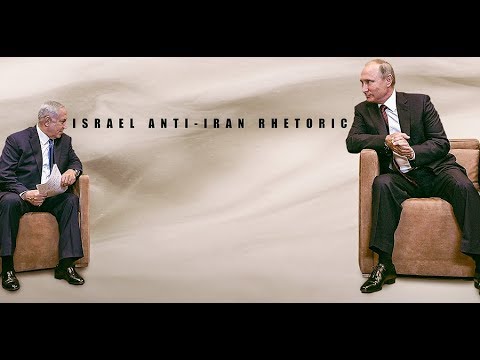
‘Israel sees Iran as obstacle to its policies’
Press TV – August 25, 2017
Prime Minister Benjamin Netanyahu has said that Israel felt threatened by Iran’s growing influence in the Middle East. Netanyahu expressed his Iranophobic view in a meeting with Russian President Vladimir Putin in Russia’s Black Sea resort of Sochi on Wednesday. Press TV has asked Scott Rickard, former American intelligence linguist from Tampa, Florida, and Brent Budowsky, a columnist at The Hill from Washington, to give their thoughts on the issue.
Rickard said Tel Aviv is concerned about the fact that the regime could not carry out its old project to spread sectarian divisions and pave the way for dismemberment of the countries in the Middle East region because of the Iranian-led resistance against Israeli policies, not only in the occupied territories of Palestine but also in the whole region.
“Iran is not a threat to Israel whatsoever. The threat that Israel sees is the fact that their Oded Yinon Plan is being put to a hold by Iran,” the intelligence linguist said on Thursday night.
“They (the Israelis) look at Iran as a threat only because they have no influence on their governments and Iran is autonomous and is not under the Zionist influence,” he added.
Since the victory of the Islamic Republic of Iran in 1979, Tehran has been critical of Israel’s policies in the region, whereas “no leaders [of other states] even dared to speak out against Zionism,” Rickard argued. … continue
Blog Roll
 Aletho News
- What’s Behind U.S./Israeli Strikes On Iranian Pistachio Factories?
- Seyed M. Marandi: U.S. Military DIVIDED? Iran’s Secret Defense EXPOSED
- How I fell foul of the BBC thought police
- The End of NATO
- 37 days of war on Iran cost US staggering $42bln, tracker shows
- Baghdad tells Asian refiners, traders to begin loading Iraqi crude amid Iranian exemption
- Under fire, Moscow and Tehran close ranks
- Iran, US receive Pakistan-mediated plan for ceasefire then final deal
- Iran submits demands for end to war as mediators scramble ahead of Trump deadline
- Iran Threatens Retaliatory Strike on Stargate AI Project in UAE
- If Americans Knew
- U.N. experts demand Israel release prominent Gaza doctor after reports of ‘severe torture’
- Israel’s Latest Genocide Is Against the Shias of Lebanon. Why Is the World Silent?
- How Eliot Cohen’s influence over U.S. war-making paved the way for Trump’s war crimes in Iran
- Israelis don’t pay for the weapons we ‘sell’ to them — US taxpayers do
- While Distancing from AIPAC, Most 2028 Democratic Hopefuls Are Still Embracing Israel
- A brief history of the Israeli nuclear program, the open secret at the heart of the Iran war
- Israeli Settlers Killed a Palestinian Farmer on His Own Land, in Front of His Father. Yes, Again
- The US-Israeli War on Science is an Assault on our Future
- 100+ International Law Experts Say US Strikes on Iran Violate UN Charter, Could Be War Crimes
- ‘Vile, Horrifying, Evil’: Trump Threatens to Bomb Nation of 90 Million People ‘Back to the Stone Ages’
- No Tricks Zone
- An Inconvenient Tree: Uncovered In Alps… Europe Much Warmer Than Today 6000 Years Ago
- New Study Reports A 60% Slowdown In Greenland’s Ice Loss Rate In The Last Decade
- Low Intensity Tornado Wrecks Major Solar Farm, Creating A Potential Toxic Dump
- New Study Finds Warming Saves Lives…Cold Temperatures 12 Times More Deadly Than Excess Heat
- German Science Blog Accuses PIK Climate Institute Of Hallucinating Climate Tipping Points
- Devastating Assessment Of Comirnaty Vaccine By Former Senior Pfizer Europe Toxicologist
- New Study: CO2 Is ‘Effectively Negligible’ As An Explanatory Climate Change Factor Since 2000
- Former Pfizer Toxicologist Dr. Helmut Sterz Tells Bundestag Hearing Pfizer Vaccine Should Have Never Been Approved
- Energy Expert: Germany’s Nuclear Phaseout Was A “500 Billion Euro Mistake”
- New Research: South Australia’s Mid-Holocene Sea Surface Temperatures Were 4°C Warmer Than Today
 Aletho News