Afghanistan: UN mission condemns killing of at least 15 civilians in airstrike
UN News Centre | September 29, 2016
The United Nations mission in Afghanistan has condemned the killing of at least 15 civilian men and the injuring of at least 13 others, including at least one boy, in an airstrike targeting the Islamic State of Iraq and the Levant (ISIL/Da’esh) conducted yesterday in the country’s eastern district of Achin.
In a press statement, the UN Assistance Mission (UNAMA) reiterated the need for all parties to the conflict to adhere to their obligations under international humanitarian law.
“UNAMA calls on the Government and international military forces to launch a prompt, independent, impartial, transparent, and effective investigation into this incident,” the mission said.
In the early morning of 28 September, an international military forces unmanned aerial vehicle conducted an airstrike, reportedly targeting members of ISIL/Da’esh, which struck a civilian home, killing the 15 civilians, according to UNAMA.
The civilians had gathered in a village to celebrate the return of a tribal elder from the Hajj pilgrimage to Mecca and were reportedly sleeping in a guesthouse of the elder when the airstrike occurred. Civilian victims of the strike included students and a teacher, as well as members of families considered to be pro-Government. Government sources report that ISIL/Da’esh personnel also died in the attack, UNAMA said.
The mission highlighted that in a press release issued yesterday, United States Force-Afghanistan acknowledged conducting the airstrike, but refrained from elaborating further, indicating that they “are still reviewing all materials related to the strike.”
UNAMA also expressed condolences to the families of those killed in the incident and wished a speedy recovery to the injured.
Afghanistan has been in protracted conflict for almost 35 years, which, in addition to being prone to recurrent natural disasters, has seriously hampered poverty reduction and development, strained the fabric of society and depleted the country’s coping mechanisms.
‘If Germany is Really Independent, It Must Close Ramstein’
Sputnik – 30.09.2016
Wolfgang Jung, a retired German teacher from Kaiserslautern, Germany, has done everything to try to get the government to close Ramstein Airbase.
In April, he filed a lawsuit in a federal court, saying that the deadly drone strikes using the base were a violation of international law.
His case has been dismissed, but he hasn’t lost hope.
Interviewed by Sputnik Deutschland, the spritely 88-year-old explained that his case, filed in April at the Federal Administrative Court in Leipzig, had been dismissed, because his claim supposedly ‘did not concern him personally’.
“I filed a lawsuit against the use of the Ramstein Airbase, which violates international law and the German constitution,” the retired teacher said. He added that over the course of four years, Ramstein has become central to the US drone war in Afghanistan.
“My case was dismissed. It was not even considered. I was simply denied the right to bring my suit,” Jung noted, explaining that he was told that he “personally was not affected by the military drones,” and therefore “cannot sue.”
Frustrated by the result, the retiree-turned-activist suggested that “according to the logic of the court, German citizens do not have the right to file a lawsuit against actions that are illegal under international law originating from US military bases on German territory.”
Kabul heading for night of the long knives
By M K Bhadrakumar | Indian Punchline | September 29, 2016
There is, understandably, a degree of triumphalism in Delhi that Afghan President Ashraf Ghani lost no time to follow India’s footfalls and relay to the SAARC that he too cannot attend the planned summit of the grouping in Islamabad in November. But his explanation will raise eyebrows.
Ghani explained that the security situation in his country is acute. Fair enough. But then, he went on to add that that he will be “fully engaged” due to his “responsibilities as the Commander in Chief”. Ghani at least seems certain that he will continue to be the C-in-C six weeks hence. That is, perhaps, the only ray of hope at the present juncture when political uncertainties loom large.
The 2-year term of the Afghan National Unity Government (NUG) headed by Ghani is expiring today. From tomorrow, Afghanistan enters unchartered waters. The compromise deal on co-habitation between Ghani and the present Chief Executive Officer Abdullah, which was literally imposed on them by the US Secretary of State John Kerry two years ago, envisaged that Afghanistan would make political transition to a parliamentary system latest by today on the basis of a new constitution and electoral laws.
But with Ghani and Abdullah caught in the cobweb of factional politics, NUG got paralysed and could not fulfil the expectations placed on it during its 2-year life span. Meanwhile, elections have not been held for the Afghan parliament either, despite its term ending over a year ago. With the executive and the legislative body lacking legitimacy, a constitutional deadlock arises.
What happens now? When the US state department spokesman Mark Toner was asked about the fate of the NUG and whether Obama administration (which is entering lame duck phase) would undertake any further mediatory mission on a constitutional transition, he was evasive, saying,
- I’m not going to predict what role (US will play), except to say that we’re – we remain committed to working with the Afghan Government and leadership in trying to continue along the reform agenda that they’re working on, but also, as you note, to ensure the smooth democratic transition to the next government.
The US seems to look away from the legitimacy question that hangs above the Ghani government beyond today and prefer to cast its eye on the horizon toward a “smooth democratic transition to the next government”. But, how will the transition be possible? (See the RSIS commentary The Coming Political Crisis in Afghanistan.)
But, by a curious coincidence, today has also been fixed as the date for the formal signing of Ghani’s peace deal with the famous Mujahideen leader Gulbuddin Hekmatyar (‘Butcher of Kabul’) at a ceremony in Kabul. Hekmatyar himself will participate in the ceremony via a video conference from his undisclosed location in Pakistan.
Hekmatyar is not taking chances – nor his Pakistani mentors. After all, you only live once and there is no knowing whether Hekmatyar will be physically safe in Kabul, where his sworn Tajik enemies from Panjshir and various other assorted old Mujahideen war horses who would have old scores to settle with him, are present.
For a start, it will be interesting to see what brave face Abdullah puts on the Ghani-Hekmatyar deal. He is between the rock and a hard place. On the one hand, he knows the deal is intended to get political space for Ghani who lacks a power base of his own. Also, he will be savvy enough to know that Hekmatyar’s entry, a Mujahideen leader who was more than a match for Ahmed Shah Massoud himself in many, is bound to change the Afghan calculus radically and his own prospects of realising his overvaulting presidential ambitions recede significantly.
On the other hand, former Afghan President Hamid Karzai is waiting in the wings to be invited by any Loya Jirga that may be convened, to head the interim government. Abdullah seems to have weighed his options and decided that it is tactically prudent to allow the NUG to limp along for a while, given his congruence of interests with Ghani (as well as with Uncle Sam) to somehow keep Karzai out in the cold.
However, the known unknown is going to be Hekmatyar’s role in the power structure. It is all very well to say his group Hezb-i-Islami will be allowed to function as a political party and the US and UN are preparing to delist him as a dangerous terrorist. But politics, for Hekmatyar, is about power.
And it is improbable he can be kept waiting in a ‘safe house’ in Pakistan for long. He will insist that his due place of habitation is the presidential palace in Kabul; at the very least, he will expect a position that is on par with Abdullah’s (who was after all only Massoud’s English-language interpreter when he himself was the iconic figure of the Afghan jihad who was lionised by both Pakistan and the US.)
To be sure, Hekmatyar’s re-entry will evoke strong feelings among Afghans who see him as an agent of Pakistan’s Inter-Services Intelligence. There have been demonstrations in Kabul against Ghani’s Faustian deal with him. Afghans have not forgotten the savagery with which Hekmatyar pursued power.
The widely-held belief among Afghans is that Hekmatyar killed more Afghan Mujahideen than he cared to kill Soviet troops. He incessantly lobbed rockets into Kabul City from the surrounding mountain tops and systematically reduced the capital to rubble in his bitter struggle for power with Massoud in the early nineties after the Mujahideen takeover. ((See an excellent piece by Terry Glavin at the National Post, The rehabilitation of Gulbuddin Hekmatyar, the Butcher of Kabul.)
How could the Mujahideen forget that Hekmatyar waded through a river of Afghan blood? The Afghans will expect an answer to the big question: If Hekmatyar is okay, why not the Taliban, too?
The thought seems to have occurred to Karzai already, who remarked two days ago that if the Taliban control territory in Afghanistan, he doesn’t see anything incongruous because it is, after all, their country, too.
Where Is That Wasteful Government Spending?
By Lawrence Wittner | CounterPunch | September 27, 2016
In early September 2016, Donald Trump announced his plan for a vast expansion of the U.S. military, including 90,000 new soldiers for the Army, nearly 75 new ships for the Navy, and dozens of new fighter aircraft for the Air Force. Although the cost of this increase would be substantial–about $90 billion per year–it would be covered, the GOP presidential candidate said, by cutting wasteful government spending.
But where, exactly, is the waste? In fiscal 2015, the federal government engaged in $1.1 trillion of discretionary spending, but relatively small amounts went for things like education (6 percent), veterans’ benefits (6 percent), energy and the environment (4 percent), and transportation (2 percent). The biggest item, by far, in the U.S. budget was military spending: roughly $600 billion (54 percent). If military spending were increased to $690 billion and other areas were cut to fund this increase, the military would receive roughly 63 percent of the U.S. government’s discretionary spending.
Well, you might say, maybe it’s worth it. After all, the armed forces defend the United States from enemy attack. But, in fact, the U.S. government already has far more powerful military forces than any other country. China, the world’s #2 military power, spends only about a third of what the United States does on the military. Russia spends about a ninth. There are, of course, occasional terrorist attacks within American borders. But the vast and expensive U.S. military machine–in the form of missiles, fighter planes, battleships, and bombers–is simply not effective against this kind of danger.
Furthermore, the U.S. Department of Defense certainly leads the way in wasteful behavior. As William Hartung, the director of the Arms and Security Project of the Center for International Policy, points out, “the military waste machine is running full speed ahead.” There are the helicopter gears worth $500 each purchased by the Army at $8,000 each, the $2.7 billion spent “on an air surveillance balloon that doesn’t work,” and “the accumulation of billions of dollars’ worth of weapons components that will never be used.” Private companies like Halliburton profited handsomely from Pentagon contracts for their projects in Afghanistan, such as “a multimillion-dollar `highway to nowhere,’” a $43 million gas station in nowhere, a $25 million `state of the art’ headquarters for the U.S. military in Helmand Province . . . that no one ever used, and the payment of actual salaries to countless thousands of no ones aptly labeled `ghost soldiers.’” Last year, Pro Publica created an interactive graphic revealing $17 billion in wasteful U.S. spending uncovered by the U.S. Special Inspector General for Afghan Reconstruction.
Not surprisingly, as Hartung reports, the Pentagon functions without an auditing system. Although, a quarter century ago, Congress mandated that the Pentagon audit itself, it has never managed to do so. Thus, the Defense Department doesn’t know how much equipment it has purchased, how much it has been overcharged, or how many contractors it employs. The Project on Government Oversight maintains that the Pentagon has spent about $6 billion thus far on “fixing” its audit problem. But it has done so, Hartung notes, “with no solution in sight.”
The story of the F-35 jet fighter shows how easily U.S. military spending gets out of hand. Back in 2001, when the cost of this aircraft-building program was considered astronomical, the initial estimate was $233 billion. Today, the price tag has more than quadrupled, with estimates ranging from $1.1 trillion to $1.4 trillion, making it the most expensive weapon in human history. The planes reportedly cost $135 million each, and even the pilots’ helmets run $400,000 apiece. Moreover, the planes remain unusable. Although the U.S. Marine Corps and the U.S. Air Force recently declared their versions of the F-35 combat ready, the Pentagon’s top testing official blasted that assertion in a 16-page memo, deriding them as thoroughly unsuitable for combat. The planes, he reported, had “outstanding performance deficiencies.” His assessment was reinforced in mid-September 2016, when the Air Force grounded 10 of its first F-35 fighters due to problems with their cooling lines.
U.S. wars, of course, are particularly expensive, as they require the deployment of large military forces and hardware to far-flung places, chew up very costly military equipment, and necessitate veterans’ benefits for the survivors. Taking these and other factors into account, a recent study at Brown University’s Watson Institute for International and Public Affairs put the cost to U.S. taxpayers of the U.S. wars in Iraq and Afghanistan at nearly $5 trillion thus far. According to the report’s author, Neta Crawford, this figure is “so large as to be almost incomprehensible.”
Even without war, another military expense is likely to create a U.S. budgetary crisis over the course of the next 30 years: $1 trillion for the rebuilding of the U.S. nuclear weapons complex, plus the construction of new nuclear missiles, nuclear submarines, and nuclear-armed aircraft. Aside from the vast cost, an obvious problem with this expenditure is that these weapons will either never be used or, if they are used, will destroy the world.
Wasted money, wasted lives, or maybe both. That’s the promise of increased military spending.
IMF: Mideast conflicts have erased development gains for whole generation
Press TV – September 16, 2016
The International Monetary Fund (IMF) says conflicts in the Middle East are not only devastating economies in countries such as Iraq, Libya, Syria and Yemen, but they have also erased “development gains for a whole generation.”
The fund issued a report titled the Economic Impact of Conflicts and the Refugee Crisis in MENA (Middle East and North Africa) on Friday, where it said conflicts were killing economies in the countries gripped by war and sapping growth in neighboring countries and those hosting millions of refugees.
Middle Eastern and North African countries battered by fighting have suffered average losses of 6-15 percentage points in the gross domestic product (GDP) in three years, compared to a 4-9 percentage-point average worldwide, according to the report.
The IMF report showed that the drops in economic output in Syria, Libya and Yemen in recent years have far exceeded the worldwide average.
Syria’s gross domestic product level is currently less than half the level it was five years ago before the start of the conflict, the IMF stated.
The report showed Yemen lost 25-35 percent of its GDP in 2015 alone, in the wake of the deadly Saudi campaign.
Oil-dependent Libya saw its GDP fall 24 percent in 2014, the IMF said.
Physical infrastructure damage, now estimated at $137.8 billion in Syria and more than $20 billion in Yemen, has reduced trade and output in neighboring countries, according to the report.
Countries bordering high-intensity conflict zone showed an average annual GDP decline of 1.4 percentage points worldwide, with a bigger drop of 1.9 percentage points in the Middle East and North Africa region.
Refugees’ plight
The fleeing of more than half of Syria’s 22 million population, 6.6 million internally and more than five million to other countries, has magnified economic losses, dramatically escalating poverty, unemployment and school dropouts in countries that were already struggling, the IMF said.
Many of the refugees seeking asylum in other countries are skilled workers and professionals forced by war and persecution to leave the conflict zones in hope of better lives.
However, according to the IMF, because refugees often have fewer rights than local populations, those landing in developing countries are often absorbed into already disadvantaged local communities forming a new underclass comprising refugees and the existing poor in the host country, which in turn leads to a detrimental effect on the host countries.
For those refugees that land in Europe, where the influx of refugees has only had a small impact on economy, there have been some positive effects on the host countries, according to the report.
More funds needed
The IMF report has revealed the huge scale of the refugee crisis and the pressure it put on several United Nations institutions, especially the United Nations High Commissioner for Refugees (UNHCR) and the World Food Programme.
The two UN organizations have been playing a leading role in the provision of humanitarian assistance, both to internally displaced people and refugees.
However, the IMF report says funding has not kept up with the sharp increase in needs.
For instance, the World Food Programme and the UNHCR have had to cut their services to refugees in Jordan due to funding constraints, which may have contributed to the acceleration of refugee flows to Europe from late 2014, according to the report.
The IMF report urged policymakers to scale up humanitarian aid in conflict zones and neighboring countries hosting refugees and prioritize fiscal spending to protect human life and serve basic public needs.
The report comes as the UN General Assembly is preparing to host a summit on refugees in New York next week.
The UN plans to use the summit as a platform to urge governments, private donors, and humanitarian agencies to support the organization in its efforts to ease suffering of the victims of world conflicts.
Analysts believe the MENA conflicts and the following refugee crisis are the outcome of the West’s policies in the Middle East and North Africa.
Corruption and waste in Afghanistan: Role of US government exposed in new report
RT |September 14, 2016
A new report examining widespread corruption and waste in Afghanistan found that the practice blossomed following the US invasion in 2001. The problem was fed by its slowness to recognize the problem and exacerbated by the injection of tens of billions dollars into the economy with very little oversight.
“Corruption in Conflict: Lessons from the U.S. Experience in Afghanistan” examined how from 2001 to 2014 the US government, through the Department of Defense, State, Treasury and Justice and the US Agency for International Development (USAID) understood the risks of corruption in Afghanistan, how the US evolved its understanding, and the effectiveness of that response.
SIGAR was created by Congress to provide independent and objective oversight of Afghan reconstruction projects and activities.
The report released on Wednesday had five main findings: 1) corruption undermined the US mission in Afghanistan by fueling grievances against the Afghan government and channeling material support to the Taliban; 2) the injection of tens of billions of dollars into the Afghan economy was governed by flawed oversight and contracting practices and “partnering with malign powerbrokers”; 3) the US was slow to recognize the problem; 4) when it did recognize the depth of corruption “security and political goals” trumped anti-corruption efforts; 5) in areas where it was successful it was only “in the absence of sustained Afghan and US political commitment.”
The report defined corruption as “the abuse of entrusted authority for private gain,” and placed in the context of Afghanistan’s kinship-based society where the gains from corruption often benefited not just an individual but a family, clan, tribe or ethnic group.
Corruption is the system of governance
According to SIGAR about $113.1 billion has been appropriated for Afghanistan relief and reconstruction since 2002. The funds were used by the Afghan National Security Forces to promote good governance, conduct development assistance, and engage in counter-narcotics and anti-corruption efforts.
In a 2010 US Embassy Kabul report on a meeting with senior US officials and the Afghan National Security Adviser, Dr. Rangin Dadfar Spanta said “corruption is not just a problem for the system of governance in Afghanistan; it is the system of governance.”
The report referred to a 2015 UK research that showed there was weak separation of the private and public spheres which resulted in widespread private appropriation of public resources, vertical- and identity-based relationships had primacy over horizontal, i.e. citizen-to-citizen relationships, and politics was centered around a centralization of power and patron-client relations replicated throughout society.
Opportunities for corruption expanded after 2001 as the amount of money in the economy grew from millions to billions of dollars with the Department of Defense budget at time equivalent to the entire Afghan economy and sometimes quadruple the amount.
“Many of the funds were licit, arriving via civilian and military contracts. At their peak in fiscal year 2012, DOD contract obligations for services in Afghanistan including transportation, construction, base support, translation/interpretation, an private security total approximately $19 billion, just under the Afghanistan’s 2012 gross domestic product of $20,5 billion,” stated the report. “From 2007 to 2014 those contract obligation totaled more than 89 billion.”
Billions worth scandals
During the years of the Obama administration, Afghanistan was rocked by two corruption scandals: The Salehi arrest and the Kabul Bank losing $1 billion.
Salehi was involved in the New Ansari Money Exchange, a money transfer firm that moved money into and out of Afghanistan. The exchange was suspected of moving billions of dollars out of Afghanistan for Afghan government officials, drug traffickers and insurgents. US law enforcement and intelligence investigators estimated that as much as $2.78 billion was taken out of Afghanistan between 2007 and 2010.
“A wiretap recorded an aide to Karzai, Mohammad Zia Salehi, soliciting a bribe in exchange for obstructing the investigation into New Ansari. Reportedly, after US officials played some of the wiretaps for an adviser to Karzai, the adviser approved Salehi’s arrest,” stated the report.
Salehi was arrested in July 2010, but was released within hours on the orders of President Karzai and the case was dropped. The New York Times reported Salehi had once worked for notorious warlord Rashid Dostum and was also “being paid by the CIA.”
“If true, this would suggest a US intelligence agency was paying an individual as an intelligence asset even as US law enforcement agencies were building a major corruption case against him,” stated the report.
The other corruption scandal involved the Kabul Bank, which was used among other things to pay the salaries of the Afghan military and police, was found in 2010 to have lost nearly $1 billion of US taxpayer’s funded foreign assistance to Afghanistan. The bank’s deposits had seemingly vanished into Dubai and off-shore locations and unknown offshore bank accounts and tax havens, through Ponzi schemes, fraudulent loans, mass looting and insider loans to fake and bogus companies by less than 12 people who were apparently linked to President Karzai.
Lack of oversight and slow response
Against this the DOD and USAID vetted contractors and implemented contracting guidance to reduce opportunities for corruption and while they were somewhat successful, “they were not unified by an overarching strategy or backed by sustained, high-level US political commitment,” stated the report.
During this time, from mid-2011 to March 2012, the US also sought to explore political reconciliation with the Taliban and to do so the US had to preserve a working relationship with President Karzai to ensure an Afghan government buy-in.
“The US government showed a lack of political commitment. When it became clear the Afghan government was not willing to undertake true reform – because it involved taking action against people connected to the highest levels of political power – the US government failed to use all of its available tools to incentivize steps towards resolution,” stated the report.
Another weakness in tackling corruption was the high turnover of US civilian and military staff “meant US institutional memory was weak and efforts were not always informed by previous experience.”
“One Afghan anticorruption expert noted that US agencies often hosted workshops and training that lasted only a few days, with limited follow-up. He suggested that a more fruitful approach might have been to establish a standing institute to train auditors, attorneys, investigative police and others for year, rather than days,” stated the report.
SIGAR’s report quoted Ryan Crocker, who re-opened the US Embassy in Kabul soon after the September 11, 2001 attacks and served again as ambassador in 2011-2012 as saying that “the ultimate point of failure for our efforts wasn’t an insurgency. It was the weight of endemic corruption.”
The report comes with recommendations for addressing corruption risks to US strategic objectives for future missions. It recommended that Congress pass legislation to make clear “that anticorruption is a national security priority in a contingency operation” and required strategies, benchmarks and “annual reporting on implementation.” It also recommended that Congress consider sanctions and the DOD, State and USAID should establish a joint vetting unit to better vet contractors and subcontractors in the field.
The recommendations for the executive branch level are that interagency task force should formulate policy and lead strategy on anticorruption during an operation and the intelligence community should analyze links between host government officials, corruption, criminality, trafficking and terrorism and provide regular updates.
“In Afghanistan today, corruption remains an enormous challenge to security, political stability, and development,” SIGAR said.
US drone attack kills 22 Afghan soldiers: Helmand council
Press TV – August 27, 2016
A US drone attack has killed 22 Afghan soldiers held by Taliban militants in the southern Helmand province, while Taliban have overrun a strategic district elsewhere.
Provincial officials announced the fatalities on Saturday. Taliban also confirmed the death toll, saying the airstrike had killed three of the group’s members in the Nad-e-Ali district on Thursday.
Helmand is a strategically important province for both the Afghan government and Taliban militants, who control or contest 10 of the 14 districts in the opium-rich province.
On Saturday, Taliban militants seized a strategic district in the eastern province of Paktia, from which they can surge towards several other provinces.
Officials said dozens of police and soldiers were killed as the militants captured the Jani Khel district after five days of siege.
Local governor Abdul Rahman Solamal said hundreds of militants attacked police check posts overnight, prompting security forces to flee the district.
Jani Khel sits at an intersection linking eight districts. It also connects Paktia with neighboring Khost province and Pakistan.
“If we do not retake it (Jani Khel) soon then Taliban can easily move from one province to another and can undermine security in at least three provinces,” Solamal warned.
More than 20 soldiers and police were killed and another 20 wounded in the fighting overnight, while some 200 Taliban insurgents were killed, he said.
In a statement, Taliban spokesman Zabihullah Mujahid said large amounts of equipment had been captured, including armored vehicles, light and heavy weapons and ammunition.
Taliban have regrouped since the death of former leader Mullah Akhtar Mansour earlier in the year and are reported to be currently in control of more than 65 percent of the country.
Fierce fighting is currently ongoing against the militants across the country, notably in Helmand and around the northern city of Kunduz, which they briefly seized last year.
Late last month, the United Nations Assistance Mission in Afghanistan (UNAMA) said it had recorded 1,601 civilian deaths and 3,565 injuries in Afghanistan in the first six months of 2016.
The mission warned that civilian casualties had hit a record high this year, describing them as “alarming and shameful.”
Featured Video
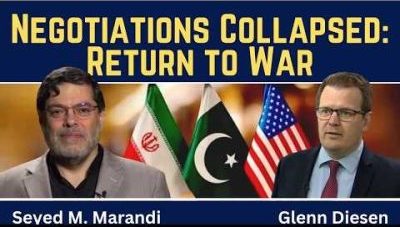
Seyed M. Marandi: Negotiations Collapsed – Return to War
or go to
Aletho News Archives – Video-Images
From the Archives
Wartime internment camps in Australia
National Archives of Australia
World War I
During World War I, for security reasons the Australian Government pursued a comprehensive internment policy against enemy aliens living in Australia.
Initially only those born in countries at war with Australia were classed as enemy aliens, but later this was expanded to include people of enemy nations who were naturalised British subjects, Australian-born descendants of migrants born in enemy nations and others who were thought to pose a threat to Australia’s security.
Australia interned almost 7,000 people during World War I, of whom about 4,500 were enemy aliens and British nationals of German ancestry already resident in Australia.
Records of World War I internment camps
World War II
During World War II, Australian authorities established internment camps for three reasons – to prevent residents from assisting Australia’s enemies, to appease public opinion and to house overseas internees sent to Australia for the duration of the war.
Unlike World War I, the initial aim of internment during the later conflict was to identify and intern those who posed a particular threat to the safety or defence of the country. As the war progressed, however, this policy changed and Japanese residents were interned en masse. In the later years of the war, Germans and Italians were also interned on the basis of nationality, particularly those living in the north of Australia. In all, just over 20 per cent of all Italians resident in Australia were interned. … continue
Blog Roll
 Aletho News
- Tomorrow’s naval blockade showdown
- ‘Israel’ attacks civilians to hide its embarrassing military failures & out of pure sadism
- Any Foreign Military Vessel Approaching Hormuz Under Any Pretext ‘Will Be Dealt With Severely’: IRGC
- Diplomats slam US negotiators’ performance in Iran talks
- Trump Refuses Exit Ramp, War with Iran will Continue
- Trump Says US Naval Blockade in Strait of Hormuz Will Begin Shortly
- US, Iran end 21-hour talks without agreement
- US IRAN TALKS: Who Are the Crazy Ones Here? /Lt Col Daniel Davis
- Talks with the US end without a deal over excessive US demands: Iran
- Feeling Better, Getting Worse: How Psychiatric Drugs Create the Illusion They Cure
- If Americans Knew
- US-Iran ceasefire negotiations make zero progress – Daily Update
- Pro-Israel ‘Thinktanks’ and Individuals who Influence U.S. Foreign Policy
- Mearsheimer reveals how Israel dictates US policies on Iran, Gaza – video
- After killing 350+, Israel still has a “score to settle” with Lebanon before ceasefire – Daily Update
- Military aid to Israel emerges as the latest political litmus test for Democrats
- The only Palestinian children’s rights organization closes following years-long Israeli campaign against it
- ‘I Can’t Forget the Smell’: Lebanese Reel After Israel Kills Over 300 in Single Day
- DNC Shoots Down Resolutions Calling Out AIPAC and Limiting Arms to Israel
- TCN: Is Israel Blackmailing President Trump?
- Israel killed at least 303 Lebanese yesterday – who were they? Daily Update
- No Tricks Zone
- German Expert: Heat Dome Led To Record Temps In Western USA…Warmer In 1934, 1936
- New Study: No Linear Warming Or Glacier Retreat Along Northern Antarctic Peninsula Since 1980s
- An Inconvenient Tree: Uncovered In Alps… Europe Much Warmer Than Today 6000 Years Ago
- New Study Reports A 60% Slowdown In Greenland’s Ice Loss Rate In The Last Decade
- Low Intensity Tornado Wrecks Major Solar Farm, Creating A Potential Toxic Dump
- New Study Finds Warming Saves Lives…Cold Temperatures 12 Times More Deadly Than Excess Heat
- German Science Blog Accuses PIK Climate Institute Of Hallucinating Climate Tipping Points
- Devastating Assessment Of Comirnaty Vaccine By Former Senior Pfizer Europe Toxicologist
- New Study: CO2 Is ‘Effectively Negligible’ As An Explanatory Climate Change Factor Since 2000
- Former Pfizer Toxicologist Dr. Helmut Sterz Tells Bundestag Hearing Pfizer Vaccine Should Have Never Been Approved
 Aletho News