Susan Rice has blood on her hands: Journalist
By Don DeBar | Press TV | November 15, 2020
Susan Rice is another one of the recycled Clinton people, and in fact the Democratic Party had her going back even before that.
Her mother has been around. She helped design Pell Grants. She had been with Brookings since ‘92 which is about when Susan graduated into the Clinton administration (in 1993) and went directly to the National Security Council.
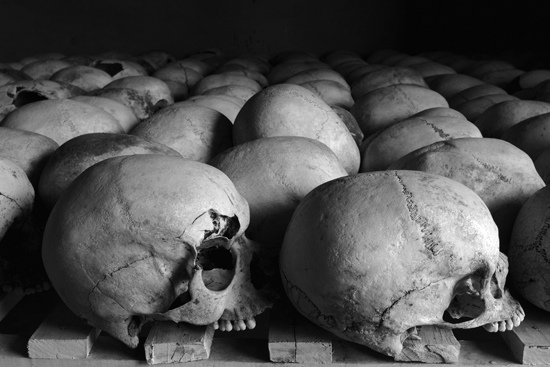
She was with Bill Clinton for his administration. Obama had her – first at the UN, and then as his National Security Adviser (I think). She’s about as inside as it gets. She has blood on her hands in Africa, Rwanda.
The people’s understanding of the Rwandan genocide in the United States is exactly upside down. There was a genocide there, but it was the side that the US-backed, not surprisingly, and that was Susan Rice’s project. She was a member of the National Security Council to do international affairs and that was one big act of the Clinton administration – that move to pivot to Africa, around Rwanda.
It was also the enabling of their so-called humanitarian interventions, and in any way that’s her child.
At the United Nations, she helped bring us the destruction of Libya, enabled the situation in Syria to the extent that she could, and tried to sell authority for the US to bomb the hell out of Syria as well.
It’s going to be more war, really.
Let me remind people when Trump took office in January of 2017 the foreign policy that Susan Rice and Barack Obama and the Clintons, and John Kerry had set in motion had us where we were having war games at Russia and China’s borders from the Baltics to the Korean peninsula, on a constant basis, with a number of international incidents – including NATO members shooting down Russian pilots over Syria – any of which could have escalated, and really turning on a dime into a global thermonuclear war.
Trump for all the things he has done does not leave us – if he’s leaving – in that situation. But what they’re doing is installing the very people who created that condition to start from day one to bring us right back to the brink with Russia and China.
I think it’s very scary that Susan Rice is being considered for this. I don’t think it’s a surprise at all. Anyone who knows who Joe Biden is not surprised.
Don DeBar is an American journalist and political commentator based in New York.
Israel sets its sights on the Red Sea and Bab El-Mandeb
Dr Adnan Abu Amer | MEMO | October 6, 2020
Day after day, the magnitude of the Israeli benefits from normalisation with the Gulf become clearer, especially on the military and strategic levels. The latest benefit is talk about establishing Israeli military bases in the Gulf, the Red Sea and Bab El-Mandab, or benefiting from the Emirati bases scattered in these areas, and the military benefits for Israel brought about by controlling these international seaports.
The Emirati-Israeli agreement included many clauses with security and military aspects, which stipulate bilateral cooperation in these areas, and their commitment to take important measures to prevent the use of their territories to carry out a hostile or “terrorist” attack targeting the other party, and that each side will not support any hostile operations in the territory of the other party. It also stipulates bilateral security coordination and strengthening the military security relationship.
These carefully worded texts have increased the assumptions regarding the possibility of Israel benefitting from the Emirati military bases in the region, whether in the Gulf, Bab El-Mandab, or the Red Sea. This may lead to the establishment of Israeli military base in the Emirates, as well as its use of Emirati waters, and the possibility that it will continue down this path to increase its foothold in Socotra, the Bab El-Mandab Strait and Djibouti.
It is worth noting that the possibility of establishing Israeli military bases in the Gulf, or Israel benefiting from the Emirati military bases, is not easy, but very dangerous. This is because as much as it may give hope to the Gulf states, and the UAE in particular, to defend itself against the threat of any imagined attack from Iran, it, at the same time, exposes it to danger. This is because the fulfilment of this premise means that Israel can strike Iranian targets in the Gulf waters, or in the heart of Iran itself, which will be matched by Iran targeting these Israeli bases in the Gulf.
The agreement allows Israel to get geographically closer to Iran and allows it to improve ties with the Gulf which is a strategic area in terms of trade and oil.
Iran will not stand idly by and remain silent regarding the Emirati-Israeli move, which means the situation in the Gulf region is likely to grow tense and suffer. Iran is present everywhere through the Revolutionary Guard and its sleeping armed cells.
Security of maritime navigation in the Gulf is a purely Israeli interest within the strategy of “curbing the Iranian threat” and strengthening the relationship with the Gulf states, former Israeli Foreign Minister, Yisrael Katz, has said.
Israel aims to gain control over the most important sea straits in the region, which belong to the Emirati and Saudi bases, which enhances the expansion of Israel’s military and strategic influence.
A document by the Israeli Ministry of Intelligence revealed that the agreement with Abu Dhabi paves the way for intensifying military cooperation between them in the Red Sea. This is because it is interested in expanding security cooperation in the region, leading to strengthening the military alliance between them. This includes intensive Israeli military movement, especially through the countries of the Horn of Africa, most notably Ethiopia, at a time when Israeli arms companies are seeking to increase their exports to the Emirates.
US Secretary of State, Mike Pompeo, announced that the UAE and Israel had agreed to build a security and military alliance against Iran to protect American interests and the Middle East, and to increase security and intelligence cooperation to confront what he referred to as “terrorism”.
But Israel has not left Yemen out of its view, the country offers a gateway to the Bab El-Mandab Strait. Tel Aviv aims to crack down on the Palestinian resistance to prevent it from receiving the weapons that reach it from Iran through the Red Sea, reaching the Sinai, and then the Gaza Strip.
As long as the most important provisions of the Emirati-Israeli agreement are related to security and military relations, Israel will work to exploit the agreement to increase its influence in the Gulf. Meanwhile, the UAE is looking for control in the Gulf with the support of the US and Israel, so there is joint Israeli and Emirati work in Yemen to establish joint military bases and areas of influence, specifically on the island of Socotra, which would allow it to completely control the path that passes from India to the West, and penetrates into Africa, which is a strategic location for Israel.
US requires Kenya to publicly back Israel or forget FTA: Nairobi
Press TV – September 22, 2020
The United States has required Kenya to support Israel’s commercial and political interests or forget a free trade agreement (FTA) with Washington, with activists warning that the inclusion of Israel in the bilateral deal would undermine the Kenyan reputation.
Washington and Nairobi recently resumed trade pact talks after a several-week halt. The US has set a raft of conditions in the ongoing negotiations for the bilateral deal.
In its objectives seen by the Kenyan newspaper East African, Washington has indicated that the conditional deal should, with respect to commercial partnerships, discourage actions that prejudice or discourage business between the United States and Israel.
The White House argues that the FTA should “discourage politically motivated actions to boycott, divest from, and sanction Israel.”
The US also wants the “elimination of politically motivated, non-tariff barriers on Israeli goods, services, or other commerce imposed on Israel; and the elimination of State-sponsored, unsanctioned foreign boycotts of Israel, or compliance with the Arab League Boycott of Israel.”
“The United States published its negotiating position before negotiations began for all to see. We are negotiating with transparency and openness,” said the US ambassador to Kenya, Kyle McCarter, when asked about the inclusion of Israel in the trade talks.
“This is how we have treated the numerous other countries with which we have concluded successful free trade agreements benefiting both parties.”
The inclusion of Israel as a third party in the negotiation agenda has sparked criticism from activists who warn that the agreement could be too risky for Kenya.
The East African Tax and Governance Network (EATGN) and East African Trade Network (EATN), the groups who have been following developments on the matter, said Nairobi was being “entrapped” in the Palestine-Israeli conflict.
“Due to Kenya’s own special relationship with Israel and its pragmatic approach in dealing with issues like tensions in the Middle East, US demands for such political connotations in the USFTA would undercut the country’s reputation,” said Leonard Wanyama, the co-ordinator of the EATGN and vice-president of the International Relations Society of Kenya, a lobby for foreign policy experts in Nairobi.
This week, the Tax Network said Washington’s demand could place Nairobi in a difficult situation. It called for officials to reject the demand.
Nairobi’s own published objectives indicate the agreement must be discussed within the limits of the East African Community (EAC) and the World Trade Organization (WTO) regulations.
Kenya also wants a deal that takes into consideration the “special and differential treatment applicable to Kenya as a developing country,” according to the report.
Traditionally, Kenya has often recognized Israel, but rarely makes a public statement endorsing one side or the other and supports the so-called two-state solution to the decades-long Israeli-Palestinian conflict. It allows Palestine to establish a representative office in Nairobi.
Last year, Israel’s Channel 13 said in a report that Israeli commandos were training local forces in more than a dozen African nations where Israeli arms exporters are already accused of being complicit in war crimes.
The channel showed footage of Israeli officers coaching Tanzanian troopers in hand-to-hand krav maga, hostage operations and urban combat, saying there was a dramatic rise in Tel Aviv’s military activities in Africa.
Tel Aviv’s policy to spice up ties with Africa, the report said, also features combined efforts by the Israeli Foreign Ministry, military, the Mossad spy agency and the regime’s security agency Shin Bet.
The report named Ethiopia, Rwanda, Kenya, Tanzania, Malawi, Zambia, South Africa, Angola, Nigeria, Cameroon, Togo, Ivory Coast and Ghana as the African countries that Israel was seeking to stake out a niche with.
Prime Minister Benjamin Netanyahu has made inroads into Africa a key part of his agenda, becoming the first Israeli leader to visit the continent in 50 years in 2016.
The US demand for protection of Israeli interests means that Washington seeks to counter the international Boycott, Divestment, and Sanctions (BDS) movement, which targets Israel, according to the East African report.
The BDS movement was initiated in 2005 by over 170 Palestinian organizations and later turned international. It is meant to initiate “various forms of boycott against Israel until it meets its obligations under international law” and end its occupation of Palestinian lands.
The BDS, which was inspired by the South African anti-apartheid movement, has claimed several recent successes in isolating Israel.
At Least 37 Million People Displaced by US War on Terror, Study Finds
Sputnik – 08.09.2020
A new report by the Costs of War Project has found that at least 37 million people have been displaced by the US War on Terror; however, the group warns that the estimate is conservative and the real total could be far higher.
According to a report published on Tuesday by the Costs of War Project at Brown University’s Watson Institute of International and Public Affairs, at least 37 million people have been displaced, either internally or been forced to become refugees, in eight different countries as a result of the US War on Terror, begun in 2001.
For comparison, the population of the US state of California is 39.5 million, and the population of Canada is 37.59 million. However, the researchers warn that is a “very conservative” estimate, as the true number could be closer to between 48 and 59 million people.
The report focused on eight conflicts, including declared and undeclared war zones, where the US has carried out military operations under the guise of destroying international terrorism: Afghanistan, Pakistan, Iraq, Syria, Libya, Yemen, Somalia and the Philippines.
The group’s data was compiled from the United Nations High Commissioner for Refugees (UNHCR), the Internal Displacement Monitoring Center (IDMC), the International Organization for Migration (IOM) and the UN Office for the Coordination of Humanitarian Affairs (OCHA).
In Afghanistan, some 5.3 million people have been displaced in total since 2001, although this number is in considerable dispute, as the researchers concluded that 2.1 million Afghans had fled the country since 2001, but they also found evidence that as many as 2.4 million had fled just between 2012 and 2019. Another 3.2 million have been displaced internally. The researchers noted, however, that war and civil turmoil in the Central Asian country has continued almost nonstop since the late 1970s.
In neighboring Pakistan, the US war near the Afghan border has displaced some 3.7 million people, including 360,000 refugees abroad and 1.56 million from the border area.
Meanwhile in Libya, where the US supported the 2011 overthrow of longtime leader Muammar Gaddafi, at least 1.2 million people have been displaced in what the IDMC called a “state collapse trigger[ed] mass displacement.” At the start of 2020, the report notes, 451,000 remained internally displaced, and the civil war continues to rage.
Iraq has the largest total number, with 9.2 million people displaced by several wars. In March 2003, the US launched a massive invasion of Iraq to overthrow Saddam Hussein, and the brutal counterinsurgency war that erupted afterward had displaced some 4.7 million people by 2007. While the US war in Iraq officially ended in 2011, war erupted again just three years later in 2014, when Daesh roared into existence, and the US once again became involved in major combat operations in Mesopotamia. By 2020, 650,000 Iraqis remained refugees abroad, and 1.4 million had been internally displaced.
In neighboring Syria, where Daesh first established its would-be caliphate amid a civil war raging since 2011, the US became involved at several distinct levels over the years. The report was very truncated in its analysis, looking just at the five provinces where US forces fought on the ground – Aleppo, al-Hasakah, al-Raqqa, Deir ez-Zor and Homs – and only since 2017.
By those criteria, 7.1 million had been displaced, including 470,000 internally. However, 220,000 of those have been just since October 2019, when the Turkish invasion of eastern Syria pushed 220,000 Kurds from their homes, including 17,900 who crossed the border into Iraq for safety.
However, the report notes that if a different metric were used – one including all of Syria beginning in 2013, when the US started arming Syrian rebel militias – the number of displaced persons increases massively to between 44 and 51 million people.
In Somalia, where the US has waged or supported wars for decades, “virtually all Somalis have been displaced by violence at least once in their life,” the Norwegian Refugee Council is quoted as saying in the report. From a population of 15 million, some 4.2 million have been displaced by US operations, including 80,000 refugees and 3.4 million internally displaced persons.
Like Somalia, Yemen has seen war rage for decades. The US began airstrikes in Yemen in 2002, pursuing al-Qaeda in the Arabian Peninsula, but conditions deteriorated catastrophically in 2015, when Saudi Arabia and several of its allies, including the US, launched a war against the Yemeni Houthi movement.
The ongoing war, in which Saudi, Emirati and Moroccan aircraft have bombarded the country and supported militias on the ground as well as forces loyal to ousted Yemeni President Abdrabbuh Mansur Hadi, has displaced 4.4 million people. In 2019 alone, 400,000 more people were displaced. According to the OCHA, 100,000 Yemenis have been killed by combat operations since 2015, and another 130,000 have died from hunger and disease.
The Philippines is the only country on the list not located in southwestern Asia or northern or eastern Africa. However, the US-supported military operations in Mindanao against groups such as the Moro Islamic Liberation Front, Abu Sayyaf and the Maute Group have displaced some 1.7 million Filipinos, nearly all of them internally.
“In documenting displacement caused by the US post-9/11 wars, we are not suggesting the US government or the United States as a country is solely responsible for the displacement. Causation is never so simple,” the authors note in the report. “Causation always involves a multiplicity of combatants and other powerful actors, centuries of history, and large-scale political, economic, and social forces. Even in the simplest of cases, conditions of pre-existing poverty, environmental change, prior wars, and other forms of violence shape who is displaced and who is not.”
Democrats’ election platform demands end to ‘forever wars’ — most of which were launched last time Biden held office
By Helen Buyniski | RT | August 17, 2020
The Democratic Party’s 2020 electoral platform includes a call to end the US’ “forever wars” – which sounds great, except that a Democratic president started many of those wars and the party has stonewalled efforts to end them.
“Democrats know it’s time to bring nearly two decades of unceasing conflict to an end,” the platform, released in draft form on Monday and expected to be approved by Democratic leaders later this week, reads.
It’s a relatively uncontroversial statement in itself: at nearly 19 years and counting, the US war in Afghanistan is the longest conflict in American history. The various satellite wars that have sprung up as part of the “War on Terror” have devastated large swathes of the Middle East – and the US itself, which has spent upwards of $6 trillion on fighting them while much of the country slid into a permanent recession – over the past two decades.
However, the responsibility for many of those satellite conflicts lies with Democrat Barack Obama’s administration, which liberally bombed Syria, Libya, Pakistan, Yemen, and Somalia in addition to Afghanistan and Iraq, turning the already-disastrous two-front War on Terror of his predecessor George W. Bush into a regional quagmire. Democratic candidate Joe Biden was Obama’s vice president, cheering those wars on and defending his boss’ decisions. Now, the party wants Americans to believe only he can put an end to them.
The 2020 platform promises a “durable and inclusive political settlement in Afghanistan” along with an end to US support for the Saudi-led war in Yemen and a repeal of the threadbare 2001 Authorization for Use of Military Force (AUMF) that has been repeatedly (mis)used to excuse US interventions in the Middle East under the guise of fighting terrorism. All great ideas, but the party has been here before.
Despite receiving the Nobel Peace Prize shortly after his inauguration, Obama didn’t bring the peace he promised in his 2008 campaign – he just made war more palatable to the liberals who had previously protested against it. By dramatically expanding the US drone program and cloaking murderous airstrikes in the warm fuzzy rhetoric of spreading democracy and “responsibility to protect,” Obama, his Secretary of State Hillary Clinton, and the Democrats in his administration took the wars out of sight, and out of mind for the average American.
Even while taking credit for “ending” the war in Iraq, launched in 2003 on the fraudulent pretext that leader Saddam Hussein was amassing weapons of mass destruction and/or was somehow involved in the 9/11 terror attacks, Obama subsequently returned US troops to Iraq under the pretext of fighting the Islamic State terror group (IS, ISIS/ISIL). However, IS is widely considered an outgrowth of the US’ botched Iraq policy, which destabilized the region by flooding the country with many of the suddenly-unemployed (but still well-armed) remnants of Saddam Hussein’s military. At the same time, the CIA has a long history of supporting terror groups that dovetail with its political aims, from arming and training al-Qaeda’s predecessors to fight the Soviets in Afghanistan to arming and training so-called “moderate rebels” whose tactics are often indistinguishable from ISIL or al-Qaeda to take out the Syrian government. Terrorism has thrived amid the war “against” it.
That the Democrats should campaign in 2020 on ending forever wars suggests they might have learned something from 2016, when then-candidate Donald Trump pledged to do just that, luring disaffected liberals who couldn’t bring themselves to vote for notorious warmonger Hillary Clinton. Her flippant dismissal of the brutal murder of Libyan leader Muammar Gaddafi – “We came, we saw, he died!” – remains chilling years after she helped reduce the country with the highest standard of living on the African continent to a failed state where slaves are sold in open markets.
But while Trump has profoundly failed to keep his end-the-wars promise, instead increasing the number of drone strikes beyond Obama’s sky-high levels, even Trump’s minimal efforts to withdraw troops from Syria and Afghanistan have been ferociously opposed by the Democrats.
Indeed, the only foreign policy acts the self-styled #Resistance has praised from their political nemesis have been his bombings of Syria in response to extremely dubious reports of gas attacks by the Assad government. CNN’s Fareed Zakaria claimed the strike represented the day Trump “became president of the United States.”
The disingenuous call to end the military quagmires is far from the only lofty pledge embedded in the Democrats’ platform, which alternates between eye-rolling social-justice pandering and common-sense measures with broad appeal.
The party has also pledged to “end the Trump Administration’s politicization of the armed forces,” improve healthcare for veterans, “root out systemic racism from our military justice system,” and “prioritize more effective and less costly diplomatic, intelligence and law enforcement tools” over military invasions in conducting foreign policy.
It remains to be seen which, if any, of those promises they will keep.
Helen Buyniski is an American journalist and political commentator at RT. Follow her on Twitter @velocirapture23
Lebanon: Pearl on the New Silk Road or Zone of Dark Age Chaos
By Matthew Ehret | Strategic Culture Foundation | August 16, 2020
Many voices have been quick to enter the chorus of commentators hypothesizing the manifold possible causes of the devastating explosions which occurred on the afternoon of August 4 in Beirut which has led to mass anarchy and the surprising resignation of the government on August 11th.
While I have no great novel contribution to offer in that growing array of hypotheses (which are slowly turning into noise), I would like to share an insight which addresses a too-often-overlooked aspect of the role of Lebanon in the Great Game. Before proceeding, it is useful to hold in the mind several points of certainty:
1) The official narrative of a chance mishap of Turkish fireworks instigating the detonation of the 2700 tons of ammonium nitrate which had been sitting at the Port of Beirut for six years is entirely unbelievable.
2) This event should not beconsidered in any way separated from the anomalously large pattern of explosions and arson which have spread across the Arab and African worlds in recent weeks.
3) This pattern of chaos must itself be seen in the context of the clash between two systems: The collapsing NATO unipolar alliance on the one side and the New Silk Road-led multipolar alliance on the other.
The Matter of Causality
The Middle East has been labelled the “geopolitical pivot” of the world island by devout adherents to the Hobbesian worldview of Halford Mackinder such as Zbigniew Brzezinski, Henry Kissinger and Bernard Lewis. Today it is understood that whomever can either stabilize or destabilize this region can control the levers for the “world island” (Africa, Europe, and Eurasia)… and as Mackinder once said “who controls the world island, controls the world.”
In the case of Lebanon, the role that this region plays as “Pearl on the New Silk Road”, and intersection of all major civilizations of the globe, has shaped global policy considerations in Washington, London and Israel for the past several years. The destructive events underway Lebanon cannot be separated from the breathtaking spread of Belt and Road projects across Iraq, Iran, Syria and other Arab nations.
More than Coincidence
In the weeks surrounding the Lebanon disaster, Iran found herself the target of a vicious sequence of attacks as arson and explosions were unleashed beginning with the June 26 explosion at the Khojir Missile production complex, the June 30 explosion at a medical clinic killing 19, a July 2 explosion at the Natanz nuclear facility which set Iran’s centrifuge production schedule back by months and the July 15 fires at the Bushehr Aluminum plant. Additionally, and the UAE experienced its own anomalous fires which ravaged one of the most important markets in Dubai (luckily empty due to Covid-19) on August 5.
If any of these anomalies were taken individually, “chance” could always be blamed as culprit. However when one takes them all together and recognizes the revolutionary BRI-connected agreements currently being finalized between both China and Russia with Iran one gets a solid idea of the deeper causality underlying these apparently separate situations of chaos.
Iran and the New Silk Road
The fact is that the long awaited $400 billion China-Iran economic and security pact which is in its final stages of negotiation includes not only important oil for infrastructure agreements which will extend advanced rail and new energy grids to Iran. This program also includes an important military/security partnership which will dramatically transform the “rules of the game” in the middle east for generations. Elements of this pact include not only defense and intelligence sharing infrastructure, but also bolster China’s new digital currency the e-RMB which will circumvent western controls on trade.
Meanwhile Russia’s announced extension of the 20 year security/economic partnership agreement first signed in 2001 by Presidents Rouhani and Putin will certainly be finalized in the coming months. Iran has also made it’s interests in acquiring Russia’s S400 system well known and all geopoliticians understand well that this system which is spreading fast across all of Eurasia from Turkey to South Korea renders America’s F-35s and THAAD missile systems impotent and obsolete.
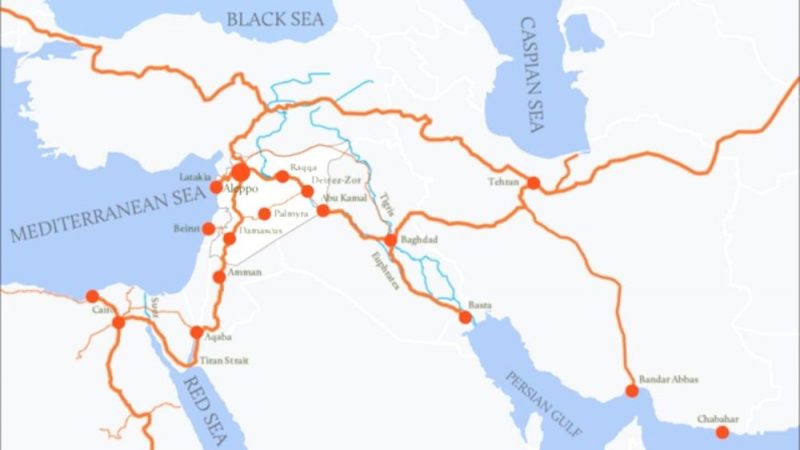
If the China-Russia-Iran triangle can be firmly established, then not only does America’s sanctions regime policy disintegrate, but a vital platform of Middle Eastern development will be established to better spearhead the growth of transport and advanced development corridors from China to the east (and Africa) along the New Silk Road. Since November 2018 an Iran-Iraq-Syria railway has taken great strides towards implementation as part of middle east reconstruction funded by Iran and ultimately connecting to Syria’s Lattakia Port as a hub to the Mediterranean and a 32km Shalamcheh-Bashra railway is in an advanced phase of development with Iran’s Minister of Roads and Urban Development Abbas Ahmad stating:
“Iran’s railway system is linked to railways of central Asia, China and Russia and if the 32 km Shalamcheh-Basra railway will be constructed, Iraq can transfer goods and passengers to Russia and China and vice versa.”
While the 32 km rail line would be phase one, the 2nd phase is scheduled to be a 1,545 km rail and highway to the Syrian Port.
The Iran-Iraq-Syria regional participation in the broader New Silk Road is incredibly important, especially since Iraq signed a September 2019 Memorandum of Understanding to join the BRI under a new infrastructure-for-oil program. This plan involves China’s reconstruction of the war-torn region under a multiphase program of hard infrastructure (rail, roads, energy and water projects), and soft infrastructure (hospitals, schools and cultural centers).
Similarly, China has made its intention to bring real reconstruction programs to Syria are also well known and President Bashar Al Assad’s long overdue Four Seas Strategy first announced in 2004 (and sabotaged with the Arab Spring) is finally coming back on line. President Assad had won 7 countries over to sign onto it’s construction by 2010 and entailed connecting all four major water systems (Mediterranean, Caspian, Black Sea, and Persian Gulf) together via rail and infrastructure corridors as a driver for win-win cooperation and regional modernization. Assad had said of the project in 2009 “once we link these four seas, we become the unavoidable intersection of the whole world in investment, transport and more.”
A video of this important project can be viewed here:
Lebanon: Pearl of the New Silk Road
Lebanon’s participation in this long-awaited process should be obvious to all, sharing as it does a major border with Syria, hosting 1.5 million Syrian refugees and also a vital port to the Mediterranean making it a keystone of east-west development. Connecting this emerging zone of development to Africa where the Belt and Road has emerged as a leading force of change and hope in recent years, Lebanon finds itself among the most strategic keystones.
Designs for rail connecting Lebanon’s Port of Tripoli through Jordan and thence through Egypt would create a new positive field of prosperity which could dramatically change the rules of the Middle East and Africa forever.
On June 17, 2020 the Chinese Embassy publicized an offer to extend BRI projects to Lebanon featuring a modern railway connecting coastal cities in the north with Tripoli through Beirut to Naquora in the south. China’s National Machinery IMP/EXP Corporation also offered the construction of three new power plants of 700 MW each, a new national energy grid and port modernization. The Embassy’s press release stated:
“The Chinese side is ready to carry out practical cooperation actively with the Lebanese side on the basis of equality and mutual benefit in the framework of joint work to build the Belt and Road… China is committed to cooperation with other nations mainly through the role of its companies, the leading role of the market, and the catalytic role of government and commercial operation. Chinese companies continue to follow with interest the opportunities of cooperation in infrastructure and other fields in Lebanon.”
These offers were applauded by Hassan Nasrallah (leader of Lebanon’s Hezbollah and partner in the coalition government) who had been an outspoken advocate of Lebanon’s participation in the BRI for years. Nasrallah has also advocated liberating Lebanon from the IMF whose structural adjustments and conditionality-laden investments have resulted in the small country’s debt exploding to over 170% of its GDP with nothing to show for it.
It is noteworthy that the same day China made its offers known publicly, Washington imposed the Caesar Syria Civilian Protection Act to punish all who wish to trade with Syria which itself has not only further crushed Syria’s cries for economic reconstruction, but had taken direct aim at Lebanon which sees 90% of Syrian goods flow through its borders to the Mediterranean.
When Chinese delegations first made their vision for the BRI’s extension to Lebanon known in March 2019 where the Arab Highway from Beirut to Damascus and rail to China was floated, western stooge Saad Al Hariri said no, preferring instead to sign onto a $10 billion IMF plan. Over a year later, not one iota of infrastructure was built. Secretary of State Pompeo played a major role at keeping Lebanon from “going east” as Nasrallah and even President Aoun had desired when he stated in a March 2019 press conference “Lebanon and the Lebanese people face a choice: bravely move forward as an independent and proud nation or allow the dark ambitions of Iran and Hezbollah to dictate your future.”
Pompeo’s obsessive drive to eliminate Hezbollah and especially the influence of Nasrallah in Lebanon has less to do with any perceived threat Israel claims to its existence and everything with Hezbollah and Iran’s embrace of China’s Belt and Road Initiative.
When Chinese offers were renewed in June 2020, Pompeo’s stooge David Schenker (Assistant Secretary of State for Near East Affairs) gave a June 23 interview stating that Hezbollah “is not an organization that seeks reform, but rather one that lives on corruption”. Schenker warned Lebanon from falling into the “China Trap” and said that Nasrallah’s demands that Lebanon “look east” was “shocking”.
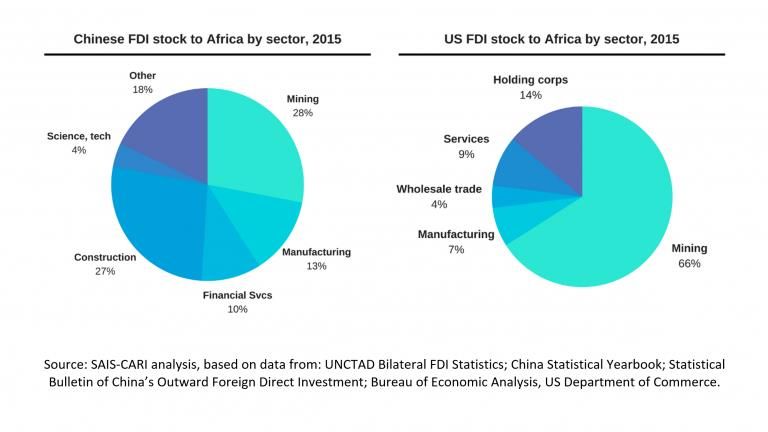
Without going into a lengthy refutation of the “China debt trap” argument (which is really just the effect of western imperialists projecting their own dirty practices onto China’s BRI), it is sufficient to say that it is a 100% myth. A summary overview of Chinese investments in Africa which are numerically similar to American investments demonstrates that the difference is found entirely in QUALITY as China uniquely invests in real construction, manufacturing and even African banking which are verboten by all imperialists who only wish to use Africa as a looting ground for cheap resources and cheaper labor.
Speaking to this issue, and the hope for Lebanon more broadly the BRIX Sweden’s Hussein Askary stated:
“It is becoming obvious that a tiny country like Lebanon, but fully sovereign and independent can break the back of a global empire by opting to follow the path of progress, national sovereignty and international cooperation according to the win-win model offered by China. This does not mean cutting all bridges to the west. It is necessary to keep those that are in the true interest of Lebanon and its people. If the U.S. and Europe wish to change their policies and join China in offering Lebanon power, transport, water and agro-industrial investments, the Lebanese people and leadership would take them with open arms”.
“Woke” America is More Asleep to Injustice Than Ever
By Tony Cartalucci – New Eastern Outlook – 06.07.2020
To drive home just how superficial and empty recent protests in America are and how little besides further division and destruction will become of them – take the fate of two fictional characters recently put in the spotlight by baying activists – PepsiCo’s “Aunt Jemima” breakfast food brand and Mars Incorporated’s “Uncle Ben’s” rice products.
Both came into the crosshairs of “woke” America. Both fictional characters will now no longer be used.
It might appear like a huge victory for “woke” America.
CNN in their article, “The Aunt Jemima brand, acknowledging its racist past, will be retired,” would claim:
Quaker Oats is retiring the more than 130-year-old Aunt Jemima brand and logo, acknowledging its origins are based on a racial stereotype.
“As we work to make progress toward racial equality through several initiatives, we also must take a hard look at our portfolio of brands and ensure they reflect our values and meet our consumers’ expectations,” the Pepsi-owned company said in a statement provided to CNN Business.
And the London Guardian in their article, “Uncle Ben’s rice firm to scrap brand image of black farmer,” would claim:
The rice company Uncle Ben’s is to scrap the image of a black farmer the brand has used since the 1940s and could change its name, as companies react to growing concerns over racial bias and injustice.
The parent company, Mars, said Uncle Ben was a fictional character whose name was first used in 1946 as a reference to an African American Texan rice farmer.
While there is no doubt that both fictional characters represented stereotypes and are rooted in America’s racist past – “woke” America’s belief that somehow this was a priority or some form of victory begs belief. So does the fact that those opposed to expanding mobs and their “cancel culture” have crafted the most anemic counterpoints.
Some claim that the fictional characters were either inspired or portrayed by real African Americans who profited from the branding.
What neither side mentioned was the very real abuses both companies are guilty of – abuses that are both inhumane and rooted in extraordinary, inexcusable, and thus far utterly unaddressed racism.
PepsiCo and Mars Sponsor/Profit From Slavery and Mass Murder
Both “woke” America as well as those trying to form opposition to it have entirely missed the fact that PepsiCo and Mars Inc. – two multi-billion dollar businesses – are literally engaged in modern day slavery to create their products while sponsoring policy think-tanks that have engineered wars targeting African nations, leading to the deaths of tens of thousands and open-air slave markets where black people – today – are sold into bondage.
This would seem to be a much greater transgression against black people than their crude depictions in company branding and demands much more serious action than merely adjusting marketing strategies – such as demanding boards of directors to resign or full-spectrum, permanent boycotts for these businesses and their many subsidiaries and brands.
Unfortunately for “woke” America, fictional characters are a priority taken head-on all while activists blissfully munch on chocolate bars made by cocoa harvested by African slave labor and sip on drinks made by a corporation which sponsors US wars abroad in which blacks are mass murdered and enslaved.
Your Mars Inc. Chocolate Comes from Slave Labor
If you enjoy chocolate snacks like 3 Musketeers, Snickers, Mars, and Milky Way bars, the chocolate you ate most likely came from a developing nation with dismal working conditions and in many cases, child and slave labor.
Mars Inc. along with Nestle, Hersey, and many other chocolate companies, source cocoa from Africa and especially the nations of Cote d’Ivoire and Ghana.
A Washington Post article published just last year titled, “Cocoa’s child laborers,” would note:
Mars, Nestlé and Hershey pledged nearly two decades ago to stop using cocoa harvested by children. Yet much of the chocolate you buy still starts with child labor.
The article elaborated, noting:
About two-thirds of the world’s cocoa supply comes from West Africa where, according to a 2015 U.S. Labor Department report, more than 2 million children were engaged in dangerous labor in cocoa-growing regions.
When asked this spring, representatives of some of the biggest and best-known brands — Hershey, Mars and Nestlé — could not guarantee that any of their chocolates were produced without child labor.
Black children used as labor and under conditions and for wages bordering slavery to produce cocoa Mars Inc. knowingly uses in its products – and makes billions of dollars off of – seems like a much bigger issue than what is undoubtedly offensive labelling practiced by Mars Inc. through its “Uncle Ben’s” brand.
Indicative of the carefully controlled nature of ongoing protests is how the Washington Post has reported on Mars Inc.’s genuinely offensive, even criminal predation on black labor in Africa in the past as well as Mars Inc.’s offensive branding more recently, but failed to link the two in its most recent reporting – thus artfully avoiding a genuinely “woke” readership and any genuine damage real protests and boycotts would have on Mars Inc. and other corporations whose interests Washington Post regularly serves as a voice for.
Big-Biz like PepsiCo and Mars Inc. are an Affront to All
Mars Inc. – alongside PepsiCo, Nestle, and Hersey – was also involved in funding anti-labelling campaigns to prevent legislation from passing that would force food manufacturers to inform consumers their products contained genetically modified organisms (GMO).
Corporations spending money to hide dangerous ingredients from consumers endangers everyone’s health – black and white, left and right.
Mars Inc., PepsiCo, and others defend such campaigning, claiming that such legislation would be “costly” – as would ensuring all of their ingredients are ethically procured and free of child and/or slave labor.
Yet Mars Inc., PepsiCo, and others are multi-billion dollar businesses. The Mars family which owns Mars Inc. consists mostly of family members who are billionaires – not mere millionaires – but billionaires.
Their daily “concerns” include ensuring their sprawling 82,000 acre ranches have enough water and that they receive the most lenient penalties when crashing their Porsche SUV’s into vans carrying families.
Mars Inc. and other multi-billion dollar businesses can afford to do better, simply at the cost of being slightly less well-off billionaires or perhaps even being demoted to millionaires – yet they simply and deliberately choose to profit off the backs of poorly informed consumers at home and exploited/enslaved labor abroad.
If what Mars Inc. and PepsiCo contributed to was only limited to cultivating ignorant consumers at home and using slave labor abroad it would be bad enough. And if America’s “woke revolution” was serious about justice, Mars Inc. and PepsiCo would be on the chopping block for much more than their crude, racist marketing, and would have more demanded of them.
But that is not all Mars Inc. and PepsiCo are contributing to.
Sponsoring Warmongering and Mass Murder in Africa (and everywhere else)
Both PepsiCo and Mars Inc. are sponsors of policy think tanks like the Brookings Institution whose “scholars” and “fellows” churn out the blueprints for US wars which are then rubber stamped by the US Congress and sold to the public by the corporate media.
Brooking Institution’s 2019 annual report (PDF) lists both companies – PepsiCo and Mars Inc. – as sponsors as were both companies in 2011 (PDF).
Brookings and its corporate-sponsored staff worked diligently in 2011 to help sell the US military intervention in the North African nation of Libya. It was a key institution involved in creating and spreading the notion of “R2P” or the “responsibility to protect” used as flimsy cover for a long-planned US desire to effect regime change in Libya.
As early as February 2011, the Brookings Institution published articles and papers like, “United States Must Take Lead on Libya,” in which Brookings “Senior Fellows” – funded by the likes of PepsiCo and Mars Inc. – made the nascent calls for US military intervention that would eventually lead to the US arming militants openly and carrying out air strikes across the nation.
Indeed, the US armed militants in eastern Libya – a hotbed for racism and extremism and the epicenters of Al Qaeda in the country – as well as provided roving bands of armed gangs air support as they swept the nation.
When Libyan leader Muammar Qaddafi was violently swept from power later that year, the estimated 2.5 million Africans from across the continent he took in, providing housing and living wages to, found themselves being hunted by US-backed militants.
To explain the blatant and explosive racism that predictably swept Libya in the wake of the US-backed war, articles like the CS Monitor’s “How Qaddafi helped fuel fury toward Africans in Libya,” would claim:
Many experts – and African migrant workers themselves – say the animosity stems from anti-African racism found throughout the Arab world. But some say the anger has been made much worse by Mr. Qaddafi’s moves to buy the loyalty of black Libyans from the south of the country as well as his decades-long efforts to build Africa-wide patronage networks at great cost to the country’s Arab majority.
In other words – the CS Monitor and the Western “experts” it cited claim Qaddafi “fueled fury toward Africans” by merely spending resources to help them. It is an oblique attempt to justify the racism-driven genocide US-backed militants carried out during their “victory lap” in Libya.
Black Africans living in Libya were either driven out of the country, across the Mediterranean and into Europe to face hardship and racism there or either mass murdered in Libya or rounded up and enslaved.
The Western media – partners with institutions like Brookings – denied this at first – or attempted to excuse it like the CS Monitor – but eventually covered the fallout US military intervention in Libya and its long-planned regime change agenda triggered.
Reuters in their article, “African workers live in fear after Gaddafi overthrow,” would admit:
Tens of thousands of foreign workers have fled Libya since the armed revolt against Gaddafi’s 42-year-rule began in February, with Africans afraid they have become targets for fighters who accuse them of being mercenaries for Gaddafi.
This antipathy appears to have spread to all Africans, leaving them vulnerable to attacks, robbery and other abuse by the gun-toting, mostly young, fighters who ousted Gaddafi.
Identity cards of nationals from Chad, Niger, Mali, Sudan and other African states have been found on the bodies of gunmen who anti-Gaddafi fighters say were paid to confront them.
The BBC in its article, “Libya migrant ‘slave market’ footage sparks outrage,” would admit:
Migrants trying to reach Europe have spoken of being held by smugglers and forced to work for little or no money.
The footage released by CNN appears to show youths from Niger and other sub-Saharan countries being sold to buyers for about $400 (£300) at undisclosed locations in Libya.
While these media sources covered the fallout of the 2011 US military intervention, they were careful not to link the fallout directly to the intervention.
The US war against Libya was a humanitarian catastrophe deliberately engineered by Western think tanks funded by big-business like PepsiCo, Mars Inc., and many others, rubber stamped by politicians in Washington – both Democrat and Republican – and eagerly sold to the public by the corporate media.
And even as recently as 2016, Brookings “Senior Fellow” Shadi Hamid in a piece published on Brookings’ site titled, “Everyone says the Libya intervention was a failure. They’re wrong,” would remain insistent in defending the US-led war and the decimated, racist, and dysfunctional Libya left in its wake.
He argues that if the US didn’t intervene, Qaddafi would have successfully eliminated the racist extremists in eastern Libya and particularly in Benghazi who would eventually carry out genocide against Libya’s black population. Hamid simply omits any mention of this or who actually was based in Benghazi and instead refers to them merely as “protesters.”
Thus, PepsiCo and Mars Inc. – alongside oil corporations and weapons manufacturers – are funding an institution that not only engineers and eagerly promotes wars, they fund an institution that is utterly unapologetic about the calamity these wars cause – including wars like in Libya ending tragically for 2.5 million black Africans.
“Woke” America needs to be conscious enough to recognize the true injustice underpinning American society. It is very likely that as protesters in America and online around the globe rail against “Aunt Jemima” and “Uncle Ben’s” many activists are eagerly enjoying many of the other products produced by and profiting PepsiCo and Mars Inc. – oblivious to the fact that the ingredients are procured through child and slave labor in Africa and the profits are directed into promoting wars that leave blacks abroad dead, displaced, or enslaved. And as long as this is the case, nothing of any genuine substance will ever change in America or across the wider Western World.
If real justice is what Americans – all Americans – want, they need to truly wake up to this fact first.
If black lives matter, then why are African leaders with a different take on Covid-19 being taunted?
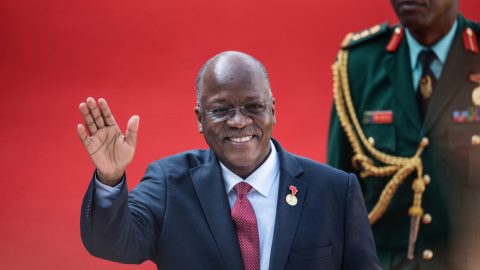
Tanzanian President John Pombe Magufuli © AFP / Michele Spatari
By Neil Clark | RT | June 24, 2020
The criticism of Tanzania’s and Madagascar’s presidents, John Magufuli and Andry Rajoelina, for challenging the Covid ‘consensus’ shows that, for some, Black Lives Matter counts only if black voices are saying the ‘right’ things.
YouTube has ‘Black Lives Matter’ as its Twitter bio. Pretty worthy, eh? But that didn’t stop the internet platform removing a video made by a Canadian activist who calls herself ‘Amazing Polly’ that featured claims made about Covid-19 and its treatment by the leaders of Tanzania and Madagascar. It has subsequently restored it, but the fact it took it down in the first place, alongside the sneering, hostile reaction from others to what the African leaders said, speaks volumes about the double standards currently on display.
Magufuli’s great crime was that he decided to test the testers. He instructed his country’s security services to send to Covid-19 testing labs samples taken from a pawpaw, a goat, some engine oil and a type of bird called a kware, among other non-human sources, but to assign them human names and ages. The pawpaw sample was given the name ‘Elizabeth Ane, 26 years, female.’ And guess what? The sample came back positive for Covid-19. As did those from the kware and the goat.
The testing kits had been imported from abroad. Clearly, as Magufuli – a PhD in chemistry – stated, something wasn’t quite right. “When you notice something like this, you must know there’s a dirty game played in those tests,” he said.
He advised his people, in relation to his government’s Covid-19 strategy, “Let us put God first. We must not be afraid of each other” – in stark contrast to the ‘Social distancing is here to stay’ Project Fear approach adopted elsewhere.
Magufuli also assured his people he would be sending a plane to collect an herbal cure for Covid-19 that was being promoted by Madagascar’s President Andry Rajoelina.
In her video, Amazing Polly not only includes extracts of speeches by the leaders of Magufuli and Rajoelina, but also focuses on the criticism they received from the global health establishment.
The subtext: How dare these uppity Africans challenge what we say! How dare they promote their own traditional medicines (instead of Big Pharma’s) or claim coronavirus tests are returning false positives!
“Caution must be taken about misinformation, especially on social media, about the effectiveness of certain remedies,” declared the World Health Organization (WHO). But should we really be so quick to dismiss Magufuli and Rajoelina, and what they have to say? The point is not whether we agree or disagree with the Tanzanian and Madagascan approaches, but rather that, at the very least, there should be some proper, grown-up debate.
At the time of writing, Madagascar has reported 15 deaths due to Covid-19, while Magufuli declared Tanzania coronavirus-free in early June, after a total of 21 deaths. Now, you might want to challenge those figures, which is your prerogative, but you can’t automatically presume they are not accurate.
“I’m certain many Tanzanians believe that the corona disease has been eliminated by God,” Magufuli said. Now there is nothing more likely to trigger a virtue-signaling ‘anti-racist’ Western global public health ‘consensus’ follower than a black African leader defying the ‘party line’ on Covid and citing the Lord. Just look at Western press coverage of Magufuli’s stance: ‘”Africa’s ‘bulldozer’ runs into Covid and claims God is on his side” was the headline of one very hostile piece on Bloomberg.com.
Another journalist declared that Magufuli was “a strong contender for the most asinine coronavirus global leader.”
The oft-repeated claim in reports on Tanzania is that there’s been a cover-up. Right on cue, the US Embassy to Tanzania weighed in on May 13, claiming the risk of contracting Covid-19 in Dar es-Salaam was “extremely high.” The intimation was that the Tanzanian leader couldn’t possibly be telling the truth about Covid. But wasn’t that assumption, just a tiny bit, er, racist?
Another African leader who challenged the ‘consensus’ on Covid-19 was Burundi’s Pierre Nkurunziza. Burundi, which didn’t impose a lockdown, actually expelled the WHO’s team from the country in May, accusing it of “unacceptable interference.” On June 8, Nkurunziza died suddenly, aged 55. Yet again, this didn’t get too much coverage, save for some articles in the West claiming he had died of coronavirus, even though the official cause was given as a heart attack. African leaders can be lauded, but only if they toe the politically correct line set by self-proclaimed ‘anti-racist’ men in suits in the West, it seems.
And this colonial mindset permeates even the ‘anti-imperialist’ movement. A friend of mine told me he went on a demonstration against NATO’s attack on Libya in 2011. Some Libyans present had banners of their country’s president, Muammar Gaddafi. They were told to take them down by the non-Libyan organisers. That’s right: Africans weren’t allowed to display banners of their country’s leader at a march opposing the bombing of their country.
Rajoelina hit the nail on the head when he said the only reason the rest of the world has refused to treat what he believes is his country’s cure for the coronavirus with the urgency and respect it deserves is that the remedy comes from Africa.
Isn’t it ironic that, at a time when Western establishment figures are trying to show us every day how wonderfully ‘anti-racist’ they are, black voices outside the US and Britain are being ignored, even laughed at?
Only last week, UK Prime Minister Boris Johnson expressed his disapproval that Britain gave 10 times as much aid to Tanzania as “we do to the six countries of the Western Balkans, who are acutely vulnerable to Russian meddling.” How interesting that aid money sent to Tanzania gets questioned only now, after the country didn’t follow the script on Covid-19.
One wonders how many of the celebrities, politicians and pundits publicly expressing support for Black Lives Matters today have actually read the work of inspirational black African leaders such as Ghana’s Kwame Nkrumah and Tanzania’s Julius Nyerere, or, in fact, have even heard of them? I imagine the answer would be very few, if any.
The arrogant dismissal of voices from Africa that dare to defy Western-elite orthodoxy, and the failure to even consider the possibility that African leaders have got it right and their Western counterparts might have got it wrong, is in itself a form of neo-colonialism. And, lest we forget, Nkrumah described that as “the worst form of imperialism.”
If Black Lives Matter, then ‘politically incorrect’ black opinions ought to be listened to with respect, and not with a smug, superior facial expression before being loftily dismissed in the way a teacher might deal with a naughty child. But in this dumbed-down era in which many unthinkingly follow the dominant globalist narrative, it’s simpler for some to ‘take a knee’ and post a photo of themselves on social media doing so than it is to take a moment to see the bigger picture.
Neil Clark is a journalist, writer, broadcaster and blogger. His award winning blog can be found at http://www.neilclark66.blogspot.com. He tweets on politics and world affairs @NeilClark66
Jacob Cohen: “The Zionists Have Become Masters in The Art of Propaganda”
Interview realized by Mohsen Abdelmoumen | American Herald Tribune | June 12, 2020
Mohsen Abdelmoumen: What is your analysis of the annexation of the West Bank this July 1?
Jacob Cohen: The Zionist regime is not crazy enough to annex the entire West Bank, because then it would have to naturalize all Palestinians. It only wants to annex the “useful” West Bank, i.e. the Jordan Valley, thus preventing a possible Palestinian State to control its own borders and the large Jewish settlement blocs. It would thus continue to have a submissive and cheap labor force at its disposal, and the cooperation of a docile Palestinian police force to maintain colonial order.
It is not sure that this annexation will take place on July 1. Zionists are pragmatic people and know how to step back to jump better.
But in any case, annexation or not, the Zionists will never give up these territories they claim. The Jordan Valley is already implicitly recognized to them by all the great powers, even Russia, to ensure “the security of Israel”. And no one can imagine that the Zionist regime would bring 700,000 settlers below the Green Line.
These are the main lines of a possible Israeli-Palestinian agreement, and the Palestinian Authority pretends to believe, madly or stupidly, that it could recover the whole of the West Bank.
How do you explain that twenty ministers of the Israeli government are of Moroccan origin? Israeli security and defense companies are based in Morocco. How do you analyze these facts? Is not Morocco a real launching pad for the normalization policy advocated by the Zionist entity of Israel?
Only ten ministers have a distant connection with Morocco, which they do not care about. It is the Judeo-Zionist lobby in Morocco, led by the “sayan” (Mossad agent) André Azoulay, advisor to the monarchy for forty years, who does everything to maintain the illusion of perfect understanding between Morocco and its former Jewish citizens. Everything is done in Morocco to rekindle an almost extinguished flame. This to allow the visit of Israelis to Morocco, tourists, artists, businessmen, to push towards an official normalization of Israeli-Moroccan relations.
It is true that Morocco, since the installation of Mossad in that country in the 1950s to send Moroccan Jews to Israel, and the agreement obtained from Hassan II in 1961 for this purpose, is Israel’s de facto ally and support for its legitimization in the Arab world. In 1986, in the middle of the Intifada, the King received with great pomp the Israeli leaders Rabin and Peres.
Furthermore Morocco, on the other hand, which needs American diplomatic support to ensure its stranglehold on Western Sahara, does everything possible to please Israel, whose influence on American institutions is known.
How do you explain the strategic redeployment of the Zionist entity of Israel throughout Africa?
This redeployment had begun in the fields of construction and agriculture as early as the 1960s, after African independences. A redeployment stopped by the June 1967 war and the military occupation of vast Arab territories. The non-aligned movement at the time was still very influential.
The Oslo Accords restored some good repute to the Zionist regime, because it was assumed that it would give a State to the Palestinians in the long run.
Africa from the 1990s was no longer this non-aligned bloc sensitive to a form of international justice. It had joined the globalist circuit and security issues had become paramount.
Israel had become an important and feared partner. Did it not contribute to the amputation of the southern part of Sudan? Its networks in East Africa are very active and their strike force is well known.
Finally, little by little, the Zionist regime has managed, something inconceivable 20 years ago, to win the diplomatic support of many African countries in crucial votes in international institutions.
Algeria is one of the few countries that does not recognize Israel. Doesn’t Algeria still remain a permanent target of the Zionist entity of Israel?
All Arab countries are a permanent target of the Zionist entity. Even countries that submit are not definitively spared. Thus, even Morocco is not immune to Mossad’s attempts to stir up separatism in the Berber areas. If for no other reason than to keep the pressure on this country and make it understand that it has an interest in keeping its nose clean.
Let us remember the fate of Iraq and Syria, which the Zionist regime contributed to destroying.
Algeria will not escape the Zionist vindictiveness, which will try to reach it in one way or another. But this country is far away, not very sensitive to foreign influence, sitting on a large income, with a long history of national resistance, and a strong sense of patriotism. This is what makes it one of the few countries to stand up to the Zionist entity. And because of its geographical position and size, it is a country that is essential to regional security and therefore preserved.
We know the weight of the Zionist lobby in the United States through AIPAC. What is the weight of the Zionist lobby in Europe?
No difference except from a formal point of view. In the United States, the Zionist lobby has a legal existence, with its recognized networks of influence, its buildings in Washington and elsewhere, its congresses, where any candidate for an important post, be it senator or president, must appear and express his support to Israel.
Whereas in Europe, the lobby is more discreet but no less effective. Practically all European countries have banned the BDS movement, and adopted the definition of anti-Semitism proposed by a Jewish organization fighting against the “Shoah”. With this in particular that any criticism of Israel is equated with anti-Semitism. European countries have not even been able to implement their resolution to label products that come from the Zionist settlements in the West Bank.
In France, at the CRIF (note: Representative Council of Jewish Institutions in France) dinner, the entire establishment of the French Republic, including the President, bowed down and received instructions from the Judeo-Zionist lobby.
The European Union has set up a body to combat anti-Semitism headed by the German Katharina Von Schnurbein. How do you explain the fact that the European Union is setting up a body to defend Israel’s interests with European taxpayers’ money and that there is no hesitation in condemning all those who are against the criminal and fascist policies of Israel by calling them anti-Semites?
“Antisemitism” has been an extraordinary discovery of the Judeo-Zionist lobby in Europe. Of course, we know the history of the Second World War. But for the past 30 years or so, this lobby has been working hard to make it the greatest scourge of the 21st century. A few arranged or staged attacks, a few so-called verbal aggressions, a few desecrations that come in at the right time, a swastika lost here or there, and all the media networks are being used to make it look like there’s a resurgence of anti-Semitism. European governments are under pressure. They cannot afford any weakness.
But from criticism of Israel, we move on to anti-Semitism. The argument is fallacious, but it works. When you criticize Israel, you stir up “hatred” against that country and European Jewish citizens, and thus anti-Semitic aggression. Therefore, Israel should not be criticized. Anti-Zionism becomes an offense because it is equated with anti-Semitism. Pro-Palestinian demonstrations are banned because they lead to anti-Semitism.
Anti-Semitism has become a kind of blank cheque given to the Zionists to do whatever they like in Palestine without being worried, condemned or criticized.
You are a great anti-Zionist activist and a defender of the just cause of the Palestinian people. In your book “Le printemps des Sayanim” (The Spring of the Sayanim), you talk about the role of the sayanim in the world. Can you explain to our readership what sayanim are and what exactly is their role?
The “sayanim”, in Hebrew “those who help”, are Jews who live outside Israel and who, by Zionist patriotism, collaborate with the Mossad in their fields of activity.
They were created as early as 1959 by the Mossad chief at the time, Méir Amit. They’re probably between 40,000 and 50,000. Victor Ostrovsky, a former Mossad agent and refugee in Canada, talks about it for certain cases. He estimated that in the 1980s, in London alone, there were 3,000 sayanim.
What is their utility? Mossad recruits sayanim who work voluntarily in all major areas. For example, the media: these Jewish journalists or press bosses around the world will orient information in such a way as to favor Israel at the expense of Arabs.
In the United States, the Jewish power in the film industry is well known. Just an example. In 1961, Hollywood produced the film “Exodus” with Paul Newman, which tells the story of the birth of Israel in 1948 from a Zionist point of view. This film has shaped Western consciousness for at least a generation.
The same could be said for the financial institutions based in New York and dominated by Judeo-Zionists.
In France, advertising, publishing, the press, television, university, etc. are more or less controlled by “sayanim”.
It is therefore easy to understand the Zionist lobby’s strike force, a strike force that remains moreover invisible.
Isn’t Zionism, which is the direct product of the Talmud and the Jewish Kabbalah, an ideology that is both racist and fascist?
If we take Zionism in its political sense, that is, in the nationalist vision of the political movements of the 19th century, it was a secular and progressive ideology. It had seduced tens of thousands of activists, particularly in Russia and Poland, who sought to realize their revolutionary ideal outside the progressive movements of the time. They wanted to transform the Jewish people, to make it “normal”.
Despite these characteristics, these activists, upon arriving in Palestine, had excluded the Arabs from their national project from the outset. The seeds of racism were already planted. The Arabs had to be expelled or got rid of somehow. Even the kibbutzim, the flagships of “Zionist socialism”, did not admit Arabs within them.
Wars and conquests, especially of the “biblical” cities in the West Bank, have plunged Israeli society into a messianic fascism and racism that is no longer even hidden. The latest “Law on the Nation of the Jewish People” clearly establishes racist elements, such as the possibility for a Jewish municipality to refuse Arab inhabitants, even though they have Israeli nationality.
Doesn’t the just cause of the Palestinian people need a more intense mobilization in the face of the criminal offensives of the fascist Israeli colonial army? Don’t you think that the role of BDS is very important to counter Israeli fascism?
For the reasons I mentioned earlier, the Zionist regime has managed to stifle, at least in part, the legitimate demands of the Palestinian people. As far as the media and relations with the governments of the major powers are concerned, the balance is tipped in favor of Zionism. That’s a fact. Even the majority of Arab countries, for reasons that cannot be confessed, are turning away from it.
BDS is an extraordinary weapon, but as I said, it is increasingly banned in the West because it is considered as an ” anti-Semitic ” movement. It’s absurd, sure, but it’s so. Example: Germany withdrew a European prize from a woman writer because she had tweeted pro-BDS a few months before.
How do you explain that at a time when freedom-loving Westerners support BDS, Arab countries such as Saudi Arabia, Emirates, Qatar, etc. are normalizing their relations with the Zionist entity of Israel as part of the “deal of the century” spearheaded by Jared Kushner?
Historically, these monarchies have never supported the Palestinians, or at least with lip service, because they feared the revolutionary potential of the Palestinian movements in the 60s and 70s. The Arab world was then divided between “conservatives” and “progressives”. Following the example of Hassan II mentioned above, these monarchies were just waiting for the historic opportunity to normalize their relations with the Zionist regime. It is in their interest, the interest of the castes in power. We have seen what could happen to nationalist or progressive Arab regimes (Iraq, Syria, Libya). They were given a choice: fall in line and collaborate with Israel or some “Daesh” or separatist movements will drop on them. These monarchs do not have the suicidal instinct for a Palestine that has become an increasingly evanescent myth.
What is your opinion about the infamous blockade that the Palestinian people are suffering in Gaza while the world is in the midst of the Covid-19 pandemic?
The Zionist regime is submitting the people of Gaza to a concentration camp quasi-regime. Why quasi? Because the Zionist conqueror remains just below, cynically and intelligently, the level that could no longer leave the world indifferent. The blockade is not hermetic, allowing to pass through it in dribs and drabs at the occupant’s discretion, just enough to not sink. The fishing area is reduced or increased so as to keep this sword of Damocles on any fisherman who dares to go out. Electricity is limited to a few hours a day. Information from the inside is reduced, travels are limited. Israel even took the liberty about two years ago of banning European parliamentarians from entering the Gaza Strip. All the more so as Egypt’s complicity makes it possible to maintain this situation, and the Palestinian Authority withhold all payments to officials in Gaza. The world is given the impression that the Gazans are struggling, indeed, but that they had something to do with it, because they launch a few rockets from time to time and Hamas is considered a “terrorist” organization. The Zionists have become masters in the art of propaganda, with the complicity of Western governments. And Gaza is paying a terrible price.
You have been threatened and attacked on several occasions, including by the LDJ (Jewish Defense League), for supporting the cause of the Palestinian people and for being anti-Zionist. How do you explain the fact that in France, a country that prides itself on being a State governed by the rule of law and which is a champion of human rights and freedom of speech, fascist militias like Betar (note: radical Zionist Jewish youth movement), LDJ, CRIF, which defend the interests of Israel can act with impunity?
First there is the history of the Second World War and the Vichy regime, which leaves a sense of guilt, a feeling cleverly exploited by the Judeo-Zionist lobby with the multiplication of films on the Shoah which are shown over and over again on French channels.
Then there is the action of the “sayanim” very presents in the media and other institutions, and who terrorize, the word is not too strong, all those who deviate even a little. Take Dieudonné (note: French humorist, actor and political activist), he has been made the devil to such an extent that he can be assassinated with impunity. On the other hand, saying two or three wrong words to Eric Zemmour (note: French political journalist, writer, essayist and polemicist) in the street, and the President of the Republic calls him on the phone for 40 minutes.
Finally, there is great cowardice on the part of French intellectuals, journalists and politicians who do not say what they think. The fear of the CRIF is paralyzing them. Remember Etienne Chouard, a very famous intellectual who became well known during the referendum on Europe in 2005 and for his support for Yellow Vests. He was summoned to explain himself about the gas chambers on the site “Le Média“. The unfortunate man tried to clear out. He’s been bombarded with insults. He went to apologize on “Sud Radio“. He has since lost all credibility.
How do you explain the fact that all the media remain silent about the crimes of the Zionist entity of Israel and do not give voice to people like you? Where is the freedom of speech those western countries brag about? In your opinion, doesn’t the mass media serve an oligarchy?
Modern media are not supposed to track down the truth and proclaim it. See the way they treated covid19 and big-pharma. See also the coverage of Presidents Trump and Putin by these media, or the Syrian case. The major media belong either to the State (public radio and television) or to the financial oligarchies, all of which are, as I have shown, close to the interests of the Zionist lobby. So, when they boast about being free and promoting freedom of speech, they’re just self-promotion by brazenly lying. Moreover, the tendency in the name of this “freedom to inform” is to track down the so-called fake news, in fact the information that don’t fit the mould. And as long as this balance of power lasts, the crimes of the Zionist entity will be silenced or diminished, and the rights of the Palestinian people will be ignored.
In your opinion, weren’t the Oslo Accords a big scam that harmed the Palestinians by depriving them of their rights?
The Oslo Accords were one of the finest diplomatic scams of the century. With the Palestinians’ consent. In a SM (sadomasochistic) relationship, the master and the slave freely assume their role. The Zionist master found in Arafat the ideal slave to play the role.
I say this with great sadness and rage. But the reality is there. Arafat disappeared from the international scene in 1992. When Rabin beckons him, he no longer holds back. He was about to come back into the limelight.
It’s Rabbi’s stroke of genius. Israel was in a very difficult, let’s say catastrophic situation. The Intifada showed an over-armed and brutal army of occupation in the face of stone-throwing kids. The Palestinian cause was at the top. If Rabin had contacted Barghouti, the leader of the Intifada, the latter would have had strict and inflexible demands: Independence or nothing.
Arafat has given up everything. On all the sensitive issues, the refugees, Jerusalem, the settlements, the borders, the independent State, Rabin told him: “we will see later”. And Arafat agreed.
And furthermore, he delivered 60 % of the West Bank under the total sovereignty of Israel. This is the Zone C, on which the major cities of occupation are built.
Ultimately, Arafat could have realized after 2 or 3 years that he had been manipulated, that the Zionists will never give him a State, and slam the door, and put the occupier back in front of his responsibilities. But no, he continued until his death and Mahmoud Abbas is continuing along the same path, which lead to the progressive strangulation of what remained of Palestine.
But for Rabin, and the Zionist regime, the gain was fantastic. Israel was no longer the occupant. The whole world was pretending to proclaim the need for 2 States. It was just a matter of being patient and negotiating. The Zionist regime has thus restored much of its international credibility and legitimacy.
We saw the United States and the whole world shocked by the way George Floyd was murdered by a police officer. However, Palestinians suffer the same abuses on a daily basis, as this hold (a technique known as strangulation) is often used by the Israeli army, Tsahal. How do you explain the fact that nobody protests this? The world was rightly moved by the murder of George Floyd, why does it not react when Palestinians are murdered?
We keep coming back to the same problem. It is the media that make the news. And who controls the media? The Palestinians do not have a voice for the reasons mentioned above. Because when the media decides to inflate a problem, they do.
Who is Jacob Cohen?
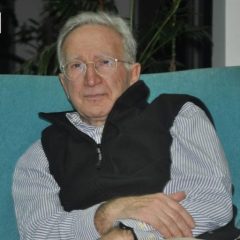 Jacob Cohen is a writer and lecturer born in 1944. Polyglot and traveler, anti-Zionist activist, he was a translator and teacher at the Faculty of Law in Casablanca. He obtained a law degree from the Faculty of Casablanca and then joined Science-Po in Paris where he obtained his degree in Science-Po as well as a postgraduate degree (DES) in public law. He lived in Montreal and then Berlin. In 1978, he returned to Morocco where he became an assistant lecturer at the Faculty of Law in Casablanca until 1987. He then moved to Paris where he now focuses on writing. He has published several books, including « Le commando de Hébron » (2014), « Dieu ne repasse pas à Bethléem » (2013), « Le printemps des Sayanim » (2010), « L’espionne et le journaliste » (2008), « Moi, Latifa S. » (2002).
He has a blog and performs on YouTube where he discusses various topics.
Mohsen Abdelmoumen is an independent Algerian journalist. He has written for several Algerian newspapers such as Alger Républicain and in different sites of the alternative press.
Featured Video
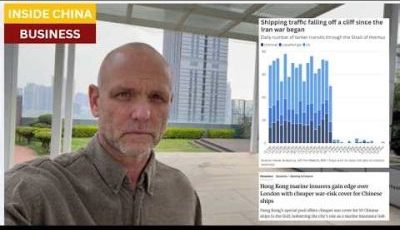
More Iran War fallout: Maritime insurance industry shifts from London to China
or go to
Aletho News Archives – Video-Images
From the Archives
The Biggest Threat to Peace in Middle East
By Dr. Elias Akleh* | Sabbah Report | May 24, 2010
A build up of heightened tension in the Middle East is escalating in the last few weeks. American and Israeli postures towards Lebanon, Syria, and Iran have become more threatening. Listening to speeches of political leaders one hears talks only about war not peace. Iranians and Israelis are continuously training hard for a possible showdown. Both sides are conducting extensive war games every month. This led Syrians to claim that Israel is preparing for a soon-to-come another war. The Jordanians also are warning that current stalemate of the peace process is an indication of a war breaking out this summer. The Russian President and his army chief hinted, a few months ago, that the US and Israel were planning for an attack on Iran.
Indeed Iran is, as it has been for last few years, the target of most of the threats and accusations of supporting terrorism. Escalating incitement against Iran the American Defense Department sent last month (April) to Congress a report on Iran’s military claiming Iran could develop intercontinental ballistic missiles capable of reaching the US by 2015.
Ignoring the fact that N. Korea, India, Pakistan, and Israel are proven to have nuclear weapons while Iran does not, the US Secretary of State Hillary Clinton chose in her speech, to the nuclear Non-Proliferation Treaty review conference at the UN, to focus on Iran’s alleged nuclear ambitions putting the whole world at risk as she put it. According to Clinton Iran’s acquisition of nuclear weapons, rather than Israel’s more than 200 nuclear bombs, is destabilizing the Middle East. She called on the world’s nations to rally around US efforts to hold Iran, not other nuclear countries, to account.
The accusation that Usama Bin Laden is living comfortably in Iran had received a boost after the broadcast of a documentary called “Feathered Cocaine”. This echoed the June 2003 claims of the Italian newspaper Corre de la Sierra that Bin Laden was in Iran according to some intelligence report, and according to Richard Miniter’s book “Shadow War”. … continue
Blog Roll
 Aletho News
- Why could Gaza enter the regional war?
- Hamas official rejects Mladenov Plan linking disarmament to Gaza reconstruction
- Two Primary Elections for the Soul of ‘America First’
- Japan Clings to US Vassalage Despite Energy Crunch Caused By Iran War
- US Seeks Control Over Global Energy Infrastructure – Kremlin
- US senators target Orban government for standing up to Zelensky
- The deep-rooted culture of corruption in Ukraine
- Iran mobilizing one million soldiers to ‘create hell’ for any US ground assault: Report
- The coming military and psychological unravelling?
- Iran has the last laugh
- If Americans Knew
- Researchers at Human Rights Watch Resign Over Blocked Report on Palestinian Refugee Return
- Jewish Groups Are Backing a War Americans Don’t Want
- Eric Fingerhut Thinks He’s the President of the Jews
- Top Jewish Philanthropists, Rabbis Urge Israeli President to Take Action Against ‘Jewish Extremists’
- Don’t Be Fooled. Zionist Leaders Have Always Wanted to Control Southern Lebanon
- Israel’s widespread use of torture is a core element of its genocide against the Palestinian people
- In Israel’s War on Iran, Many Middle East US Bases Rendered “All But Uninhabitable”
- ‘Burn the lawn’: Israel pursues ‘Rafah model’ in southern Lebanon
- A genocide here, an amputation there
- Reports: Iran mobilizing 1M fighters, Israel-US run low on ammo, Israeli army faces shortage – Not a ceasefire Day 168
- No Tricks Zone
- Devastating Assessment Of Comirnaty Vaccine By Former Senior Pfizer Europe Toxicologist
- New Study: CO2 Is ‘Effectively Negligible’ As An Explanatory Climate Change Factor Since 2000
- Former Pfizer Toxicologist Dr. Helmut Sterz Tells Bundestag Hearing Pfizer Vaccine Should Have Never Been Approved
- Energy Expert: Germany’s Nuclear Phaseout Was A “500 Billion Euro Mistake”
- New Research: South Australia’s Mid-Holocene Sea Surface Temperatures Were 4°C Warmer Than Today
- Storing Green Energy To Last Germany 10 Days Would Require A 60-Million Tonne Battery
- New Studies: UK Sea Levels Were 4 Meters Higher Than Today During The Mid-Holocene
- Destructive Green New Deal: German Energy And Metal Group Warns Of Drastic Crisis
- New Study Documents A 20-Year Pause In Arctic Sea Ice Decline – Driven By Internal Variability
- Wake-up Call: Survey Shows Majority Of Germans Now Favor Postponing Climate Targets!
 Aletho News