Strategic ascent: How Iran’s cutting-edge drone technology gained global foothold
By Ivan Kesic | Press TV | November 23, 2025
Iran’s drone technology has evolved from a domestic defense initiative into a formidable presence on the global stage, demonstrating a distinctive and effective approach to aerospace development that resonates with a diverse array of international partners.
Over the past decade, the Islamic Republic of Iran’s unmanned aerial vehicle (UAV) industry has undergone a remarkable transformation, progressing from a localized capability to a significant global force.
This rise is not necessarily due to groundbreaking new technologies, but rather a pragmatic and strategic philosophy that defines the country’s aerospace engineering program.
Iran’s astounding success lies in its intelligent integration of existing commercial technologies, combining them into simple, reliable, and cost-effective platforms that are mass-produced to meet the specific demands of modern asymmetric warfare.
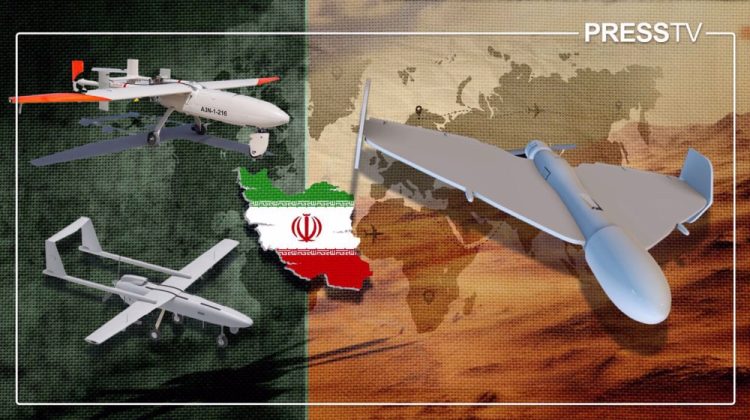
This approach has produced three notable UAV systems: the Shahed-136 loitering munition, the Mohajer-6 multi-role combat drone, and the Ababil-3 reconnaissance platform.
Each model reflects a distinct phase of Iran’s technological evolution and operational doctrine, addressing a wide spectrum of military needs.
From the plains of Africa to the skies of South America, these drones serve as instruments of strategic influence, extending Iran’s geopolitical reach and cementing its role as a prominent manufacturer and exporter of military-grade drone technology.
Their widespread adoption underscores a global demand for capable, affordable unmanned systems and highlights the effectiveness of Iran’s tailored development strategy.
Strategic philosophy: Pragmatism as a cornerstone
The foundational strength of Iran’s burgeoning drone program lies in its purposeful and pragmatic design philosophy, which prioritizes functionality, cost-effectiveness, and reliability over cutting-edge complexity.
This strategy reflects a conscious effort to maximize operational output while minimizing technological input, resulting in systems that are both easy to produce and challenging to counter.
At its core, the program optimizes the use of commercially available, dual-use components, engineered into robust platforms tailored for specific battlefield roles.
By focusing on simplicity, Iran facilitates rapid mass production, enabling the deployment of large numbers of drones to achieve strategic effects.
This approach aligns with an asymmetric warfare doctrine, where overwhelming an adversary with numerous, affordable, and capable assets neutralizes the technological advantage of costlier, limited platforms.
This philosophy has allowed Iran to build a sustainable and scalable aerospace industry from the ground up, bypassing restrictions on access to specialized military-grade technology.
The resulting product line precisely meets the operational needs of a diverse client base, providing practical, cost-effective solutions to real-world security challenges without the prohibitive expenses of advanced Western drone systems.
Shahed-136: The archetype of asymmetric warfare
The Shahed-136 epitomizes Iran’s strategic approach – a loitering munition designed for long-range, one-way missions where simplicity and affordability are paramount.
Its design is a masterclass in minimalist engineering that achieves devastating strategic impact.
Featuring a delta wing and single fuselage, the drone’s airframe is inherently stable and durable, manufactured from inexpensive composite materials like fiberglass.
Complex landing gear is eliminated, replaced by a simple rocket-assisted launch system that reduces weight, cost, and mechanical complexity.
Powering the Shahed-136 is a commercial MADO MD 550 two-stroke piston engine, widely used in light aviation and prized for its low cost and easy maintenance.
Although its distinctive loud acoustic signature is notable, it is tactically mitigated by doctrines deploying these drones in large, saturating swarms designed to overwhelm enemy air defenses.
The guidance system combines a commercial GPS receiver with a basic inertial navigation system (INS), allowing pre-programmed target coordinates.
Even under GPS jamming, the INS maintains sufficient accuracy to engage large, stationary infrastructure targets.
The Shahed-136’s design effectiveness is underscored by its widespread replication and licensed production in countries such as Russia and Yemen, alongside imitation projects reported in China, India, Turkey, Saudi Arabia, North Korea, Ukraine, Poland, France, and even the United States—a testament to the enduring influence of Iran’s foundational drone design philosophy.
Mohajer-6: A leap into advanced multi-role combat drones
Representing a more advanced tier of Iran’s drone capabilities, the Mohajer-6 marks the industry’s maturity and successful transition into the realm of multi-role, medium-altitude, long-endurance (MALE) combat UAVs.
This platform showcases significant technological evolution, moving beyond simple, single-use munitions to a sophisticated system capable of intelligence, surveillance, and reconnaissance (ISR) missions as well as precision strikes.
Its airframe features a classic, proven aerodynamic design with straight wings optimized for extended loiter times and an H-tail configuration for enhanced stability, highlighting a balance between reliability and performance.
The Mohajer-6 is believed to be powered by a version of the highly reliable Rotax 912/914 series four-stroke engine, or an Iranian equivalent, reflecting Iran’s continued emphasis on leveraging dependable commercial technology as the foundation for military-grade systems.
The platform’s key technological advancements lie in its secure communications suite and advanced sensor and weapons payload.
Equipped with a secure line-of-sight data link for real-time video transmission and command, some variants reportedly possess satellite communication capabilities, dramatically extending operational range.
Its stabilized electro-optical/infrared (EO/IR) gimbal, combined with a laser designator, enables accurate target identification, tracking, and guidance of precision munitions such as the Qaem series bombs and Almas anti-tank missiles.
The Mohajer-6’s operational adoption by countries including Ethiopia, Venezuela, and Iraq, alongside reports of licensed production, underscores its competitive standing as a sought-after platform in the global combat drone market.
Ababil-3: Pillar of reliable battlefield surveillance
Serving as a vital link in Iran’s drone lineage, the Ababil-3 is a dedicated and reliable tactical intelligence, surveillance, and reconnaissance (ISR) platform.
Though less complex than the Mohajer-6, it significantly surpasses basic reconnaissance drones, demonstrating Iran’s proficiency in producing effective, long-endurance surveillance systems.
Purpose-built for its role, the Ababil-3 features a classic aerodynamic layout with a rear-mounted engine and propeller, providing an unobstructed field of view for its nose-mounted sensor payload, essential for capturing clear, stable imagery.
Its twin-tail design enhances flight stability, a crucial factor for effective surveillance missions.
Like its counterparts, the Ababil-3 employs a simple, reliable piston engine prioritizing flight endurance over high speed, allowing several hours of operation.
The platform’s primary technological focus is its reconnaissance payload, typically an electro-optical/infrared (EO/IR) system capable of rotation and zoom to track ground targets.
Live video feeds are transmitted to ground control stations via data links with ranges reported up to 250 kilometers, making it invaluable for frontline monitoring, artillery coordination, and border patrol.
Its versatility extends to armed variants, capable of carrying light bombs and missiles.
The Ababil-3’s proven service with nations such as Syria and Sudan, and licensed production as the Zagil-3 in Sudan, further cement its reputation as a robust and effective tool for persistent battlefield situational awareness.
Global reach and strategic influence
The international reach of Iranian UAV technology stands as a defining pillar of its success, extending well beyond the West Asia region to establish a presence across Africa, South America, and Eastern Europe.
This global dispersal is multifaceted, operating through a variety of channels including direct state-to-state sales, licensed production agreements, and observable technology transfers, reflecting a flexible and adaptive export strategy.
The deployment of these systems in different environments has provided real-world validation of their capabilities, further fueling international interest and demand.
This expansion carries significant geopolitical weight, positioning Iran as an emerging partner for countries seeking to enhance their defense capabilities outside traditional Western or Russian arms markets.
By providing these drones, Tehran fosters new defense partnerships and wields strategic influence, extending its diplomatic reach through technology-driven relationships.
Iranian UAVs offer a compelling value proposition for many countries, delivering capable military assets that are affordable, accessible, and often free from the political strings commonly attached to other suppliers.
This growing network of users and producers fosters a form of technological solidarity, reinforcing Iran’s narrative of self-reliance and strategic independence, and cementing its role as a prominent actor within the global defense technology landscape.
A model of purposeful innovation
Iran’s rise in the global drone market is a compelling example of how a deliberate and pragmatic technological strategy can yield outsized strategic influence.
The Shahed-136, Mohajer-6, and Ababil-3 collectively reflect a sophisticated grasp of modern warfare demands, offering a tiered portfolio of systems ranging from low-cost saturation weapons to advanced intelligence and precision-strike platforms.
Iran’s achievement lies in its consistent ability to identify and integrate mature, accessible technologies into coherent, effective military systems tailored to the specific, often budget-conscious needs of a diverse international clientele.
This development model, which prioritizes reliability, affordability, and operational effectiveness over cutting-edge novelty, has proven highly successful.
It has not only secured Iran’s defensive capabilities but also enabled it to become a significant exporter of military technology, carving out a distinctive niche in a fiercely competitive global market.
The ongoing evolution and widespread adoption of these platforms indicate that Iran’s approach to drone warfare and defense industrialization has established a lasting and influential footprint, one poised to shape conflict dynamics and defense partnerships well into the future.
Mali holds firm: West eyes new front to sabotage Sahel independence
By Aidan J. Simardone | The Cradle | November 19, 2025
If you are to believe western media, Mali is days away from falling to Al-Qaeda. Jama’at Nasr al-Islam wal-Muslimin (JNIM), a branch of Al-Qaeda in the Islamic Maghreb, is blockading fuel to the capital, Bamako. It is only a matter of time before growing frustration turns Malians against their “illegitimate” government. Or so the story goes.
The reality tells a different tale. The situation is serious, not only for Mali but also for the broader Alliance of Sahel States, which includes Burkina Faso and Niger. And yet, Mali is recovering. Russia has stepped in, delivering vital fuel shipments. Schools are reopening. Vehicles are back on the road. Towns previously captured by JNIM are being reclaimed.
It is a huge gamble for Russia. But should it succeed, Moscow will have secured a key ally and gained the favor of anti-imperialist countries in Africa. The risk, however, might not come from JNIM. Instead, it could come from a western-supported intervention that seeks not to stop Al-Qaeda, but to destroy the Alliance of Sahel States.
From French client to anti-colonial spearhead
After it gained independence, Mali continued to rely on France. Even its currency, the CFA franc, is pegged to the euro. In school, children were taught French history and learned to speak French. Until recently, France had 2,400 troops stationed as part of its “counterterrorism” operations.
Despite these apparent efforts, groups like JNIM, the Islamic State in the Sahel, and Azawad separatist militias grew. Meanwhile, western corporations profited as Mali became the fourth-largest producer of gold. With this wealth extracted, Mali remained one of the poorest countries in the world.
Bamako’s cooperation with the west did not always curry favor. Its alleged failure to follow the 2015 Algiers Accords with Azawad separatists resulted in the UN Security Council (UNSC) imposing sanctions in 2017. This made little impact, with Mali’s economy continuing to grow.
Yet most Malians were still in poverty, and the security situation worsened. Frustrated, a coup was launched in 2020. But when protests erupted, another coup followed in 2021, led by Assimi Goita, Mali’s current president. Western institutions portrayed it as democratic backsliding, with a military unjustly taking over the country. But the coup was highly popular, with people celebrating. According to a 2024 poll, nine out of 10 people thought the country was moving in the right direction.
President Goita was a radical, anti-colonial, pan-Africanist. In 2022, he kicked French troops out, instead seeking help from Russia. In 2025, Mali withdrew from the Economic Community of West African States (ECOWAS), accusing it of working with western powers. Goita nationalized the gold mines, removed French as Mali’s official language, and replaced school curricula about French history with Bamako’s own rich history.
Western-aligned institutions retaliated with sanctions. ECOWAS, the West African Economic and Monetary Union (WAEMU), and the EU imposed economic penalties. Cut off from financial institutions, Mali defaulted on its debt. But the impact was partly muted.
A few months after sanctions were imposed, the court of the WAEMU ordered that sanctions had to be lifted. Gold mining, which contributes to 10 percent of the economy, saw no impact. Mali shifted its trade to non-ECOWAS countries, and the economy continued to grow.
The West African country redirected trade outside the ECOWAS bloc and resolved its debt in 2024. Far from isolating the country, sanctions strengthened internal solidarity.
Even when ECOWAS lifted sanctions in July 2022 – citing a transition plan to civilian rule – no action was taken when the deadline passed. The reason? The sanctions had backfired, exposing ECOWAS as a western instrument and bolstering support for the Goita government.
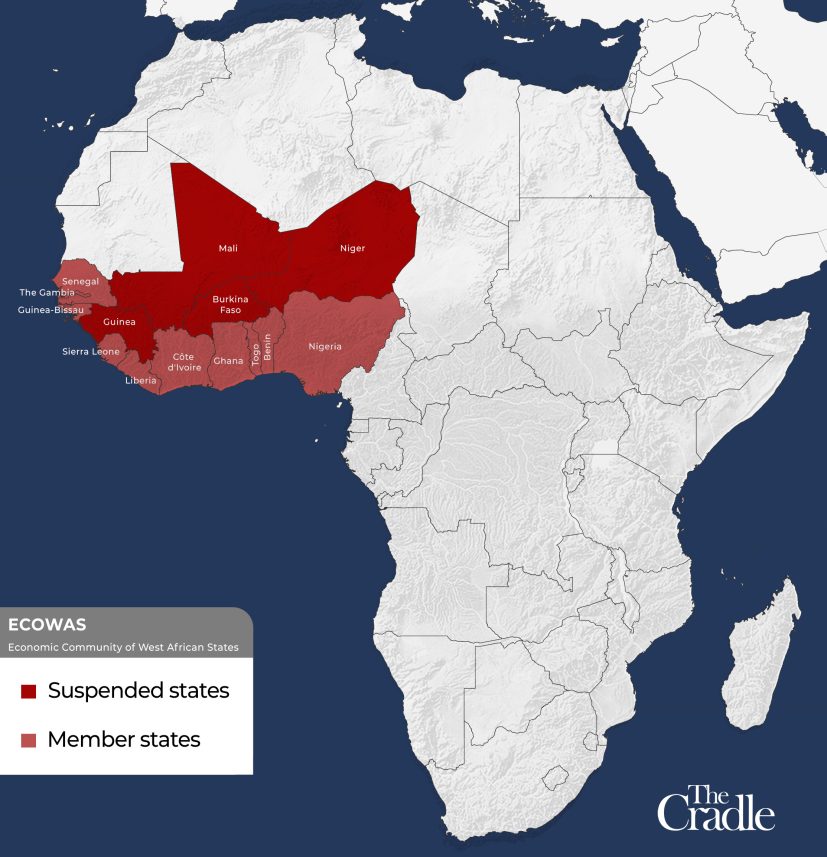
Map of the Economic Community of West African States (ECOWAS)
Sanctions failed, so proxy war begins
JNIM continues to receive financing from Persian Gulf patrons and income from ransoms and extortion. While it has a strong rural presence, it controls no major cities. Azawad separatists and ISIS fighters are similarly confined to Mali’s remote north.
A different strategy was needed. In recent weeks, JNIM has attacked fuel trucks, depriving Bamako of oil. Cars were unable to fill up, and schools closed. According to western media, JNIM wants to strangle the capital to promote unrest. Mali has had five coups since independence, three of which have occurred since 2012. News reports suggest that given this history, JNIM can ultimately topple the Malian government.
Reports of an “immediate collapse” are nearly a month old. What Western media fails to understand is that, unlike previous governments in Mali, the current one is highly popular. Truckers are willing to risk their lives to bring fuel to the capital. “If we die, it’s for a good cause,” one trucker said. Even if the blockade were to stop all fuel, Malian’s resilience and support for Goita would only increase.
Thankfully for Bamako, JNIM is facing setbacks. Russia, which provides support from the Africa Corps (formerly Wagner Group) and, in 2023, vetoed the UNSC’s sanctions, sent 160,000 and 200,000 metric tons of petroleum and agricultural products. This has provided some relief, with fuel lines shortening and schools reopening.
On 15 November, Mali and the African Corps seized the Intahaka mine. The next day, the town of Loulouni was also recaptured. That same day, the blockade south of Bamako was weakened, allowing convoys of fuel trucks to reach the city.
Manufacturing consent for intervention
So why does the western media continue insisting that Mali is collapsing? Simple: to justify military intervention.
One of the biggest propagandists has been France. In a post on X from the French Ministry for Europe and Foreign Affairs, Paris blamed Russia for abandoning Mali, despite being one of the only nations supporting it during this crisis. French news channels LCI and TF1 ran stories such as “Mali, the Jihadists at the gates of Bamako” and “Mali, the new stronghold of Al-Qaeda.”
In response, Bamako banned them from the country. Niger has also accused Benin of being a base of operations for France. French state media, France 24, did not deny the claim, only disputing that the number of soldiers was far less than Niger claimed.
France stands to regain a significant geopolitical advantage from regime change in Mali. The country borders seven former French colonies. A return would reassert French regional influence and weaken the anti-imperialist Alliance of Sahel States. Niger remains crucial to France’s uranium supply, which is necessary for 70 percent of the country’s energy. Bamako is also quickly becoming a major exporter of lithium – essential for electronics and electric cars – with the recent opening of its second mine.
Other western countries have also lost out under Goita’s rule. Canadian company Barrick Mining lost $1 billion when Mali nationalized the mining industry. Last month, other western firms, such as Harmony Gold, IAMGOLD, Cora Gold, and Resolute Mining, had their mining exploration licenses revoked.
The growing Russia–Mali partnership resembles Moscow’s 2015 intervention in Syria. Just as Russia propped up Damascus for as long as it could from a US-led proxy war, it now shores up Bamako. The payoff could be similarly strategic: diplomatic support, military basing rights, and influence in an emerging multipolar Africa.
Unlike past interventions cloaked as counterterrorism, the west now appears reluctant. Washington and its allies, usually quick to bomb under any pretext, have done nothing to aid Bamako. This silence suggests either tacit support for JNIM or confidence that Mali will implode without direct action.
Outsourcing war
As a member of the Alliance of Sahel States, the west fears that Mali’s resilience will be an inspiration to others to join the anti-imperialist struggle. The 2021 coup emerged as a result of inequality and insecurity. These factors can be found in many other West African countries such as Benin, the Ivory Coast, and Togo.
Some observers theorize that Africa’s most populous country, Nigeria, could soon have a revolution, amid high inequality and insecurity from Boko Haram. Nigeria’s growing ties with Mali are a serious threat to the west.
With sanctions failing to bring Mali to its knees, the only solution for the west is military intervention. This might be direct, as seen with Niger, where French troops are stationed in bordering Benin. But more likely, western countries will outsource their intervention to African states. This has occurred in Somalia, where the US has Kenya and Uganda do its dirty work in return for aid. The same could occur with Mali.
The most likely actors to play this role are ECOWAS and the African Union. ECOWAS receives military training from the US, and many of its leaders are closely tied to Washington. It also receives extensive financing from the EU, most recently receiving €110 million ($119 million) to support “peace, trade, and governance.” Far from neutral, it has become an enforcement arm for western interests. The bloc has previously sanctioned Mali and, in 2023, threatened to invade Niger.
The African Union has also served the interests of the west, such as the African Union Mission to Somalia, which is supported and financed by Washington and Brussels. The African Union Constitutive Act prohibits military intervention in any member state, with the exception of war crimes or at the request of the state.
Mali, however, was suspended from the African Union in 2021, making intervention fully legal under the Act. Chairperson of the African Union Commission, Mahmoud Ali Youssouf, recently called for “urgent international Action as crisis escalates in Mali.”
Bamako versus the empire
Mali faces a two-pronged assault: economic strangulation and the threat of foreign-backed military intervention.
Though JNIM remains a nuisance, it has failed to topple the government. The bigger threat comes from western capitals and their African proxies. Russia remains one of Mali’s few reliable allies. If successful, Moscow’s support will elevate its standing across the continent.
More importantly, Mali’s endurance will inspire other African states to challenge western domination and reclaim sovereignty.
Senegal probes French colonial massacre with fresh excavations
Al Mayadeen | October 28, 2025
Archaeologists in Senegal have uncovered new evidence of a French colonial massacre dating back to 1944, as part of a government-led effort to uncover the truth behind the killings of West African soldiers by French forces following World War II.
The Thiaroye military cemetery, located near the capital Dakar, is currently the focus of an extensive archaeological excavation aimed at identifying the remains of soldiers allegedly executed by French colonial troops on December 1, 1944.
The incident occurred after nearly 1,600 soldiers, many of them recently freed from German captivity, were brought to a holding camp in Thiaroye and began protesting unpaid wages and unequal treatment.
French troops opened fire on the men, but the number of casualties and the precise circumstances have long been disputed. Official colonial-era accounts claimed 70 deaths, but Senegalese researchers say the number could be between 300 and 400.
Mass grave evidence emerges
During a recent visit to the cemetery, an AFP team observed disrupted earth, exposed burial containers, and ongoing digs around headstones. The cemetery, created in 1926 by colonial France, holds 202 marked graves, although it remains unclear who is buried in each plot, or whether some markers contain any remains at all.
Archaeologists have excavated seven graves from an initial group of 34, recovering full and partial skeletons. According to archaeologist Moustapha Sall, one of the skeletons was found with a bullet lodged near the heart. Others showed signs of trauma, including missing spines, ribs, and skulls. Some remains were discovered with iron chains around their legs.
“This means they suffered violence,” Sall said. “One hypothesis is that the graves were made after the initial burials, or that it was staged to make it appear they had been properly buried.”
Historical record challenged
Colonel Saliou Ngom, director of Senegal’s army archives and historical heritage, said the work aims to compensate for the historical gaps left by limited access to French colonial archives.
“Making the underground speak is our way of accessing truth,” Ngom said. He added that the October 16 report submitted to President Bassirou Diomaye Faye described the massacre as “premeditated” and “covered up.”
President Faye has since authorized the continuation of excavations at all sites suspected to contain mass graves. He has also reaffirmed Senegal’s commitment to preserving the memory of those killed.
Researchers plan to carry out DNA analysis to identify the origins of the remains, and ballistics experts will examine the materials recovered to establish the type of weapons used. Ground-penetrating radar is also being employed to explore deeper layers of the cemetery’s subsoil.
“The preliminary results do not answer all the questions,” Sall noted. “But they are a very important step in the search for historical truth.”
France acknowledges massacre
In November 2024, as the 80th anniversary of the massacre approached, French President Emmanuel Macron publicly acknowledged for the first time that French colonial troops had carried out a “massacre” in Thiaroye.
While the statement marked a significant shift in France’s official stance, Senegalese officials and historians say much more work remains to be done to fully document the scale of the atrocity and ensure proper recognition for those killed.
“We have been searching for the historical truth for 81 years,” Colonel Ngom said. “If the subsoil provides it, there is nothing more significant.”
Germany on the Geopolitical Stage of the Global South: Between Media Image and Real Capacities
By Ramiz Khodzhatov – New Eastern Outlook – October 21, 2025
The attempts of Friedrich Merz’s government to “relaunch” Germany’s role as a global political actor in the Global South without revising its conceptual foundations risk leaving the country stranded on the margins of international diplomacy – caught between formal participation and substantive isolation.
The Gaza Summit and the New Security Architecture
On October 13, 2025, under the auspices of President Abdel Fattah al-Sisi, a peace summit on Gaza took place in Sharm el-Sheikh, Egypt. The event, co-chaired by U.S. President Donald Trump, gathered representatives from over twenty nations to observe and validate the signing of the first phase of the American initiative for conflict resolution. Egypt and the United States, alongside Qatar and Turkey, acted as the principal mediators of the emerging architecture of multilateral diplomacy. Serving both as brokers of the ceasefire and as the de jure guarantors of the “Declaration on Lasting Peace and Prosperity,” they oversaw a framework that encompassed bilateral agreements on the release of hostages and prisoners, coordination of humanitarian aid, and a detailed roadmap for demilitarization and post-conflict reconstruction of Gaza’s infrastructure.
A wave of criticism followed the paradoxical absence of the conflict’s key parties, the Israeli cabinet and Hamas. At the same time, attention focused on the participation of several unorthodox players in the Middle Eastern geopolitical arena, notably the United Kingdom, France, and Germany. The German presence drew disproportionate attention due to an evident dissonance between its media portrayal and its actual diplomatic standing. Chancellor Friedrich Merz, standing to the side of the main participants, appeared frozen in an uneasy, almost constrained posture, smiling politely yet refraining from engaging any of the leaders. The image quickly spread through German and international media, sparking debate. This scene became emblematic of Berlin’s uncertain role within the emerging security architecture. The question arises: what position does Germany seek to claim, and why, despite shifting geopolitical realities and the lessons of history, it risks remaining a “paper player,” bereft of real influence or credibility across the Global South and the Middle East?
From “Feminist Foreign Policy” to the Merz Plan
To understand Germany’s current trajectory, one must revisit the recent phase of its foreign policy. Under Chancellor Scholz and Foreign Minister Annalena Baerbock, diplomacy was anchored in the doctrine of so-called “feminist foreign policy,” framed as a flagship direction of global engagement. Yet in practice, this approach revealed its conceptual inadequacy. Its normative and universalist foundations clashed with the political cultures and socio-cultural frameworks of the Global South. Gender and humanitarian rhetoric, imported indiscriminately into conflict zones, failed to take root, particularly when juxtaposed with Western double standards evident in the humanitarian catastrophe of Gaza.
Another blow to Berlin’s image came from its insistence on the “green agenda” as an alternative to traditional energy models. Amid a domestic energy crisis, this stance not only weakened Germany’s position in international negotiations but also eroded its reputation as a reliable and autonomous economic actor. To many states of the Global South, German initiatives in climate and energy diplomacy appeared declarative and unsupported by functional mechanisms.
Against this backdrop, Russia’s advocacy of “multipolarity” gained increasing traction, widely perceived as an attractive alternative to the neo-colonial logic of the West. Moscow succeeded in institutionalizing this discourse through frameworks such as BRICS, which evolved into both an economic and symbolic vehicle of a new international subjectivity. Germany and its European partners failed to propose an equivalent model, thereby cementing their peripheral status in dialogue with the Global South.
The Old–New Architecture of Irrelevance
Despite its declining relevance, Berlin continues to undertake institutional steps aimed at restoring its international agency. Notable measures include expanding humanitarian assistance, covering medical support and the establishment of temporary camps for displaced persons—participating in prospective Palestinian self-governance structures, co-organizing an international conference on Gaza’s reconstruction, and devising instruments for monitoring and coordinating humanitarian aid. Germany aspires to act not merely as a donor but as a mediator, presenting itself simultaneously as a humanitarian and political broker.
However, these ambitions collide with structural constraints. Key mechanisms for monitoring, hostage exchange, and aid distribution depend on the consent of regional actors who, tellingly, were absent from the summit. Germany’s declarative and instrumental efforts to secure influence falter against the realities of local political culture, where situational alliances, pragmatism, and realpolitik shape diplomacy far more than normative idealism. Berlin still relies on a logic of moral universalism inherited from previous decades, cloaked in new labels and narratives yet perpetuating the same disconnect between ambition and capability.
This pattern mirrors the systemic flaws observed during Baerbock’s “feminist foreign policy.” The persistent refusal to engage with regional geopolitical realities produces a gap between Germany’s ambitions and its actual leverage. The now-famous image from Sharm el-Sheikh thus becomes a visual metaphor for deeper structural dysfunction: the fragmentation of the Western course, wherein the American line retains strategic dominance while Europe’s voice fades amid inconsistency and moral self-contradiction.
The declarative support for Israel expressed by the Merz cabinet within the Middle East peace process has triggered a crisis of trust toward Germany as a would-be neutral actor. Rooted in the concept of Staatsräson and the moral logic of historical atonement, this stance increasingly contradicts the disposition of public opinion. Recent YouGov data reveal that 62% of Germans consider Israel’s actions in Gaza an act of genocide, a view shared across party lines, including 60% of supporters of Merz’s CDU/CSU bloc. Over two-thirds of the population now hold a negative view of Israel, while sympathizers account for only 19%. Support for Palestinian recognition has climbed to 44%. This gap between domestic consensus and foreign policy undermines the legitimacy of Germany’s global agency and weakens its credibility as an impartial mediator.
Internationally, the erosion of trust is even more pronounced. Since 2023, Germany has increasingly been seen across the Global South and the Middle East as a partisan ally that has abandoned neutrality for rigid pro-Israeli alignment. Decisions such as boosting arms supplies to Tel Aviv and abstaining from U.N. ceasefire resolutions are widely interpreted in Arab and African contexts as emblematic of Western double standards. Meanwhile, as several EU states, including Spain, Ireland, and Norway, have recognized Palestine, Germany finds itself isolated even within Europe. This loss of trust is quantifiable: Arab Barometer surveys show Germany’s favorable rating in the Middle East has plunged from 70% to 35% over just two years.
The position intended to affirm moral leadership has, paradoxically, curtailed Berlin’s diplomatic efficacy. Bereft of real leverage, Germany remains a participant without presence – a formally engaged yet substantively excluded actor on the geopolitical stage of the Global South.
Friedrich Merz’s attempt to “reboot” German foreign policy reveals a structural impasse: institutional innovations without conceptual transformation cannot yield genuine agency. Without a fundamental rethinking of its diplomatic worldview, Germany risks remaining on the periphery of international affairs, caught between symbolic involvement and strategic irrelevance. The image from Sharm el-Sheikh may thus endure as more than a fleeting moment of awkwardness, it embodies Berlin’s broader crisis of orientation in an increasingly multipolar world.
Ramiz Khodzhatov – political scientist, international observer, expert in geopolitics, international security and Russian-German relations
World Bank Reduces Emissions, Not Poverty
By Brenda Shaffer | RealClear Energy | October 9, 2025
The World Bank Group and the International Monetary Fund will hold their annual meetings next week in Washington, DC. It is time for Secretary of the Treasury Scott Bessent to give direct guidance to the World Bank to renew funding and loans for fossil fuels for the world’s poorest. The World Bank should return to its mandate of poverty reduction, instead of climate emissions reduction.
The World Bank has banned fossil fuel finance and loan guarantees since 2019. The idea behind denying investments and funding for fossil fuels was that it would force people to adopt renewable energy. However, with no modern energy option, people turn to burning of dung, wood and other biomass for cooking and other basic functions. The result of this policy is increased emissions, pollution and health endangerment.
The World Bank describes its mission as “To create a world free of poverty — on a livable planet.” However, in reality, the World Bank promotes policies that increase energy poverty and thus overall poverty among the world’s poorest, especially in Africa. Instead of focusing on poverty elimination, the World Bank has committed to allocating 45% of its funds in 2025 to climate finance and announced its intention to increase climate finance over the next five years.
In another blatant example of its choosing to reduce carbon emissions over poverty, the World Bank promotes imposing carbon taxes in Africa on imported fossil fuels. If implemented, these taxes would lead to higher prices for electricity and transportation, which would further increase energy poverty on the continent. It is difficult to understand how raising energy costs in Africa is part of the World Bank’s poverty reduction mandate.
The lack of public funding for fossil fuels particularly hurt Africa. For the first time in decades, electricity access declined in Africa in 2022 and 2023. The halting of foreign investments and loans meant that Africans could not develop their local oil and natural gas resources. While in the West the private market provides investments for energy production, Africa is dependent on public finance to develop energy and on World Bank loan guarantees to create conditions to attract foreign investors.
In prioritizing of emissions reductions over poverty reduction, the World Bank promotes relatively expensive electricity systems, which deliver less energy access to Africa than fossil fuel based systems. Unreliable renewable electricity, especially off-grid solar, does not provide sufficient power for Africans to lift themselves out of poverty. Partial electricity can power a lamp or charge a phone, but not industry, water pumps and refrigeration, which are necessary for poverty reduction and modern medicine access.
Thus, due to the policy of promoting solar over fossil fuel derived power, many of the world’s new electricity users do not have full electricity access. The US and other World Bank funders should not allow the World Bank to count partial electricity provision as access to power.
In Africa, the World Bank no longer promotes policies for provision of baseload power in electricity supply, in order to avoid admitting that Africa needs fossil fuels. There is no large-scale stable electricity without baseload power.
The World Bank also regularly lists climate change as a main factor affecting Africa’s economy and development while not mentioning the continent’s lack of energy, which of course is a much more significant factor affecting its prosperity.
The World Bank and other Western institutions retreat from fossil fuel finance has created a significant geopolitical opportunity for China. China is willing to finance fossil fuel projects in Africa and the developing world and reap the strategic benefit of control of energy infrastructure in many countries.
Bessent’s predecessor at Treasury, Secretary Janet Yellen issued guidance to the World Bank and associate multilateral banks to stop funding for fossil fuels projects in 2021. It is time for Secretary Bessent to reverse this policy and lead the World Bank back to its mission of poverty alleviation.
Prof. Brenda Shaffer is an energy expert at the U.S. Naval Post-graduate School. @ProfBShaffer
Burkina Faso rejects GMO mosquitoes: Bill Gates-backed anti-malaria project suspended amid controversy

By Willow Tohi – Natural News – 08/30/2025
On August 23, Burkina Faso’s military government ordered the suspension of the Target Malaria project, a research initiative funded by the Bill and Melinda Gates Foundation aimed at combating malaria. The decision came after growing concerns from local and international critics about the project’s potential unintended consequences and ethical implications. Amid a wave of anti-Western sentiment and doubts over the safety of genetically modified organisms (GMOs), the move has significant implications for global health and biotechnology efforts in Africa.
Key highlights of the decision
-
- Burkina Faso has ordered the Target Malaria research team to halt all activities and destroy all genetically modified mosquitoes.
-
- The suspension reflects growing distrust of foreign-funded initiatives in Burkina Faso, a country that has shifted closer to Russia and Iran since a 2022 coup.
-
- Critics argue that the genetic modifications pose unknown risks to public health and ecosystems.
-
- Despite prior approvals from national biosafety agencies, the project faced mounting public resistance.
-
- The decision marks a significant setback for genetic approaches to malaria eradication in Africa.
A decade-long experiment
Target Malaria, launched in Burkina Faso in 2012, was a research consortium led by Imperial College London. The project sought to use genetic modification to control mosquito populations and reduce malaria transmission, a disease that claims over 600,000 lives annually, primarily in Africa.
In 2019, Burkina Faso became the first country in Africa to release genetically modified mosquitoes into the wild. These mosquitoes were engineered to produce predominantly male offspring, aiming to curb population growth by spreading specific traits through wild mosquito populations. The project received financial backing from the Bill and Melinda Gates Foundation, one of the largest private funders of global health programs.
Regulatory approval, public resistance
The Target Malaria project had received approval from Burkina Faso’s National Biosafety Agency (ANB), the National Environmental Assessment Agency (ANEVE) and the country’s Health Research Ethics Committee. Communities in selected field sites, such as Souroukoudingan in Houet Province, had also signed off on the releases.
On August 11, 2025, one small-scale release of non-gene drive genetically modified male bias mosquitoes took place successfully, in accord with terms and conditions of the ANB and ANEVE permits. However, despite these clearances, the initiative drew mounting criticism from civil society groups.
A clash with military priorities
The suspension reflects broader tensions between Burkina Faso’s military-led government and Western-backed NGOs. Since seizing power in 2022, Captain Ibrahim Traoré’s administration has increasingly sought to limit foreign involvement in domestic policy, particularly projects tied to high-profile Western philanthropists such as Bill Gates.
Ali Tapsoba, a leading member of the Coalition for Monitoring Biotechnological Activities in Burkina Faso (CVAB), said, “The problem is the solution proposed by Target Malaria, which consists of eliminating the vector using gene-drive mosquitoes.” He added, “This technology is highly controversial, unpredictable and raises ethical concerns. More specifically, the impacts of gene-drive organisms on health and ecosystems remain unknown and potentially irreversible.”
Critics further highlighted that the modified mosquito strains originated in laboratories in Europe, raising questions of scientific neo-colonialism and external influence. In its defense, Target Malaria stressed, “The IRSS team, as part of the Target Malaria project, has operated since 2012 in compliance with the national laws of Burkina Faso. We have engaged actively with the national authorities and stakeholders of Burkina Faso and remain ready to cooperate.”
International reactions and implications
The decision to suspend the Target Malaria project in Burkina Faso has reverberated internationally, particularly among those involved in global health and biotechnology efforts. The Bill and Melinda Gates Foundation, which did not immediately respond to a request for comment, has been embroiled in controversies over some of its initiatives, with advocacy groups accusing it of promoting genetically modified crops and industrial agriculture models that benefit large corporations while sidelining smallholder farmers.
A turning point in biotechnology and public health
The suspension of the Target Malaria project in Burkina Faso marks a significant victory for those skeptical of biotechnological interventions. This move highlights the deep ethical, environmental and political concerns surrounding such projects, especially in regions with a history of foreign exploitation. As Burkina Faso reasserts its health sovereignty, the decision raises critical questions about the true motivations behind such biotechnological solutions. The involvement of figures like Bill Gates, who have significant financial stakes in these technologies, further fuels suspicions. While Gates’ foundation claims to advance global health outcomes, the potential for these technologies to enrich developers at the expense of the communities they serve cannot be overlooked. This decision is a clarion call for more transparent and community-led approaches to public health, ensuring that the interests of the most vulnerable are not sidelined in the name of progress.
Iran blasts ICJ vice-president’s ‘blatant bias’ toward ‘Israel’
Al Mayadeen | August 16, 2025
Deputy Foreign Minister for Legal and International Affairs Kazem Gharibabadi has sharply condemned what he described as a “shocking breach of judicial ethics,” accusing International Court of Justice (ICJ) Vice-President Julia Sebutinde of openly siding with “Israel”, an entity currently facing multiple cases before the Court.
He warned that such “blatant bias” undermines the ICJ’s integrity and violates the core principle of judicial impartiality.
Gharibabadi’s comments follow Justice Julia Sebutinde’s controversial remarks defending her dissenting opinion in the ongoing Israeli genocide against Palestinians in Gaza.
Sebutinde, the only judge to oppose provisional measures against “Israel”, has now further stoked anger with a public speech that critics say confirms long-standing suspicions of personal bias and ideological alignment with Zionist narratives.
“There are now about 30 countries against Israel… the Lord is counting on me to stand on the side of Israel. The whole world was against Israel, including my country,” she declared on August 10 at Watoto Church in Uganda.
Speaking during the launch of the Golden Legacy ministry for members aged 55 and above, Sebutinde added, “I will never forget the day the judgment came out. Even though the government was against me, I remember one ambassador saying, ‘Ignore her because her ruling is not a representation of Uganda.’ The media ran this to fuel more anger and sentiment. Such sentiments can only come from the pit of hell.”
Her speech, laced with religious justification and inflammatory rhetoric, has intensified scrutiny over her role at the court, especially given the gravity of the charges brought against “Israel” by South Africa.
Controversial dissent at ICJ
Justice Sebutinde stood alone among the 17-judge panel at the ICJ, voting against emergency measures directing “Israel” to prevent and punish incitement to genocide in Gaza. Her lone dissent drew widespread condemnation and triggered accusations of both political and religious bias, particularly due to her openly expressed Zionist leanings.
Ugandan officials moved quickly to distance themselves from her stance. Uganda’s Permanent Representative to the UN, Adonia Ayebare, clarified in January: “Justice Sebutinde’s ruling at the ICJ does not represent the Government of Uganda’s position on the situation in Palestine. Uganda’s support for the plight of the Palestinian people has been expressed through our voting pattern at the United Nations.”
Public reaction in the region has been overwhelmingly critical. A Kenyan social media user wrote: “Judge Julia Sebutinde is such an embarrassment to her country and a disgrace to humanity. She didn’t just vote against South Africa’s petition; she voted against reason and morality, justice and freedom, love and compassion. She voted against the very soul of humanity.”
South Africa’s genocide case
On December 29, 2024, South Africa filed a case against “Israel” at the ICJ, accusing it of committing genocidal acts during its military campaign in Gaza. The case prompted global attention, with legal experts and rights advocates calling it a historic test of international law.
Uganda’s Permanent Secretary at the Ministry of Foreign Affairs, Vincent Bagiire Wasswa, reinforced the government’s position, saying, “She made an independent decision that was being misconstrued to be a decision of Uganda. The comments were to make clear that her decision was independent.”
Adding another layer of controversy, Sebutinde revealed that at the time of her dissent, she was also seeking election as ICJ vice-president. She claims she was hesitant to continue due to public backlash but said she was “compelled by God” to go through with it.
She added that a fellow judge later told her she had been elected because of her “character and independence.”
“So whatever the devil had planned for me, God turned it around. This happened a day after the verdict,” she added
Critics argue that such remarks, invoking divine guidance in judicial matters and portraying dissenters as influenced by “the devil”, raise serious questions about her suitability for one of the highest judicial offices in the world.
Foreign investors disappear from US Treasury auctions, as China borrows at the lowest rates ever
Inside China Business | August 10, 2025
A staggering $11 trillion in US government debt needs to be borrowed or refinanced over the next 12 months.
Treasury Department officials are faced with painful choices, whether to borrow at very high rates, locked in for ten years or longer? Or instead borrow for one year or less, but at massive volumes?
Foreign governments and pension funds are also showing far less interest in absorbing new US government bonds, and are demanding ever-higher yields to compensate for inflation and policy risk.
China’s government, however, can borrow at far below half the rate Washington pays, across all maturities. And Chinese companies are paying the lowest interest rates in their history to access new capital. That represents a long-term structural advantage to Chinese policymakers and industry.
Closing scene, Hong Kong South China Morning Post, China cuts US Treasury holdings for third month amid trade war, debt ceiling fears https://www.scmp.com/economy/china-ec…
Zerohedge, Yields Spike After Very Ugly, Tailing 30Y Auction Sparks Steepening Fears https://www.zerohedge.com/markets/yie…
ZH, Very Ugly, Tailing 10Y Auction Sees Slide In Foreign Demand, Plunge In Bid To Cover https://www.zerohedge.com/markets/ver…
ZH, Ugly, Tailing 3Y Auction Sees Worst Foreign Demand Since 2023 https://www.zerohedge.com/markets/ugl…
Managing Risk in the Face of Historic U.S. Debt Refinancing https://www.tradingcentral.com/market…
What Is Happening with Mortgage Interest Rates? https://www.schwab.com/learn/story/wh…
How the Federal Reserve Actually Affects Mortgage Rates https://www.cnet.com/personal-finance…
Wall Street Journal, Trump and Bessent Bring New Style to Managing America’s Debt https://www.wsj.com/finance/investing…
Banking on the Belt and Road: Insights from a new global dataset of 13,427 Chinese development projects https://docs.aiddata.org/ad4/pdfs/Ban…
China 10-Year Government Bond Yield https://tradingeconomics.com/china/go…
What do falling Chinese yields tell us? https://www.dws.com/insights/cio-view…
X, Corporate borrowing costs in the US have never been lower than China’s today https://x.com/UnHedgedChatter/status/…
In numbers: Arab people don’t want to normalize with ‘Israel’

Al Mayadeen | July 27, 2025
Almost 80 years after Israeli occupation of Palestine, the great majority of the Arab public refuses to normalise with “Israel”, with fresh polling data revealing a dramatic decline in support for normalization after the Israeli war on Gaza following October 7, 2023.
According to the latest Arab Barometer surveys conducted between 2023 and 2024, support for Arab normalization with the Israeli regime has plummeted to historic lows. In none of the eight surveyed West Asian and North African countries did public backing exceed 13%.
The Arab Barometer’s Wave VIII surveys, which covered Iraq, Jordan, Kuwait, Lebanon, Mauritania, Morocco, Palestine, and Tunisia, showed a consistent regional downturn in normalization sentiment. Morocco saw a drop from 31% in 2022 to 13% post-October 7; Lebanon from 17% to 12%; Iraq from 14% to 13%; Mauritania from 8% to 4%; and Jordan from 5% to 3%.
Prior to the 2020 normalization accords, support for normalization with “Israel” was already limited. In a 2018–2019 survey, Sudan recorded the highest level at 32%, while Yemen had the lowest at 5%.
‘Israel’ is the primary regional threat
Across the region, “Israel” was most frequently cited as the leading threat to regional stability. Lebanon had the highest perception at 79%, followed by Palestine at 63%, Egypt at 54%, Jordan at 42%, and Morocco at 27%.
In Egypt and Jordan, younger respondents were notably less likely to see “Israel” as the main threat, while in Palestine, the younger demographic showed heightened concern.
Protest movements
Public sentiment against normalization translated into protest activity across the region, per Foreign Affairs. In April 2025, Morocco’s largest labor union urged the government to prohibit the entry of such ships into Moroccan waters and organized a series of protests in solidarity with Gaza.
Jordan experienced daily protests since October 7, with authorities recalling their ambassador from “Israel” and enforcing a ban on the Muslim Brotherhood.
In Kuwait, where protests were restricted, 84% of citizens boycotted pro-Israel companies, 62% donated to Gaza, and many shared solidarity messages online.
Low favorability of ‘Israel’s’ allies, too
Public sentiment toward Western allies of “Israel” deteriorated sharply. Approval of the United States dropped by 23 points in Jordan and 19 in Mauritania. France’s favorability fell 20 points in Lebanon and 17 in Mauritania.
The United Kingdom experienced the steepest decline in Morocco, with a 38-point drop. In contrast, China saw a significant boost in public opinion: 16 points in Jordan, 15 in Morocco, 10 in Iraq, and 6 in Lebanon.
The Arab Barometer Wave VIII data was collected across nine countries between September 2023 and July 2024, with most surveys completed by March 2024. This timing means the findings do not capture Arab public opinion following several significant regional developments, including “Israel’s” war on Lebanon and later on Iran, and the Israeli aggression on Syria.
The survey data therefore represents public sentiment during the initial nine months following October 7, 2023, but predates these subsequent escalations that may have further influenced regional attitudes toward “Israel.”
Russian Cybersecurity Gains Traction in Global South and East – Deputy Foreign Minister
Sputnik – 01.06.2025
Russian cybersecurity solutions have become increasingly sought after by countries in the Global South and East amid the growing discreditation of most leading Western IT firms, Russian Deputy Foreign Minister Sergey Vershinin told Sputnik.
“In the field of information and communication technologies, we possess significant capabilities — from legislation and law enforcement practices to extensive experience and developments in ensuring ‘digital sovereignty,’” he said.
According to the senior diplomat, Russian companies are offering cybersecurity solutions that are in high demand among nations in the Global South and East.
“This is largely due to the fact that many leading Western IT corporations have discredited themselves,” Vershinin noted.
He pointed out that there have been recurring revelations about Western companies ignoring the laws of the countries in which they operate, embedding hidden “backdoors” in their products — often for the benefit of intelligence agencies — and carrying out politically motivated directives from Western governments.
“All of this is, of course, being noticed by our partners in developing countries, who are increasingly leaning toward supporting our depoliticized and impartial approaches and initiatives in the ICT sphere on multilateral platforms,” he emphasized.
Senegal to expel all foreign troops – PM
RT | May 21, 2025
Senegalese Prime Minister Ousmane Sonko has declared that all foreign military personnel stationed in the country must withdraw by the end of July.
French troops remain the only foreign military presence in Senegal, operating under a 2012 defense partnership agreement. As part of a phased withdrawal, France officially transferred control of the Rear Admiral Protet naval base in Dakar to Senegalese authorities on May 15. This follows the earlier handover of the Marshall and Saint-Exupéry facilities in March. The remaining bases are scheduled to be transferred in subsequent phases.
Speaking to Burkina Faso’s national broadcaster RTB on Monday, Sonko said that since his administration came to power nearly a year ago, it had taken a number of steps to assert national sovereignty.
“We have notified all countries that have military bases in Senegal that we demand a complete withdrawal. There will be no more foreign military bases on Senegalese territory,” he stated.
According to the prime minister, the withdrawal process is already underway. He confirmed that one foreign military base was vacated just two days prior to the interview and stressed that the handover of another facility would be completed by the end of July.
Sonko framed the move as a normal assertion of sovereignty, stating that Senegal has “a national army, defense and security forces. We think we are able to ensure our own safety.” He also called on other African nations to take greater control of their own destinies.
In November 2023, Senegalese President Bassirou Diomaye Faye called the presence of French troops “incompatible” with national sovereignty. His newly elected administration has taken a firm stance on scaling back France’s military footprint in the country.
Several West African nations, including Burkina Faso, Mali, and Niger, have severed all military ties with France in recent years, citing frustration with French-led counterterrorism efforts and a desire to seek out alternative partners like Russia.
Featured Video

or go to
Aletho News Archives – Video-Images
From the Archives
Israel Would Have No Qualms About USS Liberty-Style FALSE FLAG If Iran Campaign Falters – Analysts
By Ilya Tsukanov – Sputnik – 18.06.2025
Donald Trump is mulling whether or not to join Israel’s aggression against Iran as Tel Aviv faces problems sustaining its defenses against growing counterstrikes, and apparently lacks a realistic game plan for an end to hostilities after failing to achieve its goals. Analysts told Sputnik how the US could be ‘nudged’ into the conflict.
“The US is already assisting Israel with supplies, intel, refueling support, etc. One of the many US posts in the region could be attacked for a casus belli,” former Pentagon analyst Karen Kwiatkowski explained.
“If Trump doesn’t comply with Israel’s demand” and join its aggression voluntarily, “a false flag may be needed” to drag the US in, Kwiatkowski, retired US Air Force Lt. Col.-turned Iraq War whistleblower, fears.
Netanyahu has a diverse array of options at his disposal, according to the observer, including:
- a false flag against US assets abroad blamed on Iran or one of its Axis of Resistance allies, like the Houthis
- a US domestic attack or assassination blamed on Iran
- Iranian air defenses ‘accidentally’ hitting a civilian jetliner carrying Americans
- use of a dirty bomb or nuclear contamination somewhere in the region blamed on Iran
- even blackmailing by threatening to use nukes against Iran if the US doesn’t join the fight
Kwiatkowski estimates that Israel probably has “enough blackmail power” against President Trump and Congress to avoid the necessity of a false flag operation, but a “USS Liberty-style” attack, targeting the soon-to-be-retired USS Nimitz supercarrier that’s heading to the Middle East, for example, nevertheless cannot be ruled out entirely, she says. … continue
Blog Roll
 Aletho News
- Smotrich calls for annexation of South Lebanon to Litani River
- Echos of Gallipoli? Hormuz and the Geography of Hubris
- Pakistan PM backs Iran’s right to self-defense amid tensions
- Hungary blasts ‘fake’ EU accusation
- SAFE Debt Trap: Poland’s €43.7 Billion Bet on Unipolar Illusion
- War on Iran threatens global Gulf capital flows: FT analysis
- Mossad De Facto Admits To Inciting Riots In Iran
- Tehran: World grown thoroughly exhausted with US-Israeli ‘false flag storylines’
- Trump ‘stuck between a rock and a hard place’, lacks Iran war strategy: Ex-CIA chief
- Trump’s bombardment of fake news so far is working quite well. But where is it heading?
- If Americans Knew
- From Sde Teiman, the truth about Israel’s military justice system has been set free
- Child denied life-saving bone marrow transplant by Israel ‘because he is from Gaza’
- Raffi Berg: BBC Middle East Editor Exposed as CIA, Mossad Collaborator
- Jerusalem Archbishop Rebukes Netanyahu’s Statements on Christianity
- US to embed Palantir AI across entire military: Report
- Israeli-US war on Iran to drag on “a few more weeks” – Not a ceasefire Day 164
- Lebanon deaths top 1,200; Palantir AI to be embedded across US military – Not a ceasefire Day 163
- Israel’s assassination game: Take all pragmatists off the board
- Food shortages return to Gaza as Israel tightens aid restrictions under the cover of its war on Iran
- Trump demands trillions in payments from Gulf countries, billions from Harvard – Not a ceasefire Day 162
- No Tricks Zone
- Devastating Assessment Of Comirnaty Vaccine By Former Senior Pfizer Europe Toxicologist
- New Study: CO2 Is ‘Effectively Negligible’ As An Explanatory Climate Change Factor Since 2000
- Former Pfizer Toxicologist Dr. Helmut Sterz Tells Bundestag Hearing Pfizer Vaccine Should Have Never Been Approved
- Energy Expert: Germany’s Nuclear Phaseout Was A “500 Billion Euro Mistake”
- New Research: South Australia’s Mid-Holocene Sea Surface Temperatures Were 4°C Warmer Than Today
- Storing Green Energy To Last Germany 10 Days Would Require A 60-Million Tonne Battery
- New Studies: UK Sea Levels Were 4 Meters Higher Than Today During The Mid-Holocene
- Destructive Green New Deal: German Energy And Metal Group Warns Of Drastic Crisis
- New Study Documents A 20-Year Pause In Arctic Sea Ice Decline – Driven By Internal Variability
- Wake-up Call: Survey Shows Majority Of Germans Now Favor Postponing Climate Targets!
 Aletho News