EU ‘Overpaid’ €185 Bln for Gas Due to Russia Sanctions
By Svetlana Ekimenko – Sputnik – 06.12.2023
Disruption of Russian gas supplies due to Western sanctions on Moscow over Ukraine have left Europe grappling with spiraling inflation and surging energy bills, with the costs of liquefied natural gas (LNG) exports from the US adding to the pressures on European households’ budgets.
The European Union has been forced to overpay some €185 billion for gas imports since it imposed self-harming sanctions against Russia over Ukraine, according to Sputnik’s calculations based on Eurostat data.
Since February 2022, when Brussels first started to levy restrictions on Moscow, the EU’s average monthly gas import expenditures have risen to €15.2 billion. Of this, €7.7 billion has been spent on liquefied natural gas (LNG), while the remaining €7.5 billion has gone to pipeline gas. Meanwhile, during the year before the introduction of sanctions, European countries paid an average of €5.9 billion for gas (€3.6 billion for pipeline gas; €2.3 billion for liquefied gas).
Thus, it is estimated that EU member states over the course of 20 months spent a total of €304 billion on gas imports, while previously such expenses were accrued over several years. For example, from April 2017 to the end of 2021, the EU spent €186 billion on gas imports, and from 2013 to 2021 the value of such imports was at €292 billion.
While Europe has been reeling from the fallout from the backfiring sanctions, the United States has been raking in profits estimated to be worth €53 billion. Other countries that have benefited from the EU’s struggle to find alternatives to Russian energy are the UK (€27 billion), Norway (€24 billion), and Algeria (€21 billion).
Russia, on the other hand, despite the reduction in supply volumes, has received an additional €14 billion due to surging prices. The EU’s shortsighted crusade to limit Moscow’s energy-related income has resulted in Qatar earning the same amount – an additional €14 billion, while Azerbaijan brought in a bonus worth €12 billion. A look at some of the other beneficiaries of this EU gas policy revision shows that Angola banked €5 billion, Egypt – €4 billion, and Trinidad and Tobago – €3 billion. An additional €2 billion were received by Nigeria and Cameroon, and another billion each by Libya, Oman and Equatorial Guinea. Another 12 countries earned relatively small sums, totaling almost €2 billion.
Before the Ukraine crisis and the sanctions unleashed against Moscow over its special military operation in the neighboring country, Europe received approximately 40 percent of the gas it consumed from Russia. Ever since the Ukraine conflict escalated, Brussels has been cobbling together package after package of sanctions targeting Russia. However, to anyone with a clear understanding of the energy needs of the 27-member bloc, it was evident that it was backing itself into a corner by opting to “wean itself” off Russian gas. The Ukraine conflagration and the punitive restrictions have led to disruptions of supply chains and a surge in energy prices worldwide. Furthermore, the Nord Stream pipeline sabotage added to the continent’s woes.
The Nord Stream pipelines, built to deliver gas under the Baltic Sea from Russia to Germany, were hit by explosions on September 26, 2022. Denmark, Germany, and Sweden left Russia out of their investigations into the attack, prompting Moscow to launch its own probe with charges of international terrorism. In the absence of any official results so far, Pulitzer Prize-winning US investigative journalist Seymour Hersh published a report in February 2023 alleging that the blasts were organized by the US with Norway’s support. Washington has denied any involvement.
Western countries and their allies were left facing an energy crisis and struggling to fill their gas reserves. Overall, the sanctions have triggered in the West everything from raging inflation, recession fears, to looming deindustrialization, with Germany being hit the hardest.
At the same time, oil and gas revenues of the Russian budget have been significantly outpacing those of the last year since September despite external pressure, Russian Prime Minister Mikhail Mishustin said earlier in the autumn.
Furthermore, the World Bank reported in August that by the end of 2022, Russia’s wealth in purchasing power parity (PPP) terms had exceeded $5 trillion for the first time — putting it ahead of Western Europe’s three biggest economies, namely, France, financial giant the United Kingdom, and industrial powerhouse Germany.
Arab states called on to cut ties with Israel, stop hosting US military bases
MEMO | November 22, 2023
Stop Misinforming about Malaria’s Spread, Washington Post
By Linnea Lueken | Climate Realism | October 24, 2023
A recent Washington Post (The Post) story, “Where Malaria is Spreading,” claims that climate change could put over 5 billion people at risk of malaria by 2040, primarily due to expanding seasons where mosquitoes can spread the disease, migrating mosquitoes, and increased populations and stagnant water caused by unusual flooding. This is false. Malaria already has a wide distribution, with many areas only avoiding it being endemic due to past suppression efforts. Population growth in areas where the disease remains common may lead to more instances of the disease unless available preventative and prophylactic measures are taken. However, there is no evidence malaria will spread geographically, due to either modestly rising temperatures or increased moisture.
The Post’s article, written by authors Rachel Chason, Kevin Crowe, John Muyskens, and Jahi Chikwendiu, mainly focuses on malaria’s increase in Mozambique. It has seen a 10 percent increase in malaria cases over the past six years. The Post than ties Mozambique’s malaria increase to claims made in a Lancet study, “Projecting the risk of mosquito-borne diseases in a warmer and more populated world: a multi-model, multi-scenario intercomparison modelling study,” which used climate and mosquito-borne disease models to estimate how the transmission seasons and population densities might change with global warming.
The study’s authors say their modelling shows malaria suitability may increase by 1-6 months in tropical highlands in Africa, the Eastern Mediterranean, and the Americas. Dengue sees similar results, with suitability increasing in lowlands in the Western Pacific and the Eastern Mediterranean by 4 months.
Shamefully, like many studies making misleading and alarming claims attributed to climate change, the Lancet study uses the climate modelling scenario RCP8.5 (RCP meaning representative concentration pathway), which climate scientists admit runs way too hot. Any research that built upon that scenario is going to produce extremely skewed results, because RCP8.5 involves an amount of released carbon dioxide that is actually impossible, even if all the fossil fuels on the planet were burned.
While the Lancet study is suspect, it may still seem logical to assume that the modest warming of the past hundred or so years has and will continue to expand the range of mosquitoes, as well as the number of days during the year in which they are active and biting. However, a large body of research refutes this assumption.
A chapter in Climate Change Reconsidered II: Fossil Fuels, discusses the results of more than a dozen peer-reviewed studies which demonstrate that temperature alone is not enough to guarantee migration or longer survival of mosquitoes or mosquito-borne illnesses like malaria. There are far more factors that come into play, including human interventions, that outweigh temperature alone.
The report explains:
Gething et al. (2010), writing specifically about malaria, may have put it best when they said there has been “a decoupling of the geographical climate malaria relationship over the twentieth century, indicating that non-climatic factors have profoundly confounded this relationship over time.
More examples from Climate Change Reconsidered are discussed in a Climate Realism post, “Environment Journal Wrong About Climate Change Increasing Malaria,” including papers by a vector-borne disease expert, Paul Reiter, from the Centers for Disease Control and Prevention (CDC) which explain that while reemergence of malaria and similar diseases in some regions is concerning, “it is facile to attribute this resurgence to climate change.”
The Post admits that endemic malaria “was eliminated in North America and Europe in the mid-1900s, with a better understanding of how to control it.” This is true, and what’s more, a 2010 Nature study (Gething et al.) found that malaria was probably endemic on 58 percent of the world’s surface in 1900, before the period of modern warming, and only 30 percent by 2007, after decades of modest warming.
Almost every credible study, not based on biased computer models, rejects the myopic causal view of the relationship between climate and malaria.
Extreme weather, The Post claims, like flooding are causing cases to rise in places like Mozambique, with “experts” telling them that the frightening trend is likely to continue. While The Post suggests the trends are mostly due to climate change, they also admit that other factors like “increased resistance of mosquitoes to insecticides and of the parasite to drugs” and improved disease reporting and tracking have played a role in the reported increase.
Flooding is unlikely to cause an increase in mosquito-borne illness, because even the U.N. Intergovernmental Panel on Climate Change (IPCC) reports only low confidence that there is even any sign climate change has impacted flooding. Mozambique, a South-East African nation, has suffered some flooding in recent years, but as discussed in Climate Realism, here, any link to long-term climate change lacks evidence. Flooding is a regular occurrence in many parts of southern Africa, and population increases means that during the rainy season more people are living near mosquito-friendly standing water.
Before running this alarming story, The Washington Post should have examined the wider body of research available concerning mosquito-borne illnesses. There is no evidence that warming is currently causing, or will lead to, an increase in malaria cases or deaths. Facts, not fearmongering, should guide The Post’s and other legitimate news outlets’ coverage of climate and disease issues.
Sahara Expert Says Desert Shrinking, Calls Alarmist Tipping Points “Complete Nonsense”
Climate tipping points are much more fantasy than science
By P Gosselin | No Tricks Zone | November 11, 2023
Austrian AUF 1 has posted posted a video interview with prominent German geologist and Sahara expert Dr. Stefan Kröpelin,
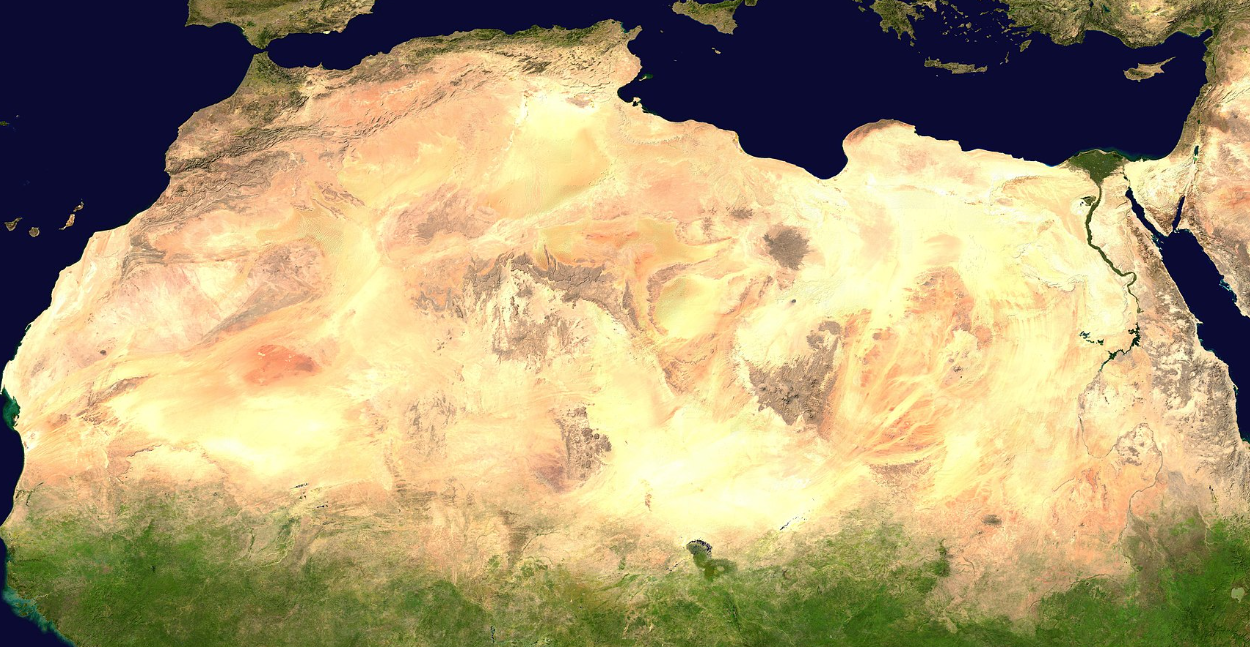
Sahara has been shrinking over the past decades. Image: NASA
Dr. Kröpelin is an award-wining geologist and climate researcher at the University of Cologne and specializes in studying the eastern Sahara desert and its climatic history. He’s been active out in the field there for more than 40 years.
In the Auf 1 interview, Dr. Kröpelin contradicts the alarmist claims of growing deserts and rapidly approaching climate tipping points. He says that already in the late 1980s rains had begun spreading into northern Sudan and have since indeed developed into a trend. Since then, rains have increased and vegetation has spread northwards. “The desert is shrinking; it is not growing.”
Kröpelin confirms that when the last ice age ended some 12,000 years ago, the eastern Sahara turned green with vegetation, teemed with wildlife and had numerous bodies of water 5000 – 10,000 years ago (more here).
Later in the interview Kröpelin explains how the eastern Sahara climate was reconstructed using a vast multitude of sediment cores and the proxy data they yielded. According to the German geology expert: “The most important studies that we conducted all show that after the ice age, when global temperatures rose, the Sahara greened” … “the monsoon rains increased, the ground water rose”. This all led to vegetation and wildlife taking hold over thousands of year.
Then over the past few thousands of years, the region dried out. It didn’t happen all of a sudden like climate models suggest.
Modelers don’t understand climate complexity
When asked about dramatic tipping points (8:00) such as those claimed to be approaching by the Potsdam Institute (PIK), Kröpelin says he’s very skeptical and doesn’t believe crisis scenarios such as those proposed by former PIK head, Hans-Joachim Schellnhuber. He says people making such claims “never did any studies themselves in any climate zone on the earth and they don’t understand how complex climate change is.”
Except for catastrophic geological events, “it’s not how nature works,” Kröpelin says. “Things change gradually.”
The claims that “we have to be careful that things don’t get half a degree warmer, otherwise everything will collapse, is of course complete nonsense.”
“I would say this concept [tipping points] is baseless. Much more indicates that they won’t happen than that they will happen.”
Late last year in Munich, he called the notion of CO2-induced climate tipping points scientifically outlandish. He also called the prospect of the Sahara spreading into Europe preposterous.
UN Agency Unveils Action Plan To Regulate Speech on Social Media Platforms
By Didi Rankovic | Reclaim The Net | November 9, 2023
Yet another United Nations agency – this time the Educational, Scientific, and Cultural Organization (UNESCO) – has joined the contentious efforts to use UN resources in the “war on misinformation.”
UNESCO is not lagging behind some of the veterans of this “war” regarding the kind of alarmist language its leadership is choosing to use to justify the policy.
Thus, Director-General Audrey Azoulay presented an action plan, saying that online disinformation is “a major threat to stability and social cohesion.”
A press release announcing the plan referred to the phenomenon of misinformation as “a scourge” and one that is intensifying. Those behind all this must hope that this is enough to explain what UNESCO – formerly known mostly for protection of world heritage sites and raising funds for underprivileged children – is even doing “fighting disinformation.”
But here’s the plan: to somehow not harm freedom of speech, and yet push for social media companies to hire more “moderators” that speak all the major languages and whose job would be “effective control of content.”
A lot of attention seems to be given to strengthening censorship capacities in languages other than English; that could explain why, according to UNESCO’s statement, the plan has received support particularly from some countries in Latin America and Africa.
Over the past number of years, the whole world could see how efficiently the notion of “misinformation” and the tools to counter it can be turned into proper weapons of censorship; there is likely no shortage of governments that would like to replicate what has been happening in English speaking countries.
“Electoral integrity” also crops up in the press release announcing the UNESCO initiative, and here the proposed solution is “risk assessment” as well as flagging content, more “transparency” around political ads – and who they are meant to target.
Finally, UNESCO somehow manages to work its core task and purpose into the whole thing – namely, culture. And that’s done by calling for “highlighting the risks faced by artists and the need for online access to ‘diverse cultural content’ (quotation marks here are UNESCO’s) as a fundamental human right.”
As for who needs any of this from UNESCO, and why – the agency justified its involvement by mentioning an opinion poll it commissioned, involving 8,000 respondents in 16 countries.
And because “85% of citizens are worried about the impact of online disinformation (on elections)” – we now have this “action plan.”
U.S. Out of Africa Now!
By Brad Pearce | The Libertarian Institute | November 7, 2023
On October 26, Senator Rand Paul (R-KY) forced a debate and vote on the U.S. military presence in Niger. The Senate overwhelmingly voted to keep our troops in that troubled country. There has been an increased focus on Africa due to widespread instability and a contest between superpowers for the continent. The presence of U.S. troops puts Americans in danger while failing to solve any of Africa’s problems.
During the Cold War era, the United States mostly relied on “soft power” in Africa, but U.S. military presence has continued to increase over the past 30 years. It is time to acknowledge that the U.S. military presence in Africa is a failure, bring our troops home, and replace violence with diplomacy and commerce. It is the right thing for America and the best thing for Africa.
Prior to the advent of the Global War on Terrorism, U.S. military actions in Africa were primarily evacuating American nationals in times of crisis, something which they did on many occasions due to frequent volatility. The first major U.S. deployment was the United Nations Operation in Somalia, which has transformed into one of the longest conflicts in American history while failing to make Somalia secure. The U.S. footprint has continued to expand; currently the largest U.S. base in Africa is in the small Red Sea nation of Djibouti, while there is also an enormous and expensive drone base in Agadez, Niger in the central Sahel. Further, the United States trains troops around the continent, having commandos deployed to at least 22 African nations in 2022.
When U.S. troops were first permanently deployed to Africa following 9/11 there were no known transnational terrorist organizations on the continent. The United States got a better excuse for its presence after the Islamic Courts Union took control of Somalia in 2006. The ICU were then expelled by an Ethiopian-led invasion, leaving in their wake an offshoot known as Al-Shabab which later pledged allegiance to Al Qaeda. Following the Ethiopian invasion, the United Nations authorized the African Union Mission in Somalia [ANISOM] which the United States has supported since it began in 2007 with a large air and ground presence.
Radical Islamic terrorism did not spread across Africa in earnest until the 2010s, when it was greatly spurred by U.S. and NATO actions across North Africa and the Middle East. Most notably, when a NATO coalition overthrew Libya’s longtime leader Gadaffi in 2011 fighters he had been employing looted his armory and returned to their home countries, restarting dormant rebellions. The war in Syria began around the same time, and ultimately led to the Islamic State and Al Qaeda gaining a great deal of power and territory in the Middle East. This was simultaneous to the increasing popularity of drone warfare within the Obama Administration, who saw it as a “cheap” way to conduct counter-terror operations throughout the Muslim world. When they were chased out of some of their strongholds by airstrikes, Al Qaeda and the Islamic State expanded rapidly in West Africa, giving the United States yet more of a justification to increase its military presence in the region, most notably in Niger.
For a time, the presence of U.S. combat troops in West Africa was such a well-kept secret that when four U.S. servicemen were killed in an ambush in Niger in 2017, multiple prominent legislators in charge of overseeing the U.S. military, including noted warmongers Senator Lindsey Graham (R-SC) and the late Senator John McCain (R-AZ), acknowledged that they were not aware there were U.S. troops in the country. One exception to this was Representative Charlie Dent, who told CNN’s Chris Cuomo:
“With respect to Niger, I serve on the appropriations committee. I oversee military construction projects. We have a presence there. Not just there, but within that whole Lake Chad region, supporting local troops to support fight Boko Haram, support operations in West Africa and the operation in Mali. So we have all sorts of people in that region fighting a very dangerous foe, and ISIS in West Africa, especially.”
This is a stunning insight into the lack of thought the United States was putting into its military presence in Africa at the time—the civilian leadership in charge of overseeing military activity were unaware of the military’s presence in West Africa. The only oversight from Congress related to spending the money, which at the time included the construction of the Agadez drone base.
Persistent failure in Africa has not deterred U.S. policy makers from continuing the same strategies. Writing for The Intercept, journalist Nick Turse reports that in 2002 and 2003 the U.S. State Department reported just nine terrorist attacks in all of Africa, whereas in 2022 there were 2,737 in Mali, Burkina Faso, and Niger alone. The source for these statistics is the Africa Center for Strategic Studies, run by the U.S. Department of Defense which released a devastating report in early 2023 about security in the region following 20 years of heavy U.S. counter-terror involvement. The report states that terrorism fatalities across Africa rose by 48% in 2022 alone; the report notes the irony that terrorism has spiked since the Mali coup, for which poor security was used as a justification, but doesn’t mention the fact that there was almost no terrorism at all before the United States got involved in counter-terror operations in the region.
As if that wasn’t bad enough, the training programs which are a key component of U.S. Africa policy have a proven track record of overthrowing the very governments they are meant to prop up. At least 12 coups by U.S. trained personnel have occurred since 2008, as of August 2023. A 2022 study showed that U.S. training makes soldiers more supportive of one-party states and less interested in preserving human rights. Following training, they see the value of reducing conflict within a state by taking sole power and also have been trained in skill sets conducive to conducting successful coups. Don’t worry though, AFRICOM commander General Michael Langley has full faith and confidence in our “curriculum” of telling them “please don’t do coups.”
Nowhere in Africa has U.S. troop presence achieved its goals. After 20 years, Africa has much more terrorism and fewer democratic governments. Both of those things are supposed to be key American objectives. The most important thing for the United States to have a productive future in Africa is to shed the Global War on Terror. Abukar Arman, a Somali geopolitical analyst and former diplomat, argued earlier this year that, “so long as U.S.’ policy toward Africa remains one driven by counter-terrorism and is implemented by AFRICOM drones that are accountable to no one, there will never be a sustainable strategic partnership with key countries such as Somalia.” He is correct that both the men running U.S. Africa policy and the machines which they use are drones and neither are producing desired results.
The U.S. Senate has shown that it intends to continue zombie policies by voting to stay in Niger and put our troops at unacceptable levels of risk without the potential of achieving any goals. The only wise path forward is to end our African terror war and engage with African nations as genuine partners in commerce and development.
Why are the globalists calling “Climate Change” a “Public Health Crisis”?
The answer is all to do with the pandemic treaty and climate lockdowns
By Kit Knightly | OffGuardian | October 30, 2023
The global elite plan to introduce a near-permanent “global state of emergency” by re-branding climate change as a “public health crisis” that is “worse than covid”.
This is not news. But the ongoing campaign has been accelerating in recent weeks.
I have written about this a lot over the last few years – see here and here and here. It started almost as soon as Covid started, and has been steadily progressing ever since, with some reports calling climate change “worse than covid”.
But if they keep talking about it, I’ll keep writing. And hopefully the awareness will spread.
Anyway, there’s a renewed push on the “climate = public health crisis” front. It started, as so many things do, with Bill Gates, stating in an interview with MSNBC in late September:
We have to put it all together; it’s not just climate’s over here and health is over here, the two are interacting
Since then there’s been a LOT of “climate change is a public health crisis” in the papers, likely part of the build-up to the UN’s COP28 summit later this year.
Following Gate’s lead, what was once a slow-burn propaganda drive has become a dash for the finish line, with that phrase repeated in articles all over the world as a feverish catechism.
It was an editorial in the October edition of the British Medical Journal that got the ball rolling, claiming to speak for over 200 medical journals, it declares it’s…
Time to treat the climate and nature crisis as one indivisible global health emergency”
Everyone from the Guardian to the CBC to the Weather Channel picked up this ball and ran with it.
Other publications get more specific, but the message is the same. Climate change is bad for the health of women, and children, and poor people, and Kenyans, and workers and…you get the idea.
And that’s all from just the last few days.
It’s not only the press, but governments and NGOs too. The “One Earth” non-profit reported, two days ago:
Why climate change is a public health issue
Again, based entirely on that letter to the BMJ. The UN’s “climate champions” are naturally all over it, alongside the UK’s “Health Alliance on Climate Change”, whoever they are.
Both the Red Cross and Doctors Without Borders have published (or updated) articles on their website in the last few days using variations on the phrase “The climate crisis is a health crisis.”
Local public health officials from as far apart as Western Australia and Arkansas are busy “discussing the health effects of climate change”
Tellingly, the Wikipedia article on “effects of climate change on human health” has received more edits in the last 3 weeks than the previous 3 months combined.
All of this is, of course, presided over by the World Health Organization.
On October 12th the WHO updated its climate change fact sheet, making it much longer than the previous version and including some telling new claims:
WHO data indicates 2 billion people lack safe drinking water and 600 million suffer from foodborne illnesses annually, with children under 5 bearing 30% of foodborne fatalities. Climate stressors heighten waterborne and foodborne disease risks. In 2020, 770 million faced hunger, predominantly in Africa and Asia. Climate change affects food availability, quality and diversity, exacerbating food and nutrition crises.
Temperature and precipitation changes enhance the spread of vector-borne diseases. Without preventive actions, deaths from such diseases, currently over 700,000 annually, may rise. Climate change induces both immediate mental health issues, like anxiety and post-traumatic stress, and long-term disorders due to factors like displacement and disrupted social cohesion.
They are tying “climate change” to anyone who is malnourished, has intestinal parasites or contaminated drinking water. As well as anyone who dies from heat, cold, fire or flood. Even mental health disorders.
We’ve already seen the world’s first “diagnosis of climate change”. With parameters set this wide, we will see more in no time.
Just as a “Covid death” was anybody who died “of any cause after testing positive for Covid”, they are putting language in place that can redefine almost any illness or accident as a “climate change-related health issue”.
Two days ago, the Director General of the World Health Organization, the UN’s Special Envoy for Climate Change and Health and COP28 President co-authored an opinion piece for the Telegraph, headlined:
Climate change is one of our biggest health threats – humanity faces a staggering toll unless we act
The WHO Director went on to repeat the claim almost word for word on Twitter yesterday:
At the same time, the Pandemic Treaty is busily working its way through the bureaucratic maze, destined to become law sometime in the next year or so.
We’ve written about that a lot too.
Consider, the WHO is the only body on Earth empowered to declare a “pandemic”.
Consider, the official term is not “pandemic”, but rather “Public Health Emergency of International Concern”.
Consider, a “public health emergency of international concern”, does not necessarily mean a disease.
It could mean, and I’m just spit-balling here, oh, I don’t know – maybe… climate change?
Consider, finally, that one clause in the proposed “Pandemic Treaty” would empower the WHO to declare a PHEIC on “precautionary principle” [my emphasis]:
Future declarations of a PHEIC by the WHO Director-General should be based on the precautionary principle where warranted
Essentially, once the new legislation is in place, the plan writes itself:
- Put new laws in place enabling global “emergency measures” in the event of a future “public health emergency”
- Declare climate change a public health emergency, or maybe a “potential public health emergency”
- Activate emergency measures – like climate lockdowns – until climate change is “fixed”
See the end game here? It’s just that simple.
Oh, and we won’t be able to complain, because “climate denial” is going to be illegal. At least, if prominent climate activists like this one get their way.
That’s only a whisper in the background right now, but it will get louder after COP28, just wait.
Until then, like I said, I’m stuck here writing forever.
Featured Video

or go to
Aletho News Archives – Video-Images
From the Archives
Israel Would Have No Qualms About USS Liberty-Style FALSE FLAG If Iran Campaign Falters – Analysts
By Ilya Tsukanov – Sputnik – 18.06.2025
Donald Trump is mulling whether or not to join Israel’s aggression against Iran as Tel Aviv faces problems sustaining its defenses against growing counterstrikes, and apparently lacks a realistic game plan for an end to hostilities after failing to achieve its goals. Analysts told Sputnik how the US could be ‘nudged’ into the conflict.
“The US is already assisting Israel with supplies, intel, refueling support, etc. One of the many US posts in the region could be attacked for a casus belli,” former Pentagon analyst Karen Kwiatkowski explained.
“If Trump doesn’t comply with Israel’s demand” and join its aggression voluntarily, “a false flag may be needed” to drag the US in, Kwiatkowski, retired US Air Force Lt. Col.-turned Iraq War whistleblower, fears.
Netanyahu has a diverse array of options at his disposal, according to the observer, including:
- a false flag against US assets abroad blamed on Iran or one of its Axis of Resistance allies, like the Houthis
- a US domestic attack or assassination blamed on Iran
- Iranian air defenses ‘accidentally’ hitting a civilian jetliner carrying Americans
- use of a dirty bomb or nuclear contamination somewhere in the region blamed on Iran
- even blackmailing by threatening to use nukes against Iran if the US doesn’t join the fight
Kwiatkowski estimates that Israel probably has “enough blackmail power” against President Trump and Congress to avoid the necessity of a false flag operation, but a “USS Liberty-style” attack, targeting the soon-to-be-retired USS Nimitz supercarrier that’s heading to the Middle East, for example, nevertheless cannot be ruled out entirely, she says. … continue
Blog Roll
 Aletho News
- US has 2 months of rare earths left to replenish weapons amid Iran war: Report
- Strait Of Hormuz closure brings Empire to brink
- Iran controls Strait of Hormuz, dictates terms of war and peace as US excursion backfires
- Outlasting the Superpower: The Reasons Why Iran is Beating uhe US and Israel
- Top PMU commander, over a dozen fighters killed in new US strikes on Iraq
- Is Netanyahu’s war gamble threatening the future of ‘Israel’?: FT
- Smotrich calls for annexation of South Lebanon to Litani River
- Echos of Gallipoli? Hormuz and the Geography of Hubris
- Pakistan PM backs Iran’s right to self-defense amid tensions
- Hungary blasts ‘fake’ EU accusation
- If Americans Knew
- Instead of taking Joe Kent’s claims seriously, the media is disregarding him as an antisemite
- Joe Kent’s Explosive Interviews about his Resignation over the Iran War
- Israel poised to take over southern Lebanon; settlers wreak havoc in West Bank – Not a ceasefire Day 165
- From Sde Teiman, the truth about Israel’s military justice system has been set free
- Child denied life-saving bone marrow transplant by Israel ‘because he is from Gaza’
- Raffi Berg: BBC Middle East Editor Exposed as CIA, Mossad Collaborator
- Jerusalem Archbishop Rebukes Netanyahu’s Statements on Christianity
- US to embed Palantir AI across entire military: Report
- Israeli-US war on Iran to drag on “a few more weeks” – Not a ceasefire Day 164
- Lebanon deaths top 1,200; Palantir AI to be embedded across US military – Not a ceasefire Day 163
- No Tricks Zone
- Devastating Assessment Of Comirnaty Vaccine By Former Senior Pfizer Europe Toxicologist
- New Study: CO2 Is ‘Effectively Negligible’ As An Explanatory Climate Change Factor Since 2000
- Former Pfizer Toxicologist Dr. Helmut Sterz Tells Bundestag Hearing Pfizer Vaccine Should Have Never Been Approved
- Energy Expert: Germany’s Nuclear Phaseout Was A “500 Billion Euro Mistake”
- New Research: South Australia’s Mid-Holocene Sea Surface Temperatures Were 4°C Warmer Than Today
- Storing Green Energy To Last Germany 10 Days Would Require A 60-Million Tonne Battery
- New Studies: UK Sea Levels Were 4 Meters Higher Than Today During The Mid-Holocene
- Destructive Green New Deal: German Energy And Metal Group Warns Of Drastic Crisis
- New Study Documents A 20-Year Pause In Arctic Sea Ice Decline – Driven By Internal Variability
- Wake-up Call: Survey Shows Majority Of Germans Now Favor Postponing Climate Targets!
 Aletho News