A Russian Mi-8 helicopter came under attack while conducting a search and rescue operation, searching for the crew of the downed Su-24 in Syria. One naval infantry soldier was reported killed, the helicopter destroyed by mortar fire.
The Russian General Staff said that two Mi-8s were involved in the operation to save the crew of the downed Su-24.
One helicopter has been shot down, its crew evacuated to the Russian base at Hmeymim.
“A search and rescue operation involving two Mi-8 helicopters was carried out, charged with evacuating the pilots from the landing site. During the operation, as a result of small-arms fire, one of the helicopters was damaged, and forced to make a landing on neutral territory. One naval infantry soldier was killed,” Lieutenant-General Sergei Rudskoi, the head of the Main Operations Directorate of the General Staff of the Russian Armed Forces, told reporters on Tuesday.
The officer noted that the “personnel from the search and rescue team and the helicopter’s crew have been evacuated and are now located at the Hmeymim air base. The downed helicopter was destroyed by mortar fire from territory controlled by armed gangs.”
“The search and rescue operation tasked with finding the crew of the downed Russian bomber continues,” Rudskoi added, emphasizing that the territories in which the operation was conducted is believed to be controlled by radical rebel groups.
A Russian Su-24 Fencer jet crashed in Syria earlier in the day with two people aboard. Ankara claims that its F-16s shot down the plane because it violated the country’s airspace. Russia has countered Turkey’s accusations, President Vladimir Putin saying that the aircraft was 0.6 miles away from the Turkish border when it was shot down.
According to the Russian leader, the crashed aircraft was not posing any threat to Turkey when it was struck by an air-to-air missile from the Turkish jet.
The Al-Nusra Front, Al-Qaeda’s affiliate in Syria, has released a grateful video, where they openly thank the Free Syrian Army (FSA), which the US has touted as a “moderate opposition group”, for supplying them with US-made anti-tank TOW missiles (“Tube-launched, Optically tracked, Wire-guided”).
A recently released video shows an Al-Nusra Front field commander thanking the FSA commanders for giving his forces TOW missiles, according to a report released by the Iranian news agency FARS.
The agency reminds readers that the two groups, the Al-Nusra and the FSA, formed an alliance in March, the Army of Conquest, or Jaish al-Fatah in Arabic, to fight against the forces of President Assad.
Since then, they have fought together “at almost every single battle in Aleppo, Lattakia, Hama, and Idlib Governorates of Syria.”
Through this alliance several militant groups like the Al-Nusra Front and the Ahrar al-Sham movement have been given access to FSA’s US-made heavy weaponry, which has been supplied to the militant group by the US, Saudi Arabia and Qatar.
According to the agency’s estimates, Saudi Arabia sent 500 TOW missiles to Al-Nusra directly last month.
The US, however, claims that it is just supplying aid and weapons to FSA or the so-called moderate militant groups in Syria.
The BGM-71 TOW is one of the most widely-used guided anti-tank missiles. The weapon is used in anti-armor, anti-bunker, anti-fortification and anti-amphibious landing roles.
TOW missiles are used by the armed forces of more than 40 countries and are integrated in over 15,000 ground, vehicle and helicopter platforms worldwide.
In shooting down a Russian jet operating over Syria, Turkey’s nefarious role in the Syrian conflict has intensified. It also presents a damning indictment of the West’s seriousness in confronting extremism and terrorism.
In the aftermath of the spate of ISIS atrocities – first the downing of the Russian passenger plane, Metrojet Flight 7K9268 over the Sinai at the end of October, killing all 224 on board, followed by the killing of 43 civilians in Beirut in a suicide bomb attack, and most recently the slaughter of 130 people in Paris in multiple suicide bombings and shootings – we now know who is serious about confronting this medieval death cult and who is not.
More, we are starting to uncover those who speak the language of anti-terrorism while in practice working to facilitate and support it.
Turkey is a key culprit in this regard. A murky relationship has long existed between Ankara, ISIS, al Nusra, and other jihadi groups operating in Syria. Indeed, on the most basic level, without their ability to pass back and forth across the Turkish border at will, those groups could not have operated as easily and effectively as they had until Russia intervened.
However, according to a report by David L Phillips of Columbia University, Turkey’s support for extremist groups operating in Syria, including ISIS has been even more extensive than previously thought. Drawing on a wide variety of sources, Phillips reveals that the Turkish government, a member of NATO and a key Western ally, has been involved in helping ISIS with recruitment, training, and has provided it with intelligence and safe havens and sanctuary. Most recently it has been exposed as a major customer for stolen Syrian oil, supplied by the terrorist group.
Perhaps the most damning evidence contained in the report when it comes to Turkey’s role, is in relation to its actions and inaction when it came to the siege of the Kurdish town of Kobani on the Syrian-Turkish border in September and October of 2014.
As Phillips reveals: “Anwar Moslem, Mayor of Kobani, said on September 19, 2014: ‘Based on the intelligence we got two days before the breakout of the current war, trains full of forces and ammunition, which were passing by north of Kobani, had an-hour-and-ten-to-twenty-minute-long stops in these villages: Salib Qaran, Gire Sor, Moshrefat Ezzo. There is evidence, witnesses, and videos about this. Why is ISIS strong only in Kobani’s east? Why is it not strong either in its south or west? Since these trains stopped in villages located in the east of Kobani, we guess they had brought ammunition and additional force for the ISIS.’ In the second article on September 30, 2014, a CHP delegation visited Kobani, where locals claimed that everything from the clothes ISIS militants wear to their guns comes from Turkey.”
The world will never forget how, during the siege of Kobani, as its Kurdish defenders mounted a heroic defense of the town against thousands of ISIS fighters, armed with tanks and artillery, Turkish tanks and troops sat just over the border and did nothing to intervene.
Likewise, no one will forget that earlier this year Turkey carried out airstrikes against those same Kurdish volunteers of the PKK/YPG within Syria, while depicting them as terrorists. Turkey’s oppression of its Kurdish minority going back many years is of course a matter of record.
President Erdogan and his government has undeniably been a key in the destabilization of Syria, doing its utmost to foment regime change. As with the Saudis and other Gulf monarchies, before Russia’s intervention Turkey was hovering over Syria as a vulture hovers over a dying animal, waiting for it to perish before descending to feed on its carcass.
The fact that Turkey remains a key Western ally exposes the moral high ground from which Washington and its allies have lectured Russia over its role in Syria as nothing more than a dung-heap of hypocrisy.
If the West was serious about confronting terrorism, was serious about returning stability to a region it has helped to set on fire, it would reconsider its close ties to both Turkey and the Saudis, whose governments between them have been wading in the river of blood they have helped shed these past four years. Turkey’s claim that the Russian military aircraft it shot down had encroached on its airspace and ignored multiple warnings should be treated with the credibility it deserves, especially when we recall that prior to Russia’s participation in the conflict, Turkey’s violation of Syrian airspace and the Syrian border was happening on a regular basis.
With Russia’s presence in Syria having put paid to Erdogan’s objective of toppling the Syrian government, we begin to discern its efforts to enlist the support of NATO in putting pressure on Russia to desist. It also helps to explain why the West continues to refuse President Putin’s call for cooperation and unity in the effort to eradicate ISIS and other extremist groups massacring and slaughtering their way across the country, with the intention of turning it into a mass grave.
In the wake of the recent spate of ISIS atrocities unleashed against Russian, Lebanese, and French civilians, the grounds for refusing to enter such an alliance are as indefensible as Turkey’s role in the conflict and its most recent action in shooting down a Russian aircraft.
As the man said: “Those who sow the wind shall reap the whirlwind.”
John Wight has written for newspapers and websites across the world, including the Independent, Morning Star, Huffington Post, Counterpunch, London Progressive Journal, and Foreign Policy Journal. He is also a regular commentator on RT and BBC Radio. He wrote a memoir of the five years he spent in Hollywood, where he worked in the movie industry prior to becoming a full time and activist and organizer with the US antiwar movement post-9/11. The book is titled “Dreams That Die” and is published by Zero Books. John is currently working on a book exploring the role of the West in the Arab Spring. You can follow him on Twitter @JohnWight1
Commenting on the origins of the Islamist terrorism plaguing the Middle East, Syrian President Bashar al-Assad noted that terror groups including Al-Qaeda and ISIL have been able to find fertile soil in Iraq as a result of US interventionism, with Saudi oil money and their poisonous Wahhabi ideology nurturing the groups and helping them grow.
Interviewed by Italy’s RAI UNO television, Assad was asked to respond to accusations made by some Western analysts that his government was at least partly responsible for ISIL’s creation.
“Actually,” the president retorted, “according to what some American officials, including Hillary Clinton, have said, Al-Qaeda was created by the Americans with the help of Saudi Wahhabi money and ideology. Of course, many other [US] officials said the same… ISIL and al-Nusra are offshoots of Al-Qaeda. Regarding ISIL, it started in Iraq; it was established in Iraq in 2006… and the leader of ISIL today – Abu Bakr al-Baghdadi – he was in American prisons, and he was put in New York in their prisons, and then he was released. So it wasn’t in Syria; it didn’t start in Syria. It started in Iraq, and it started before that in Afghanistan… And Tony Blair recently said that yes, the Iraq War helped to create ISIL. Their confession is the most important evidence regarding your question.”
Moreover, according to Assad, ISIL has no natural incubator in Syria, given the country’s long-standing ideology of secular nationalism, religious tolerance and ethnic and religious co-existence prior to the war.
“If you want to talk about the strength of Daesh,” the president noted, “the first thing you have to ask is how much of an incubator, a real, natural incubator, you have in a certain society. Up to this moment, I can tell you that Daesh does not have a natural incubator, a social incubator, within Syria.”
At the same time, Assad warned, if ISIL’s poisonous ideology grows roots and becomes chronic, “this kind of ideology can change the society.” In the president’s words, the terrorists, who have been “supported…in different ways since the beginning of the crisis” by Turkey, Saudi Arabia and Qatar, “and of course the Western policy that supported [them] in different ways since the beginning of the crisis,” will lose their strength once they lose the support of their benefactors.
“They can be strong as long as they have strong support from different states, whether in the Middle East or the West,” Assad suggested.
Asked to comment on the deadly attacks which took place in Paris earlier this month, the president once again sent his condolences, condemning the “horrible crime” and noting that Syrians like few others can understand the terror of seeing “innocents being killed without any reason and for nothing…. We’ve been suffering from that for the past five years.”
Assad emphasized that “we feel for the French as we feel for the Lebanese a few days before that, and for the Russians regarding the airplane that’s been shot down over Sinai, and for the Yemenis.” At the same time, the president voiced his hope that the Western world would find compassion for the victims of terror from all these attacks, and not “only for the French.”
Political Settlement Requires an Accurate Definition of the Opposition
Commenting on the potential for a political settlement to the Syrian crisis, the president emphasized that there could be no discussions on any timetable for settlement so long as the terrorist threat was not dealt with. Otherwise, Assad noted that a year and a half to two years would be enough to create mechanisms for a new political system, including a new constitution, and guidelines on referendums, parliamentary and presidential elections.
Regarding disagreements with Western powers over who can be defined as the legitimate opposition, Assad explained that people who hold machineguns in their hand cannot be considered legitimate opposition. “That’s the case in every other country. Whoever holds a machinegun and terrorizes people and destroys private or public property or kills innocents –he is not the opposition. Opposition is a political term. Opposition can be defined not through your own opinion; it can be defined only through elections –through the ballot box.”
According to the president, only the Syrian people, via elections, can determine who they consider the real opposition. “If you want to talk about my own opinion, you can be opposition when you have Syrian grassroots, when you belong only to your country. You cannot be opposition while you are formed as a person or as an entity in the foreign ministry of another country or in an intelligence office of another country. You cannot be a puppet; you cannot be a surrogate mercenary; you can only be a real Syrian.”
Refugee Crisis Hitting Syria Just as Hard as Its Hitting Europe
Asked to comment on the hundreds of thousands of Syrians who have fled Syria for Europe in recent months, Assad emphasized that “everyone who leaves this country is a loss to Syria… We feel the suffering, because every refugee in Syria has a long story of suffering within Syria, and that’s what we should deal with by asking the question: ‘Why did they leave?'”
According to the president, Syrians leave “for many reasons. The first one [is] the direct threat by terrorists. The second is the influence of terrorists in destroying infrastructure and affecting the livelihood of those people. But the third one, which is as important as the influence of terrorists, is the Western embargo on Syria.” Assad emphasized that many people would go back to Syria in a heartbeat, “but how can he go back… while the basics of his life, his livelihood, has been affected dramatically?… The Western embargo and terrorism have put these people between the devil and the deep blue sea.”
Asked by his interviewer whether he considered the Syrian war to be a religious war, the president made clear that this was actually a war with “people who have deviated from real religion; mainly, of course, from Islam, toward extremism, which we don’t consider as part of our religion. It’s a war between the real Muslims and the extremists. Of course, [the radicals] give it different titles –a war against Christians, a war against other sects…but the real issue is the war between them and the rest of the Muslims, the majority of whom are moderates.”
“If there is any doubt concerning the nefarious undertones of subversiveness in these NGO dealings, [National Endowment for Democracy] NED founder reportedly said the following in the 1990s: ‘A lot of what we do today was done covertly 25 years ago by the CIA.’ What was once done at night under the cloak of ‘imperialism’ is now done during the day under the guise of ‘humanitarianism.” ~ The Wrong Kind of Green
Hindsight is a generous provider of absolution from the guilt of falling for the Government or State propaganda and media sleights of hand that deceive us into believing the narrative presented to us, designed, in many cases to justify military intervention. Invariably this is a narrative that ensures the massacre of innocent people under the pretext of liberating them or introducing Democracy that promises to erase their perceived grievances by cutting a swathe through their society & culture either via proxy armies of mercenaries under the guise of various terrorist factions or with an onslaught of bombs and assorted mass destruction or chemical weapons that render their land barren for decades and result in birth defects, increased cancer rates and a multitude of devastating side effects for generations after.
Despite such hindsight and the universally accepted knowledge that it was pure fiction that took us to war in both Iraq and Libya there is still a huge degree of cognitive dissonance at play over the Syria commentary.
Disbelief is invariably registered when it is demonstrated that Syria is undergoing the same truth laundering process as Libya and Iraq or that Syria’s resistance of regime change attempts for almost 5 years is the reason for spikes in propaganda or focus on a particular narrative at any given moment, when Syria persistently thwarts the Colonialist vision for the region.
The NGO soft power complex is now one of the most destructive global forces. It is employed as an interface between civilians of a target nation and the Government, economic or military structures of the colonialist force intent on harnessing any given nation’s resources or undermining its geopolitical influence. The Democratization process or the path to regime change is facilitated by these undercover Government proxy employees who, once embedded into a society, set about producing the propaganda that will justify intervention, either economically, politically or militarily.
They know that the general public has an inherent faith in their perceived integrity and this gives them tremendous sway over public opinion. The perception of a “non profit” complex working for the betterment and improvement of Humanity is a hard nut to crack… but it must be done.
Along with military invasions and missionaries, NGOs help crack countries open like ripe nuts, paving the way for intensifying waves of exploitation and extraction” ~ Stephanie McMillan
“The Syrian army relies on loyal soldiers defending their country and their homes from a heavily subsidized, markedly foreign incursion, including many mercenaries paid by the Gulf monarchies and trained by the US. And the army is loyal because they know that although great sacrifices will be asked of them, they will be defending, not sacrificing, their families and loved ones. The rest of the world that supposedly cares about Syria can start by making it unnecessary for them to make such sacrifices.”
Much of the propaganda surrounding Syria and the “conflict” is indeed, mythology. A mythology created and disseminated by the NGO complex working diligently on the ground in Syria and remotely in the labyrinths of power to ensure a steady flow of misinformation designed to alter our perception and drive us towards making the same mistakes in Syria that we made in Iraq and Libya.
It is no error or oversight that the media barely mention Libya these days as it is plunged deeper and deeper into the terror vacuum created by the NATO intervention of 2011. Perhaps if people were confronted by images of the daily horrors endured by the people of Libya they would be more reticent about passive-aggressively re-creating the same scenario in Syria.
The White Helmet Myth
The NGO hydra has no more powerful or influential serpentine head in Syria than the Syria Civil Defence aka White Helmets who, according to their leader and creator, James Le Mesurier, hold greater sway than even ISIS or Al Nusra over the Syrian communities. In a speech given by Le Mesurier in Lisbon June 2015, entitled “ Act 1: Witnesses to history in the making”, Le Mesurier informed his rapt audience that in a recent US Government survey conducted across a “diverse spectrum” of Syrian communities, 67% of those asked, nominated the White Helmets as the most influential community organisation.
This, despite, their non-inclusion in the 15 respondents to the survey, that comprised ISIS, Al Nusra, & other political or armed groups. This is a bizarre claim on two fronts. 1. That the White Helmets should be included, by James Le Mesurier, in group that is obviously politically biased and armed when they promote themselves to be “unarmed”, apolitical and neutral. 2. That the White Helmets can lay claim to this influence, despite the fact that when asked, the majority of Syrian people have never heard of them, except perhaps for those in Al Nusra, ISIS or [the dwindling] Free Syrian Army held territory.
It is important to analyse the White Helmet mythology, all generated by an incredibly slick and high gloss media and marketing apparatus, overseen and driven by Soros partnered PR company Purpose.
“The volunteers save people on all sides of the conflict – pledging commitment to the principles of “Humanity, Solidarity, Impartiality” as outlined by the International Civil Defence Organisation. This pledge guides every response, every action, every life saved – so that in a time of destruction, all Syrians have the hope of a lifeline”
And:
“The White Helmets mostly deal with the aftermath of government air attacks. Yet they have risked sniper fire to rescue the bodies of government soldiers to give them a proper burial”
In fact, the White Helmet members who are repetitively described as “ordinary” people ~ “bakers, tailors, engineers, pharmacists, painters, carpenters, students” are also relentlessly depicted as heroes, miracle workers, saints and super-humans scaling the “mount Everest” of war zones with impartiality and neutrality. “Unarmed and unbiased” they sacrifice themselves for the “Syrian People”. Those same Syrian people who have never heard of them.
“When I want to save someone’s life I don’t care if he’s an enemy or a friend. What concerns me is the soul that might die” ~ Abed, the White Helmets.
“After the bombs rain down, we rush in to dig for survivors. Our motto, “to save one life is to save all humanity,” is what drives us on.” ~ Raed Saleh, White Helmet leader and UN spokesperson.
The Myth exposed
Neutrality
In previous articles we have exposed the White Helmet associations with Al Nusra and their presence in known ISIS strongholds in Syria. We have also explored, in depth, their donor base and demonstrated how impartiality is a hard claim to justify when taking into account that their finance sources consist of hard-line regime changers, hell-bent on removing the Syrian Government and portraying President Bashar al Assad as the devil incarnate. These donors include, the British Government, known US regime change facilitators USAID, and the Syrian National Council a known Syrian opposition entity.
Time now to observe the White Helmets in action and question their impartiality on the ground in Syria.
This video reveals a White Helmet operative describing the “throwing of Shabiha bodies in the trash.”
Shabiha is a derogatory term for Syrian Government militia or security forces but is liberally applied by terrorist aka “rebel” factions to any member of the Syrian military, irrespective of if they are Alawite, Sunni, or Shia.
I remind you: the White Helmets “have risked sniper fire to rescue SAA bodies to give them a proper burial.”
This same neutral White Helmet operative goes on to pledge allegiance to the terrorist forces in the region.
“They are our role models, the best of people and we have the honour to serve them”
“SERVE THEM [armed terrorists, Al Nusra/Al Qaeda]”~ curious turn of phrase for a neutral, impartial humanitarian organisation?
He also congratulates the Mujahadeen for liberating Jisr al Shugour from Assad’s forces.
“Glad tidings have reached us in Jisr al Shugour by the hands of our Mujahadeen brothers. May Allah strengthen them and make them steadfast on the correct way and soon, insh’Allah, the strongholds of the Assad regime in Latakia and Damascus will be liberated.”
Moving on, another video, this time revealing White Helmet operatives standing on the discarded bodies of SAA [Syrian Arab Army] soldiers and giving the victory sign. This display of support for the Al Nusra terrorists who have just massacred these soldiers once again demonstrates where their true allegiances lie.
We also know via reports from within Aleppo city that it was the Al Nusra terrorists who massacred hundreds if not thousands of civilians before dumping their bodies into the River Queiq: The Truth from inside Syria’s Terrorist Underworld rendering the water supply to Aleppo’s civilian population toxic and undrinkable.
Were these SAA bodies, piled unceremoniously one on top of the other and trampled upon by these White Helmet “saints and neutral saviours”, added to others flung before them, into the disease infested waters of the River Queiq?
Where is the neutrality in the White Helmet reporting of the conflict in the areas where they are embedded? We hear incessantly of the “regime barrel bombs”, but we never hear one mention of the flesh tearing hell cannon fired indiscriminately upon Aleppo civilians, the hail of mortars and rockets being rained down upon Damascus civilian areas from suburban terrorist cells. We are never told about the car bombs that have devastated civilian areas in Homs and Lattakia, including schools and hospitals.
When do we hear about the tunnels dug under civilian homes and streets by the terrorists that are detonated as a distraction to lead the SAA into sniper fire or ambush.
Do these neutral humanitarians talk about the terrorist snipers who kill and maim civilians on a regular basis?
Do they even discuss the atrocities committed against the legitimate Syrian army?
A genuinely neutral report or analysis should surely take all of these factors into account, or are these “other” Syrian civilians not to be registered as such in the western electorate minds and hearts? If not, why not?
“The UN estimates 220,000 deaths thus far in the Syrian war. But almost half are Syrian army soldiers or allied local militia fighters, and two thirds are combatants if we count opposition fighters. Either way, the ratio of civilian to military casualties is roughly 1:2, given that the opposition is also inflicting civilian casualties. Compare that to the roughly 3:1 ratio in the US war in Iraq and 4:1 in the Israeli attack on Gaza in 2008-9. (The rate of Palestinian to Israeli casualties was an astronomical 100:1.)” ~ Paul Larudee. Mythology, Barrel Bombs and Human Rights Watch.
“In April and June 2014, I spent a cumulative month in Syria, in various areas of Damascus, with visits to Latakia, Homs, and Ma’aloula. At the time, Damascus was being intensely shelled by mortars, frequently in my vicinity, including just behind the hotel housing the Peace Delegation which I accompanied for the first week (photo). This attack killed three civilians and one Syrian soldier. We saw some of the 60 plus children injured in the April 15 shelling of a school, not an isolated occasion, an attack which also killed one child. Mortars rained down at close-proximity on many occasions in different areas of the Old City where I had then found lodging.” ~ Eva Bartlett
This is a statement from an Aleppo citizen. Another Syrian civilian who has never heard of the White Helmets.
“The terrorists are using mortars, explosive bullets, cooking-gas cylinders bombs and water-warming long cylinders bombs, filled up with explosives and shrapnel and nails, in what they call “Hell Canon”. Google these weapons or see their YouTube clips. The cooking-gas cylinder is made of steel, and it weighs around 25 kg. Imagine it thrown by a canon to hit civilians? And imagine knowing that it’s full with explosives?… Yet, the media is busy with the legendary weapon of “barrel bombs”! They came to spread “freedom” among Syrians! How dare they say that Syrian army shouldn’t fight them back?” ~ from Syria, welcome to Hell.
How can the White Helmets make a claim of neutrality while providing simplistic, largely unverified, biased and prejudicial reports that reflect only a percentage of the reality of this complex conflict and blatantly further the objectives of their donors in the region while ignoring the sacrifice being made by the Syrian Arab Army to defend their families and homeland from the invading NATO death squads.
“Aleppo city has shrunk to a fifth of its original size, and became so crowded with refugees that fled their areas after they fell into terrorist hands. I walk everyday in the city. I see children, young girls without limbs because of a terrorist mortar or shrapnel that targets them randomly and causes terrible wounds and horrific memories that will never leave them. The girl who lost one leg is standing on her good leg and selling bread, while the little boy who lost one arm is selling chewing gum. Those are the “injured” people who are mentioned fleetingly in the news, just numbers in one line of a report, after each attack from the terrorists. “Injured” doesn’t mean scratched or having a bleeding finger; it means someone lost his eyes or her limbs.”
Finally, this photo was taken shortly after Russia had legally entered the conflict in Syria at the request of the Syrian Government. Does it not seem a strange message to be conveyed by a neutral, unbiased humanitarian organisation with a self- proclaimed mandate to protect ALL Syrian people? The White Helmets will not kneel? They are neutral are they not, to whom would they kneel or not kneel if indeed they serve all Syrians regardless of “race, religion, gender or political affiliation”
White Helmets: Execution facilitators
There is an entire library of White Helmet propaganda images that have been proven to be recycled, fake or at best, inaccurate but perhaps the most shocking and most widely publicised was the footage of their suspected participation in an Al Nusra execution of a civilian in Hreitan, Northern Aleppo.
This video was wiped from most channels by the White Helmets immediately after its release, however Liveleak managed to keep a protected copy which has escaped censorship.
Sequence of events on the day, 5th May 2015. Al Nusra called the White Helmets 25 minutes prior to the execution. White Helmets arrived on the scene at 11.35 am, 5 minutes BEFORE the execution was carried out at 11.40. These impartial humanitarian workers did NOTHING to prevent this execution, they appear a full 5 minutes prior to this murder at the behest of the executioners and they are ushered into shot immediately after the victim is shot twice at close range in the head, to collect the body. These are the neutral humanitarians at work saving every Syrian civilian “irrespective of race, religion, gender or political affiliation.”
“We unequivocally condemn the killing of civilians no matter who the perpetrator.”
So where is their condemnation of this and countless other executions of civilians by Al Nusra in their reports to the UN?
“The discussion over the video from Hreitan has highlighted the absence of a published code of conduct to which civil defence volunteers can be held accountable. The leaders of Syria Civil Defence commit to the development and publication of a code of conduct for members and its public posting on the www.SyriaCivilDefence.Org website in English and Arabic within one month.”
We are now coming up to November and there has still been no amendment to their “Execution code”. These Humanitarians upon whose testimony, hangs the entire Western intervention policy in Syria, have not been officially investigated or even questioned over their suspected role in the “clean up” of a summary execution of a Syrian civilian by terrorist groups in Syria.
“The White Helmets are unpaid and unarmed, and they risk their lives to save others…….. Wearing simple white construction helmets as feeble protection from those “double-tap” bombings, the White Helmets are strictly humanitarian. They even have rescued some of the officers of the regime of President Bashar al-Assad who are bombing them.”
Video clearly showing armed White Helmets on the streets of Aleppo:
It appears that Agha plays a dual role in Syria’s conflict, White Helmet by day and Al Nusra armed terrorist by night, posing on board an Al Nusra tank, gun in hand. Here is a very clear case of the lines between unarmed humanitarian and armed mercenary being more than a little blurred. In one photo Agha is seen clearly celebrating with Al Nusra wearing his White Helmet tabard. In the stills taken from the alleged Russian hospital bombing in Sarmine, Idlib, he is spotted emerging from the “bombed” building. His association with Al Nusra and his brazen show of armed affiliation leaves no doubt as to his role in this conflict and it is far removed from that of an impartial, unarmed Humanitarian.
In fact, the immortal words of Russian Foreign Minsiter, Sergei Lavrov, spring to mind:
“If it looks like a terrorist, if it acts like a terrorist, if it walks like a terrorist, if it fights like a terrorist, it’s a terrorist, right?”
A very cursory scroll down Agha’s Facebook page also reveals very recent photos of SAA corpses accompanied by a number of celebratory comments.
I have only touched on a tiny percentage of the available archives of White Helmets deception and prejudiced propaganda campaigns, but the examples I have presented should begin to confront the highly effective Purpose built marketing campaign that has portrayed these paid mercenaries, impostors and agents for regime change as benign, unprejudiced saviours of beleaguered civilians in areas known to be terrorist strongholds and often, virtually devoid of civilian populations. As Mother Agnes Mariam stated unequivocally, in her recent interview, 90% of IDPs [internally displaced persons] in Syria have taken refuge in Government held areas.
The success of the White Helmet and NGO complex propaganda is dependent upon the skewing of our moral compass by the media and government institutions that are experts at “nudging” public opinion. If we really want to support Syria in this battle against such a complex array of interventionist forces, we must locate that compass and allow it to point us squarely towards the truth, however hard that truth is to assimilate and however remote it is from the mainstream narrative. In fact I would go as far as to say, the further away you get from the mainstream, the closer you get to the truth.
One final example of White Helmet propaganda at work:
“White Helmets claim to have rescued an SAA soldier who had in reality been captured by Al Nusra terrorists 10 days previously. In the Al Nusra version, this soldier is described as a “Shia pig” and was most probably summarily executed as an apostate according to Wahabi doctrine. Hard to imagine how the White Helmets then rescued him, unless of course they dug up his body for publicity purposes.”
END OF PART II
In Part III we will analyse the recent speeches given by the White Helmet leaders, James Le Mesurier, Raed Saleh and Farouq al Habib, in particular, who has been doing the rounds of Western media trying to regain lost propaganda ground, including guest speaker spot at the prestigious Frontline club last week.
Militants trained by the US Central Intelligence Agency (CIA) to fight against the Syrian government are now under Russian missile strikes with little prospect of rescue by their American supporters, according to US officials.
Russia has directed parts of its military campaign against US-backed terrorists and other extremist groups in an effort to weaken them, The Associated Press reported on Saturday, citing unnamed US officials.
The Obama administration has few options to defend those it had secretly trained and armed, the officials say.
US Representative Mike Pompeo, a Republican from Kansas who serves on the House of Representatives Intelligence Committee, told The Associated Press the Russians “know their targets, and they have a sophisticated capacity to understand the battlefield situation.”
The CIA began its covert operation in 2013 to arm, fund and train terrorists to overthrow the government of Syrian President Bashar al-Assad.
The covert CIA program has floundered for years, so much so that some lawmakers in Congress proposed cutting its budget.
Some CIA-trained terrorists have been captured; others have defected to other extremist groups, such al-Nusra Front.
“Probably 60 to 80 percent of the arms that America shoveled in have gone to al-Qaeda and its affiliates,” said Joshua Landis, a Syria expert at the University of Oklahoma.
Since 2013, the CIA has trained approximately 10,000 terrorists. The effort was separate from a failed US military program to train “moderate” militants to supposedly fight the Daesh (ISIL) terrorist group.
That $500 million Pentagon program is widely considered a failure, and on Friday, the US Defense Department announced it was abandoning those efforts and instead opting to arm existing groups to fight Daesh.
The US Defense Department had spent $42 million (out of $500 million set aside for the training program) to vet, arm and pay dozens of militants. The original goal of the program was to train 5,400 in the first year.
Syrian air force helicopters dropped leaflets in the south of Hama province, inviting terrorists to surrender and warning civilians about the beginning of a major military operation.
Agitational leaflets were dropped on the territories of Rastan and Talbiseh settlements, currently controlled by Islamic State and Jabhat al-Nusra militants, RIA Novosti reported.
There were two types of dispersed leaflets. One contained a detailed instruction on how to behave when approaching Syrian troops’ checkpoints and urged civilians to leave their homes on the threshold of a forthcoming military operation.
“With this leaflet you are allowed to safely pass Syrian Arab Army checkpoints,” the leaflet for civilians said. “The army will provide food supplies and medical assistance. Cooperate with the Syrian army and leave the war zone for the sake of your own lives.”
In the other leaflet, Syrian citizens who took sides with terrorists were offered to surrender their arms and give up confrontation with the army.
“The future is in front of you, and this is your chance to return to your motherland’s embrace,” it said. “Use this chance before it is too late. Lay down arms just like hundreds did before you. The government will take care of you and welcome your return.”
The Syrian Army is preparing for a major anti-terrorist operation in the south of Hama province, including the settlements of Rastan and Talbiseh, currently controlled by extremists.
The primary goal of the Syrian leadership is to secure a route between the towns of Homs and Hama. The towns are fully controlled by government forces, but settlements between them are considered the main stronghold of terrorists, including ISIL, in this part of Syria.
In a rare interview with Russian media outlets, RT among them, Syrian leader Bashar Assad spoke about global and domestic terrorism threats, the need for a united front against jihadism, Western propaganda about the refugee crisis and ways to bring peace to his war-torn nation.
Question 1:Mr. President, thank you from the Russian media, from RT, from Rossiyskaya Gazeta, Channel 1, Russia 24, RIA Novosti, and NTV channel, for giving us all the opportunity to talk to you during this very critical phase of the crisis in Syria, where there are many questions that need to be addressed on where exactly the political process to achieve peace in Syria is heading, what’s the latest developments on the fight against ISIL, and the status of the Russian and Syrian partnership, and of course the enormous exodus of Syrian refugees that has been dominating headlines in Europe.
Now, the crisis in Syria is entering its fifth year. You have defied all predictions by Western leaders that you would be ousted imminently, and continue to serve today as the President of the Syrian Arab Republic. Now, there has been a lot of speculation recently caused by reports that officials from your government met with officials from your adversary Saudi Arabia that caused speculation that the political process in Syria has entered a new phase, but then statements from Saudi Arabia that continue to insist on your departure suggest that in fact very little has changed despite the grave threat that groups like ISIL pose far beyond Syria’s borders.
So, what is your position on the political process? How do you feel about power sharing and working with those groups in the opposition that continue to say publically that there can be no political solution in Syria unless that includes your immediate departure? Have they sent you any signal that they are willing to team up with you and your government? In addition to that, since the beginning of the crisis in Syria, many of those groups were calling to you to carry out reforms and political change. But is such change even possible now under the current circumstances with the war and the ongoing spread of terror in Syria?
President Assad: Let me first divide this question. It’s a multi question in one question. The first part regarding the political process, since the beginning of the crisis we adopted the dialogue approach, and there were many rounds of dialogue between Syrians in Syria, in Moscow, and in Geneva. Actually, the only step that has been made or achieved was in Moscow 2, not in Geneva, not in Moscow 1, and actually it’s a partial step, it’s not a full step, and that’s natural because it’s a big crisis. You cannot achieve solutions in a few hours or a few days. It’s a step forward, and we are waiting for Moscow 3. I think we need to continue the dialogue between the Syrian entities, political entities or political currents, in parallel with fighting terrorism in order to achieve or reach a consensus about the future of Syria. So, that’s what we have to continue.
If I jump to the last part, because it’s related to this one, is it possible to achieve anything taking into consideration the prevalence of terrorism in Syria and in Iraq and in the region in general? We have to continue dialogue in order to reach the consensus as I said, but if you want to implement anything real, it’s impossible to do anything while you have people being killed, bloodletting hasn’t stopped, people feel insecure. Let’s say we sit together as Syrian political parties or powers and achieve a consensus regarding something in politics, in economy, in education, in health, in everything. How can we implement it if the priority of every single Syrian citizen is to be secure? So, we can achieve consensus, but we cannot implement unless we defeat the terrorism in Syria. We have to defeat terrorism, not only ISIS.
I’m talking about terrorism, because you have many organizations, mainly ISIS and al-Nusra that were announced as terrorist groups by the Security Council. So, this is regarding the political process. Sharing power, of course we already shared it with some part of the opposition that accepted to share it with us. A few years ago they joined the government. Although sharing power is related to the constitution, to the elections, mainly parliamentary elections, and of course representation of the Syrian people by those powers. But in spite of that, because of the crisis, we said let’s share it now, let’s do something, a step forward, no matter how effective.
Regarding the refugee crisis, I will say now that Western dealing in the Western propaganda recently, mainly during the last week, regardless of the accusation that those refugees are fleeing the Syrian government, but they call it regime, of course. Actually, it’s like the West now is crying for the refugees with one eye and aiming at them with a machinegun with the second one, because actually those refugees left Syria because of the terrorism, mainly because of the terrorists and because of the killing, and second because of the results of terrorism. When you have terrorism, and you have the destruction of the infrastructure, you won’t have the basic needs of living, so many people leave because of the terrorism and because they want to earn their living somewhere in this world.
So, the West is crying for them, and the West is supporting terrorists since the beginning of the crisis when it said that this was a peaceful uprising, when they said later it’s moderate opposition, and now they say there is terrorism like al-Nusra and ISIS, but because of the Syrian state or the Syrian regime or the Syrian president. So, as long as they follow this propaganda, they will have more refugees. So, it’s not about that Europe didn’t accept them or embrace them as refugees, it’s about not dealing with the cause. If you are worried about them, stop supporting terrorists. That’s what we think regarding the crisis. This is the core of the whole issue of refugees.
President Assad: As you know, we are at war with terrorism, and this terrorism is supported by foreign powers. It means that we are in a state of complete war. I believe that any society and any patriotic individuals, and any parties which truly belong to the people should unite when there is a war against an enemy; whether that enemy is in the form of domestic terrorism or foreign terrorism. If we ask any Syrian today about what they want, the first thing they would say is: we want security and safety for every person and every family.
So we, as political forces, whether inside or outside the government, should unite around what the Syrian people want. That means we should first unite against terrorism. That is logical and self-evident. That’s why I say that we have to unite now as political forces, or government, or as armed groups which fought against the government, in order to fight terrorism. This has actually happened.
There are forces fighting terrorism now alongside the Syrian state, which had previously fought against the Syrian state. We have made progress in this regard, but I would like to take this opportunity to call on all forces to unite against terrorism, because it is the way to achieve the political objectives which we, as Syrians, want through dialogue and political action.
Intervention: Concerning the Moscow-3 and Geneva-3 conferences; in your opinion, are there good prospects for them?
President Assad: The importance of Moscow-3 lies in the fact that it paves the way to Geneva-3, because the international sponsorship in Geneva was not neutral, while the Russian sponsorship is. It is not biased, and is based on international law and Security Council resolutions. Second, there are substantial differences around the ‘transitional body’ item in Geneva. Moscow-3 is required to solve these problems between the different Syrian parties; and when we reach Geneva-3, it is ensured that there is a Syrian consensus which would enable it to succeed. We believe that it is difficult for Geneva-3 to succeed unless Moscow-3 does. That’s why we support holding this round of negotiations in Moscow after preparations for the success of this round have been completed, particularly by the Russian officials.
Question 3: I would like to continue with the issue of international cooperation in order to solve the Syrian crisis. It’s clear that Iran, since solving the nuclear issue, will play a more active role in regional affairs. How would you evaluate recent Iranian initiatives on reaching a settlement for the situation in Syria? And, in general, what is the importance of Tehran’s support for you? Is there military support? And, if so, what form does it take?
President Assad: At present, there is no Iranian initiative. There are ideas or principles for an Iranian initiative based primarily on Syria’s sovereignty, the decisions of the Syrian people and on fighting terrorism. The relationship between Syria and Iran is an old one. It is over three-and-a-half decades old. There is an alliance based on a great degree of trust. That’s why we believe that the Iranian role is important. Iran supports Syria and the Syrian people. It stands with the Syrian state politically, economically and militarily. When we say militarily, it doesn’t mean – as claimed by some in the Western media – that Iran has sent an army or armed forces to Syria. That is not true. It sends us military equipment, and of course there is an exchange of military experts between Syria and Iran. This has always been the case, and it is natural for this cooperation to grow between the two countries in a state of war. Yes, Iranian support has been essential to support Syria in its steadfastness in this difficult and ferocious war.
Question 4: Concerning regional factors and proponents, you recently talked about security coordination with Cairo in fighting terrorism, and that you are in the same battle line in this regard. How is your relationship with Cairo today given that it hosts some opposition groups? Do you have a direct relationship, or perhaps through the Russian mediator, particularly in light of the strategic relations between Russia and Egypt. President Sisi has become a welcome guest in Moscow today.
President Assad: Relations between Syria and Egypt have not ceased to exist even over the past few years, and even when the president was Mohammed Morsi, who is a member of the terrorist Muslim Brotherhood organisation. Egyptian institutions insisted on maintaining a certain element of this relationship. First, because the Egyptian people are fully aware of what is happening in Syria, and second because the battle we are fighting is practically against the same enemy. This has now become clearer to everyone. Terrorism has spread in Libya, Egypt, Yemen, Syria, Iraq, in other Arab countries, and in some Muslim countries like Afghanistan, Pakistan and others. That’s why I can say that there is joint vision between us and the Egyptians; but our relationship exists now on a security level. There are no political relations. I mean, there are no contacts between the Syrian Foreign Ministry and the Egyptian Foreign Ministry, for instance. Contacts are done on a security level only. We understand the pressures that might be applied on Egypt or on both Syria and Egypt so that they don’t have a strong relationship. This relationship does not go, of course, through Moscow. As I said, this relationship has never ceased to exist, but we feel comfortable about improving relations between Russia and Egypt. At the same time, there is a good, strong and historical relation between Moscow and Damascus, so it is natural for Russia to feel comfortable for any positive development in relations between Syria and Egypt.
Question 5: Mr. President, allow me to go back to the question of fighting terrorism. How do you look at the idea of creating a region free of ISIS terrorists in the north of the country on the border with Turkey? In that context, what do you say about the indirect cooperation between the West and terrorist organizations like the al-Nusra Front and other extremist groups? And with whom are you willing to cooperate and fight against ISIS terrorists?
President Assad: To say that the border with Turkey should be free of terrorism means that terrorism is allowed in other regions. That is unacceptable. Terrorism should be eradicated everywhere; and we have been calling for three decades for an international coalition to fight terrorism. But as for Western cooperation with the al-Nusra Front, this is reality, because we know that Turkey supports al-Nusra and ISIS by providing them with arms, money and terrorist volunteers. And it is well-known that Turkey has close relations with the West. Erdogan and Davutoglu cannot make a single move without coordinating first with the United States and other Western countries. Al-Nusra and ISIS operate with such a force in the region under Western cover, because Western states have always believed that terrorism is a card they can pull from their pocket and use from time to time. Now, they want to use al-Nusra just against ISIS, maybe because ISIS is out of control one way or another. But that doesn’t mean they want to eradicate ISIS. Had they wanted to do so, they would have been able to do that. For us, ISIS, al-Nusra, and all similar organizations which carry weapons and kill civilians are extremist organizations.
But who we conduct dialogue with is a very important question. From the start we said that we engage in dialogue with any party, if that dialogue leads to degrading terrorism and consequently achieve stability. This naturally includes the political powers, but there are also armed groups with whom we conducted dialogue and reached agreement in troubled areas which have become quiet now. In other areas, these armed groups joined the Syrian Army and are fighting by its side, and some of their members became martyrs. So we talk to everyone except organizations I mentioned like ISIS, al-Nusra, and other similar ones for the simple reason that these organizations base their doctrine on terrorism. They are ideological organizations and are not simply opposed to the state, as is the case with a number of armed groups. Their doctrine is based on terrorism, and consequently dialogue with such organizations cannot lead to any real result. We should fight and eradicate them completely and talking to them is absolutely futile.
Intervention: When talking about regional partners, with whom are you prepared to cooperate in fighting terrorism?
President Assad: Certainly with friendly countries, particularly Russia and Iran. Also we are cooperating with Iraq because it faces the same type of terrorism. As for other countries, we have no veto on any country provided that it has the will to fight terrorism and not as they are doing in what is called “the international coalition” led by the United States. In fact, since this coalition started to operate, ISIS has been expanding. In other words, the coalition has failed and has no real impact on the ground. At the same time, countries like Turkey, Qatar, Saudi Arabia, and Western countries which provide cover for terrorism like France, the United States, or others, cannot fight terrorism. You cannot be with and against terrorism at the same time. But if these countries decide to change their policies and realize that terrorism is like a scorpion, if you put it in your pocket, it will sting you. If that happens, we have no objection to cooperating with all these countries, provided it is a real and not a fake coalition to fight terrorism.
Question 6: What is the Syrian army’s current condition? They’ve been fighting for over four years. Are they exhausted by the war, or become stronger as a result of engagement in military operations? And are there reserve forces to support them? I also have another important question: you said a large number of former adversaries have moved to your side and are fighting within the ranks of government forces. How many? And what is the extent of their help in the fight against extremist groups?
President Assad: Of course, war is bad. And any war is destructive, any war weakens any society and any army, no matter how strong or rich a country is. But things cannot be assessed this way. War is supposed to unite society against the enemy. The army becomes the most-important symbol for any society when there is aggression against the country. Society embraces the army, and provides it with all the necessary support, including human resources, volunteers, conscripts, in order to defend the homeland. At the same time, war provides a great deal of expertise to any armed forces practically and militarily. So, there are always positive and negative aspects. We cannot say that the army becomes weaker or stronger. But in return, this social embrace and support for the army provides it with volunteers. So, in answer to your question ‘are there reserves?’… yes, certainly, for without such reserves, the army wouldn’t have been able to stand for four-and-a-half years in a very tough war, particularly since the enemy we fight today has an unlimited supply of people. We have terrorist fighters from over 80 or 90 countries today, so our enemy is enjoying enormous support in various countries, from where people come here to fight alongside the terrorists. As for the army, it’s almost exclusively made of Syrians. So, we have reserve forces, and this is what enables us to carry on. There is also determination. We have reserves not only in terms of human power, but in will as well. We are more determined than ever before to fight and defend our country against terrorists. This is what led some fighters who used to fight against the state at the beginning for varying reasons, discovered they were wrong and decided to join the state. Now they are fighting battles along with the army, and some have actually joined as regular soldiers. Some have kept their weapons, but they are fighting in groups alongside the armed forces in different parts of Syria.
Question 7: Mr. President, Russia has been fighting terrorism for 20 years, and we have seen its different manifestations. It now seems you are fighting it head on. In general, the world is witnessing a new form of terrorism. In the regions occupied by ISIS, they are setting up courts and administrations, and there are reports that it intends to mint its own currency. They are constructing what looks like a state. This in itself might attract new supporters from different countries. Can you explain to us whom are you fighting? Is it a large group of terrorists or is it a new state which intends to radically redraw regional and global borders? What is ISIS today?
President Assad: Of course, the terrorist ISIS groups tried to give the semblance of a state, as you said, in order to attract more volunteers who live on the dreams of the past: that there was an Islamic state acting for the sake of religion. That ideal is unreal. It is deceptive. But no state can suddenly bring a new form to any society. The state should be the product of its society. It should be the natural evolution of that society, to express it. In the end, a state should be a projection of its society. You cannot bring about a state which has a different form and implant it in a society. Here we ask the question: does ISIS, or what they call ‘Islamic State’, have any semblance to Syrian society? Certainly not.
Of course we have terrorist groups, but they are not an expression of society. In Russia, you have terrorist groups today, but they do not project Russian society, nor do they have any semblance to the open and diverse Russian society. That’s why if they tried to mint a currency or have stamps or passports, or have all these forms which indicate the existence of a state, it doesn’t mean they actually exist as a state; first because they are different from the people and, second, because people in those regions flee towards the real state, the Syrian state, the national state. Sometimes they fight them too. A very small minority believes these lies. They are certainly not a state, they are a terrorist group. But if we want to ask about who they are, let’s speak frankly: They are the third phase of the political or ideological poisons produced by the West, aimed at achieving political objectives. The first phase was the Muslim Brotherhood at the turn of the last century. The second phase was al-Qaeda in Afghanistan in order to fight the Soviet Union. And the third phase is ISIS, the al-Nusra Front and these groups. Who are ISIS? And who are these groups? They are simply extremist products of the West.
Question 8: Mr. President, at the beginning of the Syrian crisis, the Kurdish issue started to be discussed more often. Previously, Damascus was severely criticized because of its position towards the Kurdish minority. But now, practically, in some areas, Kurdish formations are your allies in the fight against ISIS. Do you have a specific position towards who the Kurds are to you and who you are to them?
President Assad: First, you cannot say there was a certain state policy concerning the Kurds. A state cannot discriminate between members of its population; otherwise, it creates division in the country. If we had been discriminating between different components of society, the majority of these components wouldn’t have supported the state now, and the country would have disintegrated from the very beginning. For us, the Kurds are part of the Syrian fabric. They are not foreigners – they live in this region like the Arabs, Circassians, Armenians and many other ethnicities and sects who’ve been living in Syria for many centuries. It’s not known when some of them came to this region. Without these groups, there wouldn’t have been a homogenous Syria. So, are they our allies today? No, they are patriotic people. But on the other hand, you cannot put all the Kurds in one category. Like any other Syrian component, there are different currents among them. They belong to different parties. There are those on the left and those on the right. There are tribes, and there are different groups. So, it is not objective to talk about the Kurds as one mass.
There are certain Kurdish demands expressed by some parties, but there are no Kurdish demands for the Kurds. There are Kurds who are integrated fully into society; and I would like to stress that they are not allies at this stage, as some people would like to show. I would like to stress that they are not just allies at this stage, as some suggest. There are many fallen Kurdish soldiers who fought with the army, which means they are an integral part of society. But there are parties which had certain demands, and we addressed some at the beginning of the crisis. There are other demands which have nothing to do with the state, and which the state cannot address. There are things which would relate to the entire population, to the constitution, and the people should endorse these demands before a decision can be taken by the state. In any case, anything proposed should be in the national framework. That’s why I say that we are with the Kurds, and with other components, all of us in alliance to fight terrorism.
This is what I talked about a while ago: that we should unite in order to fight ISIS. After we defeat ISIS, al-Nusra and the terrorists, the Kurdish demands expressed by certain parties can be discussed nationally. There’s no problem with that, we do not have a veto on any demand as long as it is within the framework of Syria’s unity and the unity of the Syrian people and territory, fighting terrorism, Syrian diversity, and the freedom of this diversity in its ethnic, national, sectarian, and religious sense.
Question 9: Mr. President, you partially answered this question, but I would like a more-precise answer, because some Kurdish forces in Syria call for amending the constitution. For instance, setting up a local administration and moving towards autonomy in the north. These statements are becoming more frequent now that the Kurds are fighting ISIS with a certain degree of success. Do you agree with such statements that the Kurds can bet on some kind of gratitude? Is it up for discussion?
President Assad: When we defend our country, we do not ask people to thank us. It is our natural duty to defend our country. If they deserve thanks, then every Syrian citizen defending their country deserves as much. But I believe that defending one’s country is a duty, and when you carry out your duty, you don’t need thanks. But what you have said is related to the Syrian constitution. Today, if you want to change the existing structure in your country, in Russia for instance, let’s say to redraw the borders of the republics, or give one republic powers different to those given to other republics – this has nothing to do with the president or the government. This has to do with the constitution.
The president does not own the constitution and the government does not own the constitution. Only the people own the constitution, and consequently changing the constitution means national dialogue. For us, we don’t have a problem with any demand. As a state, we do not have any objection to these issues as long as they do not infringe upon Syria’s unity and diversity and the freedom of its citizens.
But if there are certain groups or sections in Syria which have certain demands, these demands should be in the national framework, and in dialogue with the Syrian political forces. When the Syrian people agree on taking steps of this kind, which have to do with federalism, autonomy, decentralization or changing the whole political system, this needs to be agreed upon by the Syrian people, and consequently amending the constitution. This is why these groups need to convince the Syrian people of their proposals. In that respect, they are not in dialogue with the state, but rather with the people. When the Syrian people decide to move in a certain direction, and to approve a certain step, we will naturally approve it.
Question 10: Now, the U.S.-led coalition has been carrying out airstrikes on Syrian territory for about one year on the same areas that the Syrian Air Force is also striking ISIL targets, yet there hasn’t been a single incident of the U.S.-led coalition and the Syrian Air Force activity clashing with one another. Is there any direct or indirect coordination between your government and the U.S. coalition in the fight against ISIL?
President Assad: You’d be surprised if I say no. I can tell you that my answer will be not realistic, to say now, while we are fighting the same, let’s say enemy, while we’re attacking the same target in the same area without any coordination and at the same time without any conflict. And actually this is strange, but this is reality. There’s not a single coordination or contact between the Syrian government and the United States government or between the Syrian army and the U.S. army. This is because they cannot confess, they cannot accept the reality that we are the only power fighting ISIS on the ground. For them, maybe, if they deal or cooperate with the Syrian Army, this is like a recognition of our effectiveness in fighting ISIS. This is part of the willful blindness of the U.S. administration, unfortunately.
Question 11: So not event indirectly though, for example the Kurds? Because we know the U.S. is working with the Kurds, and the Kurds have some contacts with the Syrian government. So, not even any indirect coordination?
President Assad: Not even any third party, including the Iraqis, because before they started the attacks, they let us know through the Iraqis. Since then, not a single message or contact through any other party.
Question 12: OK, so just a little bit further than that. You’ve lived in the West, and you, at one time, moved in some of those circles with some Western leaders that since the beginning of the crisis have been backing armed groups who are fighting to see you overthrown. How do you feel about one day working again with those very same Western leaders, perhaps shaking hands with them? Would you ever be able to trust them again?
President Assad: First, it’s not a personal relation; it’s a relation between states, and when you talk about relation between states, you don’t talk about trust; you talk about mechanism. So, trust is a very personal thing you cannot depend on in political relations between, let’s say, people. I mean, you are responsible for, for example in Syria, for 23 million, and let’s say in another country for tens of millions. You cannot put the fate of those tens of millions or maybe hundreds of millions on the trust of a single person, or two persons in two countries. So, there must be a mechanism. When you have a mechanism, you can talk about trust in a different way, not a personal way. This is first.
Second, the main mission of any politician, or any government, president, prime minister, it doesn’t matter, is to work for the interest of his people and the interest of his country. If any meeting or any handshaking with anyone in the world will bring benefit to the Syrian people, I have to do it, whether I like it or not. So, it’s not about me, I accept it or I like it or whatever; it’s about what the added value of this step that you’re going to take. So yes, we are ready whenever there’s the interest of the Syrians. I will do it, whatever it is.
Question 13: Regarding alliances in the fight against terrorism and ISIS, President Putin called for a regional alliance to fight the so-called ‘Islamic State’; and the recent visits of Arab officials to Moscow fall into that context, but Syrian Foreign Minister Walid al-Moallem said that would need a miracle. We are talking here about security coordination, as described by Damascus, with the governments of Jordan, Turkey and Saudi Arabia. How do you envisage that alliance? Will it achieve any results, in your opinion? You said that any relationship is based on interests, so are you willing to coordinate with these countries, and what is the truth behind the meetings held between Syrian, and maybe Saudi, officials as reported by the media?
President Assad: As for fighting terrorism, this is a big and comprehensive issue which includes cultural and economic aspects. It obviously has security and military aspects as well. In terms of prevention, all the other aspects are more important than the security and military ones, but today, in the reality we now live in terms of fighting terrorism, we are not facing terrorist groups, we are facing terrorist armies equipped with light, medium and heavy weaponry. They have billions of dollars to recruit volunteers. The military and security aspects should be given priority at this stage. So, we think this alliance should act in different areas, but to fight on the ground first. Naturally, this alliance should consist of states which believe in fighting terrorism and believe that their natural position should be against terrorism.
In the current state of affairs, the person supporting terrorism cannot be the same person fighting terrorism. This is what these states are doing now. Saudi Arabia, Turkey and Jordan, who pretend to be part of a coalition against terrorism in northern Syria, actually support terrorism in the south, the north and the north-west, virtually in the same regions in which they are supposed to be fighting terrorism. Once again I say that, within the framework of public interest, if these states decide to go back to the right position, to return to their senses and fight terrorism, naturally we will accept and cooperate with them and with others. We do not have a veto and we do not stick to the past. Politics change all the time. It might change from bad to good, and the ally might become an adversary, and the adversary an ally. This is normal. When they fight against terrorism, we will cooperate with them.
Question 14: Mr. President, there is a huge wave of refugees, largely from Syria, going to Europe. Some say these people are practically lost to Syria. They are deeply unhappy with the Syrian authorities because they haven’t been able to protect them and they’ve had to leave their homes. How do you view those people? Do you see them as part of the Syrian electorate in the future? Do you expect them to return? And the second question has to do with the European sense of guilt about the displacement happening now. Do you think that Europe should feel guilty?
President Assad: Any person who leaves Syria constitutes a loss to the homeland, to be sure, regardless of the position or capabilities of that person. This, of course, does not include terrorists. It includes all citizens in general with the exception of terrorists. So, yes, there is a great loss as a result of emigration. You raised a question on elections. Last year, we had a presidential election in Syria, and there were many refugees in different countries, particularly in Lebanon. According to Western propaganda, they had fled the state, the oppression of the state and the killing of the state, and they are supposed to be enemies of the state. But the surprise for Westerners was that most of them voted for the president who is supposed to be killing them. That was a great blow to Western propaganda. Of course, voting has certain conditions. There should be an embassy, and to have the custodianship of the Syrian state in the voting process. That depends on relations between the states. Many countries have severed relations with Syria and closed Syrian embassies, and consequently Syrian citizens cannot vote in those countries. They have to go to other countries where ballot boxes are installed, and that did happen last year.
As for Europe, of course it’s guilty. Today, Europe is trying to say that Europe feels guilty because it hasn’t given money or hasn’t allowed these people to immigrate legally, and that’s why they came across the sea and drowned. We are sad for every innocent victim, but is the victim who drowns in the sea dearer to us than the victim killed in Syria? Are they dearer than innocent people whose heads are cut off by terrorists? Can you feel sad for a child’s death in the sea and not for thousands of children who have been killed by the terrorists in Syria? And also for men, women, and the elderly? These European double standards are no longer acceptable. They have been flagrantly exposed. It doesn’t make sense to feel sad for the death of certain people and not for deaths of others. The principles are the same. So Europe is responsible because it supported terrorism, as I said a short while ago, and is still supporting terrorism and providing cover for them. It still calls them ‘moderate’ and categorizes them into groups, even though all these groups in Syria are extremists.
Question 15: If you don’t mind, I would like to go back to the question about Syria’s political future. Mr. President, your opponents, whether fighting against the authorities with weapons or your political opponents, still insist that one of the most-important conditions for peace is your departure from political life and as president. What do you think about that – as president and as a Syrian citizen? Are you theoretically prepared for that if you feel it’s necessary?
President Assad: In addition to what you say, Western propaganda has, from the very beginning, been about the cause of the problem being the president. Why? Because they want to portray the whole problem in Syria lies in one individual; and consequently the natural reaction for many people is that, if the problem lies in one individual, that individual should not be more important than the entire homeland. So let that individual go and things will be alright. That’s how they oversimplify things in the West. What’s happening in Syria, in this regard, is similar to what happened in your case. Notice what happened in the Western media since the coup in Ukraine. What happened? President Putin was transformed from a friend of the West to a foe and, yet again, he was characterized as a tsar. He is portrayed as a dictator suppressing opposition in Russia, and that he came to power through undemocratic means, despite the fact that he was elected in democratic elections, and the West itself acknowledged that the elections were democratic. Now, it is no longer democratic. This is Western propaganda. They say that if the president went things will get better. What does that mean, practically? For the West, it means that as long as you are there, we will continue to support terrorism, because the Western principle followed now in Syria and Russia and other countries is changing presidents, changing states, or what they call bringing regimes down. Why? Because they do not accept partners and do not accept independent states. What is their problem with Russia? What is their problem with Syria? What is their problem with Iran? They are all independent countries. They want a certain individual to go and be replaced by someone who acts in their interests and not in the interest of his country. For us, the president comes through the people and through elections and, if he goes, he goes through the people. He doesn’t go as a result of an American decision, a Security Council decision, the Geneva conference or the Geneva communiqué. If the people want him to stay, he should stay; and if the people reject him, he should leave immediately. This is the principle according to which I look at this issue.
Question 16: Military operations have been ongoing for more than four years. It’s likely that you analyze things and review matters often. In your opinion, was there a crucial juncture when you realized war was unavoidable? And who initiated that war machinery? The influence of Washington or your Middle East neighbours? Or were there mistakes on your part? Are there things you regret? And if you had the opportunity to go back, would you change them?
President Assad: In every state, there are mistakes, and mistakes might be made every day, but these mistakes do not constitute a crucial juncture because they are always there. So what is it that makes these mistakes suddenly lead to the situation we are living in Syria today? It doesn’t make sense. You might be surprised if I tell that the crucial juncture in what happened in Syria is something that many people wouldn’t even think of. It was the Iraq war in 2003, when the United States invaded Iraq. We were strongly opposed to that invasion, because we knew that things were moving in the direction of dividing societies and creating unrest. And we are Iraq’s neighbours. At that time, we saw that the war would turn Iraq into a sectarian country; into a society divided against itself. To the west of Syria there is another sectarian country – Lebanon. We are in the middle. We knew well that we would be affected. Consequently, the beginning of the Syrian crisis, or what happened in the beginning, was the natural result of that war and the sectarian situation in Iraq, part of which moved to Syria, and it was easy for them to incite some Syrian groups on sectarian grounds.
The second point, which might be less crucial, is that when the West adopted terrorism officially in Afghanistan in the early 1980s and called terrorists at that time ‘freedom fighters’, and then in 2006 when Islamic State appeared in Iraq under American sponsorship and they didn’t fight it. All these things together created the conditions for the unrest with Western support and Gulf money, particularly form Qatar and Saudi Arabia, and with Turkish logistic support, particularly since President Erdogan belongs intellectually to the Muslim Brotherhood. Consequently, he believes that, if the situation changed in Syria, Egypt, and Iraq, it means the creation of a new sultanate; not an Ottoman sultanate this time, but a sultanate for the Brotherhood extending from the Atlantic to the Mediterranean and ruled by Erdogan. All these factors together brought things to what we have today. Once again, I say that there were mistakes, and mistakes always create gaps and weak points, but they are not sufficient to cause that alone, and they do not justify what happened. And if these gaps and weak points are the cause, why didn’t they lead to revolutions in the Gulf states – particularly in Saudi Arabia which doesn’t know anything about democracy? The answer is self-evident, I believe.
Mr. President, thank you for giving us the time and for your detailed answers to our questions.
“Moderate” militants trained by the US military have handed over their weapons to terrorists upon entry into Syria.
Militants with Division 30, who had just graduated from a US-led military training program in Turkey, surrendered to the al-Qaeda-affiliated Jabhat al-Nusra in Syria, The Telegraph reported on Monday, quoting a number of sources.
The militants are said to have given up all their guns and equipment immediately after entry into Syria.
“A strong slap for America… the new group from Division 30 that entered yesterday hands over all of its weapons to Jabhat al-Nusra after being granted safe passage,” read a statement on Twitter by a man calling himself Abu Fahd al-Tunisi, a member of Nusra. “They handed over a very large amount of ammunition and medium weaponry and a number of pick-ups.”
The division’s commander, Anas Ibrahim Obaid, explained to the terrorists that he had tricked the US military to get guns, according to Abu Khattab al-Maqdisi, another Nusra member.
“He promised to issue a statement… repudiating Division 30, the coalition, and those who trained him,” he tweeted. “And he also gave a large amount of weapons to Jabhat al-Nusra.”
The division entered Syria with “12 four-wheel vehicles equipped with machine guns and ammunition” a day earlier, said the Syrian Observatory for Human Rights.
The entry of the 70 men was also confirmed by the US Central Command after they graduated from the Pentagon’s “train and equip” program.
The world in general, and Europe in specific, are finally confronted with the results of the Zionist made Middle Eastern catastrophes, starting with the 1948 Palestinian catastrophe (Al-Nakba) up to the present Syrian refugee crisis, that are parts and parcels of the Zionist colonial dream of creating “Greater Israel” extending from the river Nile in Egypt to Euphrates in Iraq, with Jerusalem as the capital of the Judaic New World Order. Zionists are seeking Jewish order out of Arab chaos.
Millions of Middle Eastern Arab refugees have been forcibly and savagely evacuated from their countries, made refugees, and maliciously driven out of the region towards Europe through the Mediterranean onto death-fated vessels and under the mercy of brutal human traffickers. Many end at the bottom of the sea, while many others end up in so-called humanitarian concentration camps with obscure futures in foreign lands with foreign languages and foreign cultures.
This refugee crisis is a military imposed Zionist-Jewish-made Arabian displacement from their own homeland, schemed a long time ago since the first Zionist Congress in 1897, whose graduated execution had started with the 1948 illegal establishment of colonial Israeli state in Palestine, and has been going on until this very day.
Theodor Herzl, the father of Zionism, wrote in his diaries in 1898 that “the Palestinians would be spirited across the border” out of the country. The Zionist David Ben-Gurion, who became the first Israeli prime minister, stated in a letter to his son: “We must expel Arabs and take their place.” He also has the cruel statement of “the old will die and the young will forget.”
Armed, financed, and politically supported and protected by the Zionist occupied successive American Administrations, the terrorist Israeli state waged aggressive wars against all its Arab neighbors. Despite all its superior military powers, the weakness and the division of Arab states, and the American and UN support and protection, Israel was not able to sustain its superiority and hegemony on the land due to some Palestinian freedom fighters such as Hamas and Islamic Jihad, and the Lebanese Hezbollah liberation movement. The Israeli army became exhausted and demoralized, and Israeli society became tired and wary of successive endless wars.
If Israel could not overcome a few resistance factions how could it, then, defeat well trained armies of other Arab countries; specifically Iraqi and Syrian armies? So, Zionist leaders sought to get the American army fight these wars in proxy for Israel.
Zionist 911 attack against Americans succeeded in spreading Islamophobia and pushing the US to start its endless wars in the Middle East. Iraq was the first victim and global terrorism was the justification. The US destroyed and devastated the country, uprooting in the process about 6,000,000 Iraqis, who sought refuge in some neighboring countries as well as in Europe.
Syria was next in line. Under the guise of Arab Spring and people’s struggle to attain democracy, mercenaries from virtually all over the world were recruited, trained and armed by Israel, US, UK, France, and Germany, and financed by Saudi and Qatari money, were shipped mainly through Turkey, and some through Jordan, into Syria to topple the government and to destroy the country.
Despite the hundreds of thousands of terrorist mercenaries and their use of the latest American made weapons, and chemical weapons, the Syrian Assad regime stood steadfast due to the army’s and people’s support to the regime, and also due to outside support from Lebanese Hezbollah, Iran, and Russia.
As each terrorist group gets defeated by the Syrian army, a new terrorist group is invented. While recruiting, arming and supporting these terrorists, the anti-Syrian alliance; US, NATO, Israel, Turkey, Saudi Arabia, Qatar, and Jordan to little extent, pretend to fight these terrorists and claim that this fight would take long years as if these terrorists are part of a regular army backed by a strong economic government.
Claiming to be Moslems, although they don’t have the faintest idea what Islam really is, these terrorist groups are fighting a Judaic Talmudist style war; “kill men, women, children and even cattle, destroy their homes, burn their cities, and don’t leave any alive” as ordered by Jewish god, their prophets and their rabbis. ISIS has been doing just that.
This brutal war had created so far 11,000,000 displaced Syrian refugees. This is the largest forced civilian displacement in the whole world since 1945. With their homes destroyed, their cities bombed into ruins, their businesses looted and burned, and many of their family members savagely slain and theatrically beheaded, 4,000,000 Syrians left the country seeking refuge away from the brutality of war. A few went to still-politically divided Lebanon. Two million went to Jordan where they were isolated into unsanitary refugee camps in the remote desert with meager food rations while many Jordanian officials are depositing most of the allotted financial aid into their pockets or foreign banks. Yet other refugees went to Turkey, where they were covertly encouraged by human traffickers to migrate into the more “humanitarian and wealthier” European countries.
Except for casual media mention of refugees drowning in the Mediterranean, the waves of these displaced refugees went ignored in the media until the picture of Aylan Kurdi washed on the shore was published followed by the discovery of 71 suffocated refugee bodies in an abandoned truck on an Austrian highway.
Suddenly the media jumped on the issue and declared the existence of a humanitarian “immigration” crisis. Distorting the facts and avoiding the real issue this Zionist controlled media called the refugees “immigrants” or “political asylum seekers” rather than forced displaced refugees. They called on European countries to do their humanitarian duty of accepting and integrating these “immigrants” into their own societies. They heralded German Chancellor, Angela Merkel’s humanitarian gesture of accepting 500 thousand Syrian immigrants every year, and encourage other European leaders to follow her suit. Unfortunate for Merkel, her seemingly humanitarian gesture would not, and could not mask her country’s role in arming terrorist Israel and ISIS. Germany is the third largest weapon exporter to the Middle East.
Notably, and astonishingly one may think, there are many European Jewish organizations, who are exhibiting their alleged humanitarian duty by urging European governments to accept Syrian refugees. They have also been organizing alleged Jewish humanitarian groups to help the Syrian refugees, although they are, as these Jews claim, anti-Semites. This seemingly Jewish humanitarian gesture, in my opinion, is a Zionist double edge cutting sword. On one edge it cuts the Arab majority vis-à-vis Jews in the Middle East, reducing the effect of what the Israelis call “the demographic bomb” by evacuating from the region as many indigenous Arab inhabitants as possible; millions of Arabs in this particular case. On the other edge it cuts the integrity and racial and cultural cohesiveness of European nations. Integrating large numbers of Arabs into Europe would definitely dilute its identity and cultural values.
Finding themselves in a foreign country with foreign language and culture, Middle Eastern refugees would tend to aggregate into their own separate communities (little Syrian towns) in order to feel safe and to preserve their own identity and culture. Such aggregation is a noticeable phenomenon in American coastal states; little China Town, Korea Town, Little Italy and the like. Besides the economic burden on their host countries, their existence would create unavoidable segregation, discrimination, racism, favoritism, exploitation, clash of cultures and ideologies, Islamophobia, homophobia, and crimes.
Many have called on the Arab World, especially the oil rich Gulf States, whose princes and leaders are among the richest people on the globe, to own and absorb the Syrian refugees. After all, these refugees are Arab and the majority are Moslems, and would be integrated harmoniously into similar Arab and Moslem countries. Unfortunately, being virtually occupied by the existent American military bases, these rich Gulf States are in reality part of the problem and could not be part of the solution. Saudi Arabia has lately revealed its Zionist color when it’s former Saudi general and ambassador to the U.S.; Anwar Eshki, who is a close adviser to King Salman, gave an interview to Israel’s Channel 10 news praising Netanyahu and admiring his courage, and stating that Saudi Arabia and Israel are facing one common enemy; Iran. He has been meeting with Israel’s Foreign Ministry Director-General; Dore Gold.
The Arab League, whose declared job is to maintain Arab unity and solve their problems, had been, actually, created to do just the opposite. The Arab League has never succeeded in solving any of the Arab issues, and had kept the Arab states divided. The League’s decisions are mainly anti-Arab. Amr Mousa, the previous Secretary-General, gave the green light to NATO forces to bomb and destroy Libya killing between 30 -50 thousand citizens, and the displacement of 3,000,000 more into the neighboring countries. The League also has formed an anti-Yemen coalition that is destroying Yemen and killing its citizens. Keep in mind that such coalition was paid for and enforced by Saudi Arabia.
Nabil Elaraby, the present Secretary-General of the Arab League, had made the decision to cancel Syrian membership in the League, had approved shipping arms to the anti-Syrian terrorist groups, and had blamed Syrian Assad for creating the refugee crisis. He declared that there is no formal decision to deal with the refugees. Let’s remember that Syria did not wait for any League’s formal decision to take in Palestinian, Lebanese, and Iraqi refugees during the last few decades.
The apparent well-known cause of this displaced refugee crisis is ignored by the Zionist controlled Western media and political puppets. The Zionist American administration, its European crony governments, and the Gulf rich puppets had created mercenary Salafist Wahhabi terrorist groups; Al-Qaeda, Free Syrian Army, Al-Nusra, ISIS, IS and other factions, and released them onto Syria to disintegrate its government and to destroy the whole country. In an effort to prolong this destructive war as long as possible, the American and British helicopters routinely drop weapons, drugs and money to these terrorist groups. American fighter planes and drones, Israeli fighter planes, and lately joined by Turkish fighter planes are bombing Syrian forces under the pretense of bombing IS terrorists.
Yet these terrorist supporting leaders, and Zionist controlled media, have the audacity to ignore their satanic role in this war and to recommend their own colonial solution. They are diverting the blame unto the democratically elected Syrian Assad regime, and are using the refugee tragedy to justify and encourage further “military intervention” in the Middle East that would accomplish the Zionist dream; aggravating the tragedy rather than solving it. Zionist puppet British Prime Minister David Cameron, for one example, accused Assad of “butchering his own people”, called for Assad’s assassination, and for carpet bombing of Damascus.
Sadly, the Western political leaders are infected with the Zionist war mongering madness, while the masses lack the proper financed organization to deny them the decision to wage wars
Just nine days after the fall of the World Trade Center, George W. Bush announced that he was imposing a radical new policy on virtually the entire globe: “Every nation, in every region, now has a decision to make. Either you are with us, or you are with the terrorists. From this day forward, any nation that continues to harbor or support terrorism will be regarded by the United States as a hostile regime.”
As dramatic as the statement was, just about every phrase was open to question in one form or another. But rather than launching into a long and vigorous debate about the meaning of terrorism or America’s right to impose diktat on the world at large, congressmen turned their minds off and gave Bush a standing ovation.
Today, the same Bush Doctrine is sinking beneath the waves as a growing portion of the punditocracy declares that some forms of terrorism are better than others and that harboring a terrorist may not be so bad if it advances U.S. interests. But once again, the response is not questioning, debate, or even applause, but silence.
The latest evidence of a sea change in establishment thinking is a blog that Ahmed Rashid, a prominent Middle East correspondent, recently published on The New York Review of Books website. Entitled “Why We Need al-Qaeda,” it argues that Al Qaeda and its Syrian affiliate, Al Nusra, are evolving in a more moderate direction in growing contrast to its rival, the super-violent Islamic State. So why not use Al Nusra as a counterforce against both Bashar al-Assad and ISIS?
As Rashid puts it: “Unlike ISIS, which demands absolute subjugation of the inhabitants of any territory it conquers (surrender or be executed), al-Nusra is cooperating with other anti-Assad groups and recently joined the ‘Army of Conquest’ alliance of rebel militias in northern Syria. Moreover, in contrast to ISIS’s largely international and non-Syrian fighting force, al-Nusra’s fighters are almost wholly Syrian, making them both more reliable and more committed to Syria’s future.
“Meanwhile, in interviews with Al Jazeera, al-Nusra leaders have vowed not to attack targets in the West, promoting an ideology that might be called ‘nationalist jihadism’ rather than global jihad. In recent months, al-Nusra’s leaders have toned down the implementation of their own brutal version of Islamic law, while putting on hold their own plans of building a caliphate.”
Thus, according to Rashid’s viewpoint, Al Nusra is cooperative, patriotic, unthreatening to anyone other than Assad, and in favor of a kinder and gentler form of shari‘a as well. Yet, Rashid argues, that while Turkey and the Arab gulf states recognize that change is afoot, the U.S. keeps its eyes resolutely shut:
“With 230,000 killed and 7.6 million people uprooted in Syria alone, the Arab states want a quick end to the Assad regime and a viable solution for Syria. They know that solution will never come from the weak moderate opposition, and that any lasting peace will require support by the strong and ruthless Islamist groups fighting there.”
Gulf States’ Favorite
So the gulf states are backing the second most ruthless Islamist group in Syria (Al Qaeda’s affiliate) in hopes of offsetting the first most ruthless (ISIS) and making short work of the Baathist regime in Damascus. But as Arab leaders prepare for direct negotiations with Al Nusra, Rashid warns, “the only one not at the table could be the United States.”
This is dramatic stuff. After all, Rashid is not taking aim at some minor doctrine, but one that has been a cornerstone of U.S. foreign policy since 9/11. Moreover, he’s not the only one talking this way. Since Turkish President Recep Tayyip Erdogan flew to Riyadh in early March to meet with Saudi King Salman and discuss ways of upping support for the Syrian Islamist opposition, there has been a veritable boomlet in terms of calls for a rapprochement with Al Qaeda.
Within days of the Riyadh get-together, Foreign Affairs went public with an article arguing that even though “the United States is the closest it has ever been to destroying al Qaeda, its interests would be better served by keeping the terrorist organization afloat.” Lina Khatib, director of the Carnegie Middle East Center in Beirut, wrote a few weeks later that “while not everyone likes Nusra’s ideology, there is a growing sense in the north of Syria that it is the best alternative on the ground – and that ideology is a small price to pay for higher returns.”
Charles Lister of the Brookings Institute’s Doha Center, wrote that Al Nusra is undergoing a “moderating shift.” Frederic Hof, Obama’s former envoy to the Syrian guerrillas and now a senior fellow at the Atlantic Council in Washington, said the group has become “a real magnet for young Syrian fighters who don’t have any particular jihadist or even radical sectarian agenda.” They are drawn to Al Nusra, he explained, for two reasons – because it’s “well-resourced” and because it “seems to have been willing to fight the regime and not to engage in some of the corrupt activities and warlordism that you would find elsewhere within the panoply of Syrian opposition.”
So, Rashid’s views are hardly unique. Nonetheless, they’re the most explicit and upfront to date, an indication that support for an alliance with Al Qaeda is on the upswing and that advocates are growing bolder and more self-confident. So how should ordinary people who are not part of the elite foreign-policy discussion respond?
One-Sided Arguments
For one thing, they might notice that such articles are remarkably one-sided and poorly reasoned. Rashid may be “one of Pakistan’s most respected journalists,” as the BBC puts it, someone whose work has appeared in such publications as the Daily Telegraph and the Far Eastern Economic Review. Yet shooting holes through his arguments is child’s play.
Take his claim that “al-Nusra’s leaders have toned down the implementation of their own brutal version of Islamic law.” Whatever the difference between Al Nusra and ISIS on this score, it’s less impressive than Rashid lets on.
The Soufan Group, a New York-based security firm headed by a Lebanese-American ex-FBI agent named Ali H. Soufan, notes, for instance, that while Islamic State released a video in January showing its forces stoning an accused adulteress, Al Nusra released one around the same time showing its forces shooting two women for the same alleged offense. Since the victims in either case were killed, the difference, as the Soufan Group noted, was purely “stylistic.”
Rashid claims that Al Nusra is less extreme in its hostility to Shi‘ism, in part because it thinks “anti-Shia fanaticism” is backfiring and becoming “an impediment to gaining more territory.” Indeed, Abu Mohammad al-Julani, Al Nusra’s commander-in-chief, told Al Jazeera in a rare interview on May 27 that his forces were willing to welcome Alawites, as Syria’s Shi‘ites are known, back into the fold.
“If they drop weapons,” al-Julani said, “disavow Assad, do not send their men to fight for him and return to Islam, then they are our brothers.” But when he described Alawism as a sect that has “moved outside the religion of God and of Islam,” the meaning became clear: Alawite must either convert or die.
Whether this makes Al Nusra less genocidal than ISIS is open to debate. According to the pro-rebel Syrian Observatory for Human Rights, meanwhile, Al Nusra recently massacred more than 20 Druze villagers in northwestern Syria – reportedly after a local commander denounced them as kuffar, or infidels, while al-Julani, in his Al Jazeera interview, specified that Christians must pay the jizya, a special head tax imposed by Islamic law, as well – a stipulation Syria’s ten-percent Christian minority is not likely to find very reassuring.
Ordinary people viewing this from afar might notice that the government that al-Julani is seeking to overthrow is officially secular and non-discriminatory and that even Obama has conceded that it has “protected the Christians in Syria,” as he told a Syrian Christian delegation last September. They might also notice that Rashid’s article is in other respects highly revealing, although not in ways he cares to admit.
For instance, Rashid writes that U.S. policy in the Middle East is beset by “growing contradictions.” This is obviously correct. But the problem is not that Washington refuses to face facts about Al Nusra’s alleged moderating trend, but that the U.S. is attempting to hammer out an accord with Iran while struggling to preserve its alliance with Israel and the Arab gulf states, all of whom regard Iran as public enemy number one.
Obama’s Fence Straddling
The effort has led to monumental fence straddling. While entering into talks with Iran, the Obama administration has given the go-ahead to Saudi Arabia’s two-month-old assault on Iranian-allied forces in Yemen while turning a blind eye to growing Turkish and Saudi support for anti-Iranian terrorists in Syria.
It’s a mixed-up policy that has people in the Middle East shaking their heads. Yet Rashid adds to the confusion by misrepresenting the Saudi role. He writes, for instance, that the Arab States are swinging behind Al Nusra because they “want a quick end to the Assad regime and a viable solution for Syria,” when, in fact, Saudi Wahhabists have sought from the start to impose a government much like their own, as a report by U.S. Defense Intelligence Agency observed back in August 2012.
Rather than “viable,” such a government would be precisely the opposite for a highly variegated society like Syria with its large Christian, Shi‘ite, and Druze minorities fearful of Sunni fundamentalist domination – yet the gulf states, backed by the U.S., have pushed on regardless.
On the issue of Al Qaeda’s brutal intolerance, Rashid adds, “For Arab leaders, determining whether al-Qaeda has really changed will depend on the group’s long-term attitude toward Shias,” suggesting that the gulf states are seeking a fairer outcome for Syria’s Alawites.
Saudi Intolerance
But this is misleading as well since Saudi attitudes toward the kingdom’s own 15-percent Shi‘ite minority are deeply oppressive and seem to be getting worse.
According to the Cambridge scholar Toby Matthiesen, for example, Saudi Shi‘ites are barred from the army and the National Guard as well as the top rungs of the government. State-mandated schoolbooks denounce them as “rejectionists,” while, according to the independent scholar Mai Yamani, they cannot testify in court or marry a Sunni and must put up with abuse from Wahhabist clerics who regularly preach that killing a Shi‘ite merits a greater heavenly reward than killing a Christian or a Jew.
Since Salman’s accession in late January, there is no sign of a softening. Indeed, by bombing Yemen’s Shi‘ite Houthi rebels and stepping up support for fanatically anti-Shi‘ite rebels in Syria, Salman gives every indication of intensifying his anti-Shi‘ite crusade and taking it abroad.
Neocons pushing for an explicit alliance with Al Nusra are thus attempting to plunge the U.S. ever more deeply into a growing sectarian war. Ordinary people might also notice that such “experts” expound their views from cushy posts financed by Qatar (the case with Brookings’ Doha Center) or by Saudi Arabia, Kuwait, the United Arab Emirates, and Bahrain (the case with the Atlantic Council).
Yet Congress doesn’t care about such conflicts of interest and the White House is too intimidated to speak out, while the American people at large are not consulted. Questioning and debate are more imperative than ever, yet they are as absent as they were back in 2001.
A wounded takfiri of Al-Nusra Front terrorist group was killed on Monday when a group of Druze in Majdal Shams attacked an Israeli military ambulance taking him and his fellow terrorist to hospital for treatment, occupation police said.
“A crowd attacked an ambulance with stones near Majdal Shams on the Golan Heights,” as it was transporting two wounded gunmen operating in Syria, a police statement said, adding that one of the injured “died after the attack”.
It said that the second Al-Nusra gunman was in a serious condition, and that two soldiers who were also inside the vehicle had been lightly wounded.
The Zionist Public radio earlier said that around 200 Druze from Majdal Shams had pelted the ambulance with stones, forcing it to stop, and dragged the wounded gunmen from the vehicle.
Zionist Prime Minister Benjamin Netanyahu called the incident “very serious” and vowed those behind the attack would be held to account.
“We will not let anyone take the law into their hands and prevent the army from carrying out its mission,” he said in a statement, appealing for leaders in the Druze community to maintain calm.
The attack came amid growing concern for the fate of Syria’s Druze minority who are surrounded by takfiris operating in the country.
Tensions have flared in Druze areas of northern occupied Palestine and the Zionist-occupied Golan Heights after Al-Nusra Front takfiri group surrounded a government-held Druze village on the Syrian side last week.
Monday’s attack came hours after another group of Druze also blocked and threw stones at an army vehicle they believed was transferring wounded mercenaries for treatment, Zionist police said.
Police spokeswoman Luba Samri said the first incident happened in the northern Zionist settlement of Horfish and that the Druze tried to check the identities of those inside the ambulance.
The Druze threw stones at the vehicle as it tried to drive off, she said, adding that one Druze was moderately injured in the incident.
Officials say there are 110,000 Druze in northern Occupied Palestine, and another 20,000 in the Zionist-occupied Syrian Golan.
For years Israel and its lobby around the world have been trying to normalise their relations with Arabs and Muslims without solving the Palestine Question.
One of the methods they resorted to in the last few years is using human rights and community organizations such as interfaith dialogue and Multiculturalism to achieve this objective and to: isolate the Palestinians, marginalise the Palestine question, end Israel’s isolation, and prevent criticism of Israel, knowing that these organisations will be the first to stand against Israel’s violations, racial and religious discrimination.
The group responsible for this task in Australia is The Australia/Israel & Jewish Affairs Council (AIJAC); its Director of International & Community Affairs, Jeremy Jones is in charge of lobbying religious community organizations, specifically Muslims and Christians. Consequently he convened the Faith Communities for Reconciliation, founding participant in the Australian Partnership of Religious Organisations and the Australian National Dialogue of Christians, Muslims & Jews.
AIJAC is a private political propaganda group. It is recognised as the main Israeli lobby in Australia. It coordinates its activities and works intimately with the Israeli embassy in Canberra and different institutions in Israel. It is privately funded by some Jewish businessmen. It monitors closely Australian politicians, the media, ethnic and religious groups, (especially Arabs and Muslims), unions and academics on their stands towards Israel and the Palestine question. … continue
This site is provided as a research and reference tool. Although we make every reasonable effort to ensure that the information and data provided at this site are useful, accurate, and current, we cannot guarantee that the information and data provided here will be error-free. By using this site, you assume all responsibility for and risk arising from your use of and reliance upon the contents of this site.
This site and the information available through it do not, and are not intended to constitute legal advice. Should you require legal advice, you should consult your own attorney.
Nothing within this site or linked to by this site constitutes investment advice or medical advice.
Materials accessible from or added to this site by third parties, such as comments posted, are strictly the responsibility of the third party who added such materials or made them accessible and we neither endorse nor undertake to control, monitor, edit or assume responsibility for any such third-party material.
The posting of stories, commentaries, reports, documents and links (embedded or otherwise) on this site does not in any way, shape or form, implied or otherwise, necessarily express or suggest endorsement or support of any of such posted material or parts therein.
The word “alleged” is deemed to occur before the word “fraud.” Since the rule of law still applies. To peasants, at least.
Fair Use
This site contains copyrighted material the use of which has not always been specifically authorized by the copyright owner. We are making such material available in our efforts to advance understanding of environmental, political, human rights, economic, democracy, scientific, and social justice issues, etc. We believe this constitutes a ‘fair use’ of any such copyrighted material as provided for in section 107 of the US Copyright Law. In accordance with Title 17 U.S.C. Section 107, the material on this site is distributed without profit to those who have expressed a prior interest in receiving the included information for research and educational purposes. For more info go to: http://www.law.cornell.edu/uscode/17/107.shtml. If you wish to use copyrighted material from this site for purposes of your own that go beyond ‘fair use’, you must obtain permission from the copyright owner.
DMCA Contact
This is information for anyone that wishes to challenge our “fair use” of copyrighted material.
If you are a legal copyright holder or a designated agent for such and you believe that content residing on or accessible through our website infringes a copyright and falls outside the boundaries of “Fair Use”, please send a notice of infringement by contacting atheonews@gmail.com.
We will respond and take necessary action immediately.
If notice is given of an alleged copyright violation we will act expeditiously to remove or disable access to the material(s) in question.
All 3rd party material posted on this website is copyright the respective owners / authors. Aletho News makes no claim of copyright on such material.
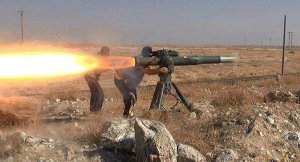 The Al-Nusra Front, Al-Qaeda’s affiliate in Syria, has released a grateful video, where they openly thank the Free Syrian Army (FSA), which the US has touted as a “moderate opposition group”, for supplying them with US-made anti-tank TOW missiles (“Tube-launched, Optically tracked, Wire-guided”).




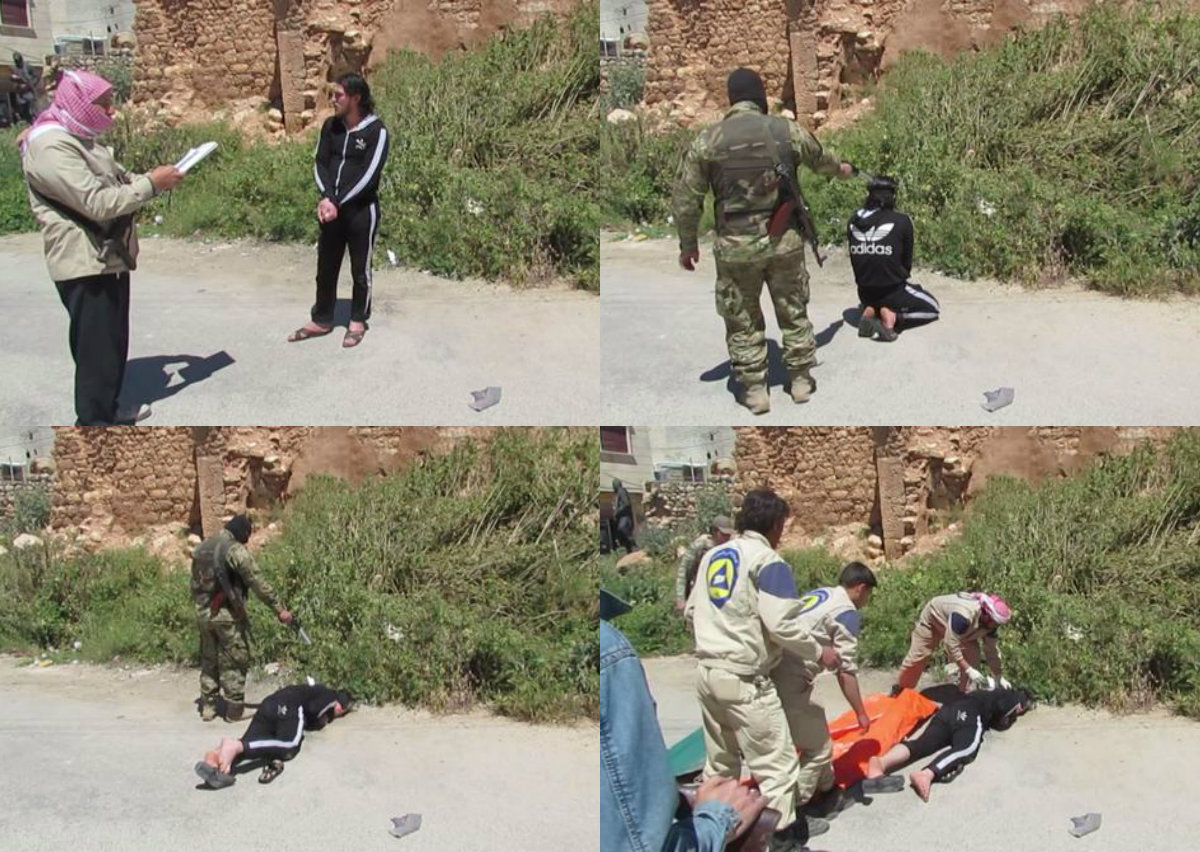
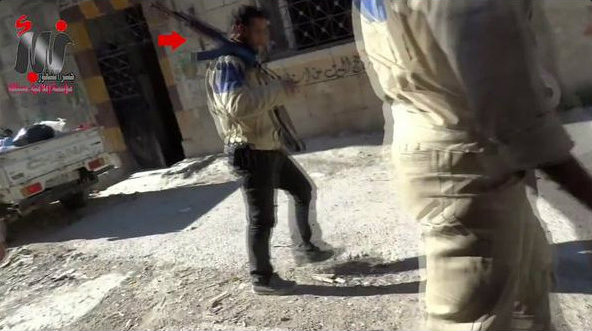



 Aletho News