Chinese jet fuel and the myth of energy independence
Inside China Business | April 8, 2026
Except for in Russia and (ironically) Iran, the war in the Persian Gulf has blown up energy markets everywhere. Worldwide, no country is self-sufficient in all its energy needs, and disruptions in a supply chains anywhere result in major problems everywhere. China is the largest refiner of jet fuel in Asia-Pacific, and has enormous reserves of crude stashed away, which can last months. But immediately after the war on Iran began, China locked down its exports of jet fuel. The effect on prices across Asia was felt immediately, with costs more than doubling in just six weeks. In the United States, fuel prices also soared, and also by over 100%.
Resources and links:
$140, and going higher: That’s the real price of oil, right now. Oil traders will be wiped out.  • $140, and going higher: That’s the real p…
Singapore’s major oil source is blocked and experts warn Australians will pay https://www.abc.net.au/news/2026-04-0…
Australia and Japan face jet fuel supply crunch as China cuts exports https://www.scmp.com/economy/china-ec…
Daily Jet Fuel Spot Prices https://www.airlines.org/dataset/argu…
America’s energy independence https://no01.substack.com/p/americas-…
US crude oil exports decreased by 3% in 2025 despite higher production (+3%) https://www.enerdata.net/publications…
Petroleum & Other Liquids, Imports by Country of Origin https://www.eia.gov/dnav/pet/pet_move…
China set to extend fuel export ban with small exemptions, sources say https://www.reuters.com/world/asia-pa…
South Korea to enforce 5-day vehicle rotation system as Mideast conflict hits energy supplies https://www.aa.com.tr/en/asia-pacific…
Project Artichoke: 70 Years Ago, CIA Discussed Hiding Mind-Control Drugs in Vaccines
By Michael Nevradakis, Ph.D. | The Defender | February 24, 2026
In the 1950s, the CIA brainstormed ways to secretly perform mind control on humans — including concealing drugs in vaccines and widely consumed food products, a newly unearthed CIA document revealed. The Daily Mail first reported the story on Monday.
The seven-page document, “Special Research for Artichoke,” is dated April 23, 1952. It describes a series of ideas for how to develop chemicals designed to alter human behavior and thought.
The proposals contained in the document were part of the CIA’s top-secret Project Artichoke, which ran from 1951 to 1956, according to the Daily Mail.
The document, declassified in 1983, recently circulated on social media. However, it was not published in the CIA’s online reading room until last year.
“Some of the suggestions are controversial,” the document states. The proposals included administering drugs in secret as part of a “long-range approach to subjects.”
According to the document:
“This study should include chemicals or drugs that can effectively be concealed in common items such as food, water, coca cola, beer, liquor, cigarettes, etc.
“This type of drug should also be capable of use in standard medical treatments such as vaccinations, shots, etc.”
CIA experimented on humans as part of Project Artichoke
The document also included a special field of research for “bacteria, plant cultures, fungi, poisons of various types, etc.,” that are “capable of producing illnesses which in turn would produce high fevers, delirium, etc.”
This included “species of the mushroom” that “produce a certain type of intoxication and mental derangement.”
Also among the proposals was a suggestion to research “diet” or “dietary deficiencies” on prisoners and on people undergoing interrogation, including using “specially canned foods having elements removed.”
The document included proposals for both short-term and long-term use on humans. Drugs deemed most suitable for long-term use would be designed to produce an “agitating effect (producing anxiety, nervousness, tension, etc.) or a depressing effect (creating a feeling of despondency, hopelessness, lethargy, etc.).”
According to The Daily Mail, the CIA experimented on humans as part of Project Artichoke. The experiments often involved “vulnerable subjects, including prisoners, military personnel and psychiatric patients.” The experiments were usually performed “without informed consent.”
According to Ben Tapper, a Nebraska chiropractor who was included in the “Disinformation Dozen” list in 2021 for questioning vaccine safety, the document exposes “a disturbing reality that government agencies have historically explored ways to manipulate human behavior through chemical and biological means, including concepts involving food and medical interventions.”
“This is not speculation or conspiracy, and it should deeply concern every American who values bodily autonomy and informed consent,” Tapper said.
Precursor to the CIA’s MK-Ultra mind control experiments?
The Daily Mail cited CIA documents suggesting that U.S. intelligence agencies were concerned that enemy nations had developed their own mind and behavioral control techniques. This led the agency to prioritize the development of its own methods.
Project Artichoke “served as a precursor” to the MK-Ultra program, which the CIA launched in 1953. That program “broadened mind-altering experiments on a larger scale,” the Daily Mail reported.
Many of the documents related to this type of experimentation were destroyed in 1973, “leaving the full extent of the research and how far it progressed unknown.”
Naomi Wolf, Ph.D., CEO of Daily Clout and author of “The Pfizer Papers: Pfizer’s Crimes Against Humanity,” told The Defender that the documents further confirm a long history of intelligence agency research targeting human thought and behavior.
“Sadly, it’s long been established that our intelligence agencies, and those of our enemies, have sought to alter human consciousness and behavior, often without the subjects’ consent. The existence of MK-Ultra, the clandestine project into which Project Artichoke evolved, is well documented,” Wolf said.
John Leake, vice president of the McCullough Foundation and author of the forthcoming book, “Mind Viruses: America’s Irrational Obsessions,” said, “Researchers have long suspected that the Church Committee’s revelation of the CIA’s notorious MK-Ultra mind control experiments, mostly using LSD, had the effect of obscuring the agency’s much larger Project Artichoke.”
Leake cited evidence suggesting that a 1951 mass poisoning in Pont-Saint-Esprit, France, in which 250 residents experienced severe hallucinations and seven people died, was a Project Artichoke experiment. The outbreak was officially attributed to contaminated bread from a local bakery.
Leake said the 1952 document is “consistent with the suspicion that the CIA was seeking to discover mind control methods for even large populations.”
In 2024, a Reuters investigation revealed that the CIA operated a secret propaganda campaign involving vaccines in the Philippines. The campaign attacked what the agency perceived as China’s “growing influence” in the country by targeting the Chinese-made Sinovac COVID-19 vaccine through the use of phony online accounts spreading “anti-vax” messaging.
Michael Rectenwald, Ph.D., author of “The Great Reset and the Struggle for Liberty: Unraveling the Global Agenda,” said the Project Artichoke revelations “make it clear that the CIA has posed an enormous threat to U.S. citizens, in addition to the horrors it unleashes on non-U.S. target governments and populations.”
Project Artichoke wanted to enlist help from Army’s Chemical Warfare Service
The 1952 Project Artichoke document also included a recommendation to involve the U.S. Army Chemical Warfare Service in the project’s efforts, citing its experience with “exhaustive studies along these lines.”
This proposal bears a resemblance to recent suggestions that COVID-19 — and the response to the pandemic — were coordinated at high levels of government, military and intelligence agencies.
Last year, former pharmaceutical research and development executive Sasha Latypova and retired science writer Debbie Lerman released the “Covid Dossier,” presenting evidence of the “military/intelligence coordination of the Covid biodefense response in the US, UK, Australia, Canada, the Netherlands, Germany, and Italy.”
According to Latypova and Lerman, “Covid was not a public health event” but “a global operation, coordinated through public-private intelligence and military alliances and invoking laws designed for CBRN (chemical, biological, radiological, nuclear) weapons attacks.”
Leake said “it is far from clear” that the Church Committee hearings of 1975 “put a complete end to CIA covert programs.” He cited the possible laboratory development of the SARS-CoV-2 virus as an example.
“The laboratory creation of SARS-CoV-2 with gain-of-function techniques developed at the University of North Carolina-Chapel Hill, and the U.S. military’s involvement in developing and distributing of mRNA COVID-19 vaccines, should … be regarded as possible outgrowths or even continuations of Project Artichoke,” Leake said.
Experts question similarities between Project Artichoke, COVID vaccines
In a Substack post today, epidemiologist Nicolas Hulscher drew a potential connection between Project Artichoke and the development of COVID-19 vaccines. Hulscher cited recent peer-reviewed studies that identified the vaccines’ adverse impact on neurological health and “surging rates of cognitive decline.”
Hulscher wrote:
“Disturbingly, since 2021, over 70% of humanity received a neurotoxic agent masquerading as a ‘vaccine.’ The same goals outlined in the CIA document (vaccines/drugs capable of covertly inducing anxiety, depression, and lethargy) are now being observed in COVID-19 vaccinated populations. …
“… If the CIA was secretly discussing covert methods to alter human behavior in the 1950s, it would be no surprise if similar classified projects emerged in the decades that followed.”
A 2024 paper published in the journal Molecular Psychiatry investigated psychiatric adverse events among over 2 million people in South Korea. The study found that “COVID-19 vaccination increased the risks of depression, anxiety, dissociative, stress-related, and somatoform disorders, and sleep disorders while reducing the risk of schizophrenia and bipolar disorder.”
A 2025 study published in the International Journal of Innovative Research in Medical Science found “alarming safety signals regarding neuropsychiatric conditions following COVID-19 vaccination, compared to the influenza vaccinations and to all other vaccinations combined.”
This included increases in schizophrenia, depression, cognitive decline, delusions, violent behavior, suicidal thoughts and homicidal ideation.
“The fact that mRNA vaccines were designed to cross the blood-brain barrier and inflame the brain — or at least, they were known to do so, during their manufacture and distribution — should give us pause in light of this news,” Wolf said.
Wolf said the latest revelations, “while shocking, provide all the more reason for us to be critical of opaque, coercive or untested vaccination programs, additives in food and water, and toxic or opaque geoengineering programs.”
Tapper said the revelations reinforce “the urgent need to protect individual liberty, medical freedom, and ethical boundaries in science and public health.”
“The lesson here is simple: vigilance is necessary when governments claim authority over the human body and mind,” Tapper said.
This article was originally published by The Defender — Children’s Health Defense’s News & Views Website under Creative Commons license CC BY-NC-ND 4.0. Please consider subscribing to The Defender or donating to Children’s Health Defense.
When Threats Replace Evidence
What an Australian Newspaper Article Reveals About the Vaccine Compliance Machine
Lies are Unbekoming | February 5, 2026
The Sydney Morning Herald wants you to know the penalties. Doctors and nurses who falsify vaccination records face suspension, deregistration, and jail. Parents who seek them out face fraud investigations through Services Australia. The article names specific dollar amounts ($2,500 per child), quotes the Health Minister expressing shock and outrage, and reminds readers that AHPRA—the regulatory body that controls whether medical professionals can earn a living—is watching.
The article reads less as journalism than as a warning to anyone considering dissent.
The Herald is one of Australia’s oldest and most influential newspapers, the rough equivalent of the New York Times in reach and establishment credibility. When it publishes a piece like this, it speaks with institutional authority. The January 2026 article, “Parents are paying $2500 to falsify vaccine records,” arrives at a particular moment in Australian public health: vaccine uptake has “stalled below national targets,” mandate enforcement is creating a black market for exemptions, and parents are organising in Facebook groups 40,000 members strong.
To understand the context, American readers need to know what Australia built. Between 2014 and 2019, five Australian states—New South Wales, Victoria, Queensland, South Australia, and Western Australia—rolled out “no jab, no play” laws, which bar unvaccinated children from childcare and preschool enrollment entirely. The only exemptions are medical, and these require documented life-threatening allergic reactions or severe immunocompromise—conditions so narrow that most families cannot qualify no matter their concerns.
The coercion is not subtle—and it violates the government’s own rules. Australia’s Immunisation Handbook states that valid consent must be given “voluntarily in the absence of undue pressure, coercion or manipulation.” Denying a child access to childcare unless the parents comply is textbook duress. The government has built an enforcement apparatus that fails its own stated ethical standards.
The system was designed to make non-compliance economically devastating and socially impossible. And for years, it worked. But now that system is encountering mass resistance, and the Herald article’s purpose is to make examples—to signal what happens to doctors who help parents escape a coercive system, and to parents who refuse to comply.
Buried beneath the threats is a dead baby. Riley Hughes, 32 days old, is the emotional payload. His story opens the piece, provides the moral frame, and transforms regulatory enforcement into righteous protection of the innocent. Without Riley, this article is just an inventory of punishments. With Riley, non-compliance becomes child murder.
The story requires examination.
Riley developed “mild cold symptoms” at three weeks old. His mother took him to a doctor, who said he appeared “perfectly fine.” When he stopped feeding, she took him to the children’s hospital. By day three, doctors “suspected” whooping cough. By day four, he had pneumonia. By day five, he was on life support. He died at 32 days old. Riley died in February 2015—eleven years before this article was published. The Herald reached back over a decade to find its dead baby.
The article states that “The Bordetella pertussis bug had overwhelmed his tiny body.” This is presented as fact. But reading carefully, the diagnosis was never confirmed—doctors “suspected” whooping cough. The journalist’s assertion that pertussis killed Riley is not attributed to any medical source. It is simply declared.
More striking is what the article omits entirely: what happened during those five days of hospitalisation. What interventions were administered to a three-week-old infant? What antibiotics? What was the “life support” that preceded his death? The hospital’s role in Riley’s deterioration is invisible. The medical system appears only as the place where heroic efforts were made to save him from the disease that (we are told) the unvaccinated community gave him.
The article describes Riley as “too young” to be vaccinated against whooping cough, which is given at six to eight weeks in Australia. But it does not mention that under Australian guidelines, Riley would have received the Hepatitis B vaccine within 24 hours of birth. He was not an unvaccinated child. He was a vaccinated child who had not yet received this particular vaccine.
If Riley had been completely unvaccinated, that would be the story. “Unvaccinated baby dies of preventable disease” writes itself. Instead, the article performs a subtle shift: a vaccinated infant dies after five days of hospital intervention, and an entire class of people—parents who refused to vaccinate—are scapegoated to protect the system that failed him.
None of this can be stated with certainty. We do not have Riley’s medical records. We do not know what drugs were administered, what procedures were performed, what his body endured in those five days. But that is precisely the point: neither does the Herald, and neither do its readers. The article presents a story with a hole at its centre and fills that hole with a villain—the unvaccinated community—while the institution that actually had custody of Riley during his decline remains unexamined.
What we do know: Riley was vaccinated. He received the Hepatitis B vaccine at birth, as per Australian protocol. He then spent five days in hospital care before he died. This is a vaccinated child who died after days of medical intervention—and the article repurposes his death as a case against vaccine refusal.
The mother, Catherine Hughes, is quoted: “My son would likely be alive today if everyone in my community had been fully vaccinated against whooping cough.”
This is a grieving mother’s belief, given to her by a medical system that needed someone to blame. She has since founded the Immunisation Foundation of Australia and become a professional advocate for vaccination mandates. What the Herald does not disclose: as journalist Alison Bevege has documented, her foundation received $170,000 from Sanofi in 2023 and $100,000 from GSK in 2025. Hughes herself appears in GSK press releases promoting their products. The article presents her as a spontaneous voice of bereaved motherhood. She is a paid pharmaceutical spokesperson.
The article’s foundational premise—that unvaccinated children endanger the community—is not merely unexamined. Even within the mainstream framework of germ theory and disease transmission, the published science contradicts it.
In 2014, researchers at the FDA published a study using baboons to examine how the acellular pertussis vaccine actually works. The results, within the germ theory framework the researchers operated in, were unambiguous: vaccinated baboons exposed to Bordetella pertussis showed few symptoms but became colonised with the bacteria. They were then placed in cages with unvaccinated baboons—and by the researchers’ own account, the vaccinated animals passed the bacteria to the unvaccinated ones. The study’s conclusion: “acellular pertussis vaccines protect against disease but fail to prevent infection and transmission.”
A 2015 study by Althouse and Scarpino went further. Using epidemiological, genetic, and mathematical modelling data, they argued that asymptomatic spread from vaccinated individuals “provides the most parsimonious explanation for the observed resurgence of B. pertussis in the US and UK.” Vaccinated individuals who show no symptoms carry and spread the bacteria—according to the very framework the public health establishment operates within. The authors noted that this also explains the documented failure of “cocooning”—the strategy of vaccinating family members to protect newborns. By their own logic, it doesn’t work because the vaccinated family members become silent carriers.
Even by the establishment’s own standards, the pertussis vaccine does not prevent colonisation. It does not prevent spread. What it does, according to their own researchers, is suppress symptoms in the vaccinated individual while allowing them to pass the bacterium to others, including infants too young to be vaccinated.
These are peer-reviewed studies published in the Proceedings of the National Academy of Sciences and BMC Medicine. The FDA conducted the baboon study.
Meanwhile, within this same framework, the bacterium has apparently evolved under vaccine pressure. A 2014 Australian study found that between 30% and 80% of circulating pertussis strains during a major outbreak were “pertactin-deficient”—lacking the protein the vaccine targets. The authors observed that “pertussis vaccine selection pressure, or vaccine-driven adaptation, induced the evolution of B. pertussis.”
The pertussis vaccine suppresses symptoms. Whether it also creates asymptomatic carriers who spread an apparently evolving pathogen, as the establishment’s own researchers claim, remains their narrative to defend. But even within that narrative, the unvaccinated are not the problem—the vaccine is.
When the Herald article quotes a professor warning about “one of the kids there has whooping cough or measles, and it spreads through the childcare, putting your child at risk,” the establishment’s own science suggests the spreader is more likely to be a vaccinated child with no visible symptoms than an unvaccinated child who would be home sick.
Even within the establishment’s own framework, if Riley had pertussis, the most likely source—according to their own research on asymptomatic carriage—would be a vaccinated person, perhaps someone in his own family who had been “cocooned” as the health authorities recommend. The article does not explore this possibility. It cannot, because the entire enforcement apparatus rests on the premise that the unvaccinated are the danger.
The article is not confused about the science. It is not interested in the science. Its function is compliance enforcement, and its vectors are specific.
The first vector targets medical professionals. The article names a Perth nurse charged with fraudulently recording vaccines—though the case was dropped for lack of evidence. It names a Victorian doctor whose registration was suspended. It quotes AHPRA warning that practitioners found acting fraudulently face suspension or deregistration. The message to any doctor or nurse who might help parents escape the system: we are watching, and we will destroy your career.
This is not new. In December 2020, Dr. Paul Thomas, a Portland paediatrician who had practiced for 35 years, published a peer-reviewed study comparing health outcomes in vaccinated versus unvaccinated children in his practice. The data showed unvaccinated children were significantly healthier across multiple metrics. Within days of publication, the Oregon Medical Board issued an “emergency order” suspending his licence, claiming his “continued practice constitutes an immediate danger to the public.”
The Board’s letter accused Thomas of “fraudulently” asserting that his vaccine-friendly protocol improved health outcomes—the very thing his peer-reviewed data demonstrated. His paper was later retracted under circumstances its authors describe as dubious. Thomas eventually surrendered his licence rather than continue fighting the Board’s conditions, which prohibited him from consulting with parents about vaccines or conducting further research.
The pattern is consistent. Produce evidence that challenges the orthodoxy, lose your ability to practice medicine. The threat in the Herald article is not abstract. Medical professionals in Australia have seen what happens to dissenters.
The second vector targets parents. The article reminds readers that Services Australia investigates Medicare and Centrelink fraud. Parents who pay for falsified records are not just endangering children (according to the article’s framing)—they are committing crimes against the Commonwealth. The article implies that seeking workarounds exposes parents to criminal liability, transforming a decision about their child’s medical care into a prosecutable offence.
The third vector is reputational. The article quotes the Health Minister: “I am shocked and appalled that any doctor or nurse would falsify vaccination records.” Parents in the Facebook groups are framed as reckless conspirators, their concerns about vaccine safety transmuted into selfish endangerment of babies like Riley. The 2025 study cited in the article notes that 47.9% of parents with unvaccinated children “did not believe vaccines are safe” and 46.7% “would not feel guilty if their unvaccinated child got a vaccine-preventable disease.” These statistics are presented as moral indictments.
What the article does not mention: the same study found that nearly 40% of these parents “did not believe vaccinating children helps protect others in the community.” Given the published science on pertussis—even within the establishment’s own framework—these parents have a point.
In 2004, Glen Nowak, the CDC’s director of media relations, gave a presentation to the National Influenza Vaccine Summit titled “Increasing Awareness and Uptake of Influenza Immunization.” His slides explained that vaccine demand requires “concern, anxiety, and worry” among the public. “The belief that you can inform and warn people, and get them to take appropriate actions or precautions with respect to a health threat or risk without actually making them anxious or concerned,” Nowak explained, “is not possible.”
His recipe for demand creation included medical experts stating “concern and alarm” and predicting “dire outcomes” if people don’t vaccinate. References to “very severe” and “deadly” diseases help motivate behaviour. Pandemic framing is useful.
The Herald article follows this template precisely. It opens with a dead baby. It features a professor warning about diseases “spreading through childcare.” The Health Minister invokes “serious complications, hospitalisation, and in some cases, death.” The 14 measles cases since December are presented ominously, without context about how many of those cases involved vaccinated individuals or resulted in any serious illness.
The article also quotes Dr. Niroshini Kennedy, president of the paediatrics and child health division at the Royal Australasian College of Physicians, warning about “vaccine hesitancy.” What the article does not mention: the RACP has a foundation that partners with GSK, a major pertussis vaccine manufacturer. The expert voice warning about hesitancy has institutional financial ties to a company that profits from vaccination.
The financial stakes are not abstract. GSK’s pertussis products Boostrix and Infanrix generated $2.3 billion in 2023. Sanofi’s pertussis vaccine revenue hit $1 billion in 2024, up 10.8% on the previous year, driven by booster demand. When the Herald runs a story demonising vaccine refusers, it serves an industry measured in billions.
The article acknowledges, briefly, that public health experts warned in 2019 that “vaccine mandates can backfire, and simply induce parents to seek loopholes, and, worse, fuel negative attitudes towards vaccination.” This warning has proven accurate. Australia’s escalating mandate regime has not produced the desired compliance. It has produced a $2,500 black market and Facebook groups with 40,000 members sharing strategies for resistance.
The system’s response is not to reconsider the mandates. It is to escalate enforcement and amplify fear. The article is part of that escalation.
The escalation itself is diagnostic. Systems that can defend their policies on evidence do not need to inventory punishments in the newspaper. They do not need to reach back eleven years for a dead baby. They do not need AHPRA warnings and Health Minister quotes and reminders about criminal prosecution. They make their case and let the data persuade.
What the Herald article reveals, beneath its institutional authority, is a system that has run out of persuasive tools. The sequence tells the story: first came the information campaigns, which did not produce sufficient uptake. Then came the mandates—no jab, no play—which produced compliance but also resistance. Then came enforcement against the resisters, which produced a black market. Now comes the threat display in the national press, designed to frighten the black market into submission. Each escalation is a concession that the previous level of coercion failed. Each one is more desperate than the last.
A system confident in its science would welcome questions. A system confident in its products would publish the safety data that parents are asking for. A system confident in its outcomes would point to the evidence and let parents decide. This system prosecutes nurses, deregisters doctors, denies children access to childcare, and runs articles designed to make examples of anyone who dissents. That is not the behaviour of an institution operating from strength. It is the behaviour of an institution that knows it cannot survive scrutiny—and is scrambling to ensure that scrutiny never arrives.
What parents are waking up to, slowly and in growing numbers, is that the fundamental promise—vaccinate your children and they will be protected, vaccinate enough children and the community will be protected—is not supported by the evidence, even within the framework that public health authorities operate in. What they are discovering is that asking questions produces hostility rather than answers. What they are learning is that doctors who support informed consent are being systematically removed from practice, leaving parents with no one in the medical system willing to have honest conversations.
The 40,000 parents in that Facebook group are not there because they read misinformation. They are there because they asked questions their doctors couldn’t answer, or because their child had a reaction that was dismissed, or because they did the research the system told them not to do and found that the confident assurances didn’t match the published science.
The Herald article treats these parents as a problem to be solved through enforcement. It does not entertain the possibility that they might be responding rationally to real information. It cannot, because that would require examining the science—and the science does not support the policy.
Australia has constructed a system where parents lose childcare access if they do not vaccinate, where doctors lose their licences if they support parental choice, where asking questions about vaccine safety is framed as “misinformation,” and where a dead baby is deployed to transform regulatory non-compliance into moral monstrosity.
The article calls this public health. A more accurate description: this is what happens when a policy built on faulty premises meets a population that is beginning to see through it. Unable to defend the science, the system defends itself through threats, fear, and the weaponisation of grief.
Riley Hughes deserved better than to become a propaganda tool for the companies that fund his mother’s foundation. The parents seeking exemptions deserve honest information about what vaccines can and cannot do. The doctors trying to practice informed consent deserve to keep their licences.
None of them are served by an article whose purpose is to frighten dissenters into silence.
The system is telling parents: comply or be punished, and don’t ask questions. The parents are responding: we have questions, and your threats are not answers.
That tension will not be resolved by more enforcement. It will be resolved when someone in authority has the courage to address the questions honestly—or it will continue to escalate until the system’s credibility collapses entirely.
Forty thousand parents in one Facebook group suggest which direction this is heading.
References
The Article Under Discussion:
Olaya, K. (2026, January 31). Parents are paying $2500 to falsify vaccine records. It’s endangering babies like Riley. The Sydney Morning Herald. https://www.smh.com.au/national/parents-are-paying-2500-to-falsify-vaccine-records-it-s-endangering-babies-like-riley-20260127-p5nxah.html
Catherine Hughes Financial Disclosures:
Bevege, A. (2026, February 4). ‘Baby-Killers’ – Nine Newspapers falsely claim unvaccinated people killed a baby by spreading whooping cough. Letters from Australia. https://alisonbevege.substack.com/
RACP-GSK Partnership:
GSK Australia. RACP Foundation partnership announcement. Referenced in Bevege (2026).
Vaccine Revenue Figures:
GSK. (2024). Annual Report 2023. Boostrix and Infanrix/Pediarix revenue figures.
Sanofi. (2025). Fourth Quarter 2024 Earnings Report. Polio/pertussis/HiB vaccine sales.
Pertussis Vaccine and Asymptomatic Carriage:
Warfel, J. M., Zimmerman, L. I., & Merkel, T. J. (2014). Acellular pertussis vaccines protect against disease but fail to prevent infection and transmission in a nonhuman primate model. Proceedings of the National Academy of Sciences, 111(2), 787-92. https://doi.org/10.1073/pnas.1314688110
Althouse, B. M., & Scarpino, S. V. (2015). Asymptomatic transmission and the resurgence of Bordetella pertussis. BMC Medicine, 13(1), 146. https://doi.org/10.1186/s12916-015-0382-8
Pertussis Vaccine Evolution and Waning Immunity:
Lam, C., Octavia, S., et al. (2014). Rapid increase in pertactin-deficient Bordetella pertussis isolates, Australia. Emerging Infectious Diseases, 20(4), 626-33. https://doi.org/10.3201/eid2004.131478
Tartof, S. Y., Lewis, M., et al. (2013). Waning immunity to pertussis following 5 doses of DTaP. Pediatrics, 131(4), e1047-52. https://doi.org/10.1542/peds.2012-1928
van Boven, M., Mooi, F. R., et al. (2005). Pathogen adaptation under imperfect vaccination: implications for pertussis. Proceedings of the Royal Society B, 272(1572), 1617-24. https://doi.org/10.1098/rspb.2005.3108
Dr. Paul Thomas Case:
Oregon Medical Board. (2020). In the Matter of: Paul Norman Thomas, MD. License Number MD15689: Order of Emergency Suspension. https://omb.oregon.gov/Clients/ORMB/OrderDocuments/e579dd35-7e1b-471f-a69a-3a800317ed4c.pdf
Lyons-Weiler, J., & Thomas, P. (2020). Relative Incidence of Office Visits and Cumulative Rates of Billed Diagnoses Along the Axis of Vaccination. International Journal of Environmental Research and Public Health, 17(22), 8674. [Retracted 2021]
Hammond, J. R. (2021). The War on Informed Consent: The Persecution of Dr. Paul Thomas by the Oregon Medical Board. Skyhorse Publishing.
CDC Fear-Based Messaging:
Nowak, G. (2004). Increasing Awareness and Uptake of Influenza Immunization. Presentation at the National Influenza Vaccine Summit, Atlanta, GA.
Vaccine Mandates and Backfire Effects:
Ward, J. K., et al. (2019). France’s citizen consultation on vaccination and the challenges of participatory democracy in health. Social Science & Medicine, 220, 73-80.
Suppression of Vaccine Dissent:
Martin, B. (2015). On the Suppression of Vaccination Dissent. Science and Engineering Ethics, 21(1), 143-57. https://doi.org/10.1007/s11948-014-9530-3
Australia’s No Jab, No Play Laws:
Australian state governments. No Jab, No Play legislation (2014-2019). New South Wales, Victoria, Queensland, South Australia, Western Australia.
Australian Immunisation Handbook — Consent Requirements:
Australian Government Department of Health. Australian Immunisation Handbook. Section: Valid Consent. https://immunisationhandbook.health.gov.au/
‘Israel’ bulldozes part of Gaza war cemetery holding allied graves
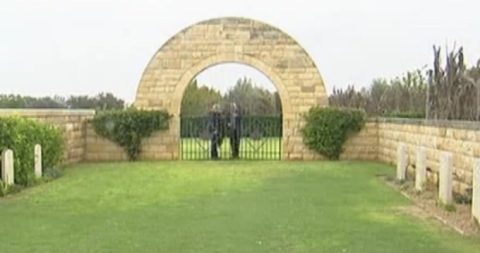
Al Mayadeen | February 5, 2026
Israeli occupation forces have bulldozed sections of the Gaza War Cemetery in Gaza City’s al-Tuffah neighborhood, damaging graves of British, Australian, and other allied soldiers from the First and Second World Wars, according to an investigation by The Guardian.
Satellite imagery shows systematic earthworks in the cemetery’s southern corner, including removed gravestones, churned soil, and a large earth berm indicating the use of heavy machinery. The damage was not visible in images from March last year but appeared clearly in satellite photos taken in August and December.
Essam Jaradah, the cemetery’s former caretaker, told The Guardian that Israeli bulldozers first cleared land around the cemetery walls before later entering the graveyard itself, flattening nearly one dunum of land that included graves of Australian soldiers.
“The bulldozing covered the area from the bench where foreign visitors used to sit up to the memorial monument,” Jaradah said, adding that the operations took place after Israeli occupation forces withdrew from the area in late April or early May.
Israeli army cites combat operations
Responding to questions from The Guardian, the Israeli military command said the area was an “active combat zone” at the time and claimed its actions were taken for defensive reasons.
“At the relevant time, the area in question was an active combat zone,” a military spokesperson said, alleging the presence of underground “terrorist infrastructure” within and around the cemetery.
The Royal British Legion said it was “saddened” by reports that allied war graves had been damaged, stressing that such sites “deserve to be treated with the utmost respect”.
Focus on Panama’s ‘port case’ must not be misplaced
Global Times | February 3, 2026
Since the Supreme Court of Panama ruled that CK Hutchison’s concession contract to operate Panama Canal ports was “unconstitutional,” the most elated individuals over the past few days have undoubtedly been certain US politicians and media outlets. US Secretary of State Marco Rubio quickly posted on social media that the US is “encouraged,” while some American media outlets claimed this marks a “major victory” for Washington in curbing Chinese influence. The Wall Street Journal even issued a blunt threat, stating that other countries “might re-examine their ties to the world’s second-biggest economy.”
The cries of “victory” coming from the US confirm widespread outside suspicions and further expose Washington’s hegemonic arrogance in using geopolitical means to interfere with commercial cooperation and undermine trade rules. Although the US formally handed over control of the Panama Canal in 1999, in Washington’s Cold War mentality, this area remains an “inner lake” that others are not allowed to touch. The US has repeatedly expressed desire to “retake control of the Canal,” and Secretary of State Rubio chose Panama for his first overseas visit, threatening the country that it “must reduce Chinese influence.” Therefore, when the Supreme Court of Panama issued its so-called ruling, it is difficult for the international public opinion not to question its independence.
However, if one follows Washington’s rhythm and views this turmoil through the lens of “US-China competition,” they fall into a cognitive trap set by the US, and the focus on this matter becomes misplaced. These ports have never been, and should never be, bargaining chips in a geopolitical game. In fact, CK Hutchison has operated these ports for nearly 30 years; in such a long span of time, where has there ever been a shadow of a “Chinese threat”?
On the contrary, under the company’s management, these ports have been developed, benefiting the local area and contributing to global free trade. In this process, the US itself has been one of the beneficiaries. Therefore, regarding the attention on Panama’s port operation rights, if one must talk about winners and losers, the core should lie in the contest between free trade and hegemonism, and the confrontation between the spirit of contract and power politics.
Whether it is the ports along the Panama Canal, Australia’s Darwin Port mired in controversy, or the case of Nexperia in the Netherlands, the same “invisible hand” looms in the background. Some countries repeatedly claim to uphold a “rules-based order”; yet in practice, what they defend is an “order based on the interests of a single country.” This is, in essence, a targeted demolition of global investment credibility. If commercial contracts can be nullified at the whim of politicians or under pressure from allies, then no long-term investment within the Western system is truly safe. From Southeast Asia to the Middle East, global investors are watching closely, asking whether today’s rapacious acts will tomorrow descend upon any profitable industry.
International investment law does indeed recognize “security exceptions,” but these are by no means a universal master key for hegemonism. The core of international commercial law is certainty: companies that operate in compliance with the rules deserve the protection of the law. By using diplomatic coercion to push allies into rulings that defy legal principles, the US is eroding from within the very credit foundations on which the capitalist world depends. In the short term, Washington may have secured a few “strategic footholds”; however, in the long term, this has fundamentally undermined the international credibility of the US and the space for transnational commercial interactions. It is foreseeable that when the law ceases to be a fair arbiter and becomes a political tool, global capital will have to seek safe havens independent of the dollar system and the US “long-arm” influence.
What is even more concerning to the international community is that the geopolitical will of the US often surpasses the constitutions of some sovereign nations. This is a mockery of the principle of sovereign equality enshrined in the United Nations Charter. From the case of Alstom years ago to the current controversy over Darwin Port, the methods used by the US to attack competitors and seize interests are strikingly similar. The international business community needs a fair, just, and non-discriminatory business environment, not a “law of the jungle” dominated by hegemonic will. If this trend of politicizing economic and trade issues and weaponizing legal tools continues unchecked, the ultimate victim will be the entire international economic and trade order. Those who attempt to curb their rivals by undermining the rules will also find themselves facing a bankruptcy of credibility.
As an important maritime passage that carries about 5 percent of global shipping trade, the Panama Canal ports have become a crucial cargo hub on a global scale, and they should not waver under the shadow of hegemonism. According to reports, concessions for the Panama Canal ports will now need to be auctioned off.
In this context, it is hoped that the Panamanian side will truly demonstrate its “independence” by providing a predictable environment for fair competition for all bidders, rather than trying by any means to “ensure that China is blocked from the bidding” as some US media outlets have trumpeted. The whole world is watching everything that happens there.
Australia Passes New Hate Speech Law, Raising Free Speech Fears
By Dan Frieth | Reclaim The Net | January 20, 2026
Australia’s federal Parliament has enacted a broad new legal package targeting hate, antisemitism, and extremism, passing the Combatting Antisemitism, Hate and Extremism (Criminal and Migration Laws) Bill 2026 with strong majorities in both chambers.
The bill has several implications regarding free speech.
The House of Representatives approved it 116 Ayes to 7 Noes, and the Senate passed it 38 Ayes to 22 Noes, sending it into law after an expedited process in response to rising public concern about hate-motivated violence.
We obtained a copy of the bill for you here.
The government framed the legislation as part of its response to the deadly December terror attack at Bondi Beach that left 15 people dead and focused debate on enhancing public safety and national unity.
Attorney General Michelle Rowland and other ministers repeatedly described the new framework as needed to strengthen legal tools against violent hate and extremism.
In earlier official statements, Rowland said of the proposal: “Once these laws are passed, they will be the toughest hate laws Australia has ever seen.”
Under this new law, a range of conduct tied to hatred or perceived threat can trigger criminal liability, including organizing, supporting, or being involved with groups that authorities designate as engaging in hate-based conduct.
A new framework allows the Australian Federal Police Minister to recommend that such groups be listed as “prohibited hate groups.” Being a member of such a group, recruiting, training, or financially supporting it are offenses with penalties that can extend up to 15 years in prison.
The Bill grants the executive branch power to designate organizations as prohibited hate groups through regulation. This decision is made by the AFP Minister, based on reasonable satisfaction, with advice from intelligence agencies.
Crucially, the legislation explicitly removes any requirement for procedural fairness in this process.
An organization may be listed even if:
- No criminal conviction has occurred
- The relevant conduct occurred before the law existed
- The organization is based outside Australia
- The evidence relied upon is classified and undisclosed
Once an organization is listed, the consequences are severe. Membership, recruitment, training, funding, or providing support becomes a serious criminal offense carrying lengthy prison terms.
The criminal provisions for hate conduct are built around whether specific public behavior would cause a reasonable person in the target group “to feel intimidated, to fear harassment or violence, or to fear for their safety.”
This standard can apply even where there is no evidence that anyone actually experienced fear or harm. The definition is tied to subjective perceptions of risk, rather than solely observable incitement to violence.
The Bill expands the “reasonable person” test used in hate-related offenses. Speech may now be criminal if a so-called reasonable person in the targeted group would consider it offensive, insulting, humiliating, or intimidating. Violence or threats of violence are not required.
This standard introduces subjectivity into criminal law. Political speech on immigration, religion, nationalism, or identity frequently causes offense or humiliation to some audiences.
Under this framework, harsh criticism, protest slogans, or satire could attract criminal liability based on emotional impact rather than demonstrable harm.
A democratic society depends on the ability to offend, challenge, and provoke. Criminalizing offense risks sanitizing public debate into only what is officially acceptable.
The legislation also expands the existing ban on “prohibited hate symbols,” creating criminal offenses for displays of banned symbols unless justified on narrow grounds such as religious, academic, journalistic, or artistic use.
While proponents argue this targets conduct that fuels hatred, similar symbolic bans in other jurisdictions such as Germany have often ensnared educational or historical contexts.
The Bill also significantly alters existing offenses relating to prohibited symbols. Previously, exemptions for religious, academic, artistic, or journalistic purposes operated as clear carve-outs. Under the new framework, the defendant bears the evidential burden of proving that their conduct was for a protected purpose and was not contrary to the public interest.
This reversal matters. The presumption shifts from lawful expression to presumed criminality unless the speaker can justify themselves after the fact.
Journalists must demonstrate that they were acting in a professional capacity and that their reporting met an undefined public-interest standard. Artists, educators, and researchers face similar uncertainty.
Such burden-shifting mechanisms are well known to chill speech, particularly in investigative journalism and political commentary where legal certainty is essential.
Migration rules have been significantly altered. The law amplifies the Home Affairs Minister’s powers to refuse entry or cancel visas for non-citizens judged to be associated with extremist groups or hate conduct.
Free speech defenders have warned that the combination of low subjective thresholds and expanded administrative powers creates risks that lawful expression, dissenting views, or controversial speech could be swept into criminal or immigration sanctions.
They argue that this effect stems from how the law equates emotional or perceived intimidation with actionable hate, a departure from frameworks where provable harm or incitement to violence is required.
Taken together, these provisions produce a powerful chilling effect across political communication, journalism, academic inquiry, religious teaching, and civil association.
The cumulative structure of the Bill incentivizes silence, conformity, and disengagement from controversial debate. In a country that relies on an implied, rather than explicit, freedom of political communication, this legislation tests the outer limits of democratic tolerance.
The War On Free Speech In Australia Is Getting Cartoonishly Absurd
By Caitlin Johnstone | January 17, 2026
A mentally disabled Australian woman is being prosecuted for antisemitic hate crimes after accidentally pocket-dialing a Jewish nutritionist, resulting in a blank voicemail which caused the nutritionist “immediate fear and nervousness” because she thought some of the background noises in the recording sounded a bit like gunshots.
We’re being told we need more of this. There’s “hate speech” legislation presently in the works to make this worse. Australia’s controversial Combatting Antisemitism, Hate and Extremism Bill appears to be explicitly crafted to dramatically increase the scale, frequency and consequences of the exact sort of dynamics we’re seeing in this case, and to eradicate opposition to Israel throughout the nation.
This is how overextended Australia’s freakout over “antisemitism” already is. You can literally just be sitting there not saying or doing anything and still find yourself getting arrested and prosecuted for an antisemitic hate crime. They have the authority to do this presently, under the laws that already exist. The argument for this bill is that our present horrifyingly tyrannical and abusive system is insufficiently authoritarian and tyrannical, and that prosecutors need more power to police speech far more forcefully.
Australians are being asked to trust a system that would take a woman with an intellectual disability to prosecution in a court of law over an accidental butt-dial to a person of Jewish faith with the authority to send people to prison for years over their political speech. And this is happening after we just spent years watching Australian authorities roll out authoritarian measures to stomp out criticism of Israel and quash protests against an active genocide.
This is madness, and it needs to be brought to a screeching halt. Immediately. This entire country has lost its damn mind.
The Bondi attack isn’t the reason, it’s the excuse. All these laws being rolled out to stomp out criticism of Israel in Australia were sought for years before the shooting occurred.
Immediately after the attack last month I tweeted, “Not a lot of info about the Bondi shooting yet but it’s safe to assume it will be used as an excuse to target pro-Palestine activists and further outlaw criticism of Israel in Australia, as has been happening to a greater and greater extent in this country for the last two years.”
They could have proved me wrong, but instead they’ve spent this entire time proving me one hundred percent correct. The frenzied efforts to crush anti-genocide protests and silence speech that is critical of Israel and Zionism in these subsequent weeks has plainly established this.
There is no connection between pro-Palestine demonstrations and the Bondi attack. None. It had nothing to do with Palestinians, and it had nothing to do with anti-genocide demonstrations. It’s a completely made-up claim that Israel’s supporters have been circulating in Australian consciousness through sheer repetition. They’re just pretending to believe it’s true in order to promote the information interests of a genocidal apartheid state.
Israel’s supporters need to use propaganda, deception, censorship and oppression to promote their agendas, because it’s all they have. They don’t have truth. They don’t have arguments. They don’t have morality. All they have is brute force. They are shoving support for Israel and its atrocities down our throats whether we like it or not, and if we refuse what we’re being force-fed they will punish us. That’s the only tool in their toolbox.
This needs to be ferociously opposed. The more Israel and its supporters work to assault our right to oppose their abuses, the more aggressively we need to oppose them. We are no longer fighting against war and genocide in the middle east, we are fighting against an assault on our own civil rights. It’s personal now. They’re coming for us directly.
Australia’s New Hate Speech Bill Is Reckless, Contradictory, and Repressive
Australia’s hate law rewrites justice into a guessing game where imagined offense can cost you five years of your life
By Christina Maas | Reclaim The Net | January 13, 2026
On January 12, Australia’s Attorney-General Michelle Rowland stepped to the podium and announced what she called “the toughest hate laws Australia has ever seen.”
The government plans to push its Combatting Antisemitism, Hate and Extremism Bill 2026 through Parliament on January 20, turning Australia’s speech laws into something that reads more like a psychological test than a criminal code.
We obtained a copy of the bill for you here (and the memorandum here.)
The same week Prime Minister Anthony Albanese was praising Iranians “standing up for their human rights,” his government was preparing to criminalize speech at home even when no one’s rights or feelings had actually been touched.
The bill’s centerpiece is a new racial vilification offense. It bans “publicly promoting or inciting hatred” based on race, color, or national or ethnic origin, with penalties of up to five years in prison.
The measure’s core novelty is what it removes: proof of harm.
It’s “immaterial,” the draft says, whether “the conduct actually results in hatred” or whether anyone “actually” feels intimidated or fears harassment.
The courts will instead consider what a hypothetical “reasonable” member of the targeted group would feel, even if no such person exists in the case.
Prosecutors, the explanatory note clarifies, “would not be required to prove” any real fear at all.
The message: you can go to prison for causing theoretical discomfort in a theoretical person.
Rowland’s bill doesn’t stop at the town square or the street corner. It explicitly defines a “public place” to include any form of electronic communication, including social media, blogs, livestreams, recordings, and content posted from private property if the public can see it.
In other words, the living room webcam and the backyard podcast are now public arenas. A joke, a meme, or an overheard rant could be weighed for its impact on an imaginary “reasonable person” who never existed.
That five-year penalty isn’t for causing harm; it’s for crossing a line no one can quite locate.
The one solid shield in this maze of liability is religion. The offense “does not apply to conduct that consists only of directly quoting from, or otherwise referencing, a religious text for the purpose of religious teaching or discussion.”
Everyone else is left to improvise a defense under the general “good faith” clauses.
The memorandum calls this exemption “peculiarly within the knowledge of the defendant,” which is legalese for: you better prove your sermon was holy enough.
The government has built a speech hierarchy, placing priests and imams on the top shelf and comedians and columnists in the discount bin.
The Combatting Hate bill reads like the product of a government that wants to be applauded for standing up to bigotry but can’t resist the lure of control.
It recasts expression as a form of potential violence, with guilt determined not by actions or consequences but by how a hypothetical observer might feel.
The Combatting Hate bill takes the already broad category of “prohibited hate symbols” and turns it into a legal booby trap.
Under the amendments, anyone accused of displaying one must now prove their own innocence. The idea of innocent until proven guilty would now be reversed.
The government boasts that the law “removes the current requirement…for the prosecution to disprove the existence of a legitimate purpose” and instead “reverses the burden of proof to require the defendant to provide evidence suggesting a reasonable possibility of the existence of a legitimate purpose for display.”
In plain language, the accused must demonstrate that they had a permitted purpose, such as education or historical context, before prosecutors even have to make their case.
Police can demand the removal of online material and seize physical items.
The likely effect is predictable: artists, academics, and journalists will think twice before touching any material that could be misinterpreted.
The courtroom will not even need to convict. The process itself becomes the punishment.
The bill goes further with a new power to designate “prohibited hate groups.” The Australian Federal Police Minister can create these listings without hearings or due process. The statute leaves no ambiguity: “The AFP Minister is not required to observe any requirements of procedural fairness in deciding whether or not the AFP Minister is satisfied for the purposes of this section.”
This power does not stop at the Australian border. The listings can reach backward in time and across borders. The bill allows an organization to be blacklisted if it “has advocated (whether or not in Australia)” conduct that qualifies as hateful, even if that conduct “occurred before subsection (1) commences.”
That means a person can be prosecuted for speech or association that was entirely legal when it occurred. The past is no refuge, and geography offers no escape.
Once a group lands on the list, the penalties multiply. According to the government’s own factsheet, “The maximum penalties for these offences range from 7 to 15 years imprisonment.”
Membership can mean seven years. Providing support, training, recruitment, or funding can mean fifteen. The memorandum quietly adds that the Director-General of Security’s advisory role in the process is also exempt from procedural fairness.
The bill presents itself as protection, but is written in language that is surprisingly reckless and shamelessly authoritarian.
It reads like the product of a government comfortable with punishing ideas instead of actions. The text removes the need for evidence of harm, rewrites fear as a legal standard, and shifts the burden of innocence onto the accused.
Its tone is revealing. The clauses are direct and unapologetic, describing censorship powers and reversed burdens as if they were routine administrative steps.
There is no hesitation or recognition of limits, only the steady assumption that control is an acceptable substitute for trust.
This legislation normalizes the management of thought through regulation. The state positions itself as the final arbiter of acceptable speech, using fear as both the metric and the motive.
Once written into law, that kind of authority rarely asks permission to grow.
Australian festival boycotted for excluding Palestinian writer
MEMO | January 12, 2026
Dozens of writers and cultural figures have boycotted the Adelaide Festival in Australia after the organisers excluded Palestinian-Australian academic and writer Randa Abdel-Fattah from the Adelaide Writers’ Week programme, scheduled to take place next month.
The festival removed Abdel-Fattah from the list of participants, despite her taking part in the 2023 edition, where she chaired and joined several sessions and discussions.
The Adelaide Festival includes a wide range of cultural events, such as arts, music, theatre and public talks, with Writers’ Week considered one of its most important annual programmes.
On Thursday, the festival’s board issued a statement saying it was “shocked and saddened by the tragic events in Bondi”, adding that it had informed Abdel-Fattah of its decision not to proceed with her planned appearance. The board justified the move by citing what it described as “cultural sensitivity” at this time.
In response, Randa Abdel-Fattah released a separate statement accusing the festival’s management of “blatant and shameful racism against Palestinians”. She said linking her to the Bondi events was “disgraceful” and argued that the decision stripped her of her humanity and turned her into a target for racist fears simply because she is Palestinian and holds openly stated political views.
Abdel-Fattah also criticised Australian arts and cultural institutions more broadly, accusing them of showing “complete contempt and inhumanity towards Palestinians” since 7 October 2023.
She said: “The only Palestinians they will tolerate are silent and invisible ones.”
So far, 47 participants have withdrawn from the festival in support of Abdel-Fattah, with expectations that more may follow.
Ireland’s Simon Harris to Push EU-Wide Ban on Social Media Anonymity
By Cindy Harper | Reclaim The Net | December 29, 2025
Ireland’s next term leading the European Union will be used to promote a new agenda: an effort to end online anonymity and make verified identity the standard across social media platforms.
Tánaiste Simon Harris said the government plans to use Ireland’s presidency to push for EU-wide rules that would require users to confirm their identities before posting or interacting online.
Speaking to Extra.ie, Harris described the plan as part of a broader attempt to defend what he called “democracy” from anonymous abuse and digital manipulation.
He said the initiative will coincide with another policy being developed by Media Minister Patrick O’Donovan, aimed at preventing children from accessing social media.
O’Donovan’s proposal, modeled on Australian restrictions, is expected to be introduced while Ireland holds the EU presidency next year.
Both ideas would involve rewriting parts of the EU’s Digital Services Act, which already governs how online platforms operate within the bloc.
Expanding it to require verified identities would mark a major shift toward government involvement in online identity systems, a move that many privacy advocates believe could expose citizens to new forms of monitoring and limit open speech.
Harris said his motivation comes from concerns about the health of public life, not personal grievance.
Harris said he believes Ireland will find allies across Europe for the initiative.
He pointed to recent statements from French President Emmanuel Macron and UK Prime Minister Keir Starmer, who he said have shown interest in following Australia’s lead. “If you look at the comments of Emmanuel Macron… of Keir Starmer… recently, in terms of being open to considering what Australia have done… You know this is a global conversation Ireland will and should be a part of,” he said.
Technology companies based in Ireland, many of which already face scrutiny under existing EU rules, are likely to resist further regulation.
The United States government has also expressed growing hostility toward European efforts to regulate speech on its major tech firms, recently imposing visa bans on several EU officials connected to such laws.
Despite this, Harris said Ireland does not want confrontation. “This is a conversation we want to have now. We don’t want to have it in an adversarial way. Companies require certainty too, right?” he said, emphasizing that Ireland remains committed to being a reliable home for international tech firms.
He also spoke in support of O’Donovan’s age-verification proposal, comparing it to other legal age limits already enforced in Ireland. “We have a digital age of consent in Ireland, which is 16, but it’s simply not being enforced,” he said.
From a civil liberties standpoint, mandatory identity checks could fundamentally alter the online world.
Requiring proof of identity to speak publicly risks silencing individuals who rely on anonymity for safety, including whistleblowers, activists, and those living under political pressure.
Once created, systems of digital identity are rarely dismantled and can easily be adapted to track or restrict speech.
Harris said that voluntary cooperation by technology companies could make legislation unnecessary. “These companies are technology companies. They have the ability to do more, without the need for laws,” he said, suggesting platforms could use their own tools to manage bots, algorithms, and age verification.
Victoria Moves to Force Online Platforms to ID Users and Expand State Powers to Curb “Hate Speech”
Victoria’s push to unmask online users marks a turning point where the rhetoric of safety begins to eclipse the right to speak without fear
By Cindy Harper | Reclaim The Net | December 23, 2025
Victoria is preparing to introduce some of the most far-reaching online censorship and surveillance powers ever proposed in an Australian state, following the Bondi Beach terror attack.
Premier Jacinta Allan’s new five-point plan, presented as a response to antisemitism, includes measures that would compel social media platforms to identify users accused of “hate speech” and make companies legally liable if they cannot.
Presented as a defense against hate, the plan’s mechanisms cut directly into long-standing principles of privacy and freedom of expression. It positions anonymity online as a form of protection for “cowards,” creating a precedent for government-mandated identity disclosure that could chill lawful speech and dissent.
During her announcement, Premier Allan said:
“That’s why Victoria will spearhead new laws to hold social media companies and their anonymous users to account – and we’ll commission a respected jurist to unlock the legislative path forward.”
Under the proposal, if a user accused of “vilification” cannot be identified, the platform itself could be held responsible for damages. This effectively converts private platforms into instruments of state enforcement, obligating them to expose user data or face financial risk.
The Premier also announced plans to accelerate the introduction of the Justice Legislation Amendment (Anti-vilification and Social Cohesion) Act 2024, which had been due to take effect in mid-2026. It will now be brought forward to April 2026.
The law allows individuals to sue others for public conduct, including online speech, that a “reasonable person” might find “hateful, contemptuous, reviling or severely ridiculing” toward someone with a protected attribute. These protected categories include religion, race, sex, gender identity, sexual orientation, and disability, among others.
This framework gives the state and private citizens broad interpretive power to determine what speech is “hateful.” As many civil liberties experts note, such wording opens the door to legal action based on subjective offense rather than clear, objective harm.
Weakening Oversight of Speech Prosecutions
Premier Allan also intends to remove a major procedural safeguard from Victoria’s criminal vilification laws: the requirement that the Director of Public Prosecutions (DPP) consent to police prosecutions. Without that check, police could independently pursue speech-based offenses, bypassing higher legal oversight.
This change would hand significant discretion to law enforcement in determining which speech crosses into criminality. Once enacted, it would mean that a person’s online comments could be prosecuted directly, without review from the state’s top legal office.
The “anti-hate” package extends beyond censorship. It proposes new powers for police to shut down protests in the aftermath of “designated terrorist events” and establishes a Commissioner for Preventing and Countering Violent Political Extremism to coordinate programs across schools, clubs, and religious institutions.
These measures, combined with the online anonymity restrictions, represent a substantial consolidation of state power over communication, movement, and association, all justified in the name of combating hate and maintaining safety.
Requiring companies to unmask users fundamentally undermines the principle of anonymous participation, a cornerstone of free expression, whistleblowing, and political organizing. Anonymity has historically protected vulnerable groups, dissidents, and small voices from retaliation.
Under Victoria’s proposal, those protections could erode rapidly as platforms are pressured to reveal identities or face litigation.
Laws targeting “hate speech” often extend far beyond their original purpose, evolving into broad speech controls that deter public criticism, satire, and unpopular opinions. Once enacted, such powers rarely contract.
More: Chris Minns Defends NSW “Hate Speech” Laws Linking Censorship to Terror Prevention
Australia evaluates purchase of Israeli AI-powered weapons used in Gaza: Report
The Cradle | December 22, 2025
Australia’s Department of Defense has begun a live assessment of Israeli-made, “combat-proven” AI-powered weaponry tested during Israel’s genocide in Gaza, according to a report by Australia Declassified published on 21 December.
The Australian Defence Force is currently trialing the SMASH 3000 AI-assisted targeting system, produced by Israeli arms firm Smartshooter Ltd., and openly advertised as battle-tested, a label arms manufacturers use to demand a higher price for their product.
Under a four-month contract worth approximately $495,910.49, signed for equipment provision and training, the ADF has acquired multiple units of the rifle-mounted electro-optical fire control system and has been evaluating its operational suitability for Australian forces since 25 August, with the trial scheduled to conclude on 25 December.
The SMASH 3000 uses artificial intelligence to detect, track, and lock onto targets, dramatically increasing hit probability for existing firearms, and while it is marketed primarily as a counter-drone system, it is also capable of engaging ground targets with lethal effect.
Smartshooter openly advertises the system as “combat-proven,” explicitly citing its deployment by Israeli armed forces in Gaza, and has repeatedly emphasized that its battlefield use forms a core part of its commercial appeal.
Despite the system’s documented use by Israel during its genocidal war on Gaza, Canberra has proceeded with the evaluation, with no indication that Tel Aviv’s conduct in the besieged enclave has altered Australia’s engagement with the Israeli arms industry.
Smartshooter claims the SMASH 3000 is already operational with armed forces in Europe, the UK, and the US, framing the Australian trial as part of a broader expansion strategy.
On 11 December, Smartshooter’s Australia and New Zealand director Lachlan Mercer said the delivery marked a “strategic breakthrough” after extensive ADF evaluation, pointing to possible later purchases and wider uptake across Australian defense programs.
The Israeli firm is already expanding its Asia-Pacific presence, having supplied India in 2020, with hundreds more units reportedly destined for another Asian state. Singapore is the only other regional country publicly known to have assessed the system.
Featured Video

Seyed M. Marandi: Negotiations Collapsed – Return to War
or go to
Aletho News Archives – Video-Images
From the Archives
Wartime internment camps in Australia
National Archives of Australia
World War I
During World War I, for security reasons the Australian Government pursued a comprehensive internment policy against enemy aliens living in Australia.
Initially only those born in countries at war with Australia were classed as enemy aliens, but later this was expanded to include people of enemy nations who were naturalised British subjects, Australian-born descendants of migrants born in enemy nations and others who were thought to pose a threat to Australia’s security.
Australia interned almost 7,000 people during World War I, of whom about 4,500 were enemy aliens and British nationals of German ancestry already resident in Australia.
Records of World War I internment camps
World War II
During World War II, Australian authorities established internment camps for three reasons – to prevent residents from assisting Australia’s enemies, to appease public opinion and to house overseas internees sent to Australia for the duration of the war.
Unlike World War I, the initial aim of internment during the later conflict was to identify and intern those who posed a particular threat to the safety or defence of the country. As the war progressed, however, this policy changed and Japanese residents were interned en masse. In the later years of the war, Germans and Italians were also interned on the basis of nationality, particularly those living in the north of Australia. In all, just over 20 per cent of all Italians resident in Australia were interned. … continue
Blog Roll
 Aletho News
- Seyed M. Marandi: Negotiations Collapsed – Return to War
- Tomorrow’s naval blockade showdown
- ‘Israel’ attacks civilians to hide its embarrassing military failures & out of pure sadism
- Any Foreign Military Vessel Approaching Hormuz Under Any Pretext ‘Will Be Dealt With Severely’: IRGC
- Diplomats slam US negotiators’ performance in Iran talks
- Trump Refuses Exit Ramp, War with Iran will Continue
- Trump Says US Naval Blockade in Strait of Hormuz Will Begin Shortly
- US, Iran end 21-hour talks without agreement
- US IRAN TALKS: Who Are the Crazy Ones Here? /Lt Col Daniel Davis
- Talks with the US end without a deal over excessive US demands: Iran
- If Americans Knew
- US-Iran ceasefire negotiations make zero progress – Daily Update
- Pro-Israel ‘Thinktanks’ and Individuals who Influence U.S. Foreign Policy
- Mearsheimer reveals how Israel dictates US policies on Iran, Gaza – video
- After killing 350+, Israel still has a “score to settle” with Lebanon before ceasefire – Daily Update
- Military aid to Israel emerges as the latest political litmus test for Democrats
- The only Palestinian children’s rights organization closes following years-long Israeli campaign against it
- ‘I Can’t Forget the Smell’: Lebanese Reel After Israel Kills Over 300 in Single Day
- DNC Shoots Down Resolutions Calling Out AIPAC and Limiting Arms to Israel
- TCN: Is Israel Blackmailing President Trump?
- Israel killed at least 303 Lebanese yesterday – who were they? Daily Update
- No Tricks Zone
- Cave Discovery Reveals Today’s Desert Climates Were Recently Far Warmer, Wetter, Teeming With Life
- German Expert: Heat Dome Led To Record Temps In Western USA…Warmer In 1934, 1936
- New Study: No Linear Warming Or Glacier Retreat Along Northern Antarctic Peninsula Since 1980s
- An Inconvenient Tree: Uncovered In Alps… Europe Much Warmer Than Today 6000 Years Ago
- New Study Reports A 60% Slowdown In Greenland’s Ice Loss Rate In The Last Decade
- Low Intensity Tornado Wrecks Major Solar Farm, Creating A Potential Toxic Dump
- New Study Finds Warming Saves Lives…Cold Temperatures 12 Times More Deadly Than Excess Heat
- German Science Blog Accuses PIK Climate Institute Of Hallucinating Climate Tipping Points
- Devastating Assessment Of Comirnaty Vaccine By Former Senior Pfizer Europe Toxicologist
- New Study: CO2 Is ‘Effectively Negligible’ As An Explanatory Climate Change Factor Since 2000
 Aletho News