Media suspiciously quiet on US & UK-backed Saudi atrocities in Yemen
By Danielle Ryan | RT | April 24, 2018
On Sunday night, the Saudi-led coalition in Yemen hit a wedding party in Hajja province, killing up to 50 people. Strangely, no one in the Western media is calling for sanctions or regime change in Riyadh.
In fact, it seems they’re not that concerned at all. This is despite the fact that Saudi Arabia has been repeatedly accused of indiscriminate bombing in Yemen during a military campaign which has brought 8 million civilians to the brink of famine.
By early evening on Monday, BBC News was displaying not one, not two, but five stories about the birth of Prince William and Kate Middleton’s new baby boy. At the time of checking, there was no story at all about Yemen featured on the BBC’s front page.
Cynical minds might suspect this is because the British government is party to the slaughter in Yemen through its selling of massive amounts of weapons to the Saudi government. In the BBC’s piece on the attack, hidden seven stories down on the World News page, there was no mention at all of this relationship between London and Riyadh.
The Guardian and the Independent gave more prominence to the Yemen story than the BBC, both displaying reports on the front pages of their websites – but the levels of outrage were seriously muted in comparison with the reaction to alleged attacks on civilians by the Syrian government.
Journalists in the United States seem to be suffering from the same kind of selective outrage. A CNN story on the deaths in Yemen initially did not mention the words ‘Saudi Arabia’ until the seventh paragraph. The story was later updated to include news of the death of top Houthi leader Saleh al-Sammad, while the news about the deaths of up to 50 people at the wedding was knocked down to the fourth paragraph. This strange reluctance to be harsh on Riyadh or to give the Yemen war the prominence it deserves in the media, is clearly an effort to downplay atrocities which won’t play as well in front of a Western audience. It’s harder to play the role of the outraged anchor when you have to explain that the US signed an arms deal worth $110 billion with Saudi Arabia last year – a deal which included $7 billion worth of “precision weapons” from Raytheon and Boeing.
Perhaps if the White Helmets had shown up with a video camera and accusations of chemical weapons use, the story would have gotten more traction. Alas, it appears a gentler kind of bomb was used to kill the civilian victims. Reading the Western reports on Yemen, you get the sense that it is being reported out of duty, only to be buried somewhere and forgotten about the next day.
In a joint communiqué issued following a visit by Saudi Crown Prince Mohammed bin Salman to Britain, the UK government wrote that it welcomed Riyadh’s “continuing commitment” to ensuring that its military campaign in Yemen “is conducted in accordance with international humanitarian law.”
It remains to be seen whether UK Prime Minister Theresa May and the British press corps will issue a tough rebuke to Saudi Arabia following the most recent atrocity. Op-ed pieces about how the Saudi regime ‘must go’ are surely in the works as we speak.
BBC presenter declares ‘info war against Russia’ after ex-navy chief questions Syria ‘evidence’
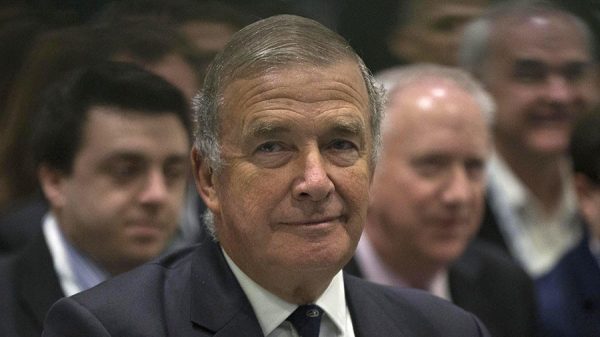
Britain’s Admiral Lord West. © Neil Hall / Reuters
RT | April 18, 2018
During a live interview, a BBC news presenter declared “we’re in an information war with Russia” after a former Royal Navy chief questioned the “extraordinary” claims surrounding an alleged chemical attack in Syria.
Former Navy Admiral Lord West’s questioning of the mainstream narrative surrounding the alleged chemical weapons attack in the town of Douma led the BBC’s Annita McVeigh to suggest that truthfully stating his position and posing questions risked “muddying the waters” in an ongoing “information war with Russia.”
Lord West had described how in his view the claim that Bashar Assad ordered the attack “doesn’t ring true,” asking “what benefit is there for his military?” He went on to say “we know that in the past some of the Islamic groups have used chemicals, and of course there would be huge benefit in them labelling an attack as coming from Assad.”
West went on to question the ‘evidence’ provided by groups like the White Helmets and the World Health Organization, both of which he described as “not neutral.”
The former First Sea Lord then described how in the past he had been put under pressure to support politically motivated narratives: “I had huge pressure put on me politically to try and say that our bombing campaign in Bosnia was achieving all sorts of things which it wasn’t. I was put under huge pressure, so I know the things that can happen.”
At that point the BBC’s McVeigh appeared to question whether he should actually be expressing his opinion truthfully, asking: “Given that we’re in an information war with Russia on so many fronts, do you think perhaps it’s inadvisable to be stating this so publicly given your position and profile, isn’t there a danger that you’re muddying the waters?”
West replied: “I think the answer is, if there’s a real concern, let’s face it, if [Assad] hasn’t done it then that is extremely bad news. If Assad hasn’t carried out the attack, I think it’s just worth making that clear. I think our government’s policy towards Assad has not been clever since 2013.”
BBC Censors Video Showing Syrian Rebels Forcing Prisoner to Become Suicide Bomber
By Paul Joseph Watson | Infowars | August 23, 2012
The BBC has sensationally censored a news story and a video showing Syrian rebels forcing a prisoner to become a suicide bomber, a war crime under the Geneva Conventions, presumably because it reflected badly on establishment media efforts to portray the FSA as glorious freedom fighters.
The video, a copy of which can be viewed above (the original BBC version was deleted), shows Free Syrian Army rebels preparing a bomb that is loaded onto the back of a truck to be detonated at a government checkpoint in the city of Aleppo.
The clip explains how the rebels have commandeered an apartment belonging to a Syrian police captain. The rebels are seen sneering at photos of the police captain’s family while they proclaim, “Look at their freedom, look how good it is,” while hypocritically enjoying the luxury of the man’s swimming pool.
The video then shows a prisoner who the rebels claim belonged to a pro-government militia. Bruises from torture on the prisoner’s body are explained away as having been metered out by the man’s previous captors. The BBC commentary emphasizes how well the rebels are treating the man, showing them handing him a cigarette.
However, the man has been tricked into thinking he is part of a prisoner exchange program when in reality he is being set up as an unwitting suicide bomber. The prisoner is blindfolded and told to drive the truck towards a government checkpoint.
“What he doesn’t know is that the truck is the one that’s been rigged with a 300 kilo bomb,” states the narrator.
The clip then shows rebels returning disappointed after it’s revealed that the remote detonator failed and the bomb did not explode.
The BBC narrator admits that forcing prisoners to become suicide bombers “would certainly be considered a war crime.”
New York Times reporters who shot the video claim they had no knowledge of the plot. A longer version of the clip is posted on the New York Times You Tube channel. The title of the clip glorifies the rebel fighters as “The Lions of Tawhid”.

Within hours of the story being published, it was subsequently sent down the memory by the BBC. Attempts to reach the original article URL are greeted with a 404 Not Found page.
In addition, a You Tube version of the same video originally posted on the official BBC News 2012 channel was also removed. Although the You Tube page for the video states that it was removed after a “copyright claim by British Broadcasting Corporation” this is a bogus reason, because the video was not uploaded by a third party, it was posted on the official BBC channel, as the screenshot below proves.

“Copyright claim” is a bogus reason for the video’s removal because it originally appeared on the official BBC News Channel, and was not uploaded by a third party.
It seems clear that the only reason for the video to be removed would be because senior BBC news editors felt the story reflected badly on the propaganda campaign to characterize the Syrian rebels as venerable and proud freedom fighters, when in reality as we have documented they have been guilty of massacres, kidnappings, torture and other acts of brutality.
This represents a clear effort to hide evidence of Syrian rebels, who the Obama administration recently pledged to support with taxpayer dollars, engaged in war crimes.
In addition, the fact that the rebels, under the direction of Al-Qaeda fighters, are building bombs and carrying out terrorist attacks is something the NATO-aligned media is keen not to emphasize.
This is by no means the first time the BBC has been caught manipulating the news in an effort to propagandize for western military involvement in Syria.
Back in May we exposed how the BBC has used a years-old photo of dead Iraqi children to depict victims of an alleged government assault in the town of Houla.
The photographer who took the original picture, Marco Di Lauro, posted on his Facebook page, “Somebody is using my images as a propaganda against the Syrian government to prove the massacre.” Di Lauro told the London Telegraph he was “astonished” the BBC had failed to check to authenticity of the image.
Should the copy at the top of this article also be deleted, an alternate version of the BBC video with added commentary under fair use is embedded below.
Related articles
London sit-in to protest BBC neglect of prisoner’s hunger strike
Palestine Information Center – 17/05/2012

LONDON – Dozens of activists participated in a sit-in outside the BBC headquarters to protest the organization’s deliberate neglect of the Palestinian prisoners’ issue, and the constant bias in favor of the Zionist entity.
A number of solidarity organizations handed a protest letter to the BBC news administration, to protest its coverage of Palestinian issues, calling for an end to the BBC’s bias when it comes to covering news about Palestinians.
Zaher Al-Berawi, Spokesman for the Palestinian forum, told PIC that the BBC’s continued silence around this recent escalation of the Palestinian prisoners’ strike was not surprising especially that it prevents mentioning the word Palestine in its reports.
Berawi added that the BBC had refused previously to air an appeal for the Gazan people by the Disaster Emergency Committee (DEC), pointing out that this total bias to the Israeli occupation is a proof that it is influenced by the Zionist lobby that aims to convert it into a tool of the Israeli occupation through which they can get to the British public.
—
The protest letter handed to the BBC (Emphases added)
Dear Ms Boaden
For four weeks, during April and May, around 2,000 Palestinians held in Israeli jails were on hunger strike, protesting against Israel’s use of administrative detention, its policy of placing Palestinian prisoners in solitary confinement for years at a time, and the denial of family visits to inmates.
These prisoners joined others who had been refusing food since March 2012 and who, by the time a deal was reached on 14 May, were close to death.
This mass hunger strike, possibly the biggest in modern history, received minimal coverage on BBC Online and, until its final few days, none on BBC television and radio news.
During this time, the BBC gave prominent coverage to the hunger strike of Ukrainian politician Yulia Tymoshenko, and to Chinese dissident, Chen Guangcheng, yet ignored the 2,000 Palestinians on hunger strike, and the 27 Palestinian MPs imprisoned by Israel, some of whom were also refusing food.
The excuse given by the BBC during the third week of the Palestinian hunger strike for its failure in reporting was that its coverage was in line with other news organisations, citing, specifically, Al Jazeera.
We find it extraordinary and disturbing that the UK’s public-funded broadcaster should point to other news outlets, with the implication that it is content to follow rather than lead in covering world events, in an effort to distract from its own failings.
When BBC News at 10 did finally provide some coverage (11 May), close to four weeks after the mass hunger strike began, it did so without context, without reference to the prisoners’ demands, with no mention of the appalling health conditions, requiring hospitalisation, that many of the hunger strikers were suffering, and with absolutely no comment from a Palestinian spokesperson. Instead, the report by Kevin Connolly, featured Israeli government spokesperson, Mark Regev, speaking without challenge, comparing those who had taken the drastic step of engaging in a hunger strike to ‘suicide bombers’ and talking, falsely, about an ‘Islamist cause’.
His complete statement was: “It’s difficult when you’re dealing with someone who wants to commit suicide. It’s a problem with suicide bombers, who are prepared to blow themselves up when they want to kill innocent people, and in this tactic if they think for their Islamist cause if they want to kill themselves, it’s a challenge. We could not have as a precedent that every prisoner who goes on hunger strike, gets – to use a term from the game Monopoly – a get out of jail free card.”
This interview, which insulted and totally misrepresented the hunger strikers, was also used on News 24 and on Radio 4 news bulletins during 11 May. None of these reports were balanced with a Palestinian viewpoint, and the Israeli perspective of the hunger strikes was allowed to prevail on the BBC.
The BBC’s attitude towards the hunger strikes and its eventual, biased coverage is appalling in itself. It is also symptomatic of the BBC’s general attitude towards reporting on Palestine and the occupation and the tendency of BBC news programmes to tilt their coverage and analysis in favour of Israel.
It is, unfortunately, an attitude that cuts across the whole of the BBC, from the Director General and his refusal to broadcast a DEC appeal for Gaza to Radio 1Xtra and the censorship of the word ‘Palestine’ from an artist’s rap performance.
We would like to see an end to this bias against Palestine and news coverage from the region that is balanced, fair and reflective of the values of international law, rather than of the narrative provided by the dominant player in this struggle. It is the very least that licence-fee payers, who look to the BBC for honest information, deserve.
Yours sincerely
An Attack on Iran Would Be Illegal. What Does the UK Media Say?
News Unspun, 23 March 2012
The ‘option’ of a military attack on Iran by Israel, the UK and the US has been increasingly discussed in the UK media since 2011.
Government threats of military action have come in various forms, with Israel warning of potential air strikes against Iran in the next few months, and Obama and Cameron stating that ‘no options are off the table’.
This is combined with what could at best be described as ambiguous reporting on Iran’s nuclear programme, at times baselessly claiming that Iran has nuclear weapons, and, at others, relying on repetition of snippets like ‘the US and its allies believe Iran is trying to develop nuclear weapons – a charge Iran denies.’
In the media, one fact is not (yet) up for debate (despite the attempts of the Telegraph’s Dan Hodges [below]): that any invasion of Iran would be a violation of international law – even if Iran was in the process of developing nuclear weapons. The United Nations Charter also outlaws the ‘threat of the use of force’, an act in which much of the media, in its uncritical stance towards government threats, has made itself complicit.
The solution to these awkward details, it seems, is to ignore them almost completely. Failure to reinforce the illegality of such an act of war has resulted in much coverage discussing the ‘inevitability’ of a war on Iran.
This study looks at the news, blogs and comment articles about Iran since October 2011 – around the time that aggressive official rhetoric towards Iran upped a notch – and seeks to answer a simple question:
How often do the British media inform us that a military attack on Iran would be illegal?
Four online news providers were studied – BBC News, The Guardian, The Independent, and The Telegraph*. In total, there were 4 mentions of the fact that an invasion would be illegal. The results, in summary, are as follows:
BBC News
One mention of the illegality of an invasion of Iran is made on the BBC news website. In an analysis article, ‘How would Iran respond to an Israeli attack?’ (7 March 2012), Jonathan Marcus states:
For all the uncertainties as to whether Israel would attack Iran and indeed how Iran might respond, one thing is clear – in terms of international law, such a strike would be illegal.
This article was a balance to a previous analysis article that Marcus wrote, entitled ‘How Israel might strike at Iran’ (27 February 2012). Preoccupied with presenting the reader with dotted bomber flight path lines from Israel to Iran and military hardware specification sheets, this report failed to raise the issue of legality.
In contrast, the BBC News website has run 9 articles which have relayed politician’s musings (Hague, Clegg, Hammond and US officials) which insinuated violation of international law on the part of Iran.
The Guardian
The ‘News’ section of The Guardian did not make any mention of the illegality of an attack on Iran. The ‘Comment is Free’ section ran three articles which correctly pointed out that an invasion would violate international law.
Abbas Edalat wrote on 1 December 2011:
But Iran itself has been targeted for many years by a series of western and UK policies that are gross violations of international law. Repeatedly threatening Iran with a military attack, thinly disguised under the phrase “all options are on the table” and publicly announcing that the west must use covert operations to sabotage Iran’s nuclear programme (as John Sawers, the head of MI6, demanded two years ago), are only two examples of the UK’s disrespect for the UN charter.
On 21 February 2012, Seumas Milne wrote, in an article entitled ‘An attack on Iran would be an act of criminal stupidity’:
If an attack is launched by Israel or the US, it would not just be an act of criminal aggression, but of wanton destructive stupidity. As Michael Clarke, director of the British defence establishment’s Royal United Services Institute, points out, such an attack would be entirely illegal: “There is no basis in international law for preventative, rather than pre-emptive, war.”
On 12 March 2012 in a Q&A piece, Saeed Kamali Denghan responds to a question about the threat from Iran as follows:
Well, bombing Iran is illegal under international law in the first place. Little has been said about the legality of the issue, so one might mistake it as to be justified, where as it is not.
In contrast, The Guardian website has run 14 articles which have insinuated violation of international law on the part of Iran.
The Independent
No mention of the illegality of an attack on Iran was found in The Independent for this time period.
In contrast, The Independent website has run 6 articles which have insinuated violation of international law on the part of Iran.
The Telegraph
No mention of the illegality of an attack on Iran was found in The Telegraph for this time period.
In contrast, The Telegraph website has run 2 articles which insinuated violation of international law on the part of Iran. In addition, Dan Hodges argues in his Telegraph Blog that under international law there ‘probably is a case for’ an attack on Iran:
There is then the question of pre-emptive action. Again, Prof Blix is a Juris Doctor in International Law, and I have two A-levels and a grade 2 CSE in French. But I would hazard a guess that under international law there probably is a case for taking some form of pre-emptive action against an aggressor who expresses a public desire to wipe you off the map. Sorry, there’s that unfortunate phrase again. It just keeps popping up, doesn’t it?
Conclusion
Apart from a few admirable exceptions, the media takes little interest in informing us that threats of war, and war itself, are illegal. This fact is only found once in a BBC analysis article, and three times in the Guardian’s Comment section. Government claims that Iran has either acted or is threatening to act outside of international law are, however, free to flourish and propagate their way through the mainstream.
Suggestions that attack on Iran would violate international law: 4
Suggestions that Iran has, could have, or might violate international law: 31
How the dataset was created:
BBC News – search results for the term ‘Iran’ from 1 Oct 2011 (534 articles)
The Guardian – articles in the ‘Iran’ category from 1 Oct 2011 (500 articles)
The Independent – search results for the term ‘Iran’ from 1 Oct 2011 (584 articles)
The Telegraph – search results for the term ‘Iran’ from 1 Oct 2011, as well as all articles from ‘Iran’ category page.
* The Telegraph website’s search engine did not pick up all articles containing the word, and the category page dated back to 9th Feb, resulting in a somewhat limited dataset (261 articles).
Please contact us if you would like to see a copy of the data used for this study.
Featured Video
America Racing to Strategic Defeat in Iran
or go to
Aletho News Archives – Video-Images
From the Archives
An Expert Military Analysis of War with China
Actually, None is Necessary
By Fred Reed • Unz Review • December 13, 2020
The Correlation of Armed Forces: U.S. goods and services trade with China totaled an estimated $634.8 billion in 2019. Exports were $163.0 billion; imports were $471.8 billion. The U.S. goods and services trade deficit with China was $308.8 billion in 2019. Trade in services with China (exports and imports) totaled an estimated $76.7 billion in 2019. Services exports were $56.5 billion; services imports were $20.1 billion. The U.S. services trade surplus with China was $36.4 billion in 2019.
There is talk within the Washingtoniat of a possible war with China. Steve Bannon, who apparently was dropped on his head as a child, actually favors such a war. We hear the usual shoo-the-boobs alarm about how the Chinese are doing something terrible and we must gird our loins and American values and show them what for, bow wow, woof. The danger is that the current game of who-blinks-first in Asian waters might actually provoke a shooting war. You know the kind of thing: One warship refuses to get out of the way of another, a collision ensues, some retard lieutenant who signed up on waivers opens fire, and we’re off and running. It is not a good idea to let children play with matches.
The said war is discussed either in emotional terms by idiots or in purely naval terms by those familiar with such things, so we hear of the First Island Chain and the Second Island Chain and whose missiles against the other’s missiles and so on. This would be appropriate if we were fighting World War Two again. Which we aren’t. Let’s take a quick-and-dirty look at how such a war might go.
To begin the war, America would overestimate itself and underestimate China. This is doctrine in the Pentagon. … continue
Blog Roll
 Aletho News
- Rethinking America’s greatest threat: Iran vs. Israel-Firsters
- Iran accuses adversaries of false flags to strain Turkey ties
- Poland rules out sending Patriot missiles to US/Israel amid war on Iran
- Tehran approves new Hormuz plan with major restrictions
- No Threat Can Force Iran’s Surrender /Trita Parsi & Lt Cl Daniel Davis
- UK’s New Pandemic Plan Would Turn Big Tech Into a Mass Location Tracking Network
- Growing insecurity, soaring prices fuel protests in north as regime bans evacuation: Sources
- Iran denies responsibility for ‘depraved’ attack on Kuwait desalination plant
- Bring The Troops Back. End This War Now!
- Can we please stop calling Israel the ‘only democracy in the Middle East’ now?
- If Americans Knew
- The Line Between Affinity and Conspiracy
- As Iran targets US military bases, will they be relocated to Israel? Not a ceasefire Day 171
- Will Trump Go Kamikaze?
- Is the University of Florida Shutting Down College Republicans over Israel Criticism?
- Jewish extremist arrested over alleged plot to firebomb Palestinian activist Nerdeen Kiswani’s home
- More than half of Palestinian child detainees have no charges
- The More Murderous Israel Gets, The More We Hear About “Antisemitism”
- Land Day and the Palestinian struggle after 30 months of genocide
- The Iran War Is About Palestine
- Israeli soldiers echo settler ideology, talk of revenge after targeting Palestinians and detaining CNN crew in the West Bank
- No Tricks Zone
- New Study Finds Warming Saves Lives…Cold Temperatures 12 Times More Deadly Than Excess Heat
- German Science Blog Accuses PIK Climate Institute Of Hallucinating Climate Tipping Points
- Devastating Assessment Of Comirnaty Vaccine By Former Senior Pfizer Europe Toxicologist
- New Study: CO2 Is ‘Effectively Negligible’ As An Explanatory Climate Change Factor Since 2000
- Former Pfizer Toxicologist Dr. Helmut Sterz Tells Bundestag Hearing Pfizer Vaccine Should Have Never Been Approved
- Energy Expert: Germany’s Nuclear Phaseout Was A “500 Billion Euro Mistake”
- New Research: South Australia’s Mid-Holocene Sea Surface Temperatures Were 4°C Warmer Than Today
- Storing Green Energy To Last Germany 10 Days Would Require A 60-Million Tonne Battery
- New Studies: UK Sea Levels Were 4 Meters Higher Than Today During The Mid-Holocene
- Destructive Green New Deal: German Energy And Metal Group Warns Of Drastic Crisis
 Aletho News