BBC Helps Pave Road to War on Syria
News Unspun | May 8, 2013
The Syrian conflict has been accompanied by a distinct media narrative. Within this narrative – which poses a binary division between the forces engaged in the conflict, identifying the players as good (the rebels, who must receive ‘our’ support) and bad (the government) – the role the West must play is that of potential saviour, whose aim is to cautiously observe the conflict so that it may intervene to ‘fix’ the situation, as The Guardian’s Simon Tisdall put it:
So what can Obama do? As Vladimir Putin was expected to make plain to John Kerry in Moscow on Tuesday, he cannot count on Russian (or, therefore, Chinese or UN security council) support to fix Syria.
This sentiment, that the West can put right the Syrian situation, is inherent to most reporting of the conflict. The BBC recently reported that ‘the pressure to act has intensified in recent days after emerging evidence that Syria has used chemical weapons such as the nerve gas sarin’. This statement presents the existence of a ‘pressure to act’ as a given, though the source of such pressure is unidentified. From where is this pressure emerging? As a BBC report points out, public opinion in France, the UK, the US, and Germany is by majority opposed to the possibility of intervention in the conflict through sending arms and military supplies to the Syrian opposition. The BBC is not then speaking on behalf of the public majority. Pressure towards military intervention, to some extent considered a desirable option by the UK government (if it can ‘achieve the result [they] want’, as Cameron put it in an interview with Nick Robinson), is, however, increasingly mounting within the media itself.
Chemical Weapons ‘Evidence’
It is also important to note that the ’emerging evidence’ referred to above is not conclusive despite the wording of this report. The BBC reported again on Monday 6 May that ‘Western powers have said their own investigations have found evidence that government forces have used chemical weapons’. Again, this is simply not the case. ‘Western powers’, regardless of their true intentions, have in fact been very cautious in public about how precisely they present their claims, underscoring the lack of conclusive evidence they have found and that there exists the possibility that chemical weapons had been used by the Syrian government. This misrepresentation by the BBC emerges in a context in which the use of chemical weapons has been signified by the UK and US as the point at which they may become militarily involved in the Syrian conflict. As such these details, so easily misrepresented by the BBC, are of high consequence.
(There are other examples of BBC reports dangerously getting important facts wrong about such issues: just over a year ago, for example, a BBC news report stated that the ‘International Atomic Energy Agency (IAEA) released a report with new evidence showing Iran was secretly working towards obtaining a nuclear weapon’ – in this case the report said no such thing.)
Journalists Pushing for Intervention
In recent reports, certain BBC journalists have appeared more hawkish than government officials themselves. Take for example a question put to Cameron by the BBC’s Nick Robinson:
Do you ever fear that a terrible thing is happening in our world and that Western leaders cannot or will not act because of a fear of another Iraq?
Cameron responded with ‘I do worry about that’, before clarifying that what he has concluded from the ‘Iraq lesson’ is that the UK should only enter into conflicts it can win, that ‘the ability is there’. This is at a far remove from the implication of Robinson’s question that past ‘mistakes’ might prevent the West from playing a righteous humanitarian role. Yet Robinson’s leading question provides the basis for the seemingly unambiguous headline: ‘Cameron fears Iraq effect holding West back in Syria’.
There is a prevailing trend of journalists taking up the position of presenting the case for military intervention in Syria and proactively pushing government representatives to commit to intentions for military action. On the Andrew Marr show on 5 May Jeremy Vine asked Defence Secretary Phillip Hammond a number of questions which demonstrated this pressure by the media for the UK to become involved in the Syrian conflict. When Hammond appeared cautious regarding the prospect of military intervention, stating that the UK would need to engage in discussion with the UK’s ‘allies and partners’, Vine admonished, ‘you’re talking about having a series of meetings’. Another brief exchange emphasises Vine’s apparent desire to see the UK intervene:
Phillip Hammond: ‘Frankly that [the potential use of chemical weapons] is not what’s delivering the tally of 70,000 that have been killed… the majority of these people have been killed by conventional weapons’.
Jeremy Vine: ‘More reason to do something then…’
These comments reflect the consistency of BBC reporting which seems aimed towards creating a case for war. When Carla Del Ponte, of the UN’s Independent International Commission of Inquiry on Syria, told reporters that there were ‘strong, concrete suspicions’ that the rebels – perhaps not as virtuous as would be convenient for States considering providing military support – may have used chemical weapons, the tone of BBC reporting did not suggest that the pressure for military action should be alleviated.
Analysis of Attacks on Syria: Real and Imagined
Taking the case a step further, Jonathan Marcus, the BBC’s diplomatic correspondent, discussed the various ways in which the US could attack Syria. His assessment reads more like a military strategy report than an analysis of events for a news provider. Surgical airstrikes, Marcus said, ‘could be carried out by cruise missiles launched from aircraft well outside Syrian airspace or from warships or submarines in the Mediterranean’, while a wider air campaign, ‘might have to be preceded by a significant effort to destroy missiles, associated radars and command systems and might well involve losses’. Why it is in the public interest that such analysis is brought to us by journalists is unclear. Through Marcus’s piece, which is nothing more than speculation of military strategy on an as yet non-existent, illegal military intervention, the idea of an attack on Syria from outside is normalised further.
The reporting on the air strikes that Israel has carried out on Syria also reveals how normalised warfare has become in BBC reporting, with very little discussion of casualties or of the chaos inflicted on the people who were bombed. What was important, in this story, it seems, is that Israel was protecting itself from weapons that were supposedly being transported. This is summed up in the BBC’s Q&A page on the Israeli airstrikes: in answer to the question ‘Why would Israel attack?’ we are told that ‘the statements from unnamed officials suggest Israel’s actions are defensive.’ If the Syrian government had, for example, attacked the Israeli air force within Israel, to prevent airstrikes on its own territory, it is extremely unlikely that this would be overwhelmingly reported as an act of defence. Yet when Israel bombs another country, BBC journalists and editors happily report such actions as ‘defensive’ measures.
Jonathan Marcus writes that Israel’s airstrikes are ‘designed to send a powerful signal’ (the headline: ‘Israeli air strikes: A warning to Syria’s Assad’). It is worth at this point noting that following the last Israel attack on Syria, in early 2013, Marcus also wrote that this was ‘in one sense pre-emptive, but also a warning’. It was also portrayed as a ‘signal’. That such attacks are continuously reported as warnings and signals, as seemingly rational, and therefore it seems permissible, actions, goes further to normalise them. We might wonder how many attacks Israel would have to inflict on another country before Jonathan Marcus stops referring to the attacks as ‘signals’ and ‘warnings’?
In their seeming urgency to present a case for war, BBC reporters have neglected factual accuracy of reported events. Scepticism towards the unsupported claims of Western governments, insistence upon proof, is also lacking. We are presented with a simplified narrative, of ‘good versus evil’, in which the possibility of misconduct on both sides of the conflict is considered improbable. This style of reporting very much takes its lead from the positions of Western governments. Whitehouse spokesman Jay Carney outlined the position of the US: ‘We are highly sceptical of suggestions that the opposition could have or did use chemical weapons. We find it highly likely that any chemical weapon use that has taken place in Syria was done by the Assad regime, and that remains our position’. The supposed instincts of the US or UK government, despite the inconclusive nature of the evidence, as to the righteousness of the Syrian rebels is not proof of the reality and should not be considered by journalists as such.
Related article
BBC broadcaster admits sex assaults on children
Press TV – May 2, 2013
Former BBC broadcaster Stuart Hall has admitted assaulting 13 girls as young as nine years old between 1967 and 1986.
The former It’s A Knockout presenter was branded as an “opportunistic predator” by prosecutors after admitting he had carried out a series of attacks on girls, from whom the youngest aged just nine.
The 83-year-old, however, had previously denied the allegations against him, saying the charges were “pernicious, callous” and “cruel”.
Hall entered the guilty pleas last month at Preston Crown Court but they can only be revealed now after reporting restrictions were lifted.
Nazir Afzal, the Chief Crown Prosecutor for the Crown Prosecution Service (CPS) in the North West said no explanations could be offered for Hall’s unlawful behavior.
Hall’s confession was another blow to the British state-run broadcaster BBC, which recently came under pressure over sexual abuse allegations involving former broadcaster Jimmy Savile.
The investigation into Savile scandal has been running since late October. Since that time, Scotland Yard has been contacted by more than 500 alleged victims.
Related article
THE EXILING OF MY FILM , “EXILE A MYTH UNEARTHED”, IN THE BBC
By Ilan Ziv | April 28, 2013
As some of you know, my film EXILE, A MYTH UNEARTHED, which examines the myth of the Jewish EXILE and its political impact on both Israeli Jews and Palestinians in the Middle East, was going to be shown on the BBC Thursday April 25th. It was pulled out of the schedule only a few days earlier.
Since then I was flooded by dozens of emails of angry and concerned viewers asking what happened. To be honest I debated whether to tell the story of what I think had happened. I have worked with the BBC in the past on some programs that were deemed controversial and I never had any political censorship. On the contrary I was impressed by the integrity and fairness of the people I dealt with.
So based on my past experience, I was going to wait patiently until the BBC programming executives would solve the internal drama that apparently has begun to brew inside the BBC. “The film is gorgeous, courageous and fresh, “ I was told several times by the programming executives. I was promised that the cancellation was temporary: “Given the short timescale and your workload, we have decided to delay transmission until we’ve had the chance you’ve had the chance to go through it in detail”.
I naively believed and decided to wait quietly. But things have their own momentum and as I learned more, I realized that the story of “EXILE” in the BBC is far more complex.
Among the dozens of emails I received one caught my attention. It included the official email response from the BBC to the inquiry/complaint sent to irate viewers who contacted the BBC asking why the program was pulled out of the schedule. This email contradicted a private email sent to me by the programming executives. I was intrigued.
I discovered after quick research that while I was contacted by the BBC barely a week before the broadcast asking for my comments about the cut, the BBC have had the film for almost 6 months. So why was this sudden rush which supposedly was the excuse given to me as to why the film was pulled out? Why was I contacted so late in the game? And why was there a discrepancy between what was told to me and the “official” version . I started to dig a bit deeper and to put my findings in a blog, rather than answer the dozens of people who wrote to me privately.
This is not a personal issue. This is ultimately a sad saga of what I believe is a mixture of incompetence, political naiveté, conscious or subconscious political pressure and ultimately, I believe, a lack of courage of broadcasters when they are faced with the complexity of the Middle East issue and the intense emotions, fears and aggression it generates. Once you indeed depersonalize this incident, you gain a fascinating insight into how subtle and complex is the process by which our understanding of the Israeli Palestinian conflict is being shaped and what happens when one dares to raise questions about issues deemed by some as taboos. It is this insight that I think is worth sharing and detailing.
The story begins for me with the name. I discovered only 3 days before the broadcast that the BBC has been using a different name for the film: Jerusalem – An Archeological Mystery Story. It struck me as an odd choice that seems to camouflage the film’s real subject and repackages it as a neutral archeological mystery of sort- like the hundreds of hours one can see on cable and Satellite channels throughout the world.
“ Exile” of course is not about a mystery, neither it is limited to archeology or to Jerusalem. The name and the illusion that one can pretend that this film is just about archeology and its mysteries are at the core I believe of Thursday’s fiasco.
Digging deeper I also learned that this title was established back in November 2012 in the agreement between the National Film Board of Canada (one of the film’s co producers and its int’l distributor) and the BBC. I was approached by the distributor to see if I would agree for the BBC to cut down the program. I agreed to it on the condition that I would be consulted so the integrity of the longer version (104 min) would be preserved. I also said that if I was not to be consulted my name should be removed from the program and the cut down will be listed as an “adaptation from a film by Ilan Ziv”. From my access to some internal documents, it is obvious now that the BBC was not genuinely interested in my getting involved. As the documents suggest, they already announced that the cut down version would be an adaptation.
So back in November 2012, everything seemed to be on track to produce a cut down of the film without having to deal with the director, broadcast the film under a neutral title and hopefully avoid any serious political debate. A perfect solution! So what went wrong?
Fast forward to Saturday April 20th 2013 when I received an email from a friend in the UK who saw that “my” film Jerusalem; An Archeological Mystery Story was going to be broadcast on BBC 4. He even read a preview of it in the Guardian. The preview promised that the film “ will ruffle some feathers”. Two days earlier I did receive from the editor who cut the film a copy of the cut for me to comment on, but there was no mention of an impeding broadcast date!
On Monday, 3 days before the broadcast, I fired an email to the BBC programming executives complaining that it is unfair to expect me to spend time reviewing the cut and coming up with suggestions of a re cut, when I was given only a few days before a broadcast date that no one bothered to inform me about. I pleaded for more time. It was only when one of the programming executives called me, I realized that there were much bigger issues for her than my complaint about being pushed into an impossible schedule.
The program executive seemed genuinely shocked that a freelance employee hired by the BBC to take part in the re-versioning process called the film “propaganda”. When I asked if this unnamed person had specific examples to support such a sweeping charge, I was told that she claimed that , “Everything was propaganda”. And there was more.
An “unnamed” BBC insider who I was told “liked the film,” claimed that the film props up the myth of Exile “ which we all know did not happen, in order to support his political analysis”. I learned that the cut I was given was now irrelevant, since some internal review deemed one scène with the Palestinians to be “too emotive” and they were asked to cut it down. Realizing that a mini political storm was brewing around the film and attacks lodged against its integrity, I asked and was promised that I would be given at least a summary of the essential charges so I could answer them in length. I am obviously very familiar with some of them and could easily and in detail refute them. I told the programming executive that my reply would help them to defend the film in the Channel. After all, they professed to love the film and seemed genuinely interested to show it. I told them it was very easy for me to prepare a detailed rebuttal with citation of sources for every word of the narration, the overall analysis and for every scene. I told them that some of the academic participants in the program who saw the cut and are reputable scholars in their field did not find any factual errors or misrepresentations of facts or of the historical narrative. In other words, I argued that such a detailed and substantial defense would convince any objective reader and observer of the editorial integrity of the film. I repeated the request several times yet I never got a reply. Instead, I received an email telling me that they decided to pull it out of the schedule, citing the “ short timetable and my work load “( !) A few days later I saw the “official” version that went to the public:
“We originally acquired ‘Jerusalem: An Archaeological Mystery Story’ to supplement BBC Four’s season exploring the history of archaeology. However, we have decided that it doesn’t fit editorially and are no longer planning to show it as part of the season. Plans to broadcast the program are currently under review” So Exile, A myth unearthed has begun its own exile within the BBC.
I do believe it is ultimately a sad saga. A saga of well meaning programming executives who acquired the “courageous “ film they claim to love, believing that they can sneak it by with a “neutral title”. When they were “caught”, rather than face the criticism and be helped by the mountains of documents and data I was ready to send them, they panicked like deer in the headlights not knowing what to do and eventually raised their hands in resignation.
The truth of the matter is that the reaction outside and inside the BBC surprised me too. The film by now has been shown in a Jewish Festival in Toronto, playing in a screening room there for a week. It was shown on Canadian TV with a second broadcast planned for June. Another version of the film is scheduled to be shown in France and the original version in Switzerland ,with hopefully screenings in the US later in the year. The response in all the public screenings, some of which I attended, was overall extremely positive. Nowhere did the film generate such a reaction as that of the few individuals inside and outside the BBC.
The temporary success to “exile” the film might prove I believe to be a Pyrrhic victory.
EXILE does not deal with contemporary politics in the Middle East, rather, it proposes to examine their ideological and historical underpinnings. EXILE has not contributed to the political stalemate in the region nor to the continued bloodshed, occupation and violence. It is a film born out of the continued violence. Rather than propose a simplistic solution or an aspirational political program , it tries to suggest a possible way out by re examining the historical narratives we all grew up on, suggesting that in this tormented land there are historical models of co existence and tolerance that could replace the dominant conventional nationalist ones. Silencing this film is silencing a possibility of discussion, debate and re examination not of the current political stalemate but of the intellectual stalemate that contributes to it.
I hope that somewhere in the BBC someone will rise above the hysteria and the attempts at self censorship to take a cooler look at the film and realize how it has been profoundly mis-characterized , -viewing it through partisan glasses instead of looking at it for what it is: a film that can and has already in its public screenings generated dialogue and positive, thinking rather than perpetuating divisions and polarization.
So for me this is not the end of EXILE in the UK but only the beginning. I will show the film publicly throughout the UK and will challenge the BBC to either broadcast the film or relinquish its rights. I have offered to buy these rights so I could place the film elsewhere in the UK.
The saga of EXILE will continue. Stay tuned!
Exile – A Myth Unearthed (Trailer)
Update:
EXILE ON BBC4 , SUNDAY NIGHT NOVEMBER 3rd at 9PM TO BE FOLLOWED BY A DEBATE AT 10PM

EXILE , A MYTH UNEARTHED has finally found a home on the BBC . The hour version of the film ( I supervised and authored the cut down) is going to be broadcast under a new title SEARCHING FOR EXILE – TRUTH OR MYTH? on BBC 4 November 3rd, at 9pm . to be followed by a debate with my participation at 10pm
There will be a press screening on Thursday October 31st at 18.30 hrs. I will attend the Q&A after the screening. From what I understand attendance is restricted to a list of invitees. Please get in touch with me if you want to attend and I see what I can do.
As you all know it has been a long journey which many of you followed. I am eternally grateful for your support!
I am happy that the film finally found a home in the United Kingdom.!
As you remember I promised to hold screenings of the long version of the film throughout Britain( schedule permitted). I will be in Manchester on Monday Nov.5 th. Please write me for details. Since this time I can not stay in the UK any longer I will try to come again if there is interest in showing and discussing the film in other cities.
Below is the billing for the press.
SEARCHING FOR EXILE – TRUTH OR MYTH?
This authored documentary by Ilan Ziv sets out to explore the historical and archaeological evidence for the Exile of the Jews after their defeat in Jerusalem at the hands of the Roman Empire, and its relevance to today.
Tracing the story of Exile from the contemporary commentator Josephus, to 1960s Israeli archaeologist Yigael Yadin, to the modern city of Rome and finally to the ruins of a Palestinian village, Ziv asks where the roots of this story lie and what evidence there is for it.
At the centre of the film is the ancient town of Sepphoris (on whose ruins stood the Palestinian village of Saffuriya until 1948) and the lessons its multi-layered history may have to offer.
A film by Ilan Ziv
Produced by Amit Breuer, Serge Gordey, Colette Louméde, Ilan Ziv
The BBC’s ‘Bogeyman’ Narrative on Hugo Chavez
News Unspun | March 7, 2013

The BBC maintained a strong a record of misleading reporting throughout the presidency of Venezuelan President Hugo Chavez, who died on Tuesday, following a two year battle with cancer. Yet today’s article by Jon Kelly, ‘Hugo Chavez and the era of anti-American bogeymen,’ takes a particularly spiteful slant on the issue of what is presented as ‘Anti-Americanism’ in Chavez’s stance toward US foreign policy.
The premise of Kelly’s analysis is that Hugo Chavez is simply the latest in a long list of ‘bogeymen’, identified by ‘anti-American’ sentiment. To illustrate the ideological company that Kelly suggests Chavez kept, his image appears on the same panel as murderous despots and terrorists such as Saddam Hussein, Muammar Gaddafi and Osama bin Laden. This may have been normal practice for news organisations such as Fox News, but for the BBC it must be noted that this is a move particularly devoid of integrity, perhaps a new low.
Kelly writes that Chavez was by turns ‘portrayed as a six-times elected champion of the people or a constitution-fiddling demagogue’, implying that the polarisation of commentary concerning Chavez’s presidency makes it difficult to perceive where the truth lies. Perhaps if Kelly had indulged in the journalistic habit of presenting the bare facts, it might help to dispel such confusion. It is factually accurate to acknowledge that Hugo Chavez was democratically elected six times, also that his base of support was amongst the poor, the vast majority of Venezuelans. The ambiguous claim of ‘constitution-fiddling’ is in line with the speculative approach the BBC has consistently leaned towards in reporting on Venezuelan politics, relying on the hyperbole of the opposition, yet lacking in facts (in a similar vein, the link to the BBC video on Hugo Chavez’s life on the BBC website has been updated and is now titled ‘Life of people’s hero and villain’).
In discussing US-Venezuelan relations, Kelly does not mention probably the most seminal event of the last fourteen years: the US-backed coup in 2002. As an interesting aside, straight after the death of Hugo Chavez, in the BBC ‘look back’ at his life, the coup was also omitted by James Robbins, who instead described events as ‘a general strike’ when ‘Chavez was briefly pushed from office’.
Kelly creates a ‘spectrum’ of ‘bogeymen’ with ‘anti-American’ tendencies: socialism to secular Arab nationalism to Islamic fundamentalism. The article ties together the homogenously applied label ‘anti-American’ and the term ‘bogeymen’ to somehow equate the two: if you don’t like the behaviour of the US this mode of reasoning renders you no less than a bogeyman, an object of fear and a threat. Kelly comments that where Hugo Chavez belonged on this spectrum was hotly debated. He presents as indisputable the claim that Chavez should be viewed as a ‘bogeyman’; it is only where he sits in relation to other bogeymen that is up for debate.
The article notes that Chavez ‘floridly lambasted “imperial” American policies’, the word ‘imperial’ placed in double quotes, and the notion that the most powerful country in the world with 900 military bases in 130 countries might have imperialist tendencies portrayed as ludicrous. In fact, the BBC never refer to US imperialism without quotation marks; imperialism is a word for history books it seems, today’s western militaries simply invade countries for the greater good. Those who think the US is an imperial power are simply ‘anti-American’ goes the gist of this article.
Anti-American
The term anti-American is one applied to negate critical positions on the policies of the US. Noam Chomsky has commented on the term ‘anti-American’ that it ‘is an interesting expression, because the accusation of being anti-nation is used typically in totalitarian societies, for example, the former Soviet Union accused dissidents of being anti-Soviet. But try “anti-Italian” or “anti-Belgian,” people in Milan or Brussels would laugh’.
By this tendency to apply one label to a range of political viewpoints, Hugo Chavez joins the ranks of the ‘most prominent critics’ of US power have recently ‘exited the spotlight’. The implication here is clear: Osama bin Laden, Saddam Hussein, Muammar Gaddafi, and Kim Jong-il have been prominent critics of the US, and if anyone happens to disagree with the US, they are in the same boat. All who do not ‘agree’ with the United States, including disagreement with any and all elements of US foreign policy, are designated to one ideological grouping. Naomi Klein discusses how this approach was taken by critics of anti-corporate protesters following September 11, 2001, who ‘attempt to make ideological links between anti-corporate protesters and religious fundamentalists like bin Laden, as British secretary of State for international development Clare Short did in November 2001. “Since September 11, we haven’t heard from the protesters,” she observed. “I’m sure they are reflecting on what their demands were because their demands turned out to be very similar to those of Bin Laden’s network.”’
The attempt to place a range of political positions in one or another camp (‘us’ or ‘theirs’) works to deter dissent. ‘To engage in dissent in this climate [following September 11] was unpatriotic’, as Klein writes. ‘The new battle lines have been drawn, crude as they are: to criticize the U.S. government is to be on the side of the terrorists, to stand in the way of market-driven globalization is to further the terrorists’ evil goals’.
This is precisely the position propagated by the Bush administration at the launch of the ‘war on terror’, ‘the binarism that Bush proposes’, as Judith Butler described, ‘in which only two positions are possible – “Either you’re with us or you’re with the terrorists”’. Liberally applying the label ‘anti-American bogeyman’ on the basis of a divergence of position with US policy, as Kelly does, is consistent with this position of binarism.
The BBC claims to take an impartial stance on international issues, yet this article propagates a worldview in black and white terms. In this presentation of political positions as a choice between only two options, that of the US and the political ideology of free market are presented or that of the despotic and terroristic bogeyman.
It is important that the events which have taken place in Venezuela, and throughout Latin America, over the past decade, the development of peaceful, democratic alternatives to the policies of neoliberalism, are not airbrushed from the historical record. The standards of living have improved for millions of people following a process that has had popular, democratic support, yet the international perception of the changes in Venezuela are at risk of being written off as simply the actions of another ‘anti-American’ ‘bogeyman’ due to the media’s relentless negative treatment of the Venezuelan government.
BBC Censors Video Showing Syrian Rebels Forcing Prisoner to Become Suicide Bomber
By Paul Joseph Watson | Infowars | August 23, 2012
The BBC has sensationally censored a news story and a video showing Syrian rebels forcing a prisoner to become a suicide bomber, a war crime under the Geneva Conventions, presumably because it reflected badly on establishment media efforts to portray the FSA as glorious freedom fighters.
The video, a copy of which can be viewed above (the original BBC version was deleted), shows Free Syrian Army rebels preparing a bomb that is loaded onto the back of a truck to be detonated at a government checkpoint in the city of Aleppo.
The clip explains how the rebels have commandeered an apartment belonging to a Syrian police captain. The rebels are seen sneering at photos of the police captain’s family while they proclaim, “Look at their freedom, look how good it is,” while hypocritically enjoying the luxury of the man’s swimming pool.
The video then shows a prisoner who the rebels claim belonged to a pro-government militia. Bruises from torture on the prisoner’s body are explained away as having been metered out by the man’s previous captors. The BBC commentary emphasizes how well the rebels are treating the man, showing them handing him a cigarette.
However, the man has been tricked into thinking he is part of a prisoner exchange program when in reality he is being set up as an unwitting suicide bomber. The prisoner is blindfolded and told to drive the truck towards a government checkpoint.
“What he doesn’t know is that the truck is the one that’s been rigged with a 300 kilo bomb,” states the narrator.
The clip then shows rebels returning disappointed after it’s revealed that the remote detonator failed and the bomb did not explode.
The BBC narrator admits that forcing prisoners to become suicide bombers “would certainly be considered a war crime.”
New York Times reporters who shot the video claim they had no knowledge of the plot. A longer version of the clip is posted on the New York Times You Tube channel. The title of the clip glorifies the rebel fighters as “The Lions of Tawhid”.

Within hours of the story being published, it was subsequently sent down the memory by the BBC. Attempts to reach the original article URL are greeted with a 404 Not Found page.
In addition, a You Tube version of the same video originally posted on the official BBC News 2012 channel was also removed. Although the You Tube page for the video states that it was removed after a “copyright claim by British Broadcasting Corporation” this is a bogus reason, because the video was not uploaded by a third party, it was posted on the official BBC channel, as the screenshot below proves.

“Copyright claim” is a bogus reason for the video’s removal because it originally appeared on the official BBC News Channel, and was not uploaded by a third party.
It seems clear that the only reason for the video to be removed would be because senior BBC news editors felt the story reflected badly on the propaganda campaign to characterize the Syrian rebels as venerable and proud freedom fighters, when in reality as we have documented they have been guilty of massacres, kidnappings, torture and other acts of brutality.
This represents a clear effort to hide evidence of Syrian rebels, who the Obama administration recently pledged to support with taxpayer dollars, engaged in war crimes.
In addition, the fact that the rebels, under the direction of Al-Qaeda fighters, are building bombs and carrying out terrorist attacks is something the NATO-aligned media is keen not to emphasize.
This is by no means the first time the BBC has been caught manipulating the news in an effort to propagandize for western military involvement in Syria.
Back in May we exposed how the BBC has used a years-old photo of dead Iraqi children to depict victims of an alleged government assault in the town of Houla.
The photographer who took the original picture, Marco Di Lauro, posted on his Facebook page, “Somebody is using my images as a propaganda against the Syrian government to prove the massacre.” Di Lauro told the London Telegraph he was “astonished” the BBC had failed to check to authenticity of the image.
Should the copy at the top of this article also be deleted, an alternate version of the BBC video with added commentary under fair use is embedded below.
Related articles
The media and nuclear weapons: spot the difference between Britain and Iran
News Unspun | June 18, 2012
Over the last 7 months, UK journalists have consistently voiced their objection to nuclear weapons proliferation. This opposition appears as the western media holds a magnifying glass to Iran and speculation abounds over Iran’s nuclear capabilities; speculation that appears to be more in line with western governments’ policy rather than with any real evidence. Bloggers at the Telegraph are so against the proliferation of nuclear weapons that Con Coughlin called in November 2011 for ‘Barack Obama to act’ against Iran, and Dan Hodges called for the creation of a ‘Start the War Coalition‘ to stop Iran from potentially developing a nuclear bomb.
The BBC has shown similar concern. On 27 November 2011 it reported that an IAEA report suggested that ‘Iran was working towards acquiring a nuclear weapon’, even though the report said no such thing. Three days later, Jon Simpson described Iran as ‘a country that doesn’t play by the rules – a country that seems close to having a nuclear bomb’.
Throughout 2012, Julian Borger, the security correspondent at the Guardian, has been examining reports from the Washington think-tank ISIS, mainstreaming the speculation (rather than evidence) that Iran might be developing a nuclear bomb at a military site in Parchin in his Guardian ‘Security Blog’.
Journalists are so concerned, in fact, that they seem unable to bring themselves to challenge UK politicians’ outright fabrications about Iran’s nuclear programme. So, George Osborne went unchallenged when he spoke to the BBC about ‘the development of Iran’s weaponised military nuclear weapon programme’, while Liam Fox (former Defence Secretary of a nuclear state) faced no objection when he told the Today show’s James Naughtie that ‘obviously, Iran is a nuclear weapon state’. A Guardian headline even read: “Iran ‘seeking to build nuclear weapons’, warns David Cameron” (a statement based on ‘intelligence’) – a headline that no doubt reminded many of Blair’s 2003 claims about Iraq.
Considering this unified and overwhelming concern for potential nuclear weapons development, how do the UK news providers react when the UK, another signatory of the Nuclear Non-Proliferation Treaty (NPT), announces another step in continued noncompliance with the treaty with ‘a £1bn contract for reactors for the next generation of the UK’s nuclear-armed submarines’?
What are the priorities for discussion in reporting on moves toward the UK’s renewal of its nuclear weapons system, in direct contravention of the NPT? Will the UK be called out as ‘a country that doesn’t play by the rules’?
Article VI of the NPT states that:
Each of the Parties to the Treaty undertakes to pursue negotiations in good faith on effective measures relating to cessation of the nuclear arms race at an early date and to nuclear disarmament
As such, one consideration might be the continued disregard of this article, as manifest in the UK’s policies. Journalists now have it handed to them on a plate: a country with an enormous military budget which has invaded and bombed a number of countries in the last decade (often regardless of international law) continues to brazenly flout the NPT. But instead this is reported rather positively, presented in such a way by the Ministry of Defence (MoD) to focus the emphasis on job creation and economic output.
The Telegraph report highlights the strong public opposition to the renewal of Trident, noting that ‘A poll two years ago found that 63% of the public said they supported scrapping Britain’s nuclear deterrent… ’ Against this opposition it seems must now be pitted the argument of job creation. The Telegraph quotes an ‘MoD source’ praising the plans as ‘a great boost for jobs’. Job creation appears a key point in both a BBC report and similar Press Association report on the deal, carried by the Guardian, which cite 300 jobs which will be created under the deal.
This is a standard argument for those in favour of the renewal of the Trident system. It is of the same line of reasoning that exalts the arms industry (that lucrative supplier of weaponry to repressive regimes) for its contribution to the economy. Taking their cue from the MoD, the Telegraph warns that ‘It is … claimed that failing to commission a new wave of submarines could cost up to 15,000 British jobs.’ This threat of a loss of employment is put forward in all seriousness, following a year in which more than a quarter of a million public workers lost their jobs following government cuts – something the Telegraph all but celebrates.
In this immediate coverage of the £1bn contract, priorities for discussion are limited to party politics (Lib Dem/Conservative fallout) and the implications for ‘British jobs’. The sham concern over the risks of nuclear proliferation when discussing Iran is in high contrast to the media’s portrayal of the UK’s nuclear ambitions, which relies heavily on the rhetoric of MoD sources while issues of the NPT and nuclear disarmament go unmentioned.
Related articles
- U.S. Sides With Israel’s Nukes Over Iran’s Lack Thereof (alethonews.wordpress.com)
- Hillary distinguishes Israel from Iran in NPT (thehindu.com)
- Iran’s IAEA envoy: Britain and France violating NPT (EndtheLie.com)
BBC mistakenly [?] uses image of Iraq in Syrian massacre story
By Craig Silverman | Pointer. | May 28, 2012
A 2003 photo taken in Iraq was mistakenly used by the BBC website to illustrate a report about the recent massacre in Houla, Syria.
The Daily Telegraph reports that the image of a child jumping over body bags was removed from the story after the BBC realized its error. The photographer who took the shot is incredulous that the BBC could have confused his photo with recent events.
“I went home at 3am and I opened the BBC page, which had a front page story about what happened in Syria, and I almost felt off from my chair,” Marco di Lauro told the Telegraph. “One of my pictures from Iraq was used by the BBC web site as a front page illustration claiming that those were the bodies of yesterday’s massacre in Syria and that the picture was sent by an activist.”
The caption on the BBC image read, “This image – which cannot be independently verified – is believed to show the bodies of children in Houla awaiting burial.” The credit line on the image said, “Photo From Activist.”
Di Lauro posted on Facebook Sunday about the use of his image, and included this screenshot of the BBC website:

He made this statement in a Facebook post, which has since been shared over 750 times:
Somebody is using illegaly one of my images for anti syrian propaganda on the BBC web site front page
Today Sunday May 27 at 0700 am London time the attached image which I took in Al Mussayyib in Iraq on March 27, 2003 (see caption below) was front page on BBC web site illustrating the massacre that happen in Houla the Syrian town and the caption and the web site was stating that the images was showing the bodies of all the people that have been killed in the massacre and that the image was received by the BBC by an unknown activist. Somebody is using my images as a propaganda against the Syrian government to prove the massacre.
After being contacted by the Telegraph, a BBC spokesperson provided a statement. It reads in part:
We were aware of this image being widely circulated on the internet in the early hours of this morning following the most recent atrocities in Syria …
Efforts were made overnight to track down the original source of the image and when it was established the picture was inaccurate we removed it immediately.
The BBC has a very good team working at its User Generated Content Hub. They focus on sourcing and verifying content that surfaces on social media, or is sent in by activists or unofficial sources. An image of this nature that came from an activist would first go through the UGC Hub for verification. That’s what the group exists to do.
My guess is the UGC team failed to properly vet the image, or the image went live to the site before the UGC Hub had a chance to do its work. I contacted sources at the BBC but have not yet heard a definitive account of what happened.
~~~
A reverse image search could have flagged this photo in seconds. Where to do it? We use Google Image Search (instead of typing a search term in the text box select the camera icon which allows you to either enter the URL of an image or upload one) and Tineye (the process is the same).
Related articles
- Syrian government denies involvement in Houla massacre (alethonews.wordpress.com)
London sit-in to protest BBC neglect of prisoner’s hunger strike
Palestine Information Center – 17/05/2012

LONDON – Dozens of activists participated in a sit-in outside the BBC headquarters to protest the organization’s deliberate neglect of the Palestinian prisoners’ issue, and the constant bias in favor of the Zionist entity.
A number of solidarity organizations handed a protest letter to the BBC news administration, to protest its coverage of Palestinian issues, calling for an end to the BBC’s bias when it comes to covering news about Palestinians.
Zaher Al-Berawi, Spokesman for the Palestinian forum, told PIC that the BBC’s continued silence around this recent escalation of the Palestinian prisoners’ strike was not surprising especially that it prevents mentioning the word Palestine in its reports.
Berawi added that the BBC had refused previously to air an appeal for the Gazan people by the Disaster Emergency Committee (DEC), pointing out that this total bias to the Israeli occupation is a proof that it is influenced by the Zionist lobby that aims to convert it into a tool of the Israeli occupation through which they can get to the British public.
—
The protest letter handed to the BBC (Emphases added)
Dear Ms Boaden
For four weeks, during April and May, around 2,000 Palestinians held in Israeli jails were on hunger strike, protesting against Israel’s use of administrative detention, its policy of placing Palestinian prisoners in solitary confinement for years at a time, and the denial of family visits to inmates.
These prisoners joined others who had been refusing food since March 2012 and who, by the time a deal was reached on 14 May, were close to death.
This mass hunger strike, possibly the biggest in modern history, received minimal coverage on BBC Online and, until its final few days, none on BBC television and radio news.
During this time, the BBC gave prominent coverage to the hunger strike of Ukrainian politician Yulia Tymoshenko, and to Chinese dissident, Chen Guangcheng, yet ignored the 2,000 Palestinians on hunger strike, and the 27 Palestinian MPs imprisoned by Israel, some of whom were also refusing food.
The excuse given by the BBC during the third week of the Palestinian hunger strike for its failure in reporting was that its coverage was in line with other news organisations, citing, specifically, Al Jazeera.
We find it extraordinary and disturbing that the UK’s public-funded broadcaster should point to other news outlets, with the implication that it is content to follow rather than lead in covering world events, in an effort to distract from its own failings.
When BBC News at 10 did finally provide some coverage (11 May), close to four weeks after the mass hunger strike began, it did so without context, without reference to the prisoners’ demands, with no mention of the appalling health conditions, requiring hospitalisation, that many of the hunger strikers were suffering, and with absolutely no comment from a Palestinian spokesperson. Instead, the report by Kevin Connolly, featured Israeli government spokesperson, Mark Regev, speaking without challenge, comparing those who had taken the drastic step of engaging in a hunger strike to ‘suicide bombers’ and talking, falsely, about an ‘Islamist cause’.
His complete statement was: “It’s difficult when you’re dealing with someone who wants to commit suicide. It’s a problem with suicide bombers, who are prepared to blow themselves up when they want to kill innocent people, and in this tactic if they think for their Islamist cause if they want to kill themselves, it’s a challenge. We could not have as a precedent that every prisoner who goes on hunger strike, gets – to use a term from the game Monopoly – a get out of jail free card.”
This interview, which insulted and totally misrepresented the hunger strikers, was also used on News 24 and on Radio 4 news bulletins during 11 May. None of these reports were balanced with a Palestinian viewpoint, and the Israeli perspective of the hunger strikes was allowed to prevail on the BBC.
The BBC’s attitude towards the hunger strikes and its eventual, biased coverage is appalling in itself. It is also symptomatic of the BBC’s general attitude towards reporting on Palestine and the occupation and the tendency of BBC news programmes to tilt their coverage and analysis in favour of Israel.
It is, unfortunately, an attitude that cuts across the whole of the BBC, from the Director General and his refusal to broadcast a DEC appeal for Gaza to Radio 1Xtra and the censorship of the word ‘Palestine’ from an artist’s rap performance.
We would like to see an end to this bias against Palestine and news coverage from the region that is balanced, fair and reflective of the values of international law, rather than of the narrative provided by the dominant player in this struggle. It is the very least that licence-fee payers, who look to the BBC for honest information, deserve.
Yours sincerely
Featured Video
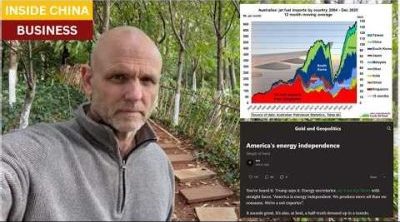
Chinese jet fuel and the myth of energy independence
or go to
Aletho News Archives – Video-Images
Book Review
Former Insiders Criticize Iran Policy as U.S. Hegemony
By GARETH PORTER | CounterPunch | February 27, 2013
“Going to Tehran” arguably represents the most important work on the subject of U.S.-Iran relations to be published thus far.
Flynt Leverett and Hillary Mann Leverett tackle not only U.S. policy toward Iran but the broader context of Middle East policy with a systematic analytical perspective informed by personal experience, as well as very extensive documentation.
More importantly, however, their exposé required a degree of courage that may be unparalleled in the writing of former U.S. national security officials about issues on which they worked. They have chosen not just to criticise U.S. policy toward Iran but to analyse that policy as a problem of U.S. hegemony. … continue
Blog Roll
 Aletho News
- What is fueling unrest across the EU?
- Why no power can undermine Iran’s eternal dominance over the Strait of Hormuz
- Is The War Against Iran Over?
- Iran war will leave long-term ‘scar’ on Wall Street, investors warn
- How Iran decimated US power projection in West Asia: Military lessons of 40-day war
- Iran’s report details US-Israeli war crimes in targeting schools, hospitals, livelihoods
- NATO’s Slow Fracture: How Trump’s Iran War Exposed the Instrument of Hegemony
- Chinese jet fuel and the myth of energy independence
- Ukraine Sea Drone Fired From Libya Hit Russian Tanker in Mediterranean
- IRGC: Iranian forces launched no attacks during ceasefire hours
- If Americans Knew
- DNC Shoots Down Resolutions Calling Out AIPAC and Limiting Arms to Israel
- TCN: Is Israel Blackmailing President Trump?
- Israel killed at least 303 Lebanese yesterday – who were they? Daily Update
- Amnesty: Urgent – Protect Lebanese civilians from brutal escalation in Israeli attacks
- Is The War Against Iran Over?
- Inside the Israeli army’s propaganda wing
- Hundreds of Gaza Amputees Stranded in Legal Limbo
- The gallows law: Israel moves toward executing Palestinian children
- Tucker Carlson: The Path to Peace requires ending ‘special alliance’ with Israel
- This is ceasefire? Israel’s biggest massacre yet in Lebanon, another journalist killed in Gaza – Daily Update
- No Tricks Zone
- An Inconvenient Tree: Uncovered In Alps… Europe Much Warmer Than Today 6000 Years Ago
- New Study Reports A 60% Slowdown In Greenland’s Ice Loss Rate In The Last Decade
- Low Intensity Tornado Wrecks Major Solar Farm, Creating A Potential Toxic Dump
- New Study Finds Warming Saves Lives…Cold Temperatures 12 Times More Deadly Than Excess Heat
- German Science Blog Accuses PIK Climate Institute Of Hallucinating Climate Tipping Points
- Devastating Assessment Of Comirnaty Vaccine By Former Senior Pfizer Europe Toxicologist
- New Study: CO2 Is ‘Effectively Negligible’ As An Explanatory Climate Change Factor Since 2000
- Former Pfizer Toxicologist Dr. Helmut Sterz Tells Bundestag Hearing Pfizer Vaccine Should Have Never Been Approved
- Energy Expert: Germany’s Nuclear Phaseout Was A “500 Billion Euro Mistake”
- New Research: South Australia’s Mid-Holocene Sea Surface Temperatures Were 4°C Warmer Than Today
 Aletho News