A scramble for lands
GRAIN | September 22, 2014
With all this money pouring into palm oil companies, lands for oil palm plantations are at an all time premium, wherever they can be found.
Oil palm plantations can, however, only be established on a narrow band of lands in tropical areas that are roughly 7 degrees North or South of the equator and that have abundant and evenly spread rainfall. This makes the potential area for new oil palm plantations rather limited. Plus, most of these lands are composed of forests and farmlands that are occupied by indigenous peoples and peasants, some of whom are already growing oil palms for local markets.
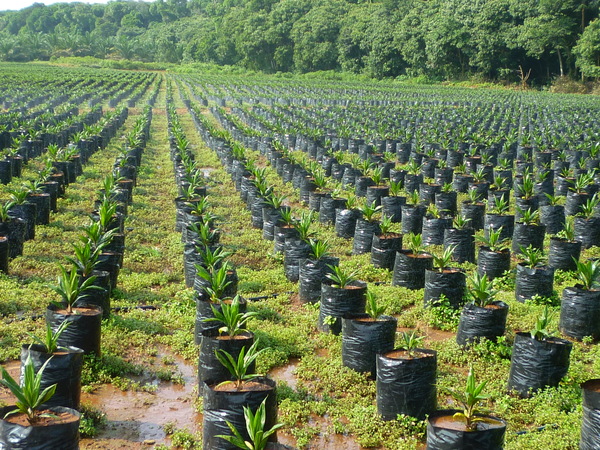
The expansion of oil palm plantations, therefore, depends upon companies getting these people to give up their lands. This is not an easy sell, given the meagre jobs and other benefits that an oil palm plantation generates in comparison with the destruction that it causes and the value that the lands already hold for the people. A typical oil palm plantation requires only one poorly paid worker for every 2.3 hectares, while the surrounding communities pay a high price for the deforestation, water use, soil erosion and chemical fertiliser and pesticide contamination that it causes.1 Companies trying to acquire lands from communities also run into customary forms of land governance that do not allow for a company to buy up land one parcel at a time.
The easy way for companies to get around these hurdles is to ensure that the communities do not even know that their lands have been signed away. It is very common in Africa, for instance, for companies to sign land deals directly with the national government without the knowledge of the affected communities. In many cases, the companies signing the deals are obscure companies registered in tax havens with their beneficial owners hidden from view. The managers of these companies tend to come from the mining sector or other extractive industries with long histories of shady deals in Africa. In Papua New Guinea and Indonesia, land deals are typically brokered between local elites and foreign investors, also often with obscure ownership structures registered in tax havens.
Such small shell companies are not in the business of developing plantations. Once the land contracts are signed, they immediately look to sell out to larger companies with the technical capacity and financial resources to build the plantations. And it is usually at this point that the communities come to understand that their lands have been sold.
Most of these cases eventually lead to a situation where a large multinational plantation company, backed by a national government and a multimillion dollar contract, faces off against a poor community trying desperately to hold onto to the lands and forests it needs to survive. It is incredibly difficult for communities to defend themselves against such powerful forces, and those that do risk the threat of violence, whether by paramilitaries in Colombia, police in Sierra Leone, or the army in Indonesia.
Tax havens and land grabs for palm oil in Africa
The case of Atama Resources Inc
In 2010, the Government of the Republic of the Congo signed away more than 400,000 ha to a Congolese registered company called Atama Plantation whose owners remain unknown.2 In return, this mysterious company promised to develop the Congo Basin’s largest ever oil palm plantation, converting 180,000 ha of mostly forested land in the provinces of Cuvette and Sangha while paying the government a token annual fee of $5 per hectare of planted land. The company was under no obligation to conduct environmental or social impact assessments or to consult with affected populations.

When the contract was signed, Atama Plantation was wholly owned by Silvermark Resources Inc, a company registered in the offshore fiscal paradise of the British Virgin Islands.3 The only publicly available information on Silvermark is that it is owned and directed by two shell companies registered in Brunei. Because of the rules of secrecy governing companies registered in Brunei and the British Virgin Islands, it is impossible to know who the actual owners of these companies are.
In 2011, ownership of Atama Plantation was transferred to a holding company in Mauritius, another fiscal paradise, before finally being sold, in 2012, to Malaysia’s Wah Seong Corporation, a “pipe-coating specialist” company with no history in the palm oil sector that is controlled by Malaysian businessman Robert Tan.4
Whoever the owners of Silvermark are, they pocketed an estimated $25 million, without doing anything more than orchestrate the contract with the Congolese government. And, under the deal with Wah Seong, they still hold 39% of the shares with yet another British Virgin Islands registered company with unknown owners holding the remaining 10%.
The case of Liberian Forest Products Inc. (LFPI)
On August 21, 2006 a little known London minerals exploration company announced to the world that it had taken control of 700,000 ha of land in Liberia– equal to about 7% of the country’s entire land area. The owners of Nardina Resources PLC claimed they had acquired rights over this massive chunk of land through a take over of a Liberian company called Liberian Forest Products Inc. (LFPI). Nardina then changed its name to Equatorial Biofuels PLC and then again to Equatorial Palm Oil Ltd (EPO) to reflect its new mandate as a palm oil company. Meanwhile, the original owners of LFPI walked away with £1,555,000 in shares and cash.
But how did the owners of LFPI get hold of such an obscene amount of territory in a country just emerging from over a decade of civil war? And who were these owners anyway?
EPO’s disclosure documents from its listing on the London AIM stock exchange in 2010 show that the money it paid for LFPI went to two offshore companies, Kamina Global Ltd of the British Virgin Islands and Subsea BV of Liberia, which each had 50% shares of LFPI.
Searches conducted in December 2013 through the company registry in Liberia found no record of registration for a company called Subsea BV. However, the articles for registration for LFPI of November 2006 indicate that LFPI is a Liberian company owned by Tony Smith (50%) and A. Kanie Wesso (50%), who are both trustees for a new company to be formed, called Subsea BV. The sole LFPI director named in the document is Mark Slowen, a British businessman operating from Liberia whose name also turns up as the CEO of SubSea Resources DMCC (Dubai Multi Commodities Centre), a company that acquired mineral rights in Liberia at around the same time.
A second business registry document for LFPI from August 2007 refers to LFPI as a British owned company– with ownership split between Mark Slowen (50%) and Kanie Wesso (50%). Both documents describe LFPI as a company whose sole business is logging.
Subsea BV also turns up in the UK business directory as a director of the G4 Group, which has several business interests in Liberia and is controlled by the notorious financial fraudster Lincoln Fraser.5 The G4 Group’s Liberian subsidiary, G4 WAO Inc., exports rubber tree logs and holds a phosphate exploration concession covering 36,000 ha in Bopolu. According to the company website, G4 WAO “manages in excess of one million acres of the best crop growing conditions in the world” and has partnered with the International Crops Research Institute for the Semi-Arid-Tropics (ICRISAT) “to establish trial sites on various G4 farming enterprises in Liberia, Ghana and Kenya.”6
Kamina Global Ltd, the other company that was paid by EPO for the acquisition of LFPI, is even more opaque. Legislation in the British Virgin Islands does not require companies to disclose their directors or shareholders, so it was not possible to identify the people behind Kamina Global through company records.7
When EPO acquired LFPI, the contract was under examination by Liberia’s Public Procurement and Concession Commission. It would conclude that the agreement contained “gross irregularities and non-compliance with the law” and EPO was forced to renegotiate. LFPI, now under the ownership of EPO, signed a new contract with the government in 2008, this time covering a much reduced but still valuable 55,000 ha area of land in Butaw. With this concession and another of a similar size in Liberia, EPO went public on the London AIM stock exchange, eventually attracting significant investment from the Siva Group, a Singapore-based holding company of Indian billionaire Chinnakannan Sivasankaran, who has quietly amassed one of the world’s largest land banks for oil palm in just a few years. The Siva Group started buying shares of EPO in 2010 and by 2013 it controlled 36.7% of the company and had formed a 50:50 joint venture with EPO based in Mauritius, called Liberian Palm Developments Ltd, that took control of all of EPO’s Liberian land concessions.8
In 2013, the Siva Group would sell its shares in EPO and its Mauritian joint venture to KL Kepong of Malaysia, one of the world’s largest palm oil companies.
Are Chinese companies grabbing land for palm oil?
China runs neck and neck with India for the world’s number 1 palm oil importer. So it would only make sense that Chinese companies would be involved in the current rush for lands for oil palm plantations. But while there have been several reports of massive land grabs for palm oil by Chinese companies, few of these have materialised.
China’s telecom giant ZTE, which has a biofuels division, was said to have signed an agreement with the Democratic Republic of the Congo to develop 2 million hectares of oil palm plantations. The numbers were later scaled down to 100,000 ha and it now seems like the project has been scrapped entirely.
In 2005, Indonesia’s President Yudhoyono announced a plan to develop 1.8 million hectares of land along the Kalimantan border into oil palm plantations. Several Chinese companies including state-owned investment company CITIC Group were offered one third of the area in return for building roads and railways and details were released of a $600 million project between CITIC and Indonesian palm oil giant Sinar Mas to develop a 100,000 ha plantation in the area, with a $380 million dollar loan from the China Development Bank.9 Sinar Mas’ subsidiary Golden Agri Resources is one of the main suppliers of palm oil to China. The plans, however, were never put into operation.
In 2012, Sinar Mas, which is controlled by Indonesia’s Widjaja family, announced a new partnership for oil palm development with China, this time with state-owned China National Offshore Oil Corp. and another Widjaja controlled company, HKC Holdings of Hong Kong. Wang Jun, the former chairman of CITIC Group, is the honorary chairman and a director of HKC. The companies said the project would be rolled out over eight years in Papua and Kalimantan, “where regional governments had reserved about one million hectares of land for it.”
Less than a year later, the Widjajas cemented another major palm oil deal with China. This time in Africa. In March 2013, Golden Agri Resources’ wholly-owned subsidiary Golden Veroleum Limited procured a $500 million term loan facility from the China Development Bank to support the construction of its 220,000 ha oil palm plantation project in LIberia. Typically the CDB only loans to overseas companies or projects when Chinese companies are directly involved.10
For now, China appears to be channeling most of its investments in palm oil through Asian palm oil companies, such as Sinar Mas, that dominate the global palm oil trade. The only Chinese company making significant direct investments in oil palm plantations has so far been China’s state-owned oil company Sinochem. In April 2012, Sinochem paid 193 million euros to acquire 35% of the Belgian plantations company SIAT, which has oil palm plantations in Gabon, Ghana and Nigeria. It also announced that its rubber company in Cameroon would be expanding its plantations and starting to move into palm oil production.
Cash crop | Communities lose out to oil palm plantations
Notes
1 UNEP, “Oil palm plantations: threats and opportunities for tropical ecosystems,” December 2011
2 See the excellent report, “Seeds of Destruction“, Rainforest Foundation UK, 2013
3 Silvermark is owned by Tinaldi Ltd and the Director is Greenland Ltd. Greenland Ltd is reported to be controlled by Benny Lum (who may just be a proxy). It controls Lamington Capital Inc (maybe Singapore) which is also a shareholder in African Petroleum Corporation Limited. It was also used to direct a transfer of funds to a Thai company that is linked to Thaksin. Both Tanaldi Ltd and Greenland Ltd (Brunei) are registered in Brunei to the address of HMR Trust Ltd (which is involved in offshore financial services). Other documents indicate that Tanaldi Limited is owned by Tan Sri Barry Goh Ming Choon of Malaysia and the company acts as a trust for other Malaysian businessmen. Barry Goh controls B&G Capital Resources Berhad (“BCGR”) which he started in 1994. BGCR has served as the principal contractor to Tenaga Nasional Berhad (TNB), one of the largest government link companies in Malaysia
4 Atama Resources Inc was registered in Mauritius in July 2011, as 100% owned by Silvermark. In 2012, Wah Seong purchases 51% of Atama Resources Inc. through its 100% owned subsidiary WS Agro Ind Pte Ltd (Singapore). 39% remains with Silvermark. 10% is taken by Giant Dragon Group (BVI), which is 100% owned by Marston International Ltd. (BVI), who’s director is Eastern Sky Ltd. (Hong Kong). Eastern Sky is a nominee director for several other companies. The Wah Seong Corporation is largely controlled by Malaysian businessman Robert Tan. Marston International Ltd. is the owner of Pergenia International Limited (PIL) incorporated in British Virgin Island on 10 January 2007 and Netstar Holdings Limited registered in BVI in 2003. Marston International Ltd is also the controlling shareholder of PT Jaya Pari Steel Tbk. (Indonesia). Reports from PT Jaya Pari Steel Tbk say that Marston International Ltd is owned by John Matthew Ashwood (50%) and Brian Whiteman and Robinson McKinstry (50%), who seem only to be proxies and John Ashwood likely works for Vistra, an offshore financial company based in Hong Kong. PT Jaya Pari Steel is a company of the Gunawan family of Indonesia, which is involved in finance and steel. The family controls 46 percent of Indonesia’s PT Bank Panin. Marston International Limited is also a major shareholder in another Gunawan steel company, Betonjaya Manunggal Tbk PT, through its ownership of Profit Add Limited (Samoa). Marston International is listed as a shareholder of Best Dragon Enterprises Limited, alongside Tito Sulistio, who is connected to the Suharto family.
5 Fraser is described by Offshore Alert as a “British conman who masterminded the $400 million Imperial Consolidated fraud” which robbed thousands of pensioners and others of their savings when it went bankrupt in 2002.
7 Kamina’s company registration information indicates that it was registered on 17 March 2006 and struck off on 2 November 2009. It’s registered agent is TMF (BVI) Ltd, a company which manages numerous shell companies on behalf of clients around the world. As written on the same document: “Under the BVI Business Companies Act, 2004 companies are not required to file information on Directors and Shareholders of a company.”
8 Siva Group’s 36.7% share of EPO is held by way of several subsidiaries: Biopalm Energy Limited (16.62%), The Siva Group (16.62%) and Broadcourt Investments Ltd (3.46%).(The joint venture is between EPO’s wholly-owned subsidiary Equatorial Biofuels (Guernsey) Limited and Biopalm Energy Limited, a wholly owned subsidiary of Geoff Palm Ltd based in the offshore city of Labuan, Malaysia, and which is owned by Broadcourt Investments Ltd, a British Virgin Islands registered holding company with Chinnakannan Sivasankaran, the Siva Group’s founder and owner, listed as its only director and shareholder since January 2007.
9 “The Kalimantan border oil palm project,” Milieudefensie – Friends of the Earth Netherlands and the Swedish Society for Nature Conservation, 2006; “China’s investment foray into Indonesia,” Asia Sentinel, 6 June 2013
Land Grabs, the Latest Form of Genocide in Guatemala

By Leonor Hurtado – Americas Program – 12/06/2013
In a historic decision this May, Guatemala’s Supreme Court of Justice sentenced former dictator General Ríos Montt to 80 years in prison for the genocidal massacres of indigenous people in the 1980s. Many Guatemalans hoped that the judicial process against the top criminals of the country’s “dirty war” would finally bring justice—but ten days after the decision, the Constitutional Court reversed the judgment.
While the Guatemalan people protest this violation of the rule of law, the processes of genocide initiated 30 years ago by Ríos Montt’s massacres continue today by other means.
In the last decade, the expansion of oil palm plantations and sugarcane production for ethanol in northern Guatemala has displaced hundreds of Maya-Q´eqchi´ peasant families, increasing poverty, hunger, unemployment and landlessness in the region, according to a new Food First report by Alberto Alfonso-Fradejas, “Sons and Daughters of the Earth: Indigenous Communities and Land Grabs in Guatemala.”
There is a major contradiction here: at the same time that the former General Ríos Montt is convicted for genocide, the Guatemalan government allows the oligarchy, allied with extractive industries, to displace entire populations without concern for the human cost. In many cases, these land grabs result in the murder and imprisonment of rural people who resist the assault.
Genocide against the indigenous peasant population in Guatemala no longer has the face of a military dictatorship supported by the United States. Now it is the corporations, the oligarchy and the World Bank who push peasants off their lands.
In today’s Guatemala, land and resource control is increasingly in the hands of a small oligarchy of powerful families allied with agri-food companies. At the center of this power are fourteen families who control the country’s sugarcane-producing companies (AZAZGUA); five companies controlling the national production of ethanol; eight families that control the production of palm oil (GREPALMA); and members of the Coordinating Committee of Agricultural, Commercial, Industrial, and Financial Associations (CACIF).
Together these powerbrokers are accumulating land and wealth with the support of investment from international institutions such as the World Bank, the Inter-American Development Bank (IDB) and the Central American Bank for Economic Integration (BCIE). The convergence of multiple global crises—finance, energy, food and environment—has directed corporate investment into land-based resources such as agrofuels, minerals, pasture and food. The situation in Guatemala is extremely violent, part of a global trend where agrarian, financial and industrial interests are grabbing control of peasant lands and resources.
Can land grabs be considered genocide? In many ways, land grabbing is a new form of genocide. Ricardo Falla’s study “What Do You Mean There Was No Genocide?” analyzes the definition of genocide and its characteristics. According to Falla, of the five acts that define genocide, two were most prominent in Guatemala: “the massacre of the members of a group,” and “the intentional subjection of a group to living conditions which will lead to their total or partial physical destruction.”
The first genocide was against the Ixil peoples during the reign of Ríos Montt. The second genocide is enacted today through the privation of the Q´eqchi´ peoples’ means of survival through land grabs. Hundreds of families have been displaced. They do not have land on which to produce food or live, and they are denied their cultural and community identity. These conditions undermine their ability to survive, and lead to their displacement, and in many cases death.
The historic genocide trial this May came about through the peoples’ long struggle to defend their rights. The Ríos Montt conviction is a condemnation of impunity. The oligarchy did everything possible to impede the trial while continuing to displace the indigenous peasant population with the support of international investment and a legal system that favors land grabbing to the detriment of the people.
On May 20, the Constitutional Court overturned the conviction, with two of the five judges opposing the decision. Pablo de Greiff, UN Special Rapporteur for the Promotion of Truth, Justice, Reparation and Guarantees of Non-Recurrence stated, “No legal decision is inconsequential, even if it is revoked.” The Inter-American Court of Justice issued a statement criticizing the verdict for violating international obligations assumed by the state and preventing the people from seeking justice. Multiple organizations and authorities have spoken out against the court’s decision, arguing that it overstepped its bounds, violated legal provisions, and endorsed the corrupt mechanisms upon which impunity is built in Guatemala. The decision bolsters evidence that Guatemala’s top court lacks political independence and is tied to the country’s economic and ruling elite.
On May 24, thousands of people demonstrated and delivered a letter with more than a thousand signatures to the Court demanding that the decision be reversed. In Argentina, Chile, Honduras, Mexico, Nicaragua and Peru, thousands more marched in solidarity to the Guatemala embassy demanding justice.
If we fail to judge and condemn the massacres committed thirty years ago, what hope is there for the Mayan Q’eqchi’, Xinka, Mam, Kaqchikel and other indigenous peoples currently being displaced and massacred by extractive corporations with the support of the state and international institutions? The people continue to courageously resist and defend their lives, lands and identities. How shall we express our solidarity?
Leonor Hurtado is a fellow at Food First/Institute for Food and Development Policy. A native of Guatemala, she has spent decades defending human rights and indigenous rights, and supporting indigenous resistance to the expansion of extractive industries.
Photo: Caracol Producciones
Related articles
- Survivors Reluctant to Testify in New Genocide Trial (ipsnews.net)
- Guatemalans protest annulment of dictator’s genocide conviction (workers.org)
- Israel’s Hand in Guatemala’s Genocide (phantomreport.com)
Up in Smoke
Why Biomass Wood Energy is Not the Answer
By George Wuerthner | January 12, 2010
After the Smurfit-Stone Container Corp.’s linerboard plant in Missoula Montana announced that it was closing permanently, there have been many people including Montana Governor Switzer, Missoula mayor and Senator Jon Tester, among others who advocate turning the mill into a biomass energy plant. Northwestern Energy, a company which has expressed interest in using the plant for energy production has already indicated that it would expect more wood from national forests to make the plant economically viable.
The Smurfit Stone conversion to biomass is not alone. There have been a spate of new proposals for new wood burning biomass energy plants sprouting across the country like mushrooms after a rain. Currently there are plans and/or proposals for new biomass power plants in Maine, Vermont, Pennsylvania, Florida, California, Idaho, Oregon and elsewhere. In every instance, these plants are being promoted as “green” technology.
Part of the reason for this “boom” is that taxpayers are providing substantial financial incentives, including tax breaks, government grants, and loan guarantees. The rationale for these taxpayer subsidies is the presumption that biomass is “green” energy. But like other “quick fixes” there has been very little serious scrutiny of real costs and environmental impacts of biomass. Whether commercial biomass is a viable alternative to traditional fossil fuels can be questioned.
Before I get into this discussion, I want to state right up front, that coal and other fossil fuels that now provide much of our electrical energy need to be reduced and effectively replaced. But biomass energy is not the way to accomplish this end goal.
BIOMASS BURNING IS POLLUTION
First and foremost, biomass burning isn’t green. Burning wood produces huge amounts of pollution. Especially in valleys like Missoula where temperature inversions are common, pollution from a biomass burner will be the source of numerous health ailments. Because of the air pollution and human health concerns, the Oregon Chapter of the American Lung Association, the Massachusetts Medical Society and the Florida Medical Association, have all established policies opposing large-scale biomass plants.
The reason for this medical concern is that even with the best pollution control devises, biomass energy is extremely dirty. For instance, one of the biggest biomass burners now in operation, the McNeil biomass plant in Burlington, Vermont is the number one pollution source in the state, emitting 79 classified pollutants. Biomass releases dioxins, and as much particulates as coal burning, plus carbon monoxide, nitrogen oxide, sulfur dioxide, and contributes to ozone formation. […]
BIOMASS ENERGY IS INEFFICIENT
Wood is not nearly as concentrated a heat source as coal, gas, oil, or any other fossil fuel. Most biomass energy operations are only able to capture 20-25% of the latent energy by burning wood. That means one needs to gather and burn more wood to get the same energy value as a more concentrated fuel like coal. That is not to suggest that coal is a good alternative, rather wood is a worse alternative. Especially when you consider the energy used to gather the rather dispersed source of wood and the energy costs of trucking it to a central energy plant. If the entire carbon footprint of wood is considered, biomass creates far more CO2 with far less energy output than other energy sources.
The McNeil Biomass Plant in Burlington Vermont seldom runs full time because wood, even with all the subsidies (and Vermonters made huge and repeated subsidies to the plant—not counting the “hidden subsidies” like air pollution) wood energy can’t compete with other energy sources, even in the Northeast where energy costs are among the highest in the nation. Even though the plant was also retrofitted so it could burn natural gas to increase its competitiveness with other energy sources, the plant still does not operate competitively. It generally is only used to off- set peak energy loads.
One could argue, of course, that other energy sources like coal are greatly subsidized as well, especially if all environmental costs were considered. But at the very least, all energy sources must be “standardized” so that consumers can make informed decisions about energy—and biomass energy appears to be no more green than other energy sources.
 BIOMASS SANITIZES AND MINES OUR FORESTS
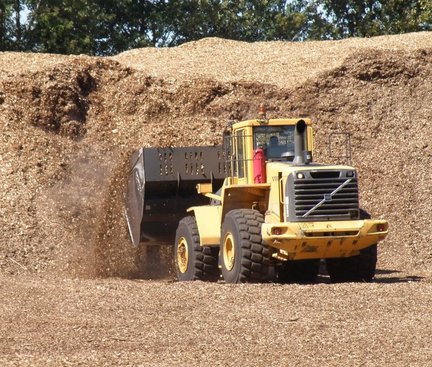
The dispersed nature of wood as a fuel source combined with its low energy value means any sizable energy plant must burn a lot of wood. For instance, the McNeil 50 megawatt biomass plant in Burlington, Vermont would require roughly 32,500 acres of forest each year if running at near full capacity and entirely on wood. Wood for the McNeil Plant is trucked and even shipped on trains from as far away as Massachusetts, New Hampshire, Quebec and Maine.
Biomass proponents often suggest that wood [gathered] as a consequence of forest thinning to improve “forest health” (logging a forest to improve health of a forest ecosystem is an oxymoron) will provide the fuel for plant operations. For instance, one of the assumptions of Senator Tester’s Montana Forest Jobs bill is that thinned forests will provide a ready source of biomass for energy production. But in many cases, there are limits on the economic viability of trucking wood any distance to a central energy plant. Again without huge subsidies, this simply does not make economic sense. Biomass forest harvesting is even worse for forest ecosystems than clear-cutting. Biomass energy tends to utilize the entire tree, including the bole, crown, and branches. This robs a forest of nutrients, and disrupts energy cycles.
Worse yet, such biomass removal ignores the important role of dead trees to sustain the forest ecosystems. Dead trees are not a “wasted” resource. They provide home and food for thousands of species, including 45% of all bird species in the Nation. Dead trees that fall to the ground are used by insects, small mammals, amphibians and reptiles for shelter and even potentially food. Dead trees that fall into streams are important physical components of aquatic ecosystems and provide critical habitat for many fish and other aquatic species. Removal of dead wood is mining the forest. Keep in mind that logging activities are not benign. Logging typically requires some kind of access, often roads which are a major source of sedimentation in streams, and disrupt natural subsurface water flow. Logging can disturb sensitive wildlife like grizzly bear and even elk are known to abandon locations with active logging. Logging can spread weeds. And finally since large amounts of forest carbon are actually tied up in the soils, soil disturbance from logging is especially damaging, often releasing substantial additional amounts of carbon over and above what is released up a smoke stack.
BIOMASS ENERGY USES LARGE AMOUNTS OF WATER
A large-scale biomass plant (50 MW) uses close to a million gallons of water a day for cooling. Most of that water is lost from the watershed since approximately 85% is lost as steam. Water channeled back into a river or stream typically has a pollution cost as well, including higher water temperatures that negatively impact fisheries, especially trout. Since cooling need is greatest in warm weather, removal of water from rivers occurs just when flows are lowest, and fish are most susceptible to temperature stress.
BIOMASS ENERGY SAPS FUNDS FROM OTHER TRULY GREEN ENERGY SOURCES LIKE SOLAR
Since biomass energy is eligible for state renewable portfolio standards (RPS), it has captured the bulk of funding intended to move the country away from fossil fuels. For example, in Vermont, 90% of the RPS is from “smokestack” sources—mostly biomass incineration. This pattern holds throughout many other parts of the country. Biomass energy is thus burning up funds that could and should be going into other energy programs like energy conservation, solar and insulation of buildings.
PUBLIC FORESTS WILL BE LOGGED FOR BIOMASS ENERGY
Many of the climate bills now circulating in Congress, as well as Montana Senator Jon Tester’s Montana Jobs and Wilderness bill target public forests. Some of these proposals even include roadless lands and proposed wilderness as a source for wood biomass. One federal study suggests that 368 million tons of wood could be removed from our national forests every year—of course this study did not include the ecological costs that physical removal of this much would have on forest ecosystems.
The Biomass Crop Assistance Program, or BCAP, which was quietly put into the 2008 farm bill has so far given away more than a half billion dollars in a matching payment program for businesses that cut and collect biomass from national forests and Bureau of Land Management lands. And according to a recent Washington Post story, the Obama administration has already sent $23 million to biomass energy companies, and is poised to send another half billion.
And it is not only federal forests that are in jeopardy. Many states are eying their own state forests for biomass energy. For instance, Maine recently unveiled a new plan known as the Great Maine Forest Initiative which will pay timber companies to grow trees for biomass energy.
JOB LOSSES
Ironically one of the main justifications for biomass energy is the creation of jobs, yet the wood biomass rush is having unintended consequences for other forest products industries. Companies that rely upon surplus wood chips to produce fiberboard, cabinet makers, and furniture are scrambling to find wood fiber for their products. Considering that these industries are secondary producers of products, the biomass rush could threaten more jobs than it may create.
BOTTOM LINE
Large scale wood biomass energy is neither green, nor truly economical. It is also not ecologically sustainable and jeopardizes our forest ecosystems. It is a distraction that funnels funds and attention away from other more truly worthwhile energy options, in particular, the need for a massive energy conservation program, and changes in our lifestyles that will in the end provide truly green alternatives to coal and other fossil fuels.
George Wuerthner is a wildlife biologist and a former Montana hunting guide. His latest book is Plundering Appalachia.
Related articles
- Massachusetts Restricts Dirty Biopower (switchboard.nrdc.org)
- Forest Owners Tell EPA to Avoid Pitfalls in Biomass Review (prweb.com)
- Greens warn biomass plan could reduce food supplies (morningstaronline.co.uk)
- Biggest English Polluter Spends $1 Billion to Burn Wood (bloomberg.com)
- California Proposes Forest Thinning for Biomass Energy, But is it a Good Idea? (kcet.org)
Featured Video

Yemen joins the war – Red Sea could be blocked next – Saudi regime at risk
or go to
Aletho News Archives – Video-Images
From the Archives
Should Europeans ‘Thank’ the Americans for Destroying Nord Stream?
By Robert Bridge | Strategic Culture Foundation | September 29, 2022
With an investigation continuing into the destruction of the Nord Stream gas pipeline that provided energy supplies to Europe from Russia, there appears to be just one prime suspect, and that should surprise nobody.
Following the sabotage of the Nord Stream 1 and 2 gas pipelines, former Polish Foreign Minister Radoslaw Sikorski already seemed to know the identity of the perpetrator when he tweeted out: “Thank you, USA.”
At first glance, it seemed that Sikorski was speaking sarcastically, berating Washington for carrying out an attack that will have severe repercussions for the people of Europe. After all, how could anyone see any good coming from the termination of Europe’s primary source of gas reserves with winter just around the corner? It was Sikorski’s homeland of Poland, after all, that urged its citizens to collect firewood in the face of dwindling gas reserves.
In fact, the Polish diplomat was speaking one-hundred percent literally… continue
Blog Roll
 Aletho News
- Russian Oil Tanker Arrives in Cuba Amid U.S. Blockade
- America Racing to Strategic Defeat in Iran: Lt Col Daniel Davis
- FTC Warns Visa, Mastercard, PayPal, Stripe Over Political Debanking
- Russian tanker approaches Cuba despite US oil blockade
- Marandi: Yemen joins the war – Red Sea could be blocked next – Saudi regime at risk
- Pro-Palestinian French member of European Parliament denied entry to Canada
- Pakistan to Host US-Iran Talks
- How Indonesia’s tilt toward the US left it stranded in the Strait of Hormuz
- US has no choice but to retreat from Iranian borders: Top commander
- Iran Retaliation Strikes Chemical Plant Near Dimona
- If Americans Knew
- Israeli police block Catholic cardinal from entering Church of the Holy Sepulchre on Palm Sunday
- Israel is assassinating journalists again, more than any other nation, anywhere, ever – Not a ceasefire Day 170
- Over 300 US service members wounded, majority have brain injuries – Not a ceasefire Day 169
- Researchers at Human Rights Watch Resign Over Blocked Report on Palestinian Refugee Return
- Jewish Groups Are Backing a War Americans Don’t Want
- Eric Fingerhut Thinks He’s the President of the Jews
- Top Jewish Philanthropists, Rabbis Urge Israeli President to Take Action Against ‘Jewish Extremists’
- Don’t Be Fooled. Zionist Leaders Have Always Wanted to Control Southern Lebanon
- Israel’s widespread use of torture is a core element of its genocide against the Palestinian people
- In Israel’s War on Iran, Many Middle East US Bases Rendered “All But Uninhabitable”
- No Tricks Zone
- New Study Finds Warming Saves Lives…Cold Temperatures 12 Times More Deadly Than Excess Heat
- German Science Blog Accuses PIK Climate Institute Of Hallucinating Climate Tipping Points
- Devastating Assessment Of Comirnaty Vaccine By Former Senior Pfizer Europe Toxicologist
- New Study: CO2 Is ‘Effectively Negligible’ As An Explanatory Climate Change Factor Since 2000
- Former Pfizer Toxicologist Dr. Helmut Sterz Tells Bundestag Hearing Pfizer Vaccine Should Have Never Been Approved
- Energy Expert: Germany’s Nuclear Phaseout Was A “500 Billion Euro Mistake”
- New Research: South Australia’s Mid-Holocene Sea Surface Temperatures Were 4°C Warmer Than Today
- Storing Green Energy To Last Germany 10 Days Would Require A 60-Million Tonne Battery
- New Studies: UK Sea Levels Were 4 Meters Higher Than Today During The Mid-Holocene
- Destructive Green New Deal: German Energy And Metal Group Warns Of Drastic Crisis
 Aletho News