Pentagon effectively confirms ‘Golden Dome’ will breach Outer Space Treaty
By Drago Bosnic | August 14, 2025
On January 27, US President Donald Trump announced that the construction of the “state-of-the-art ‘Iron Dome’ missile defense shield” will begin “immediately” and will be made “right here in the USA 100%”. Since then, apart from a name change to avoid confusion with a homonymous Israeli system, there’s been little concrete information on the project.
However, last week, the Pentagon presented more details about the upcoming “Golden Dome”, revealing that it will be a four-layer missile defense system and that it will also include a space-based component (the other three are ground-based, including eleven short-range batteries planned for deployment in the continental US, Alaska and Hawaii). Reuters cited a presentation of the project, titled “Go Fast, Think Big!”, shown in Huntsville, Alabama, last week to around 3,000 representatives of the American Military Industrial Complex (MIC).
The revelation didn’t really show much more than what was already known about the US strategic missile defenses. The slides revealed there would be early warning satellites for detecting missile launches, tracking and “boost-phase interception”. The “upper layer” would be composed of the Next Generation Interceptors (NGI), Terminal High Altitude Area Defense (THAAD) and “Aegis” systems, with a new missile field “likely in the Midwest”.
This would be followed by the “under layer” composed of “Patriot” systems, new radars and a “common launcher for current and future interceptors”. The space-based “boost-phase interception” capability is particularly curious. Although the slides didn’t really reveal how this would be accomplished, common sense implies that this is either deliberate disinformation (like the SDI was) or the Pentagon is actively pursuing space-based weapons.
Reuters noted that “one surprise was a new large missile field – seemingly in the Midwest according to a map contained in the presentation – for Next Generation Interceptors (NGI) which are made by Lockheed Martin” and “would be a part of the ‘upper layer’ alongside Terminal High Altitude Area Defense (THAAD) and ‘Aegis’ systems which Lockheed also makes”. The NGI is supposed to be the next iteration of GBI (Ground-Based Interceptors), which is part of the Ground-Based Midcourse Defense (GMD).
This system is a nationwide network of radars, interceptors and other assets that the US planned for decades, even unilaterally withdrawing from the 1972 ABM (Anti-Ballistic Missile) Treaty back in 2002, so it could pursue the project. This arms control agreement served to prevent the US and USSR/Russia from being incentivized to endlessly enlarge their thermonuclear arsenals by limiting the number of deployed ABM systems.
The logic was that, whoever acquired better missile defenses, this would only force the other side to increase their offensive potential to enable saturation attacks that would inevitably overcome all ABM systems. Although the treaty was by no means perfect, it still slowed down the growth in the number of warheads and delivery systems.
However, after the unfortunate dismantling of the Soviet Union, the US thought that Russia would be unable to revive its massive military-industrial potential, meaning that the aforementioned ABM Treaty was now “holding America back” in its quest for total global dominance. And yet, the opposite happened. Moscow not only reactivated much (if not most) of its military-industrial might, but actually restarted a number of highly advanced military programs that eventually resulted in a decades-long lead in a plethora of various high-tech hypersonic weapons.
Now that this backfired, Washington DC is faced with a far more complex and challenging task of intercepting weapons that work on very different principles, eliminating the predictability of regular ballistic missiles. The cumulative effects of these factors have increased costs and made maintenance and logistics a true nightmare. Not to mention that the (First) Cold War was far simpler due to the fact that America had only the Soviet Union to worry about, while its aggression against the entire world forced several more countries to build up their arsenals (notably China and North Korea).
Unfortunately, there’s no other way to ensure viable deterrence. However, instead of easing tensions, the US is doubling down on its belligerence. Despite formally being a defense system, Washington DC sees the “Golden Dome’s” actual purpose as a way to facilitate its global dominance by undermining other arsenals.
The Pentagon’s presentation last week suggests that the “Golden Dome” will effectively be both an expansion and integration of existing missile defenses, with the third site in the Midwest serving to augment the current GMD launch sites in California and Alaska. The US military will have to deal with challenges such as “communication latency across the kill chain (a step-by-step sequence of actions needed to find, target and destroy a threat)”, so the most prominent corporations of the American MIC (Lockheed Martin, Northrop Grumman, RTX/Raytheon, Boeing, etc.) will be included in the program.
However, the very idea that the “Golden Dome” will be able to shoot down hypersonic weapons is highly questionable, given the horrible performance of the GMD even against regular ballistic missiles. On the other hand, the MIC is exhilarated with such a windfall (considering the system’s costs).
And yet, while the project has a lot of similarities with the (First) Cold War-era SDI (Strategic Defense Initiative, but better known as the so-called “Star Wars”), the idea of space-based weapons is still a highly disturbing development that would lead to an inevitable militarization of space. US Space Force Gen Michael Guetlein, who serves as the head of the “Golden Dome” program, is required to “deliver the first designs within 60 days and a complete roadmap of the project within 120 days”.
The new missile defense system is expected to be able to “intercept targets in their boost phase” and “deploy relocatable defenses capable of rapid global deployment”. This is a clear violation of the 1967 Outer Space Treaty (OST).
There’s also a lot of symbolism in Trump’s first announcement of the “Golden Dome”. As previously mentioned, he unveiled it on January 27, which was when the OST was signed by the US and USSR.
Drago Bosnic is an independent geopolitical and military analyst.
US announcement of sixth-gen F-47 fighter draws analyses from Chinese expert
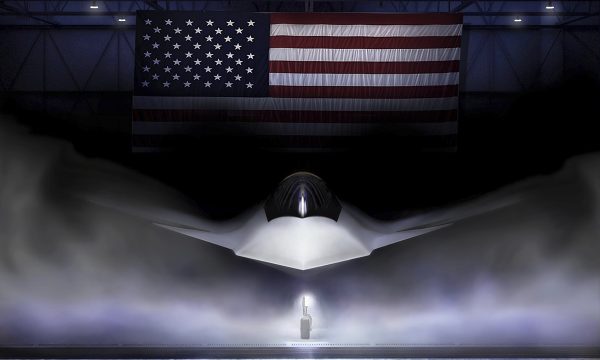
Graphical rendering shows the Next Generation Air Dominance (NGAD) Platform, the F-47. Photo: VCG
By Liu Xuanzun and Liang Rui | Global Times | March 23, 2025
The US’ recent announcement of the F-47 fighter jet has drawn intensive analyses from Chinese military affairs experts and observers, who acknowledged the aircraft being a real sixth-generation fighter jet for featuring typical characteristics such as a tailless design, but they also raised questions over its potentially limited stealth capability, relatively small size, and the US’ selection of Boeing to build the warplane.
The Pentagon has awarded the contract for the US Air Force’s Next Generation Air Dominance future fighter jet, known as NGAD, to Boeing, US President Donald Trump announced Friday, US news outlet Defense News reported on Saturday.
The sixth-generation fighter, which will replace the F-22 Raptor, will be designated the F-47, Trump said. It will have “state-of-the-art stealth technologies [making it] virtually unseeable,” and will fly alongside multiple autonomous drone wingmen, known as collaborative combat aircraft, Defense News reported.
After reviewing the artist renderings of the F-47 released by the US Air Force, Zhang Xuefeng, a Chinese military affairs expert, told the Global Times on Sunday that the F-47’s appearance conforms to the general development trend of the sixth-generation fighter jet concept. For example, it does not feature any vertical tails, which is an attempt to further improve its stealth capability in all directions. It has a flat nose and a lifting-body fuselage. These are all important characteristics of a sixth-generation fighter jet.
Zhang added that manned-unmanned teaming is a core sixth-generation feature, and one the F-47 includes.
However, a pair of canards can be observed in front of the F-47’s main wings, and this will more or less impact the aircraft’s stealth, Zhang noted. Reiterating that an important trend for sixth-generation fighter jets is to remove vertical tails and use a supersonic flying wing configuration to boost stealth, Zhang said that new mechanisms are needed to act in the place of vertical tails to control the aircraft, such as movable wingtip. But the F-47 opted to use canards, a relatively old technology often found on previous generations of aircraft. He suggested Boeing may lack the tech base to develop new control methods and relies on outdated design choices.
In December 2024, videos and photos emerged on social media allegedly showing two types aircraft with new designs have conducted test flights in China. Despite no official announcements, many called them China’s “sixth-generation fighter jets.” Both of them appear to have removed vertical tails and also do not have canards. One of them, resembling a ginkgo leaf in appearance, looked far larger than its J-20 escort.
Wang Ya’nan, chief editor of Beijing-based Aerospace Knowledge magazine, told the Global Times on Sunday that comparing with the size of the canopy and the front landing gear, it can be analyzed that the overall size of the F-47 is not likely much larger than the F-22. It means that the F-47 is still a tactical aircraft, rather than a large, multipurpose aerial platform capable of conducting campaign-scale missions like the “ginkgo leaf” aircraft.
Defense News, citing Air Force Chief Gen. Allvin, claimed that experimental versions of the NGAD have been flying for the last five years.
But Wang noted that there is no proof of this. Even the pictures depicting the F-47 are artists renderings rather than photos.
Wang also noted that Boeing has not won a major fighter jet program for decades. Its F-15 and F/A-18 fighter jets are from McDonnell Douglas which was merged into Boeing, and Boeing’s own X-32 fighter jet lost to the F-35 from Lockheed Martin in bidding. Boeing’s other projects, such as the 737 MAX airliner and KC-46 tanker aircraft also encountered many issues recently. “Having a company like this to lead a sixth-generation program is actually very risky,” he said.
In addition to US’ NGAD program, other countries are also developing sixth-generation fighter jets. France, Germany and Spain are in the Future Combat Air System program to develop a sixth-generation fighter jet, while the UK, Italy and Japan have a sixth-generation Global Combat Air Programme fighter project, according to Defense News. Russia’s sixth-generation efforts have also surfaced in TASS reports.
Wang said the US is moving fastest with the F-47, while other nations lag. With China’s own jets already spotted in the sky, the outside world is now seeing China and the US in advanced stages of sixth-generation fighter jet development.
Analysis: Both Parties Always Serve the Military-Industrial Complex
By Connor Freeman | The Libertarian Institute | May 30, 2023
In 2023, despite skyrocketing inflation, debt, as well as rising sociopolitical divisions, leadership among both the Republicans and Democrats will always agree that substantially more US taxpayer money, never less, should be poured into the military industrial complex, according to an analysis by Judd Legum.
Case in point, the debt ceiling agreement established between the Joe Biden administration and House Speaker Kevin McCarthy caps military spending at a record $886 billion, exactly matching Biden’s mammoth budget request.
The GOP was seeking large increases in military spending and would only entertain cuts in non-military expenditures. The agreed upon war budget represents a 3.3% increase over the current year. The tentative deal still needs to make its way through Congress, where hawks will fiercely oppose any and all military spending caps.
Half of this money will go to defense contractors with Raytheon, Boeing, Lockheed Martin, Northrop Grumman, and General Dynamics receiving the lion’s share. Some of these arms industry giants are currently ensnared in a massive “price gouging” scandal, with a bipartisan group of Senators demanding an investigation be opened at the Pentagon’s highest levels.
Legum highlights the lack of any “peace dividend.” after the disastrous 20 year war and occupation in Afghanistan. “This military spending increase has occurred even as Biden ended the war in Afghanistan, the military’s longest-running and most costly foreign intervention… Each year, the costs go up dramatically,” Legum writes.
He explains that the US has added more than $300 billion to the military budget during the last eight years. In 2015, the Pentagon budget was $585 billion. Half of this obscene increase in war spending and profiteering has been bylined by the Biden administration. Legum continues,
(Had military spending kept pace with inflation, [it] would still be less than $700 billion annually.) Biden has added nearly $150 billion to the military budget since 2021, the last budget approved by President Trump. The budget of the Pentagon now exceeds “the budgets for the next ten largest cabinet agencies combined.” In 2020, Lockheed Martin received $75 billion in government contracts, more than 1.5 times the budget of the entire State Department.
Last year, the United States spent more on its military than the next 10 highest-spending countries combined.
A recent report on 60 Minutes, the CBS news program, saw former Pentagon officials, contract negotiators, and insiders accuse these defense firms of “astronomical price increases” and “unconscionable” fraud.
In particular, the CBS report cites Shay Assad, a 40-year veteran contract negotiator, who says military industrial complex behemoths, such as Lockheed and Raytheon, overcharge for “[everything from] radar and missiles … helicopters … planes … submarines… down to the nuts and bolts.”
The cited experts described these practices, as well as the accompanying rampant unaccountability, as largely the culmination of bureaucratic decisions made during the immediate post-Cold War era.
In the early 1990s, ostensibly to reduce costs, the DOD “urged defense companies to merge and 51 major contractors consolidated to five giants.” This drastically reduced competition and put the big five industry “giants” in an extremely advantageous situation. The War Department “has few options today, and the defense contractors know it,” Legum writes.
Assad clarifies the effects of this centralization of power, “In the [1980s], there was intense competition amongst a number of companies. And so the government had choices. They had leverage. We have limited leverage now,” Assad said. “The problem was compounded in the early 2000s when the Pentagon, in another cost-saving move, cut 130,000 employees whose jobs were to negotiate and oversee defense contracts.”
Retired Pentagon auditor Mark Owen bluntly told CBS, this is “not really a true capitalistic market because one company is telling you what’s going to happen. [It’s a] monopoly.”
The report highlighted the fact that, before the clamp down on competition, a shoulder-fired Stinger missile, produced by Raytheon, cost $25,000 in 1991. Now that Washington is subsidizing the provision of so many Stingers to Ukraine, as well as Taiwan, the weapon is now priced at more than $400,000. This is an “eye-watering” seven-fold increase, even when taking inflation into account as well as interim technological advancements.
Lockheed and Boeing were found to have yielded an over 40 percent profit on sales of PAC-3 surface to air missiles to Washington and its allies. Assad explained the companies saw a windfall of hundreds of millions on the deals over seven years, and “based on what they actually made, we would’ve received an entire year’s worth of missiles for free.”
The DOD also “caught Raytheon making what they called ‘unacceptable profits’ from the Patriot missile defense system by dramatically exaggerating the cost and hours it took to build the radar and ground equipment.”
Assad demonstrated to the 60 Minutes host that an oil pressure switch was selling for over $10,000, when he claimed the switch should cost $328. The host asked Assad a question regarding the huge discrepancy, to which the former official responded “Gouging. What else can account for it?”
A major aspect of this problem is the Congress and defense contractors’ bribes. As Legum details, the military-industrial complex spent $2.5 billion on lobbying in the last two decades. “During that period, defense contractors employed an average of 700 lobbyists — more than one lobbyist for every member of Congress.”
Though, some Senators just denounced the contractors, in a letter to the Pentagon chief, saying these firms are “dramatically overcharging the Department and U.S. taxpayers while reaping enormous profits, seeing their stock prices soar, and handing out massive executive compensation packages.”
The lawmakers charged that these “companies have abused the trust government has placed in them… exploiting their position as sole suppliers for certain items to increase prices far above inflation or any reasonable profit margin.”
Bipartisan Group of Senators Call for DOD to Investigate ‘Price Gouging’ by Major US Defense Contractors
By Connor Freeman | The Libertarian Institute | May 29, 2023
A bipartisan group of Senators sent a letter to the Defense Department chief calling for an investigation into major American arms dealers accused of systemic “price gouging,” on Wednesday, according to The Hill.
The letter, signed by the likes of Sens. Bernie Sanders (I-VT), Elizabeth Warren (D-MA), Mike Braun (R-IN) Ron Wyden (D-OR), and Chuck Grassley (R-IA), cites former Pentagon officials, auditors, and other insiders who spoke to CBS and accused military-industrial complex giants, such as Lockheed Martin, Raytheon, and Boeing, of ripping off the US taxpayer.
During a recent 60 Minutes report, Shay Assad, who worked as a Pentagon contract negotiator for 40 years, cites numerous examples while explaining to the outlet that these firms overcharge the DOD for “[everything from] radar and missiles … helicopters … planes … submarines… down to the nuts and bolts.”
The report said these “astronomical price increases” have worsened sharply amidst Washington’s exponentially rising demand for weapons systems to both bolster Taiwan – in a thinly-veiled effort to destabilize China – and support NATO’s proxy Kiev during its war with Russia.
“Lockheed Martin, Boeing, Raytheon, and TransDigm are among the offenders,” the senators asserted. Their letter continues, “[these contractors are] dramatically overcharging the Department and U.S. taxpayers while reaping enormous profits, seeing their stock prices soar, and handing out massive executive compensation packages.”
Secretary of Defense Lloyd Austin, the letter’s recipient, sat on Raytheon’s board of directors before accepting his current post. The lawmakers charge that these companies are securing profits ranging from 40% to even as high as 4,000%.
The military budget will soon surpass the once unthinkable $1 trillion mark. The DOD has requested a record $842 billion for the next fiscal year, roughly half of which will go to “the offenders,” just such private defense contractors.
While the Joe Biden administration has asked Congress to approve a nearly $900 billion military budget. The hawkish legislature will almost certainly add tens of billions more to Biden’s proposed budget. For 2023, Congress added another $45 billion to Biden’s already mammoth request for $813 billion, resulting in a finalized $858 billion annual military spending bill.
Even these eye-opening numbers do not tell the whole story, because the real national security state budget is already fast approaching $1.5 trillion.
The lawmakers’ letter also expresses concerns about the Pentagon’s ability to audit, track and mitigate fraud risk. The DOD’s accountability system is completely “broken.” Assad said, “No matter who they are, no matter what company it is, they need to be held accountable. And right now that accountability system is broken in the Department of Defense.”
The Senators complained that, for decades, this obscene, unaccountable spending has been ongoing. The letter cites a 2021 Government Accountability Office (GAO) report which found the Pentagon failed to implement any comprehensive solution to combating this “unconscionable” fraud, as Assad has described it.
“The DOD can no longer expect Congress or the American taxpayer to underwrite record military spending while simultaneously failing to account for the hundreds of billions it hands out every year to spectacularly profitable private corporations,” the Senators declared. These firms “have abused the trust government has placed in them…exploiting their position as sole suppliers for certain items to increase prices far above inflation or any reasonable profit margin,” the letter continued.
“It’s not really a true capitalistic market because one company is telling you what’s going to happen. [It’s a] monopoly,” retired DoD auditor Mark Owen told CBS.
Connor Freeman is the assistant editor and a writer at the Libertarian Institute, primarily covering foreign policy. He is a co-host on Conflicts of Interest.
US Democrats fundraise from arms dealers amid Pentagon budget fight
Press TV – April 29, 2023
Top Democratic lawmakers in the US are holding a fundraising meeting with major arms companies on Thursday as Washington plunges into a budget battle in which concessions to the Pentagon and the defense industry could mean cuts to welfare programs such as food stamps.
House Democratic Leader Hakeem Jeffries of New York, his deputy Pete Aguilar, and Democratic Congressional Campaign Committee (DCCC) chair Rep. Suzan Delbene have been selected as the honorees to be invited to the event. The downtown D.C. function ― dubbed a “defense and national security dinner” ― is set to raise funds for the committee, which is the campaign arm for House Democrats and is central to their hopes of regaining the lower chamber of Congress.
Dozens of representatives of Pentagon contractors, including Lockheed Martin, Boeing, Northrop Grumman, BAE Systems, SpaceX, Palantir, and General Dynamics will attend the event.
The group includes figures who previously worked for congressional Democrats, such as Shana Chandler, director of government relations at General Dynamics. Chandler spent 15 years as chief of staff for Rep. Adam Smith, the Democratic chairman of the House Armed Services Committee and another co-host of Thursday’s event.
The event could provide a significant signal about the priorities of the House Democrats as they prepare for the 2024 elections and battle Republicans who are demanding spending cuts in exchange for passing critical legislation. It could be a disappointing message to those who want the party to support social justice and progressive reform.
A senior congressional aide said news of the fundraiser set off alarm bells among staffers, and the event could be a stark example of senior Democratic leaders saying one thing but doing another. Democrats claim to support reining in out-of-control defense spending and criticize Republicans for serving America’s most powerful corporate interests while doing exactly that themselves.
In the coming months, Democratic lawmakers are expected to make key decisions that will affect the US defense industry as they fight Republican efforts to cut government spending.
US House Speaker Kevin McCarthy says he wants comprehensive cuts. But signals from influential Republicans and analysis by budget experts suggest that McCarthy will protect the Pentagon budget.
Democrats can also demand limits on Pentagon spending to protect other government agencies. However, the defense industry will lobby hard to prevent such a development.
The United States remains by far the world’s biggest military spender, according to new data on global military spending published today by the Stockholm International Peace Research Institute (SIPRI).
US military spending reached $877 billion in 2022, which was 39 percent of total global military spending and three times more than the amount spent by China, the world’s second largest spender.
The 0.7 percent real-terms increase in US spending in 2022 would have been even greater had it not been for the highest levels of inflation since 1981.
“The increase in the USA’s military spending in 2022 was largely accounted for by the unprecedented level of financial military aid it provided to Ukraine,” said Dr Nan Tian, SIPRI Senior Researcher. “Given the scale of US spending, even a minor increase in percentage terms has a significant impact on the level of global military expenditure.”
US financial military aid to Ukraine totaled $19.9 billion in 2022. Although this was the largest amount of military aid given by any country to a single beneficiary in any year since the cold war, it represented only 2.3 percent of total US military spending.
In 2022 the USA allocated $295 billion to military operations and maintenance, $264 billion to procurement and research and development, and $167 billion to military personnel.
Russian airlines told to prepare to fly without GPS
Samizdat | April 22, 2022
Russia’s air traffic regulator has told carriers to learn to fly their planes without relying on the American Global Positioning System (GPS) satellite-based-navigation facility, newspaper Izvestia reported on Friday.
According to the letter from the regulator, Rosaviatsia, which was seen by the paper, it has instructed national airlines to prepare to cope without GPS after a March report by the European Union Aviation Safety Agency (EASA), which warned of increased cases of jamming and spoofing of the system’s signal after February 24 – the day Russia started its military offensive in Ukraine.
These were apparently registered in such areas as Russia’s western enclave, the Kaliningrad Region, the Baltics, eastern Finland, the Black Sea, the eastern Mediterranean, Israel, Cyprus, Lebanon, Syria, Turkey and northern Iran.
The interference has led to some planes changing their course or destination as the pilots were unable to perform a safe landing without the GPS, EASA has reportedly said.
According to Rosaviatsia, carriers should evaluate the risks of GPS malfunction and provide additional training to its pilots on how to act in such situations. The crews have also reportedly been told to instantly inform traffic control about any problems with a satellite navigation system.
The letter from the agency should be treated as a recommendation only and doesn’t constitute a ban on the use of GPS by the Russian airlines, the paper clarified.
Several Russian carriers, including major ones like Aeroflot and S7, have confirmed receiving a relevant message from the traffic regulator. However, they insisted that they didn’t encounter any problems with GPS over the past two months.
Rosaviatsia later clarified that “disconnection from GPS or its disruption won’t affect flight safety in Russia.”
The GPS signal isn’t the only source of information about the location of a plane at any given moment. Crews can also rely on the aircraft’s inertial navigation system, as well as ground-based navigation and landing systems, the agency said.
Last month, Dmitry Rogozin, head of the Russian space agency Roscosmos, warned that Washington may well disconnect the country from GPS as part of draconian sanctions imposed on it over the conflict in Ukraine.
On Friday, Rogozin took to Telegram to propose switching all of the country’s commercial planes from GPS to its Russian counterpart, Glonass.
However, it might be a complicated thing to do as Boeing and Airbus planes, mainly used by the country’s carriers, are designed to solely support the GPS technology.
Biden mobilizes US military industry to arm Ukraine
Samizdat | April 13, 2022
US President Joe Biden is looking to mobilize the military industry and send another $750 million worth of the Pentagon’s own weapons stockpile to Ukraine, according to new reports citing anonymous officials in Washington. This is on top of the $1.7 billion worth of goods sent to Kiev courtesy of American taxpayers since the conflict escalated on February 24.
So far the US “lethal” aid has consisted mainly of Javelin anti-tank missiles and Stinger portable anti-air systems.
Now Biden is preparing to escalate the aid to include heavy artillery and other systems, worth three-quarters of a billion or so, Reuters reported on Tuesday citing two US officials. The official announcement could come within a day or two, the agency added.
Biden wouldn’t need congressional authorization for this, either, as it would be done under a Presidential Drawdown Authority (PDA), which authorizes transfer from current US military stocks in response to an emergency.
This would put the amount of US military aid to Kiev at over $2.4 billion since Russia sent troops into Ukraine on February 24, when added to the White House’s own figures made public last week.
The US has sent more than 1,400 Stingers and 5,000 Javelins to Ukraine already, Financial Times (FT) reported on Tuesday citing the Pentagon. This amounts to a third of the US stock of Javelins and a quarter of its Stingers, estimated the Center for Strategic and International Studies (CSIS), a Washington think-tank. At current production rates, it will take 3-4 years to restock on Javelins and at least five for the Stingers.
Production levels will be one of the topics at the meeting between the Pentagon officials and top eight US weapons manufacturers, which both Reuters and FT said is scheduled for Wednesday. Raytheon, Boeing, Lockheed Martin, Northrop Grumman, General Dynamics and L3 Harris Technologies are expected in attendance.
Kiev has reached out to US allies far and wide – from its NATO neighbors all the way to South Korea – asking for airplanes, tanks and artillery in particular. On Saturday, German Defense Minister Christine Lambrecht said that Berlin could not afford to send any more weapons without depleting its own stocks too much. By Monday, however, the Rheinmetall conglomerate said it could refurbish some obsolete Leopard 1 tanks and send them east.
Last week, Slovakia announced it would send its only battery of S-300 air defense systems to Ukraine, and get US-made “Patriots” to replace them. On Monday, the Russian Defense Ministry claimed that the battery had been obliterated in a cruise missile strike against a hangar in Dnepropetrovsk, a city Ukrainians call Dnipro, the day before.
Top US generals lined their pockets off Afghanistan war
Press TV – September 4, 2021
The top generals who commanded American forces in Afghanistan have amassed fortunes from their postings there despite their disastrous conduct in the occupied country.
Eight American generals leading foreign forces in Afghanistan, including United States Army General Stanley McChrystal, who sought and supervised the 2009 American troop surge, went on to serve on more than 20 corporate boards, according to US media.
In an article titled, “Corporate boards, consulting, speaking fees: How US generals thrived after Afghanistan,” published by Stars and Stripes, the publication reveals how top generals amassed clout despite the failure of the American offensive in Afghanistan.
A review of company disclosures and other releases conducted by the specialized medium showed that the top Americans generals who led the mission in Afghanistan had thrived in the private sector after leaving the war zone.
They have amassed influence within businesses, at universities and in think tanks, in some cases selling their experience in a conflict that left millions of people dead and displaced, and costing the United States more than $2 trillion and concluded with the restoration of Taliban rule, the report said.
Meanwhile, the debate remains hot in the United States over what was the mission and who benefited from the 20-year war against the impoverished country.
A compilation of data from lobbying disclosures archived at Open Secrets, a US-based research group tracking money in US politics, showed that Lockheed Martin, Raytheon, General Dynamics, Boeing and Northrop Grumman were the top 5 military contractors who received $2 trillion dollars in public funds from 2001 and 2021.
Retired Gen. Joseph F. Dunford Jr., who commanded American forces in Afghanistan in 2013 and 2014, joined the board of Lockheed Martin last year. Retired Gen. John R. Allen, who preceded him in Afghanistan, is president of the Brookings Institution, which has received as much as $1.5 million over the last three years from Northrop Grumman.
‘Forever war’ returns: Biden’s Pentagon team puts the military-industrial complex back in command
RT | November 14, 2020
Despite campaign-trail overtures to progressives, a Joe Biden presidency seems to spell a return to normalcy in the most time-honored American way: by placing the military-industrial complex in charge of the country’s defense.
Joe Biden’s campaign message focused almost entirely on Donald Trump, and on Biden’s supposed ability to “unify” a polarized electorate and “restore the soul of America.” Since he claimed victory last week, Biden’s prospective administration has begun to take shape, and the reality behind the rhetoric has started to emerge.
On matters of defense, restoring America’s “soul” apparently means placing weapons manufacturers back in charge of the Pentagon.
Biden announced his Department of Defense landing team on Tuesday. Of these 23 policy experts, one third have taken funding from arms manufacturers, according to a report published this week by Antiwar.com.
A knot of hawks
Leading the team is Kathleen Hicks, an undersecretary of defense in the Obama administration, and an employee of the Center for Strategic and International Studies (CSIS), a think tank funded by a host of NATO governments, oil firms, and weapons makers Northrop Grumman, Boeing, Lockheed Martin, Raytheon, and General Atomics. The latter firm produces the Predator drones used by the Obama administration to kill hundreds of civilians in at least four Middle-Eastern countries.
Hicks was a vocal opponent of President Donald Trump’s plan to withdraw a number of US troops from Germany, claiming in August that such a move “benefits our adversaries.”
Two other members of Biden’s Pentagon team, Andrew Hunter and Melissa Dalton, work for CSIS and served under Obama in the Defense Department.
Also on the team are Susanna Blume and Ely Ratner, who work for the Center for a New American Security (CNAS). Another hawkish think-tank, CNAS is funded by Google, Facebook, Raytheon, Northrop Grumman and Lockheed Martin. Three more team members – Stacie Pettyjohn, Christine Wormuth and Terri Tanielian – were most recently employed by the RAND corporation, which draws funding from the US military, NATO, several Gulf states, and hundreds of state and corporate sources.
Michele Flournoy is widely tipped to lead the Pentagon under Biden. Flournoy would be the first woman in history to head the Defense Department, but her appointment would only be revolutionary on the surface. Flournoy is the co-founder of CNAS, and served in the Pentagon under Obama and Bill Clinton. As under secretary of defense for policy under Obama, Flournoy helped craft the 2010 troop surge in Afghanistan, a deployment of 100,000 US troops that led to a doubling in American deaths and made little measurable progress toward ending the war.
‘Forever war’ returns
President Trump, who campaigned on stopping the US’ “forever wars” in the Middle East and remains the first US president in 40 years not to start a new conflict, has nevertheless also staffed the Pentagon with hawkish officials. Recently ousted Defense Secretary Mark Esper was a top lobbyist for Raytheon, while his predecessor, Patrick Shanahan, worked for Boeing. Trump’s appointment this week of National Counterterrorism Center Director Christopher Miller as acting secretary of defense, coupled with combat veteran Col. Douglas MacGregor as senior adviser, looked set to buck that trend, given MacGregor’s vocal opposition to America’s Middle Eastern wars.
Yet Miller and MacGregor may not be in office for long, if Trump’s legal challenges against Biden’s apparent victory fail. Should that happen, Biden’s progressive voters may be in for a rude reawakening when the former vice president returns to the White House.
Many of these progressives were supporters of Bernie Sanders during the Democratic primaries, while others likely held their nose and voted for Biden out of opposition to Trump. Reps. Barbara Lee (California) and Mark Pocan (Wisconsin), two notable progressives, wrote to Biden on Tuesday asking him not to nominate a defense secretary linked to the weapons industry.
Lee and Pocan cited President Dwight D. Eisenhower’s 1961 farewell address, in which he warned of the “disastrous rise” of the “military-industrial complex.”
Given Biden’s fondness for Flournoy, whom he tapped in 2016 to head the Pentagon under a potential Hillary Clinton administration, the former vice president appears unconcerned about curtailing the influence of the armaments industry.
The industry apparently roots for Joe, too. As Donald Trump surged ahead of Biden on election night, stocks in Raytheon, Lockheed Martin, General Dynamics, and the Carlyle Group all plummeted. Only when counting in swing states stopped and resumed, giving Biden the advantage, did they climb again.
It’s probably fine that all the big arms contractor stocks plummeted when it looked like Trump won but then skyrocketed once it became clear Biden would be the one to take office. pic.twitter.com/CKEZNS53Gx
— Hillary Fan (@HillaryFan420) November 7, 2020
Should a Biden administration make good on running mate Kamala Harris’ post-election promise to return to regime-change operations in Syria, these firms and their supporters in the Pentagon stand to make a killing.
However, anti-war leftists, progressives, and Bernie Sanders supporters may soon realize that voting for a Democrat who supported the Iraq War, instead of a Republican who called it “the worst single mistake ever made in the history of our country,” might just benefit the military-industrial complex more than the “soul of America.”
China’s new sanctions against American defence companies have the potential to cause major damage to the US military
By Tom Fowdy | RT | October 26, 2020
Beijing has fired a warning to the US over its arms sales to Taiwan with a new round of sanctions. The move is symbolic for now, but if China wants to get tough it really could hammer the supply chains of the impacted companies.
On Monday afternoon, China’s Ministry of Foreign Affairs announced that Beijing would be placing sanctions on a number of US firms and linked individuals over arms sales to Taiwan, with Washington having approved a record sale worth around $5 billion to the island the previous week.
The listed companies included Lockheed Martin, Boeing Defense and Raytheon, striking at the heart of what is often referred to as ‘America’s Military Industrial Complex’. However, what the specific measures mean, how they will be implemented and what their impact might be remains to be seen.
At first glance, these sanctions look symbolic; such military firms do not pursue business in China, and do not have market traction in America. One exception is Boeing’s civilian wing, which stated in an email it was still committed to the Chinese market.
On the other hand, this is not to say that such sanctions will not have strategic implications. First of all, China has an overwhelming dominance on the ‘rare earth’ materials required for US defence manufacturing, and should these sanctions really look to bite, they could have a major impact on the supply chain.
Secondly, even if the measures are only symbolic, it is nonetheless a warning shot from Beijing that it may retaliate further against US actions in the future.
What are ‘rare earths’? And why do they matter? The name refers to 17 elements which are used primarily in the manufacture of all kinds of items, including electronics, vehicles and of course military equipment.
Naturally, these resources form the bedrock of many supply chains around the world. China has a near total monopoly over this industry; a study found that the country “produced roughly 85 percent of the world’s rare earth oxides and approximately 90 percent of rare earth metals, alloys, and permanent magnets”. In 2018, up to 80 percent of America’s own rare earth imports came from China; Washington knows this and is scrambling for contingencies.
The strategic implications of this are quite clear; the US military relies deeply on materials imported from China to manufacture its equipment. If Beijing wanted, these sanctions could hammer the supply chains of the impacted firms.
However, whether Beijing will actually do that is a question of political will, given Washington would treat the move as a major escalation and retaliate harshly against Chinese firms such as Huawei. Such a move is clearly not a good idea, particularly in the run-up to an election, and would only be a last resort, perhaps in a war-like scenario. Given this, it may be more accurate to interpret the move as a ‘warning shot’ of what China may do – evidence that it is ready to get tougher on US firms.
A month ago, China released its own ‘entity list’ – an export blacklist which may prohibit exports or business with companies that are deemed a threat to national security, deliberately mirroring that used by the US Department of Commerce against Chinese companies. The aim is to leverage its own market against countries that discriminate against, or hurt the interests of, Chinese firms.
And this is where the blacklisting of Boeing Defense is significant. While the sanctions have carefully avoided the civilian branch of Boeing – which supplies commercial aircraft, and has huge business in China – it is nevertheless a clear red flag that the company isn’t untouchable. As Beijing seeks to develop its own commercial aircraft further, including the COMAC C919, it may become even more assertive.
Given all this, China’s sanctions against US defence firms are less a policy in practice as they are a pronouncement of things to come. While Beijing is not ready to take advantage of America’s dependency on rare earths yet, it is signalling clearly it is ready to take measures against US companies where it sees fit.
Taiwan, for one, is a huge red line for China’s government. As it illustrated with its military exercises, there has to be some demonstration of clear consequences for pushing against it, albeit without resorting to methods that could prove extremely destabilizing.
Beijing is developing a toolkit, and it wants us to know that it is ready to use it should it be absolutely necessary. These showcase sanctions have potential in multiple ways to have real teeth, and that’s what we need to be looking at.
Tom Fowdy is a British writer and analyst of politics and international relations with a primary focus on East Asia.
The Criminal Prosecution of Boeing Executives Should Begin
Mish Talk | September 18, 2020
Damning details of purposeful malfeasance by Boeing executives emerged in a Congressional investigation.
FAA, Boeing Blasted Over 737 MAX Failures
On Wednesday, the Transportation Committee Blasted FAA, Boeing Over 737 MAX Failures
The 238-page document, written by the majority staff of the House Transportation Committee, calls into question whether the plane maker or the Federal Aviation Administration has fully incorporated essential safety lessons, despite a global grounding of the MAX fleet since March 2019.
After an 18-month investigation, the report, released Wednesday, concludes that Boeing’s travails stemmed partly from a reluctance to admit mistakes and “point to a company culture that is in serious need of a safety reset.”
The report provides more specifics, in sometimes-blistering language, backing up preliminary findings the panel’s Democrats released six months ago, which laid out a pattern of mistakes and missed opportunities to correct them.
In one section, the Democrats’ report faults Boeing for what it calls “inconceivable and inexcusable” actions to withhold crucial information from airlines about one cockpit-warning system, related to but not part of MCAS, that didn’t operate as required on 80% of MAX jets. Other portions highlight instances when Boeing officials, acting in their capacity as designated FAA representatives, part of a widely used system of delegating oversight authority to company employees, failed to alert agency managers about various safety matters.
Boeing Purposely Hid Design Flaws
The Financial Times has an even more damning take in its report Boeing Hid Design Flaws in Max Jets from Pilots and Regulators.
Boeing concealed from regulators internal test data showing that if a pilot took longer than 10 seconds to recognise that the system had kicked in erroneously, the consequences would be “catastrophic”.
The report also detailed how an alert, which would have warned pilots of a potential problem with one of their anti-stall sensors, was not working on the vast majority of the Max fleet. It found that the company deliberately concealed this fact from both pilots and regulators as it continued to roll out the new aircraft around the world.
In Bed With the Regulators
Boeing’s defense is the FAA signed off on the reviews.
Lovely. Boeing coerced or bribed the FAA to sign off on the reviews now tries to hide behind the FAA.
Only One Way to Stop This
There is only one way to stop executive criminals like those at Boeing.
Charge them with manslaughter, convict them, send them to prison for life, then take all of their stock and options and hand the money out for restitution.
Featured Video

John Mearsheimer: US Already lost Iran war – No off-ramp in sight
or go to
Aletho News Archives – Video-Images
Frlom the Archives
70 Neocons Petition Congress To Effectively Allow Israel To Say When The US Should Attack Iran
By Damian Lataan | January 10, 2014
Seventy senior Israeli-centric neoconservatives have written an open letter to Congress imploring them to do more to ensure Iran complies with the conditions of any agreement finally reached with the P5+1 over Iran’s nuclear program.
While the neocons are ostensibly asking Congress to ensure compliance, it is clear that their real aim is to convince members of Congress to support the bill currently passing through the Senate which calls for tighter sanctions against Iran in the event of any waywardness on Iran’s part.
The neocons are eager to see the bill currently passing through the Senate with enough support to make it veto-proof, not so much because they are concerned about Iran’s so-called nuclear weapons program – there’s still not a skerrick of hard evidence that Iran has a nuclear weapons program – but, rather, because embedded within the bill is this clause:
… if the Government of Israel is compelled to take military action in legitimate self-defense against Iran’s nuclear weapon program, the United States Government should stand with Israel and provide, in accordance with the law of the United States and the constitutional responsibility of Congress to authorize the use of military force, diplomatic, military, and economic support to the Government of Israel in its defense of its territory, people, and existence…
Essentially, the clause is an automatic trigger for the US to attack Iran at any time the Israelis choose to launch a first strike – regardless of whether President Obama is in favour or not.
Partial list… continue
Blog Roll
 Aletho News
- John Mearsheimer: U.S. Already Lost Iran War – No Off-Ramp in Sight
- UK Parliament Plans ISP Blocking and Age Verification Powers
- World cannot remain silent as US and Israel attack ‘heritage of humankind’: Iran
- Emirati billionaire rebukes US senator over call for Gulf states to join war with Iran
- Op. True Promise 4: Iran’s missile blitzkrieg dismantles US war machine in West Asia
- Aramco CEO warns ‘catastrophe’ imminent if Strait of Hormuz remains shut
- What If Iran Says No?
- Trump Threatens to ‘Hit’ Iran ‘Twenty Times Harder’ Over Strait of Hormuz Oil Flows
- Spare the hypocrisy: Baghaei slams Ursula’s support for US
- Iran War Supporters Invent a New and Absurd Justification: It Is All About China
- If Americans Knew
- Israel Decided the War, But Trump’s America Fights and Pays the Bill
- Conscientious Objector Group: Phone ‘Ringing Off Hook’ As Huge Mobilization Underway
- U.S. support for Israel continues to plummet, despite media’s best efforts
- Threats and missiles fly, death tolls soar in Iran, Lebanon, Gaza – Not a ceasefire Day 151
- Lebanon: Israel’s White Phosphorous Use Risks Civilian Harm
- Corporate Media Go All Out To Support The US-Israeli War On Iran
- US-Israel war on Iran is creating a steady growing number of amputees
- Israel planned this war on Iran for 40 years. Everything else is a smoke screen
- The wrong question about the war in Iran
- ‘Your Tax Dollars Being Used to Raise Your Gas Prices’: US-Israel Bomb Major Iranian Oil Depots
- No Tricks Zone
- New Study Documents A 20-Year Pause In Arctic Sea Ice Decline – Driven By Internal Variability
- Wake-up Call: Survey Shows Majority Of Germans Now Favor Postponing Climate Targets!
- Televised! Leading German Political Candidate Tells Schoolchildren CO2 Makes Sun Hotter!
- New Study: A Century Warming Of 1.1°C Is ‘Commonplace’ And ‘Not Unusual’ During This Interglacial
- New Study: ‘Internal Noise’ And Volcanic Forcing Can Trigger 10-15°C Warming Within Decades
- Glaciers Worldwide Are Suddendly Surging, Experts Blame Warming!
- Surprising Discovery: Sahara Is Greening…Billions Of Trees Where Once Thought To Be Barren
- New Research Reaffirms Clouds, Aerosols, And Surface Solar Radiation Are ‘Driving The Climate System’
- Germany: Electric Car Catches Fire At Charging Station, Sets Off Local “Inferno”, Widespread Damage
- New Study: Canada’s New Brunswick Was 1°C Warmer Than Today During The Medieval Warm Period
 Aletho News