Planning for the Future of the BDS Movement
By Lawrence Davidson | To the Point Analyses | February 24, 2014
Part I – Norman Finkelstein’s Predictions
Much has been made of the rising influence of the Boycott, Divestment and Sanctions (BDS) movement against Israel. Indeed, there is a growing sense that the boycott power of civil society, particularly as it is manifesting itself in Europe, is on track to repeat history—to do to Israel what it once did to South Africa. Simultaneously, there is the persisting assumption that the latest effort at negotiating a settlement to the Israeli-Palestinian conflict, now being managed by Secretary of State Kerry, will go down the same ignoble path as all its predecessors.
However, not everyone agrees with this. In an interview given to the New Left Project, posted on-line on 11 January 2014, Norman Finkelstein (a well published critic of Israel) presents a different scenario. Finkelstein firmly believes that Kerry’s efforts will bear fruit and thus, before the end of President Obama’s term in office, Israel and the frankly unrepresentative Palestine Authority (PA) will come to terms.
Finkelstein explains that the classic debate over Israel’s illegal settlement blocs is over and, on this issue, Israel has won. It will be allowed to absorb the major settlements and thus render any Palestinian entity geographically dubious. The right of return so dear to Palestinian refugees will also be abandoned by the PA.
As a consequence, what is now being “negotiated” are the Israeli demand that the Palestinians recognize Israel as a “Jewish state” and the final status of the Jordan Valley. Finkelstein predicts that the first issue will be solved by describing Israel as “the state of the Jewish people and its citizens,” thus affording alleged legal protection to Arab-Israelis, and correspondingly, Palestine will become “the state of Palestinians and its citizens.” As to the Jordan Valley, Israel will slowly withdraw from the area. Finkelstein’s comment on this is that “Israel is adept at ‘conceding’ things to which it has no title in the first place.”
Finkelstein describes the “Palestinian leadership” as “irredeemably corrupt, incompetent and stupid.” He is only slightly kinder in his description of “Palestinian supporters abroad,” who, he says, are “not acting smartly.” He discounts boycott achievements in the U.S. and believes that those in Europe should be thought of as pressure tactics in support of Kerry’s efforts. Palestinian solidarity groups “carry on as if the Kerry process is a meaningless sideshow, something that can safely be ignored.” He thinks that this is a big mistake and that the possibility of real Palestinian self-determination will be gone before these supporters know what has hit them.
Part II – What If He Is Right?
Whatever one might think of Norman Finkelstein and his prognostications, it would be wise for those supporting BDS and Palestinian rights to consider how they might react if, against all odds, Secretary of State Kerry succeeds. So let’s think about this.
Such a settlement (at least as described by Finkelstein) would transform a good part of the West Bank’s occupied territory into “sovereign” Israeli land and set up a truncated Palestinian entity to which Palestinian refugees could “return.” Some might question whether there would remain a rationale for continuing to boycott Israel. The BDS movement could lose steam, at least temporarily. However, would it and its goals dissipate all together?
Probably not. What would ultimately save the BDS movement is Israel’s leadership itself, driven as they are by the inherently racist nature of the Zionist ideology. In other words, Israel’s policy makers can be safely relied upon to be true to character. Take the “politically moderate” finance minister Ya’ir Lapid ,who recently told an Israeli audience, “the issue [is] we need to get rid of the Palestinians. It threatens us, it chokes us.” As a result of this commonly shared attitude, the ethnic cleansing of Palestinians (and other non-Jews such as asylum seekers from East Africa) within Israel’s territory will continue apace. To put it another way, the 67-year-old effort to harass most non-Jewish citizens and residents out of the country will greatly intensify. The BDS campaign conducted against South Africa was a reaction against that society’s racist culture and policies. There is no reason why a powerful BDS movement cannot be sustained against Israel on the same basis.
Part III – What If He Is Wrong?
However, Norman Finkelstein may be wrong. It might be that the well-informed journalist Jonathan Cook is correct when he observes that “despite outward signs … [Israeli Prime Minister] Netanyahu [is] far from ready to compromise.” Cook claims that Netanyahu has “the bulk of the Israeli public behind him. … But most importantly he has a large chunk of the Israel’s security and economic establishment on his side too.” As a result, “These negotiations may not lead to an agreement, but they will mark a historic turning-point nonetheless. The delegitimization of Israel is truly under way, and the party doing most of the damage is the Israeli leadership itself.”
Part IV – The Fate of the Movement
I think that the BDS movement, and more generally the movement for Palestinian rights, should be able to survive either way. If Cook is right, not only survival but rapid growth of the movement can be expected. If Finkelstein is correct, the situation will prove more complicated. Cook is certainly right about one thing: we are at a crossroads. Where exactly the situation might lead us is not as clear as either he or Finkelstein make it out. This means that those who support the Palestinians no matter in what format should think about these possibilities. There is as yet lead time to formulate suitable contingencies. Let’s make the most of it.

Academic delegation to Palestine endures 10-hour interrogation
Ma’an – 15/01/2014
BETHLEHEM – Members of an academic delegation were held for 10 hours by Israeli security forces when crossing into Palestine from Jordan, a statement said Tuesday.
A delegation of six academics and a labor activist came to the West Bank to conduct meetings with Palestinian scholars “in order to better understand conditions on the ground and to facilitate future collaborations,” one of the members said in a statement.
University of Illinois professor Junaid Rana said that on Sunday, four members of the delegation were held and interrogated by Israeli security forces, Interior Ministry employees, and the military for over 10 hours at the border.
“They were pressed about their scholarly research, academic networks, family backgrounds, nationalities, and ethnic origins,” Rana said.
“The Israeli security officer demanded contact and cell phone information and two delegates were coerced into accessing their email accounts using Israeli security computers.”
Additionally, the members were asked about previous travel to Arab countries.
“Rana was also asked why he attended a conference on ‘Transnational American Studies’ at the American University of Beirut in Lebanon, and whether he had any political writings related to Israel,” the statement said.
It continued by condemning the interrogation: “Such actions are a clear violation of academic freedom, including the freedom to travel for scholarly research, and demonstrate tactics of intimidation and harassment of scholarly inquiry.”
Some of the delegates who were held belong to US academic associations — such as American Studies Association, Association of Asian American Studies, and Native American and Indigenous Studies Association — that have endorsed an academic and cultural boycott of “Israeli institutions that are complicit in the continued colonization of Palestine.”
Three of the delegates were also personal supporters of the Boycott, Divestment, and Sanctions movement, the statement said.
“The delegation recognizes that their experiences on January 12, 2014, pales in comparison with the everyday surveillance and criminalization of Palestinian academics who are consistently denied the freedoms to research, publish, and travel,” Rana added.
Palestinians, in addition to other Arabs, Muslims, and pro-Palestinian activists, are often held for hours — and sometimes denied entry — at border crossings controlled by Israel.
In December, the American Studies Association announced its decision to boycott of Israeli academic institutions.
A statement from the organization read at the time: “The ASA’s endorsement of the academic boycott emerges from the context of US military and other support for Israel; Israel’s violation of international law and UN resolutions; the documented impact of the Israeli occupation on Palestinian scholars and students; the extent to which Israeli institutions of higher education are a party to state policies that violate human rights; and finally, the support of such a resolution by a majority of ASA members.”
Related articles


US academic organization endorses boycott of Israel
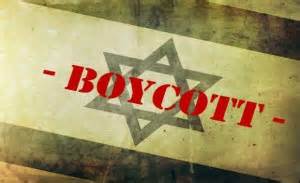
Al-Akhbar | December 5, 2013
The American Studies Association, a 60-year old US academic organization with 5,000 members, passed a resolution on Wednesday committing to the boycott movement against Israel.
Citing its commitment to “the pursuit of social justice” and to “the struggle against all forms of racism,” the ASA revealed in a statement published on its website that it had voted to support the academic Boycott, Divestment and Sanctions (BDS) movement against Israel.
“The American Studies Association endorses and will honor the call of Palestinian civil society for a boycott of Israeli academic institutions,” the statement read.
“The ASA supports the protected rights of students and scholars everywhere to engage in research and public speaking about Israel-Palestine and in support of the boycott, divestment, and sanctions movement.”
ASA noted the “significant role” played by the United States “in enabling the Israeli occupation of Palestine and the expansion of illegal settlements and the [apartheid] Wall in violation of international law, as well as in supporting the systematic discrimination against Palestinians, which has had documented devastating impact on the overall well-being, the exercise of political and human rights, the freedom of movement, and the educational opportunities of Palestinians.”
The BDS movement has gained traction over the past years, as a growing number of scholars and academic entities have committed to the cause.
More than 950 scholars working in American institutions have endorsed the US Campaign for the Academic and Cultural Boycott of Israel.
The Association for Asian American Studies became the first US academic organization to officially support the boycott movement in April.
In May, renowned physicist Stephen Hawking withdrew from an Israeli conference, citing his decision to respect the Israel boycott.
Apartheid State or Criminal Project? BDS or Resistance?
Compiled by Niqnaq | June 10, 2013
Partial List of NGOs Involved in BDS and Their Funders
NGO Monitor, Jul 14 2011
(Originally produced Apr 7 2010, updated Jul 14 2011)
| NGO |
Primary Funders | Funding Amount | Central Involvement |
| Addameer |
Sweden | €207,000 (2009) |
Signatory to 2005 BDS call (http://www.bdsmovement.net/) |
| NDC* | $127,000 (2010-12) | ||
| Al Haq | Holland | $426,201 (funding ceased in 2008) | Signatory to 2005 BDS call (http://www.bdsmovement.net/) |
| Ireland | $88,928 (2009) | ||
| Norway | $156,163 (2009, funding ceased) | ||
| Ford Foundation | $600,000 (2009-10) | ||
| Diakonia | $120,490 (2009) | ||
| NDC* | $134,000 (2010-12) | ||
| Al Mezan | Sweden | €105,000 (2007-9) | Signatory to 2005 BDS call (http://www.bdsmovement.net/) |
| NDC* | $425,000 (2010-12) | ||
| Norway, EU | funding not transparent | ||
| Alternative Information Center | Belgium | funding not transparent | ”Yes to Boycott, Divestment and Sanctions (BDS) Against Israel“ |
| ICCO | 434,024NIS (2009) | ||
| Sweden (via Diakonia) | 164,225NIS (2009) | ||
| Spain and the Basque gov’t (via MUNDUBAT) | 711,182NIS (2009) | ||
| Catalan gov’t (via Sodepau) | 173,271NIS (2009) | ||
| Alternatives (Montreal) | Canada | $2,000,000CAN (2008-10) (unclear if ceased) | Signatory to 2005 BDS call (http://www.bdsmovement.net/) |
| Applied Research Institute Jerusalem (PA) | EU | €374,174 (2009-11) | Signatory to 2005 BDS call (http://www.bdsmovement.net/) |
| Spain | €98,347 (2009) | ||
| Switzerland | funding not transparent | ||
| Badil (PA) | NDC* | $575,000 (2010-12) | Leader of BDS movement |
| Christian Aid | Ireland, EU | 24,521,692£ (2009-10) | “Partner supporting” calling for BDS and “pursuing parastata Zionist orgs” |
| Coalition of Women for Peace | EU | €247,954 (2005-7) | Runs “Who profits?” website, which is central in the Norwegian BDS campaign |
| NIF | $294,129 (2006-9)(funding ceased 2011) | ||
| Defence of Children International – Palestine Section | Sweden (via Save the Children) | 459,000SEK (2009-11) | Signatory to 2005 BDS call (http://www.bdsmovement.net/) |
| European Union | 600,000€ (2009-12) | ||
| NDC* | $639,000 (2010-12) | ||
| England | £12,500 | ||
| Diakonia | Sweden | $52.7 million (2009) | Advocates for divestment strategy against Israel, lobbies against EU-Israel upgrade |
| EU | 10,500,000SEK | ||
| Human Rights Watch |
Soros’ Open Society Institute | $2,353,895 (2007-8)$100,000,000 (2010-20) | Supported Caterpillar boycott, Call for cuts in U.S. foreign aid to Israel |
| Ford Foundation | $445,000 (2009-11) | ||
| Netherlands via Oxfam-NOVIB | $987,818 (2007-8) | ||
| Israel Committee Against House Demolitions (ICAHD) | Spain | €105,000 (2009) | Leader in BDS activism |
| NDC*EU | $76,000 (2010-12)€169,661 (2010-12) | ||
| KAIROS | Canada – funding was halted in 2009 | $1,575,966 (2008) | Main supporter of church divestment campaign |
| Machsom Watch |
EU | €251,650 (2007-2010) | Norwegian Pension Fund divestment campaign |
| NIF | $204,698(2006-9) | ||
| Miftah | EU | $79,906 (2010) | Signatory to 2005 BDS call (http://www.bdsmovement.net/) |
| Denmark | $28,077 (2010) | ||
| AustriaNDC* | $60,624 (2010)$110,000 (2010-12) | ||
| Mossawa | NIF | $517,642 (2006-8) | Norwegian Pension Fund divestment campaign |
| EU | €298,660 (2006-8) | ||
| UK | funding not transparent | ||
| Norwegian Association of NGOs for Palestine (incl. Norwegian People’s Aid) |
Norway | €57,000 (2008) | Coordinates Norwegian Boycott Israel Campaign |
| USA | €8,000 (2008) | ||
| Sweden, Netherlands | funding not transparent | ||
| Palestinian NGO Network (PNGO) | NDC* | $130,000 | Leader of BDS movement |
| Received France’s Human Rights Prize | |||
| Sabeel | Sweden | €76,000 (2006-8) | Leader of global church divestment movement |
| Trocaire | Ireland | €23,499,837 (2008) | Supports BDS movement, lobbies against EU-Israel upgrade, calls for review of arms export licenses |
| UK | €640,682 (2008) | ||
| EU | €1,698,692 (2008) | ||
| War on Want | UK | €256,000 (2008) | Advocates for sanctions, including arms boycott |
| Ireland | €77,000 (2008) | ||
| EU | €266,000 (2008) | ||
| Palestinian Center for Human Rights (Gaza) | NDC* | $425,000 (2010-12) | Leader of BDS movement |
| EU, Holland, Ireland, Norway, Denmark, Switzerland, Sweden | funding not transparent |
*The NDC mechanism is the Human Rights and Good Governance Secretariat, established and funded by Switzerland, Sweden, Denmark, Netherlands, and managed by the NGO Development Center in Ramallah. Governmental funding provided in 2008-2013.
BDS, For Whose Sake?
Daniel Mabsout, Deliberation, Mar 2 2013
Our concerns with organizations like BDS is not mainly because of what they say or what they do or the kind of affiliations they have. Our concern is that BDS and EI and other organizations as well are speaking in the name of the cause and acting on behalf of Palestinians to the point of preventing others from having a say in the matter. In other words, BDS wants to solve the Palestinian problem in its own way and has embraced for this reason anti Apartheid policies under the attractive label of Boycott, Divest and Sanction, trying to suggest that these policies that were presumably successful regarding the Apartheid state of South Africa could also reap the same success on the Palestinian front. We will not discuss the success of these policies in South Africa and whether the goals of the revolution were attained, but we will shed a light on the implications of such endeavor on behalf of BDS on the Palestinian Cause itself in terms of internationalization and globalization of the cause, something that Arabs and Palestinians always feared. This is due to the involvement of such NGOs like BDS and its like in global policies and World Order agendas, due to the financing they get from European governments and other institutes, which make them serve the World Order at the expense of Palestinians. Our conclusion is that because of its financial affiliations BDS does not qualify to solve the Palestinian problem, because one cannot serve the World Order and Palestine at the same time. This, not to speak of the fact that Israel is not an Apartheid and Palestinians do not suffer from segregation alone. Palestinians need to go back to their homes and retrieve their land, they need to get in possession of what is theirs and whoever thinks that this thing can be achieved by economic pressures and anti racist policies alone must be an ignorant or a fool. This is Israel, my friend, this is not Apartheid and there is nothing like it. This is not some elephant that has gone mad, this is madness itself. This is the usurping state of Israel, the most advanced military base of the criminal World Order, this is all predator countries joined together from Europe to the New continent, this is a state that orders the United Nations and many other Nations as well, the country that kills and slaughters and never fears sanctions, that commits genocides without hesitation, that wants to kill each and every Palestinian and each and every Arab who will not normalize or recognize. This is Ariel Sharon and Golda Meir and Tsipi Livni, this is not Apartheid. This has no other label in all seasons and instances other than that of criminal. This is the criminal state of Israel and is supported by the whole world order and will outwit and outsmart Barghouthi and Abunimah and all NGOs joined together.
Let us assume that BDS is working earnestly for Palestinians and conducting these activities for the sake of the cause, at the exclusion of others, and in order to solve the Palestinian issue as it pretends, what has it achieved on the ground for Palestinians since its foundation in 2005? Has it stopped the expansion of Israel in any way? Has it stopped the colonization and the proliferation of settlements? Has it stopped the eviction of Palestinians and demolition of their houses? Has it freed the prisoners from their prisons? Has it relieved Gaza from its siege? Has it done away with the wall of segregation? Has it stopped the flow of weapons and money destined to Israel? Has it worked against normalization? Has it retrieved any of Palestinian rights? Has it protected Jerusalem? Has it improved in any way the lives of Palestinians? The answer to all this is NO. BDS has not achieved anything of this and has not harmed in the least Israel’s economy or welfare. This is what speaks volumes for BDS. If one wants to rejoice over the boycott of such and such company or of such singer and dancer, or over boycotting West Bank dates, one can do that and one can boycott if one wants and this does not need BDS, this needs personal commitment on one’s behalf. Boycott is good but Boycott cannot retrieve Palestine, nor defeat Israel, nor bring back the people to their land and to pretend otherwise is to cheat people. BDS should be exposed for what it is: A World Order Organization financed by the World Order and working under the banner of Palestine, pretending to be in charge of the cause while achieving nothing for Palestinians. The merit of such organization, and other NGOs as well in the eyes of the World Order, lies in giving up the armed Resistance as a choice and a means for liberation and in alienating the Arab masses and people from the victories achieved by this Resistance. This attitude of shunning the victorious Resistance that defeated Israel benefits Israel in the first place and sheds a light on whom BDS really serves. Meanwhile Israel is given enough time to recover from its two consecutive defeats and to figure out and plan its next scheme of occupation expansion and extermination. THANK YOU BDS!
BDS AMBIVALENCE
Daniel Mabsout, Deliberation, Mar 7 2013
People following BDS activities and functions should be informed about the latest innovation of the BDS movement (BOYCOTT DIVEST SANCTION) whereby the BDS has adopted two different versions of its amendment, one in English and one in Arabic, and the funny thing is that they say two different things: the one in English calls for ending occupation of the Palestinian territories occupied in 1967, and the one in Arabic calls for ending occupation of the Palestinian territories full stop. It is important to say that BDS boasts about grouping 170 organizations and Palestinian movements and is supposed to be accountable before them. Instead, it has adopted a different English version from the original one, in which it recognizes the legitimacy of Israel within the 67 borders and asks Israel to withdraw only from the land occupied in 1967 and this without informing the organizations that work with it about this change. The original text in Arabic though that asks for ending the occupation of all Palestinian territories remained unchanged for some mysterious reason. BDS is required on the spot to explain this duplicity and why it has adopted two versions of the same thing in two different languages and two radically different stands? Why is it addressing the Arab public in one way and foreigners in another recognizing Israel in one instance and calling for ending occupation in the other? What is the goal behind this misleading policy of adopting two antagonistic stands and whom is this supposed to serve? Or are they both fake and meant to mislead people? Either BDS is betting on the ignorance and the stupidity of people which is stupid and ignorant or it is working on a separate agenda that does not give importance to these “Palestinian” details?
http://bdsarabic.net/نداء-2005/
http://www.bdsmovement.net/bdsintro
BDS, Boycott The Armed Struggle
Daniel Mabsout, Deliberation, Mar 9 2013
The birth of the Boycott movement that started the PCACBI happened at a crucial moment in year 2002, after Israel has been defeated and its vulnerability exposed due to losing the first war since its foundation. The Resistance had triumphed and succeeded in liberating Lebanon and called Palestinians to get inspired from the Lebanese victory and resume the struggle in Palestine to achieve a similar result. It is around this time some strange hybrid started taking birth in the West Bank under the name PCACBI, which is a boycott campaign following the South African model. Not only PCACBI never related to this victory over Israel, but broke suddenly with a whole tradition of armed resistance that marked the Palestinian struggle. Recognizing the right of Israel to exist, the PCACBI asks for withdrawal to the 67 borders and dismantling of settlements and for the right of return of refugees, and calls for application of boycott policies, namely cultural and academic, against the Apartheid state of Israel. Mind you, this boycott called for by the PCACBI never followed the usual channels of Boycott as prescribed and carried on by the Arab League and applied by Arab governments. Who ever wants to consider the birth of such a movement, that took place in the West Bank, as a natural birth must check himself and ask himself why this movement has broken with the Palestinian armed struggle in general and why, instead of getting inspired from the first military victory achieved over Israel, endorsing it, investing in it and identifying with it, chose to travel to South Africa and draw parallels with the previous Apartheid state and project this Apartheid on the Palestinian condition. Founded by a handful of Palestinian academicians and intellectuals, some of them living abroad, the boycott movement does not seem to represent Palestinians in general, but seems to be removed from the Palestinian social and cultural reality and connected to foreign groups instead, mostly located outside. The public addressed by this movements is not native Palestinian, and no refugee living in camps can identify with this anti Apartheid trip. This has a foreign audience, no doubt, that includes Jews as well. The actual BDS movement that is a product of the PCACBI is oriented the same way towards foreigners, and even if it is endorsed by Palestinian societies, these societies are mostly NGOs with foreign affiliations. So we are at the same point we started from. BDS came to add more confusion to the whole thing and while the PCACBI was clear in its objectives regarding the recognition of Israel within the 67 borders, the BDS remains indecisive as to what territories Israel is supposed to withdraw from, whether the 67 or the whole Arab land, sometimes being specific sometimes not. This fluctuation may be due to a fluctuating agenda that wants to cater to all tendencies and affiliations. As for the refugee issue, it is being stated in confusing terms, whereby the issue is to be promoted, protected and respected instead of being enforced on Israel. In what way this whole boycott trip is beneficial to the cause we don’t know. Certainly it is beneficial to Israel to become recognized so broadly as a legal state. Because of this, the whole Apartheid story seemed to be one of the designs of the enemy as a means to acquire recognition and as an alternative to the military option that has failed drastically in Lebanon and, finally, what is left to be known is whether this boycott is as harmful to Israel as is to Palestinians the forsaking of the armed struggle. What BDS wants to boycott, finally, under the attractive label of boycott, is the armed struggle itself.
Is Palestinian Solidarity An Occupied Zone?
Daniel Mabsout, Deliberate, Mar 10 2013
BDS OR RESISTANCE / THE LESSON THAT WAS OMITTED
The BDS was born in a hybrid womb, that is not an Arab womb but an Israeli foreign womb, after Sayyed Hassan Nasrullah celebrating the liberation of the South in year 2000 stood in Bint Jbeil in south Lebanon in the proximity of occupied Palestine and addressed the Palestinians thus, offering them the victory over Israelis, saying: “People of Palestine, your way to Palestine and to liberty is the path of resistance and insurrection, which means a serious resistance and a real insurrection rather than the insurrection in the shadow of Oslo or in the service of the concessive negotiation in Stockholm. You should take the path of the insurrection and the resistance that only accept the perfect right, as Lebanon has done, whereby the whole Lebanese people refuse to keep a small part of their land occupied. Hence, we offer this noble Lebanese model to our people in Palestine.” This happened in Year 2000, in the glorious victory over the Israelis after 18 years of occupation. Sayyed Hassan Nasrullah added, addressing Palestinians: “To free your land, you don’t need tanks, a strategic balance, rockets, and cannons; you need to follow the way of the past self-sacrifice martyrs who disrupted and horrified the coercive Zionist entity. You, the oppressed, unarmed, and restricted Palestinians, can force the Zionist invaders to return to the places they came from. Let the Falasha go to Ethiopia, and let the Russian Jews return to Russia. The choice is yours, and the model lies right in front of your eyes. An honest and serious resistance can make the freedom dawn arise. Our brothers and beloved Palestinians, I tell you, ‘Israel’, which owns nuclear weapons and the strongest war aircraft in the region, is feebler than a spider’s web. I swear to God.” Two years after this fiery speech was born the Boycott movement in the West Bank, where the whole achievement of the Lebanese Resistance was overlooked and their addressing on behalf of Sayyed Hassan totally ignored and his invitation to copy the successful model of the Resistance totally discarded. The answer to Sayyed Hassan invitation was the Boycott movement whereby, instead of turning to Lebanon and getting inspired from the Lebanese victory, the Boycott turned to South Africa to copy the anti Apartheid model replacing the real with the unreal and the resistance by surrender, If this is not an Israeli scheme, then what is it? The whole speech of Sayyid Hassan in English:
http://www.english.moqawama.org/essaydetails.php?eid=14178&cid=231
Partial List Of Endorsers And Financers Of BDS
Daniel Mabsout, Deliberation, Mar 11 2013

BEFORE YOU EMBARK ON AN ENDEAVOR SEE WHO SITS IN THE DRIVER’S SEAT
The enemy nowadays is coming dressed in many garbs. He has been acquainted with our ways and learned about our tastes. This whole Arab spring was possible because the enemy knew how to cater to our tastes. He knew about our longings and he addressed them. Thus, the whole Arab Spring was a deceit. It turned into a shabby winter, into instability and chaos and social unrest. In Syria it turned bloody and destructive and is still going on causing more bloodshed and more destruction. The enemy knows how to cater to our tastes, and we should not fall an easy prey to its schemes and designs. Look at the international solidarity movement around Palestine and the role of internationally affiliated NGOs. Look at how the cause is being slowly and surely liquidated in a process of total globalization. Look at the attractive labels used by these NGOs of Boycott and Protests and Dismantle of the wall and Freedom for prisoners and Jerusalem and Apartheid and you name it. What is happening in Palestine is NGO work and supporters of the cause are falling for them. The Palestinian Organizations and factions whose emblem is armed struggle have lost their role in favor of NGOs and are losing slowly their say in many matters related to Palestinians. What can NGOs do to the cause? What are NGOs doing? Are they progressing with the cause? Are they improving the living conditions of Palestinians? What are their achievements on the ground? Do they carry exclusively a Palestinian agenda or they carry different ones? In order to answer this question about NGOs and whether they qualify to lead the Palestinian cause, as they claim, there is but one way and it is to look at how they are financed. Tell me who funds you and I will tell you who are, the money one gets will decide for the orientation of the whole endeavor, I think we all agree on that. Please find in this partial list the financers of the endorsers of the Boycott movement called BDS which is waging for anti Apartheid policies, see if the financers are real supporters of the cause or whether they support something else, like Israel for example, and decide for yourself whether BDS and other NGOs qualify to lead the cause.
Come Join The Apartheid Show My Friend!
Daniel Mabsout, Deliberation, Mar 12 2013
Palestine has become an entertainment, if you are not aware. The plight of the people, the suffering, the homelessness, the abuse, the violations, the massacres and the incarcerations, the shelling, the siege and the occupation have become source of entertainment funded by Soros and company. And this has acquired a new name and is no more Palestine. It has become Apartheid, if you know what Apartheid is. So now when you think Palestine you ought to think Apartheid. Thus you have to remove yourself from the Arab and Palestinian Reality to the magic land of Apartheid, the fictitious place called Apartheid where you are no more yourself but a magic character in one of Soros’ fairy tales. Apartheid is the Disneyland Soros has especially designed for Palestinians with its full show of BDS (Boycott, Divest and Sanction) conducted by Palestinian NGO Omar Barghouthi who refuses to apply the rules of Boycott himself since he is a registered student at Tel Aviv University. The circus is then running and the show designed for Palestine is the Apartheid Show. And it is Soros who is funding the show so that, when you boycott, it is on behalf of Soros that you are boycotting, and when you divest or sanction it is on behalf of Master Soros that you are doing so. This is how Palestinians can at last make a living, by handing their cause to Master NGO. From One city to another the Apartheid Show seems flourishing and is organizing a week in Beirut, and Soros will be speaking and performing and exhibiting through many people, artists and poets and speakers some of them notorious fighters for the cause like Leila Khaled herself. Bravo Apartheid! And it sounds so well, “Apartheid”, especially when one has grown tired of repeating uselessly the same old words of occupation and violation and massacres and extermination. Apartheid comes in handy; one can figure oneself in some Hollywood production, in an altogether different story and setting that will appeal to many people.
And the foreigners can now join in and jump in the Apartheid boat, as they jumped previously in great numbers in the Flotilla boats, without succeeding in lifting the siege from Gaza. Now, in the Apartheid boat, they can show their solidarity to the Palestinian Cause, which they could never show to the successful armed Resistance or to the victorious Hizbullah of Lebanon who defeated Israel and liberated the land without concession. But it is too costly to salute the Armed Resistance and to embark on a strange trip to a strange land, a Muslim land. And who knows if one will not end up in Iran, for example, in “theocracy” land with hateful Mullahs all over the place, or in HAMAS land. This Apartheid thing is much safer and not too costly for Israel. With Apartheid one can identify, and see in it the continuation of the premises of peace as introduced by Gandhi and his likes and embraced by most westerners worried more about Israel’s safety than about Palestinians’ rights. Apartheid is the Model and the parallel that the World Order has projected on the Palestinian Cause, not in order to solve it according to the South African model, but in order to leave it pending with no solution, because Israel is not an Apartheid. All this turbulence of boycotting dancers and singers and musicians and boycotting companies and academicians and students is but a maze that will lead to nowhere and definitely not to the liberation of Palestine or to the restitution of any of the Palestinian rights. This is nothing but blurring the vision and giving Israel more time to continue its scheme of occupation and domination. By the time Palestinians finish their performance in the West Bank streets and finish coloring and dancing in front of the wall of separation, Israel would have finished carrying on its evil schemes of hegemony and expansion. This is the Apartheid show, nourished by the World Order, after the Arafat show nourished by oil money, and it will bear the same bitter fruits in terms of recognition and normalization with the enemy and liquidating the cause itself.
The Undefined Purpose Of BDS
Daniel Mabsout, Deliberation, Mar 13 2013
Let’s read thoroughly the Arabic BDS text which is the original text as it was written in year 2005. The text says literally that Israel should submit to the International Law and this in:
- Ending the occupation and colonization of ALL Arab land and dismantling the wall.
- Recognizing the fundamental right of Arab Palestinian citizens to full equality.
- Respecting, protecting and promoting the right of the Palestinian Refugees to return home as stipulated in UN resolutions.
This is the original version, which is a confusing version, because it gives the impression that Israel is to withdraw from all Arab land, and if it were to withdraw from all Arab land, to where would it withdraw? To the sea? To Europe? While in fact what is meant is that it will withdraw from certain Arab territories, probably those that will be decided upon by the world order or the peace talks. The territories to be evacuated turned out to be the lands occupied in 67, but if withdrawing from all Arab land was meant in the first place, then also the 2nd and 3rd amendment would be irrelevant. This means that the BDS is not a serious movement with precise goals and objectives, and the Recognition of Israel within its 1948 borders goes back to the foundation of the BDS movement in 2005, because the withdrawal from the 67 occupied land that showed up 8 years later in the English version was already implicit in the original version even if not clearly expressed. What remains to be known is why BDS has chosen to be explicit about this matter in the version addressed to its foreign audience at this time precisely, while the Arabic text retained its original confusing statement of ending occupation of all Arab land. BDS had nothing precise in its mind, no position and no ideology, which is quite surprising for a liberating movement that wants to retrieve Palestinians’ rights. BDS is waiting for others to determine their position and then take a stand accordingly. For this BDS cannot lead nor speak for the Palestinian Cause because it has no authority or independent position.
The 9th Annual Israeli Apartheid Week 2013
Announcing 9th Annual Israeli Apartheid Week (Feb-March 2013)
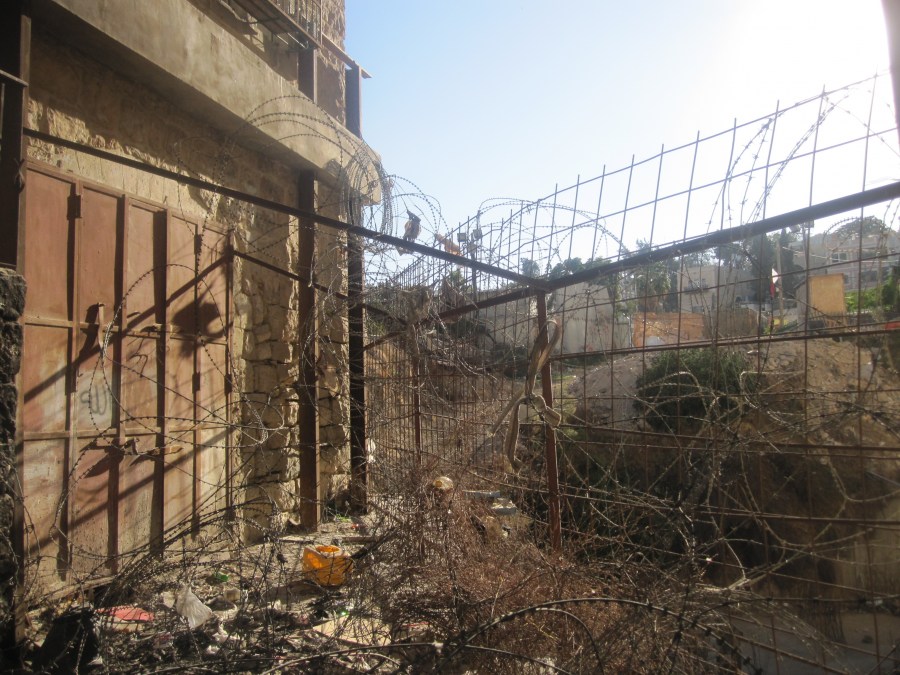 We are excited to announce the upcoming 9th annual Israeli Apartheid Week (IAW) starting late February in Europe and moving to various countries through the month of March.
Israeli Apartheid Week (IAW) is an annual international series of events (including rallies, lectures, cultural performances, film screenings, multimedia displays and boycott of Israel actions) held in cities and campuses across the globe. Last year’s IAW was incredibly successful with over 215 cities participating worldwide.
IAW seeks to raise awareness about Israel’s apartheid policies towards the Palestinians and to build support for the growing Boycott, Divestment, and Sanctions (BDS) against Israel campaign.
To accommodate various university schedules and cities from around the world, IAW will take place in slightly different weeks but all in the months of February and March. Here is a list of dates for regions confirmed so far:
Europe: February 25 – March 10
Palestine: 8-15 March
United States: March 4 – 8
Canada: March 4 – 8
South Africa: March 11 – 17
If you would like to organize and be part of Israeli Apartheid Week on your campus or in your city please get in touch with us at iawinfo@apartheidweek.org. Also find us on Facebook and Twitter.
HOW YOU CAN GET INVOLVED DURING IAW
IAW offers ordinary people around the world an opportunity to partake in something truly global. If you would like to get involved and organize your own IAW event or action let us know so that we can share with you the IAW Basis of Unity and organizing principles. Here are some ways that you can actively get involved:
1. Organize a film screening
Consider hosting a film. For more info or for suggestions contact us at iawinfo@apartheidweek.org
2. Arrange a lecture, workshop, rally or protest
There are many speakers ranging from academics, politicians, trade unionists and cultural activists that we can suggest for you to host. Be in touch with us and we can put you in contact.
3. Organize a BDS action
Organize with others a practical boycott of Israel action or have a BDS motion tabled at your relevant student council, municipality etc.
4. Join us online
Help us spread the word online about Israeli Apartheid Week
5. Be creative
Be creative! Draw attention to Israeli apartheid with a Mock Israeli Apartheid Wall or Checkpoint, a flash mob, a concert or poetry reading, street theater, protest etc.
Related articles
South Africa’s ruling ANC officially endorses Palestine’s boycott movement
Al Akhbar | December 21, 2012
South Africa’s ruling party has officially endorsed Palestine’s Boycott, Divestment, and Sanctions campaign against Israel, making it the first major non-Muslim political faction to throw its weight behind the nonviolent resistance movement.
The African National Congress issued a resolution in support of the boycott campaign making it a part of its official policy, and specifically called for “all South Africans to support the programmes and campaigns of the Palestinian civil society which seek to put pressure on Israel to engage with the Palestinian people to reach a just solution.”
A press release issued by activist group BDS South Africa called the move “the most authoritative endorsement of the Boycott, Divestment and Sanctions (BDS) against Israel campaign.”
Previous moves to support Palestine’s nonviolent resistance movement from state actors have restricted their backing to the boycott of Israeli settlements, shying away from targeting the Jewish state. In September, the Irish parliament voted to ban Israeli settlement imports. Earlier this month, an Israeli newspaper reported that the EU was looking into boycotting settlement goods, after Israel defied calls to stem construction of the illegal houses.
Another clause of the resolution lashed out at Israel’s mistreatment of Africans, which culminated in the mass deportation of South Sudanese this year: “The ANC abhors the recent Israeli state-sponsored xenophobic attacks and deportation of Africans and request that this matter should be escalated to the African Union.”
The move is the latest in a series of actions by the ANC to pressure Israel into ending the Jewish state’s racist policies, particularly against indigenous Palestinians.
This August, South Africa’s Deputy Foreign Minister Ebrahim Ebrahim advised South Africans not to travel to Israel “because of the treatment and policies of Israel towards the Palestinian people.”
Palestine activists have long worked to draw attention to parallels between South Africa’s apartheid period and Palestinian repression under Israel’s ethno-religious-exclusive government system. Palestine’s BDS movement is said to be largely inspired by South Africa’s own boycott movement, which is credited with playing a major role in dismantling apartheid in that country in 1994.
South African Apartheid was declared official policy in 1948, the same year the state of Israel was created and thousands of Palestinians were expelled or put under martial rule.
In 2005, Palestinian civil society issued a call for a campaign of boycotts, divestment and sanctions against Israel until it complies with international law and Palestinian rights. The launch followed a historic ruling at the International Court of Justice that Israel’s apartheid wall, which greatly restricts movement in the West Bank and expropriates large swathes of Palestinian land, be demolished.
The BDS movement has garnered support from activists and labor unions worldwide, as well as from a growing list of artists, including Roger Waters, Elvis Costello, Santana, Cat Power and the late Gil Scott Heron.
Full BDS South Africa Press release
MEDIA RELEASE: S. Africa’s ruling party, the ANC, reaffirms boycott of Israel resolution
South Africa’s ruling party, the African National Congress (ANC), at its 53rd National Conference, reaffirmed a resolution supporting the Palestinian Boycott, Divestment and Sanctions (BDS) against Israel campaign.
In October 2012, the ANC’s International Solidarity Conference (ISC) declared its full support for the Boycott, Divestment and Sanctions (BDS) against Israel campaign (ISC Declaration, page 2, point 10).
Today, Lindiwe Zulu (member of the ANC’s International Relations Sub-Committee and special advisor to President Jacob Zuma) announced at the ANC’s 53rd National Conference plenary session, the ANC’s official endorsement, as captured in Resolution 39 (b), of the ANC’s October International Solidarity Conference (ISC) and all its resolutions, which includes a resolution on BDS. Giving muscle to resolution 39 (b), the ANC has committed to set up a steering committee to implement these ISC resolutions.
In addition, the ANC adopted resolution 35 (g) that specifically called for “all South Africans to support the programmes and campaigns of the Palestinian civil society which seek to put pressure on Israel to engage with the Palestinian people to reach a just solution.” In 2005 Palestinian civil society issued a call to the international community for a program and campaign of boycott, divestment and sanctions (BDS) to be applied against Israel as a way to pressure Israel to end its violations of international law, respect Palestinian human rights and engage in fair negotiations for a just peace.
Mbuyiseni Ndlozi of BDS South Africa welcomed today’s decision: “This reaffirmation by the ANC’s National Conference, its highest decision making body, is by far the most authoritative endorsement of the Boycott, Divestment and Sanctions (BDS) against Israel campaign. The ANC has now taken its international conference resolutions, and officially made it the policy of the ANC. We look forward to working with the ANC and specifically the ISC steering committee to expedite its implementation.”
Another hard-hitting decision on Israel that was adopted by the ANC was resolution 35 (j): “The ANC abhors the recent Israeli state-sponsored xenophobic attacks and deportation of Africans and request that this matter should be escalated to the African Union”. In June this year Israeli anti-African protests turned into full-fledged race riots. Israeli racism and xenophobia against Africans is shared and even encouraged by Israeli politicians including the Israeli Prime Minster, Benjamin Netanyahu, who has said: “If we don’t stop their [African immigrants’] entry, the problem that currently stands at 60,000 could grow to 600,000, and that threatens our existence…and threatens the social fabric of society.” Israel’s Minister of Interior, Eli Yishai, has said that African immigrants “think the country doesn’t belong to us, the white man.” And the Israeli parliamentarian, Miri Regev, has publicly compared Sudanese people to “a cancer”.
Finally, in a blow to the Israeli lobby, the ANC also adopted resolution 35 (c) stating: “The ANC is unequivocal in its support for the Palestinian people in their struggle for self-determination, and unapologetic in its view that the Palestinians are the victims and the oppressed in the conflict with Israel.” In the build up to the ANC’s National Conference the Israeli lobby, including the South African Jewish Board of Deputies, demanded a “balanced” and “nonpartisan” rather than a decisive and solidarity role by the ANC in the Palestinian-Israeli issue.
ISSUED BY MBUYISENI NDLOZI FOR BDS SOUTH AFRICA
Related articles
Quakers Divest from Veolia and Hewlett Packard
By Anna Baltzer | US Campaign to End the Israeli Occupation

The US Campaign is thrilled to announce that the Quaker Friends Fiduciary Corporation (FFC) has become the first U.S. national fund to divest from Hewlett-Packard (HP) and Veolia Environment following concerns expressed by Palestinian rights advocates about the companies’ involvement in the Israeli occupation. At last count, FFC held investments of more than $250,000 in HP and more than $140,000 in Veolia.
FFC handles investments for over 300 Quaker meetings, schools, organizations, trusts, and endowments around the U.S., with over $200 million in assets. According to the Executive Director of FFC, Hewlett Packard was dropped for providing information technology consulting services to the Israeli Navy, while Veolia Environment was removed due to “environmental and social concerns.”
The decision followed advocacy from member group Palestine Israel Action Group of the Ann Arbor Friends Meeting (AAFM), which also successfully urged FFC to divest its $900,000 in Caterpillar shares in May. FFC has a “zero tolerance for weapons and weapons components” and said, “We are uncomfortable defending our position on this stock.” Caterpillar produces and sells bulldozers to Israel that are weaponized and used to violate Palestinian rights and destroy Palestinian homes, schools, hospitals, olive groves, and lives.
The US Campaign commends AAFM and FFC, which made its recent decision, in line with FFC’s principled commitment to investment in companies that “contribute positively to a peaceful, sustainable world.”
HP maintains a biometric ID system used in Israeli checkpoints for racial profiling; manages the Israeli Navy’s IT infrastructure; and supplies the Israeli army with other equipment and services used to maintain its military occupation. Veolia is involved in a light rail linking illegal Israeli settlements with cities in Israel; it operates segregated bus lines through the occupied West Bank; and it operates a landfill and a waste water system that dumps Israeli waste on Palestinian land.
2012 will truly be remembered as a landmark year of victories in the global campaign to hold corporations accountable for profiting from Israel’s violations of Palestinian human rights and international law:
Earlier this month, the dining services of Earlham College, another Quaker institution, stopped selling Sabra products in response to concerns from students and faculty about the company’s links to the Israeli army. Other campuses have de-shelved Sabra recently. BDS (Boycott, Divestment, Sanctions) Earlham, a member group of the US Campaign, continues its exciting campaign to convince the college to divest from Caterpillar, Motorola, and HP.
Shortly thereafter, the Student Union of the massive University of California (UC) system voted to protect students’ rights to advocate BDS on campus and demanded that UC stop profiting from Israel’s abuses of Palestinian rights. The motion passed by a vote of 12 to 0 (with 2 abstentions).
And of course, Morgan Stanley Capital Investment decided this year to remove the company from its list of socially responsible companies, prompting financial giant TIAA-CREF to divest more than $72 million in Caterpillar shares previously held in TIAA-CREF’s Social Choice Fund (though the company still holds Caterpillar shares in other funds). This was a major victory for the We Divest Campaign, the largest coalition-led U.S. divestment campaign in the country, which calls on TIAA-CREF to divest from companies involved in the Israeli occupation, including Veolia and HP.
These are just a few of the extraordinary victories this year in the movement to end U.S. institutional support for Israel’s violations of Palestinian rights. Many more are surely on the way, as many campaigns forge ahead. This Thursday, September 27, 2012, the Minnesota Court of Appeals will hear arguments in an appeal brought by member group Minnesota Break the Bonds Campaign against the Minnesota State Board of Investment. In the California Bay Area, a new campaign to Stop HP — led by member groups Friends of Sabeel, UC Berkeley Students for Justice in Palestine, Bay Area Campaign to End Israeli Apartheid, American Friends Service Committee, Global Exchange, Middle East Children’s Alliance, Jewish Voice for Peace and others — is collecting pledges from individuals and organizations to boycott the company until it ends its complicity with the Israeli occupation.
Let’s continue to show our support for corporate accountability by clicking here to thank FFC for divesting from Veolia and HP!
Related articles
- Irish parliament pushes for ban on illegal Israeli products (alethonews.wordpress.com)
- OCHA: Israeli occupation destroys 13 houses weekly in West Bank (alethonews.wordpress.com)
- In Response to Student and Faculty Concerns, Earlham College’s Dining Services Decides to Stop Selling Sabra Products (bdsmovement.net)
US student body backs divestment from Israel
Al Akhbar | June 5, 2012
The student body of an American university has become the latest Western institution to back divestment from companies involved with the Israeli army.
Arizona State University’s student union unanimously passed a bill demanding the university divest from and blacklist companies that continue to provide the Israeli army with weapons and militarized equipment.
Among the companies that work with the Israeli army are Boeing, Motorola, United Technologies, Petrochina, Sinopec, and Alstom.
A statement from the university’s student body said the decision was part of a wider movement to encourage Western companies to stop supporting the occupation of Palestinians.
“This announcement, coming on the last day of the 2012 school year, is another victory in the global call for Boycott, Divestment, and Sanctions (BDS) on Israel as well as other global solidarity movements calling for the end to human rights violations.”
“Arizona State University, a university with an endowment of over US$735 million, aspires to be the ‘New American University’ with globally engaged students. We, students, at ASU want our university to make socially responsible investment decisions; we also want ASU’s investments to reflect its values as an institution.”
Omar Barghouti, a human rights activists and co-founder of the Boycott, Divestment and Sanctions (BDS) campaign, hailed the decision as the beginning of a wider anti-Israel campaign at US universities.
“This qualitative BDS victory is truly inspiring as it opens the door to similar measures across US and possibly European campuses,” he said.
“As the BDS movement has shown in the cases of Veolia, Alstom, G4S and Adidas, the price of corporate complicity in Israel’s grave and persistent violations of international law is steadily – and rapidly – going in one direction: upward.”
The BDS campaign has been targeting institutions and companies directly involved with Israel’s occupation, which many activists consider as apartheid, for a number of years.
Inspired by the international boycott of apartheid in South Africa, BDS aims to mimic a similar worldwide movement to pressure the Jewish state to end its oppression of indigenous Palestinians.
Related articles
- South Africa university pulls plug on Israeli Embassy (alethonews.wordpress.com)
- UKZN cancels Monday’s Israeli lecture by Israeli’s deputy ambassador to South Africa in Support of BDS against Israel (windowintopalestine.blogspot.com)
South Africa university pulls plug on Israeli Embassy
MEMO | May 21, 2012
South Africa’s University of KwaZulu-Natal (UKZN) has pulled the plug on the Israeli deputy ambassador to South Africa, Yaakov Finkelstein. This is yet another blow to Israel-South Africa relations that have recently become tense.
Finkelstein was due to speak at UKZN later on today, Monday (21 May 2012), but yesterday afternoon, UKZN’s Deputy Vice Chancellor, Professor Joseph Ayee, sent an email informing his staff that he has cancelled the lecture:
“I have re-considered the sensitivities that the visit of the Israeli Deputy Ambassador have generated. Given the negative publicity that the visit will give UKZN, I hereby cancel the visit and the lecture by the Israeli Deputy Ambassador scheduled for tomorrow, Monday, 21 May 2012….[the Israeli ambassador will bring] likely reputational damage for the institution [which] is not in the interest of all of us.”
Professor Ayee’s announcement came after the university was called on by students and staff to cancel the hosting of Finkelstein as it would have violated the “academic boycott” of Israel. Palestinians issued a call to the international community in 2005 for a program of Boycott, Divestment and Sanctions against Israel until Israel abides by international law and basic human rights.
Early last year, another SA University, the University of Johannesburg, became the world’s first university to impose an academic boycott on Israel by ending its institutional relation with Israel’s Ben-Gurion University. In addition several student movements, including the South African Students Congress (SA’s largest and oldest studdent body), have publicly backed the academic boycott and BDS call.
UKZN School of Social Sciences senior lecturer, Dr Lubna Nadvi commented:
“This is a positive and encouraging move by UKZN. Israel is fast becoming a pariah state, like Apartheid South Africa did, that no one really wants to be associated with – including academics and students. It can be safe to assume that UKZN’s cancellation represents the general sentiment among students and staff”.
Related articles
- South African Artists Against Apartheid a Declaration (windowintopalestine.blogspot.com)
Featured Video

Pax Judaica Explained | Prof. David Miller
or go to
Aletho News Archives – Video-Images
From the Archives
History and Biblical Scholarship: Al-Quds Is Not Jerusalem
By Dr. Elias Akleh | Global Research | July 3, 2018
The Zionist Israeli state calls on the Old Testament/Torah as a historical document to prove its legality to “re-claim” Palestine; their god’s promised land. To assert this legality and the myth of the promised land Zionist Organization, since its establishment, had recruited the science of archaeology, employing western Christian biblical archaeologists, to provide the required “historic” proof of the right of the Jews; alleged modern Israelites, to Palestine. This became very critical after Julius Wellhausen; the biblical scholar and Professor Ordinarius of Theology and head of the German School of Biblical Criticism, published his 1883 book “Geschichte Israels”, later titled as “Prolegomena zur Geschichte Israels” claiming that the Old Testament/Torah stories were invented during the Babylonian exile to serve certain theological and political purposes.
American biblical scholars and archaeologists, such as William Fox Albright, were recruited to refute Wellhausen’s claims. Albright was endorsed by covertly Zionist financed Biblical Colloquium; a scholarly society devoted to the analysis and discussions of biblical matters, and the preparations, publication, and distribution of biblical literature to brainwash readers and students with a specific theological ideology. Albright, as well as other biblical archaeologists like him, was also honored (bribed) by the American Friends of the Israel Exploration Society. His writings; such as “Why the Near East Needs the Jews”, are flagrant racist Zionist propaganda ignoring the vast archaeological history of the indigenous Palestinians while emphasizing the fake unproven Israelites’ narrative in Palestine. … continue
Blog Roll
 Aletho News
- Israeli FOIA Data Reveals Massive Heart Injury Spike in Children Immediately After mRNA Shot Rollout
- What is Zionism? And what is anti-Zionism?
- Hungary’s Blocking of EU Loan to Ukraine May Jeopardize IMF Funding – Reports
- Pax Judaica Explained | Prof. David Miller
- Was MAHA Too Good to Last in the Trump Administration?
- Vermont advances bill letting unelected Health Commissioner decide which vaccines ctizens should receive
- Why the US-Israeli alliance will lose against Iran
- US envoy Huckabee claims Israel has ‘biblical right’ to conquer all West Asia
- Testing the Alliance: Netanyahu’s Washington Visit
- Britain is once again poisoning peace diplomacy with Russia and fueling war in Europe
- If Americans Knew
- Palestinian church leaders admonish Christian Zionist Mike Huckabee – Not a ceasefire Day 135
- Ominous messaging from Trump’s “Board of Peace” – Not a ceasefire Day 134
- ‘Christians Out’: Jerusalem Church Tagged With Hate Graffiti, Police Investigating
- Israeli Settlers Kill American Teen
- ‘We returned from hell’: Palestinian journalists recount torture in Israeli prisons
- No mercy for Gaza in Ramadan – Not a ceasefire Day 133
- The Israeli Government Installed and Maintained Security System at Epstein Apartment
- Tucker Carlson interrogated in Israel, has passport seized after interviewing US ambassador
- 6,000 Amputees in Gaza Face Impossible Recovery amid Israeli War Ultimatum
- The Lancet: Gaza death toll far higher than reported – Not a ceasefire Day 132
- No Tricks Zone
- Germany: Electric Car Catches Fire At Charging Station, Sets Off Local “Inferno”, Widespread Damage
- New Study: Canada’s New Brunswick Was 1°C Warmer Than Today During The Medieval Warm Period
- Coal Power Back In Trend As Globe Tries To Keep Pace With Growing Demand For Power
- New Study: A 4°C Warmer Beaufort Sea Had ‘No Sea Ice’ 11,700 – 8200 Years Ago
- Unfudging The Data: Dutch Meteorological Institute Reinstates Early 20th Centruy Heat Waves It Had Erased Earlier
- German Gas Crisis…Chancellor Merz Allegedly Bans Gas Debate Ahead of Elections!
- Pollen Reconstructions Show The Last Glacial’s Warming Events Were Global, 10x Greater Than Modern
- Germany’s Natural Gas Storage Level Dwindles To Just 28%… Increasingly Critical
- New Study Rebuts The Assumption That Anthropogenic CO2 Molecules Have ‘Special’ Properties
- Climate Scientist Who Predicted End Of “Heavy Frost And Snow” Now Refuses Media Inquiries
 Aletho News