Remembering Brazil’s Leftist President João Goulart on Anniversary of His Death
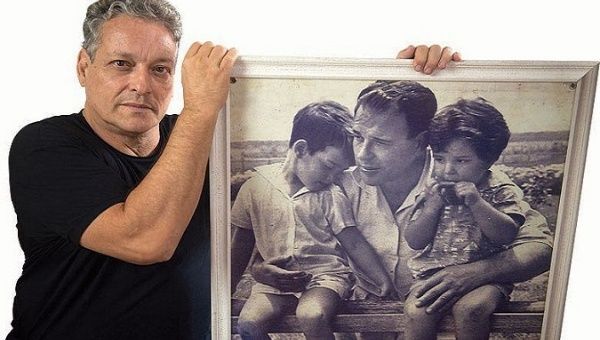
João Vicente Goulart holds a portrait of himself, his father, João Goulart, and his sister, Denize. | Photo: João Vicente Goulart
By Edu Montesanti | teleSUR | December 6, 2017
“Jango was my best friend, a great partner, and the best father to my children. It is still hard to forget,” Jango’s widow, Maria Theresa Goulart told teleSUR.
On Dec. 6, 1976, former Brazilian President João Goulart, popularly known as “Jango,” passed away at 57 years old in his exile with family in Mercedes, Argentina. Officially, he died of a cardiac attack, but evidence points to poisoning.
“There are still some available tissue samples at the Federal Police Criminal Institute of Brazil for a new investigation, as new evidence is expected if we can have more documents declassified and testimonies that would bring new information,” João Vicente Goulart, Jango’s son told teleSUR.
“In the first results analyzed, a substance appeared in tiny amounts which should not be in a human body, called pentaerythritol tetranitrate or erythrin tetranitrate, also known as pentrite,” said Goulart. “It is a chemical with characteristics and end of explosives that, at the time, was only controlled as an exclusive weapon used by the American army,” added Jango’s son, pointing out that secret agents used to infiltrate the family’s house in exile.
“It has been proven that spies removed my father’s documents, they could have easily changed his heart medicine for a poison.”

Jango speaks to a large crowd accompanied by his wife, Maria Theresa Goulart. Photo: João Vicente Goulart
Jango’s body did not undergo an autopsy at the time of his death. His body was buried in São Borja, Brazil, after the assurance that the coffin would not be opened. According to Goulart, “There was severe military repression at my father’s funeral.” There were military officials everywhere, monitoring Jango’s coffin so it could not be opened. In 2006, Mario Neira, a former Uruguayan secret agent, told Goulart that his father had been poisoned.
Overthrown from the Brazilian presidency by a military coup d’état on April 1, 1964, the democratically-elected João Goulart, with more than 70 percent of an approval rating, was exiled three days later with family to Uruguay. In 1973, President Juan Domingo Peron welcomed him. The Goularts were constantly threatened in exile, so the son, João Vicente and Denize, the Goularts’ daughter, left to study in London. Some friends warned former president Jango several times, that he could be killed.
On March 13, 1964, 18 days before the coup, President João Goulart gave a speech to more than 200,000 people in Central do Brasil square in Rio de Janeiro, with his wife Maria Theresa Goulart beside him, for the first time since assuming the presidency. He promised an agrarian reform, reducing remittances of profits overseas, extending democratic rights, along with other very popular reforms.
“Goulart committed the crime of reforming the economy. That was more than (U.S. President) Lyndon Johnson could tolerate and he opted to destabilize the economy and assist a right-wing military takeover,” said the U.S. historian Peter Kuznick to teleSUR.
“The 1964 coup that toppled Goulart’s government was extremely significant,” added Kuznick. “Oliver Stone and I began our documentary about the invasion of Vietnam with a discussion of that coup. We then talk about the Dominican Republic, Greece, Indonesia, and Chile to show that the Vietnam War was part of a pattern.
“A National Intelligence Estimate in the summer of 1963 had warned that Goulart might be establishing ‘an extreme leftist regime, with a strongly anti-U.S. character.’ Johnson’s appointment in December of Thomas Mann as assistant secretary of state to coordinate Latin American affairs was another nail in the Goulart government’s coffin.
“When Goulart responded the next year to U.S. demands to impose austerity on the Brazilian people by instead offering land reform and control of foreign capital and by recognizing Cuba, the U.S. moved quickly to destabilize the economy. Goulart seized U.S. properties.
“Ambassador Lincoln Gordon and U.S. embassy officials urged right-wing Brazilian officers to overthrow Goulart. The U.S. backed Army Chief of Staff General Humberto Castelo Branco. The CIA assisted behind the scenes,” observed Kuznick, who is the director of the Institute of Nuclear Studies at the American University.
The Brazilian historian Victor Schincariol told teleSUR that in order to preserve national peace and people’s security, President Jango didn’t call for a military intervention to protect him. “Goulart was genuinely committed to democracy and social peace. He said that he could not tolerate the death of Brazilians in a virtual civil war.
“At the same time, he knew that the U.S. would support the right-wing forces, which would make the case for the defense of democracy very hard indeed to win,” added the Brazilian researcher at the University of ABC in São Paulo.
On Dec. 18, in the presence of the heads of the military and President Dilma Rousseff, the Brazilian Congress symbolically returned President João Goulart’s mandate, as the OAS exhorted Brazil in 2010 for the crimes against humanity never punished, committed by the military dictatorship that killed 475 people, left 144 “disappeared,” and tortured more than 30,000 people.
There is an Amnesty Act in Brazil, elaborated and passed in 1979 by Brazilian military officials themselves — never addressed in the country by politicians, mainstream media and local elites — that acquits the dictators of the crimes committed between 1964 and 1985.
“Goulart’s and Varga’s legacy was erased, physically and ideologically, by the military dictatorship between 1964-1985. The economy was “globalized;” the case for an industrialization with national capitals, social justice and national independence was substituted by dependence, fascist policies and censorship; the democratic and left-wing forces were imprisoned, killed or left the nation,” said Professor Doctor Schincariol.
“The most important legacy Jango left to Brazil was his tireless fight for workers’ right and social justice,” Jango’s widow, Maria Theresa Goulart told teleSUR. “And for us, his family, his generosity and partnership.”
‘We need negotiations, not declarations’: Russia stays away from Trump’s UN reform plan
RT | September 18, 2017
As US President Donald Trump officially launched his 10-point reform program for the United Nations, Russian officials say they share many of the concerns it raises, but not the methods Washington is using to advance its solutions.
On Monday morning in New York, UN Secretary-General Antonio Guterres and Trump delivered speeches in support of the reform declaration, which has been endorsed by 128 states.
According to the published text of the plan, it would give Guterres greater executive powers “encouraging him to lead organizational reform,” which would “provide greater transparency and predictability” and “promote gender parity and geographic diversity,” while combating “mandate duplication, redundancy, and overlap” and other forms of inefficiency at the international body.
“In recent years, the United Nations has not reached its full potential because of bureaucracy and mismanagement. While the United Nations on a regular budget has increased by 140 percent, and its staff has more than doubled since 2000, we are not seeing the results in line with this investment,” said Trump, who previously emphasized that the US is the biggest contributor to United Nations funds.
“To serve the people we support and the people who support us, we must be nimble and effective, flexible and efficient,” declared Guterres, the former Prime Minister of Portugal, who assumed his current post this year.
Countries that were hesitant or unwilling to sign the document – which include Russia, China, Brazil and South Africa – were not invited to the launch.
“There was no consultation either prior or following the publication of the declaration,” said Vassily Nebenzia, Russia’s envoy to the UN, in an interview with TASS news agency, published Monday. “We are all for increasing the role of the UN on the international arena, and raising its efficiency. The organization needs reform, even if not a fundamental overhaul. But the reform itself should not come through a declaration, but through inter-governmental negotiations between members.”
State-owned daily Rossiyskaya Gazeta cited officials in the Russian delegation in New York, who criticized the US for hijacking the ongoing UN General Assembly for its own purposes, noting that the declaration “had nothing to do with the United Nations” and that Washington “has developed a bad habit of using the UN building during General Assemblies to push its own foreign policy agenda.”
Some were altogether suspicious of Trump’s motives, considering his previously dismissive attitude to the UN.
“Trump’s reform is a landmark move towards a unipolar world, and the reduction of the role of the UN in the international architecture that is forming in the 21st century. We are not ready to support or participate in this process,” Leonid Slutsky, the Chairman of the Committee on International Affairs in the Russian parliament, told RIA news agency.
“The US should start not with behind-the-scenes coalition-forming,” wrote Konstantin Kosachev, who heads in the Foreign Affairs Committee in the upper chamber of the Russian parliament, the Federation Council, on his Facebook page. “Instead, it should begin by acknowledging its mistakes, when it bypassed the UN in Yugoslavia, Iraq, Libya and Syria.”
The Fall Offensive: the US, France and Brazil
By James Petras | The People’s Voice | September 13, 2017
The fall of 2017 will witness the most brutal assault on working and middle class living standards since the end of World War II. Three presidents and their congressional allies will ‘revise’ labor legislation, progressive income tax laws and regulations and effectively end the mixed economy in France, the US and Brazil.
Throughout the summer, public opinion has been diverted by US threats to launch new overseas wars, France’s rhetoric about forming a post-Brexit, Berlin-Paris pact, which will remake the European Union, and Brazil’s President Michel Temer’s corruption and crime scandals. These superficial controversies will be overwhelmed by fundamental class conflicts, which promise to alter the present and future structural relations within Western capitalism.
President Trump’s Fall Offensive: Profits, Wars and Epidemics
President Trump proposes to enrich capitalists and intensify class inequalities via his radical transformation of the tax system. Corporate taxes will be cut in half; overseas corporate taxes will be abolished; and wage and salaried workers will pay more for fewer social benefits.
Trump can count on the support of the Republican leadership, business and banking elite and sectors of the Democratic Party in his plans to roll out a massive tax giveaway for the billionaires.
Trump’s cabinet, led by the Goldman Sachs trio and his troika of generals will ensure that the budget will include slashing the funds for education and health in order to increase military spending, expand wars and cut taxes for the rich.
Even more aggressive threats against North Korea, Russia, Iran, Venezuela and China, greater overseas war spending and troop levels in Afghanistan and the overt militarization of policing, immigration control and domestic intelligence will result in drastic cutbacks on federal programs for the poor and working classes. Declining access to quality health care for workers and deterioration in workplace safety conditions will fuel the opioid addiction epidemic leading to hundreds of thousands more premature worker deaths by overdose, injury and inadequate, incompetent care.
President Emmanuel Macron: The Capitalist Offensive in France
In France, the workers and middle class face the most comprehensive attack on their employment rights and progressive social legislation in modern history.
President Emmanuel Macron has declared his goal of completely transferring socio-economic power from French workers to capital by gutting all pro-labor laws and protections. Employees will have to negotiate with their bosses, one plant and one office at a time, thereby undermining the collective bargaining power of a united working class. Employers will be free to hire and fire workers with virtually no restrictions or consequences. Temporary and short-term ‘garbage’ contracts will proliferate, destroying long-term worker stability. Macron will eliminate the jobs of over 100,000 public employees while slashing corporate taxes by over $50 billion euros.
In contrast to massive tax cuts for the bourgeoisie, Macron proposes to increase taxes on French pensioners, hitting millions of retirees. Once in place, Macron’s legislative agenda will concentrate power, profits and wealth of capital while increasing inequalities and class polarization. Responding to the economic interests of the bankers, Macron promises to lower the deficit to 3% of GDP through massive cuts in health and education.
Under the pretext of ‘reducing unemployment’, Macron will promote part-time and temporary employment for French youth and immigrant workers, stripping all French workers of their hard-fought gains in job security and labor rights. Macron justifies his assault on labor by dismissing workers as ‘lazy’.
Brazil: The Great Fire Sale
Michel Temer, Brazil’s ‘unelected’ President plans to privatize 57 public enterprises – the crown jewels of Brazil’s economy. This will amount to the biggest capitalist asset grab in two centuries!
Included in the sell-off are: oil fields, energy transmission lines, highways, airports, as well as Brazil’s mint and lottery. Electrobas, Latin America’s biggest electricity generator, is up for grabs. In addition, Temer plans to raise interest rates charged by the state-owned development bank BNDES to increase the private bankers’ share of lending and profits.
This naked grab of profitable state enterprises by private domestic and foreign investors will lead to the loss of hundreds of thousands of jobs and the lowering of wages, salaries and pension payments. Temer started to slash state pension liabilities by increasing the age of retirement by several years. Wages and social benefits have been frozen for the foreseeable future. Presidential decrees, which dictate the terms of labor contracts, threaten collective bargaining.
The Capitalist Offensive: Results and Perspectives
These presidents have declared their intention to launch full-scale ‘class war from above’ – the consequences of which remain to be seen. The presidents, who rule by fiat, are treading fragile terrain. Each is facing major political, economic and social challenges.
All three presidents have lost public support since taking power, especially among their lower middle and working class-class voters.
Macron’s approval dropped from 65% to 40%; Trump from 49% to 35%; and Temer (who was not elected) barely retains 5% (and falling) public approval.
Brazil: Facing the Abyss
Despite uncertainties over the regime’s stability and future, foreign investors and the financial press supports Temer.
President Temer’s isolation from Brazil’s voting public has weakened his power in the Congress, and among the domestic banking elite and oil and power corporations. However, if the trade unions call for widespread militant strikes by manufacturing workers, public employees and the landless rural workers’ movement (MST) is effective and paralyzes the economy, Temer may be forced to resign before his program is implemented. Meanwhile, President Temer faces numerous judicial investigations for corruption.
Strategically, Temer can count on international support, especially from the US State Department, Treasury, Pentagon and the European Union. The neo-liberal regimes in Argentina, Uruguay, Chile, Paraguay, Peru, Colombia and Mexico have voiced strong support for Temer, especially since they have also received bribes from the same Brazilian corporate oligarchs! Under Temer, the Brazilian economy has declined by over 5% since he took power in a ‘legislative coup d’état’. His budget deficit exceeds 9% and unemployment has doubled to over 11%.
Despite support from foreign and domestic elite, Temer’s presidency will not survive. Under mass pressure and with looming elections, Brazil’s Congress may decide to allow the courts to prosecute Temer and block his proposed sellout of public assets.
Credit rating agencies are going to downgrade the Brazil’s economy to ‘junk’ status, undercutting new investments. With new elections on the horizon in 2018, it is clear that Temer will not even run for the presidency and his proposals to privatize Brazil’s major firms may not succeed. The economic recession has sharply reduced tax revenues and the possibility of receiving any significant boost from privatization is dubious. Even Temer’s initial regressive measure – the slashing of public pensions- has bogged down in bureaucratic infighting. However, the opposition to Temer’s capitalist offensive has yet to strike a decisive, organized blow.
The Congressional opposition, led by the center-left Workers Party (PT), is a distinct minority with many of its leaders facing their own corruption trials. The PT is incapable of blocking, let alone ousting, Temer. The rightwing opposition in Congress is divided between those who back Temer – based on party patronage – and those who want to replace Temer while pushing for his anti-labor agenda. The trade unions, led by the CUT, have mounted sporadic protests and made rhetorical gestures, while the MST (the landless rural workers) and associated ecological and homeless movements, which lack militant mass urban support, would be unable to topple Temer.
Ex-President Lula Da Silva has regained some degree of mass voter support but faces corruption charges, which may ban him from political office – unless there is a major mass mobilization.
In sum, the rightwing, pro-capitalist offensive in Brazil is comprehensive — offering public assets and private profits– but weak in institutional support and economic fundamentals.
A big-push from the Left could undermine the political base for Temer’s economic team, however, it is not clear which party or leaders would replace him.
France: Bonaparte in the Palace, Workers on the Streets
When President Emmanuel Macron was elected President of the Fifth Republic, he carried a mass electoral base as well as the support of France’s leading business and banking organizations. However, in the run-up to the launching of his capitalist offensive the mass base has evaporated. Voter disapproval is rising rapidly. The militant wing of the trade unions (CGT) prepares to launch general strike. His regressive tax agenda has alienated wide sectors of the petit bourgeois, especially public-sector employees.
Macron’s concentration of executive power (his Bonapartist complex) has turned his allies on the right against him.
The outcome of Macron’s offensive is both likely and uncertain.
For one thing Macron enjoys a majority in the French Congress. The economy is growing and investors are exuberant. Tax-conscious small business groups are happy. Labor is divided with the class collaborationist CFDT and FO refusing to join with the trade union opposition.
The European Union is united, up to a point, in its support for Macron. Equally important, Macron is determined to crush street protests and sporadic, partial strikes with demagogic appeals through the corporate mass media, coercion and outright state repression.
The political party opposition, led by the left socialists and the nationalists, is divided. The Socialist Party barely exists. Pensioners and students are opposed to Macron, but have not taken to the streets. Few among the professional class and liberal academia retain any illusions about the ‘new centrist President’ but few are willing to actively confront the ‘the new Bonaparte’.
Macron has fashioned a formidable alliance between the state apparatus and the business ruling class to crush worker opposition. But popular opposition is growing and is furious at his agenda and insults: ‘They (French workers) have had it too good…’ To defeat Macron, they must unite the opposition and build a strategy of prolonged class warfare.
Macron will not give in to transitory strikes. If Macron’s capitalist offensive succeeds, it will have enormous implications for the French working class, especially the rights of workers and salaried employees to organize and struggle. A victory for Macron will profoundly undermine the structure and membership of popular organizations, now and in the future. Moreover, a defeat for French workers will reverberate throughout the EU and beyond. Conversely, a victory for labor could trigger mass struggles across Europe.
The United States
A powerful opposition could confront President Trump’s capitalist offensive, but it will not be led by the highly bureaucratized trade unions representing less than 8% of the private sector labor force. Trump’s enemies among the Democratic and Republican Party elite have dismissed Trump’s ‘working class’ supporters as ‘white supremacist and neo-Nazis’. American workers’ concerns have been trivialized and marginalized by the divisive politics of ‘identity’, so blatantly used by both parties. Trump’s capitalist offensive in favor of a regressive pro-corporate tax cuts and the gutting of social welfare (health, education, housing, environment and worker safety) has failed to provoke sustained, unified social opposition. In the US, the pro-business elites dominate and dictate the agendas of both the incumbent Trump regime and the ‘elite opposition forces’.
The official ‘anti-Trump opposition’, which terms itself a ‘resistance’, promotes ‘identity’ interests linked to elite political representation. It works hard to undermine any possibility of working class unity based on common socio-economic interests by focusing on marginal and divisive issues. In the midst of mass poverty, declining life expectancy and an epidemic of suicide and drug overdose deaths, the ‘resistance’ forces of the elite opposition concentrate on manufactured foreign (‘Russia-gate’) conspiracies and life style issues (trans-genders in the US Special Forces) to overthrow the Trump regime. They have no intention to forge any class alliances that might threaten Trump’s regressive capitalist agenda.
The struggle this fall in the US will not be between labor and capital: It will spotlight the contradiction between what remains of Trump’s business protectionist agenda and the Democrats’ neo-liberal free trade policies. The capitalist offensive against labor in the USA was already determined by default. US trade union officials are marginal and inconsequential actors, incapable and unwilling to politicize, educate and mobilize workers.
Trump’s capitalist offensive appeals to investors and boosts the stock market. The majority of his economic team is tied to Wall Street bankers against so-called economic nationalists. Trump’s mindless chauvinist rhetoric to the populace is openly dismissed by the plutocrats within his own cabinet, who complain they have been targeted by ‘fascists and anti-Semites’ (meaning Trump’s deplorable and angry voter base).
The United States is the only country in the industrial world launching a massive, sustained capitalist offensive without an anti-capitalist opposition. The American working class is openly ‘deplored’ by the major elements of the elite opposition and blatantly manipulated by its fake ‘champion’, Trump.
The consequences are pre-determined. The capitalist offensive cannot lose; both capitalist sides ‘win’. Under the Businessman-President Trump, multi-national corporations will secure lower taxes and degrade working class living standards and social benefits. Bi-partisan agreements will ensure that banks are completely deregulated. The elite anti-Trump opposition will ensure that ‘their’ capitalists get favorable neo-liberal trade agreements, guaranteeing their access to cheap immigrant labor and a non-unionized workforce denied workplace safety and environmental regulations.
While France and Brazil face real class war, the ‘classless’ US slouches toward nuclear war. Macron confronts militant trade unions, Temer faces the fury of broad social alliances, and Donald Trump marches after ‘his Generals’ to nuclear conflagration. He invades Russian diplomatic properties; points nuclear weapons at Moscow and Beijing; holds massive offensive exercises and stations THAAD missiles on the border of North Korea; and escalates US air and ground force operations in a 16-year losing war in Afghanistan.
Workers in Europe and Latin America choose to fight capitalists in defense of their class interests, while US workers have become passive spectators to the looming possibility of nuclear war, when they are not in a prescription-induced opioid stupor. Defeating the capitalist offensive in France and Brazil can advance the cause of social justice and ensure concrete benefits for workers and masses of people; Trump’s unopposed capitalist military offensive will send clouds of nuclear ashes across the world.
Lula’s Legal Team Rejects Politicized Corruption Allegations
teleSUR | September 6, 2017
Faced with formal accusations of criminal conduct and corruption, former Brazilian President Luis Inacio Lula da Silva has struck back through his legal team, maintaining that the politicized allegations are an attack on Brazil’s legal order and democracy itself.
“The latest allegations are a complete fabrication, politically motivated in spite of growing international outrage of the behavior of parts of the judiciary, and timed to influence the democratic will of Brazilians,” attorneys Cristiano Zanin Martins and Valeska Teixeira Zanin Martins said in a statement released on behalf of their client, Lula.
“We will fight these ludicrous, unsubstantiated claims with rigor using all legal avenues open to us,” the lawyers maintained.
Lula’s legal team added that the accusations are tantamount to political persecution, signaling the clear danger that the popular former head of state will have his rights violated in kangaroo court-style proceedings. Such a process would be a clear breach Brazil’s constitutionally-guaranteed right to a fair trial – a right backed by international law.
“The decision by the attorney general is another attack on Brazilian democracy. The country is facing a real threat to the basic rule of law and democracy itself. This legal battle is bigger than one person, it is a fight for the very future of Brazil,” the statement concluded.
Brazilian Attorney General Rodrigo Janot accused former presidents Lula and Dilma Rousseff, along with several other leaders of the Workers’ Party, or PT, of forming a criminal organization to divert money from the state-controlled oil company, Petrobras, to the tune of $US475 million through a corruption scheme involving construction conglomerate Odebrecht.
“The indictment written by the Attorney General’s Office accusing me, along with the PT, of belonging to a criminal organization is a document that seems to have been hastily assembled and based exclusively on statements from bribed informants,” Rousseff said in a statement. She added that the groundless allegations seem to have no basis in evidence, but are based on suppositions, specious claims and spurious inferences taken as facts.
“The ‘charges’ rely on fabricated lies – some quite old – which seem to have been unearthed and reanimated in order to divert attention from the actual recordings,” she added, a reference to scandalous audio recordings of President Michael Temer urging that witnesses in the scandal be bribed. “The informants themselves say that in order to be found innocent or win a reduced sentence, they will say what the prosecutors want to hear.”
Rousseff added that a section of Brazil’s press has allowed itself to become an accomplice to the forces of corruption and to distract the public from the erosion of ethics and morality among ruling elites on the very same day that Brazilian police found US$16 million cash in an apartment allegedly used by Geddel Vieira, a former cabinet member in the Temer government.
“Justice and truth will always triumph,” she concluded, expressing her confidence in the court’s ability to see justice through and expose the lack of evidence in the indictment leveled by the attorney general.
The accusations come on the heels of Lula’s 20-day Caravan of Hope bus tour through Brazil’s northeast, a base of support for the PT, where he was enthusiastically greeted by crowds numbering in the tens of thousands who are opposed to the Temer government and its neoliberal agenda.
Brazil’s Slave-Descended Quilombos Shaken by String of Murders
teleSUR – August 8, 2017
Brazilian authorities have revealed that six rural workers were mysteriously murdered in their homes in the lush rural state of Bahia in Brazil Sunday.
The crime, which was only announced Tuesday, is the latest in a wave of killings targeting residents in the disputed Iuna Quilombola Territory that lies in the city of Lencois. The murders bring to eight the number of those killed in disputed lands in Bahia within less than a month.
According to authorities, the victims lived in two neighboring homes — four in one house and two in the other — and were killed by men in an unidentified black vehicle. Each victim was shot four to six times. All were quilombolas — the descendants of Afro-Indigenous Brazilians who escaped from slavery to hinterland settlements known as Quilombos.
The victims have been identified as Adeilton Brito de Souza, Gildasio Bispo das Neves, Amauri Pereira Silva, Valdir Pereira Silva, Marcos Pereira Silva and Cosme Rosario da Conceicao
While state security forces are investigating possible links between the victims and drug traffickers, the crimes have shed light on an ongoing dispute between quilombolas and farmers who want the quilombolas expelled from the region.
In 2010, the Quilombola Territory of Iuna began the process of gaining legal recognition and titles to the land. The roughly 3,500-acre territory is home to 1,400 residents and is in the city of Lencois, a major eco-tourist destination and the starting point for treks into Chapada Diamantina National Park. The park spans a highland region of canyons and waterfalls known for its hiking trails, which were opened by miners searching for diamonds, gold and other precious minerals.
While in theory, Brazil’s 1988 Constitution assures quilombos titles to lands they historically are located on, very few quilombos actually enjoy legal recognition. According to recent data, 303 quilombo territories in Bahia state alone are seeking regularization, but only 34 are in an advanced state of regularization. The state still has no legally-recognized quilombola territories, while 19 territories have been identified as disputed land claimed by third parties.
On July 16, quilombola Lindomar Fernandes Martins was fatally shot six times on a road leading into Iuna. No one was arrested for the crime. The next day — also in Bahia — Jose Raimundo Mota de Souza, Jr., the president of the Association of Rural Workers in the Jiboia Quilombola Community, was shot dead while working in the fields with his brothers and family members.
The Association of Rural Workers’ Advocates and Catholic Church-linked Pastoral Land Commission, as well as the National Institute of Colonization and Agrarian Reform — the government agency charged with processing quilombo land claims — have issued messages of solidarity with the victims’ families and urged authorities to investigate and prosecute those involved in Sunday’s killings.
Online Petition Forces Review of Dilma Rouseff’s Impeachment
teleSUR | July 29, 2017
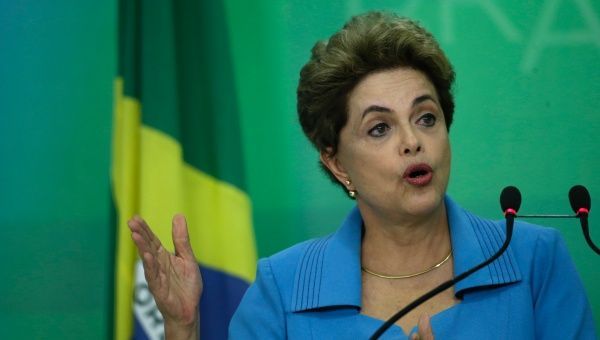
Brazilian senators will have to review the controversial procedure that led to the former president Dilma Rousseff’s impeachment last year, after an online citizens’ petition gathered more than 46,000 signatures in less than 24 hours.
The survey is being carried out on the Senate’s online platform E-Cidadania, and required a minimum of 20,000 signatures by November before it could be formally converted into a “legislative suggestion” to be considered in the higher house.
It poses two questions: firstly, that the loss of her mandate as the constitutional president was the consequence of a coup d’état.
And secondly, that the ‘failure’ of her successor Michel Terner’s government means that the only solution is to reinstate Rouseff into her elected post which should never have been taken away from her.
Last August, Brazil’s Senate voted to remove her from office for manipulating the budget.
Rouseff protested her innocence and promised not to give up the political struggle against poverty and inequality.
The petition is similar to another one which has been drawn up by the National Movement for the Anullment of the Impeachment, MNAI.
It’s supporters include the former president Luiz Inacio Lula da Silva, the national president of the Workers’ Party, Gleisi Hoffmann and the singer and composer Chico Buarque.
The MNAI hopes to gather 1.3 million signatures in order to pressure the Federal Supreme Court to revoke the result of the trial against Rousseff.
The Brazilian President Michel Temer’s approval ratings have plummeted to less than five percent as the corruption allegations against him and other politicians refuse to go away.
While opponents of his government’s controversial labor and pension reforms are still demanding his resignation.
Brazil Mainstream Media Admits Spreading Fake News About Lula
teleSUR | May 23, 2017
The mainstream media channel has long claimed that both former leftist presidents were involved in the massive corruption scandal.
Brazil’s largest television channel, Globo, has admitted that is has divulged false information about former Brazilian presidents Luiz Inacio “Lula” da Silva and Dilma Rousseff.
Globo journalist William Waak acknowledged on television Tuesday that previous reports about Lula and Rousseff, allegedly owning offshore accounts, were inaccurate.
The mainstream media channel has long claimed that both former leftist presidents were involved in the massive corruption scandal involving Joesley Batista, owner of JBS, Brazil’s largest meat packing company.
“We said that Joesley Batista had claimed in the awarding statement that he deposited fines on two current accounts abroad, in the name of the ex-Presidents Lula and Dilma Rousseff,” Waak said.
“In reality, however, Batista said that the account is in his name, but that money was going to be allocated to Lula and Dilma’s campaigns.”
The correction did not repair damage caused to Lula and Rousseff’s image, since many international agencies and foreign newspapers have since echoed Globo’s false claim, failing to correct them.
Last Friday, Batista confessed that de-facto President Michel Temer had requested and received bribes from his company since 2010.
Batista, the protagonist of a wiretapping scandal incriminating the unelected Brazilian leader, exposed the arrangement to the Brazilian attorney general’s office. He claims he paid Temer roughly US$1 million in 2010 alone. Another US$921,000 was requested by the embattled president in 2012 to support Gabriel Chalita’s bid to become mayor of Sao Paulo.
Batista also claimed that during the impeachment process against ousted former President Dilma Rousseff, Temer requested a payment of more than US$85,000 dollars for online political marketing expenditure.
Temer has repeated that he has no intention of resigning. Contrarily, he’s considering a lawsuit against the owner of JBS in order to strengthen his defense.
Brazil Coup Architect Eduardo Cunha Sentenced to 15 Years for Corruption
teleSUR | March 30, 2017
A Brazilian judge sentenced Eduardo Cunha, the former speaker of the lower house and mastermind behind the parliamentary coup against former President Dilma Rousseff, to 15 years and four months in jail Thursday for corruption charges.
The sentence is the result of a criminal suit investigating Cunha for fraud related to millions of dollars in kickbacks he received for the 2011 purchase of an oil field in the West African country of Benin by the state-run oil company, Petrobras, which has been at the center of a major anti-corruption probe in the South American country known as Operation Car Wash.
Federal Judge Sergio Moro handed down the sentence over charges of corruption, money laundering and tax evasion. The former head of the lower house has been held in pre-trial detention since last October.
“The responsibility of a federal parliamentarian is enormous, and therefore so is his guilt when he commits crimes,” said Moro. “There is no bigger crime than that of trying to use one’s parliamentary mandate and the sacred trust the people place in it to obtain personal gain.”
According to Moro, Cunha received US$1.5 million in bribes for the Benin oil field contract, which, according to an internal Petrobras investigation reported by local media, resulted in US$77.5 million in losses for the state-run oil company after no oil was found at the site.
The federal public prosecutor’s office had called for Cunha to be forced to pay full damages to Petrobras, but Moro has signaled that a fine equivalent to the US$1.5 million bribe he received will be ordered.
While Cunha’s defense team has said that they will appeal the decision, Moro confirmed that the politician will remain behind bars while the appeals process moves forward.
Despite himself facing multimillion dollar bribery and fraud charges, Cunha was a key architect in painting the impeachment process against Dilma Rousseff as a campaign to root out government corruption.
A member of unelected President Michel Temer’s PMDB party, Cunha is accused of corruption, money laundering and tax evasion linked to raking in at least US$5 million in illicit kickbacks between 2006 and 2012 and hiding the wealth in Swiss bank accounts.
Cunha was removed from his position as speaker of the lower house last September after being suspended in May 2016 — just weeks after the lower house pushed through the impeachment bid against Rousseff — to face an impeachment process over accusations that he intimidated lawmakers and hampered investigations. The Congress voted overwhelmingly by 450 to 10 to remove the unpopular politician.
The overwhelming decision to remove Cunha also stripped him of the parliamentary immunity he long enjoyed, opening him up to the corruption charges. Authorities arrested him at his apartment in Brasilia last October over accusations he hid laundered money in secret Swiss bank account while in office.
Despite the power he has wielded over Brazilian politics, polling over the past year has repeatedly unmasked Cunha as one of the most unpopular politicians in the country, including among his own party.
Several other top Temer allies have also been targeted in the Operation Car Wash investigations that have led to the arrests of dozens of politicans and economic elites over bribery schemes and corruption linked to Petrobras.
Land Rights Activist Shot Dead in Brazilian Hospital
teleSUR | March 22, 2017
Waldomiro Costa Pereira, an activist with the Landless Workers Movement, MST, was killed Monday when gunmen stormed a hospital in Parauapebas in northeastern Brazil’s Para state, activists said in a statement.
Five armed men burst into a small town hospital in the Brazilian Amazon, surrounded security guards and shot dead the prominent land rights activist, in the latest deadly attack on land campaigners.
The motive for Pereira’s murder was unclear, the MST said, but the activist had been recovering in the hospital from a previous assassination attempt.
“This is yet another murder of workers in the state of Para,” the MST said in a statement. “Impunity has become commonplace as has the action of criminal militia groups,” the group said, adding that Pereira was a longtime activist in the “struggle for agrarian reform.”
At the time of his killing, Pereira was not active with the MST and was instead devoting his time to advising the local government on agriculture, the activist group said.
Local officials in the city of Parauapebas condemned the murder and police said they were investigating the killing, the Folha de Sao Paulo newspaper reported.
Conflicts over territory are common in Brazil where 1 percent of the population owns nearly half of the nation’s land, according to a 2016 study from the University of Windsor in Canada.
Brazil has become one of the world’s most dangerous countries for land rights activists, with 61 killed in 2016, the highest level since 2003, according to Brazil’s Pastoral Land Commission.
Brazil’s Olympic Legacy Far from Fulfilled at Idle Game Venues
teleSUR | February 9, 2017
A lack of activity and upkeep is plaguing facilities including the site of swimming competitions, where craters from disassembled pools collect stagnant water.
Less than six months after Rio de Janeiro hosted the first-ever Olympics in South America, game venues sit idle and already in disrepair, raising questions about a legacy that organizers promised would benefit the Brazilian city and its residents.
A lack of activity and upkeep is plaguing facilities including the site of swimming competitions, where craters from disassembled pools collect stagnant water, and Rio’s famed Maracanã stadium, site of the opening and closing ceremonies.
The field there, one of the most iconic soccer pitches in the world, is giving way to dirt and scrub. Electricity was cut recently because of a financial spat between local officials and the contractor hired to manage the stadium.
Before the games, organizers touted the venues as facilities that could easily be repurposed in sports-crazed Rio. But little more than one beach volleyball tournament has been played at any of the venues — and even that drew criticism because it involved throwing sand on the Olympic tennis court.
Federal, state and local governments, along with private partners, paid more than US$12.8 billion to host the Olympics, about US$7 billion of which was for game venues and related facilities.
Lula lambastes judge who ordered his trial
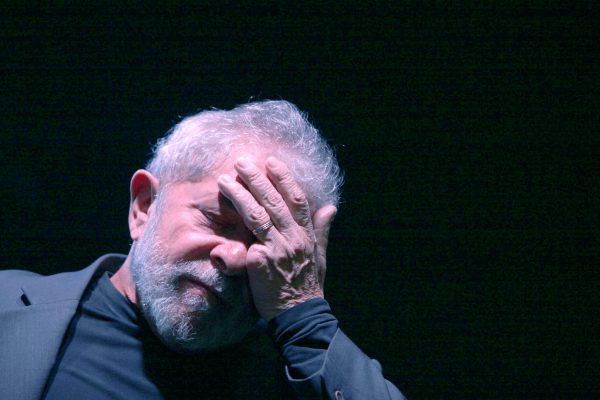
There are many who feel the corruption allegations are designed to prevent Lula from running in 2018 presidential elections [Xinhua ]
The BRICS Post | September 21, 2016
Former Brazilian President Luiz Inacio Lula da Silva has come out swinging against a judge who ordered him to stand trial for allegations of money laundering while in office.
Lula accused anti-corruption judge Sérgio Moro of being politically motivated and said that charges brought against him by federal prosecutors were part of a scheme to discredit him and ruin his career.
On Tuesday, and less than a month after he was indicted on alleged graft charges, Lula was ordered by Moro to stand trial for receiving at least $1 million in kickbacks from Brazilian energy company Petrobras.
Moro first accepted charges filed in July by prosecutors investigating Lula for allegedly “masterminding” a corruption and money laundering operation in Petrobras.
Lula, a hugely popular president who served from 2003 to 2010 and is credited with a number of initiatives that propelled GDP growth and significantly reduced poverty in Brazil, has been under investigation for much of the past year..
“As we were starting to have success in the presidency, they are trying to do with us what they did with Dilma (Rousseff, the former president impeached in August). A part of the press and a part of the judiciary already tried to oust me from the presidency in 2005,” Lula has said.
Last month, Lula and members of his family and three other people had been indicted on a number of charges stemming from alleged financial irregularities, declaration of assets in addition to money laundering and graft.
Some in Brazil believe that the charges and trial are designed to ruin his chances of running in presidential elections in 2018.
In early August, the Vox Populi Institute published a poll which showed Lula would come out the clear winner if he ran for the presidency against a number of likely candidates.
Only 17 per cent of respondents in that poll said they wanted current President Michel Temer to stay on until 2018.
The Vox Populi Institute’s findings appear to support an earlier poll conducted by Datafolha in Brazil.
That poll also showed that Lulu would comfortably win a presidential election. Only five per cent said they would vote for Temer, however.
Featured Video
MIT Prof Ted Postol: U.S. Iran Missile War
or go to
Aletho News Archives – Video-Images
Frlom the Archives
A dark page from the CIA’s history: What was Project Artichoke, launched 74 years ago?
By Erkin Oncan | Strategic Culture Foundation | August 22, 2025
One of the most useful instruments hidden behind the U.S. empire’s rhetoric of “freedom and democracy” was the Central Intelligence Agency, founded on September 18, 1947, as the successor of the Office of Strategic Services (OSS).
Since its creation, the CIA has carried out countless inhumane operations: assassinations, coups, drug trafficking, support for terrorism, conspiracies. The list of its crimes is endless. But among the darkest and most inhumane chapters of its record lie the notorious “mind control” experiments. … continue
Blog Roll
 Aletho News
- Indonesia suspends participation in Board of Peace following attack on Iran
- ‘Operation Epic Fury’ burns an estimated $5.82 billion in just 100 hours
- Zionism’s grip over the world: From Epstein to Greater Israel
- How Israel and the FBI manipulated assassination plots to goad Trump into Iran war
- Iranian Strikes Dispel the Illusion of US Security Umbrella
- US Boasts of Destroyed Iranian Launchers Lack Credibility – Ex-DoD Official
- Europe not in position to cooperate with US and Israel against Iran
- Iran Has ‘Broken the Myth’ of Israeli Military Power: Former Pakistani Envoy
- How, and why, US data centers in the Gulf became targets of war
- The General who swallowed his truth
- If Americans Knew
- US troops were told war on Iran was ‘all part of God’s divine plan’, watchdog alleges
- Trump wants to run the show in Iran, but doesn’t know what he’s doing – Not a ceasefire Day 147
- ‘Dirty Work’ :The truth about how Israel was founded
- Mass Expulsion in Lebanon as Israel Expands War: “We Don’t Know Where to Go”
- Lies, distortions, and propaganda: how the U.S. mainstream media coverage on Iran hides the truth
- Palestinians in Gaza fear famine returning as Israel cuts off food amid Iran war
- AIPAC, other pro-Israel groups enter midterms with $100 million to spend
- Iranian girls killed by ‘double-tap’ strikes on Minab school
- Bari Weiss Is Going Full ‘Propaganda-Palooza’ With the Iran War
- Inside the Pro-Israel Campaign to Stop ‘The Voice of Hind Rajab’ From Winning an Oscar
- No Tricks Zone
- Televised! Leading German Political Candidate Tells Schoolchildren CO2 Makes Sun Hotter!
- New Study: A Century Warming Of 1.1°C Is ‘Commonplace’ And ‘Not Unusual’ During This Interglacial
- New Study: ‘Internal Noise’ And Volcanic Forcing Can Trigger 10-15°C Warming Within Decades
- Glaciers Worldwide Are Suddendly Surging, Experts Blame Warming!
- Surprising Discovery: Sahara Is Greening…Billions Of Trees Where Once Thought To Be Barren
- New Research Reaffirms Clouds, Aerosols, And Surface Solar Radiation Are ‘Driving The Climate System’
- Germany: Electric Car Catches Fire At Charging Station, Sets Off Local “Inferno”, Widespread Damage
- New Study: Canada’s New Brunswick Was 1°C Warmer Than Today During The Medieval Warm Period
- Coal Power Back In Trend As Globe Tries To Keep Pace With Growing Demand For Power
- New Study: A 4°C Warmer Beaufort Sea Had ‘No Sea Ice’ 11,700 – 8200 Years Ago
 Aletho News