Lula’s Legal Team Rejects Politicized Corruption Allegations
teleSUR | September 6, 2017
Faced with formal accusations of criminal conduct and corruption, former Brazilian President Luis Inacio Lula da Silva has struck back through his legal team, maintaining that the politicized allegations are an attack on Brazil’s legal order and democracy itself.
“The latest allegations are a complete fabrication, politically motivated in spite of growing international outrage of the behavior of parts of the judiciary, and timed to influence the democratic will of Brazilians,” attorneys Cristiano Zanin Martins and Valeska Teixeira Zanin Martins said in a statement released on behalf of their client, Lula.
“We will fight these ludicrous, unsubstantiated claims with rigor using all legal avenues open to us,” the lawyers maintained.
Lula’s legal team added that the accusations are tantamount to political persecution, signaling the clear danger that the popular former head of state will have his rights violated in kangaroo court-style proceedings. Such a process would be a clear breach Brazil’s constitutionally-guaranteed right to a fair trial – a right backed by international law.
“The decision by the attorney general is another attack on Brazilian democracy. The country is facing a real threat to the basic rule of law and democracy itself. This legal battle is bigger than one person, it is a fight for the very future of Brazil,” the statement concluded.
Brazilian Attorney General Rodrigo Janot accused former presidents Lula and Dilma Rousseff, along with several other leaders of the Workers’ Party, or PT, of forming a criminal organization to divert money from the state-controlled oil company, Petrobras, to the tune of $US475 million through a corruption scheme involving construction conglomerate Odebrecht.
“The indictment written by the Attorney General’s Office accusing me, along with the PT, of belonging to a criminal organization is a document that seems to have been hastily assembled and based exclusively on statements from bribed informants,” Rousseff said in a statement. She added that the groundless allegations seem to have no basis in evidence, but are based on suppositions, specious claims and spurious inferences taken as facts.
“The ‘charges’ rely on fabricated lies – some quite old – which seem to have been unearthed and reanimated in order to divert attention from the actual recordings,” she added, a reference to scandalous audio recordings of President Michael Temer urging that witnesses in the scandal be bribed. “The informants themselves say that in order to be found innocent or win a reduced sentence, they will say what the prosecutors want to hear.”
Rousseff added that a section of Brazil’s press has allowed itself to become an accomplice to the forces of corruption and to distract the public from the erosion of ethics and morality among ruling elites on the very same day that Brazilian police found US$16 million cash in an apartment allegedly used by Geddel Vieira, a former cabinet member in the Temer government.
“Justice and truth will always triumph,” she concluded, expressing her confidence in the court’s ability to see justice through and expose the lack of evidence in the indictment leveled by the attorney general.
The accusations come on the heels of Lula’s 20-day Caravan of Hope bus tour through Brazil’s northeast, a base of support for the PT, where he was enthusiastically greeted by crowds numbering in the tens of thousands who are opposed to the Temer government and its neoliberal agenda.
Brazil’s Slave-Descended Quilombos Shaken by String of Murders
teleSUR – August 8, 2017
Brazilian authorities have revealed that six rural workers were mysteriously murdered in their homes in the lush rural state of Bahia in Brazil Sunday.
The crime, which was only announced Tuesday, is the latest in a wave of killings targeting residents in the disputed Iuna Quilombola Territory that lies in the city of Lencois. The murders bring to eight the number of those killed in disputed lands in Bahia within less than a month.
According to authorities, the victims lived in two neighboring homes — four in one house and two in the other — and were killed by men in an unidentified black vehicle. Each victim was shot four to six times. All were quilombolas — the descendants of Afro-Indigenous Brazilians who escaped from slavery to hinterland settlements known as Quilombos.
The victims have been identified as Adeilton Brito de Souza, Gildasio Bispo das Neves, Amauri Pereira Silva, Valdir Pereira Silva, Marcos Pereira Silva and Cosme Rosario da Conceicao
While state security forces are investigating possible links between the victims and drug traffickers, the crimes have shed light on an ongoing dispute between quilombolas and farmers who want the quilombolas expelled from the region.
In 2010, the Quilombola Territory of Iuna began the process of gaining legal recognition and titles to the land. The roughly 3,500-acre territory is home to 1,400 residents and is in the city of Lencois, a major eco-tourist destination and the starting point for treks into Chapada Diamantina National Park. The park spans a highland region of canyons and waterfalls known for its hiking trails, which were opened by miners searching for diamonds, gold and other precious minerals.
While in theory, Brazil’s 1988 Constitution assures quilombos titles to lands they historically are located on, very few quilombos actually enjoy legal recognition. According to recent data, 303 quilombo territories in Bahia state alone are seeking regularization, but only 34 are in an advanced state of regularization. The state still has no legally-recognized quilombola territories, while 19 territories have been identified as disputed land claimed by third parties.
On July 16, quilombola Lindomar Fernandes Martins was fatally shot six times on a road leading into Iuna. No one was arrested for the crime. The next day — also in Bahia — Jose Raimundo Mota de Souza, Jr., the president of the Association of Rural Workers in the Jiboia Quilombola Community, was shot dead while working in the fields with his brothers and family members.
The Association of Rural Workers’ Advocates and Catholic Church-linked Pastoral Land Commission, as well as the National Institute of Colonization and Agrarian Reform — the government agency charged with processing quilombo land claims — have issued messages of solidarity with the victims’ families and urged authorities to investigate and prosecute those involved in Sunday’s killings.
Online Petition Forces Review of Dilma Rouseff’s Impeachment
teleSUR | July 29, 2017
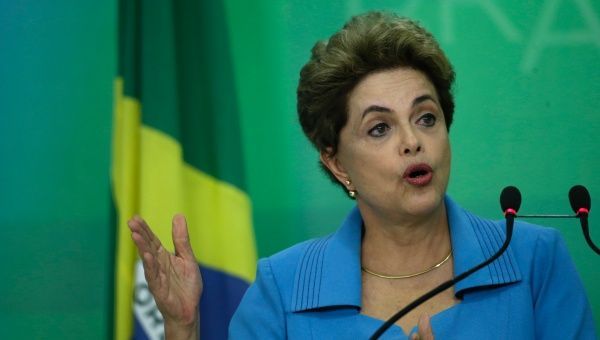
Brazilian senators will have to review the controversial procedure that led to the former president Dilma Rousseff’s impeachment last year, after an online citizens’ petition gathered more than 46,000 signatures in less than 24 hours.
The survey is being carried out on the Senate’s online platform E-Cidadania, and required a minimum of 20,000 signatures by November before it could be formally converted into a “legislative suggestion” to be considered in the higher house.
It poses two questions: firstly, that the loss of her mandate as the constitutional president was the consequence of a coup d’état.
And secondly, that the ‘failure’ of her successor Michel Terner’s government means that the only solution is to reinstate Rouseff into her elected post which should never have been taken away from her.
Last August, Brazil’s Senate voted to remove her from office for manipulating the budget.
Rouseff protested her innocence and promised not to give up the political struggle against poverty and inequality.
The petition is similar to another one which has been drawn up by the National Movement for the Anullment of the Impeachment, MNAI.
It’s supporters include the former president Luiz Inacio Lula da Silva, the national president of the Workers’ Party, Gleisi Hoffmann and the singer and composer Chico Buarque.
The MNAI hopes to gather 1.3 million signatures in order to pressure the Federal Supreme Court to revoke the result of the trial against Rousseff.
The Brazilian President Michel Temer’s approval ratings have plummeted to less than five percent as the corruption allegations against him and other politicians refuse to go away.
While opponents of his government’s controversial labor and pension reforms are still demanding his resignation.
Brazil Mainstream Media Admits Spreading Fake News About Lula
teleSUR | May 23, 2017
The mainstream media channel has long claimed that both former leftist presidents were involved in the massive corruption scandal.
Brazil’s largest television channel, Globo, has admitted that is has divulged false information about former Brazilian presidents Luiz Inacio “Lula” da Silva and Dilma Rousseff.
Globo journalist William Waak acknowledged on television Tuesday that previous reports about Lula and Rousseff, allegedly owning offshore accounts, were inaccurate.
The mainstream media channel has long claimed that both former leftist presidents were involved in the massive corruption scandal involving Joesley Batista, owner of JBS, Brazil’s largest meat packing company.
“We said that Joesley Batista had claimed in the awarding statement that he deposited fines on two current accounts abroad, in the name of the ex-Presidents Lula and Dilma Rousseff,” Waak said.
“In reality, however, Batista said that the account is in his name, but that money was going to be allocated to Lula and Dilma’s campaigns.”
The correction did not repair damage caused to Lula and Rousseff’s image, since many international agencies and foreign newspapers have since echoed Globo’s false claim, failing to correct them.
Last Friday, Batista confessed that de-facto President Michel Temer had requested and received bribes from his company since 2010.
Batista, the protagonist of a wiretapping scandal incriminating the unelected Brazilian leader, exposed the arrangement to the Brazilian attorney general’s office. He claims he paid Temer roughly US$1 million in 2010 alone. Another US$921,000 was requested by the embattled president in 2012 to support Gabriel Chalita’s bid to become mayor of Sao Paulo.
Batista also claimed that during the impeachment process against ousted former President Dilma Rousseff, Temer requested a payment of more than US$85,000 dollars for online political marketing expenditure.
Temer has repeated that he has no intention of resigning. Contrarily, he’s considering a lawsuit against the owner of JBS in order to strengthen his defense.
Brazil Coup Architect Eduardo Cunha Sentenced to 15 Years for Corruption
teleSUR | March 30, 2017
A Brazilian judge sentenced Eduardo Cunha, the former speaker of the lower house and mastermind behind the parliamentary coup against former President Dilma Rousseff, to 15 years and four months in jail Thursday for corruption charges.
The sentence is the result of a criminal suit investigating Cunha for fraud related to millions of dollars in kickbacks he received for the 2011 purchase of an oil field in the West African country of Benin by the state-run oil company, Petrobras, which has been at the center of a major anti-corruption probe in the South American country known as Operation Car Wash.
Federal Judge Sergio Moro handed down the sentence over charges of corruption, money laundering and tax evasion. The former head of the lower house has been held in pre-trial detention since last October.
“The responsibility of a federal parliamentarian is enormous, and therefore so is his guilt when he commits crimes,” said Moro. “There is no bigger crime than that of trying to use one’s parliamentary mandate and the sacred trust the people place in it to obtain personal gain.”
According to Moro, Cunha received US$1.5 million in bribes for the Benin oil field contract, which, according to an internal Petrobras investigation reported by local media, resulted in US$77.5 million in losses for the state-run oil company after no oil was found at the site.
The federal public prosecutor’s office had called for Cunha to be forced to pay full damages to Petrobras, but Moro has signaled that a fine equivalent to the US$1.5 million bribe he received will be ordered.
While Cunha’s defense team has said that they will appeal the decision, Moro confirmed that the politician will remain behind bars while the appeals process moves forward.
Despite himself facing multimillion dollar bribery and fraud charges, Cunha was a key architect in painting the impeachment process against Dilma Rousseff as a campaign to root out government corruption.
A member of unelected President Michel Temer’s PMDB party, Cunha is accused of corruption, money laundering and tax evasion linked to raking in at least US$5 million in illicit kickbacks between 2006 and 2012 and hiding the wealth in Swiss bank accounts.
Cunha was removed from his position as speaker of the lower house last September after being suspended in May 2016 — just weeks after the lower house pushed through the impeachment bid against Rousseff — to face an impeachment process over accusations that he intimidated lawmakers and hampered investigations. The Congress voted overwhelmingly by 450 to 10 to remove the unpopular politician.
The overwhelming decision to remove Cunha also stripped him of the parliamentary immunity he long enjoyed, opening him up to the corruption charges. Authorities arrested him at his apartment in Brasilia last October over accusations he hid laundered money in secret Swiss bank account while in office.
Despite the power he has wielded over Brazilian politics, polling over the past year has repeatedly unmasked Cunha as one of the most unpopular politicians in the country, including among his own party.
Several other top Temer allies have also been targeted in the Operation Car Wash investigations that have led to the arrests of dozens of politicans and economic elites over bribery schemes and corruption linked to Petrobras.
Land Rights Activist Shot Dead in Brazilian Hospital
teleSUR | March 22, 2017
Waldomiro Costa Pereira, an activist with the Landless Workers Movement, MST, was killed Monday when gunmen stormed a hospital in Parauapebas in northeastern Brazil’s Para state, activists said in a statement.
Five armed men burst into a small town hospital in the Brazilian Amazon, surrounded security guards and shot dead the prominent land rights activist, in the latest deadly attack on land campaigners.
The motive for Pereira’s murder was unclear, the MST said, but the activist had been recovering in the hospital from a previous assassination attempt.
“This is yet another murder of workers in the state of Para,” the MST said in a statement. “Impunity has become commonplace as has the action of criminal militia groups,” the group said, adding that Pereira was a longtime activist in the “struggle for agrarian reform.”
At the time of his killing, Pereira was not active with the MST and was instead devoting his time to advising the local government on agriculture, the activist group said.
Local officials in the city of Parauapebas condemned the murder and police said they were investigating the killing, the Folha de Sao Paulo newspaper reported.
Conflicts over territory are common in Brazil where 1 percent of the population owns nearly half of the nation’s land, according to a 2016 study from the University of Windsor in Canada.
Brazil has become one of the world’s most dangerous countries for land rights activists, with 61 killed in 2016, the highest level since 2003, according to Brazil’s Pastoral Land Commission.
Brazil’s Olympic Legacy Far from Fulfilled at Idle Game Venues
teleSUR | February 9, 2017
A lack of activity and upkeep is plaguing facilities including the site of swimming competitions, where craters from disassembled pools collect stagnant water.
Less than six months after Rio de Janeiro hosted the first-ever Olympics in South America, game venues sit idle and already in disrepair, raising questions about a legacy that organizers promised would benefit the Brazilian city and its residents.
A lack of activity and upkeep is plaguing facilities including the site of swimming competitions, where craters from disassembled pools collect stagnant water, and Rio’s famed Maracanã stadium, site of the opening and closing ceremonies.
The field there, one of the most iconic soccer pitches in the world, is giving way to dirt and scrub. Electricity was cut recently because of a financial spat between local officials and the contractor hired to manage the stadium.
Before the games, organizers touted the venues as facilities that could easily be repurposed in sports-crazed Rio. But little more than one beach volleyball tournament has been played at any of the venues — and even that drew criticism because it involved throwing sand on the Olympic tennis court.
Federal, state and local governments, along with private partners, paid more than US$12.8 billion to host the Olympics, about US$7 billion of which was for game venues and related facilities.
Lula lambastes judge who ordered his trial
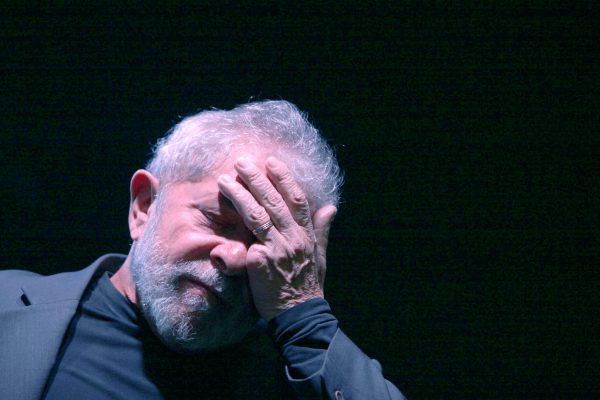
There are many who feel the corruption allegations are designed to prevent Lula from running in 2018 presidential elections [Xinhua ]
The BRICS Post | September 21, 2016
Former Brazilian President Luiz Inacio Lula da Silva has come out swinging against a judge who ordered him to stand trial for allegations of money laundering while in office.
Lula accused anti-corruption judge Sérgio Moro of being politically motivated and said that charges brought against him by federal prosecutors were part of a scheme to discredit him and ruin his career.
On Tuesday, and less than a month after he was indicted on alleged graft charges, Lula was ordered by Moro to stand trial for receiving at least $1 million in kickbacks from Brazilian energy company Petrobras.
Moro first accepted charges filed in July by prosecutors investigating Lula for allegedly “masterminding” a corruption and money laundering operation in Petrobras.
Lula, a hugely popular president who served from 2003 to 2010 and is credited with a number of initiatives that propelled GDP growth and significantly reduced poverty in Brazil, has been under investigation for much of the past year..
“As we were starting to have success in the presidency, they are trying to do with us what they did with Dilma (Rousseff, the former president impeached in August). A part of the press and a part of the judiciary already tried to oust me from the presidency in 2005,” Lula has said.
Last month, Lula and members of his family and three other people had been indicted on a number of charges stemming from alleged financial irregularities, declaration of assets in addition to money laundering and graft.
Some in Brazil believe that the charges and trial are designed to ruin his chances of running in presidential elections in 2018.
In early August, the Vox Populi Institute published a poll which showed Lula would come out the clear winner if he ran for the presidency against a number of likely candidates.
Only 17 per cent of respondents in that poll said they wanted current President Michel Temer to stay on until 2018.
The Vox Populi Institute’s findings appear to support an earlier poll conducted by Datafolha in Brazil.
That poll also showed that Lulu would comfortably win a presidential election. Only five per cent said they would vote for Temer, however.
Brazil Elite Codifies Budget Practice Used to Impeach Rousseff
teleSUR – September 4, 2016
Brazil’s newly-installed President Michel Temer has signed legislation that essentially authorizes the identical financial accounting maneuver that was used to justify the impeachment bid against ousted President Dilma Rousseff’s just days after she was removed from office.
The law, announced Friday in the official gazette, expands the government’s ability to seek additional credits without securing authorization from Congress. As described by Brasil de Fato, the rule broadly opens the door for the budgetary maneuver known in Brazil as “pedaling,” in which the government borrows money from state banks to make the budget appear in a better position than it is.
This longstanding practice was used to propel the impeachment process that finally ousted Rousseff from office last Wednesday in a move widely condemned as a parliamentary coup.
Rousseff’s supporters repeatedly pointed out that the accounting trick had been used by many of her predecessors without scrutiny. Independent auditors also found her not guilty of breaking budgetary rules — a fact that did not stop the ill-footed impeachment process from going ahead.
According to Brazil’s Senate news agency Agencia Senado, the unelected Temer government gave pedaling a green-light, claiming that the rule change will make government budget management “more flexible,” including shuffling of expenditures associated with the federal infrastructure Growth Acceleration Program, better known as PAC.
The act allows the government to boost by as much as 20 percent the value of an expenditure by writing down by the value of another by a corresponding 20 percent, which, in fact, doubles the level allowed by previous administrative rules.
Rousseff was ousted Wednesday in a 61-20 Senate vote in favor of her impeachment, though she retained her so-called political rights to hold public office in a second vote.
The day after the impeachment ballot, Rousseff’s defense appealed to the Supreme Court to compel a second Senate impeachment vote, arguing that the process was unconstitutional on the grounds that the budgetary crime she is accused of is not an impeachable offense according to Brazilian law.
Rousseff’s rivals long attempted to paint the impeachment process as a campaign to root out government corruption. But aside from the fact that multiple other leaders have used the pedaling procedure, damning recordings released weeks after her suspension in May revealed that top opposition figures schemed with the Supreme Court and military command to ensure Rousseff’s ouster as part of a bid to stop corruption investigations against their allies.
Like many of his top allies and cabinet members, Temer — installed as president despite being banned from running for public office for eight years — is embroiled in multi-million dollar fraud scandals.
‘Rousseff’s impeachment – sad day for Brazil & democracy’
RT | September 1, 2016
Was the impeachment process against Brazil’s Dilma Rousseff justified? Is interim President Michel Temer credible? How will the people of Brazil react and are we likely to see protests escalating?
Suspended Brazilian President Dilma Rousseff was impeached on Wednesday, after the final vote in Senate. She was ruled to have mishandled Brazil’s budget, and misrepresented the state of the economy prior to her reelection in 2014.
Michel Temer, former Vice President under Rousseff, became acting president of Brazil in May after the start of the impeachment of Rousseff.
Watchdog groups say about 60 percent of the country’s lawmakers, as well as interim President Temer, who may potentially form a new government, have been accused of corruption and fraud.
Maria Mendonca, professor at the University of Rio de Janeiro called the impeachment of Dilma Rousseff “very sad for Brazil” and “a very sad day for democracy”. The result of the 2014 elections, when Dilma was reelected, “was not respected.”
“It is a process that reminds us of the military coup in 1964. That was not a real trial, because most Senators already had a position – they made up their minds even before the whole trial started. There was no legal basis for the impeachment. The public prosecutor already had cleared Dilma of all charges in terms of the mechanisms of basically issuing debt to pay for social programs, which is a regular mechanism in Brazil and also in other countries,” she told RT.
In her opinion, the impeachment was “a way for unpopular corrupt politicians to take power without going through an electoral process.”
According to Mendonca, it is now difficult to predict how the situation is going to develop and whether protests by Rousseff’s supporters – that have been going on for days now – may escalate.
“I think we’re going to stay in a situation of limbo for a while, of uncertainty, because the main rules of democracy were broken,” she said.
She added though that “the media in Brazil can manipulate public opinion,” and has been doing so since the beginning of the impeachment process.
“But once people realize that we’re going to have more instability: cuts in social programs, in health care, education, and we’re going to have more serious economic crisis, then people will realize that this was a manipulative process to get rid of a president that was democratically elected; and to implement austerity measures that would make the situation even more unstable politically and economically,” Mendonca said.
Good for Brazil in longer term
David Riedel, economic analyst from Riedel Research Group argues that Rousseff’s impeachment “is a good move” for Brazil as in the longer term it would benefit from a more “business friendly government.”
Dilma Rousseff has run “a very populist regime; she’s been giving a lot of support to social programs and other things,” he told RT. “I think you’ll probably see some social unrest, as those goodies and those free benefits start to be taken away from the population. But it’s a good move for Brazil in the medium and longer term. They needed to take this step. They were successful with the Olympics, which were great, and now they need to be successful in this transition of power to, I would argue, a more business friendly government, which is going to be very good for investors.”
If Michel Temer – who is running the country at the moment and is likely to become the next Brazilian President – “takes advantage of this populist, very expensive spending that the Rousseff and [Luiz Inacio] Lula [da Silva], before her, administrations had under way – that can protect the currency; it can help improve the investment environment,” Riedel said.
“International investors want Brazil to be a success – so they will give them the benefit without doubt if they see things headed in the right direction. So if they are business friendly and investor friendly and cut back on the profligate spending that has been such an issue across Latin America, I think that investors would give them a second look,” the analyst said.
Absolutely no justification
An independent investigation found there were no grounds for launching action.
Political scientist Daniel Shaw from the City University of New York says there’s “absolutely no justification” for the impeachment “from the prospective of millions of Brazilians who voted for Dilma Rousseff and now see the democratically elected president unconstitutionally removed from power.”
But in the minds of the Brazilian rich, the bourgeoisie –“they feel like they don’t need justification to continue to push things in a rightward direction and to continue to exploit the majority of Brazilians,” he said.
WikiLeaks has revealed that Brazil’s new interim president, Temer, was an embassy informant for US intelligence.
Some also suggest that the US could have orchestrated the “coup” against Rousseff.
Commenting, Shaw said: “If we look critically at the history of US foreign policy and how they’d been involved in supporting dictatorships from Pinochet to Somoza across Latin America, when all of the FOI requests are complete in 10-15 years, there’s no question there’ll come out the role that the US State Department played.”
“They are against the leftward trend that’s been going on since 1999 with Venezuela at the helm and, of course Cuba, Bolivia, Ecuador. This is a blow, an attack not just on the Brazilian people but on the entire progressive current that was sweeping across Latin America,” he added.
Featured Video

Racist Seinfeld Dances for Joy as Bibi Unveils His New Map
or go to
Aletho News Archives – Video-Images
TV Drama Review
Japanese drama projects Japan’s wartime atrocities onto Chinese characters

Global Times | October 25, 2026
By portraying Chinese characters as perpetrators of ruthless violence while casting Japanese Self-Defense Forces (SDF) intelligence operatives as defenders, the season 2 of the Japanese drama Vivant has recently drawn criticism from Chinese netizens, who argue that its depiction turns historical reality on its head while ignoring Japan’s wartime atrocities.
The TBS drama series – a spy suspense story in which an alleged unofficial intelligence unit of the SDF operates across the globe — has attracted a passionate fanbase. Its currently airing season 2 opened with a household rating of 18.8 percent, the highest for a TV drama this year, according toa commentary article by Japanese media Toyo Keizai.
What draws attention is the portrayal of the enemies in the series, the article noted. Scenes in which the Chinese organization subjects kidnapped members of the SDF unit to brutal torture are repeated with unrelenting intensity.
It is rare for Japanese TV dramas to explicitly portray a real-life country as the enemy, the article noted.
Japanese Prime Minister Sanae Takaichi also made a reference to the drama, saying that she has been recording Vivant and hopes to binge-watch it over the year-end and New Year holidays, according to Japanese media outlets.
China’s CCTV News report on Sunday revealed that the drama features scenes in which Chinese personnel cut off the fingers of and stab Japanese intelligence operatives in the abdomen. Such acts bear striking similarities to the torture inflicted on Chinese nationals by invading Japanese troops during the World War II.
The drama distorts the truth by attributing these atrocities to modern Chinese characters. Beneath the surface, it subtly glorifies Japan’s cross-border overseas operations, blurs the functional boundaries of the SDF and implicitly promotes an expansionist narrative, per CCTV News. … continue
Blog Roll
 Aletho News
- EU facing trillion-euro debt hole while seeking more cash for Kiev
- How US, Europe, Persian Gulf states exhausted missile stockpiles, splurged billions to defend Israel
- Up in arms… Koreans reject U.S. empire’s plan to make South Korea the next Ukraine
- Iran, Turkey, Pakistan, Saudi Arabia could advance region-led security framework in Tehran: FM spox
- Netizens condemn Japanese drama for projecting Japan’s wartime atrocities onto Chinese characters
- Racist Seinfeld Dances for Joy as Bibi Unveils His New Map
- A West Bank War for Netanyahu’s Election Campaign, Could It Backfire?
- Yemen denounces European Parliament’s ‘hypocritical’ push to blacklist Ansarullah
- Qalibaf: UAE’s UN bid aims to ‘clear the runway’ for ‘Greater Israel’, whitewash genocide
- Pakistan reopens Iran border after boosting security: Report
- If Americans Knew
- An error has occurred; the feed is probably down. Try again later.
- No Tricks Zone
- Sudden Stratospheric Warming, Powerful El Niño Combination May Lead To Extreme Europe Cold, Energy Crisis!
- Two New Studies Find Thwaites Glacier Melt Cannot Be Driven By Human Activity Or A Warming Ocean
- E-Cars Reduce CO2 Emissions By Only 41% Compared To Internal Combustion Engine Vehicles
- Predictions Made By Renowned Climate Professor Over Past Decades Have Been Proven To Be Poor
- New Study Suggests Large Regions Of The Pacific Ocean Have Been Cooling For The Last 80 Years
- Germany’s Green Energy Debacle: High Energy Costs Force Kahla Porzellan to Close After 182 Years!
- New Study: 50 Years Of The Most Aggressive ‘Net Zero’ Policies Can Only Affect The Global Climate By 0.03°C
- US September “Heat” Was No Record…Many Records Set Decades Ago
- Latest European Green Energy Debacle; Portugal’s Largest Flagship Solar Park Insolvent!
- Green Energy Debacle: German Expert Professor Fritz Vahrenholt Warns Of Severe Economic And Social Consequences

