Empirical evidence: Top-secret colonial files missing in UK
RT | December 1, 2012
Boxes containing top secret files about former British colonial rule have gone missing, with those relating to Singapore possibly destroyed. Declassified colonial Kenyan files earlier played a key role in proving the UK responsible for grave abuses.
Britain has admitted that it was aware that 170 boxes of files were transferred to Britain from former colonies. But the UK’s Foreign and Commonwealth Office (FCO) Minister David Lidington said that the government did not know what had happened to the files afterwards.
“It remains the case that the FCO is still unable to confirm the existence or destruction of 170 boxes of top secret colonial administration files known to have been returned to the UK,” Lidington told AFP.
“There is some evidence that the Singapore-related top secret colonial administration files were destroyed as part of a review of FCO post files in the 1990s.”
The FCO is continuing the search for the files and any evidence relating to their possible destruction.
The revelation comes after files relating to British rule in Kenya and Cyprus were declassified, made public and played a key in a court case by three elderly Kenyans who say they were tortured during the British army’s suppression of the 1950s Mau Mau Rebellion.
At the court hearing an archive of 8,800 secret files were examined. The released documents proved attempts by UK authorities to cover-up the killings of 11 prisoners during the uprising and showed that detainees had been battered to death by warders at the Hola detention camp.
A British court granted a historic victory to the three Kenyans, allowing them to claim damages for the suffered abuses when imprisoned during the Mau Mau uprising, including castration, beatings and severe sexual assaults.
The Kenyan case set a historical precedent and it is estimated that 2,000 other surviving Kenyans imprisoned during the Mau Mau insurgency can know sue the British government, which could have significant consequences for the government.
Overall, Britain used to have total control over 50 colonies including Canada, India, Australia, Nigeria, and Jamaica. Currently, there are 14 British Overseas Territories that remain under British rule. However, all have their own internal leadership and most are self-governing.
Related articles
- How Britain covered up a brutal Kenya massacre (morningstaronline.co.uk)
Cyprus displeased at reports that British bases provide help to Syrian rebels
Xinhua – August 23, 2012
NICOSIA – Cyprus said on Thursday it had asked Britain to give an official explanation for a Sunday Times report alleging that the British Sovereign Bases in Cyprus provide intelligence to Syrian rebels which helped them deal effective strikes against the Syrian army.
Foreign Minister Erato Kozakou-Markoulli told the state radio that she had instructed the Cypriot High Commissioner (Ambassador) in London to make a demarche to the British Foreign Ministry asking for official information on the report.
“It is a very serious issue if the Bases are being used for purposes other than those explicitly set out in the Treaty of Establishment,” Markouli said.
She said she expected a British reply by the end of the day.
Markoulli added that the 1960 Treaty of Establishment under which Cyprus was granted independence states that two bases retained by Britain can only be used for defensive purposes.
British paper the Sunday Times claimed on Sunday that British agents operating in the British bases were collecting intelligence on Syrian army movements which is then channeled through Turkey to forces fighting the the Syrian army.
A spokesman for the British High Commission in Cyprus on Monday refused to confirm or deny the report, citing the official government position not to comment on intelligence or operational matters.
Britain’s ex-army commandos train armed rebels in Syria: UK media
Press TV – July 24, 2012
Britain’s former Special Air Service (SAS) commandos are reportedly training armed opposition groups fighting against the government of Syrian President Bashar al-Assad, reports say.
The Daily Mail and Sunday Express have revealed that the mercenaries have set up training camps in Iraq and on the Syrian border for the armed rebels.
British army sources, speaking on condition of anonymity, have said the militants are receiving instructions in military tactics, weapons handling and communications systems.
Groups of 50 militants at a time are being trained by two Mideast-based private security firms which employ former SAS personnel.
More than 300 rebel forces have completed the commando training program, and are said to account for a number of the opposition’s combatant units fighting Syrian security forces in Damascus.
Britain has also placed more than 600 troops on standby over the unrest in Syria.
UK Foreign Secretary William Hague says London should be acting outside the UN Security Council and step up its support for militant groups in Syria.
Syria has been the scene of violence by armed groups since March 2011.
Damascus blames “outlaws, saboteurs, and armed terrorist groups” for the unrest, asserting that it is being orchestrated from abroad.
Britain admits atrocities in Kenya

Press TV – July 18, 2012
Britain has admitted that Kenyan prisoners were tortured and sexually abused under the UK rule in Kenya, local media reported.
For the first time ever, British ministers were forced to issue a public confession admitting that atrocities were carried out ‘at the hands of the colonial administration’.
The admission came via a Whitehall lawyer addressing three elderly Kenyans who had gone to the High Court in London to demand damages and an apology.
Now in their 80s, one of them told the court how he had been brutally castrated in a British detention camp during the Mau Mau rebellion – Britain’s bloodiest colonial war.
If the trio win their case, it would open the door to up to 20,000 Kenyan survivors of the Mau Mau purge to sue Britain for millions of pounds, using no-win, no-fee lawyers.
The Foreign Office is contesting the case because it officially denies liability and maintains the Kenyans have left it too late to make claims.
Yesterday, each of the three claimants walked slowly to the witness stand to deliver their graphic testimony.
But before Guy Mansfield, the Foreign Office’s QC, cross-examined them, he said: “I wish to make it clear that the British government does not dispute that each of you suffered torture and other ill-treatment at the hands of the colonial administration.”
The Mau Mau uprising began in 1952 to end British colonial rule. Britain initially dismissed reports of unrest, but later declared a state of emergency – introducing the death penalty for Mau Mau members. The violence ended in 1956, but the state of emergency was only revoked in 1960.
Related articles
- Secret British Colonial Archive Finally Released (Aletho News)
- The Ghosts of Empire Are Returning To Haunt Britain – and the US (Aletho News)
- Britain destroyed records of colonial crimes (guardian.co.uk)
Cocos Islands could be new base for the US killing machine
By Peter Boyle | Green Left | March 31, 2012
The Cocos (Keeling) Islands is a tiny group of coral atolls in the Indian Ocean 2800 kilometres north-west of Perth and 900 kilometres from Java. It has a population of about 600.
These islands were nominally a British territory between 1858 and 1955, when they were transferred by a British act of parliament to Australia. Yet for the next 17 years, the Australian government allowed the islands to operate as a private fiefdom of the Clunies-Ross family — just as the British had for 100 years before then.
The islands were uninhabited until 1826, when Alexander Hare, a former minor British colonial official, set up an establishment with about 50 slaves, mainly of Malay background, and a personal “harem” he had collected from many colonial outposts.
Hare was displaced a year later by his former business partner, John Clunies-Ross, a Scottish ship captain whose descendants enriched themselves on the labour of the Malay plantation workforce, who they paid with tokens that could be spent on only the company store.
The Malay islanders had no access to formal education, but the Clunies-Ross children were sent to private schools in Britain. The head of the Clunies-Ross family was the island’s lawmaker, judge and administrator. Anyone who did not accept his rule was banished.
So it is no surprise that, when the Cocos Islanders were finally given the choice between independence, free association and integration with Australia in 1984, they overwhelmingly voted in secret ballot for integration. Only members of the Clunies-Ross family and a couple of loyal servants were in favour of “independence”.
But the Australian government did not offer the islanders their liberation from semi-feudalism just out of respect for freedom.
Kenneth Chan, the Australian administrator on the Cocos Islands from 1983-85 admitted in a largely unnoticed academic paper he wrote in 1987 that the islands’ strategic location was the main motivation to acquire and integrate this Indian Ocean territory.
The islands were used as a military base by the British in World Wars I and II. Now, the US military wants the islands as a base for drones and other spy planes. Pentagon officials hope Australia will make up for a possible closure or downgrading of its main Indian Ocean island military base in Diego Garcia, which the US leased from Britain in 1966.
The US built its giant base on Diego Garcia in the 1970s after the 2000 Chagos Islanders were forcibly removed through trickery and starvation, a colonial crime exposed to the world relatively recently.
The US has used Diego Garcia as a base for nuclear weapons, marines, warships, bombers and spy planes. It has used it as a transit station for political prisoners sent for “rendition” to other countries so they can be tortured, though this is officially denied. Diego Garcia is a strategic hub of the US killing machine.
But the US lease runs out in 2016 and the Pentagon wants to relocate at least some of the military functions of the base to various Australian bases in Western Australia, Darwin and the Cocos Islands.
The Gillard Labor government and the Liberal-National opposition wholeheartedly support this process and have already agreed to station thousands of US marines in Darwin.
Related articles
- Australia may allow US spy flights to Asia from remote island territory (scotsman.com)
- US drones to be based on Australian territory..for “humanitarian events”.. (seeker401.wordpress.com)
- UK annihilates records of colonial crimes (alethonews.wordpress.com)
Brits protest against government nuclear plans
Press TV – March 10, 2012
Anti-nuclear activists from across Britain are surrounding EDF Energy-owned power station to stop the development of Hinkley Point and to urge the government to put an end to its nuclear power.
In a bid to mark the nuclear disaster at Japan’s Fukushima power plant, hundreds of British campaigners have formed a symbolic chain around Hinkley Point to voice their determined opposition to new nuclear, and to call on the coalition government to suspend its plan for seven other new nuclear plants across the UK.
The human chain is planned to continue for 24 hours, with the activists blocking the main entrance of Hinkley Point.
Despite the rising concerns over the severity of atomic accidents, UK government has announced that it was planning to have eight new nuclear plants by 2025. Hinkley Point in Somerset is the first of eight proposed sites for building new nuclear plant.
Nancy Birch, spokeswoman for the Boycott EDF group campaigning against the UK’s addiction to nuclear power, said, “The disaster at Fukushima is only just beginning. A whole new generation will now live under the shadow of radiation contamination for the rest of their lives. Do we really want to put our own children under the same kind of threat?”
Zoe Smith, spokesperson for South West Against Nuclear, stressed that it was very important for the communities in Wales and the South West to understand the risk of a Fukushima-style accident.
“Bristol, Exeter, Taunton, Yeovil, Cardiff and Swansea are all within the 50 mile evacuation zone recommended by the US and France. The threat from a leakage of radiation or a full-blown disaster are very real,” she said.
Smith also declared that Hinkley protest would be a wake-up call, and that Britain should take a new approach to energy provision. Adding, “The reality is that we have to start reducing our energy consumption and making modern life more energy-efficient. We then need to spend the £60bn earmarked for ‘new nuclear’ on truly renewables forms of energy and research.”
Similar protests are taking place against new nuclear plants at Wylfa in North Wales and Heysham in Lancashire.
Related articles
- Media, Academia Join Forces to Downplay Dangers of Nuclear Power (alethonews.wordpress.com)
Anglo-French drone files stolen
Press TV – February 23, 2012
Highly secret documents related to the Anglo-French project aimed at building Europe’s assassination drones have been stolen at the Gare du Nord station in Paris.
A briefcase containing highly confidential documents relating to the Anglo-French assassination drone project has been stolen from a senior French executive.
The senior executive from Dassault Aviation, a French manufacturer of military jets, was on his way to London when two people, possibly linked to “a highly-sophisticated operation by a spy agency” as described by the French police, stole the documents.
Britain and France agreed to carry out a joint project aimed at building a new generation of assassination drones, known as Male (medium altitude long endurance) drones, by 2020.
British arms giant BAE Systems and Dassault Aviation are to launch the joint venture so that the new assassination drones will fly over Afghanistan and Pakistan as part of the US and Britain’s so-called “War on Terror.”
British anti-arms campaigners have severely criticized the Anglo-French project as they describe the assassination drones as “the latest ‘must have’ weapon system” that Britain is “desperate” to build.
“Drones are the latest ‘must have’ weapon system and it is important they say, that the UK keeps up with the US and Israel in this key market,” said Drone Wars UK in a statement.
Related articles
- UK to complement US ‘Drone Wars’ (nation.com.pk)
UK to spy on all online communications
Press TV – February 19, 2012
The British government is to exert more control over the public by storing the details of British people’s communications including every phone call, text message and email.
The British government will order phone companies and broadband providers to record the details of all phone calls, text messages, and emails and restore the data for one year, reported the Telegraph on Saturday.
Britain’s new spy plans will also target social networking websites such as Facebook and Twitter as the details of direct messages communicated between the users are to be recorded.
The change in the social media has been a concern for the British government at times of crisis such as the unprecedented unrest which swept across the country in August last year.
Exerting more control over British public’s communication via social media is a preventative measure taken by the British government to spy on people and limit their access to the means of communication.
The Telegraph revealed that Britain’s Home Office has been engaged in negotiations with internet providers for two months.
The spy plans have been drawn up by the country’s intelligence agencies MI5 and MI6 in collaboration with the GCHQ, Britain’s secretive agency of intelligence experts.
Big Brother Watch, a campaign group defending individual privacy and civil liberties, described the British government’s decision as “shameful” saying, “Britain is already one of the most spied on countries off-line,” online spying on the British public would be another invasion on their privacy.
Britain resorts to nuclear bullying against Argentina
Press TV – February 4, 2012
The UK is sending a nuclear submarine to the Malvinas Islands amid growing tensions between Britain and Argentina over the disputed territories.
According to media reports on Saturday, British Prime Minister David Cameron has personally approved the deployment of the Trafalgar-class vessel, believed to be either HMS Tireless or HMS Turbulent, in the South Atlantic.
However, a British Ministry of Defense (MoD) spokeswoman said, “We do not comment on submarine deployments.”
The heavily-armed submarine is set to be in the Malvinas waters in April for the 30th anniversary of the 1982 war which the two countries fought over the islands also known as the Falklands.
The Royal Navy has already revealed it is sending HMS Dauntless, a Type 45 destroyer, to the Falklands.
Britain’s Prince William arrived in the Malvinas on Thursday for a six-week training mission as a search and rescue pilot with the Royal Air Force (RAF).
Buenos Aires has strongly condemned Britain’s “provocative” move to post Prince William, likening it to that of a “conqueror.”
“The Argentinean people regret that the royal heir is coming to the soil of the homeland with the uniform of the conqueror and not with the wisdom of a statesman who works in the service of peace and dialogue between nations,” read an Argentine Foreign Ministry statement.
Situated about 250 nautical miles from Argentina, Malvinas has been a British colony for over 180 years.
Argentina claims sovereignty and the two countries fought a destructive 74-day war over the islands in 1982.
Related articles
- UK flexes nuclear muscles against Argentina (alethonews.wordpress.com)
Trident at risk from Scottish independence
Press TV – January 31, 2012
Scottish independence would bring an end to the UK’s nuclear deterrent as there are no other suitable locations for the base in Britain, warns a report from the Campaign for Nuclear Disarmament (CND).
The Nowhere to Go report commissioned by CND revealed there is no viable alternative for the Trident nuclear weapons’ bases than its existing sites in Coulport and Faslane in Scotland, implying that the bases have nowhere to go if Scots vote for independence from the UK.
Kate Hudson, the general secretary of CND, said, “Trident is at a dead end, strategically and economically. Now we can add ‘geographically’ to the list too, as Ministry of Defence sources have confirmed CND’s analysis: that there ‘simply isn’t anywhere else’ for Trident to go.”
Asked in the Scottish parliament last week whether an independent Scotland would do a deal to keep the Trident, the Scottish First minister Alex Salmond replied, “It is inconceivable that an independent nation of 5.25m people would tolerate the continued presence of weapons of mass destruction on its soil.”
However, senior British defence officials have suggested that they could negotiate a treaty permitting the Trident missiles, submarines and warheads to remain in Scotland. Philip Hammond, the UK defence secretary, has also suggested that Scotland would be forced to pay the costs of relocating Trident nuclear deterrent.
Meanwhile, slamming the imposition of nuclear weapons on Scotland, Scottish CND chairman Arthur West described Scotland independence as “an opportunity to make a difference and to put an end to weapons of mass destruction in Britain.”
Related articles
- How Scottish independence could spell the end of Trident (liberalconspiracy.org)
- Latest Poll: 51% Favour Scottish Independence (ansionnachfionn.com)
Featured Video
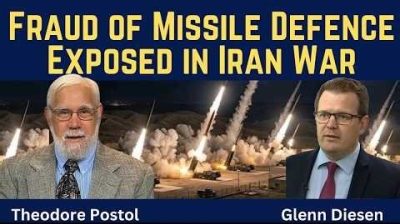
Ted Postol: Fraud of Missile Defence Exposed in Iran War
or go to
Aletho News Archives – Video-Images
Frlom the Archives
Containing the United States
By Edward S. Herman | Z Magazine | September 2016
“Containing the United States” is, of course, a ridiculous and self-contradictory idea in the U.S. and Western ideological and propaganda system. We all know that the United States had to “contain” the Soviet Union from 1945 to 1991, and since then has had the task of containing Russia and China. Only they threaten, bully, aggress and worry countries like Poland and Vietnam. Obama has had to reassure them both of our steadfast stand against Russian and Chinese military attacks. NATO has, of course, expanded greatly over the past several decades, despite the deaths of the Soviet Union and Warsaw Pact, but only to contain the renewed Russian — and Iranian, Libyan, Syrian and other — military threats; and we have “pivoted” to Asia, supported Japanese rearmament, bolstered our own forces in that area and jousted with the Chinese in their coastal waters solely to contain China. Earlier we had been obliged to contain North Vietnam, or was it the Soviet Union in Vietnam? Or China? Or “communism”? Or maybe all of them? Or none of them, but just needing an excuse to enlarge power?
The parallel propaganda has taken many forms. One is accepting as a premise that the United States only acts defensively and has no internal forces and interests that drive it to enlarge its sphere of control. I noted in an earlier article how Paul Krugman claims that internal Russian problems may well be the explanation of Russian “aggression,” but how at the same time it never occurs to him that the huge U.S. transnational corporate interests and “defense” establishment, and the pro-Israel lobby’s activities, might possibly make for an expansionist dynamic here.2 This reflects the standard establishment perspective that we are good and only react to evil. This was the view sustaining and justifying the invasion and occupation of Iraq from 2003. That attack was taken here as not evil but a response to evil, even if involving lies and mistakes, hence not describable as “aggression.” … continue
Blog Roll
 Aletho News
- Trump press conference reveals a man who wants out of war
- When Tel Aviv decides, Washington fights
- Top official: Iran ready for a long war with US, no more diplomacy
- How Iran’s Toxic Rain Reveals US-Israel Discord
- Trump Admits He Is Destroying Iran For Israel
- Iran’s latest move in the GCC countries was a stroke of genius
- Blackmail and death threats, Zelensky embarrasses the EU, but there’s no condemnation
- Israel threatens to kill Iran’s new leadership
- Possible Scenarios for the Middle East
- The Horizon of the War. “Italy is being Dragged Into the War against Iran”
- If Americans Knew
- Lebanon: Israel’s White Phosphorous Use Risks Civilian Harm
- Corporate Media Go All Out To Support The US-Israeli War On Iran
- US-Israel war on Iran is creating a steady growing number of amputees
- Israel planned this war on Iran for 40 years. Everything else is a smoke screen
- The wrong question about the war in Iran
- ‘Your Tax Dollars Being Used to Raise Your Gas Prices’: US-Israel Bomb Major Iranian Oil Depots
- ‘Bogus Evidence’: Former Nuclear Watchdog Head Debunks US Justification for Iran War
- EXPLAINER – Dimona: What to know about Israel’s nuclear site
- Fires and toxic air in Iran (thanks, Israel) – Not a ceasefire Day 150
- At Israel’s hands, Iran is burning, Lebanon and Gaza are crumbling – Not a ceasefire Day 149
- No Tricks Zone
- Wake-up Call: Survey Shows Majority Of Germans Now Favor Postponing Climate Targets!
- Televised! Leading German Political Candidate Tells Schoolchildren CO2 Makes Sun Hotter!
- New Study: A Century Warming Of 1.1°C Is ‘Commonplace’ And ‘Not Unusual’ During This Interglacial
- New Study: ‘Internal Noise’ And Volcanic Forcing Can Trigger 10-15°C Warming Within Decades
- Glaciers Worldwide Are Suddendly Surging, Experts Blame Warming!
- Surprising Discovery: Sahara Is Greening…Billions Of Trees Where Once Thought To Be Barren
- New Research Reaffirms Clouds, Aerosols, And Surface Solar Radiation Are ‘Driving The Climate System’
- Germany: Electric Car Catches Fire At Charging Station, Sets Off Local “Inferno”, Widespread Damage
- New Study: Canada’s New Brunswick Was 1°C Warmer Than Today During The Medieval Warm Period
- Coal Power Back In Trend As Globe Tries To Keep Pace With Growing Demand For Power
 Aletho News