Oscar Prints the Legend: Argo’s Upcoming Academy Award and the Failure of Truth
By Nima Shirazi | Wide Asleep in America | February 23, 2013
One year ago, after his breathtakingly beautiful Iranian drama, “A Separation,” won the Academy Award for Best Foreign Film, writer/director Asghar Farhadi delivered the best acceptance speech of the night.
“[A]t the time when talk of war, intimidation, and aggression is exchanged between politicians,” he said, Iran was finally being honored for “her glorious culture, a rich and ancient culture that has been hidden under the heavy dust of politics.” Farhadi dedicated the Oscar “to the people of my country, a people who respect all cultures and civilizations and despise hostility and resentment.”
Such grace and eloquence will surely not be on display this Sunday, when Ben Affleck, flanked by his co-producers George Clooney and Grant Heslov, takes home the evening’s top prize, the Best Picture Oscar, for his critically-acclaimed and heavily decorated paean to the CIA and American innocence, “Argo.”
Over the past 12 months, rarely a week – let alone month – went by without new predictions of an ever-imminent Iranian nuclear weapon and ever-looming threats of an American or Israeli military attack. Come October 2012, into the fray marched “Argo,” a decontextualized, ahistorical “true story” of Orientalist proportion, subjecting audiences to two hours of American victimization and bearded barbarians, culminating in popped champagne corks and rippling stars-and-stripes celebrating our heroism and triumph and their frustration and defeat. Salon‘s Andrew O’Hehir aptly described the film as “a propaganda fable,” explaining as others have that essentially none of its edge-of-your-seat thrills or most memorable moments ever happened. O’Hehir sums up:
The Americans never resisted the idea of playing a film crew, which is the source of much agitation in the movie. (In fact, the “house guests” chose that cover story themselves, from a group of three options the CIA had prepared.) They were not almost lynched by a mob of crazy Iranians in Tehran’s Grand Bazaar, because they never went there. There was no last-minute cancellation, and then un-cancellation, of the group’s tickets by the Carter administration. (The wife of Canadian ambassador Ken Taylor had personally gone to the airport and purchased tickets ahead of time, for three different outbound flights.) The group underwent no interrogation at the airport about their imaginary movie, nor were they detained at the gate while a member of Iran’s Revolutionary Guard telephoned their phony office back in Burbank. There was no last-second chase on the runway of Mehrabad Airport, with wild-eyed, bearded militants with Kalashnikovs trying to shoot out the tires of a Swissair jet.
One of the actual diplomats, Mark Lijek, noted that the CIA’s fake movie “cover story was never tested and in some ways proved irrelevant to the escape.” The departure of the six Americans from Tehran was actually mundane and uneventful. “If asked, we were going to say we were leaving Iran to return when it was safer,” Lijek recalled, “But no one ever asked!…The truth is the immigration officers barely looked at us and we were processed out in the regular way. We got on the flight to Zurich and then we were taken to the US ambassador’s residence in Berne. It was that straightforward.”
Furthermore, Jimmy Carter has even acknowledged that “90% of the contributions to the ideas and the consummation of the plan was Canadian [while] the movie gives almost full credit to the American CIA… Ben Affleck’s character in the film was only in Tehran a day and a half and the real hero in my opinion was Ken Taylor, who was the Canadian ambassador who orchestrated the entire process.”
O’Hehir perfectly articulates the film’s true crime, its deliberate exploitation of “its basis in history and its mode of detailed realism to create something that is entirely mythological.” Not only is it “a trite cavalcade of action-movie clichés and expository dialogue,” but “[i]t’s also a propaganda movie in the truest sense, one that claims to be innocent of all ideology.”
Such an assessment is confirmed by Ben Affleck’s own comments about the film. In describing “Argo” to Bill O’Reilly, Affleck boasted, “You know, it was such a great story. For one thing, it’s a thriller. It’s actually comedy with the Hollywood satire. It’s a complicated CIA movie, it’s a political movie. And it’s all true.” He told Rolling Stone that, when conceiving his directorial approach, he knew he “absolutely had to preserve the central integrity and truth of the story.”
“It’s OK to embellish, it’s OK to compress, as long as you don’t fundamentally change the nature of the story and of what happened,” Affleck has remarked, even going so far as to tell reporters at Argo’s BFI London Film Festival premier, “This movie is about this story that took place, and it’s true, and I go to pains to contextualize it and to try to be even-handed in a way that just means we’re taking a cold, hard look at the facts.”
In an interview with The Huffington Post, Affleck went so far as to say, “I tried to make a movie that is absolutely just factual. And that’s another reason why I tried to be as true to the story as possible — because I didn’t want it to be used by either side. I didn’t want it to be politicized internationally or domestically in a partisan way. I just wanted to tell a story that was about the facts as I understood them.”
For Affleck, these facts apparently don’t include understanding why the American Embassy in Tehran was overrun and occupied on November 4, 1979. “There was no rhyme or reason to this action,” Affleck has insisted, claiming that the takeover “wasn’t about us,” that is, the American government (despite the fact that his own film is introduced by a fleeting – though frequently inaccurate1 – review of American complicity in the Shah’s dictatorship).
Wrong, Ben. One reason was the fear of another CIA-engineered coup d’etat like the one perpetrated in 1953 from the very same Embassy. Another reason was the admission of the deposed Shah into the United States for medical treatment and asylum rather than extradition to Iran to face charge and trial for his quarter century of crimes against the Iranian people, bankrolled and supported by the U.S. government. One doesn’t have to agree with the reasons, of course, but they certainly existed.
Just as George H.W. Bush once bellowed after a U.S. Navy warship blew an Iranian passenger airliner out of the sky over the Persian Gulf, killing 290 Iranian civilians, “I’ll never apologize for the United States of America. Ever. I don’t care what the facts are.” Affleck appears inclined to agree.
If nothing else, “Argo” is an exercise in American exceptionalism – perhaps the most dangerous fiction that permeates our entire society and sense of identity. It reinvents history in order to mine a tale of triumph from an unmitigated defeat. The hostage crisis, which lasted 444 days and destroyed an American presidency, was a failure and an embarrassment for Americans. The United States government and media has spent the last three decades tirelessly exacting revenge on Iran for what happened.
“Argo” recasts revolutionary Iranians as the hapless victims of American cunning and deception. White Americans are hunted, harried and, ultimately courageous and free. Iranians are maniacal, menacing and, in the end, infantile and foolish. The fanatical fundamentalists fail while America wins. USA -1, Iran – 0. Yet, “Argo” obscures the unfortunate truth that, as those six diplomats were boarding a plane bound for Switzerland on January 28, 1980, their 52 compatriots would have to wait an entire year before making it home, not as the result of a daring rescue attempt, but after a diplomatic agreement was reached.
Reflecting on the most troubled episodes in American history is a time-honored cinematic tradition. There’s a reason why the best Vietnam movies are full of pain, anger, anguish and war crimes. By contrast, “Argo” is American catharsis porn; pure Hollywood hubris. It is pro-American propaganda devoid of introspection, pathos or humility and meant to assuage our hurt feelings. In “Argo,” no lessons are learned by revisiting the consequences of America’s support for the Pahlavi monarchy or its creation and training of SAVAK, the Shah’s vicious secret police.
On June 11, 1979, months before the hostage crisis began, the New York Times published an article by writer and historian A.J. Langguth which recounted revelations relayed by a former American intelligence official regarding the CIA’s close relationship with SAVAK. The agency had “sent an operative to teach interrogation methods to SAVAK” including “instructions in torture, and the techniques were copied from the Nazis.” Langguth wrestled with the news, trying to figure out why this had not been widely reported. He came to the following conclusion:
We – and I mean we as Americans – don’t believe it. We can read the accusations, even examine the evidence and find it irrefutable. But, in our hearts, we cannot believe that Americans have gone abroad to spread the use of torture.
We can believe that public officials with reputations for brilliance can be arrogant, blind or stupid. Anything but evil. And when the cumulative proof becomes overwhelming that our representatives in the C.I.A. or the Agency for International Development police program did in fact teach torture, we excuse ourselves by vilifying the individual men.
Similarly, at a time when the CIA is waging an illegal, immoral, unregulated and always expanding drone execution program, the previous administration’s CIA kidnappers and torturers are protected from prosecution by the current administration, and leaked State Department cables reveal orders for U.S. diplomats to spy on United Nations officials, it is surreal that such homage is being paid to that very same organization by the so-called liberals of the Tinsel Town elite.
Upon winning his Best Director Golden Globe last month, Ben Affleck obsequiously praised the “clandestine service as well as the foreign service that is making sacrifices on behalf of the American people everyday [and] our troops serving over seas, I want to thank them very much,” a statement echoed almost identically by co-producer Grant Heslov when “Argo” later won Best Drama.
This comes as no surprise, considering Affleck had previously described “Argo” as “a tribute” to the “extraordinary, honorable people at the CIA” during an interview on Fox News.
The relationship between Hollywood and the military and intelligence arms of the U.S. government have long been cozy. “When the CIA or the Pentagon says, ‘We’ll help you, if you play ball with us,’ that’s favoring one form of speech over another. It becomes propaganda,” David Robb, author of “Operation Hollywood: How the Pentagon Shapes and Censors the Movies” told The Los Angeles Times. “The danger for filmmakers is that their product — entertainment and information — ends up being government spin.”
Awarding “Argo” the Best Picture Oscar is like Barack Obama winning a Nobel Peace Prize: an undeserved accolade fawningly bestowed upon a dubious recipient based on a transparent fiction; an award for what never was and never would be and a decision so willfully naïve and grotesque it discredits whatever relevance and prestige the proceedings might still have had.*
So this Sunday night, when “Argo” has won that coveted golden statuette, it will be clear that we have yet again been blinded by the heavy dust of politics and our American mantra of hostility and resentment will continue to inform our decisions, dragging us closer and closer to the abyss.
***** ***** *****
* Yes, in this analogy, the equivalent of Henry Kissinger is obviously 2004’s dismal “Crash.”
*****
1 The introduction of “Argo” is a dazzingly sloppy few minutes of caricatured history of Iran, full of Orientalist images of violent ancient Persians (harems and all), which gets many basic facts wrong. In fact, it is shocking this intro made it to release as written and recorded.
Here are some of the problems:
1. The voiceover narration says, “In 1950, the people of Iran elected Mohammad Mossadegh, the secular democrat, Prime Minister. He nationalized British and U.S. petroleum holdings, returning Iran’s oil to its people.”
Mossadegh was elected to the Majlis (Iranian Parliament) in 1944. He did not become Prime Minister until April 1951 and was not “elected by the people of Iran.” Rather, he was appointed to the position by the representatives of the Majlis.
Also, the United States did not have petroleum interests in Iran at the time.
2. After briefly describing the 1953 coup, the narrator says Britain and the United States “installed Reza Pahlavi as Shah.”
Wow. First, the Shah’s name was not Reza Pahlavi. That is his father’s (and son’s) name. Furthermore, Mohammad Reza Pahlavi was not installed as Shah since he had already been Shah of Iran since September 1941, after Britain and the Soviet Union invaded and occupied Iran and forced the abdication of his father, Reza Shah Pahlavi.
During the coup in 1953, the Shah fled to Baghdad, then Rome. After Mossadegh had been forced out, the Shah returned to the Peacock Throne.
This is not difficult information to come by, and yet the screenwriter and director of “Argo” didn’t bother looking it up. And guess what? Ben Affleck actually majored in Middle East Studies in college. Unsurprisingly, he didn’t graduate.
The rest of the brief intro, while mentioning the torture of SAVAK, glosses over the causes of the revolution, but lingers on the violence that followed. As it ends, the words “Based on a True Story” appear on the screen. The first live action moment we see in “Argo” is of an American flag being burned.
Such is Affleck’s insistence that “Argo” is “not a political movie.”
Still, as Kevin B. Lee wrote in Slate last month, “This opening may very well be the reason why critics have given the film credit for being insightful and progressive—because nothing that follows comes close, and the rest of the movie actually undoes what this opening achieves.”
He continues,
Instead of keeping its eye on the big picture of revolutionary Iran, the film settles into a retrograde “white Americans in peril” storyline. It recasts those oppressed Iranians as a raging, zombie-like horde, the same dark-faced demons from countless other movies— still a surefire dramatic device for instilling fear in an American audience. After the opening makes a big fuss about how Iranians were victimized for decades, the film marginalizes them from their own story, shunting them into the role of villains. Yet this irony is overshadowed by a larger one: The heroes of the film, the CIA, helped create this mess in the first place. And their triumph is executed through one more ruse at the expense of the ever-dupable Iranians to cap off three decades of deception and manipulation.
And brilliantly concludes,
Looking at the runaway success of this film, it seems as if critics and audiences alike lack the historical knowledge to recognize a self-serving perversion of an unflattering past, or the cultural acumen to see the utterly ersatz nature of the enterprise: A cast of stock characters and situations, and a series of increasingly contrived narrow escapes from third world mobs who, predictably, are never quite smart enough to catch up with the Americans. We can delight all we like in this cinematic recycling act, but the fact remains that we are no longer living in a world where we can get away with films like this—not if we want to be in a position to deal with a world that is rising to meet us. The movies we endorse need to rise to the occasion of reflecting a new global reality, using a newer set of storytelling tools than this reheated excuse for a historical geopolitical thriller.
Related articles
Hollywood’s Imperial Propaganda
By JOE GIAMBRONE | CounterPunch | February 20, 2013
Hollywood likes to pretend that things aren’t political when they are. It’s that bi-partisan nationalist myth that if both corporate parties agree to cheer for the empire, then everyone cheers for the empire. It’s gotten so bad now that races like the Oscars and the Writer’s Guild screenwriting award are tight contests between one CIA propaganda film and another CIA propaganda film. The first one helps to demonize Iranians and set up the next World War scenario, while the second film fraudulently promotes the effectiveness of state-sanctioned torture crimes.
If there ever was a time for loud disgust and rejection of the Hollywood / Military-Industrial-Complex, this would seem to be it (contact@oscars.org). Naomi Wolf made a comparison of Zero Dark Thirty’s creators Bigelow and Boal to Nazi filmmaker Leni Riefenstahl (Triumph of the Will). That, to me, seems inappropriately offensive to Leni Riefenstahl. The good German filmmaker never promoted torture through deception. Nor was Triumph a call to war. The film was simply an expression of German patriotism and strength, rebirth from the ashes of World War I. The current insidious crop of propaganda, as in the CIA’s leaking of fictional scenes about locating Osama Bin Laden through torture extraction, are arguably more damaging and less defensible than Riefenstahl’s upfront and blatant homage to Hitler’s leadership.
The Zero Dark Thirty scandal should be common knowledge by now, but here is what the Senate Select Committee on Intelligence wrote to Sony Pictures about it:
“We believe the film is grossly inaccurate and misleading in its suggestion that torture resulted in information that led to the location of Usama bin Laden… Instead, the CIA learned of the existence of the courier, his true name and location through means unrelated to the CIA detention and interrogation program.”
The filmmakers had every opportunity to explore the issue more fully, instead of relying on the “firsthand accounts” of the torturers themselves, and/or their allies within the Central Intelligence Agency. Notably, torturers are felons and war criminals. Those who know about their crimes and help cover them up are guilty of conspiracy to torture. Thus, these self-serving fairy tales that illegal torture led to the desired results (bin Laden) are tangled up with the motivation to protect war criminals from prosecution. Not only does this claim of successful torture help insulate the guilty from legal prosecution, it also helps to promote further criminal acts of torture in the future.
Once this red flag issue was raised by the Senate, the filmmakers could have taken a second look at what they had put up on screens and reassessed the veracity of their material and the way it was being sold to the world. Instead they doubled down. Bigelow and Boal want it both ways, extraordinary access to CIA storytellers for a documentary-like “factual” telling of the bin Laden execution, but they also want license to claim that it’s just a movie and can therefore take all the liberties they please.
Jessica Chastain, who plays a state-employed torturer/murderer, who also allegedly located Osama bin Laden, said:
“I’m afraid to get called in front of a Senate committee… In my opinion, this is a very accurate film… I think it’s important to note the film is not a documentary.”
In a nutshell, that’s the Zero Dark Thirty defense. It’s a highly sourced “very accurate film,” but we can take all the liberties we like because it’s not a documentary, and so if we made up a case for torture based on the lies of professional liars in the CIA, then oops.
Mark Boal went so far as to mock the Senate Intelligence Committee, at the NY Film Critic’s Circle:
“In case anyone is asking, we stand by the film… Apparently, the French government will be investigating Les Mis.”
Any controversy over the picture seems to help its box office, as more uninformed people hear about it. The filmmakers themselves suffer no penalty as a result of misleading a large number of people on torture, to accept torture, to accept a secretive criminal state that tortures with impunity.
Kathryn Bigelow’s wrapped-in-the-flag defense of the film:
“Bin Laden… was defeated by ordinary Americans who fought bravely even as they sometimes crossed moral lines, who labored greatly and intently, who gave all of themselves in both victory and defeat, in life and in death, for the defense of this nation.” (emphasis in original)
Nice propaganda trick at the end equating those who “gave all of themselves” and “death” with the individuals who “sometimes crossed moral lines.” Everyone’s dirty; you see. All heroes are torturers; so it’s okay.
Bigelow’s half-assed response to getting called out by the Senate for putting false torture results into her film, is to say:
“Torture was, however, as we all know, employed in the early years of the hunt. That doesn’t mean it was the key to finding Bin Laden. It means it is a part of the story we couldn’t ignore. War, obviously, isn’t pretty, and we were not interested in portraying this military action as free of moral consequences.” (emphasis added)
Ignore? By her reasoning, because the Central Intelligence Agency tortured people, she was required to fit it into the plot somehow, whether it was relevant to the investigation or not. That’s her excuse. No matter that the scenes are fabrications, and the actual clues about bin Laden’s courier came from elsewhere (electronic surveillance, human intelligence, foreign services).
Bigelow told Charlie Rose, when asked the same question about the torture: “Well I think it’s important to tell a true story.” Unfortunately, when confronted with the Senate investigation, truth quickly takes a back seat.
The truth Bigelow now clings to is that, “Experts disagree sharply on the facts and particulars of the intelligence hunt, and doubtlessly that debate will continue.” To Kathryn Bigelow, the fact that the so-called “experts” she has sided with are torturer criminals with a vested interest in her portrayal of their crimes never occurs to her. She can dismiss the entire matter as a “debate.” Perhaps she no longer finds it “important to tell a true story?”
Kathryn Bigelow, America’s Leni Riefenstahl, claims that Zero Dark Thirty tells “a true story,” even when confronted by evidence that it is a lie. She is unapologetic and completely divorced from the real world damage her propaganda encourages. If this film takes home the Best Picture Oscar, it should serve as the cherry on top of a brutal, deceptive, decrepit and immoral empire, and signal this reality to the rest of the world. If this is allegedly the “best” of America, then we are truly finished.
As for Ben Affleck’s Argo, its sins aren’t so readily apparent. Both films show wonderful Central Intelligence “heroes” acting to further US interests and take care of imperial problems. The Argo scenario is a rescue, however, instead of a hit. The problem is that Iran, a country thrown into a bloodthirsty dictatorship after its nascent democracy was murdered by the very same CIA in 1953, is now the bad guy. There are clearly two sides, and the film takes sides with the people who destroyed democracy in Iran and propped up an illegitimate monarch in order to control its oil and its refineries. When this despotic monarch whose secret police disappeared, tortured and murdered the political opposition – with the help and training of the CIA – is overthrown, we are supposed to overlook all that, because America is always good. We rescue our people. We risk our lives, and we come up with elaborate creative plans to help our people. We are heroic and triumphant vs. the inferior wild-eyed Persians and Arabs of the world.
Now I do believe there’s a real story there, and the situation is ripe for telling, but an extreme sensitivity to the political context would be required.
“… [T]he Iran we see in the [Argo] news clips and the Iran we see dramatized are all on the same superficial level: incomprehensible, out-of-control hordes with nary an individual or rational thought expressed.
… But we never go behind-the-scenes at this revolution. (Instead, Affleck and screenwriter Chris Terrio’s tempering historical introduction is soon outweighed by the visceral power of mobs storming walls, chador-clad women toting rifles, and banshees screaming into news cameras.)
… The problem is that viewers … aren’t going to walk out of [Argo] muttering “gee, it’s more complicated than I thought.” Instead, they’ll leave with their fears and prejudices reaffirmed: that Middle Easterners create terror, that Americans must be the world’s policemen, and that Iranians cannot be trusted because they hate America.
… Argo almost completely ignores individual Iranians; its portrait of an entire culture is neither refined nor sophisticated; and it does reinforce a simplistic, Manichean perspective.”
Enough said?
So why are Argo and Zero Dark Thirty receiving all these awards? Are the awarding bodies so full of hyper-patriots who believe pro-American films can deceive and demonize with impunity, that they want to send an unequivocal message of support for these practices?
Is hyper-nationalist propaganda in vogue now?
With the ascendancy of Barack Obama, there is no longer a moral anti-war voice of any significant size in America. Obama, the smooth talker, has soothed away morality, ethics, law and rights. The empire is beyond reproach because Obama runs it. So the liberal center/left says nothing. Nothing but empty blather and ignorant praise of the Democrats. Murder is being codified in secret as we speak. Bush’s wars are being publicly scaled down, only to ramp up new covert wars of conquest across Africa. Nothing substantial has changed since George W., only the style.
There was a time when no one trusted the CIA. Far from heroes, they were the prime suspects in the assassination of president John F. Kennedy, and presidential candidate Robert Kennedy. CIA support of terrorists was well known, if not loudly opposed. This agency has sponsored Cuban exiles to commit acts of terrorism inside Cuba. Its Phoenix Program kidnapped and murdered Vietnamese villagers by the thousands, torturing and killing them for alleged communist sympathies. The CIA overthrew democracies from Iran to Gutemala to Chile, and was instrumental in waging a terror war against Nicaragua by employing drug-running mercenary terrorists called “Contras.” When the Church Committee investigated the agency in the mid-70s, lots of dirty laundry was aired. The agency was reined in for a time. Assassination was made technically illegal.
In the 1980s, the CIA fought a proxy war against the Soviet Union in Afghanistan by funneling money and arms to radical Islamic Jihadists – like Osama bin Laden – and creating an intelligence/military monster in Pakistan, known as the ISI. With untold billions of dollars of US tax money, plus Saudi oil money, the Pakistanis were propped up as a central hub for militant groups to operate throughout the region. Pakistan is where Osama bin Laden allegedly ended up living for the last decade of his life, half a mile from the Pakistani military academy.
The CIA today is instrumental in the blitzkrieg of terror across Syria. It funnels arms and money to radical Islamic Jihadists, exactly as it did in Afghanistan in the 1980s. In 2011 it participated in the Libyan Crime Against the Peace doing much the same type of activity on behalf of the Libyan Islamic Fighting Group, a group that helped take over that nation despite being included on the US State Department’s Terrorist List! The LIFG has sent its fighters over to Syria, after the fall of Qadaffi, to assist in the genocidal guerrilla war against the Syrian state, as well as civilians. The CIA assists in these activities.
But of course those victims aren’t Americans. So none of that counts.
“…Is it healthy for us to hold up images of Cold War CIA agents as selfless do-gooders?” –Jennifer Epps
Joe Giambrone is a filmmaker and author of Hell of a Deal: A Supernatural Satire. He edits The Political Film Blog, which welcomes submissions. polfilmblog at gmail.
Related articles
- Academy Awards for the Promotion of Torture?
- Oscar-nominated Palestinian director detained at LAX
- Abe Lincoln, Racist Fascist?
- Hollywood myths harming the whole world: Ken O’Keefe
- Pictures Speak Volumes in Oscar-nominated Israeli Films
- Oscar Prints the Legend: Argo’s Upcoming Academy Award and the Failure of Truth
Italy Imprisons Military Intelligence Chief for Helping CIA Kidnap Egyptian Cleric
By Noel Brinkerhoff and David Wallechinsky | AllGov | February 15, 2013
Unable to imprison the Americans behind the kidnapping of an Egyptian cleric, Italy has successfully jailed five Italians who took part in the 2003 controversy, including the government’s former military intelligence chief.
Niccolò Pollari was sentenced to 10 years in prison for complicity in the Central Intelligence Agency’s (CIA) abduction of Abu Omar (Hassan Mustafa Osama Nasr). His former deputy, Marco Mancini, received nine years, and three Italian secret service officials were sentenced to six years each.
In November 2009, an Italian court tried 23 Americans (all but one of whom worked for the CIA) in absentia for the Abu Omar kidnapping. All of the convicted received jail sentences of seven years, except for Robert Seldon Lady, the former Milan CIA station chief, who had his sentence increased to nine years after appealing. During the original trial, Lady told an Italian newspaper he was not guilty—but also indicated he may have been involved in the abduction. “I’m only responsible for carrying out orders that I received from my superiors,” he told Il Giornale. The U.S. government has refused to turn over any of those convicted.
After being abducted, Abu Omar was transferred to U.S. military bases in Italy and Germany and eventually shipped to Egypt, where he says he was tortured. “You cannot imagine,” he told Human Rights Watch. “I was hung up like a slaughtered sheep and given electric shocks…. I could hear the screams of others who were tortured too.”
The CIA later allowed him to be released after determining that he was not actually a part of a terrorist organization.
To Learn More:
Italy’s Ex-Intelligence Chief Given 10-Year Sentence For Role In CIA Kidnapping (by Glenn Greenwald, The Guardian)
A quarter of countries supported CIA in torturing, detaining individuals: report
Al-Akhbar | February 5, 2013
Fifty-four countries were said to have co-operated with the United States in the the illegal kidnapping, detention, torture, and abuse of “suspected terrorists” after the 9/11 attacks in 2001.
A 213-page report titled “Globalizing Torture: CIA Secret Detention and Extraordinary Rendition” was published in February by the Open Society Justice Initiative (OSJI), a New York-based human rights organization.
After 2001, the United States had authorized the establishment of “black sites” outside of their territories, where “enhanced interrogation techniques” were used, under the “secret detention program.”
The CIA also began engaging in the transfer of foreign government detainees, without legal process, for detention and interrogation. This is known as “extraordinary rendition.”
Torture and abuse were signature characteristics of both the detention program and of the extraordinary rendition program.
Methods included “insult slaps,” confining the individual to a box, sleep deprivation, dousing the prisoner in water, and forced nudity while their arms were held extended and chained above their heads.
Waterboarding is a technique that was authorized by the Justice Department’s Office of Legal Counsel (OLC) where the individual was made to feel like he/she was drowning. In this “enhanced interrogation technique,” water is poured over an immobilized individual’s face, blocking breathing passages.
Egypt was said to be “the country to which the greatest numbers of rendered suspects have been sent [by the U.S.],” according to OSJI.
Egyptians detained, interrogated, tortured, and abused several people and assisted in transferring individuals under the program, allowing the CIA to use their airspace and airports.
Jordan was involved in a similar manner.
Saudi Arabia detained individuals prior to and after they were subjected to extraordinary rendition or to the secret CIA detention. Further investigation has not been possible.
The Iranian government was said to have transferred fifteen individuals to the government of Afghanistan, ten of which were then transferred to the United States.
“Today, more than a decade after September 11, there is no doubt that highranking Bush administration officials bear responsibility for authorizing human rights violations associated with secret detention and extraordinary rendition,” according to OSJI.
Responsibility does not end there however, the report said, as more than a quarter of the world’s nations offered covert support, thus facilitating such human rights abuses.
OSJI insisted that the Obama administration did not end extraordinary rendition, but instead chose to rely on “anti-torture diplomatic assurances from recipient countries and post-transfer monitoring of detainee treatment.”
Several outed incidents have shown that these measures were not effective.
The report lists the 54 countries involved in the programs by torturing, detaining, interrogating, and abusing individuals; hosting “black sites” on their territories; permitting the secret flights transporting captives to use their airspace and airports; providing information that lead to the extraordinary rendition or secret detention of individuals; and by interrogating individuals secretly held captive by other other governments.
Countries in the Middle East and North African region that were involved with the CIA in their post-9/11 activities include: Algeria, Egypt, Iran, Jordan, Libya, Saudi Arabia, Syria, United Arab Emirates, and Yemen.
The other countries listed include: Afghanistan, Albania, Australia, Austria,Morocco, Azerbaijan, Belgium, Bosnia-Herzegovina, Canada, Croatia, Cyprus, the Czech Republic, Denmark, Djibouti, Ethiopia, Finland, Gambia, Georgia, Germany, Greece, Hong Kong, Iceland, Indonesia, Ireland, Italy, Kenya, Lithuania, Macedonia, Malawi, Malaysia, Mauritania, Pakistan, Poland, Portugal, Romania, Somalia, South Africa, Spain, Sri Lanka, Sweden, Thailand, Turkey, United Kingdom, Uzbekistan, and Zimbabwe.
“Torture is not only illegal and immoral, but also ineffective for producing reliable intelligence,” the report said.
“Indeed, numerous professional U.S. interrogators have confirmed that torture does not produce reliable intelligence, and that rapport-building techniques are far more effective at eliciting such intelligence,” said OSJI.
~
Globalizing Torture: CIA Secret Detention and Extraordinary Rendition
Open Society Justice Initiative, Feb 2013

Download the 216-page report (1.08 MB pdf)
‘US a police state, Obama consciously allows torture’ – CIA veteran John Kiriakou
RT | February 1, 2013
Ten years ago, the idea of the US government spying on its citizens, intercepting their emails or killing them with drones was unthinkable. But now it’s business as usual, says John Kiriakou, a former CIA agent and torture whistleblower.
Kiriakou is now awaiting a summons to start a prison sentence. One of the first to confirm the existence of Washington’s waterboarding program, he was sentenced last week to two-and-a-half years in jail for revealing the name of an undercover agent. But even if he had another chance, he would have done the same thing again, Kiriakou told RT.
RT: The judge, and your critics all seem to believe you got off lightly. Would you say you got off lightly?
JK: No, I would not say I got off lightly for a couple of very specific reasons. First of all, my case was not about leaking, my case was about torture. When I blew the whistle on torture in December 2007 the justice department here in the US began investigating me and never stopped investigating me until they were able to patch together a charge and force me into taking a plea agreement. And I’ll add another thing too, when I took the plea in October of last year, the judge said that she thought the plea was fair and appropriate. But once the courtroom was packed full of reporters last Friday she decided that it was not long enough and if she had had the ability to she would have given me ten years.
RT: And why did you, a decorated CIA officer, take such a strong stance against an agency policy? Did you not consider that there might be some come-back?
JK: I did. I took a strong stance and a very public one and that’s what got me into trouble. But honestly the only thing I would do differently is I would have hired an attorney before blowing the whistle. Otherwise I believe firmly even to this day I did the right thing.
RT: You have called it ironic that the first person to be convicted with regards to the torture program is the man who shed light on it. Do you believe the others, who put the program together, will ever face justice?
JK: I don’t actually. I think that president Obama just like president Bush has made a conscious decision to allow the torturers, to allow the people who conceived of the tortures and implemented the policy, to allow the people who destroyed the evidence of the torture and the attorneys who used specious legal analysis to approve of the torture to walk free. And I think that once this decision has been made – that’s the end of it and nobody will be prosecuted, except me.
RT: When you initially came out against torture, you said it was impractical and inefficient. Did you consider it immoral initially?
JK: I said in 2002 that it was immoral. When I returned from Pakistan to CIA headquarters early in the summer 2002, I was asked by a senior officer in the CIA’s counter-terrorist center if I wanted to be trained in the use of torture techniques, and I told him that I had a moral problem with these techniques. I believed that they were wrong and I didn’t want to have anything to do with the torture program.
RT: It’s no secret that Obama’s administration has been especially harsh on whistleblowers. But can the US afford leniency, in these security-sensitive times?
JK: I think this is exactly what the problem is. In this post 9/11 atmosphere that we find ourselves in we have been losing our civil liberties incrementally over the last decade to the point where we don’t even realize how much of a police state the United States has become.
Ten years ago the thought of the National Security Agency spying on American citizens and intercepting their emails would have been anathema to Americans and now it’s just a part of normal business.
The idea that our government would be using drone aircraft to assassinate American citizens who have never seen the inside of a courtroom, who have never been charged with a crime and have not had due process which is their constitutional right would have been unthinkable. And it is something now that happens every year, every so often, every few weeks, every few months and there is no public outrage. I think this is a very dangerous development.
RT: Obama’s tough stance, and harsh punishments for whistleblowers, has sent a message. Is he winning his fight against those who speak out?
JK: I don’t think he is winning this fight against whistleblowers, at least not over the long term, and I’ll tell you why.
President Obama has now charged seven people with violations of the Espionage Act. All previous presidents in American history combined only charged three people with violating the Espionage Act. And the Espionage Act is a WWI-era act that was meant to deter German saboteurs during that First World War. And now it is being used to silence critics of the government.
But so far all seven of these cases that have made their way into a courtroom have either collapsed of have been dismissed, including mine. All of the three espionage charges against me were dropped.
So, I think frankly the Obama administration is cheapening the Espionage Act. The Espionage Act should be used to prosecute spies and traitors, not to prosecute whistleblowers or people who are exercising their first amendment right to free speech.
RT: Do we still need whistleblowers? Are we going to see more of them coming out?
JK: I think we will see more whistleblowers and I think we need whistleblowers now more than ever before. Whether it’s in national security or whether it is in the banking industry, the American people have a right to know when there is evidence of waste, fraud, abuse, or illegality. If the Justice Department is not going to prosecute these cases, at the very least the American people need to know.
Milan court convicts former CIA chief of kidnapping
Press TV – February 1, 2013
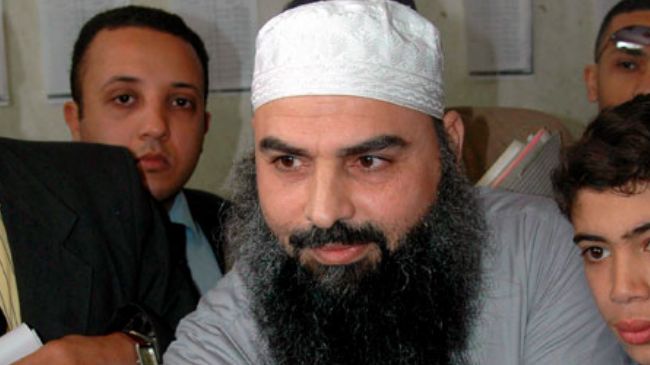 Milan’s appeals court has sentenced a former Central Intelligence Agency chief to seven years in prison for kidnapping an Egyptian Muslim cleric.
Jeff Castelli was found guilty along with two other agents, who were each given six years for abducting Osama Moustafa Hassan Nasr, also known as Abu Omar, as part of the CIA’s ‘extraordinary rendition’ program in 2003.
The trio had been acquitted at their first trial in 2009 due to diplomatic immunity but prosecutors had appealed against the verdict.
Abu Omar, who was kidnapped in a joint operation by the CIA and the Italian military intelligence agency SISMI, enjoyed political asylum in Italy at the time.
He was allegedly taken to a US air base in northeast Italy and then transferred to a US base in Germany and subsequently to Cairo.
The Muslim Cleric, who was released in 2007, claims he was tortured in prison by his kidnappers.
Last year, Italy’s Court of Cassation upheld the convictions of 23 CIA agents over the same incident and ordered new appeals trials for five Italian intelligence agents, including Italy’s top two former military intelligence officers, Nicola Pollari and his ex-deputy Marco Mancini.
The Italian Supreme Court ordered the 23 CIA agents to pay one million euros in damages to Abu Omar and 500,000 euros to his wife.
The ‘extraordinary rendition’ program was launched by former US president George W. Bush after the 9/11 attacks as an operation for the global apprehension and incarceration of suspected terrorists.
Obama’s Playbook: Still Killing Outside the Lines
By Matthew Harwood, ACLU | January 30, 2013
To hear the Obama administration tell it, through anonymous leaks to the press of course, the United States’ “targeted killing” program will soon be bound by clear and “more stringent” rules before a drone strike gets the green light. This counterterrorism “playbook,” so says the administration, will institutionalize the process for the remote-controlled killing program and keep it within the rule of law.
But that isn’t true for three reasons, Chris Anders, a senior legislative counsel at the ACLU, explained to PBS’s NewsHour on Wednesday night. First, secret rules are inconsistent with the rule of law, which is predicated on everyone knowing the rules. Second, the Obama administration’s playbook rules will not apply to CIA drone strikes in Pakistan for at least a year if not more, according to the Post. Third, and most importantly, the rules undergirding the program, secret or not, violate the Constitution and international law.
Anders noted the Kafkaesque nature of the secrecy during the program. “To say we follow the rule of law, but we don’t even know what the rules are, and then the rules don’t apply to the biggest player is a little bit of a joke.”
Drone strikes occur frequently inside Pakistan, the only country in which the CIA is exempt from the secret rules. And contrary to the claims of CIA Director nominee John Brennan, arguably the most important cog in the remote-controlled killing machine, drone strikes do kill civilian bystanders, including children. In total, about 3,000 people, including 176 children, have been killed by over 300 drone strikes in Pakistan, according to the Bureau of Investigative Journalism.
Although we’re not at war with Pakistan, Pakistanis feel under attack from the United States. “Drones hover twenty-four hours a day over communities in northwest Pakistan, striking homes, vehicles, and public spaces without warning,” a recent report, Living Under Drones, explained. “Their presence terrorizes men, women, and children, giving rise to anxiety and psychological trauma among civilian communities.” The impact as well as the legality of these kinds of drone attacks, and the larger “targeted killing” toolkit, is now the focus of a U.N. investigation.
Nevertheless, President Obama frequently makes reference to the importance of the rule of law in guiding our national security decisions.
“We will defend our people, and uphold our values through strength of arms, and the rule of law,” he said during his inaugural speech on Monday. “We will show the courage to try and resolve our differences with other nations peacefully. Not because we are naive about the dangers we face, but because engagement can more durably lift suspicion and fear.”
Obama’s remote-controlled killing program, however, continues to instill suspicion and fear rather than lift it. It’s a dangerous legacy for a program that has become an illegal hallmark of his administration.
Related article
- New U.S. Counterterrorism Playbook to Exclude Pakistan from Drone “Kill” Rules (alethonews.wordpress.com)
Audio feed cut during 9/11 trial hearing, prompting suspicions of external censorship
RT | January 29, 2013
The first day of a pretrial hearing for five men accused of plotting the September 11 attacks was swirling with intrigue on Monday after the audio feed at a Guantanamo war crimes court was abruptly cut off.
The incident prompted the military judge to ask whether someone outside the courtroom was censoring the hearing.
Observers were listening to the trial behind a glass window when the feed was suddenly cut. The audio went silent when David Nevin, a lawyer for Khalid Sheik Mohammed – the alleged mastermind of the 9/11 attacks – asked if the lawyers and judges needed to meet in closed session before considering a request by the defense.
In previous hearings for alleged Al-Qaeda operatives sentenced to CIA prisons, a court security officer controlled a button which muffled audio to spectators when secret information was disclosed. During the censoring process, a red light flashes and observers hear nothing but static.
But that wasn’t the case this time around, as the judge’s reaction made clear once the sound was restored moments later.
“If some external body is turning things off, if someone is turning the commissions off under their own views of what things ought to be, with no reason or explanation, then we are going to have a little meeting about who turns that light on or off,” Army Colonel James Pohl told the courtroom.
Pohl seemed to be addressing the prosecution team, saying that Nevin had only referred to the caption of an unclassified document asking the judge to preserve as evidence the secret CIA prisons where the defendants say they were tortured, Reuters reported.
Nevin and the other defense attorneys said they wanted to know whether there was a third party monitoring the proceedings, and whether that entity could be listening to private communications between the lawyers and their clients, the Washington Post reported.
Justice Department lawyer Joanna Baltes said she could explain the reason behind the audio cut – but not in public. Pohl said he would meet in closed session with the lawyers and reopen the public part of the hearing on Tuesday. If the reason behind the cut could be explained to the public, he would do so then.
Mohammed and his four co-defendants are accused of training and aiding the hijackers who flew commercial airliners into the World Trade Center in New York, the Pentagon and a Pennsylvania field on September 11, 2001.
They could be sentenced to death if convicted on charges including terrorism, attacking civilians and murdering 2,976 people.
The men were among the suspected Al-Qaeda captives who were moved across borders without judicial review, and held and interrogated in secret CIA prisons overseas during the presidency of George W. Bush.
The CIA has acknowledged that Mohammed was subjected to the controversial interrogation practice known as waterboarding. The defendants also claimed they were subjected to threats, sleep deprivation and being chained in painful positions.
The defense lawyers have argued that the CIA’s treatment of the defendants constituted illegal pretrial punishment, and “outrageous government misconduct” that could justify dismissal of the charges, or at the very least spare the defendants from execution if convicted.
There are currently 166 detainees at Guantanamo Bay detention camp, including Mohammed. In 2009, US President Barack Obama ordered the prison to be shut within a year. However, it is still open and operational.
Guantanamo remaining open is yet another example of Congress overpowering the president – the prison was bundled together with the National Defense Authorization Act, which serves as the overall US defense budget. Obama has the power to veto the entire act, but not to individually challenge the administration of Guantanamo Bay.
Obama has threatened such a veto several times, but backed down on every occasion.
New U.S. Counterterrorism Playbook to Exclude Pakistan from Drone “Kill” Rules
By Noel Brinkerhoff | AllGov | January 23, 2013
The Central Intelligence Agency’s (CIA) drone campaign in Pakistan will not be bound by new counterterrorism rules that the Obama administration is finalizing.
The rules, referred to as the “playbook” by officials, are supposed to establish parameters for killing overseas threats. Once completed, the playbook will detail how names are added to assassination lists, which legal principles justify the killing of U.S. citizens, and what offices must sign off before drone strikes are carried out.
But the CIA will be exempted from the rules for at least a year. Agency leaders objected to being bound by the playbook, citing the pressing need to continue bombing Taliban and al-Qaeda targets in Pakistan before the U.S. withdraws from neighboring Afghanistan, where the drones are based.
Greg Miller of The Washington Post wrote that the drafting of “the playbook was nearly derailed late last year by disagreements among the State Department, the CIA and the Pentagon on the criteria for lethal strikes and other issues. Granting the CIA a temporary exemption for its Pakistan operations was described as a compromise that allowed officials to move forward with other parts of the playbook.”
Critics of the government assassination program view the playbook as indicative of the institutionalization of the U.S. killing policy. It is “a step in exactly the wrong direction,” Hina Shamsi, director of the American Civil Liberty Union’s National Security Project, told the Post. She called it “a further bureaucratization of the CIA’s paramilitary killing program.”
Featured Video
Alon Mizrahi: ‘Israel Must Be Dismantled’
or go to
Aletho News Archives – Video-Images
From the Archives
Allies Don’t Need Lobbies
By Jay Knott | Dissident Voice | September 24, 2013
In a recent article on Counterpunch, Rob Urie defended the traditional Marxist analysis of US policy in the Middle East. He argues that support for Israel is driven primarily by economic interest, not the Jewish lobby.
He starts by paying tribute to the idea that Western societies are uniquely racist. He says that the “Western narrative” claims there is an “Arab character”, and that this is “antique racist blather”. He gives no definition of these terms. Further, he establishes his credentials as part of the dominant current in the American left by claiming that “over a million people in Iraq died so ‘we’ in the West can drive SUVs.”1
When he tries to criticize bourgeois economics, he makes it clear he doesn’t understand the developments it has made since Marx’s day, using the mathematical discipline known as “game theory”. He dismisses the basic abstraction of economic theory, the idea of the rational individual, on the grounds that it is “devoid of history, culture and political context”. But abstractions are always devoid of something.
He defends a more concrete economic theory, mostly Marxist, with some input from another theorist of capitalist crisis, Hyman Minsky. This concrete theory leads him to the view that US activity in the Middle East is primarily driven by rational capitalist motives, the need to secure a supply of oil.
“Taking the totality of circumstance — former oil company executives launching war on an oil rich nation on a pretext they publicly proclaimed they didn’t believe shortly before taking office — and that upon launching their war proved to be non-existent, requires a willingness to overlook the obvious — that the war on Iraq was for oil, that is difficult to support.”1
Perhaps I’ve misunderstood him, but based on what he says in the rest of the article, this convoluted sentence seems to argue that, because president Bush and vice-president Cheney attacked Iraq on false premises, and they also said it was all about oil, and they are former oil executives, and Iraq has a lot of oil, it’s difficult to deny US attacks on Iraq are all about oil.
In fact, it’s not hard at all. As Urie points out, at times Bush and co. said that attacking Iraq was “protecting the world’s supply of oil.”1 But, as he also points out, they are congenital liars. Why should we believe them when they say they are trying to “protect” the oil supply? Protect it against what? When politicians “admit” attacks on Middle Eastern countries are wars for oil, they are parroting the neo-con party line, feeding the public, both left and right, with a plausible-sounding pretext. For right-wingers, “it’s a war for oil” is a reason to support war, and for leftists, it’s a way to feel better by complaining impotently about corporate greed. Both approaches help the war drive. … continue
Blog Roll
 Aletho News
- Pakistan ramps up food exports to Persian Gulf nations as war deepens food insecurity
- Iran submits response to US plan, sets terms for war’s end: Tasnim
- US vs Iran: Kharg Island Talk — Bluff or Escalation? Ex-Military Officer Weighs In
- Zelensky unnecessarily involves Ukraine in the Middle East crisis
- Turkish tanker blacklisted by Ukraine hit in drone attack – media
- Canada, the U.S., and NATO: the inescapable trap
- Villains of Judea: Leonid Radvinsky
- Alon Mizrahi: ‘Israel Must Be Dismantled’
- Former Head Of MI6 Admits That The U.S. And Israel Are Losing The Iran War
- Scattered Thoughts on War and Peace
- If Americans Knew
- Israel may be committing war crimes in Lebanon – Not a ceasefire Day 167
- In the West Bank, life is a constant battle – 3 articles
- Jacob Reses, one of the most powerful pro-Israel operatives in Trump’s Washington
- Israeli-US assaults kill or injure 87 children a day – Not a ceasefire Day 166
- ‘Forever live by the sword’: Understanding Israelis’ massive support for Iran war
- UN’s special rapporteur on human rights says Israel is systematically torturing Palestinians
- Trump White House plagiarized Iran war manifesto from Israel-aligned think tank
- Gaza says 6–10 patients die daily waiting for treatment abroad as Israel blocks medical evacuations
- ‘Substantial evidence’ of double-tap strike in killing of Gaza’s Hind Rajab
- ‘Do Not Want To Die For Israel’: Doubts About Trump’s Iran Strategy Spread Among Troops
- No Tricks Zone
- Devastating Assessment Of Comirnaty Vaccine By Former Senior Pfizer Europe Toxicologist
- New Study: CO2 Is ‘Effectively Negligible’ As An Explanatory Climate Change Factor Since 2000
- Former Pfizer Toxicologist Dr. Helmut Sterz Tells Bundestag Hearing Pfizer Vaccine Should Have Never Been Approved
- Energy Expert: Germany’s Nuclear Phaseout Was A “500 Billion Euro Mistake”
- New Research: South Australia’s Mid-Holocene Sea Surface Temperatures Were 4°C Warmer Than Today
- Storing Green Energy To Last Germany 10 Days Would Require A 60-Million Tonne Battery
- New Studies: UK Sea Levels Were 4 Meters Higher Than Today During The Mid-Holocene
- Destructive Green New Deal: German Energy And Metal Group Warns Of Drastic Crisis
- New Study Documents A 20-Year Pause In Arctic Sea Ice Decline – Driven By Internal Variability
- Wake-up Call: Survey Shows Majority Of Germans Now Favor Postponing Climate Targets!
 Aletho News