Collapsing Empire: US Bows To African Revolutionaries
By Kit Klarenberg | Al Mayadeen | February 6, 2026
On February 2nd, the BBC published an extraordinary report on how the Trump administration “has declared a stark policy shift” towards Burkina Faso, Mali, and Niger, the governments of which have sought to eradicate all ties to Western imperial powers, and forged the Alliance of Sahel States (AES). The independent bloc is a revolutionary enterprise, with the prospect that further countries will follow its members’ lead. And Washington is under no illusions about the new geopolitical realities unfolding in Africa.
The British state broadcaster records how Nick Checker, State Department African Affairs chief, is due to visit Mali to convey US “respect” for the country’s “sovereignty”, and chart a “new course” in relations, moving “past policy missteps.” Checker will also express optimism about future cooperation with AES “on shared security and economic interests.” This is an absolutely unprecedented development. After military coups deposed the elected presidents of all three countries 2020 – 2023, the trio became Western pariahs.
France and the US sought to isolate and undermine the military governments, halting “cooperation” projects in numerous fields. Meanwhile, the Economic Community of West African States, a neocolonial union of which all three were members, first imposed severe sanctions on Burkina Faso, Mali, and Niger, before its combined armed forces prepared to outright invade the latter in summer 2023. The three countries didn’t budge, and in fact welcomed Western isolation, forging new international partnerships and strengthening their ties. ECOWAS military action never came to pass.
In January 2025, the trio seceded from the union and created AES. Western-funded, London-based Amani Africa branded the move “the most significant crisis in West Africa’s regional integration since the founding of ECOWAS in 1975,” claiming it dealt “a significant blow to African… cooperation architecture.” Meanwhile, Burkina Faso’s leader Capt Ibrahim Traoré has become a media hate figure. A disparaging May 2025 Financial Times profile slammed him as a cynical opportunist leading a “Russia-backed junta”, and his supporters a “cult”.
As the BBC unwittingly explains, such antipathy towards Traoré stems from establishing himself “as a standard-bearer in resisting ‘imperialism’ and ‘neocolonialism’.” Via “vigorous social media promotion, he has gained huge support for this stance and personal popularity among young people across the continent and beyond,” ever since seizing power in September 2022. Far from just talk, Traoré and his fellow AES “junta” leaders have systematically sought to neutralise malign Western influence locally, while pursuing left-wing economic policies for the good of their populations.
France and the US have proven markedly powerless to hamper, let alone reverse, this seismic progress. While officials in Paris and Washington hitherto relentlessly hammered AES’ members over “democracy and human rights” concerns, the BBC reports such considerations will be wholly “absent from the agenda” when State Department officials now visit Mali. In other words, the Empire recognises it no longer has the ability to dictate the composition or policies of regional governments and must engage administrations on their own terms.
‘Despotic Governments’
While generating only occasional mainstream interest, the push by Burkina Faso, Mali, and Niger to rid themselves of Western imperialism has been remarkable in its scope and efficacy. French and US media programmes and channels have been blocked throughout AES. In August 2022, Paris’ forces were sent packing from Mali after a nine-year-long occupation. Two years later, Russian soldiers took over an airbase in Niger housing American forces at the government’s invitation, after authorities demanded Washington withdraw from the country.
These purges have had a knock-on effect in the wider region. For example, in November 2024, Chad abruptly terminated a military agreement, ending France’s long-running occupation of the country. Around the same time, Senegal demanded that the French close their military base in Dakar. The last troops departed in July 2025, leaving Paris with no permanent installations in Central or West Africa. Meanwhile, efforts by AES members to drive Britain, France, and the US out of every major sector of their economies are ongoing.
Right when Chad and Senegal were bidding bon voyage to French forces, Niger seized control of local mining firm Somaïr, a component of state-owned French nuclear company Orano. Somaïr provided a quarter of the uranium supply to European nuclear power plants. Resultantly, EU imports of uranium from Russia rose by over 70%, despite the supposedly crippling sanctions imposed over the Ukraine proxy war. In another bitter irony, Moscow has concurrently cemented itself as a close partner of AES member states in economic and military fields.
This burgeoning relationship has triggered a predictable chorus of condemnation and fearmongering from Western journalists, politicians, and pundits. Yet, a March 2024 poll published by the German Friedrich Ebert Stiftung Foundation found 98% of Malians approve of their country’s bond with Russia, with 83% being “very satisfied” and 15% “rather satisfied”. More generally, the same survey highlighted how Mali’s “junta” enjoys overwhelming public support, about which Western governments can only fantasise.
In all, 81% of respondents believed life in Mali had improved since the military administration took power. A staggering 99% expressed satisfaction with the work of security forces, 95% were optimistic about the country’s future prospects, and 87% rejected calls for an election. Similar results were found in a poll of Burkina Faso’s population in August. A stunning 66% of citizens said it was legitimate for the military to seize power, if “elected leaders abuse their power for their own interests.”
As a fascinating paper by Senegalese academic Ndongo Samba Sylla forensically details, ever since supposed independence was granted to Africa in the 1960s, France and other imperial powers have worked concertedly to ensure its constituent countries are ruled by pliant puppets. Along the way, the West has “shown no scruples in backing odious civilian or military regimes” favourable to their interests. This produces “choiceless democracies” across Africa, with “despotic governments” that come to power “through fraudulent elections and… do not create any welfare for their people.”
‘Lasting Solutions’
Sylla cites the example of Chad, where France sustained a corrupt, brutal dictator, Idriss Deby Itno, in office 1990 – 2021. Following his death, Emmanuel Macron diplomatically backed his son’s “unconstitutional succession”. The French President’s unabashed advocacy for an illiberal, nepotistic power grab is to be contrasted with Macron’s furious censure of the military coups in Burkina Faso, Mali, and Niger, demands they hold elections, and calls for “financial sanctions from African countries, the West and its financial institutions.”
France could impose sanctions directly on the trio due to Paris’ control of the Central Bank of West African States, the financial arm of ECOWAS. Membership ties states to the CFA Franc, a currency created after World War II that allowed Paris to maintain grossly iniquitous trading relationships with its African colonies, when its economy was ravaged and its overseas empire rapidly unravelling. The CFA Franc makes it cheap for members to import from France and vice versa, but prohibitively expensive for them to export elsewhere.
Such forced dependency creates a captive market for the French, and by extension, Europe, decisively blunting local development. Member states are impotent to enact meaningful policy changes, as they lack control over their own economies, forced to take orders from the IMF, World Bank, and Western investors. As Sylla remarks: “No matter who you elect, they will have to stick with the basic economic policy blueprint.” Creating a replacement currency is AES’ next major challenge – although its members have already started constructing a central bank.
AES’ continued existence and successes are anathema to Paris. Since “decolonisation” in Africa in the early 1960s, the French have launched 50 overt interventions in Africa, which doesn’t account for assassinations of anti-imperialist leaders, palace coups, rigged elections, and other skullduggery employed to maintain France’s mephitic, exploitative grip over its former holdings. Delusions of keeping the continent wedged under their heels have not faded, despite the dramatic collapse of French power locally. In April 2024, General Francois Lecointre, former French Army Chief of Staff, declared:
“What we Europeans have in common is the Mediterranean and Africa, where our destiny is at stake… Europe will have an obligation to return to Africa to help restore the state and bring back administration and development. It’s not China, Russia, or Wagner [Group] who are going to provide lasting solutions to the very great difficulties facing these African countries and their people.”
Residents of AES evidently beg to differ, and stand ready to defend their leaders from foreign destabilisation. US officials aren’t unwise to the region’s new power dynamic. In an October 2025 interview with Le Monde, Trump confidante and State Department senior advisor for Africa, Massad Boulos, rejected any suggestion Washington would criticise the Sahel’s military governments, as while “democracy is always appreciated… people are free to choose whatever system is appropriate for them.” The anti-imperialist struggle continues apace in Africa – and for now, revolutionaries are winning.
French troops begin departure from Chad
Press TV – December 21, 2024
A contingent of 120 French soldiers has left Chad following the country’s decision to end its defense cooperation pact with Paris.
French troops were seen boarding their plane on Friday and departing from N’Djamena airport.
The withdrawal process formally began earlier this month with the departure of two French Mirage warplanes.
France still has about 1000 troops stationed in Chad, with the full drawdown expected to take several weeks.
The terms and conditions of the complete withdrawal, including whether any French troops will remain in Chad, are yet to be finalized between the two countries.
Chad announced on November 28 its decision to end a defense accord with Paris mainly dating from independence in 1960.
“At midday, 120 French soldiers took off from the military airport of N’Djamena on board an Airbus A330 Phoenix MRTT, headed for France,” the ministry said in a statement on Facebook.
The departure of French soldiers took place in the presence of Chadian military authorities, the statement said.
The move comes after France had already pulled its forces out of Mali, Burkina Faso, and Niger in recent years.
This departure signals the end of decades of French military presence in the Sahel region as the anti-French sentiment continues to grow.
Chad Expelled The German Ambassador A Month After The US Claimed Russia Was Meddling
By Andrew Korybko | April 9, 2023
Chad’s expulsion of the German Ambassador for his “impolite attitude and the non-respect of diplomatic customs”, which reports suggested was a euphemism for his meddling in its internal affairs, wasn’t what the US expected when it reportedly passed along intelligence about Russia in late February. The Wall Street Journal wrote at the time that American officials informed their Chadian counterparts about Moscow’s alleged plots to arm anti-government rebels and even assassinate the president.
There were reasons to be skeptical of this at the time, not least because the Russian Embassy in N’Djamena warned in January about Western efforts to divide these two states, especially after Moscow shared its expectation that the Chadian President will attend summer’s second Russia-Africa Summit. To be sure, bilateral relations have come a long way since their low point in September 2021 when the Chadian Foreign Minister claimed that Wagner posed a threat to his country’s interests.
Its presence in the neighboring countries of the Central African Republic (CAR) and Libya was allegedly being exploited to arm anti-government rebels, according to him, hence why US spies probably thought that Chad would fall for a remixed version of this narrative. His words led to the conclusion that “Chad Wants To Lead The Charge Against Russia’s Inroads In Françafrique” for several self-interested reasons, not least of which was to ensure Paris’ continued support for the authorities amidst rising discontent.
Everything radically changed in Africa over the last 18 months since then, however. France’s “sphere of influence” in the Central and Western parts of the continent has been shattered as a result of Russia’s successful “Democratic Security” policies in the CAR and Mali, with Paris now needing N’Djamena much more than the inverse. Furthermore, not a single African country complied with the West’s demands to sanction Moscow for its special operation in Ukraine, thus exposing the limits of its influence nowadays.
These interconnected developments contributed to changing Chad’s perceptions of Russia’s rising role in Africa, hence the possibility of its president attending summer’s second Russia-Africa Summit. It also accounts for why this country didn’t fall for the US’ claims that Moscow is meddling in its affairs, instead choosing to expel the German Ambassador a little over a month later instead of the Russian one like Washington likely expected would happen after sharing its so-called “intelligence”.
To be clear, there’s still a chance that some influential forces in Chad could do the geopolitical bidding of their country’s traditional French patron by lobbying for decisionmakers to authorize an anti-Russian provocation of some sort, but it’s important to point out that this hasn’t yet happened. The preceding observation extends credence to the conclusion that Chad’s perceptions of Russia are changing for the better, so much so that it didn’t fall for the US’ latest attempt to divide-and-rule them.
This is admittedly impressive since Chad is a bastion of French influence in Africa, but as was earlier written, it’s nowadays the case that France needs Chad more than the inverse after Paris’ “sphere of influence” in the Central and Western parts of the continent was shattered over the last 18 months. N’Djamena can now at least in theory consider demanding more aid and other sorts of benefits from France in exchange for continuing to host its forces without having to do its regional bidding like before.
Chadian officials can also more confidently confront the West since the scenario of the latter initiating any serious deterioration in their ties is no longer all that troubling because their country could just shift towards Russia in that event like the CAR, Mali, and a growing number of others are presently doing. In fact, this pivot could be held above their heads as a Damocles’ sword for squeezing more benefits from that de facto New Cold War bloc, which fears the consequences of pushing Chad into Russia’s arms.
Expelling an ambassador is a major move, however, let alone a traditionally Western-aligned African country doing this to one who represents the EU’s de facto leader. For that reason, this development probably wasn’t the result of a failed effort by Chad to get more money from Germany. Rather, it’s most likely the case that reports about that official’s meddling in his host state’s internal affairs are accurate, hence why N’Djamena took this unprecedented step.
The authorities want to avoid a repeat of last October’s deadly unrest that was officially driven by discontent over them delaying their country’s democratic transition but was exploited by certain forces to carry out a spree of violence across the capital. The West specializes in organizing Color Revolutions so it might have been the case that the recently expelled German Ambassador was trying to initiate another round of similar unrest to pressure the Chadian President against possibly visiting Russia in July.
His attendance at the second Russia-Africa Summit would be a coup de grace for Moscow by proving that its pragmatic engagement with the continent has succeeded in turning the leaders of traditionally Western-aligned countries like Chad into important partners who refuse to do third parties’ bidding. It would be Russia’s top diplomatic victory over the West since NATO began waging its proxy war in Ukraine to have him and other such leaders all meet with President Putin in the latter’s hometown.
Moscow has no reason to meddle in any of these countries’ affairs and thus risk spoiling this opportunity, especially not with Chad, which previously positioned itself as France’s vanguard force for pushing back against Russia all across Paris’ “sphere of influence”. The West, however, has every reason to meddle via disinformation disguised as “intelligence” and the cultivation of Color Revolution pressure in a desperate attempt to preemptively avert its rival’s impending diplomatic victory.
That’s why it was ultimately the German Ambassador that was expelled from Chad and not the Russian one despite the US claiming a little over a month ago that Moscow was plotting to kill its president. He didn’t extend credence to those reports otherwise Russia’s representative would have already been kicked out of the country. By ordering the German Ambassador’s expulsion, however, Chad just signaled that it now fears that its traditional Western partners are the ones who are truly conspiring against it.
Israel seeking Africa foothold with renewed Chad ties
Press TV – January 21, 2019
Israel has for some time been trying to expand its influence across the African continent. Prime Minister Benjamin Netanyahu’s recent visit to Chad is being viewed as a step in this direction. The two sides have now announced the normalization of their diplomatic ties amid reports of Israel supplying the Central African state with weapons.
Netanyahu, and Chadian President Idriss Deby have “announced the renewal of diplomatic relations between Chad and Israel,” a statement from Netanyahu’s office said Sunday.
Relations between Tel Aviv and the Muslim-majority country were cut in 1972.
Speaking at a joint press conference in N’Djamena on Sunday, Deby told Netanyahu that the purpose of the visit was to bring the two sides closer and to cooperate.
For his part, Netanyahu said that Israel was announcing “a renewal of diplomatic ties with Chad and making a breakthrough for the Arab and Muslim world.”
He said the restoration of diplomatic ties was “a result of strenuous work of recent years.”
Deby, who won a disputed fifth term in April 2016, visited the occupied Palestinian territories and met with Netanyahu in November, becoming the first Chadian leader to visit Israel, 47 years after the two sides severed ties.
Back then, Israeli media cited sources in N’Djamena as saying that Deby’s visit was focused on “security” and that Tel Aviv had already been supplying weapons and other military equipment to Chad.
Over the past two years, Netanyahu has been seeking to secure a foothold in Africa. He has traveled to several African states in a bid to convince them to stop voting against the Israeli regime at the United Nations in favor of Palestinians.
Amid warming relations with Chad, Israel is seeking to normalize relations with Sudan, among other African states.
Israel is also said to be seeking to take advantage of insurgency and Takfiri militancy gripping parts of Africa to sell advanced military equipment to conflict-ridden states in the continent.
Tel Aviv and the Persian Gulf Arab governments have also taken further steps towards normalization.
Only two Arab states, Egypt and Jordan, have open diplomatic relations with Israel. Tel Aviv has recently stepped up its push to make clandestine ties with other Arab governments public and establish formal relations with them.
Israeli PM visits Chad ‘to restore relations’
MEMO | January 20, 2019
Israel’s Prime Minister Benjamin Netanyahu headed to Chad on Sunday for talks aimed at restoring diplomatic relations between Tel Aviv and N’Djamena.
“I am now leaving on another historic and important breakthrough, to Chad, a huge Muslim country bordering Libya and Sudan,” The Times of Israel newspaper quoted Netanyahu as saying in statements ahead of travelling to Chad.
“There will be big news,” Netanyahu said, hinting at the formal resumption of diplomatic relations between the two countries.
Chad severed diplomatic relations with Israel in 1972.
Netanyahu described his visit to Chad as “part of the revolution we are doing in the Arab and Muslim world”.
The Israeli premier claimed that Iran and the Palestinians have attempted to “prevent Israel’s diplomatic push”.
“It greatly worries, even greatly angers [them],” he said.
The resumption of bilateral ties between Chad and Israel is expected to be announced in a joint press conference between Netanyahu and Chadian President Idriss Deby.
Israeli Channel 10 reported Saturday night that Netanyahu is expected to offer his government’s support for Deby to prevent militants’ infiltration to Chad coming from Libya.
Netanyahu’s delegation to Chad includes senior officials from the defense and finance ministries, in an indication of his target to boost military and trade ties with Chad.
The Chadian President had made a rare visit to Israel in November.
Sudan Debunks Netanyahu Boasts of ‘Normalization,’ Denies Airspace Access
Sputnik – 07.01.2019
In December 2018, the Israeli Prime Minister boasted that Israeli planes can freely fly through Sudan airspace thanks to a “normalization” of bilateral relations.
Sudanese president Omar al-Bashir announced Saturday that his administration has denied the use of country’s airspace for flights toward Israel, denouncing an earlier statement by Netanyahu that Israeli planes could fly over Sudan to South America.
A request to use Sudanese airspace did not come from Tel Aviv directly, however, coming instead from Kenya.
“We received a request to use our airspace on the route to Tel Aviv. The request did not come from El Al, but from Kenya Airways — we refused,” al-Bashir said in an interview with a local Sudanese television network. El Al is Israel’s largest airline and the flag carrier of the self-described Jewish state.
In December 2018, Netanyahu made a statement about Sudanese airspace, boasting how Israel has improved international ties with predominantly-Muslim countries. The statement was made after Netanyahu renewed diplomatic relations with Chad, which had been severed in 1972.
“At this time, we can overfly Egypt. We can overfly Chad, that has already been set. And to all appearances, we can also overfly this corner of Sudan,” he said, pointing to a map.
Neither Netanyahu nor a spokesman elaborated on when exactly Israeli planes would start using Sudanese airspace.
Speaking on Sudanese television, Omar al-Bashir said that Sudan “will not be the first nor the last to normalize relations with Israel.” Earlier on Thursday, al-Bashir said that he “has been advised” to normalize relation with the Jewish state.
The Sudanese president blamed the “Zionist lobby that controls Western countries,” for sanctions imposed on his nation, alleging that Tel Aviv has a plan to destroy its Arab neighbors, while pointing out that Israel has supported rebels fighting against the Sudanese government and is behind what the African described as an economic and diplomatic siege.
Al-Bashir also noted that the Israeli Air Force has bombed Khartoum, the nation’s capital, on two occasions in 2012 and 2014. Media outlets reported the attacks by Tel Aviv on military facilities in Khartoum, and Sudan has held Israel responsible for the attacks.
Israel, with diplomatic incentive from Washington DC, has recently been working on improving ties with Sunni Muslim countries, a bloc led by Saudi Arabia, over fears of a threat from Shiite-Muslim Iran.
Netanyahu personally visited Oman to promote an international railway project. In November 2018, the president of Chad visited Israel, for the first time in 46 years, after diplomatic ties were reestablished.
What stopped Chad’s Idriss Déby from visiting Israel before now?
Dr Mustafa Fetouri | MEMO | December 20, 2018
If you did not know much about Chad, a country in the middle of Africa, it most likely it caught your eye on 26 November when its President, Idriss Déby, landed in Israel for an unannounced visit to the Zionist state. The visit was shrouded in secrecy until Déby’s plane touched down at Ben Gurion Airport. His closest aides had no idea that he was heading to Tel Aviv until the last minute. It reminds me of November 1977, when Egypt’s then President Anwar Sadat made his surprise trip to Israel.
Sadat justified his move by the fact that Egypt and Israel were at war with each other and such a visit, he believed, helped to make peace. Déby, on the other hand, has been in power since December 1990, Chad is not at war with Israel and the two countries are thousands of miles apart; so what motivated him to embark on such an endeavour at this time? Or, indeed, what stopped him from making such a visit before now?
Israeli journalist Herb Keinon answered this question by explaining that, “Chad severed ties with Israel in 1972 after coming under pressure from Libya.” Reuters reported that Dore Gold, the Director of Israel’s Foreign Ministry in 2016, explained after his own visit to Chad why the government in N’Djamena cut ties with Israel over four decades earlier: “[his Chadian hosts] told him that they cut off ties 44 years prior under Libyan pressure, a factor removed with the toppling of Muammar Gaddafi [in 2011].”
Indeed Libya under Gaddafi was the fiercest opponent of Israeli expansion in Africa. As early as 1972, just three years after taking power, Gaddafi forced the then Chadian President, François Tombalbaye, to sever ties with Tel Aviv. Gaddafi believed strongly that any Israeli diplomatic expansion into Africa undermined the continent’s pro-Palestinian position. The late Libyan leader considered Israel to be an enemy best kept as far away as possible from Libya and Africa.
Libya has a history of ties with Chad going back to Italy’s invasion and occupation of Libya in 1911, which saw hundreds of Libyans seeking safety in Chad; their descendants still live in Libya’s southern neighbour. Gaddafi capitalised on this to strengthen ties between this community of exiles and their home country. He also sought to prevent Chad from becoming a threat to Libya’s security, which is why Tripoli was involved in toppling Chadian regimes considered unfriendly, particularly between 1972 and 1990.
Idriss Déby himself became President of Chad in December 1990, with Libyan political and military support. Gaddafi invested Libya’s oil money in Chad; the North African state owns two banks there and some luxury hotels, and built dozens of schools, mosques and medical facilities, as well as communication and agriculture infrastructure.
The late Libyan leader also used his political clout in Africa to keep African countries away from western influence, knowing too well that it would only benefit Israel as many western capitals would encourage them to embrace and help Tel Aviv to infiltrate the continent even more. In this context, Libya founded the African Union in 1999, for Pan-African cooperation. Tripoli also founded the Community of Sahel-Saharan States (CEN-SAD), bringing 24 Sub-Saharan African counties closer to neighbouring North African Arab states to share investment, free trade, security and foreign policy coordination.
This put Libya, before 2011, in direct competition with western powers in Africa. One of Tripoli’s long term objectives was to launch a golden dinar, backed by its own huge financial reserves, as a currency for African states to replace the CFA franc which is backed by the French treasury. This was one of the reasons behind French President Nicolas Sarkozy’s attack on Libya to topple the Gaddafi regime in 2011.
After Gaddafi was killed in 2011, many of his long term African initiatives were, under French pressure, abandoned. CEN-SAD, for example, is being replaced by the smaller Group of 5 Sahel (G5S) made up of Chad, Niger, Mali, Mauritania and Burkina Faso. Ironically, though, the members of G5S are the weakest in Africa and are focusing on security by allowing France and the United States to establish military bases in Mali and Niger. This would have been unthinkable if Gaddafi was still around.
Having the best military among the G5S countries, Chad’s Idriss Déby has become even more influential in Africa. This makes his link with Israel even more dangerous.
As the leading armed forces within G5S, Chad’s army is responsible for fighting terrorism in the Sahel region. Déby and Mohamed Ould Abdel Aziz of Mauritania are seeking to promote G5S as a trusted partner in Africa. In this context, visiting Israel is an important step to unlock further diplomatic and military support.
Israeli Prime Minister Benjamin Netanyahu has made it his objective since 2016 to visit as many Muslim majority countries as possible. It would not be surprising to see some sort of rapprochement between Israel and Mali, Mauritania or Niger, or all three. Déby’s ice breaking visit to Tel Aviv has helped open the door for such rapprochement in Africa which, once upon a time, was a no-go area for Israel.
Apart from diplomatic gains, Israel is also interested in using Chad and its neighbours as stopovers for flights to South America, saving time and cost. A flight from Tel Aviv to Brazil, for example, will be around four hours shorter if central African airspace can be used. At the moment, such flights take around 17 hours, with at least one stopover in Europe or North America for refuelling.
Déby is facing more security challenges from his own people as armed rebel groups become more organised and stronger thanks to the safe bases they have in southern Libya. Young people in Chad’s Sahel region of Bahr El-Ghazal and Kanem in particular are becoming increasingly disenchanted with the authority in N’Djamena. The President’s security apparatus has been using discriminatory and heavy-handed tactics in the region under the pretext of fighting Boko Haram and other terror groups which infiltrated this vital area after Libya was destroyed by NATO in 2011.
The Chadian President is likely to seek Israeli help to keep himself in power. France, his main backer, “encouraged him to visit Israel,” according to Aqreen Saleh, the former Libyan ambassador to Chad who knows Déby personally. Saleh insists that “security for [Déby’s] regime is the main driver behind the visit to Israel,” not least because, over the past five years, the government in N’Djamena has been challenged by the rebel groups operating from southern Libya.
However, going to Israel is likely to backfire, particularly among Chad’s Muslim majority population. Historically, and especially since Chad gained independence, it has been Muslims who have risen against and toppled the central government.
Before 2011, thousands of Chadians depended on Libya for employment opportunities. Now they are heading to Libya to join rebel groups or work as mercenaries fighting for different Libyan factions, compounding Déby’s problems.
Idriss Déby needs arms and military equipment to fight the threat from the rebels operating out of Libya and Israel is only too happy to supply them to him. In the absence of any strong Arab leadership in Africa post-Gaddafi and the destruction of Libya, more African leaders are likely to embrace apartheid Israel at the expense of African support for the Palestinians and links with the Arab world.
UAE recruiting Africans for Saudi-led war: Report
Press TV – October 3, 2018
The United Arab Emirates (UAE), Saudi Arabia’s key partner in the ongoing Riyadh-led invasion of Yemen, has reportedly been recruiting tribesmen from northern and central parts of Africa to fight in the war.
The campaign features Emirati envoys “seducing” the tribesmen across a vast area spanning southern Libya as well as entire Chad and Niger, who earn a living by herding as well as human and material smuggling, the Middle East Monitor (MEMO) press monitoring organization reported on Wednesday.
“This campaign is supervised by Emirati officials who gained material profits in collaboration with human traffickers,” the report added.
An awareness campaign has been launched by Chadian activists, led by campaigner Mohamed Zain Ibrahim, to warn the tribesmen against joining the Saudi-led war.
“The Arabs of the [Persian] Gulf region, especially the UAE and Saudi Arabia, have never bothered to get to know the Arabs of the desert, and today they are asking for their support and seducing them to fight by their side in Yemen!” MEMO cited Ibrahim as telling pan-Arab Arabi21 electronic newspaper.
The envoys offer potential mercenaries such incentives as sums ranging from $900 to $3,000, in addition to acquiring UAE citizenship in return for their applying for jobs in Emirati security companies.
Ibrahim said the job opportunities were “an actual military recruitment campaign to gather mercenaries for the Yemeni war and use them to fight the people of Yemen, who are Arabs and Muslims as well, and all that for a bunch of dollars.”
“A delegation of Emirati people in business visited Niger in January 2018, where they met Arab tribal leaders and recruited 10,000 tribesmen living between Libya, Chad, and Niger,” MEMO said.
The Emirates has been contributing heavily to the 2015-present war, which seeks to reinstall Yemen’s former Saudi-allied officials.
In addition to their own forces, both Riyadh and Abu Dhabi have deployed thousands of militants across the violence-scarred country to intensify the invasion.
The Emirati side began beefing up its contribution in June, when the coalition launched a much-criticized offensive against al-Hudaydah, Yemen’s key port city, which receives the bulk of its imports.
Nigeria Announces Truce With Boko Haram
teleSUR | October 17, 2014
The Nigerian military announced on Friday that it reached a ceasefire agreement with the Islamist militant movement, Boko Haram, and that the Nigerian schoolgirls who were kidnapped by Boko Haram will be returned to their families.
Air Chief Marshal Badeh first spoke about the truce after a three day meeting between Nigeria and Cameroon. The BBC is reporting that the negotiations were mediated by Chad.
An official with Nigeria’s security forces told Reuters “Commitment among parts of Boko Haram and the military does appear to be genuine … It is worth taking seriously.”
Boko Haram has not made any statement about a truce.
The school girls were abducted from Chibok, a town in the northeastern state of Borno state, six months ago. Through the efforts of Nigerian women activists, the kidnapping of the girls became an international cause and brought Boko Haram onto the world stage. The Nigerian government has been strongly criticized by local as well as international human rights groups for its “lackluster” efforts to retrieve the girls. The release of the girls will be finalized next week in Ndjamena, Chad’s capital.
The Nigerian government spokesperson said that Boko Haram will not be given any land, but that the national government will not say what compromises it has made toward the militant group.
Boko Haram was founded in 2002 and has been fighting with the Nigerians military since 2009. More than 2,000 civilians have been killed this year in this conflict.
French fox in African hen house
Press TV – January 11, 2014
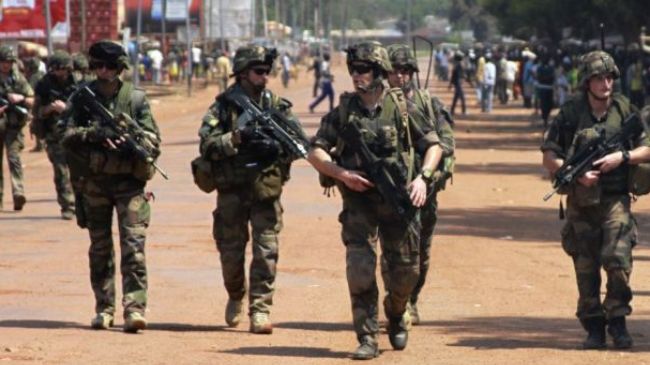
The French finally got what they wanted in the restive Central African Republic – regime change.
Interim President Michel Djotodia and his Prime Minister Nicolas Tiengaye have resigned and the former French colony is now set to form a new government under the watchful eye of Paris.
Western media portray French conduct in the Central African Republic (CAR) as a benevolent force. “We are there to save lives,” said French President Francois Hollande recently.
This is like lauding a fox in a hen house. The reality is that violence and suffering have largely stemmed as a direct result of illegal French interference in that African country.
What’s more, we also can say that the violence has been deliberately provoked by the French as a cover for their real objective – regime change.
Djotodia was forced to step down after he was politically ambushed by other Francophile African leaders at a special conference convened at the end of the week in neighboring Chad.
Before the summit, French diplomats had been briefing the media and other African states that Djotodia “had to go”. The French tried to cover their tracks by saying “we are not here to give our thumbs up or down” but that is exactly what they were doing – giving the thumbs down.
French President Francois Hollande and his Foreign Minister Laurent Fabius have been carping about the CAR leader for weeks and undermining his authority. Obviously, the French wanted rid of Djotodia and his administration – and now they have gotten their illicit way. Lest we forget such interference in the sovereign affairs of another state is illegal.
Notably, just before the conference opened on Thursday in Chad, Djotodia rejected rumors of his impending resignation. In less than 24 hours, he then quit, evidently under duress.
Within minutes of Djotodia’s sacking on Friday, and even before he had returned from Chad, French military tanks had surrounded the presidential palace in the CAR capital Bangui. French Defence Minister Jean-Yves Le Drian also issued a call for Djotodia to be “replaced as soon as possible”.
Chadian President Idriss Déby had been one of the most vocal African leaders calling for Djotodia to quit. Déby, who is described as “a strong French ally” (in other words, “puppet”), was doing France’s bidding and giving an African voice to a directive from Paris, a directive which amounts to a coup d’état.
The Western media narrative, led by France, is that Djotodia “had not done enough to curb the violence” gripping the CAR. More than 1,000 people have been killed in recent weeks in sectarian clashes between Muslims and Christians. Roughly a quarter of the country’s five million population have been displaced in the fighting.
Djotodia came to power last year after Muslim rebels known as Seleka deposed the Christian president Francois Bozizé in March. Bozizé was notorious for corruption and had come to power through a French-backed military coup 11 years ago.
With major French commercial interests in the resource-rich country, in particular uranium mining, it seems that France was vexed about the new transitional government led by Michel Djotodia – the first Muslim leader of the mainly Christian country.
Djotodia’s interim administration was legally constituted last April and it was overseeing a transition with elections scheduled at the end of this year.
However, that did not seem good enough to allay the French, who wanted to exert tighter control over the political process within the CAR in order to secure favorable conditions for its commercial interests.
This is the real basis for the French military invasion, not the humanitarian pretext that the Hollande government has been trumpeting.
Last month, chaos and violence in the African country surged after France sent in its troops – allegedly to provide “humanitarian protection” in a situation where there had been no serious violence, apart from French government scaremongering of “imminent genocide”.
French military were dispatched to the CAR on December 2, three days before a French-drafted resolution was passed at the United Nations Security Council authorizing the intervention.
More French troops arrived on December 5, 2013, and only since then have the sectarian clashes in Bangui city and across the country escalated.
The conclusion is inescapable. The humanitarian crisis in the CAR was precipitated by French involvement, not prevented. A major factor for the violence is that the French military moved to unilaterally disarm the Seleka rebels while ignoring Christian vigilante groups known as Anti-Balaka.
The latter were, in effect, given a free hand to maraud Muslim communities and businesses with deadly consequences.
It is therefore obtuse and mendacious for the French government and its African clients to blame Michel Djotodia for not controlling security in his country.
The real culprit for the bloodshed and pandemonium that jolted the CAR is French interference in that country– interference that was illegal and was cynically disguised as “humanitarian.”
There are deep fears that violence against Muslim communities will increase further now that Michel Djotodia has been forced from office.
The Christian Anti-Balaka militias will feel emboldened by the French political interference. Many believe that the Anti-Balaka is being orchestrated by the former French puppet Bozizé from his exile in France.
Tragically, this is just the latest episode of misery for the Central African Republic caused by French neo-imperialist predation.
Since gaining so-called independence from France in 1960, the French have launched more covert coups and countercoups in that country than in any other former African colony.
The CAR remains politically and economically underdeveloped – despite its teeming natural wealth – precisely because of systematic French predatory exploitation.
Poverty in the Central African Republic, as in many other African countries, is a direct result of French policy, primarily due to the “franc afrique” monetary system set up at the time of independence.
This systematic poverty enables France to exploit raw materials and the people mercilessly. And when the racket comes a bit unstuck, the French send in their troops to “restore order”.
What the international community, such as the Non-Aligned Movement of over 100 nations, should be doing is to call for the prosecution of France, not applauding this fox in a hen house.

Featured Video
Seyed M. Marandi: U.S. Military DIVIDED? Iran’s Secret Defense EXPOSED
or go to
Aletho News Archives – Video-Images
From the Archives
‘Israel sees Iran as obstacle to its policies’
Press TV – August 25, 2017
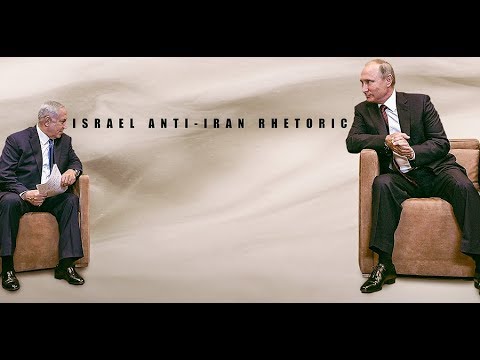
Prime Minister Benjamin Netanyahu has said that Israel felt threatened by Iran’s growing influence in the Middle East. Netanyahu expressed his Iranophobic view in a meeting with Russian President Vladimir Putin in Russia’s Black Sea resort of Sochi on Wednesday. Press TV has asked Scott Rickard, former American intelligence linguist from Tampa, Florida, and Brent Budowsky, a columnist at The Hill from Washington, to give their thoughts on the issue.
Rickard said Tel Aviv is concerned about the fact that the regime could not carry out its old project to spread sectarian divisions and pave the way for dismemberment of the countries in the Middle East region because of the Iranian-led resistance against Israeli policies, not only in the occupied territories of Palestine but also in the whole region.
“Iran is not a threat to Israel whatsoever. The threat that Israel sees is the fact that their Oded Yinon Plan is being put to a hold by Iran,” the intelligence linguist said on Thursday night.
“They (the Israelis) look at Iran as a threat only because they have no influence on their governments and Iran is autonomous and is not under the Zionist influence,” he added.
Since the victory of the Islamic Republic of Iran in 1979, Tehran has been critical of Israel’s policies in the region, whereas “no leaders [of other states] even dared to speak out against Zionism,” Rickard argued. … continue
Blog Roll
 Aletho News
- Iran declares ‘historic victory’ over US, says enemy forced to accept its proposal
- Trump Claims Ceasefire, Reopening of Strait of Hormuz Agreement with Iran
- Israeli tank fire killed UN peacekeeper in Lebanon, UNIFIL investigation finds
- Russia, China block Bahrain-sponsored UN resolution on Strait of Hormuz
- The US-Israeli War on Science is an Assault on our Future
- Trump’s Promise to Bomb Iran ‘Like Never Before’ Faces Brutal Logistics — Expert
- Germany seeks to restrict stays abroad for men of fighting age – Berliner Zeitung
- Evidence points to Ukraine being behind TurkStream attempted sabotage, but that should come as no surprise
- Sri Lanka secures supplies of Russia oil – minister
- Nations across Asia strike direct deals with Iran for Hormuz passage
- If Americans Knew
- Thousands dead and neighborhoods razed to the ground: Aid agencies fear southern Lebanon is becoming the new Gaza
- The war the US is fighting for Israel could cost trillions
- ‘Cigarette Burns, Nail Wounds’: Toddler Tortured in Gaza to Coerce Father
- Trump Says US Sent ‘a Lot of Guns’ to Protesters in Iran
- Israeli forces destroy 17 UN peacekeeper cameras in south Lebanon
- US-Israeli strikes ‘completely destroy’ synagogue in Tehran
- Archbishop for US Military Says Iran War Is Unjust Under Catholic Teaching
- Iranian leaders’ Open Letters to the American People
- Trump says Iranians appreciate bombs, WHO warns of nuclear risks – Daily Update
- U.N. experts demand Israel release prominent Gaza doctor after reports of ‘severe torture’
- No Tricks Zone
- An Inconvenient Tree: Uncovered In Alps… Europe Much Warmer Than Today 6000 Years Ago
- New Study Reports A 60% Slowdown In Greenland’s Ice Loss Rate In The Last Decade
- Low Intensity Tornado Wrecks Major Solar Farm, Creating A Potential Toxic Dump
- New Study Finds Warming Saves Lives…Cold Temperatures 12 Times More Deadly Than Excess Heat
- German Science Blog Accuses PIK Climate Institute Of Hallucinating Climate Tipping Points
- Devastating Assessment Of Comirnaty Vaccine By Former Senior Pfizer Europe Toxicologist
- New Study: CO2 Is ‘Effectively Negligible’ As An Explanatory Climate Change Factor Since 2000
- Former Pfizer Toxicologist Dr. Helmut Sterz Tells Bundestag Hearing Pfizer Vaccine Should Have Never Been Approved
- Energy Expert: Germany’s Nuclear Phaseout Was A “500 Billion Euro Mistake”
- New Research: South Australia’s Mid-Holocene Sea Surface Temperatures Were 4°C Warmer Than Today
 Aletho News