Study finds 50-year history of anti-Palestinian bias in mainstream news reporting
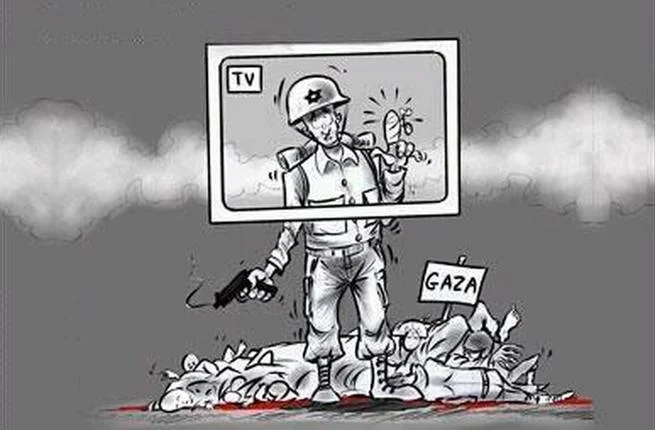
CONTEXT matters, and CONTEXT is often missing in news reports about Israel-Palestine
By Kathryn Shihadah – If Americans Knew – January 19, 2019
A recent media study based on analysis of 50 years of data found that major U.S. newspapers have provided consistently skewed, pro-Israel reporting on Israel-Palestine.
The study, conducted by 416Labs, a Toronto-based consulting and research firm, is the largest of its kind.
Using computer analysis, researchers evaluated the headlines of five influential U.S. newspapers: the Chicago Tribune, Los Angeles Times, New York Times, Washington Post, and Wall Street Journal from 1967 to 2017.
The study period begins in June 1967, the date when Israel began its military occupation of the West Bank and Gaza Strip – now officially termed the Occupied Palestinian Territories – following its Six Day War against Jordan, Egypt and Syria.
Methodology involved the use of Natural Language Processing (NLP), a type of computer analysis that sifts through large amounts of natural language data and investigates the vocabulary. NLP tabulated the most commonly used words and word pairs, as well as the positive or negative sentiment associated with the headlines.
Using NLP to analyze 100,000 headlines, the study revealed that the coverage favored Israel in the “sheer quantity of stories covered,” by presenting Palestinian-centric stories from a more negative point of view, as well as by grossly under-representing the Palestinian narrative, and by omitting or downplaying “key topics that help to identify the conflict in all its significance.”
Four times more headlines mentioned Israel than Palestine
The Fifty Years of Occupation study reveals a clear media bias first in the quantity of headlines: over the half-century period in question, headlines mentioned Israel 4 times more frequently than Palestine.
The study revealed other discrepancies in coverage of Israel and Palestine/Palestinians as well.
Sentiment
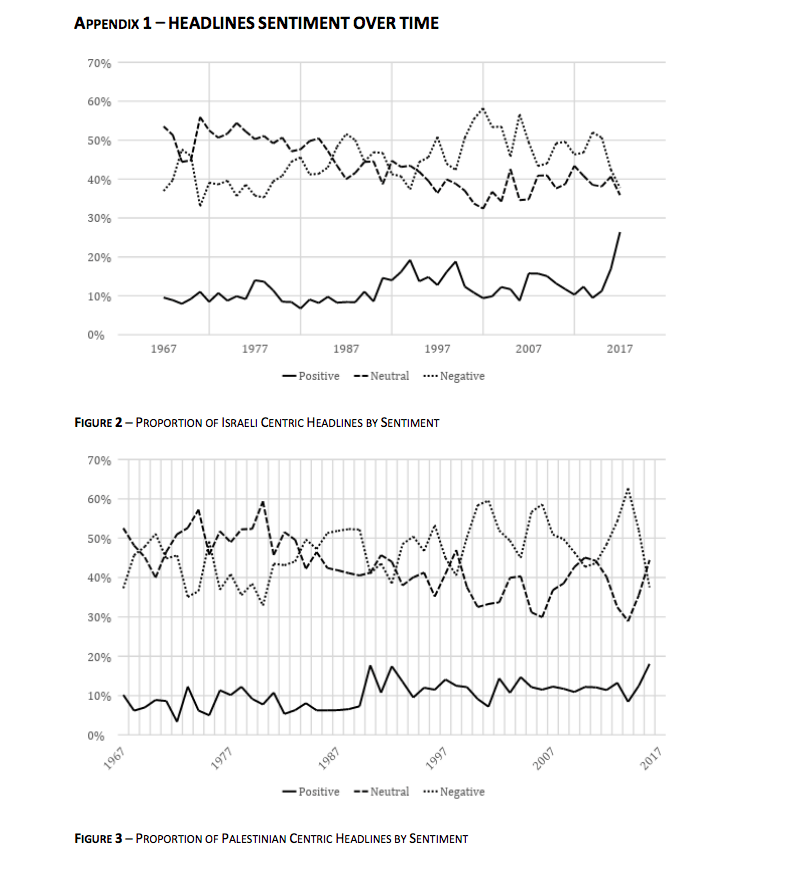
For all 5 newspapers studied, Israel-centric headlines were on average more positive than the Palestinian-centric headlines.
Sentiment analysis measures “the degree to which ideological loyalty colors analysis.”
In order to measure sentiment, the study employed a “dictionary” of words classified as either positive or negative; each headline was scored based on its use of these words.
The report explains that journalistic standards require news stories to be “neutral, objective, and derived from facts,” but the reports on Israel-Palestine “exhibit some form of institutionalized ideological posturing and reflect a slant.” [See graphs below post]
Under-representation of the Palestinian voice
The study also found Palestinians marginalized as sources of news and information.
A simple case in point: The fact-checking organization Pundit Fact examined CNN guests during a segment of the 2014 Israeli incursion into Gaza, Operation Protective Edge. Pundit Fact reported that during this time, 20 Israeli officials were interviewed, compared to only 4 Palestinians, although Palestinians were overwhelmingly victims of the incursion with 2,251 deaths vs. 73 Israeli deaths.
The study’s data reveal what it calls “the privileging of Israeli voices and, invariably, Israeli narratives”: the phrases “Israel Says” and “Says Israel” occurred at a higher frequency than any other bigram (2-word phrase) throughout the 50 years of headlines – in fact, at a rate 250% higher than “Palestinian Says” and similar phrases. This indicates that not only are Israeli perspectives covered more often, but Palestinians rarely have an opportunity to defend or explain their actions.
The report explains the significance of such asymmetry:
This imbalance matters, as official Israeli government policy is effectively made an intrinsic part of the discussion of the conflict, while the views of Palestinians living under occupation are subordinated to the margins.
Sins of omission and de-emphasis
The analysis turned up yet another significant problem with the newspapers’ coverage: failure to report, or to report adequately, on important aspects of the Palestine-Israel conflict.
The study found several critical topics that the 5 newspapers failed to cover adequately, resulting in reader misperceptions.
Peace process?
One misperception revolves around the alleged existence of an ongoing “peace process.”
The study points out the consistent use of bigrams such as “peace talks,” in spite of the fact that since 1993, peace talks have been essentially nonexistent. And,
A hallmark of the conflict has been the perception that there is an ongoing peace process which, from time to time, breaks down, thereby delaying resolution of the conflict…the dispute is effectively portrayed as being one between two equal warring sides, not one where one group is an occupier and the other the occupied.
Occupation
The researchers emphasize the fact that as the occupation of the West Bank (and de facto occupation of Gaza) drags on past 50 years, the brutality of the Israeli occupation is becoming normalized and its illegality forgotten.
They draw this conclusion from their analysis of the unigram “occupation,” which has appeared in headlines less and less frequently, dropping by 85% in Israel-centric headlines, and by 65% in Palestinian-centric headlines over the 50-year period.
Gaza
The blockade of Gaza, and the economic hardships of Gazans under the blockade, were mentioned in Palestine-centric headlines just 30 and 63 times respectively, in the 11 years since the blockade began.
In Covering Gaza: is the mainstream media discourse changing on Palestine-Israel?, Tamara Kharroub of the Arab Center in Washington DC censures mainstream media coverage of the Great Return March – a nonviolent demonstration by Palestinian Gazans for justice and the end of the blockade – for failing to report the names of Gazan civilians killed by Israeli snipers, “in stark contrast to the usual reporting on Israeli victims, in which their pictures, lives, and grieving families are repeatedly shown and discussed.”
… and more
As another example, Palestinian refugees – still waiting to be repatriated according to UN Resolution 242 of 1949 – have been forgotten as a group: the words “Palestine Refugee(s)” in headlines has declined by 93% over the last 50 years, reflecting a decline in concern from media.
The study reveals similar underreporting on topics including the illegality of Israeli settlements and Palestinians’ designation of East Jerusalem as the future capital of the future Palestinian state.
According to Siham Rashid, formerly of the Palestinian Counseling Center, these accumulated flaws characterize the Israel-Palestine issue as
a conflict revolving around security and terrorism, with Israel being the victim…So, for many people, the conflict is understood as a conflict of land and borders between two peoples who have equal claims, not as a conflict between an oppressed and oppressor and colonized and colonizer.
International consensus
As cited by the researchers, Marda Dunsky’s 2008 book, Pens and Swords: How the American Mainstream Media Report the Israeli-Palestinian Conflict, analyzed US media over a 4-year period. One of her most significant findings was the lack of coverage of the international consensus on important issues, for example the almost-universal conclusions that Israeli settlements are illegal, and that Palestinian refugees should be allowed to return to their homes.
Greg Shupak’s The Wrong Story: Palestine, Israel, and the Media offers an example from Operation Protective Edge, the Israeli aggression of 2014 into Gaza. He points out that the blockade of Gaza, a key antecedent to the violence, was mentioned only once in the many New York Times editorials on the conflict published just before and during the war.
Shupak’s work shows how NYT “frequently omits important details that would better contextualize the conflict.”
In More Bad News From Israel, Glasgow University researchers Greg Philo and Mike Berry examined British mainstream media coverage of Israel-Palestine. In a study of BBC coverage, the lack of adequate context resulted in
the failure to convey adequately the disparity in the Israeli and Palestinian experience, reflecting the fact that one side is in control and the other lives under occupation…BBC output does not consistently give a full and fair account of the conflict. In some ways the picture is incomplete and, in that sense, misleading.
Alison Weir of If Americans Knew has published extensive studies of American media coverage of Israel-Palestine which reveal “daily reporting [that is] profoundly skewed” and a “pervasive pattern of distortion” in which “[t]he favored population was the Israeli one.”
If Americans Knew has conducted six major studies and one shorter study on coverage of Israel-Palestine news and found that media had reported on Israeli deaths at far greater rates than they reported on Palestinian deaths. The studies also revealed the palpable pro-Israel bias, under-representation of the Palestinian voice and the omission or downplaying of critical topics.
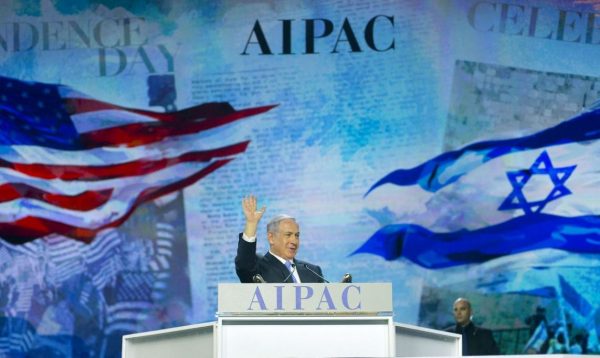
The American Israel Public Affairs Committee (AIPAC) is a lobbying group that advocates pro-Israel policies to the Congress and Executive Branch of the United States.
Causation?
The Canadian researchers found a “systemic problem in coverage,” but did not study the causation. Nevertheless, they excluded the possibility of “deliberate planned bias,” attributing the biased coverage to “the U.S. media’s affinity to broadly align and support their government’s foreign policy objectives.”
Some other researchers, however, report a wider range of factors, many connected to the pro-Israel lobby in the United States. For example, Alison Weir discovered deep links between US media and Israel (e.g. here, here, here, and here). Mearsheimer and Walt reported on the power of pro-Israel pressure in their book The Israel Lobby; Paul Findley in his book They Dare to Speak Out, and others report a wider range of factors, many connected to the pro-Israel lobby in the United States. In many cases, pressure from pro-Israel groups in the Israel lobby, contributed significantly to the consistent slant in mainstream media.
Conclusion
As the authors point out:
Whether online, television, or print, the mainstream media serves to provide most Americans with their daily news. How the media frames the news and presents it to viewers can profoundly shape their perception of current events.
Yet numerous analysts, across time and region, have established that this media consistently skews the news when it comes to Israel-Palestine. This results in nations and their governments upholding Israeli priorities rather than those of their own people, and perpetuating injustice toward Palestinians.
RELATED READING:
Why we urgently need alternative news sources
Mainstream media repeatedly shows its Israel bias
Keeping an eye on the curators of the news
Correcting a few distortions about Gaza
Associated Press Double Standard in Israel-Palestine Reporting
Media selectively report on Jerusalem unrest; the clock keeps ticking…
The Guardian’s Homan Square story was huge on the internet—but not in Chicago media
By Jackie Spinner | Columbia Journalism Review | March 4, 2015
CHICAGO, IL — On Election Day just over a week ago, as this city’s reporters and editors focused on whether the incumbent mayor with ties to the White House would win big or be forced into a historic run-off, an out-of-town newspaper produced a startling account of alleged abuse at a police facility called Homan Square.
The blockbuster story, published in The Guardian and written by Brooklyn-based journalist Spencer Ackerman, described the warehouse as the “domestic equivalent of a CIA black site,” where secretive police units operate and detainees are “disappeared,” with no access to lawyers or relatives and no immediate record of their whereabouts.
With its comparisons to war-on-terror practices and allegations of police brutality, the story landed big on the internet, with well more than 100,000 social shares and write-ups across the Web. The one place it didn’t get much traction: Chicago media.
The city’s two main dailies, the Chicago Tribune and Chicago Sun-Times, quickly reported that city police denied any wrongdoing in pieces that offered little original reporting. The CBS affiliate in Chicago also reported the police denial. The local papers and TV stations have since covered protests from groups demanding that the facility be shuttered.
But more than a week after the initial story, local enterprise reporting remains scant. The most notable examples are a few oddly framed stories, from the Tribune and public radio station WBEZ, suggesting that the focus on Homan Square is misplaced and that, according to local defense attorneys, abusive detentions and interrogations may actually be routine and widespread. If true, that would seem to be worth digging into—but the local coverage, especially in the Tribune, put as much emphasis on possible overreach by The Guardian as it did on police abuse. … Full article
Columnist Clarence Page Spoke at Rally for Iranian Militant Group
By Justin Elliott | ProPublica | July 2, 2012
Late last month, syndicated columnist Clarence Page appeared at a rally in Paris in support of the Mujahadin-e Khalq (MEK), an Iranian group that has been lobbying Washington to be removed from the U.S. government’s list of designated foreign terrorist organizations.
Before a huge crowd waving portraits of MEK leaders Maryam and Massoud Rajavi as well as Iranian flags, Page called for the MEK to be removed from the official terrorist organization list.
Contacted about the appearance by ProPublica, Page said he has decided to give back his speaking fee for the event, as well as reimburse the cost of travel to and from France, which was paid for by a group called the Organizing Committee for Convention for Democracy in Iran.
“I thought they were simply a group of Iranian exiles who were opposed to the regime in Tehran,” Page said. “I later found out they can be construed as a MEK front group, and I don’t think it’s worth it to my reputation to be perceived as a paid spokesman for any political cause.”
Page said he was paid a fee of $20,000 and travel expenses and that he attended the June 23 event during vacation time. He said he just arrived back at work from vacation and has not yet given back the money. He did not have the text of the speech he delivered, but he told ProPublica he spoke in favor of the MEK being removed from the list of terrorist organizations, a move he expects to occur shortly.
The MEK, which fiercely opposes the current regime in Iran, has mounted a high-priced lobbying and legal battle to get off the terrorist list in recent years. The group was placed on the list in 1997 by the Clinton Administration, which cited its record of attacks against Iranian targets. The group also “assassinated several U.S. military personnel and U.S. civilians working on defense projects in Tehran” in the 1970s when the U.S. was allied with the Shah, according to the State Department. The MEK says it has renounced violence. A federal appeals court last month ordered the State Department to decide within four months whether the MEK should remain on the list.
Groups supporting the MEK have paid millions of dollars to attract former officials and retired military officers to appear at events supporting the group in recent years. But because the MEK is an officially designated terrorist organization, it is illegal for Americans to accept money from the MEK itself. NBC reported in March that former officials had received subpoenas as part of a federal probe “focused on whether the former officials may have received funding, directly or indirectly, from the [MEK].”
Besides Page’s role as a columnist whose work is distributed by Tribune Media Services, he is also a member of the Chicago Tribune’s editorial board. Page has not written about Iran in his column recently, but the Tribune editorial board regularly weighs in on foreign policy. Last month, the paper called on the Obama administration to “ratchet up the economic pressure” on Iran in the dispute over the country’s nuclear program. A spokeswoman for the Tribune did not immediately respond to a message seeking comment.
Organizers assert that 100,000 people attended the Paris event last month, but that figure has not been independently verified. In a speech, Maryam Rajavi hailed the “unparalleled bipartisan coalition which has challenged the official policy” that labels the MEK a terrorist group.
Others attending the event last month include Newt Gingrich, former Pennsylvania Gov. Ed Rendell, former New York City Mayor Rudy Giuliani, former State Department spokesman P.J. Crowley, former Bush administration official John Bolton, and several former high-ranking military officers.
“When I got involved with it, I saw the stellar list of VIPs who were also on the program, and I saw this to be another conference with another speech,” Page said.
Page said the invitation to the event last month came through his agent Janet LeBrun Cosby and Bethesda-based Speakers Worldwide.
~
Video of Newt Gingrich speech at the event:
Related articles
- Gingrich Speaks At Rally In France For Iranian ‘Terror’ Group (theuglytruth.wordpress.com)
- Romney Adviser John Bolton Campaigns For Alleged Terror Group (thinkprogress.org)
Featured Video
US JET SHOT DOWN OVER IRAN /Lt Col Daniel Davis & Nima Alkhorshid
or go to
Aletho News Archives – Video-Images
From the Archives
Experts Warned For Years That A War With Iran Would Happen This Way
By Caitlin Johnstone | April 3, 2026
… It’s so wild how we keep seeing reports that Iran’s retaliation caught the US off guard. For all the years I’ve been paying attention to this issue I’ve been reading experts and analysts saying if the US attacks Iran, Iran can close the Strait of Hormuz and strike US bases and the energy infrastructure of US allies in the region.
A few examples:
A 2006 Oxford Research Group paper titled “Iran: Consequences of a War” warned that Iran has numerous options at its disposal in the event of a US attack, and that the “most significant of these would be any possible retaliatory Iranian action to affect the transport of oil and liquefied natural gas through the Straits of Hormuz,” adding that stopping Iran from doing this “would be difficult if not impossible to achieve, leading to a fear of attack which alone would have a formidable impact on oil markets.”
A 2007 Cato Institute paper titled “The Iraq War and Iranian Power” warns that “Iran possesses the largest ballistic-missile inventory in the Persian Gulf — missiles which can reach Israel, Saudi Arabia and US military bases in Iraq,” and that “experts argue Iran could also use the ’oil weapon’: blocking the 34km-wide Strait of Hormuz and conducting submarine and anti-ship missile attacks against ports and oil facilities in Saudi Arabia, Kuwait and other Gulf Cooperation Council states.”
A 2012 NPR article titled “Can Iran Close The World’s Most Important Oil Route?” features then-chairman of the Joint Chiefs of Staff acknowledging that Iran absolutely can block the Strait of Hormuz, saying Tehran has “invested in capabilities” which specifically enable them to do so.
A paper from the Columbia Center on Global Energy Policy and the Center for a New American Security titled “IN DIRE STRAITS? IMPLICATIONS OF US-IRAN TENSIONS FOR THE GLOBAL OIL MARKET” warns of a potential scenario “that includes damage to Gulf oil infrastructure and a temporary closure of the Strait of Hormuz.”
These weren’t a bunch of keffiyeh-wearing peaceniks making these assessments, they were deeply entrenched swamp monsters entirely loyal to the US empire. They opposed war with Iran not because it would be an evil act of unforgivable mass murder, but because it would be bad for the imperial power structure. … Full article
Blog Roll
 Aletho News
- US dismantling international law in its war against Iran while claiming ‘false’ victory: Legal scholar
- One martyr, 5 injuries in US attack on Iraqi border crossing with Iran
- ‘This war is Israel’s war’: World facing ‘security breakdown’, says Qalibaf
- IRGC decries attack on US embassy in Riyadh, says executed by ‘Israel’
- Iran blasts EU hypocrisy as EU invokes international law over Hormuz
- There is no military solution to Strait of Hormuz
- NATO’s structural collapse – the outcome of deviation from reality
- Poll finds world views China better than US
- One Of America’s Leading Neo-Cons Has Turned Against The Iran War And Israel
- Attack in the Bosphorus exposes NATO weaknesses and tensions among allies
- If Americans Knew
- US loses planes over Iran, Israel downgrades Lebanon war goals – Daily Update
- Israel Is Blocking Palestinians from Easter at Church Where Jesus Resurrected
- Plot to assassinate Palestinian activist follows harassment campaign promoted by Zionist groups and elected officials
- Prominent New York synagogue hosts presentation on why U.S. Jews should support the ethnic cleansing of Gaza
- Tapper vs. Piker: Is the CNN Anchor Auditioning for David Ellison?
- Shouldn’t Democrats Be Able to Condemn Genocide?
- Israel-US kill negotiators, destroy civilian structures, but Iran’s military capabilities still largely intact – Daily Update
- ‘War crime’: Global condemnation as Israeli ministers celebrate death penalty law targeting Palestinian prisoners
- 7 Ways Israel Is Turning Lebanon Into Gaza
- World’s Leading Football Bodies Under Fire Over Israel Policies
- No Tricks Zone
- New Study Reports A 60% Slowdown In Greenland’s Ice Loss Rate In The Last Decade
- Low Intensity Tornado Wrecks Major Solar Farm, Creating A Potential Toxic Dump
- New Study Finds Warming Saves Lives…Cold Temperatures 12 Times More Deadly Than Excess Heat
- German Science Blog Accuses PIK Climate Institute Of Hallucinating Climate Tipping Points
- Devastating Assessment Of Comirnaty Vaccine By Former Senior Pfizer Europe Toxicologist
- New Study: CO2 Is ‘Effectively Negligible’ As An Explanatory Climate Change Factor Since 2000
- Former Pfizer Toxicologist Dr. Helmut Sterz Tells Bundestag Hearing Pfizer Vaccine Should Have Never Been Approved
- Energy Expert: Germany’s Nuclear Phaseout Was A “500 Billion Euro Mistake”
- New Research: South Australia’s Mid-Holocene Sea Surface Temperatures Were 4°C Warmer Than Today
- Storing Green Energy To Last Germany 10 Days Would Require A 60-Million Tonne Battery
 Aletho News